Wednesday, 27 November 2019

Palestinian Prisoner Detained by «Israel» Dies after Cancer Battle


Palestinian Prisoner Detained by «Israel» Dies after Cancer Battle

Palestinian Prisoner Detained by «Israel» Dies after Cancer Battle
A Palestinian prisoner died Tuesday in “Israeli” custody after battling cancer, the “Israeli” entity’s prisons service said, ahead of demonstrations in the occupied West Bank planned before his death.
The protests, dubbed a “day of rage” by organizers, are against the US announcement last week that it no longer considers “Israeli” settlements in the West Bank to be a violation of international law, reversing four decades of American policy. The protests were also set to call for Sami Abu Diak’s release.
In a statement, the entity’s prison service said Abu Diak, 35, died in an “Israeli” hospital early Tuesday while serving three life sentences.
The Palestinian Authority and Abu Diak’s family had asked for his release to allow him to die at his family’s side, but “Israeli” officials denied the request. The Palestinians also reached out to European countries and the Red Cross to apply pressure on the “Israeli” entity to release him.
Previous deaths of terminally ill Palestinian prisoners have sparked protests and accusations of medical negligence by “Israeli” authorities.
Tuesday’s protests were called before Abu Diak died. The demonstrations were set to protest the Trump administration’s embrace of a hardline “Israeli” view on settlements at the expense of the Palestinian quest for statehood.
Schools, universities and government offices will close their doors just before midday and rallies will be held in city centers around the “Israeli”-occupied West Bank, with marches expected to move to “Israeli” checkpoints where confrontations with “Israeli” security forces are expected.
“Israel” welcomed the US decision last week, while Palestinians and other nations warned that it undercut any chance of a broader deal.
The Palestinians and most of the world say the settlements undermine hopes for a so-called two-state solution by gobbling up land sought by the Palestinians. The “Israeli” entity says the fate of the settlements should be determined in negotiations, even as it steadily expands them.
Secretary of State Mike Pompeo had announced that the US was repudiating the 1978 State Department legal opinion that held that settlements in the occupied territories are “inconsistent with international law.”
See also

River to Sea Uprooted Palestinian   
The views expressed in this article are the sole responsibility of the author and do not necessarily reflect those of the Blog!

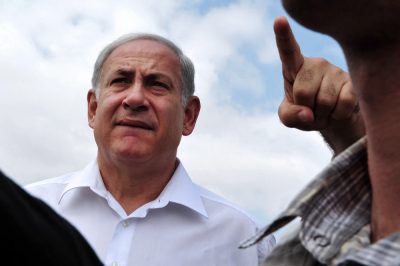
Netanyahu’s Real Crimes

By James J. Zogby
Global Research, November 26, 2019
Arab American Institute 23 November 2019
After years of investigation and months of delay, Israel’s Attorney General Avichai Mandelblit formally indicted Benjamin Netanyahu for crimes ranging from his violation of public trust to bribery and fraud. Israel’s apologists will argue that the fact that a sitting Prime Minister has been charged with crimes against the state and people presents compelling evidence of the country’s democracy and commitment to the rule of law. This is the very point that Mandelblit made in announcing the indictments – “The public interest requires that we live in a country where no one is above the law.” However, this is only partially true since it appears that in Israel the principles of democracy or the rule of law only apply to Israeli Jews or the interests of the state, itself. In fact, Netanyahu’s entire sordid career is evidence of the selectiveness of Israelis’ sense of justice.
In the past the Netanyahu household has been charged with some of the pettiest forms of corruption imaginable. For example, his wife was found guilty of taking the empty bottles from beverages consumed at official state functions and keeping the money she received for turning them for recycling. The Netanyahus were also known to bring three weeks of dirty laundry on two-day official state trips and sending them to the hotel in which they were staying for a night so that the cleaning bill would be charged to the state’s budget. This is the sort of past petty thievery for which the Netanyahus were famous.
Looking at the recent indictments, it is clear that the Prime Minister has graduated to bigger and better forms of fraud and corruption. What’s striking, however, is that all of the crimes with which he is charged were focused on feeding his ego or his appetites. In some instances, they were favors done for a businessman in exchange for hundreds of thousands of dollars in gifts, in others they were the corrupt deals he made with various media tycoons in which he promised them benefits in exchange for their guaranteeing him positive coverage in their news outlets.
There is no doubt, that in all of these cases, Netanyahu’s behavior has been clearly criminal and reprehensible, and, as described by the Attorney General, a breach of the public’s trust. But what I find so striking and disturbing, is that these crimes pale in significance when compared to what Netanyahu has done to the Palestinian people and the prospect for Israeli-Palestinian peace – crimes for which he will not be called to account.
After Oslo, Netanyahu organized a back-door lobby to mobilize US Congressional opposition to the peace accords. This was the first time an Israeli lobby worked in the US to oppose their own government. He should have been charged with treason.
Back in Israel, during the same period, he organized with Ariel Sharon and a few others a smear campaign of incitement against Prime Minister Yitzhak Rabin. The campaign was so virulent and threatening that many Israelis, including Rabin’s wife, held Netanyahu responsible for Rabin’s assassination. Netanyahu should have been charged with incitement.
Image result for yitzhak rabin death
In 1996, he was elected Prime Minister on a platform dedicated to ending the peace process and he did everything he could to slow down, distort, and ultimately sabotage the Oslo Peace Process. Even the agreement he signed with the Palestinians at Wye so encumbered the process that by the end of his first term in office, peace was on life support.  He should have been charged with destroying the prospects for peace and putting at risk the lives of millions.
During his last three terms in office, he incited violence and hatred against Palestinians, both those who are citizens of Israel and those living under occupation. This has fueled extremist settler movements that have engaged in daily acts of violence, destruction of property, and murder. He also encouraged soldiers in the Israeli army to murder defenseless Palestinians and supported them when they were charged with crimes. In addition, as he did with Rabin, he has falsely accused his Israeli opponents of being too close to the Arabs and accused the Palestinian citizens of Israel of being enemies of the state. He should have been charged with hate crimes.
During his time in office he has: expanded settlements on stolen Palestinian land and the demolition of Palestinian property; overseen a number of devastating assaults on Gaza resulting in the indiscriminate massacre of thousands of innocent civilians and the destruction of Gaza’s infrastructure; instituted and maintained a cruel blockade of Gaza’s population, as an act of collective punishment, in which, for long periods of time, food, medicine, and other essential items were restricted or severely regulated – resulting in death, disease, and impoverishment of millions of innocents. He should have been charged with war crimes.
The list could go on, but this should suffice.
The bottom line is that, to be sure, Netanyahu is a criminal. But in today’s Israel he can’t be found guilty of his most serious crimes – treason, incitement, destroying peace, hate crimes, and war crimes. Instead, he will be asked only to answer for his narcissistic appetites and corruption.
*
Note to readers: please click the share buttons above or below. Forward this article to your email lists. Crosspost on your blog site, internet forums. etc.
Featured image is from Shutterstock

River to Sea Uprooted Palestinian   
The views expressed in this article are the sole responsibility of the author and do not necessarily reflect those of the Blog!

Tuesday, 26 November 2019

Israel’s Netanyahu: Dead Man Walking Politically and Judicially

Image result for Israel’s Netanyahu: Dead Man Walking Politically and Judicially
By Stephen Lendman
He’s charged with fraud, bribery and breach of trust, Israel’s first ever sitting prime minister to face prosecution for these serious offenses.
Hard evidence against him is damning. His scourge appears coming to an end once the legal process expected to take time plays out.
Make no mistake. He’s a world-class thug Time magazine called “King Bibi” in May 2012.
Saying he conquered Israel suppressed his high crimes of war, against humanity, and other offenses — compounded since then. 
The puff piece also ignored his deep-seated corruption, his governance of, by, and for privileged Israelis exclusively, his persecution of Palestinians for not being Jewish, his tenure exceeding Sharonian evil.
Arundhati Roy once called India a “limbless, headless, soulless torso left bleeding under the butcher’s clever with a flag driven deep into her mutilated heart.” 
The above describes Israeli regimes throughout the country’s history, notably during Netanyahu’s time in office — his agenda pockmarked with malign viciousness, institutionalized racism, militarism and belligerence, exploitive cruelty, occupation harshness, neoliberal rapaciousness, and wars at his discretion without declaring them.
Governing anti-democratically with an iron fist, he spurns regional peace, stability, equity, justice, and the rule of law — notions he abhors.
He once called no-peace/peace talks with Palestinians “a waste of time.” He wants all valued parts of Judea and Samaria unlawfully annexed, Palestinians dispossessed for Jews-only development.
He’s losing the fight for his political life and ability to remain free from incarceration.
A psychopathological liar, he falsely called criminal charges against him fabricated, “an attempted government coup against the prime minister through blood libels and a biased investigation process (sic).”
According to Israel’s Channel 12, he’s losing Likud support, saying senior party members admit that “the Netanyahu era is over,” plotting behind the scenes to remove him as party leader following AG Mandelbit’s indictment.
A Channel 13 report was similar, Likudniks saying: “We are trying to figure out how to wrest the party from his hands.”
Senior party members reportedly are seeking consensus on who should replace him.
Channel 12 and 13 said Mandelblit won’t demand he resign as prime minister unless convicted, but will insist he relinquish four ministerial posts he holds — agriculture, health, social and diaspora affairs.
Until recently, he also held the foreign affairs and war ministry portfolios.
On Friday, Ynet News said Mandelblit will likely issue a legal opinion, saying “significant legal difficulties” stand in the way of affording him a mandate to form a new government — given serious charges he faces.
Though Israeli law permits an indicted prime minister to remain in office unless convicted, the issue was never judicially ruled on in Israeli history.
Its Supreme Court may have final say on it given serious wrongdoing Netanyahu is charged with, making him politically damaged goods.
According to a Friday published poll, 56% of Israelis want Netanyahu to resign. Only 35% support his staying on as prime minister.
According to Israeli Law Professor Suzie Navot: “All of the questions that we are dealing with now are new questions for Israel. We’ve never been in this situation. It’s unprecedented.”
Labor party leader Amir Peretz said lawyers representing the party will petition Israel’s Supreme Court to order Netanyahu’s removal as prime minister because he’s an obstacle to resolving the election standoff while under indictment.
He may be losing US establishment media support. The NYT accused him of “attack(ing) his country’s institutions,” adding:
“(H)e turned viciously on the police and prosecutors, urging Israelis to ‘investigate the investigators,’ warning of an ‘attempted coup’ and vowing not to step down.” 
“It was a hard conspiracy theory to swallow, as the attorney general, Avichai Mandelblit, had been appointed by Mr. Netanyahu and had once been his cabinet secretary.”
Separately, the Times said if Netanyahu’s “allies don’t make him stand down, we are headed for chaos,” adding:
“The right way out of this sorry situation is for Mr. Netanyahu’s party and his allies to step up — and tell the prime minister it is time to step down.”
“Some (Netanyahu) supporters are sticking by him, while others are wavering.”
“(S)ome rock-solid Netanyahu voters who expressed doubts about the criminal charges said that it was untenable for him to try to continue in office while he defends himself in court.”
The Wall Street Journal reported that “Netanyahu faces growing frustrations in his Likud party,” adding:
Members are “increasingly calling for a leadership vote as they question Mr. Netanyahu’s ability to lead them to victory in a new vote.” 
“On Friday, some members of Likud’s governing body said the party should hold primaries to choose a new leader that could try to form a new government to avert a third election and give Mr. Netanyahu time to address his legal issues.”
He can’t deal with legal proceedings against him, run Likud, and govern as Israeli prime minister at the same time.
The Journal cited Likudnik MK Yoav Kisch, saying primaries are inevitable to decide who leads the party ahead.
“Other Likud members also acknowledged a growing frustration with Mr. Netanyahu’s legal struggles and its harm to the party’s electoral fortunes,” the Journal reported.
“Other Likud members also acknowledged a growing frustration with Mr. Netanyahu’s legal struggles and its harm to the party’s electoral fortunes.”
Haaretz editors called for him to “go home now,” adding: “Anyone who expected a modicum of proper conduct from the prime minister saw once again his colossal irresponsibility,” adding: 
“Netanyahu proved that Israel is not his top priority, but rather a means for him to continue in office.”
Separately, Haaretz said he “won’t go quietly and will opt for the burning torches.”
Resolving his political and legal status has a long way to go, the likelihood of his remaining PM and prevailing judicially weak at best.

River to Sea Uprooted Palestinian   
The views expressed in this article are the sole responsibility of the author and do not necessarily reflect those of the Blog!

Evidence Talks: US Government Propelled Coup in Bolivia

By W.T. Whitney Jr.
Global Research, November 25, 2019
A coup on November 10 removed the socialist government of Bolivian President Evo Morales. The U.S. government made preparations and orchestrated the final stages of the coup. It was in charge. In power for almost 14 years, Morales and Vice President Álvaro García Linera had won elections taking place on October 20. The two leaders would each have been serving a fourth term in office.
Evidence of the U.S. crime appears below.  It’s about money, U.S. influence within the Bolivian military, and U.S. control of the Organization of American States (OAS):
1. For many years the Santa Cruz Civic Committee and its proto-fascist Youth Union received funding from the U.S. National Endowment for Democracy. According to analyst Eva Golinger some years ago, the USAID provided $84 million to Bolivian opposition groups.
U.S. Embassy officials conspired with and paid the “civic committees” of Bolivia’s four eastern departments. Representing the European- descended elite of Bolivia’s wealthiest region, these groups promoted racist assaults. They concocted a separatist movement and tried to assassinate Morales. In response, the Bolivian government expelled the U.S. ambassador, Drug Enforcement Agency, and U. S. Agency for International Development.
2. Bolivian armed forces commander in chief Williams Kaliman Romero on November 10 “suggested” that Morales resign. That was the coup de grace. Within three days, Kaliman himself resigned and moved to the United States. Sullkata M. Quilla of the Latin American Center for Strategic Analysis explains that Kaliman and other military chiefs each had received $1 million and that top police officers received $500,000 apiece. U.S. Chargee d’affaires Bruce Williamson allegedly arranged for monetary transactions that took place in Argentina’s Jujuy Province under the auspices of Governor Geraldo Morales. The story first appeared on the website www.Tvmundus.com.ar.
3. Money flowed freely prior to Morales’s departure. Bolivian ambassador to the United Nations Sacha Llorenti – a Morales supporter – reported that, “loyal members of [Morales’s] security team showed him messages in which people were offering them $50,000 if they would hand him over.”
4. According to the respected Argentinean journalist Stella Cattaloni, Ivanka Trump arrived in Jujuy on September 4-5 ostensibly to honor a small group of women entrepreneurs. Some “2,500 federal agents” and Deputy Secretary of State John Sullivan accompanied her. At the same time, Governor Gerardo Morales was informed that the United States would be delivering $400 million supposedly to pay for improvements to a big highway in Argentina. Cattaloni suggests that a freight train running through Jujuy en route to Santa Cruz, the center of anti- Morales plotting in Bolivia, was transporting military equipment to opposition groups.
There’s media speculation as to how Governor Morales may have facilitated the transfer of U.S. money to Luis Camacho, leader of the coup and head of the Santa Cruz Civic Committee. He may have done so in Santa Cruz, where he visited on September 4, or in Jujuy Province where Camacho may have showed up later that day or the next.
5. According to analyst Jeb Sprague:
“At least six of the key coup plotters are alumni of the infamous School of the Americas, while [General] Kaliman and another figure served in the past as Bolivia’s military and police attachés in Washington.”
For decades, Latin American military personnel have received training and indoctrination at that U.S. Army school now called the Western Hemisphere Institute for Security Cooperation.
Sprague notes also that the top commanders of police that mutinied had received training at the Washington-based Latin American police exchange program known by its initials in Spanish as APALA.
6. The OAS played a crucial role in the coup. Votes were being tallied on October 20 when the OAS, having audited preliminary results, announced that they showed irregularities. The U.S. government echoed the findings and street protests intensified. On October 24 the Supreme Electoral Tribunal declared first-round victories for Morales and García Linare. Protests mounted. The government, under stress, requested another OAS audit.
The OAS made its conclusions public on November 10, earlier than expected:
The OAS couldn’t “validate the results of this election [and called for] “another electoral process [and] new electoral authorities.”
This was the tipping point. Morales convoked another election but shortly thereafter General Kaliman forced him to resign.
The OAS findings were false. Walter Mebane and colleagues at the University of Michigan, having examined voting statistics, indicated that fraudulent votes in the election were not decisive for the result. The Washington-based Center for Economic and Policy Research performed its own detailed study and reached the same conclusion.
The OAS served as U.S. handmaiden. Headquartered in Washington, the organization took shape under U.S. auspices in 1948 with the assigned task of protecting Latin America and the Caribbean from Communism. More recently the OAS, under Secretary General Luis Almagro’s guidance, has spearheaded U.S. efforts to expel President Nicolas Maduro’s progressive Venezuelan government.
Paradoxically, Almagro in May 2019 gave Morales the go-ahead for a fourth presidential term. That was despite a referendum having been defeated that would have allowed the extra term. Almago’s intention may have been to lull Morales into cooperating with OAS overview of the election results.
7. Other signs of U.S. coup preparations are these:
  • Prior to the October 20 elections President Morales charged that U.S. Embassy officials bribed rural residents to reject him at the polls. They traveled, for example, to the Yungas region on October 16 with pay-offs to disaffected coca farmers.
  • According to Bolpress.com, the National Military Coordinator (Coordinadora Nacional Militar), an organization of reserve military officers, received and distributed money sent from the United States to create social crisis prior to October 20. The United States also used embassies in Bolivia and the evangelical church as facades to hide its activities. Mariane Scott and Rolf A. Olson, U.S. Embassy officials in La Paz, met with counterparts in the embassies of Brazil, Paraguay, and Argentina to coordinate destabilization efforts and to deliver U.S. financing to opposition forces inside Bolivia.
  • Weapons shipments from the United States arrived at the Chilean port of Iquique on their way to the National Military Coordinator group inside Bolivia.
  • The State Department allocated $100,000 to enable a company called “CLS Strategies” to mount a disinformation campaign through social media.
  • The CIA station in La Paz assumed control of Bolivia’s Whatsapp network in order to leak false information. More than 68,000 fake anti-Morales tweets were released.
  • In mid-October “political consultant” George Eli Birnbaun arrived in Santa Cruz from Washington with a team of military and civilian personnel. Their job was to support the U.S. – preferred presidential candidacy of Oscar Ortiz and to destabilize the country politically after the elections. They provided support for Santa Cruz Civic Committee’s youth organization – specialists in violence – and supervised the U.S. – financed “Standing Rivers” NGO, engaged in spreading disinformation.
  • Sixteen audio recordings of the plotters’ pre-election conversations were leaked and showed up on the internet. Several of the voices mentioned contacts with the U.S. Embassy and with U.S. Senators Ted Cruz, Robert Menendez, and Marco Rubio. Sprague reports that four of the ex-military plotters on the calls had attended the School of the Americas.
This presentation focuses entirely on the evidence. In a criminal investigation, evidence is central to determining guilt or innocence. Considerations of motive and context are of lesser importance, and we don’t deal with them here. But when and where they are attended to, they would logically fall into categories that include the following:
1. A socialist experiment was showing signs of success and capitalists of the world were facing the threat of a good example.
2. A people once held hostage by colonial powers was able to claim sovereign independence and in that regard had endeavored to retain much of the wealth provided through natural resources, lithium in particular.
3. Throughout its existence the Morales government, headed by an indigenous president, was up against anti-indigenous prejudice, racist in origin, and social-class divisions.
4. All the while, that government was the target of hostility, plotting, and episodic violence at the hands of the entitled classes.
So the evidence is clear. It points to a controlling U.S. hand in this coup d’état. The U.S. government bears heavy responsibility. There were Bolivian instigators, of course, but the U.S. plotters fall within the range of our own political processes. That’s why our accusing finger points at them.
In this instance, the U.S. government, as is its custom, disregarded international law, morality, respect for human life, and common decency. To stifle popular resistance the U.S. government evidently will stop at nothing, other than force in the hands of the people. What kind of force remains to be seen.
*
Note to readers: please click the share buttons above or below. Forward this article to your email lists. Crosspost on your blog site, internet forums. etc.
W.T. Whitney Jr. is a political journalist with a focus on Latin America and health care issues. He is a Cuba solidarity activist who formerly worked as a pediatrician.
Featured image is from Peoples Dispatch

River to Sea Uprooted Palestinian   
The views expressed in this article are the sole responsibility of the author and do not necessarily reflect those of the Blog!

US Senator Makes Unannounced Visit to Lebanon, Meets Army Commander

Murphy was received by General Joseph Aoun at his office in the Defense Ministry in Yarzeh.
November 26, 2019
US Senator Chris Murphy on Monday arrived on an unannounced visit to Lebanon, where he met the Army Commander General Joseph Aoun.
In a tweet, the US senator said he arrived in Lebanon to ‘assess’ American military aid to the country.
He stressed that the administration of President Donald Trump cannot withhold any assistance already authorized by Congress, after reports said that Trump’s administration has been withholding some $105 million in security assistance to Lebanon that was already authorized by Congress.
“I just arrived in Lebanon to see firsthand the efficacy of US aid to the Lebanese military, a force for stability here at an unstable moment,” Murphy said via Twitter.
“Important: the aid is congressionally mandated. Like the Ukraine aid, by law it cannot be withheld by POTUS [the president of the United States]. Stay tuned for more.”
Lebanon’s National News Agency (NNA) reported that Murphy was received by General Joseph Aoun at his office in the Defense Ministry in Yarzeh. The US senator was heading a delegation that included US Ambassador to Lebanon, Elizabeth Richard, according to NNA.
According to reports in multiple US media outlets, the White House Office of Management and Budget (OMB) has not given the approval to release the funds, which the Congress allocated for the Lebanese Armed Forces.
The Wall Street Journal reported that the OMB is holding up the aid at the direction of the National Security Council, another department within the White House.

River to Sea Uprooted Palestinian   
The views expressed in this article are the sole responsibility of the author and do not necessarily reflect those of the Blog!

US Threatens Lebanon: Leave Hezbollah or Total Collapse


US Threatens Lebanon: Leave Hezbollah or Total Collapse
Beirut – On March 22, US Secretary of State Mike Pompeo was in Beirut threatening the Lebanese by giving them two options: either confront Hezbollah or pay the price. What Pompeo said eight months ago was repeated by former US ambassador to Lebanon, Jeffrey Feltman, before Congress. What he meant was that the Lebanese had two options: either to adhere to Washington’s policies, or to collapse. Washington’s policies also mean standing up to Hezbollah [in his testimony, Feltman repeated the word Hezbollah’s 49 times], weakening his allies in any future elections, and forming a technocratic government.
Jeffrey Felmann presented his vision of the situation in Lebanon. “What happens is related to American interests,” he said. The mobility in Congress seemed remarkable, as the Subcommittee on the Middle East, North Africa and International Terrorism [a branch of the House Foreign Affairs Committee] met in a session entitled:
“What is next for Lebanon?
The demonstrations, that the US is so interested in, has been taking place in Lebanon since October 17, are according to Feltman “not about the United States”. Feltman cautioned that it is necessary for his country to avoid turning the focal point of the protests against the US, because the outcome of what is happening will affect Washington’s interests, whether positive or negative, “in what could be a pivotal moment in the history of Lebanon.”
Over the years, many have been surprised by Lebanon’s amazing ability to stay afloat. Remaining intact politically and economically, amid circumstances suggesting an imminent collapse. Feltman pointed out that predictions of Lebanon’s fate often proved wrong. This time, however, it seems different. Lebanon’s internal and external debt management is not only increasingly complex in a stagnated economy, but the public is exhausted and angry at the sectarian rhetoric and lame excuses used by political leaders to advance their narrow political and financial interests. As a result, the Lebanese political system as a whole is subject to hostile public scrutiny, and Hezbollah, according to Feltman, is only the target of such scrutiny.
Feltman’s preposterous propaganda was not surprising, given Pompeo concluded his visit last March by seemingly encouraging an uprising against Hezbollah when he said,
“It will take courage for the nation of Lebanon to stand up to Hezbollah’s criminality, terror, and threats.”
Pompeo’s threat was clear: If Lebanon fails to limit Hezbollah’s political and military power, it would risk not just losing US aid but also a more severe response, possibly in the form of debilitating national sanctions.
Pompeo attacked the Lebanese Resistance for carrying out “Iran’s agenda” in the region at the expense of Lebanon’s domestic order and “the prosperity of future generations.” However, what the secretary of state fails to comprehend is that if the United States follows through on this plan to inflict collective punishment on Lebanon over Hezbollah, the results are likely to be the opposite of what administration officials intend.
Hezbollah’s allies inside Lebanon are today ever more defensiveness towards the party to a point that it seems US officials have completely misunderstood our internal political system. Pompeo, Feltman and whoever is hoping to damage Hezbollah with these protests, has completely missed the fact that Lebanon’s sectarian political system forbids treating Hezbollah, which has a parliamentary faction legitimately elected into office, as an illegal entity. US officials and their regional and local affiliates seem to have missed that the military power of Hezbollah, with its Iranian weapons and training that no one is denying, is superior to that of the Lebanese Armed Forces. It has successfully branded itself to the Lebanese public as capable of standing up to Israel in ways that the Lebanese army manifestly cannot.
Even Lebanese officials critical of Hezbollah dismissed Pompeo’s calls to directly challenge the group, warning that were they to follow his advice, the country could descend into a second civil war. That assessment may be overly exaggerated. The United States, however, is undoubtedly risking Lebanon’s basic stability in ways that may ultimately benefit Hezbollah rather than harm it.
The United States, which has already imposed sanctions against Hezbollah leaders and Hezbollah-affiliated businesses, hopes to step up pressure on the Shia community, could now risk facing resistance even from the US’s local allies, who fear that pushing too hard could trigger a backlash and endanger the tiny country’s fragile peace.
President Aoun, Hezbollah’s biggest ally in Lebanon, has repeated on many occasions that the country’s priority is to preserve national unity and peace while affirming especially during his latest TV interview last week that
“Hezbollah is a Lebanese party that has a popular base representing one of the main [religious] sects in the country.”
It simply now seems that the American efforts to weaken and isolate Hezbollah might have only succeeded in creating countless practical problems for the party that it can outmaneuver in simple steps but did nothing to accomplish the fundamental United States goal of containing Hezbollah politically and militarily.
Meanwhile, lasting effect of US policy is yet to be seen. However, even when we have the likes of Pompeo and Feltman believing the US should adopt a more nuanced approach towards Hezbollah, it is only normal fathom that the United States has limited power to coerce actions from Lebanese politicians and institutions. The question the Trump administration should be asking is whether sweeping sanctions against the Lebanese government and institutions would weaken Hezbollah or rather strengthen it in the longer run.
Related Videos
Related News

River to Sea Uprooted Palestinian   
The views expressed in this article are the sole responsibility of the author and do not necessarily reflect those of the Blog!

Sunday, 24 November 2019

اتصالات روسية فرنسية مشجعة: لا مصلحة دولية في انهيار لبنان.. و إن انهار!

  • اتصالات روسية فرنسية مشجعة: لا مصلحة دولية في انهيار لبنان.. و إن انهار!

 من المؤكد أن ما يشهده العراق ولبنان، على الرغم من أحقية الحراك المطلبي، قد دخل مرحلة التسييس المعلن مع الأحداث العابرة التي شهدتها شوارع إيران، والتي سرعان ما نجح المسؤولون الإيرانيون في احتوائها، في مؤشر على معرفة مسبقة بالسياق العام لخيارات المحور المقابل في هذه المرحلة في المنطقة.


مرّ خبر ارتفاع سعر السندات اللبنانية بالدولار في الساعات القليلة الأخيرة مرور الكرام.

ربط بعض الاقتصاديين الموضوع بتصريح الرئيس الأميركي دونالد ترامب باستعداد الولايات المتحدة للعمل مع حكومة لبنانية جديدة. يُدرك الضالعون في السياسة الدولية و صُنّاع القرار أن ارتفاع قيمة السندات في توقيت كهذا لا يتم من دون موافقة دولية، وأنه إشارة محددة إلى جهات داخلية في لبنان.

في الواقع، شهدت الأيام القليلة الماضية، حراكًا دوليًا جادًا على خط الأزمة اللبنانية، بل قُل “المسألة اللبنانية”، ذلك أنّ النقاش بات في مستقبل التركيبة اللبنانية لا في أزمتها الراهنة فقط.

بعد مرور أكثر من 38 يومًا على الحراك الشعبي، يفرض العامل الاقتصادي نفسه على حسابات جميع الأطراف المعنية محليًا ودوليًا. الجولة الميدانية بين المناطق اللبنانية تُبرز مشهدية ستكون شديدة التأثير في الأيام المقبلة في حال استمرار الإخفاق السياسي في اجتراع الحلول، ففي حين تظهر بوضوح تبعات الأزمة الاقتصادية شمالا وفي الوسط، فإن ضاحية بيروت الجنوبية وجنوب لبنان يشهدان استقرارًا ملحوظًا سببه قيام الجهة السياسية النافذة في هاتين المنطقتين؛ أي حزب الله، بإتخاذ خطوات غير ملحوظة لضمان سير الحياة بشكل شبه طبيعي.

من المؤكد أن ما يشهده العراق ولبنان، على الرغم من أحقية الحراك المطلبي، قد دخل مرحلة التسييس المعلن مع الأحداث العابرة التي شهدتها شوارع إيران، والتي سرعان ما نجح المسؤولون الإيرانيون في احتوائها، في مؤشر على معرفة مسبقة بالسياق العام لخيارات المحور المقابل في هذه المرحلة في المنطقة.

لكن ما يهمنا من المشهد اللبناني الشديد التعقيد هي مؤشرات ومعطيات ترسم معالم مسار الأحداث على المدى البعيد.

كان لافتًا عودة معظم القنوات الإعلامية اللبنانية إلى شبكة برامجها المعتادة والاكتفاء بالنقل المباشر بين البرامج المعتادة عند الحاجة. بغض النظر عما اذا كان ذلك نتيجةً لقرار أم أنه انعكاس لنبض الشارع، فإن الإعلام اللبناني يعكس أيضًا نبض الاتصالات السياسية. وغاب أهل الحراك المستقلين عن المنابر الإعلامية لصالح وجوه أكثر ارتباطا برؤى سياسية.

في هذه الاثناء، كانت الاتصالات الاميركية – الفرنسية وتلك الروسية – الفرنسية قد بدأت في بلورة أفكار معقولة. بالنسبة للموقف الأميركية، ليس لبنان في صدارة الأولويات بالتأكيد، ومن يتولى متابعة الملف اللبناني في واشنطن هم شخصيات معروفة باهتمامها بلبنان من منطلق شخصي. ولعلّ ما نُقل عن “دايفيد شينكر” من باريس عن تقدم الفرنسيين في لبنان والتسليم بقدرتهم على التواصل مع مختلف الأفرقاء يعكس حقيقة الموقف الأميركي غير القادر على أن يقدم حلًا في ظل خصامه السياسي مع شريحة واسعة من اللبنانيين، ونظرة هذه الشريحة بريبة إلى أي مقترح أميركي. في حين أن هذه الشريحة نفسها لا تجد إشكالية في استقبال الموفدين الفرنسيين وتبادل الآراء معهم، وإن كان الموقف الفرنسي ليس مجانيًا بطبيعة الحال، وهو ينطلق من مصلحة فرنسية خالصة، ولكنه يبقى أقل حدة من أي موقف دولي أخر.

وفي هذا السياق، لا يرفض الفرنسيون فكرة حكومة ينخرط فيها حزب الله، وهو ما يتقاطع مع الموقف الروسي أيضًا الحاضر بفعالية، إثر اتصالات بين موسكو وطهران، مدفوعة بحرص روسي على مشاريع الغاز قبالة السواحل اللبنانية والسورية. وهو ما يتطلب استقراراً في لبنان.

ما الذي يفسّر تمسّك الرئيس سعد الحريري بموقفه إذا؟ لدى الحريري اعتبارات ترتبط بحسابات شعبية بعد أن اخترق الحراك بعمق الشرائح المناصرة له، خاصة في طرابلس وبيروت. كما أن الموقف السعودي – الإماراتي من مشاركة حزب الله في الحكومة لا يزال على حاله بالرفض الكامل. وبالتالي فإن أي حل دولي قد لا يعني بالضرورة انخراط الحريري شخصياً به، وإن كان من الطبيعي أن يشمل تياره.

هل يعني هذا أن الحل بات قريباً؟ الجواب هو لا.

قد لا يكن اللاعبون الدوليون قادرين على اللحاق بقطار الانهيار الاقتصادي في لبنان. وهذا الانهيار المرتقب هو سبب إطالة الأزمة في المرحلة المقبلة، لكن الغطاء الدولي يظلّ عاملاً هامًا في ضبط الأمور والبناء عليه لتحقيق تسوية واسعة تجيب على مطالب الحراك المحقة، و تشمل إجراء انتخابات نيابية مبكرة بعد الاتفاق على حكومة مؤقتة.


River to Sea Uprooted Palestinian   
The views expressed in this article are the sole responsibility of the author and do not necessarily reflect those of the Blog!

Lebanon: Lawyers Confirm Ghaddar’s Testimony before Congress Exposes Her to Life-term Sentence


Capture
November 23, 2019
After the Lebanese-American journalist Hanin Ghaddar testified before a Congress Subcommittee on Lebanon protests, Lebanese lawyers considered her testimony violates the penal code because it provokes a foreign country to attack the nation.
The lawyer Foad Matar stressed that Ghaddar’s crime which abuses the national sovereignty and independence is an act of treachery and exposes her to a life-term sentence.
Ghaddar provoked in her testimony the United States against the Lebanese state and its institutions, including the Lebanese army.
She also urged the US to intervene in Lebanon in order to undermine Hezbollah influence, accusing the Lebanese army intelligence of working in favor of Hezbollah.
Related Video
Related Articles

River to Sea Uprooted Palestinian   
The views expressed in this article are the sole responsibility of the author and do not necessarily reflect those of the Blog!

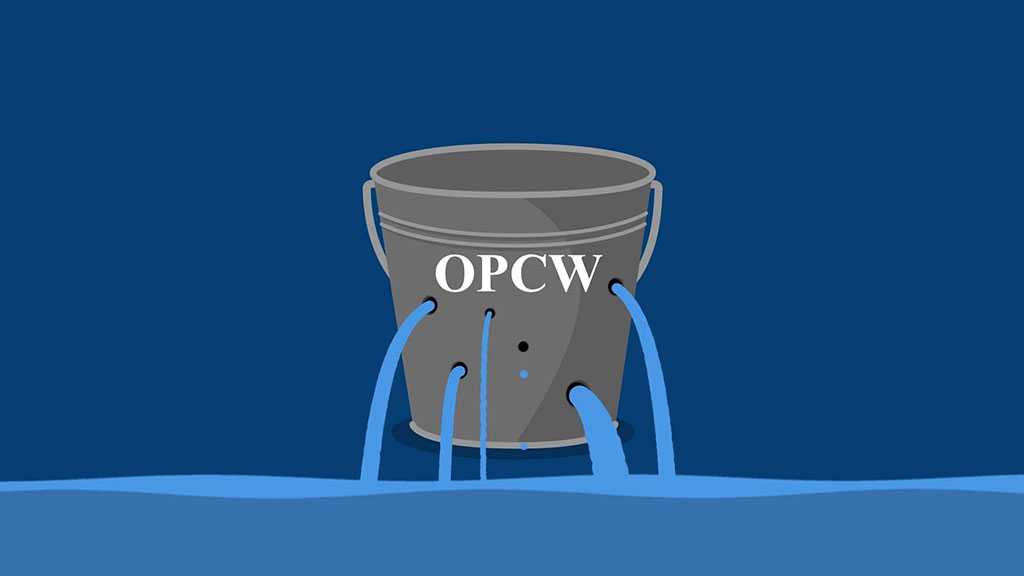
Wikileaks: OPCW Modified Chemical Weapons Report on Syria’s Douma had Crucial Details Omitted


Wikileaks: OPCW Modified Chemical Weapons Report on Syria’s Douma had Crucial Details Omitted
Three countries – the United States, the United Kingdom and France – carried out airstrikes against Syrian government targets, justifying their assault by claiming that the chemical weapons were allegedly used by the Syrian Army.
Wikileaks revealed that the OPCW’s redacted version of the so-called fact-finding report on Douma’s events had been intentionally doctored, misrepresenting the facts that the investigation team found on the ground in Syria after Western powers have attacked Syria.
According to the whistleblower organization, citing an e-mail sent by a member of an OPCW fact-finding mission to Syria to his superiors, this misrepresentation was achieved by selective omission, introducing a bias which undermines the credibility of the report.
The e-mail, exposed by Wikileaks, says that the crucial facts in the redacted version, “…have morphed into something quite different to what was originally drafted”, alleging that the document’s fixing was done at the behest of the Office of the Director-General [a post held by Turkish diplomat Ahmet Uzumcu at the time].
Notably, the document.,gt said that the OPCW investigators found upon arrival that much of the physical evidence was no longer available.
Local militants have claimed, cited by Western media, that toxic gas came from cylinders dropped from aircraft, alleging Syrian government forces who had complete air superiority at the time. The redacted OPCW report seemed to support these conclusions, but the author of the e-mail outlined aspects he considered “particularly worrisome”.
“Likely one or more chemicals that contain a reactive chlorine atom. Such chemicals could include… the major ingredient of household chlorine-based bleach. Purposely singling out chlorine gas as one of the possibilities is disingenuous”, the leaked e-mail points out, stressing that the redacted report also removed context from a statement in the original draft, which doubted the likelihood of the gas having emanated from cylinders found at the scene in Douma.
The e-mail’s author stressed this was “a major deviation from the original report”.
The redacted OPCW report also dropped another crucial detail about the Douma events. One piece of evidence broadcast across the world was footage claiming victims being treated in a hospital in the alleged aftermath of the attack in Douma. The symptoms shown were, however, not consistent with what witnesses reported seeing that day, the e-mail said.
“Omitting this section of the report [including the epidemiology which has been removed in its entirety] has a serious negative impact on the report as this section is inextricably linked to the chemical agent identified… In this case, the confidence in the identity of chlorine or any other choking agent is drawn into question precisely because of the inconsistency with the reported and observed symptoms. The inconsistency was not only noted by the fact-finding mission team, but strongly supported by three toxicologists with expertise in exposure to chemical warfare agents”, the e-mail revealed.
Another point of contention is the placement and condition of the cylinders reported to have contained the chemical agent. It has been alleged that their condition may not be consistent with having been dropped from the air making it unlikely that the cylinders were air-dropped, a point also discussed in an unreleased engineering report from OPCW that was earlier leaked by Wikileaks.
“This information was important in assessing the likelihood of the ‘presence’ of toxic chemicals versus the ‘use’ of toxic chemicals”, the e-mail stressed, adding that these particular sections are largely absent from the redacted report.
“I am requesting that the fact-finding report be released in its entirety as I fear that this redacted version no longer reflects the work of the team. The original report contains facts and observations that are all equally valid. The fact that inconsistencies are highlighted or observations not fully understood does not justify their omission. the inconsistencies and observations are based on the evidence and data collected”, the e-mail argued.
Following the publication of the initial OPCW report in March, the Russian Foreign Ministry stressed the OPCW ignored evidence provided by Russia and Syria, which confirmed that the attack had been staged by the White Helmets, and expressed concern that the document sought to justify foreign strikes against Syria.
Residents of Douma interviewed earlier were unable to confirm that a chemical attack had taken place. The residents said they knew nothing about such an attack and were not aware of anybody having been affected by toxic chemicals.
The OPCW relied in its probe on data provided by the White Helmets, a rebel-linked group also known as Syria Civil Defence (SCD), that bills itself as a volunteer rescue force. Videos of alleged victims in a hospital being treated for what was claimed to be a chemical gas sparked a media frenzy last year but Russia believes the footage was staged.
The annual conference of the OPCW starts this Monday.

River to Sea Uprooted Palestinian   
The views expressed in this article are the sole responsibility of the author and do not necessarily reflect those of the Blog!