Uprooted Palestinians are at the heart of the conflict in the M.E Palestinians uprooted by force of arms. Yet faced immense difficulties have survived, kept alive their history and culture, passed keys of family homes in occupied Palestine from one generation to the next.
Any observer, biased or not, can clearly notice that the east was always unstable throughout history, however, what puts someone in awe is the relative stability in the west and the insusceptible regimes there.
After the Middle East’s borders were drawn relatively randomly between weird zigzags in the deserts and strange lines in mountains, the years of peace there can be counted to a number less than 10. East Europe and South East Asia are no different, with proxy wars and regime changes every now and then.
However, the thing is that these countries, from Egypt, Lebanon, and Iraq to Yugoslavia, Romania, and Ukraine, to Vietnam and such, is that they lack a national identity and common conscious causing them to shift from a camp to another with every regime change. These countries with time proved to be no more than puppet states where the supreme leader, king, or dictator can dictate the foreign policy and type of governance then get scratched and set on different grounds and political camps by the successor.
Modern Middle Eastern politics, or to be more precise and free this area from this dehumanizing phrase by calling it southwest Asia, was shaped after Egypt signed the peace treaty with Israel and Iran emerged as a counterbalance in the Arab – Israeli conflict after the 1979 revolution. During those days, the central and most agonizing political and military crisis was the ongoing tug of war between Israel, an irregular entity in the east, and the homogenous Muslim Arab nations.
With Egypt out of this war along with Jordan and Lebanon sinking deeper in its own political sectarian war, the Palestinian nation and resistance groups found themselves vulnerable to a final attack by the Israel army, IDF, strong enough to end the core of this struggle and finally integrate Gaza and the west bank into the so-called ‘state of Israel.’ And as events unfolded, the IDF triumphed through its invasion of Lebanon in 1982 and laid the foundation of the day of victory against what it called ‘terrorist Palestinian groups’ that threatened the security and well being of the citizens in the Galilee. Yet what no one expected is the emerge of non-state actors that one day with the help of a new emerging regional power to challenge Israel and not only the Galilee with few unguided and ineffective M-21OF 122mm missiles launched from southern Lebanon.
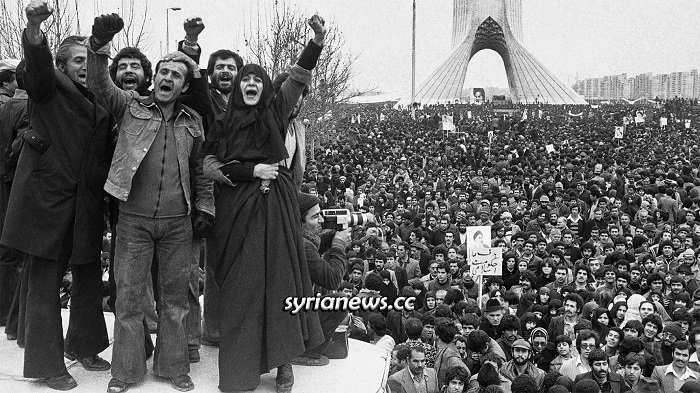
When SL Khomeini’s long fought for revolution overthrew the US assigned and backed dictator of Iran, kings of the kings “Shah Mohammad Reza Pahlavi”, Iran like almost every eastern nation not only shifted political camps but changed its Persian identity to an Islamic identity. Yet Khomeini did not lead an Islamic revolution to end it at the borders of Iran, his ideology was a region-wide anti-oppression anti-imperialist Islamic movement aimed to aspire the Muslims in the east.
And regardless of how the post events of the revolution happened, between unfair excluding of several political parties and the exile after intimidation of thousands connected to the murderous dictatorship of the shah, the new regime in Iran was not established by force but rather with a national referendum with a 98% turnout and 99% support. Yet for a first glance, these numbers might look odd, but their genuineness was demonstrated by the internal unity and cooperation during the Iraq – Iran war. Khomeini set the foundation of a democratic state supervised by an Islamic constitution written by the elite from Iran, Iraq and even Lebanon. Add to that anyone can argue that Iran is a dictatorship, but why bother with biased prejudiced DC-based think tanks that never studied law or understood the power limitation of each official in the republic.
The foundation of the current work of the current IRI foreign policy started in the late 1960s-1970s before the establishment of the republic itself by educating the masses and building up a conscious. It started with the work and words of the unjustly killed Shia scholars Sayid Mohamamd Baqr al-Sadr and Sayid Mohammed Baqr al-Hakim by the then supported USA president Saddam Hussein and with the work of the prominent scientific and military figure Mustafa Chimran in Lebanon. Mohammad Baqr was laying the foundation of an Iraq free from the Baathist regime who not only oppressed a whole religious sect in Iraq but rather genocided a race and forcefully created a refugee crisis in northern Iraq by Arabizing Kurdish cities.
While in Lebanon, the Lebanese Resistance movement Amal, was founded by Lebanese, born in Iran, scholar Sayid Moussa al Sadr, who arrived in Lebanon in 1959 to lead a civil revolution in the favor of the marginalized and poor Shia citizens of south and north Lebanon. Although these two causes might be different in detail, they were related in one thing: “Western-backed regimes”. Saddam enjoyed a healthy relationship with the USA, France, and the USSR who assisted him with weapons and experts from Europe to fortify his rule. Germany had its fair share of experts in Saddam’s MOD too.
Similarly in Lebanon, the USA initiated for the first time its Eisenhower Doctrine in which the U.S. announced that it would intervene to protect regimes it considered threatened by international communism on the 17th of July 1958 and later in assisting against the SSNP led coup. And thinking about it, it was the 1950’s the decade when the USA became a hated nation for Iranians when it led a coup against the democratically elected government of Mohammad Mossadegh. The USA in this decade took UK’s rule and became the new world police deciding who is fit for democracy and who is not.
Therefore, throughout the ME and Asia, several nations were being nourished on the hate of the United States of America whom they considered a force that is willing to battle every movement and government it considered unfit to its ‘standards of democracy.’ And so it was, and events started to unfold with coups orchestrated by the CIA in more than 15 nations and invasions that went deep even into the jungles of Vietnam.
However, what sets the atrocities and brutality of what the USA did from those done by China or Russia or any other regime in modern times is that they were done under the banner of democracy and free rights and free speech.
It’s the hypocrisy and lies of the West that made it impossible to feel warm-hearted toward them again. Add to that, it’s the selectivity of how Americans deals with state and non-state groups and the unjust naming of groups on the terror list that made things worse. For example, it seems that the USA is fond of the Gulf states that have a very bad human rights record, no elections, and a long list of minority persecution and murder, while it seems to be going against Iran and Syria with maximum pressure through sanctions and limited confrontations although both have elections and remarkable minority coexistence.
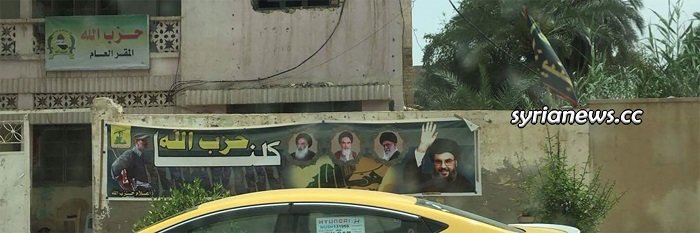
Moreover, the USA labels Hezb Allah on its terror list way back from 1996-1997, although Hezb Allah was formed as a reaction to the USA backed IDF invasion of Lebanon in 1982. Hezb Allah kept resisting up to the year 2000 when IDF left Lebanon on the 25th of May. Hezb Allah, unlike the IDF, never deliberately killed civilians during its wars with Israel.
On the other hand, USA labels Kataeb Hezb Allah, Asaeb Ahl Al haq, and other Iraqi groups as terrorist although they were created only as a response to USA’s invasion to Iraq in 2003. The Invasion led by USA and its allies that not only killed and injured up to a million Iraqi, but devastated Iraq and crippled the state till today. Kataeb and Asaeb, Hezb Allah, and the likes did turn to Iran for help in military aid, but does this mean that Hezb Allah, Asaeb, and the likes are Iranian proxies?
Generally speaking, a proxy is a group of pawns doing the work on the behalf of another. However, it seems that the word proxy in Middle Eastern politics has taken a more dehumanizing and mercenary vibe to it aimed to underestimate and devalue the effort and work of a certain group and shorthand it into a sectarian maniac tier groups used by Iran to spread its ‘terror’ in the middle east. Yet this term that sounds childish to use in international circles, became the dominant word used by American foreign policymakers today. Although if anyone read the 2019 American MOD report about Iran, they’d notice that the term partner is used to describe Hezb Allah and other groups in the middle east that are aligned with Iran ideologically. Thus we can conclude without any doubt that the USA has chosen to put its political interest and bias ahead of any reasonable and fair understanding of events in a show of arrogance and childish understanding of the complexity of the Middle East. USA is failing in the exact way the UK failed to understand the Middle East when it tried to shape its boundaries and future.
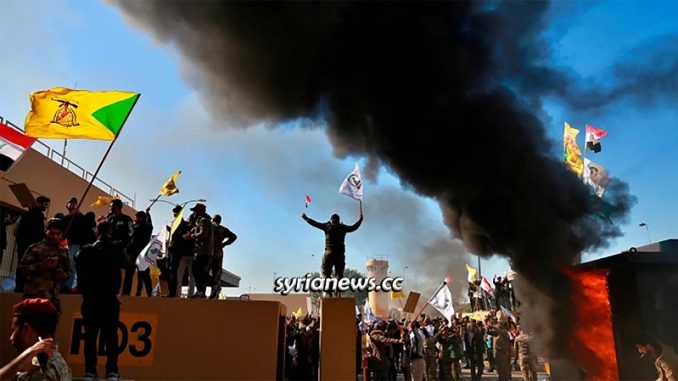
What happened today in Iraq and the march on the American embassy by the families of the 30 Kataeb Hezb Allah members killed by USAF ‘in retaliation’ is another example of how dangerous things can escalate to. Kataeb Hezb Allah and Asaeb Ahl Al Haq have more than 60,000 veteran soldiers who are ready to storm every single American base in Iraq and massacre the soldiers in retaliation of the unjust killing of Iraqi and PMF soldiers but chose not to. They even refrained from entering the embassy compound and chose to pressure a parliamentary resolution that forces USA forces to leave. If the USA was wiser they would have asked the Iraqi security forces to investigate the 107mm missile launches and capture the people responsible.
Not only would they have respected Iraq’s sovereignty, but rather actually knew who is really after these attacks and presented them as the criminals for attacking an Iraqi base and killing Iraqi and American soldiers.
Things kept evolving and events unfolding to a day when the USA is being challenged by Russia and China over world power, and its ally KSA in Yemen over influence, and its ally Israel by Hezb Allah over existence. The Anti-American axis today massed power and strength enough to challenge the existence of Israel and USA in the Middle East, with only time that will show how the limited attacks by both sides will lead to the war that will end one of the two combatants once and for all.
Iranian Revolutionary Guards Corps’ Major General Qasem Soleimani was killed in rocket fire in Baghdad days after an attempted raid on the US Embassy by Iran-linked Iraqi Shia protesters.
Here is what is known about the top Iranian military commander eliminated by US forces.
Soleimani, born in 1957, joined the Revolutionary Guards in 1979 after the Iranian Revolution that ousted the Shah.
Mind-Blowing Military Career
He quickly climbed the career ladder, becoming commander of the 41st Sarallah Division while still under 30 and by the mid-80s he was setting up covert missions inside Iraq to struggle against the regime of Saddam Hussein, joining efforts with Iraqi Kurds.
After the war he was commander of the Revolutionary Guards in his home Iranian province of Kerman, where he battled against opium trafficking from across the Afghani border.
He fulfilled the role up until 2002, when a few months prior to the US invasion of Iraq, Soleimani was tapped to head the Quds Force, Iran’s elite military unit tasked with spreading the Islamic Republic’s policies beyond Iran – one reason why the commander often landed in Washington’s crosshairs.
In 2011, General David Petraeus, the former CIA director, said that Soleimani and his Quds had undermined much of Washington’s work with Iraq’s Shia Muslims and had undone US diplomatic and military efforts in Lebanon.
Targeted by US Sanctions
In Syria, the Quds – accountable directly to Iran’s supreme leader – were believed to be involved in suppressing the uprising against Bashar al-Assad – a move that spawned US sanctions being imposed on Soleimani, as well as the entire IRGC.
In 2011, Soleimani was promoted to Major General of the Iranian Revolutionary Guards by Supreme Leader Ali Khamenei, who at some point dubbed the military serviceman a “living martyr”.
Right before his assassination at Baghdad Airport, the major general issued a warning following Washington repulsing the assault on the American Embassy in the Iraqi capital, noting Iran was not moving towards a war, but is not scared of a potential conflict.
Tensions’ Climax and Strike to ‘Deter Future Iranian Attack Plans’
As confirmed by the Pentagon, Commander of the Quds Force of Iran’s Islamic Revolutionary Guard Corps, Maj. Gen. Qasem Soleimani, was killed by rocket fire near the Baghdad International Airport, as US forces conducted “a decisive defensive action to protect US personnel abroad, at the direction of the president”.
Soleimani’s assassination while in his car at the airport closely followed the repulsion of a raid on the US Embassy in Baghdad with the Pentagon saying Soleimani had previously “orchestrated attacks on coalition bases in Iraq – including the attack on December 27th”.
The latter “culminated in the death and wounding of additional American and Iraqi personnel”, the Department of Defence stressed, referring to the strike, in which Soleimani was killed, as preventive:
“This strike was aimed at deterring future Iranian attack plans. The United States will continue to take all necessary action to protect our people and our interests wherever they are around the world”, the statement added.
New Year’s Eve, 31 December, saw an attack on the US diplomatic mission in Baghdad, where protesters tried to storm checkpoints, smashing windows, battering down doors, and setting fire to the outer fence. The attempted intrusion was stopped by US forces, dispatched at the Pentagon’s orders to increase security for US personnel.
But nobody is making a sound about it, and not even Macron.
Maybe they will now: The first union has selfishly broken ranks – French pilots and cabin crews. It’s a “universal” pension system, sure… except for the groups who Macron has to buy off to break the strike.
French President Emmanuel Macron has barely said two words about the general strike, even though it has lasted four weeks and will soon become the longest general strike ever in French history.
And many French don’t even mind. It’s a quirk of the French system I cannot yet explain: they view it as normal that Macron has not commented on the general strike because that is the domain of the prime minister.
French contradictions abound, and they think the mystery makes them appear deep: France’s president is well-known to be closest thing to a constitutional dictator the West has, and yet the PM is supposed to be given much latitude on domestic policy?
I have heard this often, but never seen it action: the idea that Macron’s PM is not beholden to the ideas and orders of his boss on the pension plan is absurd. To me it has always seen like a way for the president to have someone to blame his unpopular policies on.
But Macron has given one press conference in 2.5 years, and he didn’t say the words “Yellow Vest” in public until after 23 Saturdays, and no one seems up in arms about it (besides the Yellow Vests), so… c’est la France.
Macron will probably make a rote plea for unity at his annual New Year’s Eve wishes – the guy is speaking at 8pm, so if all you have going is watching Macron’s press conference then take heart: 2020 can only get better than 2019 for you.
The coverage of the general strike from non-French media reminds me of France’s recent coverage of the resolution (one step below a law) which equates anti-Zionism with anti-Semitism: there was a decent amount of coverage AFTER the resolution became a fact.
This was obvious to predict, but there is an omertà regarding France’s general strike from Anglophone media – it’s almost as if they don’t want to ruin a good thing. If there was any room for leftism in the West’s “free speech means corporate media own all speech” now would be the time to be up in arms with keyboards in hands. But people repeatedly tell me they can’t find anything about it in non-French sources.
Honestly: This can’t go on in France any longer
Without any exaggeration, the French (and certainly the “French model”, aka “Capitalism with French characteristics) simply cannot sustain more austerity attacks which “re(de)form” it into an Anglo-Saxon model and here’s why: If you take home €2,500 a month in France you have a really good job (especially in 2019). If you take home $2,500 per month in the US (making about $20 per hour) your job is desirable but not really good.
Yes, 42% of Americans don’t even make $15 hour but the point is: the French model is based on low wages. The Swiss, Germans, UK, etc. – they all make much more than rich France.
The reason France accepts lousy wages was their Nordic-level social safety net: so they had guaranteed work contracts (“CDIs”), 2-3 years of decent unemployment, 5 weeks paid vacation legal minimum, cheap schools from 3 months old to PhD, cheap medical care and a good pension. Make no mistake because I know you right wingers will: This is a system which is paid for by the French worker giving up 40% of their pay check every month, and then 10% annually in an income tax. I.e., low wages.
That concept is crucial to understand. A whopping 80% of the pension system is funded by taxes on individuals and bosses, and not the state. The French pension isn’t “unsustainable” at all: if it is “underfunded” it is only on the state side, and only because the state has purposely starved it of funds via funding cuts. With the stroke of a budget pen its minor deficit could be resolved. Baby Boomers will be dropping like flies by the 2030s reducing fiscal stress- the system works, and it can last.
This explains why all neoliberals can really come with to justify junking the ENTIRE system is that it is too “complex”. Why is complexity automatically a negative thing? I’m glad these guys didn’t take up physics. The other reason they deploy is that some people – like manual laborers, those who work in hard and/or dangerous conditions – retire early to avoid death/maiming on the job due to “you’re too old for this” syndrome. They have seized upon the “injustice” of these “special regimes”. All of a sudden neoliberals care about injustice….. Of course the one-size-fits-all, universal system is as regressive (not progressive) as a flat tax, and that’s why no nation does it.
But back to how this onslaught of “reforms” is just unsustainable: reduced services which used to be covered by the state, increased prices on everything, Housing Bubble II, new jobs are all one-month renewable contracts (CDDs), you have to work until 64 instead of 60 in 2009, your pension is going to leave you barely at poverty level – you cannot have this AND low wages in France.
It is just impossible, logically. Something has to give on one of the ends.
If they are going to make it so that all the state is provides is health care and education and then citizens are on their own – the glorious Apache-killing Arizona libertarian model (with a touch of European class) – then they have to vastly inflate wages.
But nobody is talking in France about raising wages to compensate for the worse pensions, nor for any of the austerity measures.
So this can’t go on.
And yet it will – Macron is tackling the unemployment system next, i.e. later this year. Is there going to be a General Strike Act 2?
If the US and UK are any example – no there won’t be. So this may be the end of “France”. Remember the US and UK prior to Reagan and Thatcher – sure was better back then, or at least far less unequal and unstable.
Can Macron get his wish? To be the youngest (despised) leader in Western capitalist history?
One can picture Macron just white-knuckling it right now – if he can just get break this strike… the dude will go down in right-wing history. Or is it “centrist” history for Macron?
When Thatcher died there was UK police brutality at the street parties celebrating her death. That sounded about right to me. The New York Times scolded us with superstition and expressed their fake shock in their pathetic Taboo on Speaking Ill of the Dead Widely Ignored Online After Thatcher’s Death.” This is a taboo in the West – since when? The West cares about taboos – since when? I know they don’t care about taboos because they need a loan word for this rather crucial social concept – the word itself is Tongan, and the English didn’t get to Polynesia until 1773.
As I led with, French pilots and cabin crews have called off a strike they had planned for January 3 – they got a sweetheart deal from Macron, and you can all go kick rocks for calling them “stewardesses”. The Macron administration has only negotiated en masse with unions for three days out of 26 consecutive strike days – they never wanted to make a broad deal but only a few small deals in order to “divide and conquer” and break the strike.
This has worked every time during the age of austerity. I have written this many times but I will say it again, cuz some of y’all think the Western system is the apex of everything political: This is what “independent” labor unions get you – sold out. The socialist model of “we’re all in one big union” means the workers are truly in the government, not against the government… and against the good of the People, and against their fellow workers, and against their fellow unions and against, against, against it’s called “capitalism” people.
But the West is “freer” than China, Iran, Cuba, etc. Sure, free to be unequal.
Back to France: it’s getting hard, having a commute 2-3 times longer for four weeks. I’m not breaking rocks all day, but it’s grating on people.
That’s really what the “general strike” has amounted to – public transport shutdowns. The burden of the national good is basically all on the backs of rail workers. The unions have only called 3 days of nationwide protest and strikes – this means that even politically-active people have probably only taken 3 strike days of lost wages, whereas “good” rail workers have lost a month. What a stupid system they have here? Plenty of protest marches and big talk but when it’s general strike time (finally!) it’s: “I can’t afford it – let the rail workers do it.”
Truly, before we had the Yellow Vests we only had the rail workers: in the age of austerity they were always the ones (along with some of us journalists) at the front lines getting gassed and beating back cops. They have led every major anti-austerity movement. Nobody really joined them when they tried to prevent the EU-forced privatisation of French rails (Same thing back then in the media: “The rail system is bankrupt!” No it’s not, it was purposely starved of state funding.) They led the huge 1995 strike as well.
Not the stewardesses and their Top Gun flyboys. They have left France in the lurch.
I guarantee that tonight many will have a few glasses of wine and say, “Zees solidarité ees all phony!”, just to appear smart and courageous (the French are always wishing each other “good courage”), and the strike will fall apart.
That’s the France I know – Windbag France, aka Faithless France.
But we have the Yellow Vests now. Maybe General Strike 2 is République Française VI? Tides turn, the moon waxes and wane, the meek inherit a decent pension.
General striking is hard, but just don’t be a stewardess. Excuse me, Airplane Cabin Executive. Gotta love that Western model….
Ramin Mazaheri is the chief correspondent in Paris for Press TV and has lived in France since 2009. He has been a daily newspaper reporter in the US, and has reported from Iran, Cuba, Egypt, Tunisia, South Korea and elsewhere. He is the author of the books ‘I’ll Ruin Everything You Are: Ending Western Propaganda on Red China’ and the upcoming ‘Socialism’s Ignored Success: Iranian Islamic Socialism.’
With the defeat of ISIS and Nusra, the exposure of the ‘White Helmets’ and the various Chemical Weapons stunts, and with the collapse of ‘Rojava’, Washington is fast running out of options in Syria. Syria is winning, but the big power has not yet given up. Knowing that it is losing, it still acts to prolong the endgame and punish the Syrian people.
***
We are sitting at a joint military command center in Arima (northern Syria, just west of Manbij) with three Syrian Arab Army (SAA) colonels and two uniformed Kurd SDF ‘koval’ (comrades). There are Russians here too, but they do not enter our conversation. Yet even in the friendly chat, as we wait for permission to travel on to Manbij and Ayn al Arab (Kobane), some tensions are apparent.
Sharing coffee and food, both the SAA officers and the SDF comrades acknowledge they are fighting and dying together against an invading Turkish army and its proxy militias. The frontline is just a few kilometers away.
When I ask what differences there are between DAESH, Nusra and the ‘Free Army’, they all respond derisively. “There is no difference, it is a money game, the fighters go back and forwards depending on the pay rates”. “Any difference between groups in the numbers of foreigners?” I suggest. “No difference”, they repeat. SDF Comrade B passes me a recent video of ‘Free Army’ fighters at Tal Abiad, to the north-east, protesting conditions and demanding their return to HTS/Nusra controlled Idlib.
But we all know they fight for a different cause. The SAA officers are fighting for a liberated and united Syria, while the SDF comrades still dream of an independent ‘Kurdistan’ by cutting out parts of contemporary Turkey, Syria and Iraq.
Separatist Kurds collaborated with US occupation forces in pursuit of their ‘Rojava’ dream (western Kurdistan), even though Washington never really supported the project. Many Syrians see them as traitors. But the SAA is patient, dealing with one enemy at a time, and at the moment the enemy in north Syria is Erdogan.
The ‘Rojava’ dream is effectively dead. As both Afrin (in March 2018) and Manbij (in October 2019) demonstrated, no Kurdish militia can defend itself from Ankara, which correctly sees any ‘Rojava’ statelet as a stepping stone for the bigger game, a large slice of Turkey. Protection by US occupation forces could not last forever. Moreover, Kurdish groups have no exclusive historical claims over any parts of northern Syria. Many others live there. In much of north Syria Kurds are a small minority.
Despite these tensions a close, even affectionate relationship remains in the room. The SAA colonels are all older men, in their 40s and 50s, while the SDF comrades are younger men, around 30 years old. Colonel H offers more coffee to Comrade A while Comrade B tells of Kurdish conquests. “We lost 850 martyrs liberating Manbij”, he says, and “2,000 in Kobane”. And what about all those in your prisons? one of the colonels asks. “They are reformatories”, Comrade B replies.
*(Between Aleppo and Manbij there is a switch from checkpoints controlled by the Syrian Arab Army to those controlled by the Kurdish SDF, even though the SAA and Russia now secure most of these ‘SDF controlled’ areas)
What Comrade B does not say about the “liberation” of Manbij is that (1) the 2016 battle was effectively a transfer of the city from one US proxy (ISIS/DAESH) to another (SDF), and (2) there were very few Kurds in that mostly Arab city. After the major battles, many from surrounding areas fled to the city, swelling its population. A recent estimate puts its population at 700,000, of which 80% are Arab (Najjar 2019). Of the rest there are other non-Arab minorities, including Assyrians, Circassians and Armenians. There is no real social base for a separatist Kurd regime in Manbij.
Yet even after the departure of US occupation forces from this part of northern Syria, and even though the Syrian and Russian presence constrains Turkish ambitions, the SDF has been allowed to maintain its former administration of both the city and the region.
The bizarre and unsustainable nature of this regime is made apparent when Nihad Roumieh, my Syrian journalist colleague, asks one of the colonels to show us where we are. Colonel A happily rolls out a military map, with friend and enemy troop placements. The first thing apparent is that six Syrian armored units protect Manbij, to the north. Second, although Syrian forces have resumed control of more than 200km of the northern border, it is depressing to see how much of northern Syria remains occupied by Erdogan and his proxies.
The picture seemed even more grim when we later spoke with a Manbij councilor and his lawyer friend. They complained of many held in prison and tortured, under the SDF regime. They said there were only two Kurd villages in Manbij.
Nevertheless, it seems that a transition is taking place. Over November-December both Syrian and Russian flags were raised over previous SDF positions in Hassakah, Ayn al Arab, Jarablus and Tal Jemaa (Syrian Observer 2019; Semenov 2019; SOHR 2019), with suggestions that the SDF was involved in negotiations with Damascus “to reach conclusive solutions”. However, SDF leader Mazloum Abadi said that the group wanted “Syrian unity … [with] decentralized self-administration” including maintenance of the separate SDF militia (Syrian Observer 2019). Damascus is unlikely to accept such terms.
*
The claim for a Kurdish homeland in Syria is no indigenous movement, claiming the return of ancestral lands. Nor does the debate over Kurds as historical migrants (in Yildiz 2005) or long-standing inhabitants (Hennerbichler 2012: 77-78) resolve the question. While Kurdish languages are of Iranian origin, and the longer history passes through Mesopotamia (Iraq) and the Ottoman Empire, Kurds are certainly part of the native Syrian population. However at 1.5 million Syria hosts the smallest group in the region, with around 20 million in Turkey (Gürbüz 2016: 31) and another 6-8 million each in Iran and Iraq.
The idea of a ‘Rojava’ statelet in Syria has been compromised in three ways. First, the Kurdish groups in the north and north-east Syria are only one of several groups (amongst Assyrians, Circassians, Armenians and Arabs), and in some areas small minorities. Second, the Kurdish separatist movement in Syria has been over-determined by the politics of and migration from Turkey. ‘Rojava’ was seen as the stepping stone for a larger ‘Kurdistan’ project, driven from the north. Third, intervention by the imperial power raised separatist expectations and has damaged Kurdish relations with other Syrian groups.
In the longer history of Syria, a traditional refuge for minorities, there have been many Kurds, including famous personalities, who did not buy into the separatist dream.
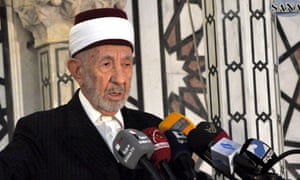
Sheikh Mohammad al Bouti
Two of them are buried inside the grounds of the Ummayad Mosque in Damascus: the 12th-century ruler Sala’addin and the Quranic scholar Sheikh Mohammad al Bouti (murdered by Jabhat al Nusra in 2013). Many Syrians of Kurdish origin embraced the idea of a wider identity. Before the 2011 conflict Tejel (2009: 39-46) classified Syrian Kurdish identities as comprising Arab nationalist, communist and Kurdish nationalist, with Syrian Kurd leaders Husni Za’im and Adib al-Shishakli campaigning for a non-sectarian ‘Greater Syria’.
The Turkish Kurd influence began early in the 20th century, as Kurdish culture was repressed by the post-Ottoman Turkish state. Turkish Kurds first took refuge in Syria, including in Damascus, after their failed rebellion in 1925. The very idea of a Syrian Kurdish party first came in 1956 from the Turkish refugee Osman Sabri; and another Turkish refugee Nûredîn Zaza, became president of that party (al Kati 2019: 45, 47).
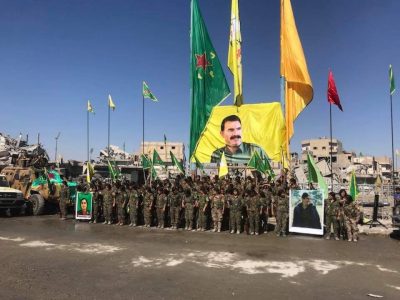
There were multiple splits in subsequent years. The Democratic Union Party (PYD) emerged in the 1980s as a branch of the Kurdistan Workers Party (PKK), loyal to its leader Abdallah Öcalan, who in 1996 acknowledged that “most of the Kurds of Syria were refugees and migrants from Turkey and they would benefit from returning there” (in Allsop 2014: 231). Many of the claims about ‘stateless’ Kurds in Syria have to be read in light of this Turkish influx. However, Öcalan departed in 1998, as part of Syria’s Adana agreement with Turkey (al Kati 2019: 49-52).
The big powers, conscious of the potentially divisive role of separatist Kurds, have used them for decades, to divide and weaken Arab governments. US regional allies Israel and Iran (pre-1979) joined in, with the Shah in 1962 ordering his SAVAK secret police to help finance the Kurdish insurgency in northern Iraq, so as to undermine Baghdad. The Israelis joined in two years later. The CIA offered further help to the Barzani-led Kurds in 1972. One result was that Iraq was unable to join the Arab resistance against Israeli expansion in 1967 and 1973 because a large part of its military was deployed in northern Iraq (Gibson 2019).
The US-led war on Syria in 2011 presented new separatist opportunities. Peoples Protection Units (YPG) were reactivated in 2012, at first with support from Damascus so that Syrians in the north could fight ISIS. However, the US occupation of parts of north and east Syria in late 2015 led to the reorganization of many YPG units into the US-sponsored ‘Syrian Democratic Forces’ (SDF) (Martin 2018: 96). These were sometimes referred to as a ‘Rojava’ force, while at other times the Kurdish component was played down.
According to one US military report in 2017 the SDF in Manbij was only 40% Kurd (Townsend in Humud, Blanchard and Nikitin 2017: 12), addressing the embarrassing reality that Manbij had a very small Kurdish population. In late 2016 US Col. John Dorrian, gave a higher overall Kurd estimate, saying that the SDF “consists of approximately 45,000 fighters, more than 13,000 of which are Arab” (USDOD 2016). Many of the latter came from the fragments of earlier US proxy militia in Syria.
Syrian Colonel Malek from Aleppo confirmed to me that the bulk of SDF members were always Kurdish, including many from Iraq and Turkey. The size of the non-Kurd and foreigner contingents varied according to the money on offer. A report from the London based International Centre for the Study of Radicalisation and Political Violence (ICSR) recognized that both the YPG and SDF ground forces remained largely arms of the Turkish PKK (Holland-McCowan 2017: 10).
The failure of the September 2017 separatist referendum in Iraq dealt a serious blow to the regional project. The KDP and PUK put aside their rivalry to hold an independence referendum (having already pushed for and gained federal status) even though it was not authorized by Baghdad. The proposal was said to have gained 92% approval, but was immediately rejected by the Iraqi Government and Army, which drove Peshmerga forces out of Kirkuk in just a few hours (Gabreldar 2018; ICG 2019). For the first time in decades the Iraqi Army took control of the NE region. Baghdad was showing a political will that had been lacking for many years.
In Syria, US forces did nothing to stop the YPG’s ethnic cleansing of non-Kurds in areas to which they laid claim. In October 2015, the western aligned group Amnesty International accused the YPG (just before the US rebranded them as the ‘Syrian Democratic Forces’) of forcibly evicting Arabs and Turkmens from areas they took after displacing ISIS. Amnesty produced evidence to show instances of forced displacement, and the demolition and confiscation of civilian property, which constituted war crimes (AI 2015). Similar accusations had come from Turkish government sources (Pamuk and Bektas 2015) but also from refugees who said that ‘YPG fighters evicted Arabs and Turkmens from their homes and burned their personal documents’ (Sehmer 2015; Al Masri 2015).
However, after the US forces became direct patrons of the SDF in late 2015, a UN commission, co-chaired by US diplomat Karen Koning AbuZayd, continued its quest to place most of the blame for abuses on Syrian Government forces. The Commission accused the YPG/SDF of forcibly displacing communities “[but only] in order to clear areas mined by ISIL”, and of forcible conscription, but “found no evidence to substantiate claims that YPG or SDF forces ever targeted Arab communities on the basis of ethnicity, nor that YPG cantonal authorities systematically sought to change the demographic composition of territories” (IICISAR 2017: 111 and 93).What Syria’s Kurds “Think” They are Fighting For Versus Reality
Nevertheless, in 2018 there were ongoing reports of the ethnic cleansing of Assyrian Christians from US-SDF held areas in NE Syria. Young men in the Qamishli area were reported to have been arrested and forcibly conscripted into Kurdish militia, alongside property theft by those same militias (Abed 2018). In 2019 the SDF were reported to have closed more than 2,000 Arabic-teaching schools in the Hasaka region (Syria Times 2019) and to have shot, killed, wounded and jailed displaced people who were trying to escape from al-Hawl Refugee Camp in South-Eastern Hasaka (FNA 2019). Nevertheless, once US forces created and adopted the Kurdish-led ‘SDF’, Amnesty International and the western media muted their earlier criticisms.
Washington in 2012 had looked favorably on the ISIS plan for a “Salafist principality”, so as to weaken Damascus (DIA 2012). In September 2016 US air power was used to attack and kill more than 120 Syrian soldiers at Mount Tharda behind Deir Ezzor airport, to help the terrorist group’s (failed) efforts to take over and threaten the city (Anderson 2017). But when Russia, Syria and Iraq began wiping out these Saudi clones, USA forces simply rescued their best commanders and replaced ISIS with a Kurdish-led ‘SDF’ (Anderson 2019: Chapters 5 and 7), once again to undermine and weaken Damascus.
But US occupation forces did not wait around to sponsor the ill-fated Rojava project. In October 2019 President Trump gave the order for a partial withdrawal from northern Syria. Former US diplomat Robert Ford had warned in 2017 that the US would abandon the SDF (O’Connor 2017). So, stripped of US military protection and their main source of arms and finance, the SDF was forced to rapidly put together a new alliance with Damascus and Russia, to prevent annihilation by Erdogan’s forces. The Turkish leader saw the Öcalan-led YPG/SDF as a stepping stone to its larger project in Turkey (Demircan 2019).
Western liberals complained the US was ‘betraying’ its Kurdish allies; but they placed too much faith in romantic myths. Ünver (2016), for example, presented separatist Kurds as recipients of unplanned opportunities in Syria’s “civil war” in an “age of shifting borders”, as though the big power were not once again using the ‘Kurdish card’ to divide and weaken both Iraq and Syria. Schmidinger (2018: 13, 16-17) tried to twist Syria’s historic diversity into an argument for the ‘Rojava’ sectarian division – instead of an inclusive unitary state. But, as has been said many times before, imperial powers never have real allies, only interests. Lebanese Resistance leader Hassan Nasrallah told Kurdish separatists in February 2018: “In the end they will work according to their interests, they will abandon you and they will sell you in a slave market.”
Meanwhile, with Washington’s blessing, Erdogan persists with his plan to control large parts of northern Syria, with the aim of settling many of the refugees in Turkey under a Muslim Brotherhood style regime, controlled by sectarian Islamist militia. Retired Syrian Major General Mohammad Abbas Mohammad told me that Turkey’s leader has not given up his ambition of becoming a modern-day ‘Caliph’ of Muslim nations, and is working to colonise Syrian minds with his constant Islamist slogans.
*
Nevertheless, with the help of its allies, Syria is winning the war. ISIS/DAESH and Nusra are virtually defeated, the ‘White Helmets’ and the Chemical Weapons stunts have been exposed and the Rojava myth has collapsed. But a Washington-driven economic war now targets all the independent countries of the region, aggravating the occupation and the terrorism.
Director of the Syrian Arab Army’s Political Department Major General Hassan Hassan, tells us that the US “has the power to destroy the world, many times over, but it has not been able to turn that power into capabilities.” That is why US wars are failing across the region.
While we are indeed heading for a multi-polar world, he says, we are not there yet. “Syria still faces the unipolar regime”. Erdogan, ISIS, Israel and the SDF are all “puppets” of this dying world order. Authorized by the US, Erdogan still wants to set up a Muslim Brotherhood region in north and east Syria. This is a dying and a “most dangerous” order, General Hassan says. “The US deep state knows that its unipolarity is failing, but that has not yet been announced. The new world system is born, but is not yet recognized. The US wants to prolong this conflict as long as possible, and to punish the Syrian people”.
(Crossing the huge Furat (Euphrates) river, from rural Manbij to rural Raqqa, north Syria)
In that transitional phase we see collaboration between the SAA and the SDF, the extraordinary anomaly of an SDF-run Manbij and the ongoing experiment of ‘Kobane’, the SDF controlled border town which Syrians call Ayn al Arab.
Traveling from rural Aleppo to rural Raqqa on the M4 highway we cross the Furat (Euphrates) river, a huge, semi-dammed expanse of fresh water which appears particularly sweet between two deserts. Turning north we arrive in Ayn al Arab, at the Turkish border, in less than an hour. Although Erdogan’s gangs are attacking Ayn al Issa, deeper inside Syria on the M4, there is no sign of fighting near Ayn al Arab itself. Major General Abbas says that Erdogan is aiming at narrow incursions, which can later be widened.
This small city of perhaps 45,000 people was evacuated during earlier fighting and still shows signs of great destruction, especially on the eastern and northern sides. Less than a tenth of the size of Manbij it is now said to have a majority of Kurds and the SDF comrades seem well organized. We are taken to their small headquarters, a three-story building, to await further security checks and an escort to one of their schools and one of their hospitals.
At the secondary school, as in the headquarters, they seem wary of a foreigner accompanied by an SAA Colonel and a Syrian journalist. That breaks down a little as I ask about their curriculum and the children, who have clearly gone through substantial trauma. The headmaster says they are developing programs to help students deal with their war experiences. The threat is not over, as Erdogan’s troops, including sectarian Islamist gangs, are only a few kilometers to the north.
The Kurdish nationalist curriculum has made a break with the centralized Arabic-based system set in Damascus. The headmaster explains that their syllabus is carried out 60% in the Kurdish language, 20% in Arabic and 20% in English. For children from Arab families the syllabus is 60% Arabic, 20% Kurdish and 20% English. They speak of four ‘nationalities’ in Kobane: Kurd, Arab, Yazidi and Christian. That is how they see it.
The management of the small hospital is also strongly Kurd nationalist. I ask where they get their support and they mention the Americans and some international NGOs. Of course, there is nothing from Ankara. “What about Damascus?” I ask. “Nothing and we want nothing”, says one of the managers.
That may be true for this hospital. However Syrian colleagues tell that most of the health centers in SDF controlled areas still get finance and supplies from Damascus. So not only is their security guaranteed by the Syrian state, so are most of their social services.
It remains to be seen how much Kurdish autonomy will remain, under a final political settlement. Federation is not part of the discussion, it is clear that Damascus sees that as a path which would dismember and weaken the country. While the SAA and the SDF jointly fight Erdogan’s gangs, Damascus has been calling on Arab leaders in the north and north east, who had collaborated with the US occupation force and the SDF, to return to the Syrian Arab Army. On the other side, SDF Commander General Mazloum Abdi opposes incorporation of the SDF into the SAA (Van Wilgenburg 2019) and wants to hold onto as much local administration as possible (Syrian Observer 2019). The continued US presence and sponsorship of SDF units in Hasaka, Qamishli and Deir Ezzor (Ahval 2019), serves to maintain the illusions of autonomy.
In the Russian media there is some pessimism about an SDF-Damascus reconciliation. One observer suggests that “Russia will eventually force most (if not all) of Turkey’s forces to leave Syria … [but Damascus] and the Syrian Kurds have opposing political and military goals that will not be easily reconciled” (Stein 2019).
However, Damascus has some other cards. The YPG/PKK/SDF grew its influence through US sponsorship and, as that declines, other voices in the north, including Kurdish voices, are likely to re-emerge, especially through the constitutional process in Geneva. Major General Abbas points out that there are now dozens of Kurdish parties in the north east (Syria Times 2018). Given the intransigence of the US-dependent SDF, Russia is said to be recruiting Syrian Kurd youth to a rival group (Duvar 2019), which is likely to be incorporated into the SAA.
In my view, there will likely be some accommodation of Kurdish nationalist demands at the cultural and local administrative levels, but alongside efforts to ensure this does not privilege Kurds above other Syrian groups. That should appear in the amended constitution. The old world order is dying and the new one is still being born. In this transitional world, Washington persists with its losing war, to divide and punish the Syrian people.
*
Note to readers: please click the share buttons above or below. Forward this article to your email lists. Crosspost on your blog site, internet forums. etc.
Dr. Tim Anderson is Director of the Sydney-based Centre for Counter Hegemonic Studies. He has worked at Australian universities for more than 30 years, teaching, researching and publishing on development, human rights and self-determination in the Asia-Pacific, Latin America and the Middle East. In 2014 he was awarded Cuba’s medal of friendship. He is Australia and Pacific representative for the Latin America based Network in Defence of Humanity. His most recent books are: Land and Livelihoods in Papua New Guinea (2015), The Dirty War on Syria (2016), Global Research, 2015, now published in ten languages; Countering War Propaganda of the Dirty War on Syria (2017) and Axis of Resistance: towards an independent Middle East (2019).
Gabreldar, Bushra (2018) ‘Kurdish independence in Iraq’, Harvard International Review , Vol. 39, No. 1, Athletic Diplomacy: the intersection of sports and culture (Winter 2018), pp. 7-9
Humud, Carla E.; Christopher M. Blanchard and Mary Beth D. Nikitin (2017) ‘Armed Conflict in Syria: Overview and U.S. Response’, Congressional Research Service, April 26, online: https://www.refworld.org/pdfid/591c08bc4.pdf
Kutschera, Chris (1994) ‘Mad Dreams of Independence: The Kurds of Turkey and the PKK’, Middle East Report, No. 189, The Kurdish Experience (Jul. – Aug., 1994), pp. 12-15
Martin, Kevin (2018) ‘Syria and Iraq ISIS and Other Actors in Historical Context’, in Feisal al-Istrabadi and Sumit Ganguly (2018) The Future of ISIS: Regional and International Implications, Brookings Institution Press
Mohannad Al-Kati (2019) ‘The Kurdish Movement in the Arab World: The Syrian Kurds as a Case Study’, AlMuntaqa , Arab Center for Research & Policy Studies, Vol. 2, No. 1 (April/May 2019), pp. 45-61
SOHR (2019) ‘Lens of SOHR monitors the rise of the Syrian flag and the flag of Syriac Military Council affiliated to “SDF”, in Tal Jemma north of Tal Tamr town’, 4 December, Syrian Observatory of Human Rights, online: http://www.syriahr.com/en/?p=149576
Tejel, Jordi (2009) Syria’s Kurds: History, Politics and Society, Routledge, New York
Ünver, H. Akin (2016) Schrödinger’s Kurds: Transnational Kurdish Geopolitics in the Age of Shifting Borders, Journal of International Affairs , Vol. 69, No. 2, Shifting Sands: The Middle East in the 21st Century (SPRING/SUMMER 2016), pp. 65-100
USDOD (2016) ‘Department of Defense Press Briefing by Col. Dorrian via teleconference from Baghdad, Iraq’, U.S. Department of Defense, 8 December, online:
Serbia at the Crossroads. Electoral Fraud
-
This article was written a week before the elections. (October 18, 2026)
*In Serbia, the stage is set for electoral fraud of epic proportions on 25
Octob...
The one advantage of corruption
-
Non-paywalled crooked Kushner article: “The Art of the Deal: Jared
Kushner’s Hacked Phone Revealed His Secret Negotiations—Including More Than
$700 Million...
A Jewish One World Government
-
A Jewish One World Government October 21 2026
___________________________________ More Vids! +BN Vids Archive! HERE!
___________________________________ Su...
The United States At A Crossroad
-
The United States At A Crossroad—An Analysis (16 Sept 2026) by Lawrence
Davidson Part I—Texas vs Minnesota Back in mid-May […]
Report on Beth Israel vigil 09-12-26
-
*Eat-a-Cheeseburger Day Approaches*
This year, EAC Day appears on Monday, September 21st. The date coincides
with the Jewish holiday called Yom Kippur. Cl...
-
Hello all,
It is with great sadness that I share with you the passing of our beloved
sister, Mother, and Grandmother, the individual that you all knew ...
Best Horror Podcast
-
Best Horror Podcast Introduction: Horror podcasts […]
The post Best Horror Podcast appeared first on Copper Shock Horror Podcast.
Ikhras Endorses Muntadhar Al-Zaidi
-
“Oh parties of banditry and sectarianism and corruption, we have come and
our goal is to destroy you.” Ikhras formally endorses Muntadhar al-Zaidi,
Iraqi j...
Prince Charles: Foreign Jews behind bloodshed in ME
-
In May, 2017, British Crown Prince Charles declined an invitation from
Zionist entity’s president Reuven Rivlin‘s to attend the 100th anniversary
of the no...
Palestinian Women – One for All, All for One
-
Honouring All Palestinian Women by Honouring Three: Hanin Zoabi, Ahed
Tamimi, Samah Sabawi Vacy Vlazna “Palestinian women have always stood side
by side ...
US’s Saudi Oil Deal from Win-Win to Mega-Lose
-
By F. William Engdahl Who would’ve thought it would come to this? Certainly
not the Obama Administration, and their brilliant geo-political think-tank
neo-...
-
*Mordechai Vanunu wins human rights prize of Brazilian Press Association *
* http://www.alternativenews.org/english/index.php/features/updates/7038-mordechai...
Abdul Aziz Rantissi:
"My ultimate wish, my God, is to attain martyrdom,"...God granted him his wish on April 17, 2004, at the hands of Israeli assassins.