Tuesday, 28 January 2020

US TO GRANT $35 MILLION TO PROMOTE ITS FAKE NEWS BUBBLE IN SYRIA & CONTROL LOCAL MEDIA


Fake News Media

January 24, 2020, RT.comAlthough Western media has a shoddy track record of lying on Syria (and Libya, Iraq…), the US State Department will pump $35 million more into future war propaganda on Syria, under the guise of promoting honest reporting. 
A US State Department grant, “Support for Independent Media in Syria,” is unabashed in stating one of its main goals is “to advance U.S. Government policy objectives in Syria.”
That is probably the sole honest clause in the grant description: that it is in the end about US self-serving, hegemonic objectives in Syria.
The description goes on to claim these goals include the defeat of ISIS—although the illegal US-led coalition has attacked Syrian army positions on numerous occasions, ensuring the advance (not defeat) of ISIS in those areas. One of the most glaring instances being the September 2016 repeated attacks on the Syrian army in Deir ez-Zor province, which saw ISIS take over the region.
The US assassination of Iranian General Qasem Soleimani, recognized in the region as the man responsible for the near-defeat of ISIS, is another notable example of the US goals being to prolong, not defeat, ISIS in the region.
With their grant, the US plans to “advance human rights and promote tolerance and dialogue between ethnic and religious communities,” which is again morbidly laughable given that the US has been supporting wahhabi and other extremists whose human rights track records include caging, torturing, raping, and starving civilians, and public executions.
It wouldn’t be American policy if the State Department grant didn’t include mention of countering “Russian disinformation” and ending the presence of “Iranian forces and proxies in Syria.”
However, removing Iranian forces isn’t within America’s right to do; Syria invited Iran, Russia and other allies to actually fight terrorism in Syria, as opposed to the US-led occupation forces. And as discussed, it isn’t Russia that has the track record of disinfo on Syria, that honour goes to America and allies.
Western outlets in chorus promoted the accusations of Syria/Russia preventing food and aid into eastern Aleppo (even Reuters reported“rebels” had stockpiled aid) and Madaya and eastern Ghouta (none was true).
Western media sold the story of Russia/Syria bombing the home of Omran Daqneesh (didn’t happen), of the al-Quds hospital being “reduced to rubble” by Russian/Syrian bombing (didn’t happen), and a litany of other grotesque war propaganda stories.


897px-Omran_made_the_news


19022348_10155554719009059_87946180_o-1


DSCN7625-1
Suddenly we’re meant to find credible journalists who embed with al-Qaeda and whitewash their crimes, and media which have on many occasions used photos not even in Syria to accompany sensationalist war propaganda stories. 
CNN and western media got it wrong about Omran Daqneesh, but I haven’t even seen any retractions for this lie.
And yet the US wants people to believe that the independent voices and Russian and Syrian media who actually reported factually and honestly on these and other issues…are not credible. 
The US wants people to live in a fake news bubble, where the narratives are controlled by the war mongers. And, strangely, America seemingly wants Syrians to be subjected to media that reports opposite of the reality they are living. As if after nine years of enduring Western (and Gulf) media’s lies Syrians will suddenly believe them and decide to overthrow the president they elected (and support)? America is grasping at straws…

The OPCW Truth Bombs

Western nations accuse Russia of disinformation around whether Syria used a chemical weapon in Douma, eastern Ghouta.
In April 2018, Western media pounced on and promoted the White Helmets’ lies, shedding crocodile tears over civilians allegedly exposed to a chemical agent, at the same time ignoring or mocking the testimonies of 17 Syrians from Douma (including the boy starring in the White Helmets’ hoax video). 
Turns out the body tasked to examine this accusation omitted from its final report key findings that poke massive holes in the (West’s) official narrative around Douma. Not one, but many revelations have been leaked about the critical omissions of the OPCW  report. 
The only ones taking this seriously are mainly Russia, Syria and independent researchers. In the face of these recent revelations, most Western media have largely thus far been silent.
Similarly, Western media didn’t cover the December 2018 panel detailing damning findings on the White Helmets’ association (and membership) with terrorist groups in Syria, and their involvement in staging chemical attacks and in organ harvesting…
In the State Department’s quest for truthful reporting, one of the issues to be protected seemingly at all costs is of course the White Helmets (and the chemical hoaxes they help stage).
Anyone who has seriously researched the White Helmets, much less bothered to interview Syrian civilians about the fake rescue group, knows their footage and claims are as credible as the words of nurse Nayirah, Colin Powell, or the entries of Wikipedia.
Journalists who bothered to interview medical staff in Douma following the chemical hoax were told that doctors were treating patients with normal wartime injuries when “strangers” (including White Helmets members) entered yelling about a chemical attack, creating a panic (and demonstrating a lack of medical skills), and filming the scene with then 11 year old Hassan Diab.


Diab was one of the Syrians dismissed by western media when he testified to the OPCW that he had not been subject to a chemical attack but had been used by the White Helmets. For Western media, only some children are credible (exploited)…when it suits their narrative.
One such youth, Muhammad, gained notoriety when eastern Ghouta was being liberated. Like the Aleppo child Bana before him, the Ghouta teen had an account in his name on Twitter (the dodgy logistics of which I raised in my last article) and was busy parroting the accusations.
Incidentally, Ghouta (to the silence of media which claimed concern in 2018) is rebuilding, in peace.
In any case, I get the feeling people are tired of lying Western media, chemical hoaxes and the antics of the White Helmets. I certainly see propaganda apologists getting called out on Twitter more than prior, and people are extremely skeptical of chemical weapons accusations.
As Vassily Nebenzia said of the OPCW official report on Douma: “Humpty-Dumpty, as we know, “sat on a wall, had a great fall and all the king’s horses, all the king’s men, couldn’t put Humpty together again”. I mean, that is exactly what happened to FFM report. Exactly.”
RELATED:

River to Sea Uprooted Palestinian   
The views expressed in this article are the sole responsibility of the author and do not necessarily reflect those of the Blog!

DRONE STRIKES LEAVE INNOCENT WIDOWS AND ORPHANS


Source

January 25, 2020

The killing of Iranian General Soleimani was big news. There were a few points made in the Western mainstream media about its legality being dubious, but nobody seems to be concerned that it contravened international law, in addition to be totally amoral. One wonders if any of the drone operators, the little key-tapping techno-dweebs thousands of miles away, were awarded a medal for their gallantry in prodding buttons to blast human beings to shards of flesh and bone.
It’s not impossible that such awards will be handed out, because there is a notorious precedent. The captain of the warship USS Vincennes which fired a missile that shot down an Iranian airliner killing 254 Iranians and 36 equally innocent citizens of other countries, was awarded the Legion of Merit for “exceptionally meritorious conduct.” And we’ll pass over the fact that those responsible for shooting down the Ukrainian airliner on January 8 are to be punished and that Iran’s President Hassan Rouhani declared the incident to have been an “unforgivable error”, while there was never an apology from the United States for killing 254 Iranians, or anyone else. Indeed, Newsweeknoted that then-Vice President George HW Bush told an August 1988 election campaign rally a few weeks after the incident that “I will never apologize for the United States — I don’t care what the facts are. I’m not an apologize-for-America kind of guy.”
GHW Bush has a notable successor in Donald Trump, who is not the kind of guy who apologises for anything. His confused and semi-coherent reasoning for killing Soleimani included such gems as he “was plotting imminent and sinister attacks on American diplomats and military personnel, but we caught him in the act” and “We caught a total monster and we took him out.” In a television interview he declared that “plus, he was going after — in our opinion, our very intelligent opinion, he was going after our embassies, and things could have happened.”
But as reported by the Washington Post, “No warnings were issued to staff at the embassy in Iraq or any other unnamed embassies” concerning any “imminent” attack. In other words, Trump was telling yet more lies, and in this case lying to justify an illegal killing.
The murders in Iraq were the latest in a long line of assassinations and collateral killings by US drone-fired missiles all over the world. The worst incidents last year included a video game shoot in September when in Afghanistan, according to Reuters, “a US drone strike intended to hit an Islamic State hideout . . . killed at least 30 civilians resting after a day’s labour in the fields, officials said. The attack also injured 40 people after accidentally targeting farmers and labourers who had just finished collecting pine nuts. Haidar Khan, who owns the pine nut fields, said about 150 workers were there for harvesting, with some still missing as well as the confirmed dead and injured.” There was no inquiry, no explanation, no expression of regret — it was the normal, the usual, the always-expected condescending drivel from a Pentagon spokesman that “we are aware of allegations of the death of non-combatants and are working with local officials to determine the facts.” Then silence, apart from the grieving of widows and orphans.
On December 1 the New York Timestold us that “an American drone strike on a car carrying a woman who had just given birth in south-eastern Afghanistan left five people dead, including the mother, three of her relatives and the driver . . . The woman, Malana, 25, had given birth to a son, her second child, at home. But her health had deteriorated soon after and relatives had been taking her to a clinic. On their way home, their vehicle was hit.” Out trotted the usual hogwash from a US spokesman that “We are aware of the allegations of civilian casualties and working with local authorities to determine the veracity of these claims.” And ever afterwards — silence. The dead woman’s new baby wasn’t in the car that was blasted to bits by the drone-fired missile, and will no doubt grow up a lover of Western culture.
On and on they go, with one of the latest atrocity being on January 8, when “more than 60 civilians were killed or wounded in a US drone attack targeting a top Taliban splinter-group commander in the western Afghanistan province of Herat.” NATO was in on this one, and its spokesman said there had been “a defensive air strike in support of Afghan forces”, confirming it was carried out by a US drone. Nobody apart from local Afghan officials knows anything about it, because it’s too dangerous for western reporters to travel in Afghanistan trying to investigate deception and lies about drone strikes or anything else. Afghanistan’s Khaama Press agency reported that “tribal elders in southern Herat province called on the government to launch an immediate investigation about the attack that took the lives of innocent civilians” but nothing will be done. After all, there are only a few dozen utterly stricken Afghan families, and they don’t matter to the Kabul government any more than they do to the video game missile controllers launching death and hideous destruction from thousands of miles away.
The drone expert Professor Peter Lee of the University of Portsmouth in the UK put it well in early January by observing that “When Reaper [drone] crews have followed someone for days or weeks, their target is not just pixels on a screen but a living human being. Operators watch targets spend time with family and friends and even playing with their children. Crews, commanders and image analysts also continue to watch from above after a missile or bomb strike, conducting battle damage assessment. They see the bits of bodies being collected and taken for burial. They see grieving, devastated family members.”
Trump says he killed Soleimani because he was “the world’s top terrorist” who “viciously wounded and murdered thousands of US troops” which is absolute rubbish. But even if it were true, and there was something in international law that permitted his murder, what about the others who were killed by Trump’s Hellfire missiles? It is said there were nine other people blown to pieces, one of whom was head of Iraq’s militia forces. There was no explanation from Trump or any of his people concerning why these people were killed along with Soleimani, because it could hardly be claimed that they too were planning to blow up US embassies or plotting “imminent attacks”. Some were bodyguards, for example, and while it may be considered wrong that anyone should have worked for General Soleimani in that or any other capacity, their employment did not merit being killed by a US drone strike.
Which brings us to their widows and orphans, because it would be interesting to know what story Trump and his people could come up with that could possibly justify their punishment.
The assassination of Soleimani was a flagrant crime, but the general feeling in the US is that it was vindicated because he was an evil person who hated America. The button-pushing drone assassins most probably feel professionally and even morally satisfied that they carried out the orders of the president to kill him. But how can they — how can anyone — come to terms with the “grieving, devastated family members” of the anonymous people who die as what used to be called “collateral damage”? The innocent widows and orphans are on the conscience of the world, but the drone attacks will continue.

By Brian Cloughley
Source: Strategic Culture

River to Sea Uprooted Palestinian   
The views expressed in this article are the sole responsibility of the author and do not necessarily reflect those of the Blog!

Why the New Silk Roads are a ‘threat’ to US bloc


Modern day traders on the ancient Silk Road track in Central Asia. Photo: Facebook
The Middle East is the key to wide-ranging, economic, interlinked integration, and peace
Under the cascading roar of the 24/7 news cycle cum Twitter eruptions, it’s easy for most of the West, especially the US, to forget the basics about the interaction of Eurasia with its western peninsula, Europe.
Asia and Europe have been trading goods and ideas since at least 3,500 BC. Historically, the flux may have suffered some occasional bumps – for instance, with the irruption of 5th-century nomad horsemen in the Eurasian plains. But it was essentially steady up to the end of the 15th century. We can essentially describe it as a millennium-old axis – from Greece to Persia, from the Roman empire to China.
A land route with myriad ramifications, through Central Asia, Afghanistan, Iran and Turkey, linking India and China to the Eastern Mediterranean and the Black Sea, ended up coalescing into what we came to know as the Ancient Silk Roads.
By the 7th century, land routes and sea trade routes were in direct competition. And the Iranian plateau always played a key role in this process.
The Iranian plateau historically includes Afghanistan and parts of Central Asia linking it to Xinjiang to the east, and to the west all the way to Anatolia. The Persian empire was all about land trade – the key node between India and China and the Eastern Mediterranean.
The Persians engaged the Phoenicians in the Syrian coastline as their partners to manage sea trade in the Mediterranean. Enterprising people in Tyre established Carthage as a node between the Eastern and Western Mediterranean. Because of the partnership with the Phoenicians, the Persians would inevitably be antagonized by the Greeks – a sea trading power.
When the Chinese, promoting the New Silk Roads, emphasize “people to people exchange” as one of its main traits, they mean the millenary Euro-Asia dialogue. History may even have aborted two massive, direct encounters.
The first was after Alexander The Great defeated Darius III of Persia. But then Alexander’s Seleucid successors had to fight the rising power in Central Asia: the Parthians – who ended up taking over Persia and Mesopotamia and made the Euphrates the limes between them and the Seleucids.
The second encounter was when emperor Trajan, in 116 AD, after defeating the Parthians, reached the Persian Gulf. But Hadrian backed off – so history did not register what would have been a direct encounter between Rome, via Persia, with India and China, or the Mediterranean meeting with the Pacific.

Mongol globalization

The last western stretch of the Ancient Silk Roads was, in fact, a Maritime Silk Road. From the Black Sea to the Nile delta, we had a string of pearls in the form of Italian city/emporia, a mix of end journey for caravans and naval bases, which then moved Asian products to Italian ports.
Commercial centers between Constantinople and Crimea configured another Silk Road branch through Russia all the way to Novgorod, which was very close culturally to the Byzantine world. From Novgorod, merchants from Hamburg and other cities of the Hanseatic League distributed Asian products to markets in the Baltics, northern Europe and all the way to England – in parallel to the southern routes followed by the maritime Italian republics.
Between the Mediterranean and China, the Ancient Silk Roads were of course mostly overland. But there were a few maritime routes as well. The major civilization poles involved were peasant and artisanal, not maritime. Up to the 15th century, no one was really thinking about turbulent, interminable oceanic navigation.
The main players were China and India in Asia, and Italy and Germany in Europe. Germany was the prime consumer of goods imported by the Italians. That explains, in a nutshell, the structural marriage of the Holy Roman Empire.
At the geographic heart of the Ancient Silk Roads, we had deserts and the vast steppes, trespassed by sparse tribes of shepherds and nomad hunters. All across those vast lands north of the Himalayas, the Silk Road network served mostly the four main players. One can imagine how the emergence of a huge political power uniting all those nomads would be in fact the main beneficiary of Silk Road trade.
Well, that actually happened. Things started to change when the nomad shepherds of Central-South Asia started to have their tribes regimented as horseback archers by politico-military leaders such as Genghis Khan.
Welcome to the Mongol globalization. That was actually the fourth globalization in history, after the Syrian, the Persian and the Arab.    Under the Mongolian Ilkhanate, the Iranian plateau – once again playing a major role – linked China to the Armenian kingdom of Cilicia in the Mediterranean.
The Mongols didn’t go for a Silk Road monopoly. On the contrary: during Kublai Khan – and Marco Polo’s travels – the Silk Road was free and open. The Mongols only wanted caravans to pay a toll.
With the Turks, it was a completely different story. They consolidated Turkestan, from Central Asia to northwest China. The only reason Tamerlan did not annex India is that he died beforehand. But even the Turks did not want to shut down the Silk Road. They wanted to control it.
Venice lost its last direct Silk Road access in 1461, with the fall of Trebizond, which was still clinging to the Byzantine empire. With the Silk Road closed to the Europeans, the Turks – with an empire ranging from Central-South Asia to the Mediterranean – were convinced they now controlled trade between Europe and Asia.
Not so fast. Because that was when European kingdoms facing the Atlantic came up with the ultimate Plan B: a new maritime road to India.
And the rest – North Atlantic hegemony – is history.

Enlightened arrogance

The Enlightenment could not possibly box Asia inside its own rigid geometries. Europe ceased to understand Asia, proclaimed it was some sort of proteiform historical detritus and turned its undivided attention to “virgin,” or “promised” lands elsewhere on the planet.
We all know how England, from the 18th century onwards, took control of the entire trans-oceanic routes and turned North Atlantic supremacy into a lone superpower game – till the mantle was usurped by the US.
Yet all the time there has been counter-pressure from the Eurasian Heartland powers. That’s the stuff of international relations for the past two centuries – peaking in the young 21st century into what could be simplified as The Revenge of the Heartland against Sea Power. But still, that does not tell the whole story.
Rationalist hegemony in Europe progressively led to an incapacity to understand diversity – or The Other, as in Asia. Real Euro-Asia dialogue – the de facto true engine of history – had been dwindling for most of the past two centuries.
Europe owes its DNA not only to much-hailed Athens and Rome – but to Byzantium as well. But for too long not only the East but also the European East, heir to Byzantium, became incomprehensible, quasi incommunicado with Western Europe, or submerged by pathetic clichés.
The Belt and Road Initiative (BRI), as in the Chinese-led New Silk Roads, are a historical game-changer in infinite ways. Slowly and surely, we are evolving towards the configuration of an economically interlinked group of top Eurasian land powers, from Shanghai to the Ruhr valley, profiting in a coordinated manner from the huge technological know-how of Germany and China and the enormous energy resources of Russia.
The Raging 2020s may signify the historical juncture when this bloc surpasses the current, hegemonic Atlanticist bloc.
Now compare it with the prime US strategic objective at all times, for decades: to establish, via myriad forms of divide and rule, that relations between Germany, Russia and China must be the worst possible.
No wonder strategic fear was glaringly visible at the NATO summit in London last month, which called for ratcheting up pressure on Russia-China. Call it the late Zbigniew “Grand Chessboard” Brzezinski’s ultimate, recurrent nightmare.
Germany soon will have a larger than life decision to make. It’s like this was a renewal – in way more dramatic terms – of the Atlanticist vs Ostpolitik debate. German business knows that the only way for a sovereign Germany to consolidate its role as a global export powerhouse is to become a close business partner of Eurasia.
In parallel, Moscow and Beijing have come to the conclusion that the  US trans-oceanic strategic ring can only be broken through the actions of a concerted block: BRI, Eurasia Economic Union (EAEU), Shanghai Cooperation Organization (SCO), BRICS+ and the BRICS’ New Development Bank (NDB), the Asia Infrastructure Investment Bank (AIIB).

Middle East pacifier

The Ancient Silk Road was not a single camel caravan route but an inter-communicating maze. Since the mid-1990s I’ve had the privilege to travel almost every important stretch – and then, one day, you see the complete puzzle. The New Silk Roads, if they fulfill their potential, pledge to do the same.
Maritime trade may be eventually imposed – or controlled – by a global naval superpower. But overland trade can only prosper in peace. Thus the New Silk Roads potential as The Great Pacifier in Southwest Asia – what the Western-centric view calls the Middle East.
The Middle East (remember Palmyra) was always a key hub of the Ancient Silk Roads, the great overland axis of Euro-Asia trade going all the way to the Mediterranean.
For centuries, a quartet of regional powers – Egypt, Syria, Mesopotamia (now Iraq) and Persia (now Iran) – have been fighting for hegemony over the whole area from the Nile delta to the Persian Gulf. More recently, it has been a case of external hegemony: Ottoman Turk, British and American.
So delicate, so fragile, so immensely rich in culture, no other region in the world has been, continually, since the dawn of history, an absolutely key zone. Of course, the Middle East was also a crisis zone even before oil was found (the Babylonians, by the way, already knew about it).
The Middle East is a key stop in the 21st century, trans-oceanic supply chain routes – thus its geopolitical importance for the current superpower, among other geoeconomic, energy-related reasons. But its best and brightest know the Middle East does not need to remain a center of war, or intimations of war, which, incidentally, affect three of those historical, regional powers of the quartet (Syria, Iraq and Iran).
What the New Silk Roads are proposing is wide-ranging, economic, interlinked integration from East Asia, through Central Asia, to Iran, Iraq and Syria all the way to the Eastern Mediterranean. Just like the Ancient Silk Roads. No wonder vested War Party interests are so uncomfortable with this real peace “threat.”

River to Sea Uprooted Palestinian   
The views expressed in this article are the sole responsibility of the author and do not necessarily reflect those of the Blog!

Saudi Closure of Sanaa Int’l Airport Genocide against Yemeni Patients


The General Authority of Civil Aviation and Meteorology confirmed that the US-Saudi aggression continued closure of Sana’a International Airport is a crime, and has reached the level of genocide, against Yemeni patients.
The spokesman of the Authority said that Sana’a International Airport would not have stopped 4 years without legal justification if there had been no international silence and collusion.
The spokesman, in a press conference, called on the international and human rights organizations to press the aggression’s countries to reopen Sana’a Airport to save who can be saved of the patients and to let the people  who couldn’t be back to home to do, especially in the deteriorating security situation in the southern regions and the recent lawlessness.
He call the human rights and humanitarian organizations to interact with the oppression of the Yemeni People and move the forgotten file in international forums.

Related Videos
عدسة الاعلام الحربي | 26 01 2020
مع الخبر | الانسحاب التكتيكي من نهم ومأرب والجوف 27 01 2020
شؤون الجنوب 26 01 2020
Related News

River to Sea Uprooted Palestinian   
The views expressed in this article are the sole responsibility of the author and do not necessarily reflect those of the Blog!

Monday, 27 January 2020

Hezbollah Hails the Iraqi Million Man March: An Absolute Rejection of the US Occupation of Iraq


Hezbollah issued the following statement:
“The Iraqi people today reiterated their absolute rejection of the American occupation of their country.”
The statement added that the millions of crowds that filled the streets and squares of Baghdad made clear that the free and dignified Iraqi people would never be satisfied with the occupation remaining on their soil.
As Hezbollah hails the blessed and faithful crowds that emphasized unity among the Iraqi people and their one line against the US occupation and domination, it finds that the dear and brave stances witnessed in the Iraqi capital are an honest expression of the Arab and Islamic nation, which is fed up with the US occupation and domination of its resources and wealth. It also hopes that they form a starting point for massive movements and protests across the Arab and Muslim countries, and lead our country to be entirely liberated from the occupation and its tools.
Hezbollah hails the great Iraqi people, with all its factions, parties, and diverse political trends, who will be faithful to this great march, its principles, goals, and slogans.
“The Iraqi people will work hard to practically turn these goals into a starting point for a free, unified, honorable and independent Iraq that is free from foreign occupation forces and their influence,” the statement concluded.
Related Articles

River to Sea Uprooted Palestinian   
The views expressed in this article are the sole responsibility of the author and do not necessarily reflect those of the Blog!

‘Million-Man March’ in Baghdad Demands US Troop Pullout

Posted by INTERNATIONALIST 360° on 


A massive demonstration –called for by a prominent Shia cleric– has flooded the streets of the Iraq’s capital Baghdad, with thousands voicing their anger at the US military presence there.

Early on Friday morning, throngs of protesters – men and women, young and old – began amassing at al-Hurriya Square in central Baghdad, near the city’s main university. The anti-America rally, dubbed the “Million-man March,” was called by Moqtada al-Sadr, Iraq’s top Shiite cleric.
Some were wearing white robes, symbolizing their readiness to die for a religious cause, while others were pictured holding signs that read: “To the families of American soldiers – insist on the withdrawal of [your] sons from our country or prepare their coffins!”
“Get out, get out, occupier!” protesters shouted, while others chanted, “Yes to sovereignty!”
Security forces have cordoned off main roads in the capital, and the city’s Green Zone – home to foreign embassies and government premises – was barricaded with concrete barriers.
There are no reports yet on protesters heading for the US embassy, but a banner warning against crossing the barriers has reportedly been erected outside the mission.
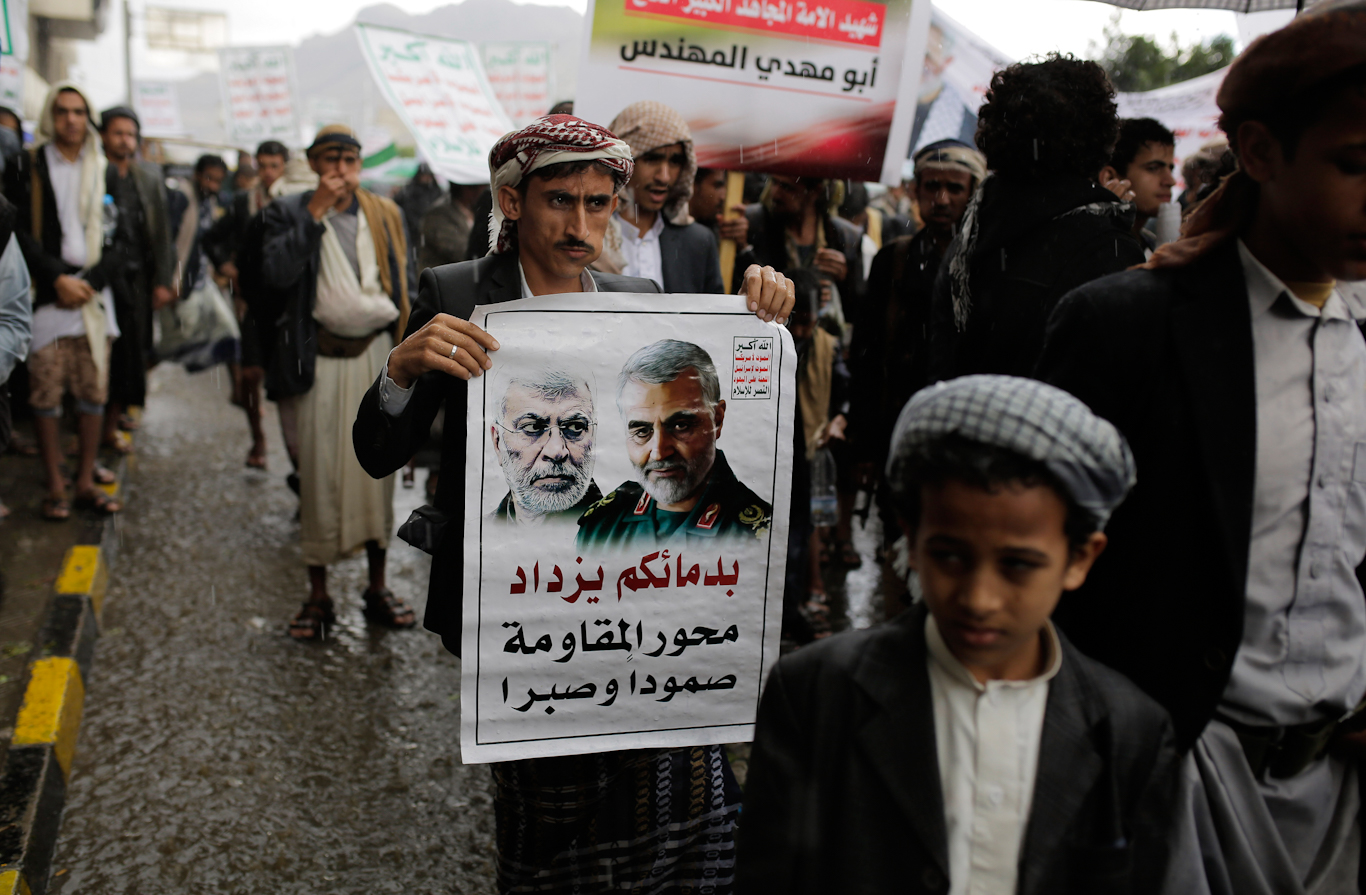
The march comes just weeks after Iraq was shaken by an American drone strike near Baghdad airport, which killed Iran’s top General Qassem Soleimani and Abu Mahdi al-Muhandis, the deputy chief of Iraq’s Shia militia, along with other officers.
Aside from triggering a flare-up of military tensions and a retaliatory Iranian strike on US bases in Iraq, the killing sparked outrage among those Iraqis who see the 16-year American troop presence in their country as an unlawful occupation.
Official Baghdad, for its part, blamed Washington for breaching its sovereignty, with the lawmakers of the Islamic republic having passed a non-binding resolution calling on the government to expel all foreign troops from the country.
US media has suggested that the Pentagon was planning the withdrawal of its 5,000 troops from Iraq, but these reports were officially refuted afterwards.


Huge Crowds in Baghdad Call for the Ouster of US Forces from Iraq
Huge crowds of Iraqis demonstrated in Baghdad on Friday to demand the ouster of US troops from the country.
The demonstration set off from al-Jadriyah and al-Karrada regions adjacent to the Green Zone in central Baghdad.
The demonstrators raised the national flags, chanted slogans rejecting the US presence on Iraqi soil and denounced the criminal actions committed by the US administration by targeting Iraqi military forces and resistance leaders.
Meanwhile, the Iraqi security forces have taken strict measures and cut a number of roads in central Baghdad in coincidence with the start of the massive demonstration, according to an Iraqi security source.
In statements to SANA correspondent in Baghdad, a number of demonstrators confirmed that the US military presence is the cause of all the dilemmas that Iraq is witnessing.
They demanded the immediate implementation of the Iraqi Parliament’s resolution which call for the expulsion of the US and foreign forces from all Iraqi lands.
This demonstration, according to demonstrators, represents a real popular referendum on the rejection of any US military presence in the country.
On January 5, the Iraqi parliament voted overwhelmingly in favor of a resolution bending the government to end the foreign presence in the country after the US crimes against Iraqi military headquarters and high ranking Iraqi and friendly resistance leaders.

River to Sea Uprooted Palestinian   
The views expressed in this article are the sole responsibility of the author and do not necessarily reflect those of the Blog!

Sunday, 26 January 2020

Houthis Anticipate US Assassination Attempts, Warn US Troops Will Be Targeted in Retaliation

By Ahmed Abdulkareem
As tensions in the Middle East continue to rise, there are indications that Donald Trump’s administration is planning to carry out assassination operations against high-ranking Houthi officials inside of Yemen similar to the U.S. assassination of Iranian Revolutionary Guard General, Qassem Soleimani, a move likely to open the door for further escalation in the region.
On Thursday, a high ranking Houthi official in Sana’a told MintPress News on condition of anonymity that the Houthis would not hesitate to target U.S. troops in the region if the Trump administration targets its personnel inside Yemen.
The statement comes in the wake of an announcement by United States officials that the U.S. military tried, but failed, to kill another senior Iranian commander on the same day a U.S. drone strike killed Soleimani.
According to reports, a U.S. military air attack targeted Abdul Reza Shahlai, a high-ranking commander in Iran’s Islamic Revolutionary Guard Corps (IRGC) while he was in Yemen, but the mission was not successful. The U.S. Department of the Treasury claimed that Shahlai was based in Yemen and accused him of having “a long history of targeting Americans and US allies globally.”
Meanwhile, Yemeni activists and media pundits are expressing concerns over what they consider serious threats from Trump administration, pointing out that news of the unsuccessful assassination in Yemen should not be underestimated. Others have called on U.S. Congress to prevent any attacks on Yemeni soil and to keep U.S. soldiers in the region out of harm’s way.
The pretexts for U.S. attacks in Yemen are not without precedent. On October 13, 2016, the U.S. military announced that it had struck three coastal radar sites in Hodeida, an area of Yemen controlled by Houthi forces, in retaliation for an alleged failed missile attack on the USS Mason, a U.S. Navy destroyer. The Houthis maintain that they were not involved in any missile attacks against the Mason.
For their part, the Houthis (Ansar Allah) were clear in their warning to U.S. leaders in the wake of U.S. assassinations in Iraq, promising that U.S. troops in the Arabian Gulf or the Red Sea would be targeted without hesitation if the Trump administration attempts to target Houthi leaders in Yemen.
Yemen Soleimani assassination
The Yemeni army, which is loyal to Ansar Allah, is already preparing for anticipated U.S. attacks. Ansar Allah’s leadership has reaffirmed that their anti-U.S. position is based on a principled and ideological commitment, but historically, Ansar Allah has not directly targeted the United States or its interests in the region.
During a televised speech broadcast live on January 8 during Yemen’s martyr’s week commemoration, Abdulmalik Badr al-Din al Houthi, the leader of Ansar Allah, said that “We will no longer acquiesce to Trump’s equation in killing us and interfering in our affairs and to do nothing is no longer acceptable.” He went on to say that the Houthis’ dealings with the “carelessness of the United States which targets the nation’s leaders will be different.”
The Ansar Allah leader pointed out that if there was no U.S. support for Saudi Arabia, the war against Yemen would not have occurred, adding that the role of the United States in the war against his country includes supervision, management, political protection, destruction, and the supply of weapons.
He also warned Saudi Arabia and the United Arab Emirates from continuing their military campaign in Yemen, saying that “developments in the region are not in their interests.” Implying that the escalation of tensions between the U.S. and Iran could be used against both the United States and Saudi Arabia in some way.
The threats of Ansar Allah, a group known to strike sensitive targets without hesitation, should not be underestimated. On September 14, Yemen hit two of Saudi Arabia’s oil facilities in Abqaiq and Khurais in a retaliatory attack that the United States blamed on Iran. Now, they have developed their arsenal of ballistic missiles and drones even further and experts say are likely capable of hitting U.S. troops in the region.
According to Houthi officials in Sana’a, the Trump administration appears to be using allegations of an Iranian troop presence in Yemen, an allegation that Houthis deny, as a pretext for further military action in the country, despite no evidence to back the claim.
Furthermore, the contrast between the Houthi reaction to that of Iran’s allies in the region after the U.S. assassinated Soleimani further suggests that Iran has no significant measure of influence over the Houthi’s decision-making process.
In fact, the Houthis fiercely rejected any and all foreign attempts to influence their decisions after the assassination of Soleimani. The group, thus far, has not promised to retaliate against U.S. troops as revenge for the murder of Soleimani as Iran’s allies in the region did in near unanimity. Moreover, they treated the incident with caution and decided not to be drawn into an escalation despite angry demonstrations that took place in many of Yemen’s cities over the assassination.
However, the Houthis have signed a military cooperation deal with Iran as a result of the continued war and blockade against their country and may work with Iran to take action against U.S. troops in the region should the U.S. target Houthi leaders in Yemen. According to some strategic decision-makers in Sana’a, retaliatory attacks could take place if even a single case of a U.S. attack in Yemen were to take place.

A legacy of targeted killings

In the wake of the U.S. killing of Iranian General Qasem Soleimani and Iraqi military leader Abu Majd al- Muhandis, many Yemeni politicians fear the Trump administration could carry out similar operations against high-ranking leaders in Yemen. The Saudi-backed assassinations of former presidents Saleh al- Sammad and Ibrahim al-Hamdi, both popular figures among Yemenis, are cemented in the country’s collective memory.
On November 6, 2017, Saudi Arabia released a list of 40 names of Houthis leaders and senior figures that the Kingdom wanted dead or alive. The list was issued by the Saudi Ministry of Interior, which offered rewards of between $5 to $30 million. On April 19, 2018, former president of the SPC, Saleh al-Samad, was assassinated by Saudi airstrikes in Hodeida while preparing for a protest to statements made by the American ambassador that the Houthi-controlled city of Hodeida will fall.
Almost two years after al-Sammad’s assassination, a criminal court in Hodeida has begun the trial of U.S. President Trump along with 61 Yemenis and foreigners, all believed to be involved in the assassination of the former head of the SPC. After finding ten suspects guilty, the court held its first hearing, trying Trump and the remaining 51 foreign and Yemeni defendants in absentia in late October.
The trial, which has drawn national media attention, may only be symbolic, but it sends a clear message to the U.S. that its operations in Yemen and its ongoing complicity in the worst man-made humanitarian crisis in the world is unacceptable and will undermine U.S. foreign policy in the region.
Before his assassination, Al-Sammad was attempting to carry out a plan to rebuild Yemen into a modern, stable and democratic state by 2030. He penned the National Vision, a manifesto of 175 goals focused on independence, freedom and non-submission to foreign influence.
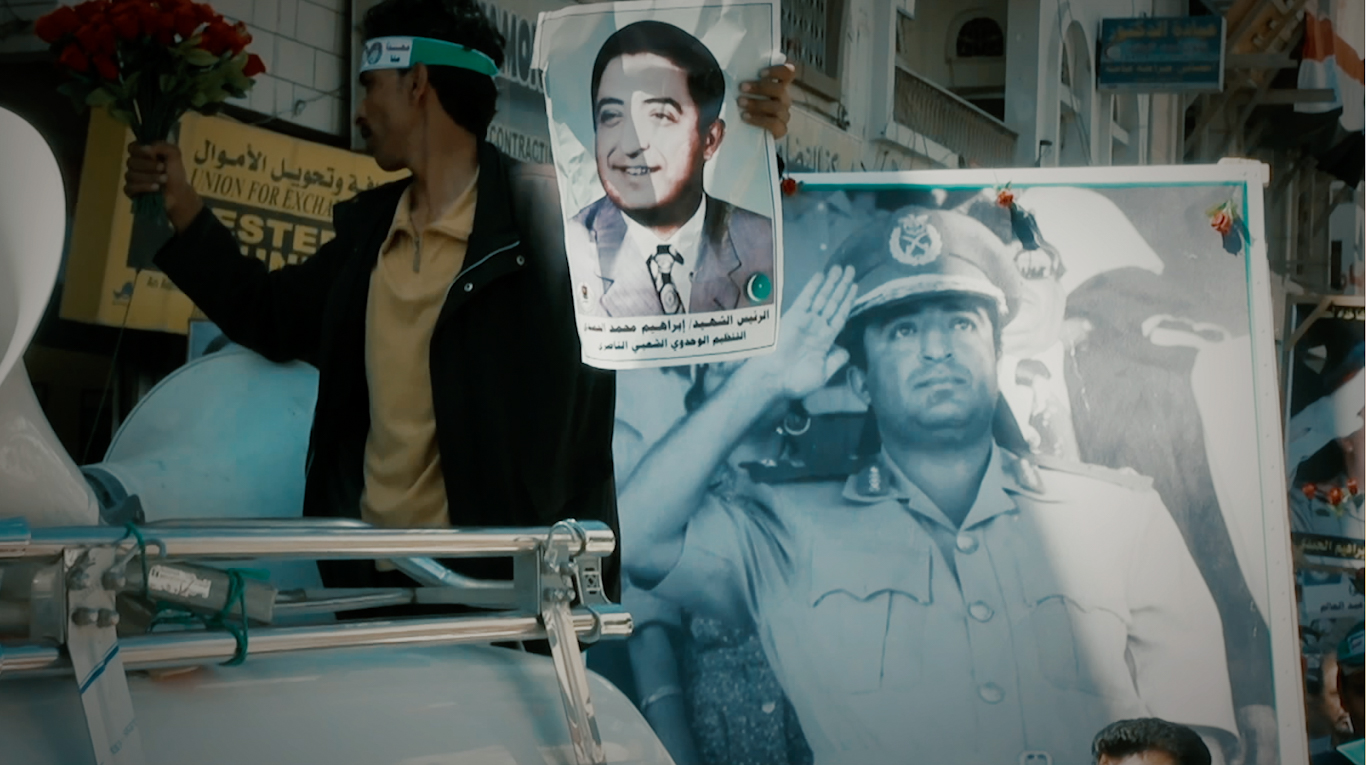
Yemenis’ concerns about .U.S and Saudi intentions towards their national leaders were reinforced when the Yemeni Defense Ministry revealed that both U.S intelligence and Saudi princes’ were involved in the 1977 assassination of popular Yemeni president Ibrahim al-Hamdi after he refused Washington and Riyadh’s interference in Yemen’s internal affairs.
At a press conference, Brigadier Abdullah bin Amer, a senior official at the Yemeni Defense Ministry, released important documents related to the assassination of President al-Hamdi, including the names of those involved in his murder.
Before his death, al-Hamdi was attempting to pivot Yemen away from the Saudi kingdom and the United States and build Yemen’s independence by developing it’s oil reserves and its strategic location on the Bab al-Mandeb Strait. Now, according to senior Houthi officials, Sana’a is in possession of evidence that confirms the role of President Carter’s administration and the Saudi regime in the assassination, including planning, supervising and covering up the crime, according to Brigadier bin Amer.
The Last Lunch
MintPress was shown documents allegedly exchanged between U.S. and Saudi intelligence that indicated the involvement of the United States and former Saudi Kings Khalid bin Abdulaziz Al Saud, Fahd bin Abdulaziz and their brother Sultan in the assassination, but was unable to independently verify their authenticity.
According to the documents as well as witness testimony, al-Hamdi was invited to lunch at the residence of Ahmad al-Qashmi, who was the Army chief of staff under his command. During his stay there, Ali Abdullah Saleh, then a brigade commander, and one of his bodyguards entered the house. Moments after they entered, al-Hamdi was killed in a hail of bullets.
Sultan Bin Abdulaziz, according to the documents, was in direct contact with Saleh al-Hadyan, the Saudi military attaché in Northern Yemen’s capital Sana’a at the time of the targeted killing. Riyadh allegedly dispatched three Saudi intelligence operatives to Sana’a hours before the assassination who then left Yemen three hours after the operation concluded.
“Saudi Arabia killed al-Hamdi under the supervision of Saudi military attaché, Saleh al-Hadyan because he was an opponent of Saudi Arabia and did not comply with its instructions and interventions in Yemen,” The late Abdullah Saleh said in a 2016 interview with RT Arabic in which he claimed that he had “evidence of the involvement of Saudi Arabia.”
When al-Hamdi came to power in 1974, North Yemen lacked even the most basic services and infrastructure. Moreover, the country was on the brink of collapse and tribesmen held significant power and influence. Al-Hamdi, much like Al-Sammad, created a development plan supervised by a number of committees which encouraged local communities to contribute to road construction, school buildings, and water networks.
Under al-Hamdi’s direction, North Yemen underwent a period of rapid economic growth. The country’s GDP rose from 21.5 percent in 1974 to 56.1 percent in 1977 and per capita income rose by 300 percent. Al-Hamdi, according to WikiLeaks documents, was also working to “prepare the groundwork for eventual elections” in North Yemen.
Given the fate shared by those willing to risk charting a path free of foreign intervention in Yemen, it is unlikely that the Houthis, nor their fellow countrymen, will take attempts by foreign countries to assassinate Yemeni leaders lightly.

River to Sea Uprooted Palestinian   
The views expressed in this article are the sole responsibility of the author and do not necessarily reflect those of the Blog!

Trump’s Gamble in Iraq Backfires: Assassination of Soleimani has Huge Cost for America


Funeral of Iran top General Qasem Soleimani. (Photo: via AJE)

Despite conflicting official statements by the Trump administration about the reason behind its decision to target Iran’s most celebrated military official, the U.S. is adamant that its assassination of Qasem Soleimani and refusal to leave Iraq is about “protecting Americans”. 
From versions advanced publicly by former CIA chief Pompeo now serving as Trump’s trigger-happy defense secretary, during his TV-road show, the world was told that Qasem Soleimani was killed because he posed an “imminent” threat. 
This “official” narrative was spun to convince Trump’s domestic audience that though the Democrats had ganged up against him, he remained concerned about America’s safety and thus eliminated “bad” persons. 
The targeted assassination of Qasem Soleimani and a senior Iraqi military leader Abu Mahdi al-Mohandis, has raised serious questions about Trump’s real motivation. Notwithstanding the so-called justification being a vague, unproven claim of “imminent” threat of violence against Americans, Trump himself shot it down by saying that it “doesn’t really matter” whether Soleimani and al-Mohandis posed an imminent threat. 
In other words, as Commander-in-chief of America, I, Donald Trump can authorize the killing of anyone, regardless of whether the person singled out for extra-judicial execution is a serving official of any country, and it matters not whether the person poses an imminent threat. 
Strangely, the facts advanced by Iraq’s parliament particularly by Prime Minister Adel Abdul-Mahdi regarding the reason for Qasem Soleimani’s visit to Baghdad on the fateful day he was assassinated, have either been downplayed or ignored. 
In addition, the Iraqi parliamentary session reveals how the emergence of China and development of strong ties to Baghdad may be shaping America’s new Mideast strategy.
Clearly one cannot ignore what has been described as one of the most overlooked yet relevant drivers behind Trump’s current policy with respect to Iraq: preventing China from expanding its foothold in the Middle East. 
Indeed, some commentators have argued that the timing of Soleimani’s assassination was directly related to his diplomatic role in Iraq and his push to help Iraq secure its oil independence.
Prime Minister Abdul-Mahdi’s insistence that America’s pressure on the Iraqi government arises from China’s growing ties especially in the oil sector, hasn’t received adequate media attention. While this may be due to much of the U.S. pressure being exerted on the caretaker government covertly and behind closed doors. 
Now that the Iraqi Prime Minister has lifted the lid on Trump’s bullying tactics, mainstream media has no reason to shy away from it. The evidence strongly suggests that America under Trump cannot countenance China’s presence nor Iran’s substantial influence in Iraq. 
The flip side is that both China and Iran are eager to free Iraq by ridding it of U.S. troops. Both have different means to do so which has the potential to saddle Trump with the prospect of exiting his army in ignominy. 
The Trump administration is thus faced with a huge dilemma: how to depart gracefully yet retain a presence? 
It knows that parliamentary approval to remove American forces along with all foreign troops means the end of the road. Challenging it as Pompeo is doing, is unsustainable and to defy Iraq is in effect defying international conventions. 
The martyrdom of Qasem Soleimani, Abu Mahdi al-Mohandis and a number of their colleagues on Iraqi soil, is the straw that proverbially broke the camel’s back. 
Far from attaining any of Trump’s stated objectives, the targeted killings have had results entirely unfavorable to his goals. 
Iran is firmly united behind its revolutionary leadership, while Trump is facing an impeachment trial in a country deeply divided. The notion of a superpower is in tatters while Iran’s regional status has grown immensely. 
China’s entry will have further ramifications for America. This as one commentator explained: “China has the means and the ability to dramatically undermine not only the U.S.’ control over Iraq’s oil sector but the entire petrodollar system on which the U.S.’ status as both a financial and military superpower directly depends”. 
– Iqbal Jassat is an Executive Member of the South Africa-based Media Review Network. He contributed this article to The Palestine Chronicle. Visit: www.mediareviewnet.com

River to Sea Uprooted Palestinian   
The views expressed in this article are the sole responsibility of the author and do not necessarily reflect those of the Blog!