Sunday, 16 February 2020

Claim: ‘Epstein Worked for Israel’

By Philip Giraldi
Epstein Worked for Israel b83a0
The saga of pedophile procurer to the rich and famous Jeffrey Epstein continues to enthrall, even if the Department of Justice appears to have no interest in learning the details of what appears to be a major Israeli spy operation. There have been a number of new developments in the past several weeks, confirming that Epstein had been a longtime Israeli intelligence asset targeting prominent Americans while also suggesting that he was murdered in his prison cell in New York rather than a suicide.
Of interest to many following the story with the apparent exception of the FBI, a former Israeli intelligence officer has written a book describing how Epstein and his partner in crime Ghislaine Maxwell were blackmailing prominent politicians on behalf of Israel’s foreign intelligence service Mossad. According to Ari Ben-Menashe, the two had been working directly for the Israeli government since the 1980s and their operation, which was funded by Mossad and also by prominent American Jews, was a classic “honey-trap” which used underage girls as bait to attract well-known politicians from around the world, a list that included Prince Andrew and Bill Clinton. The politicians would then be photographed and video recorded when they were in bed with the girls.
Ben-Menashe’s soon-to-be-released book Epstein: Dead Men Tell No Tales describes how Epstein was introduced to Maxwell originally by her father, Robert, a Czech-born British media tycoon, who was also a long-term Israeli agent. After his death, he was given a state funeral by Israel in which six serving and former heads of Israeli intelligence listened while Prime Minister Yitzhak Shamir eulogized: “He has done more for Israel than can today be said.”
Ben-Menashe was Robert Maxwell’s agent handler, meaning that he was the government intelligence officer who actually met with the high-level spy. Through Maxwell, Epstein also met prominent Israelis, including Ehud Barak, prime minister from 1999-2001, who had a business relationship with the American financier and occasionally visited the Epstein mansion in New York City.
To be sure Ben-Menashe, has something of a peculiar personal history due to his Mossad connection and he wants to sell his book, but no one has stated that he is wrong on his facts, even though his claims are largely unsubstantiated. And one might also add that last year’s hidden camera undercover exposés of Israeli agents working clandestinely to bring down unfriendly politicians and government officials in both Britain and the United States suggests that Israel is particularly aggressive in its influence operations.
One would have thought that the alleged ongoing investigation of Epstein would include a questioning of possible victims of the blackmail, to include Clinton, but there is no suggestion from anyone that that has actually taken place. And what about Ghislaine Maxwell, who was certainly complicit in the crimes against the girls who were used as well as regarding those who were later blackmailed?
Ghislaine, like Clinton, has never been asked to answer any questions about what she and Epstein were up to, though there is a Reuters report that she is being “investigated.” She has meanwhile been spotted in Los Angeles sipping a coffee at an open-air café. Most recently, the Jewish Telegraph Agency reports that “Ghislaine Maxwell, a British socialite who has been accused of helping late sex offender Jeffrey Epstein, is reportedly hiding out in Israel.”
A New York Post article confirms that Ghislaine sometimes travels to Britain on her UK passport but that she is currently in Israel “where her powerful contacts have provided her with safe houses and protection. Ghislaine is protected. . . . They would trade information about the powerful people caught in his net—caught at Epstein’s house.” Apart from her status as a Mossad asset and the protection it provides, generally speaking, Israel will not extradite any Jew who has been charged with a crime in another country, which is why so many Russian-Jewish organized crime figures have taken Israeli citizenship. So Ghislaine is unlikely ever to appear in an American courtroom.
And then there is the increased uncertainty about how Epstein died in jail. The authorities continue to claim it was suicide but one has to wonder how he managed to kill himself, if that is indeed the case, as he was reportedly on suicide watch at the prison and he should have been stripped of any clothing or cell furnishings that would have been usable to that end. So he is dead, but did he do it himself or was he helped? There are many prominent individuals and powerful government agencies that will be very pleased that he is gone, as most of his secrets will have gone to the grave with him.
There was certainly a warning that something might happen. Two weeks before his death, he was reportedly found unconscious in his jail cell with marks around his neck. It was suggested that he might have tried to kill himself or, alternatively, had been beaten up by another inmate. There was also considerable speculation that some aggrieved part of the Deep State was trying to assassinate him to silence him.
The recent release of a post-mortem in the jail as well as autopsy photos of Epstein on “60 Minutes” combined with the revelation that procedures in the prison were irregular have reopened the controversy over exactly how the convicted pedophile died with at least one more prominent pathologist saying that the images indicate that he was murdered, not a suicide.
The photos were reviewed by Dr. Michael Baden, a forensic pathologist and a former New York City medical examiner, who claimed that the evidence indicates that Epstein didn’t take his own life. Baden had been a witness at the original four-hour autopsy, and it was his judgement that the photos confirm that the fractures sustained by Epstein don’t suggest suicide. He also observed that the noose made from a bed sheet included in the photos of the autopsy report doesn’t appear to match the wound on Epstein’s throat because it would have created a wider “furrow mark.”
Baden also said, “There were fractures of the left, the right, thyroid cartilage and the left hyoid bone. I have never seen three fractures like this in a suicidal hanging. Sometimes there’s a fracture of the hyoid bone or a fracture of the thyroid cartilage. And going over a thousand jail hangings, suicides in the New York City state prisons over the past 40-50 years, no one had three fractures.”
Per Newsweek’s reporting of Dr. Baden’s analysis. “He also wondered why Epstein would fashion a noose out of bed linen when his cell contained a long electrical cord attached to a sleep apnea machine, [saying] ‘There were other wires and cords present that it would’ve been easy to use to hang oneself within a few minutes. . . . The forensic evidence released so far, including autopsy, point much more to murder and strangulation than the suicide and suicidal hanging.’”
And then there is always the big question which remains unanswered or even unasked. Conclusive evidence that Epstein was an Israeli intelligence agent might well be derived from the former U.S. Attorney in Miami Alexander Acosta’s comments when being later cleared by the Trump transition team. He was asked, “Is the Epstein case going to cause a problem [for confirmation hearings]? . . . Acosta testified that he’d had just one meeting on the Epstein case. He’d cut the non-prosecution deal with one of Epstein’s attorneys because he had ‘been told’ to back off, that Epstein was above his pay grade. ‘I was told Epstein belonged to intelligence and to leave it alone.’”
And then there is also the continuing mystery around Epstein’s possession of a genuine Austrian passport. How did he get it? Austrian passports are highly desirable in intelligence circles because the country is neutral and its holders can travel just about everywhere without a visa.

River to Sea Uprooted Palestinian   
The views expressed in this article are the sole responsibility of the author and do not necessarily reflect those of the Blog!

Syrian Army captures several areas to begin encirclement of last jihadists around Aleppo city


BEIRUT, LEBANON (2:00 A.M.) – The Syrian Arab Army (SAA) has scored a new advance in the western countryside of the Aleppo Governorate this morning after a successful day on Saturday.
According to the latest field report from this front, the Syrian Arab Army has begun pushing north to close off the last jihadist pocket in the Anadan Plain region, which has been under the latter’s control since 2013.
The report said the Syrian Arab Army has already captured several areas in western Aleppo this morning, including the small town of Bashqatin.
It would add that the Syrian Army is now attacking the strategic town of Kafr Da’el, which is an important step in closing off the jihadist pocket in the Anadan Plain.
The likelihood of the jihadists being envelopment is very slim, as they will most likely retreat from the area before they are completely encircled.

HTS, TURKISH-BACKED FACTIONS RETREAT FROM THREE TOWNS IN WESTERN ALEPPO

On February 15 eve, al-Qaeda-affiliated Hay’at Tahrir al-Sham (HTS) and Turkish-backed factions retreated from three towns in western Aleppo following a ground assault by the Syrian Arab Army (SAA)
The towns, Ajil, Uwayjil and al-Mansura, were captured by the army and its allies, according to several pro-government sources.
Related Videos
Related News

River to Sea Uprooted Palestinian   
The views expressed in this article are the sole responsibility of the author and do not necessarily reflect those of the Blog!

Imam Khamenei’s Defense Advisor Tells Al-Ahed of Martyr Leaders, Fate of the Region


Imam Khamenei’s Defense Advisor Tells Al-Ahed of Martyr Leaders, Fate of the Region
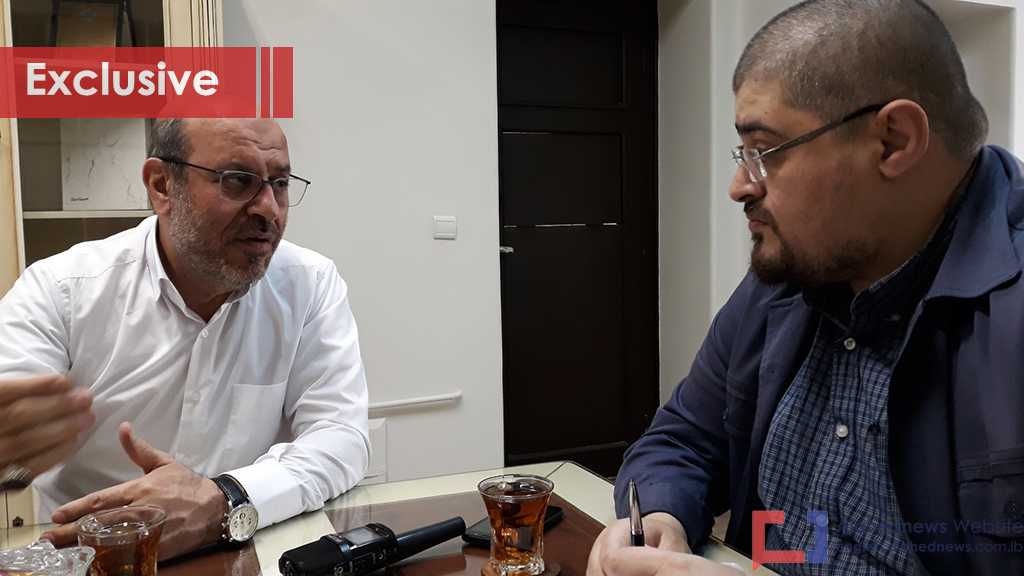
Tehran – Brigadier General Hossein Dehghan was among the first members of groups linked to the Revolutionary Guards to come to Lebanon and the official who supervised the training of Hezbollah mujahideen. He witnessed the founding of the Islamic Resistance and lived with its martyred leaders. He is also Leader of the Islamic Revolution His Eminence Imam Sayyed Ali Khamenei’s advisor on defense and Iran’s former minister of defense.
In an exclusive interview with Al-Ahed, Brigadier Hussein Dehghan talks about his memories with the leaders of the martyrs of the Islamic Resistance and Lieutenant General Hajj Qassem Soleimani. He also recalls how he founded the Al-Ahed newspaper – currently Al-Ahed news site – as he discusses recent developments in the region.
Below is the full transcript of the interview:
You have witnessed the establishment of the Al-Ahed newspaper. In marking 35 years since the paper was established, what does our veteran colleague remember about how it all started?
The conditions that Hezbollah faced early on helped in forming the organization. But considering Lebanese culture, if you want to stimulate a political course in Lebanon, you have to appoint a spokesperson and define the media as its own cultural apparatus in order to connect with the people. At the time, anyone could claim that he belonged to Hezbollah and say whatever he wanted. The goal was to create an information outlet.
When this suggestion was presented to His Eminence, Sheikh Mohammad Yazbek, he opened the Quran and found the following verse {And do not approach the property of an orphan, except in the way that is best, until he reaches maturity. And fulfill [every] commitment. Indeed, the commitment is ever [that about which one will be] questioned.} So, the newspaper was called Al-Ahed. The paper’s editorial team was appointed, and it started worked to publish two to three issues per week. The newspaper was widely admired by all Hezbollah members. Within a short period of time, the newspaper grew within the Lebanese media sphere. After that we set up a radio station in Baalbek. The station often broadcast recitation of the Holy Quran and announced to its listeners the station’s frequency. Martyr Hjaiji was appointed as the station’s director and Abu Hisham as its political director. It was necessary for the party to establish ties with the Lebanese society to be able to share its opinions and ideas.
Going back to Al-Ahed, what impressed me was that we had two young Iranian men who wrote in Arabic even though they were literally translating from Farsi. When the late Ayatollah Sayyed Mohammad Hussein Fadlullah read what they wrote, he exclaimed: ‘You are writing in Farsi. You should try to write in Arabic.’ And Sheikh Yazbek helped the editorial team become better in writing and played an important role in Al-Ahed.
How would you define the progress by the resistance in the media sphere?
We did not face a lot of problems because there was a natural need for this outlet and it took a lot of time for our work to be coherent and purposeful. Even with regard to the formation of Hezbollah, it was important that the movement was formed in Lebanon. At the time, there were various groups in Lebanon that needed to be integrated and organized, and most of them joined Hezbollah.
The formation of Hezbollah itself was a historic and temporal necessity. Today, after thirty-five years, media outlets must be able to convey the party’s message to the target audience using artistic and technical means and through appropriate content because in Lebanon, Hezbollah is engaging in a political society that is prone to radical change. What is happening in Lebanon is moving more rapidly towards renewal and change than anywhere else in the world. For this reason, anyone who wants to work in media must familiarize themselves with the environment in order for them to work well and present their message and be able to communicate effectively. We created Al-Ahed newspaper so that it could work as a spokesperson for Hezbollah. Now, thank God, Hezbollah is in a position where any member linked to Hezbollah can have a significant impact inside and outside Lebanon.
How do you evaluate the resistance’s media in facing the cultural and soft war?
This is normal in political affairs and the Lebanese society. This matter started before and has continued until now.  And the active political movements in Lebanon have a form of unlimited support without exception, and they have a form of representation. Today, the only political movement that is completely Lebanese is Hezbollah. Today, the Lebanese people do not view Hezbollah as merely a Shiite political movement, but rather a symbol of Lebanese national resistance in the face of the Zionist aggression and regime.
Today, the Lebanese Hezbollah is defined as the Lebanese people’s public conscience towards dignity, independence and freedom, and these types of causes. We can also say that Hezbollah plays a role in defining everything that matters in Lebanon’s political and social arena. Some say that ‘this is because Hezbollah has strength and weapons’. But this is not the root of the matter. Rather, the principle is that Hezbollah has proven its ability in preserving and developing Lebanon’s national interest, in addition to bearing all necessary costs. However, the sensitivity of Hezbollah’s behavior is also important. It leaves no room for confusion over representation and the private thoughts of the Lebanese people. Thanks to the wise leadership of Sayyed Hassan Nasrallah, he managed to preserve Hezbollah and always influence Hezbollah’s dignity and influence in politics as well as the social and cultural aspects in Lebanon.
What is the impact of Al-Ahed or other Hezbollah media outlets on the resistance?
This effect is fundamental and is the essence of the resistance. And that is what it is.
You lived with the master of the martyrs of the resistance, Sayyed Abbas Al-Mousawi. Can you tell us about the martyr and your memories with him?
No one could be like him. We had an office near his house. He possessed special qualities that made him special. The first is that Sayyed’s rule was realistic and unparalleled, not only because he was cultured, but also because his relationship with the leader of the Islamic revolution and his adherence to him was never shaken.
The second quality is that any behavior or decision emanating from him was in accordance with Islam. He was always trying to mirror the teachings of Islam in his words and actions. There is a hadith for the Messenger (PBUH) on the issue of Sharia, the way and the truth. The meaning of the hadith is as follows: What I say is sharia, and my conditions are the way and my actions are the truth. That is why Sayyed Abbas sought, through the introduction of the Sharia and the method, to confirm the truth about the Messenger of God (PBUH) through his behavior. And he had this quality in his promotional and advertising work.
His third trait was his indulgence, and as such he was able to attract a lot people to his side. And for this reason, Sayyed Abbas’s circle of influence was very wide. When he sat with anyone, he directly connected with them and brought them to his side. He had a deep sense of mercy and compassion. The tone of his voice was well heard by others. Humility, sympathy, and compassion were among his many traits. He was extremely humble and compassionate. We have hadith that says you should tell the person you love them. He took this matter into account. His spirit of jihad was distinctive.
Sheikh Saeed Shaaban was in Tripoli. He was accompanied by his son, a doctor who had a great influence on his father. Initially, Sheikh Saeed Shaaban expressed his concern about the emergence of Hezbollah and the fate of the Sunnis! At the time, we told Sayyed Abbas that if we stay here, we will not find a solution to this issue. We have to relieve Sheikh Saeed’s mind. Sheikh Saeed Shaaban was following up with the Islamic Revolution and was a revolutionary himself. We all went to him, and Sayyed Abbas was scheduled to speak to Sheikh Saeed. So, he spoke with his influential words, and the atmosphere changed.
When the issue of supplying the Baalbek clans with weapons was raised, we went to some of the tribal heads and discussed this matter. Then we headed to Beirut, and we went to many places with Sayyed Abbas. In Beirut, there were many roadblocks. In addition to war and conflict, the burden of dialogue was on Sayyed Abbas. Sayyed played an important role in shaping Hezbollah’s early features and unifying the ranks under a common Hezbollah flag until a common vision and language emerged within the party. This took a lot of time, but it was the responsibility of Sayyed Abbas to coordinate all these issues.
How would you describe Hajj Radwan?
I think even those closest to Hajj Radwan are unable to fully explain his personality. One of Hajj Radwan’s characteristic was his constant silence. Hajj was the most silent person in Hezbollah. He did not say anything. But his work on the ground was very extensive. The second trait was his complete reliance on divine victory. When we discussed strategic issues, he would only say one thing: “I rely on God.” And then he’d start his job without any hesitation. Therefore, he had the ability and belief in the divine victory and the strength to lead. And he had control over his language which stemmed from his heart.
In the war of minds, the creative martyr Hajj Hassan Lakkis was one of its pioneers, and you had a close relationship with him. What does Brigadier General Dehghan say about martyr Hassan?
Hassan was Hassan. I will tell you a special trait of most Lebanese youth. They are very creative. They are very brave and take risks. They do not fear the unknown. If I had to sum up Hassan in one sentence, I would have to say that he was a young man who freed his mind from everything that was dominant and invisible. That is why ideas were being constantly produced. It was important that Hassan always tried to be different and did not submit to the harsh conditions of life.
The relationship between Sayyed Nasrallah and Sayyed Abbas was that of a student and his teacher. What worried Sayyed Abbas worried Sayyed Nasrallah. When Hassan entered the field of missile manufacturing, we met him many times in Iran. Our last meeting was when his son was martyred, he came to me and said: ‘Do you know I also became the father of a martyr?’ Then, he was also martyred. Hassan was one of the closest people to me intellectually, spirituality, psychologically and practically. He was my best friend.
The US representative to the Security Council repeated her threats several times that the demonstrations in several countries in the region will continue if Iran does not submit to American demands. Do you fear for the axis of resistance in light of the new changes?
We have to go back to 2006 and the 33-day war. There was a front that was formed in the face of “Israel”. They analyzed where they have to weaken this chain and its weak point. So, they decided to hit Hezbollah in order to destroy this front. And they launched the 33-day war. What happened in this war? Wasn’t the occupation army – ranked fourth in the world and had defeated the Arab states in 1948, 1967, 1973 and throughout the years of the Nakba – defeated by Hezbollah? They believed that Hezbollah was the weakest link in the resistance front that is why they attacked it. But when they attacked Hezbollah and nothing happened, they realized that their calculations were wrong.
Is there any element in the region today that possesses the capabilities of this group? Has this determination? Has a goal and was able to achieve it on the ground? Can challenge the will of the US and “Israel” in the region? That is why they seek to strike such a force. What did they think about Hezbollah? To this day, Hezbollah possesses all the power and prestige to represent the Lebanese nation. It is a Lebanese national resistance force. That is why they want to discredit Hezbollah in the eyes of the people. This prompted them to pressure the Lebanese people in a bid to force them into a confrontation with Hezbollah over its policies and weapons.
You see, some in Lebanon suggested that Hezbollah should be disarmed. They believe that all of Hezbollah’s capabilities are limited to the weapons it possesses. This is not the case. Hezbollah’s strength and prestige lie in the Lebanese people and the resistance, and its weapons are necessary for the defense posture it adopted. The political scene in Lebanon is affected by a variety of events, such as those who claim that the unrest in Iraq is caused by the popular mobilization, and in Lebanon it is caused by the presence of Hezbollah.
Another point is that Iran does not need any military attachment to Hezbollah or others. Iran is strong enough.
In the event that a major war is waged against the resistance front in the region, Hezbollah will carry out its duty on its own. It does not need us to intervene and tell it what it has to do or not do. Hezbollah is also keen on adhering to this formula not causing a problem because the principle was supposed to be fixed for the Lebanese and not for us. Hezbollah is a target because it is a factor of stability and because it is an element that stands in the face of aggressors and authoritarian forces such as “Israel”, who do not want peace and stability in Lebanon. Hezbollah makes every effort to preserve these pillars, and this is why they oppose Hezbollah.
How can they oppose Hezbollah? By pitting the party against the Lebanese people. There will be a confrontation between them. However, Hezbollah never adopts such a policy. This is why they are imposing their plans and moving their agendas in Lebanon to inflame the situation. In the previous parliamentary elections, it was said that Saudi Arabia pumped large sums of money in order to impose its hegemony over the parliament. But its plans failed.
Now, most countries, including Saudi Arabia, the United Arab Emirates, the US, “Israel”, and even the Europeans, target Hezbollah’s reputation. Lebanon has been the scene of struggle for influence between foreign powers throughout its history, and Hezbollah came to clean up all these interventionist parties and turn Lebanon into an arena where its people take part and show their presence in the region. Everyone is angry about this, which is best embodied by the words of martyr Beheshti: “Let America be angry with us, and let it die from this frustration.”
Did the Zionist enemy and those supporting it start a new war with the resistance front? Some Western analysts talk about replacing a military offensive with an economic one, and this is what we are witnessing (American economic terrorism). Does the Islamic Republic have the ability to withstand such a challenge?
In any case, we have to accept that these are our enemies in the first place, and ultimately they will enter into a war with us depending on the conditions they choose themselves. The Zionists and the Americans have always threatened us with strikes, ever since the victory of the Islamic Revolution. The person who wants to attack and can strike will not announce his intentions. But when he makes a fuss without doing anything, he wants to use this matter for political gain. On our part, we have never ruled out an attack or a military campaign against us, and there is always a military threat against us. The enemy is the enemy, and it wants to do what its intends to do, but when will it enter this war? When it can guarantee victory. No one enters a war unless he can guarantee two things, the first of which is victory, or that he is able to control it and end it when he wants.
Neither the Americans nor the “Israelis” reached the conclusion that they are able to win the war or prevent it from continuing if they ignited it, and for this reason they did not use any weapon against us or wage a war against us. But in other ways, they are waging economic, propaganda, and legal wars and many other pressures on us. And the economic war is the most violent war against us, and it managed to bring some to the streets and say that living conditions have become difficult and … The answer is that we acknowledge that the sanctions have imposed pressure on our nation.
The sanctions that the US imposed on our country aims to shock the authorities. However, these sanctions targeted the public because the blockade of medicine targets the people directly. It is contrary to the slogans that America is ranting about.
In fact, these people are seeking first to create a rift between the people and the government by increasing pressure and sanctions. Secondly, here they will incite the people against the government due to its inability to meet their demands. Thirdly, they will ignite riots and sabotage across the country against the political regime in Iran.
But the Iranian people love their revolution, their regime and their leader, and they are steadfast in the face of these American plans.
What about martyred Lieutenant General Hajj Qassem Soleimani and his martyred companions?
The martyr, Lieutenant General Hajj Qassem Soleimani, did not only belong to the Iranian people. He belonged to all the free people of the world because he fought injustice and the enemies in the past decades and thwarted all the arrogant plots.
The absence of martyr Soleimani is not the end of the axis of resistance but the beginning of a new rise of the resistance front in the face of arrogance and Zionism as well as the expulsion of the American occupation from this region.
Martyr Soleimani was seeking martyrdom, and he always hoped that he would eventually join his martyred companions. He possessed indulgence. He caused fear and terror in the hearts of the enemies but was kind to the people and the families of the martyrs.
Hajj Qassem Soleimani was raised in the school of Islam, Imam Khomeini and the leader of the Islamic revolution. Now, there is not one Soleimani but there are thousands and thousands of Soleimanis in the world who will continue on the path of this great martyr. His name is engraved in the hearts of the free people in the world, and he was born again. Today, martyr Qassem is stronger and his influence is greater.

River to Sea Uprooted Palestinian   
The views expressed in this article are the sole responsibility of the author and do not necessarily reflect those of the Blog!

Moment Ansarallah missile hits Saudi fighter jet in northern Yemen: video


BEIRUT, LEBANON (9:00 P.M.) – The Ansarallah forces managed to shoot down a Saudi Tornado jet over the northern region of Yemen on the evening of Friday, February 14th, 2020.
The Ansarallah forces were able to hit the Saudi jet with a surface-to-air missile that was not identified by the group.
On Saturday, the Saudi News Agency quoted coalition spokesman, Turki al-Maliki, as saying that “at 23:45 P.M. on Friday, February 14th, 2020, a Tornado fighter plane of the Royal Saudi Air Force crashed while on a mission of close air support to units of the National Army.”
The spokesperson for the Ansarallah-aligned Yemeni Armed Forces, Brigadier General Yahya Sare’a, said in a statement released by Al-Masirah TV that the forces managed to shoot down the aircraft over the Al-Jawf Governorate of northern Yemen.
“The air defenses shot down the coalition war plane with an advanced air-to-surface missile supported by modern technology. The sky of Yemen is not for a walk and the enemy must count a thousand times for that,” Sare’a said in his statement.


Dozens of citizens were killed and injured Saturday, by eight air raids of the US-Saudi aggression that targeted citizens in Al-Masloub District, in Al-Jawf.
The correspondent of “Almasirah Net” said that the aerial aggression targeted the citizens this morning during their gathering near the wreckage of the aircraft that was shot down Friday evening in Al-Masloub District.
The correspondent confirmed the killing and injuring of dozens of citizens in the horrific crime, pointing to the difficulty of confirming the number of victims due to the scattering of body parts throughout the targeted place.
Air Defenses of the Yemeni Army and Popular Committees shot down a Tornado aircraft while carrying out hostilities in the sky of Al-Jawf Governorate, on Friday night.

Related Videos


Related News

River to Sea Uprooted Palestinian   
The views expressed in this article are the sole responsibility of the author and do not necessarily reflect those of the Blog!

Hajjah Saada Badreddine Mughniyeh to Al-Ahed: In God’s Eye, I Saw Nothing but Beauty


Hajjah Saada Badreddine Mughniyeh to Al-Ahed: In God’s Eye, I Saw Nothing but Beauty
Hajjah Saada Badreddine is puzzling. She doesn’t hail from the world of philosophy or the world of knowledge and thinkers. Perhaps she is a combination of all of these worlds.
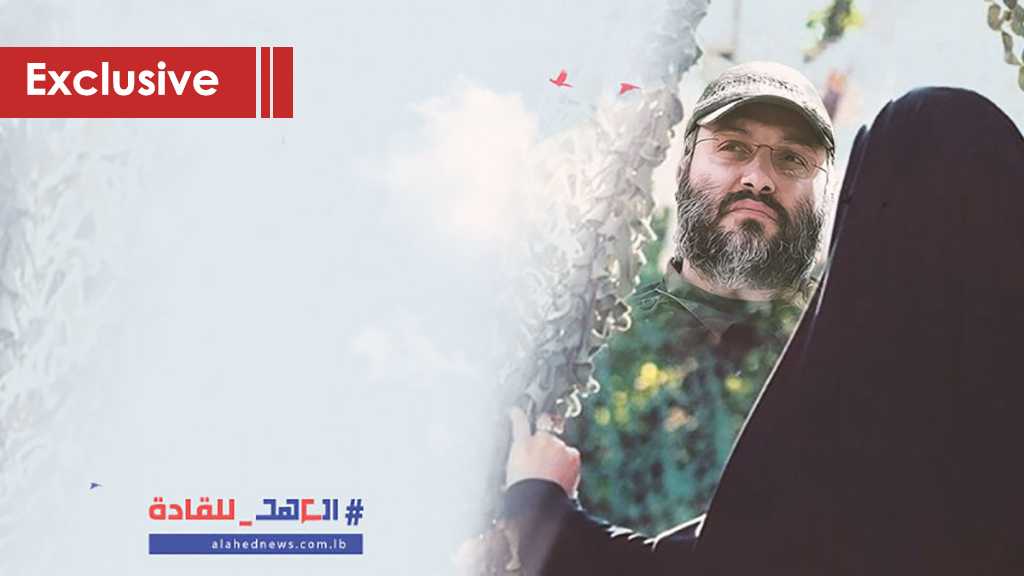
There is no journalistic flattery in this description, nor is there a lot of creativity. The wife of [Hajj] Imad is similar to him, exceptional. In Hajjah’s house, there is an unmatched tranquility. She conceals her tears as she welcomes people to her living room. Here, the martyrs are present. There is a large picture of the great jjihadi leader Hajj Imad with his son, martyr Jihad. There is another picture that adorns the wall, that of martyr Sayyed Zulfikar. A third picture was recently added – that of martyr Qassem Soleimani, the master of the martyrs of the resistance axis.
She is a woman of many traits. She is often referred to as the mother of the martyr, the sister of the martyr and the wife of the martyr. With composure, she holds a picture of Jihad smiling. She recollects memories with Sayyed Zulfikar, her closest brother. But she is overcome by the lump in her throat when she mentions the name Imad, despite the fact that it’s been twelve years since his martyrdom.
She is a unique woman. Her husband Imad as well as her brother Zulfikar are both martyrs. She proudly proclaims, “We did not wash Jihad.” She had courage to tell us why, but we lacked the courage to write it. We were thinking about her immense degree of patience. Was this a human trait or did it come from God?
Hajjah Saada knew Hajj Imad from his visits to their house. He was a friend of Sayyed Mustafa Badreddine. She saw in the young man a revolutionary who thought, planned and then implemented that plan. When they got married, Hajj Imad did not have any of the requirements expected for present-day marriages. He did not even have the financial capabilities to rent a house. For years, she lived with him in a room in the family house of Hajj Imad. As for the rest of the years, they spent it with their children, moving between work centers (the jihadi work of Hajj Imad), from one center to another.
Hajjah Saada speaks to her guests with a lot of kindness even with those she is meeting for the first time. She spent years detached from a regular social life that most families enjoy. But she still mastered the art of entering people’s hearts without asking permission. She invites us into the room of her martyred son Jihad. Everything is in its place. As if Jihad was just there. Even his prayer rug is still in the corner of that warm room, waiting for his return.
Her longing for Hajj Imad, her life companion, is still unique. She cries more than once when mentioning his name, and repeats, “I do not cry and mourn him because he is a martyr. I cry for him because, praise be to God, he knew the way to reach God.”
“He was not a person who gave advice directly. He did not educate others through the use of words. His manner towards his jihadist work, which I had closely examined throughout his career, was more profound than words and advice. It was a practical will,” she recalls.
As for the bitterness of separation from loved ones, the abundance of longing, and the long march of patience, she sums them up by quoting the school of Sayyida Zainab (PBUH): “In God’s eyes … I saw nothing but beauty.”
Below is the transcript of the first interview conducted by Al-Ahed news with Hajjah Saada Badreddine, the wife of martyr Imad Mughniyeh:
1- Tell us about the beginning of the journey of Hajjah Um Mustafa with Hajj Imad? Where did it begin?
There wasn’t much distance between the homes of the Mughniyeh family and the Badreddine family. It was the same distance that separated the two mosques – the Chiyah mosque and the Imam Zain al-Abidin mosque in Ghobeiry. The two houses were beside the two mosques. The Chayah mosque, whose imam was Sheikh Muhammad Qubaisi, was very close to the house of the Mughniyeh family. Meanwhile, the Ghobeiri mosque, whose imam was Sheikh Awwad, was adjacent to the house of the Badreddines. At that point, the two mosques were frequented by young men who wanted to make a difference, especially since the prevailing tradition at the time was that mosques were only attended by the elderly, and young men had no business there.
The young men met spontaneously over a simple goal, which posed a challenge to the prevailing customs. This goal brought together the pioneers of the two mosques, among which were Imad Mughniyeh and Sayyed Mustafa Badreddine. This acquaintance between the two young men led to mutual visits, and during one of Hajj Imad’s visits to our home in Ghobeiri, I got to know him. I met a young revolutionary man who thought, planned and then implemented that plan. Like my brother Sayyed Mustafa, he saw things from a different perspective than that of their peers. This simple goal that the young men sought to accomplish grew as they were faced with increasing challenges, including the civil war, the victory of the Islamic Revolution in 1979, the martyrdom of Sayyed Muhammad Baqir Al-Sadr in 1980 and the invasion of Beirut in 1982. All of these made the young men pioneers in facing these challenges and seizing opportunities.
2- What did Haji Imad own at the beginning of your marriage?
When we were getting to know one another, he had nothing. We got married and moved directly to Iran where I lived with one of the Lebanese families there because Hajj Imad did not even have the financial capacity to rent a house.
When we returned to Beirut, our home was the balcony of his parents’ house in Chiyah. It was fixed in a way to be habitable. That room was my house until after the birth of my daughter Fatima. After the birth of my eldest son, we began moving around with him from one work center to another.
He continued to change his workplace for several years until we finally settled down at his final place of work between 2000-2006. By that time, I already had Jihad. We spent 6 years in our last place of residence, and those were the most stable years, until the July 2006 war broke out. The nature of his work forced us to move with him constantly to maintain his security. We experienced hardship due to the circumstances imposed on us as a family, which included none of our relatives coming to visit us. But we still felt a sense of responsibility towards him not only as a husband and father, but also as a leader.
3- What can you tell us about the beginning of his jihad and the long journey of patience?
We all know that life is a struggle. The philosophy of affliction is to fight life in order to know it and know ourselves. Religious literature and the literature of the Prophet’s Household (PBUT) call on us to be patient with these misfortunes in order to attain a degree of humanity that God has honored us with. I recall the words of my husband, Hajj Imad – the most important component in all jihadi equations is the human being. Each of us must be aware that for man to progress, he must achieve his humanity on this earth. From the first moment I got married, I realized that I was on a difficult and thorny path. After that, I identified my role and mission. I chose to continue because I believed that this was the road to perfecting myself as a human being.
And that was a conviction that was rooted deeper every time we overcame an affliction that befell us as a family, without taking into account the reasons and intensity of this scourge. We grew to know that Hajj’s life was complicated because of his jihadi work. The circumstances required that we live with him in the shadows as he lived. This way of life had its own characteristics: We could not identify ourselves using real names, disclose our relationship with him or reveal his name. We were continuously on the move. Relatives and neighbors were not allowed to visit us. We did not have our own house as I mentioned earlier.
4- How was Hajj Imad’s sincerity reflected in his work? What were his recommendations to his family?
Hajj Imad was known for being quiet from a young age. And this was confirmed by his late mother, Hajjah Um Imad. This is also what I saw during my marriage. He never talked about anything related to his jihad work during our family gatherings. He was kind and funny. And he was always distracted. I knew he was constantly thinking about his work. His entire life, Hajj never separated himself from his work. Every shred of his soul and body was work.
During our family gatherings, when he learned something new or something grabbed his attention, I automatically knew that he was thinking of investing this newly acquired knowledge in his work even if we regarded it as simple and normal. He had love, which was blended with intelligence and foresight. He also had this ability not to attribute any of the resistance’s achievements to himself. This I cannot grasp, but it is a special gift granted to him.
He never had difficulty being discrete. It was part of his nature. He did not acquire it as a skill due to the peculiarity of his security work. Sincerity is the result of a daily behavior and persistence in repeating Dhikr [short phrases or prayers]. He asked me to search for prayers to help him perform his work, and I searched and inquired. I even suggested he recite prayers when I saw him fatigued, and he recited them.
He was not a person who gave advice directly. He did not educate others through the use of words. His manner towards his jihadist work, which I closely examined throughout his career, was more profound than words and advice. It was a practical will. His priority was ‘to give’ in order to preserve this resistance and for it to continue to thrive. And this was the distinguishing quality of the resistance’s martyred leaders. Sayyed Abbas Al-Mousawi clearly expressed the conviction of Hezbollah in his final speech before his martyrdom – “the main will is to preserve the resistance”.
5- Could you please reveal some of his traits as a husband, a father and a leader?
He was a servant not only in worship, but also toward his nation and all the oppressed. He harnessed himself, his soul, mental abilities and physical skills for his nation and for the establishment of the truth. He was not a traditional husband and father. He did not have specific time with the family that was calculated. But when he attended our family gatherings, he was friendly and often laughing. He shared our spontaneous moments, interacted with us on general or personal topics. While we spent time with him, we never felt the burden of the responsibilities he carried.
6- How do you prefer to be addressed – the wife of martyr Imad, the sister of martyr Zulfikar or the mother of martyr Jihad?
Labels are nothing compared to martyrdom. I am a ‘good servant’. God has granted me the blessing of life to accompany these martyrs: my husband, my brother and my son, in different stages of their lives for them to obtain martyrdom.
7- What are the most difficult and most beautiful experiences you had on your journey of jihad with Hajj Imad?
In God’s eyes, I saw nothing but beauty. I even thought that the most difficult experience was beautiful. I think the most difficult experience we had as a family during those years was waiting for him to come back home every time. The best experience was when he came home every single time.
8- How did His Excellency the Secretary-General express his condolences to you for the martyrdom of Hajj Imad, martyr Jihad and Sayyed Zulfikar?
Sayyed Hassan Nasrallah made no exception when he expressed his condolences to us. He offered us consolation the way he would with all the families of the martyrs. When it came to the martyrdom of my son Jihad, I asked him a direct question about how he was martyred. He replied to me, “I envy him on this martyrdom.”
9- Can Hajjah Saada tell us about the food episode and her first encounter with Hajj Qassem Soleimani during the July 2006 war?
During the July 2006 war, I used to meet Hajj Imad and get him his Iftar meal because he was fasting during the entirety of the war. Before the year 2006, I did not know Hajj Qassem Soleimani. But one day during the war, I had agreed to meet up with Hajj to give him food. Hajj arrived on a motorbike with another person. When he took the food from me, he asked me to greet the person accompanying him. So, I greeted him, and that was the first time I saw Hajj Qassem. Our relationship with Hajj Qassem was strengthened later after the martyrdom of Hajj Imad. But before that, there was no personal acquaintance.
10- Is it true that Hajj Soleimani asked Hajjah Saada to pray for his martyrdom?
Two months before his martyrdom, Hajj Soleimani asked me to pray for him to attain martyrdom similar to that of Jihad. And I prayed for him repeatedly.
11- What message does Hajjah Saada have for the youth of Hezbollah and their leader?
Thank you for the sacrifices. I thank them for giving us the opportunity to be part of their jihad and stand beside them. I thank them for the experience, knowledge, strength and the pride they gave us. The human experience that we shared with them is unique and exceptional. This experience, according to our religious and ideological understanding of this universe, has its rewards in the afterlife.
I tell them that the presence of His Eminence, Sayyed Hassan Nasrallah, as a scholarly figure among us at this time, is a great opportunity that we should invest in, be keen on, know and always be thankful for. Hajj Imad’s most prominent trait was creating opportunities and turning threats into opportunities. This was confirmed by the enemy and the martyrdom of a friend. And Sayyed Hassan Nasrallah is an opportunity for us as a nation to establish the truth and reject any injustice.
On the personal level, I am ready for any task Sayyed Hassan Nasrallah asks of me on this jihadi path.

River to Sea Uprooted Palestinian   
The views expressed in this article are the sole responsibility of the author and do not necessarily reflect those of the Blog!

American Citizens Killed and Tortured by Israel?

By Philip Giraldi
No one is ever held accountable
Mahmoud Shaalan 831be
One of the principal functions of a United States Embassy overseas is to provide citizen services, which includes coming to the assistance of Americans who are treated badly by the local government. It is a responsibility that most embassies take seriously, with the exception of the facility currently located in Jerusalem. One has to understand that that is so because the United States Embassy in Israel is like no other. In other countries, the American Embassy exists to support American travelers, businesses and a broad range of national interests. In Jerusalem the Embassy exists to support Israeli interests and to serve as an apologist every time the government of Prime Minister Benjamin Netanyahu goes on a killing spree or does something else that is similarly outrageous, to include bombing neighboring Syria every other day.
America’s current ambassador, former Trump bankruptcy lawyer David Friedman, has funded Israel’s illegal settlements, which did not in any way complicate his confirmation as nearly everyone in Congress and the White House does not believe that the Palestinians actually are human beings. Since taking up his position, Friedman has defended Israel when its army sharpshooters have shot down scores of unarmed Gazans, including children, and has both praised and endorsed out-and-out theft by the Israeli government in Jerusalem, on the West Bank and the Golan Heights.
What the U.S. Embassy under Friedman will not do is put any real pressure on the Israeli government if its security forces or rampaging settlers kill, beat, maim or torture an American citizen, especially if said citizen happens to be of Palestinian descent. Indeed, Friedman is only the latest manifestation of Israel-first-itis among U.S. Ambassadors, the rot having started inevitably with Bill Clinton, who appointed Australian citizen Martin Indyk as the first Jewish ambassador to Tel Aviv. The two most recent ambassadors, Friedman and Daniel Shapiro, both political appointees, have also been Jewish. Shapiro so enjoyed being an Israeli that he decided to remain in the country after his appointment as ambassador was completed. He now works for an Israeli government funded think tank.
The Israeli army and police have in fact killed a number of American citizens without any real pushback from the Department of State or White House. The unwillingness to confront Israel on any level stems from the formidable Jewish power in the United States, which uses money and media control to corrupt the political system at national, state and local levels. The media and the chattering political class worry about Russian interference while ignoring the implications of a Haaretz article that appeared on February 12th entitled “AIPAC Must Stop Bernie Sanders – At All Costs!” AIPAC is, of course, the American Israel Public Affairs Committee, widely regarded as the chief U.S. lobbying arm of the Jewish state.
Betty McCollum 4f828
*(Betty McCollum U.S. Representative for Minnesota’s 4th congressional district at a women’s roundtable at Hillary for Minnesota Headquarters in St Paul, MN. Credit: Lorie Shaull/ Flickr)
And witness the fate of Congresswoman Betty McCollum from Minnesota, who fell afoul of the Israel Lobby when she introduced H.R.2407, legislation that prohibits American taxpayer money from being used by Israel to arrest and detain Palestinian children. She stated that “Israel’s system of military juvenile detention is state-sponsored child abuse designed to intimidate and terrorize Palestinian children and their families. It must be condemned, but it is equally outrageous that U.S. tax dollars in the form of military aid to Israel are permitted to sustain what is clearly a gross human rights violation against children.” She might have added that the estimated 10,000 Arab children who have been detained since 2000 are frequently tortured by the Israeli authorities. The bill currently has 23 cosponsors and is unlikely to attract more due to fear of the Lobby. It will never reach the House floor for a vote and will never become law.
McCollum’s courage was on display when she was viciously attacked by AIPAC, which posted Facebook ads that referenced “radicals in the Democratic party,” including a photo of McCollum, with the text stating that “It’s critical that we protect our Israeli allies especially as they face threats from Iran, Hamas, Hezbollah ISIS and — maybe more sinister — right here in the U.S. Congress.”  McCollum stood her ground against being called “more sinister” than ISIS and released a statement that describes AIPAC as a “hate group,” which of course it is, but she will find few in the Democratic party brave enough to defend her.
Israel’s willingness to kill Americans in support of what it perceives as its own interests goes back nearly to the founding of the state in 1948. The Lavon Affair of 1954 was an Israeli plot to bomb the U.S. Embassy Information Agency libraries in Alexandria and Cairo Egypt, blaming the attacks on the Egyptians to draw the United States closer to Israel. The bombs were placed by Egyptian Jews acting for Israeli intelligence. They exploded, but fortunately no one was killed.
In June 1967 Israel was at it again, attacking the intelligence gathering U.S. naval vessel the U.S.S. Liberty in international waters, killing thirty-four American sailors, Marines and civilians in a deliberate air and sea onslaught that sought to sink the intelligence gathering ship and kill all its crew. It was the worst attack ever carried out on a U.S. Naval vessel in peace time. In addition to the death toll, 171 more of the crew were wounded in the two-hour assault. The Israelis, whose planes had their Star of David markings covered up so Egypt could be blamed, attacked the ship repeatedly from the air and with gunboats from the sea. When one Israeli pilot hesitated, refusing to attack what was clearly an American ship, he was instructed to proceed anyway.
The most disgusting part of the tale relates to how U.S. warplanes sent to the Liberty’s aid from an aircraft carrier in the Mediterranean were called back by Defense Secretary Robert McNamara acting under orders from President Lyndon Baines Johnson, who declared that he would rather see the ship go to the bottom of the sea than embarrass his good friend Israel. Ironically, the first ship to reach the Liberty and offer assistance was from the Soviet Union, an offer that was declined.
More recently there have been a number of killings of Americans. In a bizarre incident in August 1988, an elderly Palestinian-American with a heart condition died after being forced to climb stairs to paint over anti-Israeli graffiti on a school wall. Rebhi Barakat Kaid, 67, of Columbus, Ohio, was on the West Bank visiting relatives. He died of a heart attack after three Israeli soldiers ordered him and his 14-year-old Chicago-born grandson at gunpoint to climb the 22 steep steps that led from the house to the street above without his being allowed to take his heart medicine first.
Much better known is the March 2003 killing of Washington State’s Rachel Corrie, who was deliberately run over by an Israeli military bulldozer when she was protesting the destruction of a Palestinian village. A month later there was an incident in which Brian Avery, a 24-year-old from Albuquerque, New Mexico, was shot in the face in the occupied West Bank city of Jenin by Israeli soldiers in an armored personnel carrier firing machine guns at protesters.
In March 2009 Tristan Anderson, a 37-year-old from Oakland, California, suffered permanent brain damage when Israeli soldiers shot him in the face with a tear gas canister as he watched a protest in the West Bank village of Nilin.
Another American citizen, Furkan Doğan, an 18-year-old born in Troy, New York, was killed aboard the Turkish flagged Mavi Marmara in the Mediterranean Sea in May 2010 as a flotilla of international activists attempted to break Israel’s illegal blockade of the Gaza Strip to deliver humanitarian supplies. The United Nations’ General Assembly Human Rights Council determined that Doğan had been killed by Israeli naval commandos through an “extra-legal, arbitrary and summary execution.” He was shot five times, including once in the face from “point blank range.”
The same day that Israel murdered Furkan Doğan, 21-year-old Emily Henochowicz of Potomac, Maryland, was protesting the attack on the flotilla at the Qalandiya checkpoint near Jerusalem, when an Israeli soldier shot her in the face with a teargas cannister, resulting in the loss of an eye.
And then there was in October 2014 the shooting by Israeli soldiers of Orwa Hammad, a 14-year-old Palestinian-American from Louisiana. The Israeli army claimed that Hammad was throwing a Molotov cocktail at the time of his death, but witnesses stated that he was among a group of children throwing rocks at the heavily armed and armored soldiers.
And most recently, there is the case of Florida-born 16-year-old Palestinian-American Mahmoud Shaalan who was shot repeatedly at an Israeli check point on the West Bank on February 26, 2016 while he was walking to a nearby village to visit his aunt. He was still alive after the shooting, but Israeli soldiers denied him any medical treatment for three hours and he died before an ambulance was allowed to approach him.
Arrest of Palestinians and others without probable cause under “administration detention” guidelines followed by torture has also become a hallmark of Israel’s occupation of Arab land. Torture methods used by Israel include stress positions, severe beatings, sleep deprivation, emotional blackmail, threats of torture of family members and the transfer of detainees to secret prisons where torture is constant. In one case reported to a Human Rights Association “The harsh beating was committed with the intention to kill the detainee.”
In another reported case of torture, nineteen-year-old Mahmoud Zakarner’s testicles were smashed by soldiers in front of his uncle to force the man to provide the names of Palestinian resistance members. Mahmoud is now paralyzed and unable to speak as a result.
Israeli expertise in torture is in demand from authoritarian regimes worldwide, creating a growth industry for the specialized “advisers and technicians.” Many are currently working with right wing regimes in South and Central America. Several even showed up at Abu Ghraib as trainers for U.S. interrogators and were able to suggest refinements like the “Palestinian chair.”
Inside Israel torture of Palestinians is routine on the grounds of “necessity” and absurd “ticking-bomb” scenarios. The courts and the medical profession aid and abet the practice. Over 1200 complaints regarding the torture of Palestinians in Israeli prisons have not resulted in even a single indictment of the torturers.
So, killing Americans as well as many others and torturing prisoners are all in a day’s work for the Jewish state. What is disgraceful, of course, is the fact that the United States government, which has the power to do something about it, instead chooses to do nothing to stop the bleeding or even to demand inquiries to find out who is to blame. Instead, Washington lavishes money and praise on Israel, reportedly America’s best friend and closest ally, while it also avoids looking at the horrors that are evident to most of the rest of the world.

River to Sea Uprooted Palestinian   
The views expressed in this article are the sole responsibility of the author and do not necessarily reflect those of the Blog!