Saturday, 20 October 2012

Mikati: Cabinet will go, but not now


Lebanese protesters place a poster of assassinated Internal Security Forces (ISF) intelligence chief General Wissam al-Hassan on the Martyrs' Statue in downtown Beirut on 20 October 2012, a day after he was killed in a bomb blast. Lebanon's cabinet met in emergency session as scattered protests erupted around the country, a day after Hassan was killed in a car bombing. (Photo: AFP)
Published Saturday, October 20, 2012  


Lebanon's prime minister Najib Mikati has suspended a decision to resign after President Michel Suleiman urged him to stay on, pending negotiations with the opposition, Mikati said at a press conference Saturday.
He added that he expected the rest of cabinet to be dissolved, however Suleiman wants to ward off a power vacuum and secure a safe political transition.
Mikati has been under increasing pressure from the opposition to step down from his post after a bomb Friday killed intelligence strongman Wissam al-Hassan, who enjoyed strong backing from March 14. The group held Mikati "personally responsible" for the attack.
He offered his resignation as a "national duty" and due to loyalties to his own sect, Sunnism: "My sect is being targeted," he told the conference. He stopped short of taking personal responsibility for al-Hassan's assassination.
Lebanon has been embroiled in intermittent civil strife since the assassination of former prime minister Rafik Hariri in a massive blast in 2005, splitting Lebanon into two political camps known as March 14, seen as close to the West, and March 8, considered close to Syria and Iran. Several political players have tried to avoid labeling the discord as sectarian, for fear of rallying communities against one another, harkening back to the 1975-1990 Lebanese civil war.
The prime minister--who doubles as a billionaire tycoon--likened al-Hassan's assassination to Hariri's, and said he would not rule out bringing the UN's Special Tribunal for Lebanon, tasked with prosecuting Hariri's assassins, into al-Hassan's investigations.
“I am determined to follow through with my decision to resign,” Mikati told journalists. While the dissolution of the government has been suspended, Mikati assured that the cabinet would eventually resign.
The prime minister called for an investigation to reveal the truth on Friday’s attack, while urging tire-burning protesters to go back home. "Lebanon is in the eye of the storm...national unity is needed," said Mikati.
Lebanon's opposition will take to the streets to demand the ouster of Prime Minister Najib Mikati's government in the wake of a massive explosion that killed intelligence strongman Wissam al-Hassan and seven civilians, the March 14 youth coalition said Saturday.
The coalition held Najib Mikati "personally responsible" for al-Hassan's assassination, and called on protesters, who have blocked major roads around the country with burning tires, to make way for people expected to stream into downtown Beirut and demonstrate for the government's resignation.
The demonstration is scheduled to take place at 5 pm Saturday in downtown Beirut's Martyrs Square, which was also the site of million-strong demonstrations in 2005 that catapulted Syria's departure from Lebanon, after being stationed in the country for nearly 30 years.
March 14 is also calling for the expulsion of the Syrian ambassador in Lebanon, and for Hezbollah to turn in four suspects indicted by the UN's Special Tribunal for Lebanon for former Prime Minister Rafik Hariri's assassination.
Protesters set car tires alight overnight and into Saturday afternoon, cutting off major routes near Saida, inside Beirut, and in Lebanon's second city of Tripoli.
In Tripoli, fighting has broken out between Jabal Mohsen and Bab el-Tabbaneh, and near an army outpost. Two are reported wounded.
Friday's explosion targeting al-Hassan rocked a neighborhood near Beirut's Sassine square, killing eight, including some children, and injuring over 100. It badly damaged at least two buildings, and sent several families scurrying in search for other homes to spend the night in.
(Al-Akhbar) 
 River to Sea Uprooted Palestinian
The views expressed in this article are the sole responsibility of the author and do not necessarily reflect those of this Blog!


Before Waiting for Investigation, March 14 Accuse Syria of Achrafieh Blast


Local Editor
As soon as the blast in Achrafieh went off, Former Prime Minister Saad Hariri and Head of the Progressive Socialist Party Walid Jumblat were swift to accuse Syrian President Bashar Al-Assad of standing behind the assassination of General Wissam Al-Hasan.

Hariri said in a phone call on Future TV that he will not stay silent over this crime, stating that “Wissam Al-Hasan was a friend and a brother for late Prime Minister Rafiq Hariri. He was a brother to all the Hariri family.”

“When the majority of the Lebanese gathered in “Martyrs’ Square” we faced them politically. We don’t own criminal security apparatuses like the opponent, which is the Syrian regime, does,” Jumlatt said.

In parallel, Head of the Lebanese Forces Samir Geagea considered that Al-Hasan was assassinated because he “arrested Michel Samaha”, adding that “our movement will not stop no matter what, and I will not say humanitarian words, I will rather say that we will continue… they are targeting all of us, today its Wissam Al-Hasan, later its someone else… but the movement will continue.”

March 14 alliance held an emergency meeting Friday night and issued a statement demanding Prime Minister Najib Miqati to resign.

“The government must leave and we call on Prime Minister Najib Miqati to resign immediately,” Secretary General of the Future party, Ahmad Hariri said.

“PM Najib Miqati is personally responsible for the blood of General Wissam Al-Hasan and the innocent victims,” he added.
Miqati
Miqati’s circles questioned the March 14 forces' accusations against him. “Miqati had long defended Hasan when he was being subject to the most vicious political campaigns,” they remarked. They revealed that “internal and external contacts are being held for him to take the appropriate stance”. His circles told al-Liwaa newspaper that the premier will call on all sides to reach an agreement over the formation of a national salvation government aimed at confronting the division in Lebanon.

Several analysts said that the March 14 coalition’s pressure against Miqati is aimed at calling the government to resign and achieve “their real goal of becoming part of the cabinet where it can assume security portfolios.”

Global Condemnations over Hasan Murder in Beirut
 
Local Editor
 
Friday's Achrafiyeh bomb map in Beirut; Oct. 19, 2012A deadly car bombing Friday targeted Chief of Information Department of Lebanon's Internal Security Forces, Wissam al-Hasan, leaving several other citizens killed and over 85 injured in Lebanese capital Beirut.
International community rushed to condemn the assassination attempt starting from the Vatican, the United Nations, the Arab League to major world countries.

The Vatican strongly condemned Friday's attack stating it was "contrary to efforts and commitments to maintaining peaceful coexistence in Lebanon," Vatican spokesman Federico Lombardi said in a statement.
“It is to be hoped that this horrible event will not be an excuse for increased violence," Lombardi said. Instead, "Lebanon should represent, as the pope has said repeatedly, a message of peace and hope for its people and those of the entire region."

In a statement issued by his spokesperson, UN Secretary General Ban Ki-moon conveyed his condolences to the families of the victims and to the government and people of Lebanon.

He called for a thorough investigation into the bombing and for the perpetrators to be brought to justice.
The UN Security Council also strongly condemned the car bomb explosion, calling it a "terrorist attack."

In Cairo, where the AL is headquartered, AL Secretary General Nabil al-Arabi condemned the terrorist bombing, saying "there are hands of evil trying to tamper with security and stability of Lebanon, pushing the country toward security slides and political divisions amid the Syrian crisis and the situation tense in the region."

He also called for all the political leaders of Lebanon to show restraint, and work together to capture the assailants.

European Union and leaders of other countries also joined condemnation of the bombing.
The Syrian Information Minister Omran al-Zoubi condemned the "coward terrorist act" and said that "such blasts are condemned whenever happened and there is nothing to justify them."

Lebanon: rubble fills the street after Friday's bombing in Beirut; Oct. 19, 2012Condoling with survivors and victims' families, Iranian Foreign Minister Ali-Akbar Salehi called on the Lebanese people to stand united against what he called "enemy threats," according to local Press TV.
Also on Friday, the United States condemned what it called “the terrorist attack, noting that there is "no justification for using assassination as a political tool," the U.S. National Security Council spokesman Tommy Vietor said in a statement.

Describing Lebanon's security and stability as "vital" both for the Middle East country and its neighbors, Vietor pledged Washington's support for Lebanon's efforts to bring to justice those responsible for the attack.

In Paris, French President Francois Hollande, in a statement released by the Presidency office, condemned strongly the car bombing, reaffirming Paris' "commitment to the security, stability, independence and sovereignty of Lebanon."

The Lebanese government has set Saturday as a national day of mourning.

Hezbollah extended his condolences to the relatives of the victims of the attack and urged security and judicial departments to spare no effort to launch an immediate investigation to punish the assailants.

The powerful car bomb rocked a street adjacent to Sassine Square in Ashrafiyeh - North West capital Beirut, leaving Hasan and several other people dead and scores wounded, in the first such attack in the Lebanese capital since 2008. Reports said that the blast left around 11 people killed, among them Hasan.

Hezbollah Strongly Condemns Achrafieh Blast: It Targets Stability, Unity
 
River to Sea Uprooted Palestinian
The views expressed in this article are the sole responsibility of the author and do not necessarily reflect those of this Blog!

Electronic Intifada: Integrity and Consistency Please!

 Nahida Exiled Palestinian

I wonder if "Electronic Intifada" would show some dignity and adhere to its declaration as stated here by publishing my comment (captured in a screen shot below) and by adding my name to the list of signatories of those who oppose ALL forms of racism and bigotry?

I wonder if "Electronic Intifada" would show some consistency in opposing ALL forms of RACISM, BIGOTRY and SUPREMACY by also OPPOSING and EXPOSING  the most dangerous form of it, namely Jewish Racism?

I call the most dangerous because of three reasons:

1) Many of those who adhere to such form of racism hold senior and highly influential positions in the global political arena.

2) As it happens, they also sit on hundreds of nuclear heads with the potential to destroy our planet many times over.

3) The nature of their racism and supremacy runs deep and scores very high,  first because it is Ideological and second, it classifies mankind into two distinct species: Jews (chosen with a special divine Jewish soul) and Non-Jews (who no matter how good  they are can never achieve the moral, intellectual or spiritual standard of the "chosen")

 I wonder if "Electronic Intifada" would show some honesty and integrity in supporting freedom of speech and stop censoring me (I was censored many times before) and publish my comments with the same degree of enthusiasm they publish comments by Jewish-supremacist Kabbalists

here      here      here


  NOTE: The Kabbalist book Tanya (now removed from the internet, but I have saved copies, for those interested) explicitly declares that unlike the Jewish souls, "The souls of the nations of the world, however, emanate from the other, unclean kelipot which contain no good whatever"


Updated Response to my post above:


Syria Turns to Iran for Electricity, Leaves Regional Power Grid


Syrian supporters living in Lebanon wave a Palestinian flag and carry a picture of Syria's President Bashar al-Assad as they climb electrical poles in front of the Syrian embassy in Beirut July 24, 2011. (photo by REUTERS/Cynthia Karam)

By:Ziad Haydar posted on Friday, Oct 19, 2012

The Syrian power grid has cut off its transmission lines with Egypt, Jordan and Turkey, and replaced these countries with Iran, its regional ally. This is the latest development in a plan formulated three months ago by the Syrian regime.

Various media outlets have reported that Syria has gradually halted electricity imports from Turkey, Jordan and Egypt, relinquishing its presence in a regional electric project launched by Turkey, Lebanon, Egypt, Iraq and Jordan. The project was established several years ago and consisted at first of these five countries, before expanding to include others for political and economic reasons.

Under an agreement that was signed with Tehran three months ago, Syria will be supplied with 250 megawatts of electricity. This quantity will compensate for the shortage that has resulted from the attacks on the power grid and the withdrawal from the regional electric project.

Last week, Agence France-Presse quoted Turkish Energy Minister Taner Yildiz as saying that “Syria has suspended purchasing power from Turkey.”

A memorandum of understanding was signed between Syria and Turkey under which the two countries agreed to cooperate in the fields of electrical power, renewable-energy generation and distribution to enhance the efficiency of the electrical grid. Under the MOU, Turkey supplied Syria with quantities of electricity which did not exceed 3% of Turkey’s total production. The deal was valued at $100 million between 2007 and 2008, according to official sources.

In a similar context, two days ago, the Jordanian Al-Ghad newspaper quoted the chairman of the board of Directors of the National Electricity Company Malek Kabariti as saying that “Syria has stopped the electricity supply from Jordan and Egypt over the national Jordanian network since [the Muslim holiday of] Eid al-Fitr.
“So far, Syria has not ordered any quantities of electrical energy. Before halting the electricity supply, the Daraa region used to be supplied with [Jordanian] electricity,” he added.

Syria, Jordan and Egypt are members of the electric interconnection project, which also consists of Libya, Palestine, Lebanon, Turkey and Iraq. Egypt supplies Syria and Lebanon with electricity over the Jordanian network.

Iran has begun to compensate for the shortage in electricity in Syria, which has suffered from significant losses in the past two years due to violence.

However, diplomatic sources told As-Safir that “the agreement with Syria falls within a cooperation between four countries — which consist of Iraq, Syria, Lebanon and Iran — for the exchange of electricity that Iran certainly excels in generating.”

Sources from the Syrian Ministry of Electricity refused to comment on the issue, despite repeated attempts to contact them.

According to the Syrian Minister of Electricity Emad Khamis, the losses inflicted on the sector have exceeded 10 billion Syrian pounds (145 million).

In the past few days, Syrian regions experienced power cuts after militants targeted a major high-tension tower near Aleppo, where fierce battles are taking place between the Syrian army and the opposition rebels.

The cooperation with Iran goes in line with Syrian Prime Minister Wael al-Halqi's recent announcement that his country is determined to export one million barrels of crude oil per month to Russia, Syria's ally, after European countries boycotted Syrian oil.

Experts described the last step as “the oxygen Moscow supplies to the Syrian economy, which is fighting to survive.”


River to Sea Uprooted Palestinian
The views expressed in this article are the sole responsibility of the author and do not necessarily reflect those of this Blog!

The End of the New World Order


The upheavals of the early 21st century have changed our world. Now, in the aftermath of failed wars and economic disasters, pressure for a social alternative can only grow


October 19, 2012 “The Guardian” – In the late summer of 2008, two events in quick succession signalled the end of the New World Order. In August, the US client state of Georgia was crushed in a brief but bloody war after it attacked Russian troops in the contested territory of South Ossetia.

The former Soviet republic was a favourite of Washington’s neoconservatives. Its authoritarian president had been lobbying hard for Georgia to join Nato’s eastward expansion. In an unblinking inversion of reality, US vice-president Dick Cheney denounced Russia‘s response as an act of “aggression” that “must not go unanswered”. Fresh from unleashing a catastrophic war on Iraq, George Bush declared Russia’s “invasion of a sovereign state” to be “unacceptable in the 21st century”.

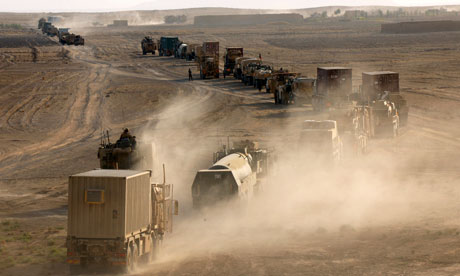
As the fighting ended, Bush warned Russia not to recognise South Ossetia’s independence. Russia did exactly that, while US warships were reduced to sailing around the Black Sea. The conflict marked an international turning point. The US’s bluff had been called, its military sway undermined by the war on terror, Iraq and Afghanistan. After two decades during which it bestrode the world like a colossus, the years of uncontested US power were over.

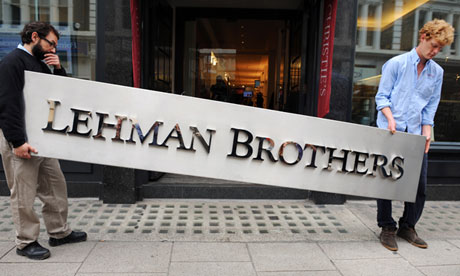
Three weeks later, a second, still more far-reaching event threatened the heart of the US-dominated global financial system. On 15 September, the credit crisis finally erupted in the collapse of America’s fourth-largest investment bank. The bankruptcy of Lehman Brothers engulfed the western world in its deepest economic crisis since the 1930s.

The first decade of the 21st century shook the international order, turning the received wisdom of the global elites on its head – and 2008 was its watershed. With the end of the cold war, the great political and economic questions had all been settled, we were told. Liberal democracy and free-market capitalism had triumphed. Socialism had been consigned to history. Political controversy would now be confined to culture wars and tax-and-spend trade-offs.

In 1990, George Bush Senior had inaugurated a New World Order, based on uncontested US military supremacy and western economic dominance. This was to be a unipolar world without rivals. Regional powers would bend the knee to the new worldwide imperium. History itself, it was said, had come to an end.

But between the attack on the Twin Towers and the fall of Lehman Brothers, that global order had crumbled. Two factors were crucial. By the end of a decade of continuous warfare, the US had succeeded in exposing the limits, rather than the extent, of its military power. And the neoliberal capitalist model that had reigned supreme for a generation had crashed.

It was the reaction of the US to 9/11 that broke the sense of invincibility of the world’s first truly global empire. The Bush administration’s wildly miscalculated response turned the atrocities in New York and Washington into the most successful terror attack in history.

Not only did Bush’s war fail on its own terms, spawning terrorists across the world, while its campaign of killings, torture and kidnapping discredited Western claims to be guardians of human rights. But the US-British invasions of Afghanistan and Iraq revealed the inability of the global behemoth to impose its will on subject peoples prepared to fight back. That became a strategic defeat for the US and its closest allies.

This passing of the unipolar moment was the first of four decisive changes that transformed the world – in some crucial ways for the better. The second was the fallout from the crash of 2008 and the crisis of the western-dominated capitalist order it unleashed, speeding up relative US decline.

This was a crisis made in America and deepened by the vast cost of its multiple wars. And its most devastating impact was on those economies whose elites had bought most enthusiastically into the neoliberal orthodoxy of deregulated financial markets and unfettered corporate power.

A voracious model of capitalism forced down the throats of the world as the only way to run a modern economy, at a cost of ballooning inequality and environmental degradation, had been discredited – and only rescued from collapse by the greatest state intervention in history. The baleful twins of neoconservatism and neoliberalism had been tried and tested to destruction.

The failure of both accelerated the rise of China, the third epoch-making change of the early 21st century. Not only did the country’s dramatic growth take hundreds of millions out of poverty, but its state-driven investment model rode out the west’s slump, making a mockery of market orthodoxy and creating a new centre of global power. That increased the freedom of manoeuvre for smaller states.

China’s rise widened the space for the tide of progressive change that swept Latin America – the fourth global advance. Across the continent, socialist and social-democratic governments were propelled to power, attacking economic and racial injustice, building regional independence and taking back resources from corporate control. Two decades after we had been assured there could be no alternatives to neoliberal capitalism, Latin Americans were creating them.

These momentous changes came, of course, with huge costs and qualifications. The US will remain the overwhelmingly dominant military power for the foreseeable future; its partial defeats in Iraq and Afghanistan were paid for in death and destruction on a colossal scale; and multipolarity brings its own risks of conflict. The neoliberal model was discredited, but governments tried to refloat it through savage austerity programmes. China’s success was bought at a high price in inequality, civil rights and environmental destruction. And Latin America’s US-backed elites remained determined to reverse the social gains, as they succeeded in doing by violent coup in Honduras in 2009. Such contradictions also beset the revolutionary upheaval that engulfed the Arab world in 2010-11, sparking another shift of global proportions.

By then, Bush’s war on terror had become such an embarrassment that the US government had to change its name to “overseas contingency operations”. Iraq was almost universally acknowledged to have been a disaster, Afghanistan a doomed undertaking. But such chastened realism couldn’t be further from how these campaigns were regarded in the western mainstream when they were first unleashed.

To return to what was routinely said by British and US politicians and their tame pundits in the aftermath of 9/11 is to be transported into a parallel universe of toxic fantasy. Every effort was made to discredit those who rejected the case for invasion and occupation – and would before long be comprehensively vindicated.

Michael Gove, now a Tory cabinet minister, poured vitriol on the Guardian for publishing a full debate on the attacks, denouncing it as a “Prada-Meinhof gang” of “fifth columnists”. Rupert Murdoch’s Sun damned those warning against war as “anti-American propagandists of the fascist left”. When the Taliban regime was overthrown, Blair issued a triumphant condemnation of those (myself included) who had opposed the invasion of Afghanistan and war on terror. We had, he declared, “proved to be wrong”.

A decade later, few could still doubt that it was Blair’s government that had “proved to be wrong”, with catastrophic consequences. The US and its allies would fail to subdue Afghanistan, critics predicted. The war on terror would itself spread terrorism. Ripping up civil rights would have dire consequences – and an occupation of Iraq would be a blood-drenched disaster.

The war party’s “experts”, such as the former “viceroy of Bosnia” Paddy Ashdown, derided warnings that invading Afghanistan would lead to a “long-drawn-out guerrilla campaign” as ”fanciful”. More than 10 years on, armed resistance was stronger than ever and the war had become the longest in American history.

It was a similar story in Iraq – though opposition had by then been given voice by millions on the streets. Those who stood against the invasion were still accused of being “appeasers”. US defence secretary Donald Rumsfeld predicted the war would last six days. Most of the Anglo-American media expected resistance to collapse in short order. They were entirely wrong
 
A new colonial-style occupation of Iraq would, I wrote in the first week of invasion, “face determined guerrilla resistance long after Saddam Hussein has gone” and the occupiers “be driven out”. British troops did indeed face unrelenting attacks until they were forced out in 2009, as did US regular troops until they were withdrawn in 2011.

But it wasn’t just on the war on terror that opponents of the New World Order were shown to be right and its cheerleaders to be talking calamitous nonsense. For 30 years, the west’s elites insisted that only deregulated markets, privatisation and low taxes on the wealthy could deliver growth and prosperity.

Long before 2008, the “free market” model had been under fierce attack: neoliberalism was handing power to unaccountable banks and corporations, anti-corporate globalisation campaigners argued, fuelling poverty and social injustice and eviscerating democracy – and was both economically and ecologically unsustainable.

In contrast to New Labour politicians who claimed “boom and bust” to be a thing of the past, critics dismissed the idea that the capitalist trade cycle could be abolished as absurd. Deregulation, financialisation and the reckless promotion of debt-fuelled speculation would, in fact, lead to crisis.

The large majority of economists who predicted that the neoliberal model was heading for breakdown were, of course, on the left. So while in Britain the main political parties all backed “light-touch regulation” of finance, its opponents had long argued that City liberalisation threatened the wider economy.

Critics warned that privatising public services would cost more, drive down pay and conditions and fuel corruption. Which is exactly what happened. And in the European Union, where corporate privilege and market orthodoxy were embedded into treaty, the result was ruinous. The combination of liberalised banking with an undemocratic, lopsided and deflationary currency union that critics (on both left and right in this case) had always argued risked breaking apart was a disaster waiting to happen. The crash then provided the trigger.

The case against neoliberal capitalism had been overwhelmingly made on the left, as had opposition to the US-led wars of invasion and occupation. But it was strikingly slow to capitalise on its vindication over the central controversies of the era. Hardly surprising, perhaps, given the loss of confidence that flowed from the left’s 20th-century defeats – including in its own social alternatives.

But driving home the lessons of these disasters was essential if they were not to be repeated. Even after Iraq and Afghanistan, the war on terror was pursued in civilian-slaughtering drone attacks from Pakistan to Somalia. The western powers played the decisive role in the overthrow of the Libyan regime – acting in the name of protecting civilians, who then died in their thousands in a Nato-escalated civil war, while conflict-wracked Syria was threatened with intervention and Iran with all-out attack.

And while neoliberalism had been discredited, western governments used the crisis to try to entrench it. Not only were jobs, pay and benefits cut as never before, but privatisation was extended still further. Being right was, of course, never going to be enough. What was needed was political and social pressure strong enough to turn the tables of power.

Revulsion against a discredited elite and its failed social and economic project steadily deepened after 2008. As the burden of the crisis was loaded on to the majority, the spread of protests, strikes and electoral upheavals demonstrated that pressure for real change had only just begun. Rejection of corporate power and greed had become the common sense of the age.

The historian Eric Hobsbawm described the crash of 2008 as a “sort of right-wing equivalent to the fall of the Berlin wall”. It was commonly objected that after the implosion of communism and traditional social democracy, the left had no systemic alternative to offer. But no model ever came pre-cooked. All of them, from Soviet power and the Keynesian welfare state to Thatcherite-Reaganite neoliberalism, grew out of ideologically driven improvisation in specific historical circumstances.

The same would be true in the aftermath of the crisis of the neoliberal order, as the need to reconstruct a broken economy on a more democratic, egalitarian and rational basis began to dictate the shape of a sustainable alternative. Both the economic and ecological crisis demanded social ownership, public intervention and a shift of wealth and power. Real life was pushing in the direction of progressive solutions.

The upheavals of the first years of the 21st century opened up the possibility of a new kind of global order, and of genuine social and economic change. As communists learned in 1989, and the champions of capitalism discovered 20 years later, nothing is ever settled.
 
This is an edited extract from The Revenge of History: the Battle for the 21st Century by Seumas Milne, published by Verso. Buy it for £16 at guardianbookshop.co.uk

http://www.informationclearinghouse.info/article32804.htm

River to Sea Uprooted Palestinian
The views expressed in this article are the sole responsibility of the author and do not necessarily reflect those of this Blog!

The Dumbing Down of America

Eight crazy things Americans believe about foreign affairs
Americans have some astonishing misconceptions about international affairs.

As the Washington Post's Dylan Matthews explained last month, the baffling fact that 15 per cent of Ohio Republicans believe Mitt Romney deserves more credit than Barack Obama for killing Osama bin Laden may have as much to do with polling psychology and sampling error as with self-delusion or ignorance. But here are some other statistics that may surprise you:

* 41 per cent of Americans believe China is the world's leading economic power, according to a 2012 Pew poll (the correct answer is the United States, which 40 percent of respondents in the Pew poll selected).
* 73 per cent of Americans could not identify communism as America's main concern during the Cold War, according to Newsweek, which administered an official citizenship test in 2011.
* 9 per cent of Americans frequently worry about becoming victims of terrorism, according to a 2011 AP-GfK poll (Reason magazine has calculated that the chances of being killed by a terrorist are roughly one in 20 million, and that "in the last five years you were four times more likely to be struck by lightning than killed by a terrorist").
* Nearly 25 per cent of Americans don't know that the United States declared its independence from Great Britain, according to a 2011 Marist poll.
* 71 per cent of Americans believe Iran already has nuclear weapons, according to a 2010 CNN/Opinion Research Corporation poll (Israel, the United States, and the International Atomic Energy Agency would beg to differ).
* The average American thinks that the United States spends 27 per cent of the federal budget on foreign aid, according to a 2010 World Public Opinion poll (the figure is more like 1 percent).
* 33 per cent of Americans believed Saddam Hussein was personally involved in 9/11 as late as 2007, according to a CBS News/New York Times poll (it's worth noting that the number was down from 53 per cent in 2003, and that more recent polls suggest the percentage has continued to decline since 2007).
* 88 per cent of young Americans couldn't find Afghanistan on a map, 75 per cent couldn't locate Iran or Israel, and 63 per cent couldn't identify Iraq, according to a 2006 Roper Public Affairs/National Geographic Society poll. 

River to Sea Uprooted Palestinian  
The views expressed in this article are the sole responsibility of the author and do not necessarily reflect those of this Blog!

Political Islam Has Gained Power But Cannot Govern on Revenge


Protesters fight during clashes between supporters and opponents of the Muslim Brotherhood and President Mohamed Mursi in Tahrir square in Cairo, Oct. 12, 2012. It was the first street violence between rival factions since the Islamist leader took office. (photo by REUTERS/Mohamed Abd El Ghany)

By:Talal Salman posted on Thursday, Oct 18, 2012
Political Islam movements no longer care about being accused of monopolizing religion, and they are even preparing to monopolize the secular authorities. They have now become obsessed with and blinded by the lust for power.

These movements have had the chance to participate in political life using their explicit names. Chief among these movements is the Muslim Brotherhood and some Salafist groups in Egypt and Tunisia — as well as in Morocco and Jordan to some extent.

These groups do not conceal their belief that power is a reward they deserve in order to be compensated for all the kinds of persecution they have suffered from throughout the decades. These groups forget that past tyrannical regimes also persecuted all of the people they ruled, including their various political organizations and groups, be they national, nationalist, progressive or even NGOs.
Although the Brotherhood was established in Egypt more than 80 years ago, the revolution that occurred in Tahrir Square has revealed the organization’s urge to gain power and even its attempts to monopolize it, despite its lack of any modern or serious platform for how it would rule.

The Islamic slogan is not enough for its platform, and the Holy Quran was never, and will never be, a political platform for democratic rule in a civil society. The Holy Quran is much higher than that.
Catchphrases, complex theories or Islamic slogans that are derived from verses [of the Quran] or sayings of the Prophet Muhammad do not help formulate a program for a secular authority. These may serve as guidelines to achieve equality and justice among the people and enable them to enjoy their natural rights in their countries and states, but they do not tackle "power" and governance, nor do they define such rules.

Moreover, Muslims — be they Arabs or of other nationalities — have never experienced, following the Righteous Caliphs [who ruled following the death of Muhammad from 632-661], a rule that resulted from popular will and that had a specific work plan.

Quite the opposite, authority became hereditary and the caliph turned into the absolute ruler. Opponents were deemed "traitors." They were chased, imprisoned and executed.

Their roots were eradicated, and they were treated as the enemies of the ruling family, the self-proclaimed religious and secular authorities whose decisions are irrevocable no matter how wrong. Those who objected were put to the sword.

Surprisingly enough, Islamic organizations — which reached power thanks to the masses that voted for them as a result of a lack of any [better options] — are acting like "ruling families." It is as if the overthrow of tyranny — Hosni Mubarak in Egypt and Zein Abedine Ben Ali in Tunisia — enables them to act as "the sole legitimate heir."

There is no doubt that the Muslim Brotherhood, both in Egypt and Tunisia, includes activists and experts that are respected in various scientific and practical fields. However, the “vast majority" of the Egyptians and Tunisians who do not share the organization’s opinion includes thousands of activists and specialists who have worked hard for their home countries and who may have suffered from the same — or even worse — hardships, persecution and imprisonment that the Brotherhood suffered from during the eras of tyranny.

The fact that there are activists who were arrested and imprisoned for many years does not mean that they are eligible to rule the country without any specific and clear platform or program. In fact, a wide segment of the Egyptian people (and other Arabs, thankfully … ) do have this "quality."

The lack of political life during the era of tyrants has affected both the present and future of the country, all the while depriving it of the skills of two or three of its qualified generations. This almost destroyed civil society, spreading its elite between prisons and exile and pushing large numbers to give up on the possibility of change and consequently abandon any political action.

"I'm sorry, but I have nothing to do with politics," became a slogan used to avoid being arrested or imprisoned, or to avoid being forced to tell the names of "those involved in politics."

In any case, it is certain that neither the Egyptian nor the Tunisian people have given the "Brotherhood" carte blanche to govern according to its platform. This is assuming that what they have accomplished at the level of political thought can even be considered a ruling platform in the 21st century, amid difficult economic or social conditions experienced by the two peoples.

These political and daily hardships set the stage for foreign intervention, and they enable the Israeli enemy to continue its attempts to restrict national decision-making in Egypt, the Arab World in general, and each and every country of this wide Arab continent.

In the case of Egypt, for example, one tenth of the voters voted for Mohammed Morsi in the first round of the presidential election. However, in the second round — as a result of obvious circumstances, most notably the desire to prevent the era of tyrants from continuing democratically through [the election of] one of the old regime’s main figures, [Ahmed Shafiq] — Egyptians gave him a quarter of their votes, but did not raise him to the helm of absolute power.

The president, who came to power through the votes of a broad alliance imposed by the necessity of preventing the regime’s candidate from winning, seems as if he is ignoring this fact. He is acting as if he won thanks to the votes of the Brotherhood alone.

First, there was the "collusion" with the Supreme Council of Armed Forces [SCAF].

This collusion led to the disruption of the drafting of the constitution, only allowing a single constitutional amendment that permitted the Brotherhood to take the lead in the parliamentary and Shura Council elections. It also allowed them to exclude the “other” national forces, since they were the most prepared among the political forces.

This disruption resulted in a hasty presidential election — for those who ran — and enabled their candidate to win through the votes of others.

But the confusion was evident since the first day following the election of a Muslim Brotherhood president, the first such president in the history of Egypt and the Arab world in general.

In Tahrir Square, President Morsi acted like the president of the Brotherhood, not the president of Egypt who had come to office through a wide alliance that included many [forces] who were historically anti-Brotherhood. Still, these forces had decided to give the Brotherhood a chance, especially amid fear of a possible victory by the candidate from the former tyrannical regime.
Hours after the announcement of his victory in the elections, [Morsi] intentionally and unjustifiably sought to restore his [old] rivalry with [former Egyptian president] Gamal Abdel Nasser.

He said: “You have no idea how difficult the 1960s were,” referring to the unjustified suppression of the Muslim Brotherhood, even if there were grounds for it in the conflict with the regime at the time.
The president was also eager to award SCAF leaders the highest awards in Egypt, as a prelude to sending them to retirement, thus giving the revolutionaries an opportunity to demand their prosecution. This was an example of pure deception or opportunism, where there is no hesitation to adopt two contradictory positions at the same time without providing any justification for either.

When Morsi reluctantly went to Tehran, he had to recognize Gamal Abdel Nasser as a leader, but soon fabricated a problem with his hosts by bringing up historical differences regarding Islamic rule under and after the Caliphs.

President Morsi then took a series of surprising steps. Decisions were made and reversed after attempts to justify their issuance, and were later canceled before the ink had even dried. Also, vice presidents were appointed, and later described as advisers or aides.

A government was formed without consultations, as if it were a secret mission. This was followed by an unjust decision to dismiss the general prosecutor and appoint him as an ambassador to the Vatican instead, which was reversed after the judges’ collective rejection of such a “breach of the immunity of the judiciary.”

It is a rule without an agenda, one that exercises power in the absence of constitutional cover.
These successive actions reflect a desire by the Muslim Brotherhood for unilateral rule and an attempt to control all sectors of the government in the shortest time possible. They want to do this before the building [of] constitutional institutions, which set limits to the president’s authorities — even if he is elected by the people in a presidential system — is completed.

It appears as if one of the priorities of the new president and his organization is to take revenge for the [actions of] the past by confiscating the present and the future.

The same observations can be made on the (semi-Islamic) rule in Tunisia. The remarks made by the Tunisian Muslim Brotherhood leader Rachid Ghannouchi a few days ago — which were intentionally leaked to the media — came to confirm that democracy is a novel idea for the Brotherhood. After having assumed power, the Brotherhood would rather not have partners, neither progressives nor Salafists.

Indeed, many of the Brotherhood’s actions indicate that they deliberately deny the history of other opposition forces, which have confronted tyrannical regimes way before them. At the time, the Brotherhood used to frequent the [regime’s] courts and grant it a form of acclamation or vindication as it took the path of wrong or sin.

The honoring of the late President Anwar Sadat on the anniversary of the October War can only be understood as [an act of] revenge against Gamal Abdel Nasser.

This is especially true if we keep in mind that the Mubarak regime, which was overthrown in Tahrir Square, is the “legitimate” — political — extension of the Sadat regime.

The Brotherhood’s vengeful spirit against the press and prominent journalists, both in the press syndicate and various media outlets, is too evident, almost scandalous whether in Egypt or Tunisia.

The question is: When will the people become aware that the post-Tahrir Square started out unburdened with a sense of revenge for the past, and turned toward the future, extending a hand to the people to begin building together?


River to Sea Uprooted Palestinian
The views expressed in this article are the sole responsibility of the author and do not necessarily reflect those of this Blog!

Palestinian Authority to Hold Sham Elections


Longtime Israeli collaborators Mahmoud Abbas and Salam Fayyad scheduled West Bank municipal elections on October 20, 2012. Democracy isn’t on the ballot. Palestinians are skeptical for good reason.

For the first time since January 25, 2006, they’ll vote in an election much different from then. Fed up with institutionalized Fatah corruption and subservience to Israel, Hamas candidates swept to victory.

 They won 74 of the Palestinian Legislative Council’s (PLC) 132 seats. Hamas became Palestine’s legitimate government. It remains so despite Fatah’s complicity with Israel. Doing so separated West Bank authority from Gaza.

Ismail Haniyeh is Palestine’s prime minister. Fayyad’s PM appointment lacks legitimacy. He represents lawless coup d’etat authority. Abbas’ term as president expired in January 2009. He remains in office illegally.

Palestinians suffer because of their allegiance to Israel and Washington, not them. Elections this month assure continuity, not democratic change.

On October 10, the Los Angeles Times headlined “Palestinian voters skeptical about value of elections.”

Hebron City Council aspirant Maysoun Qawasmi expressed popular frustration, saying:
“We are seeing the same people running, and they aren’t offering anything new. Voters are looking for independent voices.” 
In fact, they want officials representing them, not Israel. Abbas and Fayyad won’t tolerate them. Everything is arranged for Fatah candidates to win. “They always win,” said Qawasmi. “And nothing ever changes.”

One Palestinian perhaps spoke for others, saying:
“I don’t understand how we can have elections in just half the territory. I don’t even know who’s running.”
Given a rigged process, Hamas opted out. Doing so got Abbas/Fayyad to hold elections they might have cancelled otherwise, knowing they might lose. They tolerate no opposition.


They crack down hard against challengers. They mock democratic freedoms. They represent despot authority. They’re complicit Israeli puppet stooges.

They dismissed about 50 Fatah members wanting to run as independents. Prominent former Nablus Mayor Ghassan Shaka’a was bumped illegitimately.

 Other PLO candidates running independently were denied funding. They include candidates representing the Popular Front for the Liberation of Palestine (PFLP), Democratic Front for the Liberation of Palestine (DFLP), and People’s (Communist) Party.

Al Haq human rights group legal consultant, Issam Abdeen, said: 
“The sound basis for any election to take place is a healthy, political atmosphere. (It’s) clearly lacking here.”
According to Palestinian Central Electoral Commission (CEC) chairperson Hanna Nasser, the West Bank has over 350 districts. However, 181 won’t participate because only Fatah candidates are running.

In addition, another 78 postponed voting until November. At issue is getting enough candidates to stand in a fraudulent process.

On October 18, the Palestinian Center for Human Rights (PCHR) expressed great concern about upcoming elections. At issue is limited public freedoms and “continuing widespread” PA human rights violations.

On July 10, Palestine’s CEC was “instructed to make the necessary arrangements in order to organize the elections in both the West Bank and the Gaza Strip by the Council of Ministers in Ramallah.”

After Hamas CEC participation was terminated, “the Council of Ministers annulled their previous decision.” They decided on only West Bank elections.

The most recent local council ones were held in stages from December 2004 to December 2005. In December 2009, the mandate for these elections expired.

Since then, separate West Bank/Gaza authorities appointed local council members directly. Favoritism substituted for democracy. 
“As the mandate granted by the Palestinian people in local, legislative and presidential elections has expired, these institutions have lost their authorization to represent the will of the Palestinian voters.” 
“Therefore, the holding of renewed elections is the democratic entitlement of the Palestinian people.”
 Fatah denies them that right. Abbas and Fayyad take orders from Israel. They salute and obey. Palestinians lose out altogether.

Legitimate general or local elections require certain conditions in place. Transparency is fundamental. So is a free, fair, and open process. The popular will of the electorate must be prioritized. 

Public freedoms must be protected.

They include “the right to freedom of opinion and expression, the right to peaceful assembly, the right to form associations, freedom of the press, the release of political detainees, and an end to restrictions placed on political activities.”

Nothing resembling electoral freedom is in place. How could it be with democracy excluded from the ballot. Palestine is fractured in two pieces. Abbas repeatedly delayed elections. After promising Fatah/Hamas unity, he backed off and did nothing.

 Security forces he controls also compromise human and civil rights. Israeli diktats are prioritized over democratic freedoms and legitimate governance. Palestinians deserve better. They’re denied it under Israeli-enforced occupation rules.

Abbas/Fayyad began corrupting the process months ago. Fatah outliers, other challengers, and Hamas members were targeted. Arrests were made. Palestinians wanting legitimate government were imprisoned.

What’s upcoming this weekend assures continuity of lawless government and Fatah-enforced occupation harshness. Palestinians should opt out and stay home. With choice off the ballot, nothing they do electorally will change things.

Separately, Haaretz headlined “Netanyahu cabinet to adopt part of Levy report on legal status of West Bank outposts.”

All settlements and outposts violate international law. Israel spurns it dismissively. In January, Netanyahu appointed a three-member committee. Former Supreme Court Justice Edmond Levy headed it.

He excluded fairness and rule of law principles from consideration. Three issues were examined:

(1) Legal aspects of Israel’s occupation.

(2) The 2005 Sasson Report’s conclusion that dozens of outposts built on privately owned Palestinian land were illegal.

(3) Whether Israel’s presence in the West Bank is, or is not, an occupation.

Levy’s report rewrote international law. It claimed that occupation “as set out in the relevant international conventions cannot be considered applicable to the unique and sui generis historic and legal circumstances of Israel’s presence in Judea and Samaria spanning over decades.”“Israelis have the legal right to settle in Judea and Samaria and the establishment of settlements cannot, in and of itself, be considered illegal.”

It recommended legalizing illegal outposts. It said zoning officials should authorize them without further political approval. It urged no restraints on settlement construction.

Netanyahu praised the report, saying:
“In my opinion, this report is important because it deals with the legalization and the legitimization of the settlement enterprise in Judea and Samaria on the basis of facts, a variety of facts and arguments that should be seriously considered.”
It’s unsurprising given Likud’s position on settlements, stating:

“The Jewish communities in Judea, Samaria and Gaza (all Occupied Palestine) are the realization of Zionist values. Settlement of the land is a clear expression of the unassailable right of the Jewish people to the Land of Israel and constitutes an important asset in the defense of the vital interests of the State of Israel.”
“The Likud will continue to strengthen and develop these communities and will prevent their uprooting.” 
Likud rejects Green Line separation of Israel and Palestine. It incrementally steals Palestinian land. It declared all Jerusalem sovereign Israeli territory.

Likud’s Charter also rejects Palestinian self-determination, saying:

“The Jordan river will be the permanent eastern border of the State of Israel.” 
“Jerusalem is the eternal, united capital of the State of Israel and only of Israel. The government will flatly reject Palestinian proposals to divide Jerusalem.”
“The Government of Israel flatly rejects the establishment of a Palestinian Arab state west of the Jordan river.” 
Levy’s Likudnik standing remains unblemished. He’s more shyster than jurist. He’s little more than a retired Likud Party hack. His opinions are entirely separate from legal principles. Revisionism defined his ruling.

Haaretz said Netanyahu plans to legalize West Bank outposts. Previously he stopped short. No longer. Together with other hardliners they’ll do it to appease settlers ahead of planned January elections.

Doing so will make it easier to steal land, expand settlements, and dispossess more Palestinians. Adopting key parts of Levy’s report effectively annexes all West Bank territory Israel wishes.

Maybe taking it all is planned. Put nothing past fascists like Netanyahu. Some of his policies exceed what some despots would dare.

Surprisingly, Defense Minister Ehud Barak opposes his move, saying:

Approving the Levy report “will backfire on those who support it. The report’s adoption won’t strengthen the settlements in the West Bank, but will instead cause diplomatic damage and will increase Israel’s isolation in the world.”

He urged cabinet members reject what’s now approved. Labor leader Shelly Yacimovich agreed. He called Netanyahu’s move a transparent pre-election stunt. He’ll do more harm to Israel’s security than improve it.

Kadima MK Yisrael Hasson said Netanyahu’s “playing with a flame-thrower over a barrel of gasoline. (He) wants to enslave the State of Israel for the sake of political interests and we will pay the price for that.”

Other opposition party members also expressed criticism. Likud MK Danny Danon said he’s trying to enlist congressional support. He wants Washington to legitimize what’s illegitimate.

Getting it he calls “a rare historical opportunity.” With US elections approaching, perhaps he’ll succeed. No one considers what’s right for Palestinians important.
Decades ago, Washington made them non-persons. Israel did earlier in 1948. Effectively, they’re denied all rights. Occupation harshness demands it.

Stephen Lendman lives in Chicago and can be reached at lendmanstephen@sbcglobal.net.

His new book is titled “How Wall Street Fleeces America: Privatized Banking, Government Collusion and Class War”


Visit his blog site at sjlendman.blogspot.com and listen to cutting-edge discussions with distinguished guests on the Progressive Radio News Hour on the Progressive Radio Network Thursdays at 10AM US Central time and Saturdays and Sundays at noon. All programs are archived for easy listening.


River to Sea Uprooted Palestinian  
The views expressed in this article are the sole responsibility of the author and do not necessarily reflect those of this Blog!