Saturday, 16 February 2013

US Tested New Weapon, No Meteor in Chelyabinsk: Russian Politician

Local Editor
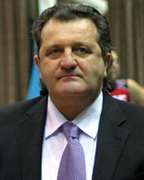
Russia: Vladimir Zhirinovsky, leader of the Liberal Democratic Vladimir Zhirinovsky, the head of the Russian Liberal-Democratic Party, said Friday that no meteor fell in the Urals – the US “has tested a new weapon” over the region, he claimed.

“You’re like some primitive tribe. What meteorite?” he said, adding that space is a “universe that has its own laws... When something falls – it’s man-made,” Russia Today news website quotes him as explaining.
Earlier in the week, US Secretary of State John Kerry reportedly tried and failed to reach Foreign Minister Sergey Lavrov by telephone for two consecutive days. The State Department said that Kerry wanted to discuss the recent North Korean nuclear test, as well as the conflict in Syria.

MeteorHowever, Zhirinovsky claimed that the top US diplomat “wanted to warn Lavrov about the provocation and that it may affect Russia,” RIA Novosti reported.

On Thursday, Moscow confirmed that on February 12 it had received Washington’s request to organize an urgent phone conversation between Kerry and Lavrov. The Foreign Ministry said, however, that State Department spokesperson Victoria Nuland was “inaccurate with her statements” regarding their inability to get in touch with Lavrov for two days.
“Unfortunately, the conversation could not be held because of the intensive schedule of the Russian foreign minister and his working tour to African countries,” Foreign Ministry spokesperson Alexander Lukashenko said.
Source: Websites
15-02-2013 - 18:56 Last updated 15-02-2013 - 19:00

River to Sea Uprooted Palestinian  
The views expressed in this article are the sole responsibility of the author and do not necessarily reflect those of this Blog!

Have We Hit Bottom Yet?


He who with might extends through all existence hears words
Which I, his faithful servant, utter…

Swilling the waters of the ocean, the submarine
Sank beneath the surface, taking with it light, beauty,
And the feather of a dead seagull, in its downward draft.
All cheered and hoorahed as, with a nervous tick of its hydrodynamic control fins,
The titanium-hulled craft descended through the ripples of hoodwinking light,
Spectacularly placed, its chockablock ballast tanks rendering it
A slightly greater weight in the lesser weight of the sea surrounding it.

“Have we reached bottom yet?” asked the small child.
“Not yet, but we will…eventually,” replied the bearded man
Seated nearby, favoring the child with an indulgent smile.

Further down, further down, further down…
At 65 feet we encountered the detritus of Hiroshima and Nagasaki.
“No pearl in an oyster that,” remarked one of the passengers,
While another expressed a great longing for some mango fruit.
“Take us down further,” ordered the captain, who was a crypto Jew.
At 110 feet we passed the corpses and the herbicide-poisoned jungles of Vietnam.
In this submarine, the ping of the sonar plays the melody of Taps.

“Have we reached bottom yet?” asked the child.
“Not yet, no,” answered the man, again with a smile,
Looking out the window himself now.

At a depth of 250 feet we came to that place in the road where
John F. Kennedy closed his eyes and that cabal of Sayanim had
Rushed in to fill the void, and at 300 feet the last remnant of sunlight
From the sea’s surface faded in total, while the crypto Jew at the helm
Called out again, “Take us further!” and the pump jets hummed merrily.
At 600 feet we encountered the cash-on-the-barrel sale of human souls
And the smuttiness of that place on the Potomac,

As the child asked once more, “Have we reached bottom yet?”
“No, I don’t think so,” said the man,
Tightening his grip on the armrest of his seat.

At 945 feet, we saw the missing limbs and missing teeth
Of Iraq, and the half-million Iraqi children we killed
Because we thought it was “worth it” and so we went back and
Killed 3 million more; and at 1290 feet we came upon the firing of
Rockets from beneath the grass, the explosions coming up out of the ground
Around the fleeing children, then at 1430 feet we saw the burning of El Chorillo,
The sludge of the Panama Canal, and the pilfered ruins of the Baghdad Museum.

“Have we?” asked the child. “Have we reached bottom? Have we
Gotten there yet?” The man gazed at the child and smiled again,
Only this time there was a hint of sadness in his smile.

One of the passengers opened a bottle of wine. “It reminds me,”
Said he, “of a story I once heard—of a man who dies in the depths
Of a vale. A great bird on top of a mountain flies down into
The depths of that vale where the man died; it eats the corpse,
Then it flies back up to the mountain. From its perch there, on a bare limb,
It vomits—it deposits dung—it drops pieces of the corpse down
Below on the people in the vale.”

At 1490 feet, we encountered a fiefdom, where we found
The warrantless searches and the broken doors of the Patriot Act.
“Have we reached bottom yet?” asked the child. The man did not answer.

The passenger who earlier had asked for mango fruit, inquired
Again if there were not some way we could possibly stop off and purchase some.
“Further!” screamed the captain. “Take us down further!”
At 1645 feet we saw the drones flying over Pakistan,
To the very furthest distance, all the way to the bags of Bagram,
The Abus of Ghraib, and the grimaces of Guantanamo, may lovely
Variegated life be remembered.

“I can taste your heart, and it tastes foul and despicable!”
The man turned his head and regarded the child disjointedly,
“Funny child, funny imagination…”

“I’d feel better if we could stop, or at least slow down,” said a woman
With a chrysalis-shaped birthmark on her face, looking doubtfully upward,
To the communications room, in the elevated chamber of the sub’s tower.
“Further! Down further!” pressed the Captain.
At 1820 feet we saw the dronefields of the Midwest and the
Comical abscesses of the NDAA, scattered here and there
Like conceptions of the meaning of “Ultimate Reality,”

The only sound now a slight noise coming from the shaft bearings, as the child
Waited in vain for the blowing of a whistle, the ceasing of
The petrol bombs of existence, “Are we there? When will we get there?”

The bearded man stared in torn, conflictive silence. At 2010 feet
We heard the clanging machinery of hypocrisy, the public pronouncements of
Presidential spokesmen, and the ice forge of contempt.
“All of it, every bit of it, is nothing more than a teleological train of progression,”
Averred the passenger who had finished the bottle of wine and opened another.
At 2370 feet there appeared a diseased, phlegmatic wasteland
Of broken necks, broken parodies, and electronic voting machines,

And at 2500 feet we felt the winds of non-change and the superlatives
Of greed, the force of inaction and the inaction of necessity. “Trust me, I
Know what I’m talking about,” said the passenger just before passing out, the bottle

Slipping from his hand. At 2700 feet, we encountered the full, existential
Jewish state and its Jabotinskyish orgasms of blood—and at 2790 feet
We came upon the Talmud, languishing in flea-infested side curls,
Palming off the pornography of the Chosen, mishnahs of malevolence—sitz im leben—“Why did you lead us here?” asked the child. “Were you misguided?
Did you not care?” By way of reply, the bearded man
Removed from his coat a 9 mm
semi-automatic pistol,

Adroitly pointed the barrel to his head, and squeezed the trigger. He slumped.
Out of his pocket rolled a mango, as the child ruminated in silence.
“Further!” snarled the captain. “I want this vessel down further!”

At 2850 feet we saw the unraveling but never-ending clew of false flags
Leaked memos, and secret kill lists, and just before dropping to 3000 feet
We heard the whine of the drone, the sound of explosions, and the last
Scream from the lips of a 16-year-old boy—as again the child wailed,
Have we reached bottom yet?
I have thus, most Holy One, spoken of these cyclic explosions,
The thunder of the theraphosidae and the falderal of this fallen age.
Awaken now all pleasant strains, and let sacred hymns flow forth.


By Richard Edmondson

River to Sea Uprooted Palestinian   The views expressed in this article are the sole responsibility of the author and do not necessarily reflect those of this Blog!

Regarding the proposed al-Awda withdrawal of endorsement from BDS


http://www.deliberation.info/regarding-the-proposed-al-awda-withdrawal-of-endorsement-from-bds/


Below is a message that I posted to the al-Awda USA listserve concerning a proposed al-Awda withdrawal of its endorsement from the statement currently appearing on the BDS website of the BNC, which is not the same statement that it originally signed. Since receiving wider distribution, my message has been misinterpreted and criticised for statements and assertions that were neither made nor intended. Furthermore, since my motives for making the statement have been questioned, as well, I will preface the message with some explanation.
  • I have never criticised but rather have encouraged the practice of, and a movement for, boycott, divestment and sanction against Israel. Although some do not wish to apply BDS to all things Israeli, I do not wish to discourage them from their partial application of BDS, because all forms of BDS are helpful.
  • I do not wish to cause a split within the movement, nor tell Palestinians what should or should not be their objective or their means. Not all Palestinians agree about such matters, and I consider my role to be that of solidarity with all Palestinians, regardless of their political beliefs or affiliations. I am only responsible for my own beliefs and actions.
  • I am in pursuit – as we all are – of truth and justice, although our interpretations of such may be different and our commitment varying. However, I do not abide the avoidance of truth for the sake of expediency, nor hypocrisy or inconsistency with respect to principle. Sadly, some would rather apply principle only when it serves their purpose and abandon it when it is no longer convenient. I believe that the truth sets us free, but that freedom is not gained without sacrifice. However, freedom is an illusion without justice, and no one is free until we all are free. Similarly, justice cannot be gained for some at the cost of injustice to others. This is why none of us should accept a Jewish state, least of all Jews.
  • My message was addressed to al-Awda members with respect to al-Awda endorsement of a particular BDS Campaign referenced in the message, and not the idea of a BDS movement nor the BDS tactics and actions that have been applied with success on many occasions. My reference point for what may or may not be acceptable in that context are the al-Awda USA principles of unity (with which I happen to agree).
  • This message is specifically addressed to the practice of retroactively revising a statement after it has been endorsed, without the consent of the endorsers. Nothing more. Nothing less. This is the only matter that should be considered. If Al-Awda and other signatories wish to accept the revision or to opt out, that is their business. However, they must be given the choice and an approval procedure must be followed. Please. That is all that I am saying. All the rest is analysis.
  • I tried for more than two months prior to this message to gather information and to get questions answered through more private inquiries. A more public message was a last resort.
I hope we can keep these matters in perspective
.
 
Sent: Sunday, September 23, 2012 11:44 AM
 
Subject: [AL-AWDA] Proposal for al-Awda to withdraw its endorsement from BDS
 
Dear friends,

It is with great sadness that I must propose withdrawal of al-Awda endorsement from the BDS Campaign led by the BNC until the change in its mission statement has been corrected and until a public explanation is provided for the reasons for the change as well as the procedure by which the change was implemented. A more transparent public explanation of BNC finances is also recommended.

Obviously, this is not a proposal to stop boycott, divestment and sanctions. However, BDS actions and practices do not require endorsement of a particular movement. Everything that undermines the racist Zionist state deserves our support. Nevertheless, under no circumstances can we support any statement or action that legitimates such a state, which is the problem with the BNC-led BDS Campaign.

As I reported on July 10, the original BDS mission statement reads:

“1. Ending its occupation and colonization of all Arab lands and dismantling the Wall”
In fact, it still reads that way on one part of the website: http://www.bdsmovement.net/call. Unfortunately, that part of the website is historical, and reports what the original mission statement was when it was issued in 2005 (when al-Awda endorsed it), and not what it is today, which is found at http://www.bdsmovement.net/bdsintro, which reads:
“1. Ending its occupation and colonization of all Arab lands occupied in June 1967 and dismantling the Wall” (emphasis added)

When did this wording change? By what procedure was it amended? Were endorsers like al-Awda consulted or even notified about the change? What was the reason for the change?

1. When did the wording change?

Sorry, but I have no idea about this, and I doubt that anyone else on this list does, either. This is problematic. How can a change of this magnitude be made without the permission of its endorsers? How can endorsers be made to say something that they never endorsed? This is deception at its worst.

2. By what procedure was the statement amended?

One would think that such a change would require a proposal to and ratification by the governing committee of the BNC. However, there is no evidence that such a procedure was observed. Lacking evidence to the contrary, we must conclude that it was amended unilaterally by someone with control over the website.

3. Were endorsers like al-Awda consulted or even notified about the change?

Again, in the absence of evidence to the contrary, it appears that the change in language was introduced in the most surreptitious way possible, so as to avoid notice. One is reminded of the way the British territory of Gibraltar was enlarged by moving the boundary stones at night.

4. What was the reason for the change?

This is the most troubling part of the problem. A clue may be found in the following video, posted by Gilad Atzmon:


Another clue comes from BDS Campaign founder Omar Barghouti’s book, Boycott, Divestment, Sanctions: The Global Struggle for Palestinian Rights. In the introduction, Barghouti describes the goal as “ending its occupation and colonization of all Arab lands [occupied in 1967] and dismantling the wall” (p. 6). On page 49, Barghouti says that “BDS calls for ending Israel’s 1967 military occupation of Gaza, the West Bank (including East Jerusalem), and other Arab territories in Lebanon and Syria.”

Obviously, Omar Barghouti is entitled to his views. Perhaps he is genuinely convinced that the ‘Zionist colonization’ of ‘all Arab Land’ applies only to land invaded in June 1967. However, is he the one behind the unauthorized changes in the BDS mission statement? This is a question that needs to be answered, and I believe that the similarities between his statements and the amendment of the BDS mission statement justify the asking of that question without prejudice to the possibility that a satisfactory explanation might exist. Justice must presume innocence until proven otherwise.
Finally, according to Gilad Atzmon, some Zionist right wing sources name George Soros and his Open Society Institute as helping to fund BDS and some of its member organizations. We know that Soros is a “soft” Zionist and wants to preserve a Jewish state. Is his funding or that of any other funding organizations a reason for the change in the mission statement? A full disclosure of funding sources and amounts, as well as any and all conditions of funding is needed. In addition, the use of those funds, including line item amounts, is needed in order to demonstrate accountability.
I again wish to express my sorrow at bringing these matters to your attention. I hope that my concerns are unjustified. However, I also hope that you will agree that this is an issue that must be addressed.
Paul Larudee

Further to this, below is the full current mission statement on the website. Please note that it claims that “The BDS call was endorsed by over 170 Palestinian political parties, organizations, trade unions and movements” (including al-Awda). The fact is that none of these organizations endorsed the statement as revised, but rather the original statement, without the amendment.

What, then is the meaning of item three in the mission statement? It appears to be a statement of the Right of Return, but where exactly are the refugees going to return if ending the occupation and colonization applies only to territories occupied in June, 1967?

This is clearly an accommodation to Zionists who want to be part of the BDS movement (or, more accurately, want to control it). Fine. Let them have their movement, but let the organizations that do not agree to this amendment opt out of it, in which case all of the endorsers should be contacted and allowed to make their own choice. However, under no circumstances should false claims be made that more than 170 groups endorsed a statement that they plainly did not. 

  1. Ending its occupation and colonization of all Arab lands occupied in June 1967 and dismantling the Wall;
  2. Recognizing the fundamental rights of the Arab-Palestinian citizens of Israel to full equality; and
  3. Respecting, protecting and promoting the rights of Palestinian refugees to return to their homes and properties as stipulated in UN Resolution 194.
The BDS call was endorsed by over 170 Palestinian political parties, organizations, trade unions and movements. The signatories represent the refugees, Palestinians in the OPT, and Palestinian citizens of Israel.
River to Sea Uprooted Palestinian  
The views expressed in this article are the sole responsibility of the author and do not necessarily reflect those of this Blog!

Israel's Filthy World Of Espionage, Organized Terror And Secret Prisons


Kawther Salam
ben zyqier
The zionist hebrew newspapers Yediot Aharonot and Maariv published on February 13 2013 brief reports about a number of famous spying elements who were arrested secretly in Israel. The story has been widely published in print and online. The fact of their arrests was banned from publication for several years. The Hebrew reports were released following the latest scandal exposed by the Australian media about the israeli Mossad agent Ben Zygier, (זיגייר) an Australian jew who was conveniently “found dead” in his cell at the israeli prison of “Ayalon” in December of 2010, less than a year after the assassination of Palestinian Hamas figure Mahmoud al-Mabhouh (מחמוד אל מבחוח) in Dubai in January 2010.

Ben Zygier was a member of the assassination team of Al-Mabhouh. He contacted the authorities of the Emirate of Dubai and told them what had happened in the assassination of Al-Mabhouh and gave them the names of the whole team, images and full details of the operation, and in return he supposedly received protection.

The mossad was able to find the hiding place of Ben Zygier. They kidnapped, imprisoned and lastly killed him on charges of treason. All this happened under cover of secrecy and amid tight wraps; even his guards at did not known the true identity of Ben Zygier. He was ONLY known as “Prisoner X” in his cell in Israel.

Ben Zygier was the son of one of the leaders of the Melbourne zionist community,Geoffrey Zygier, who is also executive director of the “B’nai B’rith” (translates as “sons of the cut”), the oldest jewish zionist organization in the world and which is one of the main instigators of crimes which are perpetrated by ill-advised jews around the world under the excuse of “security and continuity of the jewish people and the state of israel”.

Ben Zeiger

Ben Zygier changed his name three times: first to “Ben Alon”, then to “Ben Allen” and lastly to “Benjamin Ben Burrows”. His passports were suspected of having been used for espionage purposes in Iran, Syria and Lebanon.

Ben Zygier was an Australian citizen. He went to Israel 10 years ago and was recruited by Mossad where he worked in unit 131, a network of mossad death squads operating throughout the Arab countries. Before the Al-Mabhouh murder he had already carried out a number of criminal tasks in several Arab countries. Officially he worked as a lawyer and toured in the Gulf States.

When Ben Zygier died, the israeli Prime Minister’s Office called for a meeting of the israeli Editors Committee. It is a “Committee for Editors” which consists of the leaders of the most important media (TV, radio, newspapers) and the israeli government. The committee is responsible for the implementation of the so-called “control agreement”, censorship in plain language. The Committee had been established under David Ben-Gurion in order to allow the prime minister to reveal and discuss state secrets with editors and media representatives for the purpose of controlling and preventing their dissemination, not for publishing them.

In this case Benjamin Netanyahu’s office asked the editors to cooperate with the government and withhold the publication of information pertaining to the murder of Ben Zygier that was very embarrassing to a certain government agency.

Below follows the translation of several cases of secret imprisonment of jewish spies exposed in Hebrew editions of Yediot Aharonot, Maarivand Haaretz. Many details I was forced to research and fill in from other sources because much of the filthy details about these individuals and the history of the israeli organized crimes and terrorism around the world were omitted. Most of the details published below about these terrorists, spies and criminals are banned from publication or censored at the major israeli media until this day.
These cases document the israeli understanding of “honor among thieves”: after criminals and traitors render their services to zionism and israel, gratitude is shown them by way of murder and lengthy terms in jail.

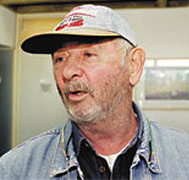
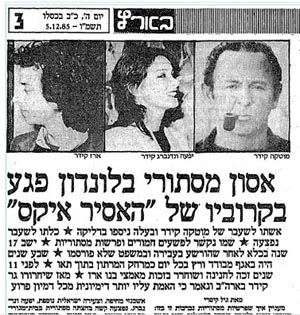
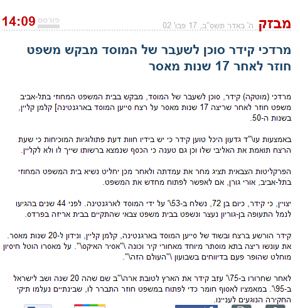
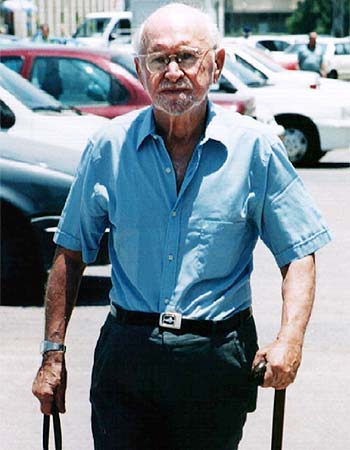
Mordechai (Motke) KedarMordechai (Motke) Kedar (מרדכי (מוט’קה) קידר) (the name is from Khedira, a village in the north of occupied Palestine), also known as Prisoner X. Kedar was born on November 19 1929 in Vilnius (then Poland, today Latvia), an israeli intelligence asset who was convicted for the murder and robbery of a jewish mossad agent when he was in Argentina in preparation for departure to Israel.
Kedar is a war criminal who served in the Palmach marine which, he was involved in war crimes in Palestine before and during the Palestinian catastrophe (Nakba) in 1948. Prisoner X / Kedar was also involved in atrocities in other Arab countries including assassinations, terror operations and spying missions under the command of Josef Harel (יוסף הראל ויוס’קה יריב).

He was recruited by the israeli internal intelligence service “shin bet” in 1957 and later drafted into the zionist Army Intelligence Unit 131. The agents of Unit 131 operate in “enemy” countries, meaning Arab countries. The duties of Unit 131 at the time were to operate and recruit spies into a network in Egypt and to renew the ties and the networks in Egypt after the fall of the network (“bad business”) to the Egyptians and after the capture and suicide of several of their military intelligence agents in Egypt, Major Meir Bint Ben-Yosef, member of the “Haganah” terrorist group, who was killed on a terror mission on December 21 1955. This is generally known as the “Lavon affair”.
On 30 September 1951, armed robbery occurred at a small bank called “Loan Fund and Savings” of Afula. Three armed men in military uniform entered the bank in broad daylight, robbed at gunpoint the sum of 10,000 pounds. An israeli army jeep was waiting for them. The police was not able not catch the bank robbers at that time.

On December 5, 1950, Kedar murdered a taxi driver at the beach of Hadera in his room. This crime led the police to the bank robbers and to the discovery of the identity of the murderer of the taxi driver.

According to israeli official version, Kedar was arrested because of his involvement in the bank robbery in Afula in 1951 and the murder of a taxi driver “James Freund” (יוסף ליפסקר) in Hadera in 1950. Kedar also perpetrated a number of other crimes but the real reason for his arrest was the murder of his Argentinean assistant Kalman Klein (קלמן קליין) whose real first name is Moses (במשה,), another mossad agent with connections to the Argentinean government who was falsifying identification papers for jews in order to help them to emigrate to israel as well as to travel to Arab countries, especially to Egypt, to perpetrate crimes. Klein was an officer in the mossad responsible for a network of assassins operating in Arab countries.
The charges against Kedar for killing the taxi driver and looting the bank were dropped because he was a Mossad agent. Kedar was also involved in the “mess” of the failed operation in 1954 in Egypt (the Lavon affair) which included a network of jews in Egypt carrying out terrorist attacks designed to disrupt the diplomatic relations between Cairo, Washington and London.
In March 1957, Kedar traveled to Buenos Aires, Argentina to expand the zionist spy and terror network in that country. He was preparing horrific terrorism acts to be perpetrated in Egypt. Kedar identified himself as a businessman. The jewish community in Argentina helped him in his dirty mission: they gave him a large sums of money supposedly to be used to pay off a senior Arab General who would implement his terror plans in Egypt

motke_keidar_maariv_130213_377In November 1957, the body of Kedar’s assistant Klein was found. Kalman Klein had left home to meet Kedar carrying 15,000 dollars to be given to Kedar at a secret place under the pretense that Kedar would meet with the supposed Arab General from Egypt and pay him this amount of money, but instead Klein was killed and the money disappeared, together with Kedar. The suspicions for the murder immediately were directed towards Kedar, who had fled to israel without the money but with a story alleging that he had fled Argentina in light of suspicions that the police there was about to arrest him on false charges.

He was arrested on 28 November 1957 immediately after landing in Lod (לוֹד) airport. Kedar’s trial began two years after his arrest. Only in 1959 did the israeli media report about an israeli “messenger”, a spy who was arrested in secret. Censorship was imposed on the publication of the circumstances of Kedar arrest.

95Kedar was sentenced by a secret military court to be imprisoned at a secret facility which was described by the Yediot Aharonot Hebrew edition as a reinforced, hidden stone building located between the Ramle and Rechovot in orchards. The trial ended in 1962 and Kedar was sentenced 20 years in prison. At the age of 32 he was jailed for seven months in a cell and then spent seven years in a solitary confinement annex, a special section built in the Ramle prison and named “Department of X’s”. Kedar was called “Prisoner X” at the secret jail. No one of Kedar’s family knew anything about his arrest.

In June 1958, it happened by chance that a friend of Kedar visited the jail to visit another prisoner and Kedar asked him to tell attorney Dr. Rudy that he was in prison. The secret trial of Mordechai Kedar began in February 1959 and ended in June 1962. Shmuel Tamir, who later became Minister of Justice, defended Kedar.

The military court convicted him of robbery and murder and sentenced him to 20 years in prison. After the conviction by the military court, the Attorney General Gideon Hausner decided to close the proceedings against him because of the bank robbery in Hadera and the murder of the taxi driver Afula.

In April 1974 and after 17 years in prison, Kedar was released. He was freed and he immediately left Israel and went to Los Angeles in the United States, where he became a boss in a worldwide drug trade network that has been linked to the name of his son Erez Ben Horin (ארז בן חורין).

In the 1990s Kedar returned to Israel to begin new procedures in his court case. The authorities delayed the court procedures. “Only” in 2001 a judge was appointed to discuss his request. In February 2002, the first hearing was held before the military court of appeals. The court rejected Kedar’s request, but he did not give up and appealed to the High Court. In 2004, the court rejected his petition again.

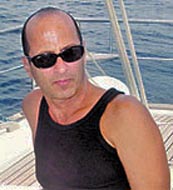
On September 14 2009, Kedar’s son, Erez Ben Horin (ארז בן חורין) died of a heart attack at the age of 56, but Kedar, the father, was not allowed to take part in his funeral.Erez Ben HorinBen Horin had been one element of the sophisticated criminal network. In 1986 was arrested by Scotland Yard on suspicion of conspiracy of cocaine distribution and illegal commercial purposes. On Jan. 7 1987, he was arrested by Dutch Police as a member of an international gang of drugs and arms traders in Yugoslavia and Venezuela. This arrest happened after a big explosion in the apartment where he lived together with his partner in crime, a criminal jew called Dinor Dan. After they spent six years in jail, the Dutch foreign minister allowed then returns to Israel.

According to Haaretz, the Ben-Horin gang involved Israel in trafficking drugs to the Netherlands, Austria, the United Kingdom and South America. The intelligence cooperation between police forces around the world raised suspicions that other gang members were Mordechai Kedar (Ben-Horin’s father) and Mann Ronnie, who was arrested in Israel in 1995 and sentenced to six years in prison. The drug smuggling operation using private yachts made them all wealthy. The Ben-Horin gang was also involved in relaying weapons to the Catholic  underground resistance in Northern Ireland. Drug money helped to finance the acquisition of weapons for their struggle against the British occupation.
Ben-Horin’s dirty activities around the world helped him in recent years to obtain a franchise of the Italian coffee brand Tazza D’Oro (gold cup). Criminal Catholic “friends” who he met while sailing his yacht described him as a person connected with the Vatican Bank and complicated money laundering operations in the USA.

KalmanovichShabtai Kalmanovich (Kalmanovitsch) (שבתאי קלמנוביץ’) was the second spy jailed at secret israeli facilities, he had worked in Israel as a spy for the Soviet Union. Kalmanovich was born in Lithuania on 18 December 1947, he died on 2 November 2009. According to sources, his parents were partial to zionist values, members of “Betar” and had fought for 12 years to get a Soviet exit visa to go to israel, the state of occupation. In 1971 the Kalmanovich family finally emigrated to israel and resides in an “absorption center”. According to foreign reports, in exchange for the emigration permit of family to Israel, the son Kalmanovich (Shabtai), at that time 24 years old, was recruited by the Soviet Union’s “KGB” and remained a dormant agent for many years, until the Soviets allowed him to follow his family.

After the KGB element Kalmanovich went to Israel he became active in the zionist Labor Party. He served as parliamentary assistant to Samuel Flatto-Sharon, who praised his work bringing down dissidents. According Yediot Aharonot, Kalmanovitz participated in missions and meetings designed to “liberate” Jews from various countries. He was known for his contacts to many politicians, including Golda Meir, Yigal Alon and Pinhas Sapir. Kalmanovich was a “businessman”: he built a net of spies under the cover of his business activities. In the mid-80s, his business empire began to collapse.

According to the accusation filed against Kalmanovich and published in 1993, he passed information to the Soviet/Russian intelligence for 17 years. He was sentenced to nine years in prison but was released after five and a half years due to complaints about his weak state of health, and because of the fact that he had used his spying connections to help look for Lieutenant Colonel “Ron Arad”, the israeli air force weapons systems officer (WSO) who went missing during a war crimes mission over Lebanon in October 1986. After Kalmanovich was released, he returned to Russia, lived in Moscow and become a wealthy “businessman” and the owner of the famous Russian Women’s Basketball Club Spartak.
What the zionist Yediot Aharonot newspaper did not reveal in its story about Kalmanovich was that the “state” of israel paid “unknown mafia elements” who opened fire from automatic weapons on November 2, 2009 on the car of Kalmanovich in the center of Moscow. Kalmanovich reportedly was shot 35 times in the head. He died immediately, his driver was gravely injured.
Eitan Haber, a rightist columnist with Yediot Aharonot who has connections to different sources at the israeli military and civil authorities, wrote about Kalmanovich in his book “Spies”, in which he recounted espionage events against israel which have been declassified. He said that Kalmanovich was not an important spy to the Russians. He noted that the nature of the information provided by Kalmanovitz to the Soviets was supposedly “mainly gossip”.

marcus-klingbergDr. Avraham Marcus Klingberg was an Israeli scientist and spy. He was born in Poland in October 7, 1918 to a family of radical orthodox jews in Warsaw. His grandfather was the zionist rabbi Moshe Chaim Kleinberg. In 1935 he began studying medicine at the University of Warsaw, where he became acquainted with Marxist ideology.
On September 22, 1941, during the II World War he escaped to the Soviet Union and volunteered at the Red Army where he served as a physician specializing in epidemiology.

From 1957 to 1975, Klingberg served as the deputy head of the secretive Biological Institute in Ness Ziona near Tel Aviv. He passed information to the Soviet Union about israel’s chemical and biological warfare programs.

Klingberg served with the army “IDF”, the israeli war crimes force, reaching the rank of lieutenant colonel in 1950. He worked in a senior position at the Faculty of Medicine at Tel Aviv. In 1957 he was appointed deputy director of science and director of the Department of Epidemiology at the Institute for Biological Research in Ness Ziona.

According the Hebrew media, a double agent led to Klinberg’s downfall. Only four years ago it became allowed to release some information about the Klingberg case following a request from “Yediot Ahronot” newspaper. The released information stated that the agent known by the code name “Samaritan” came to Israel as a Russian spy but that the israeli internal intelligence “Shin Bet” turned him a double agent. Every detail about the identity of this double agent has been banned from publication.

In 1977, after the first contacts between Klingberg and his Russian employers, he communicated with “Samaritan”, the double agent. The communication was about putting a “poster” bearing encrypted names in his mailbox at home in Tel Aviv. The communication was documented by the “Shin Bet”, what led to the arrest of Klingberg.

According the newspaper, after several days of interrogation at a hidden apartment (a “secret place”) Klingberg broke down and admitted that he had been spying for the Soviets for 20 years and that he had provided the Soviets with information on the biological and chemical activity of Israel.
Klingberg was sentenced to 20 years in prison. For the first ten years it was not allowed to publish anything about the Klingberg arrest. He was released under restrictive conditions to house arrest after spending 16 years in jail.

In 2003 his jail term ended and he moved to live in France. According to Wikipedia, Ian Brossat, a grandson of Klingberg via his daughter Silvia, is a councilor for the communist party in Paris.
 
River to Sea Uprooted Palestinian   The views expressed in this article are the sole responsibility of the author and do not necessarily reflect those of this Blog!

Friday, 15 February 2013

Palestinians Backing Hunger-Striker Faced by IOF Live Ammunitions

Local Editor Palestinians around the West Bank on Friday staged solidarity events for prisoners held by the Zionist entity and on hunger strike, with dozens injured in clashes with Zionist security forces.

Palestine: Zionist soldiers beat a Palestinian man. (Archive)Near the West Bank city of Ramallah, some 3,000 Palestinians held a protest march to the Ofer military prison that erupted into violent clashes with soldiers, an Agence France Presse correspondent said.

Palestinian medical sources and eyewitnesses said two demonstrators were wounded by live gunfire, and 20 more by rubber-coated bullets.

A military spokeswoman confirmed live bullets were fired in the air after soldiers claimed they felt they were in "immediate danger" from stones hurled by Palestinians.

At the Jalama checkpoint at the northernmost tip of the West Bank, 1,000 Palestinians protested before Zionist soldiers, with four injured by live gunfire and 20 by gas. Another 10 were arrested.
A Zionist army spokeswoman said 150 Palestinians threw stones at soldiers, and confirmed 10 were detained.

In the east Jerusalem village of Issawiya, hundreds of Palestinians clashed with police. Palestinians said one demonstrator was wounded in the eye by a rubber bullet.

Palestine: Jerusalemite captive Samer al-IssawiFour Palestinians are currently on long-term hunger strike -- Samer Assawi, Jaafar Ezzedine, Ayman Sharawneh and Tareq Qaadan.

International Quartet representative Tony Blair on Friday expressed "concern" over the "deteriorating health condition of the four prisoners, one of whom has been on a hunger strike for over 200 days."

"Israel must respect the human rights of all prisoners and provide them with all necessary medical assistance and legal recourse to due process according to international standards," Blair said in a statement.
Speaking at a solidarity tent near the International Committee of the Red Cross offices in El-Bireh, Palestinian president Mahmoud Abbas promised that "our brave prisoners will top the agenda" in his meetings with US President Barack Obama and Secretary of State John Kerry, expected in the region soon.

According to Jewish rights watchdog B'Tselem, at the end of 2012 more than 4,500 Palestinian detainees and prisoners were held behind the Zionist bars.
Source: AFP
15-02-2013 - 19:48 Last updated 15-02-2013 - 19:48

River to Sea Uprooted Palestinian  
The views expressed in this article are the sole responsibility of the author and do not necessarily reflect those of this Blog!

Syria arrest three members of the Istanbul Council in Aleppo

القبض على ثلاثة من أعضاء مجلس اسنطبول والمسمى الآن الإتلاف السوري المعارض .. ومسيرات في حلب
دام برس:
قالت مصادر إعلامية إن أجهزة الأمن السورية ألقت القبض على ثلاثة من أعضاء مجلس اسنطبول والمسمى الآن " الإتلاف السوري المعارض" وكانوا يتجولون في أحد أحياء حلب وقامت عناصر من أجهزة المخابرات بإصطيادهم بعد مراقبة مطولة جداً .
من جهة أخرى خرج أهالي حيي الإذاعة وسيف الدولة بحلب اليوم بمسيرة شعبية تهتف للجيش العربي السوري والوطن وتدعو إلى الوقوف خلف الجيش الذي يقوم بملاحقة المجموعات الإرهابية المسلحة.
 
River to Sea Uprooted Palestinian  
The views expressed in this article are the sole responsibility of the author and do not necessarily reflect those of this Blog!

Mossad Agent Linked to Killing of Hamas Leader


ED NOTE: Mahmoud al-Mabhouh was killed after an interview with "Al Jazeera" Channel leaked by Hamad Bin Jasim to locate him and follow him and kill him in Dubai
 
-----
 
Mossad Agent Linked to Killing of Hamas Leader
Ben Zygier
The Australian-Israeli ‘Mossad agent’ who has become known as ‘Prisoner X’ may have been linked to the assassination of a Hamas commander in Dubai in 2010, the same year he was found dead in a maximum security jail near Tel Aviv, a report said.

According to a report by the New York Times quoting the Kuwaiti daily Al Jarida on Thursday, Ben Zygier, identified as Prisoner X, was among the 26 suspects in an assassination plot in which Mahmoud al-Mabhouh, a Hamas official, was tracked and killed in his hotel room hours after his arrival in Dubai, the United Arab Emirates, in January 2010.

The assassins had reportedly used fake passports from Australia, Britain, Ireland, Germany and France, among other countries.

The report added that ‘Prisoner X’, who apparently spent a decade working for Mossad, had provided the officials in Dubai with “names and pictures and accurate details” in exchange for protection.
However, the Zionist entity kidnapped him from his hideout and jailed him over treason nearly a month after the operation over the speculation that he had been on the verge of exposing Tel Aviv’s secrets about the passports.

Australian media also quoted a security official familiar with the case as saying that Zygier “may well have been about to blow the whistle, but he never got the chance.”

On Thursday, Australian media also reported that Zygier had been under investigation by Australia’s intelligence services over passport fraud.

The murder plot in Dubai led to diplomatic sanctions against the Tel Aviv regime due to the use of forged passports from European countries and Australia in the operation.

On February 12, the Australian Broadcasting Corporation (ABC) reported that Ben Zygier was “found hanged in a cell with state-of-the-art surveillance systems” near Tel Aviv in late 2010.

 
River to Sea Uprooted Palestinian  
The views expressed in this article are the sole responsibility of the author and do not necessarily reflect those of this Blog!

Democracy in Moroco and Dictatorship in Syria


Bahrain
 
 
River to Sea Uprooted Palestinian  
The views expressed in this article are the sole responsibility of the author and do not necessarily reflect those of this Blog!

Egypt’s Iran Policy Linked To Brotherhood


The new Brotherhood regime is in orbit around America’s regional clients, be they big or small!

Mustafa al Labbad

Iranian President Mahmoud Ahmadinejad’s visit to Egypt has uncovered the shortcomings of Egyptian foreign policy, which is designed to serve the interests of the Muslim Brotherhood, writes Mustafa al-Labbad.

This article was first published in Arabic on 11/2/2013. Read original article.

Egypt’s Iran Policy Linked To Brotherhood

 
Iranian President Mahmoud Ahmadinejad talks during a news conference at the end of his visit to Cairo, Feb. 7, 2013. (photo by REUTERS/Asmaa Waguih)

By: Mustafa al-Labbad Translated from As-Safir (Lebanon).
 
اقرا المقال الأصلي باللغة العربية

Iranian President Mahmoud Ahmadinejad did not expect that series of prohibitive demands from al-Azhar: the rights of Sunnis in Iran, the rights of the Arabs in Khuzestan, non-interference in Bahrain’s affairs, stopping the bloodshed in Syria and ceasing the spread of Shiism in Sunni countries.

Ahmadinejad’s visit to Cairo to attend the Organization of Islamic Cooperation (OIC) summit took the spotlight away from the summit itself. The visit was the first by a sitting Iranian president. It signaled that the troubled relationship between the two major eastern poles has improved. That relationship has been troubled for more than three decades.

The grandiose airport reception that Ahmadinejad received from his Egyptian counterpart triggered speculation that relations between the two countries was about to resume and that a new regional axis that would break the existing regional balance is about to be born. But the Iranian president’s meeting with Al-Azhar Mosque’s Grand Sheikh poured cold water on Iranian dreams. What are the future Egyptian-Iranian relations after Ahmadinejad’s visit to Cairo? What are the shortcomings in Egypt’s new regional policy as revealed by the Iranian president’s visit? We will try to answer those questions below.

The future of Egyptian-Iranian relations

The Iranian president chose to stop by al-Azhar immediately after meeting with Egyptian President Mohammed Morsi because Tehran wants to build on al-Azhar’s illustrious history, bring closer the followers of different Islamic sects and ease the sectarian tension in the region between Sunnis and Shiites.

Religion plays a role in Iranian politics because religion is in the Iranian constitution and part of the country’s practice for more than three decades. So it was thought that Egypt becoming more religious would form common ground between Tehran and Cairo. Yet the sectarian tension plaguing the region for years, and for which all parties are to blame, has unfortunately become the main conflict in the Middle East.

The Iranian president sat next to al-Azhar Mosque’s Grand Imam Ahmed al-Tayeb and raised the victory sign with his hand in front of the cameras, but then the mood quickly changed.

Ahmadinejad was surprised that the joint press conference was attended not by Tayeb, but by his advisor Sheikh Hassan al-Shafei, who then listed a series of demands from Iran: the rights of the Sunnis in Iran, the rights of the Arabs in Khuzestan, non-interference in Bahrain’s affairs, stopping the bloodshed in Syria and ceasing the spread Shiism in Sunni countries. Those demands are in effect a list of accusations toward Iran’s policies in the region. However, to be fair, no Iranian politician, including Ahmadinejad, could agree to discuss such issues, especially those involving Iranian internal affairs (Arabs in Khuzestan and Sunnis in Iran).

Al-Azhar’s positions were different than those of the Muslim Brotherhood. Some al-Azhar scholars believe that the Muslim Brotherhood is seeking to dominate the institution and impose the Brotherhood’s ideology on it.

Then Ahmadinejad’s visit got worse. A Salafist group verbally assaulted the Iranian president outside of al-Azhar. It seems those protesters are not aware that Egypt’s guests should never be insulted in any way shape or form. Respecting the guest is a fundamental Arab value that goes back to even before Islam.

Ahmadinejad’s disappointment with the al-Azhar meeting and the protest aside, Iran was still able to score a goal against its opponents. It showed the region and the world that economic sanctions are not preventing regional doors that have for decades been shut in Iran’s face from opening up. Egypt was and will remain the biggest Arab country. Egypt scored a goal against its opponents in the Gulf by brandishing its relations with Iran. But the Egyptian government is using its relations with Iran to score short-term goals in a way that does not befit Iran’s regional importance.

The shortcomings of Egypt’s regional policy

So it seems that President Morsi’s administration does not really wish to upgrade its relations with Iran but only use them against the Gulf states. In addition, it will be difficult for the Egyptian administration to go further in its relations with Iran because of the price Egypt would have to pay.

To expand its relations with Egypt, Iran is only paying an internal price: the various Iranian political wings must agree with each other on the nature of these relations. But Egypt’s price would be much higher. The Muslim Brotherhood would have to pay both an internal and an external price. One, their Salafist ally will hinder any rapprochement with Iran. Two, the alliance between Turkey and Qatar will also hinder a rapprochement. So Egyptian-Iranian relations will show limited improvement in the next phase. There will be neither estrangement nor a regional partnership. The latter is not realistic in light of the current balance of forces nor with the way Morsi is managing the Iranian file.

Ahmadinejad’s visit to Cairo revealed three shortcomings: the first is about transparency. Who is setting Egyptian foreign policy? In Mubarak’s days, the president and the security agencies used to set the relations with Iran. But who is doing that now? That is a valid question given that the president’s foreign affairs advisor is a former foreign relations official for the Muslim Brotherhood’s international wing.

The second shortcoming is about Egypt’s agenda. How does the current administration define Egyptian national interests? And what are Egypt’s regional and national priorities?

The third shortcoming is about context because the improvement in relations with Iran is coinciding with deteriorating relations between the UAE and the Muslim Brotherhood. It seems that rapprochement with Iran is Egypt’s substitute for its relations with Gulf countries, especially after relations between the UAE and the Muslim Brotherhood worsened after the UAE arrested a Brotherhood cell. A visit from Morsi’s adviser Essam al-Haddad failed to resolve the crisis.
That was directly followed by a visit to Egypt from Iranian Foreign Minister Ali Akbar Salehi then from Ahmadinejad. It is clear the current Egyptian administration lacks political imagination. Egypt needs no one’s permission to upgrade its relations with Iran, but upgraded relations with Iran should complement Egypt’s influence in the region, not compensate for lost influence elsewhere.

Iran, Turkey and a twist of fate

Replacing the Arab facade of the region with a purely religious one will open the way for regional non-Arab powers to play more than political roles and start interfering in Arab internal affairs. The Arab countries will be weaker relative to other countries in the region. It would be unfortunate to fail to achieve Egyptian-Iranian and Egyptian-Turkish convergence that would serve Egyptian and Arab interests. The former Egyptian regime closed the doors to any attempt for rapprochement with Iran or Turkey. It tried to avoid potential dangers and thus could not seize opportunities. It is unfortunate to see Egypt after the revolution open those doors only for tactical purposes, without a specific agenda that defines Egyptian national interests.

Relations with Iran are important and necessary to diversify Egypt’s regional relations. Yet the purpose of Egypt’s relations with any country, including Iran, is not for its own sake but only to serve Egypt’s national interest, which does not necessarily match the interests of a political current, even the Muslim Brotherhood.

What a weird twist of fate: The great Egyptian people rose up against their government because their country’s regional and international status declined under its rule and because it was a mere satellite of the U.S. administration, and now they are being asked to rise up, again, because their country’s foreign policy is being tailored to the interests of a particular political group. The new Brotherhood regime is in orbit around America’s regional clients, be they big or small!


Read more:
 
River to Sea Uprooted Palestinian  
The views expressed in this article are the sole responsibility of the author and do not necessarily reflect those of this Blog!

Egypt floods Gaza lifeline tunnels


Employees of the Hamas Ministry of Agriculture collect poultry
that was smuggled into the Gaza Strip from Egypt by Palestinian
farm owners, on February 5, 2013 at a a poultry farm in Deir
al-Balah in central Gaza Strip. (Photo: Reuters - Said Khatib)
Egyptian forces have flooded smuggling tunnels under the border with the Palestinian-ruled Gaza Strip in a campaign to shut them down, Egyptian and Palestinian officials said.

The network of tunnels is a vital lifeline for Gaza, bringing in an estimated 30 percent of all goods that reach the enclave and circumventing a deadly blockade imposed by Israel for more than seven years.

Reuters reporters saw one tunnel being used to bring in cement and gravel suddenly fill with water on Sunday, sending workers rushing for safety. Locals said two other tunnels were likewise flooded, with Egyptians deliberately pumping in water.

"The Egyptians have opened the water to drown the tunnels," said Abu Ghassan, who supervises the work of 30 men at one tunnel some 200 meters (yards) from the border fence.

An Egyptian security official in the Sinai told Reuters the campaign started five days ago.
"We are using water to close the tunnels by raising water from one of the wells," he said, declining to be named.

While Gaza's rulers have been reluctant to criticize Mursi in public, ordinary Gazans are slightly more vocal.

"Egyptian measures against tunnels have worsened since the election of Mursi. Our Hamas brothers thought he would open up Gaza. I guess they were wrong," said a tunnel owner, who identified himself only as Ayed, fearing reprisal.

"Perhaps 150 or 200 tunnels have been shut since the Sinai attack. This is the Mursi era," he added.
Dozens of tunnels had been destroyed since last August following the killing of 16 Egyptian soldiers in a militant attack near the Gaza fence.

Cairo said some of the gunmen had crossed into Egypt via the tunnels - a charge denied by Palestinians - and ordered an immediate crackdown.

The move surprised and angered Gaza's rulers, the Islamist group Hamas, which had hoped for much better ties with Cairo following the election last year of Egyptian President Mohamed Mursi, an Islamist who is ideologically close to Hamas.

A Hamas official confirmed Egypt was again targeting the tunnels. He gave no further details and declined to speculate on the timing of the move, which started while Palestinian faction leaders met in Cairo to try to overcome deep divisions.

The tunnelers fear the water being pumped underground might collapse the passage ways, with possible disastrous consequences.

"Water can cause cracks in the wall and may cause the collapse of the tunnel. It may kill people," said Ahmed Al-Shaer, a tunnel worker whose cousin died a year ago when a tunnel caved in on him.
Six Palestinians died in January in tunnel implosions, raising the death toll amongst workers to 233 since 2007, according to Gazan human rights groups, including an estimated 20 who died in various Israeli air attacks on the border lands.

Israel imposed its vicious blockade on the coastal strip in 2007. Food imports to Gaza were cut by nearly 75 percent, from 400 trucks per day to 106 by the start of the blockade.

At one stage an estimated 2,500-3,000 tunnels snaked their way under the desert fence but the network has shrunk markedly since 2010, when Israel eased some of the limits they imposed on imports into the coastal enclave.

All goods still have to be screened before entering Gaza and Israel says some restrictions must remain on items that could be used to make or to store weapons.


This ensures the tunnels are still active, particularly to bring in building materials. Hamas also prefers using the tunnels to smuggle in fuel, thereby avoiding custom dues that are payable on oil crossing via Israel.

(Reuters, Al-Akhbar)


River to Sea Uprooted Palestinian  
The views expressed in this article are the sole responsibility of the author and do not necessarily reflect those of this Blog!