Saturday, 14 June 2014
Erdoğan Supported Israel for Bombing Gaza
Published 12-06-2014
An anonymous Israeli official claimed that Prime Minister Erdoğan supported Israel bombing Gaza in 2008.
Verda Özer of Hürriyet Newspaper interviewed an anonymous Israeli senior official who claimed that the Prime Minister Tayyip Erdoğan had not objected Israel’s invasion of Gaza in 2008. He also pointed out the fact that the Israeli Prime Minister, Ehud Olmert, and Erdoğan had several meetings in secret regarding Israel’s plans over Gaza.
According to Hürriyet, the last time the two prime ministers had come together was on 23 December, 2008. The main subjects were on the agenda of both parties: the peace process with Syria and Gaza. Olmert allegedly told Erdoğan that there were many rockets fired from Gaza to Israeli lands, upon which Erdoğan responded: “Rockets cannot be tolerated in any of the leading cities.”
However, once Israel struck Gaza back with rockets, Erdoğan hypocritically kept condemning Israel at every opportunity. The anonymous Israeli official claimed that it was a part of Erdoğan’s strategy of molding public opinion. “Olmert knows that every leader has to take notice of public opinion. Erdoğan is not against Israel whatsoever.”
River to Sea
The views expressed in this article are the sole responsibility of the author and do not necessarily reflect those of the Blog!
Labels:
Jewish terrorism,
Jewish violence,
land theft,
Nazi Israel,
Netanyahu,
Palestine
Bush and Blair: The fatal attraction that killed 1m Iraqis
Posted on June 13, 2014 by michaellee2009
For their wedding breakfast they’d broken a million eggs / Their honeymoon had suicide bombs and assassins.
There’s a photograph of George Bush and Tony Blair
Staring ecstatically into each other’s eyes
Caught up in a heady, if not deadly, infatuation
Doubtless blinded by the usual lovers’ lies.
There’s a photograph of George Bush and Tony Blair
Staring ecstatically into each other’s eyes
Caught up in a heady, if not deadly, infatuation
Doubtless blinded by the usual lovers’ lies.
Are they whispering sweet nothings to each other?
‘You must come and stay at Chequers!’
‘And you, you must come to Camp David!’.
Like two besotted home wreckers.
‘You must come and stay at Chequers!’
‘And you, you must come to Camp David!’.
Like two besotted home wreckers.
‘So good to find that you’re on the same wavelength –
So glad we both agree about Saddam’.
‘Yes, I mean, George, you can tell can’t you, from how he looks
That he’s really and truly a jolly bad man?’
So glad we both agree about Saddam’.
‘Yes, I mean, George, you can tell can’t you, from how he looks
That he’s really and truly a jolly bad man?’
‘Well, we thought he was okay for a bit, Tony, but not for long.’
‘No, not your kind of guy. George, no, absolutely not…’
‘You know, between you and me he’s got more oil than the Saudis
So if we go ahead, Tony, we get our hands on the lot.’
‘No, not your kind of guy. George, no, absolutely not…’
‘You know, between you and me he’s got more oil than the Saudis
So if we go ahead, Tony, we get our hands on the lot.’
‘How are your twin daughters, George, Jenna and Barbara?’
‘Fine, fine, how are your sons, Tony?’
‘Oh, we’re hoping to send Euan to Yale or to Harvard…’
‘No problem just leave it with me.’
‘Fine, fine, how are your sons, Tony?’
‘Oh, we’re hoping to send Euan to Yale or to Harvard…’
‘No problem just leave it with me.’
‘You know you’re quite a guy, Tony. Two million out on the streets
And the House of Commons in uproar,
And I’ll never forget how you brushed it off: “a little local difficulty.”
That’s how we came together, didn’t we? We climaxed in war.’
And the House of Commons in uproar,
And I’ll never forget how you brushed it off: “a little local difficulty.”
That’s how we came together, didn’t we? We climaxed in war.’
Their turbo-charged bombers went in then the bodies came out
And during their courtship they both prayed to the Almighty
To help them bond, just like the Colgate toothpaste they both used
As they’d reveal at a joint Press Conference, giggling flightily.
And during their courtship they both prayed to the Almighty
To help them bond, just like the Colgate toothpaste they both used
As they’d reveal at a joint Press Conference, giggling flightily.
Were they destined to meet? Was it written in the stars?
Had they perhaps met in another lifetime?
What a romance! What a meeting of minds! you can tell
From their picture they’re both on Cloud Nine.
Had they perhaps met in another lifetime?
What a romance! What a meeting of minds! you can tell
From their picture they’re both on Cloud Nine.
But like all good things it had to come to an end –
Their memorably world-shattering passion.
For their wedding breakfast they’d broken a million eggs;
Their honeymoon had suicide bombs and assassins.
Their memorably world-shattering passion.
For their wedding breakfast they’d broken a million eggs;
Their honeymoon had suicide bombs and assassins.
But they still have something in common,
Something left over from happier times,
Though their travel arrangements are sorely limited:
They share being wanted for war crimes.
Something left over from happier times,
Though their travel arrangements are sorely limited:
They share being wanted for war crimes.
And they’ve both come together to prevent their letters
From being exposed to public view;
They still have enough clout in government circles
To suppress, ‘I love you,’ and ‘I love you too.’
From being exposed to public view;
They still have enough clout in government circles
To suppress, ‘I love you,’ and ‘I love you too.’
George now likes to slash at weeds on his Texas ranch
And Tony likes to make money –
The legendary Anglo-American lovers who make no secret
Of having had mass murder as their hobby.
And Tony likes to make money –
The legendary Anglo-American lovers who make no secret
Of having had mass murder as their hobby.
Tony says he’d do it all again and there’s their photograph
Steaming with sexual attraction,
‘Let’s go to war,’ says one, ‘Let’s go to bed’ says the other.
Caught in flagrante on the eve of destruction.
Steaming with sexual attraction,
‘Let’s go to war,’ says one, ‘Let’s go to bed’ says the other.
Caught in flagrante on the eve of destruction.
The views expressed in this article are the sole responsibility of the author and do not necessarily reflect those of the Blog!
Labels:
Bush,
Genocide,
Tony Blair,
War Crimes and Criminals,
War on Iraq
Syrian Students Restore our Global Cultural Heritage, Tesserae by Tesserae
(Students and their instructors, briefing a guest about their reconstruction
of the Berhalia Mosaic inside the Damascus Citadel and how they feel about
the current crisis engulfing their country. 6/6/14)
Franklin Lamb
The Damascus Citadel, Syria
During mid-July, 2013, the General Directorate of Antiquities and Museums (DGAM) of the Ministry of Culture in Damascus received an urgent message from citizens of Berhalia, a village about 30 kilometers West of Damascus. Berhalia is located in an area that has seen much fighting and from which the central government has lacked easy access and no control. The simple message was that it might be possible to recover a severely damaged Syria archaeological treasure from militants who took possession of it.
The piles of thousands of small colored Byzantium tiles called tesserae, according to someone involved in the case, were initially impossible to identify because the archaeological context had been substantially demolished as had the building which housed the antiquity. The mosaic chips were discovered to depict elaborate scenes from deep in Syrian history and once finally able to be measured it was determined that the mosaic had been approximately 60 square meters in size. The antiquity is decorated with geometrical ornaments and consists of two rectangular panels, one being an orthogonal pattern of perpendicular intersecting tangent four- pointed star, forming lozenges alternately recumbent and upright. The second, which was only partially conserved, is decorated with a large star of two interlaced squares inscribed in a circle.
Eventually, a local citizen of Berhalia, who had apparently been a former militants sympathizer of some sort and who had been a student of an archaeologist at Damascus University, took an interest in the mosaic which was not far from his home, which his family had fled months earlier. Contact was then made with Syrian army units in the area and a meeting took place between a delegation of local citizens and some of the militiamen, who some of them had known before the crisis erupted. It was the latter who had possession of the small pieces of the at least fifteen century old irreplaceable Mosaic. The citizens, like so many Syrians this observers has met feel deeply connected with Patrimoine Syrien. They plead their case to fighters on both sides of the current conflict. They beseeched them to put their beloved Syria first and urged that their country’s cultural heritage be spared the ravages of war and that the destruction of archaeological sites stop. An eyewitness reported that the hardened fighters appeared somehow moved the unusual spectacle. Soon a delegation of specialists in Mosaic and artifacts preservation left Damascus for Berhalia village to investigate.
Some locals hint that an envelope may have changed hands containing approximately one million Syrian pounds ($ 1,200 USD). But not wanting to encourage even more entrepreneurs getting rich quick by selling Syria’s history, no one is admitting a role in buying or selling Syria’s history-even on such a small scale. Others take more of an attitude of “who really cares much, one way or another, given the continuing maelstrom here, as long as a part of Syrian cultural heritage remains under its citizen’s protective care?” This expressed attitude has been heard a few times by this observer from the Syrian public who desperately want an end the violence and the soonest possible return to normal life. Almost immediately, more than one thousand pounds of ¾ inch by ¾ inch Mosiac chips (tesserae) were brought by a military-style vehicle to Damascus for safe keeping.
It was around this time that the Director of Antiquities and Museums (DGAM), Professor Maamoun Abdulkarim, and some colleagues made it their personal mission not just to preserve but also to restore the ancient irreplaceable antiquity. The tesserae were then moved to the antiquities restoration laboratory in the midlevel fortified palace known as the Ancient Citadel of Damascus.
The mosaic of Berhalia is one of several of the rare mosaics discovered in the Damascus region and is today being restored by a team of 15 students under the tutelage of Syrian Directorate of Archaeological Scientific and Reconstructive Laboratories, and specifically, Instructors Mouhamed Kayd and Borhan Al Zarra. When their work is completed the restored mosaic will be exhibited in the Damascus citadel, first fortified in 1076 by the Turkman warlord Atsiz bin Uvak and which is part of the Ancient City of Damascus, which was listed as a UNESCO World Heritage Site in 1979.
In the course of visiting damaged archaeological sites in Syria, this observer spent time with this remarkable and skilled team of artifact restoration students.
Students working at the ancient Citadel restore our global
cultural heritage one Tesserae at a time ( 5/16/14) |
Fortunately, I had the needed assistance of a brilliant Damascus University student of Arabic and English Translation and Interpretation, named Nuhad. She is from a village near Homs but spends her time these days in Damascus due to many security problems in her area. Below are excerpts from our conversation with names changed at the students request.
Q : How does it make you feel, as you go about this work you are doing, knowing there are people in Syria committing atrocities of the sort seen in some of the videos that have been uploaded to You Tube? Are you afraid? Do you worry about getting kidnapped?
Hanan, a twenties something student of pharmacology from Latakia who since last winter has volunteered to work on restoring or repairing whatever she was judged competent to do, answered first.
A : Like most of the world, and I believe like just about everyone in Syria, certainly among my friends and fellow students, we are horrified by what is happening. Especially by groups such as ISIS and al Nursa front, in eastern Syria. This has never happened in our country and it certainly is not and never has been any part of our secular culture. But what can we do about it ? Our army is making big sacrifices to stop it so we can return to a normal life. Yes, i am afraid and so are most of our friends. We take care and we go to classes and return to our homes before dark. Our restoration work is done in the center of Damascus which so far has been mainly safe although last year 17 students were killed or wounded by a militant mortar at Damascus University School of Architecture. We usually stay home at night but here in Damascus security is better than in the villages and countryside so if it has been quiet for a few days we might go to a cafe and meet with friends. It is true that there are many kidnappings but usually those held for payment or ransom are known to be from rich families or an important political personality. I am not part of these groups. Unfortunately, like more than half of the Syrian people who used to work, my father and uncles have no job.
Q : “How does it make you feel knowing that the US has begun arming Syrian militants with anti-tank weapons and other heavy weaponry? Does that increase your level of fear?"
Abed, who is studying engineering at Baath University in Homs offered his view
A : It’s very scary because when will this end ? Most of my friends believe that outsiders are keeping the war going because they believe that they can win it. Does the USA really know or understand who they are arming and what the fighters will do after you give them training ? Do you think these terrorists love you because you helped them against a nationalist Arab regime which rejects the Zionist occupation of Palestine ?
We worry about when will it end. Who can stop it if other countries keep feeding the killing. You know very well what has happened to us. More than one half of our families have been displaced. How can we ever rebuild our country that we love ? When will the war end ? What will be left ? Sure we are scared. My mother is sick from worrying. She cries everyday. We have no idea what became of many of our relatives across Syria. And what about ISIL ? They control Raqqa Governorate and now parts of Iraq and they plan to create a proto caliphate of some kind with part of Syria included. We have relatives in Raqqa. Will Syria become like Iraq or Somalia ? Or worse ? This is what me and all my friends worry about and we feel powerless to stop or even influence what is happening out there. Like all Syrians we are exhausted from these years of war. We are so tired and just want it all to end. Are we mistaken ? What do you think ?
Q : The media speculates a lot these days about ISIL or DAASH type groups because they appear to be the most extreme off-shoot of Al Qeada and are killing Shia Muslims and Christians more or less where they find them. How do you and your friends view ISIL ?
Zeina, whose family in Yarmouk camp lost their home and business to terrorist militia in 2012, is a Palestinien business student at Yarmouk Private University. She offered her view of militia groups that have invaded her country :
A : Ok, this is what happened. Most of these groups we never heard of but a few years ago there were a few reports about extremist militant groups in Afghanistan, Iraq and Libya. We just assumed they were crasy or joking. I never dreamed they could get support and operate here because Syria is and has historically been very secular, and we have always respected others political opinion, ethnic backgrounds and religions. We have never experienced this kind of hatred. It is true that in Syria we share festivities with all religions and traditions and we like to do so because we learn from them and we all enjoy other peoples backgrounds and culture. We are not religious fanatics in Syria and never have been. Hopefully we never will be. This is natural and normal isn't it to share our neighbors traditions ? You do it in your country i am sure. I know you do because we have family in America and also in Europe.
So we in Syria were as surprised as anyone when ISIL came here and started imposing crazy rules on us—especially on women. Women are being treated like slaves. What is wrong with these gangs ?. They are not Muslims at all in my opinion. They are perverted in my opinion. I am religious. I am Muslim. I am Sunni like they claim to be and i have studied the Holy Koran all my life. I try to follow its teachings but I have never found the kind of nonsense they claim to be true Islam. Have they ever studied the Koran ? For sure some Sheikhs incite them.
Q : With all that is happening outside of Syria’s Ancient Citadel located here in the Old City of Damascus how do you feel about being here and doing this work nearly every day ?
Jilan, who is studying English Literature at Damascus University quickly answered :
A : Oh my God ! Are you a psychiatrist ? (laughing). I need one for sure and I sometimes wonder myself. My mother asked me this same question not long ago. Some of the many reasons you might find strange but please allow me to give you a couple.
With Allah as my witness, I feel secure somehow being deep inside these ancient walls and I wish my family was here with me. I worry about them all the time. I feel safe here also because many people have told me that these walls can withstand mortars, which is what we usually receive randomly from militants based in East Ghouta and areas south of Damascus. Even artillery shells or many bombs cannot reach us. As you see it is so quiet and peaceful in here. You hear no shelling or rockets or jet planes in the sky.
Another thing i like about working on restoring antiquities is that it’s as though I am honoring those who came before me in our history and culture. I like to think about what their lives must have been like compared to ours. I feel that I am doing something useful during this terrible time and that I am showing confidence in my beloved country that we will somehow get through this and eventually rebuild what has been damaged. What we are doing here in our simple restoration laboratory. Plus i love the friends I have made here. As we work we have plenty of time to talk and get to know each other. Finally, we sometimes, but not very often these days, meet foreigners who come to see our work and express support for what we are doing here. Thank you for visiting us. I wish American and other international students could come and join us. They would like this work i am sure.
Franklin Lamb is doing research in Syria and Lebanon and volunteers with the Palestine Civil Rights Campaign (PCRC) and the Sabra-Shatila Scholarship Program (SSSP) (sssp-lb.com). He is reachable c/o fplamb@gmail.com
Source: Al-Manar Website
| 13-06-2014 - 13:20 Last updated 13-06-2014 - 13:21 |
River to Sea
Uprooted Palestinian
The views expressed in this article are the sole responsibility of the author and do not necessarily reflect those of the Blog!
Labels:
Archeology,
Culture and Heritage,
Franklin Lamb,
ISIL,
Nusra Front,
takfiris,
War on syria
Iran helps Iraq while the USA and NATO refuses, but will U.S. use that as an excuse to attack Iran?
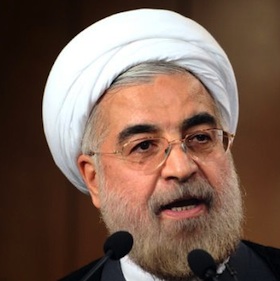
Iran Deploys Troops to Guard Baghdad, Fight al-Qaeda
Rouhani Vows Aid Against Iraqi Terrorists
by Jason Ditz, June 12, 2014
Reports coming out of security sources in Iran say that two battalions of Quds Force troops from the nation’s Revolutionary Guard have deployed into neighboring Iraq to guard Shi’ite holy sites as well as taking the lead in defending the capital city of Baghdad. Some have also reportedly taken part in fighting in Tikrit.
Earlier today, Iranian President Hassan Rouhani said his country can’t tolerate the growth of a terrorist group so close to their borders, and promised unspecified aid to the Maliki government.
Iran has already been aiding the Assad government in Syria against AQI’s advances there, albeit without much success. As the problem of this new AQI-run state grows, Iran is likely to try to increase support for its struggling allies, out of whose territory the state is being carved.
The views expressed in this article are the sole responsibility of the author and do not necessarily reflect those of the Blog!
Labels:
Al Qaeda,
Iran,
The Enemy Within,
US Congress,
US Foreign Policy,
USA
Weekly report on israel’s terrorism against the State of Palestine
In its Weekly Report On Israeli Human Rights Violations in the Occupied Palestinian Territories for the week of 5 – 11 June, 2014, the Palestinian Center for Human Rights (PCHR) found that, in a new crime of extra-judicial execution, Israeli forces killed a members of a Palestinian armed group and wounded 3 civilians, including a child, in the Gaza Strip. A Palestinian civilian died of his previous wounds in the Gaza Strip as well. Israeli forces wounded 9 civilians, including a child, in the West Bank. http://imemc.org/article/68090
Additionally, during the reporting period, Israeli forces conducted at least 76 military incursions into Palestinian communities in the West Bank. During these incursions, Israeli forces arrested at least 28 Palestinians, including 4 children and a woman.
Israeli attacks in the West Bank & Gaza:
Shootings:
In the Gaza Strip, in a new crime of Extra-judicial executions, on Wednesday, 11 June 2014, Israeli forces killed a member of a Palestinian armed group and wounded 3 civilians, including his brother.
The victim, who was riding his motorbike on the coastal road, southwest of Beit Lahia in the northern Gaza Strip, was killed when an Israeli drone launched two missiles at him.
Following the execution, Israeli forces admitted committing it as the spokesman of Israeli forces claimed that the man was targeted as he was recently involved in firing rockets at Israeli towns.
His brother, ‘Ali Abdel Latif Ahmed al-‘Awour (10), was also wounded by shrapnel throughout his body causing him bleeding in the brain and entering into a coma. Another two civilians were wounded as well by shrapnel.
In the same context, the body of ‘Emad Shokri Yehia Salem (51) from Beit Lahia Housing Project was brought to Martyr Kamal ‘Edwan Hospital in Beit Lahia in the northern Gaza Strip as his family transferred him to the hospital in an attempt to save his life after his condition suddenly deteriorated.
At approximately 15:00 on 26 May 2014, Salem, who was fishing then, was wounded by two bullets to the back and right hand when Israeli forces opened fire at him near the border, west of al-Sayafa area in the northwest of Beit Lahia.
In the context of targeting Palestinian fishermen in the sea, on 09 June 2014, Israeli gunboats stationed off al-Waha Shore, northwest of Beit Lahia in the northern Gaza Strip, opened fire in the vicinity of the Palestinian fishing boats sailing 3 nautical miles offshore. Neither injuries nor damages were reported.
In the West Bank, Israeli forces wounded 9 Palestinian civilians, including a child. Eight of whom were wounded during the peaceful demonstrations and the ninth one was wounded when Israeli forces moved into al-‘Arroub refugee camp, north of Hebron.
On 06 June 2014, a 22-year-old civilian was hit by a bullet to the right thigh when Israeli forces moved into al-‘Arroub refugee camp, north of Hebron. A number of boys gathered and threw stones and empty bottles at the Israeli soldiers, who chased them between the houses and fired indiscriminately at them.
During the reporting period, Israeli soldiers used excessive force against peaceful demonstrations organised by Palestinian civilians, international and Israeli human rights defenders in protest at the construction of the annexation wall and settlement activities in the West Bank. As a result, 3 demonstrators were injured in Bil’in and Ni’lin villages.
In addition, Palestinians organized several demonstrations in solidarity with administrative prisoners on hunger strike. Israeli forces opened fire on the demonstrators. As a result, 5 Palestinian civilians, including a child, were wounded in a demonstration near Ofer prison, southwest of the Ramallah.
Incursions:
During the reporting period, Israeli forces conducted at least 76 military incursions into Palestinian communities in the West Bank. During these incursions, Israeli forces arrested at least 28 Palestinians, including 4 children and a woman.
Restrictions on movement:
Israel continued to impose a tight closure of the oPt, imposing severe restrictions on the movement of Palestinian civilians in the Gaza Strip and the West Bank, including occupied East Jerusalem.
The illegal closure of the Gaza Strip, which has been steadily tightened since June 2007 has had a disastrous impact on the humanitarian and economic situation in the Gaza Strip.
The Israeli authorities impose measures to undermine the freedom of trade, including the basic needs for the Gaza Strip population and the agricultural and industrial products to be exported.
For 7 consecutive years, Israel has tightened the land and naval closure to isolate the Gaza Strip from the West Bank, including occupied Jerusalem, and other countries around the world.
This resulted in grave violations of the economic, social and cultural rights and a deterioration of living conditions for 1.7 million people.
The Israeli authorities have established Karm Abu Salem (Kerem Shaloum) as the sole crossing for imports and exports in order to exercise its control over the Gaza Strip’s economy. They also aim at imposing a complete ban on the Gaza Strip’s exports.
Israeli forces have continued to impose severe restrictions on the movement of Palestinian civilians throughout the West Bank, including occupied East Jerusalem.
Thousands of Palestinian civilians from the West Bank and the Gaza Strip continue to be denied access to Jerusalem.
As part of using military checkpoints and border crossings as traps to arrest Palestinian civilians under the pretext they are wanted, Israeli forces arrested 4 Palestinian civilians, including a child, at military checkpoints in the West Bank.
Settlement activities:
Israel has continued its settlement activities in the oPt, in a direct violation of international humanitarian law, and Israeli settlers have continued to attack Palestinian civilians and property.
Attacks carried out by Israeli forces
On 09 June 2014, Israeli forces accompanied by more than 10 military vehicles and a bulldozer moved into Far’one village, south of Tulkarm.
They surrounded a house belonging to the family of Falah Suleiman ‘Abdel Rahman ‘Ebeid (50) in al-Marj area, west of the village.
The Israeli bulldozer bulldozed the house, which is 120 meters away from the electronic fence of the annexation wall, under the pretext of the lack of a construction licenses and its closeness to the wall.
On the same day, Israeli accompanied by officers at the Construction and Organization Department in the Israeli Civil Administration and a bulldozer bulldozed 4 grocery stalls built of tin.
The goods of the stalls, which are on Bypass Road (90) near Bardala village in the northern Jordan Valley, were taken by the Israeli soldiers.
Israeli attacks on non-violent demonstrations:
During the reporting period, Israeli soldiers used excessive force against peaceful demonstrations organised by Palestinian civilians, international and Israeli human rights defenders in protest at the construction of the annexation wall and settlement activities in the West Bank. As a result, 3 demonstrators were injured.
In addition, Palestinians have organized several demonstrations in solidarity with administrative prisoners on hunger strike.
Israeli forces opened fire on the demonstrators. As a result, 5 Palestinian civilians, including a child, were wounded in a demonstration near Ofer prison, southwest of the Ramallah.
(PCHR keeps the names of the wounded in fear of being arrested by the Israeli forces within its policy to oppress the peaceful protests and prevent Palestinian civilians from participating).
Demonstrations against the construction of the annexation wall and settlement activity
Following the Friday Prayer on Friday, 06 June 2014, dozens of Palestinian civilians and international and Israeli human rights defenders organized a peaceful demonstration in Bil’in, west of Ramallah, in protest at the construction of the annexation wall and settlement activities and in solidarity with Palestinian prisoners on hunger strike.
Demonstrators took the streets raising the Palestinian flags and headed to the liberated territories near the annexation wall.
Early in the morning, Israeli forces closed all entrances to the city to prevent Palestinian civilians and international and Israeli human rights defenders from participating in the protests.
Protestors marched by the annexation wall and tried to cross the fence. Israeli soldiers stationed behind the wall, in the western area, and a large number of soldiers deployed along it, fired live bullets, tear gas canisters, rubber-coated steel bullets, sound bombs and waste water at them and chased them into the olive fields.
As a result, two brothers were wounded and were taken to Palestine Medical Complex in Ramallah for treatment.
One of the brothers (25) sustained two bullet wounds to his ankle and right knee, while the other one (21) sustained several bullet wounds to his groins, back, right hand, and down the back of his neck. In addition, several demonstrators suffered tear gas inhalation and others sustained bruises as they were beaten up by Israeli soldiers.
Around the same time, dozens of Palestinian civilians organized a peaceful demonstration in Nil’in village, west of Ramallah, in protest at the construction of the annexation wall and settlement activities and in solidarity with the Palestinian prisoners on hunger strike.
The demonstrators made their way towards the annexation wall. Israeli forces closed the wall gate with barbwire and, when the demonstrators attempted to access the lands behind the barbwire, they were stopped by Israeli soldier.
The demonstrators threw stones at the Israeli soldier who responded with live ammunition, rubber-coated metal bullet, sound bombs, tear gas canisters, and waste water at them and chased them into the village.
As a result, Raed Khalil abdul Haq Amira (40) sustained a bullet wound to his right leg and bruises to the left side of his head. Israeli forces held Amira for 3 hours before handing him to the Red Crescent ambulance standing at the military checkpoint near the village’s entrance.
In addition, several demonstrators suffered tear gas inhalation and others sustained bruises as they were beaten up by Israeli soldiers.
Among whom was Murad Khalil Abdul Haq Amira (39) who sustained bruises to the right side of his face after he was beaten by an Israeli soldier with a wireless device while giving the aforementioned Amira first aid before his detention.
Around the same time, dozens of Palestinian civilians and international and Israeli human rights defenders gathered at the Martyrs Square in al-Nabi Saleh village, northwest of Ramallah, to hold a weekly peaceful protest against the construction of the annexation wall and settlement activity and in solidarity with the Palestinian prisoners on hunger strike as well as in commemoration of the Palestinian Nakba.
Protestors made their way in the streets raising the Palestinian flag and chanting slogans against the occupation and in support of the inalienable rights and resistance against the Israeli occupation.
The protestors walked towards Palestinian lands that Israeli settlers from the nearby Halmish settlement are trying to seize.
Since the morning, Israeli forces had closed all entrances of the village to prevent Palestinians, international activists, and journalists from joining the demonstration.
Upon their arrival in the area, Israeli soldiers fired live ammunition, rubber-coated bullets, sound bombs, and tear gas canisters, and chased the demonstrators into the village and sprayed them with waste water.
As a result, many demonstrators suffered tear gas inhalation, and others sustained bruises due to being beaten up by Israeli soldiers.
At approximately 13:30 on the aforementioned day, dozens of Palestinian civilians and international activists organized a peaceful demonstration in the centre of Kafr Qaddoum village, northeast of Qalqilya, in protest at the closure of the eastern entrance of the village with a metal gate since the second Intifada.
Protestors threw stones at the Israeli soldiers who fired live bullets, tear gas canisters, rubber-coated steel bullets, and sound bombs in response.
As a result, many civilians suffered tear gas inhalation and others sustained bruises due to being beaten up by Israeli soldiers.
Other Demonstrations
At approximately 10:00 on Thursday, 5 June 2014, activists from national and Islamic forces in cooperation with Hebron residents gathered in the center of the Old city, in the center of Hebron near “Beit Hadasa” settlement outpost.
Demonstrators raised the Palestinian flags and chanted slogans against the occupation. Israeli soldiers moved into the area and deployed in order to prevent the demonstrators from moving forward. Meanwhile, Israeli soldiers arrested Fahmi Hmdi Ishaq Shaheen (53), member of the Palestinian People’s Party, and took him to the police station of Kiryat Arba settlement, east of the city.
After several hours of his detention, he was moved to the detention facility in “Gush Etzion” settlement, south of Bethlehem, then he was moved to Soroka Medical Center, in Beersheba, in Israel, due to deterioration of his health condition.
On Friday afternoon, 6 June 2014, dozens of Palestinian young men from several areas in Ramallah and al-Bireh gathered near Ofer prison, south of Ramallah, to organize a demonstration in solidarity with the administrate detainees in Israeli prisons.
Israeli soldiers closed the prison’s gates and deployed in the area as demonstrators headed towards the prison.
The demonstrators set tires on fire and threw stones and empty bottles at Israeli soldiers. In response, Israeli soldiers fired live ammunition, rubber-coated metal bullets, sound bombs and tear gas canisters at them.
As a result, 5 Palestinians were injured, including a child, and then moved to Palestine Medical Complex for treatment. The injuries were as follows:
– The first (19) sustained wounds to his right leg;
– The second (18) sustained wounds to his left leg;
– The third (25) sustained wounds to his left leg;
– The fourth (19) sustained wounds to his right leg; and
– The fifth (17) sustained wounds to the upper side of his right thigh.
– The second (18) sustained wounds to his left leg;
– The third (25) sustained wounds to his left leg;
– The fourth (19) sustained wounds to his right leg; and
– The fifth (17) sustained wounds to the upper side of his right thigh.
Israeli soldiers also arrested Maher Shaher Haroun (13) and took him to Ofer prison. Moreover, a number of civilians suffered tear gas inhalation.
Following the Friday prayer of the aforementioned day, dozens of Palestinian young men and women gathered at the western entrance of the Silwad village, northeast of Ramallah, on the road between Silwad and Yabroud villages near Bypass (60).
Demonstrators threw stones at the aforementioned road. In response, Israeli soldiers stationed in the area fired live ammunition, rubber-coated bullets, sound bombs and tear gas canisters at the demonstrators.
As a result, many civilians suffered tear gas inhalation and others sustained bruises due to being beaten up by Israeli soldiers.
At approximately 13:00 on the aforementioned day, dozens of Palestinians gathered in front of the mosque of Beit Ummar town, north of Hebron.
Demonstrators raised Palestinian flags and chanted slogans against the occupation in solidarity with the administrative detainees in Israeli prisons.
Demonstrators headed towards the city’s entrance near Bypass (60), and a number of youngsters threw stones at Israeli soldiers. Israeli soldiers fired sound bombs and tear gas canisters in response. As a result, many civilians suffered tear gas inhalation.
Extra Judicial Executions:
In a new crime of Extra-judicial executions, on Wednesday, 11 June 2014, Israeli forces killed a member of a Palestinian armed group and wounded 3 civilians, including his brother.
The victim, who was riding his motorbike on the coastal road, southwest of Beit Lahia in the northern Gaza Strip, was killed when an Israeli drone launched two missiles at him.
Following the execution, Israeli forces admitted committing it as the spokesman of Israeli forces said that in cooperation with “Shin Bet” security services, the aforementioned person was targeted as he was recently involved in firing rockets at the Israeli towns.
According to investigations conducted by PCHR, at approximately 22:20 on the aforementioned day, Israeli drones launched two missiles at a motorbike travelling near the Palestinian Naval Service headquarters on the coastal road, southwest of Beit Lahia in the northern Gaza Strip.
The bike was ridden by Mohammed Ahmed ‘Abdel Latif al-‘Aawour (33), a member of an armed group from Beit Lahia Housing Project, who was immediately killed after the upper part of his body turned into pieces. His brother, ‘Ali Abdel Latif Ahmed al-‘Awour (10), was also wounded by shrapnel throughout his body causing a haemorrhage in the brain and entering into a come.
Hamadah Hussein Mohammed Naser (32), from Jabalia, was wounded as well by shrapnel in parts of his body as he was passing by with his Black Mercedes car.
Moreover, Monther Hasan al-Masr’ie, from Shati’ refugee camp, was wounded by shrapnel in different parts of his body as he was passing as well by the targeted area.
The body of the armed member and the three injured persons were taken to Kamal ‘Edwan Hospital in Beit Lahia.
The injuries of the child and Naser were described as serious, and they were both transferred to Shifa Hospital in Gaza City.
The missiles caused two big holes of around 50 centimetres deep in the road. According to field investigations and inspection of the targeted place, large numbers of Palestinian civilians, including children and women, were on the beach of Beit Lahia and Jablia. As a result, they were terrified.
It should be mentioned that the victim was a police officer in Gaza and made a request to retire upon the formation of the Palestinian national consensus government on 02 June 2014.
He was as well a member of Hamas. When he was targeted, he was in al-Basmah Cafeteria owned by his brother ‘Abdulatif on the coastal road.
Continued closure of the oPt:
Israel continued to impose a tight closure on the oPt, imposing severe restrictions on the movement of Palestinian civilians in the Gaza Strip and the West Bank, including occupied East Jerusalem.
Gaza Strip
Israeli forces continuously tighten the closure of the Gaza Strip and close all commercial crossings, making the Karm Abu Salem crossing the sole commercial crossing of the Gaza Strip, although it is not suitable for commercial purposes in terms of its operational capacity and distance from markets.
Israeli forces have continued to apply the policy, which is aimed to tighten the closure on all commercial crossings, by imposing total control over the flow of imports and exports.
The total closure of al-Mentar (“Karni”) crossing since 02 March 2011 has seriously affected the economy of the Gaza Strip.
Following this closure, all economic and commercial establishments in the Gaza Commercial Zone were shut off. It should be noted that al-Mentar crossing is the biggest crossing in the Gaza Strip, in terms of its capacity to absorb the flow of imports and exports.
The decision to close al-Mentar crossing was the culmination of a series of decisions resulting in the complete closure of the Sofa crossing, east of the Gaza Strip in the beginning of 2009, and the Nahal Oz crossing, east of Gaza City, which were dedicated for the delivery of fuel and cooking gas to the Gaza Strip, in the beginning of 2010.
Israeli forces have continued to impose a total ban on the delivery of raw materials to the Gaza Strip, except for very limited items and quantities.
The limited quantities of raw materials allowed into Gaza do not meet the minimal needs of the civilian population of the Gaza Strip.
The cooking gas crisis has fluctuated for 9 months due to the closure of Karm Abu Salem for security claims.
According to PCHR’s follow-up, Israeli authorities only allow an average of 98 tons of cooking gas into Gaza per day.
This limited quantity is less than half of the daily needs, which is 200 tons per day of the civilian population in the Gaza Strip during winter.
The crisis has unprecedentedly aggravated for around six weeks due to cold weather and overconsumption in addition to the power outage and using gas as an alternative in many instances of electricity.
The lack of diesel and benzene led to the aggravation of the crisis as a result of using the gas cylinder for cars or as an alternative for benzene to run generators. As a result, the demand for gas further increased.
For almost 6 consecutive years, Israeli forces have continued to prevent the delivery of construction materials to the Gaza Strip.
Two years ago, Israeli forces approved the delivery of limited quantities of construction materials for a number of international organizations in the Gaza Strip.
On 17 September 2013, they allowed the entry of limited quantities of construction materials for the private sector.
However, on 13 October 2013, they re-banned it claiming that these materials are used for constructing tunnels.
Last week, Israeli forces allowed the entry of construction materials only for UNRWA and UNDP projects. As a result, construction works have completely stopped impacting all sectors related to construction and an increase in unemployment levels.
Israeli forces also continued to impose an almost total ban on the Gaza Strip exports, including agricultural and industrial products, except for light-weighted products such as flowers, strawberries, and spices.
Israel has continued to close the Beit Hanoun (“Erez”) crossing for the majority of Palestinian citizens from the Gaza Strip. Israel only allows the movement of a limited number of groups, with many hours of waiting in the majority of cases.
Israel has continued to adopt a policy aimed at reducing the number of Palestinian patients allowed to move via the Beit Hanoun crossing to receive medical treatment in hospitals in Israel or in the West Bank and East Jerusalem.
Israel denied permission to access hospitals via the crossing for new categories of patients from the Gaza Strip.
The Egyptian authorities allow the population of the Gaza Strip to travel via Rafah International crossing, which connects the Gaza Strip with the outside world.
Only limited and specified categories are allowed, including patients, students, persons that hold residencies in Egypt or abroad, men over 40 years, females in all ages, children under 18, persons who hold Arab and foreign nationalities, and members of Arab and international humanitarian delegations.
Supposedly the crossing opens seven days a week. Nowadays, the crossing is overcrowded due to the prolonged procedures from the Egyptian side, particularly after closing it for several days over the past weeks due to Egypt’s security conditions, which has affected the travelers’ movement in both directions.
Recommendations to the International Community:
PCHR emphasizes the international community’s position that the Gaza Strip and the West Bank, including East Jerusalem, are still under Israeli occupation, in spite of Israeli military redeployment outside the Gaza Strip in 2005.
PCHR further confirms that Israeli forces continued to impose collective punishment measures on the Gaza Strip, which have escalated since the 2006 Palestinian parliamentary elections, in which Hamas won the majority of seats of the Palestinian Legislative Council.
PCHR stresses that there is international recognition of Israel’s obligation to respect international human rights instruments and the international humanitarian law, especially the Hague Regulations concerning the Laws and Customs of War on Land and the Geneva Conventions.
Israel is bound to apply the international human rights law and the law of war sometime reciprocally and other times in parallel in a way that achieves the best protection for civilians and remedy for victims.
In light of continued arbitrary measures, land confiscation and settlement activities in the West Bank, and the continued aggression against civilians in the Gaza Strip, PCHR calls upon the international community, especially the United Nations, the High Contracting Parties to the Geneva Convention and the European Union – in the context of their natural obligation to respect and enforce the international law – to cooperate and act according to the following recommendations:
1. PCHR calls upon the international community and the United Nations to use all available means to allow the Palestinian people to enjoy their right to self-determination, through the establishment of the Palestinian State, which was recognized by the UN General Assembly with a vast majority, using all international legal mechanisms, including sanctions to end the occupation of the State of Palestine;
2. PCHR calls upon the United Nations to provide international protection to Palestinians in the oPt, and to ensure the non-recurrence of aggression against the oPt, especially the Gaza Strip;
3. PCHR calls upon the High Contracting Parties to the Geneva Conventions to compel Israel, as a High Contracting Party to the Conventions, to apply the Conventions in the oPt;
4. PCHR calls upon the Parties to international human rights instruments, especially the Covenant on Civil and Political Rights and the Covenant on Economic, Social and Cultural Rights, to pressurize Israel to comply with their provisions in the oPt, and to compel it to incorporate the human rights situation in the oPt in its reports submitted to the concerned committees;
5. PCHR calls upon the High Contracting Parties to the Geneva Conventions to fulfil their obligation to ensure the application of the Conventions, including extending the scope of their jurisdiction in order to prosecute suspected war criminals, regardless of the nationality of the perpetrator and the place of a crime, to pave the way for prosecuting suspected Israeli war criminals and end the longstanding impunity they have enjoyed;
6. PCHR calls on States that apply the principle of universal jurisdiction not to surrender to Israeli pressure to limit universal jurisdiction to perpetuate the impunity enjoyed by suspected Israeli war criminals;
7. PCHR calls upon the international community to act in order to stop all Israeli settlement expansion activities in the oPt through imposing sanctions on Israeli settlements and criminalizing trading with them;
8. PCHR calls upon the UN General Assembly to transfer the Goldstone Report to the UN Security Council in order to refer it to the International Criminal Court in accordance with Article 13(b) of the Rome Statute;
9. PCHR calls upon the United Nations to confirm that holding war criminals in the Palestinian-Israeli conflict is a precondition to achieve stability and peace in the regions, and that peace cannot be built on the expense of human rights;
10. PCHR calls upon the UN General Assembly and Human Rights Council to explicitly declare that the Israeli closure policy in Gaza and the annexation wall in the West Bank are illegal, and accordingly refer the two issues to the UN Security Council to impose sanctions on Israel to compel it to remove them;
11. PCHR calls upon the international community, in light of its failure to the stop the aggression on the Palestinian people, to at least fulfil its obligation to reconstruct the Gaza Strip after the series of hostilities launched by Israel which directly targeted the civilian infrastructure;
12. PCHR calls upon the United Nations and the European Union to express a clear position towards the annexation wall following the international recognition of the State of Palestine on the 1967 borders, as the annexation wall seizes large parts of the State of Palestine;
13. PCHR calls upon the European Union to activate Article 2 of the EU-Israel Association Agreement, which provides that both sides must respect human rights as a precondition for economic cooperation between the EU states and Israel, and the EU must not ignore Israeli violations and crimes against Palestinian civilians;
14. PCHR calls upon the Palestinian leadership to sign and accede to the Rome Statute of the International Criminal Court and the Geneva Conventions, and calls upon the international community, especially the United Nations, to encourage the State of Palestine to accede to international human rights law and humanitarian law instruments.
Complete document, with charts and full report on Israeli patrols, in its entirety, at the PCHR official site, via link below.
The views expressed in this article are the sole responsibility of the author and do not necessarily reflect those of the Blog!
Syrian Air Defence Forces attacked an ISIL (ISIS) convoy at the border with Iraq, dozens takfirists killed, US vehicles destroyed
With a military operation that could be called “Operation Fertilizing the Desert”, the Armed Forces of the Syrian Air Defense have recently attacked a military vehicles convoy of takfiris mercenaries of the Islamic State of Iraq and the Levant (ISIL, or Syria, ISIS ) coming from Mosul in the desert of Deir al-Zor, the Syrian city towards the Iraqi border.
These military vehicles would be part of American vehicles “graciously” delocalized in Iraq by the U.S. regime, where the mercenaries of ISIL had “accidentally” seized in Mosul.
According to the report issued on Thursday evening by the Iranian Fars News Agency, the Syrian Armed Forces have also eliminated a number of armed men while they were leading terrorist attacks in different areas, in the villages of Al-Arafi, Al-Hamidia, Al-Sheikh Yasin and Al-Shuaj, all in the north-east of Deir al-Zor.
Meanwhile, other operating units of the Syrian government troops had to evacuate women and children from the ‘camp Yaburin’, in the central province of Homs, after that the members of the ISIL mercenaries group were trying to take control of the adjacent camp of am-Sharshuh.
A group of women have also staged a sit-in in Homs in order to demonstrate to require a decisive offensive by the Syrian Army against the terrorist groups which are threatening the ‘Camp am-Sharshuh’.
But in the meantime the Syrian Arab Army forces had already started operations to free the two refugee camps threatened by barbarians takfiris, and this operation was completed successfully.
For over three years Syria, being the backbone of the Arab resistance in the region, had to fight against terrorist mercenaries and armed gangs backed by some Western and regional countries, which aim to overthrow the government of President Al-Assad to serve the interests of the Zionist Entity regime of apartheid in the Middle East.
The views expressed in this article are the sole responsibility of the author and do not necessarily reflect those of the Blog!
Labels:
Al Qaeda,
ISIL,
Syria,
USA,
War on Iraq
Spreading Bad American Policy from Iraq to Syria…and Back Again
Posted on June 12th, 2014
The World Post (a partnership of Huffington Post and the Berggruen Institute on Governance) has published our latest op-ed, “Don’t Compound the Damage Already Done in Iraq by Doubling Down in Syria.” To read the piece online, click here; we’ve also appended the text below. As always, we encourage readers to post comments, Facebook likes, etc. both on this site and onThe World Post Web site.
Don’t Compound the Damage Already Done in Iraq by Doubling Down in Syria
The debate over America’s Middle East policy has reached a new level of surreality. In the wake of President Obama’s West Point commencement address last month—in which he pledged to “ramp up” U.S. support for Syrian rebels seeking to overthrow President Bashar al-Assad—Washington elites are exhorting the Obama administration to do much more. Former U.S. ambassador to Syria Robert Ford urges intensified training and more advanced weapons for “moderate” opposition fighters; others argue for direct U.S. military involvement. At the same time, Washington has been stunned by the success of the Islamic State in Iraq and Syria (ISIS), which has seized Mosul, Iraq’s second-largest city, and several other strategic targets, and is drawing close to Baghdad.
Washington elites are effectively compartmentalizing these stories—but, in fact, they are intimately related, and policymakers need to understand the connection to avoid another disaster in the heart of the Middle East.
In Iraq, the resurgence of sectarian violence stems not from the 2011 American withdrawal. It is, rather, the fruit of America’s 2003 invasion of Iraq, the subsequent U.S. occupation, and the much vaunted “surge” of 2007-2008. The U.S. invasion and occupation destroyed the Iraqi state and ignited tensions among Iraq’s sectarian and ethnic communities. The surge sought to empower certain Sunni militias while paying them (temporarily) not to kill American soldiers; this ended up giving Sunni militants the means to press their grievances through escalating violence once U.S. forces were no longer around.
Unfortunately, Washington seems determined to compound its appalling policy choices in Iraq with equally grievous choices regarding Syria. For over three years, America has provided Syrian oppositionists with “nonlethal” aid, trained opposition fighters, coordinated with others openly providing lethal aid for U.S.-vetted recipients, and extended high-level political backing to the anti-Assad campaign—including serially reiterated public demands from Obama that Assad “must go.” Yet, from the conflict’s start it has been clear that opposition fighters would not dislodge Assad, no matter how much external help they received—because, from the beginning, the constituencies supporting Assad and his government have added up to well over half of Syrian society.
Objective measures of public opinion in Syria are not as robust as any serious analyst would like. Nevertheless, for over three years, every piece of relevant data—including multiple polls, participation in the February 2012 constitutional referendum and the May 2012 parliamentary elections, participation in this month’s presidential election (including by thousands of refugees), and other evidence—indicates that a majority of Syrians continues to back Assad. Conversely, there is not a scrap of objective evidence suggesting that anywhere close to a majority of Syrians wants Assad replaced by some part of the opposition.
These realities were readily observable in spring 2011; we have been writing and speaking about them for over three years. Yet the Obama administration decided, within weeks after the outbreak unrest in parts of Syria in March 2011, to support oppositionists seeking to overthrow Assad. It did so—as administration officials told the New York Times in April 2011—because it calculated that destabilizing Assad’s government would undermine Iran’s regional position.
This was a colossally irresponsible exercise in policymaking-by-wishful-thinking, for two reasons. First, outside support for opposition fighters—a sizable percentage of whom are not even Syrian—has taken what began as small-scale, indigenously generated protests over particular grievances and turned them into a heavily militarized insurgency that could sustain high levels of violence but could not actually win. The Obama administration prides itself on overthrowing Libya’s Muammar al-Qadhafi in 2011 without putting U.S. boots on the ground (though the results are comparable to those in Iraq: the destruction of a functioning state and the arming of militias that kill with impunity—including the U.S. ambassador in 2012). Assad is a vastly tougher target. Stepped up support for anti-Assad fighters will not accomplish anything positive strategically; it will, however, perpetuate conditions in which even more Syrians die.
Second, it was utterly foreseeable that backing an armed challenge to Assad would worsen the threat of jihadi militancy—in Syria, in neighboring countries like Iraq, and beyond. Well before March 2011, it was evident that, among Syria’s Sunni Islamist constituencies, the Muslim Brotherhood—whose Syrian branch was historically more radical than most Brotherhood cells—was being displaced by more extreme, al Qaeda-like groups. External support for anti-Assad forces after March 2011 accelerated the trend and reinforced it with an infusion of foreign fighters, including organ-eating extremists. Many of these jihadis, according to the U.S. Director of National Intelligence, are now working not just to bring down Assad but also to mount attacks against the United States.
The Obama administration’s transformation of Syria into a magnet-cum-training ground for transnational jihadi fighters has directly fed the resurgence of jihadi extremism we are witnessing in Iraq. Three years ago, at the beginning of the Syrian conflict, the Islamic State of Iraq—formed in 2006 from Abu Musab Az-Zarqawi’s “Al-Qaeda in Iraq” movement—was on the ropes. Reinvigorated through the creation of an externally supported insurgency in Syria by the United States and America’s European and regional partners, it rebranded itself in 2013 as the Islamic State of Iraq and Syria and, like the Taliban in Afghanistan before 9/11, has taken over swaths of both Syria and Iraq with lightning speed.
Washington has only itself and its collaborators in the anti-Assad crusade to blame for such an outcome. As ISIS captures more cities and territory in Iraq, it is also capturing stockpiles of weapons and military equipment that America supplied to the post-Saddam government—weapons and equipment that will enable further gains by ISIS fighters. Against this backdrop, calls to increase the flow of weapons into neighboring Syria are a case study in Einstein’s (apocryphal) definition of insanity—“doing the same thing over and over again and expecting a different result.” Calls for the United States to “go back” to Iraq, to undo the horrific damage it has already done there, are equally delusional.
The Syrian conflict will ultimately end with negotiated power-sharing between the Syrian government, still headed by President Assad, and those elements of the opposition with some popular base inside Syria. This can happen relatively sooner, if America begins basing its Syria policy in on-the-ground reality. Or the process can be protracted by open-ended external backing for opposition fighters with no meaningful popular base. Neither the interests of ordinary Syrians and Iraqis nor the interests of ordinary Americans will be served by Washington doubling down on its ill-considered arming of brutal and unrepresentative militias.
The views expressed in this article are the sole responsibility of the author and do not necessarily reflect those of the Blog!
Labels:
Al Qaeda,
Obama,
Sanctions,
Syria,
US Congress,
US Foreign Policy,
USA,
War and Terror,
Wars for Israel
Subscribe to:
Posts (Atom)