Friday, 22 July 2016
Mike Pence Can’t Decide Whether Israel Has Nuclear Weapons Or Not
[Ed. note – The exchange with Mike Pence shown in the video above took place in 2011. The gentleman asking the questions about Israel’s nuclear weapons is the author of the piece below. Donald Trump seems to be picking some real doozies. According to a report here, Trump may be considering Harold Hamm, an oil industry mogul who supports fracking, for the job of Secretary of Energy. So consider: between Pence’s devotion to Israel, and Hamm’s philosophy of “drill baby drill,” the elites running America–or most likely a good many of them, at any rate–will probably not have too much to worry about should the idea of voting for Hillary Clinton prove too toxic and nauseating for the majority of voters. Or at least that’s kind of the way it’s looking now. ]
Mike Pence: Leading Member of the “Israel, What Nuclear Weapons?” Flat Earth Society
By Sam Husseini
Last night, Pence addressed the Republican Convention: “And if the world knows nothing else, it will know this: America stands with Israel.”
I’ve heard him say that before.
Being a journalist based in the Washington, D.C. area, I try to ask tough questions of political figures when I can. Perhaps my favorite question is some variation of “do you acknowledge that Israel has nuclear weapons?” I’ve asked this of many political figures and virtually none have given me a straightforward response.
But the most surreal — almost comical — response came from Donald Trump’s VP pic, Mike Pence, in 2011 (see video above). At the time, he was a congressman and vice-chair of the House Foreign Affairs Subcommittee on the Middle East and South Asia.
Question: You’ve also served on the Foreign Affairs Committee. Do you know that Israel has nuclear weapons?
Pence: [long pause, looks down] I’m — I am aware that Israel is our most cherished ally. And I strongly support Israel’s right of self defense and to take such actions as are necessary to secure their homeland as much as we take actions to secure ours.”
Question: “Do you think it increases or decreases U.S. credibility around the world when U.S. government officials can’t even acknowledge that Israel has a massive nuclear arsenal?”
Pence: “The American people support Israel. I call Israel our most cherished ally and I will continue to stand — without apology — for a strong U.S.-Israel relationship and strong cooperation with our most cherished ally in a very volatile part of the world.”
He was utterly incapable of engaging on the issue. The passionate attachment has become a mantra and no inconvenient facts need enter the equation.
Some other responses from political luminaries: “The Absurd U.S. Stance on Israel’s Nukes: A Video Sampling of Denial“.
Since my questioning these figures, information has come out about gag orders on the subject. As Grant Smith of the Institute for Research: Middle Eastern Policy wrote in 2015:
“Under two known gag orders — punishable by imprisonment — U.S. security-cleared government agency employees and contractors may not disclose that Israel has a nuclear weapons program. GEN-16 is a ‘no-comment’ regulation on ‘classified information in the public domain.’ ‘DOE Classification Bulletin WPN-136 on Foreign Nuclear Capabilities’ forbids stating what 63.9 percent of Americans already know — that Israel has a nuclear arsenal.'”
Thanks to Matt Bradley and Chris Belcher for help with the Washington Stakeout project, which questioning Pence was a part of: @dcstakeout and on YouTube.
The views expressed in this article are the sole responsibility of the author and do not necessarily reflect those of the Blog!
Nice, France: A Harvest of Horror
July 20, 2016 (Tony Cartalucci – NEO) – While the Western media poses as perplexed over the recent string of horrific attacks across Europe and particularly in France, the latest of which unfolded this week in the seaside city of Nice leaving over 80 dead and many more injured, it is clear that France itself has cultivated the soil within which terrorism and violence has taken root.
Through France’s own domestic and foreign policy, it has created the perfect storm to continue “watering” terrorism at home and abroad, while its political leaders carefully cultivate the predictable division, fear, hysteria, and violence that is now unfolding. Between attacks in 2015 and 2016, over 200 people have now died in France as a result of violent domestic attacks.
French Foreign Support of Terrorism
Since 2011, France has played a key role in destabilizing North Africa and the Middle East. In 2011, it participated in the US-led NATO assault on Libya, as well as sending troops to other African nations including the Ivory Coast and Mali. France also currently maintains troops in Sahara, the Democratic Republic of Congo, Liberia, Central African Republic, and Sahel in Africa, as well as troops still participating in the ongoing occupation of Afghanistan.
While France has portrayed these operations as essential for maintaining global stability and security, it has done anything but. In addition to creating chaos from which torrents of refugees are now fleeing – all the way to Europe – it should be noted that a component of French involvement abroad is also the arming and funding of militant groups. This was especially so in Libya, where France helped install into power terrorists affiliated with Al Qaeda.
The London Telegraph’s 2011 article, “France supplying weapons to Libyan rebels,” would report that:
France has begun supplying weapons to the Libyan rebels despite the UN arms embargo, confirming on Wednesday it had dropped assault rifles into the Nafusa Mountains south-west of Tripoli.
It would also report that:
The air drop would appear to be in violation of the arms embargo against Libya instituted by the United Nations. But Nato officials believe that the UN security council resolution 1973 which authorised the bombing campaign allows for a wide range of actions in furtherance of the mission to “protect civilians”.
It retrospect, it was clear that France’s actions had little to do with an interest in “protecting civilians” and instead led directly to the overthrow of the Libyan government. The militant forces, armed, backed, and even provided air cover by NATO would be later revealed to be extremists directly affiliated with Al Qaeda and would later transform into the so-called “Islamic State” (ISIS) in Libya.
Libyan leader Muammar Qaddafi had for decades subdued and kept in check extremist elements centered primarily in eastern Libya’s Cyrenaica region, particularly in the cities of Benghazi, Tobruk, and Derna which would later go on to become epicenters of US military and diplomatic activity after the war as well as a springboard for Western-backed terrorism in Syria.
And France would likewise play a key role in supporting terrorism in Syria – a former French colony – providing arms, funding, and political support to supposed “rebel” groups who, ironically, fly the flags of the French mandate side-by-side those of Al Qaeda.
The London Guardian’s article, “France funding Syrian rebels in new push to oust Assad,” would report that:
France has emerged as the most prominent backer of Syria’s armed opposition and is now directly funding rebel groups around Aleppo as part of a new push to oust the embattled Assad regime.
Large sums of cash have been delivered by French government proxies across the Turkish border to rebel commanders in the past month, diplomatic sources have confirmed. The money has been used to buy weapons inside Syria and to fund armed operations against loyalist forces.
For 5 years now, France, along with the US and overt state sponsors of terrorism including Turkey, Saudi Arabia, and Qatar, have waged proxy war on Syria giving rise to terrorist organizations with full-scale military capabilities including mechanized, anti-tank, and anti-air warfare.
The sheer scale of the terrorist organizations France has helped cultivate in Syria are astounding. Billions of dollars are involved, and tens of thousands of fighters from across the world, including France itself, have created logistical lines wrapping around the planet to feed the conflict.
The London Telegraph’s article, “Islamic State: Where do its fighters come from?,” would reveal that (emphasis added):
Nearly a fifth of fighters are residents or nationals of Western European countries,and an estimated 1,200 people have travelled from France alone.
This flow of foreign fighters has alarmed governments around the world, raising fears that returnees from may plot attacks in their home nations. Scotland Yard said that at least half of the 700 British residents – a statistic from the British police – suspected of fighting alongside Isil are now back in the UK.
That 800 British residents have fought alongside ISIS and returned to the UK, but are not immediately placed in prison, is astounding – but common across all of Europe with some governments even working with those who recruited them to help “integrate” them back into society.
But “integration” is not what is happening.
French Domestic Support for Terrorism
While the French government’s support for terrorism abroad is quite overt – manifesting itself in weapon and cash deliveries and open declarations of support for militant groups – its support for terrorism at home is more subtle.
As in the UK, terrorists returning from French-backed violence in Syria are notarrested and imprisoned, but instead placed on “watch lists” the French government claims it lacks the resources to properly maintain. NBC News would claim in an article titled, “French Intelligence Is Tracking 1,000 Who Have Been to Iraq, Syria: Expert,” that:
“French intelligence is mostly focused today on more than 1,000 French citizens that traveled to Syria and Iraq since 2012,” said Jean-Charles Brisard, the author of “Zarqawi: The New Face of Al-Qaeda.”
He added that one-fifth of them were being tracked around the clock. “This is a problem of resources,” he added. “We cannot follow everyone.”
At the same time French security agencies are failing to follow terrorists who should in fact be imprisoned, French political leaders openly encourage misunderstanding and mistrust between French Muslims and the rest of the population, fostering a climate of hate, fear, division and eventually violence.
An intentionally divisive society “seeded” with experienced terrorists returning from full-scale warfare almost ensures violent terrorist attacks like the “Charlie Hebdo” attack, the November 2015 Paris attack, or the most recent atrocity committed in Nice – if it was even a terrorist attack.
Was Nice the Scene of a Terrorist Attack? Does it Matter?
While the suspect of the Nice attack, Mohamed Lahouaiej Bouhlel, is so far not being publicly linked to terrorist groups, he did have a criminal record and was well known to French police.
The media has so far portrayed the suspect as especially nonreligious or political, and instead, a man facing immense personal and financial troubles. But because the French government and media has so successfully divided and misled the public, the attack appears to automatically being lumped into the long and growing list of actual terrorist attacks carried out by French-backed terrorists returning from abroad,simply because of the suspect’s name and ethnicity.
Whatever truth emerges regarding the most recent attack, those before it, and the manner in which this most recent attack has been exploited by the media and politicians, reveals France as a nation that has carefully and intentionally sown the seeds of terrorism and violence, and is now harvesting the predictable horrors that have emerged.
If money, weapons, hatred, and bigotry are the necessities of growing terrorism, France withdrawing from its various wars and proxy wars abroad, while defusing racial, ethnic, and religious tensions at home would be essential in strangling terrorism. However, judging by the highly polarized reaction prompted by a dishonest Western media and equally dishonest, opportunistic Western politicians and political groups, it is very likely this harvest will yield many more horrors to come.
Tony Cartalucci, Bangkok-based geopolitical researcher and writer, especially for the online magazine “New Eastern Outlook”.
The views expressed in this article are the sole responsibility of the author and do not necessarily reflect those of the Blog!
Labels:
Africa,
Al Qaeda,
Charlie Hebdo,
France,
Libya,
Qatar,
Saudia,
Tony Cartalucci,
Turkey,
UK,
USA,
War on syria
Hot Off The Coup: Turkish pilots who downed Russian jet part of coup plot
The Hurriyet Daily News reported a few days ago that the “two Turkish pilots who played a role in the downing of a Russian jet in November are in custody over the July 15 failed coup in Turkey, an official said late on June 18.
The downing of the Russian fighter jet on the Syrian border sparked an unprecedented diplomatic crisis between Turkey and Russia, which ended last month when the two countries agreed to restore ties.
Seemingly the Russian government also accepts that the assault on their military airplanes was a clear plot to derail the relationships between the two countries.
“touching on Turkey’s downing of a Russian jet in 2015, the incident that caused relations to deteriorate over the course of several months, Alexander Dugin (Putin’s foreign policy consultant) alleged that the ‘killing was exacted by forces trying to have a negative impact on relations between the two countries. He also said that the timing of the recent attack at Istanbul’s Atatürk International Airport was significant, as it happened right after Turkey and Russia began the normalization process.'”
The views expressed in this article are the sole responsibility of the author and do not necessarily reflect those of the Blog!
Turkey’s Fake Coup: Erdogan’s Tendency to Continue Dictatorship?
Amid the military coup attempt that flared up in Turkey on the night of July 15, 2016, President Recep Tayyip Erdogan’s crackdown on those participating in or supporting it was heavy enough to shadow repercussions on the entire country.

But who was behind it? And why was it dead soon after?
The latest developments storming the Turkish political scene were briefly discussed by journalist Yiğit Günay in an exclusive interview with al-Ahed news.
Commenting on who is behind the coup attempt that was conducted by a portion of the army, Günay estimated that according to the government, it was the Fethullah Gülen network, the religious and political sects that were allies with Erdogan’s party, the AKP, for many years up until 2013.
“In 2013, the alliance between Erdogan and Gülen sect was broken, and since then, the government was calling them Fethullah Gülen “terrorist organization”, persecuting many state officials under the pretext that they are part of the network. So the government claims that they are the ones behind the coup,” Günay said.
He further explained that
“In reality, who is behind the coup? We don’t know. Now we started to learn the physical names of which officials were involved in the attempt. But the motivations and the means of organization and political goals are kind of obscure.
However, he considered that if Gülen was behind the coup, the most reasonable thing that they would do is to reject any ties to it because it has failed.
“Now they are taking measures to protect themselves. It is very predictable that they would reject.”
False Operation?
“We, the Turkish people, are kind of experienced about military coups, and how it goes on practically on the ground. The latest coup was totally weird. Most of the important institutions were left out, but almost not a single political official leader was detained. Everybody was speaking on the televisions. Because of this, there is right now a kind of a theory that claims it may be a false operation by Erdogan to strengthen his position enough right now because it is certain that in the upcoming days and weeks and months we will see real surge of the Islamic thought. Erdogan’s government was in that shape, it was politically in a very bad position.”
Whether it is reasonable or not, Günay mentioned that he had some basic knowledge that the number of soldiers of the armed forces participating in the coup attempt was not really enough to take the control of 8 million people.
“It was mainly centered in Istanbul and Ankara. For example, in the proper coup, you would expect the army to go to the parliament with hundreds of soldiers and then they just keep on the politicians there and keep the parliament building under their control. However, shooting fire from helicopters to the building doesn’t make sense. It is not how coups were staged before in Turkey.”“It gives us the idea that it was not the majority of the army that participated in the coup. And after Erdogan’s appearance, when he began to speak over the phone to televisions, we witnessed senior generals also calling the televisions and condemning the attempt. So the question was: is it under the chain of command of the army or not?”
If it is under the chain of command, then it is practically possible for the army to really take over control. But then, with the appearance of Erdogan, the government had the psychological upper hand, and then they called the people on the streets, Günay added.
Whether any other similar incidents are likely to take place in the country, Günay said he doesn’t think that other flare ups would be possible in the coming days, but of course, it is a coup, and you cannot predict it. When you can predict it, then it is different.
“Right now, my estimation about what we will see in the upcoming days is a counter-coup by the AKP government because Erdogan’s dictatorial eagerness did not really have legitimacy. The main missing part of Erdogan’s political goals was legitimacy.”
Günay further expressed that despite the fact that Erdogan’s ruling won the majority of the votes, he still didn’t win the legitimacy in the country. The coup attempt has given him avery strong card to play to increase that legitimacy, and it will be much harder for the opposition to continue their struggle ideologically and politically, and probably also physically, because the coup was also an explosion in the decisiveness of the “Islamist” groups in Turkey.
However, in the meantime, Günay thinks that we will see quite the opposite. Erdogan’s rein will increase, and one of the main problems that Erdogan wouldn’t be able to solve is the issue of presidency.
In Turkey it is not like the American type of presidency.
The president here is the leader of the political party and has the authority over the government and the parliament. Erdogan has been trying to change the political regime for quite some time, and he could not really find the support and legitimacy to do it.
In all, Günay considered that the coup attempt increased Erdogan’s hopes to continue the dictatorial tendencies he has, “we will see, but it is still a little bit early to comment on this.”
* Yiğit Günay is a freelance journalist based in Turkey. He has a master degree in art history, abachelor degree in political science and international relations, and he has also studied Spanish language and Literature.
Source: al-Ahed News
21-07-2016 | 13:36
The views expressed in this article are the sole responsibility of the author and do not necessarily reflect those of the Blog!
United Against The Working Class
Why do they divide us into segments of biology (Black, Lesbians, Gays, Jews etc’)? In this short (E&R) clip I elaborate on the role of the (new) Left and Jewish intelligencia in the creation of sectarianism. I suggest that the desperate attempt to tackle nationalism led the left to adopt Hitlerian biological determinism.
The views expressed in this article are the sole responsibility of the author and do not necessarily reflect those of the Blog!
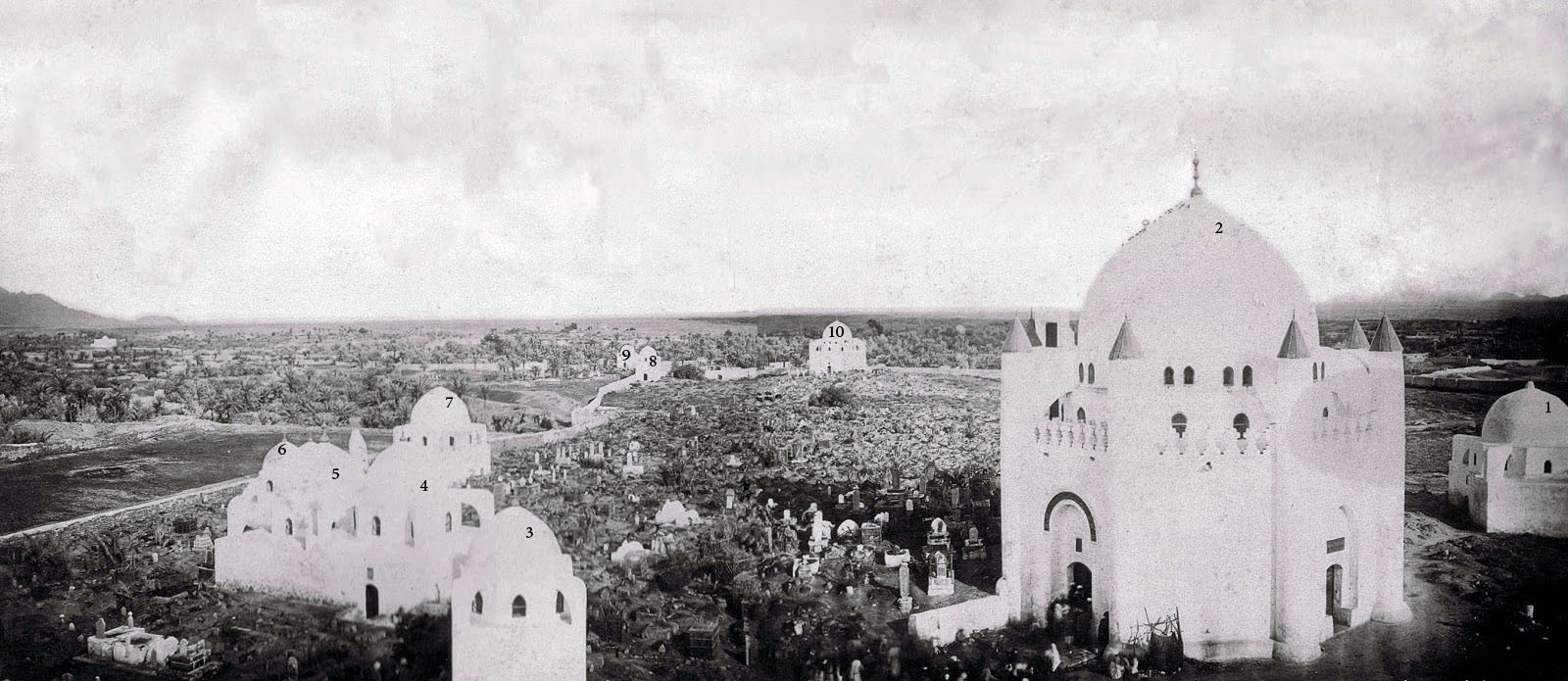
Wahhabi Saudi Arabia and the Disappearing of Islam’s Heritage


Catherine ShakdamActually it is not so much Saudi Arabia as a political construct which should worry you, but rather the faith it has leaned on to draw legitimacy from: Wahhabism.
River to Sea
Born in the desert of Nejd in the 18th century – an unwelcoming stretch of land which for centuries has echoed from the war cries of looters and tribal warlords, Wahhabism came into the world courtesy of one self-professed Islamic erudite: Muhammad ibn Abdul-Wahhab. A follower of Ibn Taymiyyah, Ibn Abdul-Wahhad imagined himself a religious authority so grand that only his teachings could be deemed worthy – a sanctity onto Islam, the one school of thought to surpass all others, and in shame bind them!
Or so he claimed …or so he made others believe!
An ascetic, violent and reactionary faith, Wahhabism is not just anchored in bloodshed, it has been weaved around hate, bred on exclusion, and grown on ignorant bigotry.
If ever there was an antithesis of Islam, Wahhabism would most certainly qualify to that title.
But enough already on this individual … although we have to admit that it is his poisonous thoughts which continue to darken our skies, by allowing powers to wage “holy wars”.
But that you may argue is an Islamic problem, and it has little to do with the rest of the world.
I beg to differ! Radicalism, and most specifically Wahhabism is all our problem.
Why? Because Wahhabism is not playing out in a far, far away land, it is quite literally being featured at a cinema near you. You might not see it yet, you might not be aware that it is there yet, but Wahhabism is most definitely attempting to break into Society’ subconscious – a well-rehearsed doctrine.
You might know Wahhabism under a different name – that of radicalism.
It is at this point in my article that I will ask you to review your definition of radicalism and learn to call this abomination by its real name: Wahhabism.
How can a faith which seeks to annihilate millions of Muslims on account of their allegiance to the House of the Prophet (AhlulBayt) claims itself Islamic?
How can a faith which has purposely disappeared Islamic history and the world religious heritage ever pretend to hold Islam’s true banner?
Let’s play a little game of “did you know?”
Did you know that al-Saud monarchs have sponsored, promoted and aided the destruction of over 7000 historical landmarks to assuage their religious self-righteousness?Did you know that those who long ago proclaimed themselves the Custodian of the two holy mosques: Medina and Mecca, have persecuted Shia Muslims because they pledged their allegiance to the very man the prophet Muhammad presented as his Custodian? For centuries Wahhabis have branded Shia Islam an apostasy because it dared hold the First Imam of Islam the true Guardian of the Words, only to claim such title for themselves, and say it is right and fair.Did you know that Wahhabism, Saudi Arabia’s official state religion, inspired Terror’s armies?Did you know that the Terror which has claimed all of our sons and daughters, reigns king over the Hijaz (formerly known as Saudi Arabia)?
- Did you know that America’s special friend stands the financial and ideological backbone of this cancer we call Daesh?
- Did you really not know?
- Did you really not see the parallels in between the Black Flag Army and Riyadh officials when you witnessed with what eagerness both wielded their blades? Do you not remember January 2016, when 47 men were brought out to be murdered, and in the king’s name butchered?
The Baqee Organization remembered! It did more than that actually …
For almost a decade the Baqee Organization has spoken up against Wahhabism in preservation of the world Islamic heritage, in defense of our memory, in protection of our future.
If we all share in our differences, we cannot possibly claim to any future without a recollection of our past – not if the future is to be truly ours to own.

Origins of Jannat Al-Baqi Cemetery

Every year on the anniversary of the destruction of al-Baqee cemetery, where Islam’s most illustrious names are buried, the Baqee Organization has taken to Washington DC to demand reparation, to argue accountability, and to call on the world to recognize the agony of a life spent in the shadow of the House of Saud.
Beyond a simple case of religious oppression, al-Saud royals have overseen the destruction of most of Mecca’s 1000-year-old historical landmarks, single-handedly redacting History to claim a truth which is a fabrication.
“Failure to protect them [holy sites] from destruction is the biggest tragedy for the Islamic architectural heritage. The Saudi royal family claims to be guardians of the holy places of Islam, and profit hugely from the centuries by visiting believers to Mecca and Medina for pilgrimage. And yet, they are party to this barbaric desecration of the holiest sites in the Islamic world.”
Thus said the Baqee Organization, before adding:
“Today, the religious zealots in Saudi Arabia are not alone. Commercial developers such as Bin Laden Group have joined hands with them and are making hundreds of millions in profits as they build ugly, but lucrative high-rises that are shadowing the Grand Mosque known as the Ka’aba. Today Saudi petrodollars have the ability to silence even its most vocal critics, but when all is said and done, history will render a harsh judgment on those who try to wipe out its footprints and steal the heritage of all humanity.”
Al Saud and Wahhabism share a long tradition of cultural genocide.
In 1801 al-Saud legions, known then as the Ikhwan (the Brothers) waged a ferocious military campaign against the holy city of Karbala, where Imam Hussain’s tomb, the grandson of the prophet of Islam, was erected to forever speak of his glorious legacy.
For us today such cultural cannibalism inspired the Taliban to tear down the Gautama Buddha statues in Afghanistan, Daesh to explode the Temple of Palmyra in Syria, and Daesh again to sully the Tomb of the Prophet Jonah in Iraq.
Source: The Duran, Edited by website team
21-07-2016 | 11:42
The views expressed in this article are the sole responsibility of the author and do not necessarily reflect those of the Blog!
President Assad: Aleppo Battle Last Card Played by Turks, Qataris & Saudis
The following is the full text of the interview:
Question 1: Mr. President, thanks for giving Prensa Latina this historic opportunity of conveying your point of view to the rest of the world about the reality in Syria, because as you know, there is a lot of misinformation out there about your country, about the foreign aggression that is taking place against this beautiful country.
Mr. President, how would you evaluate the current military situation of the external aggression against Syria, and what are the main challenges of Syrian forces on the ground to fight anti-government groups? If it is possible, we would like to know your opinion about the battles or combats in Aleppo, in Homs.
Aleppo battle is the last card for the Turks, Qataris and Saudis
President Assad: Of course, there was a lot of support to the terrorists from around the world. We have more than one hundred nationalities participating in the aggression against Syria with the support of certain countries like Saudi Arabia and Qatar with their money and Turkey with the logistical support, and of course with the endorsement and supervision of the Western countries, mainly the United States, France, and the UK, and some other allies. But since the Russians decided to intervene in supporting legally the Syrian Army in fighting the terrorists in Syria, mainly al-Nusra and ISIL and some other affiliated groups, the scales have been tipped against those terrorists, and the Syrian Army has made many advances in different areas in Syria. And we are still moving forward, and the Syrian Army is determined to destroy and to defeat those terrorists. You mentioned Homs and Aleppo. Of course, the situation in Homs, since the terrorists left Homs more than a year ago, the situation has been much, much better, more stable. You have some suburbs of the city which were infiltrated by terrorists. Now there is a process of reconciliation in those areas in which either the terrorists give up their armaments and go back to their normal life with amnesty from the government, or they can leave Homs to any other place within Syria, like what happened more than a year ago in the center of the city.
For Aleppo it is a different situation, because the Turks and their allies like the Saudis and Qataris lost most of their cards on the battlefields in Syria, so the last card for them, especially for Erdogan, is Aleppo. That is why he worked hard with the Saudis to send as much as they can of the terrorists – the estimation is more than 5,000 terrorists – to Aleppo.
Question 2: Through the Turkish borders?
President Assad: Yes, from Turkey to Aleppo, during the last two months, in order to recapture the city of Aleppo, and that didn’t work. Actually, our army has been making advancement in Aleppo and the suburbs of Aleppo in order to encircle the terrorists, then, let’s say, either to negotiate their going back to their normal life as part of reconciliation, or for the terrorists to leave the city of Aleppo, or to be defeated. There’s no other solution.
Question 3: Thank you, thank you very much. Mr. President, which are the priorities of the Syrian Army in the confrontation with the terrorist groups? And we’re particularly interested, because in Cuba we had something similar in the past, in the role of the popular defense groups; what is the role that the popular defense groups are playing in the theater of operations?
Syrian army’s priority is to fight al-Qaeda-linked organizations of ISIL, al-Nusra, Ahrar al-Cham and Jaish al-Islam
President Assad: The priority of the Syrian Army, first of all, is to fight ISIL and al-Nusra and Ahrar al-Cham and Jaish al-Islam. These four organizations are directly linked to Al Qaeda through the ideology; they have the same ideology, they are Islamic extremist groups who want to kill anyone who doesn’t look or doesn’t feel or behave like them. But regarding what you called the popular militia groups, actually, at the beginning of the war, the terrorists started an unconventional war against our army, and our army is a traditional army, like any other army in the world, so the support of those popular defence groups was very important in order to defeat the terrorists in an unconventional way. That was very helpful to the Syrian Army, because those fighters, those national fighters, they fight in their regions, in their cities, in their villages, so they know the area very well, they know the region very well, I mean the pathways, the terrain, let’s say, very well. So, they can be very huge assets for the Syrian Army. That is their role.
Question 4: Mr. President, how does the resistance of the Syrian people take place in the economic front to foreign aggression, I mean the economy, and please, what is your opinion on which sectors of the Syrian economy have remained functioning despite the war, economic blockade, looting, and so forth?
President Assad: Actually, the war on Syria is a full-blown war; it is not only supporting terrorists. They support the terrorists, and at the same time they launched a political war against Syria on the international level, and the third front was the economic front, in which they dictate to their terrorists, to their surrogate mercenaries, to start destroying the infrastructure in Syria that helped the economy and the daily needs of the Syrian citizens.
At the same time, they started an embargo directly on the borders of Syria through the terrorists and abroad through the banking systems around the world. In spite of that, the Syrian people were determined to live as much normal life as they can. That prompted many Syrian businessmen or the owners of, let’s say, the industry, which is mainly medium and small industry, to move from the conflict areas and unstable areas toward more stable areas, on a smaller scale of business, in order to survive and to keep the economy running and to keep the needs of the Syrian people available. So, in that regard, most of the sectors are still working. For example, the pharmaceutical sector is still working in more than 60% of its capacity, which is very important, helpful, and very supportive to our economy in such circumstances. And I think now we are doing our best in order to re-expand the base of the economy in spite of the situation, especially after the Syrian Army made many advancements in different areas.
Question 5: Mr. President, let’s talk a little bit about the international environment, please give me your opinion about the role of the United Nations in the Syrian conflict, the attempts of Washington and its allies to impose their will on the Security Council and in the Geneva peace talks.
So far, there is no UN role in the Syrian conflict; there is only Russian and American dialogue
President Assad: Talking about the role of the United Nations or Security Council could be illusive, because actually the United Nations is now an American arm, where they can use it the way they want, they can impose their double standards on it instead of the Charter. They can use it like any other institution within the American administration. Without some Russian and Chinese stances in certain issues, it would be a full American institution. So, the Russian and Chinese role has made some balance within these institutions, mainly regarding the Syrian issue during the last five years. But if you want to talk about their role through their mediators or their envoys, like recently de Mistura, and before that Kofi Annan, and in between Brahimi, and so on. Let’s say that those mediators are not independent; they reflect either the pressure from the Western countries, or sometimes the dialogue between the main powers, mainly Russia and the United States. So, they’re not independent, so you cannot talk about the role of the United Nations; it is a reflection of that balance. That is why so far, there is no United Nations role in the Syrian conflict; there is only Russian and American dialogue, and we know that the Russians are working hard and seriously and genuinely in order to defeat the terrorists, while the Americans always play games in order to use the terrorists, not to defeat them.
Question 6: Mr. President, how do you see at the present time the coexistence among Syrian ethnic and religious groups against this foreign intervention? How do they contribute or not in this regard?
President Assad: The most important thing about this harmony between the different spectrums of the Syrian fabric, is that it is genuine, because that has been built up through the history, through centuries, so for such a conflict, it cannot destroy that social fabric. That is why if you go around and visit different areas under the control of the government, you will see all the colors of the Syrian society living with each other.
Intervention: I saw it in Damascus.
President Assad: Exactly. And I would say, I would add to this, that during the conflict, this harmony has become much better and stronger, and this is not rhetoric; actually, this is reality, for different reasons, because this conflict is a lesson. This diversity that you have, it is either to be a richness to your country, or a problem. There’s no something in the middle. So, the people learned that we need to work more on this harmony, because the first rhetoric used by the terrorists and by their allies in the region and in the West regarding the Syrian conflict at the very beginning was sectarian rhetoric. They wanted people to divide in order to have conflict with each other, to stoke the fire within Syria, and it didn’t work. And the Syrians learned that lesson, that we had harmony; we had had harmony before the conflict, in the normal times, but we have to work more in order to make it much stronger.
So, I can say without any exaggeration that the situation regarding this part is good. In spite of that, I would say the areas under the control of the terrorists – and as you know those terrorists are mainly extremist groups affiliated to Al Qaeda – in which they worked very hard in order to indoctrinate the young generation with their dark ideology, and they succeeded in some areas, this dark ideology with the killing and beheading and all these horrible practices. With the time, it is going to be more difficult to deal with this new generation of young people who have been indoctrinated with Al Qaeda and Wahabi doctrine and ideology. So this is the only danger that we are going to face regarding our society, harmony, and coexistence that you just mentioned.
Question 7: Mr. President, I would like to go again to the international arena. What is in your opinion the role of the U.S.-led international coalition in relation to the groups that operate in northern Syria, in particular regarding the Kurds group. I mean the bombing of the American airplanes and the coalition in the northern part of the country. What to do you think about that?
President Assad: You know, traditionally, the American administrations, when they had relations with any group or community in any country, it is not for the sake of the country, it is not for the interest of the people; it is for the agenda of the United States. So, that is what we have to ask ourselves: why would the Americans support any group in Syria? Not for Syria. They must have their agenda, and the American agenda has always been divisive in any country. They don’t work to unite the people; they work to make division between the different kinds of people. Sometimes they choose a sectarian group, sometimes they choose an ethnic group in order to support them against other ethnicities or to push them in a way that takes them far from the rest of the society. This is their agenda. So, it is very clear that this American support is not related to ISIL, it is not related to al-Nusra, it is not related to fighting terrorism, because since the beginning of the American intervention, ISIL was expanding, not shrinking. It has only started to shrink when the Russian support to the Syrian Army took place last September.
Question 8: Mr. President, what is your opinion about the recent coup d’état in Turkey, and its impact on the current situation in that country, and on the international level, and on the Syrian conflict also?
Coup in Turkey is a reflection of instability and disturbances within the country
President Assad: Such a coup d’état, we have to look at it as a reflection of instability and disturbances within Turkey, mainly on the social level. It could be political, it could be whatever, but at the end, the society is the main issue when you have instability. Regardless of who is going to govern Turkey, who is going to be the president, who is going to be the leader of Turkey; this is an internal issue. We don’t interfere, we don’t make the mistake to say that Erdogan should go or should stay. This is a Turkish issue, and the Turkish people have to decide.
Erdogan used the coup to implement his Muslim Brotherhood agenda
But what is more important than the coup d’état itself, we have to look at the procedures and the steps that are being taken by Erdogan and his coterie recently during the last few days, when they started attacking the judges; they removed more than 2,700 judges from their positions, more than 1,500 professors in the universities, more than 15,000 employees in the education sector. What do the universities and the judges and that civil society have to do with the coup d’état? So, that reflects the bad intentions of Erdogan and his misconduct and his real intentions toward what happened, because the investigation hasn’t been finalized yet. How did they take the decision to remove all those? So, he used the coup d’état in order to implement his own extremist agenda, Muslim Brotherhood agenda, within Turkey, and that is dangerous for Turkey and for the neighboring countries, including Syria.
Question 9: Mr. President, how do you evaluate the Syrian government’s relations with the opposition inside Syria? What is the difference between these opposition organizations and those based outside Syria?
“Oppositions” outside Syria are traitors…the real opposition is the one based inside and works for the Syrian people
President Assad: We have good relations with the opposition within Syria based on the national principles. Of course, they have their own political agenda and they have their own beliefs, and we have our own agenda and our beliefs, and the way we can make the dialogue either directly or through the ballot boxes; it could be a different way of dialogue, which is the situation in every country. But we cannot compare them with the other oppositions outside Syria, because the word “opposition” means to resort to peaceful means, not to support terrorists, and not to be formed outside your country, and to have grassroots, to have real grassroots made of Syrian people. You cannot have your grassroots be the foreign ministry in the UK, France or the intelligence in Qatar and Saudi Arabia and the United States. This is not opposition, this is called, in that case, you are called a traitor. So, they call them oppositions, we call them traitors.The real opposition is the one that works for the Syrian people and is based in Syria and its agenda derived its vision from the Syrian people and the Syrian interests.
Question 10: Mr. President, how do you evaluate the insistence of the U.S. and its allies that you leave power in addition to the campaign to distort the image of your government? I mean, in the foreign environment. How do you see that insistence from them that you leave power?
President Assad: Regarding their wish for me to leave power, they have been talking about this for the last five years, and we never responded even with a statement. We never cared about them. Actually, this is a Syrian issue; only the Syrian people can say who should come and go, who should stay in his position, who should leave, and the West knows our position very well regarding this. So, we don’t care and don’t have to waste our time with their rhetoric. I am here because of the support of the Syrian people. Without that, I wouldn’t be here. That is very simple.
It is part of the American politics to demonize presidents
About how they defame, or try to demonize certain presidents, this is the American way, at least since the second World War, since they substituted British colonization in this region, and maybe in the world, the American administrations and the American politicians haven’t said a single honest word regarding anything. They always lie. And as time goes by, they are becoming more inveterate liars, so this is part of their politics. So, to demonize me is like how they tried to demonize President Putin during the last two years and they did the same with the leader Castro during the last five and six decades. This is their way. So, we have to know that this is the American way. We don’t have to worry about it. The most important thing is to have good reputation among your own people. That is what we have to worry about.
Question 11: Mr. President, what is your opinion on Syria’s relation with Latin America, particularly the historical links with Cuba
President Assad: In spite of the long distance between Syria and Latin America, we are always surprised how much the people in Latin America, not only the politicians, know about this region. I think this has many reasons, but one of them is the historical similarities and commonalities between our region, between Syria and Latin America. Latin America was under direct occupation for long time ago but after that it was under the occupation of the American companies, and the American coup d’états and the American intervention.
Intervention: Yes, a lot of them.
Latin America People understand that the war in Syria is about independence…there is strong harmony between Syria and Latin America, especially Cuba
President Assad: So, they know what is the meaning of being independent or not to be independent. They understand that the war in Syria is about independence. But the most important thing is the role of Cuba. Cuba was the spearhead of the independence movement within Latin America and Fidel Castro was the iconic figure in that regard. So, on the political level and the knowledge level, there is a strong harmony between Syria and Latin America, especially Cuba. But I do not think we work enough to improve the other part of the relation; to be on the same level mainly on the educational and the economic level. That was my ambition before the crisis and that is why I visited Latin America, Cuba, Venezuela, Argentine and Brazil, in order to invigorate this relation. Then, we had this conflict started and it was a big obstacle to do anything in that regard, but I think that we have not to restrain the relation on the historical and the political levels. That is not enough. You have so many other sectors, people should know more about each other. The long distance could be an obstacle, but it shouldn’t because we have strong relations with the rest of the world, east and west. So, it is not an obstacle in these days. So, I think if we overcome this crisis and this war, we should work harder in order to invigorate the different sectors of this relation with Latin America and especially with Cuba.
Question 12: Mr. President, do you have an expectation for… I mean would you tell me your opinion about the electoral process in the United States mainly for the president? Now, we have two candidates; the Republican one is Mr. Donald Trump and the Democratic one is Mrs. Hillary Clinton; and we know her very well, but what is your opinion about this process, about the result of this process and how it could impact the conflict here, in the war in Syria?
No US president in the near future will come to make dramatic change in the politics of the United States
President Assad: We resumed our relation with the United States in 1974. Now, it has been 42 years since then and we witnessed many American presidents in different situations and the lesson that we have learned is that no one should bet on any American president, that is the most important thing. So, it is not about the name. They have institutions, they have their own agenda and every president should come to implement that agenda in his own way, but at the end he has to implement that agenda.
All of them have militaristic agendas, and the only difference is the way. One of them sends his army like Bush and the other one sends mercenaries and proxies like Obama, but all of them have to implement this agenda. So, I do not believe that the president is allowed completely to fulfill his own political convictions in the United States, he has to obey the institutions and the lobbies, and the lobbies have not changed and the institutions’ agenda has not changed. So, no president in the near future will come to make a serious and dramatic change regarding the politics of the United States.
Question 13: Mr. President, one final question: what message would you send using this interview with Prensa Latina to the governments and people of Latin America, the Caribbean, and also why not the American people, about the importance of supporting Syria against terrorism?
Message to Latin America: We have to keep our independence as the US will not stop trying to topple every independent government
President Assad: Latin America is a very good and important example to the world about how the people and their governments regain their independence. They are the backyard of the United States as the United States sees, but this backyard was used by the United States to play its own games, to implement its own agenda and the people in Latin America sacrificed a lot in order to regain their independence and everybody knows that.
After regaining their independence, those countries moved from being developing countries, or sometimes under-developed countries, to be developed countries. So, independence is a very important thing and it is very dear for every Latin American citizen. We think they have to keep this independence because the United States will not stop trying to topple every independent government, every government that reflects the vast majority of the people in every country in Latin America.
And again, Cuba knows this, knows what I am talking about more than any other one in the world; you suffered more than anyone from the American attempts and you succeeded in withstanding all these attempts during the last sixty years or more just because the government reflected the Cuban people.
So, holding strongly to this independence, I think, is the crucial thing, the most important thing for the future of Latin America. Regarding Syria, we can say that Syria is paying the price of its independence because we never worked against the United States; we never worked against France or the UK. We always try to have good relations with the West.
But their problem is that they do not accept any independent country and I think this is same for Cuba. You never tried to do any harm to the American people but they do not accept you as an independent country. The same is true for other countries in Latin America and that’s why you always have coup d’états mainly between the sixties and the seventies.
So, I think preserving the independence of a certain country is not only an isolated case; if I want to be independent, I have to support the independence in the rest of the world. So, the independence anywhere in the world, including Latin America, will support my independence. If I am alone, I will be weak. Supporting Syria will be mainly in the international arena. There are many international organizations, mainly the United Nation, in spite of its impotence, but at the end, their support could play a vital role in supporting Syria and, of course, the Security Council; it depends on who is going to be the temporary member in the Security Council, and any other organization supporting Syria will be very important.
Question 14: Mr. President, I know that you are a very busy person, that is why I appreciate very much your time that you have dedicated to Prensa Latina interview in this moment. I hope this would not be the last interview that we have with you.
President Assad: You are welcome anytime.
Source: Agencies
| 21-07-2016 – 19:22 Last updated 21-07-2016 – 19:22 |
Related Articles
- Syrian Army Strikes Terrorists in Aleppo, Other Provinces
- “Nour al-Din al-Zenki” Monster to Slain Palestinian Child: We’re Worse than ISIL
- Syrian Army, Allies Crush Over 100 Terrorists in Various Provinces
- Aleppo: Takfiri Militants Slaughter Child in Handarat Camp
- US-led Coalition Strikes Kill 21 Civilians in Northern Syria
- Assad: Erdogan Likely Using Recent Coup Bid to Eliminate Enemies
- Syrian Army Continues Targeting Terrorists in Various Areas
The views expressed in this article are the sole responsibility of the author and do not necessarily reflect those of the Blog!
Labels:
Ahrar Al-Sham,
Al Qaeda,
Aleppo,
AngloZionist Empire,
Assad,
CUBA,
Erdogan,
ISIL,
Latin America,
Moderate Terrorist,
Nusra Front,
Putin,
Russia,
Syrian opposition,
Turkey,
USA,
War on syria
Subscribe to:
Posts (Atom)