Friday, 14 September 2018

Conflating Anti-Zionism with Anti-Semitism a Dangerous and Useful Ploy for Zionists

BDS
 by Zara Ali 
JERUSALEM — (Analysis) According to the Merriam-Webster dictionary, anti-Semitism is defined as “hostility toward or discrimination against Jews as a religious, ethnic, or racial group.” This is also how anti-Semitism is understood by people in general. However, the state of Israel and Zionist organizations around the world do not want the term to be defined as only racism against Jewish people but also to include criticism and rejection of Zionism.
Jewish rejection of Zionism
The Zionist movement had no concern for God or Jewish law because the Zionist leaders were secular and their vision was to create a secular state. They claimed that Jews were a nation just like any other, even though clearly that is not the case. Jews in Yemen, in Iraq, in Poland or in the Holy Land itself had and continue to have their own distinct customs, clothing, culture and language. The only common thing that Jewish people around the world possess is their religion. This is true even today, when many Jewish people see themselves as secular. Jews in America have a distinct culture that is different from that of Jews in France or Iran or in occupied Palestine.
The Zionists secularized the Old Testament, treating it as though it was a historical document, which it very clearly is not; and, finally, the Zionists claimed that Palestine is the Land of Israel and that it is the land of the Jewish people and therefore they have a right to take it, even by force. They invented and spread the motto, “A Land without a People for a People without a Land,” even though clearly there were people on the land, the Palestinian Arabs. These people, in the eyes of Western colonizers, being non-European and not white, were just insignificant and invisible.
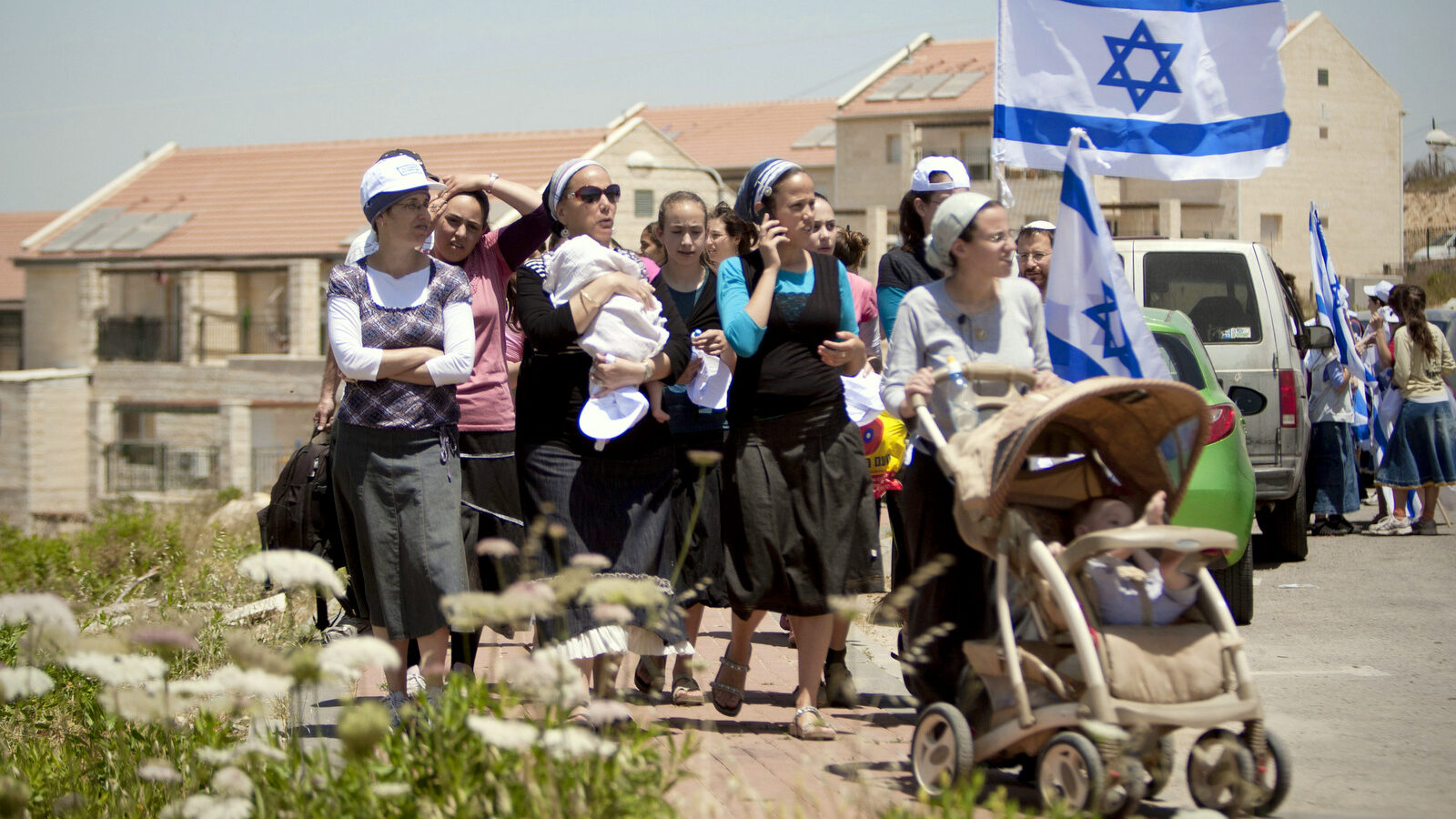
Jewish opposition to Zionism was swift and fierce and is well documented. The leading Rabbis of the Ultra-Orthodox community were very clear in their opposition and the points they made were as relevant in the early 20th century as they are today. According to Jewish law, the Jewish people are forbidden from claiming sovereignty in the Land of Israel. They were expelled by Divine decree as a result of their own rejection of God’s laws and are not permitted to return until such time as God sends His messenger to grant them permission to return. To claim, as many Zionist do, that God gave The Land of Israel to the Jewish people and therefore they are permitted to live there, and force another nation into exile in the process, contravenes the commands of the very God that they claim gave them the land.
AP_120304053909.jpg
God’s promise of the land to the Jewish people was conditioned upon their obedience to His laws. Having failed to so obey, they cannot simply claim it back. Furthermore, there is a prohibition on taking the land by force, dying for the land, or taking a life of another human being. Jewish law commands its followers to be loyal citizens in whatever country they happen to live.
Furthermore, in a book named Or Layesharim or Light for the Truthful, published in the year 1900, the rabbis of the early twentieth century warned of four major inevitable consequences should the Zionist movement be allowed to accomplish its goal of a so-called “Jewish state” in Palestine.
  1. Unprecedented violence to the Holy Land;
  2. Unprecedented tensions between Jews and the Palestinian Arabs;
  3. Jeopardizing the relations between Jews and Muslims;
  4. Casting doubt as to the loyalty of Jewish people in the countries in which they reside around the world.
Sadly, no one listened to the rabbis and, as things turned out, every one of their warnings became true.

Conflating anti-Semitism with rejection of Zionism

From early on, the Zionist movement and then the State of Israel have had a tense relationship with the Ultra-Orthodox community because of its clear anti-Zionist stance. Having grown up in Jerusalem I can recall how each year on particular days, including the Israeli Day of Independence, there would be processions at the Ultra-Orthodox neighbourhoods where the Israeli flag would be burned.
The Anti-Defamation League, or ADL, which claims to be a civil-rights organization but is in reality a Zionist watchdog, maintains that “Anti-Zionism is a prejudice against the Jewish movement for self-determination and the right of the Jewish people to a homeland in the State of Israel.” This is an interesting twist on Zionism and what it means to oppose it.
To begin with it is not prejudice to oppose Zionism. The Zionist movement has been around for over a century and has a clear track record of racism and extreme violence. Nor is it prejudice against the right of Jewish people to live in Palestine. The creation of the state of Israel came at an enormous cost and included genocide, ethnic cleansing, and the establishment of an apartheid regime. That is enough reason to oppose any movement.
The ADL also claim that BDS — the Palestinian call for a boycott, divestment, sanctions campaign against Israel — is anti-Semitic. On its website, it says that “ADL believes that the founding goals of the BDS movement and many of the strategies used by BDS campaigns are anti-Semitic.” It goes on to say that “the [BDS] campaign is founded on a rejection of Israel’s very existence as a Jewish state. It denies the Jewish people the right to self-determination.”
BDS-001
However, the proclaimed demands of the BDS call, as stated on their website, could not be more clear nor could they be farther from what the ADL claims they are. Namely:
  1. Ending the occupation and colonization of all Arab lands and dismantling the Wall.
  2. Recognizing the fundamental rights of the Arab-Palestinian citizens of Israel to full equality.
  3. Respecting, protecting and promoting the rights of Palestinian refugees to return to their homes and properties as stipulated in UN resolution 194.
These demands are all remedial and one can summarize them with three words: Freedom, Justice and Equality — three values that are perfectly congruent with Judaism and Jewish values and with which millions of Jewish people fully agree. Not one of these demands poses even the slightest danger to Jews anywhere. However, they are demands that the State of Israel opposes; and Zionist watchdogs like the ADL, which work in the service of Israel, falsely claim that such opposition to Israel constitutes anti-Semitism.
Unfortunately, many if not most people around the world are unaware that historically the Zionist movement and Zionist ideology have been at odds with world Jewry.
As it was then, so it is today: there are entire communities of Jewish people who reject Zionism. The anti-Zionist religious Jews are one such community and there are others, who are not religious and have rejected Zionism and live and thrive in countries around the world, as Jewish people have done throughout the vast majority of Jewish history.

Zionist concerns

It is safe to say that the Zionist establishment, concerned about its own legitimacy, decided to embark on this campaign to conflate anti-Zionism with anti-Semitism. Historically the secular, European Zionist establishment did succeed in convincing and applying pressure on governments and non-governmental organizations around the world to ignore the calls and opinions of traditional rabbis, and accept the Zionist state and consequently accept the claim that opposing Zionism is equivalent to anti-Semitism.
As a result of the growing support for the Palestinian cause and realization that Zionism as a movement is responsible for the inexcusable crimes committed by Israel towards the Palestinian people, consecutive Israeli governments felt the need to stop the growth of anti-Zionist sentiments around the world and began a campaign to conflate criticism and rejection of Zionism with racism and anti-Semitism.
This has reached ridiculous proportions, as when the self-appointed International Holocaust Remembrance Alliance, or IHRA, took it upon itself to define anti-Semitism and began a campaign to have its definition accepted by governments and non-governmental organizations around the world. This is how we reach absurd situations like the one in the U.K., where the leader of the Labour Party, Jeremy Corbyn, who has fought racism his entire life, is accused of anti-Semitism.
If one wants to eradicate anti-Semitism, one should fight to end all forms of racism; supporting Israel is supporting racism. Claiming that opposition to Zionism is anti-Semitic is a false, shameless claim.
By Miko Peled
Source

In case you missed it


River to Sea Uprooted Palestinian   
The views expressed in this article are the sole responsibility of the author and do not necessarily reflect those of the Blog!

The Intentionally ‘Fake’ Putin, Erdogan, Rouhani Meeting Had a Very Real Subtext: Ditch the Dollar

On the 7th of September, the leaders of Russia and Turkey met with their Iranian host in Tehran to discuss a common strategy for Syria prior to the beginning of what is being called “The Battle of Idlib”. The meeting itself was notable for being a highly choreographed exhibition of political theatre which ultimately lead to a Tehran Declaration whose content signified the compromises between the Russia, Iranian and Turkish perspectives that were readily predictable long before the conference was even arranged. I previous described the “fake” conference in the following way:
“The day’s events started out with a public round table meeting between the three presidents who each read prepared statements before entering into a seemingly spontaneous debate during which each side tended to emphasise their disagreements regarding the status of Idlib in what has been described as incredibly frank exchanges that are normally reserved for closed door meetings.After several hours, the three Presidents emerged and spoke at a press conference after having reached a final agreement which has been enshrined in the Tehran Declaration of 2018.While the Russian, Turkey and Iran are all close partners in 2018, their disagreements over the penultimate solution to the Syrian conflict have been highlighted by the media outlets of all three nations while perhaps oddly, their areas of agreement tend to be downplayed. The reason for this is simple: the areas where the three leaders disagree play well before each respective domestic electorate as well as to each state’s traditional allies within Syria and the wider Middle East.However, when it comes to what will actually be done in Syria as a result of the increasingly frequent meetings between the Astana Group, the areas where all three countries agree is vastly more significant. This reality has been born out by the text of the final Tehran Declaration which as I predicted calls for the targeting of unanimously recognised terror groups (Daesh, al-Qaeda/al-Nusra/HTS), the prevention of further escalation against other armed groups, an orderly plan to protect civilians in Idlib as well as regional refuges and a broad understanding that there will be no grand all encompassing offensive in Idlib by the Syrian Arab Army and its traditional partners. Instead, all three states will cooperate to de-escalate the overall situation while neutralising groups that all three states agree are terror organisations”.
Thus, the Presidents of Russia, Turkey and Iran gave their domestic audiences and well-wishers abroad exactly want they wanted – a robust defence of what is perceived to be the stalwart stance of each respective nation. But while all three leaders hammed it up in front of the cameras in respect of exaggerating areas of disagreement with one another, it was when the cameras were off that issues over which Russia, Iran and Turkey are in full agreement were discussed.
Increasing trade in an age of US tariffs and sanctions is among the most important of issues which forms the axis of the Russo-Turkish-Iranian partnership in Eurasia. In addition to each country facing hostile US economic actions on an individual level, both Russia and Turkey have offered robust support for Iran even when the full force of US sanctions kick in at the beginning of November. Likewise, all three nations have vowed to transition their means of financial exchange away from the US Dollar and towards either a combination of national currencies or a mutually agreeable currency basket – one that likely would include the Chinese Yuan.
Unlike Idlib which ultimately has little strategic significance to the Astana Three in the long term while in the short term the biggest issue facing the Astana Three is compromising on a means of fighting mutually proscribed terror groups while also working to avoid a new wave of refugees heading for the Turkish border, de-Dollarisation is a highly crucial, complex and long term strategic matter that will require the utmost cooperation, patience and intense diplomacy between Turkey, Iran, Russia and almost certainly China – a mutual partner of all three nations.
Against this background it is unsurprising to learn that according to Iranian Labour News Agency de-Dollarisation was a major issue that was discussed behind closed doors. In this sense, while the need to resolve short term discrepancies in respect of a strategy for ending the conflict in Syria was the proximate cause of the formation of the Astana partnership between Russia, Turkey and Iran, in reality Syria ought to be thought of as the very obvious symbol which has helped to unify three major powers who prior to the 20th century had a history of making war on one another, often due to western imperial provocations.
Today, rather than competing for influence in western Eurasia, Turkey, Russia and Iran share common developmental goals that have been solidified around each nation’s enthusiastic participation in China’s One Belt–One Road initiative. Thus, the win-win model requiring a combination of intense cooperation, the ability to compromise without losing trust with one another and an overarching sense of destiny to extricate American influence from the economic models of re-emerging Asian powers, helps to bind the seemingly very different leadership in Moscow, Ankara and Tehran together.
While Washington has continually worked to dismiss or undermine the Astana format for a Syrian peace process, clearly a joint meeting between the leaders of Russia, Iran and Turkey under the banner of “The Great De-Dollarisation Summit” would be far more irksome to the US as the issue is frankly far more important than squabbles about a Syrian conflict that by all accounts is nearing its penultimate conclusion.
In this sense, the recent summit in Tehran was the ultimate red herring or if one prefers, the ultimate false flag. Just when it seemed as though Vladimir Putin, Recep Tayyip Erdogan and Hassan Rouhani played out their “disagreements” on Syria before the cameras, when the doors were shut, all three would have been talking about matters of far greater long term importance. In this sense while malicious battle field false flags can cost lives, benign diplomatic false flags can help to preserve the peace.
As Sun Tzu said:
“The whole secret lies in confusing the enemy, so that he cannot fathom our real intent”
Adam Garrie
Source

River to Sea Uprooted Palestinian   
The views expressed in this article are the sole responsibility of the author and do not necessarily reflect those of the Blog!

Washington’s Choice: WWIII or Saving Face in Syria

Comment:
Amidst a plethora of op-eds that point toward the probability of a major upcoming conflict in Syria vis-à-vis Idlib and go on to suggest such a scenario would carry the potential of turning into an escalated war between the West and Russia, Tom Luongo presents a drastically different opinion.

Sometimes when I step back from the overwhelming flow of geopolitical insanity I’m reminded of the old adage that coming close only counts in horseshoes and hand grenades. To which, I always add, “And nuclear war.”
I’ve been watching the build up to the operation to liberate Idlib in Syria which includes the endless neocon and Israeli moral preening warning Assad against using chemical weapons with a sense of detachment.  And I keep thinking to myself, “Do they really think we’re that stupid?”
Three times the chemical weapons canard has been used to justify further aggression against Syria and three times a full-blown U.S. invasion has been averted. First, by Vladimir Putin’s deft diplomacy, and General Dunford’s refusal to implement a ‘no-fly zone’ in 2013, and then during the Trump years with ineffectual air strikes on Syrian airbases.
How much of that ineffectuality of those airstrikes were designed by Defence Secretary James Mattis to avoid a wider conflagration and how much was Russian EW/missile defence is anyone’s guess.
The truth most likely lies somewhere in the middle.
That is why everyone who is worrying about the U.S.’s blustering over Syria’s Idlib campaign needs to take a big step back and think the scenario through.
Because the neoconservatives and Israel are forcing the situation to its crisis point, thinking they can manipulate the headlines and the levers of power to still eke out a victory in Syria that will allow them to continue on their quest to destroy Russia first and conquer the rest of Asia after that.
And they are willing to blackmail us with the threat of WWIII over 50,000 head-chopping mercenaries to get their cookie. 
However, when you factor in the men actually in charge of the U.S. military chain of command, Trump and Mattis, and you realize the lengths to which Mattis’ field commanders have gone to avoid direct confrontation with Russian forces, you come to the conclusion that the men who will actually fight this war the neoconservative provocateurs and laptop bombardiers are clamouring for won’t actually pull the trigger.
The reasons for this are manifest:
First, the potential for the conflict to go nuclear is too high for rational men to take that chance.  Mattis and Russian Defense Minister Sergei Shoigu are hard-bitten, no-nonsense men.  Neither underestimates the other’s resolve to defend their men and national interests.
So, once the shooting starts expect it to get ugly quick.  Therefore it is unlikely to get to that point.
Second, there is no profit in that kind of escalation for the people who profit from war. 
The banks and the military weapons makers thrive in low-intensity, frozen conflicts which keep sales flowing and governments indebted to pay for them.
In an age of nuclear weapons, proxy wars fought by mercenaries with drones are far more profitable than any large-scale invasions.  I hate to say this but from a discounted cash flow perspective Lockheed-Martin wants predictability to cover their quarterly dividends to shareholders more than they want to bring about the supposed Zionist plan for Greater Israel.
Sorry to burst everyone’s conspiracy theories.
Third and most importantly, the U.S. cannot afford a non-nuclear confrontation with Russia that punctures the illusion of U.S. military superiority.  Too much of the world’s confidence in the dollar itself rests in the U.S.’s ability to project power and defend its interests militarily.
This confidence is a mixture of that military capability and the U.S.’s traditional position of a country with an excellent legal framework within which to do business.  It is fashionable among geopolitical critics, myself included, to get caught up in the rhetoric and projection of a sclerotic and weakening United States, but legally it is still one of the best places on earth to do business.
But, as Martin Armstrong pointed out recently, Trump’s domestic opposition has openly declared sedition against him this week in the New York Times.  Former Secretary of State, John Kerry, is doing the talk show circuit calling for a constitutional crisis over Trump allegedly being unfit for office.  And George Soros is paying protesters to disrupt the confirmation hearing of Brett Kavanaugh to the Supreme Court.
If allowed to run its course to impeachment in the event of the Republicans losing control of the House in November, this would be a death blow to the U.S.’s reputation as a nation of laws rather than a nation of men.  The U.S. dollar would not recover from such a blow to its credibility, especially in light of Trump’s nearly-unhinged use of sanctions and threats of tariffs, weaponizing the dollar indiscriminately.
And this is why Vladimir Putin openly showed his hand to the world in March. Strategically, he let everyone know that any confrontation between Russia and the U.S. would result in the U.S losing its status as the world’s pre-eminent military power.
This is why the neocons and the U.S./U.K. Deep State have been so adamant in accelerating its provocations against Russia.  They have to present us with the Faustian bargain of WWIII before Russia has these weapon systems fully deployed.
It’s also why Trump and Mattis are allowing them to have their head.  It feeds Trump’s “Art of the Deal” strategy for negotiations while also allowing him the opportunity to save face after Idlib is liberated regardless of whether another chemical weapons attack is staged.
I think we won’t see one here.
The way out of Syria for the U.S. with its face-saved is to thunder and bluster, threaten fire and brimstone just like Trump did with Kim Jong-un and use that to explain why Assad showed restraint and didn’t use chemical weapons this time.
I can even see Trump tweeting something about three strikes and he would be out.
Once Idlib is liberated Mattis will happily begin pulling vulnerable troops out of al-Tanf and Afghanistan.  That’s why I believe he went there to the surprise of the CIA house-organ Washington Post last week.
And then the neocon and Israeli muddying of the waters will move to the Geneva talks, but we’ll cross that Rubicon when it approaches.

River to Sea Uprooted Palestinian   
The views expressed in this article are the sole responsibility of the author and do not necessarily reflect those of the Blog!

Seriously? Majority of israeli (apartheid state) Jews Believe They Are ‘Chosen People’

Majority of Israeli Jews Believe They Are ‘Chosen People’

“Israelis and Americans view Europe as godless and decadent, but for the Brahmins in Brussels, Israel and the United States are drifting into fundamentalist Crazyland.”
The majority of Israeli Jews — 56 per cent — believe that they are the “chosen people” according to a poll conducted by Haaretz. That figure is considerably higher amongst the political right in Israel, at 79 per cent.
The findings of the survey — carried out to mark the Jewish New Year — included a number of revealing facts about Israeli society and the direction of the country’s politics. A trend that may be of great concern to those who wish to see a political resolution in Palestine on the basis of international law and justice, is that more than half of Jewish Israelis believe that their perceived right to the “Land of Israel” derives from God’s divine covenant in the Bible.
With the vast majority of Israeli Jews holding such views, the authors of the poll suggested that under the surface a religious war is raging. The religious attitude of Israeli Jews, they said, was the “ominous subtext of the bitter political debate over territories.” The Israeli government, though, presents its quarrel with the Palestinians as being about security and realpolitik. The results of “blind faith,” they added, “are easily foretold and potentially dangerous.”
This finding marked a key feature in the way that the conflict is moving in the international arena and the polarisation between Israel and US on the one hand and European allies on the other. “The tense political relations between both Israel and the European Union, and recently between the EU and Washington as well, can also be delineated by religious beliefs,” said the poll’s authors. “Israelis and Americans view Europe as godless and decadent, but for the Brahmins in Brussels, Israel and the United States are drifting into fundamentalist Crazyland.”
Top Photo | Jewish settlers march during a demonstration against a proposed decision to evacuate the Jewish-only West Bank colony of Beit El near Ramallah. Ariel Schalit | AP

River to Sea Uprooted Palestinian   
The views expressed in this article are the sole responsibility of the author and do not necessarily reflect those of the Blog!
Maneuvers of wasting time in Lebanon and Iraq مناورات تضييع الوقت في لبنان والعراق بالانتظار

Maneuvers of wasting time in Lebanon and Iraq

سبتمبر 14, 2018
Written by Nasser Kandil,

Once again we are talking about the interconnection between forming the government in Lebanon and forming the government in Iraq. The issue is not imaginary, because since the last extension of the Lebanese parliament, and the timing of the parliamentary elections in conjunction with the Iraqi elections, where there were no constitutional opportunities to extend the term of the parliament, the question was about the secret of that conjunction. After the designation of the Prime Minister Saad Al-Hariri for  forming a new government in Lebanon and the passing through the stage of stand-still depending on the attempt entitled  no one imposes a deadline on the Prime Minister in his formation of a government on one hand, and the talk about the delay due to the interference in the powers of the Prime Minister, where all the sectarian tools were crowded, and those who are involved to perform their roles in showing the delay in the birth of the government responded, as an expression of the strength of the sect and its status on the other hand, the surprise was the delay for months in the announcement of the results of the Iraqi elections. Furthermore, Both Iraq and Lebanon witness similar surreal scene regarding the governmental situation. In Iraq, no one knows the blocs which will nominate the Prime Minister, while in Lebanon it is a formation that is known for its lack of conditions for the birth presented by the designate Prime Minister. The title in the two countries is to suggest the closeness of the anticipated government, but nothing is true.
This interconnection which reaches the chronological correlation a day by day, since the election on the sixth of May to the announcement of a governmental draft on the third of September is not by coincidence. In Iraq as in Lebanon a US confrontation occured with the forces of the resistance in order to weaken their presence in the governmental equation to the extent of isolation and besieging, and a bet on the development of more effective variables to achieve this goal. Therefore, the bet on them is not in the acceleration of the birth of the movement in both Baghdad and Lebanon. The severe US sanctions on Iran will be carried out after two months, and the International Tribunal for Lebanon will resume its work this month, knowing that it is in the last stage of its mission for issuing judgments to criminalize the resistance with the assassination of the Prime Minister Rafik Al-Hariri. All of that is to weaken the resistance forces and to convince the forces which it became clear that they are the weighing factors in the birth of the government namely; the Kurdish Alliance in Iraq and the Free Patriotic Movement and the President of the Republic in Lebanon that linking their fate with the resistance forces is a suicidal choice. That is why everything is being done to disrupt on one hand, and on the other hand, to make maneuvers that suggest progress to calm down the popular pressure which calls for acceleration under the need of a government, but at the same time without affecting the relationship with the important force which no government will be formed without it.
What was witnessed yesterday by Baghdad and Beirut shows that the manipulation with the constitutional path is continuous, and the birth of a new government will not suit the American timing, but only if it is a government that weakens the resistance forces and confines their participation formally. Keeping this gray scene in this waiting stage is continuous by Al-Hariri and Al-Abadi, but at the end, when the time comes and America loses its bets, it will not pay the cost, rather it will adapt to the new facts, and sacrifices which those whom it presented as title for the bet. Maybe, this is one aspect of the warning of the Secretary-General of Hezbollah “Do not play with fire” because the one who plays with fire, will burn himself first.
Translated by Lina Shehadeh,

مناورات تضييع الوقت في لبنان والعراق بالانتظار

سبتمبر 4, 2018

ناصر قنديل

– مرة أخرى نتحدث عن الربط بين تشكيل الحكومة في لبنان وتشكيل الحكومة في العراق، والقضية ليست خيالاً بوليسياً، فمنذ التمديد الأخير للمجلس النيابي اللبناني، وظهور توقيت الانتخابات النيابية بالتزامن مع الانتخابات العراقية، حيث لا فرص دستورية لتمديد ولاية البرلمان، كان السؤال عن سر التزامن، ومع تسمية الرئيس سعد الحريري لتشكيل الحكومة الجديدة في لبنان ودخول التشكيل مرحلة الوقت المفتوح تأسيساً على معركة دونكيشوتية تم خوضها للفوز بها تحت عنوان، أن لا أحد يفرض مهلة على رئيس الحكومة في تشكيل الحكومة، والحديث عن التأخر مساس بصلاحيات رئيس الحكومة، حيث حشدت كل الأسلحة الطائفية واستجاب كل المعنيين لأداء أدوارهم في تظهير التأخير في ولادة الحكومة تعبيراً عن قوة الطائفة ومكانتها وتجرؤ من يمثلها في الحكم على ممارسة صلاحياته غير منقوصة. وبالتوازي كانت المفاجأة بتأخير شهور في إعلان نتائج الانتخابات العراقية، وبالتزامن أيضاً يشهد العراق ولبنان مشهداً سوريالياً حول الوضع الحكومي، ففي العراق لا يعلم أحد حقيقة الكتلة التي ستسمّي رئيس الحكومة، وفي لبنان تشكيلة معلوم أنها منقوصة الشروط للولادة، يقدّمها الرئيس المكلف، والعنوان في البلدين تخدير الناس بوهم الاقتراب من الحكومة العتيدة، والحكومة لا تولد.

– هذا الترابط الذي يبلغ حدّ التلازم الزمني يوماً بيوم، منذ الانتخابات المتزامنة في السادس من أيار إلى الإعلان عن مسودة حكومية في الثالث من أيلول، ليس صدفة، ففي العراق كما في لبنان مواجهة أميركية مع قوى المقاومة وسعي لإضعاف حضورها في المعادلة الحكومية إلى حد العزل والتطويق، ورهان على تبلور معطيات أشد تأثيراً لتحقيق هذا الهدف، لا ينسجم الرهان عليها مع تسريع ولادة الحكومة في كل من بغداد وبيروت، فالعقوبات الأميركية بنسخة مشدّدة على إيران ستنطلق بعد شهرين، والمحكمة الدولية الخاصة بلبنان تعود للعمل هذا الشهر وهي في نهاية مهمتها لإصدار أحكام لتجريم المقاومة باغتيال الرئيس رفيق الحريري. والرهان على كل ذلك في إضعاف قوى المقاومة، وإقناع القوى التي بات واضحاً أنها تشكل بيضة القبان في ولادة الحكومة، وهي التحالف الكردي في العراق والتيار الوطني الحر ورئيس الجمهورية في لبنان، بأن ربط مصيرها بصيغ مشتركة مع قوى المقاومة يشكل خياراً انتحارياً، ولذلك يجري بذل كل شيء للتعطيل من جهة، وتمييع الضغط الشعبي الذي يطالب بالتسريع تحت ضغط الحاجة لحكومة، بمناورات توحي بالتقدم، وعدم قطع الخيط الواصل مع القوة الوازنة التي لا حكومة بدونها.

– ما شهدته كل من بغداد وبيروت أمس، يقول إن التلاعب بالمسار الدستوري مستمر، وإن استيلاد حكومة جديدة لا يناسب التوقيت الأميركي، إلا إذا كانت حكومة تستضعف قوى المقاومة وتأتي بها إلى مشاركة شكلية، والحرص مستمر على اللون الرمادي في المرحلة الانتظارية من الحريري والعبادي. لكن في النهاية عندما يصير وقت الدخان الأبيض ويخسر الأميركي رهاناته فهو لا يدفع الثمن، بل يتأقلم مع الوقائع الجديدة، ويصير التضحية بالذين قدّمهم عنواناً للرهان. ربما هذا بعض وجوه تحذير الأمين العام لحزب الله، من اللعب بالنار، لأن اللاعب يحرق نفسه أولاً.


Related Videos
Articles ARTICLES

River to Sea Uprooted Palestinian   
The views expressed in this article are the sole responsibility of the author and do not necessarily reflect those of the Blog!

Greater Eurasia coming together in the Russian Far East

September 12, 2018
Greater Eurasia coming together in the Russian Far East
by Pepe Escobar (cross-posted with the Asia Times by special agreement with the author)

The Eastern Economic Forum in Vladivostok has become a crucial part of strategic integration between China, Russia and other countries in northeast Asia, a graduation assimilation set to transform the current world system

Xi Jinping and Vladimir Putin were involved in a joint cooking venture. Pancakes with caviar (blin, in Russian), chased down with a shot of vodka. It just happened at the Eastern Economic Forum in Vladivostok. Talk about a graphic (and edible) metaphor sealing the ever-evolving ‘Russia-China comprehensive strategic partnership’.
For a few years now the Vladivostok forum has been offering an unequaled roadmap tracking progress on Eurasia integration.
Last year, on the sidelines of the forum, Moscow and Seoul delivered a bombshell: a trilateral trade platform, crucially integrating Pyongyang, revolving around a connectivity corridor between the whole Korean peninsula and the Russian Far East.
Roundtable topics this year included integration of the Russian Far East into Eurasian logistic chains; once again the Russian link-up with the Koreas – aiming to build a Trans-Korean railway connected to the Trans-Siberian and a “Pipelineistan” branch-out into South Korea via China. Other topics were the Russia-Japan partnership in terms of Eurasian transit, centering on the link-up of the Trans-Siberian and Baikal-Amur Mainline (BAM) upgrades to a projected railway to the island of Sakhalin, and then all the way to the island of Hokkaido.
The future: Tokyo to London, seamlessly, by train.
Then there was integration between Russia and ASEAN – beyond current infrastructure, agricultural, and shipbuilding projects to energy, agro-industry sector and forestry, as outlined by Ivan Polyakov, chairman of the Russia-ASEAN Business Council.
Essentially this is all about the simultaneous build-up of a growing East-West and also North-South axis. Russia, China, Japan, the Koreas and Vietnam, slowly but surely, are on their way to solid geoeconomic integration.
Arguably the most fascinating discussion in Vladivostok was Crossroads on the Silk Road, featuring, among others, Sergey Gorkov, Russian deputy minister of economic development; Wang Yilin, chairman of China’s oil giant CNPC, and Zhou Xiaochun, vice-chairman of the board of directors of the essential Boao Forum.
Moscow’s drive is to link the New Silk Roads or Belt and Road Initiative (BRI) with the Eurasian Economic Union (EAEU). Yet the ultimate geoeconomic target is even more ambitious; a “Greater Eurasian partnership”, where BRI converges with the EAEU, the Shanghai Cooperation Organization (SCO) and ASEAN. At its core lies the Russia-China strategic partnership.
The roadmap ahead, of course, involves striking the right chords in a complex balance of political interests and management practices amid multiple East-West projects. Cultural symbiosis has to be part of the picture. The Russia-China partnership is increasingly inclined to reason in go (weiqi, the game) terms, a shared vision based on universal strategic principles.
Another key discussion in Vladivostok featured Fyodor Lukyanov, research director at the always essential Valdai Discussion Club, and Lanxin Xiang, director of the Centre of One Belt and One Road Studies at the China National Institute for SCO International Exchange. That centered on the geopolitics of Asian interaction, involving key BRICS members Russia, China and India, and how Russia might be able to capitalize on it while navigating the harrowing sanctions and trade war swamp.

All power from Siberia

It all comes back to the basics and the evolving Russia-China strategic partnership. Xi and Putin are implicated to the core. Xi defines the partnership as the best mechanism to “jointly neutralize the external risks and challenges”. For Putin, “our relations are crucial, not only for our countries, but for the world as well.” It’s the first time ever that a Chinese leader has joined the Vladivostok discussions.
China is progressively interconnecting with the Russian Far East. International transport corridors – Primorye 1 and Primorye 2 – will boost cargo transit between Vladivostok and northeast China. Gazprom is about to complete the Russian stretch of the massive Power of Siberia gas pipeline to China, in agreement with CNPC. Over 2,000 kilometers of pipes have been welded and laid from Yakutia to the Russian-Chinese border. Power of Siberia starts operating in December 2019.
According to the Russian Direct Investment Fund (RDIF), the partnership is evaluating 73 investment projects worth more than $100 billion. The overseer is the Russian-Chinese Business Advisory Committee, including more than 150 executives from leading Russian and Chinese companies. The CEO of RDIF, Kirill Dmitriev, is convinced “particularly promising transactions will be found in bilateral deals that capitalize on the Russia-China relationship.”
In Vladivostok, Putin and Xi once again agreed to keep increasing bilateral trade on yuan and rubles, bypassing the US dollar – building upon a mutual decision in June to increase the number of yuan-ruble contracts. In parallel, Economic Development Minister Maksim Oreshkin advised Russians to sell US dollars and buy rubles.
Moscow expects the ruble to appreciate to around 64 per US dollar next year. It’s currently trading at around 70 rubles against the dollar, dragged down by US sanctions and the dollar weaponization wreaking havoc in BRICS members Brazil, India and South Africa, as well as potential BRICS Plus states such as Turkey and Indonesia.
Putin and Xi once again reaffirmed they will continue to work in tandem on their inter-Korean roadmap based on “dual freeze” – North Korea suspends nuclear tests and ballistic missile launches while the US suspends military drills with Seoul.
But what really seems to be capturing the imagination of the Koreas is the Trans-Korean railway. Kim Chang-sik, head of railway development in Pyongyang said: “We will further develop this project on the basis of negotiations between Russia, North Korea and South Korea, so that the owners of this project will be the countries of the Korean peninsula.”
That connects to what South Korean President Moon Jae-in said only three months ago: “Once the Trans-Korean main line is built, it may be connected to the Trans-Siberian Railway. In this case, it would be possible to deliver goods from South Korea to Europe, which would be economically beneficial not only to South and North Korea, but to Russia as well.”

Understanding the matryoshka

Contrary to misinformed or manipulated Western hysteria, the current Vostok war games in the Russian Far East’s Trans-Baikal, including 3,000 Chinese troops, are just a section of the much deeper, complex Russia-China strategic partnership. This is all about a matryoshka: the war game is a doll inside the geoeconomic game.
In ‘China and Russia: The New Rapprochement’, Alexander Lukin, from the National Research University Higher School of Economics in Moscow, lays down the roadmap in detail; the evolving, Eurasia-wide economic partnership is part of a much larger, comprehensive concept of “Greater Eurasia”. This is the core of the Russia-China entente, leading to what political scientist Sergey Karaganov has dubbed, “a common space for economic, logistic and information cooperation, peace and security from Shanghai to Lisbon and from New Delhi to Murmansk.”
Without understanding the Big Picture enveloping debates such as the annual gathering in Vladivostok, it’s impossible to understand how the progressive integration of BRI, EAEU, SCO, ASEAN, BRICS and BRICS Plus is bound to irreversibly change the current world-system.

River to Sea Uprooted Palestinian   
The views expressed in this article are the sole responsibility of the author and do not necessarily reflect those of the Blog!

Weekly report on israel's terrorism against Palestinians (06 – 12 September 2018)

PCHR Weekly Report 
Israeli forces continued with systematic crimes in the occupied Palestinian territory (oPt) for the weeks of 06 – 12 September, 2018
Israeli forces continued to use excessive force against Palestinian protestors in the Gaza Strip and West Bank. Two children were killed, and a civilian succumbed to his previous wounds in the Gaza Strip. 171 civilians, including 36 children, 4 journalists and 5 paramedics, were wounded in the Gaza Strip. 12 civilians, including 4 children, were wounded in the West Bank.
Shooting:

Israeli forces continued to use lethal force against Palestinian civilians, who participated in peaceful demonstrations organized within the activities of the “Great March of Return and Breaking the Siege” in the Gaza Strip, which witnessed for the 24th week in a row peaceful demonstrations along the eastern and northern Gaza Strip border area. During the reporting period, the Israeli forces killed 3 Palestinian civilians, including 2 children, while a fourth civilian succumbed to previous wounds in the Gaza Strip.  Moreover, 171 civilians, including 36 children, 4 journalists, and 5 paramedics, were wounded.  In the West Bank, the Israeli forces wounded 12 civilians, including 4 children.

In the Gaza Strip, the Israeli forces killed 2 Palestinian children during the peaceful protest. On 07 September 2018, Belal Mustafa Mohammed Khafajah (17) from Rafah City was killed after being shot with a bullet to the chest.

On the same day, Ahmed Musbah Ahmed Abu Tyour (16) was wounded with a bullet to the right knee during his participation in the Return and Breaking the Siege in eastern Rafah City.  His death was declared the next day after succumbing to his wounds.  A video showed Abu Tyour being shot with a bullet while jumping and making the victory sign around 20 meters away from the Israeli snipers who directly shot him without posing any threat to them.

On 07 September 2018, medical sources at al-Shifa Hospital in Gaza declared the death of Amjad Hamadonah (19) from Jabalia refugee camp in the northern Gaza Strip after succumbing to wounds he sustained during his participation in the Return and Breaking the Siege March on 13 July 2018 in eastern Abu Safiyah Hill in eastern Jabalia.  He was wounded with a bullet to the left knee, cutting the main artery, and at that time, his condition was described as serious.

In a different crime, 09 September 2018, Israeli forces killed ‘Etaf Mohammed Musleh (29) from al-Nuzha Street in Jabalia.  The Israeli forces opened fire at him when he along with other civilians approached the border fence in eastern Abu Safiyah Hill, northeast of Jabalia in the northern Gaza Strip.  An Israeli force then moved into the area to evacuate the body of the above-mentioned civilian.  His death was later declared while his body is so far under the Israeli custody.


Injuries in the Gaza Strip during this Week

GovernorateInjuries
TotalChildrenWomenJournalistsParamedicsCritical Injuries
Northern Gaza Strip60160246
Gaza City5140000
Central Gaza Strip1650000
Khan Younis2640010
Rafah1870205
Total1713604511


As part of targeting Palestinian fishermen in the Gaza Sea, the Israeli forces continued to escalate their attacks against the Palestinian fishermen, pointing out to the ongoing Israeli policy of targeting their livelihoods.  During the reporting period, PCHR documented 2 shooting incidents at the fishing boats.

In the West Bank, during the reporting period, the Israeli forces wounded 12 Palestinian civilians, including 4 children, in addition to dozens suffering tear gas inhalation.  Three of those wounded were wounded during the peaceful protests against settlements.
Incursions:

During the reporting period, Israeli forces conducted at least 47 military incursions into Palestinian communities in the West Bank and 2 similar ones into Jerusalem and its suburbs. During those incursions, Israeli forces arrested at least 19 Palestinians, including 3 children in the West Bank.  Meanwhile, five other civilians were arrested in Jerusalem and its suburbs.  Only one of them, a child, is so far under arrest while the rest were released, including an Islamic Endowments Officer, girl, her aunt and the latter’s husband after denying them the entry into al-Aqsa mosque for various periods.

Israeli Forces continued their settlement activities, and the settlers continued their attacks against Palestinian civilians and their property

As part of demolitions, on 06 September 2018, the Israeli forces levelled a 300-square-meter land near Deiristiya village entrance, north of Salfit, in a prelude to confiscate it, noting that its owner was about to build a commercial facility on it as he had obtained a license for this upon a letter he sent to the Palestinian Military Liaison and in coordination with the Israeli Liaison.  It should be noted that the land is adjacent to his house.

As part of the Israeli settlers’ attacks against Palestinian civilians and their property, on 06 September 2018, a group of settlers set fire to a big batch of construction wood boards in Khelet al-Wusta area between the villages of Qasrah and Jaloud in Nablus.

On 08 September 2018, a number of settlers living in the settlement outposts of Hebron’s Old City closed al-Sahlah Road in front of a PRCS ambulances that was carrying a patient on the closed Shuhadaa’ Street and threw stones at it.  As a result, the lights and rear window were damaged and the sides were affected as well.

On 09 September 2018, a number of settlers damaged and broke the branches of 18 ancient trees using saws in al-Hamrah area, east of Kherbet Tawanah to the east of Yata in southern Hebron.  It should be noted that the village has been subject to repeated attacks by settlers, including their attempts to intimidate students and deny them access to their schools in the village in addition to attacking the shepherds.
Use of Force against Demonstrations in Protest against the U.S. President’s Decision to Recognize Jerusalem as the Capital of Israel:

Israeli forces continued its excessive use of lethal force against peaceful demonstration organized by Palestinian civilians in in the West Bank and Gaza Strip, and it was named as “The Great March of Return and Breaking Siege.” The demonstration was in protest against the U.S. President Donald Trump’s declaration to move the U.S. Embassy to it. The demonstration was as follows during the reporting period:

Gaza Strip:

  • At approximately 07:00 on Friday, 07 August 2018, medical sources at al-Shifa Hospital in Gaza City announced the death of Amjad Fayez Ahmed Hamadonah (19) from Jabalia refugee camp in the northern Gaza Strip, succumbing to wounds he sustained during his participation in the March of Return and Breaking Siege on 13 July 2018, east of Abu Safiyah Hill, northeast of Jabalia. Amjad was hit with a live bullet to the left knee, cutting the main artery. He had received medical treatment at al-Shifa Hospital until his death was announced on the abovementioned day.

  • At approximately 16:30 on the same day, thousands of civilians, including women, children and entire families, started swarming to the 5 encampments established by the Supreme National Authority for the Great March of Return and Breaking Siege along the border fence, east of the Gaza Strip governorates. They raised flags and chanted national songs and slogans against Trump’s decision to cut US funding for UNRWA. Hundreds, including children and women, approached the border fence with Israel, set fire to tires and gathered 300 meters away from the main border fence.  Some of them attempted to throw stones at the Israeli forces and pulled parts of the barbed-wire fence established inside the Palestinian territories.

The Israeli snipers stationed behind sand barriers along the border fence deliberately and selectively opened fire at the protestors, who were 300 meters away from the main border fence, and fired tear gas canisters. As a result, several casualties were reported.

The incidents were as follows in the following areas:

  • The Northern Gaza Strip: clashes, which erupted in eastern Jabalia, resulted in the injury of 27 civilians, including 8 children and 3 paramedics. Twenty one of those wounded, including 7 children, were hit with live bullets and their shrapnel in addition to Nabil Mahmoud Mohamed Abu Saqer (38), a paramedic at the Military Medical Services, who was hit with a live bullet to the left leg. Moreover, 6 civilians, including a child, were hit with tear gas canisters. In addition, Mohammed Zeyad al-‘Abed Abu Foul (26), a paramedic at PRCS, was hit with a tear gas canister to the left shoulder, and Fadi Osamah Abdul Rahim ‘Ali (23), a paramedic at PRCS, was hit with a tear gas canister to the left foot. The wounded civilians were transferred to the Indonesian and al-‘Awda Hospitals. Doctors classified the injuries of 4 civilians as serious while other civilians’ injuries were between minor and moderate.

  • Gaza City: clashes, which erupted in eastern al-Sheja’eyah neighborhood, resulted in the injury of 51 civilians, including 4 children.

  • The Central Gaza Strip: clashes erupted in 3 points: the school gate, Um Hasaniyah Hill and then the young men moved into Abu Qatroun area in the north. As a result, 16 civilians, including 5 children, were hit with live bullets and their shrapnel. The wounded civilians were transferred via PRCS ambulances to al-Aqsa Hospital. Doctors classified the civilians’ injuries between minor and moderate. Moreover, dozens of civilians suffered tear gas inhalation. Some of them were transferred to the hospital while other received medical treatment on the spot.

  • Khan Younis: clashes, which erupted in the east of Khuza’ah, resulted in the injury of 26 civilians, including 8 children and a Civil Defense paramedic, were wounded. Seventeen of them were hit with live bullets and 9 others were hit with tear gas canisters. Moreover, dozens of civilians suffered tear gas inhalation. The wounded civilians were taken to the field hospital and then transferred to Nasser, Gaza European and al-‘Awda Hospitals in the city.

According to observations by PCHR’s fieldworker, the Israeli forces heavily deployed in the border area amidst heavily firing of live bullets and tear gas canisters. As a result, the number of casualties increased comparing with the last weeks, despite the peaceful nature of most of the demonstrations.

  • Rafah City: clashes, which erupted in the east of the city, resulted in the killing of Bilal Mustafa Mohammed Khafajah (17) after he was hit with a live bullet to the chest at approximately 17:45 on the same day, when he was among the demonstrators around 100-150 meters away from the western side of the border fence between the Gaza Strip. Bilal died upon arrival at Gaza European Hospital in Khan Younis. Moreover, 18 civilians, including 7 children, were hit with live bullets and their shrapnel. One of them was a person with a disability in addition to a young man who was wounded in the same leg that was wounded and a platinum rod fixed. Moreover, 2 paramedics were wounded and they were identified as:

  1. Mahmoud Mohammed Sa’ed Shata (25), a reporter at “Rowad Al-Haqiqa” Network from Rafah, was hit with a live bullet to the left thigh.
  2. Nash’at Nasim Khalil Na’im (20), a reporter at Barq Gaza Network from Beit Hanoun in the northern Gaza Strip, was hit with a live bullet to the left arm.

The wounded civilians were taken to the medical point in the Return encampment, east of Rafah and then transferred to Abu Yusuf al-Najjar hospital in Rafah and Gaza European Hospital in Khan Younis. Doctors classified 5 civilians’ injuries as serious. One of them namely Ahmed Mesbah Ahmed Abu Toyour (16)died at approximately 10:15 on Saturday, 08 September 2018 at Gaza European Hospital in Khan Younis, succumbing to wounds he sustained after he was hit with a live bullet to the right knee. Ahmed was wounded when he was in front of a site belonging to the Israeli snipers, 20 meters into the west of the border fence between the Gaza Strip and Israel Ahmed threw a stone at the soldiers’ site, raised the victory sign and jumped and exclaimed before them. after his injury, Ahmed underwent 2 surgeries that continued for 6 hours and he received 30 blood units. He was then admitted to the Intensive Care Unit (ICU) until his death was announced.

  • At approximately 16:00 on Monday, 19 September 2018, dozens of Palestinian civilians gathered near the coastline between the Gaza Strip and Israel upon calls from the Supreme National Authority for the Great March of Return and Breaking Siege in which they called for participation in the Return coastal camp, which was established on Monday morning, adjacent to “Zikim” military base , northwest of Beit Lahia in the northern Gaza Strip. It should be noted that this is the seventh time for Palestinian boats to sail for Breaking the Siege from Gaza Seaport towards the northern Gaza Strip coastline adjacent to the abovementioned camp.
The Israeli gunboats heavily opened fire and fired a number of  sound bombs at the boats of Breaking the Siege that approached the water barrier established by the Israeli forces and extends to the border fence. The Israeli forces claimed that they established the border fence fearing of naval infiltration.
Meanwhile, Israeli soldiers stationed behind sand barriers and cement cubes heavily opened fire and fried a large number of tear gas canisters at Palestinian civilians participating in the demonstration and approached the coastline. As a result, 33 civilians, including 8 children, a paramedic and a journalist, were wounded. The injuries were classified as follows:
Fifteen civilians, including 3 children, were hit with live bullets and its shrapnel. Among those wounded was ‘Atiyah Nasser Ahmed Hejazi (28), a photojournalist at al-Manarah News Agency from Sheikh Redwan neighborhood in Gaza City, was hit with a live bullet to the right knee.
Moreover, 18 civilians, including 5 children, were hit with tear gas canisters. Among those wounded was Hasan Rateb Hasan al-‘Esawi (41), a volunteer paramedic at the Palestinian Ministry of Health from Khan Younis, was hit with a tear gas canister to the head, and HuseinJamal Mohammed Mansour (26), a photo journalist at Shams News  and the Guardian News Agency from al-Buraij refugee camp, was hit with a tear gas canister to the head.
The wounded civilians  were transferred via ambulances belonging to PRCS and Medical Services to the Indonesian and al-‘Awda Hospitals. Doctors classified 2 civilians” injuries as serious while the other civilians’ injuries were between minor and moderate.

West Bank:

  • Following the Friday Prayer on 07 September 2018, dozens of Palestinian civilians and international human rights defenders gathered on agricultural lands of al-Resan Mount area, west of Ras Karkar village, west of Ramallah in protest against the Israeli settlers’ attempt to seize and confiscate the land. When the civilians arrived at the abovementioned area, the Israeli soldiers fired live and rubber bullets, sound bombs and tear gas canisters at the protestors. As a result, a 22-year-old civilian was hit with a rubber bullet to the right hand sustained wounds to the right foot, a 19-year-old civilian sustained wounds to the right foot and a 29-year-old civilian sustained wounds to the foot. The wounded civilians were taken via a PRCS ambulance to Palestine Medical Complex to receive medical treatment. Doctors classified their injuries as minor. Moreover, dozens of civilians suffered tear gas inhalations while others sustained bruises throughout their bodies due to being heavily beaten by the Israeli soldiers. The Israeli forces also arrested ‘Amr Rajeh ‘Obaidah (17), and Abdul Hakim Mohammed Abu ‘Adi (14).

  • Around the same time, dozens of Palestinian civilians and international and Israeli human rights defenders organized peaceful demonstrations in protests against the annexation wall and settlement activity in Ni’lin and Bil’in villages, west of Ramallah. Israeli forces used force to disperse the protestors by firing live and rubber bullets, sound bombs and tear gas canisters at them. They also chased them into olive fields and between houses. As a result, dozens of civilians suffered tear gas inhalation while others sustained bruises after Israeli soldiers beat and pushed them.

  • Around the same time, dozens of Palestinian civilians from Kherbat Qalqas, south of Hebron, and international and Israeli human rights defenders organized a peaceful demonstration at the entrance to Kherbat Qalqas, which has been closed for 19 years. The protestors demanded to open the entrance. They raised flags and chanted slogans. Large Israeli forces arrived at the area and prevented the civilians from reaching the Bypass Road (60), which connects the village. After half an hour, the soldiers fired sound bombs at the participants, forced them to leave the area and announced it a military closed zone. As a result, a number of civilians suffered tear gas inhalation. It should be noted that Kherbat Qalqas is inhabited with around 3000 persons is separated from the other neighborhoods of Hebron by Road (60). In addition, all life forms are connected with Hebron as the inhabitants receive medical services and many of them work at Hebron, Moreover, about 100 high school and university students daily go to educational institutions in the city.
Settlement activities and attacks by settlers against Palestinian civilians and property

Israeli forces’ attack:

  • At approximately 06:20 on Thursday, 06 September 2018, Israeli forces leveled a 400-square-meter land near the entrance to Dirsitiyia village, north of Salfit, in a prelude to confiscate it. The plot of land belongs to Ibrahim Mostafa Abu Zaid and was leveled under the pretext of being within Area C that is under the Israeli control. The land’s owner was intending to build a commercial facility on it as he had obtained a construction license to build it after sending a letter to the Palestinian Military Liaison which coordinated with the Israeli Liaison in this regard. It should be noted that the abovementioned land was adjacent to his house.

Israeli settlers’ attack:

  • On Thursday morning, 06 September 2018, a group of Israeli settlers from “Isch Kudz“ settlement outpost established on Jaloud village’s lands from the eastern side, southeast of Nablus, set fire to a big batch of construction wood boards belonging to Dawwoud ‘Obaid al-‘Issawiy in Khelit al-Wusta area between Qasrah and Jaloud villages. This new attack in the abovementioned area came to be listed within the series of ongoing attacks by the Israeli settlers against Palestinian civilians and their property in “Isch Kudz “settlement outpost in the outskirts of Jaloud village.

  • At approximately 16:00 on Saturday, 08 September 2018, a number of Israeli settlers from settlement outposts in Hebron’s Old City, closed al-Sahlah Street in front of a PRCS ambulance. The PRCS arrived to take a patient from the closed al-Shuhadah Street. The settlers threw stones at the ambulance, causing material damage to it. The Israeli forces stationed in the Old City’s neighborhoods arrived at the area and allowed the PRCS ambulance to leave without chasing the settlers involved in the incident.

  • On Sunday, 09 September 2018, a group of Israeli settlers from “Havat Maon“ settlement established on Kherbit Towanah lands, east of Yatta, south of Hebron, damaged and cut with electric saws the branches of around 18 ancient trees belong to al-Rab’I Family in al-Hamrah area, east of al-Kherbah. When farmers arrived at the area, the Israeli police came to the area, opened an investigation and asked the affected persons to submit a complaint in “Kiryat Arba“ Police Station. It should be noted that Kherbit Towanah is exposed to ongoing attacks by the Israeli settlers who attempt to intimidate students and deny them access to their schools in the village in addition to attacking shepherds.

Recommendations to the International Community

PCHR warns of the escalating settlement construction in the West Bank, the attempts to legitimize settlement outposts established on Palestinian lands in the West Bank and the continued summary executions of Palestinian civilians under the pretext that they pose a security threat to the Israeli forces. PCHR reminds the international community that thousands of Palestinian civilians have been rendered homeless and lived in caravans under tragic circumstances due to the latest Israeli offensive on the Gaza Strip that has been under a tight closure for almost 11 years. PCHR welcomes the UN Security Council’s Resolution No. 2334, which states that settlements are a blatant violation of the Geneva Conventions and calls upon Israel to stop them and not to recognize any demographic change in the oPt since 1967.  PCHR hopes this resolution will pave the way for eliminating the settlement crime and bring to justice those responsible for it. PCHR further reiterates that the Gaza Strip and the West Bank, including East Jerusalem, are still under Israeli occupation in spite of Israel’s unilateral disengagement plan of 2005.  PCHR emphasizes that there is international recognition of Israel’s obligation to respect international human rights instruments and international humanitarian law.  Israel is bound to apply international human rights law and the law of war, sometimes reciprocally and other times in parallel, in a way that achieves the best protection for civilians and remedy for the victims.
  1. PCHR calls upon the international community to respect the Security Council’s Resolution No. 2334 and to ensure that Israel respects it as well, in particular point 5 which obliges Israel not to deal with settlements as if they were part of Israel.
  2. PCHR calls upon the ICC this year to open an investigation into Israeli crimes committed in the oPt, particularly the settlement crimes and the 2014 offensive on the Gaza Strip.
  3. PCHR Calls upon the European Union (EU) and all international bodies to boycott settlements and ban working and investing in them in application of their obligations according to international human rights law and international humanitarian law considering settlements as a war crime.
  4. PCHR calls upon the international community to use all available means to allow the Palestinian people to enjoy their right to self-determination through the establishment of the Palestinian State, which was recognized by the UN General Assembly with a vast majority, using all international legal mechanisms, including sanctions to end the occupation of the State of Palestine.
  5. PCHR calls upon the international community and United Nations to take all necessary measures to stop Israeli policies aimed at creating a Jewish demographic majority in Jerusalem and at voiding Palestine from its original inhabitants through deportations and house demolitions as a collective punishment, which violates international humanitarian law, amounting to a crime against humanity.
  6. PCHR calls upon the international community to condemn summary executions carried out by Israeli forces against Palestinians and to pressurize Israel to stop them.
  7. PCHR calls upon the States Parties to the Rome Statute of the ICC to work hard to hold Israeli war criminals accountable.
  8. PCHR calls upon the High Contracting Parties to the Geneva Conventions to fulfill their obligations under article (1) of the Convention to ensure respect for the Conventions under all circumstances, and under articles (146) and (147) to search for and prosecute those responsible for committing grave breaches of the Geneva Conventions to ensure justice and remedy for Palestinian victims, especially in light of the almost complete denial of justice for them before the Israeli judiciary.
  9. PCHR calls upon the international community to speed up the reconstruction process necessary because of the destruction inflicted by the Israeli offensive on Gaza.
  10. PCHR calls for a prompt intervention to compel the Israeli authorities to lift the closure that obstructs the freedom of movement of goods and 1.8 million civilians that experience unprecedented economic, social, political and cultural hardships due to collective punishment policies and retaliatory action against civilians.
  11. PCHR calls upon the European Union to apply human rights standards embedded in the EU-Israel Association Agreement and to respect its obligations under the European Convention on Human Rights when dealing with Israel.
  12. PCHR calls upon the international community, especially states that import Israeli weapons and military services, to meet their moral and legal responsibility not to allow Israel to use the offensive in Gaza to test new weapons and not accept training services based on the field experience in Gaza in order to avoid turning Palestinian civilians in Gaza into testing objects for Israeli weapons and military tactics.
  13. PCHR calls upon the parties to international human rights instruments, especially the International Covenant on Civil and Political Rights (ICCPR) and the International Covenant on Economic, Social and Cultural Rights (ICESCR), to pressurize Israel to comply with its provisions in the oPt and to compel it to incorporate the human rights situation in the oPt in its reports submitted to the relevant committees.
  14. PCHR calls upon the EU and international human rights bodies to pressurize the Israeli forces to stop their attacks against Palestinian fishermen and farmers, mainly in the border area.

River to Sea Uprooted Palestinian   
The views expressed in this article are the sole responsibility of the author and do not necessarily reflect those of the Blog!