Thursday, 11 July 2019

«استراتيجية الخروج» من اليمن: الإمارات تستغيث بإيران


 وفيق قانصوه

الخميس 11 تموز 2019

 طهران ترفض عرضاً إماراتياً للانسحاب: تخطّيتم الخطوط الحمر 

 «أنصار الله» لأبو ظبي: سنحيّد منشآتكم الحيوية 

 إبن راشد لإبن زايد: صاروخ يمني واحد في دبي يدمّر كل ما بنيناه


«الإمارات تنسحب من اليمن». حتى اللحظة، يجري التعامل مع الحدث الذي أُعلِن قبل أيام بالكثير من التشكيك. لكن المعلومات المستقاة من مصادر واسعة الاطلاع تُظهر قراراً استراتيجياً اتخذه حكام أبو ظبي نتيجة التهديد بوصول الحريق إلى داخل «دارِهم». ولأجل إبعاد هذه الكأس عنهم، استنجدوا بطهران وموسكو

«لا شيء لدينا نتفاوض حوله معكم بعدما تخطّيتم الخطوط الحمر». كان هذا الرد الحاسم الذي سمعه وفد أمني إماراتي رفيع المستوى زار طهران قبل أسابيع قليلة، عقب التفجيرات التي استهدفت سفناً تجارية وناقلات نفط في ميناء الفجيرة الاماراتي في 12 أيار الماضي.

الوفد الرفيع (الذي يتردد أنه زار طهران مرتين) حمل معه، وفق مصادر دبلوماسية مطلعة، ما اعتقد الاماراتيون يومها أنه «عرض لا يُقاوم». ثلاثة بنود واضحة: الأول، إعادة العلاقات بين البلدين إلى طبيعتها. الثاني، تأمين حماية مشتركة من البلدين للممرات البحرية لتأمين تدفق النفط من كل الدول المطلّة على الخليج. الثالث، والأهم: نحن مستعدون لمغادرة اليمن!

لم ييأس الاماراتيون بعد الردّ الايراني الصارم، فتوسّلوا وساطة روسية مع طهران اثناء زيارة وزير الخارجية الاماراتي عبدالله بن زايد لموسكو في 25 حزيران الماضي. لكن الجواب كان واحداً: لا شيء لدينا لنفاوض حوله. كان واضحاً لدى الايرانيين أن أبو ظبي تبحث عن «استراتيجية خروج» من المستنقع اليمني، وتريد بيعها. بضاعة كاسدة كهذه لا تُسوّق في بازار طهران، «ويمكنهم أن يخرجوا كما دخلوا».

ولكن، ما هي خلفيات هذا التحوّل الاماراتي؟

(أرشيف)

بصرف النظر عمّن يقف خلف هجوم ميناء الفجيرة الواقع على خليج عُمان (جنوب مضيق هرمز)، بدا واضحاً للجميع أن أي حظر على تصدير النفط الايراني يعني ان الدول الخليجية لن تكون قادرة على تصدير نفطها متجاوزة السيطرة الايرانية على المضيق. قُرئ الهجوم على انه تحدّ غير مسبوق واستفزاز افترضت الرياض وأبو ظبي انه سيشعل شرارة الحرب الأميركية المنتظرة على الجار الايراني المزعج. خيّبت واشنطن هذه الآمال، تماماً كما خيّبتها بعد إسقاط قوات الدفاع الجوي التابعة للحرس الثوري طائرة تجسس أميركية في 20 حزيران الماضي. أُريد للحدثين أن يشكّلا زلزال «14 شباط ايراني» على شاكلة زلزال «14 شباط اللبناني» (اغتيال رئيس الحكومة اللبناني رفيق الحريري)، وما تلاه من تغييرات اقليمية ودولية. لكن الأميركي كان في واد آخر.

أدرك الاماراتيون أن الأميركيين إذا لم يهاجموا ايران الآن فقد لا يهاجمونها أبداً. لذا جاءت انعطافة أبو ظبي الأخيرة «بالانتقال من استراتيجية القوة العسكرية أولاً إلى استراتيجية السلام أولاً»، بعد أربع سنوات ونصف سنة من انخراطها في الحرب على الشعب اليمني. إرهاصات القرار بدأت مع زيارة وزير الخارجية الاماراتي لموسكو وإعلانه أن التحقيق في حادث الفجيرة لم يشر بدقة الى الجهة الفاعلة، مشيراً الى أن بلاده غير معنية بأي تصعيد مع طهران.

وفق المصادر المطلعة، فإن «شبه الانسحاب الاماراتي هو، عملياً واستراتيجياً، قرار بالانسحاب يجري تظهيره كخروج ملطّف حتى لا تكون له تبعات الهزيمة». وقد حتمّت هذا القرار جملة اسباب، داخلية وخارجية، أولها وصول «قدرة التحمّل الاماراتية» لتبعات التورط في اليمن الى حدّها الأقصى على صعد عدة:

1) النزيف البشري الذي نجحت الامارات على مدى اربع سنوات ونصف سنة في التغطية عليه، وتمكنت أخيراً من الحد منه عبر الابتعاد عن المواجهات المباشرة واستخدام «أطر بديلة» تتمثل بمجموعات ميليشيوية يمنية جنّبت الجيش الاماراتي مزيداً من الخسائر، ولكن بعدما طالت هذه الخسائر معظم أبناء الطبقات الوسطى والفقيرة، ووصلت الى بعض أبناء العائلة الحاكمة.

2) النزيف الاقتصادي الذي بات يسبّب تململاً ليس في أبوظبي فحسب، وانما في بقية الامارات مع شعور بأن تبعات الحرب بدأت تترك تأثيرات استراتيجية على الاقتصاد القائم اساساً على التجارة والخدمات.

3) النزيف السياسي: مع التيقن بأن سقف الحرب بات مقفلاً على إمكان تحقيق انتصار واضح وناجز، وتخلخل الحلف الذي تقوده السعودية بخروج شركاء منه، شعر الاماراتيون بأنهم قادمون على تحمّل جزء أساسي من تبعات الهزيمة السياسية ويريدون تجنّب دفع جزء معتبر من هذا الثمن.

إلى ذلك، بدا أن وضع الاتحاد الاماراتي بات على المحك مع تصاعد تململ حكام الامارات الست من التماهي الكامل لرجل أبو ظبي القوي محمد بن زايد مع رجل الرياض القوي محمد بن سلمان في توتير العلاقات مع الجيران الخليجيين والجار الايراني، ومن التورط في الحرب اليمنية وأثمانها الاقتصادية. وفي المعلومات أن اجتماعاً عقد قبل أسابيع بين ثلاثي «أولاد زايد» (محمد وهزاع وطحنون) وحاكم دبي محمد بن راشد الذي تمثل إمارته «درّة النموذج الاماراتي»، أبلغهم فيه الأخير، بوضوح، أن هناك ضرورة ملحّة للخروج من هذا المستنقع. ولفت إلى ان «نزول صاروخ يمني واحد في واحد من شوارع دبي كفيل بانهيار الاقتصاد والتضحية بكل ما حققناه». كما سمع «أولاد زايد» كلاماً مماثلاً من حكام الفجيرة، أبدى فيه هؤلاء خشيتهم من ان السياسة الحالية قد تجعل إمارتهم ساحة أي معركة مقبلة، كونها واقعة على بحر عُمان، وخارج مضيق هرمز.

مصادر دبلوماسية: معلومات عن طلب إماراتي من القاهرة التوسط لإعادة تفعيل العلاقة مع دمشق

الأهم من كل ما سبق أن الاماراتيين لمسوا أن الاندفاعة اليمنية النوعية الأخيرة باتت قادرة على قلب الموازين الاستراتيجية للصراع بعد تفعيل أسلحة جديدة واستهداف منشآت حيوية كخط ينبع ومطار أبها وغيرهما، فيما أخفقت كل «الجدران الاستراتيجية» (كالباتريوت) في وجه هذه الهجمة. ووفق معلومات «الأخبار» فإن الامارات تلقّت رسالة واضحة من «أنصار الله»، بعدما لاحت بوادر انعطافتها الأخيرة، مفادها أن منشآتها الحيوية لن تكون هدفاً للقصف «ومعركتنا ستكون حصراً مع السعوديين»، ما يفسر حصر القصف الأخير بالأهداف الحساسة السعودية.

في المحصلة، تؤكد المصادر أن التحول الاماراتي «ليس مناورة. هم أخفقوا أولاً في هجوم خليفة حفتر على طرابلس الغرب. وأخيراً أيقنوا أن واشنطن ليست جاهزة لمواجهة مباشرة مع ايران». لذلك، «ستكمل الامارات استدارتها لتشمل الموقف من سوريا». وتلفت في هذا السياق الى «معلومات عن طلب إماراتي من القاهرة بالتوسط مع دمشق» لإعادة تفعيل العلاقة من حيث توقفت بعدما فرملها الأميركيون مطلع هذه السنة.


River to Sea Uprooted Palestinian   
The views expressed in this article are the sole responsibility of the author and do not necessarily reflect those of the Blog!

Taking a Minute to Walk in Iran’s Shoes


Iran Feature photo
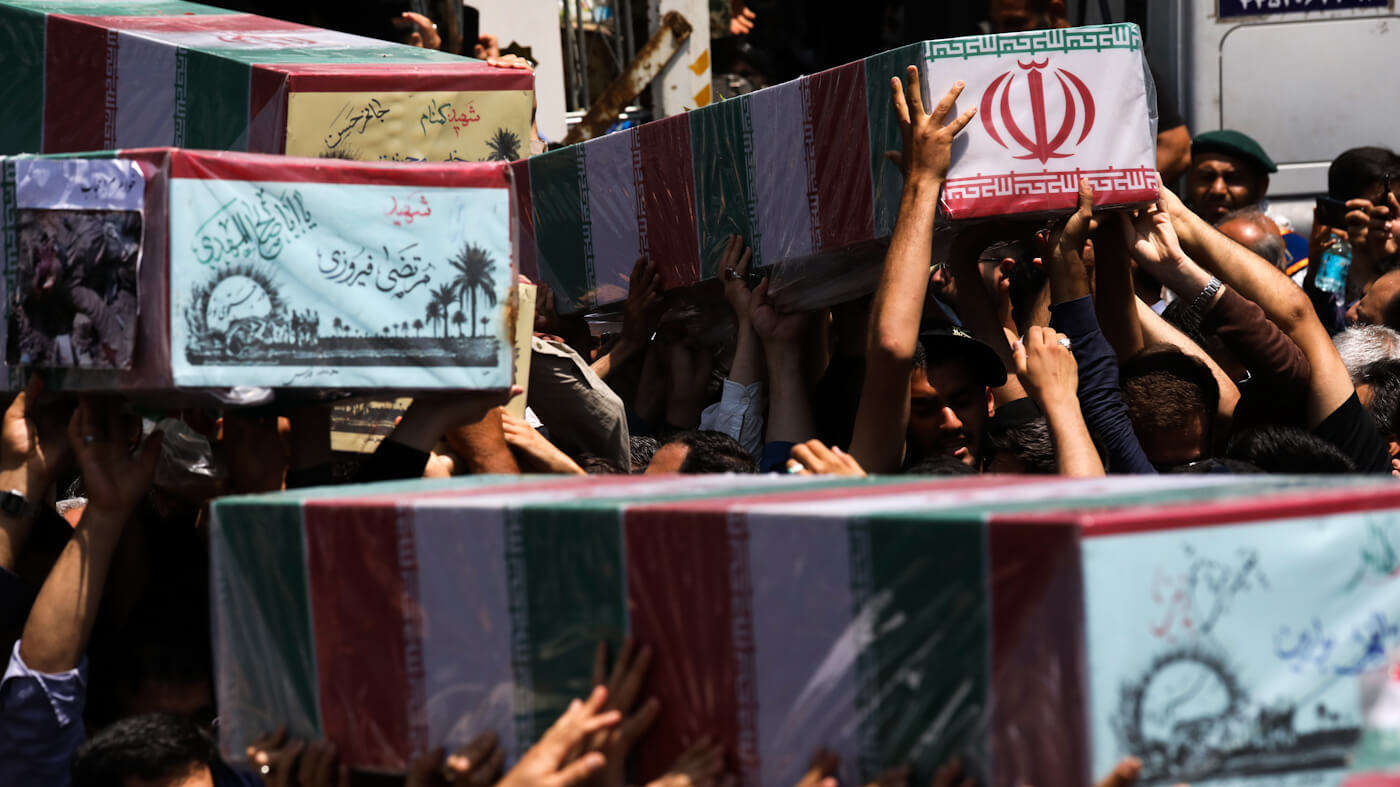
Feature photo | Mourners carry flag-draped caskets in a funeral procession for 150 soldiers whose remains were recently recovered. The soldiers were killed during the war with then-US-backed-Iraq in the 1980s, Tehran, Iran, June 27, 2019. Vahid Salemi | AP

If one can learn anything from the modern history of Iran, it’s that great powers will sell — and have sold — them out at a moment’s notice.

61mjZGKbAAL._UL1500_
Iran has seen its fair share of the damage imperialism has inflicted on the world — joint Russian and British control over Iran during the Qajar era, then the killing of one fifth of the Iranian population between 1917-19 (as documented in Barry Rubin’s The Middle East: A Guide to Politics, Economics, Society and Culture, p. 508) from famine brought on by the confiscating of foodstuff by occupying British forces that had violated Iran’s neutrality in World War I. This was followed in WWII by a coup that ousted Reza Shah, the then-king of Iran, also at a time when Iran had declared neutrality, in a British coup that put his son Mohammad Reza Shah on the throne of the kingdom. We need not mention the joint American-British coup, in which hundreds were killed, that toppled the popular Mosaddegh government because of its nationalization of the Iranian oil industry (which would have damaged American and British interests in Iranian oil).
The only time Iran saw an actual democratic movement succeed in giving power to the people that foreign powers were not able to abort was with the Islamic Revolution of 1979; and, even after that, the Americans, Europeans, and even Arab countries of the Persian Gulf aided Saddam Hussein in a war he instigated against Iran — providing him with arms and chemical weapons, as well as intelligence.


A lesson in wariness

Taking these historical events (and many more instances) into account, it is no wonder that Iranians would be very wary of any moves made by the United States and other global powers, namely those with a colonial track record. The Joint Comprehensive Plan of Action (JCPOA or Iran Nuclear Deal) could have very well marked a paradigm shift in relations with Iran, but instead, the Europeans did not abide by their commitments, and the Americans just up-and-left the agreement as soon as Trump got around to Iran. Not only that but, instead of abiding by their commitments, they’re trying to milk even more out of the deal — promising they’ll abide by their commitments if Iran offers more to an already done deal. What this means is they are being asked to add concessions in their ballistic missile program, much to the benefit of Arab Persian Gulf monarchies that are on a trend of increased militarization.
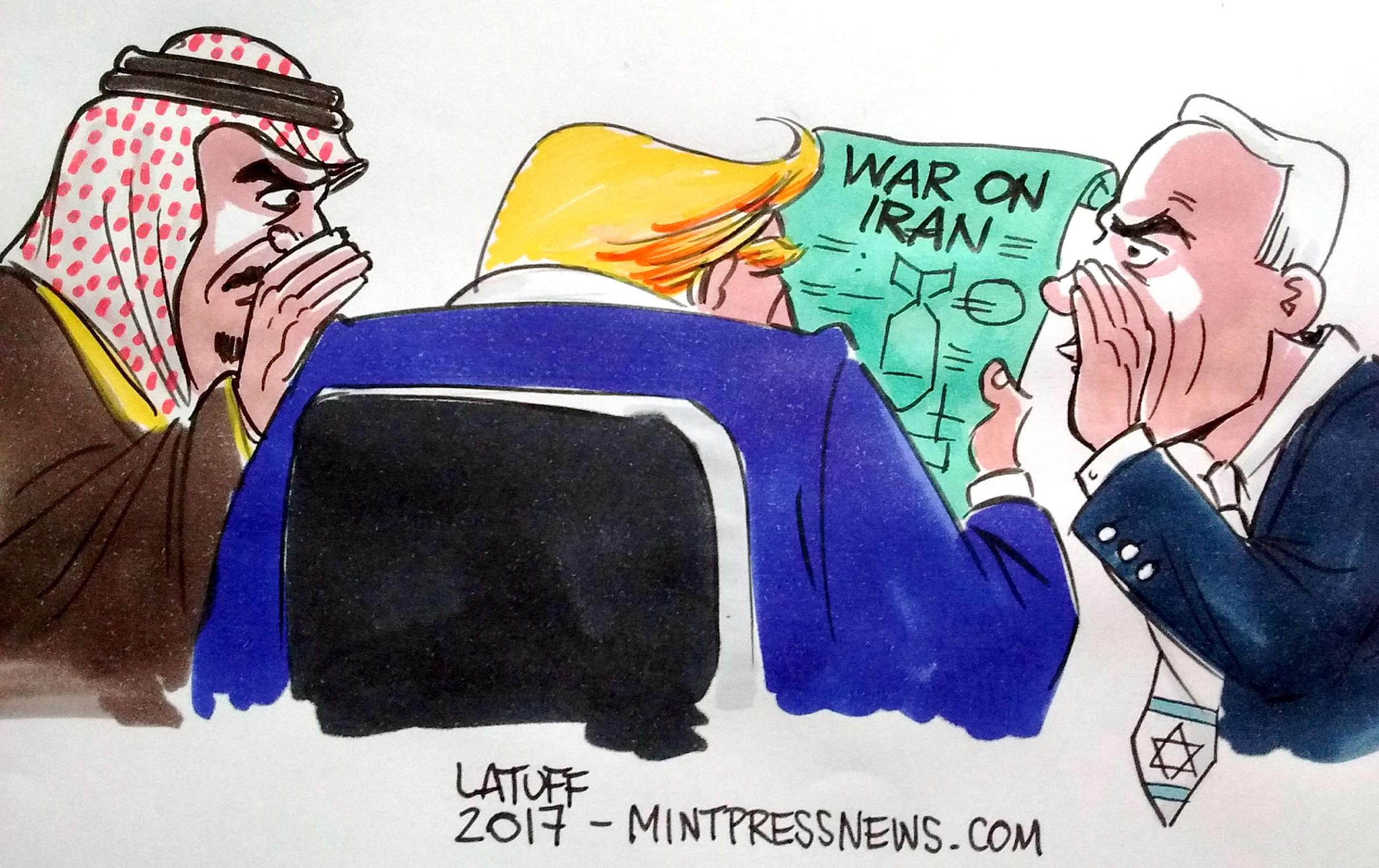
Trump's War On Iran. (Image: Carlos Latuff For MintPress News)
Credit | Carlos Latuff
Which brings us to the region’s latest round of tensions.
Given the already-stated facts, one has to understand, first and foremost, that Iran is dealing with a number of countries that have a history of falsifying facts, not standing by their agreements, and going into war in order to secure their own economic interests at the expense of other peoples. One must not forget the Indian famine in WWII, caused by food being exported from India to Britain, killing more than 20 million Indians, in reference to which Churchill said: “I hate Indians. They are a beastly people with a beastly religion. The famine was their own fault for breeding like rabbits.”
Living in such a flammable neighborhood — where the United States and its allies recently occupied its neighbors to the east and west and built military bases — and with such historical baggage, it’s not far-fetched that Iran, being the region’s most stable country, would rather rely on deterrence and defensive capabilities to secure itself than give concessions that could damage its security to powers that can hardly be trusted to keep their own word, as their own history suggests.

A wise decision

Iran made a wise decision in its downing of the RQ-4 drone. Usually, the shooting down of military surveillance drones does not lead to military escalation, though it does lead to an increase in tension. By doing so, Tehran was successful in warning any aggressor — be it the United States or any other country, for that matter — that it is not willing to compromise on matters of security or national pride (though the U.S. claims the drone was flying above international waters — 8000 miles away from U.S. soil — the debris has since been recovered by Iranian authorities in Iranian waters).
Iran US Drone
An Iranian general looks at debris from a U.S. military drone shot down by Iran’s air defense system, June 21, 2019. Meghdad Madadi | Tasnim via AP
The wisdom of this decision is that Iran delivered the intended message without causing any escalation — which doubtless would have been the outcome if it had downed a manned military plane that was also in its sites in the vicinity of the drone. It was a message that Trump had clearly received, and for which he expressed appreciation to Iranian authorities (although why he would bother to thank Iran if it was attacking a plane flying over “international waters” as he said is truly baffling).
In addition to that — although it had the legal right to shoot down the drone for flying over its airspace, which extends to 12 nautical miles from its borders — Iran also has the right to demand identification from any aircraft flying close to its territory. For more perspective, U.S. Air Defense Identification Zones extend 200 miles from the U.S. border and, as testified to by a former U.S. Air Force navigator, any unidentified drone flying that close to the U.S. border would most likely be shot down. The shooting down of this unidentified drone, even supposing the U.S.’s version of events were true, is perfectly warranted on Iran’s part, and does not allow the U.S. any measure of retaliation in “self-defense,” because no lives were lost in its downing.
Moreover, Iran clearly showed other countries what it was able to achieve independently through its reliance on its own capabilities. It downed the world’s leading military power’s aircraft for infringing on its airspace, and did so without hesitation because it sees itself as truly “sovereign.” Although the U.S. may threaten Iran with its military might and its presence in the region, Iran’s ballistic missile program has allowed it to turn that very strength into a weakness by having American bases, and 25,000 American troops, within targeting range.
A war with Iran would devastate the region. A war with Iran, Hezbollah, the Popular Mobilization Forces, and Ansarullah is in the interest of no one, and God only knows what other surprises Iran might have in store for conspiring Arab monarchies. The smart move would be to repair the JCPOA in order to avoid further escalation in the region.
Karim Sharara is a Lebanese PhD student who’s lived in Tehran since 2013 studying political science at the University of Tehran with a focus on Iranian affairs. 
The views expressed in this article are the author’s own and do not necessarily reflect MintPress News editorial policy.
River to Sea Uprooted Palestinian   
The views expressed in this article are the sole responsibility of the author and do not necessarily reflect those of the Blog!

The CSTO members build a defensive system – from information and politic to logistics and equipment


The CSTO members build a defensive system – from information and politic to logistics and equipment
Alexander ALEXANDROV for the Red star newspaper

The upcoming joint operational-strategic exercises of the Joined forces of the Collective Security Treaty organization called “Combat brotherhood – 2019” are intended to demonstrate the unity of the states parties in matters of collective security. During the maneuvers that will unfold on territories of four member states, political and diplomatic tools, combat potential, as well as mechanisms of information and other non-military impact for prevention and settlement of military conflicts in the zone of responsibility of the organization will be tested.
This, in particular, was discussed at a press conference held in Moscow by acting Secretary General of the organization Valery Semerikov via the satellite connection with locations in Minsk, Yerevan, Nur Sultan and Bishkek. However, the administrative head of the Collective Security Treaty Organization began the conference discussing threats of predominantly collective nature.
According to the CSTO Secretary General, the situation in Afghanistan, primarily on the Tajik – Afghan border, and its impact on the region of Central Asia is the focus of attention of the organization’s member states. “Tensions remain in the Caucus region due to an unresolved Karabakh conflict, tensions are also rising due to NATO’s military development on the territory of Georgia,” Valery Semerikov continued.
He also expressed collective concerns about NATO’s regular exercises in Eastern Europe, at the borders with Belarus and Russia. The Alliance’s obvious unwillingness to work with the colleagues from the CSTO, and instead – NATO insistence to cooperate with each of the member states separately, only confirms the conclusions of the Russia’s Security Council about a possible preparation by NATO to stage so-called color revolutions. This was confirmed by attempts of cyber attacks on the national infrastructure of the organization.
To respond to these threats, as the acting Secretary General made it clear, is a responsibility of the Crisis Response Center, whose tasks include information and analytical support of competent structures to combat the “hidden threats” “The CSTO crisis response center is engaged in monitoring military and political situation in the zones of responsibility of the states, identifying the prerequisites for crisis situations and analyzing the appropriate response,” Valery Semerikov explained.
The focus of the organization’s member states is on the situation in Afghanistan, primarily on the Tajik-Afghan border, and its impact on the Central Asian region.
The center was involved in a recent business game, in which a set of political and diplomatic response measures of the organization’s members were worked out in response to the crisis situation in some fictional state. In development, it gave a start to preparation for the operational and strategic exercises of the CSTO Joined forces named the “Combat brotherhood – 2019”.
“In 2019, we will hold six exercises on the territory of four countries: Belarus, Kyrgyzstan, Russia and Tajikistan, – Valery Semerikov said, answering journalists’ questions. – The total number of forces involved, according to our calculations, will be about 12 thousand”.
During these operational and strategic exercises of the CSTO Joined forces “Combat brotherhood – 2019,” as reported, an entire complex of measures of prevention or deterrent, as well as resolution of military conflict with the subsequent restoration of peace will be worked out in a logical sequence. National contingents of troops will work out different tasks as parts of separate episodes of one untied work-frame of a single military-political situation with a single strategic plan.
For example, the training of anti-drug units of the CSTO “Thunder-2019” in August will take place in Kyrgyzstan. The actions of the intelligence units within the framework of the “Search-2019” will continue with “Interaction-2019” drill of the Joined Rapid Response forces. It is also envisaged that maneuvers of the “Unbreakable Brotherhood” of peacekeeping forces will be held in conjunction with the exercise “Rubezh-2019” of the border guards on the territory of Tajikistan.
All actions of the coalition groups in the East European and Central Asian regions of collective security will be accompanied by deployment of troops within the framework of the exercise of the collective aviation forces “Air Bridge – 2019” and for the first time with a single material and technical support in a course of joint actions of the MTO logistics troops units “Echelon-2019”.

River to Sea Uprooted Palestinian   
The views expressed in this article are the sole responsibility of the author and do not necessarily reflect those of the Blog!
Wednesday, 10 July 2019

Sultan shines in the court of the Dragon King


Sultan shines in the court of the Dragon King
by Pepe Escobar : Posted with permission
July 10, 2019
The graphiSultan shines in the court of the Dragon Kingc image of Turkey pivoting away from NATO towards the Russia-China strategic partnership was provided, in more ways than one, by Turkish President Tayyip Erdogan visiting Chinese President Xi Jinping in Beijing right after the G20 in Osaka.
Turkey is a key hub in the emerging New Silk Roads, or Belt and Road Initiative. Erdogan is a master at selling Turkey as the ultimate East-West crossroads. He has also expressed much interest in joining the Shanghai Cooperation Organization (SCO), led by Russia-China, whose annual summit took place in Bishkek a few days before Osaka.
In parallel, against hell and high water – from threats of sanctions by the US Congress to NATO warnings – Erdogan never budged from Ankara’s decision to buy Russian S-400 defense missile systems, a $2.5-billion contract according to Rostec’s Sergei Chemezov.
The S-400s start to be shipped to Turkey as early as this week. According to Turkish Minister of Defense Hulusi Akar, their deployment should start by October. Much to Washington’s ire, Turkey is the first NATO member state to buy S-400s.
Xi, as he welcomed Erdogan in Beijing, stressed the message he crafted together with Putin in their previous meetings in St Petersburg, Bishkek and Osaka: China and Turkey should “uphold a multilateral world order with the United Nations at its core, a system based on international law.”
Erdogan, for his part, turned up the charm – from publishing an op-ed in the Global Times extolling a common vision of the future to laying it out in some detail. His target is to consolidate Chinese investment in multiple areas in Turkey, directly or indirectly related to Belt and Road.
BEIJING, CHINA – JULY 02: President of Turkey, Recep Tayyip Erdogan (R) and Chinese President Xi Jinping (L) walk past the honor guards during an official welcoming ceremony at Great Hall of the People in Beijing, China on July 02, 2019. Volkan Furuncu / Anadolu Agency
Addressing the extremely sensitive Uighur dossier head on, Erdogan deftly executed a pirouette. He eschewed accusations from his own Foreign Ministry that “torture and political brainwashing” were practiced in Uighur detention camps and would rather comment that Uighurs “live happily” in China. “It is a fact that the peoples of China’s Xinjiang region live happily in China’s development and prosperity. Turkey does not permit any person to incite disharmony in the Turkey-China relationship.”
This is even more startling considering that Erdogan himself, in the past decade, had accused Beijing of genocide. And in a famous 2015 case, hundreds of Uighurs about to be deported from Thailand back to China ended up, after much fanfare, being resettled in Turkey.

New geopolitical caravan

Erdogan seems to have finally realized that the New Silk Roads are the 2.0 digital version of the Ancient Silk Roads whose caravans linked the Middle Kingdom, via trade, to multiple lands of Islam – from Indonesia to Turkey and from Iran to Pakistan.
Before the 16th century, the main line of communication across Eurasia was not maritime, but the chain of steppes and deserts from Sahara to Mongolia, as Arnold Toynbee wonderfully observed. Walking the line we would find merchants, missionaries, travelers, scholars, all the way to Turko-Mongols from Central Asia migrating to the Middle East and the Mediterranean. They all formed the stuff of interconnection and cultural exchange between Europe and Asia – way beyond geographical discontinuity.
Arguably Erdogan is now able to read the new tea leaves. The Russia-China strategic partnership – directly involved in linking Belt and Road with the Eurasia Economic Union and also the International North-South Transportation Corridor – considers Turkey and Iran as absolutely indispensable key hubs for the ongoing, multi-layered Eurasia integration process.
A new Turkey-Iran-Qatar geopolitical and economic axis is slowly but surely evolving in Southwest Asia, ever more linked to Russia-China. The thrust is Eurasia integration, visible for instance via a frenzy of railroad building designed to link the New Silk Roads, and the Russia-Iran transportation corridor, to the Eastern Mediterranean and the Red Sea and, eastwards, the Iran-Pakistan corridor to the China-Pakistan Economic Corridor, one of Belt and Road’s highlights.
This is all being supported by interlocking transportation cooperation agreements involving Turkey-Iran-Qatar and Iran-Iraq-Syria.
The end result not only consolidates Iran as a key Belt and Road connectivity hub and China’s strategic partner, but also by contiguity Turkey – the bridge to Europe.
As Xinjiang is the key hub in Western China connecting to multiple Belt and Road corridors, Erdogan had to find a middle ground – in the process minimizing, to a great extent, waves of disinformation and Western-peddled Sinophobia. Applying Xi Jinping thought, one would say Erdogan opted for privileging cultural understanding and people-to-people exchanges over an ideological battle.
The flags of China and Turkey flutter in Beijing during Erdogan’s visit to China on July 2. Photo: Wang Xin/ ImagineChina / AFP

Ready to mediate

In conjunction with his success at the court of the Dragon King, Erdogan now feels emboldened enough to offer his services as mediator between Tehran and the Trump administration – picking up on a suggestion he made to Japanese Prime Minister Shinzo Abe at the G20.
Erdogan would not have made that offer if it had not been discussed previously with Russia and China – which, crucially, are member signatories of the Iran nuclear deal, or Joint Comprehensive Plan Of Action (JCPOA).
It’s easy to see how Russia and China should consider Turkey the perfect mediator: a neighbor of Iran, the proverbial bridge between East and West, and a NATO member. Turkey is certainly much more representative than the EU-3 (France, UK, Germany).
Trump seems to want – or at least gives the impression of imposing – a JCPOA 2.0, without an Obama signature. The Russia-China partnership could easily call his bluff, after clearing it with Tehran, by offering a new negotiating table including Turkey. Even if the ineffective – in every sense – EU-3 remained, there would be real counterbalance in the form of Russia, China and Turkey.
Out of all these important moves in the geopolitical chessboard, one motivation stands out among top players: Eurasian integration cannot significantly progress without challenging the Trumpian sanction obsession.

River to Sea Uprooted Palestinian   
The views expressed in this article are the sole responsibility of the author and do not necessarily reflect those of the Blog!

Dr. Ibrahim Alloush to ST: Israel’s repeated missile attacks against Syria are an attempt to compensate for its strategic weakness

Created on Monday, 08 July 2019 11:23
Since the beginning of this year [2019], the Zionist enemy [Israel] has carried out 14 terroristic missile attacks against several areas in Damascus, Damascus’s countryside, Homs, Quneitra, Daraa and Hama as a result of which many persons were martyred and dozens were wounded, according to the news published by the Syrian News Agency in this regard.
The news also affirmed that the terroristic missile attacks were countered by Syrian Air Defenses that downed most of the missiles before reaching their goals.
To shed light on the political gains the Israeli enemy makes by its repeated attacks against Syria and how Syria can counter their effects, Syriatimes interviewed the Arab political intellectual and University of Damascus economist Dr. Ibrahim Alloush.
In response to the first question on the political gains (Israel) stands to achieve by its repeated aggression on Syria, the political intellectual said:
“The repeated aggression, which targets the alleged Iranian military buildup in Syria, makes Israel seems like it has the ability to operate wherever it wants in the Arab World undeterred.  It makes Netanyhu look like a “hero” internally.It also shores up the morale of takfiri terrorists in Syria who have lost a great deal of ground in recent years.”
There are further gains for these Zionist attacks such as: Impeding the ability of the Syrian Arab Army to operate freely to the west of the Euphrates and weakening the morale of supporters of the state inside and outside of Syria as well as keeping the Lebanese airspace violated daily to strengthen the opponents of the axis of resistance within Lebanon, according to Dr. Alloush.
But the most important political goal in his opinion is tempting Syria to engage in a major war with “Israel” in the midst of several major wars in Syria, which could set back Syria behind to 2013, should such a war break out and should the Syrian Arab Army, as a result, lose the ability to roam freely in Syria on several fronts.
“Syria should NOT be drawn into a premature response to such Zionist attacks, which are, in effect, a red herring, especially since their strategic impact on the field of operations, so far, is minuscule,” the political intellectual said in his response to a question about how Syria can counter the effects of these Zionist terror attacks.
The Zionist military’s weak point for over a decade has become the ground
On the other hand, he believes that the aggression’s psychological impact, in this age of communications and open media, is much more significant.
“Let us remind ourselves that the so-called “Israeli Defense Army” has long ago lost the ability to launch invasions and ground wars, the last of which was really the invasion of Lebanon in 1982.  Even then, there was the siege of Beirut for several months, and the Battle of Sultan Yacoub with the Syrian Arab Army, where the advance of Zionist invaders was grounded to a halt.  Since then, the Zionists have had to withdraw from South Lebanon in the year 2000 under the weight of the Lebanese resistance.  They have had to withdraw from Gaza in 2005.  They failed to achieve any significant advances in the botched invasion of Lebanon in 2006.  They have repeatedly failed to bring down Gaza in 2008/2009, 2012, and 2014.”
Many surprises may be unleashed which the Zionists never expected
Dr. Alloush asserted that the weak point of the Zionist military for over a decade has become the ground. “The Zionist military’s perceived point of strength remains the air.  So my humble suggestion is that Syria should respond to these Zionist escapades from the air with what it used to do best before 2011: supporting the resistance against Zionists on the ground, without any direct involvement on the part of the Syrian Arab Army.”
He sees that after the liberation of every inch of Syrian territory occupied by foreign power-backed armed gangs, from Idlib to Eastern Euphrates, and after defeating those cronies of Turkey, the USA, and Zionists, which is a game-changer from a strategic perspective, and when the time comes to repel Zionist attacks on Syria, according to Syria’s and not “Israel’s” agenda, many surprises may be unleashed which the Zionists never expected.
Dr. Alloush concluded by saying that the repeated Zionist terror attacks are compensation for its strategic weakness.
Related Videos
Related News

River to Sea Uprooted Palestinian   
The views expressed in this article are the sole responsibility of the author and do not necessarily reflect those of the Blog!

Debunking the Indo-Pacific Myth


Pepe Escobar
July 9, 2019
Image result for Debunking the Indo-Pacific Myth
© Photo: Navy.mil
The Trump administration is obsessively spinning the concept of a “free and open Indo-Pacific”. Apart from a small coterie of scholars, very few people around the world, especially across the Global South, know what that means since the then incipient strategy was first unveiled at the 2017 APEC forum in Vietnam.
Now everything one needs to know – and especially not know – about the Indo-Pacific is contained in a detailed Pentagon report.
Still: is this an act, or the real deal? After all, the strategy was unveiled by “acting” Pentagon head Patrick Shanahan (the Boeing guy), who latter committed hara-kiri, just to be replaced by another, revolving door, “acting” secretary, Mark Espel (the Raytheon guy).
Shanahan made a big deal of Indo-Pacific when he hit the 18thShangri-La Dialogue in Singapore last month, picking up on his introduction to the Pentagon report to stress the “geopolitical rivalry between free and repressive world order visions” and demonizing China for seeking to “reorder the region to its advantage”.
In contrast, all the benign Pentagon yearns for is just “freedom” and “openness” for a “networked region”; calling it the New Pentagon Silk Road wouldn’t be far fetched.
Anyone remotely familiar with “Indo-Pacific” knows that’s code for demonization of China; actually, the Trump administration’s version of Obama’s “pivot to Asia”, which was in itself a State Dept. concoction, via Kurt Campbell, fully appropriated by then Secretary Hillary Clinton.
“Indo-Pacific” congregates the Quad – US, Japan, India and Australia – in a “free” and “open” God-given mission. Yet this conception of freedom and openness blocks the possibility of China turning the mechanism into a Quintet.
Add to it what hawkish actor Esper told the Senate Armed Services Committee way back in 2017:
“My first priority will be readiness – ensuring the total Army is prepared to fight across the full spectrum of conflict. With the Army engaged in over 140 countries around the world, to include combat operations in Afghanistan and Iraq, training rotations to Europe to deter Russia, and forward deployed units in the Pacific defending against a bellicose North Korea, readiness must be our top priority.”
That was 2017. Esper didn’t even talk about China – which at the time was not the demonized “existential threat” of today. The Pentagon continues to be all about Full Spectrum Dominance.
Beijing harbors no illusions about the new Indo-Pacific chief they will be dealing with.
Surfing FONOP
“Indo-Pacific” is a hard nut to sell to ASEAN. As much as selected members may allow themselves to profit from some “protection” by the US military, Southeast Asia as a whole maintains top trade relations with China; most nations are participants of the New Silk Roads, or Belt and Road Initiative (BRI) and members of the Asian Infrastructure Investment Bank (AIIB); and they will not shrink from enjoying the benefits of Huawei’s 5G future.
Actually even the other three in the Quad, as much as they are not linked to BRI, are having second thoughts on playing supportive roles in an all-American super production. They are very careful about their geoeconomic relations with China. “Indo-Pacific”, a club of four, is a de facto late response to BRI – which is indeed open, to over 65 nations so far.
The Pentagon’s favorite mantra concerns the enforcement of “freedom of navigation operations” (FONOP) – as if China, juggling the countless tentacles of global supply chains, would have any interest in provoking naval insecurity anywhere.
So far, “Indo-Pacific” has made sure that the US Pacific Command was renamed US Indo-Pacific Command. And that’s about it. Everything remains the same in terms of those FONOPs – in fact a carefully deceptive euphemism for the US Navy to be on 24/7 patrol anywhere across Asian seas, from the Indian to the Pacific, and especially the South China Sea. No ASEAN nation though will be caught dead performing FONOPS in South China Sea waters within 12 nautical miles of rocks and reefs claimed by Beijing.
The rampant demonization of China, now a bipartisan sport across the Beltway, on occasion even more hysterical than the demonization of Russia, also features proverbial reports by the Council on Foreign Relations – the establishment’s think tank by definition – on China as a serial aggressor, politically, economically and militarily, and BRI as a geoeconomic tool to coerce China’s neighbors.
So it’s no wonder this state of affairs has led Secretary of State Mike Pompeo on a recent, frenetic Indo-Pacific related tour, including Quad members India and Japan and possible associates Saudi Arabia, UAE and South Korea.
Geopoliticians of the realist school do fear that Pompeo, a fanatic Christian Zionist, may be enjoying under Trump a virtual monopoly on US foreign policy; a former CIA director playing warmongering top “diplomat” while also “acting” as Pentagon head trampling other second string actors who are not under full employment.
His Indo-Pacific roving was a de facto tour de force emphasizing the containment/demonization not only of China but also Iran, which should be seen as the major US target in the Indo/Southwest Asia part of the club. Iran is not only about strategic positioning and being a major BRI hub; it’s about immense reserves of natural gas to be traded bypassing the US dollar.
The fact that the non-stop demonization of Iran and/or China “aggression” comes from a hyperpower with over 800 military bases or lily pads spread out across every latitude plus a FONOP armada patrolling the seven seas is enough to send the hardest cynic into a paroxysm of laughter.
The high-speed train has left the station
In the end, everything under “Indo-Pacific” goes back to what game India is playing.
New Delhi meekly opted for not buying oil from Iran after the Trump administration lifted its sanctions waiver. New Delhi had promised earlier, on the record, to only respect UN Security Council sanctions, not unilateral – and illegal – US sanctions.
This decision is set to jeopardize India’s dream of extending its new mini-Silk Road to Afghanistan and Central Asia based on the Iranian port of Chabahar. That was certainly part of the discussions during the Shanghai Cooperation Organization (SCO) summit in Bishkek, when full members Putin, Xi and Modi, plus Rouhani – as the head of an observer nation – were sitting at the same table.
New Delhi’s priority – embedded deep in the Indian establishment – may be containment of China. Yet Putin and Xi – fellow BRICS and SCO members – are very much aware that Modi cannot at the same time antagonize China and lose Iran as partner, and are deftly working on it.
Image result for Putin, Xi and Modi, plus Rouhani
On the Eurasian chessboard, the Pentagon and the Trump administration, together, only think Divide and Rule. India must become a naval power capable of containing China in the Indian Ocean while Japan must contain China economically and militarily all across East Asia.
Japan and India do meet – again – when it comes to another more geoeconomically specific anti-BRI scheme; the Asia-Africa Growth Corridor (AAGC), which so far has had a minimal impact and stands no chance of luring dozens of nations across the Global South away from BRI-related projects.
The chessboard now clearly shows Indo-Pacific pitted against the three key hubs of Eurasia integration – Russia-China-Iran. The definitive unraveling of Indo-Pacific – even before it starts gaining ground – would be a clear commitment by New Delhi to break apart the US sanctions regime by restarting purchases of much-needed Iran oil and gas.
It won’t take much for Modi to figure out that taking a second role in a Made in USA production will leave him stranded at the station eating dust just as the high-speed Eurasia integration train passes him by.

River to Sea Uprooted Palestinian   
The views expressed in this article are the sole responsibility of the author and do not necessarily reflect those of the Blog!
الزهار: قبل الأزمة بشار الأسد فتح لنا كل الدنيا


Image result for ‫الزهار الرئيس الأسد فتح لنا كل الدنيا‬‎

١٠ يوليو ٢٠١٩


الزهار: قبل الأزمة بشار الأسد فتح لنا كل الدنيا

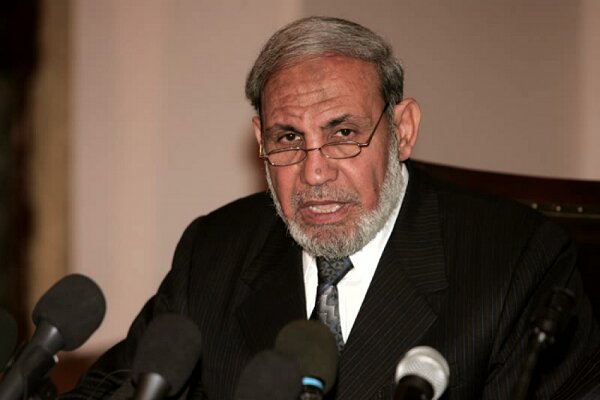
كشف محمود الزهار عضو المكتب السياسي لحركة المقاومة الإسلامية “حماس” النقاب عن جهود تبذل حالياً لعودة العلاقات بين حركة “حماس” والقيادة السورية، مشدداً على “أنه لابد من ترتيب العلاقات مع كل من وقف ويقف مع فلسطين ويعادي الاحتلال الإسرائيلي”.

وأوضح القيادي الزهار في تصريح لـ”موقع النهضة نيوز” “أنَّ من مصلحة المقاومة أن تكون هناك علاقات جيدة مع جميع الدول التي تعادي “إسرائيل” ولديها موقف واضح وصريح من الاحتلال مثل الجمهورية السورية والجمهورية اللبنانية والجمهورية الإيرانية الإسلامية.

وقال الزهار: أعتقد أن هناك جهود تبذل لإعادة العلاقة بين حماس وسوريا، لكن هناك أناس مجروحة -قاصداً سوريا عطفاً على سؤال الصحفي- من الموقف وما آلت إليه العلاقة.

وأضاف:

الرئيس السوري بشار الأسد وقبل الأزمة فتح لنا كل الدنيا، لقد كنا نتحرك في سوريا كما لو كنا نتحرك في فلسطين وفجأة انهارت العلاقة على خلفية الأزمة السورية، وأعتقد أنه كان الأولى أن لا نتركه وأنْ لا ندخل معه أو ضده في مجريات الأزمة.

وبين القيادي الزهار أن العلاقات وصلت بين حماس والقيادة السورية ممثلة بالرئيس السوري-قبل تضررها- وصلت لمرحلة متقدمة جداً، مستذكراً أنه زار دمشق ابان توليه وزارة الخارجية الفلسطينية في العام م2006 واتخذ قرارات مهمة في حينها من داخل مكتب الرئيس السوري بشار الأسد منها استقبال سوريا اللاجئين الفلسطينيين الذين علقوا على الحدود الأردنية- العراقية، موضحاً أنَّ الرئيس الأسد لم يتردد في تلبية طلبه كونه وزير الخارجية -آنذاك، مضيفاً

“سوريا لم تفتح أبوابها لحركة حماس فقط بل لكل التنظيمات الفلسطينية، علينا أنْ نصدح بكلمة الحق والصدق حتى وإن لم يرق ذلك الموقف للكثير”.

وتابع: علينا أن نكون على علاقة قوية مع كل الدول التي لها علاقات سيئة مع الاحتلال الإسرائيلي، وعلاقات جيدة مع الدول التي تحتل إسرائيل أراضيها مثل سوريا ولبنان، ففي الوقت الذي تؤيد فيه بعض دول الخليج الفارسي إسرائيل، ما الذي يمنع  البلاد المحتلة (فلسطين، سوريا، لبنان) أنْ تتعاون مع بضعها البعض؟، وأن توحد مواقفها وترتب علاقاتها، هذا الموقف عبرتُ عنه بصراحة خلال جولتي الأخيرة لعدد من الدول العربية والإسلامية والإفريقية أمام علماء السنة والشيعة ولم يعترض عليه أحد لأنه الموقف الأكثر منطقية وصواباً في خضم حالة الاشتباك مع العدو، وأقولها الآن وبشكل لا يحتمل اللبس لا بد أن نتوحد ونتعاون وأن تكون علاقاتنا جيدة حتى تحرير آخر شبر من أراضينا المحتلة.

يُشار إلى أنّ العلاقات بين الدولة السوريّة وبين حركة حماس مرّت في أزمةٍ بعد اندلاع الأزمة في بلاد الشام، وقيام قادة حركة حماس، الذين كانوا يُقيمون في دمشق بمُغادرة الأراضي السوريّة والانتقال إلى دولٍ أخرى، وفي مٌقدّمتها دولة قطر في الخليج الفارسي، الأمر الذي أغضب النظام الحاكِم في دمشق، الذي كان النظام العربيّ الوحيد، الذي وافق على استقبال قيادة الحركة في العام 1999 بعد طردها من المملكة الأردنيّة الهاشميّة.

وأغلقت الحركة في أواخر عام 2011، بعد أشهر على اندلاع الأزمة السورية، مكتبها الرئيسي في العاصمة السورية دمشق، وغادر البلاد معظم رموز الحركة باستثناء رئيسها خالد مشعل، لكنه غادرها بعد فترة.

وسبق الإجراء توتر في العلاقة بين الحكومة السورية وحركة حماس، إذ اتهمت دمشق الحركة بدعم المعارضة ورفع علمها في قطاع غزة في عدة مناسبات.

Image result for ‫هنية يرفع علم الانتداب‬‎

وبقي الأمر على حاله حتى يونيو عام 2018، عندما أعلن رئيس المكتب السياسي لحركة حماس، إسماعيل هنية، أن “الحركة لم تقطع العلاقة مع دمشق”، واصفا ما يجري في سوريا بأنه تجاوز “الفتنة” إلى تصفية حسابات دولية وإقليمية.

وقال في تصريح صحفي إن “شعب سوريا وحكومتها وقفا دوما إلى جانب الحق الفلسطيني، وكل ما أردناه أن ننأى بأنفسنا عن الإشكالات الداخلية، التي تجري في سوريا، ونأمل أن يعود الأمن والاستقرار والسلم الأهلي، وأن تعود سوريا إلى دورها الإقليمي القومي”.

River to Sea Uprooted Palestinian   
The views expressed in this article are the sole responsibility of the author and do not necessarily reflect those of the Blog!

Member of Iranian Parliament’s Foreign Policy Commission: We’ll Force the West to Back Down


Tehran – The announcement by the Islamic Republic of Iran to increase its uranium enrichment rate beyond 3.67% has triggered various reactions worldwide.
Al-Ahed News sat down with the second deputy chairman of the Iranian Parliament’s National Security and Foreign Policy Committee Mohammad Javad Jamali Nobandegani to discuss the issue.
Nobandegani explained that “a few years ago Iran signed an agreement on joint action with the P5+1.”
“The parties to this agreement were supposed to implement the commitments agreed upon. The Islamic Republic fulfilled all of its commitments in this regard. The world was supposed to see a new atmosphere. But the United States under [US] President [Donald] Trump imposed new sanctions on Iran and did not fulfill its commitments. The European side was content to say that this is a good agreement and Iran must remain committed to it. Instead of practical measures, they only talked and did nothing,” he added.
“After Trump withdrew from the nuclear deal more than a year ago, the Europeans promised Iran that within a few weeks they would fulfill their obligations in the framework of 11 items, including buying oil, lifting sanctions on petrochemical companies and paying money to Iran’s accounts,” Nobandegani said. “They, unfortunately, turned out to be wasting time.”
According to the Iranian MP, Brussels and Washington are playing the good cop, bad cop routine.
“It appears that there is an undeclared agreement between the Europeans and the Americans, in which they divided the roles so that Iran does not enjoy the potentially positive benefits of the nuclear agreement, and we are seeing it today,”
Nobandegani opined.
“As a result of this behavior, we recently decided to implement articles 26 and 36 of the nuclear accord,”
Nobandegani stated.
“But unfortunately today, we see some of these countries are still behaving badly. In this context, we saw Britain’s recent act of piracy in Gibraltar … This European behavior is an escape forward. “
“Everyone in the Islamic Republic, including the political parties, the political movements, the three authorities and the Iranian people today have one voice that this Western behavior must be confronted with all force. Just as the West cannot undermine the will and steadfastness of the Islamic Republic of Iran and its people, Iran has proved that it can return to its previous nuclear activities,” Nobandegani stressed.
“Iran’s steadfastness, will and resistance will force the West and the Americans to back down,” he warned. “Iran will continue to wait for a positive reaction from the Europeans so that it can determine the best course of action.”
Nobandegani concluded by saying that the
“Europeans must prove that their decisions are independent of the US, and they know the importance and impact of the nuclear agreement at the international level.”
“If this agreement interests them as they claim, they should pay the price even if sanctions are imposed on some European companies.”
Related News

River to Sea Uprooted Palestinian   
The views expressed in this article are the sole responsibility of the author and do not necessarily reflect those of the Blog!