Friday, 22 November 2019

من دون الحريري وشرط الالتزام بـ«خطة إصلاحية شاملة»: قبول غربي بحكومة تكنو سياسية؟


من دون الحريري وشرط الالتزام بـ«خطة إصلاحية شاملة»: قبول غربي بحكومة تكنو سياسية؟
فرنسا ستشهد اتّصالات من أجل احتمال دعوة أصدقاء لبنان إلى اجتماع عاجل في باريس (مروان طحطح)

الأخبار

الجمعة 22 تشرين الثاني 2019

أمام صمود رئيس الجمهورية العماد ميشال عون وحزب الله، بدأ التصور الغربي تجاه لبنان يتبدّل. تصوّر يتّجه نحو القبول بتأليف حكومة تكنو ــــ سياسية، يترافق مع اتصالات بهدف توفير دعم يمنع الانهيار المالي

بعد الرؤية التي قدّمها السفير الأميركي السابق في لبنان جيفري فيلتمان عن انتفاضة لبنان أمام اللجنة الفرعية للشرق الأوسط وشمال أفريقيا والإرهاب الدولي، تزايدت مؤشرات انتقال الصراع على الجبهة الإقليمية والدولية الى الساحة الداخلية، وسطَ ارتفاع منسوب القلق من مدى قدرة البلاد على الصمود بعدما أصبحت في قلب المواجهة. فكلام فيلتمان هدف الى وضع لبنان على لائحة الأهداف الأميركية، وذلك في سياق محاولة إرساء قواعِد جديدة من ضمن استراتيجية ضرب المقاومة وحلفائها. غير أن تطورات خارجية من شأنها، ربما، أن تُحدِث في الأيام المُقبلة ثغرة، ولا سيما في الملف الحكومي.

لم تجِد السلطة حتى الآن أي مخرج لاحتواء الانتفاضة التي اندلعت في 17 تشرين الماضي، ولم تفلح في بلوغ تفاهم حول حكومة «يٌباركها» الرئيس المُستقيل سعد الحريري. المُشاورات بين الأخير، وبين فريق 8 آذار (حزب الله وحركة أمل والتيار الوطني الحرّ) متوقفة. إلا أن المُشاورات بين المكونات الثلاثة مستمرة نظراً الى إصرار رئيس الجمهورية العماد ميشال عون على تأليف حكومة بأسرع وقت. تقول مصادر هذا الفريق إن «الرئيس عون مستاء جداً من تعامل الرئيس سعد الحريري وعدم جديّته، ولذا يفضّل البدء بالبحث عن أسماء بديلة»، وهو ما اعتبرته المصادر «أمراً منطقياً ومحقاً». لكن هذه المشاورات لا تزال محكومة بفكرة «شكل الحكومة». أي أن السؤال اليوم ليسَ «من هو رئيس الحكومة، وإنما شكل الحكومة الجديدة. فهل هي حكومة أكثرية أم حكومة توافق»؟ أمام إصرار الحريري على عدم تشكيل حكومة إلا وفقَ شروطه، صار اسمه مستبعداً من التداول بعدما كان فريق 8 آذار يتمسّك به، لكن البحث عن أسماء بديلة لا يزال في إطار مقربين منه أو من الأسماء التي يُمكن أن تحظى بقبول منه.

ويبدو أن تطورات خارجية قد تعيد قلب المشهد الداخلي، إذ ذكرت مصادر مطلعة أن المشاورات الأميركية ــــ الفرنسية ــــ البريطانية بشأن لبنان، التي انطلقت في باريس الثلاثاء الماضي، انتهت الى تصوّر لمجموعة من الخطوات تتراوح بين زيادة الضغوط السياسية والاقتصادية، والترغيب بدعم في حال التزام الأطراف في لبنان بـ«خطة إصلاحية شاملة». وقالت المصادر إن «الجانب الغربي يتّجه الى تولي الملف بدلاً من تركه لإدارة السعودية والإمارات وبعض القوى اللبنانية»، وذلك انطلاقاً من كون أن «الرئيس عون وحزب الله رفضا تقديم أيّ تنازل بما خصّ تشكيل الحكومة الجديدة، وبعثا بإشارات الى استعدادهما لتشكيل حكومة فريق واحد إن تطلب الأمر».

وبحسب المصادر، فإن «المشاورات الغربية قد ينتج منها مبادرة»، ولا سيما أن «فرنسا ستشهد اليوم اتصالات خاصة من أجل احتمال دعوة أصدقاء لبنان الى اجتماع عاجل في باريس قبل نهاية هذا الشهر، في سبيل توفير فرصة تقديم دعم جدي للبنان لمنع الانهيار المالي الذي بدأ يلوح في الأفق».

أما بشان التركيبة الحكومية، فقد كشفت المصادر أن المشاورات الغربية، والتي شملت الرئيس الحريري في بيروت، انتهت الى تعديل في التصوّر الغربي، والموافقة على حكومة تكنو ــــ سياسية، مع تعديل مركزي يقول بأن حصة الوزراء السياسيين لن تتجاوز ربع أعضاء الحكومة، وأن اختصاصيين لديهم خبرات أكيدة في إدارة مرافق وشركات، سوف يتولون الحقائب الخدماتية من دون أن يقع أحد تحت ضغط الإتيان بكوادر أكاديمية». ولفتت المصادر الى أن «الأميركيين دفعوا نحو تجميد نشاط رئيس الجامعة الأميركية فضلو خوري الذي أجرى سلسلة واسعة من الاتصالات في لبنان وخارجه لأجل تعيين حكومة معظم أفرادها من أساتذة جامعيين وأكاديميين عملوا على عقود استشارية مع شركات حكومية وخاصة». وأكدت المصادر أن «الرئيس الحريري أبلغ من يهمّه الأمر في لبنان وفي العواصم الغربية أنه لا يريد أن يكون رئيساً للحكومة في هذه الفترة، وبالتالي فإن المحادثات الجارية الآن مع الرئيس عون ومع حزب الله تتركز على سبل اختيار شخصية غير سياسية لتولي منصب رئيس الحكومة بموافقة الحريري، الذي قال إن تياره سيكون ضمن الحكومة».

عون وحزب الله بعثا بإشارات إلى استعدادهما لتشكيل حكومة فريق واحد

وعن وجود تضارب في الآراء داخل الأوساط الغربية حيال كيفية التعامل مع الأزمة اللبنانية، لفتت مصادر عربية مقيمة في باريس الى أن «وزارة الخارجية الأميركية لا تُظهر اهتماماً كبيراً بأيّ قرار من شأنه التسبّب بانهيار كبير في لبنان»، بعكس آراء بعض مراكز القوى في الكونغرس وبعض الأجهزة التي تدعو الى رفع مستوى الضغوط. ونقلت هذه المصادر عن مسؤولين أميركيين أن «وزارة الخزانة الأميركية أعدّت لائحة بأسماء شخصيات قريبة من التيار الوطني الحر لوضعها على لائحة العقوبات»، مع الإشارة هنا الى أن «واشنطن كانت قد منعت رئيس جمعية المصارف سليم صفير من دخول واشنطن، ولم تسمح له بالمشاركة في اجتماعات مالية دولية، قبل أن تعود وتمنحه تأشيرة دخول أخيراً، وكل ذلك على خلفية أنه عقد صفقة سياسية مع الوزير جبران باسيل».

سعر قياسي للدولار

في هذا الوقت، سجّل سعر صرف الليرة اللبنانية مقابل الدولار الأميركي في «السوق الموازية» رقماً قياسياً، أمس، إذ تجاوز عتبة الـ 2000 ليرة لكل دولار عند بعض الصرافين. وسبق لسعر الصرف أن وصل إلى هذا الحد، عندما كانت المصارف مقفلة، ولم يكن مصرف لبنان يضخّ دولارات في السوق. لكنها المرة الأولى التي يبيع فيها صرافون في بيروت الدولار بأكثر من ألفَي ليرة، رغم أن أبواب المصارف مفتوحة، وإن كانت قد وضعت قيوداً على السحب والتحويل. وتجدر الإشارة إلى أن حاكم مصرف لبنان رياض سلامة سبق أن أعلن غير مرة أنه غير معني بالسعر الذي يصل إليه الدولار في السوق الموازية (لدى الصرافين)، وأنه يهتمّ حصراً بالسعر الرسمي الذي تلتزم به المصارف.


Related Videos
Related Articles

U.S. Relations with China Were Just Destroyed, and Nothing Will Ever Be the Same Again

By Michael Snyder
Global Research, November 21, 2019
The Most Important News 19 November 2019

Our relationship with China just went from bad to worse, and most Americans don’t even realize that we just witnessed one of the most critical foreign policy decisions of this century. The U.S. Senate just unanimously passed the “Hong Kong Human Rights and Democracy Act of 2019”, and the Chinese are absolutely seething with anger.
Violent protests have been rocking Hong Kong for months, and the Chinese have repeatedly accused the United States of being behind the protests. Whether that is true or not, the U.S. Senate has openly sided with the protesters by passing this bill, and there is no turning back now.
The protesters in Hong Kong have been waving American flags, singing our national anthem and they have made it exceedingly clear that they want independence from China. And all of us should certainly be able to understand why they would want that, because China is a deeply tyrannical regime. But to the Chinese government, this move by the U.S. Senate is essentially an assault on China itself. They are going to argue that the U.S. is inciting a revolution in Hong Kong, and after what the Senate has just done it will be very difficult to claim that is not true.
The Chinese take matters of internal security very seriously, and the status of Hong Kong is one of those issues that they are super sensitive about. China will never, ever compromise when it comes to Hong Kong, and if the U.S. keeps pushing this issue it could literally take us to the brink of a military conflict.
And you can forget about a comprehensive trade agreement ever happening. Even if a Democrat is elected in 2020, that Democrat is going to back what the Senate just did. That is why it was such a major deal that this bill passed by unanimous consent. It sent a message to the Chinese that Republicans and Democrats are united on this issue and that the next election is not going to change anything.
And the trade deal that President Trump was trying to put together was already on exceedingly shaky ground. “Phase one” was extremely limited, nothing was ever put in writing, and nothing was ever signed. And in recent days it became quite clear that both sides couldn’t even agree about what “phase one” was supposed to cover…
A spokesperson for China’s Commerce Ministry said earlier this month that both countries had agreed to cancel some existing tariffs simultaneously. Trump later said that he had not agreed to scrap the tariffs, lowering hopes for a deal.
“They’d like to have a rollback. I haven’t agreed to anything,” the president said.
On Tuesday, Trump was visibly frustrated by how things are going with China, and he publicly warned the Chinese that he could soon “raise the tariffs even higher”…
President Donald Trump threatened higher tariffs on Chinese goods if that country does not make a deal on trade.
The comments came during a meeting with the president’s Cabinet on Tuesday. The U.S. and China, the world’s two largest economies, have been locked in an apparent stalemate in trade negotiations that have lasted nearly two years.
“If we don’t make a deal with China, I’ll just raise the tariffs even higher,” Trump said in the meeting.
Unfortunately, raising tariffs isn’t going to fix anything at this point.
In fact, Trump can raise tariffs until the cows come home but it isn’t going to cause the Chinese to budge.
That is because on Tuesday evening everything changed.
When they passed the “Hong Kong Human Rights and Democracy Act of 2019” by unanimous consent, the U.S. Senate essentially doused our relationship with China with kerosene and set it on fire. The following comes from Zero Hedge…
In a widely anticipated move, just after 6pm ET on Tuesday, the Senate unanimously passed a bipartisan bill, S.1838, showing support for pro-democracy protesters in Hong Kong by requiring an annual review of whether the city is sufficiently autonomous from Beijing to justify its special trading status. In doing so, the Senate has delivered a warning to China against a violent suppression of the demonstrations, a stark contrast to President Donald Trump’s near-silence on the issue, the result of a behind the scenes agreement whereby China would allow the S&P to rise indefinitely as long as Trump kept his mouth shut.
As we reported last week, the vote marks the most aggressively diplomatic challenge to the government in Beijing just as the US and China seek to close the “Phase 1” of their agreement to end their trade war. The Senate measure would require annual reviews of Hong Kong’s special status under U.S. law to assess the extent to which China has chipped away the city’s autonomy; in light of recent events, Hong Kong would not pass. It’s unclear what would happen next.
I am finding it difficult to find the words to describe what this means to the Chinese.
We have deeply insulted their national honor, and our relationship with them will never be the same again.
Many will debate whether standing up to China on this issue was the right thing to do, but in this article I am trying to get you to understand that there will be severe consequences for what the U.S. Senate just did.
There isn’t going to be a comprehensive trade deal, the global economy is going to suffer greatly, and the Chinese now consider us to be their primary global adversary.
Shortly after the Senate passed the bill, a strongly worded statement was released by the Chinese government. The following excerpt comes from the first two paragraphs of that statement…
On November 19th, the US Senate passed the “Hong Kong Bill of Rights on Human Rights and Democracy.” The bill disregards the facts, confuses right and wrong, violates the axioms, plays with double standards, openly intervenes in Hong Kong affairs, interferes in China’s internal affairs, and seriously violates the basic norms of international law and international relations. The Chinese side strongly condemns and resolutely opposes this.
In the past five months, the persistent violent criminal acts in Hong Kong have seriously jeopardized the safety of the public’s life and property, seriously trampled on the rule of law and social order, seriously undermined Hong Kong’s prosperity and stability, and seriously challenged the bottom line of the “one country, two systems” principle. At present, what Hong Kong faces is not the so-called human rights and democracy issues, but the issue of ending the storms, maintaining the rule of law and restoring order as soon as possible. The Chinese central government will continue to firmly support the Hong Kong SAR Government in its administration of the law, firmly support the Hong Kong police in law enforcement, and firmly support the Hong Kong Judiciary in punishing violent criminals in accordance with the law, protecting the lives and property of Hong Kong residents and maintaining Hong Kong’s prosperity and stability.
For a long time I have been warning that U.S. relations with China would greatly deteriorate, and this is the biggest blow that we have seen yet.
The U.S. and China are now enemies, and ultimately that is going to result in a tremendous amount of pain for the entire planet.
*
Note to readers: please click the share buttons above or below. Forward this article to your email lists. Crosspost on your blog site, internet forums. etc.
Michael Snyder is a nationally-syndicated writer, media personality and political activist. He is the author of four books including Get Prepared Now, The Beginning Of The End and Living A Life That Really Matters. His articles are originally published on The Economic Collapse Blog, End Of The American Dream and The Most Important News. 

River to Sea Uprooted Palestinian   
The views expressed in this article are the sole responsibility of the author and do not necessarily reflect those of the Blog!

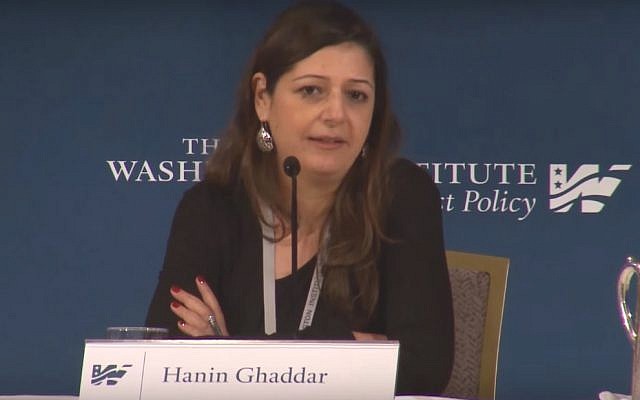
Hanin Ghaddar, Carla Humud & Mona Yacoubian Testify before Congress on Lebanon: US Must Keep Offstage, Protests Will Undermine Hezbollah


Capture
November 21, 2019
The US House Foreign Affairs Subcommittee on Middle East, North Africa, and International Terrorism held a hearing session in which three Lebanese-American observers testified on the current protests in Lebanon, stressing that Hezbollah would lose much of its influence in the country of the protestors’ demands are fulfilled.
The three observers are Hanin Ghaddar, Friedmann Visiting Fellow, The Washington Institute for Near East Policy, Carla Humud, Analyst in Middle Eastern Affairs, and Mona Yacoubian, Senior Advisor for Syria, Middle East and North Africa United States Institute of Peace.
Image result for ‫فيلتمان و 14 آذار‬‎
In addition, Jeffrey Feltman, former US ambassador to Lebanon, testified before the subcommittee on the ongoing protests, considering that Lebanon matters to the United States because of the presence of Hezbollah and the “Sunni” terrorist groups as well as the Iranian and Russian plans to control the region.
“In short, Lebanon is avenue for global strategic competition.  Others will happily fill the vacuum if we cede ground.”
Feltman added that Lebanon’s current protests coincide with U.S. interests, considering that Hezbollah is struggling to prove that it is not involved in the corrupted establishment while it protects the allying leaders, like President Michel Aoun.
What basically contributed to the Subcommittee’s session were the testimonies submitted by the three observers who highlighted the protests’ effect on the US interests and Hezbollah influence in Lebanon.
Hanin Ghaddar
Image result for Hanin Ghaddar
Ghaddar tried in her testimony to consecrate the idea that Hezbollah would lose its influence in Lebanon if the protestors’ demands get fulfilled, adding that creating an independent government in the country would isolate the party.
Ghaddar added that Hezbollah is suffering from an economic crisis thanks to the US sanctions, highlighting that some Shia people joined the protests.
Calling on US to keep its sanctions on Hezbollah, Ghaddar considered that the party serves Iran’s interests, not those of the Lebanese.
Ghaddar also considered that the Lebanese Army Intelligence is close to Hezbollah and arrested activists and protesters for the party’s sake.
“LAF’s Military Intelligence Unit—known to be the closest and most affiliated with Hezbollah and the president—started a wave of arrests of activists. Some are still de-tailed, while others were released with clear signs of torture on their bodies, and with disturbing testimonies.”
Carla Humud
Image result for Carla Humud
For her part, Humud called on the United States to support the Lebanese Armed Forces in order to be able to assume the military and security responsibilities, which would serve the US and Israeli interests.
Humud added that bolstering the protesters’ demands would lead to undermining Hezbollah influence.
“The United States could endorse protestor demands for systemic political change, condition U.S. assistance on responses, and target corrupt leaders regardless of sect. This could require severing ties with political allies, which could lead former allies to seek partnership with alternative external power brokers, including Iran (which supports maintaining the current status quo). Such an endorsement could also lend support to the Hezbollah accusation that protests are part of a foreign conspiracy. Political elites that came to view protests as an existential threat and no longer felt constrained by the need to maintain a relationship with the United States could decide to employ more heavy-handed security measures to suppress the movement.”
Humud also tackled the UNIFIL mission in southern Lebanon, highlighting the calls for reporting the restrictions to its freedom of movement in the area.
“UNIFIL’s mandate was expanded via UNSCR 1701 (2006) to include monitoring the cessation of hostilities between the two sides, accompanying and supporting the Lebanese Armed Forces as they deployed throughout southern Lebanon, and helping to ensure humanitarian access to civilian populations. UNSCR 1701 also authorized UNIFIL to assist the Lebanese government in the establishment of “an area free of any armed personnel, assets and weapons other than those of the Government of Lebanon and of UNIFIL” between the Blue Line and the Litani River.”
Mona Yacoubian
Image result for Mona Yacoubian
Yacoubian concentrated on the dire effects of the economic crisis on the situation in Lebanon, considering that protests would turn violent in case of a financial collapse in the country, which would negatively affect the US security interests.
Yacoubian considered that the US must not support the protests directly, saying that this would backfire.
“Seeking to transform the protests into a cudgel against Hezbollah and Iran will virtually guarantee a descent into violence and chaos. Clearly, Nasrallah has been unnerved by the demonstrations which have occurred in Hezbollah strongholds, signaling its constituency’s deep discontent over socioeconomic issues.”
Considering that Hezbollah is leading the sectarian and corrupt system in Lebanon, Yacoubian pointed out that new system of governance in Lebanon based on strong civic ideals and responsive, accountable and inclusive institutions would dramatically undercut Hezbollah’s influence.
“The wall of fear around criticizing Hezbollah has shown some cracks, even among its own Shiite community, as some have openly criticized the party. Moreover, just as other sectarian leaders are coming under fire, the popular refrain “All of them means all of them” in reference to all of Lebanon’s current leadership has landed on Nasrallah as well.  If allowed to play out, the dynamics propelling the protest movement could reduce Hezbollah’s stranglehold on local communities. It is better to let those organic forces play out, rather than interject and potentially forestall the momentum.”
Source: Al-Manar English Website
Related Videos
Related Posts

River to Sea Uprooted Palestinian   
The views expressed in this article are the sole responsibility of the author and do not necessarily reflect those of the Blog!

Thursday, 21 November 2019

Yellow Vests reach 1 year: The redemption of France’s revolutionary spirit


Yellow Vests reach 1 year: The redemption of France’s revolutionary spirit
November 20, 2019
(Ramin Mazaheri is the chief correspondent in Paris for Press TV and has lived in France since 2009. He has been a daily newspaper reporter in the US, and has reported from Iran, Cuba, Egypt, Tunisia, South Korea and elsewhere. He is the author of the books ‘I’ll Ruin Everything You Are: Ending Western Propaganda on Red China’ and the upcoming ‘Socialism’s Ignored Success: Iranian Islamic Socialism’.)
For many years to come France will be divided into two periods – before the Yellow Vests, and after the Yellow Vests. It’s widely believed in France that things can never go back to the way they were.
I’m not sure there can be a better yardstick of domestic success – a better gauge of sociocultural impact – than that?
Outside of France the Yellow Vests have given the world a precious gift, and at a huge sacrifice: nobody will ever view “French-style democracy” with the respect their government arrogantly demands as the alleged “birthplace of human rights”. For a generation or longer, “What about the Yellow Vests?”, will be a conversation-ending question to anyone who claims the moral superiority of the “Western-style” political system.
Systematic repression of the poorest classes are indeed “universal values”, but only within neoliberal and neo-imperial systems. Make no mistake: It has been one year of open Yellow Vest revolt against the economic dictates of that “neoliberal empire”, the European Union, and it’s neo-colonial puppet temporarily occupying Élysée Palace in Paris.
What the last year has testified to is the redemption of France’s revolutionary spirit. Not every country has that, after all.
England, for example, will foolishly “keep calm and carry on” – a perfect summation of change-hating conservatism – until the bitter end, always. This is why reading English-language media coverage of the Yellow Vests was so very similar – “English conservative opposes egalitarian movement in France”. They have been running the same story for 200+ years, going back to Edmund Burke, who founded modern Western conservatism with his (reactionary) Reflections on the Revolution in France in 1790.
France is not England, but 53 weeks ago I don’t think anyone imagined that the French could possibly muster the stamina, dedication and self-sacrifice to protest amid massive state-sponsored repression every weekend for one year.
It’s an amazing achievement, and only those full of spite and hate could deny them a modest present of honest recognition on their birthday.
But Western mainstream media coverage in English and French was just that – they claimed the Yellow Vests achieved nothing.
One thing the French don’t like to be reminded of is: the French Revolution failed, and quickly. It’s as if they forget Emperor Napoleon?
The French Revolution is not like the Iranian, Chinese or Cuban Revolutions, all of which have endured. The American Revolution has also endured – too bad that it was even more aristocratic (bourgeois) and sectarian than the French Revolution.
But the French Revolution occurred in an era of constant regional imperialism, war, slavery, repression of women, religious and ethnic sectarianism, etc. – we would be wrong to say it did not still have positive worldwide ramifications in the most important realms of politics, economics, culture, etc. The USSR – the only empire based on affirmative action – also failed, but we would be wrong to say it didn’t also produce positive changes for their people and also worldwide.
Quickly, here are a few tangible victories of the Yellow Vests: they prevented Emmanuel Macron from presenting a 10th consecutive annual austerity budget, they prevented Macron from de-nationalising the three airports of Paris, and the 10 billion euros in so-called “concessions” was credited with keeping French economic growth in the positive in the last quarter.
However, even if the Yellow Vests have obviously not yet toppled the 5th Republic and set up a new order, their cultural is inestimable. Just as the Occupy Movement of the US in 2011 gave us the slogan and mentality of “We are the 99%”, so will the Yellow Vests stand for something equally conscience-raising.
The Yellow Vests want a French Cultural Revolution, and should lead it
However, a big difference between the two movements is that Occupy was led by many college-educated “do-gooders” – and God bless them – whereas the Yellow Vests are undoubtedly a movement of the most marginalised classes.
Seemingly the most comprehensive survey thus far showed that few Vesters are unemployed, two-thirds of Vesters make less than the average national wage, and an even greater percentage regret a lack of cultural resources and social links. In other words: hard-working, (yet still) poor, isolated citizens who yearn for more cultural enrichment.
This is why I have repeatedly drawn a different parallel: the Yellow Vests are essentially demanding a Cultural Revolution. Only China and Iran have ever had one, and both were state-sponsored.
Cultural Revolutions put the values of the formerly-oppressed classes into power – everything is brought to a halt for perhaps years in order to engage in mass discussions, with the aim of drastically updating a nation’s democratic institutions and general culture in order to accord with modern political ideals. This is precisely what the Yellow Vests want: a long, comprehensive, democratic rethink and public debate over France’s inclusion in the European Union, the eurozone, NATO, and the Americanisation/neoliberalisation of their domestic policies.
Chinese peasants, Iran’s “revolution of the barefooted” and the rural-based Yellow Vests – it’s impossible not to admit the parallels. The West, of course, only insists that both Cultural Revolutions were huge mistakes.
Not true: China’s Cultural Revolution created the rural economic and human capital which laid the groundwork for their 1980s-onwards boom, although the West would have you believe its rebirth sprung only from Deng’s reforms; Iran’s Cultural Revolution swept away the elite’s oppressive aping of the West and created the first modern Muslim democracy.
The Yellow Vests insist that they are the “real” France, and after a year of talking with them I agree – they know as much or more about politics than I do. Politics is not rocket science, after all, but mainly applying common morality to public policy and daily events.
Iran and China already had a government inspired by socialist democracy (and not by aristocratic liberal democracy) when they embarked on their Cultural Revolutions, whereas France does not – thus the repression.
What did the Occupy Movement “achieve”, after all? They prevented no bailouts, they folded after infinitely less state repression and there is no direct movement linked with them today. However, only a Burkean conservative would insist that the Occupy Movement didn’t wake many people up to the struggles of class warfare, and of egalitarian right and greedy wrong. It’s never mentioned in the Western media – which only adores far-right, nativist, anti-socialist movements like in Hong Kong – but Algerians have protested for 39 consecutive weekends as well.
The Yellow Vests have not failed – they have much to celebrate on their birthday, and this article serves as a rare reminder of that reality.
Iranian and Russian media – doing France’s job for them
What’s important to note is that since late June – when France started going on summer vacation – Russian and Iranian media in Paris (including my Farsi- and Spanish-language colleagues) have been the only television journalists openly covering the Yellow Vest demonstrations.
My French colleagues have done the most cowardly thing possible – they quit the field. For many months people in Paris couldn’t believe I had to work covering the Yellow Vests on Saturday: I repeatedly heard, “I thought they were finished?”
With exceptions I can count on one hand, for many months French media has been either totally absent or hidden. There are certainly no reporters doing live interviews (even without a logo displaying whom they work for), even though the presence of live reporters inherently reduces the willingness of police to be violent. Considering the toll of violence – 11,000 arrested, 2,000 convicted, 1,000 imprisoned, 5,000 hurt,1,000 critically injured and the innumerable tear-gassings – it’s no wonder French people hate the media.
In France the vast majority of media are private, with editorial lines decided by a handful of billionaires – that’s just how Western journalism works, sadly. “Free speech”, they call it. However, where are the public media – they are paid by taxpayer dollars to objectively cover their own nation?! Quite pathetic….
This is probably why the Macron administration openly disparages Russia’s RT and Sputnik (we won’t get into their problems with PressTV here): we have spent the past year properly doing our jobs, unlike France’s media.
That’s too bad for France, but the unexpected and undeniable accomplishments of the Yellow Vests speak for themselves. Who knows what they might achieve in year 2?

River to Sea Uprooted Palestinian   
The views expressed in this article are the sole responsibility of the author and do not necessarily reflect those of the Blog!

Iran revives gasoline rationing scheme, what to expect


TEHRAN – Four years after President Rouhani decided to put a stop on a fuel rationing plan which was the legacy of President Ahmadinejad’s government, once again on Friday, the government announced a decision on reviving the scheme and also a rise in gasoline prices.
The decision took many by surprise, since in the past few months almost all government authorities claimed that no such decision was on the agenda. The plan however was effective immediately after the announcement, and even the Supreme Leader of the Islamic Revolution Ayatollah Seyyed Ali Khamenei backed the government’s decision on the matter.
Many believe that fuel rationing and raising prices would have negative impacts on the prices of other commodity groups and would result in higher inflation rates in long term, energy experts and analysts however, believe that the rationing scheme could act as a “double edged sword”, that is it could be both very beneficial and lead to great outcomes for the environment and economy or have negative results, if not implemented correctly.
Energy subsidies
The issue of allotting subsidies to various energy carriers is not a new phenomenon and such subsidies for long have been used by governments all around the world for pursuing certain political, economic, social, or environmental agendas. In different countries, energy subsidies are provided in different forms and modalities with a direct or indirect outcome on energy production costs and/or final prices.
Iran, as one of the world’s top energy-rich countries, for long has been offering significant amounts of energy subsidies to (according to the government claims) reach three main targets:
1- To support the less privileged population of the society
2- To create and support job opportunities across the county
3- To support domestic production
A look into the country’s economic and social situation reveals that although low fuel prices have served as a political leverage for different governments, but unfortunately none of the above mentioned goals have been completely achieved so far.
Huge energy subsidies in Iran seem to be only encouraging more and more fuel consumption, low-quality car production, and more fuel smuggling to the neighboring countries and also more air pollution.
Regarding the support for the less-privileged classes of the society, a look at the gasoline subsidies which the Iranian government has been offering for all people, can show the extent of this approach’s inefficiency. On one hand, many energy experts and scholars in the country believe that allocating great amounts of subsidies for gasoline is not in fact supporting the poor but it is more lifting the rich.
On the other hand, many environmental experts believe that such subsidies are encouraging people to consume more and to care less about the negative impact that they are leaving on the environment. In a nut shell, cheaper fuel means more careless consumption.
One other argument that is behind the heavy energy subsidies in Iran, is to create new job opportunities and support domestic production. One major example could be the subsidy which is provided for the gas consumed by the industrial units. In this regard, using more and more subsidies has made most industries less competitive and more reliant on outside sources for their inefficiencies.
The new scheme
The government started on Friday rationing of subsidized gasoline and increased fuel prices, announcing that it plans to use all the proceeds of the scheme for directly supporting underprivileged families.
Mohammad Baqer Nobakht, head of the Planning and Budget Organization, said on Thursday that all the revenues from the price hikes would be used to fund additional cash subsidies for 18 million families, or about 60 million people.
Based on the new scheme, the price for a liter of regular gasoline was increased to 15,000 rials (nearly 35 cents at the official rate of 42,000 rials per dollar) from the previous 10,000 rials and the monthly ration for each passenger car was set at 60 liters. Additional purchases would cost 30,000 rials per liter.
Implementation and outcomes
Although, nowadays allotting high energy subsides is considered a failed strategy all around the world, implementing such scheme requires providing some basic infrastructure.
One of the main reasons that in 2015, the Iranian government decided to end the rationing plan was in fact claims about its ineffectiveness.
For instance, when first implemented, the plan was supposed to end fuel smuggling and discourage dealers from trafficking fuel to neighboring countries, however in fact no change was made in this regard and up to the current day still thousands of liters of various fuels are being smuggled to other countries due to the price differences and lower value of Iranian currency in comparison to its neighbors.
The previous rises in fuels prices in Iran mostly led to surges in prices of other commodities and services and great levels of inflation since no tangible control was exercised in the market.
Now, on the early days of the implementation of the new scheme, we should wait to see if the government has come up with any solutions for the long-lasting problems in implementing such programs.
As I mentioned before, rationing of fuel could be a very positive step, if implemented correctly, which means if the revenues of the scheme are truly allocated for improving the people’s livelihood, if the rise in fuel prices won’t impact other commodity groups and if the rise in fuel prices doesn’t result in higher inflation rates.
So far, the government is insisting that it has considered all aspects and this time the plan is going to go through without any issues.
Earlier this week, Iranian Industry, Mining and Trade Minister Reza Rahmani said any increase in commodity prices on the pretext of gasoline price hike is illegal.
Stressing the fact that transportation of goods is generally carried out by diesel-powered cars, Rahmani said the increase in gasoline prices doesn’t entail any increase in other commodity prices.
Managing director of National Iranian Oil Products Distribution Company (NIOPDC) also said gasoline consumption in the country is expected to fall up to 10 percent, which is also good news.
On Monday, Deputy Minister of Economic Affairs and Finance of Iran Mohammad-Ali Dehghan Dehnavi said the fuel rationing plan would make the country able to export 3.65 billion liters of gasoline every year and earn about 14 trillion rials (about $3.3 billion) from the exports.
So considering all the above mentioned factors and plausible outcomes, one can clearly see the perks of a “correctly-implemented” scheme and of course the negative impact that it could cause if not properly supervised and monitored. Only “time” will show how the outcomes of the program is going to turn out this time.
EF/MA
Related Videos

River to Sea Uprooted Palestinian   
The views expressed in this article are the sole responsibility of the author and do not necessarily reflect those of the Blog!

Joe Biden Says He Would Make Saudi Arabia a «Pariah»


Joe Biden Says He Would Make Saudi Arabia a «Pariah»
Former US Vice President and Democratic candidate for the 2020 presidential elections Joe Biden said he would not sell weapons to Saudi Arabia – marking a sharp contrast with the Obama administration – and stressing he would make the Saudis “pay the price” for their killing of Washington Post contributor Jamal Khashoggi.
Biden made his remarks during the Democratic debate on Wednesday night.
“I would make it very clear we were not going to in fact sell more weapons to them,” Biden said. “We were going to in fact make them pay the price, and make them in fact the pariah that they are.” Biden also said there is “very little social redeeming value in the present government in Saudi Arabia,” and, in reference to Yemen, said he would end “end the sale of material to the Saudis where they’re going in and murdering children.”
Biden’s admission is a significant departure from the Democratic Party position before Donald Trump. Saudi Arabia objected to the US’s posture during the so-called Arab Spring, as well as the Obama administration’s diplomatic overtures toward Iran, but that did not stop the US from supporting the Saudis’ intervention in Yemen and from selling Saudi Arabia more than $100 billion in weapons. In recent years, under Crown Prince Mohammed Bin Salman [MBS], Saudi Arabia has launched an unprecedented crackdown on dissent at home and abroad, and Khashoggi’s murder has led Democrats to call for fundamental changes to the US-Saudi alliance.
At the Atlanta debate, Vermont Sen. Bernie Sanders called Saudi Arabia a “brutal dictatorship” and said that “what we’ve got to know is that Saudi Arabia is not a reliable ally.” He added, “We need to be rethinking who our allies are around the world, work with the United Nations, and not continue to support brutal dictatorships.”
New Jersey Sen. Cory Booker said, “It’s a human rights violation, without coming to the United States Congress, for an authorization for the use of military force, for us to refuel Saudi jets to bomb Yemeni children.” Minnesota Sen. Amy Klobuchar said, “When the president did not stand up the way he should have to that killing and dismemberment of a journalist with an American newspaper, that sent a signal to all dictators across the world that that was OK.”
Indeed, many of the more captivating moments of the debate – the fifth in the monthly series – were focused on foreign policy, and on appealing to black voters. And the longstanding frontrunners – Biden, Massachusetts Sen. Elizabeth Warren, and Sanders – left ample room for the other seven to jump in. Warren had been at the center of a firestorm in last month’s Democratic debate, having pulled ahead in national and early-state polls. She has slipped in national polls, as South Bend Mayor Pete Buttigieg has climbed, and questions about topics in her wheelhouse – corruption, and Medicare for All – flew by without incident.

River to Sea Uprooted Palestinian   
The views expressed in this article are the sole responsibility of the author and do not necessarily reflect those of the Blog!

Iran Overcomes the US-led Plot to Destabilize the Country


TEHRAN – Four years after President Rouhani decided to put a stop on a fuel rationing plan which was the legacy of President Ahmadinejad’s government, once again on Friday, the government announced a decision on reviving the scheme and also a rise in gasoline prices.
The decision took many by surprise, since in the past few months almost all government authorities claimed that no such decision was on the agenda. The plan however was effective immediately after the announcement, and even the Supreme Leader of the Islamic Revolution Ayatollah Seyyed Ali Khamenei backed the government’s decision on the matter.
Many believe that fuel rationing and raising prices would have negative impacts on the prices of other commodity groups and would result in higher inflation rates in long term, energy experts and analysts however, believe that the rationing scheme could act as a “double edged sword”, that is it could be both very beneficial and lead to great outcomes for the environment and economy or have negative results, if not implemented correctly.
Energy subsidies
The issue of allotting subsidies to various energy carriers is not a new phenomenon and such subsidies for long have been used by governments all around the world for pursuing certain political, economic, social, or environmental agendas. In different countries, energy subsidies are provided in different forms and modalities with a direct or indirect outcome on energy production costs and/or final prices.
Iran, as one of the world’s top energy-rich countries, for long has been offering significant amounts of energy subsidies to (according to the government claims) reach three main targets:
1- To support the less privileged population of the society
2- To create and support job opportunities across the county
3- To support domestic production
A look into the country’s economic and social situation reveals that although low fuel prices have served as a political leverage for different governments, but unfortunately none of the above mentioned goals have been completely achieved so far.
Huge energy subsidies in Iran seem to be only encouraging more and more fuel consumption, low-quality car production, and more fuel smuggling to the neighboring countries and also more air pollution.
Regarding the support for the less-privileged classes of the society, a look at the gasoline subsidies which the Iranian government has been offering for all people, can show the extent of this approach’s inefficiency. On one hand, many energy experts and scholars in the country believe that allocating great amounts of subsidies for gasoline is not in fact supporting the poor but it is more lifting the rich.
On the other hand, many environmental experts believe that such subsidies are encouraging people to consume more and to care less about the negative impact that they are leaving on the environment. In a nut shell, cheaper fuel means more careless consumption.
One other argument that is behind the heavy energy subsidies in Iran, is to create new job opportunities and support domestic production. One major example could be the subsidy which is provided for the gas consumed by the industrial units. In this regard, using more and more subsidies has made most industries less competitive and more reliant on outside sources for their inefficiencies.
The new scheme
The government started on Friday rationing of subsidized gasoline and increased fuel prices, announcing that it plans to use all the proceeds of the scheme for directly supporting underprivileged families.
Mohammad Baqer Nobakht, head of the Planning and Budget Organization, said on Thursday that all the revenues from the price hikes would be used to fund additional cash subsidies for 18 million families, or about 60 million people.
Based on the new scheme, the price for a liter of regular gasoline was increased to 15,000 rials (nearly 35 cents at the official rate of 42,000 rials per dollar) from the previous 10,000 rials and the monthly ration for each passenger car was set at 60 liters. Additional purchases would cost 30,000 rials per liter.
Implementation and outcomes
Although, nowadays allotting high energy subsides is considered a failed strategy all around the world, implementing such scheme requires providing some basic infrastructure.
One of the main reasons that in 2015, the Iranian government decided to end the rationing plan was in fact claims about its ineffectiveness.
For instance, when first implemented, the plan was supposed to end fuel smuggling and discourage dealers from trafficking fuel to neighboring countries, however in fact no change was made in this regard and up to the current day still thousands of liters of various fuels are being smuggled to other countries due to the price differences and lower value of Iranian currency in comparison to its neighbors.
The previous rises in fuels prices in Iran mostly led to surges in prices of other commodities and services and great levels of inflation since no tangible control was exercised in the market.
Now, on the early days of the implementation of the new scheme, we should wait to see if the government has come up with any solutions for the long-lasting problems in implementing such programs.
As I mentioned before, rationing of fuel could be a very positive step, if implemented correctly, which means if the revenues of the scheme are truly allocated for improving the people’s livelihood, if the rise in fuel prices won’t impact other commodity groups and if the rise in fuel prices doesn’t result in higher inflation rates.
So far, the government is insisting that it has considered all aspects and this time the plan is going to go through without any issues.
Earlier this week, Iranian Industry, Mining and Trade Minister Reza Rahmani said any increase in commodity prices on the pretext of gasoline price hike is illegal.
Stressing the fact that transportation of goods is generally carried out by diesel-powered cars, Rahmani said the increase in gasoline prices doesn’t entail any increase in other commodity prices.
Managing director of National Iranian Oil Products Distribution Company (NIOPDC) also said gasoline consumption in the country is expected to fall up to 10 percent, which is also good news.
On Monday, Deputy Minister of Economic Affairs and Finance of Iran Mohammad-Ali Dehghan Dehnavi said the fuel rationing plan would make the country able to export 3.65 billion liters of gasoline every year and earn about 14 trillion rials (about $3.3 billion) from the exports.
So considering all the above mentioned factors and plausible outcomes, one can clearly see the perks of a “correctly-implemented” scheme and of course the negative impact that it could cause if not properly supervised and monitored. Only “time” will show how the outcomes of the program is going to turn out this time.
EF/MA
Related Videos

River to Sea Uprooted Palestinian   
The views expressed in this article are the sole responsibility of the author and do not necessarily reflect those of the Blog!