Friday, 28 February 2020

India Riots: ‘We Were Attacked Because We Are Muslim’


Yasmin, a 35-year-old mother of three, clutched her blue-and-white prayer beads as she waited at a hospital mortuary to retrieve the battered body of her brother-in-law.
A resident of a gritty New Delhi neighborhood where working class Hindus and Muslims have lived side by side for years, Mehtab, a 22-year-old construction worker, had gone out on Tuesday evening to buy milk but never returned. Hauled away by stick-wielding rioters, he was found dead hours later, his body bruised and burnt.
That night, Yasmin and her husband cowered at home as marauders threatened to incinerate their neighborhood’s Muslim-owned shops and residences.
“People were chanting slogans of Jai Shri Ram [‘Hail Lord Ram’] and saying ‘leave this house — we will set it on fire’,” Yasmin said, her voice shaking with emotion. “This is the first time I am seeing such conflict. We have always considered Hindus our brothers. [Mehtab] was murdered because he was Muslim. We were attacked because we are Muslim.”
The young laborer was one of at least 35 people killed, with 200 others seriously injured, in New Delhi this week. It was the worst outbreak of sectarian violence in a big Indian city since 2002 when more than 1,000 people, mainly Muslims, were killed in riots in Gujarat.
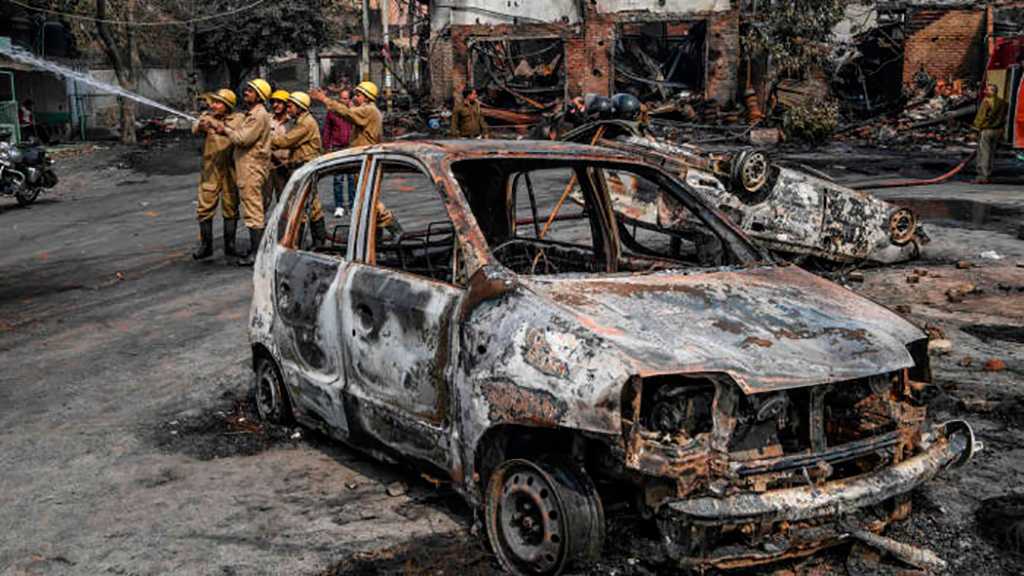
The carnage in the Indian capital — which left swaths of the city looking like a war zone, with burnt-out mosques, shops and other buildings, shattered glass and charred vehicles — follows a steady stoking of animosity between India’s Hindu majority and its Muslim minority by Narendra Modi’s ruling Bharatiya Janata Party, analysts said.
Sectarian tensions have surged since December when Modi’s government amended the country’s citizenship laws, incorporating religious criteria for the first time and giving Hindus and followers of other south Asian faiths priority over Muslims.
This week’s bloodletting coincided with a visit by Donald Trump to India, overshadowing the US president’s effusive praise for Modi. Analysts warned that the riots threatened to distract the government from the urgent task of reviving the faltering economy and realizing its ambition to become a global power.
“They’ve unleashed forces that cannot be fully controlled,” said Ashutosh Varshney, a political-science professor at Brown University. “Whether Modi and [home minister Amit] Shah can check these forces remains to be seen. Their foot soldiers on the ground are filled with the ideological fervor that has been drilled into them — the tropes of Hindu nationalism that see Muslims as enemies of India.”
Trouble in the affected area flared on Sunday after Kapil Mishra, a hardline local BJP leader, threatened Muslims who were blocking a road in an otherwise peaceful protest against the citizenship law. Addressing a crowd of rightwing Hindus right next to the sit-in, he warned that if the protesters were not gone by the time Trump’s visit was over, they would take matters into their own hands.
Shortly afterwards, witnesses said, groups of Hindus and Muslims began pelting each other with stones. By Monday, large areas were in the grip of a full-scale riot, with mobs of Hindu men, carrying firearms, petrol bombs and iron rods, marauding through the area’s congested streets, attacking passers-by and setting fire to property they suspected of being Muslim-owned.
“They were asking for identity cards to see if they are Hindu or Muslim and if they saw Muslim people they beat them,” said Abul Kalam, a 60-year-old salesman who was riding his motorbike with a Hindu colleague when they stumbled on the rioters.
In a grim echo of the violent 1947 partition of India — in which up to 2m people are thought to have died — rioters questioned people over their religion, demanding they recite prayers, show religious symbols or even pull down their trousers… said one social activist.
Witnesses said police appeared to do little to stop the rioters.
Mazid, a 32-year-old shop owner, said he and his neighbors on a mixed Hindu-Muslim street were standing together trying to protect their homes on Tuesday evening when they saw a crowd, accompanied by police officers, coming towards them.
“Police were with them and we thought maybe they will stop the violence, but then [someone] fired the shots,” said Mazid. His brother was killed and two neighbors were injured in the gunfire.
On Wednesday morning, Modi’s government, which has control over policing and is responsible for security in the capital, deployed thousands of additional paramilitary police to the riot-stricken areas to try to restore order. That afternoon, Modi took to Twitter to appeal for peace — his first public acknowledgment of the violence.
But even amid the strong police presence, tensions remained high, with many families fleeing to seek refuge with relatives elsewhere.
“People are afraid — they are leaving their homes,” said Shankar Thakur, a 28-year-old teacher. “The mobs who are coming, the police have no power to defeat them.”
Many are also questioning why it took the government so long to clamp down. “Historically, communal violence in India is never the result of weak state capacity,” said Gilles Verniers, a political-science professor at Ashoka University, near Delhi. “The state tends to prevent violence from erupting when it has the intention to do so.”
Analysts said the rioting may not be as severe as other urban violence that has rocked India. But the government’s apparent tolerance of two days of unchecked bloodshed had sent a powerful signal to a Muslim community that already felt under siege, they said.
“The violence has already served its purpose,” said Verniers. “It has asserted Hindu dominance and claimed ownership of the public sphere.”

River to Sea Uprooted Palestinian   
The views expressed in this article are the sole responsibility of the author and do not necessarily reflect those of the Blog!

Sayyed Nasrallah Answers Questions about the Boycott


The call by Hezbollah’s Secretary General His Eminence Sayyed Hassan Nasrallah to boycott American goods sparked widespread debate in Lebanon.
In a speech commemorating the group’s martyred leaders, Sayyed Nasrallah pointed out that the boycott is a weapon. He called for its activation as part of “a comprehensive, diverse and multiple resistance front in the face of the Great Satan and the tyrannical, oppressive American arrogance.”
In a country where disease, epidemics and natural disasters become part of the political wrangling, the call for the boycott caused quite a stir.
The responses that followed Sayyed Nasrallah’s speech can be classified into three categories. The first came from U.S. allies in Lebanon. This camp is in the habit of spitting out absurdities and mocking any idea from Sayyed Nasrallah. With this pattern in mind, it’s no surprise that these people perceive the boycott as insignificant – as insignificant as their intellect. So, they deliberately ridiculed the call and claimed that the U.S. and its products are an indispensable feature of the nation.
The second category is made up of those who received the call with enthusiasm and took to social media to promote the boycott and theorize about it.
The third category had legitimate questions, including “How do we boycott?”, “What is the desired goal of the boycott?”, “How can we affect the American economy given its size?”, and “How can we abandon basic Americans products with no alternative?”.
Regardless of the backgrounds of those wondering about the goals of the boycott, its feasibility and the ability to implement it, we must recall that Sayyed Nasrallah’s call was not the first of its kind. Rather it was a reminder of what he had already planted in the Arab consciousness in recent years.
Since at least 2003, Sayyed has been a theoretician of the boycott. During his participation in a conference on boycotting American and Zionist goods that was held in Damascus that year, Sayyed Nasrallah’s speech addressed questions many people are asking today.
We used excerpts from that speech to answer some theoretical questions.
1 – Where did the idea of boycotting American goods originate from?
“It is unnatural for you to be holding a weapon and throw it at the beginning of the battle or not use it until the end when you need to use it. Even when the Americans want to antagonize a country, they besiege it and boycott it. They put pressure on the countries of the world to boycott its products and to boycott it politically, diplomatically, through the media and so on. This is a legitimate, well-known and natural weapon. When we as a nation resort to this weapon today, we are resorting to an obvious technique that does not need discussion or reasoning.
“Since this point was unveiled, it was the blessed intifada in Palestine that prompted the nation to adopt a slogan or an option of this kind. There have been many discussions during conferences, on satellite TV, and in various media outlets about the feasibility of this option. 
“America is the one beating the drums of war and raising the banner of war. Isn’t this enough to classify the US administration and its forces as the enemy? It does not matter how much we avoid confrontation. Today, we are in a confrontation with the American aggression whether we like it or not. We will find ourselves in the arena of confrontation. We are not the ones who started the war or will start it. They will impose it on this nation. Hence, they are the ones coming, and we are not the ones going.”
2 – Has the idea of boycotting American goods entered domestic politics?
“Thinking about this point from the standpoint of certain internal crises is what leads some loyal friends to be suspicious of the situation. Dealing with the American attack on the nation from our problems and our internal calculations is what throws us into deadly strategic dangers. We must understand that we are facing a different battle and arena. This conflict has different calculations, results and goals. And therefore, all our problems and crises must be overcome.”
3 – What is the desired benefit of the boycott?
“The question regarding feasibility is always being raised similar to what happened with the issue of the resistance in Lebanon and the issue of the intifada. Since 1982, it was said that resisting was a crazy, boyish and unrealistic option. Recent years and months have seen discussions about the feasibility of the resistance.           And I remember after Ehud Barak promised to withdraw from Lebanon on July 7 while the resistance continued its operations, some people said: ‘What is the use of these operations? The man committed to withdrawing, and we must save these sacrifices and this blood until the withdrawal is achieved!’ When some discuss feasibility, they always look at negatives while downplaying the positives.
“In the face of the multidimensional invasion project, we must use all weapons at our disposal, and it is wrong to say that the boycott weapon is useless, its affect is limited, and it does not work.
“The lack of feasibility of using a weapon in any square and field is not a justification for abandoning it, especially when it comes to the economic boycott. If we do not boycott, this means that we are contributing, even in a small percentage, to strengthening the enemy that is invading the country and wants to control our nation. We must talk about the boycott in the context of this comprehensive confrontation.
“Even if there is no economic benefit from this weapon, it has political, cultural, educational, and objectional results. It is one of the most effective weapons that we must use. Therefore, there is no need for us to tire ourselves too much with statistics and studies to find results. This result should be settled regardless of the statistics and numbers. The logic of statistics and figures come later when convincing those who insist that there should be an economic feasibility to it. Give me an example of two countries that fought and kept their doors and markets open to each other. This has never happened in history. The matter does not need scientific investigation and research. In any case, this country declared war on us, so it is natural that we boycott it.”
4 – Do we have the capacity to proceed with this option?
“What I am calling for is that we do not focus too much on the negative aspects of the boycott. Whatever these negatives are, we must put them in the category of sacrifices that the confrontation process entails. And this is the natural context.
“We, as people, must decide our choices. We either surrender and search for our livelihood, even if it came through humiliation or accept the challenge and confrontation regardless of our capabilities and capacity. The people who are resisting have no time for calculations and no other choice but to attack. It must fight with what it has. This has always been the logic of resistance throughout history. It is natural for us to choose resistance and any weapon. Even if this weapon was less effective, it must be used according to the logic that I mentioned.”
BDS is an example:
The Boycott, Divestment, Sanctions (BDS) movement is a Palestinian-led movement that seeks to achieve freedom, justice and equality. The global movement upholds the simple principle that Palestinians are entitled to the same rights as the rest of humanity.
Some of BDS’s achievements:
A report by the United Nations Conference on Trade and Development (UNCTAD) indicated a 46% decrease in foreign direct investment in the “Israeli” economy during 2014 compared to 2013. One of the report’s writers attributed this decrease to the aggression on Gaza and the growth of the BDS movement.
“Israel” Export Institute revealed that “Israeli” exports dropped by 7% in 2015.
In 2015, boycott campaigns resulted in huge losses of more than $ 20 billion for the French company, Veolia, forcing it to withdraw completely from all its “Israeli” projects that violate international law, especially in occupied al-Quds.
Moody’s, one of the world’s leading credit rating agencies, warned that “the ‘Israeli’ economy may suffer if the BDS movement gains more momentum.”

River to Sea Uprooted Palestinian   
The views expressed in this article are the sole responsibility of the author and do not necessarily reflect those of the Blog!

أربعة أسباب تمنع أردوغان من التّراجع في إدلب.. ما هي؟

أربعة أسباب تمنع أردوغان من التّراجع في إدلب.. ما هي؟ وكيف تغيّر سُلّم أولويّاته؟ ولماذا يُصِر بوتين على رفض أيّ لِقاء ثُنائي أو ثُلاثي أو رُباعي معه حتّى الآن؟ وماذا بعد انتِهاء المُهلة التركيّة يوم السبت؟ ومَن الكاسِب ومَن الخاسِر؟

عبد الباري عطوان

مع انتِهاء المُهلة التي حدّدها الرئيس رجب طيّب أردوغان للجيش العربي السوري للانسِحاب من المُدن والقُرى التي سَيطر عليها في ريف إدلب السبت، وتَزايُد أعداد القتلى في صُفوف القوّات التركيّة (20 جُنديًّا في غُضون أسبوعين)، وفشَل الجولة الثّالثة من المُباحثات التركيّة الروسيّة في أنقرة وتمديدها ليوم الجمعة، يُمكن القول إنّ اليومَين القادِمَين قد يكونان الأكثر حسمًا في “أزمة إدلب” سِلمًا أو حَربًا.
رفض الرئيس الروسي فلاديمير بوتين عقد أيّ قمّة ثُنائيّة أو ثُلاثيّة (إلى جانب إيران)، أو رُباعيّة (تضم ألمانيا وفرنسا وتركيا وروسيا)، حول هذه الأزمة، تجاوبًا مع طلبات الرئيس أردوغان المُلحّة، يَكشِف عن عدم أخذ هذه المُهلة على محمل الجد، والاستِعداد لمُواجهة أيّ هُجوم تركيّ لاستعادة هذه المواقع من الجيش العربي السوري بالقوّة.
وربّما يتساءل كثيرون عن الأسباب التي تدفع الرئيس أردوغان إلى اتّخاذ هذه المواقف “المُقامِرة” المُتصلِّبة إلى درجة التّضحية بتحالفه مع الروس، وإغراق جيشه في حربِ استنزافٍ دمويّة في العُمق السوري ودُون أيّ حُلفاء بعد أن تخلّى عنه الجميع تقريبًا؟ عربًا وأمريكان وأوروبيين.

***

هُناك العديد من النّقاط التي ربّما تُوفِّر الإجابة عن هذا السّؤال وكُل الأسئلة الأُخرى التي تتفرّع عنه:

***

لا نستطيع أن نتكهّن بِما يُمكن أن يحدث في اليومين المُقبلين، ولكن ما يُمكن قوله إنّ إقدام الجيش التركيّ على حربٍ مُوسّعةٍ لتنفيذ تحذير الرئيس أردوغان بإخراج الجيش العربي السوري من المواقع التي سيطَر عليها مُؤخّرًا في ريف إدلب بالقوّة، سيكون مُكلِفًا وغالي الثّمن، ومن دِماء وأرواح الجيش السوري ونحن نتحدّث هُنا عن الخسائر الكبيرة التي يُمكن أن تقع في صُفوفه، كذلك مراكز المُراقبة التركيّة العسكريّة (12 موقعًا) المُحاصَرة من قبل الجيش العربي السوري في ريف إدلب وأُقيمت بمقتضى اتّفاق قمّة سوتشي في أيلول عام 2018 والتي يُمكن أن يُدمَّر ومن فيها بالكامِل.
الجيش الروسيّ ما زال يتحكّم بالمجال الجويّ السوريّ، وفوق إدلب خاصّةً، ورفض كُل المطالب بالسّماح للطّائرات الحربيّة التركيّة باختِراق هذه الأجواء في جميع جوَلات المُفاوضات، الأمر الذي يعني أنّ القوّات التركيّة في حالِ هُجومها على مواقع الجيش السوري لن تتمتّع بأيّ غِطاء جويّ، وربّما تكون هدفًا لغاراتٍ جويّةٍ سوريّةٍ وروسيّةٍ، ناهِيك عن الصّواريخ والمدفعيّة الأرضيّة، وقد بَدأت هذه الغارات فِعلًا في سراقب ومُحيطها.
الرئيس أردوغان يقف حاليًّا في موقفٍ صعب، وحَرِجٍ للغاية، وقد يُقدِم على مُغامرةٍ “انتحاريّةٍ” ويُعلِن حربًا واسِعةً على سورية بخَوضِها وحده، بعد أن تخلّى عنه جميع حُلفائه بِما في ذلك الأمريكان، مِثلما قال بمرارةٍ للصِّحافيين الذين رافقوه على متن الطّائرة عائدًا من زيارته الرسميّة لأذربيجان، فمِن الواضِح أنّه يرفض الاستِسلام، والرّوس لا يُريدون إلقاء طوق النّجاة له، وإذا شنّ هذا الهُجوم فإنّه سيُواجِه دولةً عُظمى اسمُها روسيا.
التنبّؤات عديدة حول النّهاية المُحتَملة أو المُتوقّعة لأزَمة إدلب بعضها توقّع بحلٍّ في اللّحظةِ الأخيرة يُبعِد المُواجهة العسكريّة، والبعض الآخر يقول بهُجومٍ تركيٍّ قد يتجاوز حدود ريف إدلب، ولكن أهمّها في رأينا ما قاله أحد الخُبراء الغربيين المُتابع للشّأن السوري: الأسد سيَخرُج بالمزيد من الأراضي في نِهاية المطاف، وأردوغان بالمزيد من اللّاجئين.. واللُه أعلم.

هُناك العديد من النّقاط التي ربّما تُوفِّر الإجابة عن هذا السّؤال وكُل الأسئلة الأُخرى التي تتفرّع عنه:

أوّلًا: حالة “الأنفَة” و”العِناد” التي تُسيطِر على الرئيس أردوغان، وتجعله يرفض الظّهور بمظهر المهزوم، أو القُبول بالحُلول الوسط، وتقديم التّنازلات لخُصومه الألدّاء، وخاصّةً الرئيس السوري بشار الأسد الذي فَشِل في الإطاحة به بعد تِسع سنوات من الحرب.
ثانيًا: الأولويّة العُظمى للرئيس أردوغان في الوقت الرّاهن ليس تغيير النظام في سورية، فهذا الهدف بات مُستَحيلًا، وإنّما منع تدفّق المزيد من اللّاجئين إلى تركيا، سواءً بإقامة “إمارة إسلاميّة” في إدلب تستوعب هؤلاء وجميع الجماعات المتشدّدة المُصنّفة إرهابيًّا والأُخرى “المُعتدلة”، أو باستِعادة جميع المناطق التي سيطَر عليها الجيش السوري في الأسابيع القليلة الماضية، وبِما يُؤدّي إلى إعادة مِليون لاجِئ “يتكوّمون” حاليًّا قُرب الحُدود التركيّة ونسبة كبيرة منهم من مُدن وقُرى ريف إدلب التي استعادها الجيش السوري.
ثالثًا: يُواجِه الرئيس أردوغان مُعضلةً كبيرةً جدًّا في إدلب عُنوانها الأبرز كيفيّة التّعاطي مع منظّمات وحركات إسلاميّة متشدّدة بادر إلى تشكيلها من مُقاتلين أتراك، أو من أصولٍ تركيّة، من مُنطلقات عِرقيّة، مِثل كتائب السلطان مراد، كتائب السلطان محمد الفاتح، لواء الشهيد زكي تركماني، لواء سمرقند، أجناد القوقاز، وبعض هذه الفصائل اندمج في هيئة تحرير الشام (النصرة)، أو كتائب السلطان مراد، والمُعضلة تَكمُن في أنّه لا يُريد السّماح لهؤلاء بدُخول الأراضي التركيّة خوفًا من أن ينقلبوا عليه لتخلّيه عن إدلب، وعدم السّماح لهم بتحقيق طُموحاتهم في الإطاحة بالرئيس الأسد وتغيير النظام في سورية، وإقامة دولة إسلاميّة في إطار الإمبراطوريّة العثمانيّة الجديدة، وفي الوقت نفسه لا يُريد تصفيتهم على يد الجيش العربي السوري المدعوم روسيًّا، وفوق هذا وذاك، الحرَج الكبير من الفصائل السوريّة التي دعمها ووعدها بإطاحة النظام السوري في بداية الأزمة، وباتت هذه الفصائل تُوجِّه انتِقادات عنيفة ضدّه.
رابعًا: “تنمّر” المُعارضة التركيّة، وحُدوث حالة من التذمّر في أوساط الرأي العام التركي، وهُناك مَن يقول بأنّ حالة التذمّر وصَلت إلى بعض قِطاعات الجيش التركي، فهذه المُعارضة تتحدّث بصوتٍ عالٍ هذه الأيّام عن خُطورة الزّج بالجيش التركيّ في سورية، وتزايُد أعداد القتلى في صُفوفه، وتُطالب بالتّسليم ببقاء الرئيس الأسد والاعتِراف بحُكومته، وإعادة العُلاقات مع سورية.
لا نستطيع أن نتكهّن بِما يُمكن أن يحدث في اليومين المُقبلين، ولكن ما يُمكن قوله إنّ إقدام الجيش التركيّ على حربٍ مُوسّعةٍ لتنفيذ تحذير الرئيس أردوغان بإخراج الجيش العربي السوري من المواقع التي سيطَر عليها مُؤخّرًا في ريف إدلب بالقوّة، سيكون مُكلِفًا وغالي الثّمن، ومن دِماء وأرواح الجيش السوري ونحن نتحدّث هُنا عن الخسائر الكبيرة التي يُمكن أن تقع في صُفوفه، كذلك مراكز المُراقبة التركيّة العسكريّة (12 موقعًا) المُحاصَرة من قبل الجيش العربي السوري في ريف إدلب وأُقيمت بمقتضى اتّفاق قمّة سوتشي في أيلول عام 2018 والتي يُمكن أن يُدمَّر ومن فيها بالكامِل.
الجيش الروسيّ ما زال يتحكّم بالمجال الجويّ السوريّ، وفوق إدلب خاصّةً، ورفض كُل المطالب بالسّماح للطّائرات الحربيّة التركيّة باختِراق هذه الأجواء في جميع جوَلات المُفاوضات، الأمر الذي يعني أنّ القوّات التركيّة في حالِ هُجومها على مواقع الجيش السوري لن تتمتّع بأيّ غِطاء جويّ، وربّما تكون هدفًا لغاراتٍ جويّةٍ سوريّةٍ وروسيّةٍ، ناهِيك عن الصّواريخ والمدفعيّة الأرضيّة، وقد بَدأت هذه الغارات فِعلًا في سراقب ومُحيطها.
الرئيس أردوغان يقف حاليًّا في موقفٍ صعب، وحَرِجٍ للغاية، وقد يُقدِم على مُغامرةٍ “انتحاريّةٍ” ويُعلِن حربًا واسِعةً على سورية بخَوضِها وحده، بعد أن تخلّى عنه جميع حُلفائه بِما في ذلك الأمريكان، مِثلما قال بمرارةٍ للصِّحافيين الذين رافقوه على متن الطّائرة عائدًا من زيارته الرسميّة لأذربيجان، فمِن الواضِح أنّه يرفض الاستِسلام، والرّوس لا يُريدون إلقاء طوق النّجاة له، وإذا شنّ هذا الهُجوم فإنّه سيُواجِه دولةً عُظمى اسمُها روسيا.
التنبّؤات عديدة حول النّهاية المُحتَملة أو المُتوقّعة لأزَمة إدلب بعضها توقّع بحلٍّ في اللّحظةِ الأخيرة يُبعِد المُواجهة العسكريّة، والبعض الآخر يقول بهُجومٍ تركيٍّ قد يتجاوز حدود ريف إدلب، ولكن أهمّها في رأينا ما قاله أحد الخُبراء الغربيين المُتابع للشّأن السوري: الأسد سيَخرُج بالمزيد من الأراضي في نِهاية المطاف، وأردوغان بالمزيد من اللّاجئين.. واللُه أعلم.

River to Sea Uprooted Palestinian   
The views expressed in this article are the sole responsibility of the author and do not necessarily reflect those of the Blog!

The Transnational Act of Resistance: From Yemen to Lebanon, Boycott US, Boycott ‘Israel’


The Transnational Act of Resistance: From Yemen to Lebanon, Boycott US, Boycott ‘Israel’
Photo Credit: Moussa Husseini
Beirut – Resistance is the legitimate right of people who are either under aggression, occupation, or even any unnoticed kind of oppression. Resistance is conveyed in several ways, the first that comes to mind is militarily; however, many other forms that cause pain to a nation’s enemy do also exist.
Economic resistance would sometimes be an enemy’s worst nightmare!
The Yemeni Model
Yemen started boycotting American products over a decade ago, after late Ansarullah Leader Martyr Sayyed Hussein al-Houthi called for it.
Sayyed al-Houthi chanted “Death to US” and “Death to ‘Israel’”, stressing that from the basics of the war against an enemy is to boycott all its products as well as the companies that support the US and the Zionist entity.
Saada was the birthplace of such an action, but it later spread to all other Yemeni regions. Popular awareness became common as the ideology of the late revolutionary started to spread across the country.
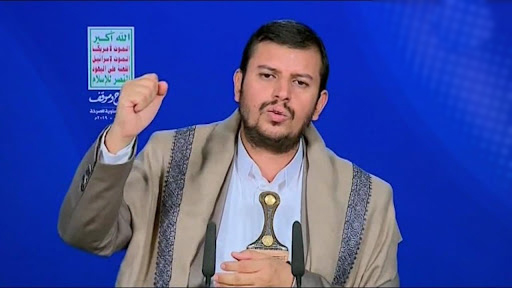
His brother, later, Sayyed Abdul Malik al-Houthi stressed that boycotting US products is a duty.


The Transnational Act of Resistance: From Yemen to Lebanon, Boycott US, Boycott ‘Israel’
Yemeni Ansarullah Leader Sayyed Abdul Malik Badreddine al-Houthi

For the Love of Palestine, For the Love of Yemen
“We’ve always heard people objecting to the idea,” said Ishteaq Sharafeddine, a Yemeni Journalist. “Most of the people hate boycotting. They are stuck to the US products.”
She went on to explain to al-Ahed News that Yemenis used to consume products without being aware about it. “Although Yemen is an agricultural country, rich in the aquatic resources, as well as in tourism and many other fields, it was on the brink of economic collapse. We’ve been controlled by the West.”
In the beginning of the war on Yemen, everybody was frightened since the country was economically and militarily collapsing, and it was subject to the aggression waged by 20 countries, Ms. Ishteaq recalled. “It was really hard to overcome. Salaries weren’t paid in the first three months of aggression. People were facing a very harsh situation.”
However, the Yemeni journalist stressed that her nationals have faced everything happening there with their awareness. We tried to make clear for others that we’ve already been into poverty whether under aggression or not. “The situation did only increase the scale of poverty. It is the truth. People started to recognize more that freedom and independence are achieved by boycotting the US products.”
Saada, a northwestern governorate in Yemen, is equated by Ishteaq to south Lebanon, an area often referred to as a symbol of resistance and rejection of occupation. The people of Saada were leading in the issue of boycotting the US, and they were the ones who inspired other nationals to do so.
“As always, such ideas are seen as impossible and useless. Boycott has always been mocked by many people who were not even aware that the alternative to the US product is already available,” she added.
It was not only an issue of finding a substitute. We were in a real war, the lady stressed. “For example, paying 10 rials would mean nothing for a Yemeni person, but the Americans and the Zionists buy weapons with my money, then use them to kill the Palestinians,” Ms. Ishteaq explained.
“The main reason for which we started boycotting US products is that we didn’t want to kill the Palestinians.”
But after the war, things turned worse and more difficult. We had an added reason to our action. Yemen came along with Palestine, and most of us are families of martyrs. If you visit northern Yemen, you could barely find a house that didn’t sacrifice martyrs, she noted.
“Also in some families that are pro-Saudi Arabia, you find some good member who was martyred defending the nation.”
“We first started boycotting food. If a storeowner says that he doesn’t have any alternative, we try to tell him and any other customer that we won’t but US products.”
We later turned to raising awareness through lectures, plays and videos explaining the reasons behind the boycott and what the other choice would lead to. Things started to turn better as people were convinced with the matter on emotional, intellectual and political levels.
The circle grew wider enough at homes. People also began to produce many goods locally. This shocked the enemy as well as the pro-Saudi tradesmen. This would eventually cause their loss.
“It was enough that we had awareness, we trusted ourselves and witnessed that Yemen can be strong even on the economic level.”
Lebanese Model
In Lebanon, Hezbollah Secretary General has stressed in a recent speech marking the anniversary of the Resistance Martyr Leaders that “Boycotting US goods is painful for the Americans.”
Sayyed Nasrallah called on all the elites, scholars and thinkers to resort to this choice by setting programs and plans as part of a major confrontation with the US administration.
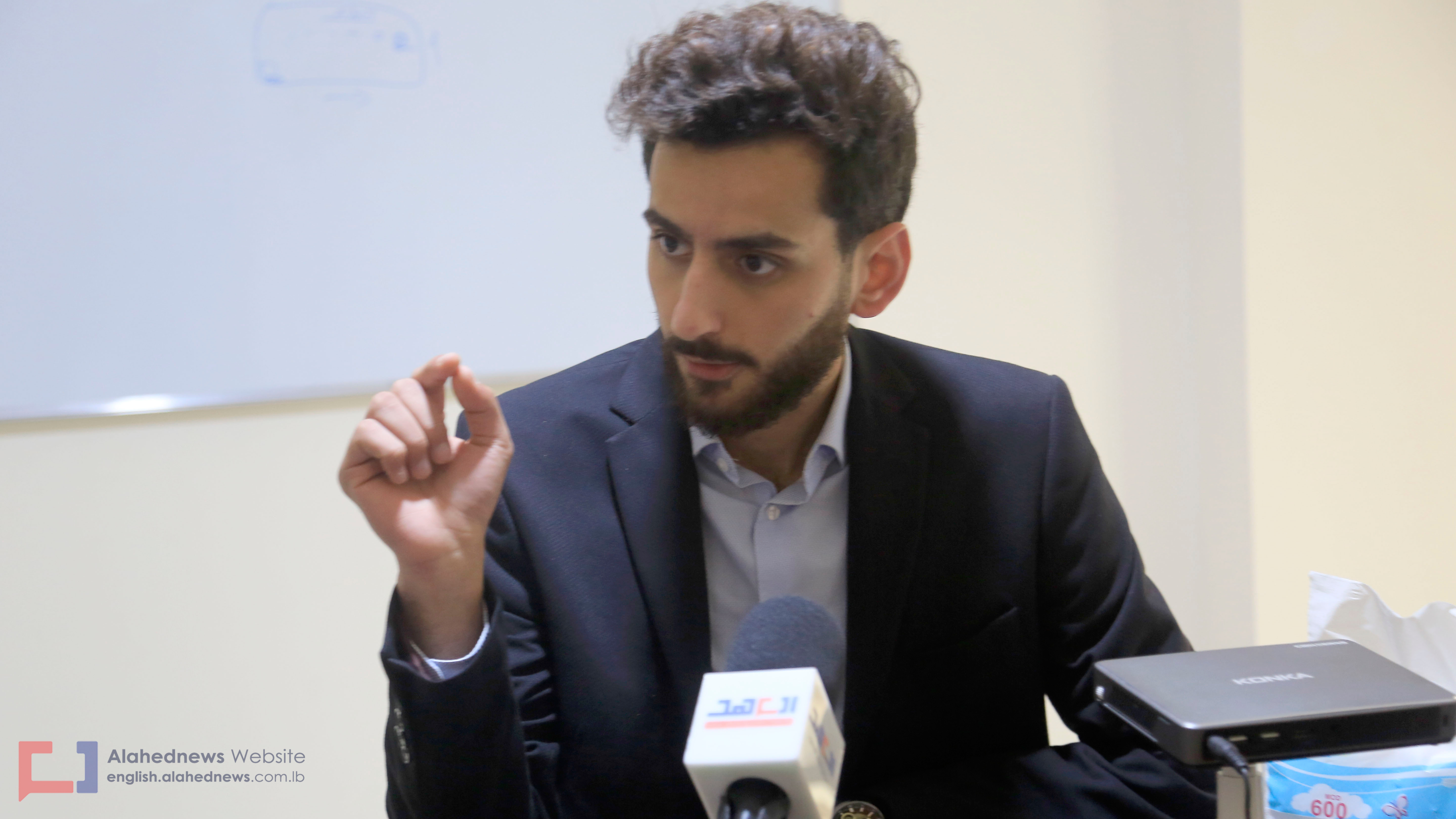
Mohammad Deeb, Public Relations Director of ‘Boycott US Products’ global campaign, elaborated to al-Ahed News in an exclusive interview about the campaign’s goals, strategy and plans.
Reflecting that boycott movements worldwide have been swinging between periods of strength and others of weakness, Mr. Deeb explained that this was due representing reactions to certain incidents that urge the people at some place to take the action or not.


The Transnational Act of Resistance: From Yemen to Lebanon, Boycott US, Boycott ‘Israel’
Mr. Mohammad Deeb - Public Relations Director of "Boycott US Products" CampaignCaption

In other words, when ‘Israel’ launches a strike against the Gaza Strip, people want to support the Palestinians so they start boycotting some products made by the countries that directly support the Zionist entity. It was more of a reaction, Deeb explained.
Boycott US Products’ Activity
The campaign has already been active in a sort of unorganized populist movement, but now turned to be an organized one that is active in 14 countries, with Beirut being its headquarters.
The campaign’s strategy and main goal is to raise awareness among people regarding the importance of boycotting, with workshops and seminars on its schedule.
The target now, Mr. Deeb said, will be schools and universities “where we will detail to the students the goals of this campaign that is based on boycotting the enemy.
Being very reasonable, Deeb was clear that we may not harm the enemy’s, but he was quite sure that boycotting could affect some sides of the way it markets its products.
Whether the campaign has caused pain to the enemy so far, he was quite sure.
“A good evidence is that although we represent a very small and limited group but US President Donald Trump has posted a Tweet commenting on our action.”
Had it played the key role it is tasked with, this movement will make a big difference, he noted. Referring to Trump as being transparent for confessing that he depends on the Gulf States as a source of wealth, Deeb stressed that when this same president recognized the influence we could make, he made a tweet claiming “the US won’t be affected even if you boycotted or made any other anti-US products movement.”
Commenting on the latest call made by Sayyed Nasrallah, Deeb said that at some place earlier to the speech, we had a poor interaction on social media. However, soon after it, people started to interact massively. Some people started using the campaign’s posts, making it more active.
There is an entire people which is ready to boycott, Deeb stressed.
“There is an environment that sees the US enemy as part of the Zionist entity, which must be boycotted and so is the case regarding all its related products.”
There is a huge popular base that adopted this viewpoint but still lacks the right strategy, Deeb said, as he noted that the campaign is readying 100% precise lists that will be published in the coming days, which classify most of the American products that we are using without noticing or ever getting to know that we have local substitutes for them.
Boycott iPhone


Elaborating on the importance of boycotting iPhone, the campaign’s PR Director said that even if we may consider that it is just like any other smartphone, this device breaches our security, location, calls, photos and contains a database for every user.
Let alone that iPhone sells products that are worth $111 billion every year, a number that counts for the budget that the US uses to support the ‘Israeli’ entity.
People’s Reaction
The case among people is similar to any other situation. Some would view the idea negatively, but others still find it useful. Those could be unaware that at some point, every dollar counts.
Mr. Deeb explained that out of the 7 billion world population, 250 million are Americans. If the rest boycotted the US products, or if only a hundred million people refrained from spending $1, we would cause the US economy a $100 million worth loss.
This vision, he emphasized, is of a very big influence. “People have only to believe in it.”
Lebanese Economy
The free Lebanese economy, according to the Campaign’s PR Director, cannot bear the brunt of this step. It is because Lebanon is threatened with sanctions regardless to this movement. But what the effective action relies on, Deeb reiterated, is the popular awareness.
Multinational Companies
In the case of multinational incorporations, Mr. Deeb made clear that if they have American shareholders, or they support the Zionist entity, then they are added to the boycott list. But the companies don’t support the Zionist entity could be taken into another account. “The goal from harming the US economy is to harm the Zionist one.”
Perhaps this step creates a ripple effect that would be conveyed in all free countries. Boycott is an action equal to military resistance. It takes some more popular awareness to make it spread.
Save the children of Yemen and Palestine. Resist. Boycott US, Boycott ‘Israel’!

River to Sea Uprooted Palestinian   
The views expressed in this article are the sole responsibility of the author and do not necessarily reflect those of the Blog!

The War Scenario Between Israel and Hezbollah


Elijah J. Magnier
Notwithstanding the increase in power of the “Axis of the Resistance”, with its precision missiles and unrivalled accumulated warfare experience, the possibility of war is still on the table. The “Axis of the Resistance” is increasing its readiness based on the possibility that Israel may not tolerate the presence of such a serious threat on its northern borders and therefore act to remove it. However, in any future war, the “Axis of the Resistance” considers the consequences would be overwhelmingly devastating for both sides and on all levels if the rules of engagement are not respected. Notwithstanding Israel’s superior air firepower, its enemy Hezbollah has established its own tremendous firepower, and its experience in recent wars in Syria, Iraq and Yemen is an important asset.
Sources within the “Axis of the Resistance” believe the next battle between Hezbollah and Israel, if ever it takes place, would be “controlled and not sporadic, with a focus on specific military objectives without damaging the infrastructure, on both sides”.
The sources consider Gaza as a precedent. In Gaza Palestinians and Israelis have fought many recent battles that lasted only a few days in which the objectives bombed were purely military. This is a new rule of engagement (ROE) regulating conflict between the belligerents. When Israel hits a non-military target, the Palestinian resistance responds by hitting a similar non-military target in Israel. The lesson extracted from the new ROE between Israel and the Palestinians is that every time exchanges of bombing go out of control, both sides understand they have to bring it back to an acceptable and equitable level, to limit damage and keep such mutual attacks from targeting civilians.
The “Axis of the Resistance” therefore considers that the probability is high that the next battle would be limited to military objectives and kept under control. If one side increases the bombing, the other will follow. Otherwise, both sides have the capability to cause total destruction and go on to uncontrolled bombing. In the case of an out-of-control war, allies on both sides would become involved, which renders this scenario less likely.


Hezbollah in Lebanon is said to have over 150,000 missiles and rockets. Israel might suppose that a limited attack could destroy tens of thousands of Hezbollah’s missiles. Is it worth it? “From Israel’s view, Israel may think it is worth triggering a battle and destroying thousands of missiles, thinking that Israel has the possibility to prevent Hezbollah from re-arming itself. But even in this case, Israel doesn’t need to destroy villages or cities or the Lebanese infrastructure, instead, it will limit itself to selective targets within its bank of objectives. However, we strongly doubt Israel could succeed in limiting Hezbollah’s supply of missiles and advanced weapons. Many of these missiles no longer need to be close to the borders with Israel, but can be deployed on the Lebanese-Syrian borders in safe silos”, said the sources.
However, Israel should also expect, according to the same sources, that Hezbollah will respond by bombing significant Israeli military targets within its bank of objectives. “There is no need to bomb airports, power stations, chemical industries, harbours or any highly significant target if Israel doesn’t bomb any of these in Lebanon. But if necessary Hezbollah is prepared to imitate Israel by hitting back without hesitation indiscriminately and against high-value targets, at the cost of raising the level of confrontation to its maximum level. Hezbollah and Israel have a common language in warfare. If the bombing is limited, no side interprets the others’ actions as a sign of weakness”, said the sources.
“Hezbollah doesn’t want war and is doing everything to avoid it. This is why it responded in Moawad, in the suburb of Beirut, when Israeli armed drones failed to reach their objectives. By responding, Hezbollah actually prevented a war on a large scale because it is not possible to allow Israel to get away with any act of war in Lebanon, violating the ROE” said the sources.
Last September, Hezbollah targeted an Israeli vehicle in Avivim with a laser-guided missile in daylight after forcing the Israeli Army to hide for a week and retreat all forces behind civilians lines, imposing a new ROE. The Israeli army cleared the 120 km borders with Lebanon (5 km deep) to avoid Hezbollah’s revenge retaliation for violating the 2006 cessation of hostility’s agreement. Israel refrained from responding and swallowed the humiliation due to its awareness of Hezbollah’s readiness to start a devastating war if necessary.

Israeli officials used to threaten Hezbollah and Lebanon to take the country “back to the stone age”. This is indeed within the reach of Israel’s military capability. However, it is also within Hezbollah’s reach to bring Israel back to the stone age, if required. Hezbollah’s precision missiles can hit any bridge, airport, gasoline deposit containers, power stations, Haifa harbour, oil and gas rig platforms, any infrastructure and military and non-military objectives if Israel attempts to target similar objectives in Lebanon first. Hezbollah’s new missile capability is not new to Israel, who is observing the latest technology Iran’s allies are enjoying and “testing,” mainly in Yemen. The recent bombing of Saudi Arabia oil facilities and the downing of a Saudi Tornado in Yemen revealed that Iran’s HOT missiles are capable of downing jets at medium height and any helicopter violating Lebanese airspace.
Hezbollah’s latest version of the Fateh precision missile, the supersonic anti-ship missiles and the anti-air missiles can prevent Israel from using its navy, stopping any civilian ship from docking in Haifa, thwarting the use of Israeli Helicopters and precision bombing attacks- as in Iran’s latest confrontation with the US at Ayn al-Assad base in Iraq.
Hezbollah’s missiles are unlikely to cause simple traumatic brain injuries – as per the Iranian missile at Ayn al Assad – when hitting targets in Israel in case of war. They can avoid missile interception systems. This increase of capability is a game-changer, and Hezbollah believes it is already decreasing the chances of war. Arming itself with precision missiles and armed drones and showing these capabilities to Israel is Hezbollah’s way to avert a war and protect the equation of deterrence.
In its 2020 security assessment, the Israeli Military Intelligence Directorate (Aman) unwisely evaluated the assassination of the Iranian Major General Qassem Soleimani as a “restraining factor”. Aman’s report, showing astonishing ignorance, stated that Soleimani was responsible for Hezbollah’s missile projects. This lack of understanding of the Hezbollah-Iran relationship and dynamic is quite surprising. Sayyed Ali Khamenei told Hezbollah’s leader Sayyed Hassan Nasrallah decades ago that he knows what he needs and what to do and doesn’t need to fall back on Iran. The IRGC and Hezbollah have set up a collaboration engine that won’t stop even if half of the IRGC leadership is killed. The possession of the feared Iranian precision missiles is no longer a secret: all Iran’s allies have these deployed, in Lebanon, Syria, Iraq and Yemen.
Yesterday is unlike today: the power of destruction now belongs to all parties, no longer to Israel alone. War is no longer an option. US/Israeli aggression will be limited to an economic war, so long as the “Axis of the Resistance” continues updating its warfare capability to maintain deterrence parity.
Proofread by: Maurice Brasher and C.G.B.
This article is translated free to many languages by volunteers so readers can enjoy the content. It shall not be masked by Paywall. I’d like to thank my followers and readers for the confidence and support. If you like it, please don’t feel embarrassed to contribute and help fund it for as little as 1 Euro. Your contribution, however small, will help ensure its continuity. Thank you.
Copyright © https://ejmagnier.com  2020

River to Sea Uprooted Palestinian   
The views expressed in this article are the sole responsibility of the author and do not necessarily reflect those of the Blog!

Don’t Hold Your Breath for ‘World War III’: World War IV Has Already Begun

February 27, 2020

A. B. Abrams on Today’s Great Power for The Saker Blog

“A. B. Abrams is the author of the book ‘Power and Primacy: A History of Western Intervention in the Asia-Pacific.’ His second book covering the history of the United States’ conflict with North Korea is scheduled for publication in 2020.
He is proficient in Chinese, Korean and other East Asian languages, has published widely on defence and politics related subjects under various pseudonyms, and holds two related Masters degrees from the University of London.”


The world today finds itself in a period of renewed great power conflict, pitting the Western Bloc led by the United States against four ‘Great Power adversaries’ – as they are referred to by Western defence planners – namely China, Russia, North Korea and Iran. This conflict has over the past 15 years escalated to encompass the military, economic and information spheres with global consequences – and appears to be coming to a head as signs of peaking tensions appear in multiple fields from military deployments and arms races to harsh economic wars and a harsher still information war.
While the term ‘World War III’ has been common since the 1940s, referring to the possibility of a global great power war on a greater scale than the first and second world wars, the Cold War between the Western and Soviet Blocs was at its height as total, as global and as heated as the prior conflicts. As weapons technology has evolved, the viability of a direct shooting war has diminished considerably – forcing major powers to seek alternative means to engineer their adversaries’ capitulation and assert their own dominance. This has been reflected in how the Cold War, and the current phase of global conflict some refer to as ‘Cold War 2’ have been distinct from the first two world wars despite the final objectives of the parties involved sharing many similarities. I would thus suggest redefining what a ‘world war’ is and acknowledging that this current phase of global conflict is every part as intense as the great power ‘hot wars’ waged in the first half of the 20th century.
Had the intercontinental range ballistic missile and the miniaturised nuclear warhead been invented twenty years earlier, the Allied Powers may have needed to rely more heavily on economic and information warfare to contain and eventually neutralise Nazi Germany. The Second World War would have been very different in nature to reflect the technologies of the time. When viewed from this paradigm, the Cold War can be seen as a ‘Third World War’ – a total conflict more vast, comprehensive and international than its predecessors stretched out over more than 40 years. The current conflict, or ‘World War IV,’ is ongoing. An assessment of prior ‘great power wars,’ and the unique nature of the current conflict, can provide some valuable insight into how warfare is evolving and the likely determinants of its victors.
As of 2020 it is clear that great power conflict has become almost as heated as it can short of an all-out hot war – with the Western Bloc applying maximum pressure on the information, military and economic fronts to undermine not only smaller adversaries such as Venezuela and Syria and medium sized ones such as North Korea and Iran, but also China and Russia. When exactly this phase of conflict began – sometime after the Cold War’s end – remains uncertain.
The interval between the third and fourth ‘world wars’ was considerably longer than that between the second and the third. This was due to a number of factors – primarily that there was no immediate and obvious adversary for the victorious Western Bloc to target once the Soviet Union had been vanquished. Post-Soviet Russia was a shade of a shadow of its former self. Under the administration of Boris Yeltsin the country’s economy contracted an astonishing 45% in just five years from 1992 (1) leading to millions of deaths and a plummet in living standards. Over 500,000 women and young girls of the former USSR were trafficked to the West and the Middle East – often as sex slaves (2), drug addiction increased by 900 percent, the suicide rate doubled, HIV became a nationwide epidemic (3) corruption was rampant, and the country’s defence sector saw its major weapons programs critical to maintaining parity with the West delayed or terminated due to deep budget cuts (4). The possibility of a further partition of the state, as attested to multiple times by high level officials, was very real along the lines of the Yugoslav model (5).
Beyond Russia, China’s Communist Party in the Cold War’s aftermath went to considerable lengths to avoid tensions with the Western world – including a very cautious exercise of their veto power at the United Nations which facilitated Western led military action against Iraq (6). The country was integrating itself into the Western centred global economy and continuing to emphasis the peaceful nature of its economic rise and understate its growing strength. Western scholarship at the time continued to report with near certainty that internal change, a shift towards a Western style political system and the collapse of party rule was inevitable. The subsequent infiltration and westernisation was expected to neuter China as a challenger to Western primacy – as it has other Western client states across the world. China’s ability to wage a conventional war against even Taiwan was in serious doubt at the time, and though its military made considerable strides with the support of a growing defence budget and massive transfers of Soviet technologies from cash strapped successor states, it was very far from a near peer power.
North Korea did come under considerable military pressure for failing to follow what was widely referred to as the ‘tide of history’ in the West at the time – collapse and westernisation of the former Communist world. Widely portrayed in the early 1990s as ‘another Iraq’ (7), Western media initially appeared to be going to considerable lengths to prepare the public for a military campaign to end the Korean War and impose a new government north of the 38th parallel (8). Significant military assets were shifted to Northeast Asia specifically to target the country during the 1990s, and the Bill Clinton administration came close to launching military action on multiple occasions – most notably in June 1994. Ultimately a combination of resolve, a formidable missile deterrent, a limited but ambiguous nuclear capability, and perhaps most importantly Western certainty that the state would inevitably collapse on its own under sustained economic and military pressure, deferred military options at least temporarily.
The fourth of the states that the United States today considers a ‘greater power adversary,’ Iran too was going to considerable lengths to avoid antagonism with the Western Bloc in the 1990s – and appeared more preoccupied with security threats on its northern border from Taliban controlled Afghanistan. With a fraction of the military power neighbouring Iraq had previously held, the presence of an ‘Iranian threat’ provided a key pretext for a Western military presence in the Persian Gulf after the Soviets, the United Arab Republic and now Iraq had all been quashed. With the new government in Russia put under pressure to terminate plans to transfer advanced armaments to Iran (9), the country’s airspace was until the mid 2000s frequently penetrated by American aircraft, often for hours at a time, likely without the knowledge of the Iranians themselves. This combined with a meagre economic outlook made Iran seem a negligible threat.
While the Cold War ended some time between 1985 and 1991 – bringing the ‘third world war’ to a close – the range of dates at which one could state that the ‘fourth world war’ began and the West again devoted itself to great power conflict is much wider. Some would put the date in the Summer of 2006 – when Israel suffered the first military defeat in its history at the hands of the Lebanese militia Hezbollah. Using North Korean tunnel and bunker networks, command structures, weapons and training (10), and bolstered by Iranian funding and equipment, the shock of the militia’s victory, though underplayed in Western media, reverberated among informed circles across the world.
Others would place the date two years later in 2008 during the Beijing Summer Olympics, when Georgia with the full support of the West waged a brief war against Russia – and Moscow despite harsh warnings from Washington and European capitals refused to back down on its position. Post-Yeltsin Russia’s relations with the Western Bloc had appeared relatively friendly on the surface, with President George W. Bush observing in 2001 regarding President Vladimir Putin that he “was able to get a sense of his soul,” and predicting “the beginning of a very constructive relationship.” Nevertheless, signs of tension had begun to grow from Moscow’s opposition to the Iraq War at the UN Security Council to President Putin’s famous ‘Munich Speech’ in February 2007 – in which he sharply criticised American violations of international law and its “almost uncontained hyper use of force in international relations.”
It could also be questioned whether, in light of what we know about Western support for separatist insurgents in Russia itself during the 1990s, the war against the country ever ended – or whether hostilities would only cease with a more total capitulation and partition and with the presence of Western soldiers on Russian soil as per the Yugoslav precedent. As President Putin stated in 2014 regarding continuing Western hostilities against Russia in the 1990s: “The support of separatism in Russia from abroad, including the informational, political and financial, through intelligence services, was absolutely obvious. There is no doubt that they would have loved to see the Yugoslavia scenario of collapse and dismemberment for us with all the tragic consequences it would have for the peoples of Russia” (11). Regarding Western efforts to destabilise Russia during the 1990s, CIA National Council on Intelligence Deputy Director Graham E. Fuller, a key architect in the creation of the Mujahedeen to fight Afghanistan and later the USSR, stated regarding the CIA’s strategy in the Caucasus in the immediate post-Cold War years: “The policy of guiding the evolution of Islam and of helping them against our adversaries worked marvellously well in Afghanistan against the Red Army. The same doctrines can still be used to destabilize what remains of Russian power” (12). The U.S. Congressional Task Force on Terrorism and Unconventional Warfare’s director, Yossef Bodansky, himself also detailed the extent of the CIA’s strategy to destabilize Central Asia by using “Islamist Jihad in the Caucasus as a way to deprive Russia of a viable pipeline route through spiralling violence and terrorism” – primarily by encouraging Western aligned Muslim states to continue to provide support for militant groups (13).
Much like the Cold War before it, and to a lesser extent the Second World War, great powers slid into a new phase of conflict rather that it being declared in a single spontaneous moment. Did the Cold War begin with the Berlin Blockade, the Western firebombing of Korea or when the atomic bombs were dropped on Hiroshima and Nagasaki – which accelerated the move into a nuclear arms race. Equally, multiple dates were given for the opening of the Second World War – the German invasion of Poland in 1939, the beginning of the Sino-Japanese war two years prior, the Japanese Empire’s attack on Pearl Harbour and conquest of Southeast Asia which marked the first major expansion beyond Europe and North Africa in 1941, or some other date entirely. The slide into a new world war was if anything even slower than its predecessors.
The shift towards an increasingly intense great power conflict has been marked by a number of major incidents. In the European theatre one of the earliest was the Bush administration’s withdrawal from the Anti-Ballistic Missile treaty in 2002 and subsequent deployment of missile defences and expansion of NATO’s military presence in the former Soviet sphere of influence, which was widely perceived in Russia as an attempt to neutralise its nuclear deterrent and place the Western Bloc in a position to coerce Moscow militarily (14). This threatened to seriously upset the status quo of mutual vulnerability, and played a key role in sparking a major arms race under which Russia would develop multiple classes of hypersonic weapon. Their unveiling in 2018 would in turn lead the United States to prioritise funding to develop more capable interceptor missiles, a new generation of missile defences based on lasers, and hypersonic ballistic and cruise missiles of its own (15).
Another leading catalyst of the move towards great power confrontation was the Barak Obama administration’s ‘Pivot to Asia’ initiative, under which the bulk of America’s military might and considerable assets from the rest of the Western world would be devoted to maintaining Western military primacy in the Western Pacific. This was paired with both economic and information warfare efforts, the latter which increasingly demonised China and North Korea across the region and beyond and actively sought to spread pro-Western and anti-government narratives among their populations through a wide range of sophisticated means (16). These programs were successors to those sponsored by Western intelligence agencies to ideologically disenchant the populations of the Warsaw Pact and Soviet Union with their own political systems and paint Western powers as benevolent and democratising saviours (17). Economic warfare also played a major role, with efforts centred around the ‘Trans-Pacific Partnership’ trade deal – or ‘Economic NATO’ as several analysts referred to it – to isolate China from regional economies and ensure the region remained firmly in the Western sphere of influence (18). The military aspect of the Pivot to Asia would reawaken long dormant territorial disputes, and ultimately lead to high military tensions between the United States and China which in turn fuelled the beginning of an arms race. This arms race has more recently led to the American withdrawal from the Intermediate-Range Nuclear Forces treaty, which paves the way for deployment of American long-range missiles across the Western Pacific – all with China and North Korea firmly in their crosshairs (19).
It is arguably in the Middle East, however, where the new phase of global conflict has seen its most direct clashes so far. The nine-year conflict in Syria, although far less destructive or brutal, provides ‘World War IV’ with something of an analogue to the Korean War in the Cold War. The conflict has united the Western Bloc and a wide range of allies, from Turkey and Israel to the Gulf States and even Japan (which funds the jihadist-linked White Helmets) (20), in an effort to overthrow an independent government with close and longstanding defence ties to Russia, North Korea, Iran and China. The conflict has seen North Korean, Russian, Hezbollah and Iranian special forces (21) among other assets deployed on the ground in support of Syrian counterinsurgency efforts, with all of these parties providing considerable material support (the Koreans have built and fully staffed at least three hospitals as part of large medical aid packages and continue to be a major supplier of arms and training) (22). China too, particularly concerned by the presence of jihadist militants of Chinese origin in Syria, has played some role in the conflict – the exact details of which remain uncertain with much reported but unconfirmed (23).
Syria’s insurgency involving a range of jihadist groups, at times united only by their intent to end the secular Syrian government, have received widespread support from the Western Bloc and their aforementioned allies. This has involved both material support, which according to State Secretary Hillary Clinton included turning a blind eye to Gulf countries’ considerable assistance to the Islamic State terror group (24), and active deployments of special forces from a wide range of countries, from Belgium and Saudi Arabia to Israel and the U.S. The U.S., European powers, Turkey and Israel have at times directly attacked Syrian units in the field – while Russian reports indicate that close Western coordination with jihadist groups has been used to facilitate a number of successful attacks on Russian positions (25). The conflict in Syria arguably represents a microcosm of the macrocosm which is a new world war – one which pits the Western Bloc and those which support the Western-led order, both directly and through local proxies, against three of its four ‘great power adversaries’ in the field.
‘World War IV’ is unlikely to come to an end for the foreseeable future, and its final outcome remains difficult to predict. Much like in the Cold War, the Western Bloc retains considerable advantages – today most notably in the field of information war which allows it to extensively shape perceptions of the vast majority of the world’s population. This has included the demonization of Western adversaries, the whitewashing of Western crimes both domestically and internationally, and portraying westernisation and increased Western influence as a solution to people’s frustrations from corruption to economic stagnation. This has been a key facilitator of the pro-Western protests engulfing states from Sudan and Algeria to Ukraine and Thailand. Economically too, only China among the Western Bloc’s major adversaries has posed a serious threat to Western primacy. Indeed, it remains highly questionable whether the other three could survive economically under Western pressure without Chinese trade and economic support.
Russia has made a considerable economic recovery since the 1990s, but remains a shadow of its former self in the Soviet era. The country’s leadership has succeeded in reforming the military, foreign ministry and intelligence services, but the economy, legal system and other parts of the state remain in serious need of improvement which, over 20 years after Yeltsin’s departure, cannot come soon enough. Even in the field of defence, the struggling economy has imposed serious limitations – and in fields such as aviation and armoured warfare the country is only beginning to slowly go beyond modernising Soviet era weapons designs and begin developing new 21st century systems (26). On the positive side, the country does remain a leader in many high end technologies mostly pertaining to the military and to space exploration, while Western economic sanctions have undermined the positions of Europhiles both among the elite and within the government and boosted many sectors of domestic production to substitute Western products (27).
In the majority of fields, the ‘Eastern Bloc’ have been pressed onto the defensive and forced to prevent losses rather than make actual gains. While preserving Venezuelan sovereignty, denying Crimea to NATO and preventing Syria’s fall have been major victories – they are successes in denying the West further expansion of its own sphere of influence rather than reversing prior Western gains or threatening key sources of Western power. Pursuing regime change in Venezuela and Ukraine and starting wars in the Donbasss and in Syria have cost the Western Bloc relatively little – the Ukrainians and client states in the Gulf and Turkey have paid the brunt of costs for the war efforts. Material equipment used by Western backed forces in both wars, ironically, has largely consisted of Warsaw Pact weaponry built to resist Western expansionism – which after the Cold War fell into NATO hands and is now being channelled to Western proxies. Libyan weaponry, too, was transferred to Western backed militants in Syria in considerable quantities after the country’s fall in 2011 – again minimising the costs to the Western Bloc of sponsoring the jihadist insurgency (28). The damage done and costs incurred by the Syrians, Hezbollah, Russia and others are thus far greater than those incurred by the Western powers to cause destruction and begin conflicts.
Syria has been devastated, suffering from issues from a return of polio to depleted uranium contamination from Western airstrikes and a new generation who have grown up in territories under jihadist control with little formal education. The war is a victory only in that the West failed to remove the government in Damascus from power – but Western gains from starting and fuelling the conflict have still far outweighed their losses. In the meantime, through a successful campaign centred around information warfare, the Western sphere of influence has only grown – with further expansion of NATO and the overthrow of governments in resource rich states friendly to Russia and China such as Libya, Sudan and Bolivia. Commandeering the government of poor but strategically located Ukraine was also a major gain, with states such as Algeria and Kazakhstan looking to be next in the Western Bloc’s crosshairs. Thus while Syria was saved, though only in part, much more was simultaneously lost. The damage done to Hong Kong by pro-Western militants, ‘thugs for democracy’ as the locals have taken to calling them, who have recently turned to bombing hospitals and burning down medical facilities (29), is similarly far greater than the costs to the Western powers of nurturing such an insurgency. Similar offensives to topple those which remain outside the Western sphere of influence from within continue to place pressure on Russian and Chinese aligned governments and on neutral states seen not to be sufficiently pro-Western.
While the Western Bloc appears to be in a position of considerable strength, largely by virtue of its dominance of information space, which has allowed it to remain on the offensive, a sudden turning point in which its power suddenly diminishes could be in sight. From teen drug abuse (30) to staggering debt levels (31) and the deterioration of party politics and popular media, to name but a few of many examples, the West appears at far greater risk today of collapse from within than it did during the Cold War. A notable sign of this is the resurgence of both far right and far left anti-establishment movements across much of the Western world. Despite massive benefits from privileged access to third world resource bases, from France’s extractions from Francophone West Africa (32) to the petrodollar system propping up American currency (33), Western economies with few exceptions are very far from healthy. A glimpse of this was given in 2007-2008, and little has been done to amend the key economic issues which facilitated the previous crisis in the twelve years since (34). The West’s ability to compete in the field of high end consumer technologies, particularly with rising and more efficient East Asian economies, increasingly appears limited. From semiconductors to electric cars to smartphones to 5G, the leaders are almost all East Asian economies which have continued to undermine Western economic primacy and expose the gross inefficiencies of Western economies. The result has been less favourable balances of payments in the Western world, a growing reliance on political clout to facilitate exports (35), and increasing political unrest as living standards are placed under growing pressure. The Yellow Vests and the rise of Donald Trump and Bernie Sanders are all symptoms of this. With very real prospects of another economic crash in the coming decade, in the style of 2008 but likely much worse, Western economies are expected to bear the brunt of the damage. Their ability to survive remains in serious question. Effects of a crash on North Korea, Iran, Russia and even China will be far less severe. While the previous crash hit Russia particularly hard (36), an economic turnaround from 2014 and the insulation provided by Western sanctions leave it far less vulnerable to the fallout from a Western economic crisis.
Ultimately China appears to be setting itself up for an ‘Eastern Bloc’ victory – a coup de grace which could see Western gains over the past several decades reversed and the power of the West itself diminished to an extent unprecedented in centuries. While the United States reluctantly outsourced much of its high end consumer technologies to East Asian allies during the Cold War – namely Japan, South Korea and Taiwan – China is going for the jugular of the Western world’s economy with its ‘Made in China 2025’ initiative, which will see some critical remaining fields of Western technological primacy shift to East Asian hands. The Coronavirus, bombings in Hong Kong, the trade war, and the wide range of tools in the Western arsenal for destabilisation can at best slightly delay this – but cannot prevent it. In a globalised capitalist economy the most efficient producers win – and East Asia and China in particular, with its Confucian values, stable and efficient political systems and world leading education (37), are thus almost certain to take over the high end of the world economy.
Much as the key to Western victory in the Cold War was successful information warfare efforts and isolation of the Soviet economy from the majority of the world economy, the key to determining the victor of ‘World War IV’ is likely lie in whether or not Beijing succeeds in its attempt to gain dominance of high end technologies critical to sustaining Western economies today. This is far from the only determinant of victory. Efforts to undermine the effective subsidies to Western economies from Central and West Africa, the Arab Gulf states and elsewhere in the third world, and to ensure continued military parity – to deter NATO from knocking over the table if they lose the game of economic warfare – are among the other fields of critical importance. Based on China’s prior successes, and those of other East Asian economies, the likelihood that it will meet its development goals is high – to the detriment of Western interests. The result will be an end to world order centred on Western might – the status quo for the past several hundred years – and emergence in its place of a multipolar order under which Russia, Asia (Central, East, South and Southeast) and Africa will see far greater prominence and prosperity.
(1) Menshikov, S., ‘Russian Capitalism Today,’ Monthly Review, vol. 51, no. 3, 1999 (pp. 82–86).
(2) Yulia V. Tverdova, ‘Human Trafficking in Russia and Other Post-Soviet States,’ Human Rights Review, December 11, 2016.
(3) Klein, Naomi, The Shock Doctrine: The Rise of Disaster Capitalism, London, Penguin, 2008 (Chapter 11: ‘Russia Choses the Pinochet Option: Bonfire of a Young Democracy’).
(4) ‘The Death of the MiG 1.44 Program; How the Collapse of the Soviet Union Derailed Moscow’s Fifth Generation Fighter Development,’ Military Watch Magazine, September 16, 2018.  ‘Russia’s Sukhoi Unveils Images from Cancelled Next Generation Fighter Program,’ Military Watch Magazine, December 17, 2019.
(5) Presidential Address to the Federal Assembly, President of Russia, Kremlin, December 4, 2014.
Bechev, Dimitar, Rival Power: Russia’s Influence in Southeast Europe, New Haven, CT, Yale University Press, 2017 (Chapter 1).
(6) Kristof, Nicholas D., ‘WAR IN THE GULF: China; Beijing Backs Away From Full Support of the War,’ New York Times, February 1, 1991.
(7) ‘Thaw in the Koreas?,’ Bulletin of Atomic Scientists, vol. 48, no. 3, April 1992 (p. 16).
(8) ‘Time to End the Korean War,’ The Atlantic, February 1997.
(9) Axe, David, ‘Iran Desperately Wants This Fighter Plane,’ The National Interest, January 4, 2020.
(10) ‘Hezbollah a North Korea-Type Guerrilla Force,’ Intelligence Online, No. 529, August 25–September 7, 2006.  “North Koreans Assisted Hezbollah with Tunnel Construction,” Terrorism Focus, The Jamestown Foundation, vol. III, issue 30, August 1, 2006.
Dilegge, Dave and Bunker, Robert J., and Keshavarz, Alma, Iranian and Hezbollah Hybrid Warfare Activities: A Small Wars Journal Anthology, Amazon Media, 2016 (p. 261).
‘Bulsae-3 in South Lebanon: How Hezbollah Upgraded its Anti-Armour Capabilities with North Korean Assistance,’ Military Watch Magazine, September 3, 2019.
(11) Kremlin, President of Russia, Presidential Address to the Federal Assembly, December 4, 2014.
(12) Congressional Record, V. 151, PT. 17, U.S. Congress, October 7 to 26, 2005.
(13) ‘American political scientist: Western Intelligence used Azerbaijan to export terrorism into Russia,’ Panorama, May 30, 2015.
(14) Kremlin, President of Russia, Plenary session of St Petersburg International Economic Forum, June 17, 2016.
(15) Gregg, Aaron, ‘Military Industrial Complex Finds a Growth Market in Hypersonic Weapons,’ Washington Post, December 21, 2018.
(16) Mullen, Mike and Nunn, Sam and Mount, Adam, A Sharper Choice on North Korea: Engaging China for a Stable Northeast Asia, Council on Foreign Relations, Independent Task Force Report No. 74, September 2016.
Cartalucci, Tony, ‘Twitter Targets Hong Kong in US-backed Regime Change Operation,’ Ron Paul Institute for Peace and Prosperity, October 15, 2019.
Park, Kyung-Ae, ‘Regime Change in North Korea?: Economic Reform and Political Opportunity Structures,’ North Korean Review, vol. 5, no. 1, Spring 2009 (p. 23-45).
(17) ‘Worldwide Propaganda Network Built by the C.I.A.,’ New York Times, December 26, 1977.
(18) Wu, S., ‘Why the TPP is an “economic NATO,”’ Huffington Post, October 19, 2015.
(19) Ait, Abraham, ‘US Withdrawal From the INF Treaty Isn’t About Russia,’ The Diplomat, October 25, 2018.
(20) al-Jablawi, Hosam, ‘The White Helmets Struggle Without US Funding,’ Atlantic Council, June 11, 2018.
(21) ‘North Korean Special Forces in Syria; A Look at Pyongyang’s Assistance to Damascus’ Counterinsurgency Operations,’ Military Watch Magazine, June 10, 2018.
(22) ‘DPRK Ambassador affirms his country’s readiness to support health sector in Syria,’ Syrian Arab News Agency, July 25, 2016.
(23) Pauley, Logan and Marks, Jesse, ‘Is China Increasing Its Military Presence in Syria?,’ The Diplomat, August 20, 2018.
Hemenway, Dan, ‘Chinese strategic engagement with Assad’s Syria,’ Atlantic Council, December 21, 2018.
(24) ‘We finally know what Hillary Clinton knew all along – U.S. allies Saudi Arabia and Qatar are funding Isis,’ The Independent, October 14, 2016.
(25) ‘Inquiry Into Death of Russian Lt. Gen. Asapov Shows Data Leaks to Daesh –      Source,’ Sputnik, September 26, 2017.
‘Drones used by Syrian terrorists “require advanced training” – Russian MoD in response to US,’ Sputnik, January 9, 2018.
(26) ‘Five Next Generation Russian Combat Jets We Will See in the 2020s: From MiG-41 Hypersonic Interceptors to PAK DA Stealth Bombers,’ Military Watch Magazine, January 1, 2019.
(27) Twigg, Judy, ‘Russia Is Winning the Sanctions Game,’ National Interest, March 14, 2019.
(28) Hersh, Seymour, ‘The Red Line and the Rat Line,’ London Review of Books, vol. 36, no. 8, April 2014
Angelovski, Ivan and Patrucic, Miranda and Marzouk, Lawrence, ‘Revealed: the £1bn of weapons flowing from Europe to Middle East,’ The Guardian, July 27, 2016.
Chivers, C. J. and Schmitt, Eric and Mazzetti, Mark, ‘In Turnaround, Syria Rebels Get Libya Weapons,’ New York Times, June 21, 2013.
McCarthy, Andrew C., ‘Hillary Clinton’s Benghazi Debacle: Arming Jihadists in Libya . . . and Syria,’ National Review, August 2, 2016.
(29)  ‘Militants Bomb Hospital, Torch Quarantine Center as Hong Kong Braces for Virus Outbreak,’ Military Watch Magazine, January 27, 2020.
(30) ‘Class A drug use “at record levels due to young people”,’ BBC News, September 20, 2019.
(31) Buchholz, Katharina, ‘Industrialized Nations Have Biggest Foreign Debt,’ Statista, February 7, 2019.
(32) ‘France’s Colonial Tax Still Enforced for Africa. “Bleeding Africa and Feeding
France,”’ Centre for Research of Globalization, January 14, 2015.
Bart Williams, Mallence, ‘The Utilization of Western NGOs for the Theft of Africa’s Vast Resources,’ TedxBerlin, January 26, 2015
(33) Wong, Andrea, ‘The Untold Story Behind Saudi Arabia’s 41-Year U.S. Debt Secret,’ Bloomberg, May 31, 2016.
Spiro, David E., The Hidden Hand of American Hegemony: Petrodollar Recycling and International Markets, New York, Cornell University Press, 1999.
(34) ‘Banks have not learnt lessons of 2008 crisis, says Gordon Brown,’ Financial Times, October 31, 2017.
‘A decade after the financial meltdown, its underlying problems haven’t been fixed,’ The Guardian, August 6, 2017.
(35)  ‘Fearing U.S. Sanctions Over Su-35 Purchase: What is Behind Indonesia’s Interest in New F-16V Fighters,’ Military Watch Magazine, November 6, 2019.
Rogan, Tom, ‘The very political reason Qatar buys different fighter aircraft from Britain, France, and the US,’ Washington Examiner, February 25, 2020.
Krishnan, Rakesh, ‘Countering CAATSA: How India can avoid American arm twisting,’ Business Today, March 6, 2019.
(36) Gaddy, Clifford G. and Ickes, Barry W., ‘Russia after the Global Financial Crisis,’ Eurasian Geography and Economics, vol. 51, no. 3, 2010 (pp. 281-311).
(37) Hobbs, Tawnell D., ‘U.S. Students Fail to Make Gains Against International Peers,’ The Wall Street Journal, December 3, 2019.
Turner, Camiilla, ‘Chinese students are two years ahead of their white British peers by age 16, report finds,’ The Telegraph, July 30, 2019.
River to Sea Uprooted Palestinian   
The views expressed in this article are the sole responsibility of the author and do not necessarily reflect those of the Blog!