Uprooted Palestinians are at the heart of the conflict in the M.E Palestinians uprooted by force of arms. Yet faced immense difficulties have survived, kept alive their history and culture, passed keys of family homes in occupied Palestine from one generation to the next.
As the world struggles to achieve any semblance of normality amid the developing economic and coronavirus (COVID-19) cries, China is playing towards increasing its influence throughout Eurasia.
In the first quarter of 2020, China bought a record high number of Russian oil (Urals) – 4 million tones. As a comparison, in the fourth quarter of 2019, China received only 2.5 million tones. The previous record of the supplies of Russian oil to China was registered in the third quarter of 2018 – 2.7 million tones. Therefore, China expanded its import of Russian crude by 1.6 times.
This decision of the Chinese leadership could be seen as a politically-motivated move; especially if one takes into the account the declining demand to oil supplies and massive discounts by Saudi Arabia on the Asian market.
Thus, Beijing is choosing to purchase Moscow’s crude oil, as a sort of a “grant” in the conditions of an economic crisis, taking place amid the coronavirus hysteria. How the liberal-controlled economic bloc of the Russian government pushed the country to the brink of the crisis despite years of preparations for the current situation is another question.
Some critics could call the purchase of Russian crude by China a sort of political bribe, which would ensure either Russia’s compliance, or at least Moscow not getting in the way, while Beijing works to realize its geopolitical agenda.
This, however, leads to a bit of eyebrow raising, as Moscow and Beijing have, for a while now, cooperated in various fields of interest, as well as various common regions of interest.
This support from China towards Russia is not unexpected, and it is not surprising, as it also fits into the expected format of new strategic partnerships in Eurasia, that wish to compete with the United States’ ambitions. Purchase of crude oil or not, it is apparent that when it comes to geopolitical activity, China expects that Russia to either support or simply does not stand against the Chinese national security interests.
“The State Council has recently approved the establishment of the Xisha and Nansha districts under Sansha city.”
According to the notice, the Xisha administration will be based in Woody Island, also known as Yongxing Island. Meanwhile, the Nansha administration will be placed in the Fiery Cross Reef, referred to as Yongshu Reef in Chinese.
The US strongly opposes China’s attempt to seize a larger area under its jurisdiction in the South China Sea, not least because it is the region through which the most trade passes year-round.
Meanwhile, the Ministry of Foreign Affairs of the Republic of Kazakhstan hosted a meeting with Chinese Ambassador Zhang Xiao.
“The meeting pointed out that an article of such content does not correspond to the spirit of eternal comprehensive strategic partnership reflected in the Joint Statement of the Republic of Kazakhstan and the People’s Republic of China, signed by the Heads of State on September 11, 2019. The parties agreed to closely cooperate in the fields of spreading information and mass media.”
Various plans of China’s territorial expansion are actively being discussed in the Chinese society itself. And this appears to be taking place into most directions. Alongside all of this, the intensification in the confrontation between China and the US appears to be all but avoidable.
Another important factor is that the increasing supplies of energy resources from Russia will allow China to be covered in the event of a new military conflict in the Persian Gulf (it will likely involve the US and Iran). In these conditions, Russia, as a key Chinese partner, becomes the apparent and vital supplier of energy resources by contrast with Saudi Arabia and other large oil suppliers.
The COVID-19 crisis has exacerbated the dire situation in which the markets and state economies already were. The crisis deepened the global and inter-regional competition, including those between the two key economic players: Beijing and Washington.
Russia is both an object and a subject of the global geo-economic standoff.
It is an object by virtue of its size – it has a massive market which needs materials (raw and otherwise), but it also produces its fair share of products and energy. It is a subject in terms of the simple fact that it is the world’s second largest military power and is one of the leaders on the international diplomatic scene.
Due to the same reasons, the US might also move towards easing the rhetoric towards Russia, and attempt to expand trade and economic cooperation, something which China would likely also plan to do. Even the media organization of Michael Bloomberg, a key Donald Trump competitor said that it was a possibility.
“Yet a small opening exists to professionalize a segment of bilateral U.S.-Russia ties. Russia has long been interested in pulling the United States into coordinating the global oil market. Although the United States does not need to join OPEC+ and its pledges to mandate production cuts, having regular exchanges about global energy trends could create a niche for constructive discussions between Russian and U.S. officials. It is not crazy to think that a dialogue around common energy interests could evolve into a more meaningful conversation about how to deal with Venezuela’s collapse, for instance,” one of the recent Bloomberg articles says.
However, in the current situation, it is understandable that the Russian leadership is more inclined towards cooperating with China. Beijing has demonstrated itself as a complicated, but also consistent and stable partner. In contrast, the US has spent the last almost 30 years in very apparent attempts to entirely undermine any semblance of Russian strategic power and shake the foundations of the Russian state itself.
The Zionist website, Netsif Net, published a report in which it cited warnings issued by an Israeli veteran officer of the danger posed by Hezbollah missiles, blaming the failure to address this peril on the enemy’s officials.
The report mentioned that it had one day earlier quoted a US veteran officer as warning of the harm expected to be inflicted on ‘Israel’ by Hezbollah missiles and describing them as a weapon of mass destruction.
The report added that the veteran Israeli officer, Zvika Haimovich, who served as an air defense commander, expressed his worries about the same threat but with a soft rhetoric, noting that he warned of a large number of Hezbollah precision-guided missiles.
Haimovich called on the Israelis to prepare themselves to encounter an unprecedented threat, according to the report which added that the number of Hezbollah missiles as confirmed by ‘Israel’ has reached 150 thousand.
The Israeli report blamed the army officers who hide all the dangers which threaten the entity during their service year and disclose them after they retire, wondering how they observe the professional integrity.
Netsif Net pointed out that Hezbollah TV Channel Al-Manar launches a psychological warfare against the Israelis based on the reports about Hezbollah augmenting military power, adding the Zionists themselves have started to recognize this threat.
I was planning to write a long article comparing the accountability of the various possible Covid-19 culprits. I thought I would delve into a hypothetical question: who is more guilty of a mass murder – a young scientist who forgot to seal the safety latch of a laboratory coronavirus refrigerator and by failing to do so, exposed humanity to the risk of a viral pandemic, or an epidemiologist and professor who distributes a phantasmic unsubstantiated study that is not fact-based and proved to be grossly incorrect and by so doing, inflicted financial chaos leading to the destruction of the Western economy, contributed to world famine and the possible deaths of millions?
But as soon as I started to delve into it, I gathered that the topic was not as interesting as I hoped. The young scientist was negligent, a relatively minor offence in comparison with the epidemiologist who committed a conscious, wilful act following a process of so-called methodical ‘deliberation.’ The young scientist is guilty of negligence that led to many deaths, the epidemiology professor is, basically, complicit in a crime against humanity.
I realized a more interesting question is why most Western countries failed to take the right decision. Britain is particularly interesting as it initially took what seems now to be the right policy, then made a 180 after it was subject to a media blitz fuelled by the embarrassingly exaggerated ‘predictions’ from a ‘scientific study’ delivered by London Imperial College.
If we want to live in a better world, we may have to delve into the systematic failure of our media, government, dysfunctional political class, and the scientific political technocrats. Considering the crimes that are now committed by our so-called elite, a criminal investigation is likely the only way forward and may be our only hope to survive.
Other intriguing questions have surfaced amidst the Corona crisis. While it is clear why many people supported severe lockdown measures back in February and March, it is far from clear why liberals and progressives are still supporting the ludicrous surrender of our most essential rights to operate freely and make a living? Why do the tech companies stick with a narrative that is becoming increasingly shaky? Why does Facebook deploy its robots to silence anyone who doesn’t agree with the World Health Organization? Why, in the most blatant violation of freedom of speech, has Youtube been removing content and alternative views presented by frontline scientists and medical doctors such as Dr. Erickson’s Covid19 Briefing? For those who don’t remember, just two months ago the same American press, that is now rallying against dissenting American doctors, was criticizing China for silencing its own medical professionals who insisted upon telling the truth. What is it about David Icke’s message that brings to light the true authoritarian nature of Google, Facebook and Twitter? Why are the tech corporations united against those who see 5G as a global menace? Whether the 5G dissenters are right or wrong, there is no health risk to any of us from people who express their thoughts and are upset by radiation.
It may be too depressing to admit that in the West, it is the tech companies, rather than the state, that display the most authoritarian tactics. But they are not alone in this battle. What we see is a broad alliance among the so-called progressives, the liberals and the bitterest Orwellian enemies of freedom and speech rights.
The division we see in contemporary society is not of a socio-economic nature, it is not rich vs. poor, it is not political, it has nothing to do with Left or Right, it is not even cognitive, it is all about Athens and Jerusalem. Athens teaches us how to think for ourselves, while Jerusalem dictates what to think, what to say and who not to listen to. Athens pushes for an Agora: an open marketplace of ideas dominated by tolerance and pluralism while Jerusalem adheres to a set of beliefs, and as is typical with beliefs, the more they are removed from factuality and rationality the stronger the belief happens to be.
It does not come as a surprise to many of us that some progressives and liberals are still very pessimistic, as if they try to save the ridiculously farfetched predictions made by our state ‘scientists’ two months ago. They cling to predictions that have proven to be grossly wrong and by unheard of proportions. I guess that the progressive worldview is not a political position, it is a mental state and it is actually of a very problematic supremacist nature. Progressives are those who believe that those who do not agree with them are somehow inferior: ‘reactionaries’ so to say. To be a progressive is to believe that your view isn’t just right, it is actually superior, scientifically and analytically even if the facts and the rules of logic suggest the opposite.
In my latest book, ‘Being in Time,’ I reached the conclusion that the progressive worldview is probably choseness’ final stage. I guess that my old insight has now materialized into a public awareness. I can only thank Covid-19 for that.
غالباً ما يرغب المحللون والمعلقون بربط ميزات وأساليب القادة السياسيين بعادات اكتسبوها من تخصص علمي أو هواية أو نشأة ثقافية واجتماعية، كما يحاول علماء علم النفس الاجتماعي ربط منظومة قيم الشعوب وذاكرتها الجمعية بتاريخها الثقافي والاقتصادي، كالحديث عن علاقة الأسلوب الإيراني في إدارة الوقت والسياسة والحرب على طريق حائك السجاد، وعلاقة المنظومة الأميركية المقابلة بذهنية وقيم لاعب البوكر والبورصة، ومثلها صار سائداً في حديث الصالونات السياسية اللبنانية ربط صرامة وعناد رئيس الجمهورية العماد ميشال عون بنشأته العسكرية، وربط نظرته لإدارة الموارد والمناورات وتحديد الخيارات بتمرّسه بمواقع قيادية عسكرية ميدانية وصولاً لقيادة الجيش في زمن الحرب. وهكذا لا يمكن فصل نهج الرئيس سعد الحريري ومثله الرئيس نجيب ميقاتي عن تاريخهما وحاضرهما كرجلي أعمال، وارتباط أسلوب كل منهما في التفكير بمعادلات ربح وخسارة، واختلافهما بين ذهنية المقاول ورجل البورصة، كذلك لا استبعاد تأثير عقلية المصرفي عن خلفيات الرئيس فؤاد السنيورة ومقارباته، وأساليبه المتعددة الطبقات، كدفاتر المحاسبة المتعددة، مقابل تشبّع أسلوب الرئيس تمام سلام بالخلفية البيروتية التقليدية التي اختصرها والده الراحل صائب سلام بشعار التفهّم والتفاهم.
–
المثال الذي يروج استعماله في توصيفات السياسة أكثر من سواه، يطال الرئيس نبيه بري كلاعب سنوكر، وطريقته في توجيه الرسائل بضرب طابة ليصيب طابة أخرى، ويريد المثال أكثر من اختصار نباهته وذكائه من خلال هذا التوصيف، لشرح تقنيات تعبيره عن هذا الذكاء وهذه النباهة. ومثله سيحضر في مقاربات قادمة كثيرة الحديث عن تأثير أستاذية الدكتور حسان دياب في علوم البرمجيات والكمبيوتر، على أدائه السياسيّ، وإدارته للملفات، وتعامله مع الأزمات، وهو قد كشف بعضاً منها في لغته المستخدمة لدى حديثه عن وباء كورونا يوم أمس، عندما قال إن برنامجاً تنبؤياً روبوتياً متطوراً قد تم اعتماده في رسم السيناريوهات الافتراضية المختلفة لحالات تفشي الوباء، ومن يقرأ الخطة الاقتصادية والمالية سيجد فيها إشارة واضحة لأكثر من سيناريو، يعرف الذي يعرفون أساتذة علوم الكمبيوتر والبرمجيات أنها عندهم ثقافة ونمط سلوك، فيستغرب البعض مثلاً كيف ينتقل الرئيس دياب في موقفه المتشدّد من شروط عودة المغتربين حتى حدود الإيحاء بمعارضته للمبدأ، إلى مشرف دقيق ومتحمّس على العودة، وفقاً للشروط المتشددة. وهو قام بالأمر بطريقة باردة، بحيث إنه لم يكن يمانع بالتوصل لتفاهم على تأجيل الملف، وفقاً لسيناريو رقم واحد، والسير بالعودة ضمن شروط متشددة وفقاً لسيناريو رقم إثنين وربما هناك سيناريو رقم ثلاثة لم يحتج لبحثه وتظهيره. كذلك في قضية التعيينات المالية، فقد تنقل بين سيناريو رقم واحد وهو آلية متقدّمة للتعيينات، وسيناريو رقم إثنين لتعيينات واقعية تلبي الشروط المعقولة ويمكن تمريرها، وربما انتقل إلى السيناريو رقم أربعة وهو سحب البند عن جدول الأعمال، عندما اجتمع التعسر مع مواصفات دون المقبول، وبقدر ما يشهد مفاوضوه لعناده عند وضع أي سيناريو على الطاولة، يستغربون سرعة انتقاله لسيناريو جديد عند التيقن من الطريق المسدود، وقد حدث هذا بوضوح في مفاوضات تشكيل الحكومة وعدد الوزراء.
–
سيكون من الصعب مناقشة الخطة الاقتصادية المالية للحكومة دون فهم ذهنية أستاذ البرمجيات والكمبيوتر، وروبوتات التنبؤية المستقبلية للفرضيات، كبرمجيات حديثة في علوم الإدارة. فالواضح من الصيغة التفصيلية للخطة، أنها تضمنت مبادئ وأهدافاً وقواعد، مبنية وفقاً لغرضية بلوغ نقطة التوازن بين معادلتين، الأولى مراعاة الضوابط والشروط للمتحفظين على التوجه لصندوق النقد الدولي وفي مقدمتهم حزب الله، والثانية الحرص على جعل هذا التوجّه نحو الصندوق مقصد السيناريو الأول، والتمسك بالشروط والضوابط لا يستطيع أحد الاعتراض عليه، لا في الداخل ولا في الخارج، رغم وضع مقاربات قاسية لملفات أخرى مالية ومصرفية ومقاربات نوعية لملفات اقتصادية واجتماعية، علماً أن أسلافه في رئاسة الحكومة كانوا سيتخلّون عنها سلفاً تحت شعار أنها لن تحظى بقبول الصندوق، لكن الرئيس دياب يقارب هذا الخيار كسيناريو أول، محققاً نتائج فورية من خلاله قبل ظهور النتائج بقبوله أو رفضه أو طلب تعديله من قبل الصندوق، والسيناريو مصوغ بطريقة تضعه بين القبول وطلب بعض التعديلات، وأبرز نتائج مخاطبة صندوق النقد وفق الخطة ستكون فتح الباب لمفاوضات جانبية ملحّة مع ثلاث جهات، الأولى هي الدائنون، والثانية هي فرنسا المتحمّسة لفتح ملف سيدر، لكن بعد مخاطبة الصندوق، والثالثة هي جهات عربية أعربت عن رغبتها بالمساعدة وطلبت البدء بمخاطبة الصندوق بخطة مهنية وجدية.
–
النتيجة السياسية أن الخطة ستسقط الكثير من أوراق الخصوم السياسيين للحكومة، من دون إسقاط روحية الضوابط التي ترفض بيع أصول الدولة، وترفض فرض ضرائب جديدة وأعباء إضافية على الفقراء، وتحمل المصارف ومصرف لبنان وكبار المودعين الذين استفادوا من الفوائد المرتفعة، والسياسيين والمقاولين الذين أثروا بطريقة غير مشروعة من المال العام، أعباء أساسيّة في عملية توزيع الخسائر. وسيشهد اجتماع بعبدا الذي دعا إليه رئيس الجمهورية لمناقشة الخطة صعوبة صياغة خطاب معارض من قيادات دأبت على الدعوة للتوجّه نحو صندوق النقد الدولي، وربما سيدعوهم دياب لمساعدته في إقناع الجهات المانحة بعدم إسقاط التوجّه للصندوق وفقاً للخطة، لأن السيناريو رقم إثنين أشدّ قسوة، وهم خلال شهور يخوضون حرباً افتراضية عنوانها أن حكومة دياب لن تجرؤ على التوجّه للصندوق، وها هي تفعل ذلك فماذا عساهم يقولون؟
–
ربما سيتكفل الفرنسيون بشرح الموقف لحلفائهم الأميركيين ومن خلالهم لصندوق النقد، ولحلفائهم اللبنانيين، بأن ثمّة سيناريو مرعباً ينتظر الانهيار كفرضية ومعها تعميم الفوضى التي تطل برأسها شمالاً، في ظل ضعف محقق ومؤكد في نفوذ القيادات التقليدية على الشارع، ونمو مجموعات جديدة ذات خلفيات تتيح عودة ظهور تشكيلات مشابهة لفتح الإسلام، وداعش والنصرة، وتراجع قبضة الدولة وأجهزتها، وصولاً لشبه خروج الوضع عن السيطرة، وبعض المتشائمين الغربيين بدأ بالحديث عن إمارة لتنظيم القاعدة شمالاً خلال سنتين، واستحالة القيام بعملية تأمين لاحقة من دون الاستعانة بالجيش السوري، وما يعنيه ذلك في السياسة، ربما يكفي ذكر سورية كي تكون وسائل الإقناع قوية وفعالة.
Dear friends, during the past 2 weeks, there were signals of the growing confrontation between Hayat Tahrir al-Sham as well as the intensifying coordination between Turkey and Russia in Greater Idlib.
The region of Greater Idlib remains the main source of tensions in Syria.
The March 5th ceasefire deal reached by Turkish President Recep Tayyip Erdogan and Russian President Vladimir Putin in Moscow allowed an end to be made to the open military confrontation between the Turkish Armed Forces and the Syrian Army. However, as of mid-April, the main provisions of the deal have yet to be implemented. Members of al-Qaeda-linked groups still enjoy freedom of movement across Greater Idlib and keep their positions with weapons and heavy equipment in southern Idlib.
The safe zone along the M4 highway, the creation of which was agreed, has not been created. All Russian-Turkish joint patrols have been conducted in a limited area west of Saraqib and have just been a public move needed to demonstrate that the de-escalation deal is still in force.
Ankara turns a blind eye to regular ceasefire violations and other provocative actions by militant groups and their supporters. Additionally, it has continued its military buildup in Idlib. The number of Turkish troops in the region reportedly reached 7,000, while the number of so-called ‘observation posts’ exceeded 50. Meanwhile, Turkish-affiliated media outlets ramped up a propaganda campaign accusing the Assad government of killing civilians, of ceasefire violations, of using chemical weapons and of discrediting the de-escalation agreement by calling it the surrender of the goals of the so-called Syrian revolution.
On the diplomatic level, neither Turkey nor Russia demonstrate open antagonism, but statements coming from the top military and political leadership of Turkey regarding the conflict in Syria demonstrate that Ankara is not planning to abandon its expansionist plans or aggressive posture towards the country.
These factors set up a pretext for and increase the chances of a new military escalation in Idlib. However, this time the conflict is likely to lead to at least a limited military confrontation between the Turkish and Russian militaries. Both sides have troops deployed in close proximity to the frontline, including the expected hot point of the future escalation – Saraqib.
Possible phases of escalation are the following:
Without the full implementation of the Moscow de-escalation deal and neutralization of radicals, the military situation in southern and eastern Idlib will continue to deteriorate. Militants, inspired by their impunity and the direct protection of the Turkish Army, will increase their attacks on the positions of Syrian forces and their Russian and Iranian allies. These attacks will gradually increase in scale until they provoke a painful military response from the Syrian Armed Forces. Militants, surprised at this blatant ceasefire violation by the bloody Assad regime, will continue their attacks, now justifying them by the right of self-defense. G_4 (A) Turkish diplomats and media outlets will immediately accuse the Assad government of violating the word and spirit of the de-escalation deal and will claim that the “unjustified aggression of the regime”, which is supported by the Russians, led to the killing of dozens of civilians and will film several staged tear-jerkers from Idlib to support this. The so-called ‘international community’ led by the Washington establishment and EU bureaucrats will denounce the aggression of the Assad regime and its backers.
In the face of the continued and increased attacks from Idlib armed groups, the Syrian Army will have two options:
To retreat from their positions and leave the hard-won, liberated areas to the mercy of Turkey and its al-Qaeda-affiliated groups;
To answer the increased attacks with overwhelming force and put an end to the ceasefire violations by radicals.
It’s likely that the Syrians will choose the second option. The military standoff in Idlib will officially re-enter a hot phase. The previous years of conflict have demonstrated that militants cannot match Syrian troops in open battle. Therefore, if the Turkish leadership wants to hold on to its expansionist plans, it will have no choice but to intervene in the battle to rescue its proteges. Syria and Turkey will once again find themselves in a state of open military confrontation.
As in previous escalations, the Turkish military will likely opt to start its military campaign with massive artillery and drone strikes on positions of the Syrian Army along the contact line in southeastern Idlib and western Aleppo. Special attention will be paid to the area of the expected confrontation between Syrian troops and Turkish proxies: the countryside of Saraqib, Maarat al-Numan and Kafr Nabel. Turkish forces will not be able to stop the Syrian Army advance without taking massive fire damage to their infrastructure and to the forces deployed in these areas. Such strikes will also result in further escalation because they will pose a direct danger to the Russian Military Police in Saraqib and Maarat al-Numan, and to Russian military advisers embedded with the Syrian units, which are deployed in southeastern Idlib.
If Turkish strikes target Russian positions and lead to notable losses among Russian personnel, Moscow will be put in a situation where they will be forced to retaliate. Since the start of the military operation in Syria in September 2015, the Russian Armed Forces have concentrated a capable military group in the country protected by short- and long-range air defense systems and reinforced by Bastion-P coastal defense and Iskander-M ballistic missile systems. Additionally, the Russian Black Sea and Caspian Fleets and Russian long-range aviation have repeatedly demonstrated that they are capable of destroying any target on the Syrian battleground and thus also in any nearby areas.
The Russian retaliatory strike will likely target Turkish military columns in close proximity to the frontline as well as Turkish depots, positions of artillery, armoured vehicles, and material and technical support points in Greater Idlib.
If, after the Russian strike, the Turkish leadership does not halt its aggressive actions and its forces continue attacks on Russian and Syrian positions in Syria, the escalation will develop further.
The second wave of Russian retaliatory strikes will target Turkish military infrastructure along the border with Syria. HQs and logistical hubs in the province of Hatay, which were used to command and supply its Operation Spring Shield, will immediately be destroyed. The decision to deliver strikes on other targets along the border will depend on the success of Turkish forces in their expected attempt to attack Russia’s Hmeimim airbase and put it out of service.
Another factor to consider is that should Turkey appear to be too successful in their attack on the Hmeimim airbase, they risk losing their entire Black Sea fleet. While theoretically the Turkish naval forces deployed in the Black Sea are superior to the Russian ones in numbers, the real balance of power there tells a different story. The combined means and facilities of the Russian Black Sea fleet, the Caspian Sea fleet, air forces and coastal defense forces deployed in the region would allow Moscow to overwhelm and sink the entire Turkish Navy. On top of this, Russia, unlike Turkey, is a nuclear power.
Turkey’s NATO allies have already demonstrated that they are not planning to risk their equipment or personnel in order to support Erdogan’s Syrian adventure. Furthermore, a new round of complaints to the UN or demonstrative sanctions will be no help to any destroyed Turkish airbases or to a fleet resting deep underwater.
Ankara will have to find a diplomatic way to de-escalate the confrontation before it gets to this point. The format of this diplomatic solution and the consequences, which Turkey will have to suffer for its military adventure, will depend only on the moment, when the Erdogan government understands that it’s time to stop.
كانت ألمانيا تشكل دائماً تميزاً في المشهد الأوروبي لجهة رؤيتها لنهاية الطريق وعدم الوقوع في مطبّات البدايات. فهي بنت علاقتها بإيران وبحزب الله على يقين بأن التصعيد الأميركي التفاوضي لا يجب أن يسمح بتحويلها جزءاً من هذا التصعيد الذي يحشد أوراق تفاوض والألمان يحرصون على ألا يكونون مجرد أوراق تفاوض.
–
في المشهد الأوروبي كان الألمان يحرصون على تميّزهم أيضاً في العلاقة مع حزب الله، وقد رعوا مراراً أدواراً أمنية في مفاوضات غير مباشرة لتبادل أسرى بين حزب الله وكيان الاحتلال، بقوة هذا الحرص منهم على التميز بالتعامل مع الحزب الذي يقود المقاومة بوجه كيان الاحتلال ويلعب دوراً أبعد من حدود لبنان.
–
الخطوة الألمانيّة العدائيّة تجاه حزب الله بتصنيفه على لوائح الإرهاب مستغربة في توقيتها، حيث العالم منشغل بتداعيات أزمة كورونا ومن ضمنه ألمانيا التي تعاني من تفشي الوباء، وفي زمن ينصرف فيه حزب الله نحو اهتمامات ليس بينها جلب عداوات مع أطراف خارجية وأوروبية خصوصاً.
–
القرار الألماني المترافق مع حمى التسابق على رئاسة الحزب الديمقراطي المسيحي الذي يقود الحكم في ألمانيا، جاء كما يؤكد الخبراء بالشؤون الألمانية في سياق تقديم وزير الداخلية الألماني هورست زيهوفر أوراق اعتماده لدى الأميركيين كمرشح لخلافة أنجيلا ميركل وسعياً لدعمهم. ومعلوم أن انتخاب رئيس جديد للحزب كان مفترضاً أمس، وقد تأجل إلى موعد قريب، لكن غير محدّد بسبب أزمة كورونا.
–
معيب بحق دولة كألمانيا أن تقارب قضايا سياستها السيادية كأنها دولة عالم ثالث. ومعيب بحقنا أن يمرّ هذا القرار الألماني العدائي بحق لبنان ومقاومته دون إدانة يستحقها، وتحذير من تحويله إلى مصدر استهداف لآلاف اللبنانيين الذين يعيشون في ألمانيا ويلتزمون قوانينها ويريد المتطرفون الداعمون لـ»إسرائيل» تهديد مصدر رزقهم من بوابة ملاحقتهم تحت ذريعة نتائج القرار الجديد.
Dear friends, during the past 2 weeks, there were signals of the growing confrontation between Hayat Tahrir al-Sham as well as the intensifying coordination between Turkey and Russia in Greater Idlib.
The region of Greater Idlib remains the main source of tensions in Syria.
The March 5th ceasefire deal reached by Turkish President Recep Tayyip Erdogan and Russian President Vladimir Putin in Moscow allowed an end to be made to the open military confrontation between the Turkish Armed Forces and the Syrian Army. However, as of mid-April, the main provisions of the deal have yet to be implemented. Members of al-Qaeda-linked groups still enjoy freedom of movement across Greater Idlib and keep their positions with weapons and heavy equipment in southern Idlib.
The safe zone along the M4 highway, the creation of which was agreed, has not been created. All Russian-Turkish joint patrols have been conducted in a limited area west of Saraqib and have just been a public move needed to demonstrate that the de-escalation deal is still in force.
Ankara turns a blind eye to regular ceasefire violations and other provocative actions by militant groups and their supporters. Additionally, it has continued its military buildup in Idlib. The number of Turkish troops in the region reportedly reached 7,000, while the number of so-called ‘observation posts’ exceeded 50. Meanwhile, Turkish-affiliated media outlets ramped up a propaganda campaign accusing the Assad government of killing civilians, of ceasefire violations, of using chemical weapons and of discrediting the de-escalation agreement by calling it the surrender of the goals of the so-called Syrian revolution.
On the diplomatic level, neither Turkey nor Russia demonstrate open antagonism, but statements coming from the top military and political leadership of Turkey regarding the conflict in Syria demonstrate that Ankara is not planning to abandon its expansionist plans or aggressive posture towards the country.
These factors set up a pretext for and increase the chances of a new military escalation in Idlib. However, this time the conflict is likely to lead to at least a limited military confrontation between the Turkish and Russian militaries. Both sides have troops deployed in close proximity to the frontline, including the expected hot point of the future escalation – Saraqib.
Possible phases of escalation are the following:
Without the full implementation of the Moscow de-escalation deal and neutralization of radicals, the military situation in southern and eastern Idlib will continue to deteriorate. Militants, inspired by their impunity and the direct protection of the Turkish Army, will increase their attacks on the positions of Syrian forces and their Russian and Iranian allies. These attacks will gradually increase in scale until they provoke a painful military response from the Syrian Armed Forces. Militants, surprised at this blatant ceasefire violation by the bloody Assad regime, will continue their attacks, now justifying them by the right of self-defense. G_4 (A) Turkish diplomats and media outlets will immediately accuse the Assad government of violating the word and spirit of the de-escalation deal and will claim that the “unjustified aggression of the regime”, which is supported by the Russians, led to the killing of dozens of civilians and will film several staged tear-jerkers from Idlib to support this. The so-called ‘international community’ led by the Washington establishment and EU bureaucrats will denounce the aggression of the Assad regime and its backers.
In the face of the continued and increased attacks from Idlib armed groups, the Syrian Army will have two options:
To retreat from their positions and leave the hard-won, liberated areas to the mercy of Turkey and its al-Qaeda-affiliated groups;
To answer the increased attacks with overwhelming force and put an end to the ceasefire violations by radicals.
It’s likely that the Syrians will choose the second option. The military standoff in Idlib will officially re-enter a hot phase. The previous years of conflict have demonstrated that militants cannot match Syrian troops in open battle. Therefore, if the Turkish leadership wants to hold on to its expansionist plans, it will have no choice but to intervene in the battle to rescue its proteges. Syria and Turkey will once again find themselves in a state of open military confrontation.
As in previous escalations, the Turkish military will likely opt to start its military campaign with massive artillery and drone strikes on positions of the Syrian Army along the contact line in southeastern Idlib and western Aleppo. Special attention will be paid to the area of the expected confrontation between Syrian troops and Turkish proxies: the countryside of Saraqib, Maarat al-Numan and Kafr Nabel. Turkish forces will not be able to stop the Syrian Army advance without taking massive fire damage to their infrastructure and to the forces deployed in these areas. Such strikes will also result in further escalation because they will pose a direct danger to the Russian Military Police in Saraqib and Maarat al-Numan, and to Russian military advisers embedded with the Syrian units, which are deployed in southeastern Idlib.
If Turkish strikes target Russian positions and lead to notable losses among Russian personnel, Moscow will be put in a situation where they will be forced to retaliate. Since the start of the military operation in Syria in September 2015, the Russian Armed Forces have concentrated a capable military group in the country protected by short- and long-range air defense systems and reinforced by Bastion-P coastal defense and Iskander-M ballistic missile systems. Additionally, the Russian Black Sea and Caspian Fleets and Russian long-range aviation have repeatedly demonstrated that they are capable of destroying any target on the Syrian battleground and thus also in any nearby areas.
The Russian retaliatory strike will likely target Turkish military columns in close proximity to the frontline as well as Turkish depots, positions of artillery, armoured vehicles, and material and technical support points in Greater Idlib.
If, after the Russian strike, the Turkish leadership does not halt its aggressive actions and its forces continue attacks on Russian and Syrian positions in Syria, the escalation will develop further.
The second wave of Russian retaliatory strikes will target Turkish military infrastructure along the border with Syria. HQs and logistical hubs in the province of Hatay, which were used to command and supply its Operation Spring Shield, will immediately be destroyed. The decision to deliver strikes on other targets along the border will depend on the success of Turkish forces in their expected attempt to attack Russia’s Hmeimim airbase and put it out of service.
Another factor to consider is that should Turkey appear to be too successful in their attack on the Hmeimim airbase, they risk losing their entire Black Sea fleet. While theoretically the Turkish naval forces deployed in the Black Sea are superior to the Russian ones in numbers, the real balance of power there tells a different story. The combined means and facilities of the Russian Black Sea fleet, the Caspian Sea fleet, air forces and coastal defense forces deployed in the region would allow Moscow to overwhelm and sink the entire Turkish Navy. On top of this, Russia, unlike Turkey, is a nuclear power.
Turkey’s NATO allies have already demonstrated that they are not planning to risk their equipment or personnel in order to support Erdogan’s Syrian adventure. Furthermore, a new round of complaints to the UN or demonstrative sanctions will be no help to any destroyed Turkish airbases or to a fleet resting deep underwater.
Ankara will have to find a diplomatic way to de-escalate the confrontation before it gets to this point. The format of this diplomatic solution and the consequences, which Turkey will have to suffer for its military adventure, will depend only on the moment, when the Erdogan government understands that it’s time to stop.
The US is going on the offensive once again against Venezuela, this time attempting to break up growing Iranian cooperation and assistance to Caracas. The two so-called ‘rogue states’ recently targeted for US-imposed regime change are helping each other fight coronavirus as well as Washington-led sanctions. Specifically Tehran has ramped up cargo deliveries related getting Venezuela’s derelict oil refineries fully operational.
Secretary of State Mike Pompeo in new statements has called on international allies to block airspace specifically for Iran’s Mahan Air, currently under US sanctions, and which has in recent days delivered cargoes of “unknown support” to the Venezuelan government, according to Pompeo’s words.
Mahan Air is considered to have close ties to the Islamic Revolutionary Guard Corps (IRGC), and its deliveries to Caracas are expected to continue.
“This is the same terrorist airline that Iran used to move weapons and fighters around the Middle East,”Pompeo asserted in his Wednesday remarks.
Pompeo demanded the flights “must stop” and called on all countries to halt sanctioned aircraft from flying through their airspace, and to further refuse access to their airports.
Mahan Air first came under sanctions in 2011 as Washington alleged it provided financial and non-financial support to the IRGC.
حاكم مصرف لبنان رياض سلامة لن يرحل من موقعه إلا بأعجوبة تتسلّل من السماء بغفلة عن انتباه قوّتين ضخمتين تمسكان بتلابيب لبنان وتحولان دون تصحيح أوضاعه.
هاتان القوتان هما كامل الطبقة السياسية بتنوّع اتجاهاتها، والولايات المتحدة الأميركية، على المستوى اللبناني، توجد جهتان فقط، تعملان على إبعاد الحاكم المتسلّط الذي ارتبطت مرحلته منذ تعيينه من قبل رئيس الوزراء السابق المرحوم رفيق الحريري في 1993 بأكبر عملية فساد متواصل، أنتجت 350 مليار دولار بين دين عام وسطو على تفاعلات اقتصادية عامة وخاصة، وهندسات مالية ونقدية رسمها الحاكم سلامة بأنامل قرصان أرضى فيها الطبقة السياسية، لكنه دمّر فيها الوضع الاقتصادي دافعاً البلاد نحو انهيار اقتصادي مجهول الأبعاد ليس على مستوى الدولة فقط بل على وحدة الكيان السياسي.
لذلك فإن الفئة الاولى الحامية لرياض سلامة هي كامل الطبقة السياسية التقليدية التي تعاقبت على إدارة حكومات لبنان منذ 1993، هناك استثناء وحيد هو حزب الله الذي يريد إقالته، لكنه يربطها بتأمين مستوى مقبول من التأييد الداخلي خصوصاً بعد صدور مواقف طائفية مؤيدة له.
كذلك فإن رئيس الحكومة الحالي حسان دياب هو مع الإقالة لارتباطها بمشروع الإصلاح الفعلي للاقتصاد، إلى جانب التيار الوطني الحر، المصرّ بدوره على إبعاده لأسباب سياسية تتجسَّد في تحالف الحاكم مع حزب المستقبل الحريري، وطموح وزير الخارجية باسيل بتعيين بديل له من دائرة الموالين له.
أما المؤيدين لاستمراره فهناك الحريري جنبلاط جعجع والجميل، وبرّي والميقاتي والصفدي ودار الإفتاء والبطريركية المارونية ومشيخة العقل ومطرانيّات الارثوذكس والكاثوليك. وهذا استدعى صعود احتمال بهدنة داخلية بين الراغبين بالإقالة والرافضين لها، تقضي بأن يعلن «الحاكم سلامة» تأكيده على العمل بالخيارات الاقتصادية الجديدة لحكومة دياب، مقدّماً أسباباً سطحية يعتقد بأنها كافية لتبرئته من الانهيار الاقتصادي..
هذا ما يفسّر امتلاك سلامة لقوة داخلية هائلة، تدعم التمسك الخارجي به، وهنا القطبة المخفية التي تكشف ان سلامة هو خيار أميركي وافقت عليه فرنسا والسعودية.
إن ما يؤكد على صحة هذا الكلام هو معاون وزير الخارجية الاميركية ديفيد شينكر الذي اعلن منذ يومين فقط، ان سبب الانهيار الاقتصادي في لبنان هو الحكومات المتعاقبة، مضيفاً بأن حاكم مصرف لبنان قيادي فاعل ونبيه لأنه تعامل معنا على منع حزب الله في استعمال المصارف لتحويلاته والاستثمار بها في تجارة «المخدرات». هذا ما قاله بصــراحة السيد شينكر، وهو إعلان وقــــح يكشف مهمـــة ســـلامة الأساسية في مصرف لبنان المركزي لكنـــه يشكل في الوقت نفسه أهم مصدر لحمايته في موقعه. وهنا تقع المعجزة.
فكيف يمكن لحـــكومة لبنانيـــة يجـــتاز بلدها انهياراً اقتصادياً كارثيّاً تحـــتاج فيه الى قروض غربية وخليجية ومساعدات أن تقـــيل حاكم المصــرف المركزي الذي تؤيده كل القـــوى الخارجـــيّة الوحـــيدة القادرة على إمداد لبنان بقــروض ومعونات من مؤتمرات سيدر وصندوق النقد الدولي وبرامج البنك الدولي؟
وهل من المصادفات، إعلان فرنسا عن استعدادها لتوفير دعم متنوّع للبنان بمواكبة تطبيقه مشروعاً إصلاحياً. وهذا يحتاج برأيهم لمعادلتين: حكومة دياب والحاكم سلامة.
أما السعودية، فلا يكتم سفيرها أن المملكة هي مع الحاكم على قاعدة تشكيل حكومة جديدة ترث حكومة دياب.
ما يمكن استنتاجه في هذا المضمار أن الأميركيّين يتهمون مرحلة رفيق وولده سعد وحكومات نجيب ميقاتي وتمام سلام بالسطو على مئة مليار دولار لأنهم يشكلون ما أسماه شينكر بالحكومات المتعاقبة. وكان حاكم المصرف الذي هندس لهذه الحكومة سياساتها المالية والنقدية هو رياض سلامة؟
فكيف يمكن إدانة هذه الحكومات مع اعتبار رياض سلامة بريئاً في آن معاً؟
ألم يكن حاكم المصرف المركزي هو الذي يؤمِّن المال للحكومات، ويرعى بالتالي كل أنواع الفساد؟
هذا هو حال البلدان الضعيفة بسبب ضعف الحكم فيها وارتهانه للخارج؟
إن الإصلاح في لبنان مسألة سياسية واقتصادية، تتطلب توافقاً حكومياً قوياً، يبدو أنه موجود في حدود معينة، لكن المغامرة في اقتحام كهوفه قد تؤدي الى نسف الحكومة باعتبار المعالجة الاقتصادية تفترض التوغل في ملفات مصرف لبنان المركزي بمواكبة فتح ملفات وزارة المال منذ العام 1993 وحتى هذا التاريخ. وهذه هي الطريق للاستدلال إلى كميات المبالغ المرصودة في الثلاثة عقود الأخيرة ووجهة إنفاقها وطريقة السطو عليها. فالحاكم يعرف كيف ذهبت الأموال الى وزارة المال، وهذه تعرف بدورها طرق إنفاقها في الوزارات المختلفة والمؤسسات العامة، وهل كانت تذهب كاملة، أم أن هناك مَن كان يقتطع منها في إطار نظام التحاصص بين أهل السياسة؟
ولاستكمال رحلة هذا المال، يجب تعقبه في الوزارات وتحديد ما أنفق منه وما سُرِق، وهذا سهل جداً ولا يُخفى على الهيئات المختصة بالكشف عن الاختلاسات المباشرة او بالسمسرات.
بأيّ حال، فإن دولة تحالفات طوائف تنصاع للخارج الأميركي والخليجي والفرنسي، لن يكون لها قرار إلا بالتسوية بين قواها الداخلية التي تعبر عن الإرادات الخارجية فقط وليس مصلحة بلادها.
انطلاقاً من هذه التسوية المفروضة، فإن حكومة حسان دياب المدعومة من الرئيس عون وحزب الله لن تدّخر جهداً في سبيل تحقيق إصلاح اقتصادي من خلال إجبار الطبقة السياسية ورياض سلامة على الإذعان لسياسة جديدة تمنع الاختلاس والسرقة وتمنح لبنان فرصة للنجاة من الكارثة.
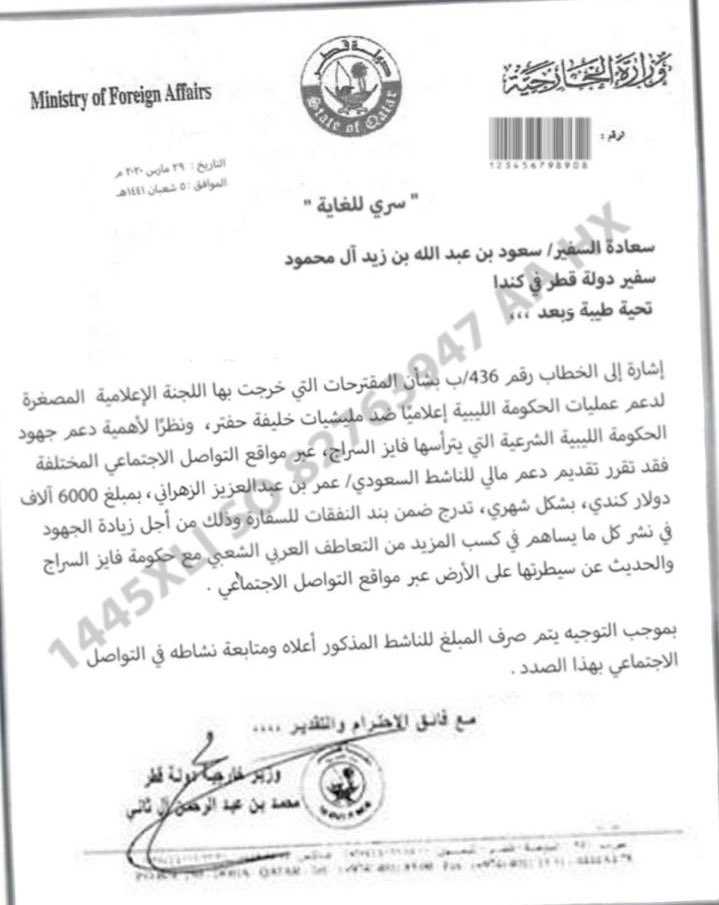
The Twitter user made a joke out of it, that $6,000 wasn’t a little money and an armored “Tiger” vehicle was also included in the price.
Turkey, and then Qatar are the GNA’s most vehement supporters, with assisting it not only with propaganda in the media, but also with very actual equipment and weapon deliveries. On the part of Ankara, there’s also thousands of fighters being deployed from Syria to fight on behalf of the UN-backed government.
Qatar rejected the declaration by Field Marshal Khalifa Haftar that he obtained a “popular mandate” allowing the military to govern Libya, considering this a new affirmation of his persistent attempt to stage a coup against international legitimacy and the Libyan national consensus as well as a clear disdain for the international community which have been watching for a long time without taking any action regarding the crimes committed against the brotherly Libyan people, especially since the beginning of the attack on Tripoli last year.
In a statement, the Qatari Ministry of Foreign Affairs affirmed that Khalifa Haftar gave a false pretext in his declaration reflecting his disregard for the sanctity of Libyan blood and the minds of those who listen to him.
“At a time when the world’s efforts are directed to stop the bloodshed in Libya and fight the coronavirus (Covid-19) pandemic, we see the continuation of the militarization of the scene and attacks on civilians and on the political track, without any regard for the tragedy of the children, women, elderly, and displaced persons of the Libyan people,” it added.
The statement called on the international community and actors in the Libyan scene to shoulder their humanitarian and historical responsibility and to prevent Field Marshal Khalifa Haftar and his militias from killing more innocents and tearing the Libyan nation apart.
Essentially, it just repeated the same accusations that the GNA-affiliated media, and the Turkish propaganda network has been attempting to propagate for a while.
The Libyan National Army, in response, has repeatedly accused the Emir of Qatar of bankrolling the GNA’s militias.
I’m proud of it
-
“Iran War: Trump Threatens More Intense Attacks as Advisors Push for
Humanitarian Crisis by Hitting Food and Water Stores; Oil Rises to Over
$100 a Barrel;...
Report on Beth Israel vigil 07-04-26
-
*1A Rights under combined attack from local government plus media*
Ann Arbor City Council is at it again. Right before the long 4th of July
weekend, they ...
Tehran As Imam Khamenei Leaves It
-
What the architect of modern Iran left behind will remain in the nation’s
political capital, accompanying generations of Iranians to come.
-
Hello all,
It is with great sadness that I share with you the passing of our beloved
sister, Mother, and Grandmother, the individual that you all knew ...
Best Horror Podcast
-
Best Horror Podcast Introduction: Horror podcasts […]
The post Best Horror Podcast appeared first on Copper Shock Horror Podcast.
Ikhras Endorses Muntadhar Al-Zaidi
-
“Oh parties of banditry and sectarianism and corruption, we have come and
our goal is to destroy you.” Ikhras formally endorses Muntadhar al-Zaidi,
Iraqi j...
Prince Charles: Foreign Jews behind bloodshed in ME
-
In May, 2017, British Crown Prince Charles declined an invitation from
Zionist entity’s president Reuven Rivlin‘s to attend the 100th anniversary
of the no...
Palestinian Women – One for All, All for One
-
Honouring All Palestinian Women by Honouring Three: Hanin Zoabi, Ahed
Tamimi, Samah Sabawi Vacy Vlazna “Palestinian women have always stood side
by side ...
US’s Saudi Oil Deal from Win-Win to Mega-Lose
-
By F. William Engdahl Who would’ve thought it would come to this? Certainly
not the Obama Administration, and their brilliant geo-political think-tank
neo-...
-
*Mordechai Vanunu wins human rights prize of Brazilian Press Association *
* http://www.alternativenews.org/english/index.php/features/updates/7038-mordechai...
Abdul Aziz Rantissi:
"My ultimate wish, my God, is to attain martyrdom,"...God granted him his wish on April 17, 2004, at the hands of Israeli assassins.