Saturday, 6 November 2021

The Liberation of Marib: Three Goals with Three Results

 Nov 5,2021

The Liberation of Marib: Three Goals with Three Results

By Ali Al-Darwani

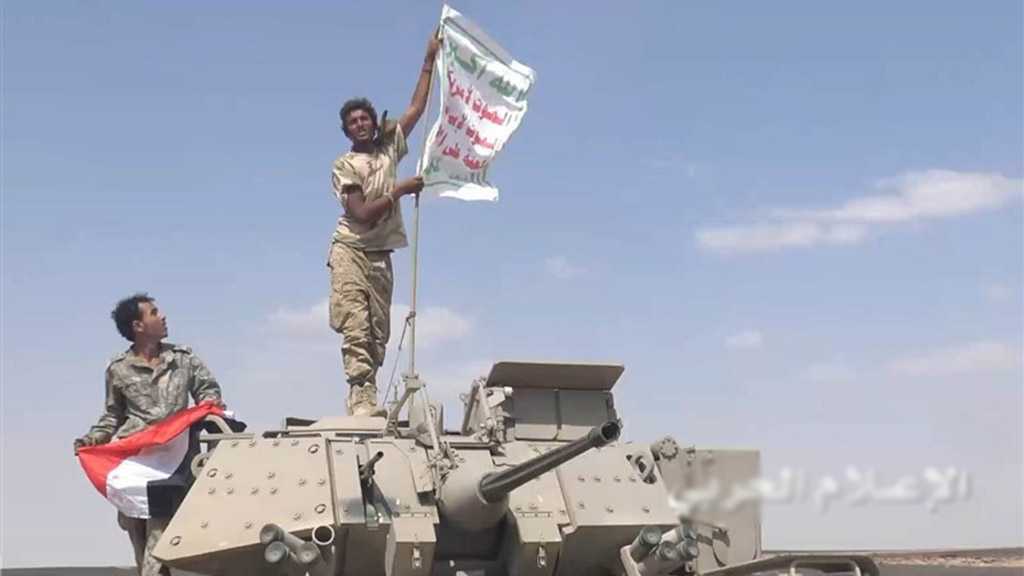
The pace of the liberation operations of Marib is accelerating unexpectedly, suggesting that its conclusion is around the corner. This is what the battlefield says. Looking at previous military operations by the army and the popular committees, including the ones in Nasr Min Allah, Al-Bunyan Al-Marsous, and Amkan Minhom to the subsequent operations in Al-Bayda, Shabwa, and Marib, all the way to Rabi Al-Nasr 2, tell us the victories on the ground are understated. The armed forces hold back on declarations in order not to compromise military, security, and intelligence operations. This means that the announcement by Brigadier General Yehya Saree during Wednesday’s briefing by the armed forces downplays the extent the achievements on the ground. And the coming days will reveal the reality.

This is as far as the battlefield is concerned.

The situation is not much different when we examine the data and expectations, which expose convictions among the mercenaries of the aggression, of the inevitable liberation of Marib, or, according to them, the fall of Marib. It’s just a matter of announcing it officially, which reflects the collapse of the morale of the elements of the aggression and their acceptance of the expected fait accompli. Perhaps the defeat of the aggression in Fardt Nihm, then in Kovel and Mas, and more recently in Abdiya, Mahlia, Rahba, Jabal Murad, and Juba add insult to injury. They can be added to the many setbacks they’ve suffered and will be carrying on their backs to the city of Marib.

The string of defeats were reflected in statements and insinuations by the leaders of the mercenaries and their media mouthpieces, which began to talk about the danger of the fall of Marib for the rest of region. They are not just talking about Yemen’s occupied south, but rather about the Arabian Peninsula and the region as a whole.

These exaggerations are tempting Riyadh to throw more weight behind these battles even though it has spared no effort in providing military support, especially from the air, including hundreds of raids to prevent and curb military progress on the ground. But to no avail.

Nevertheless, the mercenaries issued a statement – attributed to the parties supporting it – mourning Marib in light of the recent victories by Yemen’s armed forces and holding the Saudi-led coalition and the regime it backs responsible for the defeat.

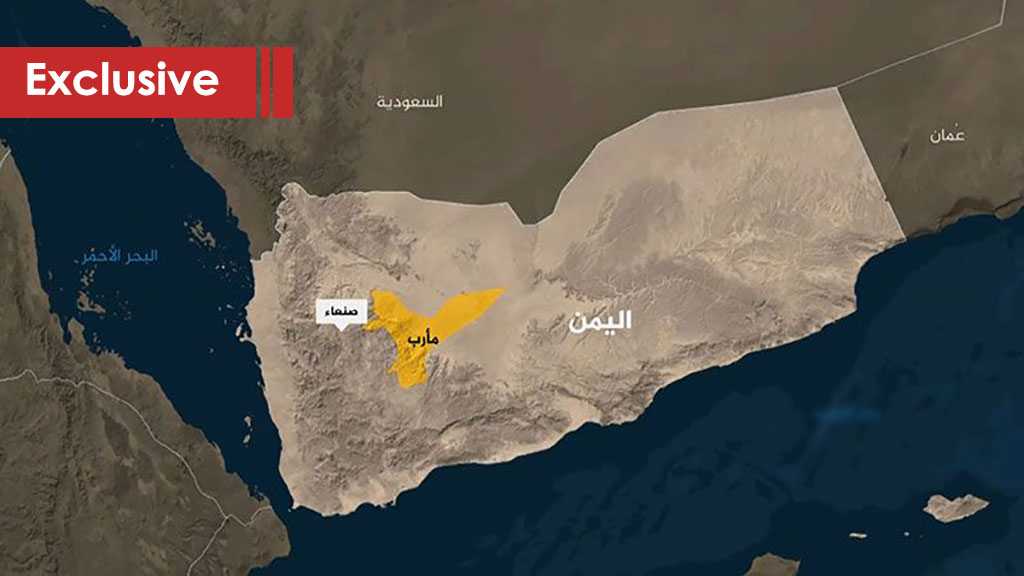
Marib is important to Yemen politically, militarily, and economically. Politically, it is an occupied part of the country and cannot in any way be left in the hands of the invaders and occupiers. It must be returned to the bosom of the homeland and complete national sovereignty must be imposed and restored.

Militarily, Marib has always been a focal point and a dagger in Yemen’s waist. The forces of aggression used it as a camp in which they collected elements of Al-Qaeda, Daesh, and other takfiris, as well as remnants of the Islah party, and a handful of mercenaries looking for Riyadh’s crumbs, including oil and gas. This dangerous outpost, which threatened all its neighboring areas – Al-Jawf in the north, Sanaa in the west, and al-Bayda in the south – should not remain a source of danger and a hotbed for the elements of Al-Qaeda and Daesh.

Economically, Riyadh has used Marib as a tool for its siege, cutting off oil, gas, and electricity supplies – the most vital services for all aspects of life for a large segment of the Yemeni people – to other areas. Liberating Marib will break part of the unjust siege and plans by the aggressors and their hopes to break the will of the people and bring them to their knees will be destroyed.

Speaking of the results, internally, thwarting the aggression and its plans, especially the partition plan, and taking one of the most important cards out of the equation, is considered an important achievement, which will bring the aggressors to the negotiating table without arrogance as well as political and humanitarian blackmail.

It will undermine their ability for political maneuvering and their dangerous gamble at the expense of the Yemeni people, their present, and their future.

The second result concerns the people of Marib who will return to their homes, and farms after being displaced for years. Meanwhile, calm and security will return to the country, the price of the riyal and the prices of essential goods and materials will decline, as these have recently been achieved in liberated districts in the south of the governorate. As for the people of Marib belonging to the other camp, Sayyed Abdul-Malik al-Houthi’s initiative still stands; they must seize it today because it is their only way out.

The third result is regional. It relates to [Mohammed] bin Salman and the loss of one of his most important cards, which he uses to bargain here and there, selling and buying from other people’s possessions. By doing so, he is losing what he imagined from a regional position – strength and reliance on his cross-border influence and powers. Now, he will appear to have lost all these cards and will stop fiddling with and engaging in unfair bargains.

What has been achieved to date clearly expresses that, by God’s grace, the Yemenis have overcome strategic obstacles to reach the position of imposing conditions on the enemy, with confidence and power, depending on the facts on the battlefield as well as historic and geographical facts. To God be the glory before and after.

Related Videos

Related Articles


River to Sea Uprooted Palestinian   
The views expressed in this article are the sole responsibility of the author and do not necessarily reflect those of the Blog!

Member of Top Iranian Clerical Body to Al-Ahed: We Are Living In an Era of Major Victories

 Nov 5, 2021

Member of Top Iranian Clerical Body to Al-Ahed: We Are Living In an Era of Major Victories

By Mokhtar Haddad

Tehran – Iranians are celebrating the 42nd anniversary of the seizure of the US embassy in Tehran by Iranian students and the closure of the American spy den, which acted as a central nervous system for espionage, and interference.

The leader of the Islamic Revolution, Imam Khomeini described this event as the second revolution. This day also coincides with the anniversary of Imam Khomeini’s exile from the country in 1964 and the beginning of the Islamic renaissance in Iran. Imam Khomeini led the revolution and returned to the country in 1979. The revolution of the Iranian people triumphed under his leadership.

This day also commemorates the martyrdom of dozens of Iranian school and university students who perished at the hands of the Shah’s regime during a march in front of the University of Tehran.

This year’s anniversary of the closure of the American spy den in Tehran coincides with another blow dealt to the US in international waters when the Islamic Revolutionary Guard prevented American pirates from stealing Iranian oil.

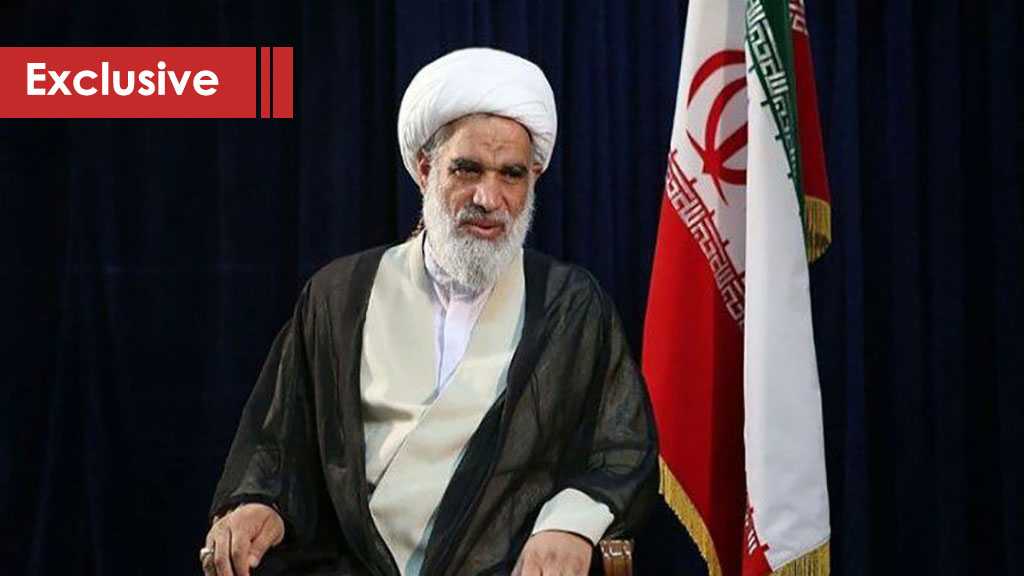
On this occasion, Al-Ahed news website sat down with a member of the Presidency of Iran’s Assembly of Experts, His Eminence Ayatollah Sheikh Abbas Al-Kaabi, who confirmed that the discourse of the Islamic Revolution presented a model for civilized jihad in the face of arrogance. This discourse, which was initiated by the honorable Imam Khomeini and continued by the Grand His Eminence Imam Sayyed Ali Khamenei is based on several elements:

  • 1st element: Transforming weaknesses of the nation into strengths at all levels – cultural, economic, political, social, scientific, technical, defense and military
  • 2nd element: Turning enemy threats into opportunities for development and civilization at all levels
  • 3rd element: The cognitive view of power as a means of creating civilization not creating and producing power in order to dominate other human beings
  • 4th element: Emphasis on the value system that starts from monotheism, justice, and human dignity and continues to consolidate the principles of ethics, development, science, religious governance of the people, and effective political participation in the light of values and morals
  • 5th element: Removing the obstacles by combating tyrants, aggressors, corrupters, and the arrogant
  • 6th element: Interaction with the Islamic awakening movement, restoration of nation-building and rooting the culture of resistance and the creation of civilization
  • 7th element: The establishment of principles and values and the preservation of Islamic belief and knowledge in order to create an Islamic way of living that is compatible with Islamic values within the Islamic nation
  • 8th element: The fight against backwardness and moving towards scientific development among the sons of the Islamic nation
  • 9th element: Combating strife within the nation and emphasizing the strategy of unity among its sons
  • 10th element: Focusing on the scientific and religious reference for the people of the nation in line with the requirements of the age and time
  • 11th element: Knowledge and subordination to the righteous and intellectual leadership to create victory after victory in the face of global arrogance
  • 12th element: Creating a new general structure for the nation and overthrowing structures, organizations, and administrative frameworks of global arrogance in international relations
  • 13th element: Supporting independence, freedom, and movement towards achieving justice and development for Islamic peoples and countries in the face of hegemony, influence, and penetration of global arrogance
  • 14th element: Focusing on interreligious and intercultural dialogue in the framework of monotheism, justice, and human dignity

Ayatollah Al-Kaabi concluded by saying: These 14 elements need the rise and resistance of the sons of the nation against the global arrogance system at all levels.

The discourse of the Islamic Revolution in the light of the ideas of Imam Khomeini and Imam Khamenei today created glory for the nation as well as an uprising and a movement of resistance against global arrogance. Today, we are stronger than ever, and global arrogance and its puppets in the region are weaker than ever. We are living in an era of great victories and the nation’s children pioneering resistance against global arrogance.


River to Sea Uprooted Palestinian   
The views expressed in this article are the sole responsibility of the author and do not necessarily reflect those of the Blog!

Partner in Unending Crimes: US Approves $650m Weapon Sale to Saudi Arabia

 Nov 5, 2021

Partner in Unending Crimes: US Approves $650m Weapon Sale to Saudi Arabia

By Staff, Agencies

Taking yet another part in unending crimes against Yemeni children, the United States approved a $650m sale of air-to-air missiles to Saudi Arabia, the Pentagon announced.

The announcement brings to light the Biden administration’s first major weapons deal with the Gulf kingdom.

In a statement on Thursday, the Pentagon claimed that the US State Department approved the sale to help Riyadh ‘counter current and future threats.’

It added that Massachusetts-based firm Raytheon would be the “principal contractor” for the sale of AIM-120C-7/C-8 Advanced Medium Range Air-to-Air Missiles [AMRAAM] and related equipment.

The sale comes months after President Joe Biden claims he would end US support for Saudi Arabia’s “offensive operations” in Yemen, including “relevant arms sales.”

The State Department’s bureau of political-military affairs alleged in a series of tweets on Thursday that the missiles are “not used to engage ground targets.”

The sale does not require congressional approval, but lawmakers can block the deal by passing a disapproval bill in the Senate and the House of Representatives.

The missile sale follows the US approval of a $500m helicopter maintenance deal for the kingdom in September.

As a candidate, Biden berated Saudi Arabia over the Yemen war and the killing of US-based journalist Jamal Khashoggi, calling the kingdom a “pariah.”

Saudi Arabia and its allies launched a devastating war against the poorest Middle Eastern country in 2015 to reinstall former president Abd Rabbuh Mansur Hadi, a staunch ally of Riyadh, and crush the Ansarullah resistance movement.

The coalition of aggression, however, has so far fallen way short of the goal. Hundreds of thousands of Yemenis have, however, died ever since amid the aggression and a simultaneous siege that the forces have been imposing on the entire nation.

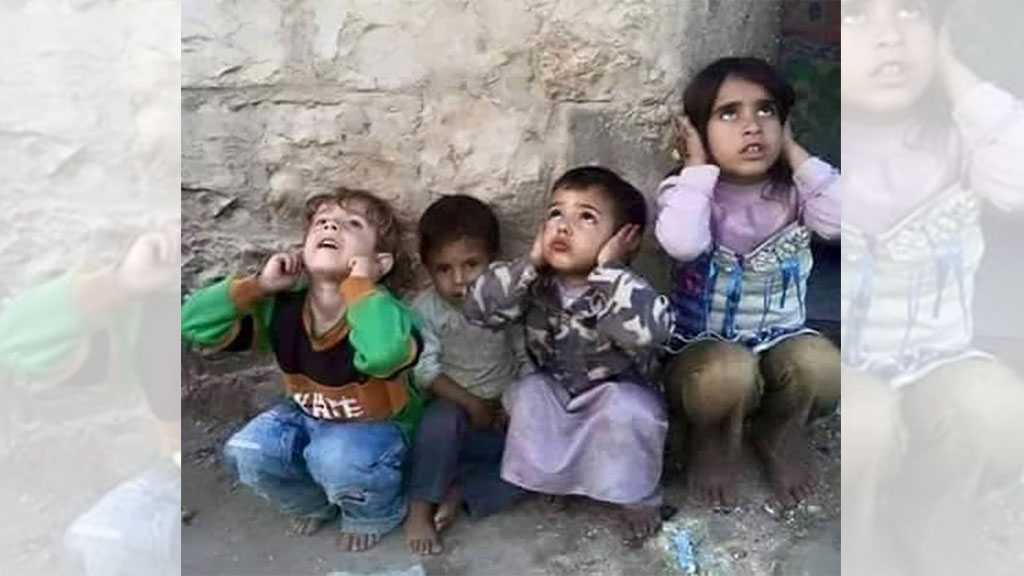
The protracted war in Yemen has killed or maimed at least 10,000 children since the war began in March 2015, which is equivalent to four children every day, the United Nations Children’s Fund [UNICEF] said in October.


River to Sea Uprooted Palestinian   
The views expressed in this article are the sole responsibility of the author and do not necessarily reflect those of the Blog!

Land Destroyer is now “The New Atlas” – New Name, New Website


October 24, 2021 (Brian Berletic – LD) –

After many years of running “LandDestroyer” on Blogspot, I have finally created a new independent website: NewAtlas.report. 

Please visit The New Atlas to find and follow all of my recent work. Below is a playlist featuring daily videos I put out on YouTube and it will update inside this post regularly – otherwise all new articles will be published only on The New Atlas website. 

There are NO ads and NO paywalls on The New Atlas website and there never will be. So please bookmark and share it with others. 


The New Atlas is on YouTube here, Odysee here (a backup if ever YouTube deletes my channel) and can be found on Patreon here. 

Related


River to Sea Uprooted Palestinian   
The views expressed in this article are the sole responsibility of the author and do not necessarily reflect those of the Blog!

Meeting of the Supreme State Council of the Union State: Russia-Belarus

 November 05, 2021

http://en.kremlin.ru/events/president/news/67066

Meeting of the Supreme State Council of the Union State: Russia-Belarus

November 4, 2021Sevastopol

Documents signed during the meeting included the Decree of the Supreme State Council of the Union State that sets forth the Guidelines for Implementing the Provisions of the Treaty Establishing the Union State in 2021–2023. Also, following the meeting, the sides signed resolutions of the Supreme State Council of the Union State On the Results of Russian-Belarusian Trade and Economic Cooperation Throughout 2020 and in January-June 2021, On the Union State’s Military Doctrine, On Awarding the 2021 Union State Prize in Science and Technology, as well as the Resolution of the Supreme State Council of the Union State On Implementing the Decisions of the Supreme State Council of the Union State.

* * *

President of Russia Vladimir Putin: Mr Lukashenko, friends,

The meeting of the Supreme State Council of the Union State we are holding today is, without exaggeration, truly important. We will be adopting a series of documents for further promoting and enhancing the economic, political and military integration of Russia and Belarus.

It is symbolic that this meeting is taking place on a special day for Russia – National Unity Day. Mr Lukashenko, thank you very much for your congratulations. This holiday symbolises the sincere and deep love of our Motherland, as well as the triumphant spirit of unity that has been passed on from one generation to another for many centuries.

In this regard, Russia and Belarus have much in common. We share the bond of centuries-old brotherly friendship, a shared past, spiritual and moral values, and quite often, family ties. In all times, our peoples have assisted one another in their hour of need. Together, we have defended freedom and independence, fought shoulder to shoulder against external enemies, and worked hand in hand to ensure the wellbeing and prosperity of our peoples.

I have said this on many occasions, but still I would like to reiterate that for Russia, Belarus is not just a good neighbour and our closest ally, with whom we have built a relationship of mutual respect and support, seeking to take into account each other’s interests, but also a truly brotherly Republic, a brotherly people. Making sure that it stays this way forever is our unwavering commitment.

Since the citizens of our countries want unity, 25 years ago Russia and Belarus embarked on a journey to establish a political and economic integration structure, the Union State. Over the past quarter of a century, we have accomplished a great deal together for our common economic space.

Our countries’ economies are closely intertwined and deeply interconnected. Russia is the main business partner for Belarus and accounts for almost one half of Belarus’ foreign trade. We rank first in terms of direct investment in the Belarusian economy, that’s about US$4 billion. Some 2,400 Russian companies operate in Belarus. In turn, Belarus is Russia’s number one trading partner within the CIS and ranks fourth among all our foreign trade partners with a share close to 5 percent.

Even during the coronavirus pandemic, as the President of Belarus has just mentioned, there has been some positive momentum in our bilateral economic cooperation. In particular, according to the data we have, in the first eight months of 2021 bilateral trade increased by almost 36 percent to US$24 billion, while Mr Lukashenko has data for the first nine months: the numbers could be approaching US$28 billion, which is a very robust result.

Multifaceted sectoral ties and industrial cooperation between Russia and Belarus are also picking up steam with new shared value chains and a growing common transport infrastructure. We are carrying out high-tech, research-intensive projects, including the construction of a nuclear power station in Belarus – the first unit was launched this year.

I would like to remind you about the proposal put forward by Belarus; the President of Belarus also mentioned this in his remarks. It deals with adding a Belarusian cosmonaut to the International Space Station crew. Yesterday, we discussed this with Roscosmos executives in Sochi. We are ready to support this proposal and to carry it out soon. We need to agree on some aspects, but these are not challenging matters, so I am sure we will resolve them.

As for integration, we will not rest on our laurels. The President of Belarus said we would be approving a comprehensive and far-reaching document today: the Guidelines for Implementing the Provisions of the Treaty Establishing the Union State for 2021–2023. This is the fruit of lengthy, intensive, and sometimes challenging talks between our governments and corresponding agencies. Mr Lukashenko and I kept a close eye on the progress of these talks.

This document covers 28 sectoral Union programmes designed to promote a coordinated macroeconomic strategy, introduce unified taxation principles, which is extremely important, implement a common policy in the credit and financial and banking sectors, in industry and agriculture, harmonise regulations for the unified oil, gas and electric power markets and for transport services.

By the way, I have just mentioned the oil and gas markets. We keep a close eye on these matters since they are very important and often cause controversy and heated debate. Nevertheless, even in this sphere we have achieved serious progress. You are probably aware of what has been going on in the global oil and gas markets. Today, Belarus receives natural gas from Russia at a price that is seven or eight times, and at certain points, nine or ten times lower than the European spot markets. Even if we are talking about gas supplies to our consumers under Gazprom’s long-term contracts and make a comparison with them, the price Belarus pays is still three or four times lower. This concerns the people of Belarus and the households there that get energy at the lowest possible price. This also benefits the entire Belarusian economy and its industry, placing it in a favourable competitive environment, which facilitates its development.

By carrying out these sectoral integration programmes, Russia and Belarus can create an equal and unified business environment. The two economies will follow common rules and standards, which creates new, truly broad opportunities to promote their progress and will benefit all sectors without exception.

Of course, full economic integration would be impossible without progress on establishing a single migration and visa space. It is essential that we fully deliver on the promise of unimpeded labour mobility and guarantee our citizens the freedom of movement while taking into consideration all associated security risks. This is the purpose of the Union State Migration Policy Concept as drafted by our governments. A lot has been done on this front as well.

Building the Union State is not just about intertwined economies, but also about coordinating our efforts in other spheres, including political and defence matters. The President of Belarus has mentioned this as well. In this regard, it is essential that we facilitate close ties between Russian and Belarusian ministries and agencies. Of course, the role of the Permanent Committee of the Union State will be growing.

Creating an atmosphere of stability and security along our external borders has special importance in this context. We will work together to counter any attempts to interfere in the domestic affairs of sovereign states. Make no mistake, Russia will continue supporting the brotherly people of Belarus.

The Union State will make meaningful progress in promoting integration. At the end of the day, this will improve the standard of living and wellbeing of our people. Of course, we will keep up our targeted efforts to give new significance to the Union State and fully unlock its creative potential.

Thank you for your attention.


River to Sea Uprooted Palestinian   
The views expressed in this article are the sole responsibility of the author and do not necessarily reflect those of the Blog!

Friday, 5 November 2021

Lot’s of things happening at the same time (UPDATED)


November 04, 2021

Let’s begin with a few headlines:

The first two seem to point to a US realization that war against China and Russia is unwinnable and that the USA simply does not have the means to impose a global world order run by one hegemon.  Some will say “well, good morning USA!” but the importance of these two events is that it appears that the USA has officially come to the realization that the international world order they attempted to impose on the planet is unachievable.  The fact that top US officials admit that is a very positive development and it pushes back the risks of a major, possibly nuclear, war.

The next two are probably a side-effect of the former, that is to say that since the USA cannot simply bully Russia and/or China, they now feel the need to bully Nicaragua and treat it like Cuba and Venezuela.  That is a very bad sign, as it shows that while Uncle Shmuel did have to give up his planetary ambitions, the nutcases in Congress are still bad old imperialists in the worst sense of the word, and they still think that they can, and should, bully smaller nations into submission.

Finally, there is this really weird story in the Gulf of Oman.

What actually took place here is hard for me to tell.  So first, let’s watch the video as filmed by the Iranians:

First, we see what appears to be an unopposed landing of IRGC soliders on an oil tanker.  Next, a number of fast attack craft led by what looks to me as a Shahid Nazeri high speed catamaran appear on the scene.  Then we are shown footage of a USN Arleigh Burke-class destroyer apparently heading in the direction of the IRGC catamaran.  Next, we see the oil tanker surrounded by Iranian fast attack craft which are shown delivering more personnel on the oil tanker.  A quick shot appears to show the Iranian fast attack craft ahead of the USN destroyer.  Then we hear what appears to be an IRGC radio message to the USN destroyer to leave the area and the USN reply that the destroyer is on “routine operations in international waters”.  Next we see close footage of the destroyer which suggests that the IRGC fast craft came very close to it, possibly surrounding it on all sides.  The destroyer’s hull has the number 68 which appears to belong to the USS The Sullivans.  We are also shown another number, 112, which appears to show that the USS Michael Murphy was also involved in the incident.

Next, we see that one of the two USN destroyers appears to be overtaking the tanker, possibly “pushed” away from it by Iranian fast attack craft.  They are then joined by the Iranian catamaran.  The Iranian then get very close to the USS The Sullivans and point their heavy machine guns at it.  Then we see this image:


Unless this picture was doctored we see three undeniable things:

  • The USN destroyed has fully stopped (no wake)
  • The Iranian catamaran is directly in front of the USN destroyer, facing it
  • Several fast attack craft are also in the immediate proximity
  • The USN destroyer is very close to the oil tanker, which begs the question why this destroyer ever got so near the oil tanker if it was “only” conducting “routine operations”?

In this very short shot it appears (at least to my non-trained in naval recognition eyes) that the 2nd USN destroyer is following the USS The Sullivans:


Next we see the tanker leaving the area while the USN destroyed is stopped, surrounded by Iranian vessels.  The Iranian then appear to also leave while escorting the tanker.  Then the various ships appear to be leaving.

The Iranians claim that the USN was trying to seize the tanker in a act of “piracy”.  The US only admits that an “incident” took place, but does not explain why/how its destroyers got so close to the tanker.  I see no evidence at all that any US personnel was on the tanker, yet the Iranians claim that its oil was transferred to another ship.  That makes no sense to me.

But what is undeniable is this: two USN destroyers were extremely close to that tanker and that IRGC forces forced both of these destroyers to first stop and then change course and leave.  That, by itself, is yet another huge slap in the face of what still remains the most powerful navy on the planet.

I would also note that the surface ships from the IRGC we see on the footage is only part of what the forces the Iranians must have had ready should a shooting incident begin: they could have had one, or several submarines nearby, and they certainly had their coastal defense missiles targeted at the USN destroyers.

The key factor here, as always, is that the Iranians were clearly willing to fight and, if needed, die for their country.  The USN personnel not so much 🙂  It is one thing to fire cruise missiles while being comfortably out of range and quite another to, literally, see IRGC soldiers face to face.

So I will let Roger Waters sing the conclusion to this incident:


Hugs and cheers,

Andrei

UPDATE: better video here: 


(thanks Pappagallo!!!)https://www.youtube.com/embed/03xfHVOIgco?feature=oembed


River to Sea Uprooted Palestinian   
The views expressed in this article are the sole responsibility of the author and do not necessarily reflect those of the Blog!

HOUTHIS DESTROYED MA’RIB CITY COMMUNICATION TOWERS WITH BALLISTIC MISSILE

  04.11.2021

Houthis Destroyed Ma’rib City Communication Towers With Ballistic Missile
Illustrative image, source: the Houthis media wing.

South Front

On October 4, a ballistic missile struck communication towers in the western outskirts of the city of Ma’rib, which is held by Saudi-backed forces.

The missile was allegedly launched by the Houthis (Ansar Allah) from the province of Saada, to the north of Ma’rib. As a result of the strike, all communications were cut off Ma’rib city.

The communication towers were equipped with military and civilian systems. The two main telecommunication companies in Yemen, MTN and Sabafon, were transmitting from the towers.

The Houthis are currently leading a large-scale offensive to capture Ma’rib city and nearby oil fields from Saudi-backed forces.

In the last few weeks, the Houthis made significant gains in southern Ma’rib. The group also stepped up its missile strikes on the province, according to pro-Saudi sources.

On October 28, a ballistic missile struck the house of Sheikh Abdul Latif al-Qibli Nimran, a Saudi-backed tribal leader, in the town of Al Sayyad. The Sheikh survived the attack. However, 12 people, including two of his children, were killed. On November 1, a ballistic missile strike targeted a mosque and a religious school run by Salafist scholar Yahia al-Hajuri in the town of al-Aumd. Al-Hajuri survived the attack. Nevertheless, 39 people were killed.

While all recent ballistic missile strikes on Ma’rib were attributed to the Houthis, the group is yet to official claim responsibility.

The Saudi-led coalition has been working nonstop to repel the Houthis’ offensive in Ma’rib. The coalition claims that more than 115 Houthi fighters were killed and 14 vehicles of the group were destroyed in the province as a result of some 25 airstrikes which were carried out by its warplanes between November 3 and 4.

MORE ON THIS TOPIC:


River to Sea Uprooted Palestinian   
The views expressed in this article are the sole responsibility of the author and do not necessarily reflect those of the Blog!

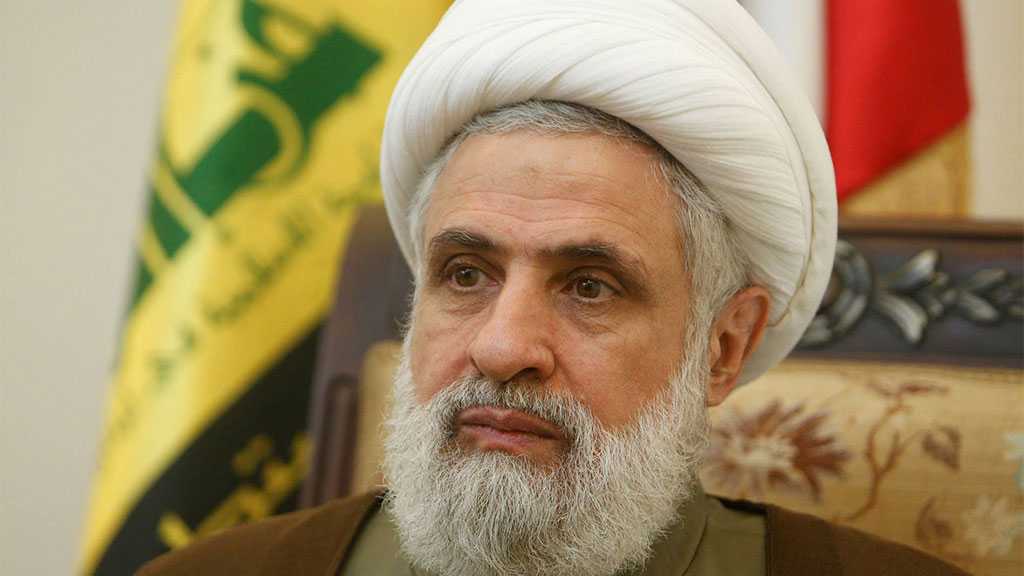
Saudi Arabia Started Its Aggression against Lebanon; Twisting Hezbollah’s Arm is Impossible – Deputy SG

 Nov 4, 2021

Saudi Arabia Started Its Aggression against Lebanon; Twisting Hezbollah’s Arm is Impossible - Deputy SG

By Staff

Hezbollah Deputy Secretary General His Eminence Sheikh Naim Qassem asserted that Saudi Arabia is disturbed because it couldn’t dominate the political decision in Lebanon despite the cash it had spent on its allies in Lebanon, pointing out that Saudi Arabia couldn’t put up with its casualties in the region, so its aggression on Lebanon was just a reaction, and that is one of the reasons behind the current crisis in Lebanon.

Sheikh Qassem asserted that the timing of the Saudi aggression on Lebanon is linked to Marib and Riyadh’s terrible loss in Yemen, so that it’s trying to divert attention from the battles there by exercising pressure on Lebanon.

The Hezbollah Deputy Secretary General said that Riyadh should apologize for its unjustified aggression on Lebanon, noting that the kingdom is not doing the right thing because nobody can twist the arm of Hezbollah and the Lebanese people.

“Lebanon is not a scapegoat and it’s challenging Saudi Arabia as an independent country. We won’t accept Saudi Arabia’s interference in the government after all the achievements it has accomplished,” Sheikh Qassem added.

His Eminence also said, “We will not surrender or give up on our dignity to please Saudi Arabia, even if it had practiced aggression on us, and we don’t hold responsibility for anything that happened”, pointing out that “Saudi Arabia might continue its aggression against Lebanon, as it doesn’t have any disciplines. It wants to take revenge, and it has to apologize. If it wants to continue its aggression, it will have more casualties.”

Regarding the Tayouneh Massacre, Sheikh Qassem said that “the US couldn’t achieve its goals in Lebanon despite all its attempts, and it had tried with all the possible means to turn the Lebanese public on Hezbollah but it couldn’t make it.”

He asserted that the discord that was sought in Tayyouneh massacre is an American-Saudi act executed by the Lebanese Forces party, but Hezbollah and Amal Movement have aborted it for the sake of Lebanon, pointing out that the Lebanese Forces is the sole party that receives allocations from Saudi Arabia, and the Americans have tried to integrate the Lebanese Forces members into the “NGO” groups to enhance their image.

Sheikh Qassem also talked about the maritime borders, saying that the Lebanese government is the one who says where our borders are, and Hezbollah doesn’t interfere in that, adding that “we are waiting for the government to finish the demarcation process and the disputed areas.”

He also stressed that “If the government says that the “Israeli” enemy is assaulting a disputed area, we, as a resistance, will do our duty.”

Regarding the relationship with Syria, Sheikh Qassem noted that the relationship between Hezbollah and Syria is very good, especially with Bashar al-Assad as a president, and the relations with the Syrian Arab Army is very good as well, adding that such relations are unshakable, and that there is a high level of coordination on the mutual ties.

He said that the Hezbollah-Syrian relationship is one that became deep by blood, resistance, and liberation, and that such relationship was never this good in any past period.

His Eminence also said that “many of our Resistance fighters have come back to Lebanon, and the number of fighters that stayed there is related to the situation on the ground”, asserting that “we are ready for any larger or lower presence there depending on the developments.”


River to Sea Uprooted Palestinian   
The views expressed in this article are the sole responsibility of the author and do not necessarily reflect those of the Blog!

Ansarullah’s capture of Ma’rib is a major regional turning point: Kandil

 November 4, 2021

Yemeni Army Forces Capture Key Military Base in Marib

Description: 


A short article by Nasser Qandil on the significance of the current battle for Ma’rib, a strategic Yemeni city currently held by pro-Saudi forces but which is reportedly on the verge of falling into the hands of forces led by the Ansarullah Houthis, a movement that is part of the Iran-led regional ‘Resistance Axis’.

Qandil is the Editor-in-Chief of the Lebanese Al-Binaa newspaper, and a prominent fixture on Lebanese and Arab television.

Source:  Al-Binaa newspaper (website)

Date:  November 1, 2021

(Note: Please help us keep producing independent translations by contributing a small monthly amount here )

Transcript:

Post-Ma’rib will not be the same

November 1, 2021

The battle of Ma’rib and the regional equations at stake (for the overall) war in Yemen are almost similar to the battle of Aleppo and the regional equations (that were) at stake (for the overall Syrian War. Aleppo was the starting point for a stable path in the Syrian War, after which successive victories began to follow in favor of one team – the Syrian state backed by its allies – from Aleppo to the countryside of Homs, Hama, the Syrian desert and Palmyra, all the way to Deir ez-Zur and back to Ghouta and southern Syria.

Ma’rib is following the same path. Unless there is a tempting settlement that satisfies (the) Ansarullah (movement) and stops them from continuing to fight battles, the Battle of Ma’rib is following a path that ends in seizing the provinces and cities of Yemen by the army, the (popular) committees and (the Houthi movement) Ansarullah.

Geographically, Ma’rib is the most important city in Yemen. Although it is neither the first nor second capital (of Yemen), it is the connecting point between the southern and northern governorates of Yemen. For Mansour Hadi, his government and the Arab coalition led by Saudi Arabia, the failure to retain Ma’rib means the impossibility of defending other cities, and (it means) success for the (Houthi-led) army, the (popular) committees and their supporters in securing a decisive victory in the Battle of Ma’rib, and probably other battles in the future.

After the (use of) drones and ballistic missiles settled Yemen’s firepower (superiority and) control over the energy security and commercial navigation of the Gulf, and (their use) had a vital and effective impact on the security of vital installations within the Gulf states, the war in Yemen was decided in favor of Ansarullah on Yemeni land (too).

Just as the (2006) July War and the Syrian War led to the rise of Hezbollah’s power, a new regional situation will be formed with the victory (of the Houthi movement) in Ma’rib, making Ansarullah a major regional player.

As much as Saudi pressure on Lebanon constitutes an attempt to stop further progress in Ma’rib, the victory (of Ansarullah) in Ma’rib will be the gateway to changing the situation in more than one battlefield, including Lebanon.


Subscribe to our mailing list!


River to Sea Uprooted Palestinian   
The views expressed in this article are the sole responsibility of the author and do not necessarily reflect those of the Blog!