Uprooted Palestinians are at the heart of the conflict in the M.E Palestinians uprooted by force of arms. Yet faced immense difficulties have survived, kept alive their history and culture, passed keys of family homes in occupied Palestine from one generation to the next.
Turkish businessman Kavala has been in prison for four years for his suspected role in the Gezi Park protests and his involvement in a failed coup attempt in 2016.
Osman Kavala
This research note discusses that the Turkish businessman Kavala has been in prison for four years for his suspected role in the Gezi Park protests and his involvement in a failed coup attempt in 2016. Kavala is one of Turkey’s most well-known civil society figures. Since the early 1980s, the billionaire has helped to establish multiple publishing enterprises in Turkey, and a decade later, he has supported numerous civil society organizations.
Osman Kavala was one of Turkey’s most prominent activists. He has been held in pre-trial imprisonment in Silivri Prison since October 2017. Authorities in Turkey accuse him of initiating the Gezi Park demonstrations in 2013.
Significantly, President Erdogan has accused him of being the Turkish leg of billionaire US philanthropist George Soros, whom he claims is behind insurgencies in several nations. He has been held in detention pending the outcome of his latest trial, and he has rejected the charges.
Whereas, the indictment of September 2020, according to Kavala’s lawyers, was nothing more than a presumed fantasy based on no real evidence. Human rights organizations around the world have slammed Kavala’s arrest, claiming the charges are politically motivated. Additionally, the European Court of Human Rights (ECHR) found that Kavala’s arrest was politically motivated and it was carried out with the goal of “bringing other human rights defenders, to the political prisoners.” (DW, 2021).
Following a similar line, the Council of Europe has given a warning to Turkey to comply with a European Court of Human Rights ruling to free Kavala pending trial, which was issued in 2019. Otherwise, it will file an infringement complaint against Turkey.
The ambassadors of the ten nations issued a unified statement urging Turkey to abide by the Council of Europe’s judgments. Germany, Canada, Denmark, Finland, France, the Netherlands, New Zealand, Norway, Sweden, and the United States all requested a “fair and swift” settlement to Kavala’s case (DW, 2021).
They further stressed, “The ongoing delays in Kaval’s trial, which include the merging of many cases and the establishment of new ones following a prior acquittal, throw a pall over Turkish court respect for democracy, the rule of law, and transparency. In light of the European Court of Human Rights’ judgment, they requested Turkey to release it as soon as possible. These ambassadors demanded a fair and expeditious settlement to his case under Turkey’s international responsibilities and domestic legislation.”
Most importantly, Kavala who has been imprisoned since 2017, has been frequently demanded their release by international observers and human rights organizations. They claim that the detention is due to political concerns. While the officials deny the allegations and maintain that Turkish courts are independent.
While the Turkish government views the ambassadors’ declaration as direct involvement in domestic politics. Turkish President Recep Tayyip Erdogan condemned the diplomats’ behavior and threatened to expel them from the country. In an intensifying disagreement with the countries, who intervened in the case of a detained businessman by demanding his release.
After their statement demanding the release of Osman Kavala, President Erdogan authorized the Turkish foreign minister to proclaim the ambassadors of ten nations to Turkey “persona non grata”. Notably, when a diplomat is declared persona non grata, they are banned in their host country and they are now just one step away from expulsion.
In a speech, Erdogan remarked, “I have directed our foreign minister to expedite the declaration of these ten ambassadors,” These ten ambassadors must be declared persona non grata. They will be familiar with and understand Turkey”. He went on to say that these ambassadors would not release “terrorists” in their nations if they did not know and understand them (Arab News, 2021).
For this reason, tensions between Ankara and the United States, Canada, Germany, France, the Netherlands, Denmark, Sweden, Finland, Norway, and New Zealand soared over Turkey’s president proclaimed the envoys “persona non grata.”
Moreover, the ambassadors had been instructed to “keep within the responsibilities of their duties after an insincere and double-standard approach and It was highlighted in our constitution that Turkey is a democratic state of law that protects human rights, and it was reminded that such reckless utterances would not affect the Turkish court”.
The government further noted that the European Court of Human Rights (ECtHR) judgments are frequently disregarded and not followed, claiming that focusing solely on Turkish cases to keep the Kavala case on the table at all times is ineffective (DW, 2021).
Whereas, former Turkish ambassador to Azerbaijan and senior fellow at the Carnegie Endowment in Washington, Alper Coskun, tweeted, “Expelling ambassadors is not a good strategy to protect national interests. Turkey’s isolation has been exacerbated by its rash foreign policy aimed at domestic politics” (Arab News, 2021).The opinions mentioned in this article do not necessarily reflect the opinion of Al mayadeen, but rather express the opinion of its writer exclusively.
Simply denouncing them but declining to take any tangible action would have made President Erdogan look weak in everyone’s eyes unless they recanted their joint statement and apologized. He couldn’t afford to do that even though he must also have expected that Western pressure against him personally and his country more broadly will soon intensify as a result.
Turkish President Erdogan announced over the weekend that he instructed his Foreign Minister to declare 10 Western ambassadors persona non grata after they meddled in his country’s foreign affairs by releasing a joint statement demanding the release of a jailed businessman who they consider to be a “political prisoner”. This is a huge diplomatic move that will reverberate for some time to come. It shows that Turkey has zero tolerance for such high-profile foreign meddling and is ready to accept the potential political consequences for expelling the Canadian, Danish, Dutch, Finish, French, German, New Zealander, Norwegian, Swedish, and US Ambassadors.
Those diplomats must have predicted that the Turkish President would react in a similar way to how he ultimately did. This implies that they planned their joint statement as a political provocation intended to catalyze a self-sustaining cycle of escalations between their countries and Turkey. The purpose of doing so is to prompt the pretext for intensifying their information warfare against him and potentially threatening sanctions, whether on that basis or a different one.
Those diplomats’ countries probably also wanted to manipulate their people’s perceptions about Turkey by making it seem like it’s “anti-Western” and “despotic”. The planned expulsion of so many ambassadors of such influential countries will certainly provoke a diplomatic crisis. It’ll likely generate incredibly hostile coverage by the Western Mainstream Media too. In other words, all of this is part of the US-led HybridWar on Turkey which aims to punish the country for its increasingly independent foreign policy in recent years.
From the Turkish perspective, it’s unacceptable to let those diplomats meddle in such a blatant way, especially regarding a jailed figure who they consider to be a “political prisoner”. Simply denouncing them but declining to take any tangible action would have made President Erdogan look weak in everyone’s eyes unless they recanted their joint statement and apologized. He couldn’t afford to do that even though he must also have expected that Western pressure against him personally and his country more broadly will soon intensify as a result.
From a larger viewpoint, Turkey is setting an example for other non-Western nations to follow. Not all of them are as confident as that country is nor might they have the “Democratic Security” capabilities to adequately defend themselves from the predicted intensification of US-led Hybrid Wars against them under such pretexts, but they might still be inspired by this huge diplomatic move. After all, a pivotal pillar of Turkish foreign policy is to present itself as a model for others to emulate, especially in the Global South and most recently in Africa.
Looking forward, Turkish-Western relations will likely continue to deteriorate. There’s a chance that the ambassadors who Turkey plans to expel might eventually return or be replaced after some time, but that probably won’t happen in the near future if the country does indeed go through with what its leader just threatened. The overall impact of this trend will be to accelerate Turkey’s proactive engagement with its new non-Western partners, with a priority given to Russia and China.
That development could be manipulated through information warfare means to reinforce the false narrative that Turkey is “anti-Western” even though it would just be pragmatically reacting to Western political provocations. Nevertheless, closer Turkish ties with Russia and China could fuel the intensification of the US-led Hybrid War against it through geopolitical fearmongering about that country’s grand strategic intentions. For this reason, Ankara must brace itself for myriad destabilization attempts ahead of the summer 2023 elections.
It’s impossible to predict the exact forms that they could take at this moment, but they’ll likely be comprehensive and thus involve economic, information, political, and perhaps even security plots. President Erdogan is increasingly portrayed by the Western Mainstream Media as a so-called “rogue” leader, the misleading perception of which will be exploited to intensify the US-led Hybrid War. He’s unlikely to capitulate to their political demands related to his foreign policy but he’s likely still interested in bargaining with them.
“Propaganda is to democracy what violence is to dictatorship” – Noam Chomsky
The sentence of the great American linguist offers a good starting point for these reflections that we intend to propose as inputs for a discussion as crucial as pressing. This is so because, according to experts in hybrid or Fifth-Generation Wars, the capacity to control consciences and hearts – or “minds and souls” to put it in a poetic form- has reached unmatched levels, unthinkable until a decade ago. The progress of neurosciences and political neuro-marketing has enormously increased the ability of the dominant classes and imperialist powers to control the beliefs, desires, and behavior of millions of people worldwide.
Demonize first, then kill
The revolutionary advances in Artificial intelligence, the “Internet of Things”, communications technologies (5G), along with the unprecedented penetration of Social Networks and the mass media, have created a new battlefield in which popular movements of national liberation will have to wage their struggles.
Unfortunately, this transition from conventional warfare to media and cyber warfare has only been recently acknowledged in its full effectiveness by the anti-imperialist forces, at a time it has been thoroughly used by the dominant powers of the international system, especially the United States government. Few examples would be more illustrative than the following to clarify our argument. At a hearing before the U.S. Senate Foreign Relations Committee earlier this century, a four-star general said that “in today’s world, the anti-subversive war is waged in the media, and no longer in the jungles or the decaying slums of the Third World.” Therefore, he concluded, “now the media and the social networks are our main operational theater.”
Both Fidel and Chávez were precociously aware that the media oligarchies constituted one of the most serious threats hanging over the future of democracies and anti-imperialist struggles. Indeed, their uncontrolled power and nefarious role in the calculated processes of “de-education”, alienation and brutalization of the citizenry, became formidable bulwarks against the advancement of the anti-imperialist and anti-capitalist consciousness. Their complete abandonment of the journalistic function in favor of a propagandistic work also constituted a fortification to that end. This is proven day by day in Latin America by observing the news manipulation intended to cover up the crimes perpetrated by the Iván Duque regime in Colombia against peaceful protesters. This was also evident in the brutal repression launched by the Añez dictatorship in Bolivia, the acts of the Piñera government in Chile, and, today, the manipulation of the electoral institutes and the dominant circles to prevent the proclamation of Pedro Castillo as the new president of Perú.
The negative role of media is also patent in press operations intended to “iron armor” information that is not supposed to be known by the public. For instance, the open links between the successive “narco-governments” in Colombia and the cocaine cartels; or the corruption of the Macri government in Argentina as proved in the Panama Papers were all carefully concealed by the hegemonic media. Moreover, nothing is said about the unjust, scandalous imprisonment of Julian Assange, one of the heroes of press freedom on a global scale.
As the writings of the imperial strategists recognized, the media and, more recently, “digital networks” have been key players in the destabilization of progressive or left-wing governments around the world. Wherever the empire, through its own troops, its cultural mercenaries, and its local henchmen, decides to attack, the media immediately occupies the vanguard positions. The demonization of the adversary and his government – let’s say leaders like Nicolás Maduro, Evo Morales, Bashar al Assad, Saddam Hussein, Muammar al Gadaffi, and Vladimir Putin – is the first step. Then, their methodical defamation and the disinformation applied on a large scale through the press, television, radio, and digital networks become crucial weapons in creating the climate of opinion required to be able to apply naked violence against those rulers. The “artillery of thought” seeks the demolition of the attacked population’s defense mechanisms. The end goal is to confuse it and make it doubt the integrity or patriotism of its rulers by presenting them to the public opinion as wicked monsters and their governments as infamous “regimes”, depicting them as ferocious police states that violate the most basic human rights. Under this storm of misinformation and “fake news”, many people will be led to think that perhaps their attackers are right and really want to free the people from the sway of their nasty oppressors. Even more, it is aimed at making them think that the pretense of “changing the world” is nonsense; – a childish illusion to build the paradise on earth that could only result in falling in the inferno. Once the cultural defenses of society are “softened” (equivalent to the bombings that prepare the way for the frontal assault) and the media battering ram has pierced the wall of social conscience poisoned it with hundreds of “fake news” and “post-truth”, and demoralized or at least confused the population and the cadres of the anti-imperialist social forces, then the ground will be ready for the final assault. It is the moment in which the imperialist forces launch an all-out attack displaying the full capacity of their arsenal to give the shot of grace to their demonized enemies: Saddam Hussein or Muammar Gadaffi, for instance.
This is not only an account of the heartbreaking past but a description of today’s strategies that the US government applies worldwide. We should be aware of this and be prepared to start an adequate counter-offensive, and the broadcasting of the Al Mayadeen programs in English is a significant step in this direction.
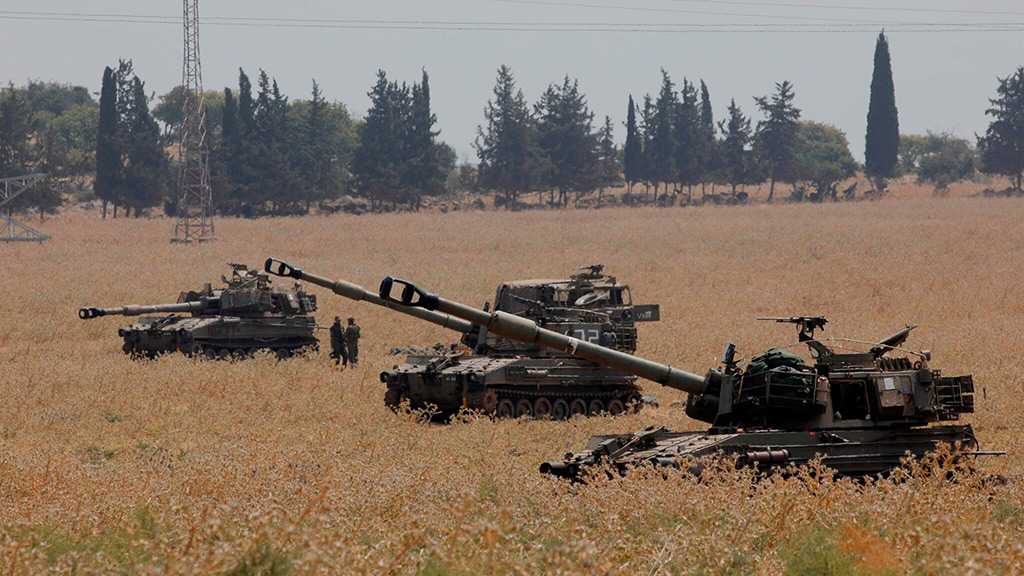
The exercises last month by the “Israeli” entity’s 188th Barak [“Lightning”] Armored Brigade on the occupied Golan Heights, illustrated the wide spectrum of threats the “Israel” Occupation Forces [IOF] must prepare for: the maneuvers included conventional mechanized operations, counter-guerrilla tactics against an irregular army like Hezbollah, and destroying tunnels.
The IOF would love nothing better than to fight an old-fashioned tank battle, at which it is famously proficient. But twenty-first-century warfare is more about guerrillas and tunnels, and these are the bane of high-tech, mechanized armies.
The “Israeli” Army has had to cope with Palestinian Resistance movement Hamas infiltration tunnels dug from Gaza into the southern “Israeli” entity. Last year, the “Israelis” discovered what they alleged were several Hezbollah tunnels between southern Lebanon and the northern parts of the “Israeli” entity, stoking fears of a surprise Hezbollah operations to seize al-Jaleel [Galilee].
The problem is that tanks can’t get inside a tunnel, but a Hezbollah fighter with an anti-tank missile can pop out of one and destroy a $5 million Merkava tank. Haunting the “Israeli” Armored Corps is the debacle of the 2006 “Israel”-Lebanon War, when Hezbollah used a sprawling network of tunnels in southern Lebanon to ambush and knock out numerous “Israeli” armored vehicles.
The “Israeli” armor commanders seemed grimly determined to avoid a repeat of 2006. “We understood there was a need for change,” Lt. Col. Yoav Schneider, commander of the “Israeli” entity’s 82nd Tank Battalion said.
If tunnels were the only threat faced by “Israel”, that would be challenging enough. But the IOF also has to prepare for a conflict with Hezbollah, a formidable practitioner of “hybrid warfare” that combines the well-trained soldiers and advanced weapons of a conventional army with the flexibility and elusiveness of guerrillas. Battling Hezbollah could encompass everything from stopping a surprise Hezbollah attack to seize “Israeli” towns, to crossing into well-fortified southern Lebanon to destroy Hezbollah rocket operations.
An advance into Lebanon will not be the timid, clumsy offensive of 2006.
The threat of advanced anti-tank weapons, such as the deadly laser-guided Russian Kornet employed by Hezbollah in 2006, had led some critics to question whether tanks are still useful. Combat in the rough terrain that guerrillas will operate from, such as hills or the numerous villages that dot Lebanon and Syria, is challenging for armored vehicles.
And there yet still more challenges the IOF must train for. And the worst part is that the “Israelis” can never be sure which threat will emerge next. This array of threats would tax even a superpower, let alone a nation of fewer than nine million people.
The push by Western forces and those sympathetic to them to misportray Russia as a “rogue regime” after this summer’s Navalny incident is meant to pave the way for a more comprehensive sanctions policy against the Eurasian Great Power and intensify multilateral efforts to “contain” it.
The Western press has recently revived the debunked trope that Russia is a so-called “rogue regime” after the latest developments surrounding this summer’s Navalny incident. The self-described “investigative reporting” outlet Bellingcat and CNN recently published a joint report claiming that the FSB tried to poison the anti-corruption blogger, which is an unrealistic scenario to speculate upon and one which was condemned by President Putin during his year-end press conference as a provocation by foreign intelligence services. Nevertheless, this information warfare narrative persists and was given fresh coverage by former chess champion Gary Kasparov in the op-ed that he published at CNN on Friday about how “It’s time to treat Putin’s Russia like the rogue regime it is”. His piece deserves to be debunked in order to set the record straight and extrapolate his agenda for propagating it.
Kasparov shares a smorgasbord of accusations straight off the bat alleging that Russia is guilty of crimes ranging from assassinating political foes with chemical weapons to invading Ukraine and hacking the US. What he doesn’t mention, however, is that no evidence has been presented to conclusively prove Russia’s responsibility for those aforesaid assassination attempts. Regarding Ukraine, Kasparov leaves out the fact that Crimea reunified with Russia after a democratic referendum and that a real military invasion of that country by Moscow wouldn’t have manifested itself in limited skirmishes contained to Eastern Ukraine’s Donbas region. Moreover, the chess champion omits the fact that Trump contradicted Pompeo’s claims of Russian complicity in the latest hack attack and actually blamed China instead. Evidently, these facts are too “politically inconvenient” for Kasparov to mention and thus had to be ignored in order to advance his weaponized narrative.
That narrative, it should be said, is one of paranoia and speculation. Parts of it read as a fever dream of a brilliant mind gone mad imagining that Russia’s security agencies are falling apart by the second despite he himself previously alleging that they’ve carried out such egregious crimes as the ones that he talked about earlier. This schizophrenic stance is explained away by his theory that President Putin simply doesn’t care anymore about how sloppy his international provocations have become because no meaningful consequences have ever followed. That’s yet another fallacy on Kasparov’s part since Russia has been victimized by an ever-intensifying sanctions regime since 2014. Still, he’s somehow convinced himself that the West is actually “appeasing” Russia by continuing to retain some limited relations with it of a pragmatic nature. These, he believes, must be immediately stopped and followed up by removing Russia from international institutions.
What he’s clamoring for is clear for any objective observer to see, and it’s a redoubling of the Western sanctions regime against Russia and an intensification of the multilateral efforts to “contain” it. Earlier attempts by some American officials to designate Russia as a so-called “state sponsor of terrorism” might receive a second life if Kasparov’s op-ed is coordinated with US intelligence officials to precondition the international public into accepting such a dramatic move. The incoming Biden Administration is chock-full of anti-Russian hawks so it’s quite possible that they might make swift progress in further worsening bilateral relations with Russia on that or some similar pretext. It should be remembered, however, that the entire basis for this scenario is the unquestionable assumption that Russia is responsible for everything that Kasparov and his allies claim, which is highly dubious to say the least.
Even so, it’s nowadays taboo for anyone to publicly challenge those accusations lest they be tarred and feathered as a “Russian agent”. The media-military nexus is operating perfectly insofar as coordinating their messaging to justify forthcoming provocations against Russia. The American people have been brainwashed into believing that Russia is one of their main enemies, with Kasparov’s comments on the latest Navalny development being used to reinforce that narrative. CNN published his op-ed in order to grant it maximum exposure at home and abroad, all for the earlier explained reasons. While his ravings are limited to the internet for now, they might soon have a real-life impact if the US runs with his claims to push through a new sanctions regime and other related “containment” efforts against Russia. This could even happen if Trump pulls off an upset and remains in office after 20 January considering his recent anti-Russian track record.
In conclusion, the only ones who gain by misportraying Russia as a “rogue regime” are the anti-Russian members of the US’ permanent military, intelligence, and diplomatic bureaucracies (“deep state”) and their international allies like Kasparov who has a personal axe to grind against President Putin. Objectively speaking, Russia’s alleged “rogue” activity pales in comparison to the US’ actual rogue actions since the end of the Old Cold War, which include drone assassinations, Color Revolution coups, HybridWars, and several large-scale wars. That’s not to deflect with “whatabouttism”, but just to remind the reader of the global strategic context for the purpose of pointing out America’s blatant hypocrisy in this respect. Looking forward, the US’ anti-Russian information warfare campaign will only intensify and won’t ever stop until Moscow submits to Washington’s unipolar hegemonic demands, which won’t ever happen so the infowar is here to stay.
Given the precarious geopolitical situation, some Russia supporters might feel that the worst thing now for Russia would be to rock the boat and enrage the West by retaliating against the hybrid war waged against it. In my view, the worst is the Baghdad Bob-like complacency and refusal to understand how serious the things are. For make no mistake, no anxious giggling or bravado (or Russian love of affectionate nicknames) can hide the severity of the current situation. If you are of a weaker disposition, skip the next several paragraphs and land on the juicy, positive bits.
I cannot (and am not trying to) offer an in-depth geopolitical analysis of the current situation in the manner of the Saker. What I can do is produce a parable (or is it allegory?) on how a determined and resourceful victim of constant and total attack must respond in order to save itself and make its enemies pay for all the inflicted pain and suffering—with interest (for after all that is what the bully likes more than anything else). What follows is a completely fictional account of a life-and-death conflict between cultures and religions and any similarities with real countries and characters are purely incidental.
Some 30 years ago, a new era in world history was loudly announced by the supposed victors of a protracted war against a large, semi-pagan people that inhabited large swaths of the continent of Sunlandia. Their vast land was called Dayland. Once they had had a large land empire which crashed and burned in the fires of a revolution fomented by its mortal enemies after having survived countless invasions by sundry power-crazed maniacs and constant enmity by the inhabitants of the lands in which the sun sets (to be called Nightland). But, no, not even the destruction of the empire and its religious importance was not enough to satisfy the haters. The new communist state was immediately shunned by the Nightlanders and retained its pariah status for all its 73 years of existence. Not only that, during its incarnation as a land of workers and peasants (nothing wrong with that), it experienced the most horrible holocaust in modern history (another great country assailed from the East, let’s call it “Mornland” suffered at least to the same extent from a different fascist tyrant). An all too brief interlude of hope and glory (apologies to John Boorman) was immediately replaced by the next phase of the never-ending conflict—isolation and attrition, nuclear threats, sanctions and sabotage, proxy wars, intelligence, economic and cultural battles, the list goes on.
Although exsanguinated by the horrors of the holocide by a semi-formal union of the countries to the West of it and exhausted by external pressures, the great county went on to achieve miracles in improving the living standards and literacy rates of its population to the extent unheard of until then. Other miracles were performed by the country in various fields of science and technology and the example set by its heroic struggle inspired countless anti-colonial and anti-imperialist movements which resulted in a fundamental reshaping of the World’s political map. Alas, it was not to last. In spite of great achievements and its crucial role as the bringer of balance to the world affairs, the great (in all senses) country broke up tragically if relatively peacefully. With its demise, the darkening cumulus cloud that had hovered over my head for at least a decade, turned into a giant fat cumulonimbus ready to explode with thunder and lightning.
Although for many people those early years of the new order were the years of hope, soon, the hope was cruelly quashed. Instead of learning the lessons of the “war in all-but-name”, the victors were blinded by their greed and unearned sense of superiority. Instead of healing the wounds of the past, they set out to deepen them by restoring the platform from which most wars of destruction had come. By breaking up federations of the heathen sub-humans, co-opting them into a new feudal system, building a power block around the genocidal transgressor and bleeding the defeated country dry, the Nightland was demonstrating for all to see that its intent was never peaceful.
The first clear inkling of things to come was a beastly aggression committed on a brave and innocent people whose only crime was to have resisted the renewed push towards the East. Conveniently forgotten and explained away by the evil masterminds as a charitable intervention, the war signalled the new phase in the war against Dayland. The border between Nightland and Dayland was pushed about 1500 km eastward. Dayland’s former allies were turned into its worst and most belligerent enemies. With every step to the right, Nightland was gaining and Dayland was losing—friends, trade and influence. Like many times before in its extraordinary history, the country was fortunate in one respect. An exceptional man appeared from nowhere to pull Dayland out of the quagmire and set it on the path of resurgence and renewed greatness. Well, this was the straw that broke the camel’s back.
We, who care about Dayland are cursing the sheer gall and bloodthirst of the criminal aggressors. Some of us are asking—is this offensive ever going to stop? Most of us know the answer—never! As long as Dayland exists with its strange mix of peoples, faiths and worldviews, it must not live. All we have left is the hope that the leadership of Dayland will be able to deal with the oncoming peril. There is a creeping worry that without a more muscular response, the country will eventually succumb to a death by a thousand cuts. So, here is an overview of the principles that should guide Dayland’s fightback—before it becomes too late.
2. The problem
Before I can talk about means, I must address the causes. Despite its size and advanced society, Dayland has no overt allies and the slightly tepid embrace of Mornland is not sufficient to compensate for this. Note, I am saying overt—that means no partners who are committed to the joint defence and who would mobilise their forces if Dayland were to be attacked. It doesn’t even have potential allies as in countries that would eventually fight on Dayland’s side. Admittedly, some of this information is very secret and there might be exceptions. The one worrying aspect is that this has never been the case before. One does not need to be a historian to realise that whenever an attack came from the dark side, at least half of Nightland was either neutral or on Dayland’s side. Some people will interject: “Oh, they are divided, at odds, it’s an illusion maintained by the printing presses, they would get a bloody nose” etc.
All of these statements are questionable.[2] The currently dominant empire of the Nightland has pretty much absolute control over its minions. Minor disputes are normal within any military, political and economic union. Note that none of the predicted cataclysmic ruptures between the partners in crime ever happened. No great economic crisis that has been predicted since before the occupation of the Borderlands has taken place. If anything, the push towards the lands of the light has intensified—the two are not mutually exclusive. Briefly, things are not looking good for Dayland, not because it is not doing well, but because a large portion of the “developed” world is still allied against it and this in itself is unprecedented and must be dealt with pronto.
The “problem” of the title is that such a situation always calls for active steps and measures aimed at weakening, confusing and discouraging the attacking opponent. Of course, such steps should always be combined with defensive and diplomatic moves but to remove the threat, a serious aggressive pushback on the part of Dayland is needed as soon as possible. When I say “aggressive”, I don’t mean crudely so. What I mean is that a fundamental change of heart is necessary. Over a thousand years of defensive wars have conditioned Dayland’s soldiers and politicians to avoid conflict as long as possible. Whether this is because of deficiencies in forward planning or deep morality is moot—the pattern of procrastination and delaying the inevitable has characterised Dayland’s military, diplomatic and political strategies for a very long time. This would not be much of a problem if it didn’t result in significant (and avoidable) losses and casualties.
Actually, it has become something of a cliché, general Winter and all. Daylanders are supposed to suffer horribly and even if they wake up in the end and prevail, the destruction wrought on them will set them back several decades—enough to strengthen Nightland and ensure its supremacy for the foreseeable future. It is this point that was countered by the great statesman who is currently at the helm of Dayland. He’d promised his opponents that Dayland would never again fight a war on its territory. Recently he had announced a substantial change to the country’s nuclear doctrine which from now on will treat any incoming missiles as nuclear—no petty stuff. And yet, this is far from enough. How come, you’ll ask? Well, if the president’s warnings and veiled threats had been sufficient, the Big Bad Wolf would not be knocking on the last piggy’s door. Admittedly, this door is made of a sturdier stuff than the previous ones but nevertheless—the fact that he has come so far should alert everybody at how precarious the situation is. We are one semi-successful colour revolution away from the ultimate victory of Nightland.
No human kindness will dissuade the scum of the earth to desist and embrace the path of peace and co-operation. The Mephistophelian financiers, venal leeches in the media, talentless parasites infesting countless NGOs and “institutes”, petty bureaucrats tasked with pulling down monuments and places of worship, businessmen sabotaging their own companies for the sake of a hidden hand and moronic generals issuing bloodcurdling threats while installing their missiles ever closer to Dayland’s borders—all of these despicable people must be given a message that they will understand and hopefully rethink their course.
3. The solution
Clearly, this is a vast topic and I have only a couple of thousand words (which I’m wasting) to outline a strategy that might or might not be successful but certainly represents a viable departure from the current dilatory posture by Dayland’s government. I shall deliberately ignore some recent attempts at countering the offensive and focus on what’s possible. One of the common quandaries in situations of this kind is that 95% of modern warfare is conducted secretly, in ways that are not only unknown but unknowable by us mere mortals. This is a world of secret institutions with large budgets and no democratic oversight, sophisticated intelligence capabilities and covert action. Although this is probably true to some extent, it makes one susceptible to a fallacy that human agency has no place in a modern war. This is analogous to what I call “cryptographer’s fallacy” which states that a brute force increase in the complexity of a cypher renders it unbreakable. As long as there is a faintest trace of human activity buried under the layers of technological obfuscation, human origins of the cypher remain discernible and actionable. This is my reasoning behind writing this. However sophisticated the enemy might appear, they cannot completely camouflage their weak spots. Even if they don’t possess any, intelligent and creative approach to counter-terror must bear fruit. The key here is unpredictability—not of the kind espoused by Donald Trump but something much more elaborate and advanced—something worthy of Russia’s genius.
Here, let me list a few principles that Dayland should embrace in order to produce a combination of a pushback and payback that is so badly needed at this moment.
3.1. By delaying the pushback, you are only making things worse for yourself. The damage/time function is passed its crossing point. The time to act is now.
3.2. There is no need to be mindlessly aggressive in the manner of the USA. The knowledge that such offensive weapons are available and can be used is often enough to dissuade the opponent. But remember, they have to be able to cause real pain.
3.3. This proposal runs against everything you have been taught and made to believe is right. Targeting “non-military” assets is an important part of this. You will have to stoop to your enemy’s level in order to rise again free from existential threat. And this time you must be ruthless—as ruthless as they are. Those sweet voices telling you to be “better” than your enemy do not necessarily wish you well.
3.4. Aggression is necessary and important in all aspects of statecraft. This does not mean a crude unyielding attack against all and sundry (this is not possible at the moment anyway) but a targeted, co-ordinated yet sub-threshold campaign of: sabotage, political warfare, targeted elimination of external and internal threats, painful reciprocal punishments for every inimical gesture and a ramping up of the threat of armed retaliation.
3.5. For this to work, you must dispense with any hopes that you will ever be accepted as equals by the West. The destruction of two of your previous incarnations in a span of about 60 years and the total war against the current one should be sobering enough. You must work for a new world in which your and other peoples will exist free from the existential threat posed by the eternal vulture.
3.6. Your adversary is neither superior nor supreme. His power rests on the pillage of ancient cultures and peoples and his time as the ruler of the world is coming to an end. That makes him dangerous but also prone to errors. Act like the brave guerrillas of old. Avoid direct punches (set battles) but fight back as fiercely as you can. It is not so much about results but attitude. He must know that any inimical moves will be costly and painful for him and his lackeys.
3.7. Once you accept the above, a whole new arsenal of subtle weapons will become accessible. This includes a myriad of fine-grain activities and micro-scale operations which can achieve remarkable results if capably co-ordinated and efficiently carried out. If you succeed in putting these in motion, you will not need hypersonic weapons (although they do help).
4. The strategy
It is here that things become interesting and difficult. How can a strategy be designed that is so sophisticated that the enemy cannot parry it (while its implementation does not involve undue effort)? First, one has to recognise that the power differential means that there is little room for error. Even more important than this is a lack of predictability which confounds the adversary and transfers initiative to the defending camp. And although the defender has fewer means to retaliate, he can make up for it by leveraging his assets and using them to his maximum advantage. These are not always visible. For example, … oh hell, enough of this silly charade! The ongoing stereotype about Russia is “gas and hackers”.
Although corny and offensive, the stereotype holds a grain of truth. For years, analysts have been speculating on the importance of gas pipelines as an appropriate deterrent. However, after five years of toing and froing on the gas front, it is becoming clear that this kind of weapon is very ineffective. The reasons are: a) it can be easily neutralised or bypassed and b) even if it’s not, it always leads to an eventual loss of influence (workings of the market, anti-Russian Western courts etc.). While it may be useful to have somewhere in the arsenal, history tells us that Russia would never use petrochemicals as a weapon even against its worst enemies. By contrast, the relentless “meddling” campaign in the West reminds us that Russia’s programmers and computer scientists are its top asset and I hope they are sufficiently incentivised to stay in Russia and protect her from the perennial aggressor. The future wars will be largely electronic.
In order to deprive Russia of freedom of action and oxygen of public sympathy, the West has embarked on an unprecedented coordinated campaign of demonisation of Russia as well as persecution, expulsion, arrest and assassination of its citizens. The degree of agreement in public opinion achieved by the new Nazis is mindboggling and I am not using this word lightly. All across the Western world Russian diplomatic property is being confiscated, ambassadors are being killed and diplomats expelled in their hundreds. The very mention of “Russia” is sufficient to trigger adverse associations in the majority of Westerners. Sanction after sanction is fired at the Russian state and its functionaries and capital projects are sabotaged without impunity.
What has been very surprising all the way through this escalating crisis is the apparent meekness of the Russian response to the enemy’s blows. By this I don’t mean complete inaction, but the belief that things are not irretrievably bad, that one event or another (e.g. election) could turn this crusade around and allow the Russians to breathe freely. Unfortunately, highly nuanced diplomatic warnings, allusions to possible outcomes, the tactic of always leaving an escape hatch ajar so that the partnyor doesn’t for one moment have to consider the consequences of his transgressions—are less than ineffective. For the adversary assumes that Russia is more afraid of an escalation (which is happening anyway) than offending or angering the evil behemoth (which is happening anyway).[3]
While going through the motions, the Americans are tightening the screws as we speak. Even the criminal geopolitical reprobate—Germany—dares threaten Russia openly without any meaningful response (Navalny, Byelorussia, Moldova, Ukraine etc.). In a word, Russia’s posture is dangerously passive. Although useful once, when a parity existed in the deadly power between the West and the East, this posture has long outlived its usefulness. It appears as a timorous, peace-at-all costs-seeking response to serious aggressive moves. The aggressor knows that Russian benevolence is not a consequence of power because this is only shown rarely and in exceptional circumstances (like the Americans who occasionally but very rarely give Russia a pat on the back). Rather, in Russia’s case it’s becoming a trope, a cliched modus operandi which hopes to appease the enemy and stay his merciless hand. But his hand won’t be stayed. He has ignored Russia’s pleading and president Putin’s warnings and is marching on. I am convinced that a change of tack is sorely needed. Judo might appear defensive but its ultimate aim is slamming an opponent against the tatami—and worse.
The three requirements that should guide a successful response strategy by Russia are:
4a. A deep change of heart
This point is perhaps the most important because it requires the most extensive social and psychological intervention. What do I mean by a “DCH”? In order to remove the curse of the West from its borders, first Russia needs to remove the West from its hearts. None of the super advanced hypersonic weapons will be worth a dime if those who are supposed to fire them idolise Hollywood and rap and fantasise about living in California or Bavaria (e. g. Gorbachev). I know that this sounds over the top but we are in an over-the-top situation where no rational dialogue is possible. We are dealing with an opponent who understands only brute force and considers Russians nothing more than dangerous semi-humans. I know, you’ll hear Americans say—oh, I’ve had Russian neighbours and they are lovely people, hard-working, keeping themselves to themselves blah blah. Aren’t you tired of that ….? The future for Russia will be very grim unless it breaks off its dependence on the West as an eternal magnetic pole of virtue and civilisation. Shakespeare, Dante, Goethe and Molière are dead and nothing will bring them back. Moreover, they have nothing to do with the unthinking racist, fascist, imperialist and chauvinist West as it is now.
The West is not a Nirvana of tolerance, gentility and democracy. It’s an artificial predatory organism whose genocidal hunger grows in proportion to the number of innocent lives it has snuffed out. It can sustain social peace at home as long as it is allowed to rob, steal and traduce abroad. Its long-term prospects being bleak, it is intent on dragging the world into the abyss not unlike what a dying Balrog did to Gandalf the Grey (damn that British propaganda). I am not advocating a total break with the West but a watchful, vary mistrust inspired by the awareness of West’s true intentions towards Russia. While it is difficult if not impossible to control the feelings of the millions of ordinary Russians, the example must come from the top. Credit where credit’s due—I am seeing a belated attempt to disrupt the activity of enemy agents inside Russia. I’ll quote Colonel Cassad: “Better late than never”.
4b. Aggressive forward posture
Emotionally, the hardest part for anybody who understands the underlying dynamics of the “European” imperialism and cares about Russia is the reactive posture of the Russian governing structures in the face of dehumanising treatment by the West. The cliches such as “open doors”, “international law”, “peaceful coexistence” and “always ready” etc. only embolden the enemy and show up Russian policy as weak, dilatory and unprepared to respond in kind (even if it Russia’s true strength is much greater).[4] This needs to change very soon if Russia is to stand any chance of regaining initiative in international relations. At the same time, the avalanche of slander and sabotage was so vast that waiting for it to rumble its way down the mountainside might have seemed like a good strategy.
Examples abound, for instance the humiliating treatment of Russia by the Bulgarians (South Stream, diplomat expulsions etc.). What should have been done was to expose Bulgaria to the maximum pressure especially economic and diplomatic. Subtle co-ordinated campaign of harassment of Bulgarian diplomats, businessmen and spies should have been par for the course. A concerted effort to harm Bulgaria might not have destroyed the country but could have contributed to a change in policy. If large gestures were out of question, an accumulation of small steps would have more than sufficed. But nothing ever came of it. The Bulgarians harassed Russian diplomats instead and the whole messy saga was forgotten. What hasn’t changed is the inimical posture by the country which owes its birth and survival to Russia. A more recent insulting treatment of Sergei Lavrov by the Croatian and “Bosnian” apparatchiks stick in one’s craw and reinforce the impression of severe weakness of the Russian foreign policy.
The recent shameful pronouncements by a Jewish president of the Ukraine whose grandfather had fought in the Red Army to the effect that Russia was guilty of starting WWII has been met by a mild rebuke from the Russian foreign ministry. A similar non-response was given following the threat by a Vukro-Nazi to deprive the population of Crimea of running water. Where are all the GRU illegals, Spetznaz snipers and sappers? What about the monuments to the heroes of the Great Patriotic War?
Every insult or threat directed at a Russian citizen (or symbol) irrespective of their status needs to be answered in kind. Let me give you a broad-brush example. For every Russian arrested abroad without a clear criminal case, a national of the offending country should be held in custody until the Russian has been released. If this is not possible, a company belonging to the offending country should be closed down and its property nationalised. For every Russian diplomat dying under less than completely innocent circumstances or being expelled, a foreign diplomat should be expelled in turn or a consulate closed down. This might be costly in the short term but would soon disabuse the barbarians of the notion that Russians are a meek and forgiving sort. Of course, these crude examples should be elaborated in order to confuse the enemy.
Sanctions are a matter of state policy but under no circumstances should they (or counter-sanctions) be applied half-heartedly. All sanctions must be treated as weapons of war. Consequently, they must never be used as a “warning” or a “slap”. Why? Because this kind of response must have been factored in by the enemy at the planning stage. Either they should be aimed at seriously harming the opponent or should be left in the rifle locker. I have the impression that Russia has been applying all of its economic weapons half-heartedly and very reluctantly.
Immediate and painful retaliation must follow any attack on Russia’s interests. Why? Because the cliché about “best served cold” is often just an excuse of the powerless. If the retaliation is not contingent on and contiguous with the original crime, it loses its meaning and its potency. Let me return to the South Stream—Russian pipeline that should have solved the problems of gas supply for the whole of Southern and Central Europe—was cancelled after a single visit to the quisling Bulgarian regime by a rabidly Russophobe US senator. After all the billions of roubles spent and thousands of hours of political, diplomatic and engineering work invested in the project, Russia’s only link with the Balkans was closed down irreversibly in a day. Russia’s response? Zilch, nada. Can this go on?
4c. Unpredictability/flexibility
If response in kind is not possible (I refuse to believe this), then small-scale but unpredictable retaliatory steps are the order of the day. One could argue that Russia’s responses are highly predictable. To illustrate—ever since say 2007, has Russia ONCE made a pro-active move that would inflict pain on its adversaries BEFORE they’d struck Russia? One can drown in excuses—Russians are trying to prevent a war (why is it their duty to do so?), they are polite (typical patronising Western head-patting) and a million others. A great deal has been made of President Putin’s stealthy moves in the Crimea and Syria. YES, that is the right way to go about things in foreign policy but at ALL LEVELS and most of the time (and often in advance of the enemy’s move). Instead of the Duma deliberating at how and when to respond (which leaves Russia an open book to its adversaries), a semi-clandestine organisation within the Ministry of Foreign Affairs needs to be formed which would work out strategies and scheduling of retaliatory responses in advance. This should be based on pseudo-random schedules where the timing and content of individual steps are not easily predicted. Furthermore, such steps should be individually intractable and only understandable when viewed as parts of a higher-level whole.
There is no reason why such strategies cannot be tweaked and adapted to real-life scenarios very quickly. The point is that the enemy reads Russia’s responses as a kind of simple code that is easy to break. “We shall respond symmetrically!” Who cares—the enemy knows this already. You should confound them by responding in a manner that gives your response maximum power. This is particularly important for a country that can compete with the West in terms of intellect but not money. In other words, I am asking for a wholesale change in strategy—from nuclear bombers to mini drone swarms (each element is insignificant but coordinated, large numbers of weak elements are capable of causing substantial damage).
I need to reiterate in conclusion that some of what I described above is starting to percolate into the official pronouncements and actions of the Russian government. They have changed Russia’s nuclear posture, restricted the space for activities of various foreign organisations and possibly social media. Further, the tone of Russian diplomacy has changed considerably in the last six to 12 months (although not perhaps as much as I would wish). This of course is very welcome but again predictable and easily ignored.[5] So in the spirit of the great victory of the Soviet people, I humbly propose: Not a step back!
This is an informal title of the Order 227 issued on 28th July 1942 by Joseph Stalin with the aim of stopping the seemingly unceasing advance by the Germans and their allies. This essay is a polemic and not an attempt at objective analysis. ↑
As I am finishing this piece, I read that Britain has exited the EU. I consider this a positive sign—the idea of a “united West” (a complete abomination and a death sentence for Russia) has gone for good. Furthermore, the Russian government has undertaken a number of positive and necessary steps aimed at reversing the enemy’s advance. ↑
I have studied this weakness of Russian statecraft in some depth. A very similar thing occurred in the years preceding WWI when Germany decided to assert its dominance in the Balkans. Russians tried to accommodate the brazen and insulting German demands until the very last moment. To those who disagree—if I am wrong, why is the West continuing with its aggressive plans despite all the warnings by Russia? ↑
Here we encounter an interesting problem. Constantly underplaying one’s strength is as dangerous as the opposite. For this reason alone, a more aggressive posture by Russia is called for. ↑
This is another danger of predictable behaviour. The enemy is incentivised to ignore it until it’s too late. By the way, public deliberation is fine as long as it has the potential of producing unexpected outcomes. ↑
Throughout his campaign, Joe Biden railed against Donald Trump’s ‘America First’ foreign policy, claiming it weakened the United States and left the world in disarray.
He pledged to reverse this decline and recover the damage Trump did to America’s reputation. While Donald Trump called to make America Great Again, Biden seeks to Make the American Empire Great Again.
Among the president-elect’s pledges is to end the so-called forever wars – the decades-long imperial projects in Afghanistan and Iraq that began under the Bush administration.
Yet Biden – a fervent supporter of those wars – will task ending them to the most neoconservative elements of the Democratic party and ideologues of permanent war.
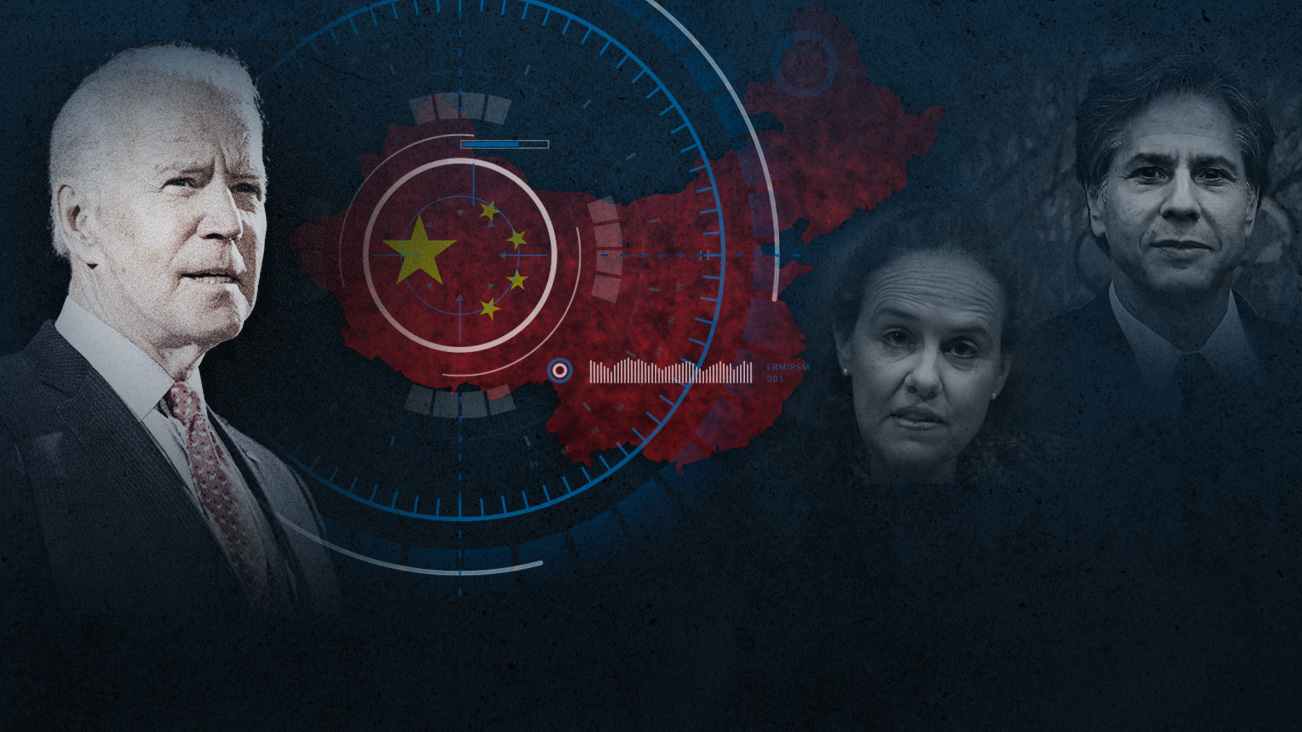
Michele Flournoy and Tony Blinken sit atop Biden’s thousands-strong foreign policy brain trust and have played central roles in every U.S. war going back to the Clinton administration.
In the Trump era, they’ve cashed in, founding Westexec Advisors – a corporate consulting firm that has become home for Obama administration officials awaiting a return to government.
Flournoy is Biden’s leading pick for secretary of defense and Blinken is expected to be national security advisor.
Biden’s foxes guard the henhouse
Since the 1990s, Flournoy and Blinken have steadily risen through the ranks of the military-industrial complex, shuffling back and forth between the Pentagon and hawkish think-tanks funded by the U.S. government, weapons companies, and oil giants.
Under Bill Clinton, Flournoy was the principal author of the 1996 Quadrinellial Defense Review, the document that outlined the U.S. military’s doctrine of permanent war – what it called “full spectrum dominance.”
Flournoy called for “unilateral use of military power” to ensure “uninhibited access to key markets, energy supplies, and strategic resources.”
As Bush administration officials lied to the world about Saddam Hussein’s supposed WMD’s, Flournoy remarked that “In some cases, preemptive strikes against an adversary’s [weapons of mass destruction] capabilities may be the best or only option we have to avert a catastrophic attack against the United States.”
Tony Blinken was a top advisor to then-Senate foreign relations committee chair Joe Biden, who played a key role in shoring up support among the Democrat-controlled Senate for Bush’s illegal invasion of Iraq.
As Iraq was plunged into chaos and bloodshed, Flournoy was among the authors of a paper titled “Progressive Internationalism” that called for a “smarter and better” style of permanent war. The paper chastised the anti-war left and stated that “Democrats will maintain the world’s most capable and technologically advanced military, and we will not flinch from using it to defend our interests anywhere in the world.”
With Bush winning a second term, Flournoy advocated for more troop deployments from the sidelines.
In 2005, Flournoy signed onto a letter from the neoconservative think tank Project for a New American Century, asking Congress to “increase substantially the size of the active duty Army and Marine Corps (by) at least 25,000 troops each year over the next several years.”
In 2007, she leveraged her Pentagon experience and contacts to found what would become one of the premier Washington think tanks advocating endless war across the globe: the Center for a New American Security (CNAS).
CNAS is funded by the U.S. government, arms manufacturers, oil giants, Silicon Valley tech giants, billionaire-funded foundations, and big banks.
Flournoy joined the Obama administration and was appointed as under secretary of defense for policy, the position considered the “brains” of the Pentagon.
She was keenly aware that the public was wary of more quagmires. In the 2010 Quadrennial Defense Review, she crafted a new concept of warfare that would expand the permanent war state while giving the appearance of a drawdown.
Flournoy wrote that “unmanned systems hold great promise” – a reference to the CIA’s drone assassination program.
This was the Obama-era military doctrine of hybrid war. It called for the U.S. to be able to simultaneously wage war on numerous fronts through secret warfare, clandestine weapons transfers to proxies, drone strikes, and cyber-attacks – all buttressed with propaganda campaigns targeting the American public through the internet and corporate news media.
Architects of America’s Hybrid wars
Flournoy continued to champion the endless wars that began in the Bush-era and was a key architect of Obama’s disastrous troop surge in Afghanistan. As U.S. soldiers returned in body bags and insurgent attacks and suicide bombings increased some 65% from 2009 and 2010, she deceived the Senate Armed Services Committee, claiming that the U.S. was beginning to turn the tide against the Taliban.
Even with her lie that the U.S. and Afghan government were starting to beat the Taliban back, Flournoy assured the senate that the U.S. would have to remain in Afghanistan long into the future.
Ten years later – as the Afghan death toll passed 150,000 – Flournoy continued to argue against a U.S. withdrawal.
That’s the person Joe Biden has tasked with ending the forever war in Afghanistan. But in Biden’s own words, he’ll “bring the vast majority of our troops home from Afghanistan” implying some number of American troops will remain, and the forever war will be just that. Michele Flournoy explained that even if a political settlement were reached, the U.S. would maintain a presence.
In 2011, the Obama-era doctrine of smart and sophisticated warfare was unveiled in the NATO regime-change war on Libya.
Moammar Gaddafi – the former adversary who sought warm relations with the U.S. and had given up his nuclear weapons program – was deposed and sodomized with a bayonet.
Flournoy, Hillary Clinton’s State Department, and corporate media were in lockstep as they waged an extensive propaganda campaign to deceive the U.S. public that Gadaffi’s soldiers were on a Viagra-fueled rape and murder spree that demanded a U.S. intervention.
All of this was based on a report from Al Jazeera – the media outlet owned by the Qatari monarchy that was arming extremist militias to overthrow the government.
Yet an investigation by the United Nations called the rape claims “hysteria.” Amnesty International and Human Rights Watch found no credible evidence of even a single rape.
Even after Libya was descended into strife and the deception of Gadaffi’s forces committing rape was debunked, Michele Flournoy stood by her support for the war.
Tony Blinken, then Obama’s deputy national security advisor, also pushed for regime change in Libya. He became Obama’s point man on Syria, pushed to arm the so-called “moderate rebels” that fought alongside al-Qaeda and ISIS, and designed the red line strategy to trigger a full-on U.S. intervention. Syria, he told the public, wasn’t anything like the other wars the U.S. had waging for more than a decade.
Despite Blinken’s promises that it would be a short affair, the war on Syria is now in its ninth year. An estimated half a million people have been killed as a result and the country is facing famine,
Largely thanks to the policy of using “wheat to apply pressure” – a recommendation of Flournoy and Blinken’s CNAS think tank.
When the Trump administration launched airstrikes on Syria based on mere accusations of a chemical attack, Tony Blinken praised the bombing, claiming Assad had used the weapon of mass destruction sarin. Yet there was no evidence for this claim, something even then-secretary of Defense James Mattis admitted.
While jihadist mercenaries armed with U..S-supplied weapons took over large swaths of Syria, Tony Blinken played a central role in a coup d’etat in Ukraine that saw a pro-Russia government overthrown in a U.S.-orchestrated color revolution with neo-fascist elements agitating on the ground.
At the time, he was ambivalent about sending lethal weapons to Ukraine, instead opting for economic pressure.
Since then, fascist militias have been incorporated into Ukraine’s armed forces. And Tony Blinken urged Trump to send them deadly weapons – something Obama had declined to do.
Trump obliged.
The Third Offset
While the U.S. fuelled wars in Syria and Ukraine, the Pentagon announced a major shift called the Third Offset strategy – a reference to the cold war era strategies the U.S. used to maintain its military supremacy over the Soviet Union.
The Third Offset strategy shifted the focus from counterinsurgency and the war on terror to great power competition against China and Russia, seeking to ensure that the U.S. could win a war against China in Asia. It called for a technological revolution in warfighting capabilities, development of futuristic and autonomous weapons, swarms of undersea and airborne drones, hypersonic weapons, cyber warfare, machine-enhanced soldiers, and artificial intelligence making unimaginably complex battlefield decisions at speeds incomprehensible to the human mind. All of this would be predicated on the Pentagon deepening its relationship with Silicon Valley giants that it birthed decades before: Google and Facebook.
The author of the Third Offset, former undersecretary of defense Robert Work, is a partner of Flournoy and Blinken’s at WestExec Advisors. And Flournoy has been a leading proponent of this dangerous new escalation.
In June, Flournoy published a lengthy commentary laying out her strategy called “Sharpening the U.S. Military’s Edge: Critical Steps for the Next Administration”.
She warned that the United States is losing its military technological advantage and reversing that must be the Pentagon’s priority. Without it, Flournoy warned that the U.S. might not be able to defeat China in Asia.
While Flournoy has called for ramping up U.S. military presence and exercises with allied forces in the region, she went so far as to call for the U.S. to increase its destructive capabilities so much that it could launch a blitzkrieg style-attack that would wipe out the entire Chinese navy and all civilian merchant ships in the South China Sea. Not only a blatant war crime but a direct attack on a nuclear power that would spell the third world war.
At the same time, Biden has announced he’ll take an even more aggressive and confrontational stance against Russia, a position Flournoy shares.
As for ending the forever wars, Tony Blinken says not so fast.
The end of forever wars?
So Biden will end the forever wars, but not really end them. Secret wars that the public doesn’t even know the U.S. is involved in – those are here to stay.
In fact, leaving teams of special forces in place throughout the Middle East is part and parcel of the Pentagon’s shift away from counterinsurgency and towards great power competition.
The 2018 National Defense Strategy explains that “Long-term strategic competitions with China and Russia are the principal priorities” and the U.S. will “consolidate gains in Iraq and Afghanistan while moving to a more resource-sustainable approach.”
As for the catastrophic war on Yemen, Biden has said he’ll end U.S. support, but in 2019, Michele Flournoy argued against ending arms sales to Saudi Arabia.
Biden pledged he will rejoin the Iran deal as a starting point for new negotiations. However, Trump’s withdrawal from the deal discredited the Iranian reformists who seek engagement with the west and empowered the principlists who see the JCPOA as a deal with the devil.
In Latin America, Biden will revive the so-called anti-corruption campaigns that were used as a cover to oust the popular social democrat Brazilian president Lula da Silva.
His Venezuela policy will be almost identical to Trump’s – sanctions and regime change.
In Central America, Biden has proposed a 4 billion dollar package to support corrupt right-wing governments and neoliberal privatization projects that create even more destabilization and send vulnerable masses fleeing north to the United States.
Behind their rhetoric, Biden, Flournoy, and Blinken will seek nothing less than global supremacy, escalating a new and even more dangerous arms race that risks the destruction of humanity. That’s what Joe Biden calls “decency” and “normalcy.”
And You Remain Impossible to Erase
-
There you are, the inspiring Imam, forever present in the conscience of the
honorable and the hearts of the loyal.
Father Dave Smith, Pray For (Mufti) Dr. Hassoun
-
Abducted by the terrorist regime in Syria in 2025, Sheikh Hassoun has been
sentenced to life in prison I spoke with Father Dave Smith, an Australian
Anglic...
The eight heads were only the beginning
-
“Over 1,200 Human Heads And Multiple Human Fetuses Discovered In A
Warehouse In Detroit“ (Books Behind Borders):Despite everything authorities
had already ...
Jewish Supremacy Over The Goy
-
Jewish Supremacy Over The Goy August 26 2026
___________________________________ More Vids! +BN Vids Archive! HERE!
___________________________________ Sup...
Report on Beth Israel vigil 08-15-26
-
*Charlie Kirk and JFK*
John F. Kennedy was assassinated under questionable circumstances on
November 22, 1963, and Charlie Kirk fell on September 10 of la...
On The Road To International Anarchy
-
ON THE ROAD TO INTERNATIONAL ANARCHY— An Analysis (14 August 2026) by
Lawrence Davidson Part I — The Turn Toward […]
-
Hello all,
It is with great sadness that I share with you the passing of our beloved
sister, Mother, and Grandmother, the individual that you all knew ...
Best Horror Podcast
-
Best Horror Podcast Introduction: Horror podcasts […]
The post Best Horror Podcast appeared first on Copper Shock Horror Podcast.
Ikhras Endorses Muntadhar Al-Zaidi
-
“Oh parties of banditry and sectarianism and corruption, we have come and
our goal is to destroy you.” Ikhras formally endorses Muntadhar al-Zaidi,
Iraqi j...
Prince Charles: Foreign Jews behind bloodshed in ME
-
In May, 2017, British Crown Prince Charles declined an invitation from
Zionist entity’s president Reuven Rivlin‘s to attend the 100th anniversary
of the no...
Palestinian Women – One for All, All for One
-
Honouring All Palestinian Women by Honouring Three: Hanin Zoabi, Ahed
Tamimi, Samah Sabawi Vacy Vlazna “Palestinian women have always stood side
by side ...
US’s Saudi Oil Deal from Win-Win to Mega-Lose
-
By F. William Engdahl Who would’ve thought it would come to this? Certainly
not the Obama Administration, and their brilliant geo-political think-tank
neo-...
-
*Mordechai Vanunu wins human rights prize of Brazilian Press Association *
* http://www.alternativenews.org/english/index.php/features/updates/7038-mordechai...
Abdul Aziz Rantissi:
"My ultimate wish, my God, is to attain martyrdom,"...God granted him his wish on April 17, 2004, at the hands of Israeli assassins.