Uprooted Palestinians are at the heart of the conflict in the M.E Palestinians uprooted by force of arms. Yet faced immense difficulties have survived, kept alive their history and culture, passed keys of family homes in occupied Palestine from one generation to the next.
Palestinian Islamic Jihad waned the Zionist entity that Tel Aviv will be bombarded if the occupying regime assassinates members of the resistance movement.
The movement’s leader Ziyad al-Nakhala vowed on Wednesday to continue the path pursued by Baha Abu al-Ata, a senior commander of the Gaza-based group’s military wing – the al-Quds Brigades – who was assassinated in an ‘Israeli’ airstrike on the besieged Gaza Strip two years ago.
“We do not rule out the possibility of assassination or targeting of commanders and members of the Islamic Jihad movement, and our reaction is the immediate bombardment of Tel Aviv,” Beirut-based al-Mayadeen TV quoted him as saying.
Abu al-Ata and his wife were martyred in an Israeli airstrike targeting their home in the Gaza Strip on November 12, 2019. The raid also wounded four of their children and a neighbor, triggering confrontations between ‘Israeli’ occupation forces and Gaza-based resistance fighters.
According to the Islamic Jihad, Abu al-Ata played a major role in carrying out operations against the ‘Israeli’ occupation entity.
Elsewhere in his remarks, Nakhala said the recent retaliatory operation, carried out by Sheikh Fadi Abu Shkhaydam, in the Old City of al-Quds, was a “lesson” for the occupying entity and its mercenaries.
On Sunday, ‘Israeli’ troops fatally shot Abu Shkhaydam, a leader of the Palestinian Hamas resistance movement, near one of the entrances to the al-Aqsa Mosque compound.
Zionist media reported that Abu Shkhaydam had opened fire at ‘Israelis’ by a Beretta M12 submachine gun before being shot dead at the scene.
Hamas said the retaliatory attack was the “price” for the ‘Israeli’ actions in occupied al-Quds, adding, “The message of the heroic operation is a warning for the criminal enemy and its government to stop the attacks on our land and our holy sites. [‘Israel’] will pay a price for the iniquities it commits against al-Aqsa Mosque, Silwan, Sheikh Jarrah and elsewhere.”
Nakhala predicted that the Zionist regime was unlikely to wage an attack on the besieged Gaza Strip because of its consequences.
“The resistance is ready to respond to any ‘Israeli’ act of aggression. We can target all Zionist settlements simultaneously,” he said.
The Islamic Jihad leader further stressed that the resistance in Gaza had strengthened its weapons and military capabilities following the 11-day ‘Israeli’ war in May.
The resistance, Nakhala also noted, manufactures unmanned aerial vehicles [UAVs] inside the Gaza Strip.
Abou al-Ata was responsible for removing the “Master of Israeli Security” from the podium in an embarrassing fashion, which Netanyahu viewed as a personal insult.
Martyr Bahaa Abou el-Ata
The decision taken by “Israel” to assassinate Bahaa Abou al-Ata, the leader of the northern region in the Quds Brigades – the military faction of the Islamic Jihad Movement in Palestine -, was certainly not a normal event. It took place on the dawn of Tuesday, 12 November 2019, and showcased a string of complicated Israeli calculations given that this assassination would be the first targeting a resistance commander since 2012, and occurred amidst a lack of tension or war.
Thus, the two Israeli institutions, the political and military, were aware that taking this decision would certainly break the equation sanctified by the Palestinian resistance, which stipulates that any assassination equals a war.
Subsequently, the assassination of Abou al-Ata, for “Israel”, was a declaration of a military battle with the resistance in Gaza. And certainly, the Israeli intelligence assessments know very well that the shrapnel of the Gaza rockets in that battle will not be confined to the borders of the settlements around the Gaza Strip and the south, but will rather reach deep into the “Gush Dan” area, the most densely populated center in the occupied lands.
Nonetheless, this scenario occurred in the battle of “Sayhat al-Fajr” (The Cry of Dawn) which the al-Quds Brigades fought against “Israel.”
Two years after the assassination of Bahaa Abou al-Ata, the question still remains: what was the Israeli view of the Palestinian leader’s personality? And what did it represent in the Israeli mindset of both military and political institutions?
Amos Gilad, head of the Israeli Institute for Policy and Strategy (IPS) and former director of policy and political-military affairs at the Ministry of Security, answered when asked about Bahaa Abou el-Ata by saying: “He was the chief motivator for the Islamic Jihad’s operation, and possesses a strong and bold personality.”
Israeli Occupation Army Spokesman Heidi Zilberman did not diverge from Gilad’s assessment, saying to journalists following the assassination of Abou al-Ata that “Israel” understands well that the martyr was “a wild element, mostly working according to a point of view paradoxical to regional interests.” This confirms that the occupation dealt with the resistance leader as a major hurdle to its regional plans, the most important of which were:
First: “Israel” was in need of cooling down the Gaza front through understandings of instilling calm in exchange for humanitarian facilitations (on a humanitarian level). This approach turned, two years after the assassination of Abou al-Ata, into a full-fledged plan put forward by the Israeli foreign minister Yair Lapid, and adopted by his government, titled “Security in exchange for Economy”, away from any political dimensions related to the Palestinian rights as a people under occupation.
Second: The political leadership of the Israeli occupation at the time, represented by Prime Minister Benjamin Netanyahu, considered that the continuation of the “ninth hour” strategy, of which martyr Abou al-Ata was the icon, that maintains a state of perpetual conflict through engagement with “Israel,” negatively affects the impetus of some normalizing countries to steer towards “Tel Aviv”, which Netanyahu considered a major goal in his regional policies. Moreover, the name of Bahaa Abou al-Ata was engraved deeply in Netanyahu’s mind at two instances that had great impact on his policies and personality.
The first instance was Abu al-Ata’s crucial role in sanctifying the eye for an eye equation with the occupation, which came in defense of the peaceful protesters who were being assaulted during their “Return Marches” by the IOF. This equation engendered successive rounds of military escalations, becoming the main reason behind the toppling of Netanyahu’s government in November 2018 following the resignation of the then-Minister of Security, Avigdor Lieberman, who opposed accepting a ceasefire with the resistance in Gaza right after the “Ashkelon Hell” battle. Lieberman viewed this “compromise” as a capitulation on the part of Netanyahu’s government.
The second instance was al-Ata’s responsibility for removing Netenyahu, the so-called “master of Israeli security,” from the podium in an embarrassing fashion in front of his electoral audience in “Ashdod”. This incident was considered by the former PM as a personal insult to him that affected his entire political future, especially with the wide circulation of Abou al-Ata’s picture in Israeli media. Although this circulation aimed to send a threat to the Palestinian leader in order to hinder his work, the continuation of “Al-Quds Brigades”, under his leadership, in the engagement strategy, made him a permanent presence in the Israeli media. Every time Bahaa Abou al-Ata’s photo is published, the Israeli public recalls the humiliation of Netanyahu and his escape from Abou al-Ata’s missiles to the shelter.
Third: At the time, “Israel” was seeking to focus its efforts on the northern front and the Iranian nuclear project, taking advantage of the presence of US President Donald Trump in office. However, as the Gaza front continued to heat up through the engagement strategy, the occupation considered that the Islamic Jihad, as an effective part of the resistance axis, impeded these Israeli endeavors. Therefore, the Israeli occupation planes tried to assassinate in Damascus the commander of the military department in the Islamic Jihad movement, Akram al-Ajouri, whom “Tel Aviv” calls the military mastermind of the al-Quds Brigades, in tandem with their assassination of Abou al-Ata, who was considered the most powerful executive commander in the Brigades. Thus, “Israel” would have dealt a simultaneous double blow to the military mind and arm of the Islamic Jihad, in order to paralyze the military capacity of the al-Quds Brigades.
This strategy echoes the mistakes made in 1995 when former Israeli PM Yitzhak Rabin decided to assassinate the founder of the Islamic Jihad movement and its first secretary-general, Dr. Fathi Shaqaqi, believing that the movement was solely based on the person of Shaqaqi.
However, less than six months later, the Islamic Jihad was carrying out its first operations in “Tel Aviv,” in response to the assassination of martyr Shaqaqi, under the leadership of Dr. Ramadan Shallah back then, may God have mercy on him.
In the case of Bahaa Abou al-Ata, the Jihad movement, led by its Secretary-General Ziad al-Nakhala, did not wait extensively to prove to “Israel” the failure of its expectations: Half an hour after Abou al-Ata’s assassination, al-Quds Brigades fired a rocket barrage in the direction of the “Gush Dan” area, announcing the start of the “Sayhat al-Fajr” battle.
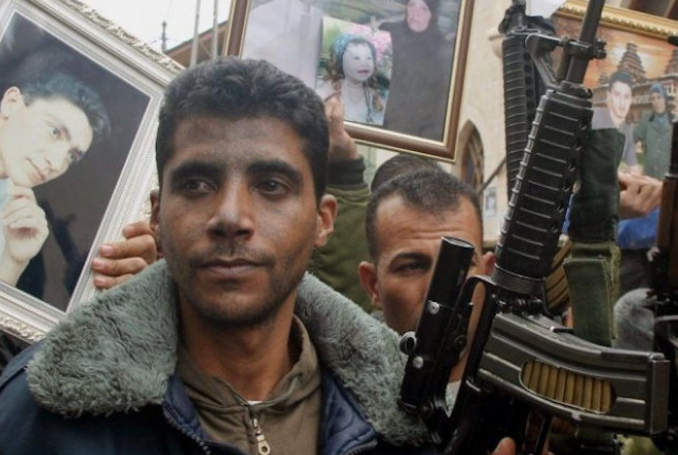
Zakaria Zubeidi is one of six Palestinian prisoners who, on September 6, tunneled their way out of Gilboa, a notorious, high-security Israeli prison. Zubeidi was recaptured a few days later. The large bruises on Zubeidi’s face told a harrowing story, that of a daring escape and of a violent arrest. However, the story does not begin, nor end, there.
Twenty years ago, following what has been etched in the collective Palestinian memory as the ‘Jenin Massacre’, I was introduced to the Zubeidi family in the Jenin refugee camp, which was almost entirely erased by the Israeli army during and following the Jenin battle.
Despite my repeated attempts, the Israeli army prevented me from reaching Jenin, which was kept under total Israeli military siege for months following the most violent episode of the entirety of the Second Palestinian Uprising (2000-2005).
I could not speak to Zakaria directly. Unlike his brother, Taha, Zakaria survived the massacre and subsequently rose in the ranks of Al-Aqsa Martyrs’ Brigades, the armed wing of the Fatah movement, to become its leader, thus topping the list of Israel’s most wanted Palestinians.
Most of our communication was with his sister, Kauthar, who told us in detail about the events that preceded the fateful military siege of April. Kauthar was only 20 years old at the time. Despite her grief, she spoke proudly about her mother, who was killed by an Israeli sniper only weeks before the invasion of the camp and about her brother, Taha, the leader of the Al-Quds Brigades, the armed wing of the Islamic Jihad in Jenin at the time; and of Zakaria, who was now on a mission to avenge his mother, brother, best friends and neighbors.
“Taha was killed by a sniper. After he was killed, they fired shells at him, which completely burned his body. This was in the Damaj neighborhood,” Kauthar told us, adding, “The Shebab gathered what remained of him and put him in a house. Since that day, the house has been known as ‘The Home of the Hero’.”
Kauthar also told me about her mother, Samira, 51, “who spent her life going from one prison to another” to visit her husband and her sons. Samira was loved and respected by all the fighters in the camp. Her children were the heroes that all the youngsters attempted to emulate. Her death was particularly shocking.
“She was hit with two bullets in the heart,” Kauthar said. “Once she turned around, she was hit in the back. Blood poured out of her nose and mouth. I did not know what else to do but to scream.”
Zakaria immediately went underground. The young fighter was feeling aggrieved at what had befallen his beloved Jenin, family, mother and brother – the latter’s wedding was scheduled one week from the day he was killed. He was also feeling betrayed by his Fatah ‘brothers’ who continued to openly collaborate with Israel, despite the mounting tragedies in the occupied West Bank, and by the Israeli left that abandoned the Zubeidi family despite promises of solidarity and camaraderie.
“Every week, 20-30 Israelis would come there to do theatre,” Zakaria said in an interview with ‘The Time’ magazine, with reference to the ‘Arna’s House’ theater, which involved Zakaria and other Jenin youngsters, and was established by Arna Mer-Khamis, an Israeli woman who was married to a Palestinian. “We opened our home and you demolished it … We fed them. And, afterwards, not one of them picked up the phone. That is when we saw the real face of the left in Israel.”
Of the five children who participated in the ‘Arna’s House’ theatre, only Zakaria survived. The rest had joined various armed groups to fight the Israeli occupation and were all killed.
Zakaria was born in 1976 under Israeli occupation, therefore never experienced life as a free man. At 13, he was shot by Israeli soldiers for throwing stones. At 14, he was arrested for the first time. At 17, he joined the Palestinian Authority security forces, believing, like many Palestinians at the time, that the PA’s ‘army’ was established to protect Palestinians and to secure their freedom. Disillusioned, he left the PA less than a year later.
Zakaria only committed to armed struggle in 2001, as a way of achieving freedom for his people, months after the start of the Second Intifada. One of his childhood friends was one of the first to be killed by Israeli soldiers. In 2002, Zakaria joined the Al-Aqsa Martyrs’ Brigades, around the time that his mother, Samira, and his brother, Taha, were killed.
2002, in particular, was a decisive year for the Fatah movement, which was practically, but unofficially, divided into two groups: one that believed that armed struggle should remain a strategy for liberation, and another that advocated political dialogue and a peace process. Many members of the first group were killed, arrested or marginalized, including Fatah’s popular leader, Marwan Barghouti, who was arrested in April 2002. Members of the second group grew rich and corrupt. Their ‘peace process’ failed to deliver the coveted freedom and they refused to consider other strategies, fearing the loss of their privileges.
Zakaria, like thousands of Fatah members and fighters, was caught up in this ongoing dilemma, wanting to carry on with the struggle as if PA President Mahmoud Abbas’ leadership was ready to risk it all for the sake of Palestine, while remaining committed to the Fatah party, hoping that, perhaps, someday the movement would reclaim the mantle of Palestinian resistance.
The trajectory of Zakaria’s life, so far, is a testament to this confusion. He was not only imprisoned by the Israelis, but also by the PA. Sometimes, he spoke highly of Abbas only to, later, disown all the treachery of the Palestinian leadership. He surrendered his weapon several times, only to retrieve it with the same determination as before.
Though Zakaria is now back in prison, his story remains unfinished. Scores of young fighters are now roaming the streets of the Jenin refugee camp, vowing to carry on with armed struggle. Namely, Zakaria Zubeidi is not just a single person but a whole generation of Palestinians in the West Bank who are caught up in an impossible dilemma, having to choose between a painful, but real, struggle for freedom and political compromises, which, in Zakaria’s own words, “have achieved nothing”.
– Ramzy Baroud is a journalist and the Editor of The Palestine Chronicle. He is the author of five books. His latest is “These Chains Will Be Broken: Palestinian Stories of Struggle and Defiance in Israeli Prisons” (Clarity Press). Dr. Baroud is a Non-resident Senior Research Fellow at the Center for Islam and Global Affairs (CIGA) and also at the Afro-Middle East Center (AMEC). His website is www.ramzybaroud.net
The leader of the Islamic Jihad Movement in Palestine, Daoud Shehab, said the anniversary of the victory of the Islamic Resistance and the subsequent liberation of southern Lebanon coincided with the victory of Operation Al-Quds Sword.
According to Shehab, the victory carries important implications. The most significant of these is that the resistance persevered – the people of the nation decided not to retreat, and the resistance, whether in Lebanon or Palestine, is recording achievements and accumulating victories in the face of the “Israeli” enemy.
“There is no way back. We are making confident steps to defeat this entity and liberate every inch of the land of Palestine,” Shehab said in an interview with Al-Ahed News.
He pointed out that the Al-Quds Sword battle bore the meaning of the liberation of all Palestine.
“This unification in all the arenas and fields of jihad and resistance throughout occupied Palestine gives an important signal and sends hope again that we are moving towards the fulfillment of God’s promise, the achievement of the great victory, and the defeat of the occupation from all the land of Palestine as it was defeated from southern Lebanon in 2000 and Gaza in 2005,” he stressed.
Shehab highlighted the expansion of the achievements of the resistance and the nation’s collective awareness that the main priority is confronting the “Israeli” enemy.
“When Al-Quds was the main title, all Palestinian patriots met in this confrontation, and all attempts by the occupation to sow discord and cracks within the Palestinian society failed.”
The leader of the Islamic Jihad movement pointed out that “the battle of the Al-Quds Sword represents an essential course to victory and liberation.”
Shehab explained that “the battle of the Al-Quds Sword established new equations in the open conflict between the resistance and the enemy, the most important of which is that Al-Quds entered into the rules of engagement. Therefore, we are now facing a new challenge – an aggression on All-Quds will be met with a response by the resistance.”
“The second issue is that the occupation does not surrender easily and does not yield easily to the insistence of the resistance. Ahead of us is a long journey with Al-Quds as the objective. When we called this battle Al-Quds Sword, the name implies that this sword is now in the hands of the resistance that is ready to defend the city of Al-Quds.”
He also stressed that the resistance is ready at any time to make sacrifices and engage in confrontations in order to defend occupied Al-Quds. He confirmed that the resistance throughout the Palestinian homeland from its sea to its river from its north to its south is fully prepared to assume the responsibility of defending the Al-Aqsa Mosque.
“We face two main constants in the Palestinian situation. Al-Quds is a fundamental constant that cannot be overlooked or abandoned. Secondly, the resistance is an authentic expression of the Palestinian situation in which our people live under occupation,” Shehab said.
“There is nothing that can unite the Palestinians in the stage of national liberation and occupation but the resistance,” he added, pointing out that other emergency options are futile and have not succeeded. Shehab remains convinced that any national political project has no value unless it’s based on resistance under occupation.
“We protect the state of unity by protecting the resistance. The resistance is a basic pillar to achieve internal Palestinian unity and maintain the continuous mobilization with the status of Al-Quds and what it represents in the Arab and Islamic conscience as part of our faith and our religion.”
Shehab concluded by saying that “what happened is not limited to the Palestinian interior in Gaza, the West Bank, or the occupied interior, but the Palestinian diaspora also got involved, and this is an issue that cannot be ignored.”
غزة | رسمت المقاومة مشهداً تاريخياً جديداً في تاريخ القضية الفلسطينية، بعدما ظهرت ندّاً للاحتلال الذي يمتلك أقوى الأسلحة في الشرق الأوسط، إذ استطاعت أن تُدخل ثلاث مدن كبيرة لديه في جحيم صواريخها، ما أوقع مئات القتلى والجرحى، ضمن رسمها لمعادلة «ما لا يأتي بالقوة يأتي بمزيد من القوة». ومنذ ساعات فجر أمس، حذّرت المقاومة، على لسان «أبو عبيدة»، الناطق باسم الجناح العسكري لحركة «حماس»، الاحتلال من استهداف المنازل والمنشآت المدنية في قطاع غزة، إلّا أن اتّباع العدو سياسة جديدة تهدف إلى إيقاع عدد كبير من الضحايا، عبر تدمير المنازل على رؤوس ساكنيها من دون سابق إنذار، وهو ما حدث في إحدى الشقق السكنية غرب غزة وتسبّب بسقوط ثلاثة شهداء، بينهم امرأة، دفع المقاومة إلى تنفيذ تهديدها، بدءاً باستهداف مدينة عسقلان التي أطلقت عليها دفعة كبيرة من الصواريخ بشكل متزامن، تلتها بعد 6 ساعات دفعة أخرى على مدينتَي عسقلان وأسدود المجاورتين إثر استهداف شقة سكنية. واعترفت المصادر العبرية بمقتل مستوطنتَين وإصابة أكثر من 100 مستوطن، جرّاء إطلاق قرابة 200 صاروخ على المدينتين.
ومنذ الصباح، بدأت كرة الثلج تتدحرج نحو ما بدا أنها حرب شاملة، في ظلّ تكثيف الاحتلال عمليات القصف في قطاع غزة، في مقابل تواصل إطلاق الصواريخ تجاه مدنه ومواقعه العسكرية. وفي خضمّ ذلك، جدّدت المقاومة تحذيرها للعدو من قصف الأبراج السكنية داخل القطاع، مهدّدة بأن ردّها سيكون أكبر مما حدث في مدينة عسقلان صباحاً وظهراً، إلا أن قصف الاحتلال لأحد الأبراج على شاطئ بحر غزة، دفع المقاومة بعد أقلّ من نصف ساعة إلى البدء بتوجيه أكبر ضربة صاروخية في تاريخ إسرائيل لمدينة تل أبيب. وقصفت «كتائب القسام»، الجناح العسكري لـ»حماس»، جميع أحياء مدينة تل أبيب الساعة التاسعة مساءً بأكثر من 130 صاروخاً من طراز «A120» تحمل رؤوساً تفجيرية كبيرة، بشكل متزامن ومركّز. وتبع هذا إطلاق دفعات ورشقات عدّة من «سرايا القدس»، الجناح العسكري لحركة «الجهاد الإسلامي»، والفصائل الأخرى على المدينة، ليُعلن الاحتلال مقتل شخصين وإصابة ثلاثة آخرين، ووقوع أضرار واسعة وحرائق في عدّة مناطق، نتيجة سقوط الصاروخ على حافلة وسط تل أبيب، بينما وصفت وسائل الإعلام ما جرى بأنه «إعلان حرب من غزة على إسرائيل».
برز تبدّل واضح في موقف الوسيط المصري بعدما باشرت المقاومة تنفيذ خطّتها بالقصف المركّز
وبعد القصف بوقت قصير، انعقد مجلس الوزراء المصغّر في دولة الاحتلال بحضور القادة العسكريين، ليخرج رئيس وزراء العدو، بنيامين نتنياهو، بإعلان مواصلة العمل ضدّ حركتَي «حماس» و»الجهاد»، والدفع بتعزيزات إضافية إلى حدود قطاع غزة، لأن «هذه الحملة ستستغرق وقتاً وتحتاج إلى الوقوف متّحدين ضدّ هذا العدو»، فيما أشار وزير الجيش، بيني غانتس، إلى استمرار الجيش في استهداف ما ادّعى أنها «مباني المنظّمات» في غزة، قائلاً: «نحن في نقطة البداية فقط، والتنظيمات الفلسطينية تضرّرت وستستمرّ بالتضرّر، سوف نعيد الهدوء والأمن على المدى البعيد». وتقول مصادر في حركة «حماس»، لـ»الأخبار»، إن العدو يحاول من خلال المنشآت والأبراج المدنية في غزة الضغط على المقاومة لوقف المواجهة، إلا أن الحركة لديها قرار من العام الماضي بتجاوز هذه النقطة التي يريد الاحتلال من خلالها ليّ ذراع المقاومة، وتدفيعِ العدو ثمناً كبيراً لها، وهو ما حدث في عسقلان وتل أبيب. وتؤكد المصادر أن في جعبة الحركة العديد من الأوراق التي يمكنها من خلالها إرغام الاحتلال على التراجع خلال الفترة الحالية، مضيفة إن «المقاومة نفَسها طويل في هذه المعركة، ولن تتوقف عمليات القصف إلّا بعد تراجع الاحتلال والتزامه بشروط المقاومة المتعلّقة بوقف العدوان في القدس أولاً، ثمّ وقف إطلاق النار في قطاع غزة». واعتبر رئيس المكتب السياسي لحركة «حماس»، إسماعيل هنية، بدوره، أن «ما جرى بمثابة رسالة للاحتلال أن كفى عبثاً في القدس، ونحن نقف على أرض صلبة»، جازماً بأن حركته «لن تبقى مكتوفة الأيدي، وأن هناك ميزان قوى جديداً قد انطلق من ساحات المسجد الأقصى»، وأن «سياسة الاستفراد بالقدس لم تعد أمراً مقبولاً لا على المستوى الشعبي ولا للمقاومة».
إلى ذلك، حذر منسق الأمم المتحدة الخاص لعملية السلام في الشرق الأوسط، تور وينسلاند، من تدهور الأوضاع إلى حرب شاملة، داعياً إلى وقف إطلاق النار على الفور، ومؤكداً أن الأمم المتحدة تعمل مع جميع الأطراف لإعادة الهدوء. جاء هذا في وقت برز فيه تبدّل واضح في موقف الوسيط المصري، بعدما باشرت المقاومة تنفيذ خطّتها بالقصف المركّز على دوائر تتراوح بين أربعين ومئة كيلومتر، حيث سارع المصريون إلى نقل طلبات بوقف إطلاق النار فوراً مقابل تخفيف الإجراءات الإسرائيلية في القدس والضفة، وإفساح المجال أمام إدخال المزيد من المساعدات إلى القطاع، والسماح للمقدسيين بإحياء عيد الفطر من دون تدخل، وفق ما تؤكده مصادر فلسطينية مطّلعة. وكان الجانب المصري قد طلب إلى الفصائل وقف التصعيد، وإفساح المجال أمام القاهرة، بالتعاون مع قوى دولية، لإقناع تل أبيب بوقف نشاطها في حيّ الشيخ جراح، كما تقول المصادر نفسها، مضيفة إن «المصريين كانوا شديدي التوتر، ونقلوا تهديدات إسرائيلية وأميركية إلى قوى المقاومة، ولكن التشاور الذي جرى خلال اليومين الماضيين بين قادة أبرز خمسة فصائل انتهى إلى قرار بعدم التوقف عن كل أعمال المواجهة، سواء في القدس أو الضفة أو تجهيز التدخل العسكري من غزة». وبحسب المصادر، فإنه بعدما فشلت المساعي المصرية في إلغاء كلّ الأنشطة الإسرائيلية، قرّرت المقاومة إطلاق عمليات القصف الصاروخي، ضمن برنامج متدرّج باتجاه غلاف القطاع وعمق غوش دان، وهو ما أثار حفيظة الوسطاء المصريين وحتى الأميركيين، الذين لجأوا إلى التواصل مع قطر والأتراك لأجل إقناع قيادة «حماس» بوقف العمليات، وكذلك محاولة تهديد سوريا بضربات جديدة تخصّ مواقع مزعومة لقوى فلسطينية، ولا سيما تلك التي تخص «الجهاد».
وفي مقابل الضغوط غير المسبوقة التي تمارسها أجهزة الأمن الفلسطينية لمنع أيّ تحرّكات في مدن الضفة الغربية، تحوّلت أراضي الـ48 إلى ساحة حرب بفعل مواجهات بين الفلسطينيين من جهة، وقوات الشرطة الإسرائيلية من جهة أخرى، أدّت إلى استشهاد شاب في مدينة اللدّ، حيث أُعلنت حالة الطوارئ مع حظر التجوال، وسط استقدام عدد من وحدات «حرس الحدود». وحتى الساعات الأولى من فجر اليوم، كانت المدينة لا تزال تشهد مواجهات وعمليات إطلاق نار، بالتوازي
EUA ampliam ambições no Ártico
-
Os EUA estão avançando com sucesso em sua estratégia para o Ártico em
colaboração com nações do norte da Europa. A recente “anexação de facto” da
Groenlâ...
Another Epstein Class whistleblower ‘suicide’
-
“How US commerce secretary’s Epstein links were uncovered by British
whistleblower“ (Verity/Byrne/Milne):Andriesz suspected there was yet more
to find in t...
The Legendary Golem
-
The Legendary Golem October 3 2026 ___________________________________ More
Vids! +BN Vids Archive! HERE! ___________________________________ Support
The B...
The United States At A Crossroad
-
The United States At A Crossroad—An Analysis (16 Sept 2026) by Lawrence
Davidson Part I—Texas vs Minnesota Back in mid-May […]
Report on Beth Israel vigil 09-12-26
-
*Eat-a-Cheeseburger Day Approaches*
This year, EAC Day appears on Monday, September 21st. The date coincides
with the Jewish holiday called Yom Kippur. Cl...
-
Hello all,
It is with great sadness that I share with you the passing of our beloved
sister, Mother, and Grandmother, the individual that you all knew ...
Best Horror Podcast
-
Best Horror Podcast Introduction: Horror podcasts […]
The post Best Horror Podcast appeared first on Copper Shock Horror Podcast.
Ikhras Endorses Muntadhar Al-Zaidi
-
“Oh parties of banditry and sectarianism and corruption, we have come and
our goal is to destroy you.” Ikhras formally endorses Muntadhar al-Zaidi,
Iraqi j...
Prince Charles: Foreign Jews behind bloodshed in ME
-
In May, 2017, British Crown Prince Charles declined an invitation from
Zionist entity’s president Reuven Rivlin‘s to attend the 100th anniversary
of the no...
Palestinian Women – One for All, All for One
-
Honouring All Palestinian Women by Honouring Three: Hanin Zoabi, Ahed
Tamimi, Samah Sabawi Vacy Vlazna “Palestinian women have always stood side
by side ...
US’s Saudi Oil Deal from Win-Win to Mega-Lose
-
By F. William Engdahl Who would’ve thought it would come to this? Certainly
not the Obama Administration, and their brilliant geo-political think-tank
neo-...
-
*Mordechai Vanunu wins human rights prize of Brazilian Press Association *
* http://www.alternativenews.org/english/index.php/features/updates/7038-mordechai...
Abdul Aziz Rantissi:
"My ultimate wish, my God, is to attain martyrdom,"...God granted him his wish on April 17, 2004, at the hands of Israeli assassins.