Showing posts with label Freedom of expression. Show all posts

Tuesday, 30 November 2021

Radwan Mortada: “Joseph Aoun has made a big mistake”

 November 29 2021

Why is the Lebanese military command gunning for a lone journalist in the midst of the country’s biggest crisis since the civil war?

By Sharmine Narwani

Radwan Mortada is one of Lebanon’s leading investigative journalists, with almost two decades of experience working with the country’s biggest media outlets.

I met Radwan a decade ago while we were both working at Lebanon’s daily Al Akhbar, he for the Arabic newspaper, me on the English-language website. A veteran security journalist covering military institutions, wars, terrorism, extremism and the layers of intrigue in between, he is one of those rare reporters who can gain access to any information, and call up just about anyone, at any time.

Lebanon has more press freedoms than any country in West Asia, partly because it is politically split in two, with no one party having more power than the others. That rare balance has allowed its media to openly question and criticize all parties and individual political figures, with few of the negative consequences that occur in other states and regions where journalists are roughed up, detained and even killed in ever-rising numbers.

It isn’t often journalists here end up in the slammer for unearthing dirt on the country’s political or business elite, usually because no one person has the power to see it through.

So, when Lebanon’s military court – a body that has absolutely no legal jurisdiction over media activities – sentenced Radwan to imprisonment on 26 November for “the offense of insulting the military establishment,” without providing due notice to the defendant, and in absentia, it created a storm.

The Lebanese Press Editors Syndicate (LPES) immediately expressed its “astonishment” at the decision, and announced that it had assigned its legal advisor to review the case against Mortada with the possibility of filing an appeal.

According to the statement by the LPES, this ruling is a “violation of Article 28 of Legislative Decree No. 77/ 104, as amended by Law No. 330 of 18/1994, which abolished pre-trial detention for publication crimes and the penalty of imprisonment for journalists from most of its rulings.”

Other LPES officials say they will not allow authorities to set a precedent for the imprisonment of journalists who conduct investigative work.

And just today, Reporters sans frontières (Reporters Without Borders or RSF) tweeted:

“RSF condemns the conviction in abstentia of Radwan Mortada by the military court to more than one year in prison for “defaming the army”: an illegal pressure to silence a critical journalist, now forced to move from his home to protect himself and avoid any sentence.

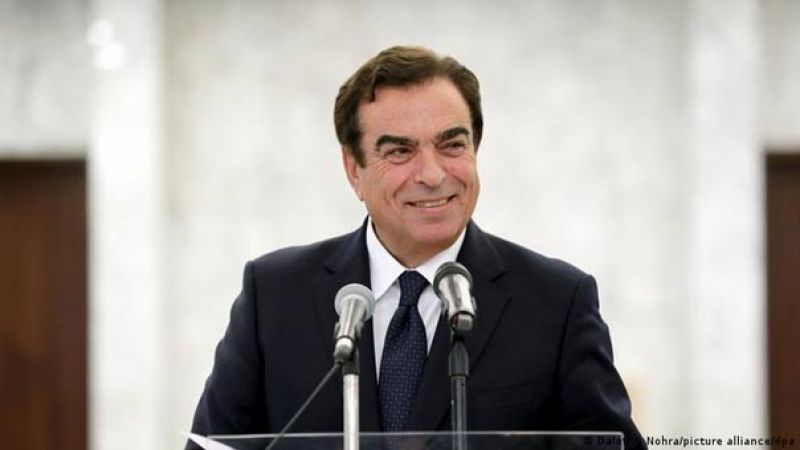
Lebanese media outlets across the political spectrum have covered this story in Radwan’s favor, and the country’s Minister of Information George Kordahi weighed in by saying the ‘Publications Court’ is the only Lebanese body authorized to rule on media affairs, based on the constitution and the laws regulating freedom of opinion and expression.

So why did Lebanon’s military court take action against a leading Lebanese media figure, well outside of its legal jurisdiction? Why now, in the midst of the country’s excruciating economic collapse and with terror and strife within its borders? Was there nothing more important for Lebanon’s military court to address – than this? And who instigated these proceedings?

The Cradle went directly to the source to answer some of these questions. This is what Radwan Mortada had to say:

The Cradle: Lebanon’s military court has sentenced you to one year and one month in prison. Before getting into the details, could you please tell me why a military court is involved in sentencing a journalist? Is this even legal?

Mortada: Military courts have no authority to try journalists for verbal offenses. They cannot prosecute me, and it would be illegal to do so. But the army commander, General Joseph Aoun, uses the military court as a weapon to fights those mentioning him to suppress freedom of opinion and expression. My words about the army command’s responsibility in the Beirut port explosion greatly angered Joseph Aoun, so he decided to make his own law.

First, he decided to ban me from entering the military court without legal justification. When I confronted him by saying that he did not inherit the court from his father to control it as he wishes and break the law, he sent a military force to raid my house and besieged the TV channel where I work to arrest me by force.

The Cradle: We have heard that you were not at the hearing or the sentencing. How is it possible that you were not even allowed to defend yourself? Why was this sentence delivered in absentia?

Mortada: My trial was a sham and a show. The president of the military court, Brigadier General Munir Shehadeh, violated due process because I was not notified of the trial date. This is against the law and exposes the implicit intent to prosecute me in this martial method. Also, the president of the court is an officer under the command of the army commander who filed the complaint against me. How could he be a judge between me and my opponent? The judge is a lower rank than the commander and has to respond to his orders by saying: ‘Yes, my commander.’

There is also a legal precedent issued by the military court itself. Hanin Ghaddar had previously been sentenced in absentia to six months in prison. But the president of the court at the time, Brigadier General Hussein Abdullah, ruled that the military court had no jurisdiction to try journalists after the United States withdrew his entry visa to America.

The Cradle: What are the military court’s charges against you?

Mortada: Offending the Lebanese Army, disparaging the military institution, and harming national security and the prestige of the state.

The Cradle: You believe the ultimate responsibility of the ammonium nitrate stores in Beirut’s Port lies with Lebanon’s military establishment. In essence, the Beirut blast happened under Joseph Aoun’s watch. Why hasn’t he been held accountable by the lead investigative judge, Tarek Bitar?

Mortada: Here is the root of the problem. I was the first to announce the responsibility and negligence of the army that led to the explosion of the Port of Beirut on 4 August 2020. I said that if the army had done its duty as it should have, the explosion would not have happened. This is a fact because the law holds the army exclusively responsible for dealing with ammonium nitrates.

But the judicial investigator, Tarek Bitar, is weak before the army and the current leadership represented by Joseph Aoun, so he did not dare to summon him. The responsibility of the army exists even if there are no traceable documents or if paperwork has been destroyed. If the army says it was not aware of the presence of a time bomb weighing 2,755 tons perched in the heart of Beirut for seven years, that is an even greater catastrophe since its most basic mission is to maintain security in the country.

The Cradle: I’ve known you and worked with you for a decade. We’ve even written articles together. I know your integrity and how you work, and I personally consider you among Lebanon’s most productive and professional journalists. So when you raise questions, I know you’re onto something. Do you trust this investigation of the Beirut Port explosion? Why or why not?

Mortada: In fact, I am personally acquainted with judicial investigator Tariq Bitar, but I am suspicious of the course of the investigation because I sense discrimination in the way this case is managed. The support Bitar has from America and some of the right-wing Lebanese parties only increases my apprehension and concern. You personally know that I have seen the documents that detail the investigation into the explosion in the port of Beirut. So I know there are officials whom the judicial investigator did not approach. The biggest evidence is his decision to exclude the current army leadership from the investigation, even though Joseph Aoun has been at the head of the army since 2017 and he bears the responsibility for this neglect.

I wish Judge Bitar had dealt with this case in another way, given the sensitivity of matters in our country. He should have summoned everyone, then decided who was responsible and charged him, but the direction of the investigation created a kind of suspicion. Therefore, I declared that I did not trust the existing investigation. But in order not to prejudge its results, I am patiently awaiting the issuance of the indictment decision by Judge Bitar to announce my final position on the investigation.

The Cradle: You wrote a very courageous piece for The Cradle that identified seven Lebanese judges that must be held accountable for unloading, storing, then ignoring the ammonium nitrate stores in Beirut’s Port. Why are these judges not being held accountable either?

Mortada: This judiciary branch bears this responsibility because it serves as a protective umbrella for the judges. Judge Bitar filed complaints against a number of judges. Although the complaints came late, the delay of the Cassation prosecution in ruling against them makes it bear a great responsibility.

The Cradle: You also covered the mass shootings and killings in Tayouneh on 14 October, and were the first to point out that the Army’s statements before and after Aoun’s meeting with the US Ambassador Dorothy Shea were different. Explain that to us.

Mortada: I wrote that the negligence of the Lebanese Army caused the Tayouneh massacre, which claimed the lives of seven innocent citizens, some of whom were shot by the army. It almost erupted into a civil war, given that this took place on a contact line between areas where a Shia majority and a Christian majority live. I spoke about the army’s responsibility and its neglect in separating the demonstrators, its wrong way of dealing with the demonstration, and the shooting that erupted after the demonstration.

I also published secret investigations conducted by the army, which showed that there was an ambush prepared the night before the demonstration, which was heading to the Palace of Justice to protest the performance of the judicial investigator Bitar in the explosion of the port of Beirut. The publication of these investigations angered the army, as they were leaked from the military court.

The Cradle: Who does Joseph Aoun think he is to do this, and why is he so focused on you, one of Lebanon’s leading journalists and a veteran security correspondent with the country’s top media outlets who has broken countless stories over the years?

Mortada: I was among the very few journalists to dare to call it by its name. I was the first to talk about the army’s main responsibility for the Beirut port explosion. Many others are afraid to face them or they are on their payroll. But I’m not one of them. Nobody can buy me and nobody can intimidate me. I carried my blood in my hands and went to the front lines and covered the lives of the most radical jihadist fighters. I was arrested in Syria. I was not afraid and I will not fear anyone. In my search for the truth, there are no red lines. I only want the truth. I know that this issue frightens many. Joseph Aoun is one of them.

The Cradle: Do you think Joseph Aoun has picked the wrong battle? Lebanon’s media associations have all, without exception, come in on your side.

Mortada: Definitely. Joseph Aoun has made a big mistake by deciding to go ahead with this fight. The battle with the press to suppress freedom of opinion and expression is a losing battle. The time of the police state is long gone. We are today in the twenty-first century. If he does not know it, he must change his advisors who are leading him to the abyss.

The Cradle: We all know that Joseph Aoun has aspirations to become president of the republic. He has increasingly associated himself and the LAF with the Americans, when Lebanon is clearly divided into two different political camps. Why would someone who is changing the highly-respected neutrality of the Lebanese army be fit for this position?

Mortada: I don’t think that General Joseph Aoun’s mentality qualifies him to be president of Lebanon. An officer leading an army cannot ask a military force to raid a media outlet to arrest a journalist, while he himself is thinking of becoming the president of Lebanon. Lebanon deserves better in light of the suffering of its people. Short-sightedness, narrow-mindedness, and personalization are not characteristics of a successful leader.

You know that the World Bank announced that Lebanon is going through one of the three worst economic crises in 150 years. You know the extent of the economic collapse, hunger, and unemployment that the Lebanese suffer from. I myself feel ashamed because my case came out in public at this time with all the tragedies we are experiencing. Imagine that the army chief and the president of the military court have nothing more important on their plate than going after a journalist they want to discipline, while forgetting about all the crises our country is going through.

The Cradle: What are you going to do now to fight these charges and stay out of prison?

Mortada: I will fight to the end. There is a team of lawyers that is objecting to the military court’s ruling. I will not accept any settlement and will follow up on every detail and highlight every violation. Dozens of foreign and Lebanese journalists and human rights defenders have contacted me and denounced the unjust ruling issued against me for simply expressing my opinion.

The Cradle: Radwan, I’ve learned a lot from you over the years and continue to do so. Thank you for your frankness and your courage in reporting the things we all want to know. What will you do when your name is cleared? Will you change your voice?

Mortada: Thank you, Sharmine. I assure you, this case will make me raise my voice higher and higher. I will open my eyes more to their violations and the approach they represent. I am a well-known journalist in Lebanon, and yet they attacked me. What do you think they will do to the rest of the citizens and the extent of the injustice they inflict on those who have no voice?

This ruling alerted me that I was inattentive in some areas related to the leadership of the army and the presidency of the military court. Today, I will work hard to count their every breath to shed light on any offense they commit.


River to Sea Uprooted Palestinian   
The views expressed in this article are the sole responsibility of the author and do not necessarily reflect those of the Blog!

Thursday, 28 October 2021

تعلموا الديموقراطية في السعودية؟

27.10.2021

تعلموا الديموقراطية في السعودية؟ 

ابراهيم الامين – صحيفة الاخبار

الديموقراطية، وفق القاعدة التي تديرها السعودية، تقول إن ما يرضي قياداتها هو رأي حر يجب احترامه، وما يعاكسها أو يخالفها هو اعتداء على سيادتها. وليست هذه حال السعودية فقط، بل حال كل مجانين إمارات القهر والموت، من السعودية إلى الكويت والبحرين وقطر والإمارات العربية المتحدة. لكن المأساة أن صبيان هذه الدول، عندنا، يتبنّون هذه القاعدة في محاكمتهم كل من يخالفهم الرأي. ويُظهرون حساسية منقطعة النظير لإدانة كل من ينتقد هذه الدول المحكومة بقوانين القرون الوسطى، ولا يصدر منها – ولم يصدر يوماً – سوى الموت والقهر.

قامت الدنيا ولم تقعد لكون وزير الإعلام جورج قرداحي عبّر، قبل توليه منصبه الحكومي، عن رأيه الشخصي في مسائل خلافية قائمة في العالم العربي، وقال ما يؤمن به كثيرون في هذا العالم: إنه ضد الحرب الكونية التي هدفت إلى تدمير سوريا، وضد الحرب العدوانية على اليمن، وإنه مع المقاومة.
يا لطيف!
ما الذي يجب أن يحصل؟
أحزاب وقوى وشخصيات وسياسيون ومثقفون وإعلاميون انتفضوا لكرامة حكومات الموت في ممالك الصمت طالبين رأس الرجل، فقط لأنه ممنوع انتقاد أحد مثل الدبّ الداشر محمد بن سلمان الذي قطّع الصحافي جمال الخاشقجي، والذي وصفه سعد الجبري، في محطة أميركية، بأنه ولد مجبول بالحقد، ومهووس بقتل منافسيه وخصومه، وأنه خطط يوماً لقتل الملك عبدالله بخاتم مسموم، وأنه، كما حكام الإمارات، لا يترددون في مطاردة خصومهم من أبناء بلدهم في أي مكان في العالم لقتلهم، أو خطفهم في أحسن الأحوال.
كل الإعلام اللبناني، ما عدا «الأخبار»، لم يجرؤ على انتقاد هؤلاء القتلة الذين يفتكون بشعب اليمن كما فعلوا في سوريا. هلا تراجعون كم أنفقت قطر على الإرهابيين الذين دمروا سوريا، وكيف تنافس حكام قطر والإمارات على سرقة آثار العراق وسوريا بعد تدميرهما والعبث بأمن شعبيهما. وهلا يشرح لنا هؤلاء ما الذي كانت قوات هذه الدول تفعله في اليمن منذ نحو عقد، مع ست سنوات من القتل اليومي.
إنه «الغضب الإلهي» على رجل قرّر أن يعلن رأيه، من دون الدعوة إلى إطاحة هؤلاء القتلة أو المطالبة بمحاسبتهم. ومع ذلك، يريد مسؤولون عندنا، إلى جانب جيش المرتزقة من إعلاميي تركي آل الشيخ وطحنون بن زايد وتميم بن حمد وأزلام حكام الكويت، إعدام جورج قرداحي لأنه انتقدهم… وكل من يقود هذه الحملة يذكّرنا بأن هذه الدول إنما تستضيف مئات الآلاف من اللبنانيين الذين من دونهم لا نأكل ولا نشرب.
ما من داع لكثير من النقاش مع هؤلاء. بل يجب تذكيرهم، وتذكير حكام إمارات وممالك القتل والقهر وأزلامهم هنا، بأن الصمت هو أفضل ما يقومون به. أما جورج قرداحي فهو حر في ما يقول. وفي ما يؤمن به. هو حر. ونقطة على السطر.


فيديوات متعلقة


مقالات متعلقة


River to Sea Uprooted Palestinian   
The views expressed in this article are the sole responsibility of the author and do not necessarily reflect those of the Blog!

Wednesday, 25 August 2021

PA Arrests Civil Rights Advocates in Ramallah

August 24, 2021

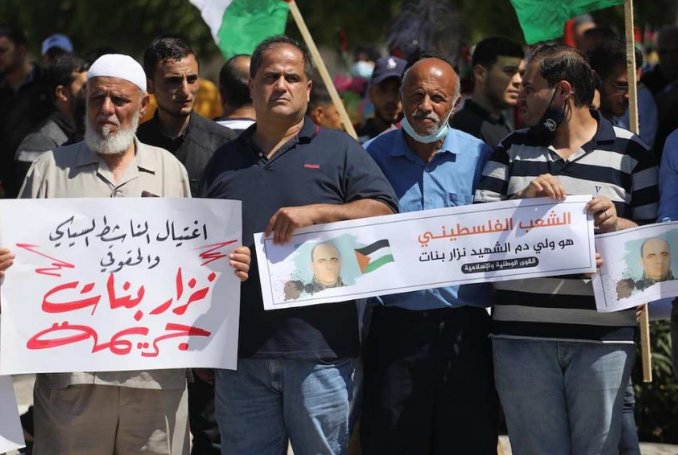
Palestinians rally to protest Nizar Banat’s assassination. (Photo: Mohammed Asad, via MEMO)

The Palestinian Authority’s security forces have been arresting civil rights activists in Ramallah for the third consecutive day, Lawyers for Justice announced yesterday.

“Among those arrested were the freed prisoner, Muhammed Allan, Ibrahim Abu Al-Ezz, and Loay Al-Ashqar,” the rights organization said in a statement, adding that the arrests are creating a state of “chaos and absence of law.”

On Sunday, the PA’s security forces were reported to have prevented the organization from holding a demonstration at the Al-Manara roundabout located in central Ramallah. They also reinforced their presence around the Al-Manara Square. and arrested all those attempting to start a protest.

Civil rights groups in the occupied West Bank have been holding regular protests in demanding the killers of activist Nizar Banat be brought to justice and for elections to be held in the occupied Palestinian territories.

Banat was a candidate for the Palestinian Legislative Council election which should have been held this year. The election was canceled by PA President Mahmoud Abbas. Banat was killed by PA security forces in late June.

(MEMO, PC, Social Media)


River to Sea Uprooted Palestinian   
The views expressed in this article are the sole responsibility of the author and do not necessarily reflect those of the Blog!

Saturday, 3 July 2021

Palestinian women journalists speak out against ‘deliberate’ attacks by PA forces

 Palestinian Authority forces have violently assaulted women reporting on protests in Ramallah

A recent protest in Ramallah, where Palestinian Authority forces have been targeting women journalists including Najlaa Zaitoun, photographed here (Supplied)

By Aziza Nofal in RamallahPublished date: 2 July 2021 14:49 UTC | Last update: 2 days 1 hour ago

For several days now, Palestinian journalist Najlaa Zaitoun has been trying to convince her children, 11-year-old Haytham and 8-year-old Zein, to leave the house. 

‘A person wearing plain clothes threatened me, to my face, that he would rape me, and then defame my reputation’

– Najlaa Zaitoun, journalist

“I’m afraid the person who beat you will come and beat me,” Zein said to her, as she urged them to keep up their training at the sports club they usually go to every day. 

On 26 June, the 35-year-old was assaulted by plainclothes security forces while she was covering protests called following the death of popular Palestinian activist Nizar Banat while in Palestinian Security Forces custody two days earlier. 

The security forces chased Zaitoun, seized her phone, which she was using to film the protest, and violently attacked her with a truncheon. She was also threatened with rape.

“A person wearing plain clothes threatened me, to my face, that he would rape me, and then defame my reputation,” she tells Middle East Eye.

Palestinian female journalists attacked by PA forces
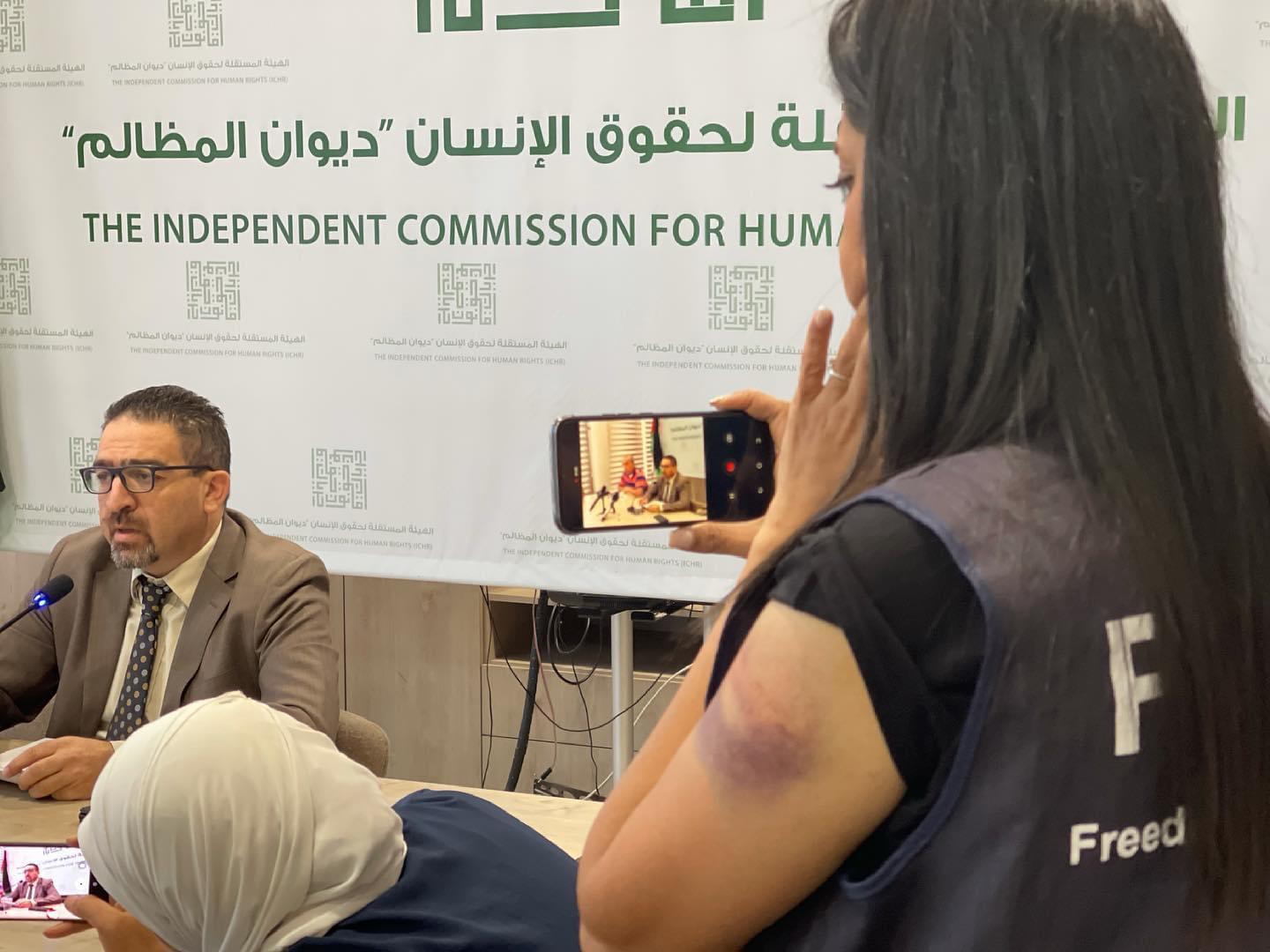
Bruises Najlaa Zaitoun sustained while covering the protests can be seen on her arm (Supplied)

Zaitoun has been living in a state of fear ever since and the violent beating she received has left visible marks on her body.

“I don’t feel safe, not even in my own home,” she says. Since the attack, Zaitoun has been staying at her parents’ house. 

Meanwhile, the assault on the journalist has moved online, with a smear campaign targeting her on social media accounts affiliated with the Palestinian Authority (PA) and accusing her of being the “one who attacked the security forces.” 

Targeted attacks

The attack on Zaitoun is one of several instances of violence against women journalists in the course of their work covering the protests. The incidents indicate that Palestinian security forces are specifically targeting women journalists, as reflected in the escalating levels of hostility and violence towars them compared to their male counterparts.

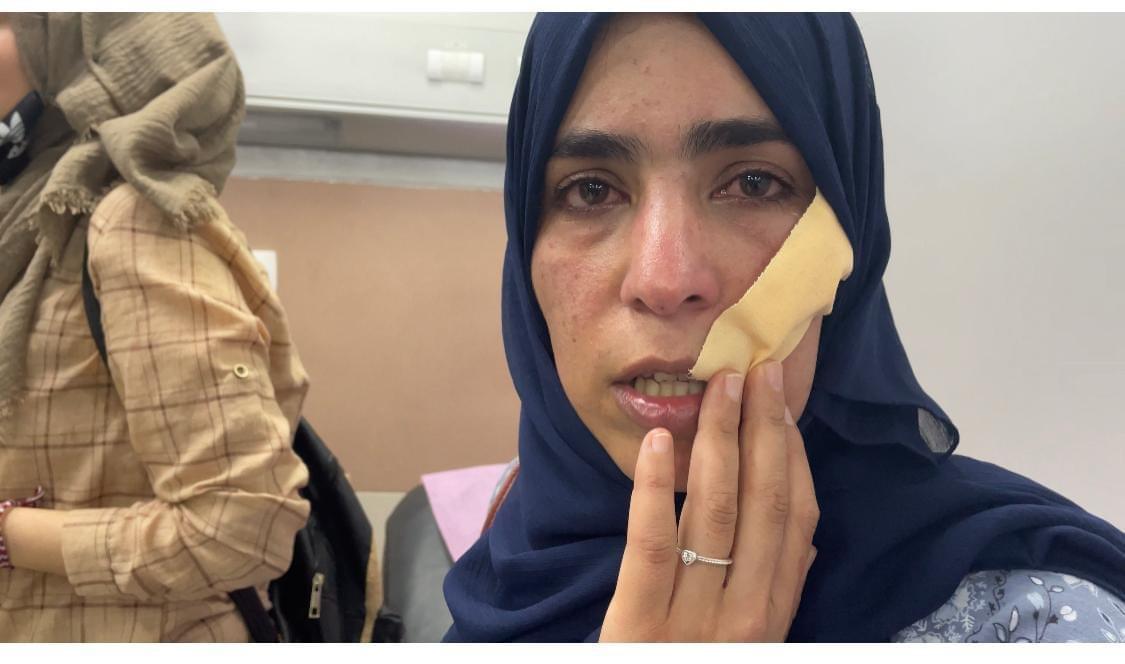
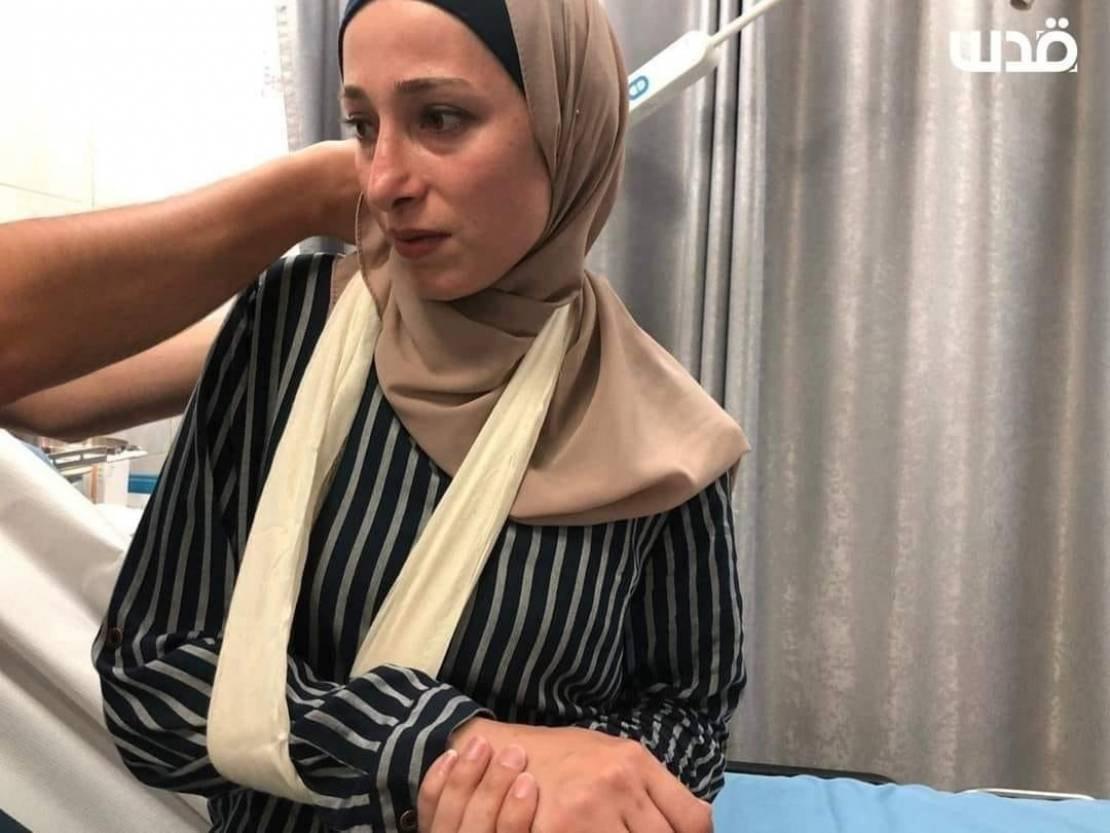
Attacks on women journalists have included physical violence, as was the case with Zaitoun and four others; confiscation of electronic devices used to cover the events; intimidation and harassment; chasing journalists in the street; arrest attempts and a ban on reporting. 

The assaults have continued even after the protests were over, with many female journalists receiving veiled threats that they will be discredited and defamed.

Saja al-Alamy is one of those attacked while reporting on the protests. On 24 June, Alamy was subjected to several attempts by security forces to prevent her from doing her job, and had to show her Palestinian Journalists Syndicate membership card each time. 


Palestinian female journalists attacked by PA forces

‘My press armour helped the perpetrators to identify me as a journalist, and attack me’, Saja Alamy says (Supplied)

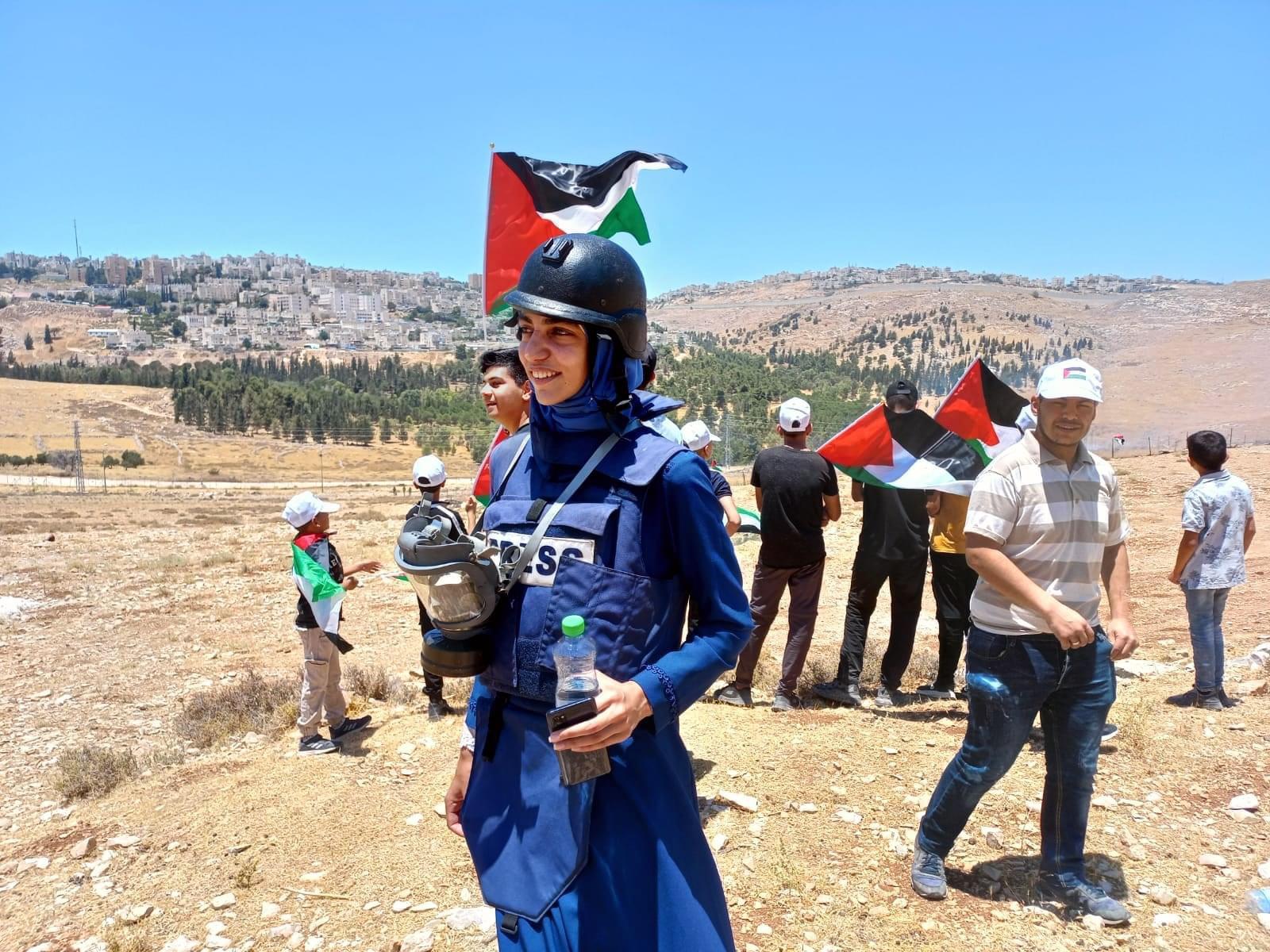
Two days later, expecting journalist to go on being obstructed, Alamy wore her bulletproof press body armour and affixed her press card on the back of her phone, which she was using to film the events. 

None of this stopped her from being attacked. Instead, she believes the measures did her more harm than good.

“My press armour helped the perpetrators to identify me as a journalist, and attack me,” she says, adding that she was only able to escape the scene after she had taken off her press vest and concealed her identity as a journalist.

“There was a direct attack on us. One of the security officers in plainclothes was pointing at my female journalist colleague and me, asking his partner to take a photo of us so that he can identify us later,” she says.

Security forces had first attacked a group of journalists, including Alamy, with tear gas, but upon noticing her filming an attack on protesters, she was directly targeted. Alamy resisted the officers’ violent attempt to confiscate her phone, and refused to hand it over. She then managed to flee the scene to a nearby building and hide in a women’s toilet.

Alamy tried for more than an hour to reach her colleagues for help, but all entrances were being watched by security officers, including those who had chased her. She was eventually able to escape, after shedding her press armour, and pretended to be out shopping.

Life threatening

MEE reporter Shatha Hammad was also among the women journalists who were targeted in the attacks of 26 June.

She sustained a shrapnel wound to her face from a tear gas canister that a security officer shot directly at her after failing to confiscate her phone. 

Hammad says that security officers in plainclothes had focused their attention on women reporters, singling them out by pointing at them, even before the clashes erupted, which, she believes, suggests that the assault was planned and deliberate.

According to Hammad, the unprecedented violence against women journalists made her feel insecure and trapped.

“What happened is life threatening,” she says, demanding immediate action from local and international organisations to provide the necessary protection for them.


Palestinian female journalists attacked by PA forces
Shatha Hammad sustained wounds to face after being directly targeted with a tear gas cannister 

The detailed testimonies of women journalists were shocking to many, especially the Palestinian Authority’s use of cultural norms to shame and intimidate women, exercising social pressure against them as an attempt to silence and prevent them from performing their work. 

According to Ghazi Bani Odeh, head of the monitoring and documentation unit at the Palestinian Centre for Development and Media Freedoms (Mada), these exponential attacks against women journalists are unprecedented and planned. 

“The assaults on female journalists have two levels. The first is the direct physical violence in the streets; then comes the online attacks designed to incite people to exert social pressure on them,” Bani Odeh tells MEE, in reference to the smear campaigns that use hate speech that could fuel violence against them. 

Smear campaigns

One of the journalists targeted by a defamation campaign was Fayhaa Khanfar, who was beaten up in the street on 26 June, with her phone stolen from her as she covered the protest.

‘When I regained consciousness, I went to security officers crying and asking for help. But no one moved a muscle’

– Fayhaa Khanfar, journalist

Security officers in plain clothes had chased Khanfar to confiscate her device and knocked her to the ground, causing her to briefly lose consciousness. 

No one had intervened to help her. The attack resulted in a hairline fracture to her shoulder and bruises all over her body.

“I was attacked by security officers wearing plain clothes. They pushed me to the ground and stole my phone,” Khanfar tells MEE.

“When I regained consciousness, I went to security officers crying and asking for help. But no one moved a muscle.”

Orchestrated online attacks targeted Khanfar, who wears the hijab, aimed to discredit her in a conservative society by circulating images of a girl in beachwear, who looks very similar to Khanfar, and falsely identifying her as the journalist.

Khanfar was later summoned for interrogation at the intelligence headquarters in Ramallah, in the occupied West Bank, and told that she had to appear if she wanted to collect her phone, a move she considered an attempt to lure her in and arrest her.

Wafa Abdulrahman, the director of Filistiniat, a civil society organisation, sees the attacks on journalists as a chilling attempt to silence the women who have been spearheading the protests. 


Palestinian female journalists attacked by PA forces
Fayhaa Khanfar suffered a hairline fracture to her shoulder and bruises all over her body (Supplied)

Abdulrahman says that the systematic targeting of women journalists is intended to first send them a threatening message, and second, to warn the society that women reporters will not be spared and that the power of the security forces is unbreakable. 

As attacks on women journalists continue through online defamation campaigns and veiled threats, they find themselves living in constant danger and feeling personally insecure. 

According to Majid Arori, a media freedom activist and a human rights specialist, there has to be individual and collective legal actions to deter such attacks in the future. 

“The attacked women journalists must file legal complaints, providing the necessary documentation via local and international legal organisations to exert pressure on those who perpetrated the assaults,” he says, adding that these attacks are attempts to suppress critical voices and any protests against corruption. 


River to Sea Uprooted Palestinian   
The views expressed in this article are the sole responsibility of the author and do not necessarily reflect those of the Blog!

Friday, 2 July 2021

The Democracy vs. Freedom Dispute

About me

July 1, 2021 

by Lawrence Davidson

Part I—Democracy and Freedom

In the United States, there is a dispute over whether democracy and freedom are compatible. Some, such as Senator Rand Paul of Kentucky, have questioned their compatibility, and even asserted that freedom, rather than democracy, is what the U.S. really stands for. These terms are often used out of context and the dispute often suffers from a lack of historical knowledge, but there is nothing surprising about that. 

Most of the men who put together the U.S. Constitution saw the world in class, racial and gender terms. While they wanted a more democratic government than that in England which, for propaganda purposes, they had portrayed as a tyranny, the new American democracy had to be carefully structured. Here is how this translated from theory into practice: the common man’s passions should be held in check by a system that kept the power to make policy in the hands of those white males who had “a material stake in society”—that is, the propertied class. For large segments of the population democracy was to be denied due to both gender and color. 

Only a relative few of these men were thinking about freedom per se. And those who did, certainly did not define it in open-ended libertarian terms. Indeed, in late 18th century America, freedom came in two flavors: (1) first and foremost, the freedom from “unreasonable” taxation. What is unreasonable in this sense, would be argued about incessantly right up into the present. (2) Protection against the abuse of government power. The notion of abuse was directly connected to a) examples of alleged British excesses leading up to the American Revolution and b) Federalist party practices (when in power) like the suppression of critical newspapers and pamphlets. It is to cover a host of these sorts of issues, collectively posited as the protection of individual rights or freedoms, that Jefferson and Madison insisted a bill of rights be added to the Constitution as its first set of amendments. Once this was accomplished (December 1791) America’s democracy and a constitutional list of protected rights/freedoms, became compatible. 

Part II—Getting Things Wrong 

Now we fast forward to the present and Republican Senator Rand Paul, who was recently quoted in the New York Times as follows: “The idea of democracy and majority rule really is what goes against our history and what the country stands for [which is freedom]. The Jim Crow laws came out of democracy. That’s what you get when a majority ignores the rights of others.” He goes on to connect Republican Party opposition to a bipartisan congressional investigation of the January 6 “protest” (it was really an attempted insurrection) with the right of the political minority to protect itself against the majority. All of this is ahistorical and illogical. 

When taking up Paul’s position there are several points to consider:

First: Historical accuracy. Paul seems confused about the status of majority and minority when it comes to freed slaves in the American South at the time Congress abandoned Reconstruction (March 1877). At this time, the Black population in large parts of the rural South constituted the numerical majority. So, the Jim Crow laws that quickly followed were the products of a local political/racial minority (southern Whites) seeking to suppress the newly won rights of their local majorities (southern Blacks). Thus, Paul has his facts backwards. He might have made this mistake because he thinks that the American Black population has been a minority at all times and in all places throughout the country’s history. Yet here we have an important exception—an exception that challenges the senator’s argument that discriminatory behavior principally has its source with oppressive majorities.

Today, if Senator Paul is looking for a minority in need of protection, he should focus on contemporary southern Blacks (who are now indeed a minority both in size and power.) They are now faced with a white Republican Party in control of state legislatures seeking to suppress the voting access of minorities.

Second. Paul seems not to take into consideration that the American majority has grown and diversified. In other words, when it comes to what the government (local, state and federal) cannot do to you (like suppress your voting rights)—the you have steadily grown larger. Theoretically this should bode ill for the rightwing state legislatures mentioned above. It is unclear how Senator Paul personally feels about this (such narrowing of the election laws has not taken place in his home state of Kentucky), but he is an active member of the Republican Party, and that is party playing fast and loose with the voting laws in a host of southern and mid-western states. Why is the Republican Party doing this? Because a growing and diversifying majority creates a growing number of voters and most come from Black and other non-white segments of the population. Exercising their participatory political rights, they tend to vote Democrat. 

Third. The constitutionally protected rights or freedoms are not open-ended. Yet Paul seems to suggest that they are when he asserts that to protect the Republican minority in the Senate, the party can block a bipartisan investigation of the January 6 insurrection. On the one hand, it is quite true that the bill of rights was designed as, and remains, a necessary defense of individual rights from majority demands for political or cultural uniformity. On the other, one can ask, what is Paul and the Republicans trying to protect their party from? The bill of rights does not, and never was supposed to stifle investigation of criminal acts. The only thing the bill of rights does in this regard is to guard the individual against illegal evidence gathering procedures and other abusive practices on the part of law enforcement.

Part III—Misusing the Bill of Rights

Against this background, how are we to understand Paul’s specific application of minority rights? At the very least, we can understand it as a misinterpretation of the purpose and intent of the bill of rights and the protections it offers individual citizens. In other words, he is defending his party’s refusal to allow a bipartisan investigation of an apparent crime—a crime with potentially embarrassing trail of evidence.

The Republican Party and its conspiracy-spinning allies in the press and social media (whose speech is nonetheless protected) essentially created an alternate reality for millions of Americans that led some of them to insurrection. Despite many evidence-based demonstrations to the contrary, millions have bought into the myth that former President Donald Trump was cheated—and thus they, his supporters, were also cheated—out of victory in the 2020 presidential election. While both the Republicans and their supporters may believe the unbelievable—aver the demonstrably false—they have no right under the Constitution and its bill of rights to express such a delusion by going on a rampage, destroying public property, and attacking public officials. They have no protected right—no “freedom” to do this even if they claim, probably truthfully, that they believed the president told them to do it. 

Taking the next step, what is the real-world consequence of Paul’s defense? Well, given the likelihood that the investigation would connect elements of the Republican Party to the actions of the insurrectionists, this must be seen as self-serving obstruction of justice—itself a crime. For Paul, this is the “freedom” that—conveniently—supersedes democracy. 

Finally, the whole affair is a scary example of a paradox: The protection of speech, that is the right to free speech, can  degenerate into a campaign of lies and this can easily lead people to unprotected, that is criminal, actions. This is, admittedly, a downside of the bill of rights. An individual (and keep in mind that under U.S. law corporations are seen as individuals) has a protected right to lie to the public—to wit: broadcasted fantasies ranging from those of the National Inquirer to Fox TV and, lest we forget, Donald Trump.

Part IV—Conclusion

It is worth repeating that one of the positive things about the political evolution of the United States is that it has expanded the ranks of the participatory majority. In political terms, citizens of all genders and races now have both participatory rights and protected individual rights. Correspondingly, the minority—referring here specifically to those who object to this historical expansion—is slowly shrinking. While the latter’s rights to, say free speech, will remain protected, their ability to retain political and cultural power may well diminish over time. There is no doubt that the Republican leadership has a sense of this possibility, and this accounts for their increasingly fierce and frenzied attempts to turn back the clock. 

The shift of emphasis from an expanding democracy with protected individual rights/freedoms, to a dangerously ad hoc and sometimes illogical version of freedom, is part of that frenzied activity. Senator Paul and his friends, very short on historical facts and judgment, want all of us to believe in the absurd. That is, obstruction of justice in the name of minority rights is “what the country stands for.”

River to Sea Uprooted Palestinian   
The views expressed in this article are the sole responsibility of the author and do not necessarily reflect those of the Blog!

Thursday, 1 July 2021

Canada’s government is seeking to silence Canadian journalists at home and abroad with a draconian censorship bill

moi


Eva Bartlett

RT.com

As a Canadian journalist, I could be subject to a censorship bill which, if passed in Senate, means the government in Canada can effectively shadow-ban and censor my voice into oblivion, along with other dissenting voices.

After seeing his tweet on the issue of Bill C-10, recently passed in the House of Commons, I spoke with Canadian journalist Dan Dicks about this. He explained that the bill is being presented as being about Canada bringing Big Tech companies under the regulation of the CRTC (Canadian Radio-television and Telecommunications Commission), to have them display more Canadian content.

“But what people are missing,” he cautioned, “is that there were clauses put into this bill, protections for certain publishers and content creators that would protect people like myself and yourself.”

Those clauses, he said, were recently removed from the bill, leading many content-creating Canadians aware of the bill to worry they will be treated the same as a broadcaster or a programmer, subject to the regulations of the CRTC.

The bottom line is that, beyond the mumbo jumbo of the government, this is the latest attack on freedom of expression, and on dissent. 

“It really appears that it’s a backdoor to be able to control the free flow of information online, and to begin to silence voices that go against the status quo,” Dicks said, warning that fines for violators could follow.

“It’s not looking good for individual content creators. Anybody who has any kind of a voice or a significant audience, where they have the ability to affect the minds of the masses, to reach millions of people, they are going to be the ones who are on the chopping block moving forward.”

Names like James Corbett come to mind. Although based in Japan, as a Canadian he would be subject to the bill. And with his very harsh criticisms of many issues pertaining to the Canadian government, he is a thorn they would surely be happy to remove under the pretext of this bill.

Or Dicks, who likewise creates videos often critiquing Canadian government actions.

Or researcher Cory Morningstar, authors Maximilian Forte, Mark Taliano, Yves Engler, or outspoken physicist Denis Rancourt, to name a handful of dissenting voices. Agree or not with their opinions, they have the right to voice them.

Or myself. I’ve been very critical of Canada’s Covid policies and hypocrisy, as well as Canada’s whitewashing of terrorism in Syria, support to neo-Nazis in Ukraine, and unwavering support for Israel which is systematically murdering, starving, and imprisoning Palestinian civilians–including children.

An article on the Law & Liberty website, which describes itself as focussing on “the classical liberal tradition of law and how it shapes a society of free and responsible persons,” notes the bill enables “ample discretion to filter out content made by Canadians that doesn’t carry a desirable ideological posture and [to] prioritize content that does.”

The article emphasizes that the bill violates Canadians’ right to free expression, as well as “the right to express oneself through artistic and political creations, and the right to not be unfairly suppressed by a nebulous government algorithm.”

It noted that Canadians with large followings, like Jordan Peterson, Gad Saad and Steven Crowder, “each enjoy audiences which far exceed any cable television program.”

As with my examples above, these prominent Canadian voices likewise risk shadow-banning under this bill.

But, worse, there is another bill, C-36, that also portends heavy censorship: the “Reducing Online Harms” bill. This one not only involves censorship, but hefty fines and house arrests for violators

The same  Law & Liberty article notes, “Canada is also expected to follow the template of Germany’s NetzDG law, which mandates that platforms take down posts that are determined to constitute hate speech—which requires no actual demonstrated discrimination or potential harm, and is thus mostly subjective—within 24 hours or to face hefty fines. This obviously will incentivize platforms to remove content liberally and avoid paying up.”

The Canadian Constitution Foundation (CCF), rightly, contests this bill, noting, “the proposed definition of hate speech as speech that is ‘likely’ to foment detestation or vilification is vague and subjective.” 

Maxime Bernier, leader of the People’s Party of Canada, is likewise extremely critical of the bills.

Trudeau has made every issue about race, gender and religion since his election. Now he wants to criminalize everyone who disagrees with his tribalist vision.C-36 is the worst attack ever against free speech in Canada.https://t.co/6Z5EefmviP— Maxime Bernier (@MaximeBernier) June 25, 2021

The CCF points out the potential complete loss of Canadians’ fundamental rights with these bills.

It should be common sense that these bills are extremely dangerous to Canadians, however cloaked in talk of levelling playing fields and of combating hate speech they may be.


River to Sea Uprooted Palestinian   
The views expressed in this article are the sole responsibility of the author and do not necessarily reflect those of the Blog!

Thursday, 27 May 2021

British schoolchildren face punishment for wearing Palestine flags and keffiyeh’s

 Students said they were threatened with detention, expulsion and barred from taking exams due to their pro-Palestine activism

Children across the UK have faced disciplinary action for their Palestine activism on school premises (AFP)

By Areeb Ullah

Published date: 26 May 2021

Schoolchildren in the UK are being punished for their pro-Palestine activism on school premises, with some being disciplined for wearing keffiyehs and holding Palestine flags.

Several students who spoke to Middle East Eye said they were threatened with detention, expulsion and being blocked from taking their exams if they continued protesting for Palestinian rights on school premises.

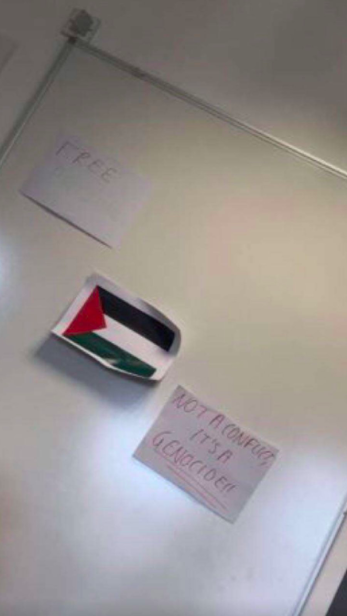
The forms of activism being penalised by schools include displaying the Palestinian flag on face masks or their hands and putting up posters designed by students to educate their peers on the Israel-Palestinian issue.

Every student and teacher who spoke to MEE requested anonymity as they feared possible repercussions from their school for speaking out.

Picture of Palestine posters put up by students at Allerton George in Leeds (Supplied)
Picture of Palestine posters put up by students at Allerton George in Leeds. Students had to take pictures in secret as phones are banned on school premises (Supplied)

Pupils who spoke to MEE attended schools in Birmingham, Leeds, Manchester, Rochdale and different areas of London.

Taking inspiration from last year’s Black Lives Matter protests (BLM) and her school’s awareness campaigns on LGBT rights and mental health, Jay assumed Allerton George would encourage discussion on Palestine.

But when students put up posters around the school in communal areas without permission, teachers quickly took them down.

“The teachers went as far as ripping the Palestine posters into pieces and scrunching the ripping the Palestine posters into pieces and scrunching them up in our faces,” Jay told MEE.

“When we asked why they took down the posters, the teachers said they didn’t have to justify it to us and were given clear instructions to take down these posters as they were seen as sending antisemitic messages.”

Jay stressed the messages on the posters were not antisemitic and said: “End Israeli Apartheid, End illegal Occupation and Free Palestine”. 

She added: “They took our lanyards from us because they had the Palestine flag.

“When we asked them why it was okay to wear BLM or LGBTQ+ flags on our lanyards but not Palestine, they couldn’t give us an answer and later said as a political cause, it caused distress to others.”

Students from Allerton Grange later posted a video of headteacher Mike Roper describing the Palestinian flag as a “call to arms” and “symbol of antisemitism”. Roper has since apologised after facing protests outside the school. 

‘Posters were torn down and binned’

Jay said the school had refused to take down the Israeli flag displayed in the library after seeing the Palestine flag taken down.

Allerton George had not responded to MEE’s requests for comment at the time of this article’s publication.

Some teachers from other schools who spoke to MEE also confirmed that students were placed in detention for putting up posters in support of Palestine.

Like Jay, Sam from West London put up posters in his school for Palestine on their class boards and wore badges to raise awareness about Palestine.

“We put up small Palestinian flags and posters on our class poster boards wearing badges that read ‘Free Palestine’, drawing Palestine flags on our hands and wearing keffiyehs to spread awareness and pique student interest,” Sam told MEE.

“The posters were torn down and binned, the students were told to remove their badges at the threat of suspension from school and all ‘flags and symbols’ were removed from sight at the threat of detention.” 

Sam added that students were threatened with being withdrawn from their GCSE exams if they refused to delete a video of senior staff taking down posters or wore a Palestine badge.

Aisha faced a similar situation as Sam did at Brampton Manor Academy in Newham, east London, where she says she was punished for wearing a Free Palestine badge in her school.

She said her teachers banned students from protesting and threatened them with detention if they continued putting them up. 

Students fear speaking out

Several students from other parts of the UK also expressed their disappointment at how their schools reacted towards their activism following the BLM protests.

Letters given to MEE that were sent to teachers and parents by Redbridge Council and a school in Birmingham told them that schools are “apolitical” bodies and could not allow students to participate in Palestine protests despite holding discussions for BLM and selling poppies to students.

Ilyas Nagdee, an activist who campaigns against the Prevent strategy, said children and their parents had contacted him about schools clamping down on pro-Palestine activism.

‘What we are seeing now is a product of years of Prevent trying to micro-manage political conversations’

– Shereen Fernandez, Queen Mary University

His call-out on Twitter to help students facing issues at school for their Palestine protests was retweeted 1,300 times at the time of writing.

Since then, Nagdee has received nearly a hundred requests for help, with many students afraid to speak out publicly.

“The cases we have received span the entire length of the country with hotspots where there are sizeable Muslim communities. The sanctions applied are wide in range, from young people being spoken to in class or given lunchtime isolation all the way to exclusions,” said Nagdee.

“We are also receiving a growing number of concerned parents who are contacting us due to fear their child has fallen into the clutches of Prevent or fearful of visits from the police.

Prevent in schools

Shereen Fernandez, a lecturer at Queen Mary University in London who specialises in Prevent in schools, believes the school reaction to Palestine protests is a direct result of the Prevent strategy telling teachers that campaigning for Palestine is associated with extremism.

Prevent is a strand of the British government’s counter-terrorism strategy that aims to “safeguard and support those vulnerable to radicalisation, to stop them from becoming terrorists or supporting terrorism”.

It was publicly launched in the aftermath of the 2005 London bombings and was initially targeted squarely at Muslim communities, prompting continuing complaints of discrimination and concerns that the programme was being used to collect intelligence.

“Although Prevent will maintain that schools are ‘safe spaces’, that is not the case, as teachers will be anxious about approaching ‘controversial’ topics like Palestine because of its alleged association to extremism as indicated in the training material.”

“Symbols of solidarity such as wearing a badge supporting Palestine has been enough to refer students in the past to Prevent.”

In 2016, MEE revealed that the UK government told teachers in schools, colleges and universities to monitor Muslim students who display an interest in Palestine as being susceptible to terrorism.

And in 2014, Rahmaan Mohammadi, a 17-year-old student from Luton, was reportedly referred to Prevent and visited by the police after he organised a Palestine fundraiser at his school.

A teacher from Mayfield school in the London area of Ilford said the school’s reaction to pro-Palestine protests was “confusing”, adding that colleagues perceive “pro-Palestine activism as racism”.

“I wouldn’t be surprised if Prevent is involved in constructing that line for schools across the country, and I’d say issues like BLM and poppies are allowed because they are considered neutral enough for schools to talk about.”

Mayfield School had not responded to MEE’s requests for comment by the time of this article’s publication.

Nagdee, the activist, said that many parents who spoke to him said they feared their children would be referred to Prevent because of their campaigning.

‘Biased’ assemblies

Following the protests, many schools across the UK held assemblies to address student concerns on raising awareness. 

But students who spoke to MEE said the assemblies fuelled further anger among students.

Images posted online showed students protesting at Judgemeadow Community College in Leicester after it was perceived to minimise Palestinian suffering. 

It remains unclear whether students in the video were punished for protesting.

Sam noted how his teacher described the tensions between Israelis and Palestinians as similar to a “messy bedroom” and disputed the phrasing of tensions as a “conflict”. 

“To address the discomfort many students felt about censorship of student voices, they organised an assembly on the concept of ‘conflict’ where the events in Palestine was compared to a ‘messy bedroom where a rebellious child and their parent had differing opinions on how it should be dealt with,” said Sam. 

“It just felt patronising and demeaning to us all.” 

Recommended

Using US aid to undermine Hamas is ‘unwise’, experts say‘Save Silwan’: Israeli court postpones decision on Jerusalem neighbourhood evictionsProgressive Democrat tells social media platforms to stop censoring Palestinian voices


River to Sea Uprooted Palestinian   
The views expressed in this article are the sole responsibility of the author and do not necessarily reflect those of the Blog!