Showing posts with label Lifting US sanction. Show all posts

Tuesday, 30 November 2021

Raisi to Macron: Negotiations must End in Removal of Sanctions

 Nov 30, 2021

By Staff, Agencies

Iran’s President Ebrahim Raisi assured his French counterpart, Emmanuel Macron, that Tehran seeks a definitive result through the ongoing talks in the Austrian capital, emphasizing that Vienna negotiations must end in removal of sanctions imposed on Iran.

Raisi made the remarks in a Monday phone call initiated by Macron, which lasted for one and a half hours, during which the two sides discussed the current state of Vienna talks on removal of anti-Iran sanctions and other issues of mutual interest.

“Sanctions have failed to stymie Iran’s progress and today, the entire world knows who violated the JCPOA, and they must return to their commitments,” Iran’s president said, using an acronym for Iran’s nuclear deal with world powers, officially called the Joint Comprehensive Plan of Action [JCPOA].

He further stated: “The current conditions are the result of Americans and Europeans not fulfilling their commitments as per the JCPOA.”

Raisi added that those parties who violated the JCPOA must gain the opposite side’s trust so that negotiations could proceed in a real manner and bear fruit.

“If Americans remove sanctions and Europeans fulfill their commitments, you should have no concern about Iran fulfilling its commitments, because we have shown time and again and in practice that we abide by our obligations,” Iran’s president said.

In parallel, Raisi reiterated that “Iran seeks [a definitive] result in [Vienna] talks and negotiations must end in removal of sanctions.”

Iran’s president then told Macron that if they believe in the International Atomic Energy Agency [IAEA] as an international authority, they should note that “the agency has frequently announced that the Islamic Republic of Iran is committed to its nuclear obligations.”

He added that during his recent visit to Iran, Director General of the IAEA Rafael Grossi said nothing about Iran not being in compliance with its obligations, adding, “We are now ready to continue full cooperation with the Agency.”

“Iran has always lived up to its nuclear commitments and the International Atomic Energy Agency has confirmed Iran’s commitment [to its obligations] on many occasions,” Raisi said, adding that dispatching a comprehensive team to Vienna talks indicates Iran’s serious determination in those negotiations.

He also urged Macron to work with other participants in Vienna talks to secure removal of sanctions imposed on Iran.

Macron, for his part, condemned unilateral withdrawal of the United States from the JCPOA, saying that Paris considers the nuclear deal a common responsibility for its members.

Macron added that he has talked to US President Joe Biden and that Paris is bent on going on with the negotiations until a final result is reached.

The French president’s phone call came after the end of the first meeting of the seventh round of Vienna talks earlier the same day during which, according to Iran’s top negotiator, Ali Baqeri-Kani, all participants in the first meeting of the seventh round of talks have agreed that removing sanctions must be the main focus of negotiations.

Iran’s negotiator said all parties agreed that focus of the talks should be removal of sanctions imposed on Iran after the US’ unilateral withdrawal from the landmark 2015 nuclear deal.

Related Posts


River to Sea Uprooted Palestinian   
The views expressed in this article are the sole responsibility of the author and do not necessarily reflect those of the Blog!

No Direct Talks with Americans in Vienna: Iranian Spokesman


TEHRAN (Tasnim) – Iran is not going to hold any bilateral negotiations with the US in the forthcoming round of talks in Austria on the revival of the Joint Comprehensive Plan of Action (JCPOA), Iranian Foreign Ministry Spokesperson Saeed Khatibzadeh said.

In comments at a press conference in Tehran on Monday, Khatibzadeh dismissed any plan for direct talks between the Iranian and American delegations in Vienna.

He also reminded the US that only with a genuine intention to lift the sanctions can it rejoin the nuclear deal, otherwise it will have to stay away from the JCPOA negotiating table.

“The Americans have wasted our time in six rounds of negotiations to keep the failed legacy of Trump,” the spokesperson added, recommending that the US seize the opportunity as the Iranian administration is entering the talks with goodwill and true resolve to see results.

“Such a window of opportunity will not remain open forever,” he added.

The US is advised to attend the Vienna talks with the purpose of removing the sanctions that have been imposed on Iran since 2015, specifically the sanctions with labels totally unacceptable to Iran, he noted.

The JCPOA was signed in 2015 between Iran and the Group 5+1 and endorsed by the UN Security Council Resolution 2231.

However, then-US president Donald Trump unilaterally pulled Washington out of the nuclear deal in May 2018 and reinstated the anti-Iranian sanctions that had been lifted by the deal.

As the remaining European parties have failed to fulfill their commitments to the accord and compensate for Washington’s absence, Iran moved in May 2019 to scale back its JCPOA commitments.

Iran and the remaining parties to the JCPOA have held six rounds of talks in Vienna, which began after the US administration of Joe Biden voiced a willingness to rejoin the nuclear agreement, to examine the prospect of the bans’ fresh removal.

Vienna is now hosting the first round of JCPOA negotiations after the new Iranian administration took office in August.

Related news


River to Sea Uprooted Palestinian   
The views expressed in this article are the sole responsibility of the author and do not necessarily reflect those of the Blog!

Monday, 29 November 2021

Iran Seeks Full, Verifiable Removal of All Sanctions through Vienna Talks – Top Negotiator

Nov 29, 2021


By Staff, Agencies

Iran’s top negotiator in the forthcoming talks in the Austrian capital on the removal of illegal sanctions imposed on the country Ali Baqeri-Kani said Tehran’s main goal is to secure a full and verifiable removal of all sanctions through the Vienna negotiations.

Baqeri-Kani’s remarks were made in an article published by the Financial Times on Sunday in which he slammed Western countries, especially the United States, for using talks as a tool to restrict Iran’s peaceful nuclear program.

“Western countries, in particular the US, work tirelessly to portray ‘negotiations’ as merely a process to restrict Iran’s legitimate and peaceful nuclear program, which is enshrined in international treaties and watched by oversight organizations,” he said.

The Iranian negotiator then emphasized that the Islamic Republic, however, seeks to achieve two goals through engaging in Vienna talks.

“In this vein, we have two goals: the first is to gain a full, guaranteed and verifiable removal of the sanctions that have been imposed on the Iranian people. Without this, the process will continue indefinitely,” Baqeri-Kani said.

He then noted that Iran’s second goal is “to facilitate the legal rights of the Iranian nation to benefit from peaceful nuclear knowledge, especially the all-important enrichment technology for industrial purposes, according to the terms of the international Non-Proliferation Treaty [NPT].”

Baqeri-Kani left Tehran for Vienna on Saturday to attend the seventh round of talks that are intended to bring the US back to the Joint Comprehensive Plan of Action [JCPOA], commonly known as the Iran nuclear deal.

A return to the JCPOA would mean Washington needs to remove its unlawful sanctions on Tehran, three years after the US left the 2015 accord and unleashed a “maximum pressure” campaign on the Islamic Republic.

The US withdrawal came while the International Atomic Energy Agency [IAEA] had issued 15 consecutive reports certifying Iran’s full compliance with its nuclear obligations under the JCPOA.

The Islamic Republic’s unwavering position on the verifiable removal of US sanctions, observers say, stems from the fact that the US started to impose new rounds of sanctions on Iran merely a day after the JCPOA’s implementation date.

It also took the US Department of the Treasury’s Office of Foreign Assets Control [OFAC] seven months to grant Airbus and Boeing partial permission to sell planes to Iran. Even then, Iran received only three out of 117 Airbus passenger aircraft it ordered and none from Boeing.

The significant noncompliance of the other parties, in particular the US, prompted Iran to invoke the “dispute resolution mechanism” several times both before and after the US withdrawal from the nuclear pact.

Related Videos

Related News


River to Sea Uprooted Palestinian   
The views expressed in this article are the sole responsibility of the author and do not necessarily reflect those of the Blog!

Friday, 26 November 2021

Iran FM: Contradictory US Behavior Presents Major Obstacle in Vienna Talks

 Nov, 24, 2021

By Staff, Agencies

Iran’s Foreign Minister Hossein Amir Abdollahian says the United States claims it is willing to return to the 2015 nuclear deal but simultaneously expands sanctions, warning that Washington’s “contradictory behavior” presents one of the obstacles in the Vienna talks aimed at putting the accord back on track.

In a telephone conversation with his Swiss counterpart, Ignazio Cassis, on Tuesday, Amir Abdollahian said Iran was “ready and serious to reach a good and immediate agreement” in the talks that would start in Vienna, Austria on November 29, “but at the same time it is distrustful of US behavior.”

“On the one hand, the US pretends to be interested in returning to the JCPOA, but on the other, it has imposed sanctions on Iranian individuals and companies in two stages over the past few weeks. America’s contradictory behavior is one of the main obstacles to the negotiations,” he added, referring to nuclear deal by the acronym of its official name, the Joint Comprehensive Plan of Action.

The top Iranian diplomat also emphasized that the Islamic Republic would judge the US based on its behavior.

Envoys from Iran and the P4+1 group of countries – Britain, France, Russia, and China plus Germany – are expected to hold the seventh round of discussions in Vienna on November 29.

The negotiations were paused in June, when Iran held a presidential election. Since then, the new Iranian administration has been reviewing the details of the six rounds of talks held under the previous administration.

Former US president Donald Trump left the JCPOA in May 2018 and re-imposed the anti-Iran sanctions that the deal had lifted. He also placed additional sanctions on Iran under other pretexts not related to the nuclear case as part of his “maximum pressure” campaign.

Following a year of strategic patience, Iran resorted to its legal rights under the JCPOA, which grants a party the right to suspend its contractual commitments in case of non-compliance by other signatories, and let go of some of the restrictions imposed on its nuclear energy program.

The US administration of President Joe Biden has said it is willing to compensate for Trump’s mistake and rejoin the deal, but it has shown an overriding propensity for maintaining some of the sanctions as a tool of pressure.

Tehran insists that all sanctions must first be removed in a verifiable manner before it reverses its remedial measures.

Elsewhere in his remarks, Amir Abdollahian said that Tehran-Bern relations were on the right track and that a recent visit by Switzerland’s President of the National Council Andreas Aebi to Iran marked a turning point in bilateral parliamentary ties.

Referring to the efforts underway to resolve problems on the way of the activities of Swiss companies in Iran, he stressed the need to boost relations between the two countries in various sectors, including science, education, agriculture, transportation, health and banking.

The Swiss foreign minister, for his part, pointed to the importance of relations with Iran and explained the status of a trade channel between the two states.

The two chief diplomats also discussed the crisis in Afghanistan

Amir Abdollahian said Iran continued to encourage the ruling administration in Afghanistan to form an inclusive government, expressing concern over the humanitarian situation in the South Asian country amid the winter season.

His Swiss counterpart also announced his country’s readiness to cooperate in the transfer of aid to Afghanistan through Iran.

Bern agrees with Tehran on the need to form an inclusive government in Afghanistan, he said, praising Tehran for attempting to find a diplomatic solution to the Afghan crisis as well as hosting refugees.

Additionally on Tuesday, Amir Abdollahian met with Rafael Grossi, director general of the International Atomic Energy Agency [IAEA].

During the meeting, the Iranian foreign minister urged the UN nuclear watchdog to keep cooperating with the Islamic Republic within the framework of its technical duties and avoid taking political positions.

Grossi, for his part, said he stands ready to resolve the remaining technical issues between the IAEA and Iran with goodwill and close cooperation in the shortest possible time.


River to Sea Uprooted Palestinian   
The views expressed in this article are the sole responsibility of the author and do not necessarily reflect those of the Blog!

Saturday, 13 November 2021

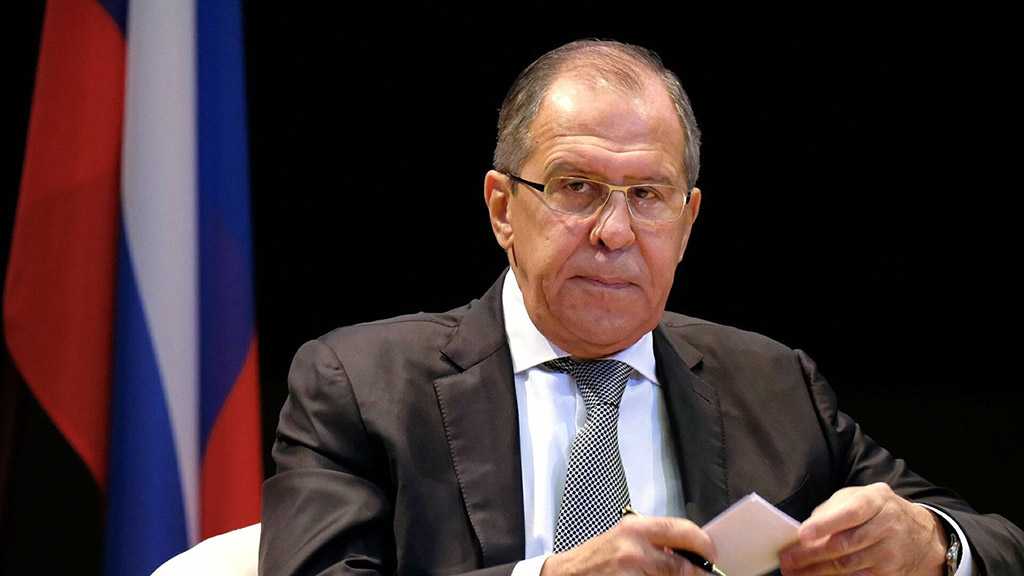
Lavrov: Russia to Advocate Removal of Sanctions on Iran in Next Round of Vienna Talks

Lavrov: Russia to Advocate Removal of Sanctions on Iran in Next Round of Vienna Talks

By Staff, Agencies

Russian Foreign Minister Sergey Lavrov says Moscow will advocate the lifting of sanctions on Iran and the full implementation of a nuclear deal – known as the Joint Comprehensive Plan of Action [JCPOA] – between Iran and a number of other countries in the upcoming talks slated to start in the Austrian capital Vienna at the end of this month.

The JCPOA was signed between Iran and the five permanent members of the United Nations Security Council [UNSC] – namely Russia, the United Kingdom, China, the United States and France – plus Germany in 2015.

Former American president Donald Trump, however, unilaterally withdrew the US from the JCPOA in May 2018 and reimposed the anti-Iran sanctions that the historic deal had lifted. He also unleashed additional sanctions on Iran under other pretexts not related to the nuclear case as part of his so-called “maximum pressure” campaign, which practically deprived the country of all of the deal’s economic benefits.

Following a year of strategic patience, Iran resorted to its legal rights stipulated in Article 26 of the JCPOA, which grants a party the right to suspend its contractual commitments in case of non-compliance by other signatories, and let go of some of the restrictions imposed on its nuclear energy program.

Iran and the remaining parties to the JCPOA have since April held six rounds of talks in Vienna, which began after the US administration of Joe Biden voiced willingness to rejoin the nuclear agreement, although Washington has shown an overriding propensity for maintaining the sanctions as a tool of pressure.

Envoys from Iran and the P4+1 are expected to hold the seventh round of discussions in Vienna on November 29.

“We will advocate that the agreements that were concluded within the framework of this document in 2015 be resumed in full. Of course, this implies the return of the United States to fulfill its obligations, including the lifting of all sanctions introduced in the context of the JCPOA,” Lavrov said on Friday.

The Russian foreign minister also said that the JCPOA had been among the topics discussed in Paris in the “2+2” format between Russian and French defense and foreign ministers. “Here, we have prospects for more constructive cooperation,” Lavrov added.

In recent weeks, there has been mounting pressure on Tehran to return to the negotiating table. The administration of Ebrahim Raisi has announced on several occasions that it will resume the talks only to remove all of the illegal US sanctions and that it will not take part in negotiations for the sake of negotiations.

Apart from breaching the JCPOA, the US’s departure and its re-introduction of the sanctions are in violation of UNSC Resolution 2231 that endorses the nuclear agreement.


River to Sea Uprooted Palestinian   
The views expressed in this article are the sole responsibility of the author and do not necessarily reflect those of the Blog!

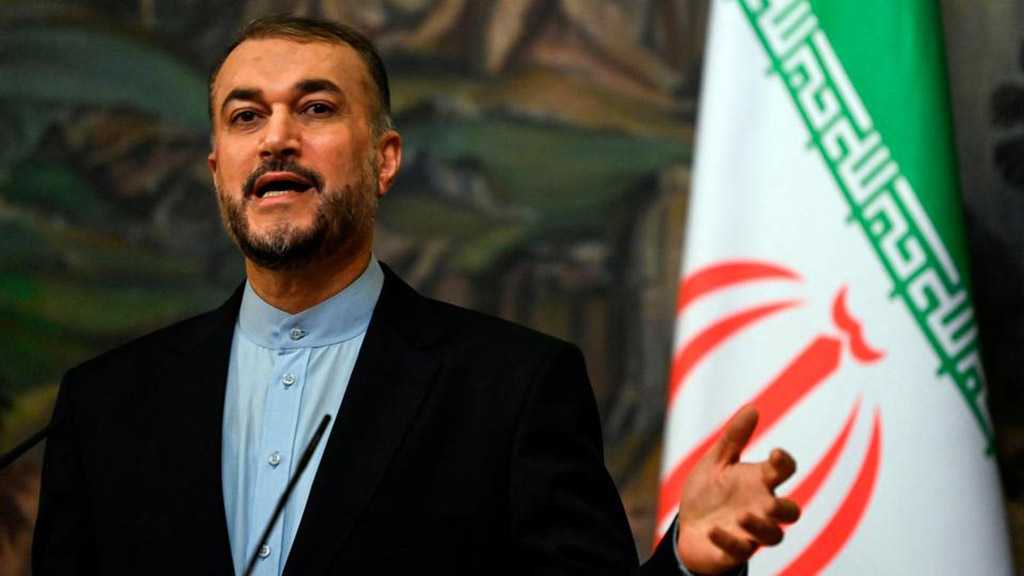
Iran FM: “Good Agreement In Short Time” Possible If Parties to Vienna Talks Serious

Nov 13 2021
Iran FM: “Good Agreement In Short Time” Possible If Parties to Vienna Talks Serious

By Staff, Agencies

Iranian Foreign Minister Hossein Amir Abdollahian says Tehran and the remaining parties to the landmark nuclear deal of 2015 can reach a “good agreement in a short time” only in case of a “serious and positive” approach to the upcoming talks slated to start in the Austrian capital of Vienna at the end of this month.

“The Islamic Republic has no intention to be locked in the stalemate remaining from the previous negotiations…I believe that if the opposite sides enter in the Vienna [talks] with a serious and positive approach, it will be possible to achieve a good agreement in a short time,” Amir Abdollahian said in a post on Instagram on Friday.

The top Iranian diplomat said it was necessary to once again outline Iran’s stance and views about the sanctions-removal talks in Vienna as the date of the negotiations has been finalized. He noted that he held “detailed and separate” phone talks with the foreign ministers of the P4+1 group of countries – China, Russia, Britain, Germany and France – last week and emphasized that the Islamic Republic would pursue a result-oriented approach to the talks and is “determined to achieve a ‘good agreement’”.

Amir Abdollahian emphasized that achieving a good agreement calls for the “effective and verifiable removal of sanctions and the return of the opposite sides to their full obligations” as per the nuclear deal, officially known as the Joint Comprehensive Plan of Action [JCPOA].

He said Washington’s behavior, including in imposing new sanctions against Iran, has made the provision of its “objective guarantees” an unavoidable necessity.

The foreign minister noted that his deputy and the country’s chief negotiator, Ali Baqeri Kani, held “explicit and useful” talks in European capitals this week.

Recently, Baqeri Kani traveled to France, Germany and Britain. In Paris, he held a meeting with Philippe Errera, the ‎director general for political and security affairs at France’s Foreign Ministry. Iran’s chief negotiator on Friday held talks in the Spanish capital of Madrid with EU deputy foreign policy chief Enrique Mora, who chairs the JCPOA Joint Commission on behalf of EU High Representative Josep Borrell.

Amir Abdollahian further said, “As I have repeatedly emphasized, the administration of the Islamic Republic of Iran will continue the policy on the expansion of balanced ties with countries based on mutual respect and common interests with seriousness and is determined not to tie the improvement of bilateral and multilateral economic cooperation to the issue of the JCPOA.”

The JCPOA was unilaterally abandoned by the US in 2018 despite Iran’s full compliance with its nuclear undertakings, as repeatedly certified by the UN nuclear agency. The US then unleashed a “maximum pressure” campaign against Iran, which practically deprived the country of all of the deal’s economic benefits.

Iran fully honored its nuclear obligations for an entire year, after which it decided to ramp up its nuclear work as a legal “remedial measure” against the US violation of the deal and the abject failure on the part of the other signatories, the E3 in particular, to safeguard its benefits.

Envoys from Iran and the P4+1 are expected to hold the seventh round of discussions in Vienna on November 29. The negotiations were paused in June, when Iran held its presidential election. Since then, the new Iranian administration has been reviewing the details of the six rounds of discussions held under the previous administration.

The US administration of Joe Biden has said it is willing to compensate for former President Donald Trump’s mistake and rejoin the deal, but it has shown an overriding propensity for maintaining some of the sanctions as a tool of pressure. Tehran insists that all sanctions should first be removed in a verifiable manner before it reverses its remedial measures.

Related


River to Sea Uprooted Palestinian   
The views expressed in this article are the sole responsibility of the author and do not necessarily reflect those of the Blog!

Saturday, 11 September 2021

العودة إلى الاتفاق النووي… بلا شروط


 ناصر قنديل

  رغم الكلام الفارغ الصادر عن المسؤولين الأميركيين، تحت عنوان أنّ واشنطن لن تواصل التفاوض حول الملف النووي الإيراني إلى ما لا نهاية، وعن خيار التخلي عن الاتفاق النووي، أو عن وجود بدائل للعودة إلى الاتفاق، يعرف كل مسؤول في واشنطن وتل أبيب والرياض وباريس ولندن وبرلين أن ليس في جعبتهم شيء غير العودة إلى الاتفاق، وأنّ كلّ الطلبات الإضافية كأثمان للعودة، سواء في الملفات الإقليمية أو ملف الصواريخ أو إبقاء بعض العقوبات، سيعني عدم العودة، كما يعرفون أنه عندما تقول إيران إنها لن تواصل التفاوض إلى ما لا نهاية وإن لديها بدائل للاتفاق، فيجب أن يأخذوا كلامها على محمل الجد، ذلك أن الزمن يفعل لصالح إيران، وفقاً لما يقوله الأميركيون والإسرائيليون وما قاله بالأمس مدير عام الوكالة الدولية للطاقة الذرية، عن أنّ إيران تستثمر الوقت لمراكمة المزيد من اليورانيوم المخصّب بنسب عالية يجعلها أقرب لما يسمّونه بالحظة النووية الحرجة، وهي لحظة امتلاك ما يكفي لإنتاج قنبلة نووية.

بالتوازي لا يملك الأميركيون والأوروبيون سوى إغواء رفع العقوبات لتحفيز إيران لقبول العودة، والالتزام بموجباتها المنصوص عليها في الاتفاق، خصوصاً أن إيران التزمت منفردة لسنتين بالاتفاق في ظل الانسحاب الأميركي بلا سبب أو مبرّر كما يقول جميع الشركاء الآخرين بمن فيهم الأوروبيون ووكالة الطاقة الذرية والأمم المتحدة عدا عن الصين وروسيا، والعودة عن العقوبات اليوم هي إعلان العودة إلى الاتفاق من الجانب الأميركي لامتلاك مشروعية مطالبة إيران بالعودة المماثلة، ووفقاً لما يقوله الأميركيون و»الإسرائيليون» أيضاً فإنّ رفع العقوبات عن إيران لم يعد يملك ذات السحر الذي كان يملكه قبل ست سنوات يوم توقيع الاتفاق في مثل هذه الأيام، حيث كانت العقوبات صادرة عن الأمم المتحدة، وهذا قد سقط إلى غير رجعة، وفتح أمام إيران الطريق لحلول اقتصادية ومالية عديدة، لم تنجح العقوبات الأميركية بتعطيلها، فالمتاجرة بين إيران وروسيا والصين وتركيا وباكستان واليابان وكوريا الجنوبية والعراق  وسواها من الدول، بقيت تجد بدائل لها تتفادى العقوبات الأميركية، فيما نجحت إيران بتطوير صناعات نفطية أضعفت حاجتها لتصدير النفط الخام، كما نجحت بتطوير اقتصادها لتفادي حجم الاقتصاد الاستهلاكي والريعي لحساب الإنتاج.

عندما تقول واشنطن إنها تستعجل العودة إلى الاتفاق النووي تسهيلاً للتفرغ لمواجهة الصين، فهل تنتظر من الصين أن تقف مكتوفة الأيدي، وهي تعلم وتقول إنها تعلم، أن الاتفاق الاستراتيجي الاقتصادي بين الصين وإيران أفقد العقوبات الأميركية فعاليتها، وأسقط قيمة العودة للاتفاق النووي بالنسبة لإيران، وجعل عائداته مجرد مكاسب إضافية لا يجوز إضاعتها، لكنها لا تستحق القتال من أجلها، فيما تعرف واشنطن أن الضفة الدولية الموازية للاهتمام الأميركي بالمواجهة التي تمثلها موسكو باتت شريكاً استراتيجياً لطهران في العديد من السياسات الإقليمية، التي تجعل الحفاظ على إيران قوية موضع اهتمام صيني- روسي، لا يمكن للأميركي تبديله لا بالإغراءات ولا بالتهديدات لكل من الصين وروسيا.

الكلام الأميركي عن بدائل يعني شيئاً واحداً هو العودة إلى خطة الرئيس السابق دونالد ترامب التي صعد الرئيس جو بايدن على قاعدة القول بأنها خطأ جسيم، وأنه في ظلها طوّرت إيران نظام الصواريخ وطوّرت قوى المقاومة مزيداً من الحضور، وتمّ اختصار المسافة عن اللحظة النووية الحرجة من سنة إلى بضعة أسابيع كما قال كل من وزير الخارجية الأميركية أنتوني بلينكن ومستشار الأمن القومي الأميركي جايك سوليفان والمبعوث الأميركي الخاص روبرت مالي مراراً، أما الرهان على الخيار العسكري، فهل من عاقل يتخيّل أنّ أحداً يأخذه على محمل الجد في ضوء المشهد الأفغاني، والتلويح بالاعتماد على ضربات «إسرائيلية» يبدو مجرد مزحة سمجة في ضوء الكلام «الإسرائيلي» والمؤيد أميركياً بأن إيران وقوى المقاومة في وضع تفوّق استراتيجي، وفائض قوة يتيح تحويل أي تحرش «إسرائيلي» جدي إلى مبرر لمواجهة شاملة لن تكون نهايتها في صالح «إسرائيل».

مرة أخرى كما كانت الحال عليه قبل ست سنوات، لا بديل للاتفاق مع إيران إلا الاتفاق مع إيران، ومضمون الاتفاق عودة غير مشروطة عن العقوبات، على قاعدة الالتزام المتبادل بالاتفاق الأصلي من دون الرهان على متغيرات وتحوّلات، هي في غير صالح الثنائي الأميركي «الإسرائيلي».


مقالات متعلقة


River to Sea Uprooted Palestinian   
The views expressed in this article are the sole responsibility of the author and do not necessarily reflect those of the Blog!

Wednesday, 11 August 2021

Was the Tanker Attack an Israeli False Flag?

AUGUST 10, 202121

An incident that could lead to a much bigger war

PHILIP GIRALDI 

Source: The Unz Review

In the United States we now live under a government that largely operates in secret, headed by an executive that ignores the constitutional separation of powers and backed by a legislature that is more interested in social engineering than in benefitting the American people. The US, together with its best friend and faux ally Israel, has become the ultimate rogue nation, asserting its right to attack anyone at any time who refuses to recognize Washington’s leadership. America is a country in decline, its influence having been eroded by a string of foreign policy and military disasters starting with Vietnam and more recently including Iraq, Afghanistan, Libya, Syria, Yemen and the Ukraine. As a result, respect for the United States has plummeted most particularly over the past twenty years since the War on Terror was declared and the country has become a debtor nation as it prints money to sustain a pointless policy of global hegemony which no one else either desires or respects.

It has been argued in some circles that the hopelessly ignorant Donald Trump and the dementia plagued Joe Biden have done one positive thing, and that has been to keep us out of an actual shooting war with anyone able to retaliate in kind, which means in practice Russia and possibly China. Even if that were so, one might question a clumsy foreign policy devoid of any genuine national interest that is a train wreck waiting to happen. It has no off switch and has pushed America’s two principal rivals into becoming willy-nilly de facto enemies, something which neither Moscow nor Beijing wished to see develop.

Contrary to the claims that Trump and Biden are war-shy, both men have in fact committed war crimes by carrying out attacks on targets in both Syria and Iraq, to include the assassination of senior Iranian general Qasim Soleimani in January 2020. Though it was claimed at the time that the attacks were retaliatory, evidence supporting that view was either non-existent or deliberately fabricated.

Part of the problem for Washington is that the US had inextricably tied itself to worthless so-called allies in the Middle East, most notably Israel and Saudi Arabia. The real danger is not that Joe Biden or Kamala Harris will do something really stupid but rather that Riyadh or Jerusalem will get involved in something over their heads and demand, as “allies,” that they be bailed out by Uncle Sam. Biden will be unable to resist, particularly if it is the Israel Lobby that is doing the pushing.

Perhaps one of the more interesting news plus analysis articles along those lines that I have read in a while appeared last week in the Business Insider, written by one Mitchell Plitnick, who is described as president of ReThinking Foreign Policy. The article bears the headline “Russia and Israel may be on a collision course in Syria” and it argues that Russia’s commitment to Syria and Israel’s interest in actively deterring Iran and its proxies are irreconcilable, with the US ending up in an extremely difficult position which could easily lead to its involvement in what could become a new shooting war. The White House would have to tread very carefully as it would likely want to avoid sending the wrong signals either to Moscow or Jerusalem, but that realization may be beyond the thinking of the warhawks on the National Security Council.

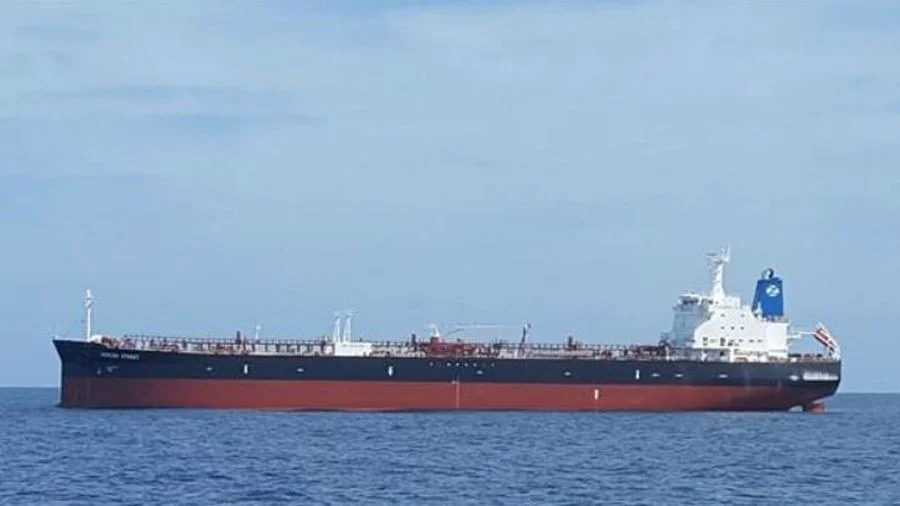
To place the Plitnick article in its current context of rumors of wars, one might cite yet another piece in Business Insider about the July 30th explosive drone attack on an oil tanker off the coast of Oman in the northern Indian Ocean, which killed two crewmen, a Briton and a Romanian. The bombing was immediately attributed to Iran by both Israel and Washington, though the only proof presented was that the fragments of the drone appeared to demonstrate that it was Iranian made, which means little as the device is available to and used by various players throughout the Middle East and in central Asia.

The tanker in question was the MT Mercer Street, sailing under a Liberian flag but Japanese-owned and managed by Zodiac Maritime, an international ship management company headquartered in London and owned by Israeli shipping magnate Eyal Ofer. It was empty, sailing to pick up a cargo, and had a mixed international crew. Inevitably, initial media reporting depended on analysis by the US and Israel, which saw the attack as a warning or retaliatory strike executed or ordered by the newly elected government currently assuming control in Tehran.

US Secretary of State Tony Blinken, who could not possibly have known who carried out the attack, was not shy about expressing his “authoritative” viewpoint, asserting that “We are confident that Iran conducted this attack. We are working with our partners to consider our next steps and consulting with governments inside the region and beyond on an appropriate response, which will be forthcoming.”

The US Central Command (CENTCOM) also all too quickly pointed to Iran, stating that “The use of Iranian designed and produced one way attack ‘kamikaze’ UAVs is a growing trend in the region. They are actively used by Iran and their proxies against coalition forces in the region, to include targets in Saudi Arabia and Iraq.”

Tehran denied that it had carried out the attack but the Israeli Defense Minister Benny Gantz was not accepting that and threatened to attack Iran, saying predictably that “We are at a point where we need to take military action against Iran. The world needs to take action against Iran now… Now is the time for deeds — words are not enough. … It is time for diplomatic, economic and even military deeds. Otherwise the attacks will continue.” Gantz also confirmed that “Israel is ready to attack Iran, yes…”

New Israeli Prime Minister Naftali Bennett also made the same demand, saying Israel could “…act alone. They can’t sit calmly in Tehran while igniting the entire Middle East — that’s over. We are working to enlist the whole world, but when the time comes, we know how to act alone.” If the level of verbal vituperation coming out of Israel is anything to go by, an attack on Iran would appear to be imminent.

After the attack on the MT Mercer Street, there soon followed the panicked account the panicked account of an alleged hijacking of a second tanker by personnel initially reported to be wearing “Iranian military uniforms.” The “…hijacking incident in international waters in the Gulf of Oman” ended peacefully however. The US State Department subsequently reported that “We can confirm that personnel have left the Panama-flagged Asphalt Princess… We believe that these personnel were Iranian, but we’re not in a position to confirm this at this time.”

So, the United States government does not actually know who did what to whom but is evidently willing to indict Iran and look the other way if Israel should choose to start a war. Conservative columnist Pat Buchanan is right to compare the drone attack on the Mercer Street to the alleged Gulf of Tonkin Incident in 1964, which was deliberately distorted by the Lyndon B. Johnson Administration and used to justify rapid escalation of US involvement in the Vietnam War. Buchanan observes that it is by no means clear that Iran was behind the Mercer Street attack and there are a number of good reasons to doubt it, including Iranian hopes to have sanctions against its economy lifted which will require best behavior. Also, Iran would have known that it would be blamed for such an incident in any event, so why should it risk going to war with Israel and the US, a war that it knows it cannot win?

Buchanan observes that whoever attacked the tanker wants war and also to derail any negotiations to de-sanction Iran, but he stops short of suggesting who that might be. The answer is of course Israel, engaging in a false flag operation employing an Iranian produced drone. And I would add to Buchanan’s comments that there is in any event a terrible stink of hypocrisy over the threat of war to avenge the tanker incident. Israel has attacked Iranian ships in the past and has been regularly bombing Syria in often successful attempts to kill Iranians who are, by the way, in the country at the invitation of its legitimate government. Zionist Joe Biden has yet to condemn those war crimes, nor has the suddenly aroused Tony Blinken. And Joe, who surely knows that neither Syria nor Iran threatens the United States, also continues to keep American troops in Syria, occupying a large part of the country, which directly confront the Kremlin’s forces. Israel wants a war that will inevitably involve the United States and maybe also Russia to some degree as collateral damage. Will it get that or will Biden have the courage to say “No!”

Philip M. Giraldi, Ph.D., is Executive Director of the Council for the National Interest, a 501(c)3 tax deductible educational foundation (Federal ID Number #52-1739023) that seeks a more interests-based U.S. foreign policy in the Middle East. Website is https://councilforthenationalinterest.org address is P.O. Box 2157, Purcellville VA 20134 and its email is inform@cnionline.org

River to Sea Uprooted Palestinian   
The views expressed in this article are the sole responsibility of the author and do not necessarily reflect those of the Blog!

Tuesday, 27 July 2021

How to Undermine a Diplomatic Triumph


About me

26 July 2021

by Lawrence Davidson

Part I—The Backstory

The true status of current negotiations to reinstate the Joint Comprehensive Plan of Action (JCPOA) with Iran is unknown to the American public—most of whom are tragically indifferent to the outcome. This is so even though the successful negotiation of this deal with Iran back in 2015 represents one of the greatest triumphs of diplomacy in the last hundred years. What we do know is this triumph was followed by tragedy—a premeditated tragedy—the sort of tragedy only fools can produce. But very few Americans care. That is the way it is with foreign policy. On the one hand, you can start wars to great public acclaim, and on the other, you can destroy hard-won diplomatic achievements almost without public notice. 

At the end of President Obama’s term of office (January 2017) the JCPOA was complete and in force. In exchange for a lifting of “nuclear-related sanctions,” Iran undertook not to pursue research that might allow her to develop nuclear weapons. Up until May of 2018 “Iran’s compliance has been repeatedly verified by the International Atomic Energy Agency (IAEA), which oversees the most intrusive inspections regime ever negotiated.” It was in May of 2018 that Donald Trump, perhaps the most despicable human being to hold the presidency since Andrew Jackson, withdrew from the JCPOA, apparently for two reasons: (1) was the treaty was completed by Obama and Trump wanted to destroy the achievements of his non-white predecessor, and (2) Trump thought he could bully the Iranians into a “better deal.” It is important to note that the other signatories to the treaty did not initially follow Trump’s lead. “The leaders of France, the United Kingdom, and Germany issued a joint statement on behalf of their countries that reemphasized their support for the deal and its importance to the nonproliferation regime.” The United Nations expressed “deep concern” over Trump’s decision and released a statement in support of the JCPOA. Russia’s Foreign Ministry also reiterated its support for the JCPOA, and further stated that “U.S. actions compromise international trust in the IAEA.”

How did the Iranians react to Trump’s withdrawal from the treaty and reimposition of harsh sanctions? At first, Tehran suggested that if the other signatories to the agreement would remain loyal to their obligations, Iran too would keep to the treaty. Unfortunately, most of the European nations involved would soon succumb to U.S. economic pressure and cease to hold to their obligations. Nonetheless, it was not until a year following Trump’s irresponsible act that Iran announced that “The Islamic Republic of Iran in reaction to the exit of America from the nuclear deal and the bad promises of European countries in carrying out their obligations will restart a part of the nuclear activities which were stopped under the framework of the nuclear deal.” Even while the Iranian government took this position, it insisted that if at any time the United States returned to the treaty and removed all nuclear-related sanctions, Iran too would return to its obligations. Tehran even suggested a process whereby the U.S. and Iran would take simultaneous steps to that end. 

Everyone but Trump devotees, Israel and its supporters, and those Iranian exiles who would like to see the return of the country’s monarchy recognized that the U.S. withdrawal from the JCPOA had been a mistake. Accordingly, in the campaign run-up to the 2020 presidential election in the U.S., the Democratic candidate, Joe Biden, promised that upon election he would rejoin the treaty if Iran returned to compliance as well. 

Biden did win, but he has not yet fulfilled his promise. Instead, he entered an extended period of negotiations that is still ongoing. At first it was said that these were about “who goes first” when it comes to returning to requirements of the treaty. Was Iran to give up the small steps in nuclear enrichment since the Trump withdrawal, or was the U.S. going to go first in removing the draconian sanctions placed on Iran by the Trump administration? It was Iran who realized the childish nature of this question and offered a simultaneous return to the compliance mentioned above. While the Biden administration rejected this offer, it has been reported that now both sides are working toward “simultaneous, sequential steps” back to requirements of the treaty. 


Part II—Misleading the American Public


In the meantime, the Biden administration has been releasing misinformation to the public. For instance, Biden has insisted that sanctions relief depends on Iran “returning to compliance.” But, of course, for anyone familiar with the relevant events, it was Washington that broke the treaty and needed to return to compliance. Any subsequent Iranian actions following Trump’s folly were, and still are, perfectly legal under the terms of the JCPOA. Joe Biden can continue to justify draconian economic sanctions in this way—sanctions that are ruining the lives of millions—only because he is addressing an ignorant American audience. 

When Iran failed to be bullied, Biden’s diplomats adopted a “shift the blame” tactic. In May 2021, U.S. Secretary of State Antony Blinken said “Iran, I think, knows what it needs to do to come back into compliance on the nuclear side, and what we haven’t yet seen is whether Iran is ready and willing to make a decision to do what it has to do. That’s the test and we don’t yet have an answer.” Translation: the American people should know that we, the Biden administration, are trying, but those Iranians seem to be too thick-headed to do what is necessary. So if the whole thing fails, it is their fault and not ours. 

Blinken went on, “If both sides can return to the original deal, then we can use that as a foundation both to look at how to make the deal itself potentially longer and stronger—and also [to] engage on these other issues, whether it’s Iran’s support for terrorism [or] its destabilizing support for different proxies throughout the Middle East.”

That scenario will not encourage the Iranians. They have repeatedly stated that the JCPOA, and the present negotiations, are about two things: sanctions and the scope of nuclear development. It is not about Iranian foreign policy, which has been so blandly assumed to be “terrorism” by both Trump and Biden. If Mr. Blinken keeps tagging on these extras, we will still be running in circles come Christmas.   

What is the diplomatic aim of the Biden administration? Is it to pursue the Democrats’ traditional, and bankrupt, aim of sounding as tough on foreign policy as the Republicans? That irrelevant goal (remember most Americans don’t care about foreign policy) would not be surprising coming from a professional Democratic politician of Joe Biden’s generation. However, after all the work that has gone into the JCPOA and all the suffering endured by the Iranian population due to brutal U.S. sanctions, such a petty motive reflects the mentality of a street gang competing with rivals, rather than the peaceful ends of an alleged civilized society. 

With statements like this, Secretary of State Blinken transforms himself into someone we might mistake for a

Fox News TV anchor. It would seem that many who pride themselves on eschewing Fox’s lies are ready to swallow whole Mr. Blinken’s bunk. 

Part III—An Israeli Connection?

We know that ex-Israeli Prime Minister Netanyahu and ex-President Trump were in agreement on Iran policy. In this regard, all the yelling and screaming about Iran’s nuclear program carried on by both men hid their real goal. Particularly for Netanyahu, the hyperbole was aimed at creating a “credible reason” to force regime change in Iran, even if it meant a U.S. invasion. Essentially, the model here was Iraq. Netanyahu was ready to pursue this end till the last dying American soldier. Obviously, the JCPOA was a major obstacle in that path. So was Barack Obama, who thought he was helping Israel and the world in general by negotiating the treaty. 

Now Netanyahu and Trump are gone from office. However, why should we believe that the new Israeli government has changed the ultimate goal? And why should we believe that Joe Biden—who is, as he never fails to remind us, an “ironclad” Zionist—will really follow in Obama’s footsteps?

In June, Israel sent some of its highest-ranking leaders to see Biden. These included Israeli President Reuven Rivlin and Defense Minister Benny Gantz. Both meetings were basically about Iran. “Iran will never get a nuclear weapon on my watch,” Biden told Rivlin. This was billed as a “stark warning” to Iran—a country which has, for religious as well as other reasons, disavowed the desire for such a weapon. How many Americans know this? Does President Biden know this?

Many scholars and other experts in Middle East policy believe that “Mr. Biden’s calculations are rooted in a different era of American-Israeli relations—when Israel’s security concerns commanded far more attention than Palestinian grievances.” This is true. But there is a more personal connection. Biden personally identifies with Israel like no other U.S. president since Lyndon Johnson. He collects yarmulkes and is reported to have knelt down in an impromptu “show of respect” after learning that Rivka Ravitz, President Rivlin’s Orthodox chief of staff, was the mother of 12 children. The Israeli Orthodox Jews often have such large families out of fear of a “demographic holocaust”—that is, the consequences of the Palestinians’ much higher birth rate than that of most Israeli Jews. Finally, Biden has completely accepted the highly debatable notion that world Jewry, many of whom are not Zionists, cannot be safe apart from the existence of Israel. 

Those same experts also believe that, when it comes to Israel, President Biden’s approach has much to do with domestic politics. Thus, getting back to the JCPOA is less important than catering to the desires of the Israel Lobby. This only makes sense for a politician born and bred to the power of that lobby.

Part IV—Conclusion


The U.S. and Israeli leaders are suffering from a group-think environment and tunnel vision, all shaped in good part by political pressure generated by dominant special interests.  At least in this instance, one cannot say the same for the Iranians who, though led by a rigid religious elite, broke through their tunnel vision and joined the JCPOA treaty. The present stalemate is the work of American ideologues tied hand and foot to a major U.S. lobby. 

Outside the tunnel one can see the obvious answer to the present stalemate. Having been polite and empathetic toward Rivlin and Gantz, Joe Biden should ask over to the Oval Office an outsider, UN Secretary-General Antonio Guterres. At the end of June Guterres said, “I appeal to the United States to lift or waive its sanctions outlined in the plan.” He also appealed to Iran to return to full implementation of the deal. Right from the beginning of Biden’s election, the Iranians have been willing to follow Guterres’s lead. It is Biden who has temporized while being encouraged by his confidants from Jerusalem. 


River to Sea Uprooted Palestinian   
The views expressed in this article are the sole responsibility of the author and do not necessarily reflect those of the Blog!