Uprooted Palestinians are at the heart of the conflict in the M.E Palestinians uprooted by force of arms. Yet faced immense difficulties have survived, kept alive their history and culture, passed keys of family homes in occupied Palestine from one generation to the next.
تحلّ ذكرى حرب تشرين التي خاضها الجيش العربي السوري بقيادة الرئيس الراحل حافظ الأسد بأفق التحرير، فيما خاضها الرئيس المصري أنور السادات بأفق تحريك التسوية بالاتفاق مع وزير خارجية أميركا هنري كيسنجر من وراء الرئيس الأسد.. تحلّ هذه الذكرى وسورية تقف على أعتاب تحقيق نصر جديد وغالي الثمن في مواجهة أشرس حرب إرهابية كونية شنتها عليها الولايات المتحدة الأميركية…
فالحرب ضدّ العدو الصهيوني الذي يحتل هضبة الجولان السوري، وأرض فلسطين، والحرب ضدّ قوى الإرهاب واحدة لا تتجزأ، لأنّ الإرهابيين الذين تستروا بثوب الإسلام زوراً إنما هم أدوات أميركا و»إسرائيل»، وهدفوا من وراء حربهم إلى إسقاط الدولة الوطنية السورية وتدمير الجيش السوري الذي أثبت في حرب تشرين انه قادر على خوض الحرب وتحقيق النصر وكسر شوكة وجبروت وأسطورة الجيش «الإسرائيلي»، كما أثبت انه يشكل بعقيدته العروبية، التي بُني عليها، سنداً قوياً للمقاومة ضدّ الاحتلال «الإسرائيلي» والاستعمار الغربي، وقوة حامية للحق العربي… وبالتالي سداً منيعاً يحول دون تنفيذ مخططات أميركا و»إسرائيل» الهادفة إلى تصفية قضية فلسطين وفرض الهيمنة الاستعمارية على المنطقة…
لقد أثبت الجيش العربي السوري قدرة قتالية فائقة في حرب تشرين في مواجهة جيش الاحتلال، ولقن جنود العدو دروساً في القتال المباشر على سفوح جبل الشيخ، وكاد جيش العدو يُدحر بالكامل وتلحق به هزيمة قاسية لولا الطعنة الغادرة التي وجهها السادات باتفاقه مع العدو على وقف النار، مما مكنه، أيّ العدو، من تعزيز قواته على جبهة الجولان وإعادة التوازن لجيش الاحتلال الذي كان يعاني من تراجع في معنوياته في الأيام الأولى للحرب.. على انّ البطولات التي سطرها ضباط وجنود الجيش السوري في ميادين القتال في موجهة جيش الاحتلال «الإسرائيلي»، ما كانت لتحصل لولا الثقة الكبيرة التي زرعها فيهم قائدهم الرئيس حافظ الأسد وقراره الجريء بالتحضير والاستعداد لخوض حرب تحرير الأراضي العربية المحتلة، والإقدام دون تردّد على اتخاذ قرار شنّ الحرب، مما أكد انّ سبب الهزائم العربية في السابق، إنما كانت نتيجة تخاذل القيادات العربية وارتباطها بقوى الاستعمار، وهكذا عندما توافرت القيادة الثورية والجريئة والشجاعة، تبدّلت الصورة وصنع النصر الذي أجهض نتيجة تواطؤ السادات ..
ولأنّ الرئيس بشار الأسد تربى في مدرسة القائد حافظ الأسد، وسار على نفس درب الكفاح الوطني والقومي المقاوم ضدّ المحتلين والمستعمرين وأدواتهم الرجعية والإرهابية، فقد صمد مع جيشه، جيش تشرين، صمود الأبطال في مواجهة الحرب الإرهابية الكونية، وأحبط أهداف هذه الحرب التي استهدفت تحطيم وتدمير وتفكيك هذا الجيش، الذي تربى على العقيدة القومية وعدم التهاون في الدفاع عن الوطن، وساند المقاومة في صنع انتصاراتها على جيش الاحتلال في لبنان وتحطيم أسطورته، ليتأكد بذلك انّ الأسطورة، بالمعنى المجازي للكلمة، إنما هو جيش تشرين الذي فاجأ أعداءه بقدرته على الصمود والانتصار على جيوش الإرهاب العالمي… وإجبار دول الغرب الاستعمارية بقيادة أميركا على الإقرار بفشل محاولاتها لإسقاط الرئيس بشار الأسد، والنيل من شرعيته الوطنية والشعبية.. وها هي أميركا تضطر مكرهة الى البدء بتجرّع كأس فشلها تدريجياً، من خلال القبول بتخفيف الحصار الذي فرضته على سورية بموجب قانون قيصر السيّئ الذكر، والسماح بانفتاح الأردن على سورية وإعادة العلاقات بين البلدين إلى ما كانت عليه قبل الحرب، واستجرار لبنان الكهرباء الأردنية والغاز المصري عبر الأراضي السورية.. الأمر الذي ما كان ليحصل لولا انتصارات الجيش السوري بدعم من حلفائه في محور المقاومة وروسيا…
ويمكن القول إنه بفضل هذه الانتصارات ستخرج سورية وجيشها أقوى وأكثر منعة وحصانة في مواجهة أعدائها، وستبقى الحضن الدافئ للمقاومة العربية ضدّ الاحتلال، وعمود محور المقاومة، وقلعة العروبة العصية على قوى الاستعمار… وأمل الأمة بالتحرر والوحدة، والمدافع الأول عن قضية الأمة المركزية قضية فلسطين.
Jordan is re-opening its border crossing with Syria and resuming flights to Damascus. In Syria, more armed groups lay down their weapons but while these positive developments occur, the US hunkers down to inflict more pain.
On September 29, Jordan’s Nassib border crossing to Syria re-opened, meaning a resumption not only of travel but of trade between the two nations. In early October, Royal Jordanian will start flying again to Syria’s capital.
In Syria’s south, after years of the government and allied attempts to restore full peace, the last armed groups have finally laid down their weapons in Dara’a, which journalist Vanessa Beeley wrote about after her recent return there.
And while the Biden administration recently changed talking heads for a Syria related diplomatic position, little else has altered regarding America’s position on Syria.
Sanctions against the Syrian people have continued under Biden, and the at least 900 US troops illegally occupying Syria remain.
In their September 13 meeting in Moscow, Presidents Assad and Putin made clear that while Syria continues to work towards restoring stability, doing so has been hampered by the presence of foreign troops not invited by the Syrian government and not under a mandate of the UN.
While speaking diplomatically, it is clear they meant the US and Turkish troops occupying areas of Syria, which—along with the proxy forces they support—bring the opposite of peace to Syrians.
Yet, type “Syria” into your search engine of choice and you will still come across screaming headlines of inexplicable “violence” in Syria, and that Syria is “not safe” for the return of refugees. Many of these recent claims emanate from a recent update from the UN Commission of Inquiry on Syria.
But this is not true. In fact since September 2015, nearly 1 million Syrians have returned to Syria, with another nearly 1.4 million internally displaced refugees re-settling, according to the September 27, 2021 bulletin of the Center for Reconciliation of Opposing Sides and Control of the Movement of Refugees.
What the delusional articles, omit are the real factors that make life in Syria difficult, and dangerous: the continued presence of al-Qaeda-affiliated groups in Idlib, terrorizing the population and firing on civilian areas in surrounding Hama and Aleppo provinces; and the deadly Western sanctions against Syrians, among still other preventable factors.
Starving and thieving Syria
The latest from the UN commission refers to the fuel shortages and food insecurity without a mention of the many brutal Western sanctions against Syrians, once again showing the supposed impartiality of the UN is non-existent.
I have written repeatedly about the deadly impact of sanctions, noting that they impact Syria’s ability to import medicines or the raw materials needed to manufacture them, medical equipment, machines and materials needed to for prosthetics, among other things.
The food insecurity mentioned by the UN commission comes as a direct result of sanctions which, “cripple a state’s economy; disrupt the availability of food, medicines, drinking water, and sanitation supplies; interfere with the functioning of health and education systems; and undermine people’s ability to work.”
Deliberating causing the devaluing of the Syrian pound (as US envoy James Jeffrey boasted about) is not targeting the Syrian government, it is targeting the Syrian people. Western leadership have blatantly said sanctions will continue until Assad is deposed.
More recently, journalist Dan Kovalik was in Syria. He noted that, “10 years ago, abject poverty in Syria affected less than one percent of the population. By 2015, this had risen to 35 percent of the population. The rise in food prices – up 209 percent in the last year – is also noted.”
Indeed, the comparison of pre-war Syria and lack of abject poverty then rings true to what Syrians have told me over and over again in my visits to their country since 2014: that they were living well, in safety, and in harmony.
As for the increasingly debilitating effects of the sanctions, I saw life get increasingly more expensive. Syrians got more desperate during the 6 months I spent there last year, and again even more so this May and June, with skyrocketing prices meaning Syrians, in spite of working multiple jobs, can’t afford to put food on the table.
Under the Biden administration, the illegal US forces continue to pillage Syrian oil. Last year, I wrote about this theft of around $30 million a month. In March 2021, Syria’s petroleum minister compared the illegal US forces to “pirates” for plundering Syria’s oil, saying the US occupation inflicted over $92 billion in damage on Syria’s petroleum sector.
Turkish-backed terrorists imprison, torture and kill civilians (including children) in northeastern Syria, with Turkish forces themselves routinely shelling Syrian villages. Meanwhile, before his meeting with President Putin, Turkey’s Erdogan sent still thousands more troops into Syria.
These are all factors contributing further to Syrians’ hellish circumstances and poverty, as well as factors omitted by most media and UN reports on Syria.
Peace-bringing reconciliation initiatives ignored
When armed groups reconcile with the state, laying down their weapons, they’re largely ignored by Western leaders, media and the UN.
Indeed, the same UN report mentioned earlier claimed that under Assad’s leadership there seems to be, “no moves to unite the country or seek reconciliation.”
Reconciliations have been ongoing since the Reconciliation ministry was established in 2012. Although the process is not perfect—the state cannot guarantee that armed groups who promise to cease violence against the state and population will adhere to their word—it is still the most peaceful option of enabling armed Syrian men to reintegrate into society, if they so choose.
How would America deal with such men on US soil? Kill them without blinking, most likely.
I interviewed the Minister of Reconciliation in 2014 and 2017, after the successes of returning peace to Homs, Aleppo, Madaya, al-Waer, among others.
The objectives of Reconciliation are the obvious restoration of security and enabling Syrians to return to their lives. But also, according to Minister Haidar, helping Syrians resolve their suffering in all respects: “Their security and safety, the economy, social services, education, the large number of martyrs and injured, the kidnapped, the missing, the internally-displaced… We are trying to find a solution to each one of these cases. That is the deepest meaning of ‘reconciliation’: to return people to their normal lives.”
In our 2017 conversation, I asked the Minister whether Syria had any outside support for Reconciliation. Only, he said, from countries who are friends of Syria.
He said even the UN wasn’t interested.
“The UN during this period was siding with the Western policies, and not mentioning the achievement that the Syrian government has reached from these efforts. Western governments were against this project because it considered it a victory for the Syrian government and a major pillar for the unity of the Syrian people and the Syrian territories.”
At the end of our conversation, he made one particularly poignant point: “Most of the people that support the reconciliation process are the martyred’s families. For example, I was in a Latakia suburb and there I met a mother of four martyrs. She said, ‘I lost 4 children and I don’t want other mothers to suffer what I suffered.’”
Incidentally, the minister is also father of a martyr: His son was gunned down by terrorists in 2012, in what Haidar described as an attempt to assassinate himself.
Dara’a, a long-awaited reconciliation
The UN commission called the restoration of peace to Dara’a al-Balad an unfolding tragedy. That’s right, it is utterly tragic that armed extremists who have shelled, killed and maimed civilians for years are finally laying down their weapons.
As Vanessa Beeley wrote, “The armed groups that had committed multiple war crimes and atrocities against Syrian civilians and anti-terrorism armed forces had no intention of relinquishing their campaign of retaliatory crimes against anyone they considered to be loyal to the Syrian government and state. A vicious offensive was unleashed by these extremist gangs formerly associated with terrorist Al Qaeda and ISIS factions in the southern region.”
Further, it is truly tragic (sarcasm) that those terrorists can no longer shell and snipe the state hospital, preventing civilians from getting medical care, as they have done for years.
As I wrote, in May 2018 before Daraa was fully liberated, in a hired taxi I went to areas which were under fire from terrorists, and took a perilous high speed ride to the state hospital, down a road exposed to terrorist sniping from less than 100 metres away.
The hospital was battered and partially destroyed from terrorists’ mortars, and mostly empty of patients. The director showed me destroyed wards and off-limits areas due to high risk of snipers.
In that article I noted that upon my return months later, I was able to see just how close the near terrorist headquarters had been to the hospital: 50 metres away, hence the extreme risk of being shot while inside the hospital.
So yes, UN and Western media, shed your tears that another reign of terror has come to an end.
And keep ignoring the brutal Western sanctions as you churn out more war propaganda against the Syrian people and ignore positive developments on the ground. Because you care so much for the Syrian people…
Millions hungry… no fuel or electricity… worthless currency… I witnessed all of this in Lebanon and Syria. And the greatest tragedy is this needless suffering is caused by the West’s desire to introduce ‘freedom’ and ‘democracy’.
I have just returned from my second trip to Lebanon and Syria this year. I previously visited in May, and in the course of a few months I have witnessed a precipitous decline in the wellbeing of the people of both of these countries.
Beirut, the capital of Lebanon, seemed rather normal and tranquil in May but is now completely dark at night, due to a lack of electricity. There are only a few hours of sporadic electricity a day throughout the city. Meanwhile, fuel is nearly impossible to come by, with lines of cars spanning at least a kilometer waiting for gas. A number of my friends told me that they could not drive to meet me because they had no fuel for their vehicles.
There is also little to no garbage service, and so the streets and sidewalks are lined with trash. In what was once dubbed the ‘Paris of the East’, I witnessed goats roaming the streets in search of garbage to eat on the side of the road. The Lebanese lira has tumbled in value daily, with menus at restaurants that were still able to operate displaying prices written in pencil so they could be changed every morning. As I write these words, the lira is now worth 0.00066 US dollars. A number of truly exasperated people stated – with a swoosh of the hand in the air – that “Lebanon is finished.” And it certainly feels that way.
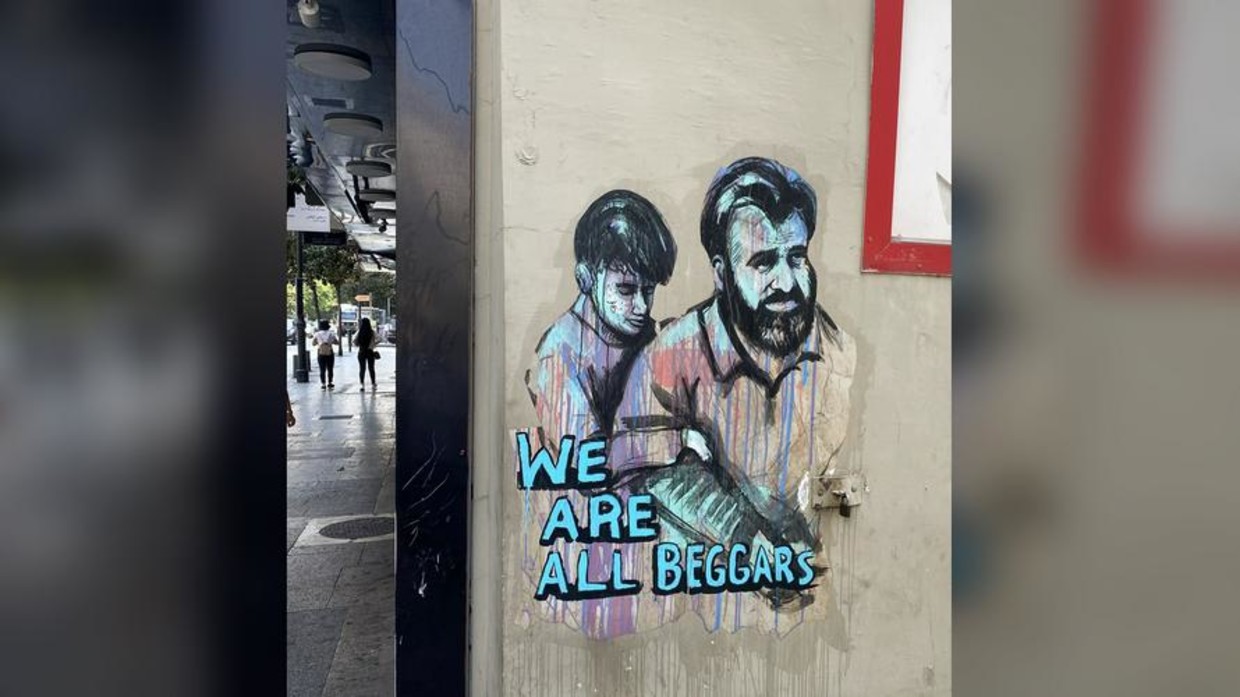
Everyone in Lebanon I talked to wants out of the country; some even asked if I could take them with me. The possible exception is the mass of Syrian people who have fled the war in their own country. Many of these Syrians now live on the streets in Beirut. It is very common to see Syrian women with their children sleeping on the dark city sidewalks. According to UNICEF, there are nearly 1.5 million Syrian refugees living in Lebanon, putting further strain on a social system which is unable to take care of its own people.
Syria is also suffering from a lack of electricity, with power for only a few hours a day, and food and vital medicines are hard to come by as well. Personal protective materials necessary to protect against Covid – such as masks and hand sanitizer – are almost non-existent.
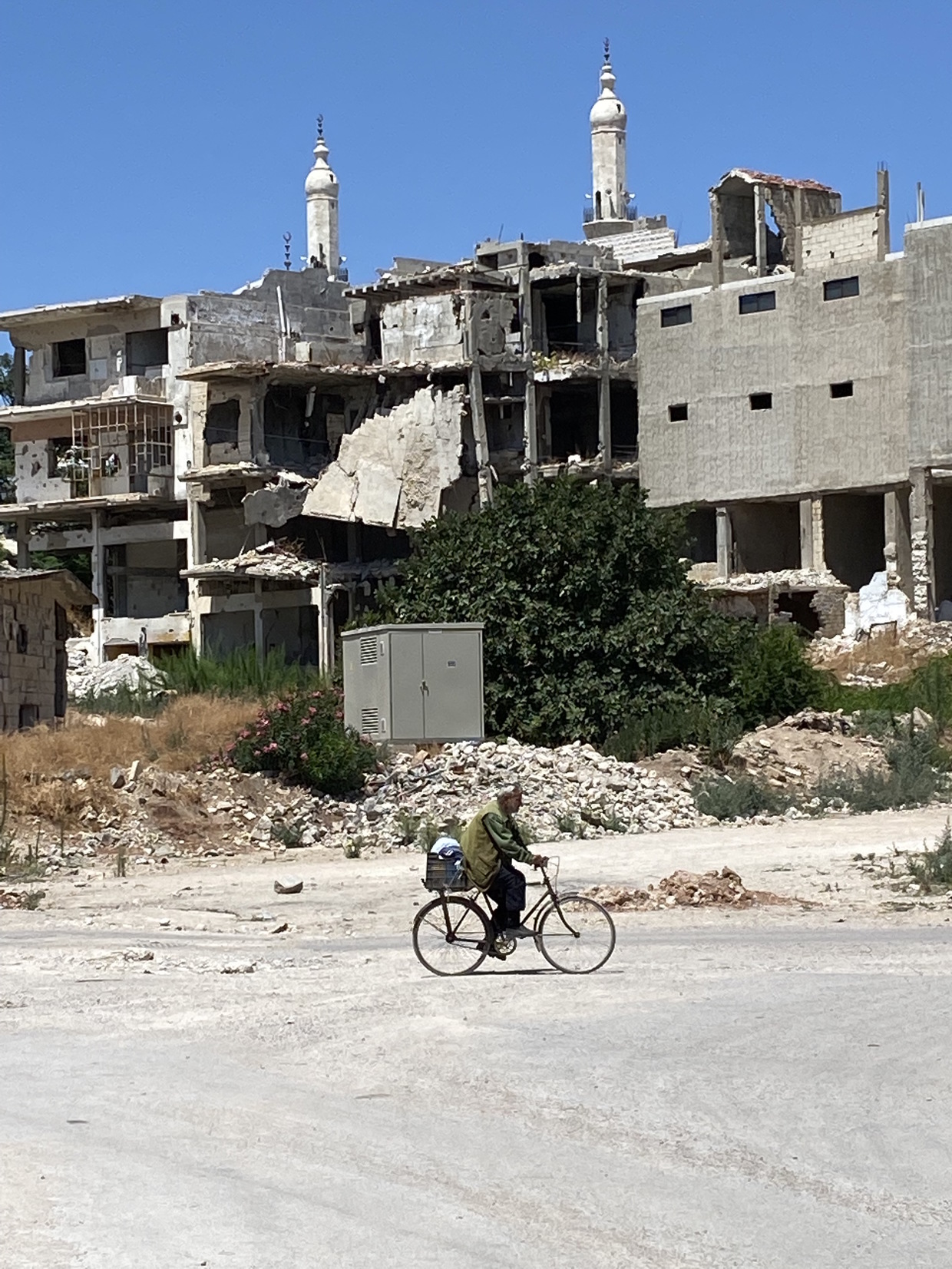
The families I stayed with would be at the ready with their laundry and food to cook for the odd occasion that the electricity would turn on for an hour. Most people are without air-conditioning or refrigeration in the sultry climate. The Syrian pound is also relatively valueless, with $100 buying bags of the currency, as I myself have experienced. Meanwhile, huge swathes of cities like Homs remain largely in rubble as post-war reconstruction has ground to a halt.
All of this is, of course, according to the plan of the Western ‘humanitarians’ who claim their suffocating economic sanctions on Syria – once Lebanon’s biggest trading partner and largest source of fuel – are intended to somehow bring democracy and freedom to the region. As we well know, these sanctions hurt civilians first and foremost, and disproportionately injure women and children in every country upon which they have been imposed.
As an article in Foreign Affairs explains, the example of Iraq shows that sanctions do nothing but create human misery. It reads, “US sanctions killed hundreds of thousands of Iraqis. Their effect was gendered, disproportionately punishing women and children. The notion that sanctions work is a pitiless illusion.”
And it goes into great detail about the humanitarian toll of the sanctions first imposed upon Syria by President Trump. “The Trump administration designed the sanctions it has now imposed on Syria to make reconstruction impossible. The sanctions target the construction, electricity and oil sectors, which are essential to getting Syria back on its feet. Although the United States says it is ‘protecting’ Syria’s oil fields in the northeast, it has not given the Syrian government access to repair them, and US sanctions prohibit any firm of any nationality from repairing them – unless the administration wishes to make an exception…”
The article goes on to point out that these restrictions mean the country faces “mass starvation or another mass exodus,” according to the World Food Program. This is backed up by alarming statistics which show that 10 years ago, abject poverty in Syria affected less than one percent of the population. By 2015, this had risen to 35 percent of the population. The rise in food prices – up 209 percent in the last year – is also noted, as is the fact that according to the World Food Program, there are now 9.3 million “food insecure” Syrians. There is also criticism of the requirements the Syrian government must meet to secure relief from the sanctions. These are described as “deliberately vague” – a ploy, it is said, to deter investors who might be able to assist Syria, but are unprepared to do so because they are not certain they are free to help.
The UK humanitarian organization, the Humanitarian Aid Relief Trust (HART), echoes these concerns, explaining that “[t]he sanctions that have been placed on Syria by the EU (including the UK) and USA have caused dire humanitarian consequences for Syrian citizens in Government controlled areas (which is 70% of the country) who are seeking to rebuild their lives…”
“Of the huge amounts of humanitarian aid that western governments are sending ‘to Syria’, the vast majority reaches either refugees who have fled the country, or only those areas of Syria occupied by militant groups opposed to the Syrian government. Most Syrian people are therefore deliberately left unsupported; indeed, even their own effort to help themselves and re-build their lives are hampered by sanctions.”
The despair being brought about by Western sanctions is palpable. Syrians and Lebanese, whose fates are inextricably tied to each other, have little hope for a happy and prosperous future. Once again, the West’s claims to ‘civilize’ the world have brought only misery, sorrow and destruction.
But I would be remiss if I did not end on this note: that, still, despite it all, the incredible hospitality and kindness of the Syrians and Lebanese have yet to be destroyed by the cruelty visited upon them. Everywhere my companions and I went, including in the most modest homes of places like Maaloula, Homs or Latakia, Syria, or in Lebanon, families were quick to offer us coffee, water, and snacks.
Despite the fact that they are being denied the basic amenities of life by sanctions as targeted as a nuclear weapon, these people still know how to share the little that they have. This, I will always carry with me and be grateful for.
Daniel Kovalik teaches International Human Rights at the University of Pittsburgh School of Law, and is author of the recently-releasedNo More War: How the West Violates International Law by Using “Humanitarian” Intervention to Advance Economic and Strategic Interests.
Beirut – Unique of its kind, Hermel’s Al Assi river in north Lebanon, flows upwards towards Syria opposing the logical direction of any river and links between the Syrian and Lebanese borders. The link between the two neighbors is fed with social and political factors that has long bonded both countries for hundred years to date.
Since the 2011 Syrian crisis and the most recent Lebanese crises, the first official Lebanese delegation visited the Syrian capital last week to discuss the possibility of importing gas from Egypt through the Syrian territories in a bid to solve the fuel shortages in power plants, which has affected Lebanon’s economy and day-to-day life.
After a 10-year cut in diplomatic ties between the two governments and amid the ensuing calamities in Lebanon as the worst monetary inflation taking place, the Lebanese government has no time for any additional delays to enhance the country’s economy to a better level as much as possible.
In the light of the aforementioned, an official delegation including Lebanon’s Deputy Prime Minister Zeina Akar, Minister of Energy and Water Raymond Ghajar, Finance Minister Ghazi Wazne, Secretary-General of the Lebanese Syrian Higher Council Nasri khoury and General Security Director General Abbas Ibrahim headed to Syria on September 4 in the highest level visit in years to ask Syria to allow the passage of Egyptian gas through the Syrian territories.
The 4-hour meeting concluded with a declaration on behalf of the Syrian side of full assistance and cooperation and an agreement on the technical procedures to implement the move immediately.
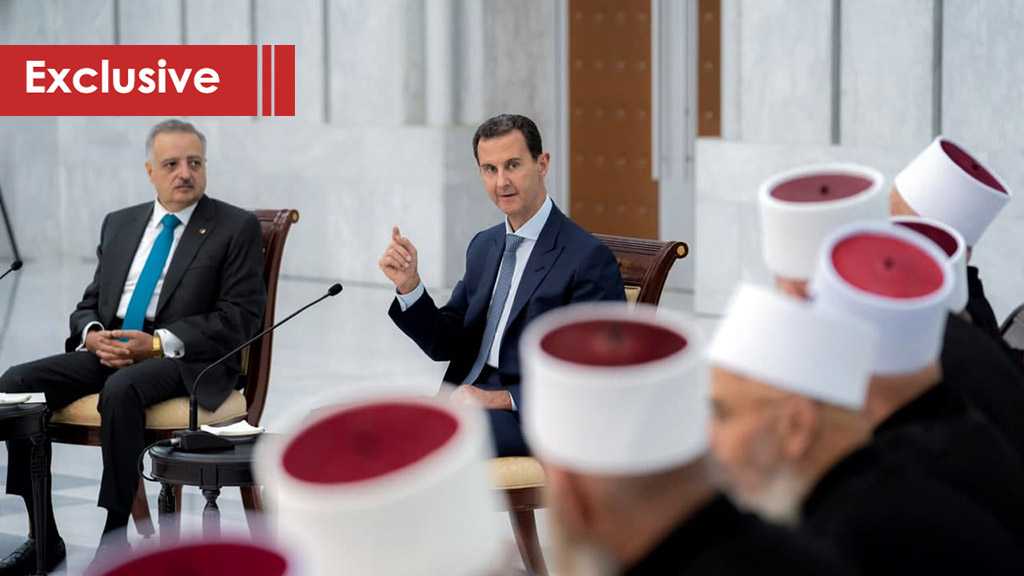
The next day, Syrian President Bashar Assad met with a Lebanese Druze delegation at the Syrian Presidential Palace.
Head of the Lebanese Democratic Party MP Talal Arslan and head of the Arab Unitarian Party and former minister Wiam Wahhab asserted the importance of the strong ties between the two countries in face of any challenge.
The delegation also presented a warm greeting by Sheikh Nasseredine al-Gharib, the spiritual leader of the Druze community in Lebanon, congratulating Syria for its latest victories against terrorism, confirming that the Druze community will always be loyal to Syria and its people.
Forty-eight hours were enough to put things back on track between the two neighbors, proving that no matter how vicious the battles and struggles both nations may face, given the boundless US-“Israel” meddling via political and military policies such as the Caesar Act and the backing of terrorist groups. Hence, Syrian-Lebanese cooperation has a direct beneficial impact for both countries, it struck US proxies in Lebanon calling for a full cut of ties with Syria in the heart revealing how wrong their visions and decisions are.
A whole decade of a conspiring to split Syria and Lebanon, reinforced by a brutal war led by the US and its proxies has failed, and all the facts lead to the reality that Syria is the only gateway for Lebanon and its true ally for better or worse, taking in consideration the recent crisis in Lebanon.
The brotherhood between Lebanon and Syria is as the Al Assi River, facing the calamities and all the struggles together, with a one-of-a-kind link, standing side by side at every precise moment, even when opposing nature itself – against all odds!
Deconstructing the complexity of the current scene exposes the myth of American power – with its illusion and glare – whose links are broken one after the other. Nevertheless, it won’t collapse entirely as a result of one position. They will not all fall in one glorious moment, but America’s abilities are waning, weakening, and retreating in images that appear to anyone who wants to see.
Suddenly, the American steps in Lebanon failed, and the Caesar Act, which is besieging Syria and Lebanon and is imposing a red line to prevent communication between the Axis of Resistance, collapsed. In the words of the American ambassador, the scene ended long years of efforts to isolate Syria and keep it away from Lebanon.
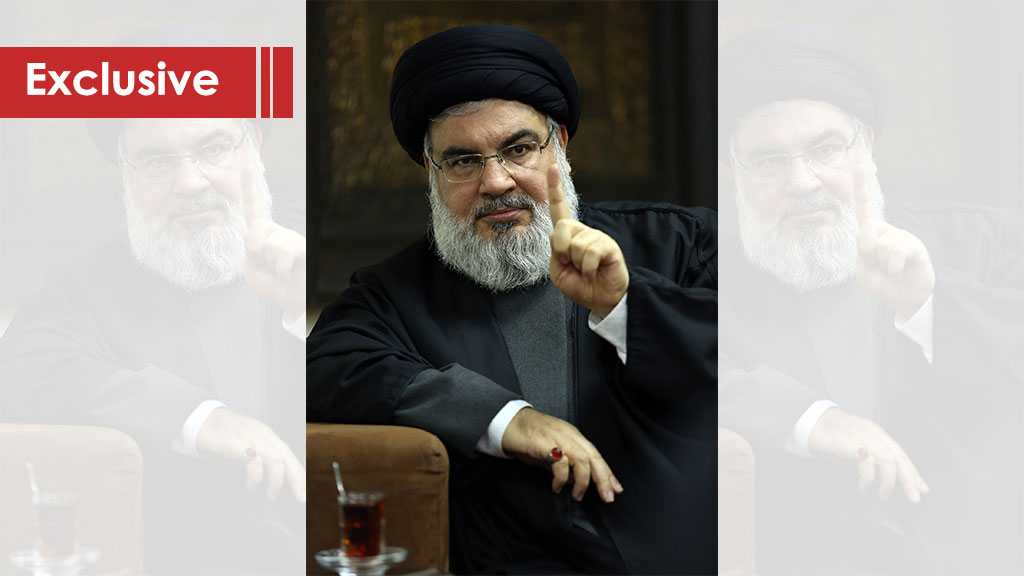
At this rare moment, based on the years of victory and jihad on every battlefield, and in light of the sudden American helplessness and astonishment at what happened, Sayyed’s move towards Syria came. On the fourth anniversary of the second liberation, His Eminence Sayyed Hassan Nasrallah linked what happened and what will happen to Syria, once again.
“The Caesar’s Act was not only a siege on Syria, but also a siege on Lebanon,” he said. For those who deny the influence on Lebanon, Sayyed returned the crisis to its first and direct root.
The divine blow, of course, swept aside the Zionists, the party that suffered the most significant setback as a result of what is happening to the shepherd, the ally, and the capable treasurer. At the moment, the entity looks like an abandoned bastard, without a father, without protection and the ability to move, and its confidence in the future bleeds in terrible succession.
In light of a humiliating US withdrawal, the comprehensive view of the region requires acknowledging that “Israel’s” paralysis is not a sign of surrender to reality, but rather a pause to take a breath. The leaders of the entity desperately want this in order to comprehend the surprise of the siege being broken over Syria and Lebanon and the opening of a wide road between Tehran and Damascus, all the way to Beirut.
Following Sayyed’s first speech in which he announced an agreement for the first Iranian ships to Lebanon, those who are familiar with the “Israeli” media noticed silence when it came to describing the scene. The Zionist media, which is completely under the sword of strict military censorship, would not be silent on such a threat unless instructed to do so.
It seems that the entity needs time to be able to absorb what happened, which constituted an unbelievable surprise. It’s now looking for an opportunity to maneuver after being completely paralyzed by incidents following the surprise. The entity’s position was weak, and in the best case scenario, it would merely be a reaction to the Lebanese decision. Thus, it would place an unknown price on any steps it chooses to take. Therefore, Tel Aviv wants time to calculate its next steps.
The transformations initiated by a signal from our Sayyed, the master of resistance and victory, are not just a reversal of the rules of the game. The beholder will see the laying of the foundations of a new era – one of the many challenges the Americans and Zionists will face.
The goal of this stage is to strike the philosophy of Zionist continuity in Palestine as well as the philosophy of its presence on our Arab land – the Zionist entity is always keen to portray its army as the unbeatable army. It’s also designed to hit Tel Aviv’s vast foreign investments and the theory of Zionist supremacy over the Arabs.
For its existence and continuity, “Israel” relies on multiple factors – the army with its aura, and support from Western powers that provide it with political cover as well as iron and fire. This is designed to ensure that its superiority over all the Arab armies combined cannot be denied. In every war the Zionists waged, they destroyed one Arab army after another, with ease – in a strange manner.
And in the event of a crisis, the United States was there to provide immediate and mighty assistance. In the October liberation war, the American force intervened immediately after the forbidden occurred and the first crushing defeat of the Zionists approached, to turn it into what could be promoted as a massive victory by freezing the Syrian advance first, then besieging the third Egyptian army, and crossing back to Africa in one day and night.
Western investments were immediately made available in the form of armies of human wealth, and then tens of billions of dollars ready to be pumped into the joints and arteries of the Zionist economy. If anyone thought of leaving, these investments gave them a reason to stay. Additional motives were added to the desires of those who wish to move to the Promised Land, where a job is guaranteed and the lands abandoned by its inhabitants are looking for new owners.
Finally, by using weapons and the economy, the Zionist entity maintains its permanent position as an oasis of growth and progress, amid an Arab sea suffering from the bitterness of backwardness, ignorance, and poverty. “Israel” is portrayed as a beacon of superiority, and a civilized ghetto among groups of barbarian tribes that do not know the way to civilization, and this superior entity had to subjugate them, as the American ancestors subjugated the Indians.
By any and all scales, Sayyed’s strikes – starting with the dazzling and great Ashura speech – dealt a triple blow to the Zionist entity. It comes in light of an optimal situation, from an American retreat seeking costly, even questionable, repositioning.
Moreover, the generous man proved that action in this region is possible. Successive victories generated the required amount of self-confidence and confidence in one’s capabilities, in turn giving the entire Axis of Resistance the necessary fuel to overcome the American siege and the Zionist threat. It also broke the arrogance of the Zionist power that allowed it to strike whenever and wherever it wanted to impose the “Israeli” demands and deter any aspiration for our rights.
حسمت التأكيدات الرسمية صحة ما تمّ تداوله إعلامياً عن دعوات رسمية يقوم وزير الخارجية العراقي فؤاد حسين، لقمة تعقد في بغداد تحت عنوان دول جوار العراق للتعاون الأمني، بالتزامن مع توقيع إتفاق انسحاب القوات الأميركية القتالية، بعدما أعلنت بغداد أنّ زيارات وزير خارجيتها واتصالات رئيس حكومتها تتمّ في سياق التحضير لقمة تضم دول جوار العراق نهاية شهر آب الجاري، وقد شملت دعوة السعودية وتركيا والكويت حتى الآن ويفترض أن تشمل إيران وسورية والأردن قريبا، ولقيت تجاوب الرئيس الفرنسي للمشاركة في القمة، ورغم بعض التقديرات التي تقول إنّ الأرجح هو أن تستبدل القمة بلقاء يضم وزراء الخارجية والمسؤولين الأمنيين، لأن عقد قمم من هذا النوع لا تزال دونه عقبات كثيرة، يبقى أن التوجه بذاته يمثل تحوّلاً كبيراً في أوضاع المنطقة يستحيل حدوثه بمبادرة عراقية صرفة دون تنسيق مسبق، أو طلب مسبق من الأميركيين.
–
سبق لواشنطن أن اعتمدت إطار لقاءات دول جوار العراق لحوار إقليمي غير مباشر مع سورية وإيران، ولا تبدو موافقة الرئيس الفرنسي على المشاركة والتشجيع بعيدة عن تلبية رغبة أميركية، خصوصا بعد زيارة رئيس الوزراء العراقي الطازجة لواشنطن، كما لا تبدو الصيغة بعيدة عن الاستنتاجات الأميركية الخاصة بتسارع الإنهيار في أفغانستان، والحاجة لتنسيق يطال دول جوار العراق لحماية الصيغة القائمة على ما يسمّيه الأميركيون بإعادة الإنتشار الإقليمي، وإقامة قاعدة عسكرية في الأردن تستضيف القوات التي سيتم إخلاؤها من العراق، وربما من سورية أيضاً، دون التسليم بالانسحاب الكامل، من غير إتفاق كامل، لا يبدو متيسّراً مع إيران وقوى المقاومة، حتى الآن.
–
القرار بالانفتاح على سورية من عدد من الدول المشاركة يناقض ما سبق إعلانه عن نصائح أميركية بتجميد العلاقات معها، خصوصاً بعد الإنتخابات الرئاسية السورية، وكان واضحاً انّ الرسالة الأميركية تستهدف العلاقات السعودية السورية والإماراتية السورية، وانعقاد لقاء وزاري تشترك فيه سورية يكفي لإعلان سقوط مفهوم المقاطعة والحصار، ويطعن نظرية العقوبات، لأن العنوان الثاني للقمة هو التعاون الإقتصادي، ولعله من الملفت أن نسمع حماسة فرنسية للمبادرة العراقية، وسيصير الأمر مفاجأة أنّ عقد اللقاء على مستوى القمة وحضره الرئيس الفرنسي، كما أعلن، وهذا في حال حدوثه يعني ان زمن التحوّلات الكبرى قد بدأ، وان المنطقة دخلت مرحلة جديدة سياسياً وأمنياً وإقتصادياً، فلا يُعقل أن ترضى سورية بالمشاركة في لقاء يشارك فيه الأتراك دون أن تكون بين يديها ضمانات مسبقة تتصل بتغيير جوهري في التعامل التركي مع الواقع السوري.
–
الأهمّ من اللقاء الوزاري، والشديد الأهمية إذا تحققت القمة، هو المفاوضات الحثيثة التي ستسبق الإنعقاد، حتى لو تأجّل الموعد فهو لا يعني إحباطاً، بل مزيداً من الوقت لإنضاج التفاهمات وإزالة التعقيدات، ولقاءات غير علنية تضمّ الأطراف المعنية تمهيداً ربما للقاء أول على مستوى وزاري وأمني، يعقد في الخريف، وقمة تعقد مع نهاية العام، كما تقول التقديرات، وهذا وحده يعني رسم خريطة جديدة للمصالحات والتسويات التي تشكل الدعوة العراقية بذاتها إيذاناً بإنطلاقها.
Iran Offers to Contribute to Saudi-Yemen Dialogue
-
Foreign Minister Abbas Araghchi expressed Iran’s readiness to provide any
assistance to help initiate dialogue between Saudi Arabia and Yemen and
facilitat...
Another Epstein Class whistleblower ‘suicide’
-
“How US commerce secretary’s Epstein links were uncovered by British
whistleblower“ (Verity/Byrne/Milne):Andriesz suspected there was yet more
to find in t...
The Legendary Golem
-
The Legendary Golem October 3 2026 ___________________________________ More
Vids! +BN Vids Archive! HERE! ___________________________________ Support
The B...
The United States At A Crossroad
-
The United States At A Crossroad—An Analysis (16 Sept 2026) by Lawrence
Davidson Part I—Texas vs Minnesota Back in mid-May […]
Report on Beth Israel vigil 09-12-26
-
*Eat-a-Cheeseburger Day Approaches*
This year, EAC Day appears on Monday, September 21st. The date coincides
with the Jewish holiday called Yom Kippur. Cl...
-
Hello all,
It is with great sadness that I share with you the passing of our beloved
sister, Mother, and Grandmother, the individual that you all knew ...
Best Horror Podcast
-
Best Horror Podcast Introduction: Horror podcasts […]
The post Best Horror Podcast appeared first on Copper Shock Horror Podcast.
Ikhras Endorses Muntadhar Al-Zaidi
-
“Oh parties of banditry and sectarianism and corruption, we have come and
our goal is to destroy you.” Ikhras formally endorses Muntadhar al-Zaidi,
Iraqi j...
Prince Charles: Foreign Jews behind bloodshed in ME
-
In May, 2017, British Crown Prince Charles declined an invitation from
Zionist entity’s president Reuven Rivlin‘s to attend the 100th anniversary
of the no...
Palestinian Women – One for All, All for One
-
Honouring All Palestinian Women by Honouring Three: Hanin Zoabi, Ahed
Tamimi, Samah Sabawi Vacy Vlazna “Palestinian women have always stood side
by side ...
US’s Saudi Oil Deal from Win-Win to Mega-Lose
-
By F. William Engdahl Who would’ve thought it would come to this? Certainly
not the Obama Administration, and their brilliant geo-political think-tank
neo-...
-
*Mordechai Vanunu wins human rights prize of Brazilian Press Association *
* http://www.alternativenews.org/english/index.php/features/updates/7038-mordechai...
Abdul Aziz Rantissi:
"My ultimate wish, my God, is to attain martyrdom,"...God granted him his wish on April 17, 2004, at the hands of Israeli assassins.






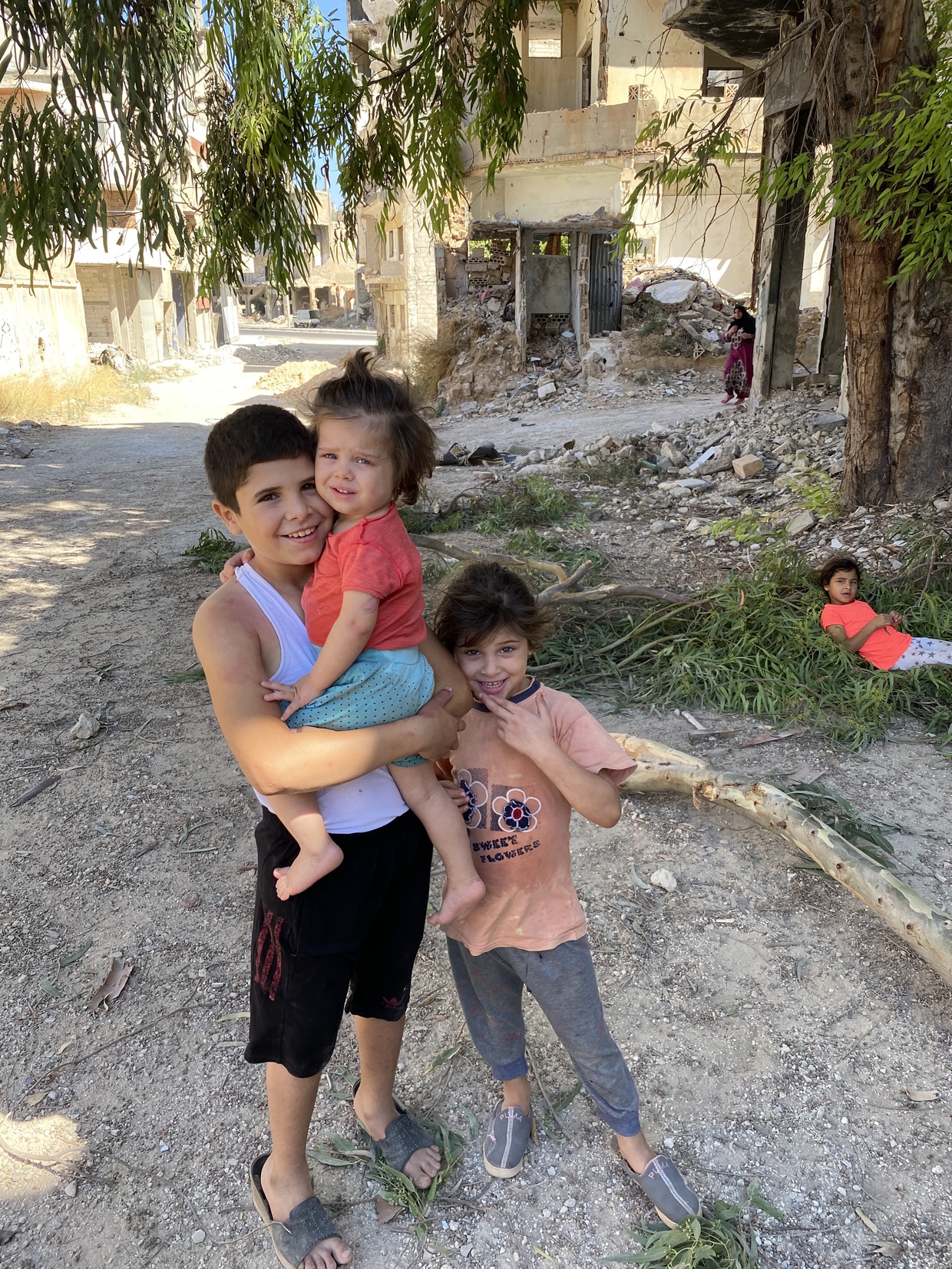 The families I stayed with would be at the ready with their laundry and food to cook for the odd occasion that the electricity would turn on for an hour. Most people are without air-conditioning or refrigeration in the sultry climate. The Syrian pound is also relatively valueless, with $100 buying bags of the currency, as I myself have experienced. Meanwhile, huge swathes of cities like Homs remain largely in rubble as post-war reconstruction has ground to a halt.