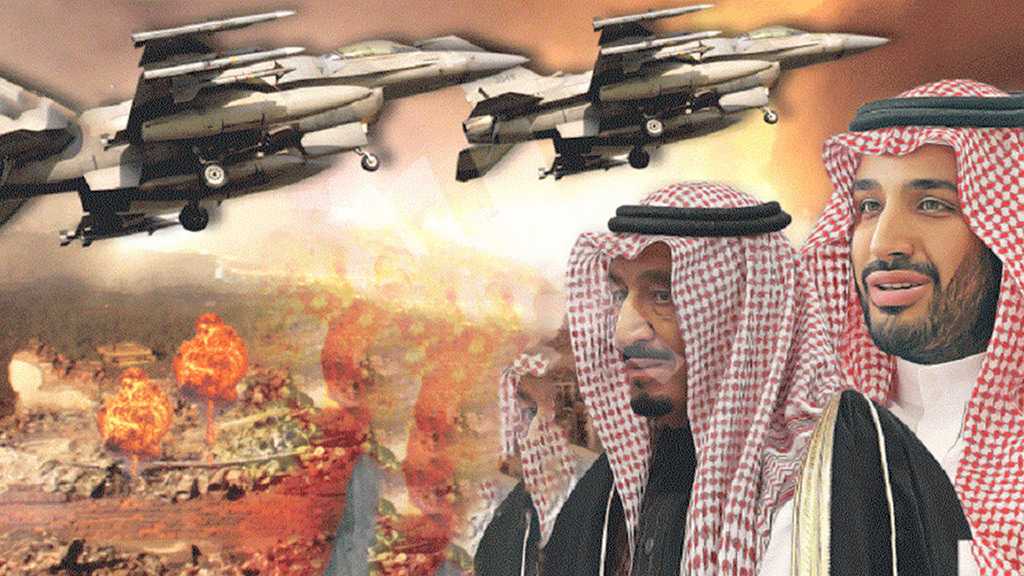
To say the war on Yemen was a major development in the history of West Asia might be an understand. It will certainly go down In history, perhaps not in favor of the Saudis though.
TEHRAN (Iran News) – Why did Saudi Arabia wage a war on Yemen? To say the war on Yemen was a major development in the history of West Asia might be an understand. It will certainly go down In history, perhaps not in favor of the Saudis though.
In March 2015, Saudi Arabia declared that it and some allies had formed a coalition led by Riyadh and began a military operation. At the time, this was something unheard of, especially in the Arab world; that the Arabs had formed a military alliance for the first time in many decades and were conducting wide-scale bombing campaigns with such energy and such enthusiasm. The military campaign was dubbed Operation Decisive Storm. Many in the region had jokingly highlighted what exactly happened that we are suddenly witnessing this courageous will and heroic leadership among a handful of Arab states.
The Storm of the Arabs! In fact it was quite unfortunate. For decades, since 1948, the Palestinians had witnessed one massacre after the other and we never got to see an Arab storm. Not even a breeze of this storm on Yemen. The Palestinians and the Lebanese who also suffered from Israeli occupation had dreamt to only smell an Arab storm of this magnitude. The reasons or excuses at the time, Saudi Arabia offered to wage a war to this extent on another country were THREE. Firstly, the Saudis claimed that the former government of Yemen led by former President Abdrabbuh Mansour Hadi had requested the military intervention. By the way, the Palestinians had also requested such an intervention and is still requesting such an intervention today but to date, their appeals have fallen on death ears. Instead the Saudis and their allies are accused of conspiring against the Palestinians and sold the third holiest site in Islam in occupied Jerusalem al-Quds to the Israelis.
The Saudis claimed they sensed a threat from Yemen, where peace talks between the former Saudi backed government in Sana’a and the new National Salvation Government broke down and clashes ensued between the two sides. Here it’s important to note, former President Hadi allied with Riyadh, naturally took sides with Riyadh. Whereas the new National Salvation Government backed by a popular public revolution on the ground expressed opposition to Saudi Arabia’s decades old control on Yemen and was seeking independence from the Kingdom.
As Hadi lost grip on the country, so did the Saudis and Hadi quite naturally fled to Riyadh. For arguments sake, even if Hadi’s term had not expired and he was overthrown by a popular revolution, was this enough to wage such a devastating war? even if Riyadh had claimed it wanted to reinstate what it considers or claims to be the legitimate President of Yemen. Here, again important to note, many other Saudi allies like former Tunisian President, Zine El Abidine Ben Ali, who was toppled during the Islamic Awakening in 2011 by the Tunisian Revolution also fled to Saudi Arabia. Where was the Saudi war on Tunisia to reinstate Ben Ali? Likewise Saudi Arabia’s neighbor, Egypt with Hosni Mubarak which Saudi Arabia tried its best to reinstate but not to the extent that it waged a war or militarily intervened. Not only does this prove the Saudi reasoning is false in nature but also puts the spotlight on Yemen. Why only a war on Yemen? Why this quick decisive action to wage war on Yemen, why no talks first, no dialogue or other non-lethal attempts?
The second reason Riyadh stated for this very surprising yet very unfortunate war on its southern neighbor is that the new situation on the ground (the popular revolution spearheaded by Ansarullah alongside the Yemeni army and many legal and popular institutions and committees) poses a threat to Saudi Arabia, the Persian Gulf as well as the security of the Red Sea. Was this accurate? Did Saudi Arabia present any evidence (even a verbal statement by a Saudi official) to back this accusation to the region or the world. Was the presentation of evidence to back up this claim not necessary to wage a deadly devastating war? It is well known that Yemen is the poorest nation in the region. It was also well known that Yemen had many challenges ahead from legal issues to public issues to security issues for example writing a new constitution, bringing back basic services to its people, fighting Takfiri terrorist cells operating on its land such as al-Qaeda. This needed time for the new Yemeni government. Can a new born country in this state pose a threat to Saudi Arabia, the richest Kingdom in the region or the Persian Gulf or the Red Sea. This also proved to be false. The third and most important reason that was circulating on Saudi media and all Saudi sponsored media in the region and the world at the time, perhaps the most serious allegation by the Saudis is that Yemen has become ‘occupied’ by Iran, ‘controlled‘ by Iran and military intervention is required to return Yemen back to an ‘Arab state’.
In other words, Yemen became Iranian overnight. When you study Yemeni history, literature, culture and recent pride, dignity, resistance and willpower and steadfastness against the Saudis; If the Yemenis are not Arabs, then who are the Arabs?
However, as this was a major accusation, it needs to be documented and examined carefully and with logic. When the Saudis said occupation, let’s tackle the simple aspects first. Where is the evidence that Iran ‘occupies’ Yemen? An occupation tends to have a presence, as with every occupation in the world. Was Iran’s army or Iranian forces occupying Yemen or parts of Yemen. Were there any Iranian military bases on Yemeni territory? The accusation was so absurd it was actually laughable. Let’s assume the Saudis actually didn’t mean a military occupation but some form of Iranian control over Yemen. This also needs to be addressed to understand the misconception not just in Yemen but the entire region.
Here, one has to understand the mentality of the tribal ruling monarchy of Saudi Arabia that is backed by the United States and widely believed to be backed by Israel. This ruling monarchy has an issue with something called independent democratic states in West Asia. An independent Tunisian state or Syrian state or for arguments sake an independent Egyptian state or independent Persian Gulf States or even an independent Saudi Arabian state with democratic institutions. The monarchies in West Asia where one tribe rules an entire population with an iron fist views any form of independence as a form of resistance to its rule of power.
That’s in a nutshell.
The facts and reality on the ground is that this logic by these ruling tribes leads to regular foreign policy miscalculations, losses and diplomatic blunders. It’s difficult to find the last time Saudi Arabia made a real foreign policy achievement. More than six years of Saudi Arabia’s war on Yemen, which Riyadh predicted would end in a couple of weeks has been a failure, a defeat and a quagmire for the Kingdom.
These are the same statements that we hear again and again and again from regional states like Iraq, like Syria, like Palestine, like Lebanon and others. The lack of a strong Saudi leadership in the region despite all its rich resources and home to the two holiest sites in Islam, this lack of leadership or failed policies is what leads nations to request help from an independent nation in West Asia such as the Islamic Republic of Iran.
Here is where Riyadh needs to change its mentality and be a source of inspiration for West Asia. For example, Lebanon 1982, when Israeli forces invaded and reached Beirut. All the Arab monarchies and dictatorships ignored Lebanon. The only two states that supported Lebanon during its darkest era was Iran and Syria. Both countries under blockade and siege or war and terrorism. Despite that, Lebanon requested help from Iran, a country that itself was facing a war from Saddam’s regime but Iran fulfilled its duty to another oppressed nation by sending a team of military advisors.
However, it’s very important to highlight, despite western and regional propaganda, that the Lebanese resistance that was formed against Israeli occupation was a Lebanese resistance; made up of Lebanese men; commanders and soldiers not Iranian. Until today, the Saudis describe the Lebanese resistance in its media as Iranian without a shred of evidence while there are thousands of shreds of evidence proving otherwise. The same again with Palestine, if Saudi Arabia supported the Palestinians against the Israeli occupation with the same willpower and money and hundreds of billions of dollars worth of weapons it spent on the war on Yemen, the Palestinians may not have turned to Iran for support. The same goes for Iraq and Syria during the era of Daesh’s occupation. Where were the Arab monarchies? had it not been Iranian military advisors, Daesh would have taken over both countries. More important than this, to make the picture clearer (and counter American/Israeli/Saudi propaganda) never once have these nations stated in their history, that Iran ordered us to do something in return for Tehran’s support.
This reality, where independent states, or those still looking to liberate their lands from occupation, can form an alliance and be free or independent at the same time poses a danger to Saudi Arabia and its allies. Elections in Iran, Iraq, Syria or Lebanon or Palestine or Yemen poses a threat to monarchical rule. Saudis nationals are asking (quite rightly) why don’t we have elections, but analysts argue this is why American support for these monarchies (whether Saudi Arabia knows it or not) allows it to maintain its hegemonic presence in West Asia and serve Israeli interests.
Returning to Yemen, prior to March 2015, Saudi Arabia had been interfering in Yemen for decades and in literally every aspect; controlling its governance, policies, army, economy and even faiths and sects. What has Saudi Arabia offered to Yemen after all those years? Where was the infrastructure in Yemen? where was the state of the economy? where was the security? Did Saudi Arabia include Yemen in the Persian Gulf Security Council, considering its alleged staunch support for the country? Saudi Arabia kept Yemen as the region’s poorest nation. The Yemeni people are the ones that reached the conclusion based on their will and took a decision to part ways with Riyadh and reclaim their country, borders, sovereignty, independence and most importantl