Uprooted Palestinians are at the heart of the conflict in the M.E Palestinians uprooted by force of arms. Yet faced immense difficulties have survived, kept alive their history and culture, passed keys of family homes in occupied Palestine from one generation to the next.
Yet again, the IOF carry on their terrorizing activities and Palestinians stand their ground and respond.
Confrontations continue between the IOF and Palestinians in Silwan
Confrontations, yet again, broke out between the Israeli occupation forces and Palestinian youth in Silwan, occupied al-Quds.
The IOF stormed the Bir Ayoub neighborhood in Silwan and closed the roads, during which confrontations broke out in the area. The Israeli occupation forces fired sound bombs and rubber bullets, and the Palestinians responded by throwing stones and fireworks.
On Wednesday, the Israeli occupation forces arrested Mansour Mahmoud, at the entrance to the town of al-Isawiya in occupied al-Quds.
On Wednesday, dozens of settlers attacked Palestinian vehicles and opened fire in the air near Burqa village, northwest of Nablus.
Ghassan Daghlas, a Palestinian official who monitors settlement activities in the northern West Bank, said more than 40 settlers attacked dozens of Palestinian vehicles near the settlement of “Homesh” and opened fire on citizens’ homes in Burqa village, northwest of Nablus.
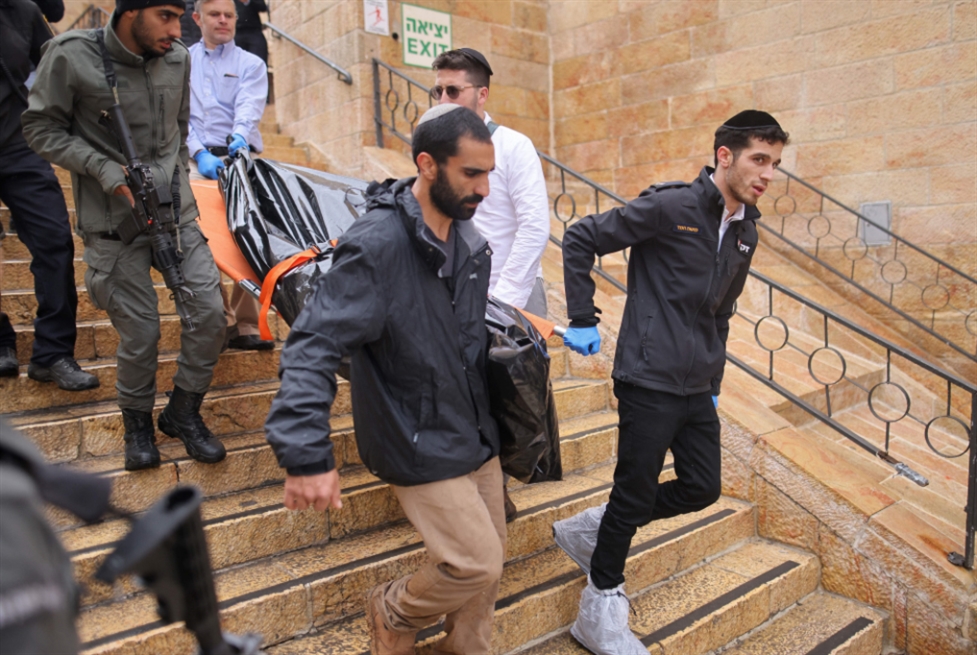
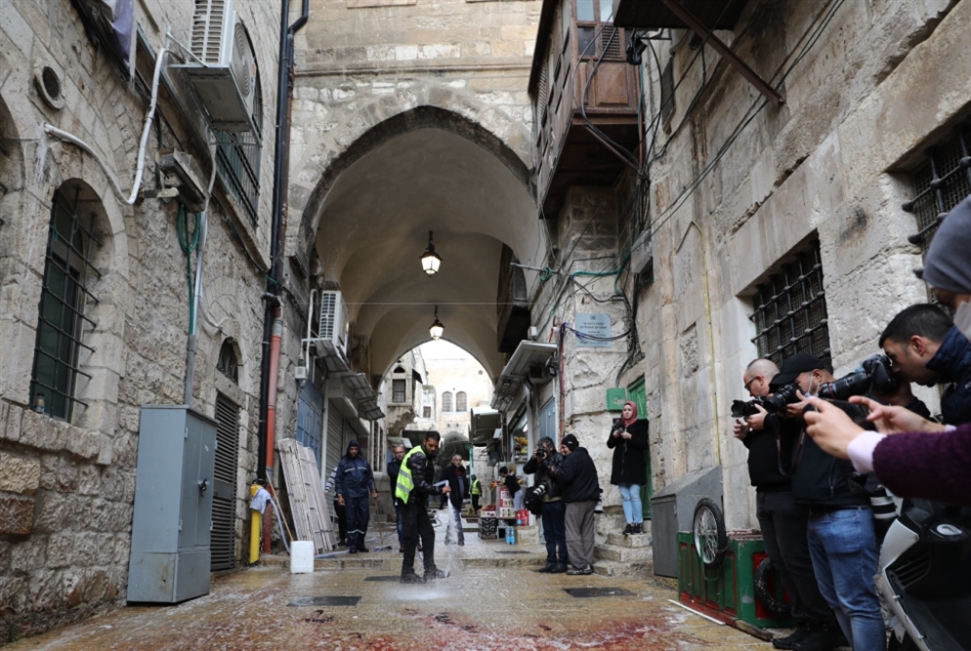
لا أمان لكم في القدس. خلاصة ظلّ صداها يتردد في أزقة القدس العتيقة صباح اليوم، بينما كان سلاح مدرس اللغة العربية وأستاذ الدين، فادي أبو شخيدم، يوجّه رصاصه من صدر إسرائيلي إلى آخر فأوقع قتيلاً وثلاثة مصابين بينهم حالة «صعبة»، قبل اشتباكه مع جنود العدو واستشهاده.
الشهيد فادي أبو شخيدم، أب في الـ 42 من العمر، هو شيخ وخطيب ومدرس للغة العربية ومادة الدين الإسلامي في مدرسة الرشيدية في مخيم شعفاط في مدينة القدس المحتلة، قرر صبيحة هذا اليوم الماطر، أن يأم بالناس للصلاة على طريقة «أحلا أستاذ بالدنيا»، كما وصفه تلميذه مصطفى زعترة باكياً عقب استشهاده. لبس عباءته واعتمر قلنسوته، ممتشقاً سلاحه ليقدّم آخر درس له في هذه الدنيا، وليكون المعلم الذي يستحق أن يقوم له طلابه ويفونه «التبجيلا» فهو الذي أنشأ وعلم وربّى أنفساً وعقولاً، وكاد كما يقول بيت الشعر، أن يكون رسولاً.
وبالقرب من منطقة باب السلسلة في أزقة البلدة القديمة في القدس، رفع المعلم سلاح الفقراء والمظلومين، وهناك أطلق ناره فقتل إسرائيلياً وأصاب ثلاثة آخرين، بينهم الحاخام أهرون بن طوبا، الذي وصفت حالته بـ«الخطيرة ولكن مستقرة».
وإثر العملية أوعز رئيس وزراء العدو، نفتالي بينيت، بتعزيز قوات الشرطة العاملة في محيط القدس المحتلة بغية إحباط عمليات مسلحة أخرى، وتخوفاً من أن تشكل العملية إلهاماً لآخرين.
أما وزير الأمن الداخلي الإسرائيلي، عومر بار ــ ليف، فصرّح أن الشهيد أبو شخيدم «ينتمي لحركة حماس ـــ الجناح السياسي»، موضحاً أنه «خطط لتنفيذ عمليته منذ فترة، إذ سافرت زوجته إلى الخارج قبل ثلاثة أيام».
وفي أعقاب العملية، أغلقت قوات العدو جميع أبواب المسجد الأقصى، قبل فتحها لاحقاً. في المقابل، أظهرت مقاطع فيديو استنفار قوات العدو عند باب السلسلة وسط سماع دوي إطلاق نار؛ حيث لوحظ عدد من الجنود يشهرون أسلحتهم، خارجين من باب السلسلة، قبل أن يطاردوا الشهيد، وتُسمع أصوات إطلاق نار.
في غضون ذلك، علّقت شرطة العدو اقتحامات المستوطنين لساحات الحرم من جهة باب المغاربة، علماً أن الاشتباك المسلح حدث في الوقت الذي اقتحم فيه عشرات المستوطنين الأقصى؛ حيث وفرت شرطة العدو الحماية لهم لتخليصهم وإخراجهم من باب المغاربة، بدلاً من الخروج من باب السلسلة الذي يخرجون منه عادة بعد الاقتحامات.
وفي تفاصيل العملية، قالت «كان 13» الإسرائيلية إن «أبو شخيدم جاء باتجاه البلدة القديمة، وقام بإطلاق النار بالقرب من باب السلسلة باتجاه المستوطن، الذي أعلن عن مقتله. ثم تحصن في أحد الأزقة وخرج للتحقق من قتل المستوطن، وواصل سيره وأطلق النار على مستوطن آخر الذي أصيب بجروح خطيرة، واشتبك مع قوة من حرس الحدود وأصاب 2 منهم حتى قامت الأخيرة بإطلاق النار عليه»، ما أدّى إلى استشهاده.
وأفادت معلومات بأن قوات الاحتلال اعتقلت أيضاً نجل أبو شخيدم، الطفل عبدالله، الذي يبلغ أعوام، واقتادته للتحقيق في مركز المسكوبية.
ردود الفعل
قال الناطق باسم حركة «حماس»، عبد اللطيف القانوع، إن «عملية القدس تمثل ثورة الشعب الفلسطيني المستمرة، وشرعية مقاومته المتصاعدة ضد جرائم الاحتلال واقتحاماته للمسجد الأقصى». وأضاف، في بيان، أن «العملية البطولية عند باب السلسلة صباح اليوم، تأتي في إطار الرد الطبيعي على جرائم الاحتلال المتصاعدة في مدينة القدس المحتلة وأحيائها».
أما حركة «الجهاد الإسلامي»، فقالت، في بيان، إنها «تبارك العملية الفدائية البطولية التي وقعت صباح اليوم في القدس المحتلة». وأضافت أن «هذه العملية هي رد طبيعي على تصاعد إرهاب المستوطنين وجنود الاحتلال، وإمعان حكومة الاحتلال في عدوانها وسياسات الهدم والتهجير التي تطال أهلنا في القدس».
وحملت الاحتلال كامل المسؤولية عن سياساته، وأشارت إلى أنه «واهم من يظن أن الشعب الفلسطيني سيستلم أمام سياسات الاحتلال وقوة الإرهاب الذي يمارسه». واعتبرت أن العملية تدلل على «قوة وحيوية المقاومة وتمسك الشعب الفلسطيني بها كنهج قادر على ردع الاحتلال وكسر عنجهيته».
أشاد حزب الله بـ«العملية البطولية التي نفّذها الشيخ المجاهد فادي أبو شخيدم في القدس المحتلة صباح اليوم»، متقدّماً بـ«آيات التبريك إلى الأخوة المجاهدين في حركة المقاومة الإسلامية حماس وفصائل المقاومة وشعبنا الفلسطيني الأبي بهذه العملية الجريئة».
ورأى حزب الله، في بيان، أن «هذه العملية هي ردّ طبيعي على جرائم الاحتلال المتمادية بحقّ الشعب الفلسطيني من عمليات قتل واعتقال وتدمير للبيوت وتجريف للمزروعات، وتبعث برسالة قوية لكيان العدوان أن كل جرائمه وعملياته الإرهابية لن تبقى من دون ردّ».
واعتبر حزب الله أن «هذه العملية وما سبقها وما سيليها من عمليات بطولية هي تأكيد عملي على حيوية الشعب الفلسطيني وعزيمته الراسخة على مواصلة الجهاد والمقاومة حتى تحرير الأرض والمقدسات إن شاء الله».
Six Israeli occupation soldiers recall the atrocities they committed onscreen in a staggering reality that reflects the severity of the situation in al-Khalil from one angle; a reality that amounts to crimes against humanity.
Six ‘former’ soldiers recall the atrocities they committed in al-Khalil
“Soldiers really like shooting rubber bullets.”
“It is fun.”
“Everyone high fives.”
“You are awesome, you got him”
The New York Times Op-Docs has lately obtained a short documentary “Mission: Hebron” by the Israeli Director and ‘former’ Israeli soldier Rona Segal.
It is the first time in recent years that a documentary film sheds the light on part of the Palestinians’ daily sufferings in occupied al-Khalil “Hebron”; a staggering reality the public has rarely been allowed to see.
Source: Human Rights Defenders Group
Al-Khalil is considered the largest city in the occupied West Bank and the only one in which Israeli settlers reside so close to the Palestinians, thus exacerbating their sufferings.
Palestinians face severe movement restrictions as Israeli occupation forces are constantly present and committed to long-standing efforts to expel them notably from the Old City.
The short documentary in its six chapters frames Israeli atrocities in al-Khalil
Six Israeli occupation soldiers, all of whom joined the army at the age of 18, describe their so-called “mission” in al-Khalil. They were “tasked with protecting and guarding Israeli settlers.” These soldiers, who were barely adults, were given complete control of the Palestinians’ lives in the city.
The six ‘former’ soldiers describe their “mission” in a studio setting based on the “duties defined in their military guidebook”; the Israeli settlers in al-Khalilare “guarded and protected” using a variety of strategies, whilst making the lives of Palestinian civilians unbearable.
Looking back, the soldiers recall their confusion, embarrassment, and hatred.
They told their atrocities onscreen in a renewed perspective of the severity of the situation on the ground in al-Khalil, which amounts to a crime against humanity; a crime of apartheid and persecution.
Main “mission”
“Your only mission is to guard and protect the Israeli settlers in Hebron [al-Khalil].”
With the Israeli soldiers making it clear that their mission was to protect and guard the Israeli settlers, by all means, it becomes clear that the increasing and aggravating Israeli settlers’ violence against Palestinians is done with the explicit support of the Israeli occupation authorities. Meanwhile, Israeli soldiers are ordered to turn a blind eye and even guard the perpetrators.
Settlers’ violence against Palestinians includes damaging private property, stone-throwing, and physical violence, as well as attacks on activists and journalists.
Such attacks have become increasingly common in recent years, and they are carried out with impunity.
One of the Israeli soldiers testified that a security coordinator from among the Israeli settlers is the one who would give them orders, not their military command. In many cases, Israeli occupation soldiers provide the perpetrators with escort and backup. But, when the Israeli soldiers don’t join the attack, “the illegal settlers can turn against the soldiers, thus becoming their enemies”, according to the soldiers’ confessions.
“If you shoot a Palestinian, you get a pizza and a coffee from the settlers;” this is by far one of the most disturbing elements in the “mission”. The settlers’ ‘affection’ can turn into hatred if settlers are prohibited from conducting extreme assaults against Palestinians. At this point, the once cherished soldiers turn into “traitors” and “Nazis”.
“A sterile route free of Palestinians”
“A sterile route is a route that is free of Palestinians.”
In a racist comment, one of the ‘former’ Israeli soldiers affirms that there are routes that are “sterilized of Palestinians.”
Israeli occupation forces in al-Khalil forbid Palestinians from walking on large sections of what was before the occupation the city’s main thoroughfare, as part of the Israeli army’s policy of making those areas “sterile” of Palestinians.
On his account, the Coordinator of the Human Rights Defenders Group Imad Abu Shamsieh told Al Mayadeen English that the Israeli occupation has placed more than one hundred checkpoints with metal and electrical gates, surveillance cameras, reinforced concrete barriers, and inspection outposts in the “sterile” routes.
He also divulged that around 525 Palestinian shops have been completely closed in 2000 due to an Israeli occupation’s military court decision.
Furthermore, Abu Shamsieh tersely stated that Palestinian vehicles, including ambulances, have been banned from the “H2 area” since October 2000.
The human rights activist went on to say that “the Israeli occupation forces impede local and international journalists from entering the H2 area and sterile routes. Simultaneously, I, along with a group of Palestinians in al-Khalil, decided to document the Israeli war crimes which occur on daily basis targeting Palestinian men, women, and children.”
“Since 2010, we started to film the Israeli occupation’s atrocities against Palestinians under the initiative ‘Capturing Occupation Camera Project in Palestine.'”
“We are a group of around 30 young Palestinian volunteers exposing and documenting human rights and international law violations in Palestine,” Abu Shamsieh told Al Mayadeen English.
Strip searches
One of the Israeli soldiers boldly stated that the strip searches’ official aim is “to stop and search every Palestinian,” but implicitly, the searches are actually aimed at humiliating the Palestinians, with no legal justifications whatsoever.
“When you frisk someone you pick out on the street, it requires touching the person,” one soldier said.
A group of Palestinian men may be targeted for strip searches just because they might have Hollywood’s stereotypical racist image of “terrorists” in the mind of the occupier. The searches are not performed to find guns, but to humiliate the Palestinians or create “friction” among them.
“The idea is to bring the friction to them, so that they’ll keep their heads down.”
Because of the proximity of the Israeli settlements in the city, Palestinians are surrounded by a large military presence and are randomly subjected to routine and offensive searches, harassments, and beatings.
Patrols
“The idea of the patrol is to patrol.”
The ‘former’ Israeli soldiers attested that they walked around Palestinians’ houses, storming them whenever they felt like it.
“Ok, soldiers again.”
Field Palestinian Researcher Manal al-Jaabari from al-Khalil told Al Mayadeen English that Palestinian children in al-Harika, a district in al-Khalil, are exposed to Israeli terrorism on a daily basis.
“In al-Harika, which is adjacent to “Kiryat Arba”, the Israeli occupation forces break into Palestinian houses whenever a stone is thrown at the fence, and children are interrogated inside their homes. Sometimes the Israeli soldiers drag them to the streets and place them in front of the surveillance cameras,” she added.
The young researcher emotionally states that the Israeli soldiers incite young Israeli settlers at Jaber Neighborhood to assault Palestinian children their age.
The Israeli occupation forces claim that they are hit by stones to arrest or detain Palestinian children for hours, al-Jaabari confirmed to Al Mayadeen English.
“Many children in the vicinity of schools, particularly in the southern area near checkpoints, are arrested and detained for long periods. They are sometimes beaten or insulted and left hungry and thirsty before being handed over to the al-Khalil Coordination and Liaison Office if they are under the age of 13.”
Source: Human Rights Defenders Group
Above this age, they are arrested and subjected to an investigation at the Israeli occupation’s police station, then they are transferred to an Israeli court or they are fined at least one thousand shekels before being released.
At checkpoints, it’s all about “eeny, meeny, miny, moe”
While Israeli checkpoints impede the daily life of Palestinians in the city, the ‘former’ Israeli soldiers confess that a checkpoint is a kind of roadblock.
“You spread tire spikes, stop the cars, and cause a huge traffic.”
“Sometimes it’s for no reason.”
It is just one episode, and what has been documented by the Palestinian Human Rights Defenders Group is far more tragic.
Abu Shamsieh told Al Mayadeen English that his camera caught the cold-blooded execution of martyr Abdel Fattah al-Sharif in 2016 at one of the Israeli occupation’s checkpoints.
The human rights defender affirmed that al-Sharif’s case is only one of many Israeli war crimes.
He also disclosed to Al Mayadeen English that Israeli settlers have regularly run over Palestinian children as young as five.
Abu Shamsieh affirmed that he was subjected to acts of harassment, restrictions on his freedom of movement, abductions, long periods of arbitrary detention usually under administrative detention orders, and illegal searches of his home and office, not to mention death threats.
Detentions: “Everyone’s a suspect”
According to the soldiers’ confessions, every Palestinian is a suspect, and the detention process includes putting any Palestinian “in a post with a soldier and then keep them hanging.”
The ‘former’ soldiers testify that Israeli soldiers blindfold and handcuff the Palestinians who had been arrested randomly.
Source: Human Rights Defenders Group
Like all Palestinian cities and villages, al-Khalil too witnesses random arrests of Palestinians on a daily basis, including children as young as 10.
Israeli occupation forces’ violent repression of protests has also involved the arrest and detention of Palestinian demonstrators.
Another ‘Mission’: Targeting Journalists
On his part, a field Palestinian journalist from al-Khalil Sari Jaradat told Al Mayadeen English that the Israeli occupation forces deliberately prevent Palestinian and international journalists from covering the current events in order to hide their daily crimes that affect all aspects of life in the city.
“About a week ago, an occupation officer told me: ‘if you get shot by our bullets, we will not bear any responsibility.’”
“They had a prior intention of targeting me in order to prevent me from doing my job, and I sustained a total of five injuries from live bullets while covering their crimes, not to mention the dozens of detentions, arrests, coverage prevention, and obstruction of movement,” Jaradat added.
Jaradat commented on the Blue Wolf program and the installation of face-scanning cameras in al-Khalil, saying that these cameras will lead to the suppression of freedom most notably the freedom of the press, which is already limited.
“The Israeli occupation soldiers will enact any laws they desire to prevent Palestinian journalists from carrying out their work,” he added.
The systematic oppression of Palestinians has been partially mirrored in the “Mission” and utterly manifested in the heartfelt testimonies of Sari, Imad, and Manal. Yet, what is happening in Palestine, and most notably in al-Khalil, cannot be documented or summed up in a film, a chapter, or a shot.
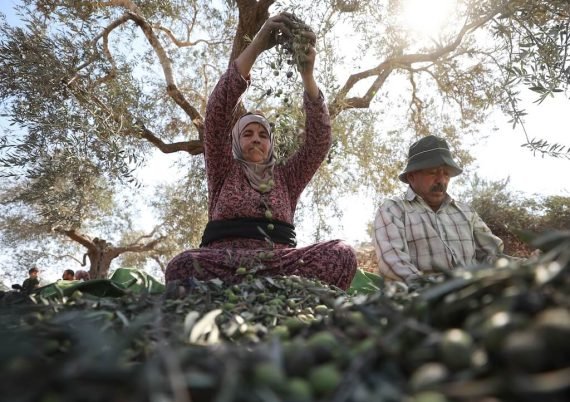
A view from an olive grove during olive harvesting by Palestinian farmers in Nablus, Erst Bank on October 13, 2021. While Palestinian farmers living in the West Bank welcome the olive harvest season with joy, in some areas the joy gives way to anxiety due to the threat of attack by Jewish settlers. Photo by Issam Rimawi. Anadolu
Yousef M. Aljamal is a researcher in Middle Eastern Studies and the author and translator of a number of books.
Olive trees and harvests have an exceptionally important place in Palestinian culture, especially in villages where farming is the main source of income for Palestinian families. Palestinians and especially farmers have always looked at olive trees as a national symbol that should be kept and protected as it speaks of the thousands of years of their history in Palestine. This special importance has been expressed in the Palestinian culture, through oral history, songs, and poetry.
Late iconic Palestinian poet Mahmoud Darwish famously spoke of the relationship that connects Palestinians and Israeli soldiers with olive trees.
These soldiers, these modern soldiers
Besiege her with bulldozers and uproot her from her lineage
of earth.
They vanquished our grandmother who foundered,
Her branches on the ground, her roots in the sky.
She did not weep or cry out. But one of her grandsons
Who witnessed the execution threw a stone
At a soldier, and he was martyred with her.
The Palestinians will remain in Palestine as long as olives remain
The largest and oldest olive tree defying the occupation
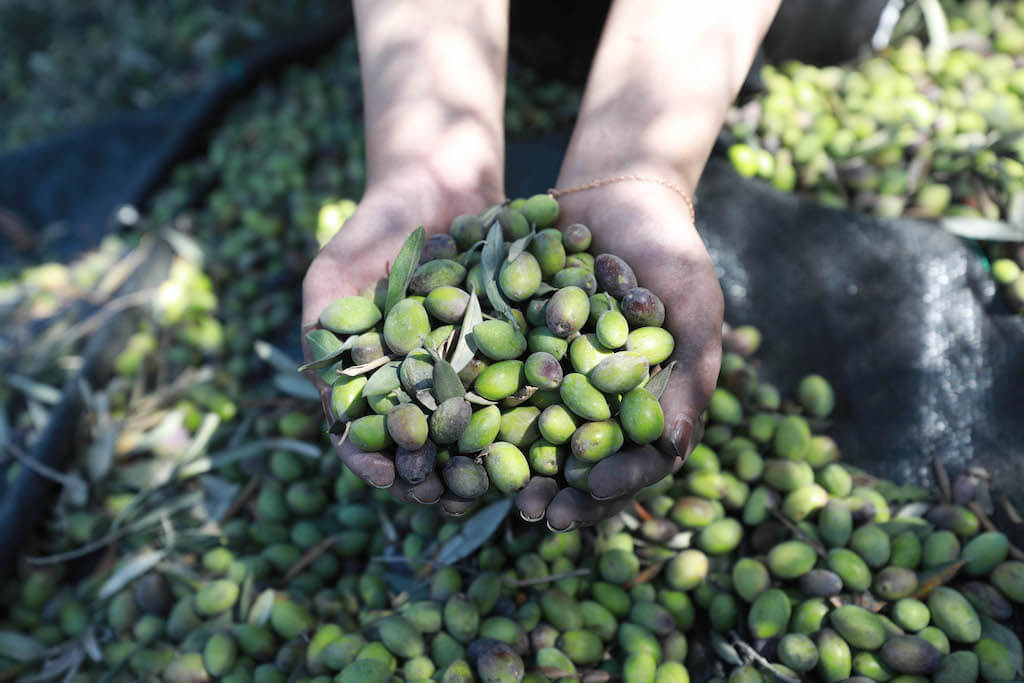
Olive harvest in Palestine sees the gathering of families where all members for days participate in picking the olives. The olive harvest in Palestine starts after it rains for the first time in autumn – an indication that olives are ripe and ready to be picked. This usually happens every year in early October and lasts for a couple of weeks. In the Gaza Strip, some people use the expression “The cross has materialized,” to declare the start of the olive harvest season. The expression has its roots in the city’s oral history which saw conversions to Christianity following the worship of stars and fire in the past.
According to legend, a priest came to Gaza asking people to convert to Christianity after all Palestinian cities had converted except for Gaza. He told the locals that they would be saved from drought and that it would rain if they did so. The people of Gaza, being rebellious throughout history, refused to convert unless the priest prayed to God and caused it rained. According to the story, the priest prayed, and it rained, and as a result, the people converted and used the expression “the cross had materialized” to express the fact that the priest’s promise had come true.
During the olive harvest in Palestine, families come together to eat meals prepared quickly such as tomatoes and potatoes baked over a fire as everyone is busy collecting and pressing olives.
During the olive harvest in Palestine, families come together to eat meals prepared quickly such as tomatoes and potatoes baked over a fire as everyone is busy collecting and pressing olives. While men and women engage in picking olives, children gather to help as well – taking part in the harvest gives them a sense of identity and responsibility. As the olives are being picked, Palestinians sing traditional songs that they have heard their parents and grandparents sing, generation after generation.
One of these traditional songs tells the story of an exchange between a Palestinian father and son. Using rhyme and rhythm, the song goes,
You can get what you want from me (O olive tree), really our heart has been connected to the olive tree since we were young
My heart is connected to her [the olive tree], don’t talk like Al-Farazdaq [famous Arab poet], I am flying in the sky as if I am a pilot.
Palestinians take part in an olive collecting event in Beita village of Nablus, West Bank, on October 10, 2021. Israeli forces took measures during the event. Photo by Issam Rimawi. Anadolu Agency.
It would not be an exaggeration to say that olive trees are like children to Palestinians. When my family wanted to tear down our house to build a new one, my aunt resisted the idea because we had to cut down two olive trees my grandfather planted some 35 years ago. My aunt cried when they cut the trees, and all our attempts to save them by planting them elsewhere didn’t succeed. Although we planted new olive trees later, my aunt would always speak of the two olive trees her father had planted, alongside which she grew up in our Gaza refugee camp.
Palestinian author Sarah Ali once wrote, “If a Palestinian bulldozer were ever invented (Haha, I know) and I were given the chance to be in an orchard in Haifa for instance, I would never uproot a tree an Israeli planted. No Palestinian would. To Palestinians, the tree is sacred, and so is the land clasping it.”
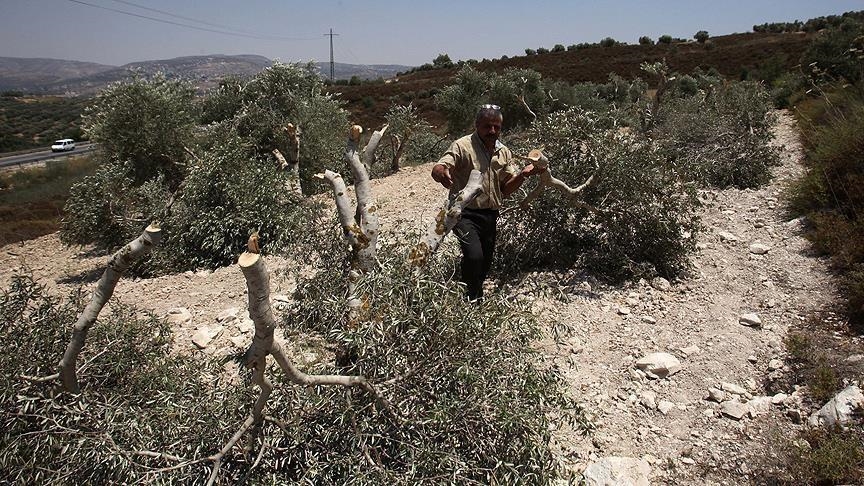
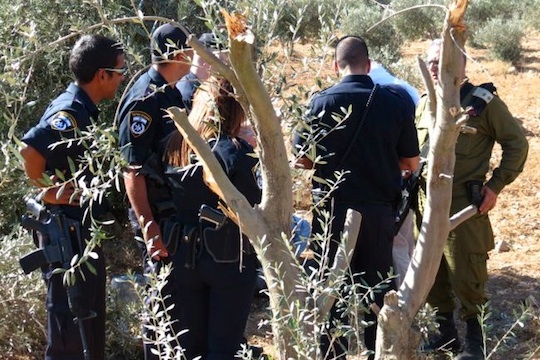
Today, the scene of olive harvest in Palestine is not only about family gatherings, traditional songs, and family bonds. The olive harvest in Palestine is about proving a connection to the land, a battle to maintain existence on the land as Israeli settlers – day and night – burn hundreds of olive trees as part of their ongoing attacks against Palestinians. Attacks that include stoning Palestinian cars, and burning Palestinian houses (with families inside), mosques, and churches.
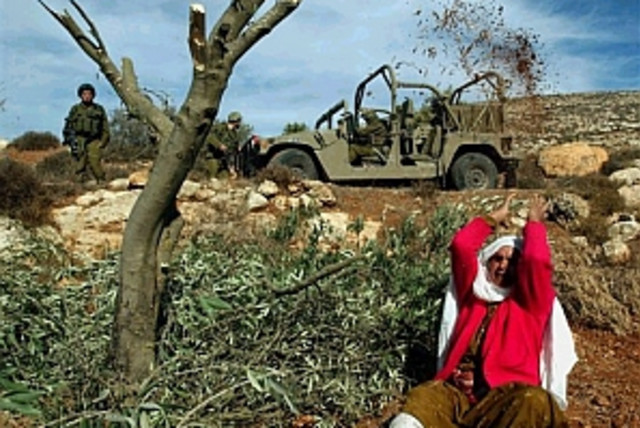
These very Israeli settlers also move the olive trees they uproot to decorate the entrance of settlements built on Palestinian lands in order to prove their claimed connection to the land. The image of Palestinian Mahfoza Oude hugging an olive tree as a group of Israeli soldiers attempted to uproot it speaks of the Palestinians’ relationship with olive trees and the land.
Most of the olive trees the settlers uproot are older than the state of Israel, which was only declared in 1948 on the ruins of Palestinian cities and villages. These olive trees stand as a striking reminder to settlers of the history of Palestine, which has always been a land of peaceful religious co-existence, where a person like my mother, who was born in Bethlehem, the city where Jesus was born, still says “The cross has materialized” to mark the start of the olive harvest, without even realizing its meaning.
Although the situation for Palestinians is very grim on the ground, the increasing international solidarity for the Palestinian people – and their olive trees which attest to their history on this land – will continue to preserve this existence and culture.
Palestinian poet Tamim al-Barghouti said in one of his poems that a state that was built on enmity towards olive trees would not survive in the Levant.
It is true. Darwish said, “If the olive tree knew [what was happening to] its planter, its oil would become tears.” The ongoing Palestinian commitment to the land, represented by planting more olive trees as Israeli settlers uproot hundreds of them, is telling that a future solution that ignores Palestinians and their connection and claim to the land is unlikely to see the light.
The future must unequivocally include the Palestinians. All Palestinian refugees and their descendants should be able to have breakfast on their lands which always has abundant olive oil. No more olive trees should ever be uprooted just because some Israeli settlers have decided to rewrite history.
EUA ampliam ambições no Ártico
-
Os EUA estão avançando com sucesso em sua estratégia para o Ártico em
colaboração com nações do norte da Europa. A recente “anexação de facto” da
Groenlâ...
Another Epstein Class whistleblower ‘suicide’
-
“How US commerce secretary’s Epstein links were uncovered by British
whistleblower“ (Verity/Byrne/Milne):Andriesz suspected there was yet more
to find in t...
The Legendary Golem
-
The Legendary Golem October 3 2026 ___________________________________ More
Vids! +BN Vids Archive! HERE! ___________________________________ Support
The B...
The United States At A Crossroad
-
The United States At A Crossroad—An Analysis (16 Sept 2026) by Lawrence
Davidson Part I—Texas vs Minnesota Back in mid-May […]
Report on Beth Israel vigil 09-12-26
-
*Eat-a-Cheeseburger Day Approaches*
This year, EAC Day appears on Monday, September 21st. The date coincides
with the Jewish holiday called Yom Kippur. Cl...
-
Hello all,
It is with great sadness that I share with you the passing of our beloved
sister, Mother, and Grandmother, the individual that you all knew ...
Best Horror Podcast
-
Best Horror Podcast Introduction: Horror podcasts […]
The post Best Horror Podcast appeared first on Copper Shock Horror Podcast.
Ikhras Endorses Muntadhar Al-Zaidi
-
“Oh parties of banditry and sectarianism and corruption, we have come and
our goal is to destroy you.” Ikhras formally endorses Muntadhar al-Zaidi,
Iraqi j...
Prince Charles: Foreign Jews behind bloodshed in ME
-
In May, 2017, British Crown Prince Charles declined an invitation from
Zionist entity’s president Reuven Rivlin‘s to attend the 100th anniversary
of the no...
Palestinian Women – One for All, All for One
-
Honouring All Palestinian Women by Honouring Three: Hanin Zoabi, Ahed
Tamimi, Samah Sabawi Vacy Vlazna “Palestinian women have always stood side
by side ...
US’s Saudi Oil Deal from Win-Win to Mega-Lose
-
By F. William Engdahl Who would’ve thought it would come to this? Certainly
not the Obama Administration, and their brilliant geo-political think-tank
neo-...
-
*Mordechai Vanunu wins human rights prize of Brazilian Press Association *
* http://www.alternativenews.org/english/index.php/features/updates/7038-mordechai...
Abdul Aziz Rantissi:
"My ultimate wish, my God, is to attain martyrdom,"...God granted him his wish on April 17, 2004, at the hands of Israeli assassins.