Uprooted Palestinians are at the heart of the conflict in the M.E Palestinians uprooted by force of arms. Yet faced immense difficulties have survived, kept alive their history and culture, passed keys of family homes in occupied Palestine from one generation to the next.
The leader of Yemen’s Ansarullah revolutionary movement Sayyed Abdul-Malik Al-Houthi slammed the Saudi aggression’s brutal crimes in the western coastal city of Hudaydah.
Speaking in a meeting with a delegation of AL-Bayda tribal leaders in the capital Sana’a on Monday evening, Sayyed Al-Houthi warned against seditious conspiracies and divisive attempts by enemies in order to establish their control over Yemen.
“Enemies are seeking to dominate Yemeni people through incitement of sedition and division,” he said. The Yemeni leader further underscored that “Meetings and reunions among people from various walks of life are truly indicative of the level of fraternity, cooperation and understanding within the Yemeni nation. The opportunity is ripe to push for promotion of brotherhood, cooperation and social peace in order to restore security and stability in Al-Bayda province.”
“We want to beef up nationwide peace and resolve lingering disputes… We want the government and the nation to work together in order to provide civil services,” the Ansarullah chief pointed out.
Sayyed al-Houthi also pointed to the anniversary of the expulsion of colonial British forces from Yemen, stressing that November 30 marks a bright page in the history of the Arab nation.
Elsewhere in his remarks, the Ansarullah leader also condemned the execution of ten prisoners by Saudi-sponsored Takfiri militants in Hudaydah, describing it as a “heinous crime” and a blatant violation of international humanitarian law.
According to Abdulqader al-Mortadha, head of the Committee for Prisoners’ Affairs in the Yemeni National Salvation Government, Saudi mercenaries executed the victims on November 13 and dismembered their bodies.
Five of the prisoners were residents of Yemen’s Hudaydah province, while the rest were respectively from the provinces of Hajjah and Mahwit.
Marib, the ancient capital of Sheba, referred to in both the Bible and the Holy Quran as a wealthy and wise kingdom, once ruled across the entire southern Arabian peninsula.
Today, Marib has risen again, this time as the final stronghold of Yemen’s latest invaders, now in panicked retreat after a six-year battle that has depleted their coffers and exhausted their forces.
This war was announced from Washington on 26 March 2015 and led by Saudi Arabia in support of the overthrown government of Abdrabbuh Mansour Hadi, a regime that had already lost the capital city of Sanaa to Yemen’s Ansarallah (Houthis) movement a few months prior.
A coalition of 10 countries, including pack leaders Saudi Arabia and the UAE, was formed to force the return of his highly unpopular government. The name Operation Decisive Storm was chosen and the air strikes began.
Ansarallah were assessed as being weak and the operation was expected to last no more than a few weeks or months, at the most.
Instead, Ansarallah prevailed, forcing its Saudi and Emirati foes to insert ground troops into the expanding quagmire and divide their roles in Yemen.
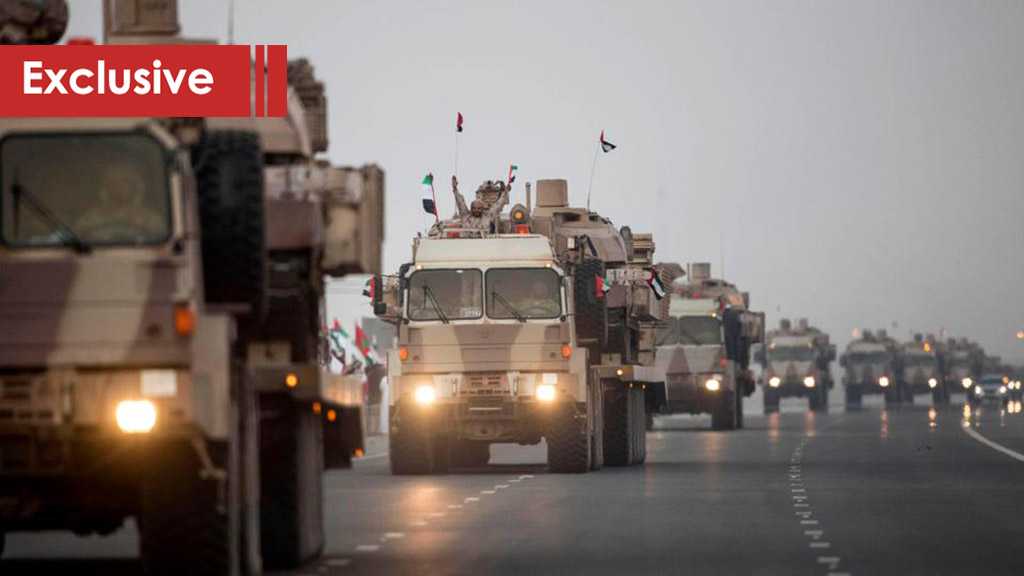
Today, the UAE is present mainly in the country’s south controlling its strategic ports and islands, while the Saudis remain in the north, along their extensive northern border with Yemen, in the east, where the province of Marib and its rich oil and gas fields are located, and in the west, in the coastal city of Hodeidah.
For Yemenis, the importance of Marib is not limited to its oil and gas fields, but also for its ancient culture, its inclusion in the holy Quran, and its significant historical sites and water engineering feats, such as the ancient Marib dam built around the 8th century BC. A new dam, the country’s largest, was later built near the cherished ruins of the old one.
Saudi Arabia acknowledged Marib’s importance by making it the stronghold for its war operations, building military bases and bribing local tribes to fight alongside the coalition. Most of Riyadh’s military and intelligence operations – excluding air strikes – were launched from Marib against the northern Houthi-controlled Sanaa city and province.
Ansarallah endured these onslaughts for three years, then flipped the war on its adversaries in 2018 by going on the offensive. Since then, the group has expanded its territorial gains significantly, destabilized Saudi Arabia’s own borders, and exponentially advanced its military tactics and capabilities in drone and missile technology.
These startling gains forced the coalition to the negotiating table in 2018 to sign the Hodeidah Agreement. The agreement was a boon for Ansarallah from a military perspective, first and foremost. Hodeidah and its Red Sea port are west of Sanaa, and the negotiated ceasefire would help Ansarallah turn its focus on only two fronts now, the east (Marib) and the south.
But the agreement also had humanitarian benefits for a country besieged by land, sea, and air by coalition forces since the war’s onset. With goods now entering the port, fresh access to medicine, fuel and food reduced the crisis in territories controlled by Ansarallah.
In 2019, Ansarallah marched eastward, increasing their defence operations inside Saudi Arabia, and targeting the capital city of Riyadh, airports, and Aramco facilities in retaliation for Saudi airstrikes. The UAE was also threatened when drone activity caused a brief closure of Dubai airport.
The UAE’s very existence depends on the security of Abu Dhabi and Dubai. Understanding that they were one ballistic missile away from an existential disaster, the Emiratis withdrew from Marib leaving the Saudis to their own devices, and headed south. The ten-nation coalition had now dwindled to two, neither of whom were fighting alongside the other.
For Sanaa, access to oil is a higher priority than access to ports, hence Ansarallah’s decision to first push eastward, where Marib lies. Although the reverse would have been easier – at 17,000 km², Marib requires a huge military presence, while Hodeidah port and its surrounding areas are less than 1,000 km² – the Yemeni rebels chose the harder, more dangerous fight first.
Today, the complete liberation of Marib is imminent. Of its 14 districts, 13 are now back in Yemeni hands, with only Marib city and the oil fields remaining, alongside one major Saudi military base (Sahen Jin).
Marib’s liberation will be an unprecedented victory for Ansarallah that will place Sanaa back firmly on the world map. Aside from the huge morale boost for the Houthi rebels, Ansarallah will gain control of Yemen’s vital water and oil resources and bring relief for the capital’s civilians. Despite the fact that areas controlled by the group enjoy more financial stability ($1 = 600 Yemeni Rials versus 1,480 Rials in areas outside their control) the war has impoverished Sanaa.
Marib’s liberation will also mean that Ansarallah will govern around 80 percent of the Yemeni population of 30 million, secure its eastern front, and make a move on Hodeidah where remaining coalition forces are based.
After the liberation of Hodeidah and Marib, Saudi Arabia will lose its boots on the ground in Yemen, but will it retreat and accept defeat?
Will Saudi Crown Prince Mohammed Bin Salman – also his country’s minister of defense – who spearheaded the war against Yemen, accept this fait accompli? Will Saudi Arabia continue bombing Yemen for another six years?
With so many unexpected victories under its belt, Ansarallah is now in a position to direct these Saudi decisions. Already this year, the Yemeni rebels have bombed Aramco and Saudi airports in retaliation for airstrikes in Sanaa. Riyadh clearly understands the correlation – bombing Sanaa means Aramco will get hit – and so although the war is still fiercely being played out, important deterrences have been established.
In September, during the approach toward Marib, Ansarallah leader Abdul-Malik al-Houthi said: “We will liberate the entirety of our country and recover all regions occupied by the Saudi-led aggression.”
After the fall of Marib, Saudi Arabia will never be the same. Having expended all its chips and a vast fortune on bringing the Houthis to heel, Riyadh’s influence in the Arab and Muslim world are set to decline.
Through proxies and large financial donations, the Saudis have historically managed Muslim communities and dictated the policies of entire states. But in an actual direct war, led by one of the world’s wealthiest nations against one of its poorest, the Saudis lost resoundingly.
After the fall of Marib, the UAE’s position is less clear, but it will ultimately face one of two choices: either surrender to Ansarallah’s demands or face reprisals inside Dubai and Abu Dhabi.
Yemen has vast mineral reserves of zinc, silver, nickel, gold, copper and cobalt as well as oil and gas fields, resources that the Saudis have not allowed successive Yemeni rulers to exploit, develop or monetize since 1934.
Yemen was then (arguably still is) considered a Saudi backwater, and Riyadh’s policy toward its southern neighbor was entirely driven by the kingdom’s founder, Abdul Aziz Al Saud, who declared in an infamous quote:
“the honor of Saudis is in the humiliation of Yemen, and their (Saudi) humiliation is in the glory of Yemen.”
These words had monumental significance: the guiding principle for all future Saudi monarchs would be to subjugate Yemen at all cost, or the price would be existential.
With Ansarallah in charge, reverberations will be felt across West Asia – not least because Yemenis still consider the Saudi provinces of Jizan and Najran to be part of Yemen.
Yemen is often referred to as the ‘birthplace of Arabs,’ with numerous tribes stretching across the Arabian peninsula to Iraq tracing their origins back to Yemen.
At the other end of the Arabian peninsula, Ansarallah will also be controlling the strait of Bab al Mandab which leads directly to the straits of Suez. This gives them geopolitical and geoeconomic clout over Egypt, historically the ‘mother’ of the Arab world, and a country which itself has launched a failed war against Yemen.
Ansarallah controlling access to the Suez Canal will be a nightmare for the Israelis – Tel Aviv and Zionism are the mortal enemy of the Houthis, and no ship heading for Israel will be allowed to cross this strait.
China and Iran will be big winners in the ensuing geopolitical shuffle. Iran will gain its first diehard ally in the Arabian Peninsula – one that has oil, produces its own weapons, and can defend itself without costing Tehran money, manpower or resources.
Yemen’s geography is of strategic importance to China too: its southwestern part faces the east coast of Africa, and with the Bab al Mandab strait, Yemen has more than 10 major ports on the Indian ocean, and through the Red Sea to the Mediterranean.
It is the closest West Asian nation to the Horn of Africa, where China has its only overseas military base in Djibouti, and where it has built roads and railways connecting the latter to Ethiopia.
With the US, UK and western countries in general having supported the aggression against the Yemeni people, Ansarallah is more likely to choose to align with China, Iran, and other unaligned nations.
Reports indicate that Saudi Arabia spent well over $300 billion on its war on Yemen. Six years later, it is on the verge of being soundly defeated, with only Marib blocking that path. Marib is the city that will soon dictate the terms that end this war, and perhaps the end of Saudi power projection as we know it.
The views expressed in this article do not necessarily reflect those of The Cradle.Author
Beirut – It seems that the field map is becoming clear in the governorates of northern Yemen. With the approaching fall of the strategic city of Marib in the hands of the Yemeni army and the popular committees, the other fronts in Hudaydah and Mokha began to fall apart, as if the Marib front has shaken the other fronts and decided the whole battle.
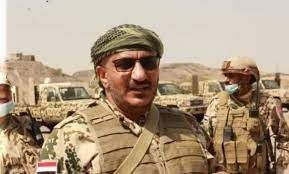
In a sudden turn in the course of the field, the Emirati-backed forces withdrew from the southern areas of Hudaydah that is led unilaterally by Haitham Taher in an unreasonable way with respect to the forces in Mokha city led by Tarek Saleh and backed by the United Arab Emirates [UAE] as well, which left the latter shocked, confused, and doubtful about the existence of an agreement and a prior coordination between Taher and close confidents of the fugitive president Abed Rabbu Mansour Hadi who is supported by Saudi Arabia.
Sources reported unannounced heated disagreements among the factions of the UAE-backed forces in the western coast of Yemen, in the aftermath of the sudden and wide withdrawals in Hudaydah areas, which represented a stab in the back of Saleh’s forces, leaving the armed factions affiliated with the southern transitional council shocked and confused. The sources added that the so-called “legitimacy of Hadi” is coming to an end.
The withdrawing forces, however, claimed that they have evacuated the fighting areas in Hudaydah in accordance with the Stockholm Agreement reached late 2018, which is supposed to take place in coordination and understanding with the United Nations mission; but it was not kept informed with the updates.
But other sources asserted that the Emirati forces had previously started a large-scale evacuation of its forces after receiving a series of military strikes from the Yemeni Ansarullah movement. Such strikes were based on accurate intelligence by the movement.
In addition, the Yemeni army and popular committees rushed to take control over these areas, and opened the main road that connects them with the capital Sanaa. Among these areas are the eastern and northeastern coastal city of Hudaydah, and areas to the south of the city on the outskirts of the Hudaydah International Airport, in addition to the Ad Durayhimi District, the coastal line of the “Beit Al-Fakih” District, At Tuhayta District, Al-Haima port to the south of Al-Khawkha District, areas in the Hays District and areas to the south of these two directorates of the Taizz Governorate.
On the other hand, Saudi Arabia evacuated most of its compounds in the last few weeks, especially in Al-Mahrah governorate, but a number of its troops is still at its center in Al-Ghaydah, along with a group of officers who still roam about 27 compounds where mercenaries forces of the southern separatists are present, and it has become rare to find any Emirati forces in many southern areas.
Regarding the Marib front, the Yemeni army and the popular committees have eased their attack on the city and headed to the south, achieving a progress that surpassed what it was like before, and succeeded, for the first time since years, to return to southern areas, even though a settlement with the local tribes there. But this operation allowed them to lay siege to all the southern and eastern crossings- the southern crossings that lead to Marib, and that made the Saudis and all the southern mercenaries in need for a long trip that takes them from Hadramout to the sieged city.
Accordingly, there is only one passage left, and if the Yemeni army and popular committees decide to go for an all-out confrontation to capture the city, this passage will be closed. The problem of Saudi Arabia here is that the support it received from the US did not help. Therefore, Marib has fallen and the greater is yet to come. Was the UAE Minister of State for Foreign Affairs Anwar Gargash right when he said that “the liberation of Hudaydah is the beginning of the end of the war”?
Yemeni journalist Ali al-Darwani confirmed to Al-Ahed News that nothing is being done confidentially regarding the Emirati withdrawal from the western coast that is at least more than 50 km long, but rather a relocation in case Marib fell, which will impose new fields on Ansarullah, first of which will be this coast where Taher’s forces consider themselves to be trapped between the jaws of the pincers, for this coast’s width reaches 5 km in some areas. He added that these forces opted to withdraw to the southern areas to strengthen their influence in order to defend Bab al-Mandeb strait which is a US-“Israeli” quest, fearing its fall in the special committees hands and thus taking control over the maritime navigation.
Al-Darwani also said that in case Marib fell, 50,000 to 100,000 fighters of the Islah party backed by the UAE and its allies like al-Qaeda and Salafists will flee to the southern regions, where they have authority. This large number will enhance their resilience in defending Bab al-Mandeb which might be a priority for the Yemeni army and the committees, and even for the Saudi-backed forces in Aden and the south, which fought the Islah Party in many areas.
The Yemeni journalist concluded that the Emirati withdrawal is a purely tactic withdrawal so that Abu Dhabi maintains its interests in the south, fearing Ansarullah first, and Saudi Arabia second.
Related Videos
After the withdrawal of the Saudi coalition… the opening of Al Dune Beach in Hodeidah
عندما نتحدّث عن الاستراتيجية الإماراتية حالياً في اليمن لا يمكن أن نفصلها عن استراتيجية روسيا في الكثير من مفاصلها، خصوصاً تلك التي تتعلق بصراع النفوذ مع السعودية أو في موضوع المنافذ البحرية التي يتحكم اليمن بها عبر شواطئه الطويلة.
لكن على عكس روسيا تعتبر الإمارات الحرب في اليمن مصيرية لوجودها ككيان ودولة بعد مغامرتها اليمنية واحتلالها لجزر ومدن في اليمن.
في العام 2019 حاولت الإمارات تخفيف وطأة أعمالها عبر الإعلان عن انسحاب قواتها من اليمن لكن على أرض الواقع ما زالت تلك القوات متواجدة.
هامش المناورة الإماراتي في اليمن أضيق من الهامش السعودي لذلك لجأت الإمارات الى تعزيز علاقاتها مع إيران التي شهدنا آخرها مشروع الممر الاستراتيجي للتجارة الإماراتية عبر الأراضي الإيرانية الى تركيا وأوروبا.
أيضاً عززت الإمارات العلاقة مع روسيا وطبعت مع سورية لإرضاء الروسي والإيراني.
عرضت الإمارات على روسيا إقامة قاعدة عسكرية في سقطرى او في عدن لكن الروس رفضوا.
في الواقع روسيا تريد قاعدة على باب المندب لكن تريدها من حكومة يمنية مستقرة ومتمكنة.
في تلك الفترة كانت إيران تعيد العلاقة بين أنصار الله وموسكو بعد سنتين قطيعة بسبب قتل علي صالح.
كانت روسيا الوسيط بين صالح والأنصار حيث استقبلت السفارة الروسية اجتماعات التنسيق بين الطرفين، وعند مقتل صالح غضبت موسكو وقطعت علاقاتها مع أنصار الله حتى العالم 2019 عندما نجحت إيران بإعادة حبل التواصل بين الطرفين.
تزامناً مع العرض الإماراتي كانت موسكو أنجزت اتفاقاً سرياً مع عمر البشير لإنشاء قاعدة عسكرية روسية في بور سودان على البحر الأحمر.
أسقطت أميركا عمر البشير بسبب هذا الاتفاق السري
وساهمت الإمارات بسقوطه حتى لا يفقدها التأثير على موسكو
في الواقع الاستراتيجية الإماراتية وسيناريوات هذه الاستراتيجية تقوم على أمرين:
1 – استرضاء إيران.
2 – استرضاء روسيا.
يظهر هذا في التقارب الإماراتي مع سورية القاسم المشترك الكبير بين موسكو وطهران.
كما ظهرت في الآونة الأخيرة استراتيجية تلبية مطالب أنصار الله الحوثيين كما شهدنا في انسحابات الساحل الغربي.
لا يمكن تصوّر هذا الانسحاب إلا ضمن سياسة استرضاء الحوثيين كون الساحل الغربي يشكل العمود الأساس لكلّ استراتيجية أبو ظبي على موانئ البحر الأحمر
ما حصل استسلام بكلّ المقاييس…
قبل يومين أعلنت قوات طارق صالح ذات الولاء الإماراتي المنسحبة الى شبوة أنها لن تشارك في معارك مأرب.
لا يمكن فصل هذا الإعلان عن استراتيجية تلبية مطالب صنعاء.
سوف نشهد في الفترة المقبلة تلبية مطالب وتراجعات في جبهات متعددة.
من دون مقدمات وعلى حين غرة أخلت قوات طارق صالح مواقعها على ساحل الحديدة في اليمن متوجهة إلى تعز، في وقت انسحبت قوات العمالقة التي كانت تشاركها جبهات الحديدة إلى ثلاث جهات… هي البرح للقتال مع صالح وعدن بينما رفضت بعض قوات من العمالقة الانسحاب ووقع غالبيتها في الأسر كما حصل مع كامل اللواء الخامس من العمالقة في الحديدة.
في معلومات حصلت عليها «البناء» فإنّ طارق صالح كان قد أبلغ قادة القوات المتواجدة في الحديدة قراره الانسحاب من الساحل الغربي إلى موزع ومن ثم البرح في محافظة تعز، وقالت المصادر إن طارق صالح زار الحديدة قبل أيام من الانسحاب وأبلغ القادة هناك قائلاً:
«أيها الإخوة سوف تسقط كلّ جبهات الساحل من الحديدة حتى خوخة، ونحن قررنا إعادة التموضع في البرح وموزع ومن يريد منكم الانضمام معنا فأهلاً وسهلاً بمن يريد منكم أن يكون تحت قيادتي». وأضاف صالح «من لا يريد كان الله بعونه يبقى وعليه مواجهة مصيره فوافق البعض وطلب البعض الآخر مبالغ مالية».
لماذا الانسحاب وإلى تعز تحديداً؟
تقول مصادر يمنية مقرّبة من آل صالح إن الانهيار في جبهات مأرب كان قوياً ومتسارعاً بشكل وضع خريطة الحرب اليمينة كلها على طريق النهاية السريعة لمصلحة أنصار الله.
وتضيف أن منطقة الساحل الغربي لا يمكن الدفاع عنها في حال سقوط مأرب إذا ما تمكّن أنصار الله من إرسال آلاف المقاتلين الذين كانوا في مأرب إلى الساحل الغربي، بالتالي أصبحت الخيارات أمام طارق صالح محدودة للغاية… إذ أنه ليس في وارد الذهاب للقتال في مأرب بوجه عشرات آلاف المقاتلين من أنصار الله، وليس لديه في الجنوب أيّ محب أو صديق، بالتالي فإنّ وجوده في الجنوب مرفوض من قبل الانتقالي، فكانت تعز أقلّ الخيارات سوءاً، خصوصاً أن لِعمّه فيها أنصار كون تعز كانت المحافظة التي تشكل منها كلّ كوادر الدولة اليمنية أيام حكم علي عبدالله صالح، بالتالي فسوف يجد طارق صالح فيها مقرأً للاستقرار المؤقت الذي يمنحه هامشاً من المناورة لعدة أشهر ربما، مع علمه أن محاولته هذه محفوفة بالمخاطر والصعوبات كون تواجده في تعز سوف يكون عرضة للحصار بسبب طول خطوط الإمداد وقدرة أنصار الله على قطع هذه الخطوط، فضلاً عن تواجد الإصلاح فيها، غير أن ضيق الخيارات لديه وحاجته إلى الحماية جعلته ينتقل إلى تعز، فكلّ ما يطلبه الرجل حالياً هو حماية نفسه لا أكثر.
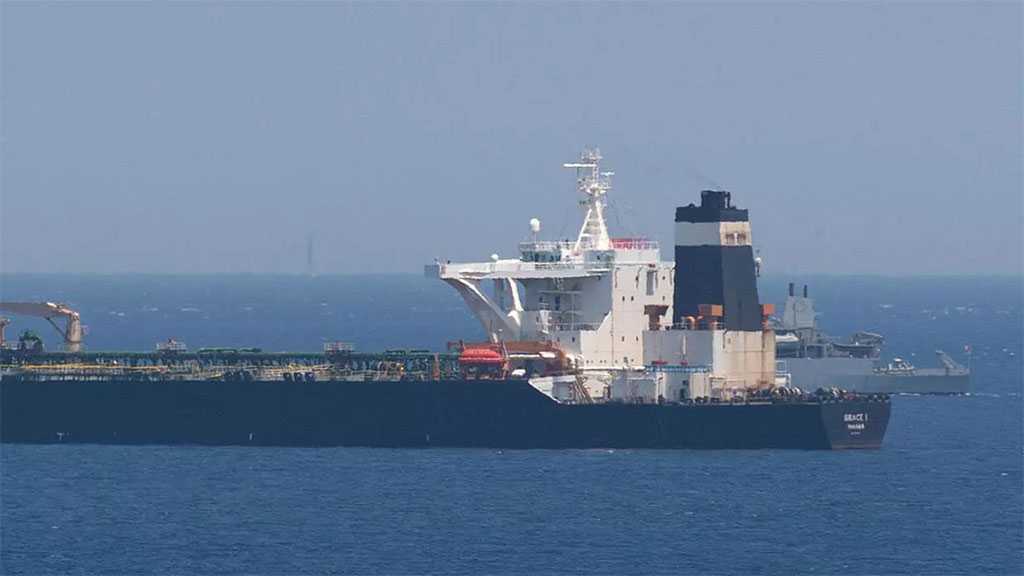
The coalition of aggression, led by the United States and Saudi Arabia, is still detaining 29k tons of diesel bound to Yemen, the Yemeni oil Ministry reported.
In the same context, the spokesman of the Yemen Petroleum Company, Essam al-Mutwakel, stated that US-Saudi aggression detained “Sea Line” ship and prevented it to arrive in al-Hudaydah Port despite having obtained permits from the United Nations.
Al-Mutawakel lashed out at the UN silence regarding maritime piracy, indicating that the arbitrary practices of the coalition of aggression on fuel ships confirm that the United Nations is a partner in the siege and suffering of the Yemeni people.
He considered these practices a flagrant violation of international humanitarian law, and a clear violation of international charters, laws and norms, and the Stockholm Agreement, which provides the right of fuel, food and medicine ships to enter and smoothly reach the port of al-Hudaydah.
Al-Mutawakel pointed to the repercussions of the continued detention of oil tankers on the life of the citizen, in addition to the economic burdens resulting from the increase in the prices of oil derivatives. The fines that are paid to the loaded ships as a result of their detention for long periods at sea, amount to more than the value of the oil in the tankers, increasing the human suffering.
The spokesman further called for the neutralization of humanitarian aspects from political and military matters, holding the US-led coalition of aggression, and the United Nations fully responsible for the continuation of the siege on the Yemeni people.
He called on human rights activists and human rights organizations to assume humanitarian responsibility and work to lift the siege and expose the American piracy on ships of oil derivatives.
The aggression on Yemen has officially entered its seventh year. During the last six years, the international community turned a blind eye to the horrific massacres and violations committed against the Yemeni people which include killing, destruction, starvation, and a siege.
In an interview with Al-Ahed News, Acting Yemeni Minister of Human Rights Ali Al-Dailami detailed the war crimes that the Yemenis endured during the years of aggression.
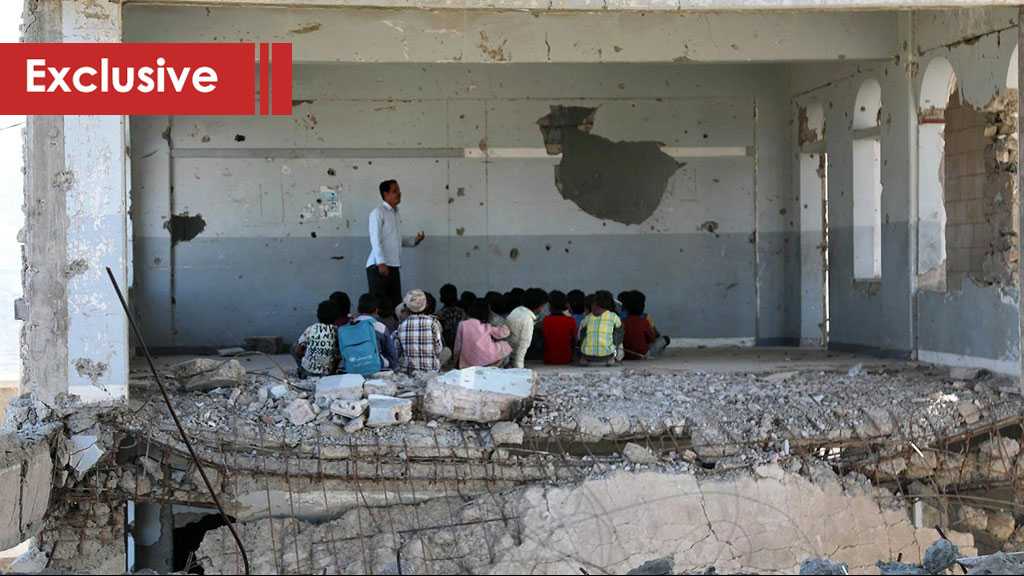
– Destruction of infrastructure: The Saudi-led coalition deliberately destroyed infrastructure, including thousands of hospitals, schools, universities, power plants, roads and bridges, communication networks, and fuel supply facilities. In addition, it destroyed food factories, food storage facilities, transportation networks, drinking water, and irrigation facilities, as well as other civilian facilities that provide basic services. International humanitarian law prohibits the targeting of these sites.
– Starvation and siege: The Saudi-led coalition sought to starve and destroy the Yemeni people by targeting many resources that are essential for the survival of the civilian population. The total blockade imposed on all of Yemen’s land, sea, and air ports is a continuous inhumane practice that causes shortages of basic goods, especially food and medicine.
The Saudi-led forces are blocking the entry of these basic goods that are needed to save lives, and the coalition also intensified its targeting of the port of Hodeida with the aim of halting its maritime navigation service. It completely closed Sanaa airport and strengthened all these inhuman measures by moving the Central Bank of Yemen from the capital to the Aden Governorate, which it occupies and controls through armed proxies. This resulted in salary cuts for state employees that started from the first month that the Central Bank of Yemen was relocated.
– The spread of famine and food insecurity was one of the consequences of the military attacks and sieges on agricultural crops, food storage facilities, livestock, drinking water, and irrigation facilities, in addition to the contamination of wells and irrigation tanks with chemicals and harmful materials that are internationally prohibited. Many lands and agricultural crops were also destroyed due to the use of internationally banned weapons, including phosphorus bombs, white phosphorus, and enriched uranium. These caused a humanitarian disaster, which has long-term effects on women, children, and the elderly.
– During the aggression and the blockade, Yemen faced a major crisis in providing food due to the illegal measures imposed by the coalition that also led to the country’s economic decline. This is widely regarded as one of the main causes of acute food insecurity, in addition to inflation, rising food prices, and the depletion of foreign exchange reserves.
According to an analysis, children in Yemen are the most affected group, as they are at particular risk of acute malnutrition, and they are in dire need of food and medicine. The percentage of the population that is food insecure this year is estimated at around 77% (13.3 million people), with an increase of 21.4% compared to 2017. Around 22.7% of the total population are in Emergency (IPC Phase 4), while 25.6% will soon be in Emergency (IPC Phase 3). With the continuation of the aggression, a large proportion of the population will suffer from acute food insecurity at the end of this year and be classified as living in Famine (IPC Phase 5). The percentage of food insecurity increased during 2018-2019 to 21.4% of the population.
Of course, women and children are the most affected groups by the Saudi-led aggression and blockade and are especially vulnerable to certain diseases, such as malnutrition and anemia.
This includes pregnant women and newborns. Statistics show us the high levels of malnutrition in children and women. More than 2.6 million children under the age of five suffer from malnutrition, including 500,000 who are suffering from severe acute malnutrition, and more than 1.8 million pregnant and lactating women suffer from malnutrition.
– There has also been a sharp decline in access to clean drinking water, decreasing from 10% to 66%, after the water and sanitation sector services were damaged as the coalition targeted dozens of tanks, water wells, springs, and water-raising pumps that run on solar energy. This is in addition to power cuts and lack of fuel, the high average cost of the production unit and the high cost of maintenance (95%), and the inability to pay workers in the sector. Water facilities have been damaged, and water projects in the public and private sectors have ceased to operate (the activities of many local institutions have stopped). The environmental situation in cities and urban areas further deteriorated due to the accumulation of solid waste and garbage. It is estimated that 20.5 million Yemeni people do not have access to clean water.
According to the Consumer Price Index data issued by the Central Bureau of Statistics, the cost of living has recently increased to more than 80%, compared to what it was before the aggression on Yemen. 92.2% of families do not have sufficient funds to secure their basic needs as a result of the aggression.
– There is also the spread of various epidemics and the increase in the number of chronic diseases, including all kinds of cancers caused by the coalition’s use of internationally prohibited weapons. Meanwhile, a high number of patients are suffering from kidney failure and diseases related to the heart, liver, and other vital organs.
The death rate is rising due to diseases and the lack of medicine.
Prior to the Saudi-led aggression, the rate of cancer incidence was 2.3% per year. It has since increased by 5.5% as a result of the coalition’s use of internationally banned and carcinogenic weapons. In March 2021, the number of people with carcinomas increased to 72,000. Meanwhile, the percentage of patients heading to consultation centers for periodic follow-ups and the external administration department for chemotherapy decreased to 20% during the aggression because people can’t reach health facilitates safely amid the bombing of bridges and roads.
The provision of ultrasound services, as well as surgical interventions and radiation therapy, decreased by 50% during the aggression. It also became difficult to obtain radioactive sources and linear accelerators. The radiotherapy service may be permanently stopped due to the poor efficiency of the currently available radioactive source, which may cause a humanitarian disaster for cancer patients.
The provision of some diagnostic services that were provided free of charge to patients in the center has stopped, and 50% of the chemical medicines required for patients, especially targeted therapies that need to be transported at certain temperatures, have been discontinued. The provision of essential medicines, antibiotics, and intravenous solutions decreased by 80% due to the blockade and the scarcity of financial resources.
Meanwhile, 40% of the diagnostic and medical equipment stopped working due to maintenance issues and the unavailability of spare parts. There are approximately 28 dialysis centers that may have to halt operations completely and no longer provide services to 120,000 people with kidney failure and diabetes, in addition to thousands of people with cancer and thalassemia. On the other hand, there are more than 75,000 patients who need treatment abroad. They are facing death as a result of the closure of Sanaa International Airport that is preventing them from traveling for medical treatment.
So far, there are more than 2,326,568 cholera infections and suspected cholera cases, and the number of deaths from this epidemic has reached 3,786.
The coalition used internationally banned weapons in many of its attacks. Medical reports confirmed that the weapons and ammunition used by the coalition caused deformities of fetuses and newborns, especially those weapons that were used in the governorates of Saada, Hodeida, Sanaa, and Taiz. These are the same weapons that the US forces used in their aggression against Iraq in 2004, especially in Fallujah. The attacks caused the deformation of hundreds of newborns and fetuses. Humanitarian organizations have warned against the use of these weapons in Yemen. These are the same weapons the Zionist entity used in the Gaza Strip in 2009, also resulting in the deformation of dozens of newborns and fetuses.
In many of the wars and armed conflicts that occurred in the past, civilian victims, especially women and children, are neglected. The sound of planes and missiles and sudden explosions result in a number of deaths, especially among women and children, and affect pregnant women and fetuses. Preliminary statistics, registered by the Ministry of Public Health and Population, showed that 450 women in 2015 suffered miscarriages due to fear, and anxiety caused by the bombardment.
Following the detailed presentation on the deteriorating humanitarian situation in Yemen as a result of the Saudi-American aggression and blockade, Acting Minister for Human Rights, Ali Al-Dailami, reviews Yemen’s Hiroshima, a report recently issued by the Ansarullah Political Bureau’s Rights and Legal Department.
In his interview with Al-Ahed News, Al-Dailami pointed out that this is the first human rights report that shows the scale of the coalition’s crimes that are being overseen by the US, Saudi Arabia, and the UAE and their mercenaries from within. It also shows the coalition’s brutality towards civilians. The reporter’s name obviously refers to the atrocities committed by the Americans in Japan during World War 2 – namely the nuclear strike on Hiroshima, which killed millions of people and destroyed the city. This is what America, its aides, and its tools are doing in Yemen. They are targeting both the land and people, with various types of lethal weapons that have long-term effects such as cluster bombs. The title of the report illustrates the brutal model being applied in Yemen, and against the Yemeni people.
Al-Dailami explains that the report documented the crimes the coalition committed against children, women, and the elderly using pictures and eyewitness testimonies. These crimes mentioned in the report are only a small part of what was documented by specialists who followed international standards and methodology in the monitoring and documentation process. There are still dozens of crimes and violations that have killed people, and the report focused largely on one of the most serious crimes stipulated in the Rome Statute of the International Criminal Court, which is the premeditated murder that falls under war crimes, crimes against humanity, genocide, and the crime of aggression.
Al-Dailami notes that there will be other issues and publications on the various direct and indirect crimes that have affected Yemen and its people as well as their implications and repercussions on people’s lives.
The report includes three main parts:
– The rules of international law and the violations of the aggression thereof
– The alleged pretexts for the countries of aggression
– The crimes of the countries of aggression as narrated by the documentation team, victims, and witnesses
In response to Al-Ahed’s question about the role of human rights organizations in what is happening in Yemen, Al-Dailami points out that these groups acted against the basic framework of their work and did not adhere to the humanitarian agenda but rather to an agenda that corresponds to the demands of the coalition. The following are examples:
– International Resolution 2342: It indicates the poor humanitarian situation in Yemen that has become catastrophic in most of the country’s governorates and regions. But it doesn’t include any condemnation of the coalition and its daily crimes. This indicates UN and international collusion with the forces of aggression, which means more destruction, collapse, and the continuous deterioration of basic services.
– The closure of Sanaa International Airport: This is an unjustified closure. Meanwhile, the United Nations missions continue to use Sanaa Int. Airport for their flights exclusively without opening humanitarian and commercial services to the Yemenis. This makes the United Nations the main accomplice for the countries of aggression and fully responsible for the worsening humanitarian situation.
– Blockading ports and maritime outlets: The United Nations is fully aware of the extent of the impact of the imposed blockade on port traffic in Hodeida, Salif, and Ras Issa in particular. This situation imposed on the maritime ports is witnessed by the United Nations, but it continues to mislead the world in service of the Saudi-led coalition, which uses the blockade as a means of war on Yemen and the Yemenis.
– According to Al-Dailami, the speech of the Secretary-General of the United Nations at the opening of the fifth high-level humanitarian pledging event for Yemen was also an indication of the disregard for the suffering of Yemenis. Antonio Guterres acknowledged that famine is weighing on Yemen and the race is underway to save Yemen from the famine that most of the Yemeni people may be exposed to. He affirmed that there are quite a few Yemenis starving to death in conditions similar to famine.
– Meanwhile, reports from the Office of the United Nations High Commissioner for Human Rights in Yemen documented civilian casualties and the killing of a large number of civilians in the Shada District of Saada Governorate as a result of airstrikes and an intense attack by a military helicopter. It is clear that the United Nations body records the criminal incident and identifies the perpetrator. However, it does not take any measures related to the protection of civilians and redress for the victims. In addition, the United Nations is unable to hold the coalition’s forces accountable for their crimes against civilians.
Al-Dailami adds that the Yemenis are still following up on the statements of this agency and its officials, which are full of expressions of concern, and fear.
Jamie McGoldrick, the Humanitarian Coordinator for Yemen, expressed his grave concern about reports of airstrikes on civilians in Saada Governorate, including attacks on a house and a private car in two separate areas that resulted in the killing of civilians, including women and children.
The UN agencies keep reminding the parties to the conflict without taking any action that would stop the aggression and its tools from killing civilians in all Yemeni governorates. The following is from one of its officials:
“We recall that indiscriminate or disproportionate attacks or attacks targeting civilian objects such as markets are prohibited under international humanitarian law. We remind all parties to the conflict of their obligation to ensure full respect for international human rights law and international humanitarian law. All incidents resulting in civilian casualties … must be thoroughly investigated to ensure accountability when breaches of international law have been found to have taken place.”
At the top of the list of acts of complicity is the removal of the Kingdom of Saudi Arabia from the list of countries and unofficial bodies that failed to adopt the measures necessary to protect children. It had a direct role in child recruitment, detention, kidnapping, sexual violence, and attacks on schools and hospitals.
The Secretary-General cited a continuous and significant decrease in the number of deaths and injuries in the airstrikes and the implementation of the provisions of a memorandum of understanding calling for the adoption of a program of activities aimed at strengthening prevention and protection measures.
He also added that the program will be subject to monitoring for a period of 12 months and that any failure in this field will lead to the inclusion on the list of the same violations.
“The secretary-general has brought shame on the UN by removing the Saudi-led coalition from his ‘list of shame’ even as it continues to kill and injure children in Yemen,” HRW’s Children’s Rights Advocacy Director Jo Becker said as she reacted to this UN decision.
For her part, Adrian Labar, the director of Watchlist, an NGO concerned with children and armed conflict, said that the removal “sends the message that powerful actors can escape the killing of children.” She called for an “independent, objective, and transparent evaluation of the process that led to the decision” of removing Saudi Arabia from the list of shame.
The Saudi-led coalition remained on the blacklist for three years, as it was added to the list in 2016. It was later removed after protests by Saudi Arabia. The Secretary-General of the United Nations at the time, Ban Ki-moon, accused Saudi Arabia of exerting unacceptable pressure on the United Nations, as allied countries have threatened to cut off funding for humanitarian aid programs.
According to Al-Dailami, evidence of collusion, condemned by all Yemeni society, people, and institutions, is evident through the stance of the international community towards the coalition’s practices – it gives the coalition more room to commit crimes against Yemenis every day. This stance is a reflection of the lack of responsibility and appreciation of the magnitude of the humanitarian situation in Yemen, which goes beyond just being a political crisis.
In response to a question about whether the continuation of the aggression will contribute to the subjugation of the Yemeni people, Al-Dailami asserts that the Yemeni people have conveyed their message to the world.
The plan to occupy Yemen was concluded in the US capital and cooked in the kitchens of the American intelligence. It was decided that it will only take two weeks. But here we are, seven years later! They thought that things would go according to their plan. However, God’s plan and kindness to the army, the popular committees, and the missile force, the supervision of a wise leadership – represented by Sayyed Abdul Malik Badreddine al-Houthi – with strong confidence in God and its representative, and the steadfastness of the Yemeni people have foiled all external bets. There is no doubt that solidarity and support are important from a leader like His Eminence Sayyed Hassan Nasrallah and the Islamic Republic.
Al-Dailami notes that the ongoing siege is killing the Yemeni people, and it has become tighter since Biden took office and announced that he would seek peace in Yemen. This is his way of building peace through blackmail. These are their initiatives, and this is their alleged peace. International silence clearly and explicitly confirms that laws, international agreements, the Universal Declaration of Human Rights, and the United Nations Charter have died and are only a cover for the interests of major countries, even at the expense of dead women and children.
Al-Dailami stressed that the Yemeni people depend on God and move with their steadfastness to defend against injustice and their just cause. As for the countries of aggression, they are losers. He points out that the Yemeni people convey the most wonderful examples of sacrifice, and steadfastness. They insist on the independence of their country and respect for its sovereignty. They are steadfast, defiant, proud, and a great people.
Addressing the forces of aggression, Al-Dailami says: “Haven’t you had enough of killing civilians, especially children and women? Haven’t you had enough lessons to learn from great men? You are facing the Yemeni people! The saying tells you, ‘Yemen is the graveyard of invaders.’”
Deal is always nigh
-
The fucking ‘Canadian’ Jews are going apeshit about this article about
discrimination - btw, what do you call discrimination based on the fact the
person d...
Report on Beth Israel vigil 07-04-26
-
*1A Rights under combined attack from local government plus media*
Ann Arbor City Council is at it again. Right before the long 4th of July
weekend, they ...
-
Hello all,
It is with great sadness that I share with you the passing of our beloved
sister, Mother, and Grandmother, the individual that you all knew ...
Best Horror Podcast
-
Best Horror Podcast Introduction: Horror podcasts […]
The post Best Horror Podcast appeared first on Copper Shock Horror Podcast.
Ikhras Endorses Muntadhar Al-Zaidi
-
“Oh parties of banditry and sectarianism and corruption, we have come and
our goal is to destroy you.” Ikhras formally endorses Muntadhar al-Zaidi,
Iraqi j...
Prince Charles: Foreign Jews behind bloodshed in ME
-
In May, 2017, British Crown Prince Charles declined an invitation from
Zionist entity’s president Reuven Rivlin‘s to attend the 100th anniversary
of the no...
Palestinian Women – One for All, All for One
-
Honouring All Palestinian Women by Honouring Three: Hanin Zoabi, Ahed
Tamimi, Samah Sabawi Vacy Vlazna “Palestinian women have always stood side
by side ...
US’s Saudi Oil Deal from Win-Win to Mega-Lose
-
By F. William Engdahl Who would’ve thought it would come to this? Certainly
not the Obama Administration, and their brilliant geo-political think-tank
neo-...
-
*Mordechai Vanunu wins human rights prize of Brazilian Press Association *
* http://www.alternativenews.org/english/index.php/features/updates/7038-mordechai...
Abdul Aziz Rantissi:
"My ultimate wish, my God, is to attain martyrdom,"...God granted him his wish on April 17, 2004, at the hands of Israeli assassins.