Tuesday, 10 January 2012

Egypt’s Activists: The Revolution Will Not Be Criminalized


An Egyptian man walks past Arabic writing that reads "search with the people" written above a stenciled portrait of a security officer on a side road of Cairo's Tahrir Square on 28 December 2011. (Photo: AFP - Filippo Monteforte)

Published Wednesday, January 4, 2012
Despite the campaign to criminalize protests, political movements, human rights organizations and prominent activists, protests and strikes have persisted, as has dissent against the military regime.

Cairo – Egypt’s state-run and, more recently, Muslim Brotherhood-affiliated media outlets are sparing little effort to make dissidents out to look like criminals. But the campaign has yet to succeed.
“Pressure not only on activists but also on the Egyptian population as a whole is failing to turn people away from the revolution’s demands,” said Azmi Ashour, managing editor of Al-Ahram Democracy Review.

“Bread, freedom and social justice” were among the core demands of the revolution that toppled former President Hosni Mubarak’s regime. “Those demands have yet to be met,” said Ashour. “Though the revolution is under pressure, my reading is that it is continuing.”

Factors contributing to the failure of the regime’s attempts to dissuade many Egyptians from revolutionary action included “excessive violence against protesters, in particular women, and the Supreme Council of the Armed Forces’ (SCAF) inability to cater to popular demand for economic justice,” Ashour said.

The state-run media has blamed protesters in central Cairo for economic instability in Egypt since the January 25 revolution broke out.

Trading ceased on the floor of the Egyptian Stock Market between 27 January 2011 and 23 March 2011, while the Central Bank of Egypt announced that the country had lost US$16 billion in foreign reserves over the year, according to Al-Ahram Weekly newspaper.

“The thing is, though, that with time, more and more people are coming to grips with the fact that the SCAF, as the ruling authority, is responsible for such failures – not the protesters,” said Ashour. “At any rate, the economic situation in Egypt has suffered from massive inequality for decades. That’s part of the reason why people rose up in the first place.”

Suffocating the population by proxy

While the military was received with widespread popular support when Mubarak handed over power to the SCAF, the military regime’s unpopularity over recent months has grown significantly.
Violence against protesters, no economic improvement, and the continued use of Mubarak-style tactics to stall non-compliant, independent political movements from flourishing, have increased the resolve of a growing number of protesters who are challenging the SCAF.

In response, the authorities intensified a media campaign aimed at tarnishing the reputation of numerous political movements and figures. Human rights organizations who worked to expose crimes allegedly committed by the army and security forces over recent months were also targeted.
Among the targets of this media campaign were the Revolutionary Socialists, a Marxist organization whose members worked secretly from their inception in 1990 until the January 25 revolution.
According to labor rights lawyer and organization member Haitham Mohammadein, the reason why the Revolutionary Socialists have been targeted under both Mubarak and the SCAF is because they “have been instrumental in coordinating labor strikes, while continuously expressing solidarity with workers and educating them.”

Labor actions such as the Mahalla strikes that kicked off in 2006, and which by 2008 had developed into a full-scale uprising, were considered key signals that major changes were underway in Egypt.
Karama Party MP and long-time labor rights activist Kamal Abu Ayta summarized the importance of such strikes, saying “the revolution neither began on January 25, nor did it finish on February 11,” when Mubarak stepped down.

While they continued to support ongoing labor strikes in the post-Mubarak era, the Revolutionary Socialists had two cases filed against them by a group of 12 former National Democratic Party (NDP) members, and, interestingly enough, a member of the Muslim Brotherhood. The latest set of charges was filed on 1 January 2012.

The charges included “the intention to bring about the collapse the state, burning of institutions and revolting against the January 25 revolution,” said Mohammadein, laughing as he shared the third charge.

He stopped smiling when he added, “Considering the lack of judicial independence in Egypt, some of us may well face prison sentences.”

Mohammadein believed that pressure on the Revolutionary Socialists was in fact a mechanism for pressuring the labor movement as a whole.

“The state attacks us, because we are the weakest link in the chain,” he said. “If they used force against, say, the transport workers who have continued to strike over recent months, the consequences would be disastrous.”

In December, numerous Egyptian ports and Cairo International Airport saw intermittent strikes, whose demands varied from basic economic demands such as higher wages, to rejecting military control over a civilian airport.

“Such actions constitute a direct challenge against the SCAF, in that forces with real sway on the ground are making political and economic demands,” said Mohammadein. “Of course, such advances do not come without a cost.”

In spite of the pressure, the media campaign that accompanied the filing of legal charges “has sparked the interest of many previously uninvolved young people in the work of the Revolutionary Socialists,” said Mohammadein. Activists may be undergoing a difficult period, “but overall there is hope,” he said.

Hope in times of trouble

Anxiety, fear of the future and confusion were sentiments widely felt across a city whose activist community has continued to push for change but remains vilified.

Activists and their platforms, including the April 6 movement, were described on various occasions in December 2011 by Al-Ahram newspaper as treacherous, agents for a foreign agenda, destructive and conspiratorial.

Blogger Alaa Abdel Fattah called for perspective on this media campaign, clarifying that it has been “ongoing since Mubarak was in power.”

Imprisoned from October 30, charged for allegedly inciting violence, and tried by military court, Abdel Fattah was released nearly two months later, though he remained under investigation.
“We once dealt with the army as essentially different from the police, which was the main tool of oppression under Mubarak,” said Abdel Fattah. “Now it is clear that the two use the same methods. If anything, the military is even more violent.”

In November and December, two separate crackdowns on protesters in central Cairo only brought more people out onto the streets.

The first crackdown – centered on Mohammed Mahmoud Street just off Tahrir Square, the epicenter of Egypt’s revolution – ran from November 19 to 23, and killed up to 40 people, according to rights groups. The second, centered on nearby Qasr al-Aini Street, killed 17, according to field medical volunteers.

Both crackdowns prompted mass popular action, including a protest by hundreds of thousands in Tahrir Square on December 23, denouncing sexual violence by the army against women protesters during the Qasr al-Aini clashes earlier in the month.

“For years, the army was a taboo subject, a force that could not be publicly criticized,” said Abdel Fattah. “But now the use of violence against protesters, including the use of live fire, has exposed the army to criticism. There is no going back from here.”

Abdel Fattah’s wife, Manal Hassan, gave birth to a baby boy while he was in jail. The couple named him Khaled, after Khaled Said, who died from a beating in police custody in June 2010 and in whose name thousands protested on 25 January 2011, kick-starting the revolution.

Considering that “the road ahead is long, and the struggle is ongoing,” Abdel Fattah remained optimistic. “At least now there is hope,” he said. Under Mubarak’s regime, “we knew that each day was going to be like the next and the one after that. There may be uncertainty now, but uncertainty leaves room for positivity.”

As a father, Abdel Fattah feels that the day Egyptians would be able to count on a dignified education and health care system is far closer now than it was this time last year.

“There may be an ongoing crackdown on the revolution’s goals,” he said. “But surely the system against whom people rebelled is not going to fall easily. It’s going to take work and struggle.”

Human rights organizations under pressure

“We are living today under the shadow of the counter-revolution,” said Nasser Amin, director of the Cairo-based Arab Center for Independence of the Judiciary and the Legal Profession. Amin’s was one of up to 17 civil society organizations raided by police, military forces, and staff of the public prosecutor’s office on December 29.

Other organizations affected included the US-based National Democratic Institute (NDI), chaired by former Secretary of State Madeleine Albright, and the Republican Party-funded International Republican Institute (IRI).

A significant part of the regime’s efforts at undermining the legitimacy of forces calling for the SCAF to hand over power to a civilian regime was characterized by attempting to associate those forces with imperialist powers’ agendas.

“One method the SCAF uses, is to call us traitors,” said Amin. “In reality, we have been accused of this since we started working 15 years ago, when Mubarak was in power. The only real difference is that our offices are being raided now.”

More than 30 Egyptian civil society organizations issued a joint statement on December 29, denouncing the raids. The signatories to the statement did not include either the NDI or the IRI.
Egyptian laws governing civil society organizations, inherited from the Mubarak era, allow foreign funding but only on a case-by-case basis, according to Amin. “The government chooses when to allow foreign funding, and when not to,” he said. In this way, the work of human rights organizations that “lead efforts to fight the system’s abuses through legal methods” is systematically hampered, Amin said.

Fundamentally, “the raids had little if anything to do with funding. They had more to do with continuing to turn public opinion against human rights organizations, because we have worked to expose the SCAF’s use of force against civilians,” Amin said.

Some criticized the SCAF for using patriotic rhetoric when Egypt continued to receive US funding after the toppling of Mubarak. Up until this year, Egypt received $1.3 billion in security assistance, according to the Associated Press, making it the second biggest beneficiary of US aid after Israel.
According to the report, published December 17, the global financial crisis was forcing a reconsideration of this sum. Meanwhile, the US Congress pegged the continuity of aid on respect for the Camp David Peace Treaty with Israel and the transition to a civilian government through free, transparent elections.

Indeed the third and last round of parliamentary elections kicked off on January 3, with no significant incidents reported yet and with voter turnout looking to be as high as in previous rounds through December.

Under the shadow of the counter-revolution

What remained unclear in spite of advances in the Egyptian movement for change was whether progressive forces would be able to counter pressures against them with programmatic work, and the proposal of proactive solutions.

The military’s overwhelming capacity for the use of force to terrorize the population into complicity, as well as the Muslim Brotherhood’s increasingly pro-establishment discourse and modus operandi, were challenges that were not lost on those who believed the revolution had to continue until its goals were met.

Part of the military regime’s strategy has been to try and isolate a community of so-called revolutionaries from the rest of the population.

Protesters sitting in at the gates of the Cabinet building, demanding that the SCAF hand over power to a civilian regime for three weeks leading up to the Qasr al-Aini clashes, were labeled as “thugs.”

Meanwhile, the range and nature of accusations leveled against approximately 12,000 people who have reportedly been subject to military trials since 25 January 2011 has been broad, including the intention to destroy the state and incitement to murder.

According to Amin, Egypt has never witnessed such widespread use of military trials against civilians since the days of the pre-1952 revolution monarchy. In the face of this campaign, hopes that the campaign to criminalize the revolution would fail were pegged to the fact that no single force could claim ownership or leadership of the phenomenon that has gripped Egypt since January 2011.
“The reality is the revolution has no leadership,” said Ashour. “The revolution broke out on a series of demands, and unless the SCAF imprisons everyone in the country, the revolution will continue.”
The analyst added that the country’s youth, whose future rested on the success of the revolution, would ensure its continuity. According to the United Nations Development Program’s (UNDP) 2010 Human Development Report, 40 percent of Egyptians are between the age of 10 and 24, while almost 60 percent of 18 to 29-year-olds are jobless.

“Some forces such as the Muslim Brotherhood have, for the moment, opted out of continuing the revolution. To them, it was over when Mubarak was forced out of power,” said Ashour. “But the popular forces behind the revolution don’t have that choice, because their lives have yet to change.”
While the regime’s campaign to tarnish better known activists’ reputations persisted, young people with a revolutionary agenda, but little structural organization to speak of, continued to plan nationwide protests for 25 January 2012.

“Does that lack of traditional political organization make the revolution weaker? On the contrary,” said Ashour. “To me, the phase the revolution is at now is healthy. Following the revolutionary euphoria in the early stages, what we are doing now is pushing every individual and every force to show their true face.”

River to Sea Uprooted Palestinian

The views expressed in this article are the sole responsibility of the author and do not necessarily reflect those of this Blog!

Britain – Racism, anti-Semitism and Jewish Lobby

Recently, three members of British Labor Party, headed by Jewish Ed Miliband, have come under knife of the ruling ‘Conservative Friends of Israel’ government of Prime Minister David Cameron.

Last month, Labour MP Paul Flynn had accused British Jewish ambassador to Israel, Matthew Gould, of being more loyal to Israel than Britain. “He has divided loyalties because he has proclaimed himself to be a Zionist“.

Matthew Gould in his official position conspired with Liam Fox and Adam Werritty to prepare ground for British attack on Iran. British daily The Independent claimed on January 8, 2012 that Werritty even met Miliband. On Saturday, Britain announced its plan to send its mightest warship HMS Daring to challenge Iran plans to conduct a new military drills in February under the name “The Great Prophet“. The drill is to show Iran’s capability to shut-down the Strait of Hormuz.

Early this month, Labour Party suspended it member, Shereef Abdallah, an Ed Miliband “lookalike” who previously worked as a volunteer at the office of Labour MP Glenda Jackson. Jewish Lobby had accused him of posting anti-Semitic and threatening statements on Twitter by calling ruling Tory party “anti-Islamic scums”. Neil Nerva, vice chair of the Jewish Labour Movement and the chair of Abdallah’s local Labour Party, praised the decision.

On Wednesday night, Diane Abbott, a Black British MP since 1980s, came close to losing her Shadow ministerial post over a tweet which read “White people love playing divide and rule. We should not play their game“. Ed Miliband demanded an immediate apology from Diane which she did.

I believe, Paul Flynn, Shereef Abdallah or Diane Abbott are not racists. However, as politicians, they should have known they were entering the Zionist-trap by making ‘politically wrong statements’.
Historically, Diane Abbott, was absolutely right. The European colonialists in the past are welknown for their policy of ‘divide and rule‘. The new-colonialists – the US, India and Israel are practicing the same old-fashioned ‘divide and rule’ policy in Iraq, Palestine, Afghanistan, Kashmir and the rest of the Muslim world.

Laurie Penny wrote in British daily New Statesman (January 6, 2012), under the heading ‘Divide and rule? Diane Abbott was right‘.

Racism, as the British National Party and its neo-fascist street imitators have been arguing for years, cuts both ways. In Barking and Dagenham in 2010, thousands of the borough’s residents mobilised to stop the British National Party gaining a foothold in Westminster. Goodhart’s lazy generalisations play right into the language of the modern far-right: that anti-racism is itself racist, and that any gains for black people must produce equal and opposite losses for white people, in a world in which privilege and prejudice can never be fought, only redistributed.

Rick Perry and Mitt Romney defend tax-breaks for the super-rich by telling blue-collar Americans that Democrats and union workers want to cut their paycheques: divide and rule. David Cameron denounces industrial action by encouraging low-paid private sector workers to complain that the pensions public sector workers are striking to protect are higher than theirs: divide and rule. David Willetts tells unemployed men that it’s all these selfish women in the workplace who have taken their jobs: divide and rule. Ed Miliband and Liam Byrne, not to mention Ian Duncan Smith, defend the dismantling of the welfare state by persuading the working class that those in receipt of housing benefit are scroungers scamming the system. Divide, dismiss – and rule.
River to Sea Uprooted Palestinian
The views expressed in this article are the sole responsibility of the author and do not necessarily reflect those of this Blog!

Libya Violence and Instability

by Stephen Lendman


Libyan authorities give rebel militias two weeks to hand in weapons On January 3, Middle East Online contributor Jay Deshnukh headlined, “Ex-rebels’ war for money, power: Fierce clashes erupt in Tripoli,” saying:

In central Tripoli, fighting claimed two lives as “former rebels from….Misurata clashed with….ex-fighters from the Libyan capital, witnesses said.”

Heavy gunfire was exchanged in broad daylight “between Zawiyah and Al-Saidi streets near a” Gaddafi regime intelligence headquarters building.

Neighborhood sections were “surrounded by hundreds of (heavily armed) rebels.”
Throughout Tripoli, militia brigades control former government buildings. Their presence challenges Western-installed Transitional National Council (NTC) figures. Abdul Hakim Belhadj led them until he left to join Syrian insurgents.

On January 4, Pravda.ru contributor Timothy Bancroft-Hinchey headlined, “Libya latest news: Chaos,” saying:

Major media scoundrels are largely silent about ongoing violence and conflict. “Credible sources” report “utter chaos.” Rebel faction clashes continue. Internal dissension affects TNC unity. Libya’s in disarray.

In December, rebel groups clashed in Tripoli and at Mitiga air base. Misurata and Benghazi skirmishes erupted. Bani Walid tribes headed for Tripoli. “Strong fights among groups of terrorists and Libyan Green Resistance (Jamahiriya forces)” continue.

Zintan militia fighters and Green Resistance elements battled “Al Qaeda Bel Haj militia….” They hold Saif al-Islam Gaddafi captive. They won’t release him to International Criminal Court (ICC) custody because it has no jurisdiction in Libya.

“Racist NTC/NATO terrorist forces destroy(ed) a Taourga cemetery.” Green flags fly “everywhere” in Al-Zawiyah. They’re also visible throughout Sabha, Gharyan, Tarhouna, and Ghadames.
“NATO knows that the people of Libya do not accept their criminal terrorist forces as ‘Government.’ ” Green Resistance and Jamahiriya militia attacked insurgent terrorists.

On January 5, Algeria ISP headlined, “New Resistance green opposition,” saying:
Clashes erupted in Tripoli’s El Islami district. Warchfana resistance fighters contested Misurata rebels. “At Mazda, the fighters of the Liberation Army of Libya destroyed the headquarters of the local” NTC council.

Misurata rebels shelled Zliten with “heavy artillery.” Resistance fighters defend the city.

On January 4, New York Times writer David Goodman headlined, “Libyan Leader Says Militia Clashes Could Create Civil War,” saying:
Western-installed TNC chairman Mustafa Abdul Jalil “bluntly warned late Tuesday that the government faced ‘bitter options’ as it struggled to rein in thousands of fighters who joined regional militias” during months of fighting.

Many now remain in Tripoli. They won’t disarm and claim interests to protect. Clashes across Libya continue.

In January, South Africa’s UN ambassador Baso Sangqu, serving as rotating Security Council president, wants Libyan human rights abuses investigated, including NATO ones.

“They were supposed to be precision strikes,” he said, “but it was clear that those were not that precise.”

NATO lied saying it operated carefully. In fact, civilians were willfully targeted. Massacres occurred. Well over 100,000 died, and multiples more were injured, many seriously.
Depleted and enriched uranium weapons were used. So were other terror ones. The overall toll of death and destruction was horrendous.

“A recent on-the-ground examination by The New York Times of airstrike sites found credible evidence of dozens of civilians killed.”

In fact, many thousands died. Times correspondents ignored them during fighting, even though they witnessed after actions results.

Moreover, before NATO intervened, Libyans enjoyed peace and prosperity. Jamahiriya benefits are gone. They’re resisting to restore them. As a result, protracted struggle continues to end TNC rule, occupation and rebel rat infestations.

In addition, thousands of Gaddafi loyalists are detained. At least, 7,000 are incarcerated under horrific conditions. However, according to the Committee for Justice for the Disappeared, militia forces secretly hold over 35,000.

Suspected Gaddafi loyalists are targeted, abducted, and either killed or imprisoned. TNC officials and NATO aren’t stopping them. As a result, tribes are arming in self-defense. What’s ahead isn’t clear, but greater civil conflict is likely to restore Jamihiriya government.

Former French Foreign Minister Revelations

Former Foreign Minister Roland Dumas and anti-colonialist lawyer Jacques Verges‘ new book is titled, “Sarkozy Sous BHL.” It reveals French military crimes in Libya.

It holds Nicolas Sarkozy criminally responsible for bombing Libyan cities, including civilian targets, vital infrastructure, and cultural treasures.

It exposes NATO’s lie about precision bombing with few civilian casualties. It also discussed earlier French relations with Gaddafi, beginning in 1983.

As a parliamentary member, Dumas was sent secretly to establish good Libyan – French relations. In 1985, America intervened to convince France that Gaddafi had chemical weapons threatening Western interests.

For years, France objected to US aggression. Under Sarkozy, policy changed. Dumas said war was planned long before last February. Today, Syria and Iran are prime targets. Plans are in place to attack them.

Dumas, Verges, and other lawyers sued Sarkozy for war crimes. The case remains ongoing.

A Final Comment

On December 31, Mathaba headlined, “Muammar Gaddafi Voted As Human Rights Hero of the Year,” saying:
In an Amnesty International USA poll, Gaddafi leads others as voting continues. Until Washington and NATO blocked its approval, the UN Human Rights Council praised Gaddafi in its January 2011 “Report of the Working Group on the Universal Periodic Review: Libya Arab Jamahiriya.”
It said his government protected “not only political rights, but also economic, educational, social and cultural rights.” It also lauded his treatment of religious minorities, and “human rights training” of its security forces.

NATO’s killing machine destroyed 42 years of achievements, benefitting all Libyans. Gaddafi’s vision marked him for removal.

If Western nations matched him, imperial wars would end. So would homelessness, hunger and human deprivation. Instead, “new world order” imperialists want super-wealth and power solely for themselves.

Libya was one of many targets. Others will follow to extinguish freedom everywhere if they succeed.
River to Sea Uprooted Palestinian
The views expressed in this article are the sole responsibility of the author and do not necessarily reflect those of this Blog!

Monday, 9 January 2012

Muslim Brotherhood: Israel peace deal isn't binding

Leader in Egyptian Islamist movement says it won't recognize Israel under any circumstances, and might put up peace treaty with 'Zionist entity' up to referendum; 'Israel is enemy entity,' he says
Roi Kais
Published: 01.01.12, 14:25 /


Source

Egypt's Muslim Brotherhood will not recognize Israel under any circumstances and might put the peace treaty with the Jewish state up to a referendum, the movement's second in command told the Al-Hayat newspaper in an interview that was published Sunday.
The announcement comes days before the final round in the first parliamentary elections in post-uprising Egypt. The Islamist movement has emerged as the biggest winner in polls, capturing nearly half of the seats so far.
Related stories:

The Muslim Brotherhood "did not sign the peace accords," Rashad al-Bayoumi told the London-based newspaper. "We are allowed to ask the people or the elected parliament to express their opinion on the treaty, and (to find out) whether it compromised the people's freedom and sovereignty.
"We will take the proper legal steps in dealing with the peace deal," he added. "To me, it isn't binding at all. The people will express their opinion on the matter."
While the Brotherhood intends to temporarily honor Egypt's international pacts, al-Bayoumi told noted, "each side has the right to reexamine the treaty."

'Israel is enemy entity'

He stressed that under no circumstances will the Brotherhood recognize the State of Israel.
"Is rising to power conditional on recognizing Israel?" al-Bayoumi wondered. "That's out of the question, no matter what the situation is. On no condition will we recognize Israel. It is an enemy entity, an exploiting, criminal occupier."
According to al-Bayoumi, no member of the Muslim Brotherhood will ever meet with Israelis.
"I won't allow myself to sit down with a criminal," he said. "We won't cooperate with Israel in any situation."
The final stage in the elections is scheduled to take place on Tuesday and Wednesday.
The Egyptian Salafi movement's Al-Nour party, which is currently placed second in the parliamentary elections, said recently that it intends to maintain the peace with Israel, but stressed that it will make efforts to amend the treaty's "exploitative clauses" using all legitimate means.

Muslim Brotherhood strongest contender in Libya’s coming elections

Franklin Lamb - Tripoli
Graphics by Alex


It appears to this observer, from interviews and discussions with a wide range of Libyans including students, lawyers, judges at the Ministry of Justice, shopkeepers and casual acquaintances that the Muslim Brotherhood currently has very little popular support among this pious conservative, Sunni Muslim society. Widely expressed opinion is along these lines: “The Brotherhood are different from how Libyans view Islam,” and “They represent outsiders and interference in our country” , “Our revolution was not about replacing one autocratic regime with another.”

That said, the Muslim Brotherhood is odd on favorite to win the June elections, in the view of many in country observers of current developments.

The reason the MB is in such a relatively strong position is that is has the support of Qatar, assistance from the well-established MB organizations in Egypt, Tunisia, Morocco, Algeria, and Turkey. The flights arriving in Tripoli from Egypt are always full and some of the passengers are MB operatives according to Professor “Dr. Ali”, a pro-Gahafi political scientist who has so far managed to keep his teaching post.

The MB is far more organized, well-funded and are working today in the neighborhoods of Libya’s main cities recruiting members and campaign organizers, while trying to keep a low profile.They have asked members to shave their beards, talk about clean government, avoid arguments, and remind anxious Libyans that “Libya is not Afghanistan” and all we want is security, domestic peace and no foreign interference.
A new edict issued by General Guide of the Muslim Brotherhood organization in Egypt, Dr. Mohammad Badih in which he writes about the possibility of his movement imposing an Islamic Caliphate in accordance with the principles laid out the Mulsim Brotherhood founder, the revered Imam Hassan al-Banna, created wide controversy in political circles in Libya just as it did in Egypt.

The US, UK, and France are currently just watching and guessing at developments according to the Ambassador from one southern African country. The US State Department is believed even by some NTC officials, lawyers and Judges, that this observer has met with during two days of meetings this week at the Libyan Ministry of Justice inquiring about certain individuals in NTC and Militia custody, to be unsure what the US policy should be because they have mixed feelings about the MB. Some US officials are reported to believe that an unstoppable Muslim Brotherhood arc or crescent is quickly jelling across the Magreb, as it grows also in Turkey and that the MB will dominate in Syria when and if the Assad government is toppled.

According to US Senate Foreign Relations Committee sources, the potential utility for Washington of the MB does not end there. Some in Congress and the Obama administration, as well as the Zionist lobby in and outside of Congress, hope that after all the failures of the US administration to spark a Sunni-Shia war, that the MB might just be the best and unexpected weapon in achieving this goal which has been US policy since the late 1980’s.

These forces are said also to hope and beleive that after achieving a substantial share of the next government of Syria, the MB will quickly build itself up in Lebanon, and give the Sunni community strong effective leadership that has been sorely lacking the past nearly 7 years following the assassination of PM Rafiq Hariri, and take on Shia Hezbollah. In short, NATO countries may sit on their hands regarding to coming elections, drop the current attachment to NTC officials, that has only have six months left in office anyhow, and let the MB control Libya’s next government.

The MB in Libya is actually quite good on the issues that are increasingly concerning potential voters as the latter learn how to vote and participate in political parties, which have been outlawed as traitorous since 1972 when Revolutionary Committees were established to make legislative and administrative decisions.

Those issues are many and incude, but are not limited to the following:
--Lack of security due to the militias being viewed as increasingly aggressive with the public and fighting among themselves as they did this week;
--growing rumors and even evidence of corruption. One example being that there is still not money in the Central Bank of Libya to supply local banks arouond the country and it’s a issue that is expected to explode here once the facts become known. During the uprising this summer, the Gadhafi government limited bank deposit withdrawals to 500 dinars per month (about $475). The new “government”has raised it to 750 dinars per month and it is not enough, given approximately 18% rise in prices since this summer when the Gadhafi government enforced anti-gouging rules. Those rules are no longer being enforced and prices continue to rise.
Where suspected corruption enters the bank withdrawals problem is that according to one Central Bank official who has spent more than 15 years in the CB office that monitors the receipt of payments for Libya oil shipments, even though oil is being shipped today as well as the pay few months, zero payments have been received at the CB. The reason is said to be that NATO countries are being shipped oil, ( also to gas and oil rich Qatar) free of charge under a payback arrangement with NATO for its regime change services.

This issue is quickly becoming a scandal and will no doubt soon make some headlines. I asked the official is he was sure of his information and he brought over the lady who keeps the records and she verified it showing me records I could not read but I believe her, and said Central Bank officials are outraged because the money is needed at the local banks where long lines of desperate account holding often wait hours only to be told to return another day for their monthly allocation of 750 dinars of their own money. This week, this observer saw ugly and sad scenes at banks in the neighborhood south of Green Square and Omar Muktar street, as I tried in vain to find a working ATM machine. One cannot but feel bad for elderly citizens standing in the rain waiting half the day to get a meager monthly withdrawal of their funds on to be told to return another day when, enshallah, there will be money for them. Citizens have reported that they should have taken all their money out of their bank account as soon as there were signs of trouble last February. Now it’s too late and anger is growing.
Qatar’s favorite candidate, Abdel Hakim Belhadj, head of the Tripoli Military Council and a former leader of the militant Libyan Islamic Fighting Group, and who is suing UK ministers and M-16 for the part he claims they played in secretly sending him and his wife to Libya in March 2004 where he claims he endured seven years of torture, has promised to fix the banking problem.

Qatar is expected to play a major role as the June elections draw near.
Another issue that the MB is championing includes the need to pay the salaries of the military, finding or creating jobs for militia fighters, many of whom are deeply suspicious of Belhaj just as the eastern militia continue to skirmish with those from the west.

Even women’s rights are being supported by the MB….sort of. Repairing war damage, garbage pickup, organizing traffic which has brought some crowed streets in downtown Tripoli to a near halt, given the more than one million Libyans and others have flooded into the capitol city from around the battered country and few showing signs of wanting to leave are issued the MB is talking about while calling for sectarian dialogue.
Libyan authorities give rebel militias two weeks to hand in weapons

Disarming the militias and pressuring young men to go back home, given up their arms, join the police force or a new Libyan army or get a real job are very sensitive issues that the MB does not address with much conviction. Privately the MB, as well as the NTC, admits that there will be no disarmament of militias anytime soon. A few young men I chatted with during a demonstration at Green (Martyrs) Square yesterday actually said they miss the fighting and want to fight some more. “It was really exciting and fun most of the time and I made some great friends!” one kid from Benghazi told me. He plans to stay in Tripoli with his Militia buddies.
Another development that will favor the Muslim Brotherhood in the coming Libyan elections is the draft Election law that was adopted last Monday. It eliminates many of the strongest opponents of the MB.The legislation regulates the election of a national assembly charged with writing a new constitution and form a second caretaker government. It is expected to be finalized within a month.

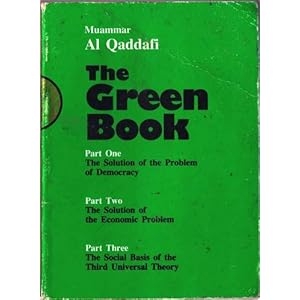
It bars, with quite vague language, “former members of Gadhafi's regime” from being candidates in the election. Among the Judges I spoke with at the Ministry of Justice some expressed dismay because they said that 80% of the current staff at their Ministry, and most other Ministries, worked there, lawyers and judges included, under the Gadhafi regime and were patriotic Libyans. There is going to be lots of confusion concerning the scope of the new law and its application. The new election law also bans anyone who got a degree based on academic research on the Green Book — Gadhafi's political manifesto that laid out his theory of government and society declaring Libya a "republic of the masses." Thousands are covered by this exclusion because in order to get a good position it helped if one’s CV showed studies relating to theories of government espoused in the Green Book. The same idea as in China when it was a good idea to study Mao’s little Red Book and add that fact to one’s CV. Academics who even wrote about Gaddafi's Green Book, which discusses politics, economics and everyday life, will also be barred from running under the law.

The draft election law has outraged women because it restricts them to only 10% of the 200 election seats and the law does not indicate who many seats will go to which tribal areas. One woman angrily told me, “Ten percent is about what the Brotherhood thinks we are worth.”
The NTC officials will not offer much of an electoral impediment to the MB as it is increasingly under attack and it begins its last six months of existence. Last month, an umbrella group claiming to represent 70% of militia fighters demanded that the NTC granted them 40% of its seats which it failed to do instead appointed fairly random technocrats with some exceptions. Mustapha Abdul Jalis plans on retiring in June and is still being criticized for reneging on his earlier pledge to resign following the fall of Sirte.
The coming government will likely be heavily influenced, if not controlled by Libya’s new arrival in force, the Muslim Brotherhood. The consequences for Libya and the Muslim Brotherhood’s effect on America’s withdrawal from the region is presumably being closely watched from Tehran to Washington DC and Tel Aviv.

fplamb@gmail.comHe is the author of The Price We Pay: A Quarter-Century of Israel’s Use of American Weapons Against Civilians in Lebanon.
He contribute to Uprooted Palestinians Blog


Please Signhttp://www.petitiononline.com/ssfpcrc/petition.html

Shatila Palestinian Refugee Camp
Beirut Mobile: +961-70-497-804
Office: +961-01-352-127
In case you missed it
"Is it a pre-condition to recognize Israel in order to govern?"

River to Sea Uprooted Palestinian

The views expressed in this article are the sole responsibility of the author and do not necessarily reflect those of this Blog!

Khamenei: Iran Will Resist Sanctions, Gain Victories - Panetta: US to Act if Iran Develops Nuclear Bomb, Closes Hormuz Strait

<> <>
S. Leader: Iran Will Resist Sanctions, Gain Victories
Local Editor
The Leader of the Islamic Revolution Ayatollah Sayyed Ali Khamenei said Monday that Western sanctions against the country have proven futile, adding there are more victories on the horizon for the Iranian nation.
His eminence delivered his statement in a meeting with thousands of theologians and students of theological center of Qom, marking the anniversary of Qom uprising against the deposed shah in 1978.

“Western officials have repeatedly announced that the objective of anti-Iran sanctions is to wear out the Iranian nation and force the authorities of the Islamic Republic to reconsider their political calculations,” Ayatollah Khamenei stated

“But they are mistaken and will never achieve this goal.”
“The Iranian nation has chosen this victorious path with insight and has made great sacrifices and forfeited the blood of its loved ones to tread this path,” the Leader added.
Referring to the upcoming parliamentary elections, Ayatollah Khamenei said the vote is a manifestation of people's presence in the political decision making process.

Ayatollah Khamenei said Iran's parliamentary election is also important for other Islamic Nations and that is why the US and its allies are trying to disappoint the Muslim world by disrupting the vote.

Ayatollah Khamenei also warned of the scourge threatening the elections.

The Supreme Leader said that the movement of Iranian nation to reach the heights of glory cannot be halted.

Comparing the status of the Islamic Republic of Iran with the past 20 or 30 years, the Supreme Leader said thank God Iran has obtained power and became self-reliant, whereas, the world arrogance led by the US is passing its crippling period and driven to downward spiraling weakness.

Iran Launches Ground Defense Maneuvers
Fordo Uranium Enrichment Plant under IAEA Watch
Turkey: Iran, 5+1 to Resume Talks in Turkey Soon
Iran Sentences CIA Spy to Death


Panetta: US to Act if Iran Develops Nuclear Bomb, Closes Hormuz Strait
 
Local Editor
US Defense Secretary Leon Panetta warned Sunday that his country would act if the Islamic Republic of Iran were to develop a nuclear weapon or close the Strait of Hormuz.

Speaking to CBS’ Face the Nation, Panetta said that if Iran started developing a weapon, the U.S. would act. "I think they need to know that — that if they take that step — that they're going to get stopped."

He did not rule out launching what he called a pre-emptive strike.
"But the responsible thing to do right now is to keep putting diplomatic and economic pressure on them to force them to do the right thing," he said.

"And to make sure that they do not make the decision to proceed with the development of a nuclear weapon."

Panetta also said that closing the strait would draw a U.S. military response. "We made very clear that the United States will not tolerate the blocking of the Strait of Hormuz," he said. "That's another red line for us and ... we will respond to them."

For his part, Chairman of the Joint Chiefs of Staff Gen. Martin Dempsey, who was appearing with the defense secretary, said that he wanted the Iranians to believe that a U.S. military strike could wipe out their nuclear program.

"I absolutely want them to believe that's the case," he said.

He added said that Iran has the military power to block the Strait of Hormuz "for a period of time" if it decides to do so, but that the U.S. would take action to reopen waterway. "We can defeat that," he said.

River to Sea Uprooted Palestinian
The views expressed in this article are the sole responsibility of the author and do not necessarily reflect those of this Blog!

AL Syria Mission to Continue, Pressure on Damascus Mounts

Local Editor

The Arab League gave its observer delegation the green light to go forward with its mission in Syria, as the pressure has been escalating against Damascus.

At a meeting in Cairo on Sunday, an Arab ministerial committee gave its observer mission to Syria the green light to carry on and pledged to boost the number of monitors.

Meanwhile on Monday, a Syrian television channel, Dunia, said that a convoy of Arab monitors had come under fire from a terrorist group in the Baba Amro district of Homs, a flashpoint city in central Syria, wounding a driver.

The AL committee "decided to give Arab League observers the necessary time to continue their mission according to the protocol," which sets a one-month term, renewable with the agreement of both sides.

The ministers agreed to increase the number of observers and said they may seek "technical assistance from the United Nations" in the face of unrest.

The committee urged Damascus "to fully and immediately implement its commitments" under the Arab plan, calling on all parties "to immediately stop all forms of violence."

Also at the Cairo meeting, Qatari Prime Minister Sheikh Hamad bin Jassem Al-Thani, who chaired the Cairo meeting, called on Syria to "take a historic decision to stop the bloodshed”.

A report by the observers discussed at the meeting showed that "killing has been reduced. But even one killing (is too much)," said Sheikh Hamad, whose country has taken a lead role in efforts to resolve the crisis.

Sheikh Hamad said the League hoped to raise the number of observers to 300 "within the next few days" from around 163 now deployed.

The head of the mission, General Mohammed Ahmed Mustafa al-Dabi, is to give a report to the League on January 19 on Syria's compliance with the peace plan, the ministers said.

On the other hand, Turkey, which has openly called for Syrian President Bashar al-Assad to step down, meanwhile, called on the opposition to keep up its resistance through "peaceful means."

After a meeting with the so-called Syrian National Council on Sunday in Istanbul, a Turkish foreign ministry spokesman in Ankara urged the opposition to carry on with their “rebellion”.

"The Syrian opposition demands democracy and we told them during a meeting yesterday (Sunday) that this should be done through peaceful means," the spokesman told AFP, referring to Foreign Minister Ahmet Davutoglu's talks with the SNC.

For its part, the Muslim Brotherhood slammed the Arab League’s decision.

"It is clear that the observer mission in Syria seeks to cover up the crimes of the Syrian regime by giving it the time and opportunity to kill our people and break their will," Brotherhood spokesman Zuhair Salem said.

A team of Arab League monitors has been in Syria since December 26, trying to assess whether Assad's regime is complying with a peace accord aimed at ending the ten-month unrest.
Source: Agencies

River to Sea Uprooted Palestinian
The views expressed in this article are the sole responsibility of the author and do not necessarily reflect those of this Blog!

Haniya to Israel: Times Have Changed, We Won’t Lay out Arms

Local Editor

Hamas Prime Minister Ismail Haniya vowed on Sunday not to “cede a single part of Palestine”, promising the Israelis of “difficult days” since times have changed.

At a mass rally in Tunis, Haniya received an ovation from the crowd of some 5,000 men, women and children gathered in a stadium waving Palestinian, Tunisian and Hamas flags.

"Israel no longer has allies in Egypt and in Tunisia, we are saying to the Zionist enemies that times have changed and that the time of the Arab Spring, the time of the revolution, of dignity and of pride has arrived," he said to loud cheers.

"We promise you that we will not cede a single part of Palestine, we will not cede Jerusalem, we will continue to fight and we will not lay down our arms," he said.

He urged "the people of the revolution to fight the army of Al-Quds" (Jerusalem).
To Tunisia we say: 'It is us today who are going to build the new Middle East'."

As Haniya insisted "We will not recognize Israel", the crowd chanted: "Death to Israel", "People want Liberation of Palestine”.

Haniya arrived in Tunis on Thursday for a five-day visit at the invitation of the new Tunisian authorities. He has also visited Egypt, Sudan and Turkey and will next travel to Qatar and Bahrain.

River to Sea Uprooted Palestinian

The views expressed in this article are the sole responsibility of the author and do not necessarily reflect those of this Blog!

Breaking News: The Arab Ministerial Committee would not request nited Nations experts to participate in the Arab Observer Mission

The Arab Ministerial Committee would not request nited Nations experts to participate in the Arab Observer Mission

The Secretary-General of the League to el-arabi said that no country in the world is ready to use force against Syria, and Arab countries eager to resolve the crisis in an Arab framework.
Arab League Ministers Assess Syria Mission in Cairo Meet
Local Editor

Arab League foreign ministers gathered Sunday in Cairo to discuss and assess their Syria mission amid a wide criticism for their performance.


The first report by AL observers in Syria recommended the controversial mission continue and claimed monitors were subjected to "harassment" by the government and the opposition, an Arab League source said. “It called on the opposition and the government to let the mission move freely,” the source told reporters.


The Arab diplomat was speaking as the head of the observer mission, General Mohammed Ahmed Mustafa al-Dabi, was briefing Arab ministers in Cairo on the results of the monitors' visit.
The Arab League ruled out considering a withdrawal of observers. "The option of suspending the monitors' mission is not on the table and the mission will continue as more Arab nations are sending experts to join the mission," the League said.


The head of the League will recommend beefing up the mission, which currently has 165 observers, said Ali Erfan, a senior adviser to the Arab League chief. Arab League officials have consulted with the United Nations about the situation in Syria, he said.


Dabi, a Sudanese former military intelligence chief, said it was too early to judge the mission. "This is the first time that the Arab League has carried out such a mission," he told Britain's Observer in an interview. "But it has only just started, so I have not had enough time to form a view."


The Arab League has admitted to "mistakes" but defended the mission, saying it had secured the release of prisoners and the withdrawal of tanks from cities. It said rather than pull out, it planned to send more observers. "No plan to withdraw the observers is on the agenda of the Arab ministerial committee meeting on Syria," the bloc's deputy secretary general, Adnan Issa, told AFP on Saturday.

River to Sea Uprooted Palestinian

The views expressed in this article are the sole responsibility of the author and do not necessarily reflect those of this Blog!

The USA’s flawed political system and the push for war with Iran

By Lawrence Davidson

9 January 2012

Lawrence Davidson finds the drivers for the push for war on Iran inside the USA’s structurally flawed political system, in which the warmongering neocons and faceless Israeli agents in the guise of lobbyists have primacy, and in amoral, cash-hungry politicians and a corrupt media.

Flawed systems

Winston Churchill once said that "No one pretends that democracy is perfect or all-wise. Indeed, it has been said that democracy is the worst form of government except for all the others that have been tried from time to time."

He was right. Democracy in its various manifestations is a flawed system, flawed by virtue of its roots. By definition it is the system where power flows from the people (or at least a supposed majority of the people), and as there are no perfect people, then – well, the logic speaks for itself.

Many of democracy’s problems are common to all forms of governance. For instance, (a) the tendency of a political leader to mistake his or her own interests or that of his party for the nation’s or community’s interests and (b) the corruptive influence of powerful subgroups or lobbies usually coming through the manipulation of money and other resources. The ubiquitous nature of these problems suggest that they are structural. That is they are built into the system no matter what form a government takes. That does not mean such flaws cannot be held in check or minimized. As James Madison, the father of the US Constitution believed, they might be subject to control by a well crafted constitution. However, it is unlikely that they can be eliminated.

Today In the USA

Today, we are presented with a stark example of US democracy’s systemic flaws. Again, these bring together the influence of small but powerful and wealthy subgroups with the tendency of national leaders to define interests in personal ways. The trigger for the present structural malfunction is a foreign policy issue. It is the issue of Iran (which, alas, is a reworking of the recent issue of Iraq).
Amerrican neo-conervative and Zionist lobbies “have managed to flood the media with false allegations that Iran is about to become a dangerous nuclear power. This replicates recent history when the same subgroups flooded the media with false allegations of Iraqi weapons of mass destruction.”
As the Consortium News website puts it, "a torrent of war propaganda against Iran is flooding the American political scene as US neocons and Israeli hardliners see an opening for another war in the Middle East". This statement which, in my opinion, is quite accurate, suggests to us:
1. There are relatively small warmongering lobbies in the country which are ideologically driven and continuously active. Hence, the powerful subgroups.

2. Principal among them are neoconservatives and hardline Zionists. Both of these groups are endowed with "deep pockets" and therefore can buy a lot of politicians and media access. Buying such influence, as long as it is done within very loose guidelines, is at once disastrous and perfectly legal. Hence, corruption through the manipulation of money.

3. Thus, despite their sizes, these subgroups have managed to flood the media with false allegations that Iran is about to become a dangerous nuclear power. This replicates recent history when the same subgroups flooded the media with false allegations of Iraqi weapons of mass destruction.

The result is a major skewing of American policy. How so? The vast majority of elected leaders do not reckon interest in national terms, nor in terms of the truth or falsehood of their lobby supporters’ claims. They calculate interest in terms of their own personal and party political needs. Those needs are (a) financial assets to run elections and (b) aligning themselves with the popular mood in ways that generate votes. The lobbies, or subgroups, have the money to manipulate both of those needs. They can help the politician finance his or her election, and they can run the advertisements that help shape public opinion and mood. Hence, the policy formation follows the dictates of the lobbies.

4. The aim of the two subgroups in question is a new war in the Middle East. The target this time is Iran. Iran’s danger, as put forth by the lobbies, goes largely unquestioned by both the politicians and a bulk of the media despite the fact that there is a recent, horrific precedent in simply accepting this warmongering. That precedent is the recent war in Iraq. In that case, the crippling economic sanctions, followed by invasion, led to the death and maiming of millions. That this horror was carried forward on the basis of lies, is now assiduously ignored. That the same fate may well await Iran is actually presented as desirous.
It is to be kept in mind that if those who spread lies that result in slaughter and massive destruction are citizens of or protected by a superpower, no punishment will accrue. None of the major liars that brought us the Iraq war have been punished. One can hardly think of a more corrupt political situation.

Learning from Herr Goebbels

The lies of the neoconservatives and Zionists are part of an "MO", or modus operand, that is not original to them. Whether they do so purposely or coincidently, they are following the advice of the Nazi propaganda minister, Joseph Goebbels. He tells us the following: ”If you tell a lie big enough and keep repeating it, people will usually come to believe it." He goes on to say that simultaneously "it is vitally important for the state to use all its powers to repress ... the truth ... [which is] the mortal enemy of the lie, and thus by extension the truth is the greatest enemy of the state.
“... the neoconservatives and Zionists first created false charges (Iran’s alleged desire for nuclear weapons and willingness to use them against the US and Israel) and are now, with the cooperation of the mass media, repeating them over and over again as if they were true.”
In the present case, the neoconservatives and Zionists first created false charges (Iran’s alleged desire for nuclear weapons and willingness to use them against the US and Israel) and are now, with the cooperation of the mass media, repeating them over and over again as if they were true. They ignore (and pressure the media to ignore) all the evidence that says their charges are false.
Thus, the scant press coverage given to the two comprehensive National Intelligence Reports, one in 2007 and a followup one in 2011, both of which concluded that Iran shut down its nuclear weapons programme in 2003 and has not revived it since. Simultaneously, they bring forward untrustworthy testimony of Iranian expatriates and known liars that support their claims (this does get media coverage). In the meantime, they urge greater and greater sanctions aimed at the systematic destruction of the target country’s economy.

The political carry through

As suggested above, the structural flaws in the political system make the warmongering neocons and faceless Israeli agents in the guise of lobbyists one half of the equation. Our own politicians are the other half. In the American system, one of the legal factors that serves to connect the two haves of the equation is the Supreme Court 1976 decision (Buckley vs Valeo) declaring one’s unfettered right to buy as much "free speech" as one has money. Thus, both the politicians and the media venues know where they are going when, as they say, they follow the money. Last season the money demanded war talk focused on Iraq. This season it demands war talk focused on Iran. And, sure enough, that is what we get.

In December 2011 both the House of Representatives and the US Senate passed bills seeking to destroy the Iranian economy by crippling its oil trade and destroying the functionality of the country’s Central Bank. It is a testimony to the strength of the neoconservatives and Zionists that the votes were 410-11 in the House and 100-0 in the Senate.

This is obviously an on-going bipartisan fiasco. Senate Majority Leader Harry Reid (Democrat, Nevada) declared his satisfaction with the congressional votes by effortlessly parroting the party line: "Iran’s actions pose a danger to United States and the entire world." It makes no difference if the senator believes his own hyperbole. His actions lead to the increased suffering of ordinary Iranians.

Out on the campaign trail most of the Republican candidates for their party’s presidential nomination also parrot the same line:
1. Mitt Romney supports "crippling sanctions" against Iran. Because, he declares, "the greatest threat that Israel faces, and frankly the greatest threat the world faces, is a nuclear Iran". Again, it makes no difference if Romney really believes this or is just playing for Zionist lobby money. He adds to the building war mania and gets in line for his share of responsibility for the sanctions that are undercutting the livelihoods of innocent people.

2. Newt Gingrich has publically committed himself to attacking Iran if such action can result in regime change. He is ready to "collaborate with the Israelis on a conventional campaign" against Iran.

3. Rick Santorum told the American public that, if he were elected president, "I would be saying to the Iranians, you either open those facilities, begin to dismantle them and make them available to inspectors or we will degrade those facilities through air strikes." Poor Rick, he seems unaware that international inspectors regularly visit the Iranian facilities. Poor the rest of us, if Rick becomes president!

Conclusion

There is a famous child’s idiom that goes "sticks and stones can break my bones but words can never hurt me". Its message, whispered into the ears of millions of children, is just not true. Words are potential weapons. They not only can make us feel bad (and that hurts), they can also be used to motivate us to pick up the sticks and stones that break other’s bones. And, of course, we have long ago gone beyond sticks and stones.

Therefore, it is with bloody irresponsibility that neoconservatives, Zionists and a large array of American politicians blithely incite their fellows to war. Civilian life must mean very little to them, as little as truth itself. The former is readily reduced to splattered bits of flesh in the wake of attacks by drones, fighter jets, attack helicopters, cruise missiles, tanks and machine guns, and the latter is reduced to propagandistic incitement brought to you by a weaponized Fox TV.

So, we and our leaders are myopic and greedy and our lobbyists savagely single-minded and this, in turn, finds license in a structurally flawed political system. Actually, being aware of all this offers no excuse at all. We have known about our faults for a very long time. James Madison was thoroughly versed in these problems and his attempt, through the constitution, to safeguard against them was sincere and noble. But his results, despite later attempts to augment his work, have been mixed at best. And things will stay that way until we address our main need. We need to find a constitutionally safe way to protect ourselves from our own lies.
River to Sea Uprooted Palestinian
The views expressed in this article are the sole responsibility of the author and do not necessarily reflect those of this Blog!

Sunday, 8 January 2012

“Humanitarian” Intervention in Libya

“Humanitarian” Intervention in Libya
Via  The Ugly Truth


In case you missed it"
 

River to Sea Uprooted Palestinian


The views expressed in this article are the sole responsibility of the author and do not necessarily reflect those of this Blog!

Al-Assad Receives Felicity Party, Stresses Strong Syrian-Turkish Relations

Local Editor

Syrian President Bashar Al-Assad received Saturday a delegation from the Turkish Felicity (Saadet) Party, headed by its leader Mustafa Kamalak.

The two sides discussed the laest developments in Syria, while the delegation expressed its condolences to the victims of the terrorist attack that took place Friday in Damascus killing 26 people and wounding 63others.

According to SANA, Kamalak reflected the Turkish people’s supportive stance to Syria and rejected any foreign intervention in its internal affairs, hoping that the bilateral relations between the two countries would go back to normal.
In contrast, the Syrian news agency quoted President Al-Assad as stressing the deep-rooted relations between the Syrian and Turkish peoples, and stating that these cannot be damaged due to the geographic, historic and brotherly relation that connects them.

In conclusion, the delegation said it would convey the real image of what is happening in Syria and will help Syria overcome this crisis.
Source: Agencies
River to Sea Uprooted Palestinian

The views expressed in this article are the sole responsibility of the author and do not necessarily reflect those of this Blog!