Saturday, 23 June 2012

The Journey


Nahida the exiled Palestinian


Where can the river go

But to the ocean?

Would the ocean turn it away?


Will the stream lose its way

While making its journey

Into the sea?


Can the water droplet

Ever escape

The globe?


East… west 

North or south

Up… down

Turn all around


What ever direction

You choose to take

You’re always there


Forever travelling

Constantly arriving


Don’t keep trying to flee

Embrace your destiny

Enjoy the voyage 


With open arms

Run to the Source


No other way

Syria: Many Agendas at Work

By Richard Lightbown
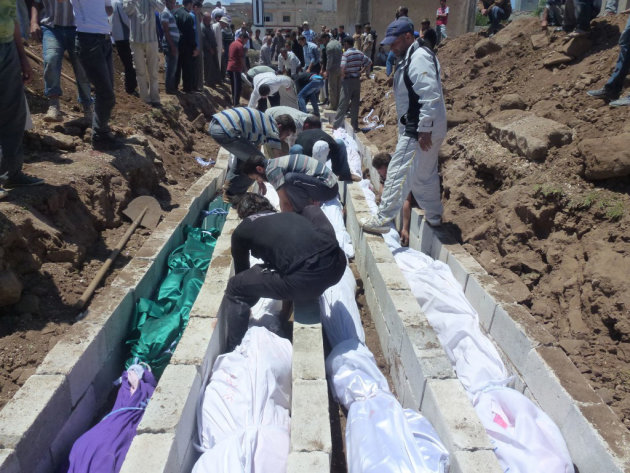
Much has been written about the barbarous massacre in the Syrian administrative area of Al-Houla on 25 May 2012, in which 108 persons are known to have died including 49 children. Absent a definitive report from the UN observer mission we are left with media and cyber speculation, much of which does not stand scrutiny.

The BBC is arguably the worst offender, having published a photograph submitted by an anonymous source which it was claimed depicted the bodies from the massacre. The photograph was in fact taken by Marco Di Lauro in Iraq in 2003. The BBC claims to have followed its checking process on the photograph which yielded some information pointing to its veracity. This is simply not tenable. The bodies are all numbered and in the bottom of the picture can be seen consecutive numbering in Arab numerals from 382 to 386. The death toll at Houla was 108, so that anyone with a limited knowledge of Arabic and a remote understanding of the story would be able to appreciate that there is something wrong with the claim made for this picture. Journalist Keith Harmon Snow rebuts any suggestion that the misinformation happened by accident:

“The BBC just doesn’t do that. They don’t pull down photos from an activist and post them without everything they do is fact checked. This is propaganda, no mistake, no accident.”

In apologizing for this monumental ‘error’ Chris Hamilton wrote on the BBC Editor’s blog that “such mistakes are very rare”. But even this claim was refuted only two days later when gross negligence gave way to farce and BBC News, intending to post the logo of the UN Security Council as background filler, filmed instead a logo of the fictional UN Space Command that originated in a commercial video game set in the 22nd century.

Much of the mainstream media favoured the BBC’s slant. Nine days after the massacre a report in the Telegraph claimed that the crime had been perpetuated by the “pro-Assad thugs” of the Shabiha who had “slit the throats of anyone they came across”. The report written in London and Beirut said that a survivor identified the Shabiha because they were wearing white trainers. Two points in this story later discredited the fabrication. White trainers of course are standard youth culture the world over, and video footage published on 10 June by the Telegraph itself, shows they are widely used by Syrian rebels. The throat slitting is now generally rejected as an embellishment to the story and the allegation was refuted later in the week by Mary Dejevsky in the Independent and Jon Williams on the BBC blog. (Dejevsky said the victims had been killed when gunmen sprayed indiscriminately into homes, while Williams said that Western officials had refuted the story to him while in Damascus.) The calumny appears to have been started by Hervé Ladsous, the United Nations Under-Secretary-General for Peacekeeping Operations, who according to Reuters, on 29 May accused the Shabihas of killing “the victims from knife wounds”. On 8 June Reuters’ correspondent Erika Solomon again reported him saying that government troops or militia were probably responsible, despite the fact that UN observers under his authority have still not been able to ascertain the truth. Head of the UN observer mission (UNSMIS) Major-General Robert Mood was more circumspect than his superior when he said

“Whatever I learned on the ground in Syria ... is that I should not jump to conclusions.”

Without a definitive assessment of the crime a cautionary comment from the Sunday Telegraph provided a timely warning to the unwary:

“Damascus has long accused activist groups of exaggerating and falsifying accounts to draw international attention to their plight, a charge that independent observers say has sometimes been justified.” [Quotation taken from Media Lens.]

The BBC’s use of the Iraqi photograph vindicates this allegation. BBC World News editor Jon Williams acknowledged the problem

“Those opposed to President Assad have an agenda. One senior Western official went as far as to describe their YouTube communications strategy as "brilliant". But he also likened it to so-called "psy-ops", brainwashing techniques used by the US and other military to convince people of things that may not necessarily be true.”

This is not to suppose that government reports can be considered any more reliable. In the complexities and deceits of the Syrian conflict an old adage serves well: do not believe anything you hear and only half of what you see. Jon Williams went on to point out that it is also important that journalists report what they don’t know, not merely what they do. This sound advice does not appear to have been widely followed.

One of the few reporters actually at Houla was Alex Thomson, reporting for both Channel 4 News and CNN. His attempts to piece together a coherent story were inconsistent. On 27 May he wrote on the Channel 4 blog that Martin Griffiths from the UN Mission had a corroborated story from two different sources that the Friday prayers were followed by a sustained artillery barrage for two hours, after which Shabiha attacks began, with the killings occurring between 15.00 Friday and 01.00 – 02.00 Saturday.

On the following day, while filming with CNN, he asserted that it was “impossible to verify what happened in this town” since there were no eye witnesses and no civilians. Filming the army, who at times were under fire, he said they were “very scared” and not in complete control. One soldier was hit while the film crew was present. Speculating on why this area was, as he called it, “a ghost town”, and comparing this to a nearby rebel-held area where the civilians had remained he asked “Why do people flee the area held by the army but remain in the rebel held zone?” The answer which eluded him may simply have been that the area the civilians had fled was an active combat zone. As his footage clearly showed, the area filmed could not correctly be described as “held by the army”.

[On 7 June Thomson himself nearly became cannon fodder when four men he identified as belonging to the Free Syrian Army lured him into a free-fire zone in the hope that the government forces would collect some bad publicity by killing him. A human rights lawyer who had been with the Arab League Observer mission nearly suffered a similar fate in Syria earlier in the year. Thomson observed that “bad journos are bad for Damascus”. Gen Mood told journalists that there are many agendas at work in Syria, both stated and unstated. In such an environment when unarmed UN observers are now also coming under attack, it may be appropriate to consider how “bad for Damascus” (and good for someone else’s agenda) a dead UN observer might be.]

Despite the fact that a journalist in Houla was unable to clarify who had committed the massacres, Amnesty International had no compunction on 28 May in blaming “Syrian forces” for the atrocity (without providing any justification). Amnesty’s investigators at the time were working 100 Km away in Idlib and Aleppo, but the NGO confidently made its claim only three days after the event, and has stuck with this story since. In contrast UNSMIS, whose mission is to verify and report facts on the ground, had immediately sent investigators to the area to gather facts and interview local people, from whom it received conflicting accounts. On June 15, three weeks after the event, Gen Mood could still only tell journalists that the circumstances remained unclear. Unlike the general, Amnesty is not averse to jumping to conclusions.

Amnesty’s report of June, ‘Deadly Reprisals’, also blames the Syrian government forces for the massacre. This cites a Reuters’ report as its source; however the news agency is not accurately referenced. Reuters quote UN monitors as saying that the evidence “appears” to contradict the government’s denial of responsibility, while UN human rights spokesman Rupert Colville is not quoted as attributing responsibility.

[According to Amnesty, their Senior Crisis Advisor, Donatella Rovera, spent several weeks in northern Syria without permission, investigating human rights violations. Jerry Dandridge (a pseudonym) writing in SyriaNews on 16 June questioned how she was able to do this for so long without attracting the attention of the Syrian Secret Service, and alleged that UN staff reported that she never left her room to conduct field work.]

But Amnesty was not alone in rushing to judgement. The US State Department took the same line the following day. Spokeswoman Victoria Nuland told reporters:

“This morning we called in the Syrian chargé d’affaires Zuheir Jabbour, and informed him that he is no longer welcome in the US and gave him 72 hours to depart. We took this action in response to the massacre in the village of Houla; absolutely indefensible, vile despicable massacre against innocent children, woman. Shot at point blank range by regime thugs, the shabiha, aided and abetted by the Iranians who were actually bragging about it over the weekend.”

In what Reuters described as a “coordinated move” France, Britain, Canada, Germany, Italy, Spain, Australia and Bulgaria also expelled Syria’s envoys on 29 May. At least six of the countries taking diplomatic action had also been involved in the bombing of Libya, which had been conducted outside the UN Security Council mandate.

The involvement of France is particularly ironic. President Hollande had only recently taken office and one of his first actions was to announce the withdrawal of French forces from NATO operations in Afghanistan by October 2012. (France would still provide finance and equipment towards those operations in that country.) Yet on 29 May he also announced that France would host the next meeting of the Friends of Syria (previously known as the Friends of Democratic Syria, until the absurdity of Saudi Arabia and Qatar being the main funders of a democratic movement was realised ). France, it appears, has a revolving door policy on military interventions. It also has a shady colonial history in Syria which is not forgotten in that country. At Maysaloun in July 1920 French mechanised armour and aircraft annihilated Syrian cavalrymen fighting for self-determination, and left their bodies to rot. An eye witness recalled “It was all over in hours and the French killed almost everyone they found”. The Syrian minister of defence, who had led the cavalry, was tied up and executed by Senegalese troops, after French Algerians had refused to shoot a fellow Muslim. Few people in France are talking about that legacy at the present time. [Maysaloun is familiar to war. In 1967 it was shelled by Israeli tanks, and shelled again by the battleship USS New Jersey in 1982.]

Amnesty International is joining with unsavoury bedfellows in making wild allegations which could have disastrous repercussions for ordinary civilians in Syria. Perhaps because little has changed since 2002 when Dr Francis A. Boyle, professor of International Law and former board member of Amnesty International USA, said that the organization had been penetrated by British and possibly American intelligence agents.

In consequence it is relevant to consider here the recent appointment of Suzanne Nossel as Executive Director of Amnesty International USA. As Jerry Dandridge reported, Ms Nossel had previously been employed at the US State Department where she had been Deputy Assistant Secretary for International Organizations and had been, as Dandridge puts it, “involved in a leading role at the subversive U.S. foreign policy regarding Libya, Iran, Syria and the Ivory Coast.”

Amnesty’s complicity continued with a press release on 14 June referring to the UN Secretary General’s report on children and armed conflict, which began by correctly quoting the declaration that,

“…government forces were responsible for ‘killing and maiming, arbitrary arrest, detention, torture and ill-treatment’ of children as young as nine years old.”

However the NGO chose not to reveal that in paragraph 124 of the same report the Secretary General had written,

“The United Nations has received some credible allegations of the recruitment and use of children by armed opposition, including FSA and other armed groups…”

On p 62 of its ‘Deadly Reprisals’ report Amnesty calls on the UN Security Council to impose an immediate arms embargo on the Syrian government, but in line with US administration policy it makes no such call for an embargo on arms shipments to rebel forces.

A further undated call for action by Amnesty UK was released sometime after the Houla massacre. This criticised Russia for supplying arms to the Syrian government after it had supported UN Security Council resolution 2042 calling for the full implementation of Kofi Annan’s plan. On 12 June Hillary Clinton enlarged upon this call in a speech at the Brookings Institute saying,

“We have confronted the Russians about stopping their continued arms shipments to Syria.[…] [W]e are concerned about the latest information we have that there are attack helicopters on the way from Russia to Syria, which will escalate the conflict quite dramatically.

The following day the New York Times reported that the US administration officials had admitted that these were probably helicopters Syria had sent to Russia for routine repairs some months previously. A senior Defense Department official admitted that the Secretary of State had “put a little spin on it to put the Russians in a difficult position.” In fact it seems that Mrs Clinton was actually hinting that Kofi Annan’s mission may be “difficult to extend”, when its mandate becomes due at the Security Council in mid-July. This would give the US and its coordinating allies greater opportunities to manoeuvre for military intervention in Syria.

A spokesman for Rosoboronexport, the state-owned monopoly which handles virtually all Russian weapons exports, said the contracts do not violate United Nations sanctions. He added that the company was sending “no extraordinary supplies, not speeding up contracts, and sending no additional shipments.”

In the same NYT article Andrew J. Tabler of the pro-Israeli think-tank the Washington Institute for Near East Policy (WINEP) accused the Syrian regime of using air power against its own civilians. This unsubstantiated allegation was used to raise the spectre of foreign intervention and ‘no-fly zones’ in Syria. The article had previously referred to an unauthenticated video filmed near Aleppo in May showing a helicopter and what may have been missile smoke. Apart from this tenuous evidence there is nothing to back up Mr Tabler’s reckless assertion.

WINEP’s executive director also wrote an analysis of the Syrian conflict on 8 June. This considered a range of scenarios entirely from the perspective of the US interests, and to a certain extent those of Israel. At no stage did the article consider what might be the best outcome for the Syrian nation and its people, who apparently are merely pawns in the great game of American foreign policy.

Joshua Landis wrote in Foreign Policy the previous day that the US should stay out of Syria, citing the huge financial cost of sorting out the mess afterwards and America’s poor track record of improving nations by conquest. This article too only saw policies through the blinkers of US interests. At no time was the UN mentioned and the possibility was never considered that the US might lean on Saudi Arabia and Qatar, the two Arab countries doing most to destabilise Syria, in order to slow down or even eliminate malignant outside influences. Nor was it mentioned that the CIA and the State Department are already working with these two countries and others, including Turkey, to further the activities of the Free Syrian Army.

On 15 June BBC News cited unnamed “foreign policy analysts” for its claim that the Syrian government had placed orders worth $3.5bn for “hardware” (which presumably means armaments) with Russia. No time frame was given to this statement, which contrasts with SIPRI’s data for 2011 showing that Syria’s total military expenditure for the year was $2.4bn. To put this into better perspective one should note that for the same year other regional military expenditures included Saudi Arabia ($48.5bn), Turkey ($17.8bn), Israel ($16.4bn), Iraq ($5.8bn), Kuwait ($5.6bn), Oman and Egypt (both slightly less than $4.3bn). Figures are not available for Iran, Qatar, UAE and Yemen. Syria’s total expenditure was a mere 2.8% of SIPRI’s estimate for the entire Middle East region (which does not include Turkey). In contrast Saudi Arabia, which is supplying arms and finance to Syrian rebels, accounts for almost 40% of all Middle East military expenditures, although this attracts very little concern from Western media.

There is also little concern (and no complaints from either Mrs Clinton or Amnesty International) about weaponry being supplied to the rebels. Jordanian Professor Ibrahim Alloush told RT in February that arms shipments were crossing borders from Lebanon and Turkey. He considered the eventual goal of the suppliers was to install a puppet regime in Damascus that would be subservient to Washington and NATO. Confirmation of arms smuggling appears to have come on April 27 when the Lebanese Navy intercepted the MV Lutfallah II and impounded three containers allegedly carrying machine guns and heavy weapons which were thought to be destined for Syrian rebels groups.

There are conflicting reports concerning an impending supply of heavy weapons, which would represent a significant escalation to the conflict. On 13 June Nermeen Shaikh had said on Democracy Now! that Turkey had supplied anti-tank weapons and surface-to-air missiles with the approval of the US which “did not take part directly in the weapons transfer”. Two days later the Telegraph reported that the FSA had denied the claims, although their representatives had prepared a “targeted list” of heavy weaponry which they intended to present to US officials in the coming two weeks. The weapons would be supplied by Libya and paid for by Saudi Arabia and Qatari government funds along with private donations. It appears that the US has control over this shipment, and therefore considerable control over the conflict in Syria, even though it is not supplying or financing the deal.

The civil war in Syria is portrayed by many reports as a fight of good against evil, and a straightforward struggle for democracy and freedom against tyranny. That indeed is how it started in Deraa in March 2011, and the tyrannical excesses of the regime are well documented. A report by the UN High Commissioner for Human Rights was published on 24 May 2012. The list of abuses by government forces is long and varied. The report mentions lethal force against anti-government demonstrations; collective punishment; unlawful killings; precise shelling and indiscriminate shelling of civilian areas; sniping from rooftops; house-to-house searches, often associated with extra-judicial killings; prisoners and wounded killed after capture; entire families executed in their homes; arbitrary arrest and torture; children killed, often by snipers; detention of children of the age of ten years; wilful denial of medical care to children injured under torture; schools attacked and burnt down; summary executions. The struggle for freedom and human rights in Syria is without doubt a just one.

Regrettably, anti-government armed groups are also cited in the same report for acts of criminal violence and terror. These groups are being supplied and equipped by external agents such as the Friends of Syria, while there is collusion by much of the Western media to ignore their crimes, and in the case of Amnesty International, to cover them up. Although nowhere near as extensive as the government abuses mentioned by UNHCHR, the list of activities cited in the same publication is long and horrific. The report mentions extra-judicial executions of members of the army and security forces, suspected informers and/or collaborators captured by anti-government armed groups; military tribunals, makeshift prisons; the use of improvised explosive devices including nail bombs; landmines; torture, including breaking bones, which in some cases has led to death; abduction of civilians and members of the government forces; use of children as medical porters, messengers, cooks and cross-border smuggling activities (there were four instances of child smugglers being injured by sniper fire).

The armed opposition is also characterised by fundamentalist elements with links to Al-Qaeda and the Muslim Brotherhood. The Muslim Brotherhood is the best funded and best organised element in the opposition, and it has been opposed to the secularist Ba’ath party since it came to power in 1963. In the late ‘70s some of the Brothers took up arms and mounted a violent campaign against the Syrian regime. In an uprising in 1982 they took Hama, where they murdered the families of government workers and policemen, and beheaded schoolteachers who taught secular education. The government crushed the uprising with “great savagery” (according to Robert Fisk, who was an eye witness to some of the events). After their defeat the Brotherhood was banned, and membership was punishable by death. A government employee explained to Robert Fisk that the regime had tried to negotiate with the Brothers but they would not compromise. Had they not crushed the rebellion by these fanatics the state would have turned to Islamic fundamentalism on the lines of Algeria. Syria has been the only country in the Middle East to have totally suppressed fundamentalism. Patrick Seale explained how the Syrian revolution has now been joined by large numbers of armed Islamic extremists and jihadis from neighbouring countries, and also countries such as Afghanistan, Pakistan and Tunisia. Some from Iraq have been replicating the gross acts of terror that they committed there. And he asked “Does the US want to be on the side of Al-Qaeda?” To which the answer appears to be an emphatic ‘yes’; since there is no reason to suppose that after Afghanistan, Iraq and Libya the power brokers in Washington are not fully aware of exactly who they are dealing with.

Alexei Pushkov, Chairman of the Duma’s International Affairs Committee told the Voice of Russia on 15 June that he could hardly see a situation where democracy could be established in Syria with the help of Saudi Arabia and Qatar. However if Syria explodes there could be 100,000 victims. (Patrick Seale recalled on Democracy Now! that the US-led invasion of Iraq had resulted in 100,000s killed and millions displaced.) Russia was ready to influence the Assad regime, and he appealed to the West to influence the insurgents in order to prevent this bloodbath. He added that the Russian interest was not about business since Syria did not play a huge role in Russian foreign trade. Syria was rather a very serious example of the Russian desire to fight for international law which is universally accepted.

To facilitate an all-inclusive political process in Syria, Russia along with Iraq, was trying to organize an international conference of all key players in late June. It proposes that this should include all permanent members of the Security Council, Syria’s neighbours (although Israel was not mentioned on the list), other key regional players with political clout including Iran, along with the League of Arab States and the European Union. The US is objecting to the inclusion of Iran at the conference, so that already the spectre of political expediency is threatening to derail this important attempt to find the road to peace.

As fanatics, neo-colonialists and their conspirators manoeuvre towards armed intervention in Syria we should consider carefully the words of Patrick Seale. “The United States”, he told us, “is playing a high risk strategy and it doesn’t matter how we classify it, it is an extremely dangerous situation for everyone”. If we remember to take into account those countries which could be affected by disrupted oil supplies following war with Iran, the list of affected states is a long one, including, Iran, Lebanon, Jordan, the Gulf States, the US, Europe, Israel and China. But above all it is the people of Syria who face the prospect of a horrible fate in order to satisfy the callous self-interest of outside actors. With so much at stake international political leaders should feel compelled to find a peaceful solution to this crisis.

For ordinary people it may seem that Syria’s misery is irredeemable, and that control and responsibility in this great game are far beyond us. So they might be. But that does not absolve us from placidly accepting the lies and deceptions that we are fed by friend and foe alike. Knowledge is power, and it is our responsibility to seek the truth and not believe the lies so that at least we are not complicit by approving the evil designs that feed the egos of our political leaders.

- Richard Lightbown contributed this article to PalestineChronicle.com.

River to Sea Uprooted Palestinian  
The views expressed in this article are the sole responsibility of the author and do not necessarily reflect those of this Blog!

Friday, 22 June 2012

Turkish Poll: "Over 68% of Turks oppose intervention in Syria"

Via FLC


"Turkish Prime Minister Recep Tayyip Erdogan has been among the strongest opponents of the Syrian government and its ongoing violent crackdown on dissent. But a recent opinion poll found a majority of Turks are calling for a more neutral approach. It's the latest setback for the Turkish leader over Syria.

An opinion poll by the Ankara Social Research Center published this month has found that more than two-thirds of those polled opposed any intervention by Turkey in Syria. The poll also revealed that a majority, even those who support the Turkish prime minister's party, believed Ankara should not take sides in the conflict...."


River to Sea Uprooted Palestinian  
The views expressed in this article are the sole responsibility of the author and do not necessarily reflect those of this Blog!

Syrian Anti-Aircraft Guns Drop Turkish Fighter in Sea

Local Editor
Syria drops Turkish fighter jet in the Mediterranean Sea Media sources confirmed that the Syrian anti-aircraft guns shot down a Turkish military jet in the sea off Ras Al-Baseet, and hit another.
Turkish state television said Friday that one of its air force military jets crashed in the Syrian territorial waters, while Turkish authorities announced it had lost contact with the F4 fighter when it was flying over the sea near the south eastern shores of the country.

Turkey Defense Ministry stated that two pilots were aboard the Turkish fighter, pointing to the start of search and rescue operations in the place.
CNN channel announced as well that the pilots were found alive in the Mediterranean Sea at a distance of 8 miles from the Syrian waters. However, any official source didn’t confirm the news.
While traveling back from a visit in Brazil, Turkish Prime Minister Recep Tayyip Erdogan called for a crisis meeting in Ankara after the fighter disappearance.

Anatolia news agency reported that Chief of Staff Gen. Necdet Ozil, Interior Minister Idriss Naeem Shahin, Foreign Minister Ahmed Davutoglu, Defense Minister Ismet Yilmaz and intelligence chief Hakan Fidan will join the meeting.

Earlier on Friday, Turkish General Staff has announced it had lost contact with the fighter jet "F-4", which took off from the "Aarkhach" air base in the province of Malatya southeast Turkey, and disappeared from radar monitors about 12:00 pm local time over the Mediterranean Sea south-east of Khatay region adjacent to the Syrian border.

The source said on its online website that the search did not give any fruit yet.
For its part, Lebanese Al-Jadeed network reported that the fighter took off from its air base at 10.30 am, and that contact has been lost after an hour and a half, which raises the possibility that it has been crashed.

Turkish military helicopters went immediately to the place and start search and rescue efforts.

’Crisis Meeting’ in Turkey after Losing Contact with Military Jet near Syria

Local Editor

Turkish fighter jetThe Turkish army said Friday it lost radar and radio contact with one of its aircraft on the Mediterranean near neighboring Syria.

The plane took off from Malatya airbase in the southeast at 07:30 GMT and lost communication with the base at 08:58 GMT in the southwest of the Hatay province bordering Syria, said an online statement.
"Search and rescue efforts have started immediately," it said adding that it was not immediately clear if the plane crashed or if there were casualties.

Malatya governor Ulvi Saran told the Anatolia news agency that it was a F-4 plane with two pilots onboard, without elaborating further.
"We have no information right now about the fate of the plane. We are following the developments," he said.

Meanwhile, AFP reported that a crisis meeting is to be held in Turkey after the military plane disappeared near Syria.

Turkish Plane Reported Shot Down in Syrian Airspace

My PhotoTurkish Plane Reported Shot Down in Syrian Airspace
by Stephen Lendman
On June 22, Reuters headlined "Turkish jet downed by Syria air defenses: report," saying:
According to Lebanon's Al-Manar television, "Syrian air defenses shot down a Turkish military aircraft, quoting Syrian security sources."
Reportedly it was an F-4 Phantom fighter bomber. First introduced in 1960, McDonnell Aircraft produced it. It was used extensively during the Vietnam war. More advanced aircraft replaced it long ago.
A pilot and navigator were on board.
Turkey regularly patrols airspace close to Syria's border.
Al-Manar headlined "Crisis Meeting in Turkey after Losing Contact with Military Jet near Syria," saying:
Turkey's military said it "lost radio contact with one of its aircraft on the Mediterranean near neighboring Syria."
At 7:30 GMT, the plane left Malatya airbase. At 8:58GMT, communication was lost "in the southwest of the Hatay province bordering Syria...."
Search and rescue efforts began. It's unconfirmed officially if the plane crashed or was shot down. Its pilot and navigator were reported unharmed.
"Malatya governor Ulvi Saran told the Anatolia news agency that it was a F-4 plane with two pilots onboard...."
In response to the incident, AFP said Turkey convened a crisis meeting.
Other reports are circulating. Russia Today (RT.com) said Syria apologized to Turkish Prime Minister Recep Erdogan for downing its aircraft.
Turkey's Hurrieyet daily reported the same story. It headlined "Syria apologizes for taking down Turkish warplane: Turkish PM," saying:
"Eyewitnesses in the northern Syrian town of Latakia told BBC Arabic that Syrian air defences shot down an unidentified aircraft near the town of Ras al-Baseet."
An "official Turkish source" said Syrian forces shot it down.
Early Friday, the plane crashed into Syrian waters. A missile reportedly destroyed it. Hurriyet said Turkish helicopters rescued two crew members.
Other reports suggest they were taken captive.
"Unconfirmed reports (said) Syrian defense forces had been shooting at two foreign planes."
Local correspondent Ihab Sultan told Russia Today (RT.com):
"Witnesses spotted two jets flying in from Turkish territory. One of the planes went down in Syria’s territorial waters, while the other one made off."
Mossad-connected DEBKAfile provocatively said "Syrian anti air defenses shot the plane down in an ambush calculated to retaliate for the defection of the Syrian Air Force pilot Col. Hassan Maray al-Hamadeh to Jordan a day earlier with his MiG-21 warplane."
"Officials in Damascus are certain his defection was organized by US and Turkish intelligence."
At 16:00 local time, two Turkish military aircraft entered Syrian airspace over Latakia. They were "lying low in threatening formation." One was struck and destroyed. The other escaped.
Dam Press and other Syrian news agencies "speculated that the intruders were either Turkish or Israeli."
"Since Thursday, Syria’s entire air fleet has been grounded while its spy agencies screen flight personnel for more potential defectors."
Turkey's Today's Zaman headlined "Report: Syria shoots down Turkish warplane."
It published an earlier Reuters report.
Turkey's a NATO member. It could invoke NATO Charter Articles 4 or 5.

Article 4 calls for members to "consult together whenever, in the opinion of any of them, the territorial integrity, political independence, or security of any" is threatened.
Article 5 considers an armed attack (real or otherwise) against one or more members, an attack against all, and calls for collective self-defense.
Whether the incident was accidental or provocative remains to be determined. Given ongoing crisis conditions and tense Turkish/Syrian relations, events going forward bear watching.
Wars begin for less.
Stephen Lendman lives in Chicago and can be reached at lendmanstephen@sbcglobal.net.
His new book is titled "How Wall Street Fleeces America: Privatized Banking, Government Collusion and Class War"
http://www.claritypress.com/Lendman.html
Visit his blog site at sjlendman.blogspot.com and listen to cutting-edge discussions with distinguished guests on the Progressive Radio News Hour on the Progressive Radio Network Thursdays at 10AM US Central time and Saturdays and Sundays at noon. All programs are archived for easy listening.
http://www.progressiveradionetwork.com/the-progressive-news-hour4
posted by Steve Lendman @ 10:06 AM

Syria apologizes over downing of Turkish jet
River to Sea Uprooted Palestinian  
The views expressed in this article are the sole responsibility of the author and do not necessarily reflect those of this Blog!

Pope Benedict XVI to visit Lebanon

Posted on |
Pope Benedict XVI, who was called ‘Zionist Double Agent‘ by American Catholic blogger and women rights activist Joanna Francis in her September 19, 2006 blog post – is due to visit Lebanon September 14-16, 2012 on the invitation of Lebanon’s Muslim Prime Minister Najib Mikati. Pope Benedict XVI visited Jordan, Israel, and the Palestinian Territories in 2009.
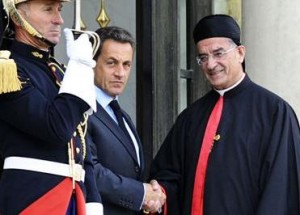
It would be interesting to see how the Pope and Maronite Patriarch Bechara Boutros al-Rai get along with each other. Patriarch al-Rai is known for his open support for Syrian President Bashar al-Assad. Last year, he told Israel-Firster Nicolas Sarkozy in Paris: “Syrian President Bashar al-Assad is open-minded and should be given more chances to implement the reforms“. In March 2012, al-Rai reportedly said: “Syria was the closest thing to democracy in the Arab world”.
Patriarch al-Rai has supported Hizbullah’s armed resistance against the Zionist entity. “Only when the international community exerts pressure on Israel to vacate the occupied Lebanese territory ( the Shebaa Farms, Kfar Shouba hills and the Lebanese part of the disputed border village of Ghajar ) and Israel allows Palestinians in Lebanon to return to their homes, can Hezbollah be asked to hand over its arms because they will no longer be needed,” he said during his visit to France last year.
Pope Benedict XVI has not condemned foreign military support (US, France, UK, Turkey, Israel, Qatar, Saudi Arabia, etc.) to rebels fighting to bring an anti-Iran regime change in Damascus for the last 15 months. Today, Pope pleaded to world powers to solve Syrian crisis instead of telling them to stop interfering in Syria’s internal affairs and let Syrians resolve their political problems.
During that visit the Pope Benedict XVI is scheduled to release his apostolic exhortation concluding the work of the Synod of Bishops for the Middle East, which met in Rome in October 2010. The statement issued at the end of the Synod of Bishops had declared that Bible never promised Palestine to Jews.
When Greek-Melchite Archbishop Cyrille Salim Bustros was asked to explain the claim in a news conference after the conclusion of the Synod of Bishops meeting, he replied: “We Christians cannot speak about the promised land for the Jewish people. There is no longer a chosen people. All men and women of all countries have become the chosen people. The concept of the promised land cannot be used as a base for the justification of the return of Jews to Israel and the displacement of Palestinians. The justification of Israel’s occupation of the land of Palestine cannot be based on sacred scriptures“.
Lebanese academic, author and blogger, Amal Saad-Ghorayeb’s brilliant article on USraeli agenda in Syria and the rest of the Middle East can be read here.
“The Christian people in the United States are just as much enslaved to the Zionists as the Palestinians are. The only difference is that the Americans are mental slaves, i.e., brainwashed by the Jewish-owned media. They honestly do not see the big picture. I myself did not understand these things until about 4 years ago. Before that, I had no idea how evil Zionism was and how much injustice the Arabs had suffered since 1948. I beg my Muslim brothers and sisters, as well as my Catholic brothers and sisters, not to give the Zionists what they want: do not turn against each other! They want Christians and Muslims to kill each other off so that Israel emerges the clear, undisputed world power. We cannot let this happen. We must not dance to the Zionists’ tune. We must show them that we know what they are doing – and that it is not going to work this time,” says Joanna Francis.
Washington’s problem with al-Assad and Hizbullah is that they both not only support Palestinian armed struggle against Israel but also the Islamic Republic which wants to dismantle the Zionist regime in occupied Palestine. This is not an analysis but a fact which is based on the well-documented history of US demands and pressures on the regimes to go Muslim “moderate” or else!
River to Sea Uprooted Palestinian  
The views expressed in this article are the sole responsibility of the author and do not necessarily reflect those of this Blog!
Panetta: 'Not time to arm Syrians'

Via FLC

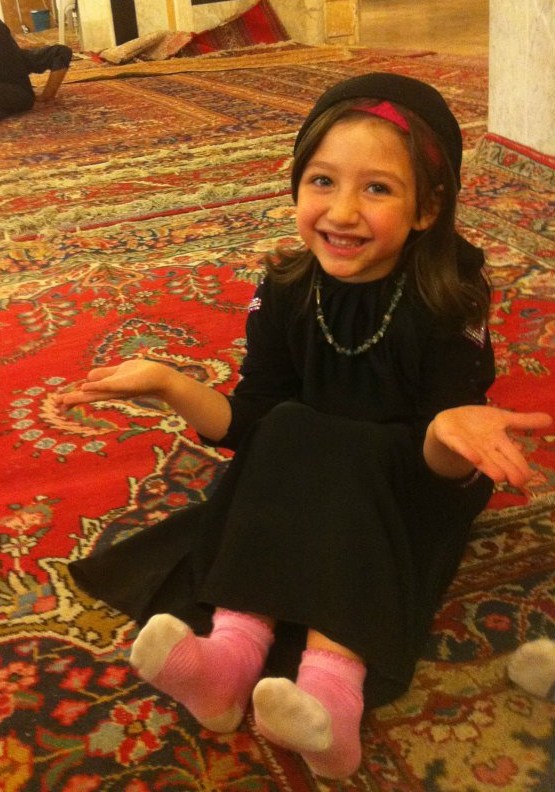
"... U.S. Defense Secretary Leon Panetta defended the Obama administration’s decision not to arm the Syrian opposition, saying the country risked being pushed into an all-out civil war if efforts to secure a smooth political transition fail.“We made a decision not to provide lethal assistance at this point. I know others have made their own decisions,” Panetta said in an interview on Thursday.“But I think it’s very important right now that everybody focus on a smooth and responsible political transition,” he said.“If we don’t get this done in a responsible way, there’s a real danger that the situation there could deteriorate into a terrible civil war.”The defense secretary also said the United States was concerned about the possibility that shoulder-fired anti-aircraft missiles, known as MANPADs, stolen from Libya last year during the fall of Muammar Gaddafi, could make their way to Syria. He cautioned, however, that he had seen no direct intelligence yet to confirm those fears.Panetta also expressed confidence that Syria’s chemical weapons stockpiles were not at risk...."

River to Sea Uprooted Palestinian  
The views expressed in this article are the sole responsibility of the author and do not necessarily reflect those of this Blog!
CIA Recruits 6000 Elements of "Black Water" to Commit Massacres

Local Editor

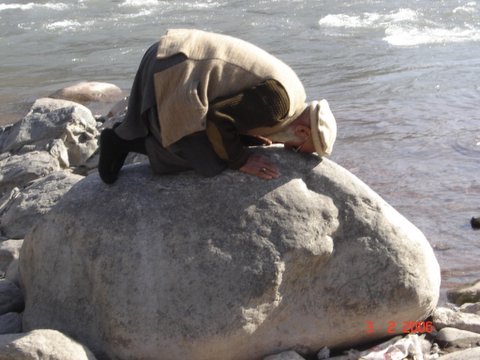
The Vice-President of the Turkish Labor Party, Bulent Aslanoglu, confirmed that about six thousand people from different Arab, Afghan and Turkish nationalities, have been recruited by the US Central Intelligence Agency (CIA) to commit terrorist acts in Syria.

According to sources, Aslanoghlu said in an article published by Turkish TV (Olossal) that the participation of some of the Turks fighting and dying in Syria on behalf of the United States, and committing crimes against innocent people is unusual behavior by the Turks, pointing out that Black Water is paying huge sums for its elements to fight in Syria.

He pointed that the Zionists are the ones controlling the US capital, which means that the fight between Syria and Turkey is considered a war in the name of "Zionists and rich Jews." The Turkish army will carry the same tasks of Black Water, refusing to change into an army that fights for money but one that preserves its character as an army that fights for freedom and the people.

He considered that imperialist countries are looking for people who would sacrifice themselves; he also added that the Justice and Development Party leader is a supporter of the West.

Source: News Agencies

C.I.A. Said to Aid in Steering Arms to Syrian Opposition

River to Sea Uprooted Palestinian  
The views expressed in this article are the sole responsibility of the author and do not necessarily reflect those of this Blog!

It is unclear why Israel is escalating its terror and violence against the Palestinians,

As Israel, Settler and pro-settler groups murders more Palestinians, " It is unclear why Israel is escalating its terror and violence against the Palestinians, especially in the Gaza Strip." Khalid Amayreh claimed, off course after storming his one cell Islamist bag above his shoulders.

"Israeli sources claimed some of the victims were involved in attempts to attack Israeli targets or trying to lay landmines along the Israel-Gaza borders, which is disputed by Palestinians who argue that Israel is killing Palestinians for the sake of it." Neutral khalid added "The killing in northern Gaza came after suspected resistance fighters killed a Jewish settler along Israel’s border with Egypt. Two of the fighters were subsequently killed by Israeli troops."

Meanwhile, Jewish settlers attacked an desecrated a mosque in the Palestinian village of Jabaa near Ramallah, torching the entrance of the mosque and scrawling anti-Palestinian slogans on its walls.
The slogans scribbled read: “The war has begun” and “You will pay the price.”

The Palestinian Authority (PA) blamed Israel, and Hamas..accused the PA of adopting “a cowardly stance vis-³-vis Israeli aggression”. Fawzi Barhoum said that while Israel was murdering Palestinians non-stop, the PA was still pandering to the murderers’ government, in the hope of resuming a peace process that everyone knows leads will nowhere.

If everyone knows that peace process why are you waisting your time talking to Ramallah Traitors?
I would say, hoping that I am wrong, some day Hamas would follow the steps of its motherhood and say we respect Oslo, being like Camp David an International treaty.

Back to Mr. Khalid Amayreh and Fawzi Barhoum accusing Ramallah Traitors of adopting “a cowardly stance vis-³-vis Israeli aggression”.
What do you expect from traitors?
Why you are cowardly silent on the cowardly stance of your brothers in Libya, Turkey, Tunis and Egypt?

The settler's slogans scribbled read “The war has begun” and “You will pay the price.”

Meanwhile, the American Brothers are busy with Nato secret War on Syria, and Khalid  (Ibn Al-walid) Amayereh massing his forces to defend Mecca from the deviant"

River to Sea Uprooted Palestinian  
The views expressed in this article are the sole responsibility of the author and do not necessarily reflect those of this Blog!

Coup in Egypt? News Analysis

by deLiberation
Friday, June 22nd, 2012
     
Published on Jun 21, 2012 by PressTVGlobalNews

A year since Egyptians enthralled the world with the ouster of Hosni Mubarak, more and more people are fearing they’re back to square one, facing the former regime minus Mubarak. On this edition of News Analysis we’re asking whether the Egyptian revolution has become the target of a coup d’état.


Share
River to Sea Uprooted Palestinian  
The views expressed in this article are the sole responsibility of the author and do not necessarily reflect those of this Blog!

The lies of those unable to destroy the Syrian strength

by Wassim Raad

JPEG - 120.9 kb

News Analysis

The lies of those unable to destroy the Syrian strength
By Ghaleb KANDIL


Syria was never the center of the universe as much as it is today. All around the world, hundreds of pieces of information and thousands of reports, rumors, fabricated pictures and made up news are emerging via media networks that are shedding light on contradictory positions and statements of senior Western officials. At this level, the Russian government is finding itself forced to issue quasi daily statements to deny many rumors and clarify the falsification affecting the positions of its officials.

Firstly, the American empire is doing its best to push the bitter cup away from it, i.e. the recognition of its defeat in the face of the Syrian state. Indeed, it is aware of what this recognition will generate in terms of the total collapse that will affect the governments collaborating with it in the region, and the repercussions whose prices will be paid by those involved in the global war it is leading against the Syrian national state and against a resisting liberation leader who defied American arrogance back when the whole world was under its control.
Today, this leader’s status is similar to that of Fidel Castro in the fifties and sixties of last century.
Despite the opportunity offered by Russia to the US to indirectly recognize the defeat, the American empire deployed all its efforts to sustain the violence on the ground, and exploited the Syrian state’s cooperation with Annan’s initiative to obstruct its effects via the Gulf and Turkish governments, Al-Qaeda, and other formations linked to that alliance such as the Lebanese Future Movement.

Secondly, the Western propaganda machine is spreading a massive amount of lies in regard to the Syrian situation, with the main goal of generating a climate that would compensate for the state of impotence endured by the Americans and all the NATO member states, in light of the regional and international balances and equations that are providing Syria with immunity.

The first lie is the promotion of a settlement allowing President Bashar al-Assad to step down.

At this level, Russian Foreign Minister Sergei Lavrov exposed the rumor surrounding the existence of Russian-American negotiations over what is dubbed by the West “Syria in the post Al-Assad stage.” In reality, the American planners among others know that president Bashar al-Assad enjoys wide support in the ranks of the Syrian people and that this support has increased in light of the crisis sweeping the country, as well as its repercussions which are making the Syrians feel as though they and their country are being subjected to a foreign attack led by the Americans against the state.
Hence, according to his people, President Bashar al-Assad is the head of the national state, the advocator of a pan-Arab resistance project and the symbol of Syrian nationalism and the resistance option in the face of the foreign attack which features a global alliance aiming at destroying the Syrian strength and at strengthening the gangs of mercenaries, intelligence agents and extremists. The inhabitants of the Syrian countryside have discovered that the latter could not be farther from the slogans of freedom and dignity, and that they have started to introduce foreign murderers by the hundreds, professional intelligence elements and extremist groups whose presence and role had always been rejected by Syrian society.
Thirdly, the second lie being promoted by the American propaganda is related to the claim that what is happening in Syria might slide towards civil war.
The Western propaganda at this level was launched in the form of warnings against the threat of civil war, at a time when all the Western, Turkish and Gulf efforts have been pushing in that direction since the beginning of the incidents, through repeated attempts to depict the events as being a sectarian conflict and the adoption by the West and its agents in the region of the MB group and the gangs of takfir to which they offered all possible financial, military and media facilitations and assistance.
The Syrian people on the other hand proved to be immune against these attempts, while the Syrian national state was able to maintain a wide base of popular support, to embrace its army and its national choices and engage in a battle to defend the country and the unity of the people alongside Syrian political and religious leaders.

Fourthly, the third lie was the claim that the conflict between the Syrian state and the terrorist gangs was revolving in a vicious circle and that it would be impossible to settle this confrontation. However, the reality which was confirmed by the events is that this issue is primarily linked to the approach adopted by the Syrian state in dealing with the strongholds of the armed men, through an insistence on sparing the Syrian people as many losses as possible.

Hence, just like the situation was settled in Baba Amr based on the state’s decision and timing, the situation was settled in the town of Al-Haffa and the action is ongoing to liquidate the remaining strongholds and dens in the city of Homs. In the meantime, the Syrian Arab forces achieved decisive progress in the border regions with Turkey and Lebanon where the armed gangs tried to impose their control. This reveals that the issue is not about the Syrian state’s ability, but about the timing it chooses and the issuance of the orders to the army which has not yet used even a portion of its strength in crushing the armed rebellion.
These efforts eventually aim at reaching disarmament, after the state gave the armed men all possible opportunities to surrender their weapons peacefully and offered incentives which pushed thousands among them to cooperate with the governmental calls during the last couple of months since the launching of Annan’s missions.

Fifthly, the fourth lie which was recently promoted focused on the attempt to revive the illusion regarding the possibility of launching war on Syria through the presentation of scenarios for military strikes carried out by the American troops and NATO following the collapse of other deceptive tales about direct Turkish war against Syria.

At the level of this scenario, all the strategic facts that have become known stress that such an adventure could lead to a great confrontation around the world and in the region, which could cause Israel to pay the price.
In the meantime, the new international balances and the aggressiveness of the Russian-Chinese performance are acquiring credibility, to the point where Henry Kissinger assured that an attack on Syria could trigger a global war in which no one in the West can engage and whose consequences would be extremely difficult to bear for a thousand and one reasons.

Lies are the American tools in the context of the psychological war to compensate for the inability of the colonial alliance to confront the resistance launched by Syria, as a population, an army and a state led by Al-Assad to defend its freedom and independence. It would be enough to look at the Istanbul council, i.e. the collaborating front that has no political slogan but the call for NATO’s occupation of Syriat, along with the gangs, that include thieves, murderers and thugs. In the meantime, reform which is led by the Syrian state is proceeding in accordance with the project that is open to dialogue with all the opposition movements under the auspices of President Al-Assad.

The tendency

Egypt and the ongoing political turmoil

Regardless of the results of the Egyptian presidential elections which will be held on Saturday and Sunday between MB candidate Mohammad Morsi and former Prime Minister under Mubarak’s rule Ahmad Shafik, it is clear that the American engineering of the balances requires the obstruction of the rise of the Egyptian strength and the renewal of the pressures aiming at sustaining political turmoil for as long as possible.

In case the MB candidate wins, the confrontation will continue in the context of the conflict over power between the MB organization and the military institution.

The arena of the conflict will be the drafting of a new constitution, and this was clear in light of the determination of the military institution to open the door before the reorganization of the legislative elections via a decision by the Supreme Court to annul the membership of one third of the members of the recently elected People’s Assembly.

In case Shafik is elected president, he will be the military council’s ally, and will practically lead to the renewal of the popular actions under the slogan of preventing the return of the former regime.

The MB command’s inclination to monopolize power and engage in deals with the Americans in regard to the protection of the Camp David accord, rendered it impossible to form a wide scale political alliance that would allow Morsi to earn the support of the influential popular bloc whose real size emerged in the first round of the presidential elections, via the votes acquired by the nationalist candidates and especially candidates Hamdin Sabahi and Abdul Monem Abu al-Foutouh. This is why the call for a partnership appeared to be a request for a full assignment and full submission to the MB.

The MB organization is trying to get the support of the popular blocs looking for change, by borrowing and summoning the slogans of the revolution, at a time when suspicions are surrounding the positions and choices of the MB leaders within the organization itself.

At this level, the last few months revealed the dubious character of the policy advocated by the MB leaders, in light of the adoption of political recipes and action plans going against the slogans which characterized Morsi’s electrical campaign.

Moreover, the MB command used a thousand pretexts to justify its commitment to the protection of Camp David and its attempt to reach a deal with the Americans who drew up plans aiming at maintaining the Egyptian political scene within the context of the army-MB duo.

Clearly, the popular weight of the so-called remnants of the regime is not to be taken lightly, and this was revealed by the votes earned by Shafik and Amr Moussa. Hence, the confrontation between these two main directions is keeping the game within the general restraints that are taking into account the American interest in preventing the emergence of a new political reality at the level of the Egyptian state headed by the national wing, one which was represented in the presidential elections by more than one candidate during the first round and whose weight was clearly greater – by comparison - than the support earned by the MB organization.

Morsi, is not distant from the bloc which includes the military council and the influential bureaucratic groups in the Egyptian state, usually dubbed the remnants. Indeed, a recent American report revealed that throughout five years under Mubarak’s rule, Morsi was in charge of coordination between the MB command and the state security apparatus.

On the ground, the American arrangement is that in case Shafik is elected, he would coexist with the MB’s role at the People’s Assembly, the government and the Constituent Assembly tasked with the drafting of the constitution, based on the understandings secured by the American officials with the International Organization of the Muslim Brotherhood and the ongoing wager on the activation of Turkish-Qatari influence over the group’s leaders in Egypt.

But if Morsi wins, the staging of the People’s Assembly elections – according to all experts- will introduce new balances with the emergence of the bloc led by Shafik and Amr Moussa as a power which the Americans and their allies in the region are trying to transform into a political party that would be a partner in the Egyptian equation and in the competition against the MB in any upcoming legislative elections.

The confrontation in Egyptian society is ongoing between three main blocs. There is the MB organization which is characterized by an opportunistic behavior practiced by its political command in order to reach power at whichever price, while willing to conduct all the required tradeoffs for that end.

There is also the state bureaucracy led by the military council. This bloc enjoys wide influence in society through a base of millions of employees in the various state apparatuses, including the judges who are being polarized under the slogan of Egypt’s non-surrender to the MB and the sustainment of a political approach based on the protection of the relations with the West and the Arab states affiliated with Western influence in the Gulf. As to the third bloc, which is still un-organized until now and is facing the challenge of becoming a unified political power, it includes all the popular nationalistic and revolutionary forces that are adopting the option of social and political change, resistance against Western colonial hegemony over Egypt, the toppling of the camp David accord and the ending of the siege on Gaza.


Reading the Egyptian Elections
The Egyptian presidential elections will not settle the conflict over power, rather constitute one of the stops along its course. Egypt’s future will thus witness more battles between the three main blocs that are acting on the ground and at the level of the institutions, ones which will witness labors, changes and ongoing dismantlement and construction in the context of a change process in which the Egyptian street will play a decisive role to determine the political outcome.

A large part of this outcome will also depend on Hamdin Sabahi’s and Abdul Monem Abu al-Foutouh’s ability –following the second round of the presidential elections- to develop the change project and organize their political ranks in the context of one popular front which is able to secure the right size and role that go in line with the wide popular credit revealed by the ballot boxes at the end of May.

The ministers of superpowers

Liars
When the spokeswoman for US Secretary of State Hillary Clinton comes out to say that the secretary had launched serious talks with her Russian counterpart over Syria in the post Al-Assad stage, and when she is followed by French Foreign Minister Laurent Fabius who issues similar statements, Russian Foreign Minister Sergei Lavrov is forced to hold a press conference and announce that both ministers are lying and that the Russian political approach completely opposed such discussions since it was based on the rejection of foreign tutelage.

Lavrov, who is mad about the decadence featured in the statements of America’s and France’s foreign ministers, conveyed the extent of the trust in political clarity and morals at the level of diplomatic action, at a time when neither Clinton nor Fabius enjoy political clarity or diplomatic manners. The reason for that is the fact that Lavrov is reassured by the course of the events in Syria where the ally is strong, where the thwarting of the Western project is still ongoing and where the opponents are confused, spreading lies to conceal their impotence and giving those who wagered on them false illusions.

Those relying on the West are reaping illusions based on lies, while those relying on the strength of their army and their president’s steadfastness are reaching victory on the field and sustaining reliable allies.

Arab File

Syria

On the security level, the armed terrorist groups continued their attacks in more then one Syrian region, at a time when the security apparatuses were able to cleanse the Al-Khalediya and Bab Sebaa neighborhoods in Homs from the terrorist remnants. They also stormed many dens in which the armed terrorist groups were hiding, found several explosive substances and weapons in numerous areas and thwarted a number of suicide operations.

In the meantime, the Syrian television aired a phone call between two individuals, one of them using a Turkish phone chip and another called Ghayth Mohammad Sadek Kilia, who were preparing to commit a massacre against the population in Al-Haffa and the village of Tfil in Rif Latakia. One of the callers said to the other: “Slaughter the hostages and prisoners we are holding in Tfil and put their pictures online to make it appear as though a massacre committed by the regime had taken place. Let our men manipulate the media a little.” At the same time the American Department of State mentioned it feared the perpetration of massacres in the city of Al-Haffa in Latakia.

On Wednesday, Damascus assured that the country was not witnessing civil war and was rather fighting terrorism, in response to the statements of UN under-Secretary General for Peacekeeping Operations Herve Ladsous, in which he said that Syria was now facing civil war.

On Saturday, the UN observers’ mission to Syria suspended it activities due to the mounting violence. Major General Robert Mood thus said that the escalating bloodshed was threatening the lives of the three hundred unarmed observers deployed in the Syrian cities.


Saudi Arabia

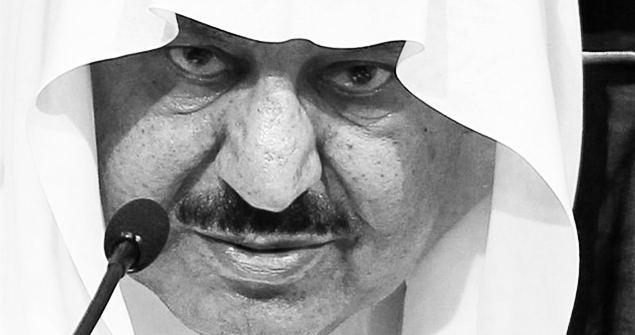
On Saturday, the Saudi royal court announced the death of Crown Prince Nayef Bin Abdul Aziz al-Saud in Geneva where he had been receiving medical treatment. The prince died eight months after having succeeded to his older brother Sultan, which paved the way before countless speculations in regard to who will be the next in line for succession. Defense Minister Prince Salman is the most likely to become the crown prince since he enjoys seniority after the late Nayef.
The latter was openly opposed to King Abdullah’s reforms in the kingdom while Salman - who has been serving as Riyadh’s governor for five decades - is believed to be closer to the current monarch’s inclinations.

Egypt

The Egyptian parliament elected the Constituent Assembly which includes one hundred figures, amid withdrawals from underneath parliament’s dome by civilian parties and independent deputies in protest against what they considered to be “the control of the Islamic wing over the assembly.” Some even threatened to resort to the judiciary to annul this election. The supreme constitutional court issued a sentence in regard to disbandment of parliament and the rejection of the political isolation law.

The Supreme Council of the Armed Forces assured that the second round of the presidential elections will be held on time on Saturday and Sunday and that there was no change at this level. For their part, political forces expressed their disgruntlement towards both rulings, saying they will bring Egypt back to the climate that prevailed before the January 25 revolution, while other forces called for the respect of these judicial sentences.

Israeli File

The issues tackled by the Israeli newspapers issued this week were quite numerous. However, the most prominent one was the warning addressed by Israeli experts against the possibility of seeing the eruption of a third Palestinian uprising in case the settlement policy is sustained in the West Bank regions and in case the violence adopted by the Israeli settlers against the Palestinian citizens is upheld.
On the other hand, the papers shed light on the statements issued by Strategic Affairs Minister Moshe Ya’alon and in which he said “if we’ll have to choose between a strike and an Iranian bomb, we’ll choose a strike." Alongside Ya’alon’s statement, the papers criticized and analyzed the report on the interception of the international flotilla which was heading to Gaza in 2010, but also the process launched by the immigration authority to deport the South Sudanese infiltrators. They also tackled the medal received by Peres, i.e. the presidential freedom medal, which is the highest granted by the US to figures who contributed to world peace.

For its part, Haaretz pointed to the announcement made by the MB members of the Egyptian parliamentary delegation regarding the fact that they will not participate in the meeting which was supposed to be held next week at the American capital Washington and was organized by the Israeli Foreign Ministry.


Lebanese File

The Wadi Khaled region in the Akkar valley witnessed mutual kidnapping operations against political sectarian backdrops between the citizens, as well as armed deployment and the erection of checkpoints. In light of this escalation, contacts were launched and involved official leaders and dignitaries from Akkar and Wadi Khaled, resulting in the release of the kidnapped from both sides. In the meantime, the Bab Tebanne-Jabal Mohsen axis has been witnessing stability following the recent tensions.

On June 11, dialogue was held in Baabda and resulted in the Baabda Declaration, which stressed civil peace and warned against the use of arms and the slide towards strife. According to the same declaration, this required all the political and intellectual leaders to distance themselves from any acute political or media statements and fromanything which might provoke disputes, tensions and sectarian and denominational instigation. The Baabda Declaration also provided a real cover for the Lebanese army and stressed the insistence on the Taif accord and Lebanon’s distancing from the regional and international axes policy and the negative repercussions of the regional tensions and crises. Dialogue was held in the absence of Saad al-Hariri and finance minister Mohammad al-Safadi and was boycotted by Samir Geagea.


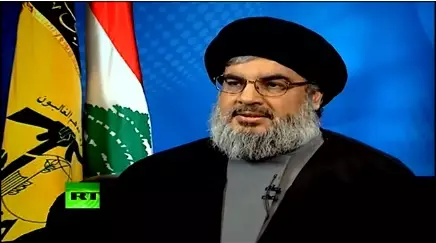
Hezbollah Secretary General Sayyed Hassan Nasrallah assured in an interview on an Iranian television channel that the party’s current military capabilities could not be compared to its capabilities during the previous stage. He said:

 “The resistance missiles are now able to reach all the vital targets inside Israel,” pointing to Israel’s recognition of the party’s deterrence capabilities. He then cautioned against the attempts deployed by the US and its agents to thwart the revolutions and Islamic awakenings in the region, assuring on the other hand: “The occupation entity is weaker than ever before and its threats to strike Iran fall in the context of a psychological war and constitute an attempt to blackmail the international community.”
River to Sea Uprooted Palestinian  
The views expressed in this article are the sole responsibility of the author and do not necessarily reflect those of this Blog!