Saturday, 11 May 2019

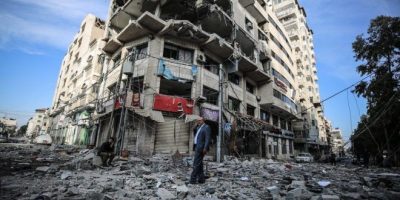
israel Damaged over 800 Gaza Homes in Three Days

By PNN
Deputy Housing Minister in Gaza Naji Sarhan said that 130 residential apartments were completely destroyed, while 700 others were partially destroyed in the three day Israeli strikes on Gaza.
In a statement, Sarhan said that the emergency staff of the ministry started their evaluation of the targeted buildings since the start of the Israeli offensive.
Sarhan condemned the Israeli aggression against the civilians, calling for the international community to urgently interfere to stop the Israeli targeting of the civic buildings, which are protected by the international laws and conventions, and called called for the donors to help the affected families pay for repairing or rebuilding their homes.
25 civilians were killed in the Israeli attack, including a pregnant woman and a two year old baby. At least 154 were also wounded in the attack

River to Sea Uprooted Palestinian   
The views expressed in this article are the sole responsibility of the author and do not necessarily reflect those of the Blog!

A ” normal nation” to Mike Pompeo is one that regularly, invades, occupies and attacks other nations


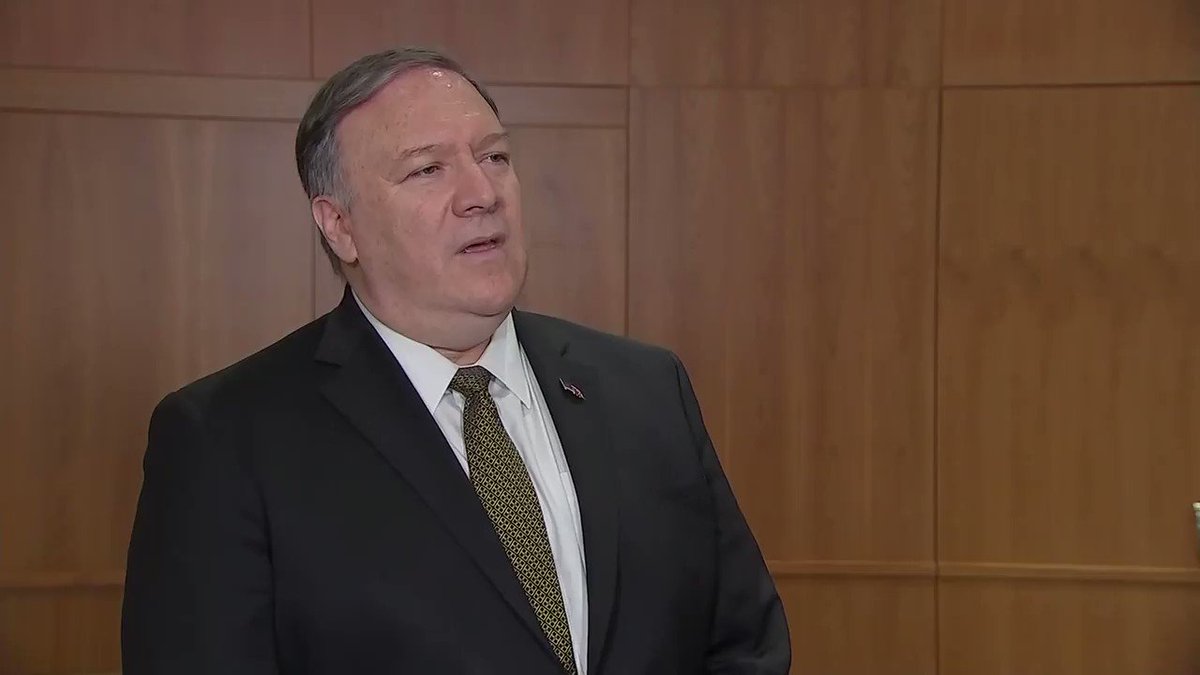
Secretary of State Mike Pompeo speaks in Finland: “What we’ve been trying to do is to get Iran to behave like a normal nation.” 
Iran hasn’t attacked a country in over 200 years. The US however has invaded/destabilized: Vietnam Nicaragua El Salvador Guatemala Honduras Grenada Panama Iraq Yugoslavia Afghanistan Libya Syria Ukraine Yemen & others Who’s really the one in need of a behavior correction here? 
River to Sea Uprooted Palestinian   
The views expressed in this article are the sole responsibility of the author and do not necessarily reflect those of the Blog!

What I Saw in Gaza Changed Me Forever

What I Saw in Gaza Changed Me Forever
By Ned Rosch
My true liberation as a Jewish person is bound up with the liberation of Palestinian people.
gaza.jpg
The city of Gaza during a dust storm.
Photo by Majdi Fathi/NurPhoto via Getty Images
Reclaiming Judaism from Zionism is a powerful collection of 40 essays by Jews from diverse backgrounds. Each describes a personal journey from a Zionist worldview to activism in solidarity with Palestinians and Israelis striving to build a society founded on justice, equality, and peaceful coexistence. In this excerpt from the essay “Palestine and my Journey of Self-Discovery,” Ned Rosch describes the deep impact of a visit to Gaza in 2014, shortly after the intensive bombings of Israel’s “Operation Protective Edge.”

The great Indian writer Arundhati Roy wrote, “The trouble is that once you see it, you can’t unsee it. And once you’ve seen it, keeping quiet, saying nothing, becomes as political an act as speaking out. There’s no innocence. Either way, you’re accountable.” There were numerous times in my life when I “saw” it and felt the strongly reinforced foundations of my Zionist upbringing eventually crack wide open and ultimately turn to dust, but perhaps nothing more deeply touched me and cemented my perspective than a trip to Gaza in November 2014.
For a brief but remarkable week and a half, I had the amazing privilege of being part of a health delegation to this small strip of historic Palestine that is one of the most crowded places on earth because its population is literally sealed in by the Israelis—with the assistance of the Egyptians. To be there just two months after Israel’s murderous 2014 war on the people of Gaza was to catch a glimpse—through the painful stories I heard and the overwhelming destruction I witnessed—of the grotesque horror of that 51-day war. The bombed-out structures were everywhere, the grief universal, the trauma intense.
Rawya, who translated for a training that I did in Gaza with 15 school counselors, shared with me over a hot cup of tea, “Scared our turn might be next, my husband and I sat our four children, ages nine through fifteen, down, and we and our kids each talked about what we would do if a bomb hit and we were the only survivor of our family. I felt I needed to have that conversation because the possibility seemed so real, and as a mother, I needed to know that our children had a plan.” She, the counselors, the children they see, and—according to the counselors, it’s safe to say—everyone in Gaza is traumatized. When Israeli jets were heard overhead one evening while we were in Gaza City, the restimulated fear was palpable. 
On the way into Gaza City, we saw haunting skeletons of homes, people living in bombed-out buildings, and mosques, hospitals, and factories reduced to rubble. Etched in my mind probably forever will be what we witnessed in heavily bombed civilian neighborhoods. It’s hard to find words that even begin to describe the utter devastation.
Palestinian people were living in makeshift structures of cardboard and blankets, surrounded by rubble. Even though I’d seen these images online, somehow the impact of witnessing families squatting next to what was everything they had owned and what in a matter of seconds had been absolutely wiped out took my breath away, as did a large busted-up slab of concrete with names spray-painted on it of family members buried under the mounds of debris, a woman sitting on the rubble staring vacantly off into the distance, and a wedding party celebrating amid ravaged buildings.
In a refugee camp, a vivacious Palestinian woman named Reem told me she just couldn’t think about the future any more. “All I have,” she said, “is today and that’s OK as it’s filled with opportunities to help people.” Reem was opening centers in some of Gaza’s most destroyed areas, centers where children play, read, sing, learn French, plant seeds in paper cups—to maybe get a taste of what a “normal” childhood might be like. Nothing is normal in Gaza. A decade of siege and three wars has ravaged the economy, snuffed out the lives of thousands of people, wrecked the environment, and ripped apart people’s hopes that things will someday get better, that maybe there is a future.
Yasser, a gentle soul and the executive director of Gaza’s Community Mental Health Program, lost 28 members of his extended family in the 2014 war. No one in Gaza was spared from knowing someone who was killed or injured in the brutal and relentless Israeli assault. Yasser said his family speaks of 28 empty chairs.
Mohammed’s family is now 10 people fewer. One of the deceased was a young girl who was rescued after somehow surviving for 10 days under a massive pile of concrete and rebar, only to die in the hospital two days later. Her name was Yasmin. “I can’t get Yasmin and the thought of what her last days were like out of my mind,” Mohammed said, tears wetting his shirt.
Everyone yearns for the borders to open so they might be able to breathe, work, travel, study abroad, or get medical care not available in Gaza due to the shortage of everything caused by the Israeli siege. Still, most assert they would return. “Just like a fish can’t survive out of water, we can’t live out of Gaza for too long. At some point, we need to return,” said Walaa, a young woman with two graduate degrees who was unemployed in Gaza’s shattered economy.
Imad, a nurse who works full time and had not been paid for over a year, invited me to meet his wife and eight children in their extremely modest but comfortable apartment. When asked how they survive with no income and so many mouths to feed, Imad explained that everyone in Gaza does what they can to help others out, since they are all pretty much in the same boat. He then shrugged his shoulders and pensively posed the question we heard so often: “What can we do?” It’s striking that 2 million Palestinians in Gaza are imprisoned in an area that is only 25 miles long and 5 to 8 miles wide—smaller than the Portland metro area.
A marvelous facilitator, who does support groups for children in Gaza, invited me to a group she runs for 5-year-olds who lost their homes, family members, their innocence—and so much more—in the bombings. I sat in the circle with the children as they chose happy or sad faces to represent how they felt. One girl said she took a sad face because her grandfather was killed by a bomb. Others took sad faces because they had bad dreams. The facilitator told me that her own 10-year-old daughter pleaded with her during the war, “Don’t leave me alone. I want to die together.”

So, there’s more than enough stress, grief, pain, and sadness to go around, but there is also a remarkable amount of love, generosity, and determination. Ramadan, who translated for one of my workshops and who is working on a Ph.D. in psychology, pointed out that just as lots of folks may only appreciate their health when they become sick, Palestinians may feel the lack of a homeland more intensely, having so brutally lost it. “Others have a physical homeland, a place they live in or visit. Our homeland lives in our hearts,” Ramadan told me over coffee to the sound of the waves beating on the shore.
While walking through an area of Gaza that was heavily bombed by the Israelis, witnessing homes, apartment buildings, and a school totally leveled, I was approached by a middle-aged man who politely offered me a large manuscript covered with the dust of a blown-up neighborhood. When I asked him what it was and why he wanted to give it to me, he motioned for me to follow him across the street to a huge mound of debris. As we climbed up the pile, avoiding broken glass, twisted rebar, and busted up concrete, he pulled out his phone and showed me a picture of quite an attractive and well-maintained home—his home. He explained that we were standing on that home and that absolutely everything had been destroyed except for the manuscript, his doctoral dissertation, which was a literary critique of the works of Ezra Pound and T.S. Eliot.
This professor, who had lost it all, was insisting that I take what remained of a life. I will never know for sure why. Maybe it was Palestinian hospitality that required him to give this guest something, and that was all he had to give. Perhaps he wanted me to take it to a safe place, as he well knew that nothing was safe in Gaza. Possibly this professor was saying that in spite of all the destruction the Israelis could unleash at will, there is one thing they can never destroy: ideas—not only about Pound and Eliot, but also about the restoration of justice to a people who have suffered unimaginable brutality and dispossession.
I continue to struggle with many things now, not the least of which is finding words to adequately express the intensity of the experience of getting to know, in some small but profoundly meaningful way, a number of unforgettable and beautiful people in Gaza, and catching a glimpse into the unbelievably harsh reality of their lives. It’s difficult to make sense of how the occupation and siege of Gaza, which is slowly but very steadily crushing the life of 2 million people, can be happening, and how the world is doing so little to stop it. Imad’s question, “What can we do?” echoes in my head. Some of what I can do is clear: a stronger commitment to, as Arundhati Roy says, speaking out, asserting the Palestinian struggle more broadly and more often, as we Americans are so deeply complicit in the ongoing Israeli occupation of Palestinian land. More of what I can do will surely emerge with time as I continue to think about the people I met who want nothing more than to live. In Gaza, I left behind friends and a piece of my heart—a heart that was broken many years earlier by the conflict between what I had been raised to believe about Israel and what I had learned was the darker reality of Israel.
Years ago, I sincerely believed I was being more than open-minded when I tried to hold to the conviction that there were two legitimate and distinctly different narratives—one Jewish and one Palestinian, two fundamentally irreconcilable claims to the same piece of land, and that was why the conflict was so unresolvable. But what was really unresolvable was the battle that thunderously raged in my head and even more vigorously in my heart. You see, I had become a progressive on every issue, except one. I marched for civil rights, women’s rights, LGBTQ rights, everyone’s rights, and an end to war. But when it came to Israel-Palestine, I was extraordinarily torn up. Even if what my Palestinian friends were telling me were true, how could I turn my back on my own people and my own upbringing, especially after the thousands of years of suffering that Jews had endured? Wasn’t the Jewish history of pogroms, anti-Semitism, and the horrors of the Holocaust at least as compelling, if not more so? After all, as someone named after a Holocaust victim, I was a link in a long chain. How could I contribute to undermining the Jewish struggle to reconstruct a post-Holocaust decimated people and the state of Israel that had so recently come into existence?
With time and introspection, my dual narrative world began to fray at the edges, and eventually completely unravel. Probably the crushing blow came when a Palestinian friend asked me why Jews have such a hard time incorporating the Palestinian experience into the Jewish understanding of history. I didn’t quite grasp his question and, with trepidation, asked him to explain. He challenged me to see not two separate conflicting narratives, but one history—one history of what actually happened. That question and challenge—and exploring and reexploring their answers— took me on one of the deepest and most rewarding journeys of my life. It was the struggle of fundamentally wrestling to reconcile my politics around Israel-Palestine with my bottom-of-my-heart core values, and ultimately understanding, in the very essence of my being, that my true liberation as a Jewish person is now intrinsically bound up with the authentic liberation of the Palestinian people. My sense of freedom and wholeness will only be achieved when every Jew—and every Palestinian—is free. Zionism imprisons not only Palestinian bodies but Jewish minds as well.
I came to comprehend that the wonderful Jewish tradition of “Justice, justice thou shalt pursue” required me to take a stand with others of goodwill, including many Jews, to support my Palestinian sisters and brothers in their pain, struggle, and resistance. The breakthrough for me was the ultimate realization that standing up for the Palestinian people was not turning my back on my own people. Rather, in supporting the Palestinian struggle for freedom, I was upholding Judaism’s highest values and reclaiming them for myself, in—for me—a profoundly new and personally meaningful way. Nelson Mandela said, “We know too well that our freedom is incomplete without the freedom of the Palestinians.”
Excerpted from “Palestine and my Journey of Self-Discovery,” an essay by Ned Rosch in Reclaiming Judaism from Zionism: Stories of Personal Transformation, edited by Carolyn L. Karcher. Published 2019 by Olive Branch Press, an imprint of Interlink Publishing Group. Copyright Carolyn L. Karcher and contributors.
This article was originally published by Yes” –

River to Sea Uprooted Palestinian   
The views expressed in this article are the sole responsibility of the author and do not necessarily reflect those of the Blog!

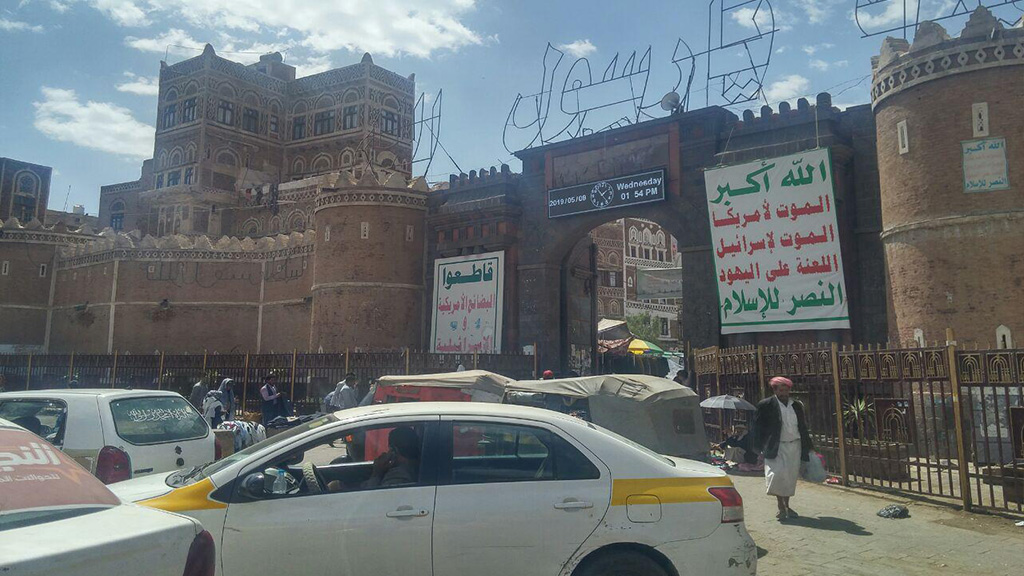
Ramadan in San’aa: Life Goes on despite Hiking Prices, Misery and Continued War


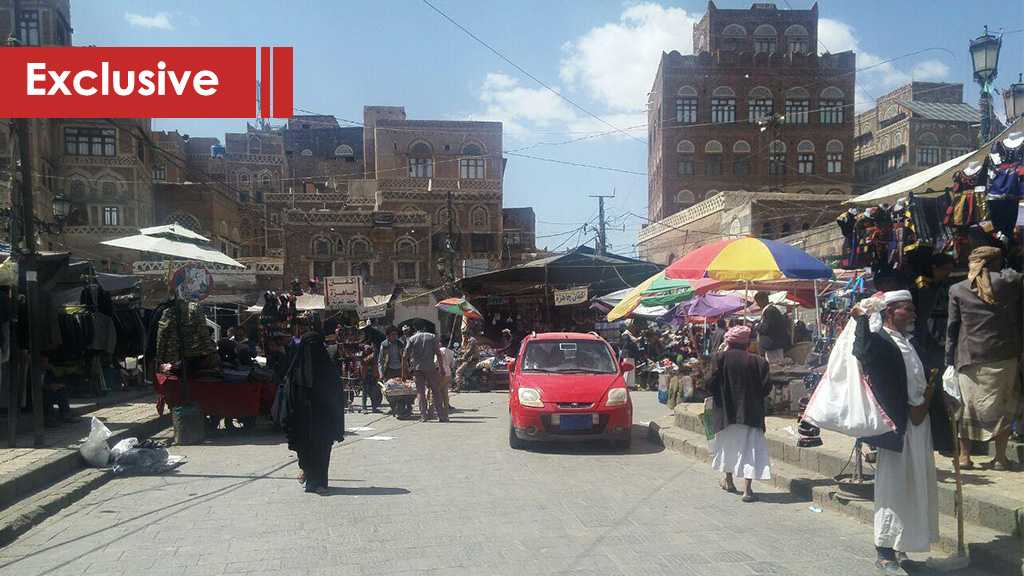
Sana’a – Mohammed Abdo, in his 50s, stands near a sesame stand negotiating its price in the old city of the capital Sana’a on Wednesday’s afternoon on the third day of Ramadan in Yemen.
Abdo expressed his shock at the sesame’s high price before he started to speak on how he used to welcome Ramadan in the past and how it became today after four successive years of the Saudi aggression on Yemen.
“Ramadan in the past was better than nowadays,” Abdo told al-Ahed. “We used to welcome Ramadan while living conditions were all right, but today the cost of living has increased.”
Abdo, who appears to be a farmer, comes from Dhamar province, 93 kilometers (58 miles) southern Sana’a. He said he is in the old city of Sana’a on a special visit and has bought some good ropes for his donkeys.
“I will travel back home now. I ask Allah to guide us, be kind to us and lift up His divine countenance upon us,” Abdo told al-Ahed.
The grand mosque in the old city of Sana’a is under heavy presence of worshippers who gather from all nearby neighborhoods to pray and share reading Quran.
There you will find elder people who know well the old days during which their grandfathers used to welcome Ramadan and the importance of the Ramadan lanterns.
However, to take pictures and interview them inside the mosque needs you to have a prior permission from the security belts of the city, something that takes a long process. Security forces declined our entry to interview them inside the mosque.
Miserable Ramadan
Walking between the city’s old souks, you will see people purchasing their requirements in large numbers as if there is no war nor a blockade, though public servants have been paid sporadically since late 2016 when the Saudi-backed government relocated Yemen’s Central Bank from Sana’a to Aden.
Most segments of society lost their jobs and resorted to work in another profession like Ali Sa’ad Taha, a newspaper vendor but now all he has is one paper on his right hand and on the other hand he carry plastic bags, his new profession.
Taha was passing on a pavement outside the old city of Sana’a as disappointment was clear on his face. The only official newspaper that he had was al-Thawrah, which he was looking for someone to buy.
“I rent an apartment near the Ministry of Defense since 15 years. My sole source of income is selling newspapers,” Taha told al-Ahed. “We now live in a miserable existence. I sell plastic bags as purchasing papers decreased.”
Grave’s Mud is better than this life
Ahmed Qaed, an elder merchant, stands with his son near their shop at the old city of Sana’a where they sell clothes. Qaed has a pessimistic view and think the earth’s interior is better than its surface.
“Ramadan in the past was perfect, but today grave’s mud is better than this life,” Qaed told al-Ahed, pointing out that Yemenis live in a crisis and everybody no longer thinks of the other.
“Everybody thinks of himself, we aren’t reassured, nor comfortable nowadays.”
We used to welcome Ramadan in the past while we were living in peace and security, Qaed said, and goods and foods were cheap.
We were welcoming Ramadan with jingles, but today it is hard to do so, Qaed adds.
Before the war, children of the old city of Sana’a neighborhoods used to gather in one house after sunset and begin running in the streets of the city with lanterns in their hands and sing songs welcoming Ramadan.
This Ramadan is the fifth that Yemenis fast while the Saudi war is ongoing. This war has changed their life and make it like a hell on earth.
With all of this, it’s hard to see a child in the streets of the old city of Sana’a commemorating these traditions or notice a father trying to revive these old habits.
Related Videos

River to Sea Uprooted Palestinian   
The views expressed in this article are the sole responsibility of the author and do not necessarily reflect those of the Blog!

Army conducts operations against al-Nusra terrorists in northern area

Friday, 10 May 2019 14:56
Idleb/Hama – Syrian Arab Army’s units on Friday inflicted heavy losses upon terrorists in retaliation to their violations of the de-escalation zone agreement.
SANA said that army units carried out intensive operations against Jabhat al-Nusra terrorists’ movements from Khan Sheikhoun in Idleb countryside towards the liberated areas in Hama northern countryside, and Kafar Sajnah and al-Sheikh Moustafa in Idleb southern countryside, killing or injuring scores of them, and destroying their dens and fortified points.
The army units also conducted operations against the terrorists’ gatherings in Abdeen, Hirsh al-Qassabin, killing or injuring many of the terrorists and destroying their gatherings.

SANA said that the army units responded to terrorists’ attacks and launched intensive strikes on directions of their movement in Kafar Zita, al-Latamina, Hasraya, al-Zakat, al-Sayyad and al-ASrba’en in Hama countryside.
The army units, SANA added, destroyed vehicles for Jabhat al-Nusra terrorists between Abdeen and Kafar Naboudah towns.
The army units also thwarted terrorists’ attack on the military points in the areas of al-Hamamiyat and Kafar Naboudah in the northern countryside of Hama.
A number of the terrorists were either killed or injured during the army’s strikes, while the others fled towards the north deep in the southern countryside of Idleb.

Video footage of Qal’at Al-Madiq after Syrian Army seizes historical town

BEIRUT, LEBANON (4:40 P.M.) – The Syrian Arab Army (SAA) captured the historical town of Qal’at Al-Madiq on Thursday after a short battle with the jihadist and Turkish-backed rebels in northwestern Hama.
Following the capture of Qal’at Al-Madiq, the Syrian Army seized four more towns from the jihadist rebels, forcing the latter to fall back north towards the Al-Ghaab Plain.
Below is a video of the Syrian Army inside of Qal’at Al-Madiq after they seized the town from the militant forces:
RELATED VIDEOS

River to Sea Uprooted Palestinian   
The views expressed in this article are the sole responsibility of the author and do not necessarily reflect those of the Blog!

74TH ANNIVERSARY OF THE GREAT PATRIOTIC WAR – THE EASTERN FRONT OF WORLD WAR 2

Friday, 10 May 2019

تحديد الأدوار السياسيّة العلنيّة للجيوش العربيّة.. لماذا؟


مايو 9, 2019

د. وفيق إبراهيم

الجيوش العربية «تعود مجدّداً» لإدارة السياسة وذلك بعد أكثر من نصف قرن من التمويه بواجهات قيادية مدنية من أصول عسكرية. فرجعت قرقعة السلاح وألبسة الكاكي والبلاغات رقم «1» المتواصلة.

لماذا هذه العودة إلى العلنيّة ومن دون وسيط؟

للتذكير فقط فإنّ معظم الجيوش في المنطقة العربية قلّصت في المرحلة الماضية من أدوارها السياسية المباشرة، لكنها احتفظت بدور الداعم للأنظمة والمشرفة على تحوّل بعض جنرالاتها، قيادات مدنية ببدلات وربطات عنق من ماركات فرنسية معطرة.

لذلك فإنّ سيطرة الجيوش في أربعة بلدان عربية على السلطات السياسية فيها مثير للريبة، خصوصاً أنّ مساحاتها تزيد عن ستة ملايين كيلومتر مربع وسكانها نحو مئتين مليون نسمة مع مواقع استراتيجية هامة.

اللافت أنّ هذه العودة تتقاطع مع ثلاثة أحداث مستجدة: اندحار الإرهاب القاعدي الداعشي ذي الأصول الوهابية، ثانياً تراجع النفوذ الأميركي في سورية والعراق، وثالثاً تشكل حراك شعبي كبير وضاغط، نجح بإسقاط رئاسة بوتفليقة في الجزائر والبشير في السودان، دافعاً ليبيا نحو حرب بين بقايا جيشها بقيادة السراج. والمثير أنّ الرئيس المصري عبد الفتاح السيسي الذي وصل إلى السلطة بانقلاب نفّذه الجيش المصري في 3 أيام التقى مؤخراً بالرئيس الأميركي دونالد ترامب، وعاد ليعدّل الدستور بما يسمح للرئيس السيسي بالبقاء في ولايات رئاسية متعددة لغاية 2030 كمدني يحكم بواسطة الجيش.

للمزيد من التوضيح، فإنّ انتفاضات شعبية جزائرية بدأت قبل أشهر عدة احتجاجاً على التدهور الاقتصادي المريع الذي أصاب البلاد بحكم وهميّ من رئيس مُصاب بجلطات دماغية منذ 2013 أفقدته الحركة والإدراك. مشكلاً واجهة لحكم من رجال الأعمال وقادة الجيش، فتحرّك الجيش عندما شعر أنّ الحراك كبير وثابت وذاهب نحو إسقاط النظام. وبحركة احتوائية انقلب الجيش على بوتفليقة مسرحيّاً معلناً تسلم السلطة انتقالياً لمدة عامين وذلك لإعادة «بناء المؤسسات الدستورية والاقتصادية وتسليمها للمدنيين»، كما زعم.

لكن الوضع الآن يدفع نحو صدام بين قيادة جيش متمسكة بالسلطة وبين حراك شعبي يرفض دور الجيش في السياسة، ما يُنذر بصدامات مرتقبة.

هذا ما حدث أيضاً في السودان التي تمكّن حراكها من إقصاء الرئيس عمر البشير، لكن قيادة الجيش سارعت بحركة مسرحية احتوائية الى اعتقال البشير وتسلّم السلطة… وهي الآن في نزاع مع حراك شعبي لم يترك الميادين مُصرّاً على حقه في إدارة السلطة السياسية.

أما في ليبيا، فالمعارك مستمرّة وسط «بازار» سياسي دولي تتنافس فيه قوى كبرى وأوروبية وإقليمية وعربية.

فمما تتكوّن هذه الجيوش؟

تتألف الجيوش العربية من طابقين: القيادة في صفوف الضباط وهم أبناء طبقات وسطى تمكّنوا بنظام الترفيع العسكري من إدراك مواقع قيادية، جرى استخدامها كثيراً في التفاعلات السياسية، حتى أصبحت تشارك كثيراً في إنتاج قراراتها.

أما الأنفار منهم فهم أبناء الأرياف الذين يشكلون جسماً وطنياً فعلياً ويمثلون كلّ التعدّدية العرقية والطائفية والقومية الموجودة في بلدانها.. هذه الشرائح هي الوحيدة التي تعبّر عن سمات أوطانها بشكل كامل، لكنها تصبح رهينة القيادة العليا المسيّسة أو التي تعمل لخدمة الطبقات السياسية ورجال الأعمال.

أما لجهة الحراكات الشعبية فإنها هامة جداً، إنما في الجزء الأول من انتفاضتها.. والتي تنبثق من أسباب اقتصادية تتقاطع مع دوافع سياسية. لكن المشكلة في أبناء هذه الحراكات أنّها تندمج في ما بينها مؤقتاً، لأنها تعود بعد انتصارها ومراوحتها إلى انقساماتها الأساسية من العرقية والطائفية والفئوية.

أما لماذا تفعل ذلك فلأنّ حركة الاندماج الوطني التاريخية الضرورية لم تحصل بين أبناء المكوّنات المتناقضة لإعادة صهرهم وبناء مواطن قابل لأن يتخلى عن طوائفه وعرقه لمصلحة وطنه.

للتنويه، فإنّ الدول المدنية التاريخية قامت فور انتصار حركاتها الشعبية التاريخية بدمج داخلي على أسس ثلاثة، العدالة السياسية والاقتصادية والاجتماعية، أيّ المساواة في الحقوق السياسية وفتح المناصب لكلّ الناس، وتوزيع المال العام على المكوّنات الاجتماعية، بعدل ومن دون تحيّز لقبيلة أو عرق أو دين، أما اجتماعياً فللمواطن الحق في الانتماء إلى الدين الذي يريده إنما من دون أن يستعمله في السياسة.. حتى أنّ الزواج هو إلزامي فقط في «البلديّة».

لقد استلزم تطبيق هذه العدالات قرناً ونصف قرن حتى لم يعُد الفرنسي يعرف مَن هو الكاثوليكي ومَن هو الأرثوذكسي. ولم يعد المواطن الأميركي يعرف مَن هو الكاثوليكي أو الإنجيلي، ومَن هو من ذوي الأصول الفرنسية او الانجلوساكسونية أو من نتاج سلالات بيضاء روسية ويونانية أو أخرى.

وهذا احتاج إلى أقلّ من قرن حتى أدركت أوروبا وأميركا وأوستراليا مرحلة الدمج لعصبيات مختلفة جرى توحيدها بالسياسة والاقتصاد والاجتماع.

الخوف إذاً موجود في العلاقات التبعية بين قيادات الجيوش والسياسات الخارجية السعودية ـ الإمارات ـ الأميركيون ـ الفرنسيون ـ البريطانيون… بالإضافة إلى ارتباطات قياداتها برجال الأعمال، وكما انّ توقيت تحركها يكشف أنها محاولة لمنع تأسيس دول مدنية او تأمين اندماج يعزز من قوة الأوطان.

فهل تمنع الجيوش إعادة بناء بلدانها؟ إنّ توقيت عودتها مشبوه، خصوصاً في حركة مواكبته لاندحار الإرهاب وتقلص الهيمنة الأميركية، فهل بإمكان الجيوش التعويض على المشاريع الأميركية الخاسرة؟

يبدو انّ الحشود تتقدّم نحو استكمال أدوارها، إنما بعد اضطرابات مرتقبة قد يكون بمقدورها ان تفرض على الجيوش التراجع التدريجي والعودة إلى الثكنات وإنهاء محاولاتها للسيطرة على الدور السياسي، لذلك فإنّ المنطقة العربية تسرع نحو اضطرابات من نوع جديد، لكنها لن تكون أكثر سوءاً من الإرهاب الذي ضرب المنطقة في العقد الأخير.


River to Sea Uprooted Palestinian   
The views expressed in this article are the sole responsibility of the author and do not necessarily reflect those of the Blog!

Pakistan is a National Bulwark Against International Terrorism — Eurasia Future

 
Pakistan was born out of a spirit of optimism under stress. The two-nation theory that came into being as a result of the philosophy of Sir Muhammad Iqbal, the political Declaration of Choudhry Rahmat Ali and the national leadership of Quaid-i-Azam Muhammad Ali Jinnah stressed that peace and freedom for the region’s Muslims could only be achieved through the creation of a modern national republic. The two-nation theory’s greatest proponents envisaged Pakistan as a republic that would serve as a homeland for Muslims seeking both post-colonial independent development as well as a national bulwark against the growing tide of Hindutva terrorism in the subcontinent as embodied by the ruthlessly violent gang RSS and related organisations.
Since its inception, Pakistan has shown great resilience in the face of supremely adverse circumstances. Tragically, Pakistan’s identity as an Islamic Republic has attracted both anti-Islamic forces of violence to its soil whilst also being a magnet for those who seek to exploit, abuse and insult Islam by organising acts of violence committed in the name of Islam.
Because of this, while many countries facing challenging conditions only need to confront one variety of extremism, Pakistan has throughout its existence faced threats from traditional state military aggression (primarily from India and Afghanistan), secular terror groups funded and aided by both New Delhi and its partners in Kabul, ethno-nationalist terrorism funded from abroad, political terrorism founded from abroad and Islamist terrorism funded from abroad.
While groups as diverse as the BLA (foreign backed Baloch ethno-separatists), PTM (foreign backed Pashtun anti-state agitators), and TTP (foreign backed Islamist terrorists) all present unique challenges to Pakistan’s security apparatus, each of these groups have a de facto singular goal – to destroy state institutions and hence the national identity of the Islamic Republic of Pakistan.
There are fairly self-evident motivations behind the foreign backers of each of these groups. After intervening in Pakistan’s internal affairs in 1971 which resulted in the severing of East from West Pakistan, Indian political factions and the RAW intelligence agency have desired to sever Pakistan’s least populace but strategically important Balochistan province from the rest of Pakistan in a similar manner. Also, through collaborations with multiple aggressive Kabul regimes, RAW has helped to encourage Afghan expansionism across the legally recognised (though not by Kabul) Durand Line. This is the way in which TTP unleashed a wave of terrorism on what is now known as Khyber Pakhtunkhwa province (KP) between the early 2000s and very recent years.
In spite of these multiple terrorists groups being funded by nations more wealthy than Pakistan (typically India) and aided by a nation more aggressive than Pakistan (multiple Kabul regimes), there is but one reason that the terrorists have failed and that Pakistan’s state institutions have prevailed. The professionalism and dedication of Pakistan’s Army and Inter-Services Intelligence (ISI) have seen off wave upon wave of deadly terrorism that as recently as earlier this decade threatened the very existence of Pakistan.
But while this issue is clearly important for peace and freedom loving Pakistanis, it is also of great relevance to the wider world. When terrorists take over entire countries, the threat to peace quickly spreads across national borders. Much of Europe’s migrant crisis has been caused by Libya’s post-2011 transformation from Africa’s most successful country into a failed state built upon terrorist training camps. The fall of Iraq after 2003 and the destabilisation of Syria after 2011 likewise brought both the Middle East and the wider world instability as it was the destruction of Iraqi state institutions and the severe weakening of Syrian state institutions that led to the creation of the notorious Daesh (aka ISIS) terror organisation.
The monster that is Daesh ought to prove instructive to all nations that foolishly believe that they can achieve traditional goals of regional domination through the use of non-conventional militarism (aka terrorism that appears to be non-state in its origins). And yet, for Pakistan’s enemies, this lesson still has not been learned.
Worse yet is that many of Pakistan’s enemies compare the indigenous resistance in Indian occupied Kashmir to a terrorist campaign even though Kashmiris began resisting before Pakistan could even call itself a functioning state. Likewise, it is equally absurd to equate international sympathy towards a democratic and peaceful referendum in Indian Punjab for Sikh self-determination (the Khalistan movementwith a campaign of terror for the same reason that the Catalan referendum in Spain and the UK’s referendum in Scotland could not reasonably be conceived as terrorist activity.
But while Pakistan continues to fight terror, many too many continue to make excuses as to why Pakistan is somehow the aggressor rather than the victim. Whether Indian or Afghan strategic propaganda, western and Israeli knee-jerk Islamophobia or Pakistani liberals who somehow believe that laying down weapons in the face of terrorism will somehow turn cold blooded killers into human rights activists, Pakistan’s war against terrorism continues to be undermined at the level of soft power, in spite of the very real military and domestic political gains that Pakistan has made in order to secure the region from terror while promoting good governance as a long term solution to draining the swamplands once invested with foreign backed terror.
It is because of this that the entire world owes Pakistan a debt of gratitude. If a nation as large, as populace, as strategically located and as nuclear armed as Pakistan were to fall into the hands of those who continue to de facto rule Libya while still riding roughshod over parts of Syria and Iraq, the entire world would be endangered. Because of this, those from outside of south Asia would stand to benefit from thinking of Pakistan’s Army and ISI as a national police force against the high crime of terrorism.
While Pakistan fights for its own survival and has largely won this recent battle, Pakistan is also fighting for the world. Since terrorism quickly shifts from national to regional and then to international, one cannot forget that terrorists neutralised by the Pakistani Army are terrorists that won’t be travelling anywhere else to commit their crimes against humanity. The only good terrorist is a dead one and Pakistan’s state institutions have worked tirelessly to deprive terrorists of life so that peace loving people can enjoy their own lives.

River to Sea Uprooted Palestinian   
The views expressed in this article are the sole responsibility of the author and do not necessarily reflect those of the Blog!