Uprooted Palestinians are at the heart of the conflict in the M.E Palestinians uprooted by force of arms. Yet faced immense difficulties have survived, kept alive their history and culture, passed keys of family homes in occupied Palestine from one generation to the next.
Saudi Arabia’s Crown Prince Mohammed bin Salman voiced rare praise of Ansar Allah joined by ample promises, in hope of a ceasefire.
In his recent interview, the Crown Prince said that the Houthis (as Ansar Allah are known) have strong relations with Iran, but that they are still Arabs and Yemenis more than anything. He went on to promise financial rewards, peace, prosperity and normality.
All the Houthis need to do is agree to a ceasefire and to sit at the negotiating table.
This could potentially mean that the Kingdom is close to realizing that massive resources spent over the course of more than 6 years on weapons and mercenaries have achieved little.
This is likely the result of two developments.
Firstly, the United States has ceased its support for the Saudi-led forces in the war on Yemen and suspended some arms sales to the Kingdom earlier this year.
Secondly, the Houthis have carried out almost daily drone and rocket attacks on targets in Saudi Arabia, far from the contact line. They were further emboldened by Washington ending part of its support of Riyadh.
Various military positions, airports, as well as Aramco oil infrastructure have been targeted in succession. Most recently, on April 28th, Houthis attacked King Khalid Airbase with a Qasef 2K drone. The attack was reportedly a resounding success.
On April 27th , right before the Crown Prince’s interview, an explosive-laden boat was intercepted off the Red Sea port of Yanbu, which is the end point of the kingdom’s crucial East-West Pipeline. It is unclear who was behind the attack, since Riyadh usually immediately blames the Houthis if they were behind it.
Meanwhile, Marib stands as the last Saudi-led coalition stronghold in the relatively calm central part of Yemen, and if it falls, this would pave the way for even more Houthi operations on Saudi soil.
The Houthis also took control of the Talaat al-Hamra area near Marib, and even repelled a Saudi-led coalition attack.
The Houthis’ success is accompanied by calls from the UN and the collective West that a humanitarian disaster is looming.
The UN Special Envoy for Yemen, Martin Griffiths, carried out his duties on April 27th. They include occasionally appearing before the UN Security Council and providing a briefing that largely disregards Saudi Arabia’s frequent airstrikes on civilians and ceasefire breaches in al-Hudaydah, among other things.
Griffiths held a series of meetings with representatives of Yemeni civil society, women’s groups and political parties, during which he called on the Houthis to “prioritize the needs of the Yemeni people, stop fighting and engage seriously with the UN’s efforts.”
Essentially, he urged Ansar Allah to agree with Saudi Arabia’s humble request and offer for a bribe in return for a ceasefire. It is unlikely that this would result in anything noteworthy, especially while the Houthis are carrying out successful ground and aerial operations.
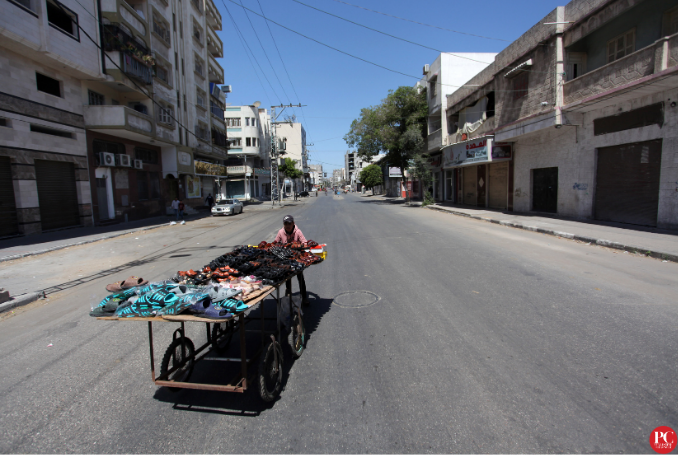
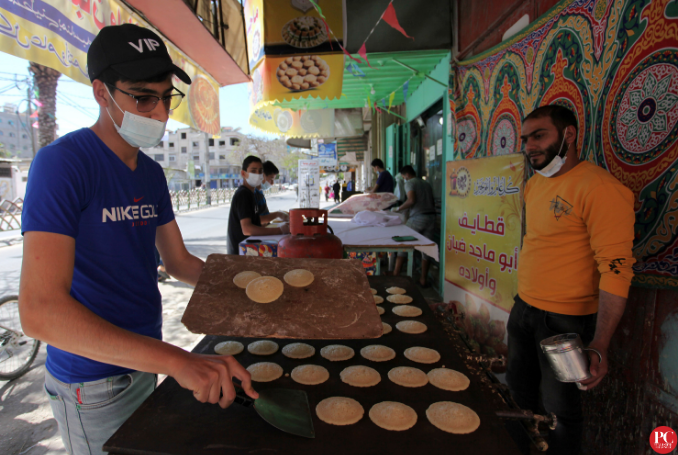
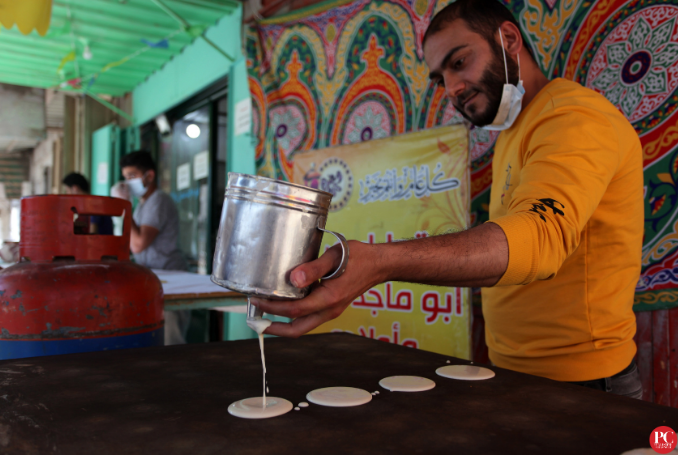
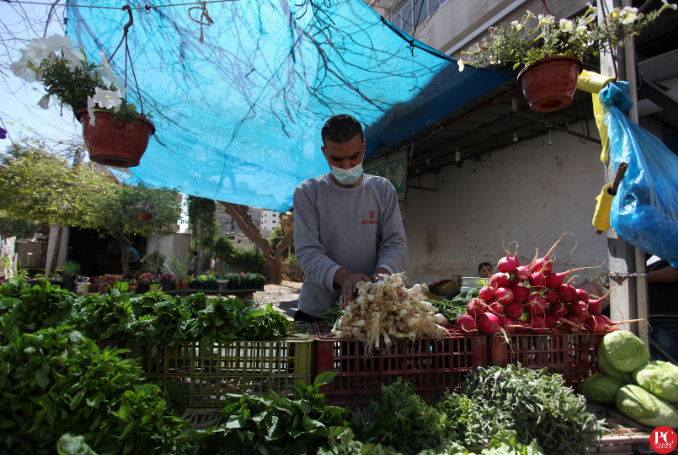
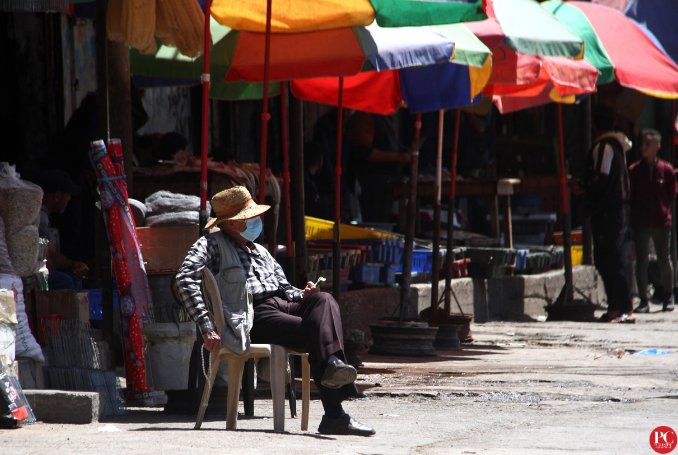
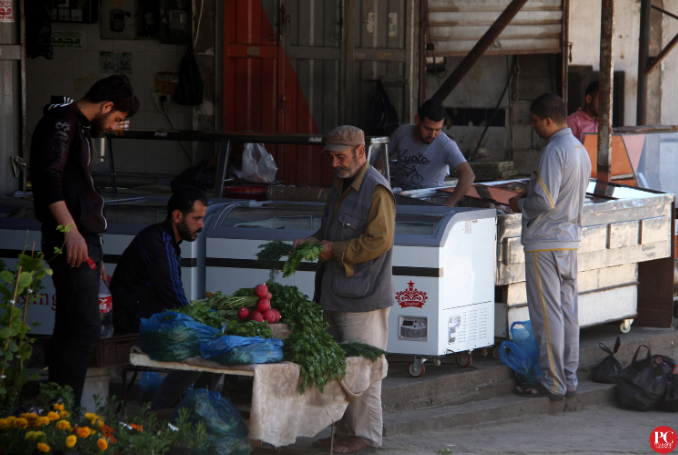
Palestine, like many countries around the world, commemorated International Workers’ Day on Saturday, May 1. But for a country that is overwhelmed with a persisting military occupation, thus exploitation and unemployment of large sectors of its workforce, the occasion was bittersweet.
While many statements were issued in appreciation of the contribution of Palestinian workers, hundreds of thousands of these workers are unemployed at the moment, due, in part, to the Israeli occupation, and also to the COVID-19 lockdown.
No other place, in Palestine, however, was hit as hard as the besieged Gaza Strip. The small enclave has been under the draconian economic blockade, imposed largely by the Israeli army but also by Egypt.
The Turkish Anadolu news agency, citing Palestinian sources, reported Friday that more than 300,000 workers living in the Gaza Strip are unemployed because of the ongoing Israeli blockade and coronavirus measures.
“The international community ignores the humanitarian situation of more than 2 million Palestinians living in the Gaza Strip,” the head of the Popular Committee to End Gaza’s Siege, Jamal al-Hudari, said in a statement issued on the occasion of the International Workers’ Day.
Al-Hudari called for international assistance through trade unions for workers in Palestine, especially the Gaza Strip.
Gaza authorities “imposed additional measures to curb the coronavirus outbreak in Gaza as the enclave has seen a surge in daily infections since the beginning of March,” Anadolu also reported.
“International Workers’ Day, by definition, should compel us to look at the situation of workers beyond the borders of our cities and countries,” said Palestinian journalist and editor of The Palestine Chronicle Ramzy Baroud.
“Of course, we must offer solidarity to our workers at national levels but we must also extend this solidarity to oppressed and exploited workers all over the world,” he added.
“In Gaza in particular, workers are not merely fighting for better job opportunities, they are fighting for sheer survival, as their families suffer malnutrition, lack of access to education, clean water and life-saving medication. On this day, we have to think about all of them and what the Israeli siege has done to Gaza, in fact, what the Israeli military occupation has done to all of Palestine.”
The densely populated Gaza Strip has been under an Israeli blockade since 2006. The blockade has undermined living conditions in the coastal enclave.
(All Photos: Fawzi Mahmoud, The Palestine Chronicle)
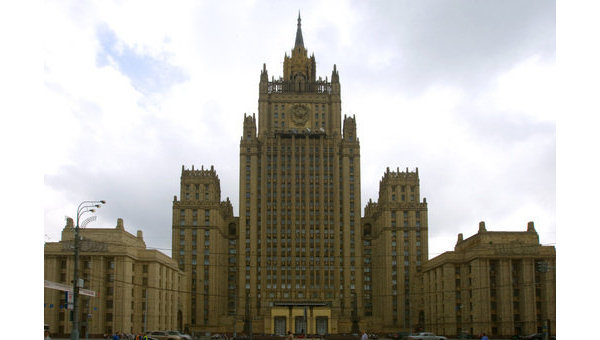
Russian Foreign Ministry affirmed that statements of some countries about illegitimacy of upcoming presidential elections in Syria are a new attempt to interfere in its affairs, stressing that holding these elections fully complies with its constitution and resolutions of international legitimacy.
The ministry said in a statement on Friday that Moscow is closely following up preparations for upcoming Syrian presidential elections due to be held on May 26th.
It added that organization of these elections is a domestic affair of Syria and fully complies with the requirements of the Constitution which was adopted in 2012 and the local laws. These measures don’t contradict with UN Security Council Resolution 2254 and other international resolutions based on respecting Syria’s sovereignty.
The statement noted that in this regard, we evaluate the recent statements by capitals of several foreign countries, which claim the illegitimacy of upcoming elections as part of a campaign of blatant political pressure on the Syrian state and a new attempt to interfere in its domestic affairs.
“No one has the right to dictate on the Syrian people timing and conditions that must be prepared for selecting a president for their state,” the statement stressed.
Holding elections comes in the light of the continued illegal foreign occupation to parts of the Syrian territory, the statement said, adding that in response to the demands of Syrian side, Moscow is ready to send Russian observers for these elections.
Thousands of Syrain nationals living in Lebanon arrive outside the Syrian Embassy in Yarze east of Beirut on May 28 before voting in the upcoming presidential elections in Syria. (Joseph Eid/AFP/Getty Images)
Syrian nationals living in Lebanon gesture as they arrive outside the Syrian Embassy in Yarze east of Beirut on May 28 before voting in the upcoming presidential elections. (Joseph Eid/AFP/Getty Images)
A fireman sprays water on Syrian expatriates living in Lebanon to keep them cool, as they arrive to cast their ballots in their country’s presidential elections, outside the Syrian Embassy in Yarze east of Beirut on May 28. (Joseph Eid/AFP/Getty Images)
A fireman sprays water on Syrian expatriates living in Lebanon to keep them cool as they arrive to cast their ballots outside the Syrian Embassy in Yarzeh.(Joseph Eid/AFP/Getty Images)
Lebanese Red Cross workers help Syrians who fainted while on their way to the Syrian Embassy to vote in the presidential election in Yarze, east of Beirut, Lebanon, on May 28. (Bilal Hussein/AP)
Syrian men cast their ballots in the Syrian presidential elections at a polling station set up in the Syrian embassy in the town of Yarzeh, east Beirut, Lebanon. (Nabil Mounzer/EPA)
Syrians who live in Lebanon chant slogans and carry portraits of President Bashar Assad and their national flags as they drive towards to the Syrian Embassy to vote in the presidential election in Yarze, east of Beirut. (Bilal Hussein/AP)
A Syrian man shows the photo of Syrian President al-Bashar Assad on the ballot paper as he prepares to vote in the Syrian presidential elections at a polling station set up in the Syrian Embassy in Yarzeh. (Nabil Mounzer/EPA)
Syrians waving flags drive to the Syrian Embassy in Yarzeh to cast their vote. (Joseph Eid/AFP/Getty Images)
The unlikeliest headline I’ve seen lately is Al-Monitor’s report that Hamas might be persuaded to set up a Christian media centre. Its purpose would be to defend the Islamic resistance movement from claims that it mistreats Christians, especially those living under Hamas rule in Gaza.
Then I saw who was doing the persuading: Father Manuel Musallam. Or to give him his correct title, Monsignor Manuel. And it all made perfect sense.
Apparently, several Christians have withdrawn from Hamas’s candidate list for the legislative elections in May after being pressured and intimidated by various media outlets. Fr Manuel says his nephew in Ramallah had intended to run on the Hamas list but his family asked him to reconsider. He blamed a smear campaign against Hamas that caused his family to worry that their business interests would be affected and the Israelis would persecute them.
Hamas’s media set-up fails to respond adequately to unjust smears, says Fr Manuel. Media outlets in Europe portray Hamas inaccurately, particularly its relationship with Christian residents. But contrary to what some Western outlets claim, Christians are not persecuted under Hamas.
Basem Naim, from Hamas’ international relations office, told Al-Monitor that Fr Manuel’s idea for a media centre will be considered and a Christian media adviser possibly appointed. He also explained that Hamas offered a number of Christian figures in the West Bank and Gaza Strip the chance to run on the movement’s list “but they withdrew for several reasons, such as family pressure or health issues, or even fear of Israeli restrictions on their travel and work”.
Failing to get the Holy Land message to the West
Every Palestinian I met during my visits urged me to “tell their story”, and this I’ve tried to do for 15 years. Hamas and the Fatah-dominated Palestinian Authority don’t bother. They not only neglect to tell the world, they fail to brief people like me so that we can tell it.
And when, some years ago, I criticized the Palestinian embassy in London for their lackadaisical attitude, defunct website and dysfunctional media department, and called for the ambassador to pack his bags and go home, I was branded “an enemy of Palestine”. The embassy today is well staffed with political, media, cultural, civil society and economic departments. But what they do to combat the torrent of Israeli misinformation is still a mystery. The Fatah/PA position as collaborators with the Israeli occupation probably means that their paymasters demand silence. Hamas are under no such constraint. After their surprise 2006 election victory they could – and should – have immediately re-invented themselves and seized the media initiative. But they’ve left it too late and now have a mountain to climb. It took them far too long to re-write their much-criticised Charter and consequently failed to win friends or influence enough people here in the West.
Around 2013, according the Guardian newspaper, Hamas “began a public transformation… with a new head of media.” But did anyone notice?
It is largely thanks to dedicated activists, civil society campaign groups and online privateers that people in the West have become better informed about the evil occupation that defiles the Holy Land…. and no thanks whatsoever to the leadership in Palestine. With truth and so much more on their side Palestine’s politicians nevertheless carelessly allow the Israeli regime, with its brazen propaganda and monstrous lies, to run rings round them. Even Western Christendom is in a pathetic state of paralysis.
“Our love for God… is currently in intensive care”
That remarkable priest, Manuel Musallam, used to run the Catholic community in Gaza. I was privileged to meet him in 2007 when he hosted a visit by a small group I was with. The Gaza Strip had been under tight blockade for 18 months following the bizarre hostility to Hamas’s fair and square election victory the previous year. The situation was strained.
In the church’s school assembly hall I was surprised to see so many Muslim students. On one wall hung a huge portrait of the Pope and on the adjacent wall an equally large portrait of Yasser Arafat.
Fr Manuel whisked us off to a meeting at the House of Fatah and then we drove to see Hamas prime minister Ismail Haniyeh and some of his colleagues, who received us with utmost courtesy and friendship and gave straight answers to straight questions. Haniyeh and Fr Manuel declared their unity to the TV cameras, emphasizing that they were Palestinians first and Muslim or Christian second in the struggle against the common enemy. The two men know each other well and Haniyeh has since become Chief of Hamas’s Political Bureau.
The following year – and who can forget? – the Israelis launched their horrendous three-week blitzkrieg called Operation Cast Lead at Christmas-time and New Year 2008/09. At the height of the killing spree, Fr Manuel sent this message from the smoking ruins to anyone who would listen:
“Our people in Gaza … cry, but no one wipes their tears. There is no water, no electricity, no food, only terror and blockade… Our children are living in a state of trauma and fear. They are sick from it and for other reasons such as malnutrition, poverty and the cold… The hospitals did not have basic first aid before the war and now thousands of wounded and sick are pouring in and they are performing operations in the corridors. The situation is frightening and sad.”
He added: “May Christ’s compassion revive our love for God even though it is currently in ‘intensive care’.”
A few days later he wrote:
“Hundreds of people have been killed and many more injured in the Israeli invasion. Our people have endured the bombing of their homes, their crops have been destroyed, they have lost everything and many are now homeless. We have endured phosphorus bombs which have caused horrific burns, mainly to civilians. Like the early Christians our people are living through a time of great persecution, a persecution which we must record for future generations as a statement of their faith, hope and love.
“Act and intervene, or nothing will change.”
When Fr Manuel retired in 2009 in failing health I remarked in an article: “I doubt if God has finished with him just yet. There’s a mountain of work to be done and good men are hard to find.”
And so it was. In the run-up to Christmas 2010 he was one of a trio of churchmen from the Holy Land touring Ireland to raise awareness of the plight of the dwindling Christian community under the illegal Israeli military occupation. Together with Archbishop Theodosius Hanna (Greek Orthodox Church) and Constantine Dabbagh (Executive Director of the Middle East Council of Churches) he showed they were more than a match for Western politicians who fancied they knew all about the Middle East. “We need only one thing, to be protected by the world against the crimes of Israel”, was their central message. And they made this stark plea: “Act and intervene, or nothing will change.”
Fr Manuel told Irish government ministers and their foreign affairs committee:
“I was in Gaza during the war [Operation Cast Lead] and suffered with my people for 22 days. I saw with my own eyes a phosphoric bomb in the school yard. I saw people injured by these phosphoric bombs, although these bombs are forbidden. These crimes against us were ignored by all the people of the world…
“What happened in Gaza was not a war. A war is a clash between soldiers, aircraft and weapons. We were victims, just victims. They destroyed Gaza. I was there and saw with my own eyes what happened. We in Gaza were treated like animals… We are not terrorists. We have not occupied Israel.
“We do not want to die to liberate Palestine. We want to live to build Palestine…. We are asking the world to give the Palestinian people their rights. The question is whether peace is possible. Despite all the difficulties, the crimes and the war, we as Palestinians say peace is possible if justice is possible.
“All we ask of Israel is to respect us and not treat us like animals. We also ask parliamentarians and governments across the world not to give us food aid. We do not need cookies from Israel. We do not even need to trade with Israel. All we need is to be protected. We are suffering a war that we have endured for more than 60 years.”
“Be assured that Hamas will protect Christians in Gaza”
Christianity in the region had been destroyed not by Muslims but by Israel, said Fr Manuel. “Israel destroyed the church of Palestine and the church of Jerusalem beginning in 1948. It, not Muslims, has sent Christians in the region into a diaspora.”
He told his listeners how he had seen the Israeli army target the Christian school in Gaza.
“Five Hamas ministers visited the school after it was attacked and promised they would repair the damage… Hamas paid more than 122,000 US dollars to repair all the damage caused. Afterwards I met the Hamas prime minister, Ismail Haniyeh. When he embraced me he said this, and we believed it. He said: “Go to your family, but be assured that Hamas will employ weapons against Muslims to protect Christians in Gaza.” This is the reality. Christians in Palestine are not suffering persecution, because we are not considered to be a religious community but rather the people of Palestine. We have the same rights and the same obligations.”
He ended by describing how things really are:
“We have spoken to Israel for more than 18 years and the result has been zero. We have signed agreements here and there at various times and then when there is a change in the government of Israel we have to start again from the beginning. We ask for our life and to be given back our Jerusalem, to be given our state and for enough water to drink.
“We want to be given more opportunity to reach Jerusalem. I have not seen Jerusalem since 1990…. We want to see an end to this occupation, and please do not ask us to protect those who are occupying our territory.”
“Peace is possible if justice is possible. Make peace possible.”
Fr Manuel should have been a political leader. To improve the human condition, it seems to me, churchmen must also be politically minded and not afraid to “mix it” with the out-and-out scoundrels who infest our political institutions and cloak themselves in a national flag.
Inevitably, the message for politicians in the world outside the Holy Land is the one expressed by this feisty priest: PEACE IS POSSIBLE IF JUSTICE IS POSSIBLE.
The world should be saying to their political leaders loudly and clearly: “It is surely not beyond the wit of civilised man to stop mouthing platitudes and act to deliver justice. Make peace possible. Or find other employment, for you offend all decent people.”
Stuart Littlewood 30 April 2021
Featured photo: Ismail Haniyeh with Fr Manuel Musallam, Gaza 2007
After working on jet fighters in the RAF Stuart became an industrial marketing specialist with manufacturing companies and consultancy firms. He also “indulged himself” as a newspaper columnist. In politics he served as a Cambridgeshire county councillor and member of the Police Authority. Now retired he campaigns on various issues and contributes to several online news & opinion sites. With a lifelong passion for photography he has produced two photo-documentary books, one of which can be read online at http://www.radiofreepalestine.org.uk.
Iraqi anthropologist and historian Fadel al-Rubai has produced a powerful body of work directly challenging orientalist interpretations of Arab and Muslim history and local Arab think tanks. Al-Akhbar talked to him about his controversial theories and future projects.
After many years of exile, Iraq intellectual and former communist Fadel al-Rubai finally settled in the Netherlands. His living near Leiden University Library, which contains thousands of anonymous Arabic manuscripts, encouraged him to examine ancient Arab history from an anthropological point of view. He found himself in front of a huge record filled with historical mistakes and sins. From that moment on, the author of The Funeral Dinner decided to reconstruct old Arabic narratives, focusing particularly on rectifying the history of Palestine.
Thus, he started his encyclopedic project with his book The Imagined Palestine: Land of the Torah in Old Yemen, in which he refuted orientalist theories of biblical Palestine. He used the story of the Babylonian enslavement of the Jews as a key to redesign the landscape of the area. He discovered that the enslavement took place in Yemen, not Palestine. When asked about the sources for his controversial thesis, he referred to the old Hebrew Torah, historical inscriptions, pre-Islamic poetry, as well as al-Hamadani’s Sifat Jazeerat al-Arab (The Status of the Arabian Peninsula),which is one of the most important historical references, though long ignored. Al-Rubai states, “The geographical description of the region by al-Hamadani fully coincides with the texts of the Hebrew Torah.”
Al-Rubai excitedly asks, “Why don’t archaeologists and historians speak up on the Himyarite inscriptions that were discovered in Palestinian sites?” And responds: “This is because Arab history had been written by non-Arabs. The orientalist reading of the Torah, which reinforced false beliefs, eradicated Arab narratives. Thus, narratives by al-Tabari, al-Masoudi, and Ibn al-Atheer were rendered mythical narratives, which resulted in a derogatory view of the texts of Arabic narrators. My mission is to separate the mythical from the historical.”
The surprise does not end here. The author of Heroes Without History daringly says, “Give me one example in which old Jerusalem is mentioned in the Torah.” He notes that the city used to be called Ilia not Jerusalem. Therefore, there is no narrative text on Jerusalem prior to the Islamic conquest.
The Torah, according to what al-Rubai has documented, refers to old Jerusalem as located in Yemen and not in Palestine. He explains, “This is what the Assyrian and Babylonian inscriptions have proven, for they refer to nine enslavement campaigns that took place in Yemen, not Palestine.” But why have historical narratives documented that the Babylonian enslavement incident as having occurred in Palestine?
Al-Rubai, who authored The Truth Behind the Babylonian Enslavement, says, “The reason lies in the monopoly over this tragic story, which was later used in the Holocaust narrative as a continuation of the historical persecution of the Jews, thus reinforcing their role as historical victims. All we need to do is to go back to the history of al-Tabari, which clearly mentions that Nebuchadnezzar’s invasion was of Yemen and not Palestine.”
Based on these controversial revelations, al-Rubai solidly concludes in his thesis that Judaism is an old Arabic religion, and the Torah is a Yemeni book. He also concludes that old Jerusalem is not present-day Jerusalem. It is located in Yemen and not Asir, as the late intellectual Kamal al-Salibi concluded in his book The Bible Came from Arabia.
Al-Rubai says, “I am not under the illusion that these ideas will prevail soon, given the presence of an enormous media power that dominates the historical narrative. It is enough to seek the documentation of our history from a critical perspective, away from the orientalist lie. Perhaps what Edward Said has accomplished in that regard has shaken this perception to a great extent.”
Al-Rubai is currently working on several projects: The Truth Behind the Babylonian Enslavement: Assyrian Campaigns on the Arab Peninsula and Yemen and The Golden Ghazal of Kaaba: Blood Relations in Islam. He is also putting the final touches on The Great Mourning, a book that examines the history of wailing and physical violence. In this book, al-Rubai dates the Ashura ritual’s origins to 5000BC in the “mourning of Tammuz and Ishtar in Mesopotamia, and Isis and Osiris in Pharonic Egypt.”
Al-Rubai explains, “This mourning is part of a wailing culture that has continued to this day. Thus it is not an innovation, the way some sects view it. The ritual of weeping on Tammuz later reached houses of worship and took different forms of expression.” Another book soon to be published is titled Isaf and Naila: The Myth of Eternal Love in Pre-Islam.
Al-Rubai is not optimistic that official Arab research centers will adopt his controversial ideas. He describes these centers as “a waste of time and effort.” He aspires to the emergence of an Arab anthropological school that abolishes orientalist theses by refuting their false statements and elaborating historical research paradigms at universities that shake present views of Islamic and Arab history.
The formation of the Intellectuals Against Forgery movement among a group of Arab anthropologists is the first attempt in this vein. Its mission is to found a critical discourse on the Torah and to launch a website that would become a space for debate and counter historiography.
In this book introduces the Arabic writer and historian, Fadhil Al-Rubaiee his theory about Jerusalem. His theory can be summarized in the following points: * The Old Testament (the Torah) in its Hebrew version does not say in any way that Jerusalem is al-Quds or was called al-Quds, nor there is any relationship between the two names. Hebrew texts have been used to support the author’s theory. * In its Hebrew version, the Old Testament clearly speaks of two separate places: one is a mountain and the other is a religious city. The Old Testament calls the mountain Qadas/Qadash (both letters “s” and “sh” are alternatively used in Hebrew.) The description of this mountain is clear in many books. The other place, which is a city, is named Jerusalem and is given a different description from that of the mountain. Therefore, it is illogical to think of the two places as one. * The author presents in this book a list of the Jewish Yemeni tribes that had been taken into the Babylonian captivity, together with what is related to them in the Hebrew text and the geography of Yemen, discovering the amazing identification with no change in names. * In this book, the author repeats what he had found in his previous works, namely that Judaism is but an ancient Arabian religion that had appeared in Yemen, where the Jewish kingdom had risen, which is the one that had sanctified Mount Qadas/Qadash. All the events of the Old Testament had taken place on the Yemeni stage. * The author pinpoints in a concentrated way some of the mistakes committed by the translators of the Hebrew text, which he thinks has contributed to the prevalence of a wrong understanding of numerous events.
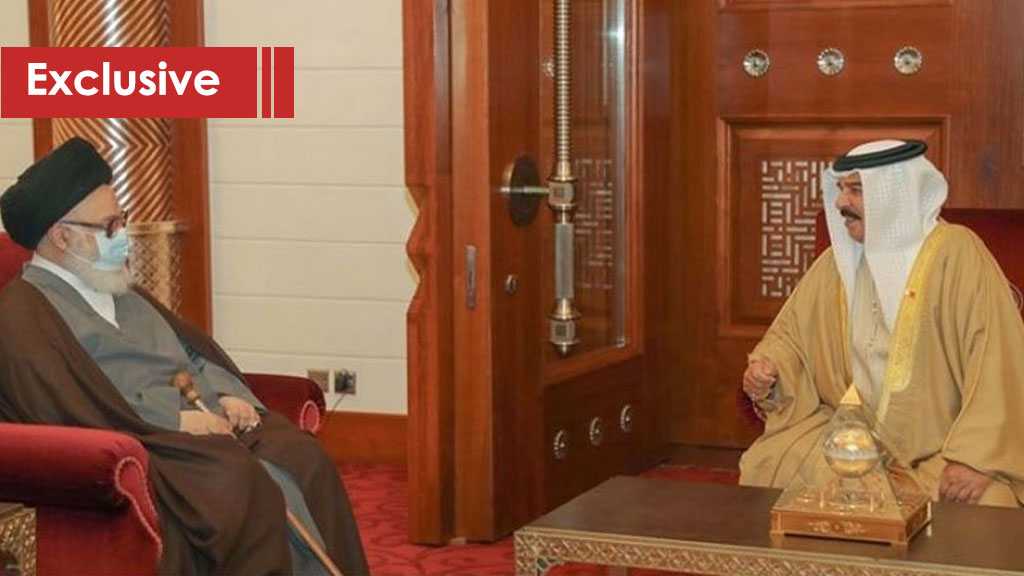
The photo joining Bahrain King Hamad bin Isa Al Khalifa and Cleric Sayyed Abdullah al-Ghuraifi will represent nothing but a dual meeting. No signs that the session the Bahraini regime sought to exaggerate will establish any decisive solution that would exit the kingdom from the ten-year-old unending crisis.
Inspecting the aims behind Al Khalifa’s receiving of Sayyed Abdullah al-Ghuraifi isn’t an unsolved puzzle. Many similar meetings and a repeated style questions trust in the ruling regime whose record is full of abusing each and every detail and issue.
Five days earlier, on April 25, Hamad bin Isa received Sayyed al-Ghuraifi with a group of scholars and clerics in a meeting meant to congratulate on the occurrence of the holy month of Ramadan. The king was keen to appear to the people smiling in the photo disseminated by his official media. The guest, however, didn’t appear smiling at all. The meeting is the second of its kind between the two sides in five months.
In December, Sayyed al-Ghuraifi visited the Saferiya Palace after ten years of estrangement. It followed the tightened grip against the political and popular opposition, in which every demander of rights ended either behind bars or martyred.
“It is just a waste of time,” this is how senior Bahraini opposition sources described the meeting. “Those who want an actual solution to the problem and starting a dialogue with the opposition after years of oppression, detention, torture, suppression, negligence, killing, and execution, won’t be satisfied with an imagery photo that don’t reflect any seriousness,” the source added.
“Sayyed Abdullah al-Ghuraifi doesn’t shut a door in front of the regime due to his religious rank,” the senior sources analyzed, “however, the regime is awaiting opportunities to promote what it wants to show the foreign public opinion in the first place, then the local one.”
Nothing to be mentioned about the meeting. It is just that it slightly broke the ice between the opposition and the regime that didn’t offer any real initiative that solutions might be built upon. Those observing the exacerbating political and rights situations in Bahrain know very well that tightening the security fist inside the kingdom doesn’t match the claims of openness to the people’s demands and those representing them.
Would the king release around 2000 political, not criminal, detainees inside his prisons? Will the regime’s apparatuses suddenly treat them humanely and treat those whose health situations intentionally deteriorated due to the negligence of his personnel and prisons’ administrations, especially the notorious Jaw Prison? Would the regime allow the opposition figures to breathe and restore their unjustly usurped freedom? Would the national identity be restored to those whose citizenships were revoked? Will the collective and Friday prayers return to their golden days in Duraz? Will the regime revive those who are now under the soil?
Those are realistic questions to which the sources add the following: “Will the regime stop its unending violence against a big sect of its people? Will it accept that the jurisdiction established justice indeed? Will it accept that the parliament carry out its observatory role to hold the government accountable? Will it stop curtailing his power and respond to the criticism and accusations?”
Despite the gloomy situation in Bahrain, it should be said that something is happening. This is what the Bahraini sources hint to.
According to their information, the king’s latest step goes along with the calmness in the region, especially after the recent stances voiced by Saudi Crown Prince Mohammad Bin Salman [MBS], and his retreating rhetoric regarding Iran. Unlike what he believed before, MBS said “Iran is a neighboring country, and we want good and special relations with it. We don’t want Iran’s situation to be difficult, we want it prosperous.”
So, the Bahraini opposition’s issue is related to the Iranian-Saudi dialogue. In this context comes releasing female detainee Zakiya al-Barbouri who was detained three years ago during a fierce raid that targeted civilian houses in the town of Nuweiderat.
The Bahraini opposition examines what it happening at home very carefully. It is true that things are turning to calmness, but the lost trust in the authority’s performance and its continued elusiveness won’t let it rest until an inclusive solution to the crisis prevails, in which citizens obtain their rights.
Despite all the dominant fear, the opposition is always open to any step that seems positive. Prominent Cleric Ayatollah Sheikh Isa Qassim identified, in his advisory words, the way to exit this complicated calamity. He emphasized that “solving the crisis that threatens with complete destruction depends on the ruler’s retreating his mistake, and doing this is a grace.”
Ayatollah Qassim called on the regime to initiate an agreement with the opposition to set a new constitutional, institutional, and practical situation that preserves the rights of the citizens and admits their sovereign position in their country’s policy.
Upon this, the good will be returned with another good; and the stance made by al-Wefaq National Islamic Society’s Deputy Secretary General, Sheikh Hussein al-Daihi, is clear in this regard as he confirmed that any step forward made by the crown prince will be met with more step forwards.
It is the kingdom of “retweets”, which waits the regional events to similarly stop oppressing its people, or it is just perhaps to have some rest before resuming its actions in another situation.
Pressure is mounting on the United States to lift a patent-related restriction, allowing other nations access to develop Covid-19 vaccines and treatments for the respiratory disease. It comes down to the priorities: saving lives, or making a profit? So far, the US has opted to make profits at the expense of innocent lives, while hoarding the vaccine for its own citizens.
Furiously throwing taxpayer money at billionaires
-
“Keir Starmer and the crisis of Britain’s extreme centre“ (Robinson):. . .
Britain, like other Western states, suffers from what one might call an
ideologi...
Hell Is Heaven For Jews
-
Hell Is Heaven For Jews June 23 2026 ___________________________________
More Vids! +BN Vids Archive! HERE! ___________________________________
Support The...
Is Rolex Quietly Retiring the GMT-Master II Pepsi?
-
Few Rolex rumors spread faster than whispers about the GMT-Master II
“Pepsi.” It happens almost every year. Someone claims production is ending,
Reddit lig...
Report on Beth Israel vigil 02-21-26
-
*Vigils continue, non-stop*
Just because we don’t get Vigil Reports out at the same rate as years'
past, we remind readers that we show up every Saturday ...
-
Hello all,
It is with great sadness that I share with you the passing of our beloved
sister, Mother, and Grandmother, the individual that you all knew ...
Best Horror Podcast
-
Best Horror Podcast Introduction: Horror podcasts […]
The post Best Horror Podcast appeared first on Copper Shock Horror Podcast.
Ikhras Endorses Muntadhar Al-Zaidi
-
“Oh parties of banditry and sectarianism and corruption, we have come and
our goal is to destroy you.” Ikhras formally endorses Muntadhar al-Zaidi,
Iraqi j...
Prince Charles: Foreign Jews behind bloodshed in ME
-
In May, 2017, British Crown Prince Charles declined an invitation from
Zionist entity’s president Reuven Rivlin‘s to attend the 100th anniversary
of the no...
Palestinian Women – One for All, All for One
-
Honouring All Palestinian Women by Honouring Three: Hanin Zoabi, Ahed
Tamimi, Samah Sabawi Vacy Vlazna “Palestinian women have always stood side
by side ...
US’s Saudi Oil Deal from Win-Win to Mega-Lose
-
By F. William Engdahl Who would’ve thought it would come to this? Certainly
not the Obama Administration, and their brilliant geo-political think-tank
neo-...
-
*Mordechai Vanunu wins human rights prize of Brazilian Press Association *
* http://www.alternativenews.org/english/index.php/features/updates/7038-mordechai...
Abdul Aziz Rantissi:
"My ultimate wish, my God, is to attain martyrdom,"...God granted him his wish on April 17, 2004, at the hands of Israeli assassins.