Showing posts with label Syrian election. Show all posts

Sunday, 18 July 2021

Al-Assad Sworn in Today before the People’s Assembly


Today 17/07/2021

By Al Mayadeen

Source: Al Mayadeen

President Bashar al-Assad is to be sworn in for a new presidential term before the members of the People’s Assembly today.
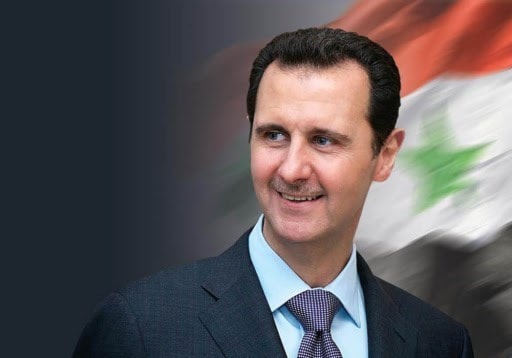
Al-Assad is sworn in for a new term today before the People's Assembly.
Al-Assad is sworn in for a new term today before the People’s Assembly

Today, Saturday, Syrian President Bashar al-Assad will be sworn in for a new term presidential term. 

President al-Assad will address the Syrian people today during his swearing-in ceremony with the presence of local and international political and media figures, in addition to representatives of diplomatic missions accredited in Damascus.

On May 27, Assad won another Presidential term. 

Syrian Speaker of the People’s Council, Hammouda Sabbagh, announced al-Assad the winner of the Syrian presidential elections with 95.1% votes.

The elections were held in 12,000 polling stations across the country, witnessing a heavy voter turnout in Damascus, Aleppo, Homs, Latakia, and the Syrian coast. 

In eastern Syria, voters defied the “SDF” harassment and made a massive presence at the polling stations. 

The Syrian President and his wife, Asma al-Assad, were reported casting their votes in the city of Douma in Eastern Ghouta.

Al-Assad Takes Oath: Supporting Any Resistance in Syria against the Occupier Is a Duty

By Al Mayadeen

During the swearing-in ceremony for a new term, President Al-Assad says that the legitimacy of the state comes from the people and that all the agents’ plots have been shattered thanks to the steadfastness of the Syrian people.
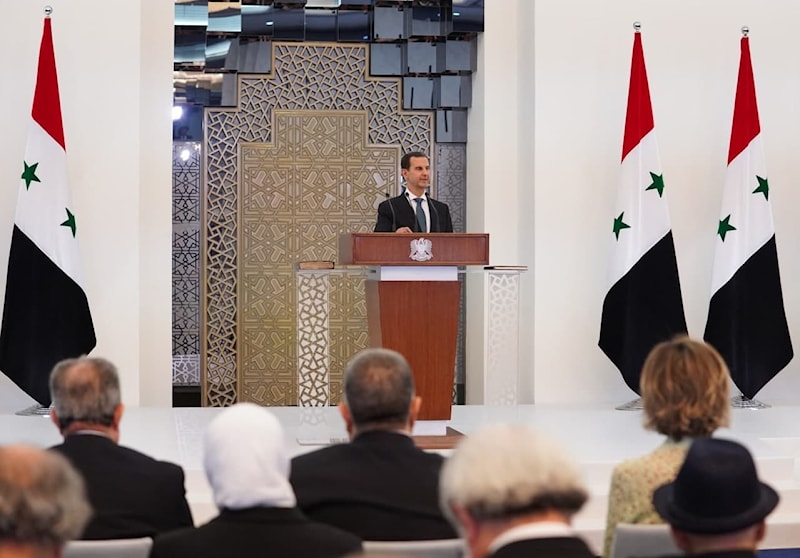
Al-Assad speaking before the People's Assembly
Al-Assad speaking before the People’s Assembly

In his speech to the Syrian people, during the swearing-in ceremony for a new term before the members of the People’s Assembly, today, Saturday, Syrian President Bashar Al-Assad said that “the people who know well the path of freedom spare no effort to defend their rights.”

He added, “Their aim was to divide the country, but the unity of the people was the fatal blow [to their plots]”, stressing that “the Syrians inside their homeland are becoming increasingly challenging and strong.”

#الميادين في تغطية خاصة لمناسبة أداء الرئيس السوري #بشار_الأسد #القسم لولاية جديدة.#سوريا
https://t.co/tI1jRF1dLa— قناة الميادين (@AlMayadeenNews) July 17, 2021

لحظة وصول السيد الرئيس #بشار_الأسد إلى قصر الشعب لأداء اليمين الدستورية رئيساً للجمهورية العربية السورية pic.twitter.com/KhF2mFTmxA— سانا عاجل (@SanaAjel) July 17, 2021

He also considered that the wide popular participation in the presidential elections is “evidence of the great national awareness,” saying that “the enemies’ bet was on people’s fear of terrorism, but today, their bet is on turning the citizen into a mercenary.” 

He emphasized that “the elections experience has proven that the people are the ones who give legitimacy to the state,” stressing that “transparency is at the top of our priorities for the next stage, and it is the core of the administrative reform program.”

President Al-Assad pointed out that “those who were manipulated to be a card played against their own homeland have turned into resources dedicated to the outside and completely under its control,” noting that “national popular awareness is our fortress and the standard based on which we measure the extent of our ability and strength.”

Apropos of the agents working under Turkish proxy in the Syrian territories, President Al-Assad said, “Some of them are working on suggestions for a constitution that puts Syria at the mercy of the foreigners,” noting that ” all the agents’ plots have been shattered thanks to the steadfastness of the Syrian people.”

Al-Assad: We Call on All Those Who Were Deceived to Return, because Your Homeland Is Your Refuge and Your Haven

He continued, “The biggest reason behind the crisis that we have experienced was the lack of values and morals,” pointing out that “whoever loses his sense of belonging [to his country] can be up to no good…”

The Syrian President addressed all those who were deceived and lured into betting on the fall of Syria to return to it, reiterating: “We say to all those who were deceived that their enemies have exploited them and used them against their own country, yet the homeland remains your refuge and haven, and the Syrian people have a big heart and are forgiving.”

Al-Assad stressed that “the next stage will witness the modernization of laws, the fight against corruption and the exposure of the corrupt, without looking back.” He considered that “the world nowadays is a jungle witnessing the overthrow of countries, support for terrorism, and the taming of peoples through psychological warfare,” considering that “the goal of modern wars is man per se, before the land, and he who wins man wins the war.”

Al-Assad: Speaking of Arab Nationalism Is Not a Viewpoint; It’s an Entire Fate

He said, “We will be defeated both psychologically and intellectually once we believe that our national affiliation is limited to the borderlines set by the occupier, and we will be defeated once we confuse Arab affiliation with Arabized governments. We will also be defeated once we believe that Arab nationalism is merely something made-up that certain parties adopted, which renders it no longer suitable for the requirements of our time.”

He also reiterated his assertion that “[national] affiliation is too big to be limited to a religion, sect, interest, history or geography.”

Moreover, the Syrian President considered that “speaking of Arab nationalism is not a viewpoint that we can agree or disagree with or a certain taste we might like or dislike; rather, it is a matter of fate.”

Al-Assad addressed the Palestinian cause, saying, “The cause closest to us is the cause of Palestine, and our commitment to it stands strong and unwavering no matter what.”

He also said, “We have set our sights on liberating the rest of our land from the terrorists and their Turkish and American sponsors,” adding: “We have confidence in the role of our friends, such as Iran and Russia, whose standing with us played a big role in the liberation.”

Al-Assad also stressed that “it is the duty of the state to support any resistance in Syria against the occupier,” noting that “the credit goes to those who preserved the land and sacrificed themselves for its sake…”

Al-Assad: 3000 Factories Underway in Syria

On the economic situation in Syria, Al-Assad revealed that work is currently underway to build about 3,000 production factories in the country.

While he stressed that “the war and the blockade failed in stopping investment,” he pointed out that “the other part of the problem has to do with willpower.”

Al-Assad also revealed that “Syrian frozen funds in Lebanese banks are estimated between 40 and 60 billion dollars.”

Moreover, he considered that easing the obstacles is necessary, “but it does not compensate for the increase in production, which is the basis for improving the living situation in Syria,” pointing out that the main goal in the next stage is to increase production and it is up to the state to facilitate the process in different sectors.

He also maintained that “solving the electricity problem is a priority to all of us, as this is reflected on life and the environment of investment.”

It is worth noting that Al-Assad took oath at a ceremony to which local and international political and media figures, in addition to representatives of accredited diplomatic missions in Damascus, were invited.

Al-Assad had won, on May 27, the Syrian presidential elections, where the Speaker of the People’s Assembly of Syria Hammouda Sabbagh declared his victory after obtaining 95.1% of the overall votes.

Related Videos


River to Sea Uprooted Palestinian   
The views expressed in this article are the sole responsibility of the author and do not necessarily reflect those of the Blog!

Saturday, 17 July 2021

Al-Assad’s Vow and Syria’s Comeback

  JULY 16, 2021

Recent victory in the latest elections has further emboldened al-Assad

Rasha Reslan

Ahead of the Syrian President’s much-awaited inauguration speech, here is a quick review of how al-Assad stepped in and boosted his country’s stature and resources during his first term, despite a global military war and extreme economic sanctions.

On Saturday, July 17, Bashar al-Assad will begin his new term as Syria’s President, setting his policies for 2021-2028.

On May 27, the Syrian government’s official Twitter account posted: “The Syrians had their say. Bashar al-Assad wins the presidential elections of the Syrian Arab Republic after obtaining 95.1% of the votes at home and abroad.”


The victory achieved in the latest elections has further emboldened al-Assad, the President who managed not only to defeat a global conspiracy against his country but also to bring Syria back to life, against all odds and despite one of the world’s most brutal decade-old wars.

Al-Assad’s First Term: The Survival of the Fittest

During the period between 2014-2021, the conspiracy plan against Syria rapidly escalated. Hundreds of foreign fighters and armed groups sprung up, and it did not take long before the conflict turned into more than just a battle between the Syrian army and terrorist groups. Certain foreign powers took the anti-government side, supporting it with money, weaponry, and armed groups, and as the wreaked chaos worsened, the grip of western-backed extremist organizations, such as “ISIS” and “al-Qaeda”, tightened.

Meanwhile, Bashar al-Assad didn’t flee his country. On the contrary, he got off to a fresh strong start. By most measures, he stood with his country, despite gloomy clouds and rumbling storms. His overall strategy booted terrorist groups out of major Syrian cities. On the personal level, al-Assad always scores high for his attributes, as most Syrians like the way he conducts himself as president.


Terrorist Groups Fall in Syria

At its height, as terrorist groups held about a third of Syria; al-Assad, the Syrian army, and Syria’s allies redefined victory in a thundering War on Terror. The so-called “US-led global coalition” carried out airstrikes and deployed “Special Forces” in Syria, providing financial and logistical support for the terrorist groups since 2014.

By December 2017, terrorist groups started to suffer key losses in Aleppo, Raqqa, and other strongholds. In 2018, the focus of the campaign against the terrorists shifted to eastern Syria. In 2019, they lost their last bastion in eastern Syria, in Baghouz village, after which Syria declared victory over terrorism.

Today, the country is almost clean from armed groups except for the presence of dormant cells along the border with Iraq and in Idlib (a city in northwestern Syria).

US Sanctions:  A Trifling Opening Shot

US support for terrorist groups in Syria was a shot in the dark, and as it failed to win the military war on Syria, they initiated a new type of war represented by Caesar sanctions.

In mid-June 2020, the US government announced the implementation of the “Caesar Act” with a flurry of sanctions. Yet a closer look at the 15 sanctions by the US Department of State and the 24 sanctions by the Department of Treasury reveals a brutal plan to destroy Syria’s economy and inflict utmost suffering on its people.

A Desperate Plan within a Failed One

Apropos the US military and economic war on Syria, there is much more yet to come. Syria and its allies have succeeded in defeating the flurry of sanctions aimed at stopping the al-Assad government from reconstructing Syria. They also buried a US plan to change the demography of Syrian and divide the country.

Rebuilding Syria’s Future

The main question remains: How will the future of Syria unfold? At the dawn of al-Assad’s new term, Syria continues to stand strong and united. Furthermore, the Syrians have high hopes that their President will take effective actions in the course of boosting the economy and achieving overall prosperity, despite the US sanctions.

Besides, al-Assad exerted strained efforts to reconstruct his country, focusing on projects with the highest likelihood of significant economic returns and benefits to quality of life. In other words, al-Assad, side by side with his people, is conveying a clear message to the world which declares the end of the global war on Syria; al-Assad will remain in power, treading the path of Syria out of all the challenges and crises. Syria’s allies also plan to be on hand as al-Assad rebuilds Syria to help it rise from the ashes, by handling the security and economic threats imposed on Syria.

The Second Term: Defying the Odds

To put things into perspective, the last election witnessed al-Assad securing almost 95.1% of the votes, so this cannot but be seen as a sign of strength for Syria and al-Assad himself, as well as his electoral campaign.

Today, the elections had taken place, and Syria has come out victorious, with an insistence on maintaining its vital role, considering that al-Assad plans to finance the infrastructure that the terrorist groups have been targeting and bombing for the past 10 years.

The Syrian President will also tackle the US sanctions on Syria, aiming to accelerate economic growth, strengthen society, and encourage youth empowerment.


Related Articles


River to Sea Uprooted Palestinian   
The views expressed in this article are the sole responsibility of the author and do not necessarily reflect those of the Blog!

Al-Assad’s Vow and Syria’s Comeback

 15 July 2021

Source: Al Mayadeen

By Rasha Reslan

Ahead of the Syrian President’s much-awaited inauguration speech, here is a quick review of how al-Assad stepped in and boosted his country’s stature and resources during his first term, despite a global military war and extreme economic sanctions.


Recent victory in the latest elections has further emboldened al-Assad
The recent victory in the latest elections has further emboldened al-Assad

On Saturday, July 17, Bashar al-Assad will begin his new term as Syria’s President, setting his policies for 2021-2028.

On May 27, the Syrian government’s official Twitter account posted: “The Syrians had their say. Bashar al-Assad wins the presidential elections of the Syrian Arab Republic after obtaining 95.1% of the votes at home and abroad.”

The victory achieved in the latest elections has further emboldened al-Assad, the President who managed not only to defeat a global conspiracy against his country but also to bring Syria back to life, against all odds and despite one of the world’s most brutal decade-old wars.

Al-Assad’s First Term: The Survival of the Fittest

During the period between 2014-2021, the conspiracy plan against Syria rapidly escalated. Hundreds of foreign fighters and armed groups sprung up, and it did not take long before the conflict turned into more than just a battle between the Syrian army and terrorist groups. Certain foreign powers took the anti-government side, supporting it with money, weaponry, and armed groups, and as the wreaked chaos worsened, the grip of western-backed extremist organizations, such as “ISIS” and “al-Qaeda”, tightened. 

Meanwhile, Bashar al-Assad didn’t flee his country. On the contrary, he got off to a fresh strong start. By most measures, he stood with his country, despite gloomy clouds and rumbling storms. His overall strategy booted terrorist groups out of major Syrian cities. On the personal level, al-Assad always scores high for his attributes, as most Syrians like the way he conducts himself as president.

Terrorist Groups Fall in Syria

At its height, as terrorist groups held about a third of Syria; al-Assad, the Syrian army, and Syria’s allies redefined victory in a thundering War on Terror. The so-called “US-led global coalition” carried out airstrikes and deployed “Special Forces” in Syria, providing financial and logistical support for the terrorist groups since 2014. 

US-backed terrorist groups in Syria

Syria’s key supporters have been Russia and Iran, while Western powers and several Gulf Arab states have backed terrorist groups in varying degrees over the past decade.

By December 2017, terrorist groups started to suffer key losses in Aleppo, Raqqa, and other strongholds. In 2018, the focus of the campaign against the terrorists shifted to eastern Syria. In 2019, they lost their last bastion in eastern Syria, in Baghouz village, after which Syria declared victory over terrorism.

Today, the country is almost clean from armed groups except for the presence of dormant cells along the border with Iraq and in Idlib (a city in northwestern Syria).

US Sanctions:  A Trifling Opening Shot

US support for terrorist groups in Syria was a shot in the dark, and as it failed to win the military war on Syria, they initiated a new type of war represented by Caesar sanctions. 

In mid-June 2020, the US government announced the implementation of the “Caesar Act” with a flurry of sanctions. Yet a closer look at the 15 sanctions by the US Department of State and the 24 sanctions by the Department of Treasury reveals a brutal plan to destroy Syria’s economy and inflict utmost suffering on its people.

A Desperate Plan within a Failed One

Apropos the US military and economic war on Syria, there is much more yet to come. Syria and its allies have succeeded in defeating the flurry of sanctions aimed at stopping the al-Assad government from reconstructing Syria. They also buried a US plan to change the demography of Syrian and divide the country. 

Rebuilding Syria’s Future 

The main question remains: How will the future of Syria unfold? At the dawn of al-Assad’s new term, Syria continues to stand strong and united. Furthermore, the Syrians have high hopes that their President will take effective actions in the course of boosting the economy and achieving overall prosperity, despite the US sanctions.  

Besides, al-Assad exerted strained efforts to reconstruct his country, focusing on projects with the highest likelihood of significant economic returns and benefits to quality of life. In other words, al-Assad, side by side with his people, is conveying a clear message to the world which declares the end of the global war on Syria; al-Assad will remain in power, treading the path of Syria out of all the challenges and crises. Syria’s allies also plan to be on hand as al-Assad rebuilds Syria to help it rise from the ashes, by handling the security and economic threats imposed on Syria.

The Second Term: Defying the Odds

To put things into perspective, the last election witnessed al-Assad securing almost 95.1% of the votes, so this cannot but be seen as a sign of strength for Syria and al-Assad himself, as well as his electoral campaign.

Today, the elections had taken place, and Syria has come out victorious, with an insistence on maintaining its vital role, considering that al-Assad plans to finance the infrastructure that the terrorist groups have been targeting and bombing for the past 10 years.

The Syrian President will also tackle the US sanctions on Syria, aiming to accelerate economic growth, strengthen society, and encourage youth empowerment.


What is Syria?


River to Sea Uprooted Palestinian   
The views expressed in this article are the sole responsibility of the author and do not necessarily reflect those of the Blog!

Thursday, 17 June 2021

كلام الأسد في المسألة القوميّة

 16/06/2020

رئاسة السورية تقول إن الرئيس بشار الأسد بحث مع وفد من “المؤتمر القومي الإسلامي” في فكرة القومية العربية والهوية والانتماء، وشدّد على ألاّ يُنظَر إلى الدول العربية إلاّ كساحة قومية واحدة.

الأسد لوفد “المؤتمر القومي الإسلامي”: القومية هي انتماء ولا يمكن أن ننظر إلى الدول العربية إلا كساحة قومية واحدة

استقبل الرئيس السوري بشار الأسد اليوم الثلاثاء وفداً من “المؤتمر القومي الإسلامي” ضم رؤساء أحزاب ونواباً وشخصيات سياسية ونقابية من عدد من الدول العربية والإسلامية، وفق بيان صادر عن الرئاسة السورية.

ووفق البيان، بحث الأسد مع الوفد، خلال اللقاء، في فكرة القومية العربية، والهوية والانتماء. وتمّ التأكيد أن ما حدث مؤخراً في قطاع غزة، والانتصار الذي تحقق هناك، وتحرّك الشعب الفلسطيني في جميع المناطق، وتحرّك الشعب العربي وتفاعله مع هذا الحدث، أثبتت أنه على الرغم من كل المخططات التي تمّ تحضيرها وتسويقها للمنطقة العربية، فإن الشعب العربي في كل أقطاره ما زال متمسكاً بعقيدته وهويته وانتمائه. 

وشدد المجتمعون على أهمية التوجّه إلى الشباب، وضرورة التجديد في اللغة التي يتم توجيه فكرة القومية من خلالها إلى الأجيال الشابة.

واعتبر الأسد أن فكرة القومية، في معناها الأساسي والجوهري، هي فكرة انتماء، ويجب عدم تقديم الفكرة القومية في الإطار النظري العقائدي المجرد، وإنّما يجب أن تكون هذه الفكرة مبنية على الحقائق، وأن يتم الربط بين الأفكار المبدئية والعقائدية، وبين مصالح الشعوب.

وأشار الرئيس السوري إلى أن التحدي الذي يواجه النخب الفكرية العربية هو “إقناع الناس بأن هناك علاقة مباشرة بين الانتماء والمصلحة”، معتبراً أنّ “الحالات التقسيمية والانعزالية والطائفية إذا حدثت في دولة عربية، فإنها ستنتقل إلى الدول الأخرى، وبالتالي لا يمكن أن ننظر إلى الدول العربية إلا كساحة قومية واحدة”.

بدورهم، أكدّ أعضاء “المؤتمر القومي الإسلامي” للرئيس السوري، أن صمود الشعب السوري وثباته في وجه كل ما تعرض له خلال السنوات الماضية “أعادا الاعتبار إلى المشروع القومي”. وأشاروا  إلى أن سوريا دفعت ولا تزال ثمن مواقفها القومية ودعمها للمقاومة، وتصديّها للمخططات والمشاريع في المنطقة.

ورأى المجتمعون أن “من حق سوريا على كل الشعوب العربية والإسلامية، وكل القوى الحرة في العالم، أن تقف إلى جانبها، لأن الدفاع عن سوريا  هو دفاع عن النفس وعن المصير والمستقبل، ولأن الانتصارات التي حدثت في لبنان أو في فلسطين لم تكن لتحدث لولا صمود الشعب السوري”. 

كذلك، وجّه وفد “المؤتمر القومي الإسلامي” التهنئة إلى الشعب السوري على النجاح في الاستحقاق الانتخابي الرئاسي، معتبراً أنه “أظهر عبر هذا الاستحقاق روح التحدّي التي تمكّن من خلالها من الصمود والثبات، وبرهن أن الحربين الإرهابية والاقتصادية اللتين تعرض لهما لم تتمكنا من كسر إرادته الحرة وقراره المستقل”.


River to Sea Uprooted Palestinian   
The views expressed in this article are the sole responsibility of the author and do not necessarily reflect those of the Blog!

Sunday, 30 May 2021

Today I saw Syrians dancing and celebrating life, and a return to peace – but, of course, the Western media won’t report that


Eva Bartlett

Celebrations for the Syrian presidential elections in Douma, eastern Ghouta, Syria, May 26, 2021 © Eva Bartlett

26 May, 2021, RT.com

-by Eva K Bartlett

Although the West has waged 10 years of war on Syria, and there is much destruction, the entire country isn’t in ruins and the pulse of life continues, albeit strangled by brutal Western sanctions.

After Eastern Ghouta’s liberation in 2018, the Western media predictably went silent on the return of internally displaced Syrians and the rebuilding that had occurred. Today, in towns in the region outside the capital Damascus, behind dusty, battered metal shop shutters, I saw glossy new windows and even more rebuilding than I had when I was here in 2018.

In Douma, I saw lovely, smiling children, excited to practise their English with me. Given that they were born during the war and lived under the horrifically savage rule of the rebel groups Jaysh al-Islam and Faylaq al-Rahman, and their co-terrorists, their exuberance was remarkable. The traumas they endured they have either deeply buried within or miraculously healed from.

Since both the media and leaders in the West made such a big deal over the Douma chemical hoax, it was particularly rewarding to see life in the streets again.

Lively times in Irbeen and Douma, Eastern Ghouta, today, where Syrians exercised their right to vote in Presidential elections.

Western media mocks the elections.

Syrians voting, sing, dancing, is a massive F.U. to the West’s ambitions of regime change in Syria. pic.twitter.com/nNwIhDzWJ1— Eva Karene Bartlett (@EvaKBartlett) May 26, 2021

Syrians in Eastern Ghouta were put through a hell that most of us, living safely far from war, cannot begin to fathom. I had seen their tortured faces shortly after their liberation in 2018. That made seeing them smiling, dancing, and celebrating the presidential elections today incredibly moving. The difference between then and now was like night and day.

Some were surprised when I posted videos on social media of a Syrian singer and orchestra performing at the Damascus Opera House two nights ago. Many assume the country has been completely destroyed, others are just unaware that it has a rich culture that hasn’t died, in spite of a decade-long war waged by the West.

Damascus Opera House now. pic.twitter.com/xMXLpposfl— Eva Karene Bartlett (@EvaKBartlett) May 24, 2021

Until the liberation, however, Syrians in Damascus risked being maimed or killed every time they went to work, to school, to the market, or even while they remained at home, when terrorist mortars and missiles rained down from Eastern Ghouta.

Back in 2014, leaving behind the hospitality of the small hotel I was staying in near the gate of Bab Sharqi, the Old City’s East Gate, I drifted over to a cluster of tables across from the beautiful Zaitoun Greek Orthodox cathedral and beside a closed restaurant. But instead of working on my laptop, as I’d intended, I ended up getting into a conversation with the owner of that restaurant, now called the Abu Zolouf bar.

As Abu Shadi and I spoke, terrorist-fired mortars fell in nearby districts. I wrote at the time: “As it happened, I got two of four mortars on audio. The first occurred around 7:05 pm, which Abu Shadi estimated to be 200 metres away. His friend corrected him saying it was only 50 metres away (also about 20 metres from my hotel). Roughly 10 minutes later, the second mortar. There were two other mortars within half an hour. SANA news reported the injury of 17 civilians.”

Our conversation became about the incessant shelling, where the latest mortar had fallen, and his near-death experience with one.

Two times mortars landed outside my restaurant. One would have killed me, but I went inside just before,” he said, pointing to a spot on the ground next to the door. He lamented the loss of business as much as the threat posed by the mortars.

The other night, I visited the restaurant with a friend. Seeing Abu Shadi, we sat down with him and chatted about those days. Now, his restaurant is open and well frequented, guests sitting under light-strung olive trees enjoying the early summer evenings.

very early in the evening; in a few hours, the place will be packed

Also in 2014, one afternoon, wishing to escape the blazing sun, I leaned against the wall encircling the Old City, looking towards Jobar, then occupied by terrorist factions, roughly a kilometer away. As I wrote at the time, while I chatted with a friend, “bullets whizzed past me, half a meter to my right, to my left. Everyone in the vicinity jumped up and ran, most looking panicked. We ran for about 50 meters, to a point which was apparently out of the terrorists’ range. One woman, hyperventilating and unable to stand, took a good 10 minutes to calm down, repeatedly making the sign of the cross as she wheezed. Later, I chatted with a man selling spinach patties, mentioning that I was surprised the bullets had reached the point where I’d been sitting. ‘They reach as far as here,’ he said, from his hole-in-the-wall bakery another 200 metres from where I’d been sitting.

My encounters with mortars and their victims were many over the years, including seeing numerous children maimed and with critical injuries from the terrorists’ shelling, many ancient Damascene houses partially destroyed by it.

Douma, Syria, April 2018 © Eva Bartlett

n 2018, I interviewed the supremely talented violinist and composer, Raad Khalaf, who is also a founder of the all-women Mari Orchestra. Afterwards, we chatted and he mentioned that the shelling had reached the Higher Institute of Dramatic Arts where he taught, near the Opera House.

He told me that the year prior, terrorists had attacked the area with some 37 bombs in one day.

The students had to stay inside for eight hours – you couldn’t go outside because we didn’t know when or where the next bomb would fall. One student went outside and was killed. Here we lived five difficult years.

On Monday this week, I went to the Opera House to hear Syrian singer Carmen Tockmaji and the orchestra accompanying her perform. The auditorium was only half-full but lively, everyone evidently enjoying the singer’s talents.

I was surprised to learn later that a front-row ticket cost just 2,000 Syrian pounds (80 US cents), a second-class ticket 1,500 (60 US cents), and a third class ticket 1,000 (40 US cents). Nonetheless, despite the low price, Syria’s poorest can’t afford this, largely because of the brutal sanctions on the country that decisively affected the currency, causing hyperinflation – an intended consequence of the cruel and immoral sanctions leveled against the Syrian people.

I wrote last year (and before) about how these sanctions directly affect civilians: “On June 17, the US implemented the Caesar Act, America’s latest round of draconian sanctions against the Syrian people, to ‘protect’ them, it claims. This, after years of bombing civilians and providing support to anti-government militants, leading to the proliferation of terrorists who kidnap, imprison, torture, maim, and murder the same civilians. Sanctions have impacted Syria’s ability to import medicines or the raw materials needed to manufacture them, medical equipment, and the machines and materials needed to manufacture prosthetic limbs, among other things.”

But sanctions have yet another brutal effect: they wreak havoc on the economy. A May 3, 2021 opinion piece by Abbey Makoe on the website of the South African Broadcasting Corporation noted: “Electricity rationing in Syria has reached its highest levels due to the government’s inability to secure the fuel needed to generate electricity. This is mainly due to the damaging international economic sanctions led by the Western powers, including the IIT [Investigation and Identification Team of the Organisation for the Prohibition of Chemical Weapons] protagonists France, UK and the US. The value of the Syrian pound has crumbled to almost nothing. The Caesar Syria Civilian Protection Act of 2019 … is credited with bringing about starvation, darkness, plague, misery, robbery, kidnappings, increased mortality rate and the certain destruction of a nation that was once a beacon of hope across the Middle East.” 

The misery is real, and Syrians are indeed suffering, many unable even to feed their families properly.

Speaking of Opera House performances may seem trite in light of the economic suffering, but the fact that productions such as this do still occur in Syria is another indication that the West’s change-of-government project has failed, despite its 10 years of waging war in Syria.

Seeing this concert just before the presidential elections was moving and poignant. As Carlos Tebecherani Haddad, a Syrian-Brazilian friend I met in 2014 when mortars were raining down around us, wrote: “Celebrating life, victory over foreign aggression, rebuilding, the strength of Syrian roots, presidential elections and the bright future of the Syrian nation.

That indeed is what I’ve seen in Syria, including today in Douma, where Syrians amassed to vote. Yet there is much to be done, particularly when it comes to rebuilding the infrastructure – especially as oh-so-benevolent America and its allies, in sanctioning the Syrian people, are directly preventing this.

So, if you’re still pointing a finger at the president and the army, turn that finger back at your governments, ye in the West. They are the cause of the destruction and death in Syria, and they hinder an otherwise achievable return to peace and normality.


River to Sea Uprooted Palestinian   
The views expressed in this article are the sole responsibility of the author and do not necessarily reflect those of the Blog!

Saturday, 29 May 2021

Talking Syria’s Presidential Elections, With Laith Marouf & Myself (in Damascus)


Eva Bartlett

Brief conversation I had last night with geopolitical analyst Laith Marouf about yesterday’s Syrian presidential elections. I visited eastern Ghouta towns yesterday and saw jubilation among Syrians on the streets, including in Douma, singing and dancing.


No matter what the lame corporate media is saying about the elections, Syrians wanted them and are still celebrating today. Hell, in 2014, a week after the elections, I saw a party raging in Homs, what the pro-“revolution” crowd used to call the “capitol of the revolution”.

Laith:

“Syrians in the US went to the embassy at the UN and voted. That was a direct challenged to American hegemony, since the Americans closed the Syrian embassy in DC. But there is still a Syrian embassy at the UN, and that they can’t touch, the Americans. So many people showed up at the UN headquarters, waiving flags, and so on. The other two countries that host the majority of Syrian refugees or immigrant populations, Germany and Turkey, again the blocked the Syrian votes from happening.

At the same time, countries that were responsible for the war in Syria, like the UAE, opened the embassy, allowed Syrians to vote.

Last week in Lebanon, tens of thousands of Syrian residents of Lebanon went to Syrian embassy in Beirut. The fact on the ground is that Syrian people are out in the millions voting in these elections.”


River to Sea Uprooted Palestinian   
The views expressed in this article are the sole responsibility of the author and do not necessarily reflect those of the Blog!

Syrians filled the polling stations to defend their sovereignty and now fill the streets to celebrate the result

28 May, 2021, RT.com

-by Eva K Bartlett

The Western leadership and establishment media have once again derided the Syrian presidential vote, but the people don’t care. They’re too busy celebrating the outcome of the election and the defeat of terrorism in their country.

The irony of media outlets and pundits from America tweeting about what they view as the failure to hold free and fair elections in Syria was not lost on some.

wrote yesterday of the jubilation I saw in eastern Ghouta, where Syrians were celebrating the arrival of election day and proudly voting. I also noted that people “in eastern Ghouta were put through a hell that most of us, living safely far from war, cannot begin to fathom.” Back in 2018, I had seen their tortured faces shortly after their liberation. That made seeing them this week smiling incredibly moving.

Just ahead of the vote, I predicted there would be Western cynicism if President Assad won again, which would mean the West had failed in its regime-change project. I was right.

Syrian analyst Kevork Almassian, of Syriana Analysis, tweeted a thread about the mass celebrations around Syria, including in Homs, once dubbed the “capital of the revolution” by the delusional crowd, and Aleppo, the city the Western media said “fell” when it was liberated of the terrorists who reportedly murdered up to 11,000 civilians via their bombings and snipings.

He also noted that the media’s claims of Sunni Muslims hating Assad had no basis in reality (never mind the fact that the First Lady is Sunni, as are many in top leadership positions), tweeting photos of masses of Sunnis voting.

The Guardian, guilty of some of the filthiest war propaganda against Syrians, and usually reporting from Istanbul, deemed the 2021 elections “fake” and a “sham”. But the Guardian has never liked to give voice to the vast majority of Syrians in Syria, preferring instead to quote al-Qaeda-linked “media activists” and “unnamed sources”. So, it’s hardly surprising it would denigrate the event that Syrians are currently celebrating around the country.

Likewise, the BBC, another contender for the most outstanding war propaganda on Syria, unsurprisingly cited the “opposition” as calling the elections a “farce”.

The Western media likewise bleated “farce” when Syria provided 17 witnesses to testify at the Hague against the claims that Syria had used a chemical agent in Douma – a narrative that has been thoroughly debunked. And they’re still lying after all these years.

This outstanding report from Syria by Eva Bartlett penetrates the ‘iron dome’ of Western propaganda, also known as news.
It is about a chemical attack that never happened in a country attacked, subverted and blockaded in your name.https://t.co/AX1Zwbg0g0— John Pilger (@johnpilger) May 27, 2021

Speaking to Syrian media yesterday in Douma, Assad said of the West’s derision of the elections: “The best response to colonialist countries with histories of genocide and occupations was the mass turnout of the people for the vote.”

And, regarding what the West thinks of the legitimacy of those elections, he concluded: “Your opinions are worth zero, and you are worth 10 zeros.”

Amen to that.

On Wednesday, the government extended the time in which people could vote by an additional five hours, as they did back in 2014, due to the high turnout. It even had to provide more voting boxes. In fact, in 2014, in Lebanon, which hosts the largest per capita population of Syrian refugees in the world, voting was extended not merely by five hours, but by an entire day.

As I wrote recently, Western nations have closed Syrian embassies globally to prevent those eligible from voting. But interestingly, as I learned from political analyst Laith Marouf in our discussion this week, “Syrians in the US went to the embassy at the UN and voted. That was a direct challenge to American hegemony, since the Americans closed the Syrian embassy in DC. But there is still a Syrian embassy at the UN, and that they can’t touch, the Americans. So many people showed up at the UN headquarters, waving flags, and so on.”

According to Marouf, in Beirut, tens of thousands Syrians went to the Syrian embassy last week, but “members of the Lebanese Forces party cut the roads towards the embassy and attacked cars and buses carrying Syrian citizens,” allegedly killing one in front of his children and on national live television.

“The other two countries that host the majority of Syrian refugees or immigrant populations, Germany and Turkey, again blocked the Syrian votes from happening,” he said. 

Marouf spoke of the candidates, noting there were three: a leader of the opposition, a former minister, and President Assad.

“They have been vetted through security, making sure that they stand for the sovereignty of Syria, given that Syria has been living under a global war of terrorism, led by the US.”

On the ground on election day

I wrote on election day of the vibrance and peace I witnessed in Douma, and tweeted about the celebrations, about the Syrians singing and dancing.

One woman in Irbeen, a village in eastern Ghouta, told me“Today is historic. He is writing victory, a renewed victory for Syria, the general and protector of Syria, Bashar al Assad. The people you see coming, do so by their free will.”

A side note: from the cross necklace she wore, I knew the woman was a Christian. The “rebel” terrorists the West supports and whose sadistic death cult they would have installed to govern Syria would have persecuted, even killed, women like her.

And that’s the crux of it: Syrians aren’t just celebrating the leader they overwhelmingly love and respect, they’re celebrating the defeat of this terrorism in their country and of the imperialists’ regime-change project in Syria.

A Syrian-American friend, Johnny Achi, flew to Syria expressly to vote in the elections. He told me“I’m a Syrian citizen and have lived in the United States for about 30 years. I’m here in Damascus to exercise my rights and duties as a Syrian citizen, since the US chose to close our embassies. As long as the embassies are closed, we’re going to keep making the trip here, to exercise our duty and our democratic right.”

“I chose Douma, in eastern Ghouta, under the ‘rebels’ until 2018, to show that there is a big turnout here, that people are happy to be back in a government-controlled area. Everyone I talked to is so jubilant that they got rid of all of Jaysh al-Islam, Faylaq al-Rahman, and all those brigades that were making their lives miserable,” he said. 

In Achi’s view, the US would not have accepted any of the candidates, no matter who won.

“They decided that this election was illegal. Their excuse this time is how can you have a democratic election when you have land under occupation? But the land is occupied by Turkey and the US. If they would leave us alone, we would have freed those three provinces and would have all 14 provinces under Syrian control,” he said. “But this vote will help us liberate those provinces still under occupation.” https://www.youtube.com/embed/7DqvJwn3oLQ?version=3&rel=1&showsearch=0&showinfo=1&iv_load_policy=1&fs=1&hl=en&autohide=2&wmode=transparent

The pundits will opine, the media will screech, but aside from addressing that, I don’t care, and Syrians don’t care because they’re too busy celebrating.

On Thursday, while the votes were still being counted, I passed through Umayyad Square, a massive roundabout in central Damascus, where a party was beginning. Later in the evening, I returned, staying until after the votes had been counted and Assad had been declared the winner. Electric doesn’t even begin to describe the mood of triumphant Syrians celebrating their victory.

I’ve been coming to Syria since 2014, making 15 visits in all, gathering many heartbreaking testimonies, being caught up in many dangerous encounters with mortars and terrorist sniper fire. I, too, celebrate the return of peace to Syria. But, moreover, I celebrate the Syrians’ shunning of Western diktats and for continuing to live their lives as they choose.

As I stood filming cheering Syrians, the results were announced. The crowd went wild and the party continued. Of course, Western media outlets won’t accept Assad’s 95.1% result, but those Syrians simply do not care. They know the West has lost the plot.

Stayed till after midnight, amazing energy. pic.twitter.com/RlCaWlXxf1— Eva Karene Bartlett (@EvaKBartlett) May 27, 2021

RELATED LINKS:

Douma: Three Years On: How independent media shot down the false “chemical attack” narrative.

Today I saw Syrians dancing and celebrating life, and a return to peace – but, of course, the Western media won’t report that

Western nations want ‘democracy’ in Syria so badly they close embassies and prevent Syrians from voting in presidential elections

It’s 10 years since the war in Syria began, and Western media & pundits are still eager to keep it going

SYRIA: My Published Articles From and on Syria (2014-2021)


River to Sea Uprooted Palestinian   
The views expressed in this article are the sole responsibility of the author and do not necessarily reflect those of the Blog!