Uprooted Palestinians are at the heart of the conflict in the M.E Palestinians uprooted by force of arms. Yet faced immense difficulties have survived, kept alive their history and culture, passed keys of family homes in occupied Palestine from one generation to the next.
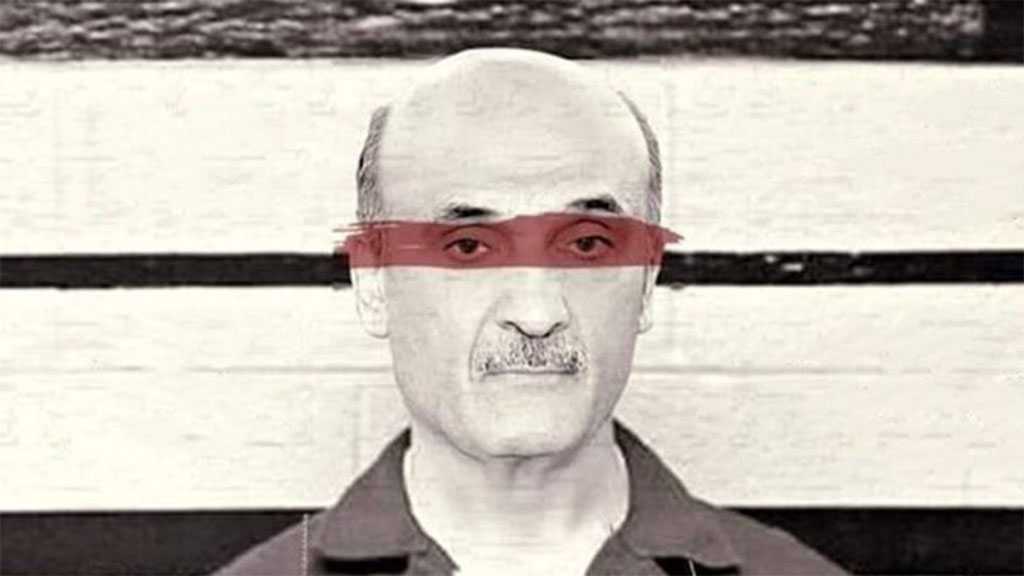
Lebanon’s military court summoned Thursday the Leader of the Lebanese Forces [LF] political party Samir Geagea, over the slaughtering of seven civilians in Beirut last week.
Lebanese media outlets on Thursday reported that the court summoned Geagea to hear his testimony on the October 14 violence in light of the confessions of those detained over the massacre that was committed in Tayyouneh area, a region close to Beirut’s southern suburb.
At least seven people were martyred and 60 others injured in an attack on October 14, during which Hezbollah and Amal Movement supporters were shot from rooftops while they were gathering to peacefully protest against a judge investigating last year’s Beirut Port explosion as they accused him of bias.
In a statement, Hezbollah and Amal Movement said armed groups affiliated with the LF party, a former militia group during the 1975-1990 civil war, fired at the protesters from rooftops, aiming at their heads, in an attempt to drag Lebanon into new sectarian strife.
Meanwhile, Hezbollah Secretary General His Eminence Sayyed Hassan Nasrallah on Monday said that “the Lebanese Forces’ true agenda for Lebanon is civil war.”
He further added: “The biggest existential threat to the Christians in Lebanon and the security of the Christian community is the Lebanese Forces party.”
Related Videos
The Ambush of Tayuna and the Leb-forces’ quest for civil war – politicizing the investigation into the explosion of the port of Beirut
The Massacre of Tayuna A detailed event and a dangerous crossroads/ Dr. Wasim Bazzi
Salem Zahran/Latest Political Developments in Lebanon
Russian President Vladimir Putin comments on the Beirut port explosion.
the statements were made at the Valdai Discussion Club, held in Sochi, Russia.
Russian President Vladimir Putin expressed that “the Beirut port blast disaster was linked to the desire of some to achieve financial gains, by selling fertilizers at better prices.”
Putin’s words came during the conclusion of the Valdai Discussion Club, held in Sochi. The Russian President stressed that the position on Hezbollah differs from one country to another, and explained in response to a question, “I know very well that different people in different countries take different positions on Hezbollah.” As for the Russian position, he divulged that “Hezbollah is a significant political force in Lebanon.”
Putin indicated that his country is working with all Lebanese political forces to maintain security, stability, and peace in Lebanon. He stressed Russia “practically communicates with all political forces in Lebanon and will continue to do so.”
“In Russia, they are completely concerned with finding common ground for an agreement between the Lebanese parties without a fight,” and he added, “We are working with all the Lebanese to prevent bloodshed.”
About the Beirut Blast investigation
On the issue of the investigation into the Beirut port blast, he announced that “we will study the possibility of assisting in the investigation of the Beirut port explosion, and we will provide satellite images, if available.”
Putin added, “We cannot comment on political processes related to the Lebanese judiciary. We cannot support one party against another, because that will have counterproductive results on our efforts to reconcile between the Lebanese parties.”
2020 Beirut Blast
On August 4, 2020, a massive explosion rocked the Lebanese capital, Beirut. The blast followed a fire in a warehouse inside the port. Investigations showed that this warehouse was storing large quantities of ammonium nitrate.
منذ مجزرة الطيونة وماكينة إعلامية عملاقة متعددة الجنسيات تشتغل لتظهير سمير جعجع كبطل لحماية المسيحيين مرة، وكمنتصر قدم له كلام السيد حسن نصرالله وما جرى في الطيونة هدية مجانية لزعامة المسيحيين والسنة، مرة أخرى، وكسياسي محترف يحترم الدولة ويتقن فنون السياسة والإعلام، ويشكل خط المواجهة الأول لصالح مشروع الدولة مع حزب الله المتهم بمشروع الدويلة، حتى جاءت المقابلة التلفزيونية التي أطل عبرها جعجع متحدثاً بنفسه عن نفسه، كاشفاً حجم تهافت المنطق وضعف الحجة ورثاثة الموقف، ويظهر المسخ الميليشيوي الذي يعشعش في ثنايا كلماته وينبض بين حروفه، كما تظهر الخلفية الإجرامية التي تحول الاتهامات الموجهة إليه إلى مضبطة قابلة لصرف، فيصح فيه القول الذي تلعثم وهو يقوله، ربما لأنه يحاكي حالته، يكاد المريب يقول خذوني.
–
خلاصة كلام جعجع تضعه في ثنائيات يستحيل جمعها في خطاب سياسي واحد، فما قدمه كاف لنسف خطابه الذي دأب على نثره كشظايا بوجه حزب الله طوال سنوات، مستفيداً من تقديمه من المحور المعادي لحزب الله بصفته القوة القيادية محلياً في هذا المحور ليرث كل التحريض الإعلامي وكل الشيطنة التي شارك بها كثيرون من سياسيين وتشكيلات مجتمع مدني ظهروا أمس مجرد عسكر في جيش يقوده سمير جعجع، لا مكان فيه للدولة ولا للقضاء، ولا يستقيم له نص متجانس قادر على الصمود أمام أي أسئلة جدية، وأمام أي تفكيك منطقي يفترض أن يتولاه من يحاوره، ولم تفلح في ستر هذه الفضيحة كل محاولات التجميل والماكياج التي منحت له من المحطة والبرنامج الذي استضافه، وما نفعت رقع الرتا في إظهار أكثر من خزق يتسرب منه التهافت ويظهر عبره الارتباك والضعف والتهافت، فسقط النص السياسي لأول السحرة المتقدمين في المشروع المعادي لحزب الله، بالضربة القاضية، من دون أن يتولاها أحد، لأنه تكفل بالنيابة عن كل الخصوم بتسديدها لنفسه.
–
أول دخولو شمعة عطولو، ظهر جعجع في أول كلمة نبست بها شفتاه، على حقيقته الميليشيوية، وعدائه للدولة والقضاء، بنبرة ومضمون كلماته تعليقاً على استدعائه للمثول كمستمع إليه أمام القضاء، ففجأة صار القضاء محسوباً على حزب الله، وكل النص المعادي لحزب الله مبني على اتهامه بالتشكيك بالقضاء، وفيما تشكيك حزب الله نابع من مطالعة طويلة تراكمت عبر شهور من التجربة مع كل من المحققين فادي صوان وطارق بيطار، ولم تترجم مرة واحدة بالقول لأحد لا للمثول أمام القاضي بنية الاستماع، أو كشاهد، وقد تكرر التسهيل لعمل القضاة مراراً تحت عناوين مشابهة وصولاً لشيء مختلف جداً جداً جداً، هو ادعاء القاضي على وزراء ورئيس حكومة سابق ومدراء أجهزة أمنية من دون سواهم الذين يماثلونهم رتبة ودوراً تجاه ملف النترات، من دون أي مبرر، وتجاوز نص دستوري يحصر مثل هذه الملاحقة بالمجلس الأعلى لمحاكمة الرؤساء والوزراء من دون أي تفسير، مع الإصرار على استثناء القضاة من نص قانوني لا دستوري يقول بملاحقتهم أمام محكمة خاصة بالقضاة، هي أدنى مرتبة دستورياً من إلزامية نص حصر الملاحقة بحق الرؤساء والوزراء بالمجلس الأعلى، وصولاً للتعمية على أسماء القضاة وحجبها عن الإعلام الذي شكل منصة حضور مريب للقاضي، وليس لدى حزب الله اسم واحد من أسماء قياديه مطلوب للمثول أمام القضاء، وجاء الأهم من خلال رفض جعجع العلني والمباشر لمجرد الاستماع إليه، ليسقط كل نصه ونصوص أصحابه بدعوة الغير للمثول وقد وجهت لهم اتهامات وتقررت ملاحقتهم، ولم يعد ممكناً لجعجع وأصحابه الجمع بين النصين، مع القضاء ليلاحق الغير ويتهمهم من دون وحدة معايير وبمخالفة نص دستوري، وضد القضاء لمجرد أن وجه لكم دعوة استماع؟ فقولوا نعم واحدة للقضاء أو لا واحدة للقضاء؟ وحزب الله جاهز ليأخذ بوصفتكم بلا تعديل.
–
ثاني الهنات غير الهينات، سقطة جعجع أمام الرئيس ميشال عون والتيار الوطني الحر، فكيف يستقيم القول بقضاء مستقل يدير تحقيق المرفأ، والتعيينات تمت وفقاً لجعجع برعاية رئيس الجمهورية والتيار، فكيف يستقيم ذلك مع اتهام الرئيس والتيار بتسليم الدولة لحزب الله، ومعركة حزب الله مع هؤلاء القضاة كما يصفها جعجع معركة وجود وحياة أو موت، وكيف يستقيم الجمع بين سيطرة حزب الله على الدولة، مع الحديث عن وصول حزب الله إلى طريق مسدود في المراجعة القضائية وثم في المراجعة السياسية، أي باللجوء إلى الحكومة، التي قيل من جعجع وأصحابه إنها حكومة حزب الله، فإذا كان حزب الله قد وصل إلى طريق مسدود في القضية التي يقول جعجع إنها مصيرية بالنسبة للحزب، فمتى يصرف حزب الله سيطرته على الدولة، فإما حزب الله غير مسيطر وهذا يفسر وصوله إلى طريق مسدود، وهذا يعني أن الرئيس عون والتيار الوطني الحر كان حليفاً لحزب الله يمارس استقلالية تامة ويختلف ولا يتبع ولا يطيع ولا يشتري وجوده في السلطة بالتبعية، وجعجع طبخ الرز بالبصل وأراد من الناس ألا تنتبه كي لا تسأل، لكن القبوات لا تخفي السماوات، فكيف إن كانت حبة صنع منها قبة؟
–
ثالث الأثافي غير خاف، فجعجع ليس حليفاً للنصرة وداعش والإخوان المسلمين، ولا هو من قال عن غزوة الأشرفية عام 2006 إنها تظاهرة سلمية لحلفاء، وعلى رغم تكسير الكنائس وتدمير السيارات وواجهات الأبنية واقتحام المنازل، لم يخرج أي من مناصريه بطلقة سلاح صيد، وهي الغزوة التي فرضت على العماد عون يومها تقريب موعد الإعلان عن التفاهم مع حزب الله لطمأنة المسيحيين وفي الأشرفية وعين الرمانة، ولذلك اختار كنيسة مار مخايل ولاقى القبول من حزب الله، الذي يرى الكثير من بيئته أنه يبدو تابعاً للتيار يراضيه ويسايره ويلبيه في كل طلباته، ويلقى اعتراضاً ورفضاً وتمنعاً في الكثير مما يطلب بالمقابل، وتنكر جعجع لواقعة الأشرفية يحمل إضافة للتعمية على الحقيقة أحد أمرين، إما أنه أعطى أمراً في عين الرمانة لم يعطه في الأشرفية، أو أنه يتهم أهل الأشرفية بالتخاذل، علماً أنهم نفذوا تعليماته بالتروي، بينما لم يسمع منه أهل عين الرمانة، خصوصاً محازبيه فيها والآتين من خارجها إليها، دعوة كتلك للمسالمة، بل سمعوا منه الدعوة للاستعداد للمواجهة قبل ليلة، ومهما أنكر جعجع هو لا يستطيع إنكار أن رفضه لمشاركة حزب الله في سورية لم يكن مجرد رفض لخروج الحزب عبر الحدود بل لأنه كان كما جاهر مراراً بالرهان على الجماعات المسلحة في سورية، وصولاً للرهان على بقائها في جرود لبنان الشرقية، بصفتها حليفاً، كما قالت زيارات الوفود والحلفاء إلى عرسال والكلام المقال في حضرة الدم هناك، بينما الثابت بالمقابل أن من قالت هذه الجماعات دفاعاً عن قرى وبلدات المسيحيين والمسلمين في لبنان كله لا في البقاع فقط هو حزب الله، فماذا يقول جعجع في اعتبار غزوة الأشرفية حركة سلمية وتوصيف احتلال الجرود بتموضع الثوار من جهة، وتصنيف حزب الله بالعدو والدعوة لمواجهته، من جهة مقابلة، غير أن ستر الفضيحة صعب بل مستحيل؟
–
هذا غيض من فيض، لحوار أسقط كل الهالة المصطنعة التي تشاركت في تلميع صورة جعجع عبرها وسائل إعلام لبنانية وعربية لأيام متصلة أملاً بتجميع حليب يصنع من لبنان يصلح لتلوين الحقائق وطمسها، فجاء وضرب قدر الحليب بقدمه وأسال الحليب على التراب، واللبنانيون لم يمر عليهم مشهد سياسي يختزن الضعف وينثر من حوله الهراء والكلام العبثي بلا سند، ويستخف بعقول الناس وذاكرتها، كما كانت إطلالة سمير جعجع، التي تصلح نموذجاً للتدريس الجامعي بالفشل المزدوج، تحت عنوان، عندما يسقط المحاور بالنقاط ويسقط الضيف بالضربة القاضية.
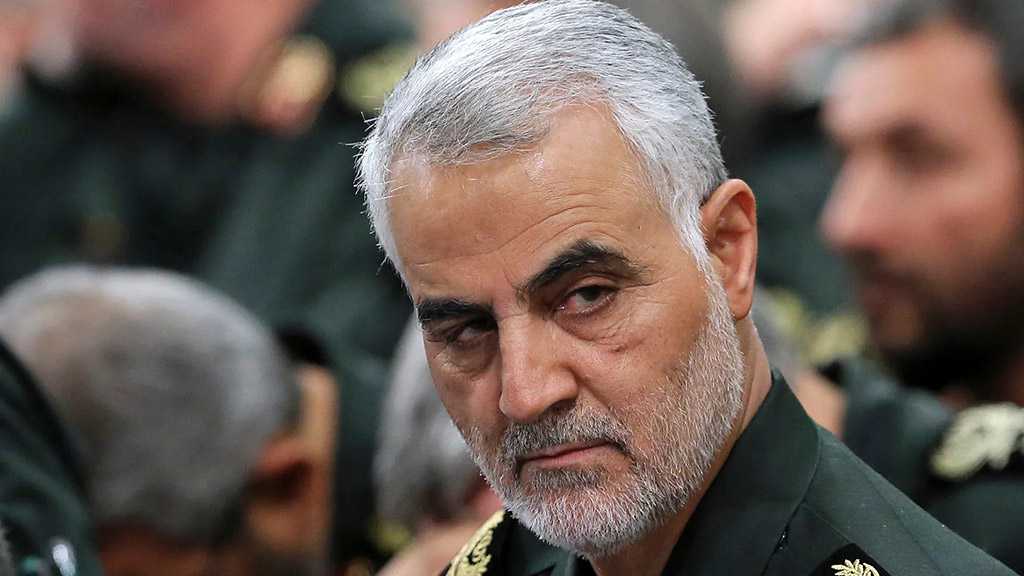
A new book that hit shelves today by Lt. Gen. Keith Kellogg reveals that the Trump administration planned the killing of Gen. Qassem Soleimani as part of a “disproportional” response to attacks on US troops in Iraq by Shiite resistance groups. Kellogg was then-Vice President Mike Pence’s national security adviser, and also served as executive secretary and chief of staff for the US National Security Council under Trump.
“We had always considered him a legitimate target because he was a sponsor for terrorism and was directly responsible for the deaths and maiming of hundreds of Americans,” Kellogg writes about Soleimani in “War by Other Means: A General in the Trump White House,” according to the UK Daily Mail, which received an advance copy of the book.
Solemani commanded the Quds Force, an elite formation of Iran’s Islamic Revolutionary Guard [IRG], and commanded Iranian forces in Syria fighting against the Wahhabi Daesh [Arabic acronym for “ISIS” / “ISIL”] and al-Qaeda-linked terrorist groups before leading the Iranian and Iraqi fight to push Daesh out of Iraq.
Despite being sanctioned by the United States as a “terrorist”, Soleimani enjoyed enormous prestige across the Middle East as the “linchpin” who united resistance groups to halt Daesh’s advance toward Baghdad when the Americans would not commit to anything more than airstrikes against Daesh.
Because of the anti-Daesh war, Soleimani was closely linked with resistance groups in Iraq’s Popular Mobilization Forces [PMF], which opposed the continued US presence in Iraq. According to Kellogg’s book, an exchange of strikes in late December 2019 is what pushed the White House over line and decided to take Soleimani out.
On December 27, 2019, the Shiite resistance group Kataib Hezbollah attacked an Iraqi military base in Kirkuk where US forces were based, killing a US contractor and injuring four US service members, as well as two Iraqi service members. The next day, the US launched an airstrike on Kataib Hezbollah positions, and that evening, protests in Baghdad descended on the US embassy in the Green Zone and set fire to some of its outer structures.
Washington blamed Iran for both of those attacks, and Soleimani in particular, who they learned would be secretly traveling to Baghdad in just a few days.
“But our response had barely begun,” Kellogg wrote about the December 28 airstrikes. “We had highly reliable intelligence reports affirming that our chief enemy here was Soleimani.”
“’The Iranians had crossed our ‘red line’ by killing an American and reinforced their folly by attacking our embassy in Baghdad. We would respond. And this time our response would be disproportional,” Kellogg wrote. “We jumped up the escalation ladder. Our answer would be unambiguous. Our target would be Soleimani.”
The airstrike, carried out by an MQ-9 Reaper combat drone, hit a group of vehicles at Baghdad International Airport just after midnight on January 3, 2020, killing 10 people. Among them was Soleimani, as well as Abu Mahdi al-Muhandis, the leader of Kataib Hezbollah and deputy commander of the PMF.
The fury over the US attack, which was carried out without consulting the Iraqi government, led to the country’s parliament voting to ask all US forces to leave the country. However, Trump threatened to freeze Iraqi oil assets in a Federal Reserve bank account if Baghdad followed through.
“Soleimani was plotting imminent and sinister attacks on American diplomats and military personnel, but we caught him in the act and terminated him,” Trump told reporters at his Mar-a-Lago resort the day after the attacks. He would later claim that Soleimani planned on targeting a US embassy, then later increased his claim to four embassies.
After other senior administration leaders, including then-War Secretary Mark Esper, clarified that there wasn’t actually intelligence pointing to a specific attack Soleimani was allegedly planning, Trump momentarily let the mask slip by tweeting on January 13 that “it doesn’t really matter because of his horrible past!”
Then-US Secretary of State Mike Pompeo similarly claimed Soleimani was “actively plotting to “take big action” against the US. “There would have been many Muslims killed as well, Iraqis and people in other countries as well. It was a strike that was aimed at both disrupting that plot, deterring further aggression, [and] we hope, setting the conditions for de-escalation, as well,” he told Fox News on January 3.
However, Pompeo also soon said he had no specific intelligence on a specific threat posed by Soleimani, and also admitted within a week that “we don’t know precisely when – and we don’t know precisely where” the supposed attack was to have taken place.
However, by July of 2020, Pompeo had changed his tune again, aligning more closely with what Kellogg writes in his book. His response came after Agnes Callamard, the UN special rapporteur on extrajudicial, summary or arbitrary executions, submitted a report on Soleimani’s assassination finding it was an “arbitrary killing” that violated the United Nations charter.
“The strike that killed General Soleimani was in response to an escalating series of armed attacks in preceding months by the Islamic Republic of Iran and ‘militias’ it supports on US forces and interests in the Middle East region,” Pompeo told Fox News on July 10. “It was conducted to deter Iran from launching or supporting further attacks against the United States or US interests, and to degrade the capabilities of the Quds Force.”
Russian President Vladimir Putin is participating in the plenary session of the 18th Annual Meeting of the Valdai Discussion Club in Sochi.
Theme: ‘Global Shake-Up in the 21st Century: The Individual, Values, and the State’
(Partial transcript now available – at this point it contains all of Mr Putin’s presentation and the Kremlin has started posting the Questions and Answers)
This year’s theme is Global Shake-up in the 21st Century: The Individual, Values and the State. The four-day programme includes over 15 in-person and online sessions.
* * *
President of Russia Vladimir Putin: Ladies and gentlemen,
To begin with, I would like to thank you for coming to Russia and taking part in the Valdai Club events.
As always, during these meetings you raise pressing issues and hold comprehensive discussions of these issues that, without exaggeration, matter for people around the world. Once again, the key theme of the forum was put in a straightforward, I would even say, point-blank manner: Global Shake-up in the 21st Century: The Individual, Values and the State.
Indeed, we are living in an era of great change. If I may, by tradition, I will offer my views with regard to the agenda that you have come up with.
In general, this phrase, “to live in an era of great change,” may seem trite since we use it so often. Also, this era of change began quite a long time ago, and changes have become part of everyday life. Hence, the question: are they worth focusing on? I agree with those who made the agenda for these meetings; of course they are.
In recent decades, many people have cited a Chinese proverb. The Chinese people are wise, and they have many thinkers and valuable thoughts that we can still use today. One of them, as you may know, says, “God forbid living in a time of change.” But we are already living in it, whether we like it or not, and these changes are becoming deeper and more fundamental. But let us consider another Chinese wisdom: the word “crisis” consists of two hieroglyphs – there are probably representatives of the People’s Republic of China in the audience, and they will correct me if I have it wrong – but, two hieroglyphs, “danger” and “opportunity.” And as we say here in Russia, “fight difficulties with your mind, and fight dangers with your experience.”
Of course, we must be aware of the danger and be ready to counter it, and not just one threat but many diverse threats that can arise in this era of change. However, it is no less important to recall a second component of the crisis – opportunities that must not be missed, all the more so since the crisis we are facing is conceptual and even civilisation-related. This is basically a crisis of approaches and principles that determine the very existence of humans on Earth, but we will have to seriously revise them in any event. The question is where to move, what to give up, what to revise or adjust. In saying this, I am convinced that it is necessary to fight for real values, upholding them in every way.
Humanity entered into a new era about three decades ago when the main conditions were created for ending military-political and ideological confrontation. I am sure you have talked a lot about this in this discussion club. Our Foreign Minister also talked about it, but nevertheless I would like to repeat several things.
A search for a new balance, sustainable relations in the social, political, economic, cultural and military areas and support for the world system was launched at that time. We were looking for this support but must say that we did not find it, at least so far. Meanwhile, those who felt like the winners after the end of the Cold War (we have also spoken about this many times) and thought they climbed Mount Olympus soon discovered that the ground was falling away underneath even there, and this time it was their turn, and nobody could “stop this fleeting moment” no matter how fair it seemed.
In general, it must have seemed that we adjusted to this continuous inconstancy, unpredictability and permanent state of transition, but this did not happen either.
I would like to add that the transformation that we are seeing and are part of is of a different calibre than the changes that repeatedly occurred in human history, at least those we know about. This is not simply a shift in the balance of forces or scientific and technological breakthroughs, though both are also taking place. Today, we are facing systemic changes in all directions – from the increasingly complicated geophysical condition of our planet to a more paradoxical interpretation of what a human is and what the reasons for his existence are.
Let us look around. And I will say this again: I will allow myself to express a few thoughts that I sign on to.
Firstly, climate change and environmental degradation are so obvious that even the most careless people can no longer dismiss them. One can continue to engage in scientific debates about the mechanisms behind the ongoing processes, but it is impossible to deny that these processes are getting worse, and something needs to be done. Natural disasters such as droughts, floods, hurricanes, and tsunamis have almost become the new normal, and we are getting used to them. Suffice it to recall the devastating, tragic floods in Europe last summer, the fires in Siberia – there are a lot of examples. Not only in Siberia – our neighbours in Turkey have also had wildfires, and the United States, and other places on the American continent. It sometimes seems that any geopolitical, scientific and technical, or ideological rivalry becomes pointless in this context, if the winners will have not enough air to breathe or nothing to drink.
The coronavirus pandemic has become another reminder of how fragile our community is, how vulnerable it is, and our most important task is to ensure humanity a safe existence and resilience. To increase our chance of survival in the face of cataclysms, we absolutely need to rethink how we go about our lives, how we run our households, how cities develop or how they should develop; we need to reconsider economic development priorities of entire states. I repeat, safety is one of our main imperatives, in any case it has become obvious now, and anyone who tries to deny this will have to later explain why they were wrong and why they were unprepared for the crises and shocks whole nations are facing.
Second. The socioeconomic problems facing humankind have worsened to the point where, in the past, they would trigger worldwide shocks, such as world wars or bloody social cataclysms. Everyone is saying that the current model of capitalism which underlies the social structure in the overwhelming majority of countries, has run its course and no longer offers a solution to a host of increasingly tangled differences.
Everywhere, even in the richest countries and regions, the uneven distribution of material wealth has exacerbated inequality, primarily, inequality of opportunities both within individual societies and at the international level. I mentioned this formidable challenge in my remarks at the Davos Forum earlier this year. No doubt, these problems threaten us with major and deep social divisions.
Furthermore, a number of countries and even entire regions are regularly hit by food crises. We will probably discuss this later, but there is every reason to believe that this crisis will become worse in the near future and may reach extreme forms. There are also shortages of water and electricity (we will probably cover this today as well), not to mention poverty, high unemployment rates or lack of adequate healthcare.
Lagging countries are fully aware of that and are losing faith in the prospects of ever catching up with the leaders. Disappointment spurs aggression and pushes people to join the ranks of extremists. People in these countries have a growing sense of unfulfilled and failed expectations and the lack of any opportunities not only for themselves, but for their children, as well. This is what makes them look for better lives and results in uncontrolled migration, which, in turn, creates fertile ground for social discontent in more prosperous countries. I do not need to explain anything to you, since you can see everything with your own eyes and are, probably, versed on these matters even better than I.
As I noted earlier, prosperous leading powers have other pressing social problems, challenges and risks in ample supply, and many among them are no longer interested in fighting for influence since, as they say, they already have enough on their plates. The fact that society and young people in many countries have overreacted in a harsh and even aggressive manner to measures to combat the coronavirus showed – and I want to emphasise this, I hope someone has already mentioned this before me at other venues – so, I think that this reaction showed that the pandemic was just a pretext: the causes for social irritation and frustration run much deeper.
I have another important point to make. The pandemic, which, in theory, was supposed to rally the people in the fight against this massive common threat, has instead become a divisive rather than a unifying factor. There are many reasons for that, but one of the main ones is that they started looking for solutions to problems among the usual approaches – a variety of them, but still the old ones, but they just do not work. Or, to be more precise, they do work, but often and oddly enough, they worsen the existing state of affairs.
By the way, Russia has repeatedly called for, and I will repeat this, stopping these inappropriate ambitions and for working together. We will probably talk about this later but it is clear what I have in mind. We are talking about the need to counter the coronavirus infection together. But nothing changes; everything remains the same despite the humanitarian considerations. I am not referring to Russia now, let’s leave the sanctions against Russia for now; I mean the sanctions that remain in place against those states that badly need international assistance. Where are the humanitarian fundamentals of Western political thought? It appears there is nothing there, just idle talk. Do you understand? This is what seems to be on the surface.
Furthermore, the technological revolution, impressive achievements in artificial intelligence, electronics, communications, genetics, bioengineering, and medicine open up enormous opportunities, but at the same time, in practical terms, they raise philosophical, moral and spiritual questions that were until recently the exclusive domain of science fiction writers. What will happen if machines surpass humans in the ability to think? Where is the limit of interference in the human body beyond which a person ceases being himself and turns into some other entity? What are the general ethical limits in the world where the potential of science and machines are becoming almost boundless? What will this mean for each of us, for our descendants, our nearest descendants – our children and grandchildren?
These changes are gaining momentum, and they certainly cannot be stopped because they are objective as a rule. All of us will have to deal with the consequences regardless of our political systems, economic condition or prevailing ideology.
Verbally, all states talk about their commitment to the ideals of cooperation and a willingness to work together for resolving common problems but, unfortunately, these are just words. In reality, the opposite is happening, and the pandemic has served to fuel the negative trends that emerged long ago and are now only getting worse. The approach based on the proverb, “your own shirt is closer to the body,” has finally become common and is now no longer even concealed. Moreover, this is often even a matter of boasting and brandishing. Egotistic interests prevail over the notion of the common good.
Of course, the problem is not just the ill will of certain states and notorious elites. It is more complicated than that, in my opinion. In general, life is seldom divided into black and white. Every government, every leader is primarily responsible to his own compatriots, obviously. The main goal is to ensure their security, peace and prosperity. So, international, transnational issues will never be as important for a national leadership as domestic stability. In general, this is normal and correct.
We need to face the fact the global governance institutions are not always effective and their capabilities are not always up to the challenge posed by the dynamics of global processes. In this sense, the pandemic could help – it clearly showed which institutions have what it takes and which need fine-tuning.
The re-alignment of the balance of power presupposes a redistribution of shares in favour of rising and developing countries that until now felt left out. To put it bluntly, the Western domination of international affairs, which began several centuries ago and, for a short period, was almost absolute in the late 20th century, is giving way to a much more diverse system.
This transformation is not a mechanical process and, in its own way, one might even say, is unparalleled. Arguably, political history has no examples of a stable world order being established without a big war and its outcomes as the basis, as was the case after World War II. So, we have a chance to create an extremely favourable precedent. The attempt to create it after the end of the Cold War on the basis of Western domination failed, as we see. The current state of international affairs is a product of that very failure, and we must learn from this.
Some may wonder, what have we arrived at? We have arrived somewhere paradoxical. Just an example: for two decades, the most powerful nation in the world has been conducting military campaigns in two countries that it cannot be compared to by any standard. But in the end, it had to wind down operations without achieving a single goal that it had set for itself going in 20 years ago, and to withdraw from these countries causing considerable damage to others and itself. In fact, the situation has worsened dramatically.
But that is not the point. Previously, a war lost by one side meant victory for the other side, which took responsibility for what was happening. For example, the defeat of the United States in the Vietnam War, for example, did not make Vietnam a “black hole.” On the contrary, a successfully developing state arose there, which, admittedly, relied on the support of a strong ally. Things are different now: no matter who takes the upper hand, the war does not stop, but just changes form. As a rule, the hypothetical winner is reluctant or unable to ensure peaceful post-war recovery, and only worsens the chaos and the vacuum posing a danger to the world.
Colleagues,
What do you think are the starting points of this complex realignment process? Let me try to summarise the talking points.
First, the coronavirus pandemic has clearly shown that the international order is structured around nation states. By the way, recent developments have shown that global digital platforms – with all their might, which we could see from the internal political processes in the United States – have failed to usurp political or state functions. These attempts proved ephemeral. The US authorities, as I said, have immediately put the owners of these platforms in their place, which is exactly what is being done in Europe, if you just look at the size of the fines imposed on them and the demonopolisation measures being taken. You are aware of that.
In recent decades, many have tossed around fancy concepts claiming that the role of the state was outdated and outgoing. Globalisation supposedly made national borders an anachronism, and sovereignty an obstacle to prosperity. You know, I said it before and I will say it again. This is also what was said by those who attempted to open up other countries’ borders for the benefit of their own competitive advantages. This is what actually happened. And as soon as it transpired that someone somewhere is achieving great results, they immediately returned to closing borders in general and, first of all, their own customs borders and what have you, and started building walls. Well, were we supposed to not notice, or what? Everyone sees everything and everyone understands everything perfectly well. Of course, they do.
There is no point in disputing it anymore. It is obvious. But events, when we spoke about the need to open up borders, events, as I said, went in the opposite direction. Only sovereign states can effectively respond to the challenges of the times and the demands of the citizens. Accordingly, any effective international order should take into account the interests and capabilities of the state and proceed on that basis, and not try to prove that they should not exist. Furthermore, it is impossible to impose anything on anyone, be it the principles underlying the sociopolitical structure or values that someone, for their own reasons, has called universal. After all, it is clear that when a real crisis strikes, there is only one universal value left and that is human life, which each state decides for itself how best to protect based on its abilities, culture and traditions.
In this regard, I will again note how severe and dangerous the coronavirus pandemic has become. As we know, more than 4.9 million have died of it. These terrifying figures are comparable and even exceed the military losses of the main participants in World War I.
The second point I would like to draw your attention to is the scale of change that forces us to act extremely cautiously, if only for reasons of self-preservation. The state and society must not respond radically to qualitative shifts in technology, dramatic environmental changes or the destruction of traditional systems. It is easier to destroy than to create, as we all know. We in Russia know this very well, regrettably, from our own experience, which we have had several times.
Just over a century ago, Russia objectively faced serious problems, including because of the ongoing World War I, but its problems were not bigger and possibly even smaller or not as acute as the problems the other countries faced, and Russia could have dealt with its problems gradually and in a civilised manner. But revolutionary shocks led to the collapse and disintegration of a great power. The second time this happened 30 years ago, when a potentially very powerful nation failed to enter the path of urgently needed, flexible but thoroughly substantiated reforms at the right time, and as a result it fell victim to all kinds of dogmatists, both reactionary ones and the so-called progressives – all of them did their bit, all sides did.
These examples from our history allow us to say that revolutions are not a way to settle a crisis but a way to aggravate it. No revolution was worth the damage it did to the human potential.
Third. The importance of a solid support in the sphere of morals, ethics and values is increasing dramatically in the modern fragile world. In point of fact, values are a product, a unique product of cultural and historical development of any nation. The mutual interlacing of nations definitely enriches them, openness expands their horizons and allows them to take a fresh look at their own traditions. But the process must be organic, and it can never be rapid. Any alien elements will be rejected anyway, possibly bluntly. Any attempts to force one’s values on others with an uncertain and unpredictable outcome can only further complicate a dramatic situation and usually produce the opposite reaction and an opposite from the intended result.
We look in amazement at the processes underway in the countries which have been traditionally looked at as the standard-bearers of progress. Of course, the social and cultural shocks that are taking place in the United States and Western Europe are none of our business; we are keeping out of this. Some people in the West believe that an aggressive elimination of entire pages from their own history, “reverse discrimination” against the majority in the interests of a minority, and the demand to give up the traditional notions of mother, father, family and even gender, they believe that all of these are the mileposts on the path towards social renewal.
Listen, I would like to point out once again that they have a right to do this, we are keeping out of this. But we would like to ask them to keep out of our business as well. We have a different viewpoint, at least the overwhelming majority of Russian society – it would be more correct to put it this way – has a different opinion on this matter. We believe that we must rely on our own spiritual values, our historical tradition and the culture of our multiethnic nation.
The advocates of so-called ‘social progress’ believe they are introducing humanity to some kind of a new and better consciousness. Godspeed, hoist the flags as we say, go right ahead. The only thing that I want to say now is that their prescriptions are not new at all. It may come as a surprise to some people, but Russia has been there already. After the 1917 revolution, the Bolsheviks, relying on the dogmas of Marx and Engels, also said that they would change existing ways and customs and not just political and economic ones, but the very notion of human morality and the foundations of a healthy society. The destruction of age-old values, religion and relations between people, up to and including the total rejection of family (we had that, too), encouragement to inform on loved ones – all this was proclaimed progress and, by the way, was widely supported around the world back then and was quite fashionable, same as today. By the way, the Bolsheviks were absolutely intolerant of opinions other than theirs.
This, I believe, should call to mind some of what we are witnessing now. Looking at what is happening in a number of Western countries, we are amazed to see the domestic practices, which we, fortunately, have left, I hope, in the distant past. The fight for equality and against discrimination has turned into aggressive dogmatism bordering on absurdity, when the works of the great authors of the past – such as Shakespeare – are no longer taught at schools or universities, because their ideas are believed to be backward. The classics are declared backward and ignorant of the importance of gender or race. In Hollywood memos are distributed about proper storytelling and how many characters of what colour or gender should be in a movie. This is even worse than the agitprop department of the Central Committee of the Communist Party of the Soviet Union.
Countering acts of racism is a necessary and noble cause, but the new ‘cancel culture’ has turned it into ‘reverse discrimination’ that is, reverse racism. The obsessive emphasis on race is further dividing people, when the real fighters for civil rights dreamed precisely about erasing differences and refusing to divide people by skin colour. I specifically asked my colleagues to find the following quote from Martin Luther King: “I have a dream that my four little children will one day live in a nation where they will not be judged by the colour of their skin but by their character.” This is the true value. However, things are turning out differently there. By the way, the absolute majority of Russian people do not think that the colour of a person’s skin or their gender is an important matter. Each of us is a human being. This is what matters.
In a number of Western countries, the debate over men’s and women’s rights has turned into a perfect phantasmagoria. Look, beware of going where the Bolsheviks once planned to go – not only communalising chickens, but also communalising women. One more step and you will be there.
Zealots of these new approaches even go so far as to want to abolish these concepts altogether. Anyone who dares mention that men and women actually exist, which is a biological fact, risk being ostracised. “Parent number one” and “parent number two,” “’birthing parent” instead of “mother,” and “human milk” replacing “breastmilk” because it might upset the people who are unsure about their own gender. I repeat, this is nothing new; in the 1920s, the so-called Soviet Kulturtraegers also invented some newspeak believing they were creating a new consciousness and changing values that way. And, as I have already said, they made such a mess it still makes one shudder at times.
Not to mention some truly monstrous things when children are taught from an early age that a boy can easily become a girl and vice versa. That is, the teachers actually impose on them a choice we all supposedly have. They do so while shutting the parents out of the process and forcing the child to make decisions that can upend their entire life. They do not even bother to consult with child psychologists – is a child at this age even capable of making a decision of this kind? Calling a spade a spade, this verges on a crime against humanity, and it is being done in the name and under the banner of progress.
Well, if someone likes this, let them do it. I have already mentioned that, in shaping our approaches, we will be guided by a healthy conservatism. That was a few years ago, when passions on the international arena were not yet running as high as they are now, although, of course, we can say that clouds were gathering even then. Now, when the world is going through a structural disruption, the importance of reasonable conservatism as the foundation for a political course has skyrocketed – precisely because of the multiplying risks and dangers, and the fragility of the reality around us.
This conservative approach is not about an ignorant traditionalism, a fear of change or a restraining game, much less about withdrawing into our own shell. It is primarily about reliance on a time-tested tradition, the preservation and growth of the population, a realistic assessment of oneself and others, a precise alignment of priorities, a correlation of necessity and possibility, a prudent formulation of goals, and a fundamental rejection of extremism as a method. And frankly, in the impending period of global reconstruction, which may take quite long, with its final design being uncertain, moderate conservatism is the most reasonable line of conduct, as far as I see it. It will inevitably change at some point, but so far, do no harm – the guiding principle in medicine – seems to be the most rational one. Noli nocere, as they say.
Again, for us in Russia, these are not some speculative postulates, but lessons from our difficult and sometimes tragic history. The cost of ill-conceived social experiments is sometimes beyond estimation. Such actions can destroy not only the material, but also the spiritual foundations of human existence, leaving behind moral wreckage where nothing can be built to replace it for a long time.
Finally, there is one more point I want to make. We understand all too well that resolving many urgent problems the world has been facing would be impossible without close international cooperation. However, we need to be realistic: most of the pretty slogans about coming up with global solutions to global problems that we have been hearing since the late 20th century will never become reality. In order to achieve a global solution, states and people have to transfer their sovereign rights to supra-national structures to an extent that few, if any, would accept. This is primarily attributable to the fact that you have to answer for the outcomes of such policies not to some global public, but to your citizens and voters.
However, this does not mean that exercising some restraint for the sake of bringing about solutions to global challenges is impossible. After all, a global challenge is a challenge for all of us together, and to each of us in particular. If everyone saw a way to benefit from cooperation in overcoming these challenges, this would definitely leave us better equipped to work together.
One of the ways to promote these efforts could be, for example, to draw up, at the UN level, a list of challenges and threats that specific countries face, with details of how they could affect other countries. This effort could involve experts from various countries and academic fields, including you, my colleagues. We believe that developing a roadmap of this kind could inspire many countries to see global issues in a new light and understand how cooperation could be beneficial for them.
I have already mentioned the challenges international institutions are facing. Unfortunately, this is an obvious fact: it is now a question of reforming or closing some of them. However, the United Nations as the central international institution retains its enduring value, at least for now. I believe that in our turbulent world it is the UN that brings a touch of reasonable conservatism into international relations, something that is so important for normalising the situation.
Many criticise the UN for failing to adapt to a rapidly changing world. In part, this is true, but it is not the UN, but primarily its members who are to blame for this. In addition, this international body promotes not only international norms, but also the rule-making spirit, which is based on the principles of equality and maximum consideration for everyone’s opinions. Our mission is to preserve this heritage while reforming the organisation. However, in doing so we need to make sure that we do not throw the baby out with the bathwater, as the saying goes.
This is not the first time I am using a high rostrum to make this call for collective action in order to face up to the problems that continue to pile up and become more acute. It is thanks to you, friends and colleagues, that the Valdai Club is emerging or has already established itself as a high-profile forum. It is for this reason that I am turning to this platform to reaffirm our readiness to work together on addressing the most urgent problems that the world is facing today.
Friends,
The changes mentioned here prior to me, as well as by yours truly, are relevant to all countries and peoples. Russia, of course, is not an exception. Just like everyone else, we are searching for answers to the most urgent challenges of our time.
Of course, no one has any ready-made recipes. However, I would venture to say that our country has an advantage. Let me explain what this advantage is. It is to do with our historical experience. You may have noticed that I have referred to it several times in the course of my remarks. Unfortunately, we had to bring back many sad memories, but at least our society has developed what they now refer to as herd immunity to extremism that paves the way to upheavals and socioeconomic cataclysms. People really value stability and being able to live normal lives and to prosper while confident that the irresponsible aspirations of yet another group of revolutionaries will not upend their plans and aspirations. Many have vivid memories of what happened 30 years ago and all the pain it took to climb out of the ditch where our country and our society found themselves after the USSR fell apart.
The conservative views we hold are an optimistic conservatism, which is what matters the most. We believe stable, positive development to be possible. It all depends primarily on our own efforts. Of course, we are ready to work with our partners on common noble causes.
I would like to thank all participants once more, for your attention. As the tradition goes, I will gladly answer or at least try to answer your questions.
Thank you for your patience.
Moderator of the 18th annual meeting of the Valdai International Discussion Club closing session Fyodor Lukyanov: Thank you very much, Mr President, for your detailed remarks covering not only and not so much the current political problems, but fundamental issues. Following up on what you said, I cannot fail to ask you about the historical experience, traditions, conservatism and healthy conservatism that you have mentioned on several occasions in your remarks.
Does unhealthy conservatism frighten you? Where does the boundary separating the healthy from the unhealthy lie? At what point does a tradition turn from something that binds society together into a burden?
Vladimir Putin: Anything can become a burden, if you are not careful. When I speak about healthy conservatism, Nikolai Berdyayev always springs to mind, and I have already mentioned him several times. He was a remarkable Russian philosopher, and as you all know he was expelled from the Soviet Union in 1922. He was as forward-thinking as a man can be, but also sided with conservatism. He used to say, and you will excuse me if I do not quote his exact words: “Conservatism is not something preventing upward, forward movement, but something preventing you from sliding back into chaos.” If we treat conservatism this way, it provides an effective foundation for further progress.
Fyodor Lukyanov: Speaking of traditions, you also tend to mention traditional values quite frequently, and this is a hot topic in our society. In particular, you have proposed relying on traditional values as a foundation for bringing the world together. However, traditions are destined to be unique for every nation. How can everyone come together around the same traditional values, if they have their own traditions?
Vladimir Putin: Do you know what the trick is? The trick is that of course there is a lot of diversity and every nation around the world is different. Still, something unites all people. After all, we are all people, and we all want to live. Life is of absolute value.
In my opinion, the same applies to family as a value, because what can be more important than procreation? Do we want to be or not to be? If we do not want to be, fine. You see, adoption is also a good and important thing, but to adopt a child someone has to give birth to that child. This is the second universal value that cannot be contested.
I do not think that I need to list them all. You are all smart people here, and everyone understands this, including you. Yes, we do need to work together based on these shared, universal values.
Fyodor Lukyanov: You made a powerful statement when you said that the current model of capitalism has run its course and no longer offers a solution to international issues. One hears this a lot these days, but you are referring to our country’s unfortunate experience in the 20th century when we were actually rejecting capitalism, but this did not work out for us either. Does this mean that this is where we want to return? Where are we headed with this dysfunctional capitalist model?
Vladimir Putin: I also said that there were no ready-made recipes. It is true that what we are currently witnessing, for example on the energy markets, as we will probably discuss later, demonstrates that this kind of capitalism does not work. All they do is talk about the “invisible hand” of the market, only to get $1,500 or $2,000 per 1,000 cubic metres. Is this market-based approach to regulation any good?
When everything goes well and there is stability, economic actors around the world demand more freedom for themselves and a smaller role for the state in the economy. However, when challenges arise, especially at a global scale, they want the government to interfere.
I remember 2008 and 2009 and the global financial crisis very well. I was Prime Minister at the time, and spoke to many Russian business leaders, who were viewed as successful up to that point, and everything is fine with them now, by the way. They came to me and were ready to give up their companies that were worth tens of millions, if not hundreds of millions of dollars, for a ruble. Why? They had to assume responsibility for their workforce and for the future of these companies. It was easier for them just to keep what they earned and shift their responsibility to others.
At the time, we agreed that the state would lend them its shoulder: they kept their businesses, while the state paid off their margin loans and assumed responsibility, to a certain extent. Together with the businesses, we found a solution. As a result, we saved Russia’s largest private companies, and enabled the state to make a profit afterwards. We actually made money because when the companies were back on their feet, they paid back what they owed the state. The state made quite a profit.
In this regard, we do need to work together and explore each other’s experience. Other countries also had positive experiences in making the state and the market work in tune with each other. The People’s Republic of China is a case in point. While the Communist Party retains its leading role there, the country has a viable market and its institutions are quite effective. This is an obvious fact.
For this reason, there are no ready-made recipes. Wild capitalism does not work either, as I have already said, and I am ready to repeat this, as I have just demonstrated using these examples.
In a way, this is like art. You need to understand when to place a bigger emphasis on something: when to add more salt, and when to use more sugar. You see? While being guided by the general principles as articulated by international financial institutions such as the IMF, the OECD, etc., we need to understand where we are. To act, we need to understand how our capabilities compare with the plans we have. By the way, here in Russia we have been quite effective over the past years, including in overcoming the consequences of the epidemic. Other countries also performed quite well, as we can see.
Fyodor Lukyanov: Do you mean that we are moving not only towards an optimistic conservatism but also towards an optimistic capitalism?
Vladimir Putin: You see, we need to build a social welfare state. Truth be said, Europe, especially the Nordic countries, have been advocating a social welfare state for a long time. This is essential for us, considering the income gap between various social groups, even if this problem exists in all the leading economies of the world. Just look at the United States and Europe, although the income gap is smaller in Europe compared to the United States.
As I have said on multiple occasions, only a small group of people who were already rich to begin with benefited from the preferences that became available over the past years. Their wealth increased exponentially compared to the middle class and the poor. This problem clearly exists there, even if it is not as pressing in Europe, but it still exists.
Fyodor Lukyanov: Thank you.
I will ask the last question so that we do not keep the audience waiting. You mentioned the UN’s invaluable role. We can understand this, since the UN is a fundamental institution, and so on. However, many now criticise the UN, and you have mentioned this in your remarks.
Just a few days ago, President of Turkey Erdogan, whom you know well, said that the Security Council must be reformed because a group of WWII victor countries monopolised power, which is not the way it should be. Do you agree with this statement?
Vladimir Putin: I do not. He has recently visited Russia, as you know, and I had a meeting with him. I raised this question myself, saying that I saw his main points. I have to admit that I did not read the entire book, but I did look at some of the ideas. I agree with some of them. This is a good analysis. We can understand why a Turkish leader raises this issue. He probably believes that Turkey could become a permanent Security Council member. It is not up to Russia to decide, though. Matters of this kind must be decided by consensus. There are also India and South Africa. You see, this is a question of fairness, of striking a balance.
Different solutions are possible here. I would rather not talk about this now, getting ahead of things and preempting Russia’s position on this discussion. But what is important (I just said so in my opening remarks, and I also said this to President Erdogan), if we dismantle the permanent members’ veto, the United Nations will die on the same day, will degrade into the League of Nations, and that will be it. It will be just a platform for discussion, Valdai Club number two. But there is only one Valdai Club, and it is here. (Laughter.)
Fyodor Lukyanov: We are ready to step in.
Vladimir Putin: Valdai Club number two will be in New York.
Fyodor Lukyanov: We will go and replace it with pleasure.
Vladimir Putin: But this is the point – we would rather not change anything. That is, some change might be necessary, but we would rather not destroy the basis – this is the whole point of the UN today, that there are five permanent members, and they have the power of veto. Other states are represented on the Security Council, but they are non-permanent members.
We need to think how we could make this organisation more balanced, because indeed – this is true, and in this sense, President Erdogan is right – it emerged after World War II, when there was a certain balance of power. Now it is changing; it has already changed.
We are well aware that China has overtaken the United States in purchasing power parity. What do you think that is? These are global changes.
And India? Another nation of almost 1.5 billion people, a rapidly developing economy, and so on. And why is Africa not represented? Where is Latin America? We definitely need to consider this – a growing giant there such as Brazil. These are all topics for discussion. Only, we must not rush. We must not make any mistakes on the path of reform.
Fyodor Lukyanov: The leaders of the Valdai Club will consider holding a meeting in New York. Only, they might not issue visas to all of us, I am afraid, but no problem, we will work on that.
Vladimir Putin: By the way, why not? The Valdai Club might as well meet in New York.
Fyodor Lukyanov: After you and Biden agree on the visas. (Laughter.)
Vladimir Putin: I do not think the heads of state will need to step in. Just ask Sergei Lavrov, he will speak with his colleagues there.
Why not? I am serious. Why not hold a Valdai Club session on a neutral site, outside the Russian Federation? Why not? I think it might be interesting.
We have important people here in this room, good analysts who are well known in their countries. More people can be invited in the host country to join these discussions. What is wrong with that? This is good.
Fyodor Lukyanov: Well, we have just set a goal.
Vladimir Putin: It is not a goal; it is a possibility.
Fyodor Lukyanov: A possibility. Like a crisis. It is also a possibility.
The Baalroom
-
There's definitely more to this Baalroom than Zion Don is telling us. Like
the triumphal arch, it must have some significance in Jewish 'end of times'
prop...
The Jewish Spirit Of Antichrist
-
The Jewish Spirit Of Antichrist April 19 2026
___________________________________ More Vids! +BN Vids Archive! HERE!
___________________________________ Su...
Prisoners of Context Part 2
-
Prisoners of Context Part Two—An Analysis (24 March 2026) by Lawrence
Davidson Part I — Background Back in December 2023, […]
Report on Beth Israel vigil 02-21-26
-
*Vigils continue, non-stop*
Just because we don’t get Vigil Reports out at the same rate as years'
past, we remind readers that we show up every Saturday ...
-
Hello all,
It is with great sadness that I share with you the passing of our beloved
sister, Mother, and Grandmother, the individual that you all knew ...
Interest Rates Over Time [INFOGRAPHIC]
-
Some Highlights: With interest rates hovering at near historic lows, now is
a great time to look back at where they’ve been, and how much they’ve
changed...
Ikhras Endorses Muntadhar Al-Zaidi
-
“Oh parties of banditry and sectarianism and corruption, we have come and
our goal is to destroy you.” Ikhras formally endorses Muntadhar al-Zaidi,
Iraqi j...
Prince Charles: Foreign Jews behind bloodshed in ME
-
In May, 2017, British Crown Prince Charles declined an invitation from
Zionist entity’s president Reuven Rivlin‘s to attend the 100th anniversary
of the no...
Palestinian Women – One for All, All for One
-
Honouring All Palestinian Women by Honouring Three: Hanin Zoabi, Ahed
Tamimi, Samah Sabawi Vacy Vlazna “Palestinian women have always stood side
by side ...
US’s Saudi Oil Deal from Win-Win to Mega-Lose
-
By F. William Engdahl Who would’ve thought it would come to this? Certainly
not the Obama Administration, and their brilliant geo-political think-tank
neo-...
-
*Mordechai Vanunu wins human rights prize of Brazilian Press Association *
* http://www.alternativenews.org/english/index.php/features/updates/7038-mordechai...
Abdul Aziz Rantissi:
"My ultimate wish, my God, is to attain martyrdom,"...God granted him his wish on April 17, 2004, at the hands of Israeli assassins.