Showing posts with label Amr Mussa. Show all posts

Saturday, 28 August 2021

NYT: “Israel’s” Spy Agency Snubbed the US, Trust Broken

 August 28, 2021

NYT: “Israel’s” Spy Agency Snubbed the US, Trust Broken

By Staff, Agencies

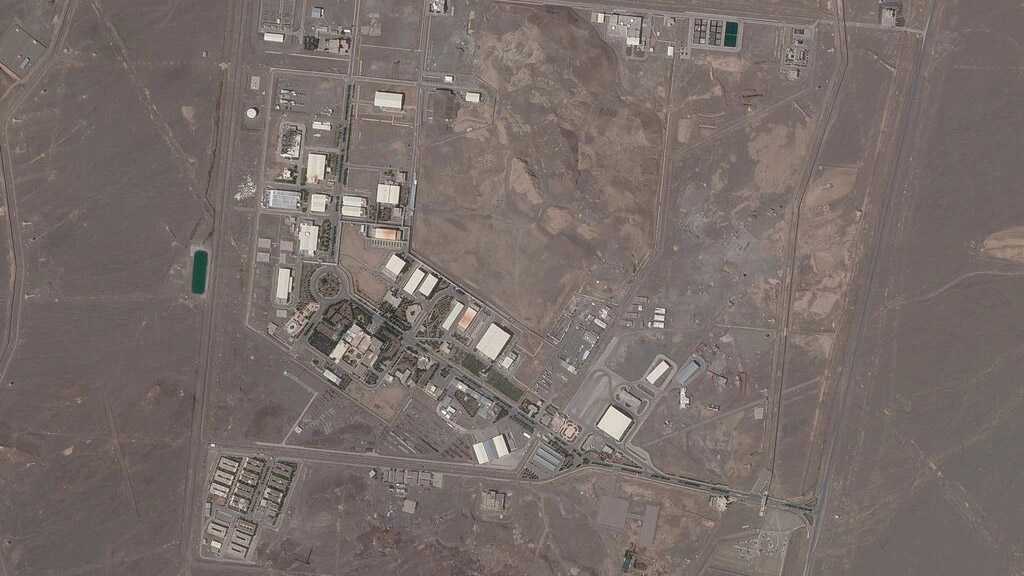
A new report says the “Israeli” regime gave the administration of US President Joe Biden a last-minute notice before an act of sabotage that caused a power outage at Iran’s Natanz nuclear facility earlier this year.

Citing unnamed American and “Israeli” sources, the New York Times reported that former Prime Minister Benjamin Netanyahu ordered “Israeli” security officials to reduce the information that they conveyed to the US about planned operations in Iran.

On April 11, when the attack took place at Natnaz nuclear site, the “Israeli” entity’s Mossad spy agency gave the US less than two hours’ notification, far too short a time for Washington to assess the operation or ask Tel Aviv to call it off, according to the report.

“Israeli” sources said they concealed information from their American counterparts because there had been leaks regarding earlier attacks.

Senior Biden administration officials said the “Israelis” violated an unwritten agreement to inform the United States of covert operations.

After the Natanz attack, CIA director William Burns called Mossad chief Yossi Cohen, expressing concern over the snub, the report said.

Cohen claimed that the belated notification was due to operational constraints and uncertainty about when the attack would take place.

One day after the “Israeli” act of nuclear terrorism, White House press secretary Jen Psaki said Washington “was not involved in any manner.”

The US, however, has a history of collaborating with the “Israeli” entity in sabotage acts against Iran.

For example, the Stuxnet computer virus is widely believed to have been developed jointly by the United States and the entity. It was the first publicly known example of a virus being used to attack industrial machinery. It was discovered in 2010 after it was used to attack a uranium enrichment facility at Natanz, Iran.

The April attack occurred less than a week after the first talks began in the Austrian capital, Vienna, on a potential revival of the Joint Comprehensive Plan of Action [JCPOA], something the “Israeli” entity opposes.

Former US president Donald Trump abandoned the agreement and reimposed the anti-Iran sanctions that the JCPOA had lifted. He also placed additional sanctions on Iran under other pretexts not related to the nuclear case as part of the “maximum pressure” campaign.

Following a year of strategic patience, Iran resorted to its legal rights stipulated in Article 26 of the JCPOA, which grants a party the right to suspend its contractual commitments in case of non-compliance by other signatories.

Now, the Biden administration says it wants to compensate for Trump’s mistake and rejoin the accord, but it is showing an overriding propensity for maintaining some of the sanctions as a tool of pressure.

Tehran insists that all sanctions should first be removed in a verifiable manner before the Islamic Republic reverses its remedial measures.

The last-minute notification of the Natanz operation was the starkest example that the entity had changed its procedures since the Trump presidency.

For the American-“Israeli” intelligence relationship, it was another a sharp turnabout.


River to Sea Uprooted Palestinian   
The views expressed in this article are the sole responsibility of the author and do not necessarily reflect those of the Blog!

Sunday, 23 August 2020

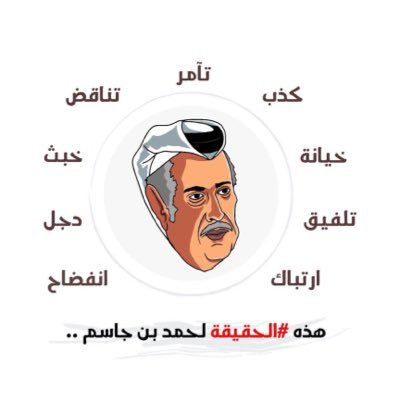
حمد بن جاسم… لا مروءة لكذوب ولا ورع لسيّئ الخلق


الخائن حمد بن جاسم بن جبر (@hamadjjmalthani) | Twitter

رامز مصطفى

رئيس الوزراء القطري السابق حمد بن جاسم آل ثاني، والمُعاقب بعزله أميركياً، لفشله وأميره حمد بن خليفة آل ثاني في إسقاط الدولة السورية والرئيس بشار الأسد، بالتعاون والتنسيق التامين مع السعودية والولايات المتحدة الأميركية، بحسب اعتراف حمد بن جاسم في مقابلة على القناة القطرية الرسمية العام 2017. يطلّ علينا اليوم في تغريدات، من غرائب ما تضمّنته أنها انتقدت بشكل مباشر الاتفاق الإماراتي مع الكيان الصهيوني، برعاية الرئيس الأميركي ترامب الذي حرص شخصياً في الإعلان عنه.

التغريدات التي أطلقها حمد بن جاسم، تحمل الكثير من التناقضات والأكاذيب، على الرغم من إقراره أنّه مع ما أسماه «السلام»، والعلاقات المتكافئة مع كيان الاحتلال الصهيوني. كما أنّ لديه أصدقاء كُثر في أميركا والكيان، وهو على تواصل دائم معهم. ومن جملة ما تضمّنته تلك التغريدات من تناقضات وأكاذيب:

أنّه مع السلام الذي يقوم على أسس واضحة حتى يكون التطبيع دائماً ومستمراً ومقنعاً للشعوب. متناسياً أنّه ودولته من أولى الدول الخليجية، التي شرعت أبوابها للتطبيع مع الكيان، عندما افتتحت في العام 1996 ممثلية تجارية للكيان على أراضيها، والتي توّجت آنذاك في توقيع شمعون بيريز عدداً من الاتفاقات التجارية، وإنشاء بورصة قطرية للغاز في مستعمرة تل بيب في فلسطين المحتلة. وذلك بعد أن كشف حمد بن خليفة آل ثاني، في لقاء مع قناة «أم بي سي»، عن خطة لمشروع غاز بين قطر والكيان والأردن، مطالباً في ذلك الوقت بإلغاء الحصار الاقتصادي المفروض من جانب العرب على الكيان.

على الرغم من انتقاده اللاذع للجامعة العربية ومجلس التعاون الخليجي، أقرّ أنّ الجامعة العربية ومجلس التعاون حاله ميؤوس منها. حمد بن جاسم في اكتشافه عن راهن الجامعة العربية ومجلس التعاون الميؤوس منهما، بأثر رجعي يمتدّ إلى أكثر من عقدين من الزمن، يطرح سؤالاً، أليست دولة قطر ومعها الإمارات والسعودية، وبقوة البترو دولار، هم المسؤولون عن تحويل الجامعة قبل مجلس التعاون إلى أداة لتشريع التدخل الدولي في ليبيا، عندما دفعت الأموال لأمين عام الجامعة آنذاك عمرو موسى لتمرير القرار؟ وأيضاً أليست قطر هي مَن طلبت من السلطة الفلسطينية التنازل لها عن ترؤسها للقمة العربية، بهدف تجميد عضوية سورية في الجامعة العربية، واستجلاب من أسمتهم بـ “المعارضة السورية”، وقدّمت لهم ملايين الدولارات لإسقاط الدولة السورية ورئيسها بشار الأسد، وهذا ما اعترف به حمد بن جاسم، بأنّ قطر تعاونت والسعودية وتركيا والولايات المتحدة من أجل ذلك، مستخدماً عبارة تهاوشنا على الفريسة وفشلنا في صيدها، ولا زلنا نتهاوش عليها.

Dr. Mohamed Elhachmi Hamdi د. محمد الهاشمي الحامدي - Objave | Facebook

التباكي على حقوق الشعب الفلسطيني وتطلعاته الوطنية، أصبحت معزوفة مشروخة يعرفها شعبنا، لأنّ قطر واحدة من الدول التي عملت على طمس حقوقه من خلال التطبيع المبكر مع الكيان، ولا يغرينا الكلام عن أنّ الفلسطينيين لم يفوضوا أحداً التحدث بالنيابة عنهم، وهم أصلاً لم يفوّضوا حتى قياداتهم الاعتراف بالكيان والتنازل له عن 78 بالمئة عن أرض فلسطين بموجب اتفاقات أوسلو. وبالتالي التباكي على الجولان العربي السوري ومزارع شبعا اللبنانية، من خلال أنّه يعاير الإمارات أنها تكذب في وقوفها وراء تأجيل عملية الضّم. وسؤالنا ماذا فعلت دولتك يا شيخ حمد عندما أعلن ترامب بأحقية سيادة الكيان الصهيوني على الجولان؟

مؤكد أنّ الشعب العربي بما فيه الخليجي أذكى من أن تسوّق له الأوهام لا من الإمارات ولا من قطر، ولا من أية أنظمة تصطف اليوم لتوقيع اتفاقات التطبيع مع الكيان، أو وقعت الاتفاقات معه.

الشيء الوحيد الذي ساهم بالكشف عنه، أنّ الثمن الذي تمني الإمارات تمريره بموجب الاتفاق، هو صفقة طائرات “أف 35” التي طلبتها الإمارات من واشنطن ووعد نتنياهو بالمساعدة في تمريرها؟ الأمر الذي نفاه لاحقاً في تصريحات له.

يُسجّل له فقط، أنّه اعترف، بأن ليس للقادة العرب أهداف وهو واحد منهم، غير الدسائس والمغامرات حتى يحترمهم الغير عليها؟

أنت يا شيخ حمد من تلك البطانة التي قدمت المصالح الصهيو أميركية، على المصالح العليا لأمتنا. وأنت يا شيخ حمد، كما تلك البطانة ومنها الإمارات، قد عرّضتم ولا زلتم الأمن القومي لأمتنا للخطر، واستجلبتم الكيان إلى عقر الدار، تحت ذرائع واهية اختلقتموها لتبرير مساركم ومسيرتكم السياسية المذلة والمخجلة والمهينة لإرث أمتنا الذي سيبقى عهدة وأمانة لدى أحرار وشرفاء هذه الأمة.

كاتب فلسطيني


River to Sea Uprooted Palestinian   
The views expressed in this article are the sole responsibility of the author and do not necessarily reflect those of the Blog!

Saturday, 8 December 2012

WHICH REVOLUTION ?

by Daniel Mabsout,


The revolutions of the NGOs are not revolutions , nor is the revolution of the Ikhwaan a revolution nor is Mursi a revolutionary and never will he be one . Neither Barad’i nor Amru Moussa will ever be revolutionaries , they’re a bunch of reactionary people who fit for museums to figure among fossils , they will make you cry , A revolutionary like Wa’el Ghonim will make you cry also , nominee for Nobel Peace Prize, a sandwich revolutionary from Google . Sheikh Imam did not live to witness the Google Revolution not the Face Book Revolution or the Qatari Revolution of Moza and al Jazeera. The revolutions of the oil Gulf princes . Sheikh Imam did not see all this .

There are plenty of these Revolutions everywhere , Revolutions of Hillary and NATO and of good Egyptian kids who have taken the western world for model and example and whose mind is controlled by Hillary . Good Egyptian kids who will do as they are told and not transgress the limits lady Hillary has set for them . Sheikh Imam did not live to see all this . A revolution lead by ghosts and heading to a ghostly place , Sheikh Imam did not live to see a mediocre president brought to power to rule after millions took to streets and then threatened to be deposited by no less mediocre protesters, by other stooges waiting in line for their turn to come and for the US/Israeli green light to show .

Sheikh Imam did not live to see a Revolution lead by hired stooges , where the peasant and worker and soldier were not present as such . Sheikh Imam did not live to see a revolution that did not close the Israeli embassy , nor retrieved the shameful peace agreements with Israel , nor embraced the Palestinian cause , nor defended the armed Resistance nor opened the border of Rafah .

Sheikh Imam was spared all this , spared the shameful attitude regarding Syria , spared the hosting of the so called Syrian /NATO opposition funded by the corrupt Saudis , he was spared the shameful attitude of the Arab League and spared the shameful affiliation of Egypt to Western agendas , spared to see a masquerade called revolution and a staged event called Spring cooked in the back stages of foreign embassies Sheikh Imam was spared all this , because Sheikh Imam deserved much better than this , deserved the real Revolution he praised and embraced , the real Revolution of the Real Egypt , of the authentic Genuine Egyptians , of the soldier and the worker and the peasant and the poet, of the student and the teacher and the artist , of the struggle against the real enemy, the sworn enemy of the nation . Sheikh Imam deserved much better than this . And Egypt deserves much better than this, than Mursi or Barad’i or Moussa or Ghonim .


Sunday, 3 June 2012

Khalid Amayereh calling for "UNITY"??

Worried that Shea may take “his Sunni" Mecca, amayereh call gulf states to unite before its too late.  Source
Khalid Amayereh
on hair-raising massacre in Houleh
He ment hair-razing
 Amayereh is talking about the "ill-will that keeps coming from the Iranian and Shiite religious establishment, which gives rise to and justify Sunni fears and suspicions".. and "The genocidal Shiite drive against the Sunni majority in Syria"

For him: Sunni = His brothers, the Brothers of America ,
Pro Assad Sunnis in Syria (who, according to Assad saved Syria) such as Mufti Hassoun, Buti... are not Sunnis, the same applies to Sham's (Syria, Jordan, Lebanon) clerics front.


His enemy is Syria the cave of Arab resistance movements. "The Syrian regime must change, or it will be changed" he wrote one year ago.


The required change is not democracy, elections, new constitution, freedom of speech, nor lifting emergency law, its nothing but handing over Syria to his Brothers of America, to break the so-called Shea cresent, and form a Sunni one, consequently, Sunni Hamas should leave Damascus.


Iran, not “Israel”, is his enemy. "Iran has no right to threaten and intimidate its Muslim neighbors", but, Iran's neighbors has the full right to host Nato in their waters and their land.
Rats desert a sinking ship, fools ride
 In order not to rock his brothers boat, sailing in Nato waters, he have no proplem with Camp David "peace treaty", all he wants from Egypt is to tell Israel, straight in the eyes, our commitment to the Camp David Peace Treaty depends on your behavior toward the Palestinians

In his previous article Khalid Amayereh said: "The PA ought to press the new rulers of Egypt to make the Egyptian commitment to honor and uphold the Israeli-Egyptian peace treaty subject to Israeli treatment of the Palestinian people. The same thing applies to all new governments and regimes in the Arab world. This is what everyone would call smart politics."

"He will be remembered as a sincere man who tried but failed"
Moreover, to start of a ”real" Palestinian partnership" Amayereh has no problem in Reconciliation with the traitor. For Amayereh Abbas is a traitor, he was naive, then out of sudden a sincere man who tried but failed" 

Palestinians should never recognize Israel as a Jewish state, he said 

The rift is not about the PLO ten points plan, not about selling 78% of Palestine in OSLO, and the alliance with the Zionists is a "de facto alliance".

"The rift .....turned brother against brother, with some Palestinian groups effectively entering into a de facto alliance with the Zionists, the killers of our children and tormentors of our people."

"There is still much to be done in this regard. We must start immediately to minimize security coordination with Israel to the point of ending this shameful chapter in our political life."

He also has no problem with the with the "de facto alliance" of his "brother" Erdugan with the Zionists, and Nato.

His only problem is with Syrian regime, His priority is to fullfill His London's Facebook brother:
 
The above quotes are the core of all recent comments written by Amayereh in PIC

"We promised them with every revolution to rejoice their defeat and our next gloat will be soon from free Damascus, God willing, that's a promise!"


Worried that Shea may take “his Sunni" Mecca, amayereh call gulf states to unite before its too late.

Al-quds could wait 20-50 years.
Why not, "Where is the Roman Empire, where is the British Empire? Where is Napoleon Bonaparte? Where is the Soviet Union? Where is Adolph Hitler?" he wrote few weeks ago.

So whats on "Muslim's" Brotherhood table is, "dismantling and termination of the Syrian regime, "the totalitarian police-state apparatus which has been ruling Syria since the early sixties once and for all, is aware about whats on the table. "The Baath party is inherently undemocratic; it can't be reformed, it must be ended."

"Arab spring" is a great asset for Palestinian cause" Amayereh wote. Bahrain Spring is not, it's an asset for Iran and Sheaa.

When talking about Bahrain, and the uprising in Arabia, he ignored the peacful nature of the uprising, and quoted one Bahraini Shiite advocates as saying. "We will slaughter you all once we reach power"

No word is said about his Al-qaeda brothers slaughtering Shea in Iraq, bombing Shea mosques in Pakistan, Afghanistan, and Iraq.

For him, the "hair-raising massacre in Houleh speaks volume as the criminal intentions of some Shiite circles and those abetting and supporting their murderousness", not the criminal actions of his Syrian nato brothers, designed to call a nato intervention to stop the civil war in Syria.

Horrific Massacre in Houla, Syrian Authorities Deny Responsibility
Initial Report of Judicial Investigation Committee on al-Houla Massacre:
Victims belonged to Peaceful Families who Refused to Stand up against State

"Iranians, and Shiites in general, decidedly and doggedly sided with the "Yazid of Damascus", whose Shabbiha or thugs are carrying out pornographic, Nazi-like atrocities against the Sunni people of Syria for daring to demand freedom and dignity from one of the most evil tyrannies under the sun" he claimed hinting to both Iran and Hezbollah.


On 10-05-2008 members of Future Movement massacred
eleven defenseless SSNP members in Halba.
NO word is said about the Hariri, the Sunni PALAYBOY, the Sunni real "Yazid of Beirut" and His massacre is Halba,

lebanese visitors abducted in syriaNo word is said about daily massacres in Iraq or about Lebanese Visitors Martyred in Iraq Attack or about the 11 Lebanese visitors who were abducted in Syria ten days ago.

The real kidnaper are the so-called "friends of Syrian", in particular, Erdugan, who wants an apology from Sayyed Nasralah to destroy his image. However, today the real kidnapers got the message:
Sayyed Hasan Nasrallah addressing the audience on Imam Khomeini's departure ceremony in Beirut; June 1, 2012 e are ready to resolve it the way you want,  whether through war or through love and peace.”
“If your problem was with me, there are a lot of means and ways to resolve it. W
No word about Sunni rulling Yazids.

Instead he asked them to unite before its to late, not against Usrael, but against Iran, Shea in General, and Sunnis opposing Mulslim Brotherhood.

In short Amayereh, like his sister, Laura Stuart, learned that "Success will never come from deviant".

However, Khalid was right in saying: "History can be especially harsh for those who fail to learn from its lessons."

Non-Islamic democracy is impossible in the Arab world, Amayereh wrote reflecting the real MB's stand towards democracy.

Islam is inherently superior to democracy. "The reason is simple; democracy in its simplest form means the rule of the majority. Right and wrong, morality and immorality, and other values are determined by the people whose views are often subject to all sorts of manipulations by special interest groups, media brainwashing and political money".

His opportionist brothers failed to learn from 1950's lessons in Egypt, and 1980's lesson in Syria. After parliament elections they "took people's support for granted", to face the hard facts in both countries.

According to Esam Al-Amin, "MB candidates received almost 11 million votes during the parliamentary elections, their presidential candidate gained only 5.7 million votes, a stunning loss of over five million votes.

Why??

"there are clearly three major political forces within society, namely SCAF, the Islamic political parties led by the Muslim Brotherhood (MB), and the mostly secular revolutionary forces including youth groups, nationalists, liberals and leftists. Whenever two of these distinct groups come together it is usually at the expense of the third party.
  • During the decisive revolutionary days all Egyptians were united and SCAF had to abandon Mubarak and side with the people. But during most of last year the MB backed SCAF on many occasions while the revolutionary groups were crushed and their demands ignored.
  • When SCAF tried to impose supra-constitutional principles on all political parties to protect its interests, the MB sided with the revolutionary groups forcing SCAF to withdraw the document, retreat, and set a date for handing over power to a civilian president.
  • When the MB tried to impose a constitutional-writing committee dominated by Islamists, SCAF sided with the secular revolutionary groups against the Islamists compelling them to change course.
The Egypt brotherhood performance reminded of story of the Shepherd (MB)and the wolf (Tantawi).

The Brotherhood lied when they promised first promised they would not seek more than 30% of the seats in Egypt’s new parliament, and they have won more than 50% of the seats.


The Brotherhood lied again when they promised for the past year that it would not run a candidate for the presidency, and they run two candidates


And now MB's candidate Mursi promises broad coalition, presidency would no longer be about one person; it would be an institution.
River to Sea Uprooted Palestinian
The views expressed in this article are the sole responsibility of the author and do not necessarily reflect those of this Blog!

Wednesday, 30 May 2012

Egypt's Depressing Run-Off: 'A President without wide legitimacy or popular support!'

VIA FLC

"... Morsi has a greater chance of being willing and able to use the Presidency to contest SCAF authority, but still frightens many outside of the Brotherhood's orbit (including many salafis who retain a deeply ingrained hostility to their Islamist rivals). I doubt that Morsi would actually move to impose sharia law, should he win, however. Despite erratic political behavior over the last few months, the Brotherhood remains a pragmatic organization, and all of the leaders with whom I've spoken over the last year have emphasized the urgent need to prioritize economic reform. Forming meaningful coalitions in the next few weeks ahead of the election, and making firm guarantees on the constitution, would help.... though such promises are difficult to make credible.
Don't believe the idea that Washington is pleased with the choice. The odd idea of a convergence or alliance between the U.S. and the Muslim Brotherhood is radically exaggerated in some circles, while Shafik promises instability and an emboldened military which could resist meaningful reform. My personal hunch is that the U.S. was quietly rooting for Moussa, which shows how effectively it controls events in Cairo. It's actually a very good sign that the U.S. was so irrelevant to the election campaign -- a successful campaign based primarily on anti-American rhetoric, or overt American intervention in the election being two dogs which didn't bark in an important way.
The first round of the elections really did produce the worst possible outcome, even if it in retrospect seems rather inevitable in light of earlier decisions, such as the MB's fielding a candidate and the political center failing to unite around a single candidate. The second round really can't produce a President who will command wide legitimacy or a popular mandate. Sadly, I suppose that's about what we should have expected from this disastrous transition. But despair isn't an option. The focus must remain on seeing through the transition to civilian authority and the drafting of an acceptable constitution.
(*) One additional point --- from what has thus far been reported, election day itself appeared to be reasonably fair despite the assorted complaints. But the allegations of large numbers of additions to the voting rolls in the months before the election, and the even more worrying allegations that conscripts were allowed (and ordered) to vote, should have been thoroughly investigated. There is no sign that they were. In the context of deep, deserved suspicions about the neutrality of the state --- exacerbated by the repeated judicial interventions of the last few months, including the disqualifications of Shater, Abu Ismail and Sulaiman --- a cloud will hang over the legitimacy of the vote. Which, once again, seems pretty much par for Egypt's transitional course. "
River to Sea Uprooted Palestinian  
The views expressed in this article are the sole responsibility of the author and do not necessarily reflect those of this Blog!

Thursday, 24 May 2012

Egypt wraps up historic election

 
Published Thursday, May 24, 2012

See how the day unfolded with our live blog.

Egypt prepared to wrap up landmark presidential polls on Thursday after an orderly two-day vote in which candidates pitted stability against the ideals of the uprising that ended Hosni Mubarak's rule.
Polling stations were to close at 9.00 PM, after voting was extended by one hour, with only minor violations reported by the interior ministry.

"Before the revolution, I never voted, because it was not useful. Since then, I have voted in every election because it's my right and my duty," said Ahmed Badreddine, 37, at a polling station in Cairo's Giza neighborhood.

Queues formed outside the voting centers after they opened at 8.00 am with authorities declaring Thursday a holiday to allow public sector employees to cast their ballots.

"We used to consider the president a knight who could solve all our problems, but we have to look at what kind of system we want, not just the person we want," said Ayman Saad, 26, his finger stained purple with indelible ink to show he had voted.

Turnout appeared to vary across the country, with long queues outside some polling stations, and scant participation in others.

The official body supervising the election estimated that around 50 percent of eligible voters cast their ballot, lower than the 62 percent in the parliamentary elections.

Around 50 million voters were choosing among 12 candidates, with the front runners divided between Islamists who say they will champion the uprising's goals and Mubarak-era ministers.

Among the contenders was former foreign minister and Arab League chief Amr Moussa seen as an experienced politician and diplomat. But like Ahmed Shafik, Mubarak's last prime minister, he is accused of ties with the old regime.

The powerful Muslim Brotherhood's candidate, Mohammed Mursi, faces competition from Abdel Moneim Abul-Fotouh, a former member of the Islamist movement who portrays himself as a consensus choice with a wide range of support.

Two of the candidates are expected to go into June run-offs after the May 23 and 24 vote, with pollsters saying the number of undecided voters made the result of the first round extremely difficult to predict.

At a school in the upmarket Cairo neighborhood of Heliopolis, with the dome of Mubarak's former presidential palace visible a few hundred meters away, hundreds of women braved the heat to stand in line to vote.

Noha Hamdy, 27, said it was a pleasant novelty to be voting in an election where the outcome is not predetermined.

"We go to an election not knowing who will win. I never voted before because the winner was always known in advance," she said.

"This time I feel who I vote for, even if he doesn't win, will make a difference."

The next president will inherit a struggling economy, deteriorating security and the challenge of uniting a nation divided by the uprising and its sometimes deadly aftermath, but his powers are yet to be defined by a new constitution.

"The big challenge for the president will be to attract foreign investors and boost tourism," to "restore the balance of payments" and "restore the reserve" currency in the central bank, which has dropped by half in the past year, Mahmoud Abdel Fadil, a Cairo University economics professor, said.

To do that, the new president will have to "reestablish political stability and assure a level of total security. Confidence must be restored," he added.

The election seals a tumultuous military-led transition from autocratic rule marked by political upheaval and bloodshed, but which also witnessed democratic parliamentary elections that saw Islamist groups score a crushing victory.

Ballot boxes from Wednesday were kept overnight in the stations after being sealed with wax by election commission officials and left under military and police protection.

The ruling Supreme Council of the Armed Forces, in power since Mubarak's ouster, has vowed to restore civilian rule by the end of June, after a president is elected, but many fear its withdrawal from politics will be just an illusion.

The army, with its vast and opaque economic power, wants to keep its budget a secret by remaining exempt from parliamentary scrutiny, maintain control of military-related legislation and secure immunity from prosecution.

Mubarak, 84 and ailing, is being held in a military hospital on the outskirts of Cairo where he awaits the verdict of his murder trial on June 2.

The former dictator is accused of involvement in the killing of some 850 protesters during the uprising and of corruption.

(Al-Akhbar, AFP)
River to Sea Uprooted Palestinian  
The views expressed in this article are the sole responsibility of the author and do not necessarily reflect those of this Blog!

Tuesday, 15 May 2012

Egypt’s Presidential Vote: Minorities Divided

Egypt’s Presidential Vote: Minorities Divided

Egyptian presidential hopefuls Amr Moussa (R) and Abdel Moneim Abol Fotouh smile during a televised debate in Cairo 10 May 2012. (Photo: REUTERS - Mahmoud Khaled - Handout)

Published Monday, May 14, 2012

Salafi and Coptic voters will have a major say in who becomes the country’s next president, but neither group is united over which candidate to back.

Cairo – While Egyptian expatriates have already begun voting for their next president, Egyptians at home have yet to make up their minds.

The final list of candidates was not actually confirmed until Saturday, when an administrative court ruling upheld the candidacy of former premier Ahmad Shafiq until the constitutional court judgement on the validity of the Disenfrachisement Law, which disqualifies senior members of the former regime from running.

The same court also ruled that the election must be held on schedule.

Yet with only nine days left to choose between the 13 presidential hopefuls, many Egyptians—including political and other groups – remain undecided.

These include the country’s array of Salafi groups, who are divided over which candidate to back.
The two leading Salafi forces in terms of their ability to mobilize voters – the Nour Party and the al-Daawa al-Salafiya – have come out in support of independent Islamist candidate Abdel-Moneim Abul-Fotouh – as have the Salafi Front and the Fadila Party.

But other Salafi factions – including the Asala party, Ahl al-Jamaa wal-Sunna, Ansar al-Sunna al-Muhammadia, the Sharia Association for Reform and Rights, and the Sharia Society – have thrown their weight behind Muslim Brotherhood candidate (MB) Mohammed Mursi.

The so-called “Hazemoun” tendency, meanwhile, continues to support disqualified Salafi presidential contender Hazem Salah Abu-Ismail, despite his having been barred from running.

The split within Salafi ranks reflects disagreements over the extent to which Abul-Fotouh and Mursi are committed to Islamic sharia. Mursi’s supporters accuse his rival of fence-sitting over the implementation of sharia law in Egypt, and have been urging Salafi preachers to endorse the MB candidate instead.

Abul-Fotouh has responded by stressing his determination to “struggle for God’s sharia and the establishment of the Islamic project,” while at the same time emphasising his centrist credentials. “The country wants a centrist president, not an extreme secularist nor a religious extremist,” he remarked on a recent campaign tour.

Observers believe that Abul-Fotouh has the upper hand over Mursi among Salafi voters, and these could prove decisive in giving him the edge over the MB nominee, especially given the popularity and electoral clout of the Nour Party and al-Daawa al-Salafiya.

The MB has sought to counter this by mobilizing big turnouts at Mursi’s campaign events. While designed to project its own strength, observers see this as a sign of alarm on the MB’s part.
Egypt’s Coptic Christians, who according to official statistics account for some 20 percent of the population, are also divided over which candidate to support, albeit from the opposite perspective to their Salafi compatriots.
 

Some Copts see the priority as electing a president who believes in a civil state and has no Islamist leanings, so as to avoid being treated as second class citizens as they were under the Mubarak regime. This inclines them to back either Shafiq, or former foreign minister Amr Moussa, despite their association with the former regime.

Other Copts see Abul-Fotouh as more deserving of the presidency.

While the Coptic Orthodox Church has deliberately avoided backing any candidate, Coptic activists have sought to mobilize the communal vote.

One group fell out with a committee of 100 prominent public figures which had been formed to choose a consensus presidential candidate who could command the support of a majority of Egyptians after it opted for Abul-Fotouh.

Most Coptic members of the committee resigned. According to Nagib Gibrail, the Church’s lawyer, they had drawn up a list of ten criteria for selecting the future president. These included believing in civil state, not belonging to any Islamist group, supporting equal right for Copts, and also not being an Arab nationalist. Gibrail would not say which if any candidate met these specifications, though he did not suggest there was agreement among Copts in support of former regime figures Moussa or Shafiq.
However, prominent activist Sharif Dous, who heads the General Coptic Association Activist, has openly backed Abul-Fotouh. The Egyptian Coptic Alliance declared after a meeting with Independent Nasserist candidate Hamdeen Sabahi that it would announce its recommendation on how Copts should vote shortly. Sabahi had pledged that if elected he would, among other things, bring to justice the perpetrators of sectarian crimes against Copts, and ensure a “just exit” – as opposed to a “safe exit” – from power by the ruling Supreme Council of the Armed forces.
 

The various candidates have meanwhile been continuing with their campaign tours and conferences.
The latest opinion poll, conducted by the public opinion survey and research institute at Misr University for Science and Technology, gives Abul-Fotouh the lead with the support of 34 percent of respondents. Sabahi came second with 10.7 percent, with Shafiq third at 8.4 percent, just ahead of Moussa. The MB’s Mursi trailed in fifth place with just 5.2 per cent.

Sabahi may also prove to be the net beneficiary of last week’s unprecedented televised presidential debate between Moussa and Abul-Fotouh. After the writer Alaa al-Aswany revealed that Sabahi was originally supposed to take part in the debate too but was excluded at the insistence of the other two candidates, Abul-Fotouh responded by offering to hold a separate debate with him.
This article is an edited translation from the Arabic Edition.

River to Sea Uprooted Palestinian  
The views expressed in this article are the sole responsibility of the author and do not necessarily reflect those of this Blog!