Showing posts with label Bennett. Show all posts

Monday, 8 November 2021

Palestinian Hunger Strikes Resist New Israeli Govt’s Continuation of Old Govt’s Brutality

November 05th, 2021

Palestinians are stepped on by the heavy boots of a regime that, while it may seem new, is in fact as brutal, cruel and racist as any Zionist government ever was.

By Miko Peled

Source

JERUSALEM — Israel’s most unlikely prime minister, Naftali Bennett — who won only six seats in Israel’s 120-seat parliament, or Knesset, and yet became PM — just returned to Jerusalem after attending the Glasgow Climate Conference. Photos of him with world leaders, demonstrating his popularity overseas, and his success in passing the budget — the first budget the Knesset had managed to pass since 2018 — are cementing Bennett’s chances of remaining in power even though his government holds a very narrow majority.

Passing a budget is always a Herculean task but this time it was an even more difficult one. The Knesset passed the 2021 state budget into law by a 61-59 vote at 5:30 a.m. on Thursday, November 4, giving Israel a new budget for the first time since March of 2018. This means that another round of elections is not likely to take place any time soon.

All that is left now is the ongoing competition between the coalition government and the opposition block over who is more right-wing. It is a competition between the current government — headed by Bennett, a former head of the Settlers movement — and the opposition, headed by Likud leader Benjamin Netanyahu.

But neither the success of this government nor the image of a younger, fresher prime minister should be confused with any real substantive change. Palestine is being destroyed; Palestinians are stepped on by the heavy boots of a regime that, while it may seem new, is in fact as brutal, cruel and racist as any Zionist government ever was.

Hunger strikes

In a heroic act of self sacrifice, Kayed al-Fasfous, a 32-year-old from the village of Dura near Hebron, has abstained from food for close to 115 days. Miqdad al-Qawasmi, a 24-year-old from Hebron, has been on a hunger strike for 105 days. The list of hunger strikers goes on with Alaa al-Araj, 87 days; Hisham Abu Hawash, 78 days; Shadi Abu-Aker, 71 days; and Ayad al-Harimi, 42 days without food. Louay al-Ashqar and Ratib Hreibat have been on a hunger strike in solidarity with other prisoners for 24 and 26 days respectively.

As a point of reference, an article in Live Science magazine states:

After more than a month of fasting, or when more than 18 percent of body weight is lost, severe and permanent medical complications can occur. It can become very difficult to swallow water; hearing and vision loss can occur; breathing can become labored and organ failure can start to set in. Beyond 45 days, death is a very real risk, due to cardiovascular collapse or severe infection.

Furthermore, according to this article, “Even after a hunger strike ends, refeeding has some real risks, since the metabolic changes that occur during severe fasting can be profound.”

The book “Ten Men Dead” — by the former Guardian correspondent to Ireland, the late David Beresford (1947-2016) — is a powerful work that reveals what an enormous act of self-sacrifice it is to commit to a hunger strike. I received a copy of the book while on a visit to Belfast from a former IRA volunteer, and I must admit that the book had a profound impact on me. Having read it, one can never underestimate the pain, the suffering and the terrible effects of a protracted hunger strike.

The book illustrates the struggle of 10 Irish political prisoners against the brutality of the British authorities and the enormous violence perpetrated by the British government. It tells the story of the 10 men, and includes every detail of their lives before and during the strike. It is not an easy read by any means but it is rightfully described as “a harrowing and thought provoking read about comradeship, selflessness and courage and devotion to one’s cause and principles.”  Today, this book is relevant to the struggle of Palestinian prisoners.

It was in April of 2013 that I had the privilege of visiting Belfast and my hosts were kind enough to take me to Milltown Cemetery to visit the graves of Bobby Sands and the other IRA Volunteers who died as a result of the hunger strike. At that time in Palestine, Samer Issawi had been on what was considered the longest hunger strike in history. As we stood by the graves I was asked to read Issawi’s ‘Hunger Speech’ to Israelis.

“The defeated will not remain defeated and the victor will not remain a victor,” Issawi wrote, addressing Israelis who consistently vote for governments that are determined to kill his people and destroy his country. His words are as relevant today as they were when he wrote them, nearly a decade ago.
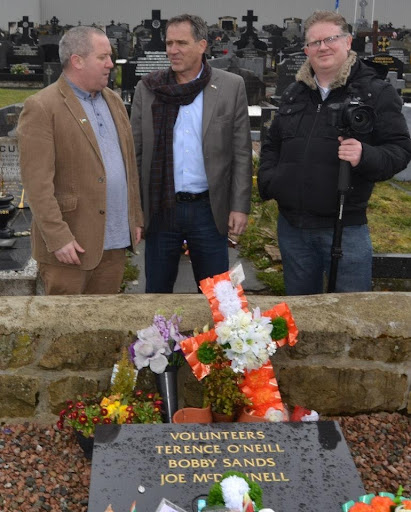
At the gravesite of IRA Volunteers, Belfast.

Destruction and desecration

In order to give legitimacy to their claim to Palestine, the the State of Israel and the Zionist organizations that support it have been engaged in a campaign of destruction of any proof that Palestinian history exists. To that end, they have perpetuated the biblical myth, selling it as history, and they have been destroying priceless historical monuments and burial sites that do not suit their narrow interests.

Besides destroying cities, towns and neighborhoods that have enormous historical value, the State of Israel has also been destroying and allowing to fall into disrepair ancient Palestinian monuments and cemeteries. Muslim cemeteries have been destroyed, desecrating the hallowed grounds that hold proof of the glorious history of a people and a country.

The latest in a long series of cemeteries in Jerusalem that have been subjected to desecration by the Israeli authorities is the Martyrs’ section of the al-Yusufiyah Muslim Cemetery. A shocking video of a Palestinian mother clinging to the grave of her son, as the authorities try to pull her away so that they can destroy the cemetery, has surfaced. The mother swears she will die before she allows them to destroy her son’s grave.

The reason for the destruction around the Old City of Jerusalem is the execution of a  plan to build a biblical-themed park in an area that includes the al-Yusufiya Cemetery. Al-Yusufiya, known as the Martyrs’ Cemetery, lies adjacent to one of the historic walls of the Old City of Jerusalem and, like Ma’amila Cemetery and other historic non-Jewish sites, it needs to go so that Israel can continue with its efforts to legitimize what is inherently an illegitimate occupation.

The lack of real Palestinian representation in capitals around the world means that Palestine has all but disappeared from the public discourse. This allows Israel to continue unhindered with its atrocities towards Palestine and its people.

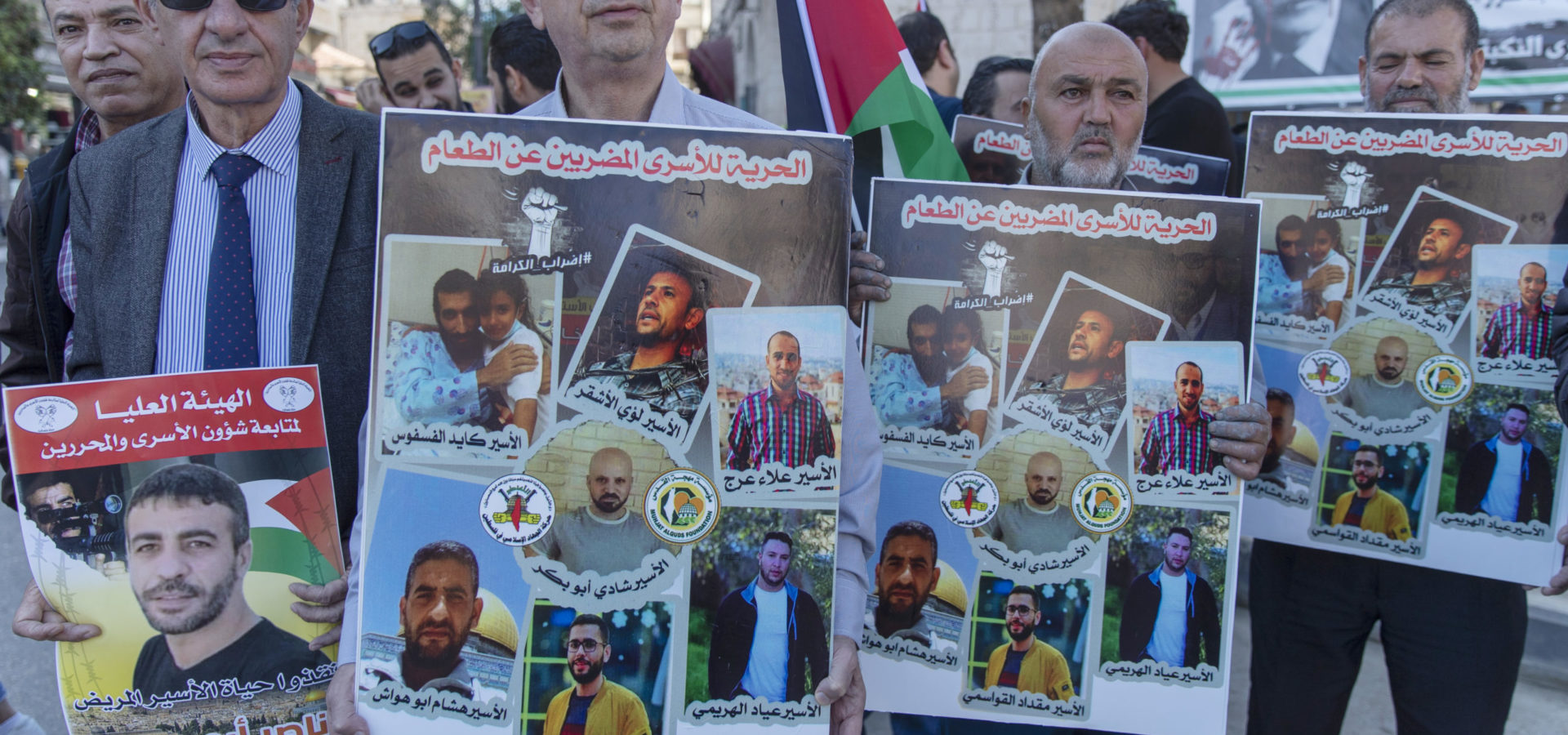
Protesters carry posters with pictures of Palestinian prisoners in Israeli jails that read “freedom for prisoners who are on hunger strike,” during a rally supporting Palestinian prisoners, in the West Bank city of Ramallah, Thursday, Nov. 4, 2021. (AP Photo/Nasser Nasser)


River to Sea Uprooted Palestinian   
The views expressed in this article are the sole responsibility of the author and do not necessarily reflect those of the Blog!

Monday, 20 September 2021

Likud: Netanyahu was Mocking Bennett, Not Biden, in Facebook Video (VIDEO)

 September 20, 2021 

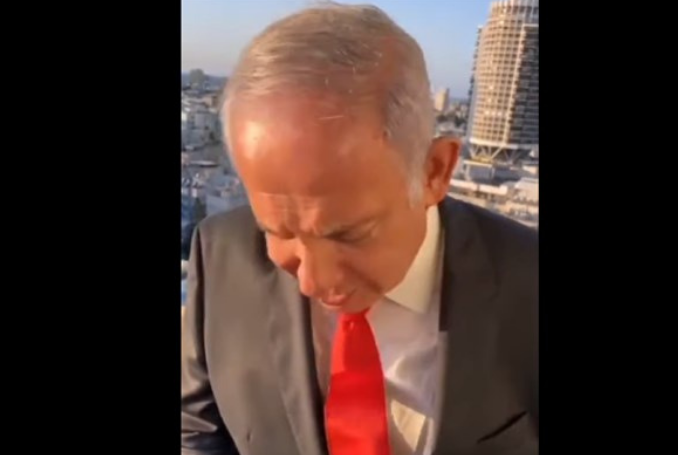
Benjamin Netanyahu mocks US President Joe Biden. (Photo: Video Grab)

Following a video broadcast on Facebook by former Israeli Prime Minister Benjamin Netanyahu, the Likud party found itself forced to issue a clarification to avoid annoying US President Joe Biden.

Netanyahu appeared in a video on Facebook on Saturday speaking about the meeting between Israeli Prime Minister Naftali Bennett and Biden that took place last month.

Repeating reported news that Biden was sleeping during the meeting, Netanyahu said in the video: “I heard that Biden was very attentive, very, very attentive during the meeting”, then chuckled before dropping his head and closing his eyes.

This video became the subject of widespread criticism on social media, forcing Likud to release a statement.

“Contrary to the distorted picture broadcast in the media, former prime minister Netanyahu did not criticize President Biden, whom he has known and cherished as a friend of Israel for 40 years.”

However, the statement added, “his criticism was directed exclusively at Naftali Bennett, who during his visit to the White House spoke at length about nothing.”

Video footage from Bennett’s meeting with Biden appeared to show the US president dozing off, however, it was later revealed that the images had been manipulated by social media users.

(MEMO, PC, Social Media)


River to Sea Uprooted Palestinian   
The views expressed in this article are the sole responsibility of the author and do not necessarily reflect those of the Blog!

Wednesday, 8 September 2021

Israel-Palestine: ‘No war, no peace’ apartheid is Bennett’s best case scenario

The Israeli prime minister is first since Golda Meir to propose the racist status quo as a political platform

In March 2015, then Israeli economy minister Naftali Bennett during an election campaign gathering in Kibbutz Kfar Etzion in the Gush Etzion settlement in the West Bank (AFP)

By Meron Rapoport

Published date: 7 September 2021 13:02 UTC 

“There is no diplomatic process with the Palestinians, nor will there be one,” said a source close to Israeli Prime Minister Naftali Bennett last week after his defence minister, Benny Gantz, met with Palestinian President Mahmoud Abbas.Biden-Bennett summit a meeting of wishful thinkers who oppose NetanyahuRead More »

Thus is Bennett’s spiritual world revealed: a world in which Israel, and only Israel, exists, and where the Palestinians will never, under any circumstances, even if they change their positions, be able to attain equality with Israelis and negotiate with them as equals. There is a word for that: racism.

Nearly a decade ago, Bennett entered national politics after serving as director-general of the Yesha Council, the leading settler institution, although he himself was never a settler and doesn’t live beyond the Green Line. In a now-famous interview, he said: “The Palestinian problem is like shrapnel in the butt.” 

Today, his approach has not changed, although as prime minister, he may express himself less bluntly, as he admitted just before taking office in early June.

Bennett expressed this approach in an interview he gave the New York Times ahead of his recent trip to Washington. “This government will not annex, nor establish a Palestinian state, everyone understands that,” he said. “Israel will continue the standard policy of natural growth [of West Bank settlements].” 

In saying this, Bennett became the first Israeli prime minister, with the possible exception of Golda Meir in the years prior to the 1973 war, to propose what amounts to apartheid as a political platform.

Permanent status quo

It is true that the policy of “managing the occupation” is almost as old as the Israeli occupation itself. In February 1973, for example, then-Defence Minister Moshe Dayan said, “We must plan ahead for our actions in the territories [conquered by Israel in June 1967] … so that a situation of ‘no war and no peace’ will not be unbearable for us… Authority for deciding on what happens from Suez to the [Mt] Hermon is in the hands of the Israeli government. We will not idly delineate boundaries for our settlements nor be threatened by smouldering embers.”

But the philosophy Dayan articulated then still exists and every prime minister since, except perhaps Yitzhak Rabin – whose assassination makes it impossible to know whether he meant to break the mould – has adopted it with different variations: “No war, no peace” or, in other words, a continuation of the status quo. Seven months later, the “smouldering embers” that Dayan dismissed had become the firestorm of the October 1973 war, with thousands killed on both sides, forcing Israel to subsequently return the Sinai Peninsula to Egypt. 

Bennett basically said that this status quo of ‘no war, no peace’ is not an interim situation, but rather the permanent situation

But Bennett has gone one step further. Even Dayan called the territories occupied by Israel a “deposit” to be returned in exchange for a peace agreement meeting Israel’s needs. Since the 1990s, Israeli prime ministers have been discussing, at least officially, support for the two-state solution, including Ariel Sharon and even Benjamin Netanyahu, who adopted the Palestinian state idea in his 2009 Bar-Ilan speech. In 2020, he also accepted former US President Donald Trump’s “deal of the century” which included the establishment of a Palestinian state, however crippled and fragmented. 

In his New York Times interview, however, Bennett basically said that this status quo of “no war, no peace” is not an interim situation, but rather the permanent situation to which he aspires.

In this situation, Israel, on the one hand, will continue its military rule over the Palestinians in the West Bank and the Gaza Strip, and continue to accord Jewish citizens in the West Bank preferential rights as compared with Palestinians.

On the other hand, Israel will not accord Palestinians civil rights equal to those of their Jewish neighbours as would be necessitated by a partial or full annexation of the West Bank. This approach also has a name – apartheid – and Bennett believes it to be the only one possible.

‘Shrink the conflict’

We don’t know precisely what was said in Bennett’s discussions with President Joe Biden and Secretary of State Antony Blinken, but publicly at least no American reservations were heard about Bennett’s positions. Nor did the Jewish centre-left parties in Israel like Labor and Meretz, which are part of Bennett’s coalition, voice any protest. This is a dangerous precedent.

But it would be overly simplistic to say that the Bennett government will be more rightist or more violent toward the Palestinians. The opposite might be true.How Beita became a model of Palestinian resistance against IsraelRead More »

First of all, Bennett came into office from a position of political weakness. He heads a small party with six Knesset seats out of 120, and most of his coalition members are more leftist than he is – at least for Israel whose Labor Party positions toward the Palestinians would be considered right in Europe.

And there’s more. Bennett himself, along with his coalition partner, Gideon Saar, who had been a senior Likud figure and a leading candidate to replace Netanyahu, has changed his attitude considerably to the Palestinian question.

As the present government was being formed or immediately thereafter, both Bennett and Saar appeared to have relinquished the idea of Greater Israel and/or annexation, partially or wholly, embracing instead the new political concept of “shrinking the conflict”. The term originated with Micah Goodman, an Israeli of American extraction living in a West Bank settlement, whose books on the conflict have become bestsellers.

Goodman argues that the left in Israel has failed to bring an end to the occupation or to establish an independent Palestinian state, whereas the right failed with its idea of Greater Israel. Therefore, instead of talking about ending the conflict or continuing with the status quo, ways should be sought to “shrink the conflict”: to enable the Palestinians to manage their own affairs as independently as possible, while leaving “security” to Israel. After the conflict has been “shrunk,” says Goodman, it will be possible to discuss a permanent solution.

For a decade, Bennett pushed for annexation, but when the UAE and Bahrain signed the Abraham Accords in 2020, he realised it was impossible.

Goodman was an adviser to Saar and is considered to be close to Bennett. His influence was perceptible in an interview Bennett gave before taking office. “My approach is to shrink the conflict,” he said. “Where it is possible to have more crossings, better quality of life, more business, more industry, we will do it.”

For Bennett, this is a considerable shift. When he entered national politics in 2013, Bennett presented a detailed plan for the annexation of Area C, which is 60 percent of the West Bank. Over the years, he criticised Netanyahu and the Israeli army for not being aggressive enough toward the Palestinians and not “decisive” enough with Hamas. 

For a decade, Bennett pushed for annexation, but when the UAE and Bahrain signed the Abraham Accords in 2020, he realised it was impossible. He also understood that a “final resolution” of the conflict by achieving a victory over the Palestinian so crushing that they would relinquish their national aspirations was also impossible. Thus, his adoption of the idea of “shrinking the conflict” is coming from failure and weakness, even if he refuses to admit it.

Israeli right in crisis

Bennett, then, reflects the situation of the Israeli right. On the one hand, he sanctifies the status quo and has no desire or intention of relinquishing the occupation or ending apartheid. On the other hand, the right is gradually losing its faith in its own power to shape the Israeli-Palestinian reality as it sees fit. 

The fall of Netanyahu should be viewed in this context. Under Netanyahu, the right in Israel was united in a coherent, homogeneous bloc. The internal contradictions on the right, which Bennett represents, led to the fragmentation of this bloc and the establishment of a mixed government that contains elements of both right and left, including the United Arab List, an Palestinian-Islamist party headed by Mansour Abbas.Palestinian Authority losing control of West Bank, say insiders and activistsRead More »

Outwardly, all of these changes have not affected the situation on the ground. The occupation, and the settlements, continue. The political discourse in Israel remains stuck, in the best case, or else propounds Bennett’s thesis of “no peace, no war”. Israel is so strong – militarily and economically – that something significant would have to happen in order to threaten its control of the Palestinians and its power in the Middle East as a whole.

But at the same time, one cannot ignore the cracks. The ideological right in Israel is in trouble and the question is how and whether the radical left in Israel, or even more so the Palestinians, can turn that to advantage.

“Where there’s a crack, we have to make it a fissure, and where there’s a fissure, we have to make it a chasm,” a left-wing anti-occupation activist told me. Maybe that approach really will accomplish something.


River to Sea Uprooted Palestinian   
The views expressed in this article are the sole responsibility of the author and do not necessarily reflect those of the Blog!

Wednesday, 11 August 2021

محاولات التحوّل من حائر إلى قائد


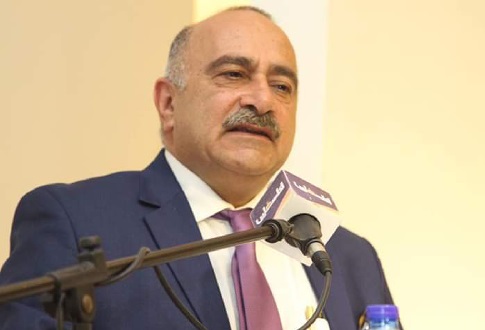
 سعادة مصطفى أرشيد _

يحتاج نفتالي بينيت رئيس وزراء (إسرائيل) الهابط من عالم الإعمال والتجارة إلى عالم السياسة، أن يبدو بمظهر قوي، قادر على الاشتباك وتحقيق انتصارات عزيزة وبعيدة عن قدراته، وهو قد تسلّم الحكم من بن يامين نتياهو المتمرّس والذي استطاع حفر اسمه عميقاً في تاريخ دولته القصير، بما يملك من دهاء وقدرات استثنائية، وها هو مستمر في دوره كقائد للمعارضة، قادر على نصب الكمائن وإحاكة المؤامرات بهدف إسقاط خصومه الكثر، الذين لا يجدون ما يجمعهم سوى رغبتهم في إخراجه من عالم السياسة سواء كرئيس وزراء أو كزعيم معارضة، ومن جانب آخر، فإنّ الأغلبية البرلمانية الداعمة للحكومة هشة وهزيلة وقابلة للسقوط إنْ خرج عضو واحد من التحالف، لا بل انْ غاب عن جلسة برلمانية بدواعي المرض أو السفر أو حتى إنْ تأخر بسبب أزمة سير، والدعم الذي يتلقاه بينيت من الإدارة الأميركية على أهميته للبقاء، وكيديته المفرطة تجاه نتنياهو، إلا انه غير قادر على رسم صورة الزعيم القوي.

حاول بينيت الدفع باتجاه الاشتباك مع إيران متخذاً من حوادث السفن ذريعة لإقامة تحالف انجليزي – أميركي – (إسرائيلي) وبالطبع عربي، ولكن الإدارة الأميركية كان لها رأي آخر، فهي تريد الابتعاد عن المنطقة ومشاكلها والتركيز على الصين وبحرها وطريق حريرها السياسي والاقتصادي، وهي ترى أنّ عدم الوصول إلى اتفاق مع إيران، أمر يضرّ بخططها الإستراتيجية، فيما الوصول إلى كلمة سواء وصيغة مقبولة للتعامل مع إيران أمر بالغ الضرورة، خاصة لدرء مخاطر تحول إيران وانفتاحها بشكل واسع على الصين وروسيا وكوريا الشمالية، فكان لا بدّ لنفتالي بينيت ان يبتلع أقواله واتهاماته، ومعه الانجليز الذين تخلوا عن حذرهم التقليدي وبالغوا في حماستهم للمواجهة مع إيران، ولكن ذلك أمر لم تدركه حتى الآن بعض فضائيات الخليج مثل «العربية» و»الحدث» ومثيلاتهما، التي لا تزال تنفخ في نار المواجهة .

 رأى بينيت أنّ لديه فرصة في لبنان، فالوضع الداخلي قد بلغ مرحلة حرجة من التدهور، تشكيل الحكومات يتعذر ويتعرقل بفعل داخلي وضغوط خارجية، وتحقيقات قاضي تحقيق تفجير المرفأ تثير من الغموض أكثر مما تكشف من حقائق، وفي مشاريع الفتنة والشقاق أخذت تصدر عن مرجعيات دينية – طائفية عليا، كان آخرها ما صدر عن بكركي، وسعر صرف الليرة ينهار برعاية حاكم مصرف لبنان ودولته المالية العميقة، وقد أوصل اللبنانيين إلى حدود العوز والفاقة، فيما نفذت الأدوية والمستلزمات الطبية من سوق الدواء بعد أن توقف استيرادها بسبب عدم توفر النقد الأجنبي، والإشكالات اليومية غير البريئة تؤذن في حال لم تتمّ محاصرتها من فورها بالتطور نحو اشتباك واسع قد يصل إلى الحرب الأهلية، كما حصل في الشمال وخلده وشويّا. مجموع هذه المعطيات جعلت من بينيت يفكر بتجريب حظه مع لبنان ومقاومته، ويفترض أنّ بإمكان جيشه الاشتباك مع إيران من هذه الخاصرة، وأنّ باستطاعته أيضاً العودة إلى مرحلة ما قبل حرب 2006، عندما كان «الإسرائيلي» يملك القدرة على توجيه ضرباته إلى لبنان عند كلّ حاجة أمنية أوسياسية، أو حتى عند أيّ شعبية انتخابيه مؤقتة، وذلك عندما يفرض قواعد اشتباك جديدة من موقع القوي، بدل قواعد الاشتباك المعمول بها منذ أكثر من عقد ونصف العقد.

اخذ بينيت قراره، وأخذت المقاومة إجراءها التحذيري، والنتيجة أنّ الاشتباكات بين المقاومة اللبنانية و(إسرائيل) بقيت محدودة والقصف المتبادل على جانبي الحدود طال مناطق غير مأهولة، وأرست المقاومة في نهاية الاشتباك بردودها الحاسمة قواعد الاشتباك المعمول بها، يضاف إلى ذلك أن الإدارة الأميركية، وإن كان لا مانع لديها من تغيير قواعد الاشتباك لصالح (إسرائيل) وربما ترغب في ذلك، إلا أنّ لديها كما ورد آنفاً، ما يدعوها لان تكون راغبة عن هذا التوتر، ثم ترى أنها مطمئنة إلى تموضعها الجديد، وبما صنعت من عوامل اقتتال داخلي وما زرعت من صواعق تفجير في بلادنا، كفيلة بظنّ الاستراتيجية الأميركية على إبقاء المنطقة غارقة في صراعاتها التي تحول دون قيامها بأي فعل ايجابي لصالح قضاياها الكبرى وأمنها القومي .

 لما كان نفتالي بينيت قد فشل في استغلال حادث السفينة، وفشل في تغيير قواعد الاشتباك مع لبنان ومقاومته، فهل يجد ضالته في غزة؟ وهي التي خسرت جزئياً مع خسارة حركة النهضة موقعها في تونس، ولا تجد حماساً عالياً لدى الأتراك مؤخراً، ولا يعطيها حليفها القطري أكثر من حقيبته الشهرية، ولم تستطع أن تحوّل انتصارها في حرب «سيف القدس» إلى إنجازات على الأرض، فيرفع الحصار عنها، وتصلها الكهرباء ووقودها، ويُعاد إعمارها، وغير ذلك مما تعهّد به الوسيط المصري الذي لدغ غزة ومقاومتها لا مرتين فحسب.

*سياسي فلسطيني مقيم في الكفير – جنين – فلسطين المحتلة

River to Sea Uprooted Palestinian   
The views expressed in this article are the sole responsibility of the author and do not necessarily reflect those of the Blog!

Tuesday, 10 August 2021

“جيروزاليم بوست”: حزب الله يختبر “إسرائيل” وحتى الآن ينجح Hezbollah is testing Israel and so far it’s succeeding – analysis

 أغسطس 9 2021

المصدر: جيروزاليم بوست

سيث فرانتزمان

صحيفة “جيروزاليم بوست” الإسرائيلية تنشر مقالاً للكاتب “سيث فرانتزمان” يقول فيه إن رد “إسرائيل” على صواريخ حزب الله يمكن أن يضع حدود لبنان في نفس وضع حدود غزة.


“جيروزاليم بوست”: التوازن الصحيح لكيفية الرد سيكون من الصعب العثور عليه

نشرت صحيفة “جيروزاليم بوست” الإسرائيلية مقالاً للكاتب سيث فرانتزمان، تحت عنوان: حزب الله يختبر “إسرائيل” وحتى الآن ينجح.

وفيما يلي نص المقال المنقول إلى العربية: 

ردّ “إسرائيل” على صواريخ حزب الله يمكن أن يضع حدود لبنان في وضع حدود غزة نفسه. في يوم الإثنين الماضي، ألقى رئيس الوزراء نفتالي بينيت كلمة في الكنيست. قوبل بوابل من الصراخ والإزعاج والتسميات. 

وقال: “لنتحدث عن نتائج الحكومة الأخيرة” في غزة، أظهرتم ضبط النفس في مواجهة الهجمات الصاروخية بينما نهاجم كل بالون حارق. لقد تركتم حزب الله بعشرة أضعاف الصواريخ التي يمكن أن تصل إلى أي مكان في “إسرائيل” ولهذا السبب يجب أن تكون ميزانية الأمن كبيرة”.

لم يكن بينيت مخطئاً. عاد بنيامين نتنياهو إلى رئاسة الوزراء في سنة 2009، بعد ثلاث سنوات من حرب لبنان الثانية.

في ذلك الوقت، كان لدى حزب الله ما يُقدّر بنحو 30 أو 40 ألف صاروخ. في الوقت الحاضر، يُعتقد أن لديه أكثر من 150 ألف صاروخ. 

هل هذا خطأ نتنياهو؟ إنه قابل للنقاش، لكن ليس هناك شك في أن “إسرائيل” اتخذت في عهده قراراً واعياً بعدم توجيه ضربة استباقية لوقف التعزيز العسكري للوكيل الإيراني. سمحت “إسرائيل” باستمراره في التسلح رغم علمها أن هدف الصواريخ هو استخدامها ضدها في يومٍ من الأيام. 

في الغالب، كان القرار متسقاً مع العقيدة العسكرية الإسرائيلية. لم تتخذ “إسرائيل” إجراءات استباقية لوقف التعزيزات العسكرية التقليدية. اعتُمد هذا الخيار في حالتين عندما سعى العراق 1981 وسوريا 2007 للحصول على أسلحة نووية. نووية، نعم. صواريخ عادية، لا.

لكن ما سيتعلمه بينيت هو أنه من السهل التكلم لكن التصرف أصعب. هذا على الرغم من حقيقة أن أحد كبار أعضاء حكومته الائتلافية والأمنية، وزير القضاء غدعون ساعر، هو من أنصار العمل الوقائي منذ فترة طويلة ضد حزب الله. 

في سنة 2018 حذّر ساعر من أن لـ”إسرائيل” نافذة ضيقة لمهاجمة حزب الله لمنعه من الحصول على ذخائر دقيقة التوجيه. 

كل هذا مهم يجب أخذه في الاعتبار بعد هجوم حزب الله الصاروخي على “إسرائيل” في يوم الجمعة. صلية من نحو 20 صاروخاً جاءت بعد يومين فقط من إطلاق ثلاثة صواريخ باتجاه كريات شمونة. الفرق هو أن الصواريخ يوم الأربعاء قيل إن مجموعة فلسطينية مارقة أطلقتها. في يوم الجمعة، أعلن حزب الله مسؤوليته بشكل علني.

كان رد فعل “إسرائيل” حتى الآن معتدلاً. بعد هجوم يوم الأربعاء، قصف سلاح الجو مناطق مفتوحة في جنوب لبنان حيث تم إطلاق الصواريخ. بعد صلية يوم الجمعة، ردت “إسرائيل” بقصف مدفعي باتجاه مصدر النيران. بحلول ليلة السبت، بدا أن الأمر انتهى عند هذا الحد. 

ما نعرفه هو أنها طريقة خطيرة للتفكير منذ أن سمحت “إسرائيل” لحدودها الشمالية بالتحول إلى الطريقة التي تسير بها الأمور على طول الحدود مع غزة. هناك، على مدى سنوات، ضبطت “إسرائيل” نفسها بعد الهجمات الصاروخية. وفي حال ردّت، استهدفت الكثبان الرملية أو نقاط المراقبة المؤقتة التابعة لحماس. لا شيء خطير جداً.

هذه القذائف الصاروخية، التي أصبحت طبيعية، أُطلقت على سيادة “إسرائيل”. طالما لم يصب أو يقتل أحد، وطالما كان إطلاق الصواريخ متقطعاً، يمكن لـ”إسرائيل” أن تتمالك نفسها. هل كان لهذا معنى؟ يمكن. وهل قوّضت أيضا قوة الردع الإسرائيلية؟ قطعاً. 

هذا ما يحدث على طول الحدود الشمالية أيضاً. يمكن تفسير تعليق كوخاف على أنه تطبيع لإطلاق الصواريخ الآن من لبنان.

ليس بالضرورة. ما قد تفعله تعليقات مثل تعليقات كوخاف عندما تقترن برد عسكري معتدل، هو خلق شعور لحزب الله بأنه، مثل حماس، يمكنه تطبيع الهجمات الصاروخية ضد شمال “إسرائيل”. 

سيكون هذا كارثياً لـ”إسرائيل” ولكن من الصعب إيقافه. قد يؤدي الرد القوي جداً إلى تصعيد أكبر، وهو أمر لا تريده “إسرائيل”، في حين أن الرد الضعيف جداً قد يؤدي إلى تعلم حزب الله درساً سيئاً، وهو أمر لا تريده “إسرائيل” أيضاً. 

التوازن الصحيح لكيفية الرد سيكون من الصعب العثور عليه. بناءً على أحداث يوم الجمعة، يتعين على الحكومة أن تفعل ذلك بسرعة.

Hezbollah is testing Israel and so far it’s succeeding – analysis

AUGUST 7, 2021 21:09

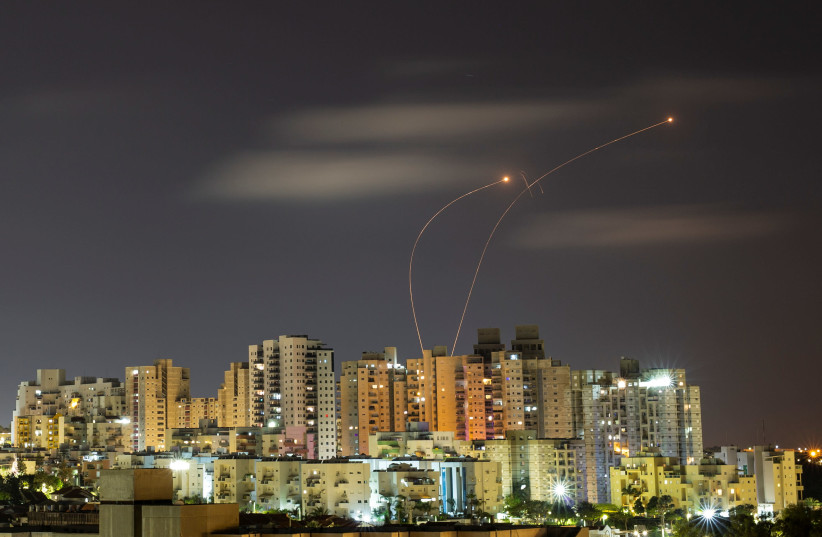
Streaks of light are seen from Ashkelon as the Iron Dome anti-missile system intercepts rockets launched from the Gaza Strip on May 20, 2021. (photo credit: AMIR COHEN/REUTERS)
Streaks of light are seen from Ashkelon as the Iron Dome anti-missile system intercepts rockets launched from the Gaza Strip on May 20, 2021.(photo credit: AMIR COHEN/REUTERS)

Israel’s response to the Hezbollah rockets could put the Lebanon border in the same situation as the Gaza border.


By YAAKOV KATZ   


On Monday, Prime Minister Naftali Bennett spoke at the Knesset. He was met by a volley of yelling, heckling and name calling. 

“Let’s talk about the results [of the last government],” he said. “In Gaza, you showed restraint in face of rocket attacks while we attack for every incendiary balloon. You left Hezbollah with ten times more rockets that can reach any place in Israel and because of that the defense budget needs to be big.

”Bennett was not wrong. Benjamin Netanyahu returned to the premiership in 2009, three years after the Second Lebanon War. At the time, Hezbollah had an estimated 30 or 40 thousand rockets. Nowadays, they are believed to have over 150,000.

Was it Netanyahu’s fault? That is questionable, but there is no doubt that under his tenure Israel made a conscious decision not to launch a preemptive strike to stop the Iranian proxy’s military buildup. Israel allowed the armament to go on even though it knew that the rockets were intended to be used one day against it.

For the most part, the decision was in line with Israeli military doctrine. Israel has not launched preemptive action to stop a conventional military buildup; that has been reserved for two instances when Iraq (1981) and Syria (2007) were pursuing nuclear weapons. Nuclear, yes. Regular rockets, no.

What Bennett will learn though is that it is easy to talk but harder to act. This is despite the fact that one of the senior members of his coalition and security cabinet, Justice Minister Gideon Sa’ar, is a longtime proponent of preemptive action against Hezbollah. 

In 2018, Sa’ar warned that Israel had a narrow window to attack Hezbollah to prevent it from obtaining precision-guided munitions.

This is all important to keep in mind following Hezbollah’s rocket attack against Israel on Friday. The barrage of about 20 rockets came just two days after three rockets were launched toward Kiryat Shmona. The difference was that the rockets on Wednesday were said to have been fired by a rogue Palestinian group. On Friday, Hezbollah openly took responsibility.

Israel’s response until now has been mild. After Wednesday’s attack, the Air Force bombed open areas in southern Lebanon from where the rockets had been fired. After Friday’s barrage, Israel responded with artillery fire in the direction of the source of the fire. By Saturday night, that seemed to be it. 

This is dangerous and complicated. IDF Spokesperson Brig.-Gen. Ran Kochav went so far as to explain that the fact Hezbollah fired its 20 rockets into open fields meant that the Lebanese terrorist group was deterred and scared of a larger conflict with Israel. If that wasn’t the case, he told reporters in a briefing on Friday, it would have attacked population centers. Is this true? We don’t know.

What we do know, is that it is a dangerous way to think since it sets up Israel to allow its northern border to turn into the way things are along the border with Gaza. There, for years, Israel restrained itself after rocket attacks. If it responded, it hit sand dunes or makeshift Hamas observation posts. Nothing too serious.

This normalized rocket fire into sovereign Israel. As long as no one was hurt or killed and as long as the rocket fire was sporadic, Israel could restrain itself. Did it make sense? Maybe. Did it also erode Israel’s deterrence? Definitely. That is happening along the northern border as well. Kochav’s comment could be interpreted as normalizing rocket fire now from Lebanon. No one was killed and no one was hurt so that must mean that Hezbollah is deterred. 

Not necessarily. What comments like Kochav’s potentially do when coupled with a mild military response, is create for Hezbollah a feeling that it – like Hamas – can normalize rocket attacks against Israel’s North. 

This would be disastrous for Israel but difficult to stop. Too strong a response could lead to a larger escalation – something Israel does not want – while too weak a response could lead Hezbollah to learn a bad lesson, something Israel also does not want. 

That right balance of how to respond and is going to be hard to find. Based on Friday’s events, the government needs to do so fast.

Related


River to Sea Uprooted Palestinian   
The views expressed in this article are the sole responsibility of the author and do not necessarily reflect those of the Blog!

Sunday, 18 July 2021

“Israel” Denies Palestinian Families Their Right to Live Together

 16 Jul 2021

Source: The Washington Post

By Al Mayadeen

Human rights advocates stressed that “Israel” is turning a fundamental right — to live with one’s spouse and children — into a crime.”


The family reunification ban was enacted in 2003

Human rights activists reported that the so-called “Israel’s Citizenship Law”, which has been in effect for 18 years, has turned a fundamental right — the ability to live with one’s spouse and children — into a crime, according to a report published by “The Washington Post”.

In cases of family reunification of Palestinian citizens with relatives within occupied Palestine, as in the West Bank, Al-Quds, and Gaza, as well as in several Arab nations, the law prohibits or restricts the awarding of citizenship, residency licenses, and stay permits.

Furthermore, the same report said that advocates described the said Israeli law as discriminatory because it is only applied to Palestinians.

In the aftermath of the Palestinian uprising known as the second Intifada, the family reunification ban was enacted in 2003 as a temporary security measure. Since then, the law has been renewed every year. Israeli lawmakers recently admitted that the initiative continues to gain support, in part due to a desire to preserve Israeli settlers.

Human rights advocates say that Palestinians from Al-Quds (Occupied Jerusalem) are often among those affected by the Citizenship Law.

Furthermore, Palestinians expect that the new Israeli government — led by two supporters of the law, Israeli Prime Minister Naftali Bennett and Foreign Minister Yair Lapid — would renew the law when it comes up for a routine vote this month.


River to Sea Uprooted Palestinian   
The views expressed in this article are the sole responsibility of the author and do not necessarily reflect those of the Blog!

Saturday, 19 June 2021

Bibi and the One State Solution

  BY GILAD ATZMON

bibi one state.jpg

By Gilad Atzmon

I am slightly amused by the many voices who celebrate what is perceived as the end of the Netanyahu era. Of course, I am not a Netanyahu supporter, far from it, but I will give Netanyahu credit where he deserves it.  ‘King Bibi,’ as his Jewish supporters often refer to him, was actually a crucial factor in the rise of Palestinian resistance and Palestinian unity.  Bibi was a pragmatist who managed to pull his nation, the region and even the entire world into a chain of disasters in a desperate but relentless attempt to save himself. Bibi is not a conspirator. He did it all in the open, and despite this, he is still the most popular politician in Israel.

As I have pointed out many times before, Israel is not politically divided. The vast majority of Israeli Knesset Members (MKs) are to the right of Netanyahu. Israel’s political establishment is divided over Netanyahu, but primarily due to personal rifts.

Israel is now governed by a very weak coalition unlikely to hold together for very long. One minor border clash in Gaza or a Jewish right-wing march in Jerusalem could topple the government and bring to an end to the ‘spirit of change’ in Israel. Since the current government enjoys a majority of just one Knesset member, every member in the coalition possesses the power to topple the government, or alternatively to mount significant pressure on the leader. The Government is practically paralyzed.  

But the issue is far deeper. Netanyahu’s potential disappearance (be it through retirement from politics or shelter from his legal issues in a friendly country) will see the immediate collapse of the current coalition in favour of an ultra-right government. Such a government would enjoy the support of at least 80 Knesset members. It would include whatever is left out of the Likud party, the rabbinical Orthodox parties and of course around 20-25 of Netanyahu’s right-wing rivals who happened to end up (momentarily) in the so called ‘change coalition’.

In the complicated political stalemate that emerged due to the unresolved tension between Netanyahu and his rivals within the Right (such as Naftali Bennett, Gideon Sa’ar and Avigdor Lieberman), the Islamist party and its leader Mansur Abbas became kingmakers. On the face of it, the success of Abbas could bring many more Israeli Arabs to the polls. If Arabs in Israel see a benefit in their political participation and decide to go to the polls at a similar rate to their Jewish counterparts, they could almost double their representation in the Knesset. Israeli Arabs could easily become the most significant political bloc in the Jewish State.  Yet Netanyahu’s disappearance would lead a shift in the complete opposite direction. With a right-wing Jewish coalition comprised of 80 MKs, no one would be dependent on the support of Ra’am or any Arab party.

What are the chances of Netanyahu disappearing? It depends how his trial evolves. But despite some calls to replace him within the Likud party, every grassroots Likud activist knows that Likud’s future and its electoral survival are totally dependent on Netanyahu and his charisma. Not only did he fail to prepare a successor, he worked tirelessly to undermine every gifted politician around him. He turned every rising right-wing alternative into his bitter enemy, and to a certain extent owes himself his own demise.


Unlike the naïve voices who speak for Palestine in the West but hardly understand the region and are too scared to ask what is it that drives the Jewish State, Hamas’ strategists see it all. They helped Bibi stay in power: he let them win, they let him paralyze Israel and let it spiral down. I also believe that Mansour Abbas can read the map. He knows that the Israeli Left is a comical compromised act. He knows that Meretz and the Labour party have removed themselves from the conflict and are solely concerned with climate issues and  Identitarian matters  (LGBTQ in particular). Mansour Abbas made a strategic effort to bond with the Jewish right wing, to form a coalition with the Orthodox parties. Bibi was happy to take Abbas into his coalition but Abbas failed to achieve his goal because the ultra-right Jewish parties identified his strategy and worked hard to undermine it.

I would have thought that in light of the above, those who wish for one state between the River and the Sea should consider accepting that Bibi may be the safest and fastest route towards such a goal. 

Donate


River to Sea Uprooted Palestinian   
The views expressed in this article are the sole responsibility of the author and do not necessarily reflect those of the Blog!

Wednesday, 16 June 2021

ISRAEL DEPLOYS IRON DOME TO HOLD NATIONALIST MARCH IN JERUSALEM, HAMAS WARNS OF CONSEQUENCES

15.06.2021 

 South Front

Israel Deploys Iron Dome To Hold Nationalist March In Jerusalem, Hamas Warns Of Consequences

On June 15th, Israel Defense Forces (IDF) has deployed Iron Dome air defense batteries and raised its level of alert ahead of the Jerusalem Flag March.

Hamas warned it would respond to the right-wing march if it goes through as planned, potentially with rocket fire from the Gaza Strip.

Omer Bar-Lev, the newly sworn-in public security minister after a meeting with Police Commissioner Kobi Shabtai and representatives of several Israeli defense agencies allowed the march to go on as planned.

“I was under the impression that the police is well prepared and that a great effort has been made to safeguard the delicate fabric of life and public safety,” Bar-Lev said in a statement.

Hamas warned Israel that the march will renew unrest, less than a month after the two sides reached a cease-fire following 11 days of fighting in Gaza.

“We are calling on Palestinians in Jerusalem and within the Green Line to halt the march tomorrow,” said Hamas spokesman Abdulatif al-Qanua on Monday. He dubbed the march, in which right-wing groups parade through the Old City carrying Israeli flags, a “fuse for a new explosion for the protection of the al-Aqsa Mosque and Jerusalem.”

Assailing the march as a “provocation”, Palestinian factions have called for a “Day of Rage” in Gaza and the Israeli-occupied West Bank.

“We warn of the dangerous repercussions that may result from the occupying power’s intention to allow extremist Israeli settlers to carry out the Flag March in occupied Jerusalem tomorrow,” Palestinian Prime Minister Mohammad Shtayyeh said on Twitter.

The original march was re-routed to avoid the walled Old City’s Muslim Quarter on May 10th in Jerusalem.

Israeli rightists accused their government of caving into Hamas by changing its route. They rescheduled the procession after an Egyptian-mediated Gaza truce took hold.

A route change or cancellation of the procession could expose Bennett’s patchwork coalition to accusations from Netanyahu, now in the opposition, and his right-wing allies of giving Hamas veto power over events in Jerusalem.

Palestinian protests were planned across the Gaza Strip, and Hamas and Palestinian President Mahmoud Abbas’s Fatah faction have called on Palestinians to flock to the Old City to counter the march.

“Tensions (are) rising again in Jerusalem at a very fragile & sensitive security & political time, when UN & Egypt are actively engaged in solidifying the ceasefire,” U.N. Middle East envoy Tor Wennesland said on Twitter.

“Urge all relevant parties to act responsibly & avoid any provocations that could lead to another round of confrontation,” he said.

The formation of Bennett’s alliance of right-wing, centrist, left-wing and Arab parties, with little in common other than a desire to unseat Netanyahu, capped coalition-building efforts after March 23 elections, Israel’s fourth in two years.

Minutes after meeting Bennett, 49, on his first full day in office, Netanyahu repeated a pledge to topple his government.

“It will happen sooner than you think,” Netanyahu, 71, who spent a record 12 straight years in office, said in public remarks to legislators of his right-wing Likud party.

MORE ON THE TOPIC:


River to Sea Uprooted Palestinian   
The views expressed in this article are the sole responsibility of the author and do not necessarily reflect those of the Blog!