Uprooted Palestinians are at the heart of the conflict in the M.E Palestinians uprooted by force of arms. Yet faced immense difficulties have survived, kept alive their history and culture, passed keys of family homes in occupied Palestine from one generation to the next.
Russian Foreign Minister Sergei Lavrov holds a press conference after the 28th OSCE Ministerial Council in Stockholm on Thursday, December 2. The annual OSCE Ministerial Council, chaired by Sweden, takes place on December 2-3. The ministers are expected to discuss security issues in the OSCE area and review the organisation’s activities.
From Bonnie Faulkner at Guns and Butter with Guest Andrei Martyanov
The Transcaucasia region, Georgia, Armenia and Azerbaijan, between the Black Sea and the Caspian Sea is discussed; Baku, capitol of Azerbaijan, oil region and birthplace of Andrei Martyanov; Nagorno-Karabakh, semi-autonomous region within Azerbaijan; political and ethnic dynamics of the Azeri/Armenian conflict; two wars between Armenia and Azerbaijan; Armenia’s Velvet Revolution; Soros sponsored NGOs in Armenia; Turkey’s involvement; Dashnaks; Armenian diaspora; second largest US embassy in Yerevan; Caucasus strategic geopolitical location spanning Europe and Asia; US recognition of WWI Armenian genocide; Russian Federation involvement; largest US export is dollar inflation; Russophobia; MAKS 2021 Russian Air Show, international exhibition of new civilian and military aircraft. Visit Martyanov’s website at: smoothiex12.blogspot.com/.
Sides are forming around the Iran vs Azerbaijan squabble. But this fight is not about ethnicity, religion or tribe – it is mainly about who gets to forge the region’s new transportation routes.
The last thing the complex, work-in-progress drive towards Eurasian integration needs at this stage is this messy affair between Iran and Azerbaijan in the South Caucasus.
Let’s start with the Conquerors of Khaybar – the largest Iranian military exercise in two decades held on its northwestern border with Azerbaijan.
Among the deployed Iranian military and the Islamic Revolutionary Guard Corps (IRGC) units there are some serious players, such as the 21st Tabriz Infantry Division, the IRGC Ashura 31 battalion, the 65th Airborne Special Forces Brigade and an array of missile systems, including the Fateh-313 and Zulfiqar ballistic missiles with ranges of up to 700 kilometers.
The official explanation is that the drills are a warning to enemies plotting anything against the Islamic Republic.
Iran’s Supreme Leader Ayatollah Khamenei pointedly tweeted that “those who are under the illusion of relying on others, think that they can provide their own security, should know that they will soon take a slap, they will regret this.”
The message was unmistakable: this was about Azerbaijan relying on Turkey and especially Israel for its security, and about Tel Aviv instrumentalizing Baku for an intel drive leading to interference in northern Iran.
Further elaboration by Iranian experts went as far as Israel eventually using military bases in Azerbaijan to strike at Iranian nuclear installations.
The reaction to the Iranian military exercise so far is a predictable Turkey–Azerbaijani response: they are conducting a joint drill in Nakhchivan throughout this week.
But were Iran’s concerns off the mark? A close security collaboration between Baku and Tel Aviv has been developing for years now. Azerbaijan today possesses Israeli drones and is cozy with both the CIA and the Turkish military. Throw in the recent trilateral military drills involving Azerbaijan, Turkey and Pakistan – these are developments bound to raise alarm bells in Tehran.
Baku, of course, spins it in a different manner: Our partnerships are not aimed at third countries.
So, essentially, while Tehran accuses Azerbaijan’s President Ilham Aliyev of making life easy for Takfiri terrorists and Zionists, Baku accuses Tehran of blindly supporting Armenia. Yes, the ghosts of the recent Karabakh war are all over the place.
As a matter of national security, Tehran simply cannot tolerate Israeli companies involved in the reconstruction of regions won in the war near the Iranian border: Fuzuli, Jabrayil, and Zangilan.
Iranian Foreign Minister Hossein Amir-Abdullahian has tried to play it diplomatically: “Geopolitical issues around our borders are important for us. Azerbaijan is a dear neighbor to Iran and that’s why we don’t want it to be trapped between foreign terrorists who are turning their soil into a hotbed.”
As if this was not complicated enough, the heart of the matter – as with all things in Eurasia – actually revolves around economic connectivity.
An interconnected mess
Baku’s geoeconomic dreams are hefty: the capital city aims to position itself at the key crossroads of two of the most important Eurasian corridors: North-South and East-West.
And that’s where the Zangezur Corridor comes in – arguably essential for Baku to predominate over Iran’s East-West connectivity routes.
The corridor is intended to connect western Azerbaijan to the Nakhchivan Autonomous Republic via Armenia, with roads and railways passing through the Zangezur region.
Zangezur is also essential for Iran to connect itself with Armenia, Russia, and further on down the road, to Europe.
China and India will also rely on Zangezur for trade, as the corridor provides a significant shortcut in distance. Considering large Asian cargo ships cannot sail the Caspian Sea, they usually waste precious weeks just to reach Russia.
An extra problem is that Baku has recently started harassing Iranian truckers in transit through these new annexed regions on their way to Armenia.
It didn’t have to be this way. This detailed essay shows how Azerbaijan and Iran are linked by “deep historical, cultural, religious, and ethno-linguistic ties,” and how the four northwestern Iranian provinces – Gilan, Ardabil, East Azerbaijan and West Azerbaijan – have “common geographical borders with both the main part of Azerbaijan and its exclave, the Nakhchivan Autonomous Republic; they also have deep and close commonalities based on Islam and Shiism, as well as sharing the Azerbaijani culture and language. All this has provided the ground for closeness between the citizens of the regions on both sides of the border.”
During the Rouhani years, relations with Aliyev were actually quite good, including the Iran‑Azerbaijan‑Russia and Iran‑Azerbaijan‑Turkey trilateral cooperation.
A key connectivity at play ahead is the project of linking the Qazvin‑Rasht‑Astara railway in Iran to Azerbaijan: that’s part of the all-important International North‑South Transport Corridor (INSTC).
Geoeconomically, Azerbaijan is essential for the main railway that will eventually run from India to Russia. No only that; the Iran‑Azerbaijan‑Russia trilateral cooperation opens a direct road for Iran to fully connect with the Eurasian Economic Union (EAEU).
In an optimal scenario, Baku can even help Iranian ports in the Persian Gulf and the Sea of Oman to connect to Georgian ports in the Black Sea.
The West is oblivious to the fact that virtually all sections of the INSTC are already working. Take, for instance, the exquisitely named Astara‑Astara railway connecting Iranian and Azerbaijani cities that share the same name. Or the Rasht‑Qazvin railway.
But then one important 130km stretch from Astara to Rasht, which is on the southern shore of the Caspian and is close to the Iranian–Azeri border, has not been built. The reason? Trump-era sanctions. That’s a graphic example of how much, in real-life practical terms, rides on a successful conclusion of the JCPOA talks in Vienna.
Who owns Zangezur?
Iran is positioned in a somewhat tricky patch along the southern periphery of the South Caucasus. The three major players in that hood are of course Iran, Russia, and Turkey. Iran borders the former Armenian – now Azeri – regions adjacent to Karabakh, including Zangilan, Jabrayil and Fuzuli.
It was clear that Iran’s flexibility on its northern border would be tied to the outcome of the Second Karabakh War. The northwestern border was a source of major concern, affecting the provinces of Ardabil and eastern Azerbaijan – which makes Tehran’s official position of supporting Azerbaijani over Armenian claims all the more confusing.
It is essential to remember that even in the Karabakh crisis in the early 1990s, Tehran recognized Nagorno‑Karabakh and the regions surrounding it as integral parts of Azerbaijan.
While both the CIA and Mossad appear oblivious to this recent regional history, it will never deter them from jumping into the fray to play Baku and Tehran against each other.
An extra complicating factor is that Zangezur is also mouth-watering from Ankara’s vantage point.
Arguably, Turkey’s neo-Ottoman President Recep Tayyip Erdogan, who never shies away from an opportunity to expands his Turkic-Muslim strategic depth, is looking to use the Azeri connection in Zangezur to reach the Caspian, then Turkmenistan, all the way to Xinjiang, the Uyghur Muslim populated western territory of China. This, in theory, could become a sort of Turkish Silk Road bypassing Iran – with the ominous possibility of also being used as a rat line to export Takfiris from Idlib all the way to Afghanistan.
Tehran, meanwhile, is totally INSTC-driven, focusing on two railway lines to be rehabilitated and upgraded from the Soviet era. One is South-North, from Jolfa connecting to Nakhchivan and then onwards to Yerevan and Tblisi. The other is West-East, again from Jolfa to Nakhchivan, crossing southern Armenia, mainland Azerbaijan, all the way to Baku and then onward to Russia.
And there’s the rub. The Azeris interpret the tripartite document resolving the Karabakh war as giving them the right to establish the Zangezur corridor. The Armenians for their part dispute exactly which ‘corridor’ applies to each particular region. Before they clear up these ambiguities, all those elaborate Iranian and Tukish connectivity plans are effectively suspended.
The fact, though, remains that Azerbaijan is geoeconomically bound to become a key crossroads of trans-regional connectivity as soon as Armenia unblocks the construction of these transport corridors.
So which ‘win-win’ is it?
Will diplomacy win in the South Caucasus? It must. The problem is both Baku and Tehran frame it in terms of exercising their sovereignty – and don’t seem particularly predisposed to offer concessions.
Meanwhile, the usual suspects are having a ball exploiting those differences. War, though, is out of the question, either between Azerbaijan and Armenia or between Azerbaijan and Iran. Tehran is more than aware that in this case both Ankara and Tel Aviv would support Baku. It is easy to see who would profit from it.
As recently as April, in a conference in Baku, Aliyev stressed that “Azerbaijan, Turkey, Russia and Iran share the same approach to regional cooperation. The main area of concentration now is transportation, because it’s a situation which is called ‘win‑win.’ Everybody wins from that.”
And that brings us to the fact that if the current stalemate persists, the top victim will be the INSTC. In fact, everyone loses in terms of Eurasian integration, including India and Russia.
The Pakistan angle, floated by a few in hush-hush mode, is completely far-fetched. There’s no evidence Tehran would be supporting an anti-Taliban drive in Afghanistan just to undermine Pakistan’s ties with Azerbaijan and Turkey.
The Russia–China strategic partnership looks at the current South Caucasus juncture as unnecessary trouble, especially after the recent Shanghai Cooperation Organization (SCO) summit. This badly hurts their complementary Eurasian integration strategies – the Belt and Road Initiative (BRI) and the Greater Eurasian Partnership.
INSTC could, of course, go the trans-Caspian way and cut off Azerbaijan altogether. This is not likely though. China’s reaction, once again, will be the deciding factor. There could be more emphasis on the Persian corridor – from Xinjiang, via Pakistan and Afghanistan, to Iran. Or Beijing could equally bet on both East-West corridors, that is, bet on both Azerbaijan and Iran.
The bottom line is that neither Moscow nor Beijing wants this to fester. There will be serious diplomatic moves ahead, as they both know the only ones to profit will be the usual NATO-centric suspects, and the losers will be all the players who are seriously invested in Eurasian integration.
Millions of ardent lovers, in a demonstration of unfathomable love and devotion for their beloved, walk seamlessly and untiringly from one sacred city to another, day and night, braving inclement weather and ominous security threats.
Men and women, young and old, they come from different corners of the world and converge at one place. They call it heaven.
It is not an excerpt from a gripping page-turner, laced with figments of imagination. It is a beautiful miracle I saw unfold before my eyes two years ago. A miracle that repeats every year.
If you haven’t guessed already, I am talking about the largest and the greatest rally against terrorism and extremism that takes place in the second lunar month, forty days from Ashura, which marks the martyrdom of Imam Hussain [AS] and his followers in the desert plains of Karbala 14 centuries ago.
It’s not merely a walk. It is a mark of protest against all forms and manifestations of terrorism, fascism, imperialism, despotism, and oppression perpetuated by state and non-state actors.
It is a rallying cry in support of the oppressed, weak and powerless. It is a reaffirmation of pledge to uphold the principles exemplified by the ‘master of challengers’ in Karbala.
The journey of a lifetime
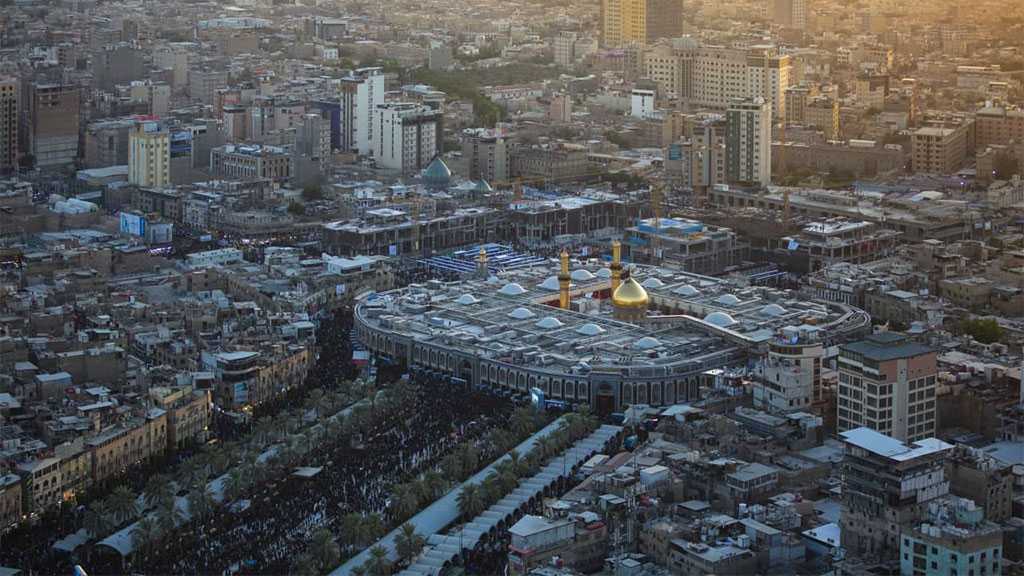
Arbaeen walk takes place from Najaf to Karbala – from the final resting place of the ‘commander of the faithful’ to that of the ‘master of the martyrs’. It is a journey of love.
Two years ago, I was blessed with an opportunity to embark on this life-changing journey. It was the fulfillment of a long-cherished dream.
For years, I had heard fascinating stories from those who traveled there before me. I also watched video documentaries and read articles and travelogues about it. Now it was time to live the dream. The feeling was surreal.
As a journalist, my work requires me to travel extensively. It has taken me to many amazing places past several years. But this time it was not work, but love that was taking me to Iraq.
Exactly a week before Arbaeen, I grabbed my backpack and boarded a bus at south Tehran’s bus terminal for Shalamcheh, a border town in western Khuzestan province. The bus reached the border in the wee hours of morning. As we de-boarded the bus, the scenes were spectacular.
Tens of thousands of people were jostling for space to enter Iraq by foot. I had never seen such scenes in my life. Everyone was visibly excited for the journey ahead. The chants of ‘Ya Hussain’ filled the air, as the sun peeked slowly over the misty desert horizon.
It was a long wait at the border terminal, but nobody seemed to grumble. I stood in a serpentine queue for about three hours before I could cross over. The moment I stepped on the soil of Iraq, I was reminded of Neil Armstrong’s words when he touched down on the lunar surface. It was a small step but a giant leap. The feeling was overwhelming. I had made it.
After a walk of few kilometers in ‘no-man’s land’ that divides the two countries, I boarded another bus on the Iraqi side of border to Najaf. It was a long and arduous journey in a bus teeming with pilgrims but the excitement and eagerness to reach the destination overshadowed everything. All minds and eyes were glued to the golden dome of Imam Ali’s [AS] mausoleum in Najaf. Despite weariness, no one slept on the way. When the bus finally halted at the terminal in Najaf, it was unreal. We were in the city of the ‘commander of the faithful.’
Prelude to the walk
In Najaf, streets were teeming with pilgrims who had flocked from different parts of the world. Local people had set up stalls, serving visitors sweetened drinks, fruits and snacks. I had heard about the hospitality of Iraqis and here I was experiencing it. As I made my way through the crowd, two young boys who sensed that I was a foreigner offered to host me in Najaf.
It was a beautiful and kind gesture from complete strangers with whom the only relation I had was love for Ahlulbayt. We happened to be the devotees of the man who was known in the city of Kufa as the ‘father of orphans’ for his nobility and large-heartedness.
I politely turned down their offer as one of my school-time friends in India, now a student at the Najaf seminary, was waiting for me. The food stalls were all around me, and food was being served with love and warmth, but somehow my hunger had fizzled out. I just wanted to reach the shrine of Imam Ali [AS].
It was walking distance from the terminal and I took steps as briskly as I possibly could. The crowd kept swelling around me and my marathonesque speed diminished. It seemed the whole world had converged there.
There are many small, winding lanes around the shrine and all of them were crammed with people. After much labor, I reached a point from where I could see the beautiful golden dome of the shrine giving out its radiance. I momentarily stood still and had a long, sharp look at it. This was a moment I had waited for so long.
The walk continued uninterrupted until I reached close to the shrine. The next challenge was to go inside the shrine. I stood at the imposing gates, with barely any space to put my foot down. A few moments later, a tsunami of people pushed me toward the main hall of the magnificent shrine. Tears yelled from my eyes irrepressibly.
Here I was, in the city of my Imam, inside his shrine, beneath his dome, right in front of his grave. I wanted to believe what I was seeing, feeling and experiencing. I wanted to believe that it was real, not a dream.
Inside the shrine, I saw people of different nationalities, different languages, different skin colors, different age groups crying, screaming, smiling, beaming – a whole range of pure human emotions. ‘Ya Ali’ was reverberating from all corners, a chant that has a universal appeal, a slogan you associate with the campaigners of truth and justice everywhere.
My two days in Najaf gave me a lifetime of memories to cherish. I stayed at my friend’s house, close to the shrine, but my host was Amiral Momineen [AS] himself. I felt at home. I never felt that way anywhere else, until I reached Karbala.
The walk to heaven
It was finally time to head toward the land that I had heard about, read about, and thought about. The land soaked in the blood of 72 martyrs, including the grandson of the apostle of God. Whenever the talk veers to Karbala, our eyes turn moist. With these tears, as Imam Khomeini once said, we have razed to ground powerful empires.
Karbala is an idea, a concept and a movement that will always have significance and relevance. Imam’s uprising in those desert plains should strengthen our resolve to speak truth to power, to be the voice of voiceless, to campaign for truth and justice.
As Dr. Ali Shariati says, martyrs gave their blood, now survivors have to carry the message of that blood to future generations. Imam Hussain [AS] gave blood and Hazrat Zainab [SA] became an eloquent tongue of that blood.
Arbaeen walk is an endeavor that seeks to keep alive the movement of Karbala, to convey the message of blood to future generations. It is a movement against terrorism, fascism and despotism. It is a movement that seeks to safeguard and promote human values of love and compassion and condemn bigotry, tyranny and exploitation of powerful elites. It is a movement for humanity and its appeal cuts across the barriers of religion, caste, color and creed, which is precisely why non-Shias or for that matter even non-Muslims join this greatest march on earth.
For one week prior to Arbaeen, every day tens of thousands start the walk towards Karbala from Najaf. We began our walk three days before Arbaeen from the compound of Imam Ali [AS]’s shrine. The streets were swarming with people wearing black dresses, holding flags, banners and placards, and chanting ‘Labbaik Ya Hussain’. It was not a dream anymore. I believed what I was seeing.
The whole journey of around 80 km [50 miles] from Najaf to Karbala is marked with 1400 poles, corresponding with the number of years that have passed since the tragic event of Karbala. It takes about two days and two nights to cover this stretch depending on the pace of walk and stoppages in between. When we started the walk, it was drizzling with a gentle breeze. There were men, women, children and elderly all around me, walking towards the same destination.
For the love of Hussain [AS]
Along the way from Najaf to Karbala, stalls were set up by local residents, charities, mosques and foreign aid groups to ensure no pilgrim goes hungry or thirsty. Cooks prepared massive quantities of stewed lamb, grilled fish, beans, fresh bread and rice. There were small makeshift tents lined with foam mattresses and woolen blankets for people to rest or sleep. For those tired, there were masseurs to give them quick and revitalizing massage. For shoes covered with dust, there were volunteers to polish them. There were also mobile bathrooms to have a quick shower and mobile ambulances in case of a medical emergency.
And they charged absolutely nothing. Just for the love of Ahlulbayt.
In recent years, before the pandemic struck, the rush of pilgrims on Arbaeen went up tremendously. The year I went, the figure touched the staggering 15 million, even though the official figure was different. The year before that was the first Arbaeen pilgrimage since the Iraqi government declared thumping victory over Daesh.
All these years, people have been going on this pilgrimage despite the Daesh presence in the country, which is quite remarkable. Only those with unflinching faith and unshakable conviction are capable of taking such huge risks. It is safe to suggest that this greatest protest against terrorism was a key factor in the elimination of the dreaded terrorist group from Iraq.
Security concerns, however, did not play on my mind. Before Iran, I spent a few years in Afghanistan, reporting on the daily incidents of violence. And I grew up in Kashmir, the world’s largest militarized zone. It was normal for me.
On the way I grabbed a flag with ‘Ya Abal Fazl’ in one hand and a placard related to my own bruised and bleeding homeland – Kashmir – in the other hand. I felt like a soldier dressed up for the war. It was overwhelming with a sea of people walking, running, scampering, crawling towards the abode of Aba Abdillah [AS].
On the way, I witnessed many incredible scenes. I saw a young man carrying his elderly mother on his shoulders. I saw a father pushing a wheelchair with his physically impaired son perched on it. I saw a 3-year old girl standing on a bench in the middle of night offering sweets to the travelers. I saw families walking together, a grandfather holding the hand of his granddaughter, singing soul-stirring elegies in the memory of the martyrs of Karbala.
Millions of people walking towards Karbala had different nationalities, came from different cultures, spoke different languages, but what united them was their love for Ahlulbayt and commitment to honor their memory. It was like small tributaries merging into a gigantic sea. They proudly held aloft flags of their respective countries and marched in unison. Majority of them were Iranians, but many of them also came from Lebanon, Azerbaijan, Pakistan, India, Kashmir, Turkey, Syria, Indonesia, and some European countries.
I met two university students from Australia who had come all the way from Sydney to witness the spectacle. They had heard about it from friends which prompted them to embark on the awe-inspiring journey.
“This is spectacular. I have never seen anything like this, such massive crowd and yet so well-organized,” one of them told me in our ‘walk the talk’. “Saudi authorities should learn from Iraqis how to manage such a big religious gathering.”
I bumped across people from different nationalities and we instantly hit it off. The conversations ranged from Iraq’s successful fight against Daesh, America’s war crimes in the region, the secret dalliance of Arab states with the Zionist regime, situation of religious minorities in South Asia, and the relevance of Karbala in our times. We walked and talked and discovered that we agreed on many things. We became friends and companions in the walk.
This is how Arbaeen can be a stimulating intellectual exercise and a cultural exchange between people of various nationalities and cultures that come together for a common cause.
Hospitality and kindness redefined
On day one of the walk, I met some friends along the way. Days were relatively hot and nights were extremely cold. At every step along the way, there were friendly hosts urging walkers to sit for a sweetened black Iraqi tea and snacks.
We stopped at one small stall where a 30-something husband and wife were serving tea and fresh dates to travelers. They belonged to a local village and worked in farms to earn money for livelihood. Serving the guests of Imam Hussain [AS], the man told me, was a privilege for him.
“I save money every month from my meager earnings and accumulate all the savings to spend them on Aba Abdillah’s [AS] guests on Arbaeen. I can starve myself to make sure pilgrims have no reason to complain.” His words touched me deeply.
We continued on the journey until the night fell and then halted to sleep for a few hours before resuming the walk. All tents were packed and there was hardly any space to lie down. The night was dark and cold as we looked for shelter. Some young boys came from nowhere and offered us some woolen blankets, which saved us from the potential cold stroke.
A few meters away, an elderly man said something to us in Arabic that we didn’t understand. Then he gestured towards a small roadside tent and led us inside. Luckily there was still some space left. It’s amazing the way complete strangers show such kindness and compassion there.
At the break of dawn, we woke up for prayers and then resumed the walk until afternoon prayers, with few hurried tea breaks in between. On the way, the buzz was electrifying as we inched closer to our destination. Iranian pilgrims recited Farsi elegies, Indians and Pakistanis recited Urdu dirges, pilgrims from Lebanon and Syria joined the chorus with Arabic latmiyas. All melodies combined to create a heartwarming ambience.
Following the afternoon prayers, we walked briskly, perhaps out of excitement. We started counting the number of poles we left behind until a big billboard appeared on the way: ‘Welcome to Karbala’ written in Arabic. My heart skipped a beat. The moment had arrived.
I was in Karbala but the shrines were still a few miles away. It was an unbelievable crowd, barely a space to breathe. But who wants to breathe in Karbala, I told myself. I would proudly breathe my last in Bainul Haramian, in between the shrines of two brothers. Slowly, very slowly, the crowd moved forward until the shrine of Aba Abdillah [AS] appeared before my eyes.
Welcome to Karbala
I was officially in heaven. Every thought disappeared from my mind. All I could think of was that fateful day 14 centuries ago when a small group of holy warriors confronted the army of a mighty empire. The scenes started appearing before my eyes. An infant child being taken to the battlefield, a young man fighting like a seasoned warrior, a standard bearer going to fetch water from a nearby stream and never coming back, little children crying of thirst and the beloved grandson of the apostle of God crying out loud: ‘Is there anyone to help me.’
The question was not directed at the soldiers of Yazid ibn Muawiya. Imam Hussain [AS] expected no mercy from them. It was directed at his followers. It was directed at us. This march of the millions from Najaf to Karbala every year is in response to that call, which still echoes in the hearts and minds of believers.
As I stood in front of the shrine of the master of martyrs [AS], time came to a grinding halt. There were people from all sides trying to get closer to the shrine. In the crowd I lost my fellow companions. But it hardly mattered now. I was standing next to Hussain ibn Ali [AS]. Everything else lost the meaning. I felt like a mighty warrior who had conquered the world.
With much difficulty, I made my way through the crowd into Bainul Haramian, a small stretch between the shrines of brothers – Imam Hussain [AS] and Abol Fazl Abbas [AS]. This is an epicenter of universe for the lovers of Ahlulbayt [AS]. I looked at Hussain [AS] and then I looked at Abol Fazl [AS], I felt as if they were sitting together and watching us. I had never felt so emotional in my life.
It was my first visit to Karbala and here I was standing between the two brothers who changed the course of history with their unflinching faith and indomitable valor.
I walked inside the shrine of Imam Hussain [AS], with a tornado of people, and saw it jam-packed. In one corner of the hall, I found a little space to stand and recite Ziyarat e Arbaeen. I didn’t want to leave that hall. I wanted to make it my home.
Then I went to the shrine of Abol Fazl Abbas [AS], the standard bearer of Karbala, whose name was enough to leave enemies in disarray. As I slowly walked inside his shrine, I could see he still had the same aura. People screamed and cried ‘Ya Abol Fazl’. There was hardly any eye that was not moist.
One Iranian group recited the beautiful elegy inside the hall – Alamdar nayamad [The flagbearer did not return]. As children, we are often told to chant ‘Ya Abol Fazl’ if we are afraid of anything or if we sense any danger. Here I was, inside the shrine of Abol Fazl, calling him, sharing my secrets, telling him about my ordeals. I know he listened.
The two days in Karbala were life-changing for me. I did not sleep at night. I sat in Bainul Haramain and gazed at the two shrines all night.
After two unforgettable days in Karbala, I left for Baghdad to see visit Imam Moosa Kazim [AS], my great-grandfather. The crowd was comparatively less here. The next day I left for Samarra to visit Imam Askari [AS], which brought back memories of the 2006 terrorist attack. Those terrorists, like Yazid, have no trace anymore. From Samarra I took a bus to Mehran border, and returned to Iran.
The pilgrimage came to an end. The most beautiful 10 days of my life. I made a solemn pledge to return every year. That, however, didn’t happen as Covid-19 pandemic disrupted everything. But the pledge remains in place, the pledge of allegiance to the beloved, the meaning of which can be understood only by true lovers.
As always, I am delighted to be here on September 1, and not only on this day, of course, since we hold events here at other times of the year as well. But September 1 has special importance, since this is Knowledge Day. First-year students get to feel the university spirit, and meetings like this help us streamline this experience and are sure to benefit students in their studies.
I am certain that you will not regret choosing this university. MGIMO graduates find work in a wide variety of spheres, from public service and research to business and journalism. We are proud that our alma mater has such a great reputation. MGIMO Rector, Anatoly Torkunov, has just shared some enrolment statistics. They are impressive. He said that the minister keeps a close eye on everything going on in this school. But you cannot keep track of everything, and I mean this in a good way. MGIMO University constantly improves its programmes and activity and expands its partnership networks. Today, MGIMO University will sign yet another cooperation agreement, this time with Ivannikov Institute for System Programming. This shows that we always need to be in step with the times. This is the right way to go. The quality of the education that graduates receive at this university is recognised both in Russia and around the world.
I am glad MGIMO University continues to attract international students. This is an important channel for maintaining humanitarian, educational and people-to-people ties. In today’s world these ties have special importance, since at the intergovernmental level our Western colleagues have little appetite for talking to us on equal terms. As you probably know, and I am certain that you have a keen interest in foreign policy, they persist with their demands that we change the way we behave and act the way they view as being correct. This is a dead end. We are open to a frank, constructive, mutually beneficial dialogue, taking into account each other’s interests. It is along these lines that we maintain dialogue and promote cooperation and partnerships with the overwhelming majority of countries around the world. This includes our closest allies and strategic partners – members of the CSTO, CIS, EAEU, SCO and BRICS. We have many reliable friends, almost in all continents interested in promoting mutually beneficial projects that benefit all the participants.
To counter this trend toward a multipolar world, which reflects the cultural and civilisational diversity on this planet, our Western partners seek to maintain their dominant standing in international affairs. They are acting in quite a brash manner making no secret out of the fact that their main objective is to contain their competitors, primarily Russia and China. The documents adopted at the NATO, EU, and US-EU summits over the past months are designed to consolidate the “collective West” in their efforts to counter the Russian Federation and the People’s Republic of China.
The Indo-Pacific strategies that are openly pursuing the goal (as it has been proclaimed) of containing China have gained currency in the Asia-Pacific region. They are trying to implicate another of our strategic partners, India, in these games. Everyone can see it and everyone understands what it is all about. But those who gave up their sovereignty and joined the ranks of the countries led by the United States and other Western countries are not in a position to utter a word of disagreement.
Truth be told, following the tragic events in Afghanistan and after the United States and its NATO allies had hurriedly left that country, a chorus of voices began to be heard in Europe advocating self-reliance in foreign affairs, especially in matters involving the deployment of armed forces, rather than reliance on directives issued by Washington that it can change in an instant. These are glimpses of something new in the position of the West, in this case, the Europeans.
The second notable aspect highlighted by US President Joe Biden and President of France Emmanuel Macron is as follows: both announced within one or two days of one another that it was time to give up on interfering in other countries’ internal affairs in order to impose Western-style democracy on them.
We welcome such statements. We have long been urging our Western colleagues to learn from the reckless ventures that they have got themselves into in recent decades in Iraq and Libya, and they tried to do the same in Syria. I hope (if the above statements are a true reflection of their hard-won understanding of the matter) that our planet will be a safer place in the future. But all the same, we have to “clear out the rubble” of the past policies. Hundreds of thousands of people, civilians, were impacted or killed during the invasion of Iraq and the attack on Libya. There are lots of problems stemming from the revived international terrorism in the Middle East and North Africa and huge numbers of illegal migrants. The illegal arms trade, drug smuggling and much more are on the rise. All this needs to be “cleared up” by the international community, because it affects almost everyone.
Now that the NATO troops have pulled out from Afghanistan, the most important thing for us is to ensure the security of our allies in Central Asia. First, they are our comrades, including comrades-in-arms, and second, the security of Russia’s southern borders directly depends on this.
I hope that if we act together, we will be able to agree on these external steps that will help create an environment within Afghanistan for forming a truly national leadership. We are working energetically to this end.
We are witnessing two trends in the international arena. On the one hand, it is about the formation of a multipolar and polycentric world. This trend reflects the position of most states around the world. On the other hand, efforts are being made to hold back this objective historical process and to artificially preserve control over everything that is happening in the international arena, including with the use of unscrupulous methods such as unilateral illegal sanctions, competition that is occasionally reminiscent of ultimatums, or changing the rules in the midst of an ongoing project.
The West tends to mention less often (if at all) the term “international law” and calls on everyone to maintain a “rules-based world order.” We have nothing against the rules. After all, the UN Charter is also a set of rules, but they were agreed with all states without exception. They are supported by every country that is a member of this one-of-a-kind organisation with incredible and unmatched legitimacy. The West has different rules in mind. They are creating formats of their own. For example, the US has announced that it will convene a Democracy Summit to create an Alliance of Democracies. Clearly, Washington will be the one to determine who will be invited and who is considered a democracy. By the same token, France and Germany announced an initiative to create an Alliance for Multilateralism, i.e. “multilateralists.” When asked why these issues cannot be discussed at the UN, where multilateralism is at its finest in the modern world, the answer is that the UN is home to “retrogrades” and they want to create an Alliance for Multilateralism based on “advanced” ideas. And the “leaders,” above all the EU, will set the rules for multilateralism, and the rest will have to look up to them. This is a crude description, but it conveys the essence of what they are trying to tell us in so many words.
There are initiatives to create partnerships, including in the areas that were supposed to be discussed at universal platforms long ago. Numerous initiatives appearing in the developing world are also being used for the same purpose. There are attempts to channel them to meet Western interests.
The policy of undermining international law and universal principles sealed in the UN Charter is reflected, to a certain extent, in the efforts to call into doubt the results of World War II. They are aimed at trying to equate the winners in this bloodiest war in human history with those who unleashed it and proclaimed the destruction of whole nations as their goal. These attempts are aimed at undermining our positions in the world. Similar attacks are being made on China’s positions. We cannot give up and remain indifferent on this issue.
Every year, we put forward major initiatives at the UN on the inadmissibility of glorifying Nazism, waging a war against monuments and fuelling any forms of racial discrimination and xenophobia.
The overwhelming majority of states not only support these initiatives but also become their co-authors. In most cases, our Western colleagues bashfully abstain from this. They explain that the appeal to prevent certain trends runs counter to democracy and freedom of speech. In other words, for them the neo-Nazi trends that are obvious in Europe, in part, in the Baltic states and Ukraine, do not amount to a gross violation of the Nuremberg trials verdict but merely reflect a commitment to tolerance and freedom of speech.
I do not think it is necessary to explain in detail the harmful and pernicious nature of such attempts to rewrite history and give the green light to those who want to reproduce misanthropic attitudes in the world arena. I do not believe it is necessary to speak in detail about the need to counter these attitudes with resolve and consistency.
We have a foreign policy course endorsed by President of Russia Vladimir Putin. Its main goal is to ensure the most favourable conditions for national development, security, economic growth and the improvement of the living standards of our citizens. We will consistently translate this course into reality.
We have never striven for confrontation, not to mention isolation. We are open to cooperation with the Western countries if they change their approach and stop acting like teachers who “know everything” and are “above reproach,” treating Russia like a pupil that must do its homework. It is inappropriate to talk to anyone in this manner, let alone Russia.
Our plans enjoy firm support of our people for the course towards strengthening the sovereignty of the Russian Federation and promoting good, friendly relations with our neighbours and all those who are willing to do this honestly, on an equitable basis.
Question: The question has to do with the changes in modern diplomacy under the influence of new technology. Digital diplomacy is a widespread term today. Technological development adds a fundamentally new dimension to a diplomats’ work, and also leads to a qualitative transformation of the system of international relations. How do you think new technologies will affect energy policy in particular and diplomacy in general?
Sergey Lavrov: I am asked this question every time I speak at Knowledge Day here. Apparently, this reflects the thinking of each new generation of students, about how technology will generally affect the processes concerning state-level problem solving and international relations.
Indeed, digital technologies are rapidly penetrating our lives, even faster in the context of the coronavirus pandemic. Many events, including international events, have transitioned to the online format. There is an upside to this. To a certain extent, it helps to save time, which is becoming a more sparse resource every day, given the aggravating international challenges and problems that our foreign policy tries to resolve.
When it comes to holding official meetings such as the UN Security Council or the UN General Assembly with a pre-agreed agenda where each country wants to express its point of view, such statements are prepared in advance through the efforts of a large number of specialists. The result is a policy document on a specific matter on the international agenda, which then goes through debates in one format or another. I see no problem with participating in this kind of discussion online using digital technology.
There are other international meetings, when something needs to be agreed upon as soon as possible; these meetings can also be held remotely. At least this way is better than a phone call because you can see the other person’s face, and this is very important.
But the most serious issues cannot be resolved online. All my colleagues agree with this. Maybe in the future, humanity will invent a way to convey the feeling of personal contact. But I doubt this will be possible. No machine is capable of replacing a person.
I am confident that conventional diplomacy will retain its importance as the main tool in international affairs. As soon as a serious problem arises, it is imperative to meet and try to negotiate.
Question: Will the autumn 2021 elections to the State Duma of the Federal Assembly of the Russian Federation impact Russia’s foreign policy in the international arena?
SergeyLavrov: A good question. Elections in our country actually begin in a little more than a fortnight. Even now Western colleagues make it clear that they are set to cast discredit on them. Various political scientists are publishing articles and making speeches aimed at preparing public opinion in the direction of the narrative that the elections results will be rigged.
We regularly invite international observers to our national elections. This year, around 200 observers will come to us as well, including those from international organisations. The only one of them who arrogantly declined the invitation was the OSCE Office for Democratic Institutions and Human Rights (ODIHR). We told them they could send a group of 60 observers. This is the largest group we invite from abroad. They said they wanted 500. When you are being invited to visit someone, you do not demand gifts for yourself instead of showing respect towards the hosts. OSCE does not have a rule under which ODIHR must dictate election monitoring provisions. All the countries have only one obligation there – to invite international observers to elections. It is not even written down that they should be from OSCE. They may be from anywhere you like. We do it regularly and meet our obligations in full. This is an example of how international law (and this principle is prescribed at OSCE, I mean that all issues must be solved by consensus) is being replaced by “rules.” This Office itself made up a rule, along the same lines the West operates, by demanding that its own “rules” must be obeyed.
However important international observers might be, we will also have our own observers. Their number is immense. The voting will be streamed live in full. Our Central Electoral Board provides detailed coverage of this and other innovations being introduced. We are taking steps to ensure maximum transparency of voting at our embassies and general consulates. As always, we are making arrangements so that it is possible for our citizens abroad to cast their vote and fulfil their election right.
With all the importance of international observers, it is ultimately our citizens who will take a decision on how we will live on and with which members our parliament will draft new laws. Those who are going to objectively figure out developments in the Russia Federation are always welcome. As to those who have already passed a judgement, let them bear the shame.
Question: I know that poetry and art are among your hobbies. How can we make Russian literature and cinema more effective as a soft power tool abroad?
Sergey Lavrov: There is only one way, and that is to promote these works in other countries’ markets. This policy was vigorously pursued in the Soviet Union. That was a useful experience for the international film and literary community as well. I believe we are renewing these traditions now. I do not know about literary exhibitions, I just do not think I have seen a lot of information on this, but many film festivals recognise the work of our directors, actors and producers. A number of Russian films are highly valued in Cannes and in Karlovy Vary. We must continue to do this.
Question: Does Russia have effective and proportionate methods of fighting manifestations of Russophobia, oppression of Russians, persecution against the Russian language and the Russian world in certain countries?
Sergey Lavrov: This is a difficult question, given the recent manifestations of inappropriate attitudes towards ethnic Russians in a number of countries, including some of our neighbours. This topic has several dimensions to it. The most important point is that the government of a country where our citizens are subjected to some kind of discriminatory influence must firmly oppose such manifestations and take steps to prevent them. This is important, not only because they attack Russians or our other compatriots, but also because it’s required by international conventions, the UN Charter, the Universal Declaration of Human Rights and many other documents that are universal and approved by everyone.
In Russia, too, we have seen situations recently where some migrant labourers were at odds with other labour migrants. This is also a problem because Russia needs migrant labourers. We are trying to make immigration as clear, transparent and legitimate as possible. We negotiate with the countries they come from for long-term employment (mostly the Central Asian countries) and agree on special courses for potential migrants that make sure they speak minimal Russian and are familiar with Russian customs, our laws, and that they are planning to behave in a way that is appropriate for being hired in the Russian Federation. This is important for our economy. Without migrant labourers, many Russian industries are now experiencing a significant shortage of personnel.
It is also important to keep in mind that these countries are our allies. We, as allies, must support each other; one way to do so is to ensure an appropriate environment for citizens who represent a different ethnic group.
We have a huge number of ethnic groups living in Russia. Russia is a record holder in multi-ethnicity. All this cultural and religious diversity has always made our country strong, providing the solid foundation on which we stand. We have never tried to destroy the traditions, cultures or languages of any peoples that have lived here since the Russian Empire, then the Soviet Union and now the Russian Federation. We have always supported their languages, cultures, and customs.
Another factor that must be taken into account is the basic quality of life for each and every citizen. We pursue a most open policy. We will make every effort to ensure that our neighbours or other countries where our compatriots live or work fully comply with their international obligations. The fight against discrimination must use political methods based on respect for international commitments.
Question: Do conditions exist for economic and investment cooperation with Japan on the Kuril Islands?
Sergey Lavrov: Yes, they do, of course. It is even more than that. We made a relevant proposal to our Japanese colleagues a long time ago. When, several years ago, Russian President Vladimir Putin met with the Japanese Prime Minister at the time, Shinzo Abe, we came up with an initiative to engage in joint economic activity on these islands. Our Japanese neighbours agreed to this proposal after a while, but decided to confine our cooperation to relatively unsophisticated areas, like aquaculture and waste treatment. These things are important but they are of no strategic significance. We offered them cooperation in any industry of their choice on the southern Kuril Islands and this has been stated repeatedly in the correspondence with our Japanese colleagues. However, the Japanese are seeking to secure a deal with us that would allow them to engage in economic activity and invest money [in the area], not in compliance with Russian law, but rather on the basis of an agreement that provides for another jurisdiction – not that of the Russian Federation. Under this jurisdiction, Russian and Japanese representatives in a certain administrative body would enjoy equal rights, meaning that some hybrid laws would be introduced. This cannot be done under our Constitution.
Regretfully, our Japanese friends are missing out on the opportunity to invest money with us for our mutual benefit. Nonetheless, we have good plans. Soon, new privileges will be announced for our foreign partners who agree to work with us in this part of the Russian Federation. I believe there will be practical interest in this.
Question: In one of your interviews you said (and I fully agree) that modern Western-style liberal democracies have run their course. How will nation states evolve going forward? What forms of state organisation hold the most promise? What should we be striving for?
The UN is plagued by many problems, ranging from Greta Thunberg to agreements that are not being acted upon, such as, for instance, the Paris Agreement. What can be done to turn this deplorable trend around? What laws need to be adopted? What kind of organisations must be created? What does Russia think about this?
Sergey Lavrov: I briefly touched on this matter in my opening remarks. I believe each state should be structured around its customs and traditions and be comfortable for its residents who will have children, grandchildren, etc. It appears that they have promised to stop trying to impose democracy on other countries. At least, President Biden and President Macron said this almost simultaneously. We’ll see how they deliver on their promises.
Each country should take care of its own affairs independently. Everyone now agrees that imposing a Western system on Afghanistan was a grave mistake. Afghanistan has always been a fairly decentralised country where clan-based and other bonds, as well as relations between different ethnic groups, have always played a major role. And Kabul usually balanced out these relations. Saying that tomorrow you will have elections and everyone should go and cast their vote to elect a president who will have certain powers – it was not the Afghans who came up with this idea. It was imposed on them and the ones who did it hurt themselves badly. I hope the promises not to impose democracy on anyone else will be kept.
With regard to environmental protection, the Paris Agreement can hardly be described as a treaty that is not being acted upon. It was based on the fundamental principle that included the need to reduce carbon dioxide and greenhouse gas emissions, but each country was supposed to assume commitments of its own. Preparations for another conference of the parties to the UN Framework Convention on Climate Change, which will take place in Glasgow this autumn, are underway.
As part of this process, the most important thing is to agree on variables that will meet the interests of each participant. The proposal of several Western countries to stop using coal-fired power generation starting literally today cannot be complied with by many countries, including several Western countries, simply because this would undermine their energy security. The same applies to large developing countries, including China and India. They are reluctant to stop their growth. They are making it clear to the West that the Western countries have attained their current level of development due to intensive use of natural resources, which gave rise to the greenhouse effect, and now the West wants large developing countries to skip their current phase of development and go straight to a post-carbon economy. It doesn’t work that way, they say. First, they need to complete the economic development of their respective states, which is a complex process that involves the interests of each state. An attempt to balance these interests is being undertaken in the course of preparations for the next conference of the parties to the UN Framework Convention on Climate Change.
We made a commitment that by 2030 we would have 70 percent of the 1990 level when the countdown began under the UN Climate Convention. It is unlikely that anyone would have complaints with regard to us. President Vladimir Putin has made clear more than once that we must be extremely careful with regard to everything that is happening. The fact that Russia’s Arctic zone, which is mainly permafrost, is warming up much faster than the rest of the planet is worrisome. This matter is being carefully addressed by several of our ministries, and it is a concern for all of our Government.
Question: Can environmental issues motivate the world powers tо unite against a background of general discord? What is the potential for green diplomacy?
Sergey Lavrov: Environmental protection and concern for the planet’s climate must become a motive for pooling our efforts. It is hard to say now to what extent the world powers will manage to achieve this.
Let me repeat that the developing nations are strongly inclined to use their opportunities for the current stage of their development before assuming the commitments promoted by their Western colleagues. Many interests come together here. Our global interest lies in the health of the planet and the survival of humanity. However, every country has its own national assessment of the current situation and the commitments to their people. It is a complicated matter, but there is no doubt that this is a challenge that must prompt all of us to come together. We stand for pooling our efforts.
Question: Can the Russian Federation “enforce Ukraine to peace” under the Minsk Agreements?
Sergey Lavrov: The Minsk Agreements do not envisage any enforcement. They have been voluntarily approved, signed and unanimously endorsed by the UN Security Council, thereby becoming international law. When Ukraine as a state, both under Petr Poroshenko and Vladimir Zelensky, is doing all it can to avoid fulfilling these agreements, we must point this out to those who compiled them with us. I am primarily referring to Germany, France and other Western countries that are going all-out to justify the Kiev regime. When I say that it is trying to avoid fulfilling these agreements, I am referring to many laws that actually prohibit the Russian language, the transfer of special authority to the territories that have proclaimed themselves the Donetsk and Lugansk people’s republics and the efforts to harmonise the parameters of local elections in them. These are the basics of the Minsk Agreements.
Recently, German Chancellor Angela Merkel visited Moscow. This issue was raised at her talks with President of Russia Vladimir Putin. We showed our German colleagues the legal bans that Mr Zelensky adopted himself to justify his complete inability to fulfil what is required by all states in the world. All countries without exception believe that there is no alternative to the Minsk Agreements for settling the crisis in Donbass. Our Ukrainian colleagues are true prestidigitators. At one time, they believed that Rus was the true name of Ukraine (our ministry has already replied to this, so I will not repeat it). Later they said that the conversion of Rus was a Ukrainian holiday. This is sad. Mr Zelensky claims that Russian gas is the dirtiest in the world. He is doing this not because he is particularly bright but because he wants to maintain and fuel his Russophobic rhetoric and actions to prompt the West to continue supporting Kiev.
Ukraine continues to exploit the obvious efforts of the West to unbalance and destabilise Russia, sidetrack it from resolving its vital problems and make our foreign policy less effective. The Ukrainian regime is exploiting all this. This is clear to everyone. Having placed its bets on Kiev, the West feels uncomfortable about giving up on them. But this approach has obviously failed. The realisation of this fact is coming up but has not yet been embodied in practical steps aimed at convincing or, to use your expression, “enforcing” anything. It is the West that must enforce compliance from its client.
Question: How do you see yourself as a State Duma deputy, something you may soon be? Do you have proposals or ideas to offer? Perhaps, you have specific initiatives to promote our relations with Armenia or Georgia?
Sergey Lavrov: I will not speculate on the outcome of the elections to the State Duma.
We deal with our relations with Armenia and Georgia as Foreign Ministry officials. Armenia is our ally. New Foreign Minister Ararat Mirzoyan was just in Moscow, on August 31. We had a good discussion. Our bilateral agenda is quite fulfilling and includes mutual visits, major projects and expanded economic cooperation. All of that is unfolding in a very intensive and confident manner.
There is the Nagorno-Karabakh problem, and Russia has played a decisive role in bringing a solution to it. The President of Russia, the President of Azerbaijan and the Prime Minister of Armenia signed agreements on November 9, 2020 (on ceasing hostilities and developing cooperation in this region) and on January 11. These agreements include specific actions that follow up on our leaders’ proposals to unblock all transport lines and economic ties. This is not a one-day project. It is underway, and the leaders of Russia, Armenia and Azerbaijan are closely following it. Our military personnel in the Russian peacekeeping contingent in Nagorno-Karabakh work daily on the ground to reduce tensions and build trust. The border guards are helping their Armenian allies sort out issues with their Azerbaijani neighbours.
Relations with Georgia are almost non-existent. There is a Section of Russia’s Interests in Georgia and a Section of Georgia’s Interests in Russia. There is trade, which is quite significant. Russia is one of Georgia’s leading trade partners. Our people love to go to Georgia (I myself love the country). There are no official interstate or diplomatic relations; they were severed at Tbilisi’s initiative. We have offered to resume them more than once. We planned to reciprocate to our Georgian neighbour when they introduced visa-free travel for our citizens. At first, we followed closely the developments as they were unfolding. We are not banning anyone from going to Georgia. In 2019, we were also willing to announce visa-free travel for Georgian citizens, but an unpleasant incident occurred with gross provocations against the Russian parliamentary delegation, which arrived in Tbilisi for a meeting of the Inter-Parliamentary Assembly of Orthodoxy. Our deputy was the assembly chairman. In a conference room in Georgia, the Georgian hosts offered him the chair of the chairman of the parliament themselves. Then, immediately, a group of thugs came in the room demanding that Russia stop interfering in Georgia’s internal affairs and stop “occupying” their parliament. It even came to fisticuffs. With no apologies coming our way, we held back introducing visa-free travel for Georgian citizens and put our decision to resume regular flights on hold. We were ready to go ahead with it. If Georgia really doesn’t want to “play the Russian card” in an effort to retain Western protection, but instead prefers to have good relations with us as a neighbour, we will respond at any time.
Question: What qualities do you think a diplomat’s wife might need? What rules of etiquette she should observe?
Sergey Lavrov: There are no special rules here. A wife and a husband should both understand each other. Rather than obstructing the other, they should help each other carry out the ideas they have decided to devote their lives to and also achieve self-fulfillment in their professions. There is no universal advice.
When I was a rank-and-file diplomat, I worked with some top officials, whose wives had different “styles” – this occurs sometimes. In both cases, this proved to be effective and useful in our work. If a wife has a profession, her husband should also have respect for it. When a woman, regardless of whether she is the wife of an ambassador or a diplomat in a lower position, goes to a country which her husband has been posted to but where she cannot realise her professional potential, this can be a serious problem, which has to be addressed. In this situation, each family decides on its own whether the spouses go together or each of them keeps his or her job and tries to travel as often as possible to see the other. This is life; it doesn’t necessarily fit into a particular pattern.
Question: I believe the man himself comes first – Sergey Lavrov – and only then there is the Russian Foreign Minister. I like to look at politics through the prism of humaneness. What is your favourite song, the one you listen to and feel happy?
Sergey Lavrov: There are many. I will not give examples. The list is long. I do not want to leave anyone out. These are mostly songs by singer-poets. I enjoy listening to them whenever I have the chance, say, in my car or when I meet with my friends.
Question: I have a question about Russia’s relations with the Eastern European countries, given the complexity of regulating relations in this region since World War II, not to mention after the USSR’s collapse. How will they develop in the near future?
Sergey Lavrov: If a particular country has a government concerned about national interests, projects that meet the needs of its population, economic growth, and a search for partners that will help it resolve these problems in the best way, Russia has no problems in relations with any Central or East European country or any other country in the world.
We have close ties with Hungary and it is being criticised for this. In the European Union, Hungary and Poland are reprimanded for not obeying the EU’s general standards and principles. Thus, they hold referendums calling into doubt LGBT rights. Recently, Hungary held a referendum on the same law as Russia did. This law does not prohibit anything but imposes administrative liability for promoting LGBT ideology among minors. Nothing else. I think this is the right thing to do. In addition to major economic projects (nuclear power plants, and railway carriage production for Egypt), we have many other undertakings and good humanitarian cooperation.
Together with Armenia and the Vatican in the OSCE and the UN Human Rights Council, Russia and Hungary are acting as the driver in protecting the rights of Christians, including in the Middle East where Christians are seriously harassed. Hungary is not embarrassed about its Christian roots (incidentally, nor is Poland ashamed of its past and present). When they start talking about the need to raise their voice in defence of Christians, other European countries say that this is not quite politically correct.
In the OSCE, we suggested adopting a declaration against Christianophobia and Islamophobia, because it has already passed a declaration on anti-Semitism. However, these proposals are getting nowhere. Seven years ago, the West promised to adopt them but so far the OSCE countries have failed to adopt a common position on banning both Christianophobia and Islamophobia.
Regarding other East European countries, we have good relations with Slovenia. In particular, we are both working to preserve our common memory, including the bloody events of WWI and WWII. People in Slovenia care a lot about war memorials. Recently, they established a new monument devoted to all Russian soldiers who perished in both world wars. Our economic cooperation is in good shape.
We are implementing economic projects with other Eastern European countries, for instance, with Slovakia. We have considered many ideas about projects with the Czech Republic, but in the past few months it has decided to take a more Russophobic attitude and adopt overtly discriminatory decisions, like banning Rosatom from a tender on building a new nuclear power plant unit. It justified its policy with allegations that have never been proved by anyone. It blamed us for detonating some arms depots in 2014. Even many people in the Czech Republic consider this far-fetched.
However, the allegations remain. We are used to being accused of all kinds of “sins” without any evidence. This happened during the so-called poisoning of the Skripals and Alexey Navalny, and the investigation of the Malaysia Airlines crash in Donbass in July 2014. As in many other cases, these accusations are not buttressed by anything. Our requests to present facts are ignored or qualified as “classified.” Or we are told someone has “prohibited” to transmit information or some other excuse. This position is not serious. It reflects the Western approach to fueling Russophobic tensions without grounds.
Question: Do you think that we can describe the meeting between President of Russia Vladimir Putin and US President Joe Biden in Switzerland as the beginning of a relative normalisation of relations between the two countries?
Sergey Lavrov: Holding a meeting is better than having no contact at all. No breakthroughs occurred, but there was a mutually respectful conversation, on an equal footing, without any grievances expressed to either side. The dialogue was permeated with the awareness of responsibility that the two biggest nuclear powers had for the state of affairs in the world. The presidents paid attention to the need to intensify bilateral contacts, particularly in the interests of stakeholders in the business community. But the main focus was on the international agenda.
The United States withdrew from the Treaty on Open Skies (TOS) just a few months before the meeting and from the Intermediate-Range Nuclear Forces Treaty (INF) in 2019. This has created a background for the fading of the international arms reduction and control agenda. When Joe Biden took office, he promptly responded to the proposal (which was made way back to the Trump administration but remained unanswered for a couple of years) on the need to extend the New START Treaty without any preconditions. We have managed to preserve at least this element of the arms control architecture for the next five years.
This was the context for the presidents’ meeting in Geneva. The main positive result of the meeting is that the two leaders reaffirmed the position that there can be no winners in a nuclear war and therefore it must never be unleashed. A statement to this effect was made a long time ago by the USSR and the USA. We suggested that the United States confirm this axiom. The previous administration evaded this, but Joe Biden accepted the proposal.
Within the same statement that spoke about the inadmissibility of unleashing a nuclear war, the two presidents outlined an instruction to start a dialogue on matters of strategic stability. The first tentative meeting took place in July of this year. The second one is scheduled for September. At this stage, the parties’ positions are far apart, but the fact that the dialogue is under way gives hope for the coordination of a basis for further specific talks on arms limitation. These are our short-term objectives.
They also talked in general terms about the need to establish a dialogue on cyber security. This is yet another topic on which we were unable to reach out to Washington for several years. Vladimir Putin’s official statement was dedicated to the initiatives on ensuring a transparent dialogue based on trust and facts on cyber security in Russian-American relations. Contacts of this kind are being prepared as well. There are reasons to believe that we will reduce international tension just a little in some areas. But this does not abolish the fact that the United States continues to see the containment of Russia and China as one of its main tasks, as well as the encouragement of measures that may be instrumental in having an irritating effect on us.
Voltaire, actualité internationale, n°186
-
Outre ce site internet gratuit, nous publions une lettre confidentielle en
PDF, Voltaire, actualité internationale. Chaque jeudi soir ou vendredi
matin, vo...
The man bankrupting America
-
“Go F*** Yourself, Scott: A Full Background Check on The Man Bankrupting
America, Human Skin Tag, Scott Bessent.“ (Blundell).In the same week,
different US...
Occult Utopia Of Jewish Golden Age
-
Occult Utopia Of Jewish Golden Age September 6 2026
___________________________________ More Vids! +BN Vids Archive! HERE!
________________________________...
And You Remain Impossible to Erase
-
There you are, the inspiring Imam, forever present in the conscience of the
honorable and the hearts of the loyal.
Father Dave Smith, Pray For (Mufti) Dr. Hassoun
-
Abducted by the terrorist regime in Syria in 2025, Sheikh Hassoun has been
sentenced to life in prison I spoke with Father Dave Smith, an Australian
Anglic...
Report on Beth Israel vigil 08-15-26
-
*Charlie Kirk and JFK*
John F. Kennedy was assassinated under questionable circumstances on
November 22, 1963, and Charlie Kirk fell on September 10 of la...
On The Road To International Anarchy
-
ON THE ROAD TO INTERNATIONAL ANARCHY— An Analysis (14 August 2026) by
Lawrence Davidson Part I — The Turn Toward […]
-
Hello all,
It is with great sadness that I share with you the passing of our beloved
sister, Mother, and Grandmother, the individual that you all knew ...
Best Horror Podcast
-
Best Horror Podcast Introduction: Horror podcasts […]
The post Best Horror Podcast appeared first on Copper Shock Horror Podcast.
Ikhras Endorses Muntadhar Al-Zaidi
-
“Oh parties of banditry and sectarianism and corruption, we have come and
our goal is to destroy you.” Ikhras formally endorses Muntadhar al-Zaidi,
Iraqi j...
Prince Charles: Foreign Jews behind bloodshed in ME
-
In May, 2017, British Crown Prince Charles declined an invitation from
Zionist entity’s president Reuven Rivlin‘s to attend the 100th anniversary
of the no...
Palestinian Women – One for All, All for One
-
Honouring All Palestinian Women by Honouring Three: Hanin Zoabi, Ahed
Tamimi, Samah Sabawi Vacy Vlazna “Palestinian women have always stood side
by side ...
US’s Saudi Oil Deal from Win-Win to Mega-Lose
-
By F. William Engdahl Who would’ve thought it would come to this? Certainly
not the Obama Administration, and their brilliant geo-political think-tank
neo-...
-
*Mordechai Vanunu wins human rights prize of Brazilian Press Association *
* http://www.alternativenews.org/english/index.php/features/updates/7038-mordechai...
Abdul Aziz Rantissi:
"My ultimate wish, my God, is to attain martyrdom,"...God granted him his wish on April 17, 2004, at the hands of Israeli assassins.