Uprooted Palestinians are at the heart of the conflict in the M.E Palestinians uprooted by force of arms. Yet faced immense difficulties have survived, kept alive their history and culture, passed keys of family homes in occupied Palestine from one generation to the next.
هذا الكلام لسفير فرنسا السابق في واشنطن (في إشارة إلى إلغاء صفقة الغواصات الأسترالية لفرنسا بضغط من الولايات المتحدة الأميركية).
لا يزال العالم يعيش تحت صدمة فسخ صفقة الغواصات التي تعمل بالوقود التقليدي بين أستراليا وفرنسا واستبدالها بأخرى مع أميركا تعمل بالوقود النووي.
وهو ما اعتبره القادة الفرنسيون خيانة أميركية للشراكة الأطلسية وتواطؤاً بريطانياً ذميماً وانقياداً أسترالياً بغيضاً، سيرمي بظلاله على كل العمل المشترك في حلف الناتو.
وهو ما أثار بالفعل تساؤلات عميقة لدى المتابعين والخبراء والمراقبين على حدّ سواء.
ويعتقد مطلعون أنّ العاصفة الهوجاء من النقد اللاذع التي انطلقت مع هذه الواقعة لدى الفرنسيين لها ما يبرّرها بسبب سوابق أميركية تعود لأيام حكم ترامب.
فقد سبق للأميركيين أن وجهوا انتقادات لاذعة للفرنسيين كما للألمان، متهمين إياهم بأنهم لم يقوموا بواجباتهم كما ينبغي تجاه حلف الأطلسي فيما يدفع الأميركيون من خزانتهم لحماية أوروبا والدفاع عنها، وهو خلاصة الكلام الذي أسمعه ترامب للأوروبيين في اجتماعه الشهير بقادتهم في الأشهر الأخيرة من عهده على هامش اجتماع عالي المستوى في فرنسا.
ومن يومها تحسّس قادة أوروبا رؤوسهم وبدأوا يتحدثون عن ضرورة تشكيل قوة دفاعية خاصة بهم.
واليوم مع القرار المفاجئ لأستراليا بإلغاء ما عُرف بصفقة القرن (ما قيمته 56 مليار دولار) مع فرنسا واستبدالها بأخرى أميركية مع إعلان مفاجئ لجو بايدن عن تحالف ثلاثي يضمّ بلاده وبريطانيا وأستراليا، تكون الرواية الفرنسية عن الخيانة الأميركية تجاه باريس والطعن في الظهر قد اكتملت.
لعلّ من المفيد هنا الإشارة إلى أنّ حلف شمال الأطلسي وهو الحلف القائم بين أميركا وأوروبا إنما تشكل بعد الحرب العالمية الثانية من أجل حماية أوروبا من الاتحاد السوفياتي سابقاً.
الأوروبيون يشعرون بقوة منذ زمن ليس بالقليل بأن واشنطن تعيش موسم الهجرة إلى الصين، وأنها لم تعد ترى في موسكو عدوها الأساس بقدر ما ترى ذلك في الصين، خصوصاً بعد أن انتقل الصراع برأيهم من الميدان والحروب العسكرية إلى الاقتصاد، وهو المجال الذي سبقتهم فيه الصين مسافات طويلة.
بالتالي فإنّ ما بات مطلوباً بالنسبة لواشنطن إنما هو تحالفات جديدة تقوم على ضرورة الانتقال من ضفتي الأطلسي إلى ضفتي الهادئ وبحر الصين.
في هذه الأثناء فإنّ تحوّلاً مهماً آخر أيضاً قد طرأ في موازين القوى العسكرية أيضاً في النطاق الأوروبي.
حيث يجمع المتخصصون والعالمون بتقنيات القوة العسكرية الروسية الراهنة، وهو ما يعرفه جنرالات الناتو وكذلك جنرالات البنتاغون جيداً بأنّ قدرات العسكر الروسي المتطورة جداً باتت قادرة على سحق القوة العسكرية الغربية والسيطرة على الميدان فيها من لينينغراد إلى النورماندي (أقصى غرب فرنسا) خلال 24 ساعة.
وهذا التحول المهم في الموازين هو الذي دفع ألمانيا مبكراً للتوجه شرقاً باتجاه موسكو والتفاهم معها لإنجاز مشروع السيل الشمالي 2 للغاز، لتأمين ألمانيا من الطاقة، والتزام الحذر الشديد تجاه أيّ مخطط مقترح من واشنطن قبل أن يتطابق مع المصلحة القومية الألمانية العليا.
واليوم يأتي الدور على فرنسا للتفكير ملياً في ما إذا كان المطلوب منها التفكير جدياً بالتوجه شرقاً في إطار حماية أمنها القومي واستجرار الطاقة مثلاً من الروس أيضاً عبر ألمانيا.
تجدر الإشارة بالطبع هنا إلى أنّ باريس هي الأخرى قامت مع ذلك بترتيب أمورها مبكراً مع الجزائر (المحسوبة حليفاً قوياً لروسيا) لاستجرار خط الغاز من نيجيريا عبر ربط خطوطه بخطوط نقل الغاز الجزائري وهو المشروع الذي تعمل عليه الجزائر منذ مدة والذي يكلف نحو 13 مليار دولار.
في هذه الأثناء جاءت واقعة فرار الأميركيين من أفغانستان وهروبهم المذلّ والمستعجل منها، وكذلك واقعة استكمال تشكل تجمع الشرق الجديد الرباعي في إطار منظمة شانغهاي للتعاون الدولي في العاصمة الطاجيكية قبل أيام (روسيا والصين وإيران وشبه القارة الهندية) بعد الإعلان عن انضمام إيران إليه كعضو كامل الصلاحية، بمثابة القشة التي قد تقصم ظهر البعير الأوروبي الآيل إلى الترهّل والتراجع في الوزن الدولي.
وهو يعني في ما قد يعني تلخيصاً وفي المجمل أنّ العالم بعد التضحية الأميركية بأفغانستان وإلغاء صفقة الغواصات الفرنسية مع أستراليا لصالح واشنطن وتغيير أميركا لعقيدتها العسكرية، يتحوّل عملياً في الموازين العامة نحو آسيا.
وبهذا تكون أميركا قد جمّدت عملياً دور أوروبا في استراتيجيتها العامة مستبدلة الدور الأوروبي الناتوي ضدّ روسيا لصالح ناتو جديد في مواجهة الصين.
في هذه الأثناء فإنّ ما سيتعزز في المقابل هو تحالف شانغهاي الآسيوي الجديد وإن لم يكتمل بعد كحلف عسكري رسمياً.
إنها موازين القوى الدولية الجديدة التي تشي بأنّ مركز ثقل العالم ينتقل من الغرب إلى الشرق.
As always, I am delighted to be here on September 1, and not only on this day, of course, since we hold events here at other times of the year as well. But September 1 has special importance, since this is Knowledge Day. First-year students get to feel the university spirit, and meetings like this help us streamline this experience and are sure to benefit students in their studies.
I am certain that you will not regret choosing this university. MGIMO graduates find work in a wide variety of spheres, from public service and research to business and journalism. We are proud that our alma mater has such a great reputation. MGIMO Rector, Anatoly Torkunov, has just shared some enrolment statistics. They are impressive. He said that the minister keeps a close eye on everything going on in this school. But you cannot keep track of everything, and I mean this in a good way. MGIMO University constantly improves its programmes and activity and expands its partnership networks. Today, MGIMO University will sign yet another cooperation agreement, this time with Ivannikov Institute for System Programming. This shows that we always need to be in step with the times. This is the right way to go. The quality of the education that graduates receive at this university is recognised both in Russia and around the world.
I am glad MGIMO University continues to attract international students. This is an important channel for maintaining humanitarian, educational and people-to-people ties. In today’s world these ties have special importance, since at the intergovernmental level our Western colleagues have little appetite for talking to us on equal terms. As you probably know, and I am certain that you have a keen interest in foreign policy, they persist with their demands that we change the way we behave and act the way they view as being correct. This is a dead end. We are open to a frank, constructive, mutually beneficial dialogue, taking into account each other’s interests. It is along these lines that we maintain dialogue and promote cooperation and partnerships with the overwhelming majority of countries around the world. This includes our closest allies and strategic partners – members of the CSTO, CIS, EAEU, SCO and BRICS. We have many reliable friends, almost in all continents interested in promoting mutually beneficial projects that benefit all the participants.
To counter this trend toward a multipolar world, which reflects the cultural and civilisational diversity on this planet, our Western partners seek to maintain their dominant standing in international affairs. They are acting in quite a brash manner making no secret out of the fact that their main objective is to contain their competitors, primarily Russia and China. The documents adopted at the NATO, EU, and US-EU summits over the past months are designed to consolidate the “collective West” in their efforts to counter the Russian Federation and the People’s Republic of China.
The Indo-Pacific strategies that are openly pursuing the goal (as it has been proclaimed) of containing China have gained currency in the Asia-Pacific region. They are trying to implicate another of our strategic partners, India, in these games. Everyone can see it and everyone understands what it is all about. But those who gave up their sovereignty and joined the ranks of the countries led by the United States and other Western countries are not in a position to utter a word of disagreement.
Truth be told, following the tragic events in Afghanistan and after the United States and its NATO allies had hurriedly left that country, a chorus of voices began to be heard in Europe advocating self-reliance in foreign affairs, especially in matters involving the deployment of armed forces, rather than reliance on directives issued by Washington that it can change in an instant. These are glimpses of something new in the position of the West, in this case, the Europeans.
The second notable aspect highlighted by US President Joe Biden and President of France Emmanuel Macron is as follows: both announced within one or two days of one another that it was time to give up on interfering in other countries’ internal affairs in order to impose Western-style democracy on them.
We welcome such statements. We have long been urging our Western colleagues to learn from the reckless ventures that they have got themselves into in recent decades in Iraq and Libya, and they tried to do the same in Syria. I hope (if the above statements are a true reflection of their hard-won understanding of the matter) that our planet will be a safer place in the future. But all the same, we have to “clear out the rubble” of the past policies. Hundreds of thousands of people, civilians, were impacted or killed during the invasion of Iraq and the attack on Libya. There are lots of problems stemming from the revived international terrorism in the Middle East and North Africa and huge numbers of illegal migrants. The illegal arms trade, drug smuggling and much more are on the rise. All this needs to be “cleared up” by the international community, because it affects almost everyone.
Now that the NATO troops have pulled out from Afghanistan, the most important thing for us is to ensure the security of our allies in Central Asia. First, they are our comrades, including comrades-in-arms, and second, the security of Russia’s southern borders directly depends on this.
I hope that if we act together, we will be able to agree on these external steps that will help create an environment within Afghanistan for forming a truly national leadership. We are working energetically to this end.
We are witnessing two trends in the international arena. On the one hand, it is about the formation of a multipolar and polycentric world. This trend reflects the position of most states around the world. On the other hand, efforts are being made to hold back this objective historical process and to artificially preserve control over everything that is happening in the international arena, including with the use of unscrupulous methods such as unilateral illegal sanctions, competition that is occasionally reminiscent of ultimatums, or changing the rules in the midst of an ongoing project.
The West tends to mention less often (if at all) the term “international law” and calls on everyone to maintain a “rules-based world order.” We have nothing against the rules. After all, the UN Charter is also a set of rules, but they were agreed with all states without exception. They are supported by every country that is a member of this one-of-a-kind organisation with incredible and unmatched legitimacy. The West has different rules in mind. They are creating formats of their own. For example, the US has announced that it will convene a Democracy Summit to create an Alliance of Democracies. Clearly, Washington will be the one to determine who will be invited and who is considered a democracy. By the same token, France and Germany announced an initiative to create an Alliance for Multilateralism, i.e. “multilateralists.” When asked why these issues cannot be discussed at the UN, where multilateralism is at its finest in the modern world, the answer is that the UN is home to “retrogrades” and they want to create an Alliance for Multilateralism based on “advanced” ideas. And the “leaders,” above all the EU, will set the rules for multilateralism, and the rest will have to look up to them. This is a crude description, but it conveys the essence of what they are trying to tell us in so many words.
There are initiatives to create partnerships, including in the areas that were supposed to be discussed at universal platforms long ago. Numerous initiatives appearing in the developing world are also being used for the same purpose. There are attempts to channel them to meet Western interests.
The policy of undermining international law and universal principles sealed in the UN Charter is reflected, to a certain extent, in the efforts to call into doubt the results of World War II. They are aimed at trying to equate the winners in this bloodiest war in human history with those who unleashed it and proclaimed the destruction of whole nations as their goal. These attempts are aimed at undermining our positions in the world. Similar attacks are being made on China’s positions. We cannot give up and remain indifferent on this issue.
Every year, we put forward major initiatives at the UN on the inadmissibility of glorifying Nazism, waging a war against monuments and fuelling any forms of racial discrimination and xenophobia.
The overwhelming majority of states not only support these initiatives but also become their co-authors. In most cases, our Western colleagues bashfully abstain from this. They explain that the appeal to prevent certain trends runs counter to democracy and freedom of speech. In other words, for them the neo-Nazi trends that are obvious in Europe, in part, in the Baltic states and Ukraine, do not amount to a gross violation of the Nuremberg trials verdict but merely reflect a commitment to tolerance and freedom of speech.
I do not think it is necessary to explain in detail the harmful and pernicious nature of such attempts to rewrite history and give the green light to those who want to reproduce misanthropic attitudes in the world arena. I do not believe it is necessary to speak in detail about the need to counter these attitudes with resolve and consistency.
We have a foreign policy course endorsed by President of Russia Vladimir Putin. Its main goal is to ensure the most favourable conditions for national development, security, economic growth and the improvement of the living standards of our citizens. We will consistently translate this course into reality.
We have never striven for confrontation, not to mention isolation. We are open to cooperation with the Western countries if they change their approach and stop acting like teachers who “know everything” and are “above reproach,” treating Russia like a pupil that must do its homework. It is inappropriate to talk to anyone in this manner, let alone Russia.
Our plans enjoy firm support of our people for the course towards strengthening the sovereignty of the Russian Federation and promoting good, friendly relations with our neighbours and all those who are willing to do this honestly, on an equitable basis.
Question: The question has to do with the changes in modern diplomacy under the influence of new technology. Digital diplomacy is a widespread term today. Technological development adds a fundamentally new dimension to a diplomats’ work, and also leads to a qualitative transformation of the system of international relations. How do you think new technologies will affect energy policy in particular and diplomacy in general?
Sergey Lavrov: I am asked this question every time I speak at Knowledge Day here. Apparently, this reflects the thinking of each new generation of students, about how technology will generally affect the processes concerning state-level problem solving and international relations.
Indeed, digital technologies are rapidly penetrating our lives, even faster in the context of the coronavirus pandemic. Many events, including international events, have transitioned to the online format. There is an upside to this. To a certain extent, it helps to save time, which is becoming a more sparse resource every day, given the aggravating international challenges and problems that our foreign policy tries to resolve.
When it comes to holding official meetings such as the UN Security Council or the UN General Assembly with a pre-agreed agenda where each country wants to express its point of view, such statements are prepared in advance through the efforts of a large number of specialists. The result is a policy document on a specific matter on the international agenda, which then goes through debates in one format or another. I see no problem with participating in this kind of discussion online using digital technology.
There are other international meetings, when something needs to be agreed upon as soon as possible; these meetings can also be held remotely. At least this way is better than a phone call because you can see the other person’s face, and this is very important.
But the most serious issues cannot be resolved online. All my colleagues agree with this. Maybe in the future, humanity will invent a way to convey the feeling of personal contact. But I doubt this will be possible. No machine is capable of replacing a person.
I am confident that conventional diplomacy will retain its importance as the main tool in international affairs. As soon as a serious problem arises, it is imperative to meet and try to negotiate.
Question: Will the autumn 2021 elections to the State Duma of the Federal Assembly of the Russian Federation impact Russia’s foreign policy in the international arena?
SergeyLavrov: A good question. Elections in our country actually begin in a little more than a fortnight. Even now Western colleagues make it clear that they are set to cast discredit on them. Various political scientists are publishing articles and making speeches aimed at preparing public opinion in the direction of the narrative that the elections results will be rigged.
We regularly invite international observers to our national elections. This year, around 200 observers will come to us as well, including those from international organisations. The only one of them who arrogantly declined the invitation was the OSCE Office for Democratic Institutions and Human Rights (ODIHR). We told them they could send a group of 60 observers. This is the largest group we invite from abroad. They said they wanted 500. When you are being invited to visit someone, you do not demand gifts for yourself instead of showing respect towards the hosts. OSCE does not have a rule under which ODIHR must dictate election monitoring provisions. All the countries have only one obligation there – to invite international observers to elections. It is not even written down that they should be from OSCE. They may be from anywhere you like. We do it regularly and meet our obligations in full. This is an example of how international law (and this principle is prescribed at OSCE, I mean that all issues must be solved by consensus) is being replaced by “rules.” This Office itself made up a rule, along the same lines the West operates, by demanding that its own “rules” must be obeyed.
However important international observers might be, we will also have our own observers. Their number is immense. The voting will be streamed live in full. Our Central Electoral Board provides detailed coverage of this and other innovations being introduced. We are taking steps to ensure maximum transparency of voting at our embassies and general consulates. As always, we are making arrangements so that it is possible for our citizens abroad to cast their vote and fulfil their election right.
With all the importance of international observers, it is ultimately our citizens who will take a decision on how we will live on and with which members our parliament will draft new laws. Those who are going to objectively figure out developments in the Russia Federation are always welcome. As to those who have already passed a judgement, let them bear the shame.
Question: I know that poetry and art are among your hobbies. How can we make Russian literature and cinema more effective as a soft power tool abroad?
Sergey Lavrov: There is only one way, and that is to promote these works in other countries’ markets. This policy was vigorously pursued in the Soviet Union. That was a useful experience for the international film and literary community as well. I believe we are renewing these traditions now. I do not know about literary exhibitions, I just do not think I have seen a lot of information on this, but many film festivals recognise the work of our directors, actors and producers. A number of Russian films are highly valued in Cannes and in Karlovy Vary. We must continue to do this.
Question: Does Russia have effective and proportionate methods of fighting manifestations of Russophobia, oppression of Russians, persecution against the Russian language and the Russian world in certain countries?
Sergey Lavrov: This is a difficult question, given the recent manifestations of inappropriate attitudes towards ethnic Russians in a number of countries, including some of our neighbours. This topic has several dimensions to it. The most important point is that the government of a country where our citizens are subjected to some kind of discriminatory influence must firmly oppose such manifestations and take steps to prevent them. This is important, not only because they attack Russians or our other compatriots, but also because it’s required by international conventions, the UN Charter, the Universal Declaration of Human Rights and many other documents that are universal and approved by everyone.
In Russia, too, we have seen situations recently where some migrant labourers were at odds with other labour migrants. This is also a problem because Russia needs migrant labourers. We are trying to make immigration as clear, transparent and legitimate as possible. We negotiate with the countries they come from for long-term employment (mostly the Central Asian countries) and agree on special courses for potential migrants that make sure they speak minimal Russian and are familiar with Russian customs, our laws, and that they are planning to behave in a way that is appropriate for being hired in the Russian Federation. This is important for our economy. Without migrant labourers, many Russian industries are now experiencing a significant shortage of personnel.
It is also important to keep in mind that these countries are our allies. We, as allies, must support each other; one way to do so is to ensure an appropriate environment for citizens who represent a different ethnic group.
We have a huge number of ethnic groups living in Russia. Russia is a record holder in multi-ethnicity. All this cultural and religious diversity has always made our country strong, providing the solid foundation on which we stand. We have never tried to destroy the traditions, cultures or languages of any peoples that have lived here since the Russian Empire, then the Soviet Union and now the Russian Federation. We have always supported their languages, cultures, and customs.
Another factor that must be taken into account is the basic quality of life for each and every citizen. We pursue a most open policy. We will make every effort to ensure that our neighbours or other countries where our compatriots live or work fully comply with their international obligations. The fight against discrimination must use political methods based on respect for international commitments.
Question: Do conditions exist for economic and investment cooperation with Japan on the Kuril Islands?
Sergey Lavrov: Yes, they do, of course. It is even more than that. We made a relevant proposal to our Japanese colleagues a long time ago. When, several years ago, Russian President Vladimir Putin met with the Japanese Prime Minister at the time, Shinzo Abe, we came up with an initiative to engage in joint economic activity on these islands. Our Japanese neighbours agreed to this proposal after a while, but decided to confine our cooperation to relatively unsophisticated areas, like aquaculture and waste treatment. These things are important but they are of no strategic significance. We offered them cooperation in any industry of their choice on the southern Kuril Islands and this has been stated repeatedly in the correspondence with our Japanese colleagues. However, the Japanese are seeking to secure a deal with us that would allow them to engage in economic activity and invest money [in the area], not in compliance with Russian law, but rather on the basis of an agreement that provides for another jurisdiction – not that of the Russian Federation. Under this jurisdiction, Russian and Japanese representatives in a certain administrative body would enjoy equal rights, meaning that some hybrid laws would be introduced. This cannot be done under our Constitution.
Regretfully, our Japanese friends are missing out on the opportunity to invest money with us for our mutual benefit. Nonetheless, we have good plans. Soon, new privileges will be announced for our foreign partners who agree to work with us in this part of the Russian Federation. I believe there will be practical interest in this.
Question: In one of your interviews you said (and I fully agree) that modern Western-style liberal democracies have run their course. How will nation states evolve going forward? What forms of state organisation hold the most promise? What should we be striving for?
The UN is plagued by many problems, ranging from Greta Thunberg to agreements that are not being acted upon, such as, for instance, the Paris Agreement. What can be done to turn this deplorable trend around? What laws need to be adopted? What kind of organisations must be created? What does Russia think about this?
Sergey Lavrov: I briefly touched on this matter in my opening remarks. I believe each state should be structured around its customs and traditions and be comfortable for its residents who will have children, grandchildren, etc. It appears that they have promised to stop trying to impose democracy on other countries. At least, President Biden and President Macron said this almost simultaneously. We’ll see how they deliver on their promises.
Each country should take care of its own affairs independently. Everyone now agrees that imposing a Western system on Afghanistan was a grave mistake. Afghanistan has always been a fairly decentralised country where clan-based and other bonds, as well as relations between different ethnic groups, have always played a major role. And Kabul usually balanced out these relations. Saying that tomorrow you will have elections and everyone should go and cast their vote to elect a president who will have certain powers – it was not the Afghans who came up with this idea. It was imposed on them and the ones who did it hurt themselves badly. I hope the promises not to impose democracy on anyone else will be kept.
With regard to environmental protection, the Paris Agreement can hardly be described as a treaty that is not being acted upon. It was based on the fundamental principle that included the need to reduce carbon dioxide and greenhouse gas emissions, but each country was supposed to assume commitments of its own. Preparations for another conference of the parties to the UN Framework Convention on Climate Change, which will take place in Glasgow this autumn, are underway.
As part of this process, the most important thing is to agree on variables that will meet the interests of each participant. The proposal of several Western countries to stop using coal-fired power generation starting literally today cannot be complied with by many countries, including several Western countries, simply because this would undermine their energy security. The same applies to large developing countries, including China and India. They are reluctant to stop their growth. They are making it clear to the West that the Western countries have attained their current level of development due to intensive use of natural resources, which gave rise to the greenhouse effect, and now the West wants large developing countries to skip their current phase of development and go straight to a post-carbon economy. It doesn’t work that way, they say. First, they need to complete the economic development of their respective states, which is a complex process that involves the interests of each state. An attempt to balance these interests is being undertaken in the course of preparations for the next conference of the parties to the UN Framework Convention on Climate Change.
We made a commitment that by 2030 we would have 70 percent of the 1990 level when the countdown began under the UN Climate Convention. It is unlikely that anyone would have complaints with regard to us. President Vladimir Putin has made clear more than once that we must be extremely careful with regard to everything that is happening. The fact that Russia’s Arctic zone, which is mainly permafrost, is warming up much faster than the rest of the planet is worrisome. This matter is being carefully addressed by several of our ministries, and it is a concern for all of our Government.
Question: Can environmental issues motivate the world powers tо unite against a background of general discord? What is the potential for green diplomacy?
Sergey Lavrov: Environmental protection and concern for the planet’s climate must become a motive for pooling our efforts. It is hard to say now to what extent the world powers will manage to achieve this.
Let me repeat that the developing nations are strongly inclined to use their opportunities for the current stage of their development before assuming the commitments promoted by their Western colleagues. Many interests come together here. Our global interest lies in the health of the planet and the survival of humanity. However, every country has its own national assessment of the current situation and the commitments to their people. It is a complicated matter, but there is no doubt that this is a challenge that must prompt all of us to come together. We stand for pooling our efforts.
Question: Can the Russian Federation “enforce Ukraine to peace” under the Minsk Agreements?
Sergey Lavrov: The Minsk Agreements do not envisage any enforcement. They have been voluntarily approved, signed and unanimously endorsed by the UN Security Council, thereby becoming international law. When Ukraine as a state, both under Petr Poroshenko and Vladimir Zelensky, is doing all it can to avoid fulfilling these agreements, we must point this out to those who compiled them with us. I am primarily referring to Germany, France and other Western countries that are going all-out to justify the Kiev regime. When I say that it is trying to avoid fulfilling these agreements, I am referring to many laws that actually prohibit the Russian language, the transfer of special authority to the territories that have proclaimed themselves the Donetsk and Lugansk people’s republics and the efforts to harmonise the parameters of local elections in them. These are the basics of the Minsk Agreements.
Recently, German Chancellor Angela Merkel visited Moscow. This issue was raised at her talks with President of Russia Vladimir Putin. We showed our German colleagues the legal bans that Mr Zelensky adopted himself to justify his complete inability to fulfil what is required by all states in the world. All countries without exception believe that there is no alternative to the Minsk Agreements for settling the crisis in Donbass. Our Ukrainian colleagues are true prestidigitators. At one time, they believed that Rus was the true name of Ukraine (our ministry has already replied to this, so I will not repeat it). Later they said that the conversion of Rus was a Ukrainian holiday. This is sad. Mr Zelensky claims that Russian gas is the dirtiest in the world. He is doing this not because he is particularly bright but because he wants to maintain and fuel his Russophobic rhetoric and actions to prompt the West to continue supporting Kiev.
Ukraine continues to exploit the obvious efforts of the West to unbalance and destabilise Russia, sidetrack it from resolving its vital problems and make our foreign policy less effective. The Ukrainian regime is exploiting all this. This is clear to everyone. Having placed its bets on Kiev, the West feels uncomfortable about giving up on them. But this approach has obviously failed. The realisation of this fact is coming up but has not yet been embodied in practical steps aimed at convincing or, to use your expression, “enforcing” anything. It is the West that must enforce compliance from its client.
Question: How do you see yourself as a State Duma deputy, something you may soon be? Do you have proposals or ideas to offer? Perhaps, you have specific initiatives to promote our relations with Armenia or Georgia?
Sergey Lavrov: I will not speculate on the outcome of the elections to the State Duma.
We deal with our relations with Armenia and Georgia as Foreign Ministry officials. Armenia is our ally. New Foreign Minister Ararat Mirzoyan was just in Moscow, on August 31. We had a good discussion. Our bilateral agenda is quite fulfilling and includes mutual visits, major projects and expanded economic cooperation. All of that is unfolding in a very intensive and confident manner.
There is the Nagorno-Karabakh problem, and Russia has played a decisive role in bringing a solution to it. The President of Russia, the President of Azerbaijan and the Prime Minister of Armenia signed agreements on November 9, 2020 (on ceasing hostilities and developing cooperation in this region) and on January 11. These agreements include specific actions that follow up on our leaders’ proposals to unblock all transport lines and economic ties. This is not a one-day project. It is underway, and the leaders of Russia, Armenia and Azerbaijan are closely following it. Our military personnel in the Russian peacekeeping contingent in Nagorno-Karabakh work daily on the ground to reduce tensions and build trust. The border guards are helping their Armenian allies sort out issues with their Azerbaijani neighbours.
Relations with Georgia are almost non-existent. There is a Section of Russia’s Interests in Georgia and a Section of Georgia’s Interests in Russia. There is trade, which is quite significant. Russia is one of Georgia’s leading trade partners. Our people love to go to Georgia (I myself love the country). There are no official interstate or diplomatic relations; they were severed at Tbilisi’s initiative. We have offered to resume them more than once. We planned to reciprocate to our Georgian neighbour when they introduced visa-free travel for our citizens. At first, we followed closely the developments as they were unfolding. We are not banning anyone from going to Georgia. In 2019, we were also willing to announce visa-free travel for Georgian citizens, but an unpleasant incident occurred with gross provocations against the Russian parliamentary delegation, which arrived in Tbilisi for a meeting of the Inter-Parliamentary Assembly of Orthodoxy. Our deputy was the assembly chairman. In a conference room in Georgia, the Georgian hosts offered him the chair of the chairman of the parliament themselves. Then, immediately, a group of thugs came in the room demanding that Russia stop interfering in Georgia’s internal affairs and stop “occupying” their parliament. It even came to fisticuffs. With no apologies coming our way, we held back introducing visa-free travel for Georgian citizens and put our decision to resume regular flights on hold. We were ready to go ahead with it. If Georgia really doesn’t want to “play the Russian card” in an effort to retain Western protection, but instead prefers to have good relations with us as a neighbour, we will respond at any time.
Question: What qualities do you think a diplomat’s wife might need? What rules of etiquette she should observe?
Sergey Lavrov: There are no special rules here. A wife and a husband should both understand each other. Rather than obstructing the other, they should help each other carry out the ideas they have decided to devote their lives to and also achieve self-fulfillment in their professions. There is no universal advice.
When I was a rank-and-file diplomat, I worked with some top officials, whose wives had different “styles” – this occurs sometimes. In both cases, this proved to be effective and useful in our work. If a wife has a profession, her husband should also have respect for it. When a woman, regardless of whether she is the wife of an ambassador or a diplomat in a lower position, goes to a country which her husband has been posted to but where she cannot realise her professional potential, this can be a serious problem, which has to be addressed. In this situation, each family decides on its own whether the spouses go together or each of them keeps his or her job and tries to travel as often as possible to see the other. This is life; it doesn’t necessarily fit into a particular pattern.
Question: I believe the man himself comes first – Sergey Lavrov – and only then there is the Russian Foreign Minister. I like to look at politics through the prism of humaneness. What is your favourite song, the one you listen to and feel happy?
Sergey Lavrov: There are many. I will not give examples. The list is long. I do not want to leave anyone out. These are mostly songs by singer-poets. I enjoy listening to them whenever I have the chance, say, in my car or when I meet with my friends.
Question: I have a question about Russia’s relations with the Eastern European countries, given the complexity of regulating relations in this region since World War II, not to mention after the USSR’s collapse. How will they develop in the near future?
Sergey Lavrov: If a particular country has a government concerned about national interests, projects that meet the needs of its population, economic growth, and a search for partners that will help it resolve these problems in the best way, Russia has no problems in relations with any Central or East European country or any other country in the world.
We have close ties with Hungary and it is being criticised for this. In the European Union, Hungary and Poland are reprimanded for not obeying the EU’s general standards and principles. Thus, they hold referendums calling into doubt LGBT rights. Recently, Hungary held a referendum on the same law as Russia did. This law does not prohibit anything but imposes administrative liability for promoting LGBT ideology among minors. Nothing else. I think this is the right thing to do. In addition to major economic projects (nuclear power plants, and railway carriage production for Egypt), we have many other undertakings and good humanitarian cooperation.
Together with Armenia and the Vatican in the OSCE and the UN Human Rights Council, Russia and Hungary are acting as the driver in protecting the rights of Christians, including in the Middle East where Christians are seriously harassed. Hungary is not embarrassed about its Christian roots (incidentally, nor is Poland ashamed of its past and present). When they start talking about the need to raise their voice in defence of Christians, other European countries say that this is not quite politically correct.
In the OSCE, we suggested adopting a declaration against Christianophobia and Islamophobia, because it has already passed a declaration on anti-Semitism. However, these proposals are getting nowhere. Seven years ago, the West promised to adopt them but so far the OSCE countries have failed to adopt a common position on banning both Christianophobia and Islamophobia.
Regarding other East European countries, we have good relations with Slovenia. In particular, we are both working to preserve our common memory, including the bloody events of WWI and WWII. People in Slovenia care a lot about war memorials. Recently, they established a new monument devoted to all Russian soldiers who perished in both world wars. Our economic cooperation is in good shape.
We are implementing economic projects with other Eastern European countries, for instance, with Slovakia. We have considered many ideas about projects with the Czech Republic, but in the past few months it has decided to take a more Russophobic attitude and adopt overtly discriminatory decisions, like banning Rosatom from a tender on building a new nuclear power plant unit. It justified its policy with allegations that have never been proved by anyone. It blamed us for detonating some arms depots in 2014. Even many people in the Czech Republic consider this far-fetched.
However, the allegations remain. We are used to being accused of all kinds of “sins” without any evidence. This happened during the so-called poisoning of the Skripals and Alexey Navalny, and the investigation of the Malaysia Airlines crash in Donbass in July 2014. As in many other cases, these accusations are not buttressed by anything. Our requests to present facts are ignored or qualified as “classified.” Or we are told someone has “prohibited” to transmit information or some other excuse. This position is not serious. It reflects the Western approach to fueling Russophobic tensions without grounds.
Question: Do you think that we can describe the meeting between President of Russia Vladimir Putin and US President Joe Biden in Switzerland as the beginning of a relative normalisation of relations between the two countries?
Sergey Lavrov: Holding a meeting is better than having no contact at all. No breakthroughs occurred, but there was a mutually respectful conversation, on an equal footing, without any grievances expressed to either side. The dialogue was permeated with the awareness of responsibility that the two biggest nuclear powers had for the state of affairs in the world. The presidents paid attention to the need to intensify bilateral contacts, particularly in the interests of stakeholders in the business community. But the main focus was on the international agenda.
The United States withdrew from the Treaty on Open Skies (TOS) just a few months before the meeting and from the Intermediate-Range Nuclear Forces Treaty (INF) in 2019. This has created a background for the fading of the international arms reduction and control agenda. When Joe Biden took office, he promptly responded to the proposal (which was made way back to the Trump administration but remained unanswered for a couple of years) on the need to extend the New START Treaty without any preconditions. We have managed to preserve at least this element of the arms control architecture for the next five years.
This was the context for the presidents’ meeting in Geneva. The main positive result of the meeting is that the two leaders reaffirmed the position that there can be no winners in a nuclear war and therefore it must never be unleashed. A statement to this effect was made a long time ago by the USSR and the USA. We suggested that the United States confirm this axiom. The previous administration evaded this, but Joe Biden accepted the proposal.
Within the same statement that spoke about the inadmissibility of unleashing a nuclear war, the two presidents outlined an instruction to start a dialogue on matters of strategic stability. The first tentative meeting took place in July of this year. The second one is scheduled for September. At this stage, the parties’ positions are far apart, but the fact that the dialogue is under way gives hope for the coordination of a basis for further specific talks on arms limitation. These are our short-term objectives.
They also talked in general terms about the need to establish a dialogue on cyber security. This is yet another topic on which we were unable to reach out to Washington for several years. Vladimir Putin’s official statement was dedicated to the initiatives on ensuring a transparent dialogue based on trust and facts on cyber security in Russian-American relations. Contacts of this kind are being prepared as well. There are reasons to believe that we will reduce international tension just a little in some areas. But this does not abolish the fact that the United States continues to see the containment of Russia and China as one of its main tasks, as well as the encouragement of measures that may be instrumental in having an irritating effect on us.
The American empire and its lackeys are going down, as we have mentioned many times before. Afghanistan is another nail in the coffin.
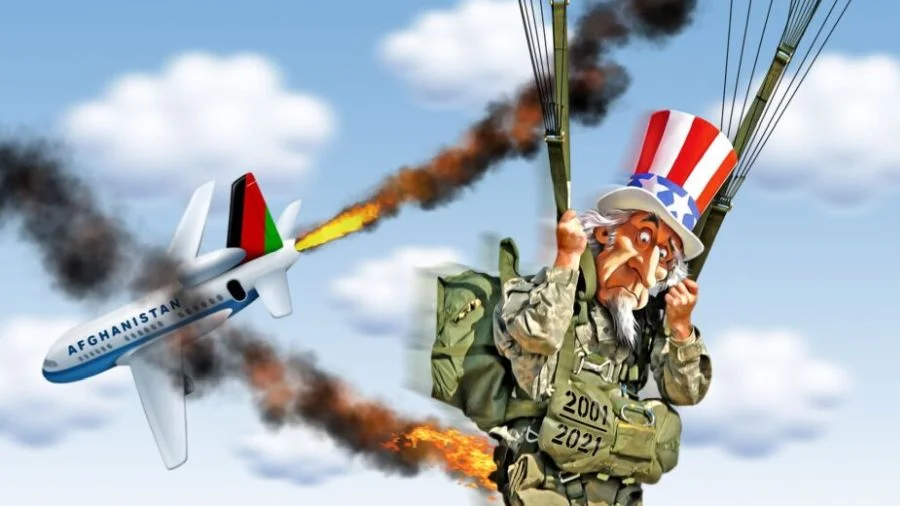
Every day can be said to be history-making. But this week saw a watershed event with huge historical ramifications: the final collapse of the United States’ and NATO’s military occupation of Afghanistan.
America’s longest war has come to a close after 20 years of futile fighting, destruction and suffering. The Taliban militants whom the U.S. ousted in an invasion back in October 2001 are now back as the governing power in Afghanistan. And a regime that Washington propped up with billions of dollars folded like a house of cards as the Taliban took control of the capital, Kabul, on August 15.
This week the new rulers declared the Islamic Emirate of Afghanistan. America’s avowed starry-eyed project of “nation-building” and “Western-style democracy” lies in ruins. Fittingly, this week also marks the centennial anniversary of the liberation of Afghanistan from British colonial rule in 1919. Another one bites the dust.
The desperate, chaotic scenes of the U.S. and its NATO allies evacuating from Afghanistan speak volumes. The pretensions of Washington and its Western partners have fallen to Earth with a crash – like the bodies of poor Afghans who clung to U.S. military cargo planes as they took off from Kabul airport. What the world witnessed was the shameful, diabolical end to a two-decade criminal occupation of Afghanistan that has wrought nothing but destruction and grief. And the Afghan people have been abandoned to their fate.
This was never about the alleged 9/11 terror attacks in 2001 or the so-called “global war on terror”. Just weeks before the 20th anniversary of 9/11, the Biden administration is pulling U.S. troops out of Afghanistan in what can only be described as an ignominious retreat. It is grotesque to “justify” the two-decade-old war in the Central Asian country as somehow a kind of retribution for the murky events of 9/11 which involved no Afghans.
America’s war in Afghanistan was just one chapter in a period of presumed unipolar dominance. After the dissolution of the Soviet Union in 1991, Washington moved quickly to demonstrate geopolitical power with a litany of illegal wars and military interventions. It became known in Neoconservative parlance as “full-spectrum dominance”. We also saw Neoliberal narratives for imperial power under the rubric of “humanitarian wars”. But basically, the underlying rationale was the same: unilateral military force to assert U.S. global hegemony.
The first Gulf War against Iraq came in 1991 followed by the U.S. invasion of Somalia – Operation Restore Hope with its Orwellian rhetoric that set the pattern for many subsequent military escapades. The U.S.-NATO blitzkrieg against former Yugoslavia in 1999, and then other wars for natural resources and regime change in Afghanistan, Iraq, Libya, Yemen, and ongoing in Syria, among other places.
This is the proper context for the U.S. and NATO occupation of Afghanistan. It is more accurately explained in terms of Washington trying to impose imperial might aided and abetted by Western lackeys. The 20-year war in Afghanistan fits into a 30-year period of presumed American hegemony in the absence of perceived geopolitical rivalry. But the lawlessness of that period has left the world shattered and more insecure than ever. However, the rise of China and the resurgence of Russia, along with a multipolar vision of international relations, has served to check the roguery of Washington and its NATO satraps.
There are indications that is why U.S. policymakers realized the need to finally get out of the Afghan quagmire. As President Joe Biden hinted in an interview, the calculation to get out was driven by the U.S. being more able to confront “true competitors” China and Russia, as well as to free up American power for other imperialist challenges in the Middle East and Africa. U.S. prestige has been ravaged by the Afghan debacle but there is no sign that Washington is going to curb its foreign interventions. Things could get a lot hotter in “big power” stakes. American corporate capitalism is an economy based on militarism which, in turn, is dependent on aggression, confrontation and war. Unfortunately, the Afghanistan debacle – no matter how shameful – doesn’t change that fundamental dynamic.
The fallout between the U.S. and its NATO accomplices has been bitter and intense. European leaders denounced the way in which the Biden administration left them in the lurch without any consultation over the sudden pullout from Afghanistan. European embassies have quickly emptied of diplomats rushing for airlifts. There have been sharp recriminations over citizens and Afghan aides left behind in unknown circumstances amid reports of Taliban groups taking revenge on collaborators.
Uncharacteristically, British and other European politicians and media have been vociferous in condemnation of the United States. Josep Borrell, the European Union’s top diplomat, said it was a “catastrophe”. A German party leader said it was the worst event in the history of NATO since it was formed in 1949 – 72 years ago. A British lawmaker claimed it was the most shameful episode for Britain since the 1956 Suez Crisis and for America since the Fall of Saigon in 1975.
One thing seems clear. Western powers and their “rules-based order” of imperialist intervention have nothing to offer Afghanistan – or any other nation for that matter.
It will be up to the Afghan nation to resolve their internal differences and salvage the failed state bequeathed to them by the U.S. and its NATO accomplices. China, Russia and other neighboring nations are best placed to help the Afghan people chart a new direction of independence. Both Beijing and Moscow have established good communications with the Taliban and other Afghan parties over the past several years. The non-interference policy of China and Russia gives them credibility as regional partners.
Amusingly, the EU foreign policy chief Josep Borrell remarked that NATO’s failure in Afghanistan must not become an opportunity for China or Russia. Is that all he cares about amid the disaster?
Eurasian co-development and partnership as promulgated by China and Russia make sense for Afghanistan’s future. The Taliban’s Islamist form of government is not unfeasible. If it can be inclusive and uphold a national consensus, not based on repression, and excluding extremism while maintaining regional stability, then there are grounds for a better future.
The ultimate losers are not the Afghan people. The ultimate losers are the charlatans and war criminals of the U.S. and NATO who stand exposed more than ever in the eyes of the world as a threat to international security and peace.
The American empire and its lackeys are going down, as we have mentioned many times before. Afghanistan is another nail in the coffin.
طالما كان مستشار الأمن القومي الأميركي السابق زبيغينيو بريجنسكي، يؤكد أنّ من يسيطر على أوراسيا، أيّ آسيا الوسطى يسيطر على العالم… لكنه كان يقول ويشدّد في الوقت نفسه، انّ الولايات المتحدة لا تستطيع أن تفرض هيمنتها على العالم حتى وإنْ سيطرت على أوراسيا، لأنّ الهيمنة سوف تستفز الدول الكبرى، مثل روسيا والصين، التي تعارض هذه الهيمنة، وتدفعها الى التكتل ضدّ الولايات المتحدة، لإسقاط هيمنتها.. لهذا نصح بريجنسكي قادة بلاده بالعمل على انتهاج سياسة تضمن لأميركا قيادة العالم من خلال مراعاة مصالح الدول الكبرى.. لكن الإدارات الأميركية المتعاقبة لم تأخذ بنصيحة بريجنسكي، وعمدت بدءاً من إدارة جورج بوش الابن إلى شن الحروب تحت عنوان محاربة الإرهاب، لأجل السيطرة على المناطق الهامة والحساسة في العالم، التي تحتوي على أكبر احتياطات النفط والغاز، إنْ كان في دول آسيا الوسطى وبحر قزوين، من خلال احتلال أفغانستان التي تتوسط هذه المنطقة، أو كان عبر السيطرة على العراق الذي يعوم على كميات هائلة من النفط…
لكن خطة أميركا باستخدام القوة العسكرية للسيطرة على موارد الطاقة والتحكم بإمدادات النفط والغاز شريان الاقتصاد العالمي… لم تنجح، حيث تحوّل الغزو الأميركي لكل من أفغانستان والعراق إلى نقمة بدلاً من أن يكون نعمة للولايات المتحدة، التي غرقت قواتها في وحول أفغانستان والعراق، مما استنزف موارد الإمبراطورية الأميركية وأرهق اقتصادها وأغرقها بالمزيد من المديونية الأكبر في العالم وجعلها غير قادرة على مواصلة تحمّلها، فكان أن اضطرت إلى البحث عن سبل الخروج من أتون هذا الاستنزاف، وبالتالي الانسحاب والتسليم بالفشل والهزيمة…
لكن بقدر ما كانت أحلام وتطلعات وطموحات واشنطن من وراء غزو أفغانستان والعراق كبيرة وتستهدف تربّع أميركا على عرش العالم وحسم هيمنتها الأحادية دون أيّ منازع لها، بقدر ما ان الفشل والإخفاق في تحقيق ذلك سيكون له تداعيات سلبية معاكسة، تسرع في إسدال الستار على مرحلة الهيمنة الأميركية الأحادية لمصلحة بدء دخول العالم زمن التعددية القطبية الدولية والإقليمية، وتدشين مرحلة أفول زمن الإمبراطورية الأميركية، التي غامر حكامها في رهانهم على إخضاع العالم، بدلا من قيادته على نحو يراعي مصالح الدول الكبرى، فإذا بهم يخسرون الاثنين معا.. فلا حافظت أميركا على دورها القيادي، ولا هي نجحت في فرض سيطرتها وهيمنتها… ومن الطبيعي والحال هذه ان يؤدي الفشل الأميركي والهروب المذل من أفغانستان إلى تسريع الرحيل الأميركي عن العراق سورية لأنّ البديل عن الرحيل غرق القوات الأميركية في حرب استنزاف تشنّها ضدّها المقاومة الوطنية في كل من البلدين، وعندها سيكون قرار الرحيل تحت ضربات المقاومة، من دون حتى حفظ ماء الوجه.
على أنّ رحيل القوات الأميركية عن أفغانستان ومن ثم العراق وسورية ستكون له تداعيات سلبية كبيرة على النفوذ الأميركي في المنطقة والعالم، وعلى الأنظمة التابعة لها، يمكن إجمالها على النحو التالي:
اولا، إضعاف الدور الأميركي في التأثير على مجرى السياسات في المنطقة والعالم.. حيث أن قدرة أميركا على فرض مشيئتها وسلطانها سوف تنخفض، بنسبة تراجع حضورها العسكري في مقابل تزايد قوة وتأثير وحضور الدول والقوى التي ترفض سياساتها الاستعمارية.. وسيؤدي ذلك بالضرورة إلى تعزيز موقف دول وقوى التحرر في المنطقة والعالم، إنْ كانت تكافح لتحصين استقلالها الوطني، أو تناضل للتحرّر من الاحتلال والاستعمار.. أو تعمل لأجل إعادة صياغة النظام العالمي على أسس التعددية والتشاركية.
ثانياً، اختلال توازن القوى في المنطقة لمصلحة دول وقوى المقاومة، على حساب الدول والقوى التي تستمدّ قوّتها من قوة وحضور الولايات المتحدة.
ثالثاً، تراجع قوة الكيان الصهيوني الذي استند في تصعيد عدوانه وإرهابه في العقود الأخيرة إلى ازدياد الحضور العسكري الأميركي في المنطقة بعد احتلال العراق وافغانستان وأجزاء من شمال وشرق سورية.. لا سيما أنّ الانسحاب الأميركي المحتوم، من سورية والعراق، سوف يعطي دفعاً قوياً للمقاومة ضد الاحتلال الصهيوني، ويؤدي إلى نشوء بيئة جديدة لمصلحة قوى المقاومة تحاصر كيان الاحتلال لأول مرة منذ اغتصاب فلسطين عام 1948..
رابعاً، ستكون الولايات المتحدة مجبرة على البحث عن تسويات للصراعات في المنطقة للحد من آثار وتداعيات تراجع نفوذها على الكيان الصهيوني والأنظمة والقوى التابعة لها، إنْ في اليمن أو لبنان.. أو على صعيد الصراع العربي الصهيوني من خلال إحياء حلّ الدولتين إلخ… بما يضمن حماية أمن ووجود الكيان وهذه الأنظمة والقوى واستطراداً ضمان استمرار ما تبقى من النفوذ الأميركي من خلال الكيان الصهيوني والأنظمة والقوى التابعة للولايات المتحدة.. ولهذا من الطبيعي ان يسود الإحساس بالقلق في دوائر صنع القرار في تل أبيب وبعض العواصم العربية الموالية لواشنطن، بعد مشاهدتهم الانسحاب الأميركي المذلّ من أفغانستان…
حملت زيارة الصين إلى دمشق 3 أبعاد، فقد تم فيها دعوة دمشق إلى الدخول في مشروعها الكبير وبدأ العمل فيها على البنى التحتية الضرورية.
كان واضحاً الحرص الصيني على الوصول إلى دمشق في تاريخ القسم الرئاسي نفسه، للدلالة على الدعم الكبير لها.
تعاطى السوريون مع قدوم وزير الخارجية الصيني في يوم القسم الرئاسي إلى سوريا، والذي حمل دلالات رمزية عميقة، بمشاعر متباينة بين التفاؤل والتشاؤم، وخصوصاً أن الوضع الاقتصادي ضاغط بشدة على القاعدة الأكبر منهم، التي تجاوزت 90% من مجموع السكان، فأي مسارات ستسلكها العلاقات بين البلدين؟ وما انعكاسها على الوضع السوري الداخلي والخارجي؟
لا يعدّ اهتمام قادة بكين بسوريا وليد اللحظة، إذ إنه يمتد إلى نهايات الألفية الثانية، مع صعود الصين التي بدأت نهضتها الحقيقية في العام 1978، بمجيء دينغ هسياو بينغ. وكان من المفترض أن تحصل قفزة كبيرة في العلاقة بين البلدين بعد زيارة الرئيس الأسد لبكين في العام 2004، ولكن المشاريع الاقتصادية التي كان من المفترض أن تقوم بها الأخيرة في مدينة عدرا العمالية تم إيقافها لأسباب غير معروفة.
مع مجيء تشي جينبينغ في العام 2013 إلى موقع الرئاسة في الصين، تم الإعلان عن مبادرة “الحزام والطريق” التي قُدّرت كلفتها بحدود 4 تريليون دولار. وكان اللافت للنظر هو استبعاد سوريا والعراق من المشروع، واعتبار شمال غرب إيران وجنوب شرق تركيا الممرَّ البري نحو أوروبا، واعتبار مرفأ حيفا في فلسطين المحتلة المرفأ المعتمد في شرق البحر الأبيض المتوسط.
أخذت السياسات الصينية تُظهر نفسها على المستوى السياسي بعد إدراك قادة بكين أن القدرات الاقتصادية الهائلة التي أتاحت لهم بناء قدرة عسكرية دفاعية، تتيح لهم ترجمة ذلك، لتحويل الصين إلى قطب دولي موازٍ للقطب الأميركي الأوحد، ما دفع الرئيس جينبينغ إلى الإعلان عن اعتباره أن العالم أصبح متعدد الأقطاب، ولا عودة عن ذلك، وذلك من منبر الأمم المتحدة في العام 2015.
ارتفعت نبرة التحدي الصيني بعد مجيء الإدارة الأميركية الجديدة بقيادة بايدن، واعتبارها كلاً من الصين وروسيا تهديدين استراتيجيين للولايات المتحدة، ما دفع الرئيس الصيني إلى الإعلان عن أنَّ “زمن التنمّر على الصين ولَّى بلا رجعة”.
كما أحدث الانسحاب الأميركي غير المشروط من أفغانستان، وتركه الفوضى والاضطرابات من خلال سيطرة حركة “طالبان”، قلقاً لدى دول الجوار، ما دفع 40 دولة إلى عقد مؤتمر آسيا الوسطى والجنوبية في مدينة طشقند في أوزباكستان بتاريخ 15 تموز/يوليو الماضي، بعنوان لافت للنظر هو “الترابط الإقليمي، تحديات وفرص”.
وكان من الواضح من خلال طبيعة تحركات وزير الخارجية الصيني أنَّ القرار اتخذ بضرورة تأمين منطقة غرب آسيا، التي تشمل المنطقة الممتدة من أفغانستان إلى شرق البحر الأبيض المتوسط، وهو ما يقتضي بطبيعة الحال إخراج سوريا من منطقة الصراعات الدولية والإقليمية، فالتقى القوى الدولية والإقليمية المؤثرة في الملف السوري، ممثّلة بكل من وزيري خارجية روسيا سيرغي لافروف والمملكة العربية السعودية سعود الفرحان في اليوم الأول. وفِي اليوم الثاني، التقى وزير خارجية تركيا مولود جاويش أوغلو قبل التوجّه إلى دمشق.
كان واضحاً الحرص الصيني على الوصول إلى دمشق في تاريخ القسم الرئاسي، للدلالة على الدعم الكبير لها، وعلى أنّ بقاء الرئيس الأسد في سدة الحكم لم يكن سوى مظهر لنتائج الصراع الدولي والإقليمي وتحولاته الكبرى، وتأكيداً على دور الصين في المرحلة القادمة في تأمين الجغرافيا السورية كمنطقة آمنة، بالتعاون والتنسيق بشكل أساسي مع موسكو وطهران، وإشراك المملكة العربية السعودية التي تعتبر قاطرة دول الخليج، إضافة إلى مصر التي زارها في اليوم التالي، والتقى فيها الرئيس المصري عبد الفتاح السيسي، ومعالجة الدور التركي السلبي الذي لم يفِ بتعهداته لبكين بتسليم القيادات الإرهابية التركستانية، رغم الدعم الاقتصادي الصيني لها.
وكان لاتصال وزير الخارجية وانغ يي بوزير الخارجية الإيراني محمد جواد ظريف في اليوم الذي زار فيه دمشق دلالة كبيرة، وخصوصاً أن بيان وزارة الخارجية الصيني أعلن استعداد الصين للعمل مع إيران على مواجهة السياسات الأحادية والهيمنة، وهو ما يعني بالضرورة التوافق مع استراتيجيتها بإخراج الأميركيين من غرب آسيا بأكملها، وخصوصاً سوريا والعراق، ما يمهّد الطريق لدخول مبادرة “الحزام والطريق” إلى كل من العراق وسوريا ولبنان.
حملت الزيارة الصينية إلى دمشق 3 أبعاد، فقد تم فيها دعوة دمشق إلى الدخول في مشروعها الكبير، أسوةً ببقية الدول التي وافقت عليه، وبدأ العمل فيها على البنى التحتية الضرورية.
وللتأكيد على ذلك، وقعت على اتفاقيات الاستثمار في كل مدينة عدرا الصناعية واللاذقية، وعلى إنشاء خط بري من الشمال إلى الجنوب، يربط دول الخليج العربي وشمال أفريقيا بتركيا وأوروبا، وبناء خط لسكك الحديد يربط مرفأ طرطوس بالعراق وإيران وباكستان والصين، إضافةً إلى الاستثمار في قطاع النفط والغاز، والجانب الآخر يتعلق بالمساعدات التي يمكن أن تقدمها إلى سوريا.
وقد توج ذلك بمبادرة للحل السياسي وفق قرارات الأمم المتحدة، مع الدعم الكبير لتصورات دمشق في أكثر القضايا، وخصوصاً ما يتعلق بالإدارة الذاتية والاحتلال التركي، عندما لمّحت المبادرة إلى “رفض جميع المخططات المحفزة على الانقسامات العرقية تحت ذريعة مكافحة الإرهاب”، إضافةً إلى شرط أساسي: “ينبغي دعم حل سياسي شامل وتصالحي للقضية السورية” بقيادة السوريين.
من الواضح أنَّ المساهمة الصينية في مساعدة سوريا اقتصادياً وسياسياً مرتبطة بتحقيق متطلبات أساسية، تتعلق بتغيير بيئة العمل الاقتصادي وتغيير التشريعات الاقتصادية، وهو ما تعهّد به الرئيس الأسد في خطاب القسم، عندما أكّد أن العمل في المرحلة القادمة سيكون على مكافحة الفساد وإصدار تشريعات اقتصادية جديدة.
أما الحلّ السياسي، فقد يذهب نحو مسار تشكيل منصّة للمعارضة السورية الداخلية بعنوان منصة دمشق، تكون مهمّتها الأساس إيجاد أرضية للحوار والتفاوض بين الطرفين في دمشق، وليس جنيف، وإنهاء دور المنصات التي تشكل امتدادات دولية وإقليمية.
بعد أن اختارت دمشق قرار التوجّه شرقاً، تطلَّب منها ذلك الشروع في تحقيق المتطلبات الثلاثة الآنفة الذكر، وهو ما ينتظره أغلب السوريين الذين طحنتهم الحرب، والذين يبحثون عن مخرج لاسترداد حياتهم السابقة واستعادة المناطق المحتلة في الشمال السوري وجنوبه، والبدء بإعادة إعمار ما تهدم على الصعيد الاجتماعي والاقتصادي، والّذي تعجز عنه الدولة السورية وحدها.
Kabbalistic Balance
-
Kabbalistic Balance August 6 2026 ___________________________________ More
Vids! +BN Vids Archive! HERE! ___________________________________ Support
The Br...
Report on Beth Israel vigil 07-04-26
-
*1A Rights under combined attack from local government plus media*
Ann Arbor City Council is at it again. Right before the long 4th of July
weekend, they ...
-
Hello all,
It is with great sadness that I share with you the passing of our beloved
sister, Mother, and Grandmother, the individual that you all knew ...
Best Horror Podcast
-
Best Horror Podcast Introduction: Horror podcasts […]
The post Best Horror Podcast appeared first on Copper Shock Horror Podcast.
Ikhras Endorses Muntadhar Al-Zaidi
-
“Oh parties of banditry and sectarianism and corruption, we have come and
our goal is to destroy you.” Ikhras formally endorses Muntadhar al-Zaidi,
Iraqi j...
Prince Charles: Foreign Jews behind bloodshed in ME
-
In May, 2017, British Crown Prince Charles declined an invitation from
Zionist entity’s president Reuven Rivlin‘s to attend the 100th anniversary
of the no...
Palestinian Women – One for All, All for One
-
Honouring All Palestinian Women by Honouring Three: Hanin Zoabi, Ahed
Tamimi, Samah Sabawi Vacy Vlazna “Palestinian women have always stood side
by side ...
US’s Saudi Oil Deal from Win-Win to Mega-Lose
-
By F. William Engdahl Who would’ve thought it would come to this? Certainly
not the Obama Administration, and their brilliant geo-political think-tank
neo-...
-
*Mordechai Vanunu wins human rights prize of Brazilian Press Association *
* http://www.alternativenews.org/english/index.php/features/updates/7038-mordechai...
Abdul Aziz Rantissi:
"My ultimate wish, my God, is to attain martyrdom,"...God granted him his wish on April 17, 2004, at the hands of Israeli assassins.