Uprooted Palestinians are at the heart of the conflict in the M.E Palestinians uprooted by force of arms. Yet faced immense difficulties have survived, kept alive their history and culture, passed keys of family homes in occupied Palestine from one generation to the next.
How an “Educational farm” in Wadi Rababa is really another conquest for eradicating Palestinian heritage and agriculture at the hands of Israeli colonialism.
A fence was erected around the “educational farm” in Wadi Rababa
The Ir David Foundation, a right-wing organization in “Israel”, opened an “Educational farm” in Wadi Rababa, where the land is registered under the name of the “Israel” Nature and Parks Authority (INPA).
The farm, which opened in August, boasts attractions that allow visitors to learn about so-called “traditional agriculture.”
The funny part?
Many of the olive groves located in the adjacent neighborhoods of Abu Tor and Silwan neighborhoods that have been cultivated by Palestinians for years, are strategically left out of the farm in an attempt to replace the current traditions with a right-wing Jewish version.
Ir David, the supposed nonprofit organization whose funding mainly comes from transferred US funds in the form of nondisclosed donations, runs the site, and settles Jewish families in the neighboring Silwan.
Even some Israelis were taken aback by the brazen attack on the Palestinian land. A member of the left-wing Emek Shahveh organization commented by saying, ” The infuriating thing about what’s happening in the ‘Hinnom Valley’ is that in the name of development that masquerades as an ancient agricultural landscape, they are displacing the traditional Palestinian agriculture that has preserved the historic character of the place.”
National Park or Constructed Disaster?
In 1974, “Israel” bestowed the area around the Old City with national park status.
According to the INPA, development-related activity may be carried out anywhere in the area in order to protect the land and render it accessible to visitors.
Ahmed Somrin, whose family owns property in Abu Tor and Silwan, says they “clean up this land and pick the olives that are here every year.”
Somrin details how land near Silwan and Wadi el Joz that has been cultivated by his family for generations has been handed a landscaping order. Of course, owners of land are not permitted to interfere with “temporary gardening”.
Since a recent court decision ruled that the INPA was permitted to enter the olive tree area in order to maintain and clean it as a “fire precaution,” the INPA recently entered Somrin’s property, and broke through a wall in the process.
ICRC data revealed that “over the period of one year (August 2020 – August 2021) more than 9,300 trees were destroyed in the occupied West Bank.”
According to a study published in 2012 by the “Applied Research Institute Jerusalem” (ARIJ), Israeli occupation forces have uprooted 800,000 Palestinian olive trees in the West Bank since 1967.
Wall broken by INPA to access Ahmad Somrin’s olive grove.
“The Nature and Parks Authority built walls there and turned over the earth and put down red dirt and planted centuries-old trees from who knows where,” Somrin said.
“They want to change the face of it to make it look not like Arab land but like Jewish nature.”
The Palestinian cause is political, it is a cause of National Liberation.
The violation of the human rights of the Palestinian people is the consequence of the violation of their right to struggle for their national liberation, their right to exist as a nation-state.
The Palestinian cause is political, it is a cause of National Liberation, and it is the cause of a native people that today in the 21st century is fighting against a colonial yoke and anachronism called “Israel”. That’s all, I repeat that’s all.
To hide the colonial character, Zionist propaganda has successfully managed to plague a pseudo-narrative, claiming it is a prehistoric, millenarian, religious, anti-Semitic, complex, metaphysical conflict. All an attractive abstract… all an aesthetic blah, blah of aromatic lies.
The Palestinian Cause is a political issue of liberation and national independence like the Algerian cause against French colonialism, the struggle for independence lead by the Indian people against British colonialism, the Libyan struggle for liberation against Italian colonialism, the struggle of the Mexican people against Spanish colonialism, the Haitian struggle for liberation against French colonialism and more. These people had their human rights violated, their humanity dismembered.
All colonization registers were showing the violation of the human condition, it is a whole regime and logic of torture, Apartheid, slavery, spoliation, hatred, contempt, racism, supremacy, bestiality, terror, massacres, genocide, memoricide, historicide, culturicide, epistemicide. And all this is done and instrumentalized through the human values of the time.
If the Palestinian people renounce the struggle for their National Liberation against the Israeli colonial yoke, if they renounce their Right of Return to their historical Palestine, if they renounce their Palestinian demonym, then the violation of these human rights will cease, and the Palestinian people will disappear. However, the liberation from the colonial yoke will lead to end human violations and eradicate violence.
The vulnerable West fails to understand the colonial nature of Zionism in Palestine. Likewise, the Palestinian Authority and some Palestinians do not want to talk about the Palestinian Cause as a reason for National Liberation and today the PLO (Palestine Liberation Organization) has become an entelechy.
There are those who limit themselves to the framework of human rights and there are Arab dictatorships that want to limit the Palestinian Cause to a charitable, humanitarian and benevolent mission. They want to make “Jerusalem” an Islamic symbol; they don’t only disregard the Palestinian National Liberation Cause against Israeli colonialism, but they see it as a religious duty to defend “Israel”. These Arab tyrannies use Palestinian blood to make gigantic economic investments and especially to perpetuate themselves in power as a plan of the imperial West.
In the first instance and till this day, the Palestinian cause is believed and felt to be a religious conflict…the Western displayed remarkable ineptitude to bring the Arab world to a religious commodity…After the end of the Cold War which meant the spread of the internet, the whole world discovered the human atrocities against the Palestinian people. It was obvious that there was no way to hide the barbarity. The well-hidden corpse stinks and there is no way to conceal the stench. Human Rights became a real opportunity for Palestine, as the bestial victim is humanized, while the real victim was guilty, and the fascist character of that bohemian “state” known as “Israel” is unveiled. It is a huge breakthrough, but be warned, there is less talk today of the liberation of Historic Palestine against the Israeli colonial yoke.
Within that grandiose opportunity of the human rights scene, there is also much taboo, repression, persecution and corruption. Repression in the Arab world is brutal but in the West, repression is sophisticated. In the West, as far as Zionism is concerned, repression goes through euphemisms like, you have to be prudent, strategic, intelligent, objective (self-censorship), don’t say this, don’t go near such and such a group, you won’t get a job, you won’t get a grant if you say that, don’t talk about armed struggle as an alternative, you can go to jail as an anti-Semite. Fear operates elegantly.
Fear is the big problem, fear is an infidel component inside of us, and solidarity, struggle, creativity and even talent revolve around fear.
That “our fear”, that cowardice turns us into creative and talented colonized people.
Pro-Palestinian consciousness has been stifled in the colossal Zionist propaganda agenda, for example, they must plead that to be anti-Zionist is not the same as to be an anti-Semite. The tool of Human Rights is valuable and meritorious; it has dismantled religious stereotypes and raised public awareness. People are already talking about Apartheid, ethnic cleansing, occupation, political prisoners, the Wall of Shame, the false two-state solution; no one is talking about the Right of Return of the Palestinian refugees scattered around the world. BDS (Boycott, Divestment and Sanctions) is perhaps the most valuable tool. But it is less visible to speak of the Palestinian Cause as a reason for National Liberation against a colonial yoke. Talking about the consequences and not the Cause is not the most honest thing to do. There is a desire to make that seem outdated, rhetorical, conventional…we have to evolve, we have to move forward, and there are those who say that we have to think about peace. We are becoming Zionists, thus defrauding life. The Galilean Mahmud Darwish said, we resist because we love life.
Fear operates and we think we are clever in our cowardice. Let us not confuse fear with strategy. Let us assume that we are fighting against the greatest power in the world, Zionism.
The Palestinian people are facing a classical colonialism that not only usurped their homeland but usurped their history because it comes from a European movement that has the purpose to turn a certain religious community into a People. That’s why it usurps the history, its culinary territorial characteristics and the whole cultural expression of the native people. The ideologists of Zionism clearly see the need to exterminate this native people in order to guarantee their nation-state project for the sake of the Jewish religious community. The existence and continuity of the Palestinian people is threatened. The Palestinians were expelled from their homeland and are being expelled from history. Palestine, a people with more than 11,000 years in the light of history, has become today a forbidden people.
I renounce intelligence, strategy, prudence and moderation. I cling to justice, to what is honest, sane, noble, generous, humanistic and dignified; the National Liberation of the native people against anachronism and the colonial yoke. I do speak of the abolition of the colonial regime of “Israel”. And I clarify, don’t ever expel those who expelled us, instead, make them Palestinian citizens, as did the Zionist Ukrainian Aryan Golda Meyer, the Belarusian Aryan Shimon Peres and thousands of Zionist Jews, when the extinct League of Nations, established that every Jew who wished to live in Palestine, should apply for Palestinian citizenship.
We have a date with Universal History, to abolish colonial anachronism from our historical time.
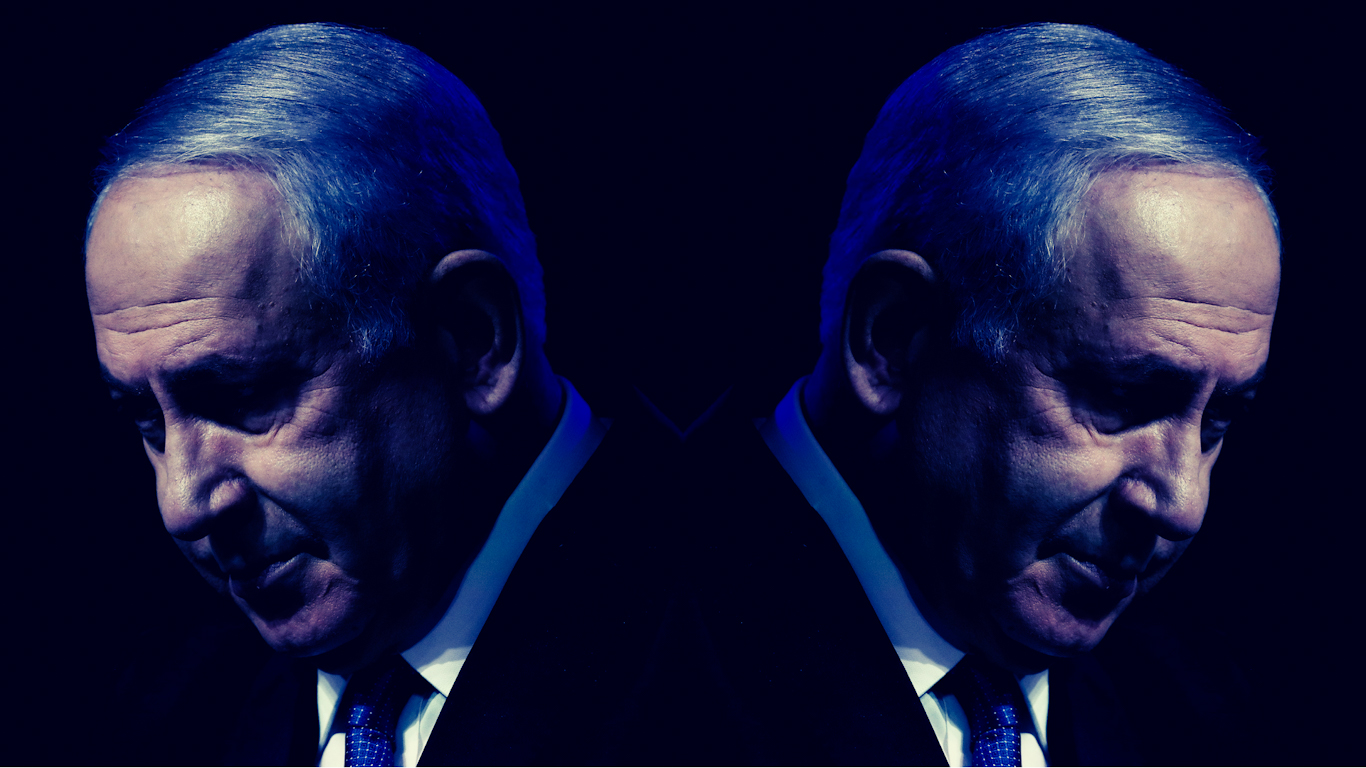
For Netanyahu, the biblical version of Israel was far more convincing than the secular Zionist ideology of yesteryears and by changing the narrative, he managed to redefine the support for Israel around the world.
How did Benjamin Netanyahu manage to serve as Israel’s longest-serving Prime Minister? With a total of 15 years in office, Netanyahu surpassed the 12-year mandate of Israel’s founding father, David Ben Gurion. The answer to this question will become particularly critical for future Israeli leaders who hope to emulate Netanyahu’s legacy, now that his historic leadership is likely to end.
Netanyahu’s ‘achievements’ for Israel cannot be judged according to the same criteria as that of Ben Gurion. Both were staunch Zionist ideologues and savvy politicians. Unlike Ben Gurion, though, Netanyahu did not lead a so-called ‘war of independence,’ merging militias into an army and carefully constructing a ‘national narrative’ that helped Israel justify its numerous crimes against the indigenous Palestinians, at least in the eyes of Israel and its supporters.
The cliched explanation of Netanyahu’s success in politics is that he is a ‘survivor’, a hustler, a fox or, at best, a political genius. However, there is more to Netanyahu than mere soundbites. Unlike other right-wing politicians around the world, Netanyahu did not simply exploit or ride the wave of an existing populist movement. Instead, he was the main architect of the current version of Israel’s right-wing politics. If Ben Gurion was the founding father of Israel in 1948, Netanyahu is the founding father of the new Israel in 1996. While Ben Gurion and his disciples used ethnic cleansing, colonization and illegal settlement construction for strategic and military reasons, Netanyahu, while carrying on with the same practices, changed the narrative altogether.
For Netanyahu, the biblical version of Israel was far more convincing than the secular Zionist ideology of yesteryears. By changing the narrative, Netanyahu managed to redefine the support for Israel around the world, bringing together right-wing religious zealots, chauvinistic, Islamophobic, far-right and ultra-nationalist parties in the US and elsewhere.
Netanyahu’s success in rebranding the centrality of the idea of Israel in the minds of its traditional supporters was not a mere political strategy. He also shifted the balance of power in Israel by making Jewish extremists and illegal settlers in the occupied Palestinian territories his core constituency. Subsequently, he reinvented Israeli conservative politics altogether.
He also trained an entire generation of Israeli right-wing, far-right and ultra-nationalist politicians, giving rise to such unruly characters such as former Defense Minister and the leader of Yisrael Beiteinu, Avigdor Lieberman, former Justice Minister, Ayelet Shaked, and former Defense Minister, and Netanyahu’s likely replacement, Naftali Bennett.
Indeed, a whole new generation of Israelis grew up watching Netanyahu take the right-wing camp from one success to another. For them, he is the savior. His hate-filled rallies and anti-peace rhetoric in the mid-1990s galvanized Jewish extremists, one of whom killed Yitzhak Rabin, Israel’s former Prime Minister who engaged the Palestinian leadership through the ‘peace process’ and, ultimately, signed the Oslo Accords.
On Rabin’s death in November 1995, Israel’s political ‘left’ was devastated by right-wing populism championed by its new charismatic leader, Netanyahu, who, merely a few months later, became Israel’s youngest Prime Minister.
Despite the fact that, historically, Israeli politics is defined by its ever-changing dynamics, Netanyahu has helped the right prolong its dominance, completely eclipsing the once-hegemonic Labor Party. This is why the right loves Netanyahu. Under his reign, illegal Jewish colonies expanded unprecedentedly, and any possibility, however meager, of a two-state solution has been forever buried.
Additionally, Netanyahu changed the relationship between the US and Israel, where the latter was no longer a ‘client regime’ – not that it ever was in the strict definition of the term – but one that holds much sway over the US Congress and the White House.
Every attempt by Israel’s political elites to dislodge Netanyahu from power has failed. No coalition was powerful enough; no election outcome was decisive enough and no one was successful enough in convincing Israeli society that he could do more for them than Netanyahu has. Even when Gideon Sa’ar from Netanyahu’s own Likud party tried to stage his own coup against Netanyahu, he lost the vote and the support of the Likudists, later to be ostracized altogether.
Sa’ar later founded his own party, New Hope, continuing with the desperate attempt to oust the seemingly unconquerable Netanyahu. Four general elections within only two years still failed to push Netanyahu out. Every possible mathematical equation to unify various coalitions, all united by the single aim of defeating Netanyahu, has also failed. Each time, Netanyahu came back, with greater resolve to hang on to his seat, challenging contenders within his own party as well as his enemies from without. Even Israel’s court system, which is currently trying Netanyahu for corruption, was not powerful enough to compel disgraced Netanyahu to resign.
Until May of this year, Palestinians seemed to be marginal, if at all relevant to this conversation. Palestinians living under Israeli military occupation looked as if they were mollified, thanks to Israeli violence and Palestinian Authority acquiescence. Palestinians in Gaza, despite occasional displays of defiance, were battling a 15-year-long Israeli siege. Palestinian communities inside Israel seemed alien to any political conversation pertaining to the struggle and aspirations of the Palestinian people.
All of these illusions were dispelled when Gaza rose in solidarity with a small Palestinian community in Sheikh Jarrah in occupied East Jerusalem. Their resistance ignited a torrent of events that, within days, unified all Palestinians, everywhere. Consequently, the popular Palestinian revolt has shifted the discourse in favor of Palestinians and against the Israeli occupation.
Perfectly depicting the significance of that moment, the Financial Times newspaper wrote, “The ferocity of the Palestinian anger caught Israel by surprise.” Netanyahu, whose extremist goons were unleashed against Palestinians everywhere, similar to his army being unleashed against besieged Gaza, found himself at an unprecedented disadvantage. It took only 11 days of war to shatter Israel’s sense of ‘security’, expose its sham democracy and spoil its image around the world.
The once untouchable Netanyahu became the mockery of Israeli politics. His conduct in Gaza was described by leading Israeli politicians as “embarrassing”, a defeat and a “surrender”.
Netanyahu struggled to redeem his image. It was too late. As strange as this may sound, it was not Bennett or Lieberman who finally dethroned the “King of Israel’, but the Palestinians themselves.
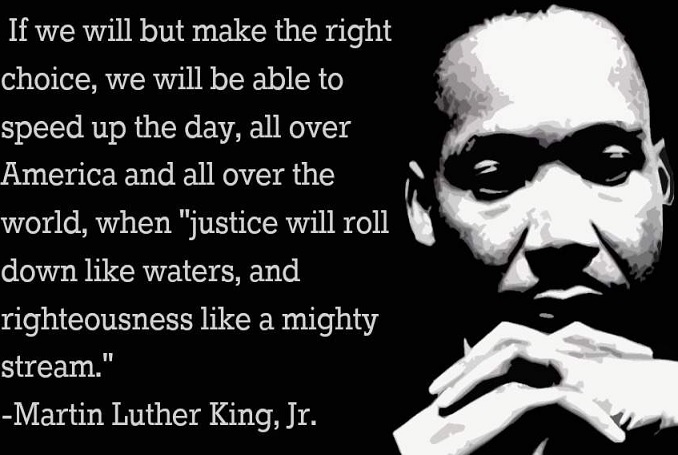
In “Beyond Vietnam” (1967), his speech delivered at the Riverside Church in New York, Martin Luther King opened by quoting from Clergy and Laymen Concerned about Vietnam. “A time comes when silence is betrayal,” King explained, then concluded: “That time has come for us in relation to Vietnam.”
King’s words that followed still ring true today. In what was perhaps the most significant, but least appreciated, speeches of his career, King warned against falling into “conformist thought,” in particular regarding official policy during times of war.
There is no war today like Vietnam, but there is an ongoing foreign policy that commits imperialist acts abroad. As Peter Dreier notes, over 50 years since King’s Riverside Church address, the US remains involved in several ground wars as well as a war on “terrorism,” which is principally a battle against Muslims as well as immigrants, the latter of whom are motivated to flee their countries because of US-sponsored violence abroad.
In particular, there is foreign aid that goes, among other destinations, to the state of Israel. In this way, the Unites States allows the Zionist state to continue its Occupation of Palestinians by using all the brutality that we used in Vietnam.
As Ramzy Baroud observes, by going against “not only the state apparatus” but also the “liberal hierarchy” which posed as if they were his allies, King’s self-described “inner truth” cost him some support. “It was a lonely, moral stance,” wrote Michelle Alexander. “And it cost him.”
In her landmark Opinion Piece published one year ago in the New York Times, Alexander goes on to hold up King’s example as a standard that still holds true today. In particular, Alexander is concerned with questioning her own silence on what she calls “one of the great moral challenges of our time: the crisis in Israel-Palestine.”
Alexander circumvents King’s well-known advocacy for Israel’s “right to exist” by suggesting that “if we are to honor King’s message and not merely the man, we must condemn Israel’s actions.”
It is impossible to know how King’s position on the Middle East would have changed over time. Building on Alexander’s piece, David Palumbo-Liu cites King’s opposition to apartheid South Africa as a clue to how he would feel towards the same practices in Israel today.
“The fact that King explicitly linked colonialism and segregation suggests that he would indeed recognize the expansion of the occupation as a settler-colonial project. If he did, he would then have to reevaluate his support for Israel pre-1967, as so many others have in recent years. He might well have come to recognize the absolute continuity between the 1948 dispossession, exile, and colonization of Palestinians and the post-1967 occupation.”
Indeed, Hagai El-Ad, executive director of B’Tselem, Israel’s largest human rights organization, has just called for the end of “the systematic promotion of the supremacy of one group of people over another,” i.e. apartheid very similar to what existed in South Africa.
In other ways King’s voice speaks to present-day concerns. In his 1968 call for an “economic bill of rights,” King challenged the notion that this country could afford both “guns and butter,” a conundrum that still prevails today. “We have come to see that this is a myth,” he explained, “that when a nation becomes involved in this kind of war, when the guns of war become a national obsession, social needs inevitably suffer.”
Theoretically we are not at war. On the other hand, as long as we give military aid to countries that repress their people we are not at peace. At a time when Congress continues to propose huge increases in the country’s military budget by cutting programs for the poor, King’s speech holds true today.
As Ramzy Baroud observes, there has been very little direct aid to Americans struggling under the impact of the virus, yet Congress continues to provide Israel with enormous sums of money ostensibly for defense. In reality, these funds are very much needed at home.
“The mere questioning of how Israel uses the funds – whether the military aid is being actively used to sustain Israel’s illegal occupation of Palestine, finance Jewish settlements, fund annexation of Palestinian land or violate Palestinian human rights,” Baroud explains, remains a “major taboo.”
Many years ago, Reverend King described “adventures like Vietnam” as “some demonic, destructive suction tube” that drew “men and skills and money” into the effort to keep it going. What would he think now of massive funds that go to another country which oppresses its people in ways similar to the Jim Crow South in which King was born?
At the closing of her memorial to Martin Luther King, Alexander pledges “to speak with greater courage and conviction about injustices beyond our borders, particularly those that are funded by our government, and stand in solidarity with struggles for democracy and freedom. My conscience leaves me no other choice.”
King, too, chose to address his vision “beyond Vietnam,” thereby to “a world that borders on our doors.”
In a statement regarding the January 6thright-wing riots in D.C., the US Peace Council reiterated that guns at the expense of butter were part of the root cause of disaffection. “While a record $740B military appropriation sailed through Congress with only 20 Democrats in opposition,” the statement read, “desperately needed reforms that benefit working people have been sidetracked.”
Moreover, the statement refuted a comment often heard in response to recent riots. According to the press and much of social media, what happened at the Capital was “sedition,” because this is America, and its “not who we are.” In reality, notes the Peace Council, what is happening today
“is a microcosm of what the capitalist financial institutions and elites have wreaked upon the planet through trade agreements and an imperialist foreign policy that has suppressed populations through illegal acts of interference, aggression, and economic warfare designed to create the conditions for exploitation, the theft of land and resources and environmental destruction.”
Because the root causes of our problems extend beyond our borders, the Council calls for solutions very much in the manner of King’s focus on the global nature of oppression. Accordingly, the statement concludes that:
“A unified grassroots mass movement is needed to address the fundamental class contradictions of the system as a whole and not limit itself to fighting against the symptoms solely by seeking cosmetic changes through elections and reforms from above. We need to bring all contingents of the people’s movement — labor, social justice, civil rights, human rights, environmental, peace — together under a single coordinated network, with a clear agenda that addresses the root causes of the present crisis and not only its variegated symptoms.”
In this way, more people will come to understand that the catastrophes we face will not be solved as long as what we allow to be done in our name abroad comes home to our nation’s capital. King knew that local police, in conjunction with para-military hate groups, used violence in much the same way as the far-right factions that more recently invaded D.C.
In both cases, the Klan and other groups were/are motivated by a desire to oppose the struggle for civil rights at home. Nevertheless, “our actions cannot be limited to the US,” concludes the US Peace Council, “because if the global elites are willing to oppress and exploit people anywhere, the crises we face will continue.”
The United States, concluded King, is “on the side of the wealthy, and the secure, while we create a hell for the poor.” In order to solve domestic problems while promoting global peace, he suggested “giv[ing] up the privileges and the pleasures that come from the immense profits of overseas investments,” and, he might have added, ending aid to countries like Israel that use the funds to wreak violence on Palestinians under the Occupation.
With “Beyond Vietnam,” concludes Baroud, King “courageously broke free from the confines of American exceptionalism,” thereby joining the civil rights struggle to “a worldwide movement of struggles against racism, colonialism and war.”
In 2021, it is more important now than ever to heed King’s words. Indeed, as Baroud suggests, “new strategies” will have “to replace the old ones” for the Palestinian struggle to succeed. His vision calls for unity among all factions, bringing together Palestinians in the homeland and elsewhere to formulate a blueprint for One Democratic State that would grant the Right of Return.
Harking back to King’s international idea, Baroud calls for “a global solidarity movement that rallies behind a unified Palestinian vision,” a plan that bypasses official circles that have done little to promote peace. While Baroud’s strategy focuses on freedom for the Palestinian people, if such a movement becomes one of transnational mutuality, it would be possible to bring about the liberation of all oppressed people worldwide, thereby remaining true to the “other, more revolutionary, radical and global King” that Baroud explains is more often “hidden from view.”
– Benay Blend earned her doctorate in American Studies from the University of New Mexico. Her scholarly works include Douglas Vakoch and Sam Mickey, Eds. (2017), “’Neither Homeland Nor Exile are Words’: ‘Situated Knowledge’ in the Works of Palestinian and Native American Writers”. She contributed this article to The Palestine Chronicle.
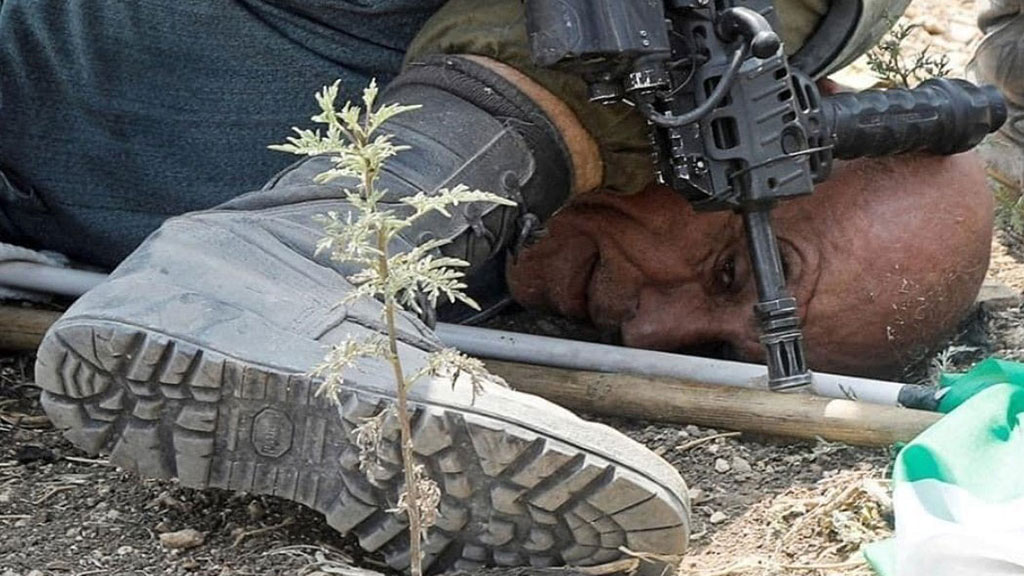
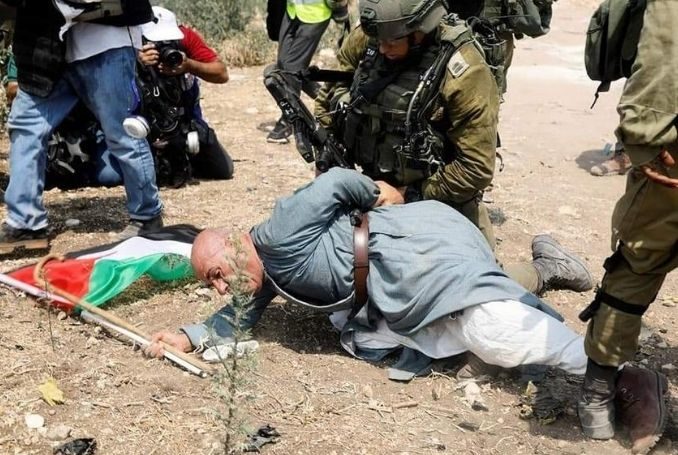
Footage circulating from Palestine’s occupied West Bank has shown a Zionist soldier brutally kneeling on the neck of a Palestinian man whose age is above that of the years since the ‘Israeli’ occupation entity has come to exist on his land.
The Zionist occupation soldiers brutally assaulted and arrested the Palestinian man during a protest held near the city of Tulkarm against stealing his country’s lands in Shufa village.
The video showed an ‘Israeli’ soldier push the old man to the ground and kneel on his neck — a grim reminder of the US police violence and racial injustice that led to the murder of unarmed African American George Floyd in May.
The 46-year-old died after a white officer knelt on his neck and pinned him to the ground for nine minutes in Minneapolis, Minnesota, with his last words ‘I Can’t Breath’ being a global expression that represents injustice and oppression across the world.
Dozens of protesters were also injured by ‘Israeli’ fire in Tulkarm on Tuesday, with Zionist forces firing tear gas and live rounds to disperse the demonstrators.
The protests come against the ‘Israeli’ occupation regime’s plans to build new illegal settlements in a number of Palestinian villages near the northern West Bank city.
Tulkarm Governor Issam Abu Bakr, who participated in the protest, stressed that the rallies would continue until the settlement project, which is a threat to Tulkarm, was halted.
US President Donald Trump’s so-called ‘peace’ plan on the decades-old ‘Israeli’-Palestinian conflict envisions the occupied holy city of al-Quds as the Zionist entity’s ‘undivided capital’ and allows the Tel Aviv regime to annex settlements in the occupied West Bank and the Jordan Valley.
The plan also denies Palestinian refugees the right of return to their homeland, among other controversial terms.
The alleged ‘deal’ was immediately rejected by all Palestinians, triggering waves of protest rallies around the globe as well.
About 600,000 ‘Israelis’ occupy over 230 illegal settlements built since the 1967 occupation of the Palestinian territories of the West Bank and East al-Quds.
Israeli Forces Violently Suppress Anti-Settlement Protest in West Bank (VIDEO)
Israeli soldiers handcuff Palestinian protester Khairy Hannoun from Tulkarem, West Bank, during a peaceful protest.(Photo: via Twitter)
Israeli occupation forces today violently suppressed a peaceful Palestinian protest against land grab affecting several northern West Bank villages, the Palestinian news agency WAFA reported.
Israeli soldiers attacked Palestinian protesters firing teargas at them and beating them up in an effort to crush their protest at a road that links the three villages of Jabara, al-Ras, and Shoufa, south and east of the northern West Bank city of Tulkarm, where Israel plans to build an illegal industrial settlement.
Talking about George Floyd… well, it’s a very common happening in occupied Palestine, under Zionist military occupation… Pics taken today of the Palestinian elder Khairi Hannoun during a nonviolent protest against establishing a huge colonial industry zone in Palestinian privately owned land of Shofa, Jbarah and Kafreyat villages, occupied Palestine, 1 September 2020. Pics: Mohammad Hamdan
The protest was organized by local nationalist forces and the Wall and Settlements Resistance Commission.
Journalists covering the event were also attacked and prevented from filming it, said WAFA correspondent.
The army set up checkpoints on the roads leading to the protest area and stopped activists attempting to reach it and prevented them from continuing on the road.
Tulkarm Governor Issam Abu Bakr, who participated in the protest, said that the protest will continue until the illegal settlement project is stopped.
Between 500,000 and 600,000 Israelis live in Jewish-only settlements across occupied East Jerusalem and the West Bank in violation of international law.
Israeli forces continued to commit crimes and multi-faceted violations against Palestinian civilians and their properties, including raids into Palestinian cities that are characterized by the excessive use of force, assault, abuse and attacks on civilians. This week, the Israeli’s excessive use of force rendered 3 injuries among Palestinian civilians, including a child, during raids and attacks on peaceful protests in the occupied West Bank.
Since announcing its plans to annex West Bank territories, including occupied East Jerusalem, the Israeli state has continued systematic demolitions and land razing, establishment of exclusive roads for settlements in an accelerated manner.
This week, PCHR documented 125 violations of international human rights law and international humanitarian law (IHL) by Israeli forces and settlers in the oPt. It should be noted that the limitations due to the corona virus pandemic, including closure of certain territories, has limited PCHR’s fieldworkers mobility and ability to conduct field documentation; therefore, the information documented in this report are only part of the continued IOF violations.
PCHR would like to note that its Weekly Report on Israeli Violations of Human Rights in the oPt will not be published next week as Eid al-Adha is celebrated. PCHR confirms that the following report will cover a two-week period.
Israeli forces shooting and violation of right to bodily integrity: Israeli soldiers shot and wounded 3 Palestinians, including a child, in excessive use of force against the weekly peaceful protest in Kufur Qaddoum in Qalqilia; Israeli forces also used live bullets 4 times in raids into West Bank cities.
In Gaza, Israeli forces opened fire at agricultural lands once and 4 times at fishing boats in eastern and western Gaza Strip.
Israeli forces incursions and arrests of Palestinian civilians: Israeli soldiers carried out 64 incursions into the West Bank. Those incursions included raids of civilian houses and shootings, inciting fear among civilians, and attacking many of them. During this week’s incursions, 64 Palestinians were detained, including 12 children and 1 woman.
Israeli soldiers also conducted two limited incursions into eastern Rafah and northern Beit Hanoun, southern and northern Gaza Strip.
Settlement expansion activities and settlers’ attacks: Israeli authorities continued its settlement expansion operations in the West Bank, including occupied East Jerusalem, PCHR documented 14 violations, including:East Jerusalem: 3 warehouses demolished in Wadi al-Hilweh in Silwan village; 14 dunams razed and 5 barracks demolished in al-‘Isawiya; and 1 house vacated in prelude to self-demolishing it;Bethlehem: 3 houses received cease-construction notices; 4 cattle barns (barracks) confiscated;Hebron: 5 cease-construction delivered to 2 houses, an agricultural room and a barracks; 2 demolition notices for a cave used as a house and a barn; and a machine confiscated;Nablus: confiscation of machinery and vehicles used in reconstruction of a road in the Industrial area in Wadi al-Sham area;Salfit: demolition notice delivered of a room.
PCHR also documented 3 illegal Israeli settler attacks: attack on a quarry, wheel loader and excavator set on fire in Nablus; al-Bir wal Ihsan Mosque set on fire in al- Bireh; and suspicion of settler attack on cattle in north-eastern Jericho where 70 sheep died from poisoning.
Israeli closure policy and restrictions on freedom of movement: The Gaza Strip still suffers the worst blockade in the history of the Israeli occupation of the oPt as it has entered the 14th consecutive year, without any improvement to the movement of persons and goods, humanitarian conditions and bearing catastrophic consequences on all aspects of life.
This was amplified by the restrictions put in place by Israeli authorities since March 2020 due to the coronavirus pandemic, that had already had grave implications on the humanitarian and economic situation of the Gaza Strip population. Of all the Gaza Strip’s border crossings, only 2 currently function: Karm Abu Salem (Kerem Shaloum) for movement of goods and Beit Hanoun (Erez) for movement of individuals. The Israeli authorities continued to impose restrictions on the entry of goods classified as “dual-use items”,[1] despite their importance in reviving the market, manufacturing and maintenance. As to Beit Hanoun crossing, it is almost completely closed except for emergency humanitarian cases. Lately, a very limited number of individual cases of patients who have obtained medical referrals and financial coverage to Israel were able to travel, and some others referred to Israeli organizations working in the field of health for assistance in coordination.
Meanwhile, Israeli authorities continued to divide the West Bank into separate cantons with key roads blocked by the Israeli occupation since the Second Intifada and with temporary and permanent military checkpoints, where civilian movement is restricted, and they are subject to detention.
I. Shooting and other Violations of the Right to Life and Bodily Integrity
At approximately 07:00 on Thursday, 23 July 2020, Israeli gunboats stationed northwest of Beit Lahia in northern Gaza Strip, chased and heavily opened fire at Palestinian fishing boats sailing within the allowed fishing area (3 nautical miles). Fishermen, as a result of that, panicked and had to sail back to the shore fearing for their lives. Israeli gunboats also fired flare bombs in the same area at 13:10 on the same day. No casualties were reported.
At approximately 13:00 on Friday, 24 July 2020, Israeli soldiers stationed at the northern entrance established on lands of Kufur Qaddoum village, suppressed a protest in which dozens of civilians participated. Israeli troops chased young men who gathered in the area, clashed with them, and fired rubber-coated steel bullets, sound bombs and tear-gas canisters, resulting in 3 civilians injuries, including a child who was shot with a rubber bullet in his waist.
At approximately 15:20 on the same Friday, Israeli soldiers stationed at “Eyal” crossing established north of Qalqilia, fired live rounds, rubber-coated steel bullets, sound bombs and tear-gas canisters at civilians who were present in the area. Israeli soldiers claimed that the locals threw stones. No casualties were reported.
At approximately 03:15 on Saturday, 25 July 2020, while storming Qalqilia, Israeli soldiers fired live and rubber-coated steel bullets, sound bombs and tear-gas canisters at Palestinian civilians’ homes. Israeli soldiers claimed that locals threw stones. No casualties were reported.
At approximately 07:30, July 25, Israeli gunboats stationed northwest of Beit Lahia in northern Gaza Strip, chased and heavily opened fire at Palestinian fishing boats sailing within the allowed fishing area (3 nautical miles). Fishermen, as a result of that, panicked and had to sail back to the shore fearing for their lives. No casualties were reported.
At approximately 00:00 on the same Saturday, Israeli troops, stationed along the border fence, east of Khan Younis, opened fire at agricultural lands, east of Khuza’a village, adjacent to the border fence. No casualties were reported.
At approximately 19:40 on the same Saturday, Israeli troops stationed adjacent to the annexation wall established in Deir Ballut village, west of Salfit, indiscriminately opened fire at Palestinian workers, while attempting to pass through the annexation wall for work in Israel. No casualties were reported.
At approximately 00:30 on Sunday, 26 July 2020, Israeli troops stormed Deir Estia village, north of Salfit and heavily fired sound bombs, claiming that a bus carrying Israeli settlers was stoned on the main street. Israeli troops withdrew from the villages at 03:00 on the same day. Neither casualties nor arrests were reported.
At approximately 08:00 on Sunday, 26 July 2020, Israeli gunboats stationed northwest of Beit Lahia in northern Gaza Strip, chased and heavily opened fire at Palestinian fishing boats sailing within the allowed fishing area (3 nautical miles). Fishermen, as a result of that, panicked and had to sail back to the shore fearing for their lives. No casualties were reported.
II. Incursions and Detentions:
Thursday, 23 July 2020:
At approximately 01:30, Israeli forces moved into Jama’een village, north of the West Bank. They raided and searched several houses and detained Hamza As’ad Zeitawi (25).
Around the same time, Israeli soldiers reinforced with several military vehicles moved into Hebron, and stationed around Wad al-Hareya. They raided and searched Palestinian Legislative Council (PLC) secretary Nizar Abdul Aziz Ramadan’s (59) house and detained him and his son Ahmed (27). They took them to an unknown destination.
Around the same time, Israeli soldiers reinforced with several military vehicles moved into northern Hebron. They raided and searched the former minister Eisa Khayrat al-Ja’bari’s (58) house and took him to where army vehicles were stationed. Meanwhile, Israeli soldiers raided and searched Alaa Mohammed Mujahed’s (50) house, and detained him. Israeli soldiers released al-Ja’bari after investigating with him at the Israeli Intelligence Services’ office in Etzion, who threatened him from committing any illegal activities.
At approximately 02:00, Israeli soldiers moved into al-Dheesha refugee camp, south of Bethlehem. They raided and searched Omar Yousef Mana”s (21) house and detained him.
At approximately 03:00, Israeli soldiers moved into Jabal al-Mawaleh area, in the central Bethlehem. They raided and searched Ahmed Burhan Daraghma’s (19) house and detained him.
At approximately 03:00, Israeli forces moved into Aqabat Jabt refugee camp, southwest of Jericho. They raided and searched two houses and detained Mohammed Taleb Yaghi (17) and Abdullah Mahmoud Yaghi (19).
At approximately 04:00, Israeli forces moved into al-Jalazoun refugee camp, north of Ramallah. They raided and searched Mahmoud Yousef al-Ghalith’s (18) house and detained him.
At approximately 08:00, Israeli forces moved into Shu’fat refugee camp in East Jerusalem. They raided and searched several houses and detained the Secretary-General of Fatah Movement, Adham al-Hindi.
At approximately 08:15, Israeli forces reinforced with 5 military vehicles, moved 100-meters to the south of the border fence, at Beit Hanoun “Erez” crossing’s eastern security passage, northwest of Beit Hanoun, north of the Gaza Strip. They razed and combed lands that were previously levelled amidst a sporadic Israeli shooting which caused fear among farmers. At approximately 10:30, Israeli soldiers withdrew, and no casualties were reported.
At approximately 13:00, Israeli forces stationed at Shu’fat military camp, detained Adam Mansour al-Rashq (17), while passing through the military checkpoint. They took him to an unknown destination.
At approximately 20:30, a group of Musta’ribeen (Israeli Special Unit disguised as Palestinian civilians), moved into al-‘Isawiya neighborhood in East Jerusalem. When they arrived to Martyr Mohammed Obaid neighborhood in the city, they wore their masks and stepped out of the car and abducted Mo’ath Owaiwi (12). Israeli forces took him to an unknown destination.
Israeli forces carried out (6) incursions in al-Samoua’, Karza, and Halhoul in Hebron; al-Am’Ari refugee camp, Um al-Sharayet in al-Beira. No detentions were reported.
Friday, 24 July 2020:
At approximately 01:20, Israeli forces moved into Tubas, north of the West Bank. They raided and searched several houses and detained (3) civilians: Osaid Mahmoud Saleh (20), Emad Sayel Abdul Razik (32), and Lo’ay Rasheed Daraghma (28).
At approximately 15:00, Israeli forces stationed at a temporary military checkpoint on the entrance of Beit Einoun village, east of Hebron, detained Eisa Adel al-Haroush (26), from Yatta. Israeli soldiers65 took him to an unknown destination.
At approximately 15:14, Israeli forces stationed at Huwara checkpoint, southeast of Nablus, detained Omar Ahmed Shamasna (27), from Jayyous village in Qalqilia governorate. Israeli soldiers took him to an unknown destination.
At approximately 15:30, Israeli forces stationed at Huwara checkpoint, southeast of Nablus, detained Yaser Abed Hashash (19), from Balata refugee camp, east of Nablus. Soldiers took him to an unknown destination.
At approximately 23:30, Israeli forces stationed at Elon Moreh settlement, northeast of Nablus, detained Ahmed Mohammed Hashash (17) and Marwan Bassam Hashash from in Balata refugee camp, east of Nablus. They took them to an unknown destination.
Israeli forces carried out (2) incursions in Hebron and al-Shoyoukh in Hebron governorate. No detentions were reported.
Saturday, 25 July 2020:
At approximately 03:00, Israeli forces moved into al-‘Isawiya village, northeast of the occupied East Jerusalem. They raided and searched several houses and detained (4) civilians including 2 children. The detainees are: Mohammed Emran Obaid (18), Yazan Emran Obaid (23), Zein el-Dein Muhanna (13), and Mohammed Hamza Obaid (12).
At approximately 11:00, Israeli forces stationed at Nazlet Zeid checkpoint, west of Ya’bad, southwest of Jenin, detained Rima Abdul Fattah Kilany (16), from the city. Israeli soldiers took her to an unknown destination.
At approximately 14:00, Israeli forces moved into al-‘Isawiya village, northeast of the occupied East Jerusalem. They raided and searched Mohammed Ahmed al-Rajabi’s (13) house and detained him.
At approximately 18:00, Israeli forces severely beat and detained (3) children while present in al-Wad neighborhood, one of the occupied East Jerusalem’s neighborhoods, and took them to one of the police stations in the city. The detainees are: Abdulrahman Ayman al-Bashiti (16), his brother Hatem (14), and Nabil Nidal Sidr (17).
Israeli forces carried out (4) incursions in Dura, Beit Kahel, Beit Marsm, and Deir al-‘Asal villages in Hebron governorate. No detentions were reported.
Sunday, 26 July 2020:
At approximately 01:00, Israeli forces reinforced with several military vehicles moved into Qalqilia and stationed in three entrances. They raided and searched a number of houses and detained (3) civilians: Mohammed Nour Yaseen (20), Wajdi Moeen al-Shanti (20), and Wesam Hamadah Yaseen (20).
At approximately 02:00, Israeli forces reinforced with several military vehicles moved into Dura, southwest of Hebron. They raided and searched the PLC Member of Hamas Movement, Nayef Mohammed Mahmoud Rajoub’s (62) house and detained him. Israeli soldiers released Rajoub from “Ofer” prison, west of Ramallah.
At approximately 03:20, Israeli forces reinforced with several military vehicles moved into Hebron. They raided and searched the PLC Member of Hamas Movement, Hatem Qafishah’s (58) house and detained him. At approximately 10:00, Qafishah was released from a detention center in “Gush Etzion” settlement, south of Bethlehem.
At approximately 11:00, Israeli forces stationed at Erez crossing, north of the Gaza Strip, detained Sa’eed Harbi Abdul Fattah al-Shurafa (37), from al-Tuffah neighborhood in Gaza City, who is married with 2 children and a Franchise owner of DHL Company. Israeli soldiers detained al-Shurafa after he drove his vehicle into an Israeli gate to deliver and receive mail. They took al-Shurafa to an unknown destination and confiscated his vehicle.
At approximately 15:00, Israeli forces stationed at Erez crossing, north of the Gaza Strip, detained Mansour Ibrahim Mansour (18), who have a Jerusalemite ID card, while leaving the Gaza Strip to study in Abu Dis University in Jerusalem.
Mansour’s father, a former prisoner who served 11 years in the Israeli prisons from 1988 to 1999 and married to a Jerusalemite woman who lives in Jerusalem, and he lives in Gaza city, said that his son headed to Erez crossing at 11:00 to go to occupied East Jerusalem to study in Abu Dis University. Mansour’s father added that he received a phone call from his wife’s family informing him that Israeli police informed them that Mansour was detained, and he is detained in al-Ouz detention center.
At approximately 16:30, Israeli police stationed adjacent to Bab al-Rahma, one of al-Aqsa Mosque’s gates, arrested Mohammed Ma’moun al-Sheikh (28), from Ras al-Amoud neighborhood in Silwan village, in the occupied East Jerusalem and took him to a police station in the occupied East Jerusalem’s Old City.
At approximately 21:30, Israeli forces stationed at a temporary military checkpoint, established at the entrance of Jeet village, north of Qalqilia, and detained Jamila Salman Daghamesh, from Jericho.
Monday, 27 July 2020:
At approximately 01:00, Israeli forces reinforced with several military vehicles moved into al-Samoua’ village, south of Hebron. They raided and searched three houses and detained (3) civilians: Eisa Mohammed al-Hawameda (25), Mohammed Ibrahim al-Hawameda (29), and Ayman Ali Abu ‘Arqoub (30).
At approximately 02:00, Israeli forces moved into Silat al-Thuhr village, south of Jenin. They raided and searched several houses and detained Maher Abdul Latif al-Akhras (49).
Around the same time, Israeli soldiers moved into Jaba’ village, south of Jenin. They raided and searched several houses and detained Emara Abdul Latif Fashafisha (29).
At approximately 03:00, Israeli soldiers moved into ‘Anata village and Shu’fat refugee camp in East Jerusalem. They raided and searched several houses and detained (4) civilians: Ya’qoub Qawasmi, Abdullah al-Bakri, Ali al-Rashq, and Ra’fat Kayali.
At approximately 07:30, Israeli soldiers, reinforced with several military vehicles and bulldozers, moved 100-meters in al-Shawka village, east of Rafah, south of the Gaza Strip. They combed and levelled lands along the border fence between the Gaza Strip and Israel.
At approximately 11:00, Israeli soldiers stationed at Huwara military checkpoint, on the eastern entrance of Nablus, north of the West Bank, detained Oday Yehya Hamada (18), from Balata refugee camp, east of Nablus. IOF took him to an unknown destination.
At approximately 19:00, Israeli soldiers stationed at Huwara military checkpoint, on the eastern entrance of Nablus, north of the West Bank, arrested Baker Emran Hashash (21), from Balata refugee camp, east of Nablus. Israeli soldiers took him to an unknown destination.
Israeli soldiers carried out (5) incursions in Sebastia and Rujeib in Nablus; al-Zababeda, east of Jenin; Beit Kahel and Hebron in Hebron governorate.
Tuesday, 28 July 2020:
At approximately 03:00, Israeli soldiers moved into Aqabat Jabr Refugee camp, southwest of Jericho. They raided and searched three houses and broke the back window of Jamal Sukkar’s vehicle, while storming his house, and detained Mahmoud Sami Abu Atta (28).
At approximately 07:00, Israeli soldiers moved into Wad Qaddoum neighborhood, in Silwan, in East Jerusalem. They raided and searched Nidal Abd al-Wadoud Dandis’s house and detained his two sons: Obada (23) and Oday (18). It should be noted that Obada is a former prisoner who spent 50-months in the Israeli prisons and was released last January.
Israeli army carried out (7) incursions in Nablus, Sebastia, and Qublan in Nablus governorate; Um al-Tout village, east of Jenin; Deir Samit, Nouba, and Yatta villages in Hebron governorate.
III. Settlement Expansion and settler violence in the West Bank
a. Demolition and Confiscation of Civilian Property
On Thursday, 23 July 2020, Israeli authorities demolished 3 stores in Wadi Hilweh neighborhood in Silwan village, under the pretext of using the land for public utility. Wadi Hilweh Information Center – Silwan stated that joint crews from the Israel Nature and Parks Authority, Israeli Municipality and Israeli forces raided Marwan Siyam’s plot of land in Bab al-Magharebah area in Wadi Hilweh neighborhood. The municipality staff demolished the 3 stores with manual tools, under the pretext of using the land for public utility. Othman Siyam, a store owner, said that the plot of land belongs to his family and the stores are established on the land before occupying Jerusalem. He added that the Israeli Municipality notified his family in October and November 2019, claiming that the land is for public utility, and his family challenged the municipality decision. Siyam also clarified that his family was shocked when Israeli soldiers raided the land and vacated the stores to demolish them, upon a decision issued by the legal advisor at the Israel Nature and Parks Authority. Siyam added that Elad settlement association attempted several times to raid his family land and conducted excavation works on it, but his family confronted them. He said that the municipality notified his family and the Israel Nature and Parks Authority seized the land.
On Friday, 24 July 2020, Israeli authorities notified to stop construction works in 3 houses in Beit Sakaria village, south of Bethlehem. Hasan Breijieh, Head of the Bethlehem office of Settlement and Wall Resistance Commission, said that Israeli soldiers moved into Beit Sakaria in the central of “Gush Etizon” settlement, where they distributed 3 cease-construction notices to Mohammed Ibrahim ‘Atallah’s houses, under the pretext of non-licensing. It should be noted that Beit Sakaria village is exposed to a fierce settlement attack, which prevents its residents from urban expansion in order to seize their lands and displace them.
At approximately 11:00 on Sunday, 26 July 2020, Israeli soldiers backed by military construction vehicles and accompanied with Israeli Civil Administration officers moved into Khelet al-Forn area in southern Hebron. IOF were deployed between Palestinians’ houses while the Israeli Civil Administration officers distributed 2 cease-construction notices, under the pretext of non-licensing in Area C. The 2 notices included: Yousef Suliman al-Hanjory’s residential rooms, kitchen and bathroom built of tin plates on an area of 80 square meters; and Ja’far Mohammed al-Qadi’s tin-plate house and foundations built on an area of 70 square meters.
At approximately 09:30 on Monday, 27 July 2020, Israeli soldiers moved into ‘Asirah al-Qabaliyia village, southeast of Nablus. Israeli soldiers seized equipment and machineries that were working to rehabilitate a street located in the industrial area in Wadi al-Sham, north of the village, under the pretext of working in Area C. This equipment belongs to Shahir Hanini’s company. It is noteworthy that the village local council has been working on this street for almost three years without objection, and yesterday they started paving it.
On the same day, Israeli soldiers seized 4 barracks used for breeding livestock in Nahaleen village, west of Bethlehem. Municipality Mayor, Subhi Zaydan, said that Israeli forces moved into ‘Ain Fares area and seized Ibrahim, Mahmoud and Mousa Hasan Shakarna’s barracks. It should be noted that Nahaleen village is exposed to recurrent attacks by Israeli soldiers and settlers, in addition to distributing cease-construction notices and levelling agricultural lands.
At approximately 10:00 on Tuesday, 28 July 2020, Israeli forces backed by military construction vehicles and accompanied with Israeli Civil Administration officers moved into Kherbet Bereen, west of Bani Na’iem village in eastern Hebron. Israeli forces were deployed between Palestinians’ houses while Israeli Civil Administration officers stopped a truck belongs to Hebron Municipality and confiscated it. Also, Israeli forces distributed 2 demolition notices to ‘Imran Burqan’s old cave used for breeding animals and to Yousef al-‘Ajlouni’s barn built of tin plates and bricks, under the pretext of non-licensing.
‘Abed al-Rahman ‘Abed al-Fattah Tamizy’s 300-square-meter barrack built of tin plates and used for breeding livestock.
Rezeq Mohammed Isma’il Salimiyia’s 40-square-meter agricultural room built of concrete and roofed with tin plates.
Fadel Ahmed ‘Abed al-Fattah Salimiyia’s 45-square-meter agricultural room built of concrete and roofed with tin plates.
On the same day, Israeli forces accompanied with Israeli Municipality staff moved into al-‘Isawiya village in occupied East Jerusalem. Israeli military construction vehicles levelled 14 dunams and demolished 5 barracks. Mohammed Abu al-Humus, Member of al-‘Isawiya Follow-up Committee, said that, Israeli troops accompanied with Israeli Municipality staff levelled lands in northern and western of al-‘Isawiya village and detained vehicles parked near the lands. IOF also confiscated sheep, horses and dogs from the area.
On the same day, Eyad Abu Subieh was forced to vacate his house in Silwan village in occupied East Jerusalem as a prelude to self-demolish it upon a decision issued by the Israeli Supreme Court. Abu Subieh said that: ” I was shocked when Israeli municipality bulldozers raided my house and vacated it 2 weeks ago. I headed to the Israeli Supreme Court to challenge and the lawyer managed to delay the demolition for 21 days. During this period, I appealed the demolition decision before the court, but in vain.”
In the evening, Israeli troops placed mobile houses in lands, which were previously levelled in Kisan village, east of Bethlehem. Hasan Breijieh, Head of the Bethlehem office of Settlement and Wall Resistance Commission, said that Israeli troops placed 2 mobile houses in Kisan village lands, near “Ebi Hanahel” settlement.
At approximately 23:00, IOF moved into al-Zawiyia village, west of Salfit. They handed Ibrahim Mostafa As’ad Shoqair a notice to demolish his agricultural room in the western area, under the pretext of being in Area C.
b. Israeli Settler Violence
On Thursday, 23 July 2020, Israeli settlers, from ” Price Tag group”, attacked Ayman ‘Abdullah Zitawi’s quarry in Jama’een village, southeast of Nablus. Also, the settlers vandalized the quarry walls with racist slogans, set a digger and a bulldozer ablaze and fled later.
On Monday, 27 July 2020, Israeli settlers moved into al-Bireh city , where they set al-Bar and al-Ihsan mosque ablaze and vandalized its walls with racist slogans. Mayor of al-Bireh municipality, ‘Azzam Isma’il, said that Israeli settlers moved into the city, vandalized the mosque’s interior walls and set its facilities ablaze. The imam of the mosque, Sheikh Ghassan Abdul Salam al-‘Adassi, said that at approximately 03:00, he went to the mosque before dawn prayer. When he arrived at the mosque, he smelled a smoke from the mosque’s facilities. He entered the bathroom and saw flames. Al-‘Adassi said that flammable materials were poured through the bathroom window on the floor. He also said: “I immediately called the civil defense to put out the fire and they claimed that there was a defect in the mosque’s electrical wires.”
On Tuesday, 28 July 2020, 70 sheep died after they were poisoned while grazing them in a pastoral area, close to “Naamat” settlement, northeast of Jericho. The sheep’s owner accused the settlers of intentionally poisoning his sheep. According to information obtained by PCHR’s fieldworker that Ahmed Khaled Zawahra (78) headed to a pastoral area in al-‘Ojah village, near “Naamat” settlement, to graze his sheep. In afternoon, Zawahra took his 110 sheep and returned to the barn. After that, he was shocked when he saw his sheep died together within few minutes. He immediately brought a veterinarian to treat them , and it turned out the sheep were poisoned. As a result, 70 sheep died while the rest sustained pain.
The man bankrupting America
-
“Go F*** Yourself, Scott: A Full Background Check on The Man Bankrupting
America, Human Skin Tag, Scott Bessent.“ (Blundell).In the same week,
different US...
Occult Utopia Of Jewish Golden Age
-
Occult Utopia Of Jewish Golden Age September 6 2026
___________________________________ More Vids! +BN Vids Archive! HERE!
________________________________...
And You Remain Impossible to Erase
-
There you are, the inspiring Imam, forever present in the conscience of the
honorable and the hearts of the loyal.
Father Dave Smith, Pray For (Mufti) Dr. Hassoun
-
Abducted by the terrorist regime in Syria in 2025, Sheikh Hassoun has been
sentenced to life in prison I spoke with Father Dave Smith, an Australian
Anglic...
Report on Beth Israel vigil 08-15-26
-
*Charlie Kirk and JFK*
John F. Kennedy was assassinated under questionable circumstances on
November 22, 1963, and Charlie Kirk fell on September 10 of la...
On The Road To International Anarchy
-
ON THE ROAD TO INTERNATIONAL ANARCHY— An Analysis (14 August 2026) by
Lawrence Davidson Part I — The Turn Toward […]
-
Hello all,
It is with great sadness that I share with you the passing of our beloved
sister, Mother, and Grandmother, the individual that you all knew ...
Best Horror Podcast
-
Best Horror Podcast Introduction: Horror podcasts […]
The post Best Horror Podcast appeared first on Copper Shock Horror Podcast.
Ikhras Endorses Muntadhar Al-Zaidi
-
“Oh parties of banditry and sectarianism and corruption, we have come and
our goal is to destroy you.” Ikhras formally endorses Muntadhar al-Zaidi,
Iraqi j...
Prince Charles: Foreign Jews behind bloodshed in ME
-
In May, 2017, British Crown Prince Charles declined an invitation from
Zionist entity’s president Reuven Rivlin‘s to attend the 100th anniversary
of the no...
Palestinian Women – One for All, All for One
-
Honouring All Palestinian Women by Honouring Three: Hanin Zoabi, Ahed
Tamimi, Samah Sabawi Vacy Vlazna “Palestinian women have always stood side
by side ...
US’s Saudi Oil Deal from Win-Win to Mega-Lose
-
By F. William Engdahl Who would’ve thought it would come to this? Certainly
not the Obama Administration, and their brilliant geo-political think-tank
neo-...
-
*Mordechai Vanunu wins human rights prize of Brazilian Press Association *
* http://www.alternativenews.org/english/index.php/features/updates/7038-mordechai...
Abdul Aziz Rantissi:
"My ultimate wish, my God, is to attain martyrdom,"...God granted him his wish on April 17, 2004, at the hands of Israeli assassins.