Uprooted Palestinians are at the heart of the conflict in the M.E Palestinians uprooted by force of arms. Yet faced immense difficulties have survived, kept alive their history and culture, passed keys of family homes in occupied Palestine from one generation to the next.
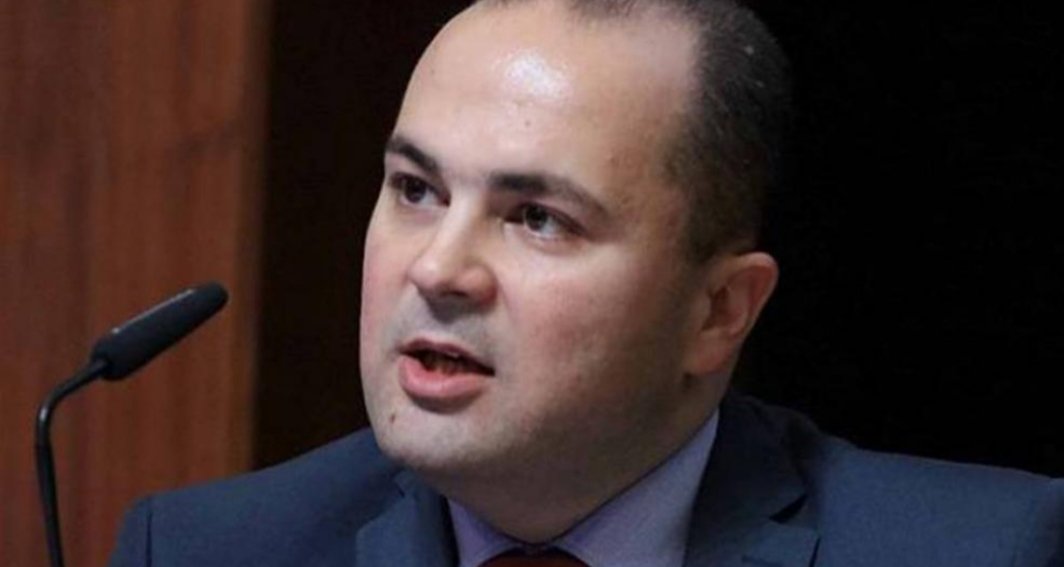
Can the Beirut blast’s lead investigator, Judge Tarek Bitar, take on his negligent colleagues? Events so far suggest he won’t.Photo Credit: The Cradle
Lead investigative Judge Tarek Bitar refuses to prosecute his judiciary colleagues who signed to unload, store, then ignore the ammonium nitrates that devastated Beirut last August.
The Lebanese are split on the performance of Judge Tarek al-Bitar, the lead judicial investigator in the massive 4 August Port of Beirut explosion last year.
One side blindly trusts the man, believing Bitar will spearhead the fight against Lebanon’s existing corrupt political class and discover the identities of those responsible for the deadly port blast.
The other side views him as a foreign tool used to create sedition in Lebanon by targeting political figures critical of the US. The Lebanese resistance, Hezbollah, was the first to draw suspicion to Bitar’s performance, whose arbitrary and biased allegations seemed to target only one side of the political divide.
Hezbollah’s charges have gradually escalated over the months. When Bitar first took on the blast investigation – the second judge to do so – Hezbollah Secretary General Hassan Nasrallah urged him to publish the blast site’s technical report so it would quash unsubstantiated rumors about the group’s role in the explosion, or allegations that it stored ‘weapons’ at the Port of Beirut.
Bitar did not respond to Nasrallah’s request for transparency, however, and allowed political and media disinformation to go unchecked during a national crisis.
In one example of this, an alleged ‘witness’ named Imad Kashli appeared in a Lebanese media outlet claiming that he transported ammonium nitrate for Hezbollah from the Port of Beirut to a village in the south, in what was later discovered to be false testimony. Bitar failed to take any action against Kashli under the pretext that he was ‘sick,’ and media outlets never bothered to refute or retract the fabricated story.
Furthermore, Bitar’s political targets say the judge’s own allegations are not comprehensive, but deliberately selective. His interrogation roster focuses overwhelmingly on personalities belonging to one political affiliation, while unjustifiably excluding officials in the very same posts with opposite political views. Bitar has interrogated former Lebanese Armed Forces (LAF) Commander Jean Kawahji, for instance, while skipping over current LAF Commander Joseph Aoun, a Washington-favored army man.
Aoun cannot be bypassed or absolved of responsibility. The explosion happened on his watch, during his tenure. Bitar’s detractors rightly point out that the ultimate responsibility for the Beirut blast must focus on the Lebanese judiciary and the military. The former signed the papers that allowed in and continued to store tons of illegally-stored ammonium nitrate in Beirut, and the latter has the final word on any explosives inside Lebanon’s legal boundaries.
The fact that Bitar has ruled out questioning the current army leadership, most of the judges, the Ministers of Justice and Defense, and the Justice Ministry’s cases commission from has raised eyebrows, obviously. Nasrallah did not mince his words when he stated, in a recent speech, that the greatest responsibility for the 2020 calamity rests with the judges who gave permission to unload vast amounts of ammonium nitrate explosives from a foreign ship seized by Lebanese authorities, and then gave permission to store these substances in dangerous conditions inside the Port of Beirut.
Bitar’s choices lead to armed confrontations
Leaked reports in the media and from within the corridors of Lebanon’s Judiciary, instead deflected blame onto cabinet ministers and members of parliament (MPs), revealing that they would be arrested even before Bitar issued the summons. Furthermore, he has been quoted as saying that he wanted to fight, not avenge, the political class, which he did not deny in a press interview – thus, confirming the words attributed to him.
His behavior and the investigation’s bias has only reinforced suspicions against Bitar, who was expected, at the very least, to handle these processes and suspects impartially, and to display good faith by muzzling rumors and disinformation.
The judge’s questionable performance finally prompted supporters of Hezbollah, Marada, the Amal Movement, and members of professional organizations (lawyers, etc) to hold a protest in front of the Beirut Palace of Justice.
On 14 October, a peaceful demonstration by these groups was ambushed in Beirut’s Tayouneh neighborhood by far-right Lebanese Forces (LF) party gunmen. Rooftop sniper fire quickly escalated into an armed clash that killed seven Hezbollah and Amal supporters and injured dozens of others.
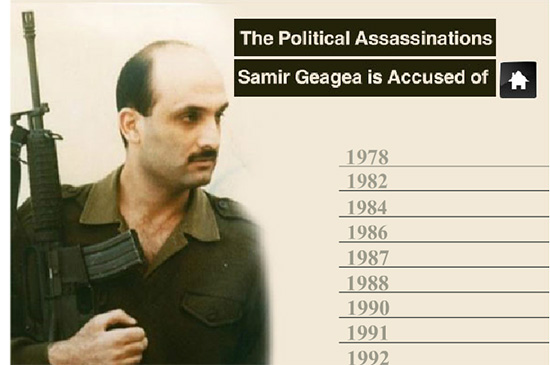
The attack could have easily spiraled into a civil war had it not been for Nasrallah’s public calls for restraint, which gave space for an investigation by army intelligence, under the supervision of the judiciary, that this week summoned LF leader Samir Geagea for interrogation. That case continues.
Judiciary and military responsibility for the explosives
Why has Bitar overlooked the judicial and military responsibilities for the ammonium nitrates and its storage at the port for seven years? Why does he persist in focusing his investigation on cabinet ministers and parliamentarians mainly, despite the fact that the explosion was primarily a security and judicial failure?
If the army had carried out its function, entrusted exclusively to Lebanon’s military under the country’s Weapons and Ammunition Law, by supervising the nitrate storage, destruction, or re-export, the devastating explosion would have been averted.
Similarly, if judges had done their job, a legally binding – not a political one – decision would have ensured the destruction or immediate exportation of the explosive materials from Warehouse 12 in the Port of Beirut.
Despite the negligence of his judicial colleagues, Judge Bitar has been noticeably timid about addressing their liabilities in the lead-up to the explosion. The politicization of his investigation has all but buried the legal distribution of responsibility – the truth, so to speak – for the blast.
The judges who escaped Bitar’s ‘judgement’
Judge Jad Maalouf
To this day, the ‘guardians of justice’ continue to remain unaccountable. But the names of seven judges and a state attorney suspected of negligence have been identified as those most liable for the judiciary’s failings: Judges Jad Maalouf and Carla Shawah from the Beirut Urgent Matters Court, Ministry of Justice Judges Marwan Karkabi and Helena Iskandar, head of the Beirut Executive Department Mirna Kallab, government commissioner at the Military Court Judge Peter Germanos, Appeals Court Attorney General Ghassan Khoury, and state attorney Omar Tarabah.
Lebanon’s Internal Security Forces (ISF) had identified these judges in a report presented to Judge Bitar at the start of his investigation.
The judiciary’s responsibility in the blast has also been lost amid blanket local media focus on Lebanon’s political class since 17 October 2019, when a street ‘revolution’ arose in response to the country’s economic collapse. The prevailing trend in the country has been to lay all blame on the politicians and bankers who let this happen.
So there would be little fallout for Bitar if he took the easy path, focused on the easy ‘villains,’ and didn’t rock the boat with his judicial colleagues or Lebanon’s ‘neutral’ military establishment.
Bitar checked some boxes, but basically played softball with the judiciary. As an example, he formally requested that the Cassation Court’s public prosecutor separately verify the negligence of Beirut Judges Maalouf and Shawah in order to charge them with the crime of probable intent, like the rest of the defendants in the case.
Although more than a year has passed since the blast investigation began, any action against the judges, or even checking their files or hearing their statements, has been delayed for months, although the role of one of them – Jad Maalouf – is critical.
Maalouf signed off on the decision to unload the ship’s ammonium nitrate cargo and appoint a judicial guard as the head of the port, Mohammad al-Mawla. After Mawla claimed that he did not hold the keys to the warehouse, Maalouf was supposed to appoint another judicial guard and establish a time period for guard duty, which did not happen. Bitar listened to the statements of Maalouf and Shawah as witnesses only, unlike others who he intends to prosecute. Why?
The file of the ammonium nitrate shipment had swung back and forth for years between the General Customs Directorate and Beirut Urgent Matters Judge Maalouf. Several letters were sent to the Director General of Customs Badri Daher to re-export the goods, but Judge Maalouf kept writing down the request and sending it to the Justice Ministry’s cases commission, which responded only once by approving the re-export.
Maalouf was assigned to transfer the ownership of the goods within a week, even though Article 13 of the UN’s Hamburg Convention permits the destruction of goods – and if they are hazardous, without transferring their ownership – without paying compensation to the owner. The Hamburg Convention, signed in 1978 and enforced in November 1992, is the UN’s ‘Hamburg Rules’ on cargo sea shipments that unified a legal system regulating the rights and obligations of shippers, carriers, and consignees under the contract of transport of goods by sea.
According to legal experts, Judge Maalouf should have ruled to destroy these highly dangerous materials based on both Article 13 of the Hamburg Convention as well as the provisions of paragraph 2 of Article 579 of the Lebanese Code of Civil Procedure; that is, without a request from anyone and regardless of the rights of their owners, who are not entitled to compensation for the destruction of hazardous goods.
Instead, four years were spent on issuing notifications, or requesting discussions on jurisdiction and the legality of selling or destroying the goods. If Judge Maalouf had taken the decision to destroy the ammonium nitrates immediately, Lebanon would have certainly avoided its destructive consequence last August.
The same reasoning applies to suspected Judge Shawah, who was referred to the prosecution with Maalouf, but judicial sources tell The Cradle that she has not received any document or review from anyone since she took over the ammonium nitrates case from Maalouf.
Judge Bitar has also asked the Appeals Court public prosecutor to verify the suspected negligence of Public Prosecutor Judge Khoury for authorizing the closing of the nitrates file. But Bitar did not do that for months, and until the day before, he believed that the Court of Cassation might recuse him based on the lawsuits submitted by the defendants and ministers accusing him of bias.
It appears that Bitar initially suspected Khoury of involvement in criminal activities that contributed to the death and injury of people and causing damage to public property as a result of the judge’s decision to shelve the State Security’s investigation report. Then, inexplicably, Judge Imad Qabalan, the Court of Cassation’s public prosecutor, decided those suspicions were unjustified and threw out Bitar’s inquiries by saying he considered “the report of the judicial investigator [Bitar] dated 24 September 2021 to be empty of any suspicions and does not prove fault in the job duties of Judge Khoury.”
The fourth and fifth judges, Helena Iskandar and Marwan Karkabi, who headed the Justice Ministry’s cases commission, are suspected of years of procrastinating before responding to the correspondence of the Director General of Customs and the Urgent Matters Judge. Although they received several letters, they responded only once by proposing to re-export the nitrates without following up on the case, which is one reason the ammonium nitrates remained in the heart of Beirut.
The sixth judge, Peter Germanos, was contacted by State Security investigators – when he was the government representative at the military court regarding the ammonium nitrate stores – to notify him about the high risk of these materials. But Germanos told them this case was not in the jurisdiction of the military prosecution because the Urgent Matters Judge had ruled to remove that material from Warehouse 12.
Although the issue is related to the Lebanese state’s national security and clearly falls within the jurisdiction of the Army Intelligence, Germanos decided that it is not within the powers of the Military Public Prosecution. Why?
Judge Germanos has denied on Twitter that he received any reports or minutes on the ammonium nitrates from the State Security or any other agency. Here, Bitar’s investigation needs to discover which side is telling the truth, bearing in mind that most communications between the judicial police and public prosecutor were conducted orally, over the phone, until written investigation minutes are stamped and referred to the Public Prosecution.
The seventh judge – Mirna Kallab, head of the Executive Department in Beirut – following correspondence from the Justice Ministry’s cases commission on the sale of the nitrates, was tasked specifically with appointing an inspections expert. A dispute emerged from the start between the Ministry of Works and the cases commission over who should pay the expert’s fees, which did not exceed 700,000 (approximately $467) Lebanese pounds.
Here, state attorney Omar Tarabah’s name appears for procrastinating for more than a year over correspondence related to paying the expert’s fees to inspect the Rhusos, the ship which transported the ammonium nitrate to the Port of Beirut.
In a nutshell, it is believed that the reason for Bitar’s leniency in holding negligent judges accountable for the Beirut blast is due to the prevailing conviction among judges of the need to protect and provide their colleagues with immunity, lest they next become scapegoats for the political class who would also wish to protect their colleagues with immunity.
Bitar should have refused to cater to the judiciary and military establishments, and made a beeline for whomever he suspected of negligence, regardless of their affiliations. Having failed to do so, this investigation is now a bust. Unless Bitar changes course and takes on these two protected institutions, only scapegoats will be charged for Lebanon’s deadliest explosion in history.
في بداية التسعينات طرح بعض السياسيين سؤالاً عنوانه، هل أن أولوية الملف الأمني المتمثل بسحب الأسلحة وحل الميليشيات وإعادة توحيد الجيش، سيفتح الشهية الدولية نحو اعتبار الجيش حصان الرهان السياسي الأول، بحيث ننام ونصحو على تعاظم دور المؤسسة العسكرية، ونستعيد صورة الرؤساء الذين يلبسون البزة العسكرية، وعلى رغم تجاهل الكثير من السياسيين لهذه المعادلة، تقول وقائع ثلاثة عقود لما بعد اتفاق الطائف إن العسكر تصدروا الواجهة السياسية، فما كادت مفاعيل توحيد الجيش وحل الميليشيات تكتمل، حتى صار الرئيس المدني الياس الهراوي آخر الرؤساء الآتين من المجتمع السياسي، وصار الذين تناوبوا قبل الطائف وبعده على منصب قائد الجيش يدخلون إلى قصر بعبدا كرؤساء للجمهورية، ويبدو اليوم أن الأميركيين الذي يعاقبون لبنان بعقوبات جماعية يؤكدون بما لا يقبل التأويل عزمهم على مواصلة الاستثمار على علاقتهم بالجيش، لكنهم يضعون لهذا الاستثمار سقفاً أمنياً لا سياسياً، ويتراجع السقف السياسي الذي كانت عليه الحال في السابق، فالعنوان السياسي الرئيسي في زمن المواجهة الأميركية مع المقاومة لا يتخذ عنوان الرهان على المواجهة العسكرية والأمنية، فالأميركي يسلم، كما قال الكثير من المسؤولين الأميركيين صراحة، بأن تعريض الجيش لمخاطر الزج به في مواجهة مع المقاومة، يفوق قدرة الجيش وقابليته للاستجابة، والحفاظ على تماسكه.
–
في السياسة طور الأميركيون مقاربتهم منذ 17 تشرين الأول 2019، واعتبروا أن عنوان مكافحة الفساد هو الأنسب لتقدم الأجندة الأميركية في مواجهة المقاومة، على رغم القناعة الأميركية بلا جدوى تجاوز اتهام المقاومة بالفساد من الشعار إلى التفاصيل بتقديم أي واقعة مكتملة تؤكد هذا الاتهام، بينما يمكن، كما أكد كثير من المسؤولين الأميركيين إلحاق الأذى بحلفاء المقاومة تحت هذا العنوان، ولو اقتضى الأمر إصابة عدد من حلفاء واشنطن، الذين أظهروا بنظر واشنطن تخاذلاً في خوض المواجهة مع المقاومة بداعي الحرص على السلم الأهلي، وخرجت دراسات وتحليلات تتحدث عن تجديد الطبقة السياسية، بإنشاء مئات وآلاف منظمات المجتمع المدني في مناخ 17 تشرين والدفع بها إلى الواجهة السياسية، وجاءت العقوبات الأميركية على سياسيين ورجال أعمال لبنانيين تؤكد هذا المنحى، لكن دفع المعركة تحت عنوان الفساد لتجديد الطبقة السياسية، وبطريقة مستهدفة لحلفاء المقاومة وتقليص حضورهم السياسي، تستدعي إنهاض صف أمامي وخلفي في المستوى القضائي، يعيد إلى الواجهة السؤال الذي طرح في التسعينات بطريقة جديدة، هل نحن أمام زمن فتح الشهية الأميركية ومحاكاة الشهيات المحلية، وعلى أعتاب الاستحقاق الرئاسي، لنشهد مرشحين رئاسيين من القضاة، لكن بدلاً من شعار الجيش هو الحل، يتقدم شعار القضاء هو الحل؟
–
يريد البعض منا أن نصدق أن الفرصة التي وفرها انفجار مرفأ بيروت لتظهير الدور القضائي في مواجهة السياسيين تعبيراً عن انتفاضة الجسم القضائي على التدخلات السياسية، وتمسكاً باستقلال القضاء، الذي كان متهماً بالتقصير والاستنساب والتبعية الطائفية والسياسية، فهل حدث بين ليلة وضحاها أن نزل الوحي وتغيرت الصورة، وما يقوله حجم التصعيد القضائي تحت عنوان التضامن بين القضاة في كل تفاصيل قضية التحقيق في انفجار المرفأ، والمجازفة بمخاطر رفضت قيادة الجيش تحمل مثلها، جسدها ما ظهر من علامات الانقسام الطائفي في المجتمع وصولاً إلى الجسم القضائي نفسه، إن التذرع السابق بالضغوط التي يمارسها السياسيون كان استساغة يسلس عبرها القضاة النفس للمطالب السياسية طلباً للنفوذ والسلطة، ويعيدون فعلها اليوم بالتمرد على السياسة طلباً للتدخل فيها من باب أوسع، تتيحه النظرة الخارجية التي تدعو القضاء لملء الفراغ الناجم عن تراجع الجيش إلى الخلف، فيتقدم قضاة ليقولوا القضاء هو الحل، أي الرئاسة لقاض بدلاً من جنرال، ولا يمانعون من تدخل القضاة في السياسة تعويضاً عن زمن تدخل السياسة في القضاء.
–
يريد البعض القول إن هذا تحول إصلاحي ثوري يستحق التشجيع بمعزل عن المقدمات والظروف، التي يمكن وضعها في حسن التقاط اللحظة المناسبة لهذا الانقلاب، فلماذا التشكيك طالما أن هناك إجماعاً على أولوية مكافحة الفساد، وأن اللبنانيين ضاقوا ذرعاً بالسياسيين وعبروا عن ذلك في انتفاضة الغضب في 17 تشرين، ويردون السؤال بالقول، ولماذا تضع المقاومة نفسها كخط دفاع أمامي عن الطبقة السياسية سواء في مرحلة 17 تشرين، أو في مرحلة الملاحقات القضائية، والجواب بسيط، لكن بسؤال أيضاً، وهو لماذا يحجم القضاء عن فتح ملفات المصارف ومصرف لبنان، طالما جوهر النظام الفاسد يجد قلعته الحصينة في نظام الريع الذي يرعاه مصرف لبنان وتمثل المصارف قوته الضاربة، وطالما أن الثورة على الفساد وإثبات الأهلية لقيادة العمل الإصلاحي تبدآن من هنا، ومن دون هذا الشرط يصير المشهد واضحاً، إعادة تعويم النظام الريعي التابع والمستتبع برموز جديدة أشد طواعية واستعداداً للمجازفة بتعريض السلم الأهلي للخطر، وأكثر عدائية للمقاومة، وأشد طائفية، من القيادات الطائفية، مقابل الوصول للسلطة، فهل هذا إصلاح أم خراب؟
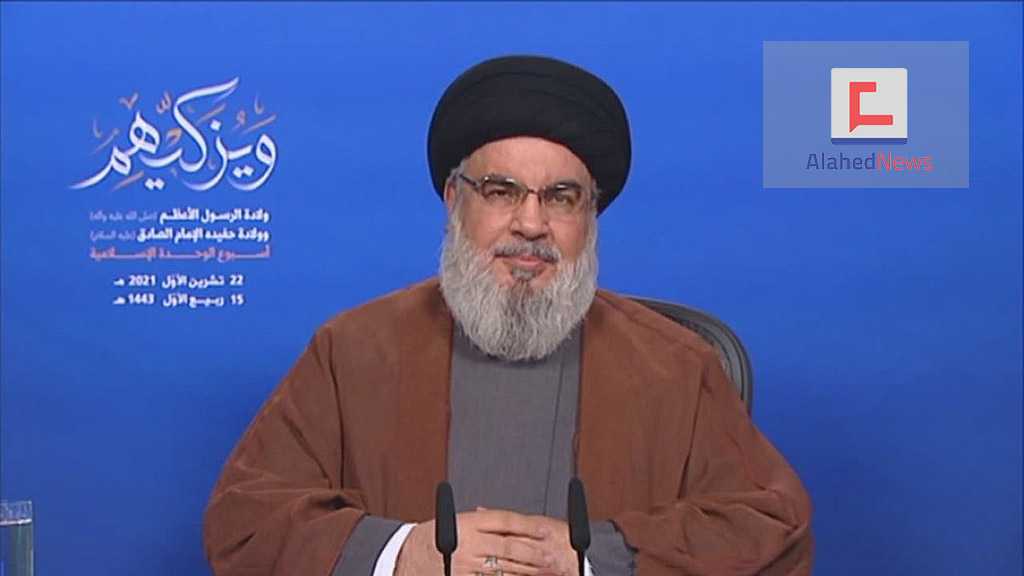
Speech of Hezbollah’s Secretary General His Eminence Sayyed Hassan Nasrallah tackling a range of political developments on the occasion of the birth anniversary of Prophet Muhammad [PBUH] and his grandson Imam Jaafar Sadiq [AS], and the Muslim Unity Week.
I seek refuge in Allah from the accursed Satan. In the name of Allah the Most Gracious the Merciful. Praise be to Allah, Lord of the Worlds, and prayers and peace be upon our Master and Prophet, the Seal of Prophets, Abi al-Qassem Muhammad Bin Abdullah and his good and pure household and his good and chosen companions and all the prophets and messengers.
May the peace, mercy, and blessings of God be upon you all.
In the coming days, God willing, we will welcome a very dear, precious, and great occasion, which is the anniversary of the birth of the Greatest Messenger of God, the Seal of the Prophets, and the Master of Messengers, Muhammad bin Abdullah [PBUH]. I congratulate all Muslims in the world and all Lebanese on this great and solemn occasion in advance. God willing, on this occasion, we will hold a proper and appropriate celebration in a few days, and therefore, I will leave talking about the celebrant and the occasion itself until then.
With regard to the topics, I divided them into two part. One part I will talk about today, and the second I will talk about it, God willing, during that celebration.
I will begin with tonight’s topics. I will speak about the first topic as briefly as possible, appropriate, and unobtrusive.
1- The elections:
The country today is busy preparing for the electoral law, the dates of the elections, the administrative procedures related to the elections, and the natural prelude to entering the stage of the electoral atmosphere as well as having the elections on time.
Regarding the elections, I want to emphasize several points:
i- Holding the elections on time
We have already talked about this and emphasized it on more than one occasion. In any case, there still remain those who try to spread confusion by blaming a certain party, including us sometimes, of planning to extend and postpone the elections, etc. This is all baseless talk. We affirm, insist, and call for the elections to be held on time within the constitutional deadline. To be fair and according to our follow-up with all the parliamentary blocs, parties, and political forces, we believe that no one – so as not to make baseless accusations like some opponents do – whether implicitly or openly is planning or preparing to push matters towards the postponement of the parliamentary elections and the extension of the current Parliament. Therefore, let us put this issue behind us and let everyone engage in holding the parliamentary elections on time, and we are certainly one of those.
ii- The expatriate vote
We agreed to the current law, which was voted on in 2018 and followed in the 2018 elections, as a result of the discussions, and in all sincerity, taking our allies into account. We agreed to a number of things in that law. In the joint parliamentary committees, whether formally or informally, a discussion took place some time ago, and some parliamentary blocs asked to reconsider or demanded a reconsideration. Some of our deputies expressed a position based on an existing reality. This same discussion existed in 2018 and became more intense at the time than it was in the past. This issue was the expatriate vote.
Today, when we want to prepare electoral campaigns or for people who want to run for office or be elected, there is no equal opportunity, whether in conducting electoral campaigns, in candidacy, or even by going to the polls to exercise free elections, specifically with Hezbollah. There will be other political forces whose situation may be less sensitive, but Hezbollah’s situation abroad, in some European countries, in North America, in the Gulf, and some other Arab countries is known. There is no possibility for preparing an electoral campaign, candidacy, or elections. In fact, this is a point of appeal, and we had mentioned to our allies that with regard to Hezbollah, we would not submit an appeal.
But someone can file an appeal regarding the elections in terms of unequal opportunities. The brothers raised the issue from this angle, and an atmosphere emerged in the country that there were those who wanted to prevent the expatriates from voting. Extensive debates were held over this and there was no problem. We discussed the issue once again and came up with the following conclusion. It was expressed by our deputies at the last meeting of the joint committees. But I’d like to mention it here to close discussions on it.
We, once again, discussed and evaluated it. This is what we had to say. Regardless of how many countries in which expatriates or residents will take part in the parliamentary elections – they usually participate in presidential elections – and if there are countries that participate in parliamentary elections, this may be present and perhaps their number may be few, but in any case, as long as the injustice befalls specifically us, we do not have a problem.
This means that we, Hezbollah specifically, will be oppressed. We will not be allowed abroad or have the right to campaign, announce candidacy, or the freedom to vote. This even applies to our supporters. But as long as the injustice pertains to us and there is a national interest and it allows the Lebanese residing outside Lebanese to feel that they are partners and bear responsibility, we have no problem with that. We will overlook this observation, and that is why our brothers amended and said that we support the principle of expatriate voting, in principle. We divided the issue.
Now, there is a detail that whether the expatriates or those residing outside the Lebanese territories will vote according to the constituencies in Lebanon or elect the six representatives that are said to be allocated for the elections abroad. If they are going to vote according to the constituencies in Lebanese, we have no problem with that. And if voting on the six representatives will be confirmed, we are open to discussions when it’ll be discussed in Parliament. However, if the topic is not discussed, there is a law. So, work according to the law. Hence, we consider this matter closed.
And we hope, God willing, from our brothers, our expatriates and people residing outside the Lebanese territories to register and take part in the elections. They are welcome, and we hope that they will have the real opportunity to frankly express their opinion.
iii- Voting at the age of 18
With regard to the issue of [voting at] the age of 18, I honestly tell all the Lebanese people and young people between the age of 18 and 21 that this matter is only raised to be used locally. It is always raised at a time close to deadlines, and time does not help. Although it was brought up at a time way ahead of deadlines, something strange happened. Since 1992 when we first took part in the parliamentary elections, we’ve been known to have strongly supported giving young people at the age of 18 the right to vote.
Whenever you talk with political forces, you find that everyone is in favor. Yet, you go to the Parliament and it gets dropped. There is something strange in this country. We not only raised this in our speeches, slogans, and political and electoral programs, but we also seriously worked and fought hard for it. In March 2009, the Loyalty to the Resistance bloc proposed a constitutional amendment law to reduce the voting age to 18 since this needs a constitutional amendment. In March 2009, it was voted unanimously. This was before the 2009 elections. The constitutional amendment needs two-thirds of the members of the parliament. The government also voted unanimously on this proposal. It was returned to the parliament after the parliamentary elections in the February 2010 session. The session was attended by more than 100 deputies, out of which only 34 deputies voted on the project, mainly the Amal Movement, Hezbollah, and some other blocs. The rest of the blocs abstained, and it fell through. There is really something strange about this country.
If you now make an opinion poll for the parliamentary blocs and the political forces, they all tell you: yes, this is their natural right, and they must elect, etc. Of course, I heard a strange two days ago saying that young people need to be prepared and educated. What is this talk!
In Lebanese, children as young as five or six years old talk politics! You are talking about 18-year-olds. These need educating, preparation, school programs!!! What is this nonsense?!
Anyway, we once again call, the expatriates have the right to vote. All people should demand this right and respect it. If they are wronged somewhere like us, let us go beyond this oppression. With regard to the issue of voting at the age of 18, there is no injustice to anyone. If this right is not given, this is injustice to all Lebanese youth who are being deprived of the right to participate in the parliamentary elections only for purely partisan and personal reasons, not for national or real reasons..
iv- The MegaCenter
Also, related to the elections is the MegaCenter. We have no problem so that no one later says that Hezbollah is preventing this from happening. From now, we do not have a problem. You want to adopt the megacenter, go ahead. You don’t want the megacenter, also go ahead. You want to adopt the magnetic card, we don’t mind. Whether the Ministry of the Interior wants to adopt it or not, let it go ahead. What do you want us to vote with? The identification card? We’ll use it to vote. An excerpt of the civil registry? We’ll use it to vote. We’ll use whatever you want. We do not have a problem. Just hold the elections on time and don’t come up with excuses for not holding the elections on their constitutional dates. The rest of the matters related to the elections, nominations, alliances, the electoral program, and reading the electoral scene will be discussed at their right time, God willing.
2- The electricity file:
In fact, I should have started talking about this file, but I deliberately did not start with it because this file contains some annoyance. Hence, I opted to start with the elections.
In the past few days, they told the Lebanese that fuel has run out, the factories will stop working, and the country will go into complete darkness. Save us. What should we do? Now, they’ve found a temporary solution. They found some with the Lebanese army, and the army instructed to take advantage of what it has to overcome this stage. Of course, We thank the leadership of the Lebanese army for this kind humanitarian step.
But the question remains: Today, this issue should be an absolute priority for the current government. Basically, when the cry came out, it was necessary – this is our personal suggestion – that the government hold an extraordinary session, not a two- or three-hour session, but one that remains from dawn to dusk to find a solution. What does it mean that the country has entered complete darkness? This does not only mean that the country is in complete darkness because of power outage, the country is in a state of clinical death because here we are talking about hospitals, cooperatives, everything having no electricity. Despite this, what has been happening in the country? Instead of calling for a serious, radical, and real treatment, as usual, the Lebanese blamed each other for being responsible, insulted and cursed each other, and insulted one another. All of this does not bring electricity.
Eventually, responsibilities must be determined. But usually in the prevailing Lebanese way, people enter the labyrinth, with more grudges, insults, and swearing emerge. And you’ve seen social media in the past two days.
Since the government holds its session every Wednesday, the priority on the table must be the issue of electricity. What I want to call for tonight is for you to see what you want to do regarding electricity. Find a solution or put the country on the path to a solution, not that pump it with painkillers, i.e., take an advance from the central bank and buy fuel with it for power plants to generate electricity for a few hours. Does this solve the problem? How many days and weeks will this last? The issue needs a radical solution. There are contracts that exist. Make up your mind, say yes or no, but address the issue in any way.
Today, a sum of money was sent to the Lebanese government – the Lebanese state. One billion and one hundred million dollars is in the hands of the Lebanese government. If we want to speak as a matter of absolute priority, take advantage of this amount or part of it and primarily and radically address the issue of electricity – building new power plants, addressing the problem of existing plants. The matter is in your hands. There are many offers from various countries in the world, from the East and the West. You do not want from the East, from the West, then, unless there is an American veto.
If the Americans are forbidding you, tell the Lebanese people frankly: O Lebanese people, we are terrified and unable to bring in European companies because the Americans will be angry with us and have forbidden us from doing so.
In this way the people will express their opinions – whether or not they’d like to live in darkness and in humiliation with no electricity, as the Lebanese used to live in humiliation with the lack of gasoline and diesel. We’ll act depending on the outcome. I know, for example, in Iraq – this is a common and well-known thing there – that the Iraqis have an electricity problem. When they tried to reach an understanding with some European countries, the Americans intervened forcefully and prevented them. So, is there a veto here in Lebanon, an American veto preventing that?
As for the Iranians, there was an old offer. Today, there is a new offer. Two days ago, when His Excellency the Minister of Foreign Affairs of the Islamic Republic of Iran was in Beirut, he reconfirmed that we are ready to build two plants and provide a certain, large, and respectable quantity. Respond to him.
Ask for an exception since America is your friend. To us, they are our enemy, and we expect anything from our enemies. But they are your friends and allies. You trust them and consider them moral and humanitarian who possess human values and law. Ask them for an exception.
Iraq got an exception. Afghanistan under the rule of the Ghani government had an exception – it used to import many things from Iran. Other neighboring countries have exceptions. You ask for an exception. I learned a rather funny thing that was in fact published in the media – when one Lebanese official was by told by the Iranian foreign minister to ask for an exception as the other countries, the official replied to him, saying: I hope you will ask for the exception. It’s a very funny thing. Imagine a Lebanese official telling the Iranians who have enmity with the Americans to do so. There is an ongoing war between them and the Americans, and I him: you ask the Americans for an exception so that you can build us, for example, power plants, or so you can sell us fuel for the power plants, or so you can sell us gasoline or diesel. What a way of taking responsibility?
Anyway, regarding this issue along with all the people, we will raise the voice. The government, the President of the Republic, and the Prime Minister must determine the agenda. But we are among the people who have the right to demand that electricity be at the top of the agenda, or they should allocate an emergency and urgent special session and work for a real radical treatment for this issue. If the issue remains a matter of throwing accusations and scoring points and who disrupted, we will get nowhere.
Hezbollah or others may have raised this suspicion in the past. For the first time, I would like to raise a suspicion. I’m one of those people who has a feeling that somewhere there might be a certain game. Let me say how. It’s the same with what happened gasoline, diesel, and food stuff. The state knows that at some point it will have to lift the subsidies. Everyone tells you that there is no solution except the International Monetary Fund, and the IMF will ask for the subsidies to be lifted, and no one dares to take the responsibility of lifting the subsidy.
They’ll let the people fight, race to cooperatives, and queue at gas stations for petrol, diesel, etc. After a month, two, or three, they’ll start shooting each other, cursing one another, and wielding knives at each other. Then, they will call for the subsidies to be lifted just to be saved and accept the fact that the price of gasoline is 500,000LBP.
If the subsidies are lifted, the problem of the humiliating queues will be solved. Therefore, if you notice and you can go back to the media when we saw the humiliating queues, the voices called for the subsidies to be lifted. This action was serving this. Whether this was intentional and planned or not needs to be verified.
When talking about the subject of electricity, privatization and selling some state assets and some public sectors, including the electricity sector, are always mentioned. The electricity sector is always being eyed for privatization.
There is a fear I would like to raise today. I do not want to accuse anyone. It is very unclear to me, to be honest, that somewhere – within the government or outside it or whether they belong to the opposition or not – they want the electricity sector in Lebanon to collapse. Then, the state would be helpless and unable to solve the problem. Hence, there would be no solution except through privatization. Then, the Lebanese people would not want to live in darkness, so they’d demand to solve this problem with privatization. This is the real fear. We must pay attention to this subject.
From this subject, I will delve into the third point which is related to diesel, gasoline, and the like. I once again make appeal to the various political forces and leaders in Lebanon – brothers, go and check with your allies and friends. I repeat and say that whatever we are capable of doing with our allies and friends, we will do. What can Iran do more than this? They are already telling you that they are prepared to sell you gasoline, diesel, and fuel and build power plants and metro stations. They want to cooperate with you and offer you facilities. This is a solution.
The Syrians told you they do not have a problem. Bring Egyptian gas and electricity from Jordan. I will offer you the facilities you want. If there is anything else, I am at your service as well. These are our allies.
As for your allies, we have not seen them do anything. You have not done anything. Talk to someone to make you an exception. Talk to someone to help the Lebanese. If your allies told you that Hezbollah is part of the Lebanese people, then exclude Hezbollah and bring help for the rest of the Lebanese areas. Act responsibly, not maliciously.
Until now, we still hear that, for example, they brought diesel from Iran. They brought it across the border into Syria, so 1, 2, 3, 4, 5. We hear it every other Sunday, etc. Here is another example of the level of responsibility in the country. A politician reached a conclusion that the power cut stated happening when diesel was brought in from Iran as the power plants broke down. You all know. It is all known. He did not know that the state’s electricity plants run on fuel, and what was brought from Iran was diesel. There is no relation between diesel, fuel, and electricity plants. In any case, this is the level that exists in the country.
This is a call for the last time. Budge a little. Move a little, and don’t be malicious. What is your main role other than criticizing, insulting, and accusing? Do something positive for your people and your country.
3- Gasoline and diesel:
I moved to the third topic, in which I will talk about what happened with us and what will happen concerning diesel and gasoline.
So far, we consider ourselves still in the first phase. Of course, a number of ships have arrived so far, and we are gradually moving them to Lebanon. We consider that the first phase will continue until the end of October. During the first phase, we did two things, and we will continue with them.
The first thing we said is that there is a group that we will gift them diesel for a month and a group that we will sell diesel to. We did not put the diesel at the stations and said, “People, please. Who wants to buy can come.” Meaning that we are doing more than the goal. We said that the goal is to secure this material for these pressing and urgent cases, and we do not want to compete or block the way for companies and stations that sell diesel. In the end, we will give to a group and the rest can buy from the stations. By doing so, we are not cutting off people’s livelihood. We adopted this approach, and we will indeed continue until the end of October as a first phase.
Within this first phase, there are two points I would like to add.
1- We had announced a gift or donation for a group for a period of one month. That period has ended. There is a quantity that has arrived and another that is on the way, and it will reach them, God willing. What I would like to announce today is that we will renew this gift. This gift is for the same group and will be for an additional month, for a second month.
I will again mention the institutions belonging to this group: government hospitals, nursing homes, orphanages, centers for people with special needs, official water institutions, water wells belonging to municipalities, provided they are a poor municipalities, and fire brigades in the Civil Defense and the Lebanese Red Cross. After the end of the first month, I announce today that we will provide the quantity they need from this material as a gift and assistance, God willing, for a second month.
2- Regarding the groups, I would like to announce that this material would also be sold to the fishermen. This addition comes following many revisions that have been made. We’ve already started and not just starting. This happened in the last period. The fishermen has been added to the segments to which this material can be sold to. The same institutions that we talked about before will remain – private hospitals, pharmaceutical laboratories, mills, bakeries, etc. We will complete the first phase by working with the same [entities] we worked with last month.
When we reach the second phase, which starts from the beginning of November, we will add heating for families. We and our brothers are studying the standards because the most important thing is to abide by the standards. During the past month, there were cases that included people not belonging to the group that this material can be sold to contacted us. These people are very dear to us and we love to be of service to them. However, we had a serious commitment to the standards and the groups. If we did not abide, it will be chaotic, and, therefore, we would not be able to serve the groups that we considered a priority.
Today, we have the issue of heating that needs to be studied, and it is a very big topic. For example, among the entities that it will be sold to are private hospitals, bakeries, mills, laboratories, etc. We considered that establishments and companies operating generators are the largest segment, and they, in fact, are the ones that need the largest amount. But when we bring in the issue of heating, there is no comparison because here you are talking about Lebanese families in areas where there is cold and frost.
This requires different controls, standards, and a distribution mechanism that we are studying. God willing, before the beginning of November, we will talk about this issue, I or one of my brothers, and it will be announced in detail. Also because of winter, we may add new entities. This, too, is being evaluated and studied – first of all because of the high demand that happened. The volume of requests in all Lebanese regions was very large. I’d say it was greater than expected, yes, greater than expected. It is very large in all areas. This is on the one hand.
On the other hand, winter season is coming, and of course, the demand for diesel will increase exponentially – we had made diesel a priority. This means that we have decided to continue with diesel being the priority. We postponed bringing gasoline. Even if we get gasoline, we will exchange it for diesel with the merchants because the priority now is to provide the fuel oil in the way that it is secure. Thank God, now, in one way or another, the queues of humiliation are over. Gasoline is available at the stations, albeit at a high price. Our main concern was to get rid of the queues of humiliation. Now, these queues are over. Gasoline is available. We do not believe now, as a result of the large file, that we should work on all the entities. We have to focus our priority on diesel, especially since we are a few weeks away from winter season.
I will conclude this whole file. We heard people say, leave the Lebanese state buy its own gasoline and diesel from Iran. We support this talk. This is our demand. Let the Lebanese government ask the Americans for an exception, while the Lebanese companies buy. We guarantee that they will get facilities from Iran to buy diesel, gasoline, and fuel from Iran, etc. At that point, we will withdraw from this file. We will leave the file completely. We will not buy, nor bring ships, nor transport to Baniyas, nor bring from Baniyas to Baalbek. We will leave the matter completely. Go ahead, take responsibility. Open this door. This only needs some courage and boldness. Many countries neighboring Iran have exceptions – exceptions in buying gasoline, diesel, oil derivatives, and many other materials. Go ahead, work on this matter. This is one of the doors – you consider that we are violating sovereignty. Good, then help us so that we do not violate sovereignty. Go ahead, ask for an exception and open this door.
4- The Beirut Port [blast] investigation:
I would like to recall what I used to say since the beginning – we want and support the investigation. I honestly say and tell you that even if the families of the martyrs and the wounded abandoned the investigation, we, Hezbollah, will not abandon the investigation. We consider ourselves among those who were affected not only in terms of martyrs, wounded, and homes, but we were also affected morally, politically, and media wise. Taking humanitarian considerations towards the families of the martyrs, we want the truth and accountability. Politically and morally, we, as Hezbollah, want the truth and we want accountability. There is no discussion regarding this topic. It is not cutting of the road in front of the investigation nor is it to end or cancel the file. Never. Whoever says this is unfair. We want to reach a result. What is really required is justice. What the former judge did is clear. He was biased and politicized. We spoke loudly about this and gave advise. The man rose and asked with legitimate suspicion and left. The man made a legitimate request and left. However, instead of benefiting from all the mistakes and the observations made to the previous judge, the current judge continued with the same mistakes. He ignored these remarks and did worse. The current judge’s work is politically motivated and biased. His work is being politicized and has nothing to do with the truth and justice.
Before I conclude, I would like to address the families of the martyrs – if you expect to uncover the truth with this judge, you will not. If you expect that this judge will bring you justice, even at the level of an indictment, you will not get it. The work of this judge is politically motivated. He is exploiting the blood of the martyrs, the wounded, the tragedy, and the calamity to serve political goals and political targeting.
1- We previously talked about the evidence, but now I would like to highlight the issue more because we have reached a point that can no longer be tolerated.
Let us simply talk logically. Is this interference in the affairs of the judiciary? But first off, tell me this is a judiciary so that I can agree with you whether this is interference or not. This is not a judiciary. This is a politically-motivated job. As long as it is a politically-motivated job, allow me to say a couple of words. What do science and justice say? They say there was an explosion. Hence, look for the responsibilities. This is a problem that I will return to shortly.
I would like to ask the current judge – disregard the previous judge. Since the arrival of the ammonium nitrate ship to Lebanon’s Beirut Port to Lebanon, there have been two presidents: President Michel Suleiman and His Excellency President Michel Aoun. His Excellency, President Michel Aoun has said on more than one occasion – a transparent man – “I knew on this day and I followed up this way. I am ready for the judge to come and listen to me.”
Did you listen to him? You are a judge who works as the judiciary, did you listen to His Excellency the President and took his statement? He is the one telling to go to him. What are you afraid of?
Did you ask President Michel Suleiman? Did you listen to him? did you ask him – you were the president of the republic when this ship came and entered, did you know? What did you do? Regardless of whether he was responsible or not. You did not ask him, and you did not listen to His Excellency the President even though he invited you.
Since the day the ship entered Lebanon in November 2013, there have been multiple prime ministers. You, the judge, quickly belittled Prime Minister Hassan Diab and thought you can accuse him, summon him, etc.
One question. Did you ask former heads of government? Did you listen to them? I’m not telling you to summon them. Did you go to them? Did you sit with them? Did you ask them even a question about their knowledge of the subject? What did they do if they had knowledge? Were they responsible or not? You did not do any of this. You quickly went to Prime Minister Hassan Diab. Can you tell me that the explosion took place during the premiership of PM Hassan Diab? Why did you go after the former ministers and not the current ministers? I am not defending people who are our friends only. Among them are our friends and those who are not our friends. The people I’m telling you to investigate include some of our friends. Why did you not ask the ministers in the current government who were in office when the explosion occurred? Instead, you went to the former ministers. Why not all the former ministers? Did you ask all the finance ministers? Did you summon them all and investigated with them? Did you investigate and ask the ministers of works who were in office in November 2013? The current Minister of Works is also our friend. The ministers of interior who were in office in November 2013 until today is also our friend. The ministers of defense as well as the ministers of finance and works are also the ministers of guardianship. Did you investigate with the ministers of defense? Non, you didn’t. Did you ask the ministers of justice? No, you didn’t. Did you ask all the heads of the security and military services? No, you did not. I tell you no because they really did not ask them. he asked some of them, but not all of them. What do they call this? You are going after specific agencies, specific ministers, and a specific prime minister is clearly [political] targeting. Does the issue need a little understanding in order to see that there is clearly targeting? There is political targeting. This is the first point. We’ve spoken about this in the past. We also warned you. Do not be biased and politicized. Or else, we will demand you leave. Then he continues working as if nothing happened. On the contrary, he rose even more and behaved as if he was the ruler with regard to this file. This is the first point.
2- The main subject in the explosion:
The whole thing is incomprehensible. Yet, you skipped it. Basically, it is like what many Lebanese say. I am not saying anything new. The basic principle, O honorable judicial investigator, is that you go and tell the families of the martyrs before you incite them against the politicians. You have to tell these families that you sit with every other day who brought the ship, who let the ship dock, who gave permission, who left the materials in hangar 12, and who gave approval. You are not doing any of these. You are tackling another matter which comes in second place which is negligence. You are making a big deal out of this for settling political scores. O brother, tell the Lebanese people. If you don’t want to tell the Lebanese people, at least tell the families of the martyrs. And you, our people and our loved ones, the families of the martyrs, go and demand. This is your right to demand. Ask him how your children were killed? You, an investigative judge, do not want to tell them because this does not serve the politicization that you are working on. So, what did you turn to? To negligence. You are making a bigger deal out of negligence – the one who is charged with negligence should receive the most severe penalties.
I’m not asking for anything. I am only asking why he is disregarding and neglecting the first part of the issue. Why is the truth not told to the Lebanese? The judicial secrecy is the issue. It is not about someone killing another person. This is a catastrophe that has befell the country, and the country is heading towards a catastrophe if this judge continues working in this way. Therefore, the matter needs a different approach.
3- Bias:
The judges, who were involved and whose responsibility wss greater than that of the presidents of the republic, are responsible. I do not know. I am not a judge to rule on this matter. The responsibility of judges is greater than that of heads of government, ministers, and heads of the security services because the judges are the ones who allowed this material to enter and to be stored. The rest are all procedural. The two judges or the judges are the first to be responsible. O families of the martyrs, ask this judge. Ask him about those judges whose responsibility is unquestionable.
There might be a discussion about the responsibility of the prime minister, a specific minister, and the security apparatus. But there is no discussion that these judges are responsible. What did you do to them? You did nothing. You filed a lawsuit against them in court, the High Judicial Council and the Discriminatory Public Prosecution, and to appoint a special court. Great! You do not want to summon the judge, issue an arrest warrant for him, or imprison him because he is a judge. The judiciary wants to protect itself. However, you want to summon a respectable prime minister like Hassan Diab, subpoena him, issue an arrest warrant against him, and throw him in prison. Is this a state of law? Is this a state institution? Does this country have morals? The law says that judges go to court. The constitution says that presidents and ministers go to the presidents’ court. In the case of the presidents and ministers, why don’t you accept. You consider this your right and transcend all constitutional principles and attack people? However, in the case of the judges, the law says that they go to the High Judicial Council. Answer us so that we know whether what is happening is right, just, and fair or is political targeting?
4- The last part in this file:
When presidents, ministers, and representatives feel that they have been wronged, who do they turn to? They tell you – this specific judge is biased. He is attacking us and is unfair with us. He want to arrest us unjustly. He is impatient with formal matters as in talking with us and our lawyers. We are being wronged. Who do we turn to? In a state of law and institutions, the law must answer. They turned to a judicial body, and we see that this judicial body did not take its time to study the case, did not discuss, nor summon, nor investigate. It returned the request saying it’s outside of their jurisdiction. Whose jurisdiction is it? So, guide us. You say the law and the state of institutions, O Higher Judicial Council, answer. Bring the prime minister who will be summoned for arrest, the ministers, and others who may be caught up in lawsuits. Where are they being wronged? If there is no jurisdiction for so and so and so, who has jurisdiction then? This needs a solution and an answer. In any case, we have big problems. We consider that what is happening is a very bad situation. It will not lead to the truth and justice, but it will lead to injustice and to concealment of the truth. This does not mean that we are demanding that the investigation be closed. Not at all. We want an honest and a transparent judge, who works on a clear and transparent investigation based on rules, an investigation in which there is no bias. He must continue the investigation and this matter should not stop at all.
First, we want an answer. Where would an oppressed person and a person with suspicions seek refuge in this country?
Another thing, the issue is no longer a personal matter, the issue has repercussions at the national level and on the country. Today, I am appealing to the High Judicial Council. What is happening has nothing to do with the judiciary, nor with justice, with fairness, nor with the truth. You must find a solution to the matter. The Supreme Court does not want to resolve the issue. The Council of Ministers is required to resolve this issue. It referred this issue. It will be raised in the Council of Ministers. We will speak and others too. This matter cannot continue this way. There is no possibility for it to continue this way, especially in the next few days. Therefore, among the institutions, the High Judicial Council should meet and see how to address this issue. We are talking to you and on behalf of many people in this country. We are a large segment in this country, and we have the right to be heard. We have the right to be given an answer. We have the right to demand in the Council of Ministers. It is our right that the Council of Ministers discuss this issue and take a stance. In all honesty, I tell you this matter must not continue this way.
As for the rest of the points of discussion, I wanted to talk about the demarcation of the maritime borders, the disputed area, the new negotiations, the Israeli steps, and other files. We will talk about all this, God willing, during the occasion in a few days.
I just want to conclude with two points. I must, morally and ethically, talk about them.
The first point is the bombing that took place in Kunduz, a few days ago, in Afghanistan, in a mosque during Friday prayers, which led to dozens of martyrs and wounded. Of course, this is a painful matter. Any person, Muslim or not, will ache when he sees elderly people and children being killed, just because they were praying in a mosque. This is very sad and very painful.
Despite the distance, we also share with our family and loved ones and these oppressed families their grief and pain. We express our sorrow for what happened and condemn it. But what’s most important is that Daesh committed this crime and claimed responsibility. I say the Wahabi terrorist organization Daesh.
I hope from all our friends, companions, and the media in our axis, if they accept from me, to call it the Wahhabi terrorist organization. Because what Daesh is doing is the result of this school of thought that accuses the other of being an infidel. One can accuse the other of being an infidel, but he does not spill one’s blood and take his money and honor. A doctrinal disagreement, a certain person says that so-and-so is an infidel and does not believe in a specific cause. But what is more dangerous than takfir [accusing another Muslim to be an apostate] is spilling blood and taking someone else’s money, honor, and social public safety. It is this school of thought that led to these results throughout the world, especially in our Arab and Islamic world.
The one who also bears the responsibility is America. Before the Americans left Afghanistan and on more than one occasion, I mentioned to you in the media and in speeches that we and others have information that the Americans are moving Daesh from the east of the Euphrates and from the Al-Hol camp. They even transferred some from Iraq to Afghanistan. At that time, many were wondering what the Americans wanted from Daesh in Afghanistan? Of course, at the time, even when they transferred them to Afghanistan, Daesh did not carry out a single operation against the American forces there. Rather, they fought those who were fighting the Americans, including the Taliban. But today, the goal has appeared more, to be sure.
I am an enemy of the Americans and I am accusing them. A few days ago, Turkey’s foreign minister, who is an ally of the Americans but has a problem with them, also said that the Americans had moved Daesh from the east of the Euphrates and eastern Syria to Afghanistan. That’s the Turkish foreign minister, a country that is not a small one in the region. He is a friend of the Americans. This is well known. Why did the Americans take Daesh to Afghanistan during the year they were negotiating with the Taliban in Doha to withdraw?
They were preparing for a post-withdrawal phase. What is the post-withdrawal phase? It is preparing for a civil war in Afghanistan. They had two tools. The first tool was the Afghan state and the Afghan army, which they spent hundreds of billions of dollars on. This collapsed, but the alternative was ready, which was Daesh. Today, Daesh’s work in Afghanistan is to drag the country into a civil war. They carried out operations against non-Shiites in Jalalabad and Kabul. But targeting the mosque in Kunduz, where Shiite Muslims pray, is also to create a state of internal tension that will lead to a civil war in Afghanistan.
The Americans are responsible. The American policies, the American administration, the American army, the CIA, and all those who are working on the issue of Daesh and Afghanistan, we also hold them responsible for the innocent blood that was shed in Afghanistan. The responsibility of the current authorities – whether the world recognizes them or not – now that it is an authority that exists in Afghanistan, is to protect these citizens regardless of their affiliation to any religion or sect.
There is another matter that I must talk about from a moral standpoint, even though it has been a while since it transpired. An incident took place a while back in Palestine where a group of security services affiliated to the Palestinian Authority arrested, beat, and tortured martyr Nizar Banat, a Palestinian brother, a resistance fighter, and a thinker who had brave and courageous positions, which led to his martyrdom.
Of course, one may ask why are you talking about this now and that this story is old? At that time, although we saw that all the Palestinian factions took a position, we preferred to wait because the issue was not very clear, and we considered that it could be an internal affair. But today, it is my duty to pay tribute, even for a few minutes, to this resistant martyr, mujahid, thinker, and bold, brave, and oppressed martyr Nizar Banat. I am one of the people who during the previous period – I mean during his life and not after his martyrdom – I usually and for security reasons do not have internet, but every once in a while, the young men give me recorded summaries, I listen and watch what this person said, how he spoke, and how he expressed a position?
At various times, I listened and gave time to Brother Nizar. I was very impressed by his clarity, his pure thought on the issue of resistance, the issue of “Israel”, the issue of the situation in the region, the position on the axis of resistance, the conflicts in the region, and targeting the axis of resistance. I was amazed by his courage – he lives in the West Bank and it is possible that he might be attacked, arrested, or killed at any moment. Of course, I had in mind that the “Israelis” would kill him and not anyone from the PA. In fact, I would like to say a couple of words first to shed light on this bold, courageous, clear, authentic, and strong figure as well as his position on the issue of resistance, the Palestinian cause. He had courage until his martyrdom. Secondly, as this is the first time I am talking about the subject, we share with honorable family, all his family members, his loved ones, his friends, and his companions the pain and the unending grief. I know that to them this matter has not ended.
The third point is to demand justice and truth from the Palestinian Authority, the Palestinian judiciary, and all the Palestinian people for martyr Nizar must. Time will not stop this, and this blood must not be wasted just because those who have wronged him or committed crimes against him belong to a certain security apparatus. This is regarding martyr Nizar. I wanted to talk about him.
I said at the beginning of the speech that in a few days we will have a great and very dear occasion, which is the anniversary of the birth of the greatest Messenger of God. Of course, celebrations and commemorations take place in different regions of the Islamic world. But in the past years, what must also be noted with admiration and pride is how the dear and oppressed Yemeni people are commemorating this occasion. We are talking about the areas under the control of what they call the Sana’a government, meaning in the areas where Ansarullah is present. Huge crowds gather in all governorates and cities at the same time.
The whole world saw how they’ve been commemorating the birth of the Messenger of God Muhammad during the past two years despite the war, destruction, difficult economic conditions, difficult living conditions, rampant diseases, great dangers, and siege. But it is really amazing the way they commemorate this occasion, and as a Muslim, I tell you that I feel ashamed. Despite the circumstances and situation, these people mark the occasion in such a way, while we, the rest of the Muslims in different parts of the world, how do we commemorate this anniversary even though our circumstances are much better than theirs, even if there are some difficulties.
First, salutations to the dear and oppressed Yemeni people, who love and adore the Messenger of God, for what they will do during the next few days.
I consider the way the Yemenis mark [this occasion] as an argument for all of us as Muslims in the Islamic world.
In the past few years, we used to hold celebrations. It is possible that during the last two years, we’ve eased down on celebrations a little because of the coronavirus. This year, we want to hold a decent and respectful celebration. That is why starting from now I invite the lovers of the Messenger of God to make the marking and celebration of this year’s occasion appropriate and to the level of their love, adoration, and loyalty to the Messenger of God.
May God give you wellness. We’ll talk about the rest later, God willing, if God keeps us alive. May God’s peace, mercy and blessings be upon you.
EUA ampliam ambições no Ártico
-
Os EUA estão avançando com sucesso em sua estratégia para o Ártico em
colaboração com nações do norte da Europa. A recente “anexação de facto” da
Groenlâ...
Another Epstein Class whistleblower ‘suicide’
-
“How US commerce secretary’s Epstein links were uncovered by British
whistleblower“ (Verity/Byrne/Milne):Andriesz suspected there was yet more
to find in t...
The Legendary Golem
-
The Legendary Golem October 3 2026 ___________________________________ More
Vids! +BN Vids Archive! HERE! ___________________________________ Support
The B...
The United States At A Crossroad
-
The United States At A Crossroad—An Analysis (16 Sept 2026) by Lawrence
Davidson Part I—Texas vs Minnesota Back in mid-May […]
Report on Beth Israel vigil 09-12-26
-
*Eat-a-Cheeseburger Day Approaches*
This year, EAC Day appears on Monday, September 21st. The date coincides
with the Jewish holiday called Yom Kippur. Cl...
-
Hello all,
It is with great sadness that I share with you the passing of our beloved
sister, Mother, and Grandmother, the individual that you all knew ...
Best Horror Podcast
-
Best Horror Podcast Introduction: Horror podcasts […]
The post Best Horror Podcast appeared first on Copper Shock Horror Podcast.
Ikhras Endorses Muntadhar Al-Zaidi
-
“Oh parties of banditry and sectarianism and corruption, we have come and
our goal is to destroy you.” Ikhras formally endorses Muntadhar al-Zaidi,
Iraqi j...
Prince Charles: Foreign Jews behind bloodshed in ME
-
In May, 2017, British Crown Prince Charles declined an invitation from
Zionist entity’s president Reuven Rivlin‘s to attend the 100th anniversary
of the no...
Palestinian Women – One for All, All for One
-
Honouring All Palestinian Women by Honouring Three: Hanin Zoabi, Ahed
Tamimi, Samah Sabawi Vacy Vlazna “Palestinian women have always stood side
by side ...
US’s Saudi Oil Deal from Win-Win to Mega-Lose
-
By F. William Engdahl Who would’ve thought it would come to this? Certainly
not the Obama Administration, and their brilliant geo-political think-tank
neo-...
-
*Mordechai Vanunu wins human rights prize of Brazilian Press Association *
* http://www.alternativenews.org/english/index.php/features/updates/7038-mordechai...
Abdul Aziz Rantissi:
"My ultimate wish, my God, is to attain martyrdom,"...God granted him his wish on April 17, 2004, at the hands of Israeli assassins.