Showing posts with label Sanaa. Show all posts

Wednesday, 1 December 2021

Yemeni FM: Intensified Saudi Attacks on Yemen Manifest War Coalition’s Failure

 Nov 30, 2021

By Staff, Agencies

Yemen’s foreign minister says Saudi Arabia’s intensified attacks on the war-wracked country show the inability of the Saudi Arabia in the face of the Sana’a government, whose forces have continued to liberate areas under the control of Saudi-backed mercenaries.

“The bombardment [of Yemen] and the repetition of what has happened since the beginning of the aggression is a manifestation of [Saudi Arabia’s] helplessness,” Hesham Sharaf told Lebanon’s al-Mayadeen television network on Sunday.

“The current escalation on several fronts comes as the Saudi coalition reached the conviction that it has failed to put pressure on Sanaa,” he added.

The Yemeni minister then emphasized that the Yemeni forces are ready to respond to any escalation.

At the same time, Sharaf expressed his country’s readiness for dialogue and reaching “a just peace,” but stressed that the Saudi-led coalition must first stop its attacks on Yemen and open the Sana’a Airport and Yemen’s ports as a gesture of goodwill.

“We extend our hand for peace, but for a just peace,” he remarked. “Open the Sana’a Airport and [Yemen’s] ports and those would be gestures of peace, but moving towards peace [talks] while bombing us and showing us [your] muscle would not help.”

The Yemeni minister explained that the Sana’a International Airport is a civilian airport and “has nothing to do” with the nearby al-Dailmi airbase.

“Bombing the Sanaa Airport means that they don’t want to normalize the situation in Yemen or move towards peace.”

Sharaf also stressed, “We do not accept guardianship, neither from Saudi Arabia, nor from the UAE, nor any other country, and therefore, we will continue our efforts despite all obstacles,” in an apparent reference to the Yemeni counter-attacks.

The Yemeni foreign minister’s remarks come as Saudi fighter jets have continued to target the Yemeni capital, Sana’a, to make up for their defeats in other areas.

According to Yemen’s al-Masirah television network, Saudi warplanes conducted three airstrikes on the Sana’a International Airport on Sunday evening.

Two Saudi airstrikes also hit the neighborhood of Dhahaban in Sanaa at dawn on Saturday.

A Yemeni security official said on Monday that at least one citizen was killed and eleven others wounded, including African migrants, when the Saudi-led coalition bombarded several border districts in Saada province, northern Yemen.

The official explained that the Saudi army attacked the highway in the border directorate of Shada with artillery shells, killing one citizen and wounding two others.

Three Yemeni citizens and five African migrants were also injured by Saudi army fire in the al-Raqaw area in the border directorate of Monabbih, Yemen Press Agency reported.

Saada’s border districts are subjected to the Saudi-led coalition’s daily air raids, which cause casualties and large damage to citizens’ homes and property.

Saudi Arabia, backed by the US and regional allies, including the UAE, launched the war on Yemen in March 2015, with the aims of bringing the government of Yemen’s former president Abd Rabbuh Mansur Hadi back to power and crushing the popular Ansarullah movement.

The war has left hundreds of thousands of Yemenis dead and displaced millions more. It has also destroyed Yemen’s infrastructure and spread famine and infectious diseases there.

Despite heavily-armed Saudi Arabia’s continuous bombardment of the impoverished country, Yemeni armed forces and the Popular Committees have grown steadily in strength against the Saudi-led invaders and left Riyadh and its allies bogged down in the country.

Related Videos

Related News


River to Sea Uprooted Palestinian   
The views expressed in this article are the sole responsibility of the author and do not necessarily reflect those of the Blog!

Sunday, 21 November 2021

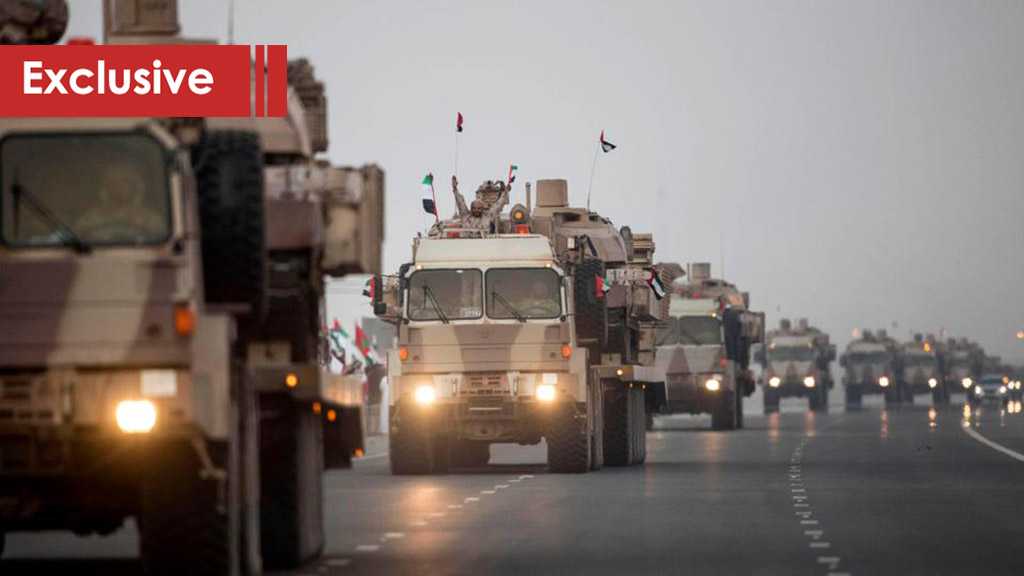
The Reasons Behind the Emirati Withdrawal from the Yemeni Coast

 19 11, 2021

The Reasons Behind the Emirati Withdrawal from the Yemeni Coast

By Hussein Kourani

Beirut – It seems that the field map is becoming clear in the governorates of northern Yemen. With the approaching fall of the strategic city of Marib in the hands of the Yemeni army and the popular committees, the other fronts in Hudaydah and Mokha began to fall apart, as if the Marib front has shaken the other fronts and decided the whole battle.

In a sudden turn in the course of the field, the Emirati-backed forces withdrew from the southern areas of Hudaydah that is led unilaterally by Haitham Taher in an unreasonable way with respect to the forces in Mokha city led by Tarek Saleh and backed by the United Arab Emirates [UAE] as well, which left the latter shocked, confused, and doubtful about the existence of an agreement and a prior coordination between Taher and close confidents of the fugitive president Abed Rabbu Mansour Hadi who is supported by Saudi Arabia.

Sources reported unannounced heated disagreements among the factions of the UAE-backed forces in the western coast of Yemen, in the aftermath of the sudden and wide withdrawals in Hudaydah areas, which represented a stab in the back of Saleh’s forces, leaving the armed factions affiliated with the southern transitional council shocked and confused. The sources added that the so-called “legitimacy of Hadi” is coming to an end.

The withdrawing forces, however, claimed that they have evacuated the fighting areas in Hudaydah in accordance with the Stockholm Agreement reached late 2018, which is supposed to take place in coordination and understanding with the United Nations mission; but it was not kept informed with the updates.

But other sources asserted that the Emirati forces had previously started a large-scale evacuation of its forces after receiving a series of military strikes from the Yemeni Ansarullah movement. Such strikes were based on accurate intelligence by the movement.

In addition, the Yemeni army and popular committees rushed to take control over these areas, and opened the main road that connects them with the capital Sanaa. Among these areas are the eastern and northeastern coastal city of Hudaydah, and areas to the south of the city on the outskirts of the Hudaydah International Airport, in addition to the Ad Durayhimi District, the coastal line of the “Beit Al-Fakih” District, At Tuhayta District, Al-Haima port to the south of Al-Khawkha District, areas in the Hays District and areas to the south of these two directorates of the Taizz Governorate.

On the other hand, Saudi Arabia evacuated most of its compounds in the last few weeks, especially in Al-Mahrah governorate, but a number of its troops is still at its center in Al-Ghaydah, along with a group of officers who still roam about 27 compounds where mercenaries forces of the southern separatists are present, and it has become rare to find any Emirati forces in many southern areas. 

Regarding the Marib front, the Yemeni army and the popular committees have eased their attack on the city and headed to the south, achieving a progress that surpassed what it was like before, and succeeded, for the first time since years, to return to southern areas, even though a settlement with the local tribes there. But this operation allowed them to lay siege to all the southern and eastern crossings- the southern crossings that lead to Marib, and that made the Saudis and all the southern mercenaries in need for a long trip that takes them from Hadramout to the sieged city.

Accordingly, there is only one passage left, and if the Yemeni army and popular committees decide to go for an all-out confrontation to capture the city, this passage will be closed. The problem of Saudi Arabia here is that the support it received from the US did not help. Therefore, Marib has fallen and the greater is yet to come. Was the UAE Minister of State for Foreign Affairs Anwar Gargash right when he said that “the liberation of Hudaydah is the beginning of the end of the war”?

Yemeni journalist Ali al-Darwani confirmed to Al-Ahed News that nothing is being done confidentially regarding the Emirati withdrawal from the western coast that is at least more than 50 km long, but rather a relocation in case Marib fell, which will impose new fields on Ansarullah, first of which will be this coast where Taher’s forces consider themselves to be trapped between the jaws of the pincers, for this coast’s width reaches 5 km in some areas. He added that these forces opted to withdraw to the southern areas to strengthen their influence in order to defend Bab al-Mandeb strait which is a US-“Israeli” quest, fearing its fall in the special committees hands and thus taking control over the maritime navigation.

Al-Darwani also said that in case Marib fell, 50,000 to 100,000 fighters of the Islah party backed by the UAE and its allies like al-Qaeda and Salafists will flee to the southern regions, where they have authority. This large number will enhance their resilience in defending Bab al-Mandeb which might be a priority for the Yemeni army and the committees, and even for the Saudi-backed forces in Aden and the south, which fought the Islah Party in many areas.

The Yemeni journalist concluded that the Emirati withdrawal is a purely tactic withdrawal so that Abu Dhabi maintains its interests in the south, fearing Ansarullah first, and Saudi Arabia second.

Related Videos

After the withdrawal of the Saudi coalition… the opening of Al Dune Beach in Hodeidah

MORE ON THIS TOPIC:


River to Sea Uprooted Palestinian   
The views expressed in this article are the sole responsibility of the author and do not necessarily reflect those of the Blog!

Friday, 19 November 2021

Yemen to Saudi Arabia: Await “Serious Consequences” for Your Major Escalation

 Nov 19, 2021

Yemen to Saudi Arabia: Await “Serious Consequences” for Your Major Escalation

By Staff, Agencies

Yemen has warned Saudi Arabia of “serious consequences” following major escalation of deadly onslaught against Yemeni provinces, saying Riyadh and its allies conducted 65 airstrikes in the past 24 hours.

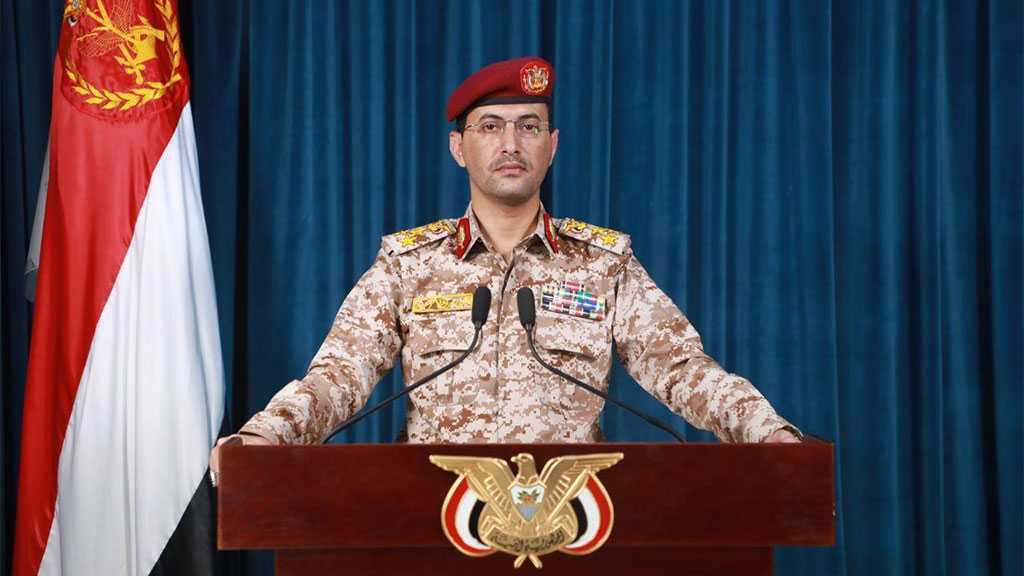
“In a major escalation, the forces of the Saudi-American aggression have launched more than 65 air raids over the past 24 hours across a number of governorates of the Republic,” spokesman of the Armed Forces Brigadier General Yahya Saree wrote in a tweet on Thursday night.

“This escalation will have serious consequences for the forces of aggression, they must bear the consequences,” he added.

The remarks came after the Saudi state TV reported that the Riyadh-led military campaign against Yemen had launched airstrikes on four provinces in Yemen.

Early on Thursday, Saudi Arabia conducted a massive operation against Sanaa, Dhamar, Saada, and al-Jawf provinces in response to what it called threats of drone and ballistic missile raids, according to the report.

The kingdom earlier said that it had destroyed an explosive-laden drone targeting the kingdom’s Abha international airport on Wednesday.

On Thursday, the Yemeni media reported that at least three civilians were injured by Saudi raids in Saada province, north of Yemen.                     

The Saudi army fire targeted the border district of Munabeh, which seriously wounded three citizens, a security source told Yemen Press Agency [YPA].

The attack came a day after the Saudi army’s raids left five civilians wounded, including an African immigrant, in the border districts of Munabeh and Baqim in Saada province.

Saudi warplanes also attacked the capital Sanaa, Taizz, Marib, and Hudaydah provinces on Thursday.

In Dhamar province, it launched a raid targeting a livestock farm in Mayfa’a Ans district, killing more than 200 sheep.

Enjoying the backing of key Western powers, Saudi Arabia has been leading the war on Yemen since March 2015 to reinstall the former Riyadh-backed regime of Abd Rabbuh Mansur Hadi.

However, Riyadh has failed to achieve any of its goals six years after launching the war and blockade against Yemen, leaving hundreds of thousands of Yemenis dead and spreading famine and infectious diseases there.

In recent months, Saudi Arabia has ramped up its attacks against densely-populated areas across Yemen.

Observers say the rise in attacks comes due to major advances made by the Yemeni forces in Marib province and other key areas that are being liberated from the control of Saudi mercenaries.

The kingdom is also being targeted by the Yemeni army and its allied popular forces continuously, with the Sanaa government saying that it will keep hitting targets deep inside Saudi Arabia as long as the war and siege continue.

Throughout the course of the war, the United States has supported and armed Saudi Arabia.

Despite his February promise to end “all American support for offensive operations in the war in Yemen, including relevant arms sales,” US President Joe Biden has recently approved $650 million worth of weapons sales to Saudi Arabia.


Related Videos


MORE ON THIS TOPIC:


River to Sea Uprooted Palestinian   
The views expressed in this article are the sole responsibility of the author and do not necessarily reflect those of the Blog!