Showing posts with label South Lebanon. Show all posts

Friday, 3 September 2021

As ‘Israelis’ Watch Afghanistan, they Remember Lebanon

 September 2, 2021

As ‘Israelis’ Watch Afghanistan, they Remember Lebanon

By Staff, New Lines

In a commentary following the humiliating US defeat and withdrawal from Afghanistan, Neri Zilber wrote for New Lines that senior ‘Israeli’ military officers have looked on at the chaotic and speedy events with a glimmer of recognition.

“Those now leading the ‘Israeli’ military came of age as young soldiers and junior officers during the Zionist entity’s own ill-fated foreign expedition in southern Lebanon during the 1980s and 1990s: A bloody, inconclusive guerrilla war — “‘Israel’s’ Vietnam” it came to be known — that culminated in an equally shambolic withdrawal in May 2000, after two decades of fighting” said Zilber.

While ‘Israel’ isn’t the US, and Lebanon isn’t Afghanistan, the common themes that run through both sets of wars are jarring, especially in the way a Western democracy tries to end a military campaign and how it manages [or not] the fate of local allies who fought alongside it.

“‘Israel’ left Lebanon with its tail between its legs,” Brig. Gen. Eli Amitai, one of the last Zionist commanders in southern Lebanon, told the author. “This wasn’t a withdrawal — it was a house of cards, like dominoes falling.”

The Zionist occupiers started their misadventure in Lebanon. Later on, Hezbollah began firing rockets into northern ‘Israeli’-occupied territories, causing fatalities among Zionist occupiers places in the so-called Security Zone at some two dozen a year. Increasingly, the impression inside the Zionist community was that this was a campaign with no end and with no discernible objective.

The withdrawal started becoming popular and the political tide was shifting.

By early 2000 Hezbollah increased its resistance operations on the Zionist military inside Lebanon.

In the ensuing weeks, the Zionist military began thinning the number of its forces inside the so-called ‘Security Zone’ and handing off outposts to its militia in Lebanon, the so-called ‘South Lebanon Army’ [SLA].

As resistance operations stepped up, then Zionist Prime Minister Ehud Barak was left with no choice: He ordered the military to move up the withdrawal, starting immediately. The last of the Zionist military’s positions was blown up, and soldiers evacuated May 23-24.

Closing the gate behind him, the last ‘Israeli’ soldier to leave Lebanon was the Zionist commander for the ‘Security Zone’, Benny Gantz, the ‘Israeli’ entity’s current war minister. A 20-year scheme of war and occupation was undone in four days.

The question remains, however, whether a dramatically “better” way could have been found. The real lesson of the Zionist regime’s experience in Lebanon is likely that the decision itself to withdraw unleashes its own dynamics.

The hasty withdrawal [“with its tail between its legs”] from Lebanon emboldened Hezbollah and decreased ‘Israeli’ deterrence vis-à-vis its enemies.

Meanwhile, watching events unfold in Kabul over the past two weeks, Zionist officials are less concerned about what it says about the US commitment to the Zionist entity and other close allies. “I’m not sure it’ll have a major impact on us directly and on how the US does things here,” one senior ‘Israeli’ government official told the author when queried regarding Afghanistan. Yet there is concern in some ‘Israeli’ quarters that a similar dynamic will play out among America’s enemies as happened after the Lebanon withdrawal.

“Everyone is looking at these pictures,” a senior IDF official told me.

As Tel Aviv found out the hard way, even after you rightfully end a war, the war never really


River to Sea Uprooted Palestinian   
The views expressed in this article are the sole responsibility of the author and do not necessarily reflect those of the Blog!

Saturday, 21 August 2021

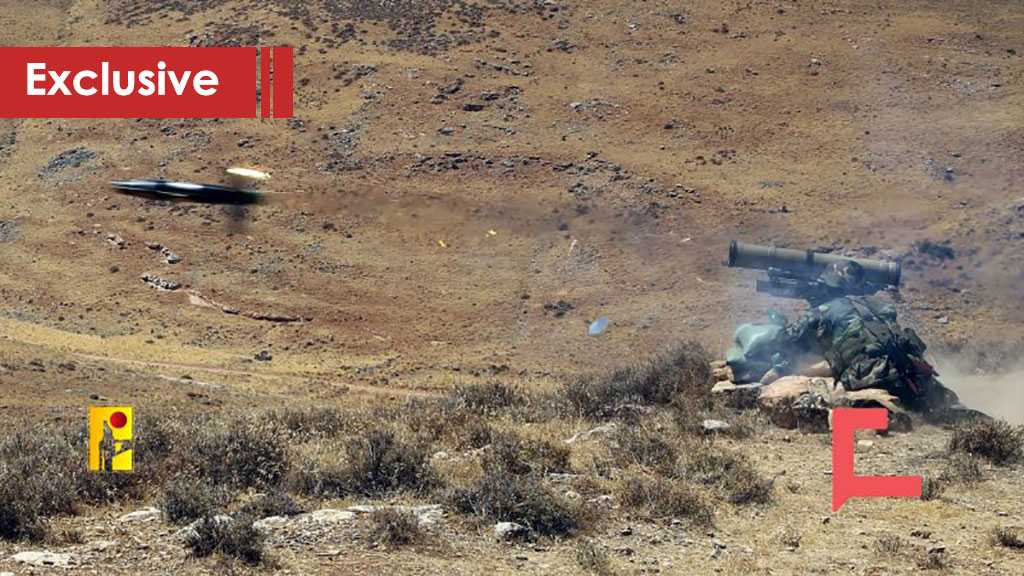
Anti-Tank Weapons: Hezbollah Merkava Hunters Will Be Watching For It in the Next War

  Source

Anti-Tank Weapons: Hezbollah Merkava Hunters Will Be Watching For It in the Next War

Al-Ahed Exclusive

A report titled “Hezbollah’s Creative Tactical Use of Anti-Tank Weaponry” by the “Jamestown Institute for Security Studies and Counter-Terrorism Affairs” concluded that “among the many aspects to be investigated is the vulnerability of ‘Israel’s’ powerful armored corps to small, hand-held, wire-guided anti-tank weapons.”

It further stated that “Hezbollah’s innovative use of anti-tank missiles was the cause of most ‘Israeli’ casualties and has given the small but powerful weapons a new importance in battlefield tactics.”

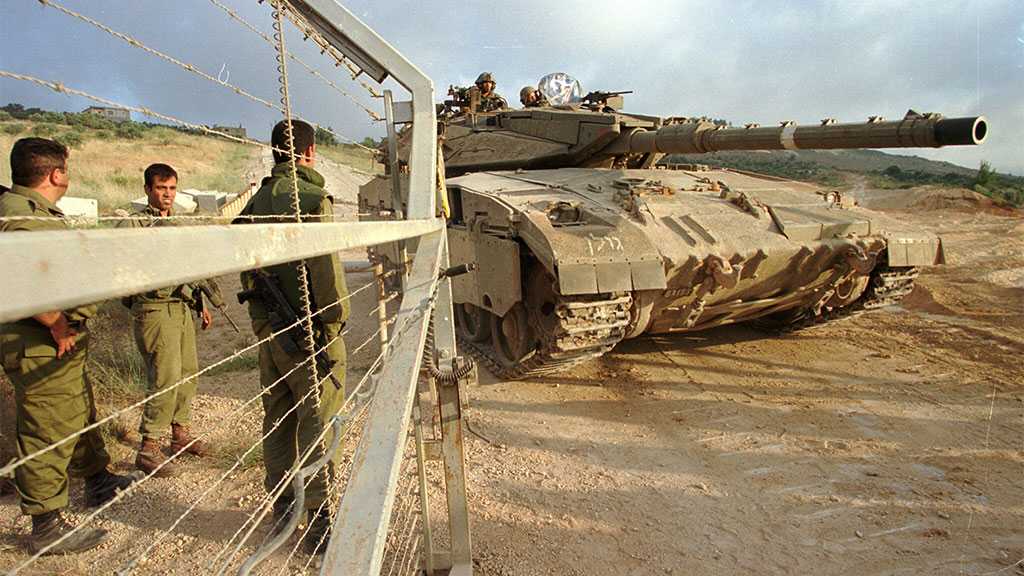
The Merkava, or God’s Chariot, as the “Israelis” call it turned into the gates of hell in July 2006 that were opened by the Islamic Resistance’s anti-tank units.

“In the ‘Israeli’ consciousness, the Merkava tank cannot be defeated by any weapon in the Arab world,” an officer in the Islamic Resistance’s anti-tank unit explains to Al-Ahed News.

In a physical or material comparison, during the occupation, there was no weapon in the Arab armies capable, with technical qualities, of piercing the Merkava tank. For example, Egypt only had Malyutka and HOT, and Syria only had Fagot and Malyutka. We saw the Merkava for the first time on Lebanese soil in 1982. It belonged to the first generation.

*The Merkava is the obsession of the southerners

From the eighties until the nineties, the Merkava played an essential role in protecting enemy soldiers and strengthening their positions in southern Lebanon; the Lahd site, which was two meters high during the first days of the occupation, is now 12 meters high. In a short period of time, the enemy had developed all of its defense systems along the border, then the Merkava tank came to protect this deployment and was able to turn into an obsession and a source of fear and anxiety even for civilians in the south.

* Alaa Bosnia leaves his mark in the first Merkava ambush

The officer in the anti-tank unit recalls when the first Merkava tank was destroyed by the resistance.

“The Merkava tank became an obsession even for some Palestinian resistance factions at that time, and we were faced with a big question: What should we do? We did not have enough knowledge or experience. We made the most of our capabilities and were able to destroy a number of Merkava tanks. The first destruction operation was in an ambush prepared by the resistance in the heart of Beit Yahoun, and the martyrs Alaa, Malak, and Ali Tohme were at a distance of 15 meters from the Merkava tank. The ambush was in one place and the tank in another. A force was supposed to attack the tank and capture it, while another force isolated it. But the roles were reversed because the two tanks passed in a different order, then the men approached the tanks and clashed. Alaa Bosnia and martyr Salah Ghandour, aka Malak, confronted the first tank.”

With a passionate smile, the officer says: “The two martyrs, Salah Ghandour [Malak] and Ali Tohme (Siraj) threw a B7 shell at the tank. At that time, Alaa Bosnia was attacking the tank, but with what weapon? With an M16. The tank attacked him, and he hid by staying low to the ground. He remained in this state for 15 minutes until the tank disappeared. His colleague called out saying: ‘The ground swallowed the tank.’ Hajj’s colleague, who said the phrase with a smile, patted Hajj Alaa on the shoulder, advising him to get some sleep [he had not slept for three days prior to the ambush], only to find out later that the tank while retreating was not swallowed by the ground but fell into Beit Yahon’s pond, and three Zionist soldiers were killed.”

* To the Islamic Republic: The Merkava is the target

The Islamic Resistance was decisive in its pursuit of a solution for facing the Merkava. The Islamic Republic was the compass. There, the resistance fighters trained with the Malyutka, the TOW, and other weapons. In 1992, the resistance had one goal – to break the Merkava tank after the enemy used it as a means to prevent resistance operations. For more than a year, “Israeli” military targets were in the crosshairs of the resistance fighters, but a decision was made to only target the Merkava.

The officer says, “In one year, the point of weakness turned into strength, and the Malyutka had a major role in securing the mujahideen during their operations and providing them freedom of action along the border strip, and that was the first headlines of victory against the Merkava tank.”

Recalling the statements of the Islamic Resistance at that time, it turns out that the first Merkava was destroyed by the fighters with a Malyutka on the Talloussa road on March 2, 1993.

The statement read:

“The Islamic Resistance targeted a mechanized enemy patrol on the Markaba-Talloussa highway, which led to the destruction of a Merkava tank and its complete burning, killing and wounding everyone on board.”

A Zionist military spokesperson admitted the operation and kept the losses discrete. However, the extent of these losses became clear through the hysterical response of the enemy and its agents, which was manifested by the targeting of liberated villages adjacent to the occupied strip with artillery. At the time, a Zionist official admitted that “Hezbollah’s use of this type of weapon would constitute a real threat to our soldiers.”

*The Malyutka

The Malyutka that insulted the Merkava in the early nineties was designed in 1953, and it is a weapon that requires high craftsmanship. It is a man-portable anti-tank guided missile and is not classified as a smart weapon.

The resistance officer memorized by heart every tank and can tell you how each of them was destroyed.

“The second Merkava that was destroyed by a Malyutka was on the Deir Seryan-Alman Shumariya Road. The tank was struck while one of the brothers was filming it along with a centurion that was transporting five soldiers, all of whom were blown out.”

From here, the actual confrontation with the Merkava began, and the war of minds began. “After striking a tank in al-Salhani, the ‘Israelis’ established a committee to develop Merkava protection, and they actually started with the idea of reactive armor. Then, they established a second investigation committee to study other measures. Most of the measures taken by the enemy on the borders were measures confronting missiles to prevent them from targeting the Merkava tank. But for us, we had to defeat consciousness. We lured them in many places, and we could hear them. One soldier told the other, ‘do not show it, we are waiting for you.’ Yes, the tank became the opportunity we were waiting for, and for the ‘Israelis’ it was like a hunter in disguise who did not dare to appear.”

Not all of the mujahideen innovators in Merkava hunting had diplomas, but they had the will and intention. In 1996, the enemy began using other techniques. It kept the Merkava tank, but introduced anti-armor weapons to some posts to confront the mujahideen. As for the Merkava, the “Israelis” restricted its use to nighttime because the resistance’s capabilities were limited at night in this field. What about hunting Merkava at night?

The officer in the anti-armor unit answers, “We had no doubt that the first Merkava tank we targeted at night was targeted by God; the means were very, very, very simple –  night vision goggles, and navigating by the stars. We depended on stars due to the lack of a means of determining directions. This is how we struck the first Merkava tank at night in Al-Dabshe, with a primitive fist and a night missile. After striking the first tank at 3:00 am, the ‘Israelis’ went crazy. At that point, we accomplished the goal of breaking the Merkava, and we moved on to the next goal, which was to kill the soldiers. We no longer shot at the tank; we targeted the patrols on the border.”

* Spirituality while facing the Merkava

According to the officer, the Merkava tank faced “the spirituality and creativity of the young men, we even touched the Merkava physically. The level of courage that our men in the resistance possessed enabled us to do so. Bilal Adshit and Alaa Bosnia were hiding in one of the operations in Al-Dabshe after they were spotted by the Merkava. They walked right beside it. The mujahideen of the Islamic Resistance managed to break the narrative that the Merkava tank is the protector. In many places, we used to see them leave the tank after a missile fell close to it. They left it and fled.”

The officer recalls a scene from Al-Khiam in July 2006: “In Al-Khiam, one of the tanks got stuck in a trench while fleeing after four others were hit. The crew jumped from it to another and fled. They did not dare to return to pull the tank until the cease-fire.”

In the third stage of development, the enemy started making technical modifications to the Merkava tank, introducing the reactive armor. The Islamic Resistance officer explains that “the reactive armor consists of explosive plates that explode when exposed to a missile, preventing penetration. Then, they made two heads for them, so what did we do? We confronted the reactive armor by either repeating the shooting at the same point or using more than one weapon at the same point, and this created a big problem for the enemy. All this was with simple weapons. Liberation came in 2000 and the Merkava came out defeated, without any confusion or discussion. The enemy brought with it the Merkava tank to protect it and to fight, but it was like a coffin for the enemy’s soldiers. After the liberation, we started planning for a broader war.”

* What about the Merkava in 2006?

According to the officer, “the enemy entered 2006 and the Merkava was the tip of the spear. I can confidently say that in 2006 the enemy reached the conclusion for the first time that it would not be relying on the Merkava in the next war. As for us, it gave us the conviction that it is the easiest weapon to deal with in the war if you developed your methods.”

The Merkava 401, or the fourth generation, was a defeated scrap of metal in 2006 and until today, the officer says, “I am responsible for my words. The enemy did not change anything in them. Every development the enemy makes, we read it as a weakness because all this ability is associated with firepower, and the soldier is hiding under it. It means nothing. This is proof that you are defeated. When you develop the missiles, planes, the radar, all this is beautiful, but in practical terms, the soldier will be the one fighting on the ground. The bottom line is the Merkava was marketed for a specific purpose, so Hezbollah struck it and canceled this purpose. Thus, the enemy must look for other options.”

* Trophy: A fake armor

Trophy is a positive defense system. The officer asks, “Why are the ‘Israelis’ developing and reconsidering the use of tanks? Is it because they are no longer valid in confronting Hezbollah? What did the enemy say in 2006? Listen carefully. In 2006, the enemy said that the use of tanks was not up to the organizers. I want the enemy to hear my words well. They said they have the best combat doctrine for the armored corps, but the soldiers and officers did not use this doctrine in the scope of the battle. So, I ask, will these soldiers use this doctrine in the next war? You planted in the minds of your soldiers that protection is by means of Trophy and its derivatives. You, the officer, when you rely on such technology and then it malfunctions on the battlefield, what will you tell your soldiers?”

“We do not count on weapons but on the mujahideen who long for this moment. They have built their spirituality on this and feel that they have shortcomings when they read Ziyarat Ashura. To them, the real place to show these shortcomings is in the battlefield. This is not just morale. This is how we are,” the officer vows with confidence.

The tank massacre that humiliated the “Israeli” army was only some of what the officer wanted to inflict on the enemy. Here, he recalls what he had previously repeated before the Secretary-General of Hezbollah His Eminence Sayyed Hassan Nasrallah.

“The 2006 war was an irreplaceable golden opportunity. I said it to His Eminence the Secretary-General. It was an irreplaceable opportunity. It was ‘haram’ for a tank to leave the south. We were facing 400 tanks, and all of them should have been destroyed. But we fought the enemy in a hurry. We deployed the Kornet 7 days after the war started. If there had been a prior deployment, we would have hit all 400 tanks.”

“In 2006, our surprise was not that the Kornet destroyed the Merkava tank. Rather, the surprise was that the Kornet destroyed the tank before it entered the range of engagement, that is, before it reached the point of danger. The surprise was in the range, and to this day, the Kornet is still a worrying weapon for the ‘Israeli’ army. And all the measures taken by the enemy are not adequate measures.”

* Bilal Adchit and his comrades

When talking about the mujahideen, their high spirits, and their firm determination, the officer elaborates on the explanation and description: “Some of the brothers who struck the Merkava in the 2006 war were among the Taabia’a. They targeted the tank and when the ‘Israelis’ tried to pull it out, they’d fire at it again. I remember them all. I remember how many missiles we fired at the enemy in 2006, and I remember every brother who fired at them, how many tanks were hit, and who fired where. I think that this is the least I can do.”

Speaking of the Merkava, it’s necessary to talk about Bilal Adchit, whose name is synonyms with the Merkava. The officer says, “Bilal is a rare case. He loved to work and did not leave until he finished what he was assigned to do. He did not know failure and could not return disappointed. By ‘Israeli’ confession, he killed 48 ‘Israeli’ soldiers. I wrote them down in every location – Bilal in Al-Aziya, Bilal in Al-Qalaa, Bilal in Al-Dabshe, Bilal in Sujud, Bilal in Al-Rayhan, etc.”

In Wadi al-Hujeir, there were feats of Bilal the officer would not forget.

“In Wadi al-Hujeir, Bilal fired the first time and the ‘Israelis’ fired at the source of the shooting. Then, Bilal moved to another place, and thus he kept toying with the ‘Israelis’ from one area to another until the ‘Israelis’ decided to limit their movement to nighttime. But Bilal was also on the lookout, like a ghost. Bilal found a creative solution, which he did not learn in workshops nor in books, nor is it found in all the regular foundations. Bilal created a fire (the fire at night disrupts heat monitoring), and he started from the side of the fire. The ‘Israelis’ did not detect it. This is creativity!”

By killing Bilal, the enemy was not able to achieve this strength. According to the officer, “Bilal left behind him many Bilals, for he was one of the most prominent. Apart from him, there were important creativities from the brothers in 2006. The brother that hit the tanks in Al-Khiam was 50 years old and had undergone open-heart surgery. He carried the launcher to a distance of about 500 to 700 meters. He put it on the ground, rested a little, then began to ram the tanks. Likewise, martyr Rabi’ Qasir, the brother of martyr Ahmed Qasir, was another symbol of courage.”

* Priority for the initiative

The officer had a great role in the war, in distribution and in leadership, and in his accurate knowledge of geography.

“In 2006, one of the brothers called me to say that they heard the ‘Israeli’ soldiers through wiretaps, saying that they would get out of this place, so I laughed. He asked me, ‘why are you laughing?’ I said, because I have been waiting for them there for seven days. We’ve been reading the ‘Israeli’ mind.”

Likewise, for individuals, the advantage was not based on age or experience, but rather on initiative.

“One of the martyrs on the Ghandouriyeh axis continued to fire at tanks until it reached his proximity. When it arrived, he sat on the attic and detonated the mine as soon as the ‘Israelis’ entered the house.”

* The capture operation

During the July 2006 war, the Anti-Armor unit had a hidden role in the success of the capture operation in Khallet Warde.

“In capturing operations, we plant a bomb and stop the vehicles. But in the operation in Khallet Warde, the strip was placed along the road where the ‘Israelis’ crossed inside the line. So, the anti-armor unit was asked to stop the vehicles. The unit sent Bilal to investigate, and the idea was … when the brothers asked for the Humvees to be stopped, we resorted to an innovative idea. The shot usually hits or misses, so does the shell. So how would we ensure that we hit the killing area? We converted every two cannons into one, and every 2 B7s into one B7, and we used two B7s in the face of one Humvee. Thus, we fired six shots, two of which hit the target during the capture operation, which stopped the Hummer. Bilal and his comrades who fought in the war took part in the capture operation.”

* In the next war: We are assured and the enemy is definitely defeated

The officer tells Al-Ahed, “Technically, it is clear that when the weapon enters any battle, it is used in the next battle based on the previous one. And this is what happened in 2006. In the next battle, the enemy considers that this weapon is the main threat, and what the enemy has done so far is that it created a positive defense system, which is an intelligent system, a radar system that senses the missile. When the missile reaches a close range to the tank, a charge explodes and the effort of the missile is dispersed. This system, for me, will be fragile, and the proof of that is that not everything that works in a clean environment can work in the field (in battle). The bottom line is that we are reassured.”

“I have confidence that the enemy is defeated because with this technology, it will rely on the tank entering the battlefield. Their dependence is on technical means, and therefore the lessons learned by the enemy in 2006 were not enough. What happened in 2006 was a victory against armors, according to the testimony of the Secretary-General. However, this is not a certificate of good conduct, but rather a religious responsibility that entails greater responsibilities on us,” the officer says with confidence.

River to Sea Uprooted Palestinian   
The views expressed in this article are the sole responsibility of the author and do not necessarily reflect those of the Blog!

Sunday, 15 August 2021

Sheikh Naim Qassem: Hezbollah Does Not Seek War with “Israel”, But Won’t Tolerate Any Aggression

August 14 2021

Sheikh Naim Qassem: Hezbollah Does Not Seek War with “Israel”, But Won’t Tolerate Any Aggression

By Staff, Agencies

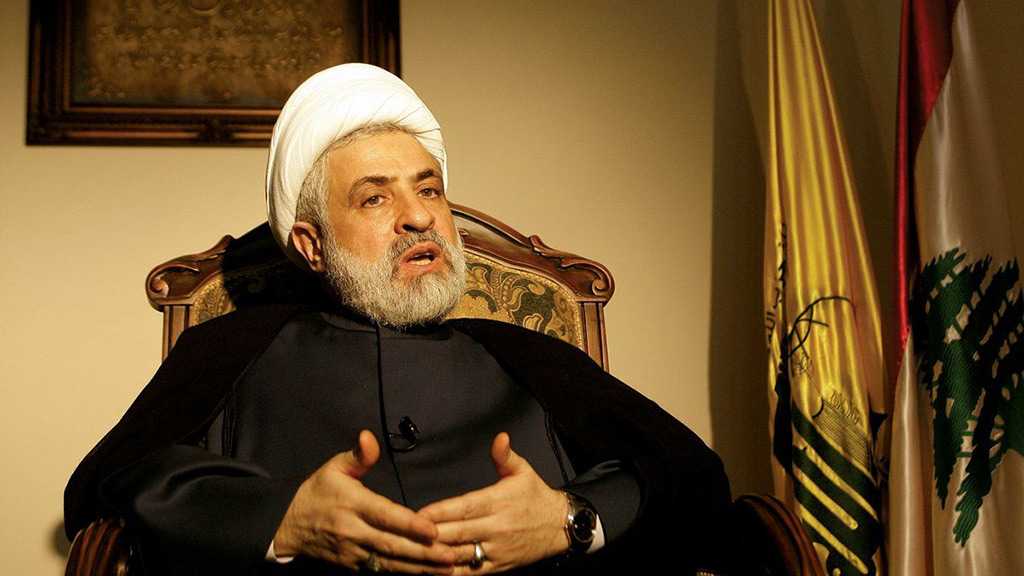
Hezbollah Deputy Secretary General His Eminence Sheikh Naim Qassem says the Lebanese resistance movement does not seek a military confrontation with the Tel Aviv regime, but would not stand any act of aggression by the “Israeli” military on Lebanon’s soil.

“Lebanese people are confident that Hezbollah will always be on their side, and the movement will utilize all means at its disposal to assist the public,” Sheikh Qassem said in an interview with Lebanon’s Arabic-language al-Nour radio station on Friday.

He described Hezbollah’s recent retaliation against “Israeli” shelling and airstrikes on southern Lebanon with a rocket barrage as a well-developed plan anchored in precise instructions.

Sheikh Qassem highlighted that the Lebanese resistance movement will never use people as human shields or for political purposes, and pays meticulous attention whenever it wants to take a decision. 

Hezbollah announced in a statement that its units hit “open fields” near “Israeli” positions at 11:15 a.m. local time [0815 GMT] on August 6, using “dozens” of 122mm caliber rockets.

“We wanted to tell the enemy … that any airstrike by the “Israeli” air force on Lebanon will inevitably draw a response, though in a suitable and proportionate way, because we want to serve the purpose of protecting our country,” he added.

Elsewhere in his remarks, Sheikh Qassem described attempts by certain parties to establish the United States’ and the “Israeli” entity’s dominance over Lebanon as the root cause of the Arab nation’s worsening crisis, emphasizing that Hezbollah will stand against such bids.

“Ever since Hezbollah was established, the resistance movement has worked for [Lebanon’s] social, moral and political solidarity. It firmly believes that the group should confront ‘Israel’ militarily, and the results of such resilience should be tapped to cement social and political solidarity.

“People’s interest in Hezbollah stems from their trust in the resistance movement, and the fact that the group will never leave them in a difficult situation without any help. We are doing everything we can to help them. However, we do not have enough resources to solve the current crisis. Certain groups are trying to leave all the blame at our door and don’t want to address the government’s incompetence,” the senior Hezbollah official said.

Last week, Hezbollah Secretary-General His Eminence Sayyed Hassan Nasrallah said the Lebanese resistance movement does not pursue war, but is not afraid of one either since it is certain about its chances of victory.

Sayyed Nasrallah described the August 6 retaliation as only a fraction of what Hezbollah is capable of carrying out, saying the group has a reliable array of defensive choices at its disposal in case of a conflict.

“Our response was linked to the “Israeli” strikes that occurred in south Lebanon for the first time in 15 years,” His Eminence said on Saturday in a televised speech ahead of the anniversary of the victory over the “Israeli” entity in the 2006 war.

Related


River to Sea Uprooted Palestinian   
The views expressed in this article are the sole responsibility of the author and do not necessarily reflect those of the Blog!

Tuesday, 25 May 2021

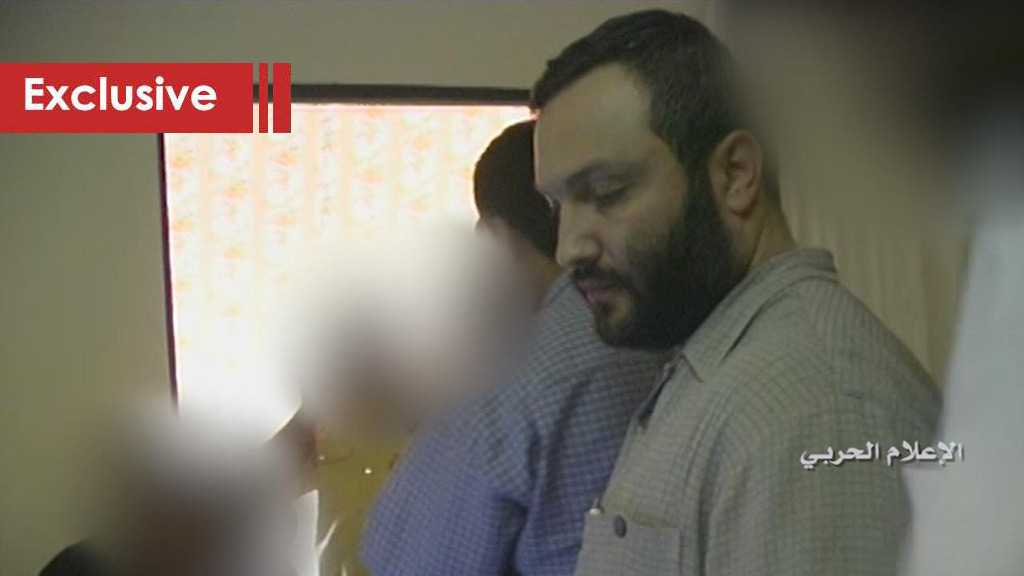
The Humiliation of ’Israel’ in the Eyes of Imad Mughniyeh

 Source

The Humiliation of ’Israel’ in the Eyes of Imad Mughniyeh

By Latifa Al-Husseiny

Beirut – You never run out of stories about the time of liberation. It is like a spring of fresh water on a high mountain pouring on the ground. Twenty full years of Imad Mughniyeh and his comrades in jihad. There was planning, implementation, and then achieving an Arab victory that was only difficult in the dictionary of the weak.

It is May 18, 2000. The beginning of the “Israeli” withdrawal from southern Lebanon begins to unfold. The resistance and its mujahideen are prepared and aware of what is going on. Its military leadership and its cadres are meeting in a village.

The goal is to continuously assess the situation to develop hypothetical scenarios in the event of any major retreat by the enemy. Hajj Imad is heading the meeting. He, along with his cohorts of resistance officers, are providing estimates while examining hypotheticals and sny potential plans the Zionists might adopt. Before those in attendance, he repeats one chorus: the “Israeli” enemy must leave humiliated and under fire.

For this purpose, numerous meetings with the command of military operations and mobilization forces were held. Various sources of fire including the artillery and launchers were stationed in the south. Reconnaissance of the enemy’s movements and soldiers was carried out a week before the liberation of the south, especially in light of the evacuations that were taking place along some of the posts. All this was overseen by Hajj Imad personally.

The enemy’s retreat rolled on. Qantara, Al-Qoussair, Deir Siriane, and Tayibe were liberated from the occupation under the strikes of the Mujahideen, while the locals headed to the occupied gate and removed it.

The resistance leadership drew up alternative plans on how to pounce the Lahad army at the time. It also deployed military police to the southern border villages to prevent any disturbances during the “Israeli” escape.

Indeed, some Lahad forces surrendered in Adaisseh, while others fled under fire from the resistance. Bint Jbeil and the towns in that district were liberated. The liberation rumbled from Tayibe to Hula to Beit Yahoun until the miniature security belt drawn up by the then “Israeli” War Minister Ehud Barak to protect the northern settlements collapsed.

A leader in the Islamic Resistance tells al-Ahed about those days.

“We stayed in the south, watching closely how the “Israelis” fled. Hajj Imad managed the military missions and distributed tasks. When the operations began, he was at the helm of those checking the situation. He went to the Palestinian border without escort.”

On May 23 and May 24, “Israeli” soldiers continued their withdrawal. From Ainatha to Kfar Tibnit to the Khiam detention center, the Zionists withdrew defeated. Hajj Imad was waiting, while the resistance men spread around and targeted them.

On the final day of throwing out the occupiers, the battle ended at the Fatima Gate at the border. Through it, the last “Israeli” soldier fled. That moment was historic.

While Benny Gantz, the commander of the so-called Lebanon Liaison Unit in the “Israeli” army, closed the gate and put the key under one of the rocks, Hajj Imad was a few meters away looking at how the “Israelis” were humiliated.

He stood in front of the Fatima Gate, while the resistance apparatus deployed and secured all the villages. Inhaling the breath of freedom and the fragrance of Palestine, he did not care about the people who had been trailing him for years. Those people were fleeing broken, looking for a refuge to hide their failures and surrender. On the other hand, Hajj Imad was defying everything to take a look at the Galilee and beyond. He had accomplished the first step of the inevitable liberation.

Six years after the 2000 liberation of the south, the July War came. Hajj Imad led 33 days of confrontations with the enemy. He thwarted the Zionists’ promise. It was another divine victory on the road to Palestine. Angered by the defeat, “Israel” decided to take revenge. For this purpose, it utilized its tools and agents. The meeting was in Syria.

Away from the commotion of the world, a group of leaders of the resistance axis gathered in one of the party’s centers in the Kafr Souseh area in Damascus.

On the evening of February 12, 2008, a group of leaders of the Revolutionary Guards headed by the commander of the Quds Force, Hajj Qassem Soleimani, met leaders of the Islamic Resistance, headed by Hajj Imad Mughniyeh.

It was a military summit that lasted for about an hour. One of the leaders who attended the meeting explained that the main reason for the meeting was to conduct an evaluation of the general situation at the level of the resistance factions. However, the special relationship between Hajj Imad and Hajj Qassem set the tone of the meeting.

There was laughter and smiles as if they felt that this would be a farewell. Hajj Qassem told our interlocutor, “What Hajj Imad says, I implement. I am a soldier of Hajj Imad Mughniyeh.” When the latter heard that sentence, he quickly said, “No, we are brothers.”

The evaluation session was over, and it was time to depart. Hajj Qassem Soleimani stood at the elevator and embraced Hajj Imad with great affection. That moment was engraved in the memory of the people present. It was proof that the relationship between the two men surpassed the cause. It was a relationship of spirit and sacrifice similar to the relationship between al-Hussayn and al-Abbas (PBUT). They shared redemption, responsibility, and a high jihadist spirit.

Five minutes later, Hajj Imad left to carry out an important mission. When he got to his car, he was martyred.

Hajj Qassem never knew Hajj Imad’s destination. He heard a loud explosion and was informed of the news. He went back to find his companion dead.

What was the nature of the meeting they agreed on minutes earlier? It was a painful separation. However, 12 years later that conclusion was repeated with Hajj Qassem’s spirit rising to the supreme kingdom. Both men’s blood was spilt on the road to Palestine for the sake of Al-Quds.

River to Sea Uprooted Palestinian   
The views expressed in this article are the sole responsibility of the author and do not necessarily reflect those of the Blog!

Sunday, 28 March 2021

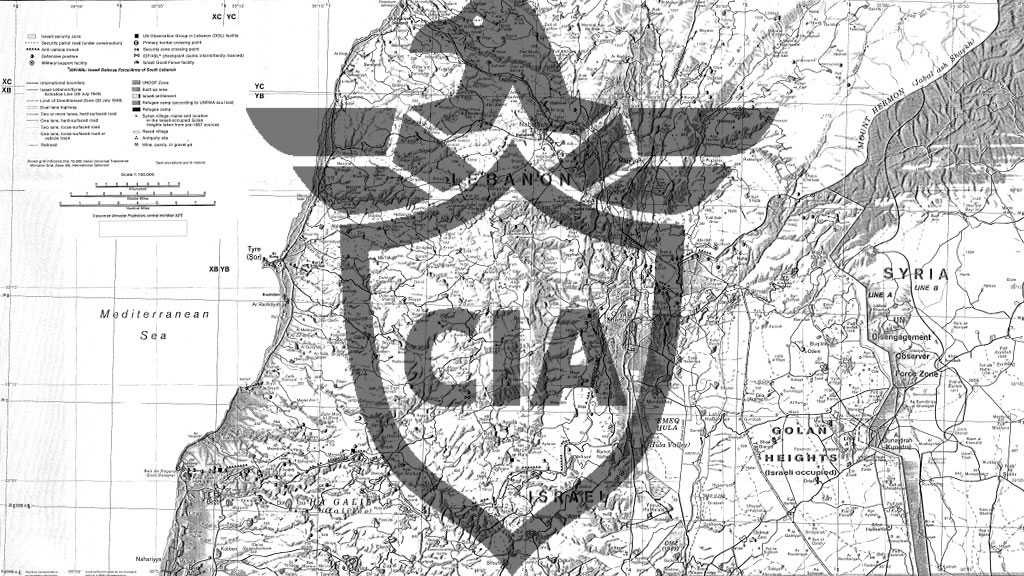
In Depth of CIA’s Report on American-‘Israeli’ Geographic Perspective on South Lebanon Border في العمق: تقرير وكالة المخابرات المركزية حول المنظور الجغرافي الأمريكي “الإسرائيلي” على حدود جنوب لبنان

 In Depth of CIA’s Report on American-‘Israeli’ Geographic Perspective on South Lebanon Border


CIA’s Report made in January 1986, and became available to be published in 2011.


By Staff


The Central Intelligence Agency’s [CIA] report on the decision regarding the occupied southern Lebanon border was made in January 1986, and became available to be published in 2011.

Access to many pages of the recently circulated sanitized copy of the report was denied from the source, as the CIA still considers ‘sensitive.’

‘Israel’s’ ‘Security Zone’, a buffer that runs from the coast to the Golan Heights and extends 5 to 20 kilometers into Lebanon, is the subject of this research paper. The entire explanation circulates around it.

Excerpt from the report as shown as the following:

The ‘security zone’ covers about 800 square kilometers, nearly half of Lebanon south of Sidon. Long neglected by Lebanon’s central government, the south’s poor agrarian economy has been further disrupted by the 1982 invasion and its aftermath. About 1 10,000 of the approximately 250,000 residents in the south live in the ‘security zone’, according to ‘Israeli’ press reporting. Nearly half of the 1 10,000 are Shiite, although there are areas of although there are areas of Christian, Sunni, and Druze concentrations, according to the CIA paper.

The report, which states that Palestinians were the main target of the ‘Israeli’ 1978 and 1982 invasions of Lebanon, explains how the ‘Israeli’ occupation forces began construction activities within its much-needed ‘security zone’ almost immediately following its 1978 invasion.

Since 1982, the predominant changes have involved improving and building new access and border patrol roads, adding and repositioning fixed ‘defensive’ and observation positions, and building new military support facilities. At the southern edge of the security zone, along the 1949 Armistice Demarcation Line, the ‘Israelis’ are building up their border security strip, which includes concertina wire, a security fence, a dragged strip—bare earth groomed to reveal the tracks of intruders—and a patrol road. In several places the border security strip crosses into Lebanese territory to take advantage of favorable terrain or to create a buffer near ‘Israeli’ settlements.

“Tel Aviv is aware that the ‘Israeli’ occupation further radicalizes this religiously diverse area [Lebanon] and contributes to its chronic instability,” the report admits.

If ‘Israel’ eventually makes a “final” withdrawal, the ‘defensive’ role of the border security strip will become more important, the report adds. “Although the threat of retaliation for any cross-border ‘attacks’ and possible assurances from Lebanese leaders and Syria would be important considerations in ‘Israel’s’ post withdrawal ‘defensive’ policy.”

The present ‘Israeli’-created ‘security zone’ in southern Lebanon owes its existence to ‘Israel’s’ desire for a secure northern border and has evolved from the security arrangements ‘Israel’ established following its 1978 invasion of Lebanon.

Today, an assortment of groups willing to engage ‘Israel’ in limited military encounters operate in and through southern Lebanon…To reach the ‘Israeli’ border, or to maximize their prospects of hitting ‘Israel’ with rockets, these groups must infiltrate through the United Nations Interim Force in Lebanon [UNIFIL] area of operation—not a difficult task in the ‘Israeli’ view—and the ‘Israeli’ security zone.

This research paper analyzes the transportation network, water resources, and population makeup in the security zone and the changes that have occurred in the local economy and are occurring in the ‘Israeli’ infrastructure within the security zone and along the border.

Translation

في العمق: تقرير وكالة المخابرات المركزية حول المنظور الجغرافي الأمريكي “الإسرائيلي” على حدود جنوب لبنان


تقرير وكالة الاستخبارات المركزية حول القرار المتعلق بالحدود المحتلة في جنوب لبنان تم في يناير/كانون الثاني 1986،  وأصبح متاحاً للنشر في عام 2011.

وقد تم رفض الوصول إلى العديد من صفحات النسخة المطهرة من التقرير التي تم تعميمها مؤخرًا من المصدر، حيث لا تزال وكالة الاستخبارات المركزية تعتبرها “حساسة”.

“المنطقة الأمنية” الإسرائيلية، وهي منطقة عازلة تمتد من الساحل إلى مرتفعات الجولان وتمتد من 5 إلى 20 كيلومترا  في لبنان، هي موضوع هذه الورقة البحثية. التفسير بأكمله يدور حوله.

مقتطف من التقرير كما هو مبين على النحو التالي:

وتغطي “المنطقة الأمنية” حوالي 800 كيلومترمربع، أي ما يقرب من نصف مساحة لبنان جنوب صيدا. وقد تعرض الاقتصاد الزراعي الفقير في الجنوب، الذي أهمله طويلاً من قبل الحكومة المركزية اللبنانية، إلى مزيد من الاضطراب بسبب غزو عام 1982 وما تلاه. ويعيش نحو 10 آلاف شخص من سكان الجنوب البالغ عددهم نحو 250 ألف نسمة في ‘المنطقة الأمنية’، بحسب تقارير صحافية ‘إسرائيلية’. ووفقاً لورقة وكالة الاستخبارات المركزية الأميركية (سي آي إيه) فإن ما يقرب من نصف الـ 10 آلاف من الشيعة هم من الشيعة، على الرغم من وجود مناطق على الرغم من وجود مناطق تمركز مسيحية وسنية ودروزية.

ويوضح التقرير، الذي يذكر أن الفلسطينيين كانوا الهدف الرئيسي لغزو لبنان “الإسرائيلي” في عام 1978 و1982، كيف بدأت قوات الاحتلال “الإسرائيلية” أنشطة البناء داخل “المنطقة الأمنية” التي تشتد الحاجة إليها بعد غزوها عام 1978.

ومنذ عام 1982، شملت التغييرات الرئيسية تحسين وبناء طرق جديدة للوصول ودوريات الحدود، وإضافة مواقع “دفاعية” ومراقبة ثابتة وإعادة تحديد مواقعها، وبناء مرافق دعم عسكرية جديدة. على الحافة الجنوبية للمنطقة الأمنية، على طول خط الهدنة عام 1949، يقوم “الإسرائيليون” ببناء شريط أمن الحدود، الذي يشمل سلك كونسيرتينا، وسور أمني، وشريط جرّ – أرض عارية تم إعدادها للكشف عن مسارات الدخلاء – وطريق دورية. في عدة أماكن يعبر الشريط الأمني الحدودي إلى الأراضي اللبنانية للاستفادة من التضاريس المواتية  أو لإنشاء حاجز بالقرب من المستوطنات “الإسرائيلية”.

ويعترف التقرير بأن “تل أبيب تدرك أن الاحتلال الإسرائيلي يزيد من تطرف هذه المنطقة [اللبنانية] المتنوعة دينياً ويساهم في عدم استقرارها المزمن”.

ويضيف التقرير أنه إذا ما تم انسحاب “إسرائيل” “النهائي”، فإن الدور “الدفاعي” لشريط أمن الحدود سيصبح أكثر أهمية. “على الرغم من أن التهديد بالانتقام من أيهجمات عبر الحدود والتأكيدات المحتملة من القادة اللبنانيين وسوريا سيكونان اعتبارات مهمة في سياسة “إسرائيل” “الدفاعية” بعد الانسحاب”.

إن “المنطقة الأمنية” الحالية التي أنشأتها إسرائيل في جنوب لبنان تدين بوجودها لرغبة “إسرائيل” في تأمين الحدود الشمالية، وقد تطورت من الترتيبات الأمنية “الإسرائيلية” التي أنشئت في أعقاب غزوها للبنان عام 1978.

واليوم، تعمل مجموعة متنوعة من الجماعات الراغبة في الاشتباك مع “إسرائيل” في مواجهات عسكرية محدودة في جنوب لبنان وعبره… للوصول إلى الحدود “الإسرائيلية”، أو لتعظيم احتمالات ضرب “إسرائيل” بالصواريخ، يجب أن تتسلل هذه الجماعات عبر منطقة عمليات قوة الأمم المتحدة المؤقتة في لبنان ،وهي مهمة ليست صعبة في نظر “إسرائيل” والمنطقة الأمنية “الإسرائيلية”.

يحلل هذا البحث شبكة النقل والموارد المائية والتركيبة السكانية في المنطقة الأمنية والتغيرات التي حدثت في الاقتصاد المحلي، وتحدث في البنية التحتية “الإسرائيلية” داخل المنطقة الأمنية وعلى طول الحدود.


River to Sea Uprooted Palestinian   
The views expressed in this article are the sole responsibility of the author and do not necessarily reflect those of the Blog!

Monday, 1 February 2021

The role of Musa al-Sadr in shaping national identity of Lebanese Shias الصدر ودوره في تأصيل الهوية الوطنية للشيعة في لبنان

February 01, 2021

The role of Musa al-Sadr in shaping national identity of Lebanese Shias

Description: 

Lebanese university lecturer in history, Talih Kamal Hamdan, explores the role of the late Imam Musa al-Sadr in shaping a sense of national belonging and identity within the Shia sect in Lebanon, specifically during the 1960s and 1970s.

Understanding the historical formation of the national and political identity of the Shia of Lebanon is particularly relevant today, as contemporary Lebanese Shia Muslims are highly influential actors not only within Lebanon, but on the regional level as well. This is especially the case when viewed from the lens of Hezbollah, a group which considers itself an extension of the general political paradigm shaped by al-Sadr.

Source:  Al Akhbar Newspaper

Date:  September 8, 2015

(Important Note: Please help us keep producing independent translations for you by contributing as little as $1/month here )


Transcript:

Imam al-Sadr and his role in instilling a sense of national identity in Lebanese Shia

Talih Kamal Hamdan

This year marks the 37th anniversary of the disappearance of Imam Musa al-Sadr and his two companions, (an anniversary that) comes at the height of internal, regional and international conflicts; takfirism; and discrimination against sectarian and ethnic minorities in the Arab world, where Shias are the main target of Takfiri groups. The role of Shias in the Lebanese political reality is also being increasingly targeted by way of distorting their nationalist struggles, for which Imam al-Sadr laid solid foundations, and for which thousands of martyrs (of Shia origin) sacrificed their lives. (Many Shias) gave their lives (within these nationalist struggles) in order to free (their) land (from Israeli occupation), fighting (the occupation) as members of national and Islamic resistance groups successively (established) between 1975 and 2006.

The government’s neglect of the villages in the South (of Lebanon), the Beqaa, and Beirut suburbs; together with the deplorable conditions that farmers and their families lived under; and the overwhelming dominance of feudal families who had great political, economic and social influence in these areas, all these were starting points for (the establishment of) left-wing and progressive parties beginning in the mid-50s. These parties sought to fight deprivation, unilateralism of southern political representation, and the blatant denial of the rights of workers and farmers. However, these parties failed to establish social justice. Due to their fragmentation, differing frameworks and (political/ideological) poles, and their ordering of priorities that favored politics over other issues, these parties were not able transform their social standing into influence in the government, thus preventing them from turning the family structure into a national institutional structure. They chose cosmetic changes over (real) change, and social struggles with political and power-based objectives over a comprehensive social revolution. Then came the civil war in 1975 and toppled the social and national, non-sectarian movements, thus giving the upper hand to the 1943 (sectarian) formula only with new faces.

Since the mid-1960s, there had been growing social demand (for the rights of) marginalized groups, especially the Shia community who was suffering from the lack of institutions, jobs and services, and the scattering of its skilled individuals between left-wing parties and Palestinian organizations on the one hand, and opportunistic feudal leaderships on the other. As a result, unlike other Lebanese social groups, (the Shia community) lacked a specific identity.  Therefore, the objective conditions made room for another kind of leadership, (a leadership) that seeks change, and mobilizes its resources to lift (people) from fragmentation to unity, and from a feeling of deprivation to a feeling of power; (a leadership that grants) the right to participate in the government and its administrative and functional departments, (the right to) social development, and (the right to) participate in local, regional and international political decision-making of the Lebanese state. All this on the basis of both a religious identity and a unified national vision. Thereafter, Imam Musa al-Sadr’s movement emerged to call for social and political reform as a priority, on the basis of the “Lebanization” of Shia decision-making, and (the Shia sect’s) integration into the Lebanese state, whom Shias had always felt abandoned by.

Initially, the influential feudal and religious families did not have a negative reaction to the emergence of Imam al-Sadr. However, (with time) his reform movement against traditional feudalism gained strength as he gained large public support. His work was culminated in the adherence of young secular individuals to his project thanks to his undermining of the religious legitimacy granted to the feudal leaderships. (He) took advantage of the political and social situation in the South, the Beqaa and the Beirut suburbs, to begin the process of comprehensive change of the role of Shias in Lebanon.

Imam al-Sadr took the social dimension as a priority, and fought for “ending the deprivation (of basic rights) in the Beqaa and the South”. He started by confronting his opponents from the traditional feudal leaderships, notably Kamel al-Assaad, and left-wing parties, especially the Communist Party, in order to prevent them from “manipulating the Shia youth ideologically and on the basis of party-loyalties.” (1)

Even though (Imam al-Sadr) held firm to his religious foundations, yet he used religion to sharpen the sense of belonging to a national identity, and worked on establishing a social identity that – similar to other sects – combined both patriotism and the exaltation of the (Shia) sect. He replaced family loyalty with religious sectarian loyalty, thus attracting various segments (of society) who had previously adhered to the (powerful) feudal families, or adhered to the left-wing parties with their (various) slogans.  (Imam al-Sadr) also brought back the idea of ​​institutionalizing religious identity by reviving the “Al Ber wal Ehsan” Charity (جمعية البر والإحسان) founded in 1948 by Sayyed Abd al-Hussein Charafeddine in (the city of) Tyre, making it a starting point for his social service activities, and a project similar to the Amel Association (الجمعية الخيرية العاملية) in Beirut. He then established the Supreme Islamic Shia Council in Lebanon in 1969, which was a major turning point (that struck at) the core of the traditional authoritarian leadership (of Lebanese Shias). He was also able to establish educational, professional and social institutions, after they were absent for many decades because of the (Lebanese) state’s failure (to provide) services and (build) institutions in the South and the Beqaa. By raising the awareness of Shias regarding their sectarian and national identity, (Imam Musa) wanted to stress that they are citizens who have the right to consistent development, to be relieved from deprivation, and protected against Israeli attacks (2).

He built multiple relations with many national and southern actors, and showed an outstanding leadership and a strong ability to influence Lebanese elites and the Lebanese people. Therefore, Sayyed (Musa) was granted Lebanese nationality in 1963 by President Fouad Shehab, and became a permanent guest at the Lebanese symposium, which was composed of Lebanese political and intellectual elites. Therefore, Sayyed Musa was described by Michel Asmar as a “man of the coming time”. He also established relations with famous media figures, especially Ghassan Tueni. However, despite his wide network of internal and external political relations (that he established) on the basis of supporting his reform project, he tried to make sure that his political line stays as independent as possible.

(Imam al-Sadr) was known for his boldness in objecting to the excesses of the (Lebanese) state against southern citizens who were suffering daily from Israeli attacks. As such, he declared a general strike to support the people of the South, and consequently, he established the Southern Council, then the Commission for Southern Support in cooperation with Cardinal Anthony Khreish and a large group of Muslim and Christian scholars and clerics. He also confronted the Palestinian resistance, despite his alliance with it, after its multiple excesses against the southerners. He addressed Abu Ammar (i.e. Yasser Arafat, Former Chairman of the Palestine Liberation Organization) saying: “Abu Ammar, I (am ready to) protect the Palestinian resistance (even) with my turban, but I will not be silent about its transgressions against people in the South” (3).

Accordingly, Imam al-Sadr is indeed the true father of “Lebanese political Shiism”, which considers the national dimension a priority in its internal movement, and which believes that Lebanon is the permanent home for all its sons and various other social groups, and (a country) that must be defended by all means and at all costs, not on the basis of hegemony and partisanship, but rather partnership and national belonging. This explains the (contemporary) Shia urgency and seriousness to protect Lebanon from both Israeli aggression and the Takfiri threat.

References

1- Abd Al-Raouf Sunno: “The Lebanese War 1975-1990: The Dismemberment of the State and the Rift within the Society”, Volume One, ibid, pg. 145.

2- Talal Atrissi: “The conditions of the Shiites of Lebanon have changed,” in: “The Shiites in Lebanon from marginalization to active participation,” ibid., pg. 245

3- “The Supreme Islamic Shiite Council and the Rights of the Sect,” a special booklet issued by the Supreme Islamic Shiite Council, January 1974, pg. 10.

——

Subscribe to our mailing list!

Related Posts:

الصدر ودوره في تأصيل الهوية الوطنية للشيعة في لبنان


The role of Musa al-Sadr in shaping national identity of Lebanese Shias

الأخبار

طليع كمال حمدان الثلاثاء 8 أيلول 2015

تأتي الذكرى السابعة والثلاثون لتغييب الإمام موسى الصدر، ورفيقيه، هذا العام، في ذروة التناقضات الداخلية والإقليمية والدولية، وفي ظلّ تصاعد موجات التكفير، والعنصرية الدينية، تجاه الأقليات المذهبية والعرقية في المنطقة العربية، حيث يقع الشيعة العرب على رأس الاستهداف التكفيريّ، وتعاظم استهداف دور الشيعة في الواقع السياسي اللبنانيّ، من خلال تشويه نضالهم الوطني، الذي أرسى أسسه المتينة الإمام الصدر، وعمّدته دماء الشهداء، الذين سقطوا بالآلاف على طريق تحرير الأرض، بعد تعاقب مجموعات المقاومة الوطنية والإسلامية بين 1975- 2006.


شكّل الإهمال الرسمي لقرى الجنوب، والبقاع، والضواحي البيروتية، والأوضاع المزرية للمزارعين وعوائلهم، واستحكام قبضة العائلات التقليدية النافذة سياسياً، واقتصادياً، واجتماعياً على تلك المناطق، منطلقاً للأحزاب اليسارية والتقدمية، منذ منتصف الخمسينيات، لمحاربة الحرمان، وأحادية التمثيل السياسيّ الجنوبيّ، والإجحاف اللاحق بحقوق العمّال والمزارعين، لكنّها أخفقت في إرساء العدالة المجتمعية، بحيث لم تستطع تجيير مكاسبها على الصعيد الاجتماعي نفوذاً في السلطة الرسمية، نتيجة تشرذمها، وتعدّد أطرها وأقطابها، وتقدّم الجانب السياسيّ على ما عداه من قضايا، ما منعها من قطف التحوّلات الاجتماعية في البنية العائلية، وتحويلها إلى بنية مؤسساتية وطنية، فآثرت التجميل على التغيير، والنضالات الاجتماعية ذات المغزى السياسي، والسلطوي، على الثورة الاجتماعية الشاملة، فجاءت الحرب الأهلية، عام 1975، لتطيح الحراك الاجتماعي والحركة الوطنية اللاطائفية، لصالح تركيبة 1943 بوجوهها الجديدة.

فمنذ منتصف الستينيات، أخذت المطالب الاجتماعية تتصدّر واقع الفئات المهمّشة، وعلى رأسها الطائفة الشيعية، التي كانت تعاني من الحرمان على مستوى المؤسسات، والوظائف والخدمات، ومن توزّع طاقاتها بين أحزاب اليسار، والمنظمات الفلسطينية من جهة، وبين الزعامة التقليدية الانتهازية من جهة أخرى، ما جعلها تفتقر إلى هوية محددة، على غرار بقية المكوّنات الاجتماعية في لبنان، فأضحت الظروف الموضوعية أكثر اتساعاً لقيادة من نوع آخر، تحمل سمات التغيير، وتسخّر الإمكانات للارتقاء من التشرذم إلى الوحدة، ومن الشعور بالحرمان إلى الشعور بالقوّة، والحق بالمشاركة في السلطة، وتقسيماتها الإدارية والوظيفية، والتنمية الاجتماعية، والمشاركة في الخيارات السياسية للدولة اللبنانية المحلية والإقليمية والدولية، على أساس مركّب بين هوية دينية، وبعد وطني واحد. فجاءت حركة الإمام موسى الصدر لتحمل عناوين التغيير الاجتماعي، والسياسيّ، كأولوية على أساس «لبننة» الخيار الشيعي، وإدماجه في الدولة اللبنانية، التي لطالما شعروا بأنها تخلّت عنهم لعبث التهميش والإهمال.

أظهر مقدرة كبيرة
على القيادة والتأثير بالنخب اللبنانية والجماهير

لم يشكل ظهور الإمام الصدر، في البداية، صدمة سلبية بين العائلات التقليدية والدينية النافذة، لكنه مع تصاعد حركته التغييرية في وجه الإقطاع التقليدي، واتساع تأييده الجماهيري، ما سهّل إطلاق حركته التغييرية، فتوّج نشاطه بصهر العناصر العلمانية الشابة في مشروعه، من خلال تقويض الشرعية الدينية الممنوحة للزعامة التقليدية، مستفيداً من الواقع السياسي والاجتماعي، في الجنوب والبقاع والضواحي البيروتية، لتبدأ مسيرة التغيير الشامل لدور الشيعة في لبنان.

اتخذ الإمام الصدر من القضية الاجتماعية أولوية، وحمل شعار «رفع الحرمان عن الجنوب والبقاع» مرتكزاً لمواجهة خصومه من الزعامات الإقطاعية التقليدية، وعلى رأسهم كامل الأسعد، ثمّ الأحزاب اليسارية، وعلى رأسها الحزب الشيوعي، لمنعها من «التهام الشباب الشيعيّ أيديولوجياً وحزبياً (1).»

فهو على الرغم من تمسّكه بالثابت الديني، فقد سخّره لخدمة الانتماء إلى الهوية الوطنية، وعمل على تأسيس هوية اجتماعية تجمع ما بين إعلاء شأن الطائفة والتمسك بالوطن، على غرار بقية الطوائف. وبذلك استبدل العصب العائلي بالعصب المذهبي الديني، واستطاع من خلاله أن يستقطب شرائح متعددة، كانت مشرذمة الولاءات بين العائلة التقليدية وخياراتها المتعددة، والأحزاب اليسارية وشعاراتها، فضلاً عن إعادة إحيائه فكرة مأسسة الانتماء والهوية الدينية، فأعاد إحياء «جمعية البرّ والإحسان» التي أسسها السيد عبد الحسين شرف الدين عام 1948 في صور، لتكون منطلقاً لنشاطه الاجتماعيّ والخدماتي، وفي ذلك إعادة لتجربة الجمعية الخيرية العاملية في بيروت، ثمّ جاء تأسيسه للمجلس الإسلامي الشيعي الأعلى في لبنان، عام 1969، ليشكّل نقطة تحول رئيسة، في جوهر الزعامة التقليدية المطلقة. كما استطاع بناء مؤسسات تعليمية ومهنية واجتماعية، بعدما غابت لعقود طويلة، في ظل تقصير الدولة مؤسساتياً، وخدماتياً في الجنوب والبقاع، فأراد من تثبيت وعي الشيعة بهويتهم الطائفية والوطنية التأكيد على كونهم مواطنين لهم الحق في التنمية المتوازنة، ورفع الحرمان، والدفاع عنهم أمام الاعتداءات الإسرائيلية (2).

وقام بنسج علاقات متعددة مع جميع الأطراف الفاعلة وطنياً وجنوبياً، وأظهر مقدرة كبيرة على القيادة والتأثير بالنخب اللبنانية والجماهير، فقد منحه الرئيس فؤاد شهاب الجنسية اللبنانية عام 1963، وأضحى ضيفاً دائماً على الندوة اللبنانية، التي ضمّت في صفوفها النخب السياسية والفكرية اللبنانية، فوصفه ميشال أسمر بـ»رجل الزمن الآتي»، وربطته علاقات مع رجالات الصحافة الكبار، وعلى رأسهم غسّان تويني، وحاول قدر الإمكان الاستقلالية في خطّه السياسيّ، رغم تشبيكه مروحة من العلاقات السياسية الداخلية والخارجية على قاعدة دعم مشروعه التغييريّ.

اتّصف بالجرأة على الاعتراض على تجاوزات السلطة بحقّ مواطنيها الجنوبيين، الذين كانوا يتعرّضون يومياً للاعتداءات الإسرائيلية، فأعلن الإضراب العام لدعم أهل الجنوب، ونشأ نتيجة ذلك «مجلس الجنوب، وشكّل هيئة نصرة الجنوب مع الكاردينال أنطونيوس خريش، ومجموعة كبيرة من علماء ورجال دين مسلمين ومسيحيين، كما أنه اعترض على المقاومة الفلسطينية، رغم تحالفه معها، بعدما زادت تجاوزاتها ضدّ الجنوبيين، فخاطب أبا عمّار قائلاً: «يا أبا عمّار، بعمامتي أحمي المقاومة الفلسطينية، لكن لن أسكت عن تجاوزاتها ضدّ الناس في الجنوب (3).»

وعليه، فالإمام الصدر هو الباعث الحقيقي «للشيعية السياسية اللبنانية»، التي تجعل من البعد الوطني أولوية في حركتها الداخلية، وتجعل من لبنان وطناً نهائياً لجميع أبنائه ومكوناته المختلفة، يجب الدفاع عنه بكل الوسائل حتى لو غلت التضحيات، على قاعدة الشراكة لا الهيمنة، والمشروعية الوطنية لا الفئوية، وهذا ما يفسر الاندفاعة الشيعية في حماية لبنان من الاعتداءات الإسرائيلية، والخطر التكفيري.

هوامش

1ـ عبد الرؤوف سنّو: «حرب لبنان 1975-1990، تفكّك الدولة وتصدّع المجتمع»، المجلد الأول، مرجع سابق، ص: 145.
2 ـ طلال عتريسي: «تغيّر أحوال شيعة لبنان»، في: «الشيعة في لبنان من التهميش إلى المشاركة الفاعلة»، مرجع سابق، ص: 245
3 ـ انظر: «المجلس الإسلامي الشيعي الأعلى وحقوق الطائفة»، كتيّب خاص صادر عن المجلس الإسلامي الشيعي الأعلى، كانون الثاني 1974، ص: 10.
* أستاذ جامعي


River to Sea Uprooted Palestinian   
The views expressed in this article are the sole responsibility of the author and do not necessarily reflect those of the Blog!

Friday, 18 December 2020

Hussein Al-Shartouni: A Boy with Nine Years of Age, A Lifetime of Dignity, Persistence

Source

Hussein Al-Shartouni: A Boy with Nine Years of Age, A Lifetime of Dignity, Persistence

Subtitled by Staff

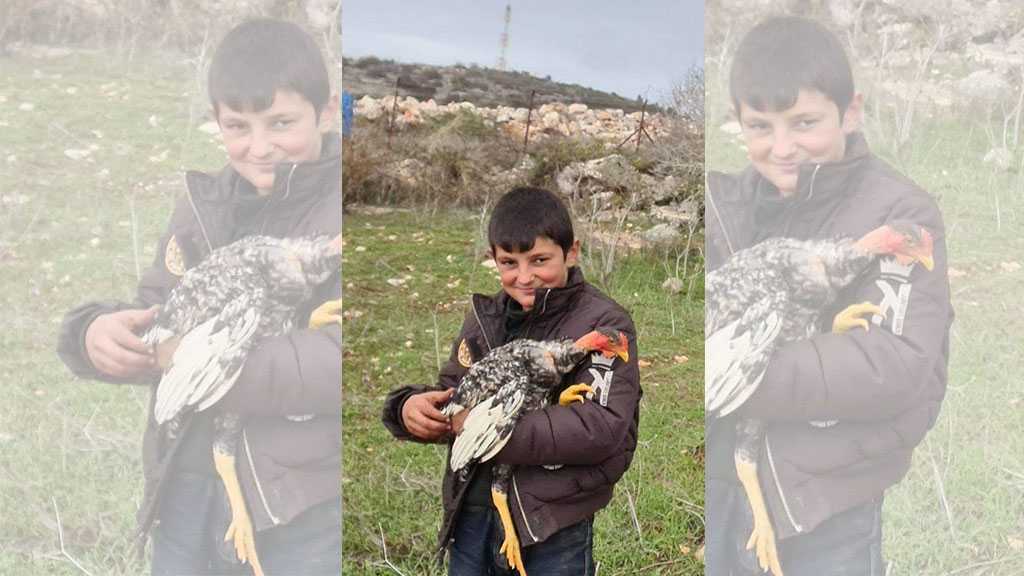
This video shows a nine-year-old boy from South Lebanon, telling the story of his chicken that ran away towards the ‘Israeli’-occupied Palestinian territories, along the border of his village of Meis al-Jabal… 

As much as Hussein al-Shartouni’s words reveal his childish innocence, they also represent a very small example of how the free people pursue their rights in this piece of land, the land of dignity and resistance

.

Hide and Fire: ‘Israeli’ Soldiers Terrified by Boy Chasing Hen along Lebanon-Palestine Border!

By Staff

A nine-year-old boy from South Lebanon has frightened the ‘Israeli’ occupation soldiers stationed in a point near the Lebanese border with the occupied Palestinian territories, prompting the Zionist soldiers to open fire in the air.

In further details, al-Manar TV correspondent in South Lebanon, Ali Shoaib, posted on his Twitter account that the enemy forces fired ten bullets in the air along the border of Meis al-Jabal village, from where the boy comes.

He then added that the incident took place after the nine-year-old boy came near the border while chasing a hen beside his house that is next to the barbed wire.

ٌRelated Videos


River to Sea Uprooted Palestinian   
The views expressed in this article are the sole responsibility of the author and do not necessarily reflect those of the Blog!