Uprooted Palestinians are at the heart of the conflict in the M.E Palestinians uprooted by force of arms. Yet faced immense difficulties have survived, kept alive their history and culture, passed keys of family homes in occupied Palestine from one generation to the next.
The United Nations emphasized Syria’s sovereignty over the ‘Israeli’-occupied Golan Heights, stressing that annexation measures imposed by the Tel Aviv regime in the territory are invalid and illegitimate.
The UN Economic and Social Commission for Western Asia [ESCWA] made the announcement in a periodic report distributed in Beirut, Syria’s official SANA news agency reported on Thursday.
“The compliance with the international law and the absence of impunity are two prerequisites for achieving peace and justice for all the peoples of the region,” the UN body added.
In 1967, the Zionist occupation waged a full-scale war against Arab territories, during which it occupied a large swathe of Golan and annexed it four years later, a move never recognized by the international community.
In 1973, another war broke out and a year later, a UN-brokered ceasefire came into force, according to which Tel Aviv and Damascus agreed to separate their troops and create a buffer zone in the Heights.
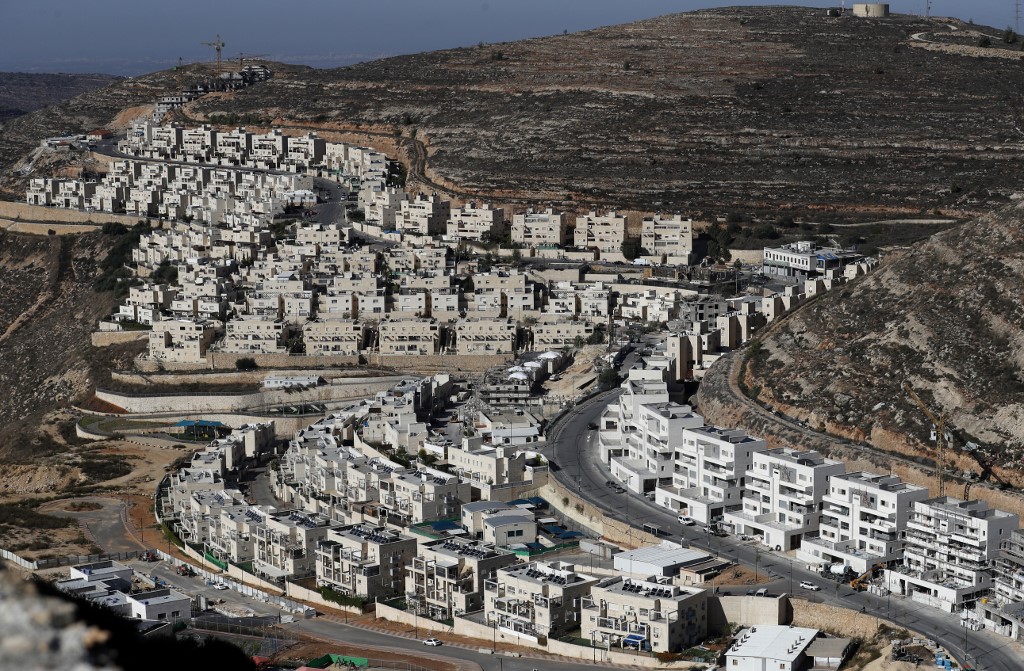
The Zionist entity has over the past decades built dozens of settlements in the Golan Heights in defiance of international calls for the regime to stop its illegal construction activities.
Syria has repeatedly reaffirmed its sovereignty over the Golan Heights, saying the territory must be completely restored to its control.
The United Nations has time and again emphasized Syria’s sovereignty over the territory.
In March 2019, former American president Donald Trump controversially signed a decree recognizing ‘Israeli’ “sovereignty” over the Golan Heights during a meeting with then Zionist Prime Minister Benjamin Netanyahu in Washington.
The ESCWA report, which covers the period from April 2020 to March 2021, further stressed that it is impossible to achieve sustainable development in the occupied Palestinian territories in light of the continuing ‘Israeli’ occupation and the policies and practices pursued by the entity.
The UN commission also emphasized the necessity of halting such Zionist measures that hinder efforts to combat the COVID-19 pandemic and to provide additional humanitarian aid to the Palestinians.
The report also stressed that the measures and policies adopted by the Zionist regime in Arab territories, occupied since 1967, including the blockade imposed on the Gaza Strip and settlement expansion in the occupied West Bank, are all in sheer violation of international law.
Elsewhere in the report, ESCWA said that last year was one of the worst years in the Palestinian economy since 2002, as it shrank by 11.5 percent.
The UN commission prepares a report for the UN chief every year on the economic and social repercussions of the ‘Israeli’ occupation on the conditions of the Palestinians in the occupied territories and also the conditions of the Syrians in the Golan Heights.
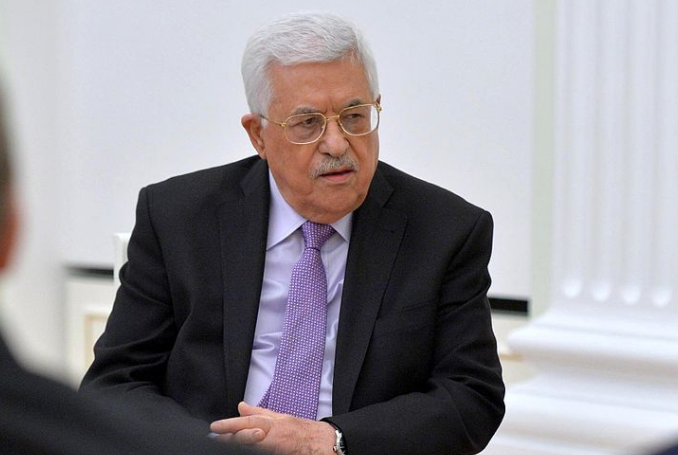
Known for belatedly spouting known truths, Palestinian Authority leader Mahmoud Abbas was true to form in his address to the J Street conference recently, which revealed the extent of his collaboration with the international community over Palestine’s loss, and his complicity with Israeli settler-colonialism.
Mentioning “apartheid” as he did cannot gloss over the fact that Abbas is still championing a paradigm that has facilitated Israel’s colonial expansion and de-facto annexation of Palestinian land.
US President Joe Biden’s two-state policy is still unclear. The strategy has worked well for Israel, while advocates of the internationally-imposed paradigm can once again make themselves useful. But the two-state “solution” has already been declared dead in the water and pressuring the US administration to heed a matter of international consensus that still harms Palestinians should not be deemed “the only solution”, as Abbas is fond of claiming. In doing so, he is on the same page as UN Secretary-General Antonio Guterres who insists that “There is no Plan B.”
If Abbas thought that by mentioning the A word he would be doing a service to the Palestinians, he is wrong. Not only has the Israeli NGO B’Tselem beaten him to it declaring that the colonial state has already passed the apartheid threshold, but Palestinians have also been trying to raise awareness regarding Israel’s apartheid policies for years. The PA, meanwhile, was busying itself with the international community’s state-building illusions and tacitly approving Israel’s settlement expansion.
“Moving away from the two-state solution will eventually lead to a de facto one-state solution, an apartheid state, and this is something neither, we nor the entire world would accept,” Abbas said. “A one-state solution will only perpetuate the conflict.”
This is not necessarily true. Moving away from moribund two-state politics can give a chance to the Palestinian people, but only if they have a leadership worthy of the name and cause. The two-state solution, remember, came back into vogue with the announcement of the so-called Abraham Accords, which saw some Arab countries normalize relations with Israel in return, they claimed, to halt Israel’s annexation plans.
Annexation, as Israel has made clear, was simply “postponed”. Nevertheless, the UN had no qualms about endorsing the diplomatic game that facilitated the de-facto annexation of the occupied West Bank.
The Trump administration’s “deal of the century” shifted focus on what would happen if Abbas and the international community keep insisting upon the two-state compromise. Saying that the one-state solution would entrench apartheid is valid only because Palestinians have not been given the political freedom to construct their own independence and liberation process.
Israel has leverage over the one-state concept because it has secured its narrative within the international community. The Palestinian people, though, are burdened with a leadership whose main interest is to impose the international paradigm and call it a “solution”.
So what is the use of the PA participating in such seminars, if it only serves to strengthen the Israeli narrative and colonial expansion? Abbas had the opportunity to speak to J Street — a “pro-Israel, pro-peace” liberal US advocacy group — about the Palestinian concept of a single, democratic state, but he did not take it. It is possible, of course, that his invitation to address the group was conditional upon his promotion of the two-state compromise because there is purportedly no other option for the Palestinian people.
To speak where the funding lies is to maintain two-state politics, now defunct in terms of implementation yet favorable for Israel and its de-facto annexation — aka theft — of Palestinian land. The Palestinian leadership embarked yet again upon another spectacle that revealed its allegiance to external entities over and above the people of occupied Palestine.
– Ramona Wadi is a staff writer for Middle East Monitor, where this article was originally published. She contributed this article to the Palestine Chronicle.
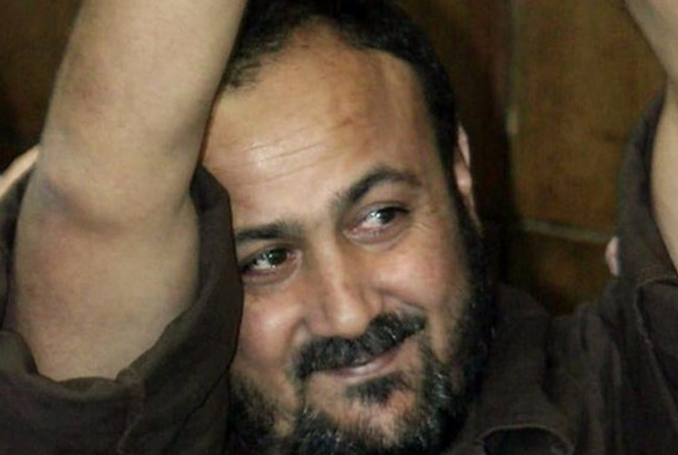
If imprisoned Palestinian leader, Marwan Barghouti, becomes the President of the Palestinian Authority (PA), the status quo will change substantially. For Israel, as well as for the current PA President, Mahmoud Abbas, such a scenario is more dangerous than another strong Hamas showing in the upcoming Palestinian parliamentary elections.
The long-delayed elections, now scheduled for May 22 and July 31 respectively, will not only represent a watershed moment for the fractured Palestinian body politic, but also for the Fatah Movement which has dominated the PA since its inception in 1994. The once-revolutionary Movement has become a shell of its former self under the leadership of Abbas, whose only claim to legitimacy was a poorly contested election in January 2005, following the death of former Fatah leader and PA President, Yasser Arafat.
Though his mandate expired in January 2009, Abbas continued to ‘lead’ Palestinians. Corruption and nepotism increased significantly during his tenure and, not only did he fail to secure an independent Palestinian State, but the Israeli military occupation and illegal settlements have deepened and grown exponentially.
Abbas’ rivals from within the Fatah Movement were sidelined, imprisoned or exiled. A far more popular Fatah leader, Marwan Barghouti, was silenced by Israel as he was thrown into an Israeli prison in April 2002, after a military court found him guilty of involvement in Palestinian resistance operations during the uprising of 2000. This arrangement suited Abbas, for he continued to doubly benefit: from Barghouti’s popularity, on the one hand, and his absence, on the other.
When, in January, Abbas declared that he would hold three successive rounds of elections – legislative elections on May 22, presidential elections on July 31 and Palestinian National Council (PNC) elections on August 31 – he could not have anticipated that his decree, which followed intense Fatah-Hamas talks, could potentially trigger the implosion of his own party.
Fatah-Hamas rivalry has been decades-long but intensified in January 2006 when the latter won the legislative elections in the Occupied Territories. Hamas’s victory was partly attributed to Fatah’s own corruption, but internal rivalry also splintered Fatah’s vote.
Although it was Fatah’s structural weaknesses that partly boosted Hamas’ popularity, it was, oddly, the subsequent rivalry with Hamas that kept Fatah somehow limping forward. Indeed, the anti-Hamas sentiment served as a point of unity among the various Fatah branches. With money pouring in from donor countries, Fatah used its largesse to keep dissent at a minimum and, when necessary, to punish those who refused to toe the pro-Abbas line. This strategy was successfully put to the test in 2010 when Mohammed Dahlan, Fatah’s ‘strong man’ in Gaza prior to 2006, was dismissed from Fatah’s central committee and banished from the West Bank, as he was banished from Gaza four years earlier.
But that convenient paradigm could not be sustained. Israel is entrenching its military occupation, increasing its illegal settlement activities and is rapidly annexing Palestinian land in the West Bank and Jerusalem. The Gaza siege, though deadly and tragic, has become routine and no longer an international priority. A new Palestinian generation in the Occupied Territories cannot relate to Abbas and his old guard, and is openly dissatisfied with the tribal, regional politics through which the PA, under Abbas, continues to govern occupied and oppressed Palestinians.
Possessing no strategies or answers, Abbas is now left with no more political lifelines and few allies.
With dwindling financial resources and faced by the inescapable fact that 85-year-old Abbas must engineer a transition within the movement to prevent its collapse in case of his death, Fatah was forced to contend with an unpleasant reality: without new elections the PA would lose the little political legitimacy with which it ruled over Palestinians.
Abbas was not worried about another setback, like that of 2006, when Hamas won majority of the Palestinian Legislative Council (PLC)’s seats. Until recently, most opinion polls indicated that the pro-Abbas Fatah list would lead by a comfortable margin in May and that Abbas would be re-elected President in July. With his powers intact, Abbas could then expand his legitimacy by allowing Hamas and others into the PLO’s Palestinian National Council – Palestine’s parliament in the Diaspora. Not only would Abbas renew faith in his Authority, but he could also go down in history as the man who united Palestinians.
But things didn’t go as planned and the problem, this time, did not come from Hamas, but from Fatah itself – although Abbas did anticipate internal challenges. However, the removal of Dahlan, the repeated purges of the party’s influential committees and the marginalization of any dissenting Fatah members throughout the years must have infused Abbas with confidence to advance with his plans.
The first challenge emerged on March 11, when Nasser al-Qidwa, a well-respected former diplomat and a nephew of Yasser Arafat, was expelled from the movement’s Central Committee for daring to challenge Abbas’ dominance. On March 4, Qidwa decided to lock horns with Abbas by running in the elections in a separate list.
The second and bigger surprise came on March 31, just one hour before the closing of the Central Election Commission’s registration deadline, when Qidwa’s list was expanded to include supporters of Marwan Barghouti, under the leadership of his wife, Fadwa.
Opinion polls are now suggesting that a Barghouti-Qidwa list, not only would divide the Fatah Movement but would actually win more seats, defeating both the traditional Fatah list and even Hamas. If this happens, Palestinian politics would turn on its head.
Moreover, the fact that Marwan Barghouti’s name was not on the list keeps alive the possibility that the imprisoned Fatah leader could still contest in the presidential elections in July. If that, too, transpires, Barghouti will effortlessly beat and oust Abbas.
The PA President is now in an unenviable position. Canceling the elections would lead to strife, if not violence. Moving forward means the imminent demise of Abbas and his small but powerful clique of Palestinians who benefited greatly from the cozy political arrangement they created for themselves.
As it stands, the key to the future of Fatah is now held by a Palestinian prisoner, Marwan Barghouti, who has been kept by Israel, largely in solitary confinement, since 2002.
– Ramzy Baroud is a journalist and the Editor of The Palestine Chronicle. He is the author of five books. His latest is “These Chains Will Be Broken: Palestinian Stories of Struggle and Defiance in Israeli Prisons” (Clarity Press). Dr. Baroud is a Non-resident Senior Research Fellow at the Center for Islam and Global Affairs (CIGA) and also at the Afro-Middle East Center (AMEC). His website iswww.ramzybaroud.net
The self-styled ‘only democracy in the Middle East’ was never comfortable with pro-democracy protests. But the autocratic counter-revolution that followed gave it new friends
A Palestinian boy walks past a section of Israel’s separation wall and a billboard that reads in Arabic “The Arab Spring Coffee Shop” in the West Bank village of Al-Ram in 2012 (AFP)By
Lily Galili in Tel Aviv, IsraelPublished date: 1 January 2021 09:10 UTC | Last update:
“Unintended consequences” is the best way to describe the impact the Arab Spring has had on Israel.
Ten years after the pro-democracy protests that swept the Arab world, Israeli analysts agree that December 2020 is the unexpected outcome of December 2010’s events.
They may differ in the interpretation of recent developments and assessment of their future impact – but all look back at the beginning of the decade as the starting point of a process that has led to a growing list of Arab and Muslim countries normalising relations with Israel.
All agree that the Arab Spring (a term coined by the West) is not a fait accompli; that the undercurrents are still very much there and can still change the landscape of the future.
Israeli political and public reaction to these historic uprisings was confused right from the start.
Public opinion was divided between those who believed that Israel’s situation worsened in face of the developments and those who saw the Arab Spring as a positive change for the country. As Israel heads to elections, nothing is different but everything has changed
Even the term “Arab Spring” was up for debate, sometimes replaced by “Arab Winter” or a term officially coined by Israeli Military Intelligence, “Taltala”, a Hebrew word for “shake-up”. “Egyptian Plague” was one of many terms reflecting the profound confusion and derision.
If the Israeli discourse reflected public bewilderment, contradictory statements by Prime Minister Benjamin Netanyahu were reflections of confused policy.
The premier, who had preached in his own books that the lack of democracy in Arab states was the main obstacle to peace, openly avoided any reference to the democratic aspect of the Arab Spring.
“The Middle East is no place for the naive,” he stated in a speech delivered at the Israeli parliament on 23 November 2011, referring sarcastically to those who saw something positive in the unfolding events.
Yet, on the international arena, he adopted a more lenient approach, making statements like: “Israel is a democracy that encourages the promotion of free and democratic values in the Middle East and the promotion of such values will benefit peace.”
In a paper published in January 2013 by Mitvim – The Israeli Institute for Regional Foreign Policies, analyst Lior Lehrs quotes “government sources in Jerusalem” as explaining that “Netanyahu felt he had to narrow the gap between him and the international community”.
“The PM, as the leader of the only democracy in the Middle East, understood he cannot ignore international criticism of [Egyptian President Hosni] Mubarak and therefore this time addressed the issue of promoting democracy in the region,” Lehr wrote.
In the years following this statement, the leader of a country that wrongly describes itself and prides itself as “the only democracy in the Middle East” befriended a long series of authoritarian regimes in the region.
From spring to normalisation
The “linkage” between the Arab Spring and the normalisation of relations between Israel and the UAE, Bahrain, Sudan, Morocco and likely more countries to come, was one of main themes of a conference dedicated to the decade by BESA, the right-wing-orientated Begin-Sadat Centre for Strategic Studies at Bar-Ilan University.
“The Arab Spring is the death certificate of Arab nationalism as we knew it in the Levant, and the rise of more dictatorship-like regimes,” Ehud Yaari, Israeli political commentator and analyst, told Middle East Eye.
“The collapse of central capitals like Cairo and Damascus spurred Arab peripheral countries to re-arrange the arena. The capital moved to the UAE, a more modern one, despite its modest size. This is a given of historical dimension not bound to change in the visible future. A whole new nation ball game in the Middle East.”
At the Begin-Sadat Centre conference on 23 December, Yaari briefly told attendees what he believed would be the “nightmare scenario” for Israel – the collapse “inwards” of Egypt.
Yaari later told MEE that while Iran and Turkey compete with each other over dominance in Levantine Arab states, the peripheral countries reached a conclusion that the answer to their growing threat is to establish a new partnership, supported by the US.
Yaari said Netanyahu’s “bragging” about annexation gave Abu Dhabi’s Crown Prince Mohammed bin Zayed an opportunity for normalisation. The September deal was inked with the promise that Israeli annexation of the occupied West Bank had been shelved.Meet the man Netanyahu has picked to lead Israel’s Mossad
“They wouldn’t do it for a supply of F-35 aircrafts; they aim at a kind of military-security covenant. Others will follow. Even Qatar will not stay behind long after Saudi Arabia joins. Then Muslim states like Niger, Mali and more will follow,” he said.
“The Arab Spring was a cry of those my Arab friend calls the ‘helpless, hopeless and jobless’, and not a vehicle for regime change. Yet many of the countries involved remained on a map only.”
According to his scenario, Israel becomes an integral part of the region by joining regional alliances like “the Red Sea forum”, a new Saudi initiative being discussed.
Menachem Klein, political scientist and adviser to Israeli negotiation teams in 2000 and 2003, believes that all normalisation agreements come as a result of the Arab Spring and the “dissolution” of the Arab League.
Once, the Arab League united states against Israel. When governments began attacking their people in 2011, those countries began turning on one another.
In this new constellation, Israel has become another factor in the fine fabric of alliances and rivalries in the Arab world. Donald Trump in the Middle East: A story of big winners and bigger losers
“Israel integrated into the Arab fabric not just via those normalisation agreements but as an active player in the intricate labyrinth of contradictory interests of countries of the Middle East,” he told MEE.
“A long time ago, the late Shimon Peres dreamt of Israel as member of the Arab League; what he did not dream of is a broken region with a practically non-existent League.”
Klein is very much aware of the complexity of the new reality.
The upside, he believes, is Israel is accepted as a fact, even if the circumstances of its establishment are still illegitimate in the eyes of many. The downside, according to Klein, is that in the eyes of many in Arab societies, Israel is still perceived as the long arm of the United States, one that can be used for protection and arms, as well as a pipeline to Washington.
Israel, Palestine and domestic policy
Though Yaari and Klein both agree that the Arab Spring and normalisation deals have impacted the Palestinian cause, they do not reach the same conclusion as to how.
“I believe that the normalisation that stemmed from the Arab Spring will impose more restraint on any Israeli government, be it even ultra-right wing. No more annexation, no more Israeli construction plans in the controversial E1 area. Israel has too much to lose,” said Yaari.
“The Palestinians, on the other hand, finally realised they have no one to lean on, they are bound to change direction.”
Since Palestinian nationalism ceased to be an all-Arab issue, and now the Palestinians have been abandoned by Arab countries and in the reality subject to de-facto annexation, it has in fact become an Israeli internal domestic issue
According to this plan carefully crafted over a few years, Israel will take over control of the West Bank and divide it into segments like ‘greater Nablus’, ‘greater Jenin’, and so on
Klein does not agree with that conclusion nor with that scenario. The most dangerous repercussion of the decade that changed the Middle East is, according to him, the Palestinian issue.
“Since Palestinian nationalism ceased to be an all-Arab issue, and now the Palestinians have been abandoned by Arab countries and in the reality subject to de-facto annexation, it has in fact become an Israeli internal domestic issue,” Klein said.
“It is now more a question of domestic policy than of foreign policy. That twist just makes the situation more acute in the absence of external enforcement leading to a solution. Any explosion in the occupied territories can now easily lead to chaos.”
Klein knows of an Israeli military plan to deal with such an explosion. According to this plan carefully crafted over a few years, Israel will take over control of the West Bank and divide it into segments like “greater Nablus”, “greater Jenin”, and so on.
Each divided region will be under the control of a military governor. The Israeli military’s central command, Klein tells MEE, has already practiced the plan.
It is more than about controlling riots: this is the plan to dismantle one ruling authority – the Palestinian Authority – and thus smash the political entity of Palestinian nationality.
Unlike Yaari, Klein believes that the “shake-up” that skipped the occupied territories ten years ago is about to arrive.
لا يستطيع المرء إلّا أن يتعجّب من مدى قصر نظر الحكم المغربي في إقدامه على خطوته المشينة الأخيرة في التطبيع مع الكيان الصهيوني، التي يصحّ فيها وفي نظيراتها بحق وصف اتفاقيات التتبيع بالكيان الصهيوني، بحسب تعبير أحدهم. فربط الحكم المغربي هذه الفعلة بالاعتراف الأميركي بسيادة المغرب على الصحراء الغربية يضيف إلى هذه الخطوة محاذير من الناحية الاستراتيجية، تضاف إلى المحاذير التقليدية لأي تعامل مع الكيان الغاصب كما سنجادل.
في البدء، إنّ كلّ اعتراف بالكيان الصهيوني يعدّ خيانة بالمطلق لمبادئ العقيدة والثوابت القومية، بغضّ النظر عن أيّ مبرّرات واهمة أو أيّ مكاسب تكتيكية قصيرة الأمد يفرح بها المطبّعون أو بالأحرى المُستتبَعون، ولا سيما في هذه المرحلة التي يعلن فيها الكيان الغاصب ضمّ القدس وأراضي الضفة الغربية. فكل اعتراف بالكيان الصهيوني في هذه المرحلة ينطوي على تنازل عن القدس والمقدسات الإسلامية والمسيحية في فلسطين، ولا تنفع معه تبريرات من قبيل كون الاعتراف بالكيان الصهيوني جاء في سياق ما يسمّى حلّ الدولتين المرفوض أصلاً، حيث من القصور توصيف الصراع العربي الصهيوني على أنه صراع على بقعة جغرافية، بل هو صراع مع كيان استيطاني واحتلالي وظيفي. ويشكّل هذا الكيان قاعدة متقدّمة زرعها الاستعمار القديم كامتداد له في قلب الأمة العربية والإسلامية يجب اجتثاثها، فلا وظيفة لهذا الكيان سوى إطالة زمن الهيمنة الإمبريالية على شعوب منطقتنا. وأما في حالة المغرب، فنجد أنّ هذا الاعتراف قد أضاف إلى كلّ هذه المحاذير العقدية والقومية والوطنية احتمالات دخوله في مرحلة اضطرابات عبر تجدد النزاع العسكري مع سكان الصحراء الغربية وجبهة البوليساريو. نشأت قضية الصحراء الغربية مع انتهاء الاستعمار الإسباني لتلك المنطقة في عام 1975، الذي ترك منطقة الصحراء الغربية مقسّمة بين دولتي المغرب وموريتانيا. وبعد انسحاب موريتانيا من المناطق التي كانت تسيطر عليها في الصحراء الغربية، وبعد الإعلان عن الجمهورية العربية الصحراوية الديموقراطية في عام 1976، استمر النزاع المسلّح حول منطقة الصحراء بين جبهة البوليساريو المطالبة بالاستقلال والمغرب على تلك المنطقة إلى عام 1991، حين قرّرت جبهة البوليساريو وقف العمليات العسكرية ضد الجيش المغربي، وصدر القرار الأممي الرقم 690 بشأن قضية الصحراء الغربية الذي نص في مضمونه على إجراء استفتاء لحسم هذه القضية، إما باستقلال الصحراء أو بانضمامها إلى المغرب. ولقد تباينت مواقف الأحزاب والقوى العربية بشأن قضية الصحراء، منذ نشأتها، بين مؤيّد لحق سكّان المنطقة الصحراوية في الاستقلال وتقرير مصيرهم، ولا سيما في ظِلّ حكم المغرب الملكي الذي يعدّ رجعياً ومتخاذلاً من الناحية الوطنية، وبين معارض للمزيد من التقسيم في الأقطار العربية بغض النظر عن طبيعة حكم هذه الأقطار. أما اليوم، وبعد مقايضة المغرب لتطبيعها مع الكيان الصهيوني بفرض سيادتها على الصحراء الغربية، فيُعتقَد أن يكون لهذا انعكاس على مواقف بعض القوى العربية من قضية الصحراء لجهة تأييدها لاستقلال منطقة الصحراء عن النظام المطبّع، وإعطاء جبهة البوليساريو المزيد من المشروعية الشعبية في قتالها من أجل الاستقلال، إضافة إلى أن الاعتراف الأميركي المسموم بسيادة المغرب على منطقة الصحراء الغربية، وتجاهله للقرار الأممي الرقم 690 والوصول لحل لهذه القضية الشائكة عبر الاستفتاء يفتح الباب أمام احتمالية انهيار وقف إطلاق النار الهش بين جبهة البوليساريو والمغرب. فهذا الاعتراف الخبيث وغير المسؤول يحشر جبهة البوليساريو في الزاوية من جهة تعويلها على قرارات الأمم المتحدة من أجل التوصل لحلّ عادل لقضية سكان منطقة الصحراء، ويضع منطقة المغرب العربي بعمومها أمام احتمالات تجدد دوامة العنف والصدام العسكري، سيما أن الاعتراف الأميركي لم يأخذ في الحسبان مواقف الدول المعنية بالأمر، من الجزائر وموريتانيا. وبهذا تكون أميركا كعادتها قد صبّت الزيت على النار في بؤر التوتر في وطننا العربي، ويجد المرء نفسه مضطراً إلى موافقة مستشار الأمن القومي الأميركي السابق جون بولتون في ما ذهب إليه في مقاله الأخير في مجلة «فورن بوليسي» الأميركية بهذا الشأن، حيث وصف قرار إدارة الرئيس دونالد ترامب، الذي ستنتهي ولايته قريباً، بالاعتراف بسيادة المغرب على منطقة الصحراء الغربية بالقرار الأهوج الذي يهدّد الاستقرار في منطقة المغرب العربي بعمومه. لا نودّ تحديد موقف من قضية استقلال الصحراء الغربية في هذا المقال، لكن إذا تبنّينا جدلاً الموقف المغربي من هذه القضية الذي يعد منطقة الصحراء الغربية جزءاً من الأرض المغربية، فيمكن وصف ما فعله الحكم المغربي بأنه قد اعترف بما لا يملك لمن لا يستحق، مقابل اعتراف من لا يملك له بما يستحق.
بهذا، نجد أنّ قرار الحكم المغربي بإخراج علاقاته السرية المشبوهة مع الكيان الصهيوني إلى العلن وبشكل رسمي، وانضمامه إلى قافلة الانبطاح أمام العدو الصهيوني، لن يعود عليه إلا بخسائر استراتيجية، سواء أكان في الداخل المغربي حيث يضع الحكم في مواجهة شعبه المغربي الأصيل الذي يرفض كلّ أشكال التعامل مع عدو الأمة الأول كسائر شعوب وطننا العربي والإسلامي، أم من ناحية كونه يرفع من احتمالات تفاقم التوترات ذات الطبيعة المزمنة على الحدود الجنوبية للمملكة المغربية، وهذا بالطبيعة ستكون له انعكاسات سيئة على سائر دول المغرب العربي. ولا ننسى ختاماً الإشارة إلى أنّ كلّ ما قدّمته الإدارة الأميركية الحالية في هذه المرحلة كمقابل لتطبيع الحكم المغربي مع كيان الاحتلال، لا يعدو كونه إعلان اعتراف بسيادة المغرب على أراضي منطقة الصحراء الغربية. وهذا الإعلان لا يُلزِم الإدارة الأميركية المقبلة ويمكنها التنصّل منه. فبأيّ أثمان بخسة ومسمومة يتقاطر جزء من النظام العربي المتهالك على بيع الثوابت الإسلامية والقومية والوطنية في أسواق نخاسة الأعداء؟ وبالتأكيد لا نستثني السلطة الفلسطينية من هذا، فهي باتت أسوأ من تلك الأنظمة العربية المتهالكة في الشكل والمضمون.
** كاتب فلسطيني وباحث سياسي
Morocco in the Midst of Western Sahara Storms After Normalization
The short-sightedness of the Moroccan government in its recent shameful agreement to normalize and establish diplomatic relations with the Zionist Entity called ‘Israel’ is truly puzzling. The Moroccan government stated that this agreement was the result of a deal with the current U.S. administration, where the U.S. recognizes Moroccan sovereignty over Western Sahara. But this exchange adds additional strategic dangers to the usual perils presented by all normalization agreements with the Zionist Entity, as this article will argue.
First and foremost, any recognition of the Zionist Entity is an absolute betrayal of Arab rights and national principles, regardless of any flawed justifications or any short-term tactical gains that the normalizers rejoice in. This is more so after recent developments, where the occupation declared the annexation of Jerusalem and the West Bank. It is apparent that normalizing relations with ‘Israel’ at this stage means acceptance of this annexation and abandoning the Christian and Islamic Holy places in Palestine. Any attempt to justify such steps towards normalization with ‘Israel’ must be firmly rejected – justifications such as that those normalization agreements are in the context of the two-state solution, which is a non-solution in the first place.
The issue of Western Sahara is a remnant of the Spanish colonization of that region. After the end of Spanish colonization with the death of Francisco Franco in 1975, the Western Sahara region was divided between Morocco and Mauritania. Then, after Mauritania withdrew from the areas it controlled of Western Sahara, and the declaration of the Sahrawi Arab Democratic Republic in 1976, the armed conflict over the Sahara region between the Polisario Front for Independence and Morocco in that region continued. In 1991, the Polisario Front suspended military operations against Morocco, in return for a referendum on the future of Western Sahara status under the observation of the UN in accordance with UNSC resolution 690.
Since the inception of the Western Sahara issue, the positions of Arab political parties and Arab people in general has fallen into two main camps: those who support the right of the Sahrawi people to independence and self-determination, and who in their majority regard the Moroccan monarchy as autocratic and regressive; and those who are opposed to further partition of Arab countries regardless of the nature of the rule of these countries. However, after Morocco traded recognition of ‘Israel’ for the U.S. proclamation to recognize Moroccan sovereignty over Western Sahara, it is believed that this may cast a further shadow over the legitimacy of Moroccan claims in Western Sahara in the eyes of many Arabs, while simultaneously giving more credence to the Polisario Front’s war of independence. Moreover, the poisoned U.S. proclamation in violation of international law and UNSC Resolution 690, will diminish the Sahrawi people’s hope of ever having the referendum on the future status of Western Sahara which they were promised by the UNSC. This will likely force the Polisario Front into a corner; and will lead them to question the international community’s commitment to reach a just solution to their cause. All this opens the door wide to the possibility of the collapse of the tenuous Polisario-Morocco ceasefire. The ramifications of this déjà vu situation are dire, as this will most likely spiral the whole region into instability, especially when the US proclamation on the thorny Western Sahara issue ignored the other regional countries positions on this matter, namely Algeria and Mauritania. And one finds himself here begrudgingly agreeing with the former U.S. national security advisor John Bolton, when he argued in his article published in the Foreign Policy Magazine ‘Biden Must Reverse Course on Western Sahara’, that the U.S. proclamation may negatively affect that fragile region. Thus, one finds that the US did what it does best, namely fueling unrest in the Arab region to appease the Zionist Entity.
The aim of this article is not to take a stance on the Western Sahara conflict, but one way of viewing what Morocco did by recognizing the Zionist’s sovereignty over historical Palestine in exchange for U.S. recognition of Moroccan sovereignty over Western Sahara, is tantamount to Morocco giving what is not theirs to give, in exchange for the U.S. giving them what is not for the U.S. to give.
Arabs will continue to regard ‘Israel’ as illegitimate, the liberation of Palestine as one of their cornerstone principles, and in that the Moroccan people are no exception. Hence, the Moroccan government’s treacherous decision to normalize relations with the Zionist Entity will only cause Morocco to suffer strategic losses in the long run, be it driving a wedge between the government and its people on the internal front, or by stirring up a dormant conflict on Morocco’s southern borders with the Polisario Front and the Sahrawi people.
Since signing the Abraham Accords, the UAE and Bahrain have been actively colluding with Israel’s settler movement and military authorities
The professed rationale for the recent Abraham Accords, so-called “peace deals” signed with Israel by the UAE and Bahrain, was to stymie Israeli efforts to annex swaths of the West Bank.
The aim was supposedly to neutralise another “peace” plan – one issued early this year by US President Donald Trump’s administration – that approved Israel’s annexation of large areas of the West Bank dominated by illegal Jewish settlements.
In practice, both have quickly jettisoned any pretence that Palestinians will benefit from these deals
The two Gulf states trumpeted the fact that, in signing the accords in September, they had effectively scotched that move, thereby salvaging hopes of a future Palestinian state. Few observers entirely bought the official story – not least because Israeli Prime Minister Benjamin Netanyahu vowed that annexation had only been put on temporary hold.
The real purpose of the Abraham Accords appeared less about saving Palestinians than allowing Gulf states to go public with, and expand, their existing ties to Israel. Regional intelligence could now be shared more easily, especially on Iran, and the Gulf would gain access to Israeli hi-tech and US military technology and weapons systems.
Separately, Sudan was induced to sign the accords after promises it would be removed from Washington’s list of “terror-supporting” states, opening the door to debt relief and aid. And last week, Morocco became the fourth Arab state to initiate formal relations with Israel after the Trump administration agreed to recognise its occupation of Western Sahara.
Twisting more arms
Israel, in return, has been able to begin “normalising” with an important bloc of Arab states – all without offering any meaningful concessions on the Palestinian issue.
Qatar and Saudi Arabia are also reported to have been considering doing their own deals with Israel. Jared Kushner, Trump’s Middle East adviser, visited the region this month in what was widely assumed to be a bid to twist arms. UAE-Israel deal: Abraham accord or Israeli colonialism?
Riyadh’s hesitation, however, appears to have increased after Trump lost last month’s US presidential election to Joe Biden.
Last week, during an online conference held in Bahrain and attended by Israeli Foreign Minister Gabi Ashkenazi, a former senior Saudi government official, Turki al-Faisal al-Saud, launched a blistering verbal attack on Israel, saying it jailed Palestinians in “concentration camps” and had built an “apartheid wall”. It was unclear whether he was speaking in more than a personal capacity.
While the covert purpose of the Abraham Accords was difficult to obscure, the stated aim – of aiding Palestinians by preventing Israel’s annexation of the West Bank – was still seen as a vital tool for the UAE and Bahrian to sell these agreements back home.
But in practice, both have quickly jettisoned any pretence that Palestinians will benefit from these deals. Not only that, but already they barely bother to conceal the fact that they are actively and tangibly colluding with Israel to harm Palestinians – by bolstering Israel’s illegal settlements and subsidising its military regime of occupation.
Trade with settlements
Bahrain demonstrated this month how indifferent it is to the negative impacts on Palestinians. On a visit to Israel, the country’s trade minister, Zayed bin Rashid al-Zayani, said Bahrain was open to importing products from Israel wherever they were manufactured. “We have no issue with labelling or origin,” he said.
The comment suggested that Manama was ready to become a gateway for Israel to export settlement products to the rest of the Arab world, helping to bolster the settlements’ legitimacy and economic viability. Bahrain’s trade policy with Israel would then be even laxer than that of the European Union, a top trade partner for Israel. The EU’s feeble guidelines recommend the labelling of settlement products.
An illegal Israeli settlement in the occupied West Bank is pictured on 19 November 2019 (AFP)
After wide reporting of Zayani’s comments, Bahrain’s state news agency issued a statement shortly afterwards saying he had been “misinterpreted”, and that there would be no import of settlement goods. But it is hard not to interpret the remarks as indicating that behind the scenes, Bahrain is only too willing to collude in Israel’s refusal to distinguish between products from Israel and those made in the settlements.
That this is the trading basis of the Abraham Accords is further highlighted by reports that the UAE is already welcoming business with Israel’s illegal settlements. An Israeli winery, using grapes grown on the Golan Heights, a large plateau of Syrian territory seized by Israel in 1967 and illegally annexed in 1981, has reportedly started exporting to the UAE, which has liberalised its alcohol laws for non-citizens.
This is a fruitful turn of events for Israel’s 500,000 settlers in the occupied West Bank. They have lost no time touting for business, with the first delegation arriving in Dubai last month hoping to tap new markets in the Arab world via the UAE. Last week a settler delegation reportedly returned to Dubai to sign an agreement with a UAE company to import settlement goods, including alcohol, honey, olive oil, and sesame paste.
New low-point
This marks a new low-point in the shift by Arab states away from their original position that Israel was a colonial implant in the region, sponsored by the West, and that there could be no “normalisation” – or normal relations – with it.
In 2002, Saudi Arabia launched the Arab Peace Initiative, which offered Israel full diplomatic relations in return for ending the occupation. But Gulf states are now not only normalising with Israel when the occupation is actually intensifying; they are normalising with the occupation itself – as well as its bastard progeny, the settlements.
The peace deals with the UAE and Bahrain will help the settlements entrench further, assisting Israel’s longstanding policy of annexing the West Bank in all but name
Israel has built more than 250 settlements across a vast expanse of occupied Palestinian territory – 62 percent of the West Bank, referred to as Area C under the Oslo Accords. This area was supposed to be gradually transferred to the Palestinian Authority (PA), the government-in-waiting under Mahmoud Abbas, to become the territorial backbone of a Palestinian state.
Instead, over the past quarter of a century, Israel has used its supposedly temporary control over Area C to rapidly expand the settlements, stealing vital land and resources. These colonies have been highly integrated into Israel, with settler roads criss-crossing the occupied West Bank and tightly limiting Palestinian movement.
The peace deals with the UAE and Bahrain will help the settlements entrench further, assisting Israel’s longstanding policy of annexing the West Bank in all but name, through the creation of facts on the ground – the very outcome the Abraham Accords claimed they were meant to prevent.
Yossi Dagan, head of the West Bank regional council that visited Dubai last month, declared that there was “no contradiction between our demand to impose sovereignty [annex large parts of the West Bank] and the strengthening of commercial and industrial ties” with the Gulf.
Al-Aqsa dividend
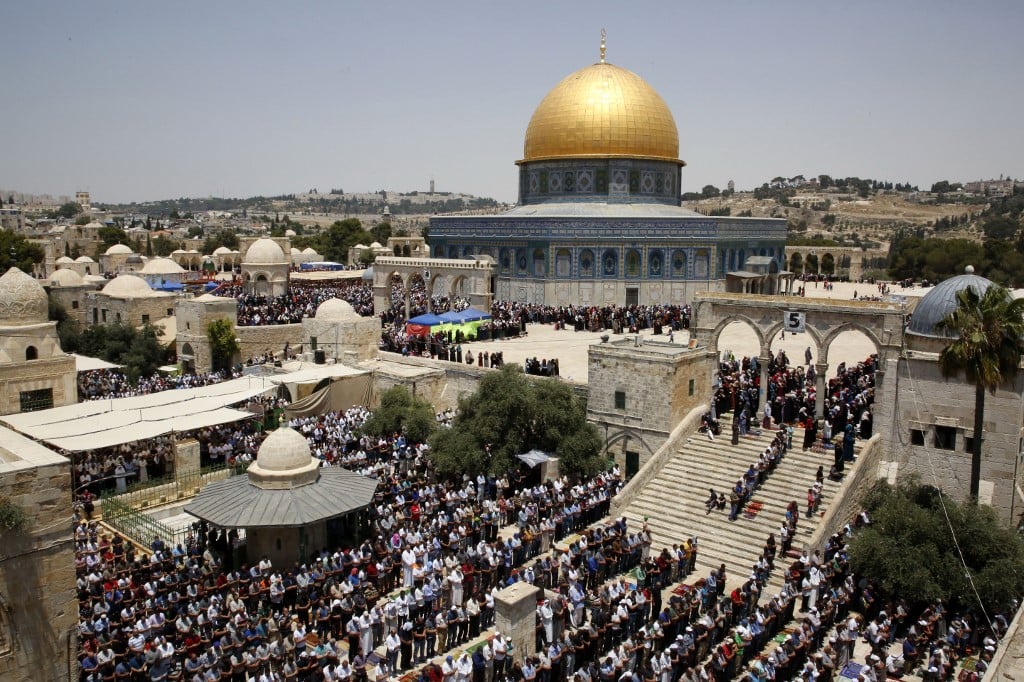
In other words, settlers see the Abraham Accords as a business opportunity to expand their footprint in the occupied West Bank, not an obstacle. The likely gains for the settlers will include tourism, too, as visitors from the Gulf are expected to flock to al-Aqsa Mosque in occupied East Jerusalem.
The irony is that, because of Israel’s physical seizure of areas around the Islamic holy site and its control over access, Gulf Arabs will have far greater rights at al-Aqsa than the majority of Palestinians, who cannot reach it.
Jordan, which has long been the custodian of al-Aqsa, justifiably fears that Saudi Arabia may use a future accord with Israel to muscle its way into taking charge of the Jerusalem holy site, adding it to its guardianship of Mecca and Medina.
Palestinians gather at al-Aqsa Mosque compound in June 2018 (AFP)
In occupied Jerusalem, Palestinians are deprived of the chance to develop their own housing, let alone infrastructure to cope with the business opportunities provided by the arrival of wealthy Gulf Arabs. That should leave Israel and its settler population – rather than Palestinians – well-placed to reap the dividends from any new tourism ventures.
In a supreme irony, a member of the Abu Dhabi ruling family has bought a major stake in the Beitar Jerusalem football team, whose supporters are fiercely anti-Arab and back the takeover of East Jerusalem by settlers.
Palestinian laboratories
During his visit, Bahrain’s Zayani observed that, as his country geared up for flights to and from Israel next month: “We are fascinated by how integrated IT and the innovation sector in Israel has been embedded in every facet of life.” Israel-UAE deal: The Emiratis are now under Israel’s thumb
But Israel’s technology sector is “embedded in every facet of life” only because Israel treats the occupied Palestinian territories as a laboratory. Tests are conducted there on how best to surveil Palestinians, physically limit their movement and freedoms, and collect their biometric data.
The hi-tech firms carrying out these experiments may be formally headquartered inside Israel, but they work and profit from their activities in the occupied territories. They are a vast complex of settlement businesses in their own right.
This is why Nabil Shaath, an aide to Abbas, observed of the Gulf’s burgeoning ties with Israel that it was “painful to witness Arab cooperation with one of the worst manifestations of aggression against the Palestinian people, which is the Israeli settlements on our land”.
Settler ally
How enthusiastically the UAE and Bahrain are getting into the occupation business, and preparing to subsidise its worst features, is highlighted by the Abraham Fund, set up by the US in October. It is a vehicle for Gulf states and Israel to secure billions of dollars in private investment to underpin their new diplomatic relations.
Again, the official story has glossed over the reality. According to statements from the main parties, the fund is intended to raise at least $3bn to bolster regional economic cooperation and development initiatives.
If the oil-rich Gulf states help pick up the tab, they will incentivise Israel to stay put and steal yet more Palestinian land and resources
The UAE’s minister of state, Ahmed Ali Al Sayegh, has said: “The initiative can be a source of economic and technological strength for the region, while simultaneously improving the lives of those who need the most support.”
The fund is supposed to help Palestinians, as one of those groups most in need of support. But again, the main parties are not playing straight. The deception is revealed by the Trump administration’s selection of who is to head the Abraham Fund, one of its last appointments before the handover to Biden.
According to the Jewish Telegraphic Agency, the fund will be overseen by Aryeh Lightstone, a fervently right-wing rabbi and ally of Israel’s settler community. Lightstone is a senior adviser to David Friedman, the US ambassador to Israel who has his own strong ties to the settlements. Friedman pushed aggressively for the US to move its embassy from Tel Aviv to occupied Jerusalem. Trump finally did so in May 2018, breaking an international consensus against locating diplomatic missions in Jerusalem.
Checkpoint upgrade
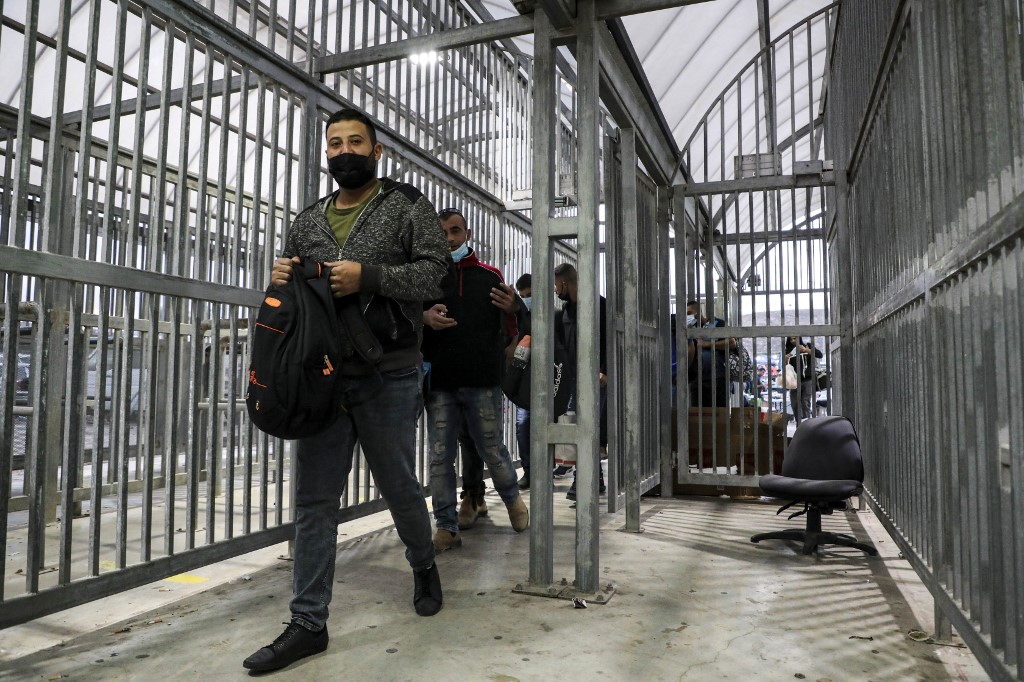
The political priorities of Lightstone are evident in one of the Abraham Fund’s first declared projects: to “modernise” Israeli checkpoints across the occupied West Bank.
The checkpoint upgrade is being hailed by US officials as designed to benefit Palestinians. It will speed up their passage as they try to move around the occupied West Bank, and as those with permits enter Israel or the settlements to work. One senior Trump administration official promised checkpoint delays that currently keep Palestinians waiting for many hours could be dramatically cut: “If I can upgrade that, which doesn’t cost a lot of money, and have it take 30 seconds, I am blowing up [freeing up] 400,000 work hours a day.”
There are many glaring problems with this approach – not least that under international law, belligerent military occupations such as Israel’s must be temporary in nature. Israel’s occupation has endured for more than five decades already.
Palestinians make their way through a checkpoint north of Hebron on 4 October (AFP)
Efforts to make the occupation even more permanent – by improving and refining its infrastructure, such as through upgrades to create airport-style checkpoints – is in clear breach of international law. Now the Gulf will be intimately involved in subsidising these violations.
Further, the idea that the Abraham Fund’s checkpoint upgrade is assisting Palestinians – “those who most need support” – or developing their economy is patently ridiculous. The fund is exclusively helping Israel, a robust first-world economy, which is supposed to shoulder the costs of its military rule over Palestinians.
The Abraham Fund’s planned checkpoint upgrade is actually a subsidy by the Gulf to the settlements
The economic costs of occupation are one of the few tangible pressures on Israel to withdraw from the territories and allow Palestinians sovereignty. If the oil-rich Gulf states help pick up the tab, they will incentivise Israel to stay put and steal yet more Palestinian land and resources.
Indeed, the hours being freed up, even assuming that is what actually happens, are unlikely to help the Palestinian economy or bring financial benefits to the Palestinian labourers Israel has made dependent on its economy through the lengthy occupation. To develop their own economy, Palestinians need their land and resources stolen by Israel restored to them.
Herding Palestinians
Seen another way, the Abraham Fund’s planned checkpoint upgrade is actually a subsidy by the Gulf to the settlements. That is because the very purpose of the checkpoints is to enforce Israeli control over where and when Palestinians can travel in their homeland.
Israel uses the checkpoints as a way to herd Palestinians into particular areas of the occupied West Bank, especially the third under nominal PA control, while blocking their entry to the rest. That includes a denial of access to the West Bank’s most fertile land and its best water sources. Those areas are exactly where Israel has been building and expanding the settlements.From Egypt to the UAE, normalisation with Israel heralds disaster
Palestinians are in a zero-sum battle against the settlers for control over land in the occupied West Bank and East Jerusalem. Any help Israel receives in restricting their movement through checkpoints is a loss to Palestinians and a victory for the settlers. Modernised checkpoints will simply be far more efficient at herding Palestinians where Israel and the settlers want them to be.
In partnering with Israel on upgrading checkpoints, the Gulf will be aiding Israel in making its technology of confinement and control of the Palestinian population even more sophisticated, benefiting once again the settlers.
This is the real story of the Gulf’s Abraham Accords – not simply of turning a blind eye to Israel’s decades-long oppression of Palestinians, but of actively becoming partners with Israel and the settlers in carrying out that oppression.
The views expressed in this article belong to the author and do not necessarily reflect the editorial policy of Middle East Eye.
This article is available in French on Middle East Eye French edition.Jonathan CookJonathan Cook, a British journalist based in Nazareth since 2001, is the the author of three books on the Israeli-Palestinian conflict. He is a past winner of the Martha Gellhorn Special Prize for Journalism. His website and blog can be found at: http://www.jonathan-cook.net
Missile finds patrons
-
“Iran War: Axios Reports US, Iran Agree to Ceasefire Within Ceasefire, Doha
Meeting on Strait of Hormuz as Iran Stands Up US on Technical Talks; Ship
Trans...
Hell Is Heaven For Jews
-
Hell Is Heaven For Jews June 23 2026 ___________________________________
More Vids! +BN Vids Archive! HERE! ___________________________________
Support The...
Is Rolex Quietly Retiring the GMT-Master II Pepsi?
-
Few Rolex rumors spread faster than whispers about the GMT-Master II
“Pepsi.” It happens almost every year. Someone claims production is ending,
Reddit lig...
Report on Beth Israel vigil 02-21-26
-
*Vigils continue, non-stop*
Just because we don’t get Vigil Reports out at the same rate as years'
past, we remind readers that we show up every Saturday ...
-
Hello all,
It is with great sadness that I share with you the passing of our beloved
sister, Mother, and Grandmother, the individual that you all knew ...
Best Horror Podcast
-
Best Horror Podcast Introduction: Horror podcasts […]
The post Best Horror Podcast appeared first on Copper Shock Horror Podcast.
Ikhras Endorses Muntadhar Al-Zaidi
-
“Oh parties of banditry and sectarianism and corruption, we have come and
our goal is to destroy you.” Ikhras formally endorses Muntadhar al-Zaidi,
Iraqi j...
Prince Charles: Foreign Jews behind bloodshed in ME
-
In May, 2017, British Crown Prince Charles declined an invitation from
Zionist entity’s president Reuven Rivlin‘s to attend the 100th anniversary
of the no...
Palestinian Women – One for All, All for One
-
Honouring All Palestinian Women by Honouring Three: Hanin Zoabi, Ahed
Tamimi, Samah Sabawi Vacy Vlazna “Palestinian women have always stood side
by side ...
US’s Saudi Oil Deal from Win-Win to Mega-Lose
-
By F. William Engdahl Who would’ve thought it would come to this? Certainly
not the Obama Administration, and their brilliant geo-political think-tank
neo-...
-
*Mordechai Vanunu wins human rights prize of Brazilian Press Association *
* http://www.alternativenews.org/english/index.php/features/updates/7038-mordechai...
Abdul Aziz Rantissi:
"My ultimate wish, my God, is to attain martyrdom,"...God granted him his wish on April 17, 2004, at the hands of Israeli assassins.