Showing posts with label Bab al - Mandab. Show all posts

Thursday, 25 November 2021

Why Marib’s liberation will break the Saudis and shake West Asia

 November 12 2021

A Houthi fighter in front of the ancient throne of the Queen of Sheba, located in Marib, Yemen.Photo Credit: The Cradle

If Ansarallah controls Marib, it will control all of Yemen and some of the world’s most strategic waterways. No wonder its adversaries are shaken.

By Karim Shami

Marib, the ancient capital of Sheba, referred to in both the Bible and the Holy Quran as a wealthy and wise kingdom, once ruled across the entire southern Arabian peninsula.

Today, Marib has risen again, this time as the final stronghold of Yemen’s latest invaders, now in panicked retreat after a six-year battle that has depleted their coffers and exhausted their forces.

This war was announced from Washington on 26 March 2015 and led by Saudi Arabia in support of the overthrown government of Abdrabbuh Mansour Hadi, a regime that had already lost the capital city of Sanaa to Yemen’s Ansarallah (Houthis) movement a few months prior.

A coalition of 10 countries, including pack leaders Saudi Arabia and the UAE, was formed to force the return of his highly unpopular government. The name Operation Decisive Storm was chosen and the air strikes began.

Ansarallah were assessed as being weak and the operation was expected to last no more than a few weeks or months, at the most.

Instead, Ansarallah prevailed, forcing its Saudi and Emirati foes to insert ground troops into the expanding quagmire and divide their roles in Yemen.

Today, the UAE is present mainly in the country’s south controlling its strategic ports and islands, while the Saudis remain in the north, along their extensive northern border with Yemen, in the east, where the province of Marib and its rich oil and gas fields are located, and in the west, in the coastal city of Hodeidah.

For Yemenis, the importance of Marib is not limited to its oil and gas fields, but also for its ancient culture, its inclusion in the holy Quran, and its significant historical sites and water engineering feats, such as the ancient Marib dam built around the 8th century BC. A new dam, the country’s largest, was later built near the cherished ruins of the old one.

Saudi Arabia acknowledged Marib’s importance by making it the stronghold for its war operations, building military bases and bribing local tribes to fight alongside the coalition. Most of Riyadh’s military and intelligence operations – excluding air strikes – were launched from Marib against the northern Houthi-controlled Sanaa city and province.

Ansarallah endured these onslaughts for three years, then flipped the war on its adversaries in 2018 by going on the offensive. Since then, the group has expanded its territorial gains significantly, destabilized Saudi Arabia’s own borders, and exponentially advanced its military tactics and capabilities in drone and missile technology.

These startling gains forced the coalition to the negotiating table in 2018 to sign the Hodeidah Agreement. The agreement was a boon for Ansarallah from a military perspective, first and foremost. Hodeidah and its Red Sea port are west of Sanaa, and the negotiated ceasefire would help Ansarallah turn its focus on only two fronts now, the east (Marib) and the south.

But the agreement also had humanitarian benefits for a country besieged by land, sea, and air by coalition forces since the war’s onset. With goods now entering the port, fresh access to medicine, fuel and food reduced the crisis in territories controlled by Ansarallah.

In 2019, Ansarallah marched eastward, increasing their defence operations inside Saudi Arabia, and targeting the capital city of Riyadh, airports, and Aramco facilities in retaliation for Saudi airstrikes. The UAE was also threatened when drone activity caused a brief closure of Dubai airport.

The UAE’s very existence depends on the security of Abu Dhabi and Dubai. Understanding that they were one ballistic missile away from an existential disaster, the Emiratis withdrew from Marib leaving the Saudis to their own devices, and headed south. The ten-nation coalition had now dwindled to two, neither of whom were fighting alongside the other.

For Sanaa, access to oil is a higher priority than access to ports, hence Ansarallah’s decision to first push eastward, where Marib lies. Although the reverse would have been easier – at 17,000 km², Marib requires a huge military presence, while Hodeidah port and its surrounding areas are less than 1,000 km² – the Yemeni rebels chose the harder, more dangerous fight first.

Today, the complete liberation of Marib is imminent. Of its 14 districts, 13 are now back in Yemeni hands, with only Marib city and the oil fields remaining, alongside one major Saudi military base (Sahen Jin).

Marib’s liberation will be an unprecedented victory for Ansarallah that will place Sanaa back firmly on the world map. Aside from the huge morale boost for the Houthi rebels, Ansarallah will gain control of Yemen’s vital water and oil resources and bring relief for the capital’s civilians. Despite the fact that areas controlled by the group enjoy more financial stability ($1 = 600 Yemeni Rials versus 1,480 Rials in areas outside their control) the war has impoverished Sanaa.

Marib’s liberation will also mean that Ansarallah will govern around 80 percent of the Yemeni population of 30 million, secure its eastern front, and make a move on Hodeidah where remaining coalition forces are based.

After the liberation of Hodeidah and Marib, Saudi Arabia will lose its boots on the ground in Yemen, but will it retreat and accept defeat?

Will Saudi Crown Prince Mohammed Bin Salman – also his country’s minister of defense – who spearheaded the war against Yemen, accept this fait accompli? Will Saudi Arabia continue bombing Yemen for another six years?

With so many unexpected victories under its belt, Ansarallah is now in a position to direct these Saudi decisions. Already this year, the Yemeni rebels have bombed Aramco and Saudi airports in retaliation for airstrikes in Sanaa. Riyadh clearly understands the correlation – bombing Sanaa means Aramco will get hit – and so although the war is still fiercely being played out, important deterrences have been established.

In September, during the approach toward Marib, Ansarallah leader Abdul-Malik al-Houthi said: “We will liberate the entirety of our country and recover all regions occupied by the Saudi-led aggression.”

After the fall of Marib, Saudi Arabia will never be the same. Having expended all its chips and a vast fortune on bringing the Houthis to heel, Riyadh’s influence in the Arab and Muslim world are set to decline.

Through proxies and large financial donations, the Saudis have historically managed Muslim communities and dictated the policies of entire states. But in an actual direct war, led by one of the world’s wealthiest nations against one of its poorest, the Saudis lost resoundingly.

After the fall of Marib, the UAE’s position is less clear, but it will ultimately face one of two choices: either surrender to Ansarallah’s demands or face reprisals inside Dubai and Abu Dhabi.

Yemen has vast mineral reserves of zinc, silver, nickel, gold, copper and cobalt as well as oil and gas fields, resources that the Saudis have not allowed successive Yemeni rulers to exploit, develop or monetize since 1934.

Yemen was then (arguably still is) considered a Saudi backwater, and Riyadh’s policy toward its southern neighbor was entirely driven by the kingdom’s founder, Abdul Aziz Al Saud, who declared in an infamous quote:

the honor of Saudis is in the humiliation of Yemen, and their (Saudi) humiliation is in the glory of Yemen.”

These words had monumental significance: the guiding principle for all future Saudi monarchs would be to subjugate Yemen at all cost, or the price would be existential.

With Ansarallah in charge, reverberations will be felt across West Asia – not least because Yemenis still consider the Saudi provinces of Jizan and Najran to be part of Yemen.

Yemen is often referred to as the ‘birthplace of Arabs,’ with numerous tribes stretching across the Arabian peninsula to Iraq tracing their origins back to Yemen.

At the other end of the Arabian peninsula, Ansarallah will also be controlling the strait of Bab al Mandab which leads directly to the straits of Suez. This gives them geopolitical and geoeconomic clout over Egypt, historically the ‘mother’ of the Arab world, and a country which itself has launched a failed war against Yemen.

Ansarallah controlling access to the Suez Canal will be a nightmare for the Israelis – Tel Aviv and Zionism are the mortal enemy of the Houthis, and no ship heading for Israel will be allowed to cross this strait.

China and Iran will be big winners in the ensuing geopolitical shuffle. Iran will gain its first diehard ally in the Arabian Peninsula – one that has oil, produces its own weapons, and can defend itself without costing Tehran money, manpower or resources.

Yemen’s geography is of strategic importance to China too: its southwestern part faces the east coast of Africa, and with the Bab al Mandab strait, Yemen has more than 10 major ports on the Indian ocean, and through the Red Sea to the Mediterranean.

It is the closest West Asian nation to the Horn of Africa, where China has its only overseas military base in Djibouti, and where it has built roads and railways connecting the latter to Ethiopia.

With the US, UK and western countries in general having supported the aggression against the Yemeni people, Ansarallah is more likely to choose to align with China, Iran, and other unaligned nations.

Reports indicate that Saudi Arabia spent well over $300 billion on its war on Yemen. Six years later, it is on the verge of being soundly defeated, with only Marib blocking that path. Marib is the city that will soon dictate the terms that end this war, and perhaps the end of Saudi power projection as we know it.

The views expressed in this article do not necessarily reflect those of The Cradle.Author


River to Sea Uprooted Palestinian   
The views expressed in this article are the sole responsibility of the author and do not necessarily reflect those of the Blog!

Thursday, 18 November 2021

Four Nightmares Yemen Is Causing “Israel” to Have

17 Nov 2021

Source: Al Mayadeen Net

Mohammad Faraj

This is not poetry nor mere exaggerations with the hope of spreading false hope. It is the reality of the Yemeni geographic revenge against the occupation.

Israeli technology is one of the most important sources of input for the Neom project, which heavily relies on stability that cannot be attained without securing the Red Sea itself.

For the UAE, Bahrain, “Israel,” and the United States to launch maritime military exercises is no show of force; it is a reflection of deep concern and misgiving, primarily that of “Israel.”

“Israel” is dealing with four nightmares in the Red Sea, and Yemen seems to be their common thread.

The first nightmare: “We will strike critical targets.” That is how Ansar Allah responded last year to “Israel’s” comment on the situation in Yemen. Ansar Allah’s words were not just mere lip service, for Yemeni drones and Sanaa’s missile capabilities pose a genuine threat to the occupation on the Red Sea front, which has been confirmed by various Israeli military research centers.

Throughout the entirety of the Yemeni Army and Popular Committee-controlled Yemen, threatening “Eilat” is not any harder than threatening Saudi Aramco – that is Ari Heistein’s approach, a researcher in the Israeli Institute for National Security Studies. Though Heistein underrates the Yemeni threat, he acknowledges that Ansar Allah is able to use long-range missiles to hit targets from very far ranges. He sums up the whole situation with a single phrase: “It is realistic; however, it is limited.”

The precarious aspect of “limitation” stems from one basic angle: long-range missiles would grant the Israeli defense systems a certain margin of time to respond. This study was written two weeks ahead of the battle of Seif al-Quds, which proved that the issues in the Israeli defense systems do not solely rely on preparation, for what merits preparation more than a war?

The second nightmare: during the 1967 war, “Israel” experienced firsthand the repercussions of the Suez Canal and the Straits of Tiran being closed, so what could be the adverse effects of a farther passage – Bab-el-Mandeb Strait – being closed?

Closing Bab-el-Mandeb Strait in the face of Israeli vessels could seriously harm Israeli trade, both in terms of imports and exports. India is the largest Israeli arms importer in the world, importing 43% of “Israel’s” arms exports between 2016 and 2020, while Vietnam is the third-largest in the world, importing 12% of “Israel’s” arms exports.

Arms exports are a vital part of the Israeli economy, as “Israel” ranks eighth in the world in terms of arms exports, exporting 3% of the world’s arms. Therefore, closing Bab-el-Mandeb in the face of Israeli ships, one of the main pillars of the Israeli economy, heavily impacts the lives of Israeli settlers, whom the Israeli authorities need many temptations to keep in place.

The Israeli economy heavily relies on imported goods, which cross through the Indian Ocean through Bab-el-Mandeb. “Israel” might experience a situation that is opposite to the one it went through during the October 1973 war, which saw “Israel” suffering because of Bab-el-Mandeb being closed in the face of Iranian tankers transporting oil to “Israel” back when Iran was under the Shah. Today, “Israel” is extremely worried about the same strait standing in solidarity with revolutionary Iran.

The third nightmare: “Israel” dreams about having coastal tourist-attractive cities, and they are part of its plans for the future, firstly due to profits they would generate, and secondly due to the doors they could open for normalization.

Carnegie Center calls this project “The diplomacy of the Saudi Neom.” Neom city is at the heart of this project, and Israeli technology is one of the most important sources of input for this project, which requires high levels of stability that cannot be attained without stability in the Red Sea. Losing the opportunity of having military stability in the Red Sea means “Israel” would lose its economic opportunities in these “smart cities.”

The fourth nightmare: China aims to ensure the finest conditions for stability in the regions and straits through which the Belt and Road Initiative goes. By taking a look at a map of the initiative, one sees that Bab-el-Mandeb is a pivotal intermediate link for its success. The same initiative deems the Haifa port as less of a priority in terms of pathways into the Mediterranean sea, especially because it has many alternatives.

“Israel,” who is acting very cautiously in fear of the US aims to please China, hopes to reap the utmost benefits from the project. However, Bab-el-Mandeb could seriously harm “Israel” if China was put in a zero-sum game. “Israel” would lose a railway that connects “Eilat” and “Ashdod” and huge gas pipelines that would transmit energy through the occupied territories and supply them with energy as well.

This is the Yemeni geographic revenge from the occupation, as the four Yemeni nightmares are enough to shake “Isreal” to the core in terms of the occupation’s security and economy.


River to Sea Uprooted Palestinian   
The views expressed in this article are the sole responsibility of the author and do not necessarily reflect those of the Blog!

Sunday, 4 July 2021

Daylight Robbery: UAE Issues Emirati ID Cards for Residents of Yemen’s Socotra

 03/07/2021

Daylight Robbery: UAE Issues Emirati ID Cards for Residents of Yemen’s Socotra

By Staff, Agencies

The United Arab Emirates [UAE], which is occupying Yemen’s Socotra Island, has reportedly issued ID cards for a number of residents of the strategic island in a bid to change their identity.

Citing multiple local sources, the pan-Arab al-Araby al-Jadeed media outlet reported on Friday that only the new ID cards are the basis of the UAE’s interaction with Socotra inhabitants.

The Emirati-issued cards are recognized for trips to Abu Dhabi and give their holders privileges, they added.

At the bottom of the cards a 15-digit code is written in English, whose composition is completely consistent with the ID cards that the UAE uses for its nationals and the people residing in the Gulf country.

The ID cards are issued by the so-called caliphate’s human rights body, but they have no traces of the institution.

A Socotra official said the Emirati body, which claims to advocate human rights, has turned into a military, security and intelligence agency that violates Yemen’s national sovereignty under the pretext of humanitarian measures.

The body’s staff are all security officers and members of the UAE army who spy on the Socotra residents and those who travel to the island, he added.

The Socotra official also noted that the people who received the cards were paid by the UAE to publicize them in Socotra, citing Mohammad Salem Ahmed, the director of the island’s ports, as an example.

This step, he added, was taken in line with the initial efforts to measure the reaction of the people in Socotra and Yemen, so that if the project is successful, the ID cards will be issued for all residents in the future in a bid to officially announce the island’s alleged connection with the UAE.

He said the Yemenis do not have a tab on foreigners entering Socotra as it is the UAE that issues entry and exit permits for all travelers whether businessmen, experts or military personnel.

Yemeni social activist, Jalal Mohsen al-Socotri, said people are worried as the UAE is forcing the Socotra residents to stop identifying themselves as Yemeni.

“This issue threatens all the people of Socotra, who previously fought to expel [the Emiratis] from the island,” he said.

“The life of the Socotra inhabitants has become a nightmare; they wake up every day and see the evil plots of the UAE. The UAE imposes its rules on them and surrounds them with foreigners and camps. The country has even replaced the island’s workers with foreigners in tourist facilities and private hospitals.”

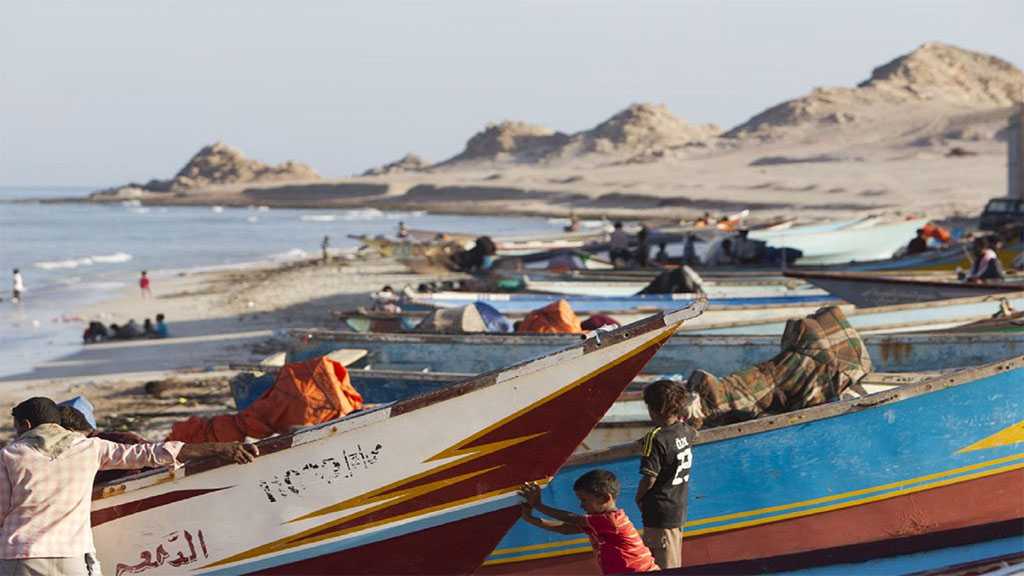
Home to some 60,000 people, Socotra overlooks the Bab el-Mandib Strait, a main shipping route that connects the Red Sea to the Gulf of Aden and the Arabian Sea. It has a unique ecosystem and been listed by UNESCO as a world natural heritage site.

Last June, the UAE-backed separatists of the so-called Southern Transitional Council [STC] took control of the resource-rich island in a move described as a “coup” by the regime of former Yemeni president Abd Rabbuh Mansur Hadi.

Now, the Emiratis have a military base on Socotra that is used to collect intelligence on maritime traffic in the Bab el-Mandib and the Gulf of Aden. Moreover, they are reportedly working with the ‘Israelis’ to set up spy bases on the Yemeni island.

The occupation of Socotra came two months after the UAE-backed separatists broke with once-allied Saudi-sponsored pro-Hadi militants in Yemen, saying they would establish a self-ruled administration in the war-torn country’s southern regions.

The infighting has dealt a blow to the Riyadh-led military coalition, which has been engaged in a deadly military campaign against Yemen since March 2015 with the aim of reinstalling Hadi in Sana’a.


River to Sea Uprooted Palestinian   
The views expressed in this article are the sole responsibility of the author and do not necessarily reflect those of the Blog!

Monday, 14 June 2021

The Mossad Spy in Yemen (English subtitles)


River to Sea Uprooted Palestinian   
The views expressed in this article are the sole responsibility of the author and do not necessarily reflect those of the Blog!

Monday, 12 April 2021

معركة تحرير مأرب… أهميتها وتداعياتها The battle to liberate Marib … its significance and repercussions

 ** Please scroll down for the English Machine translation **


معركة تحرير مأرب… أهميتها وتداعياتها

حسن حردان

طرح البدء بمعركة تحرير مدينة مأرب، التساؤلات حول مدى أهميتها وتداعياتها على مسار الحرب والتسوية السياسية ومستقبل اليمن، لا سيما أنّ التقدّم الكبير الحاصل في الميدان الذي يحققه تحالف اللجان الشعبية والجيش اليمني قد أدّى إلى رفع منسوب درجة اهتمام الدول الغربية بمجرياتها.. لما لذلك من انعكاسات على موازين القوى على صعيدي الميدان والسياسة.

انّ الإجابة على هذه التساؤلات وأسباب هذا الاهتمام الغربي الذي عكس مستوى القلق من التطورات الميدانية في مأرب، إنما يكمن في العوامل التالية:

أولاً، انّ إنجاز تحرير مدينة مأرب يعني عملياً سقوط آخر وأهمّ معقل للسعودية وحكومة هادي التابعة للرياض، وحزب الإصلاح الإخواني في شمال اليمن، مما سيشكل هزيمة مدوية لقوى العدوان على اليمن، ويحسم سيطرة تحالف اللجان الشعبية والجيش اليمني على كلّ المحافظات الشمالية وصولاً إلى الحدود مع محافظات جنوب اليمن.. وإبعاد التهديد عن العاصمة صنعاء، وبالتالي انهيار أحلام الرياض وحكومة هادي في استعادة السيطرة على شمال اليمن انطلاقاً من مأرب…

ثانياً، إنّ مأرب تقع جغرافياً على الحدود مع المملكة السعودية لجهة مدينتي جيزان وشرورة السعوديتين من الجهة المقابلة لمأرب.. وهذا يجعل استمرار السعودية بالعدوان، في مواجهة احتمال انتقال المعركة البرية إلى قلب هاتين المدينتين، وهو ما تتخوّف منه الرياض، وتحاول القوى التابعة لها التهويل من خطورته بالقول انّ قوات صنعاء اذا سيطرت على مدينة مأرب سوف يؤدّي ذلك الى سقوط خطّ الدفاع الأوّل عن مدينتَي جيزان وشرورة، وسيفتح سقوطها الباب أمام حركة «أنصار الله» لتوسيع نفوذها إلى كامل الحدود السعودية المشتركة مع اليمن.. وقد ذهب مدير التوجيه المعنوي السابق لقوات هادي في مأرب، اللواء محسن خصروف، إلى حدّ القول: «إنّ سقوط مأرب مُقدّمة لسقوط الرياض».. وذلك في محاولة لدفع الحكومة السعودية للزجّ بكلّ قوّتها لمنع سقوط مأرب بأيدي قوات اللجان والحكومة الشرعية في صنعاء…

ثالثاً، إنّ تحرير مأرب سيؤدّي إلى تحرير الثروة النفطية والغازية الهامة الموجودة فيها، والتي كانت تستغلها السعودية والقوى التابعة لها، وتحرم أهل اليمن منها، مما سيمكن حكومة صنعاء من امتلاك موارد هامة تعزز صمود اليمنيين ومقاومتهم في مواجهة العدوان والحصار المفروض عليهم منذ بدء الحرب على اليمن.. الأمر الذي سيشكل تحوّلاً كبيراً لمصلحة تعزيز تحرر اليمن من الهيمنة والسيطرة الأميركية السعودية، إذا ما أخذنا في الاعتبار أنّ أحد أهداف الحرب على اليمن إنما هو منع اليمنيين من التحكم في استغلال ثروتهم، من الغاز والنفط، التي يُقال إنّ اليمن يحوز على كميات كبيرة منها، وخصوصاً في مأرب، وإذا أحسن استغلالها فإنها تمكّن اليمن من تنمية اقتصاده وتحسين حياة الشعب، وتحوّل اليمن إلى دولة قوية مستقلة..

كما يوجد في مأرب محطة صافر لتوليد الطاقة الكهربائية بالغاز التي تغذي العاصمة صنعاء وعدد من المحافظات الشمالية والوسطى.. فيما سدّ مأرب يوفر مياه الري لمساحات شاسعة من الاراضي الزراعية، ولهذا اختيرت مأرب، في القدم، عاصمة للدولة السبئية، خلال الألفية الأولى قبل الميلاد، وفيها عرش ومحرم بلقيس.. وكانت تشكل حصناً لصدّ الغزاة الذين سعوا إلى احتلال اليمن منذ أيام الإمبراطورية الرومانية التي عجزت جيوشها عن احتلالها.. وكذلك جيوش الدولة العثمانية.

رابعاً، إنّ تحرير مأرب سيؤدي إلى تعزيز الموقف السياسي لتحالف اللجان الشعبية والحكومة الشرعية في صنعاء، في أيّ مفاوضات مقبلة لتحقيق التسوية للأزمة اليمنية، ويحدّ كثيراً من قدرة واشنطن والسعودية وحكومة هادي على فرض شروطهم..

خامساً، انّ تحرير مأرب وما يعنيه من انهيار آخر وأهمّ معقل لحكومة هادي وحلفائها، سيؤدّي إلى خلق مناخ عام بالهزيمة، وانهيار معنويات مقاتليهم، الأمر الذي سيولد تداعيات سريعة في مناطق سيطرتهم في جنوب اليمن، تسعر من الصراعات، المحتدمة أصلاً في ما بينهم، حول المسؤولية عن الهزيمة من جهة، وحول السيطرة على الجنوب من جهة ثانية، مما سيؤدّي إلى نقمة شعبية واسعة تعزز موقف القوى المعارضة لوجود المجلس الانتقالي وقوات هادي المدعومة سعودياً، ويوفر ظروفاً مواتية كي يتحالف أبناء الجنوب مع اللجان الشعبية والجيش اليمني لاستكمال تحرير المحافظات الجنوبية، من سيطرة قوات هادي والمجلس الانتقالي.. المدعومين من تحالف قوى العدوان.

هذه النتائج والتداعيات المتوقعة من جراء تحرير مأرب، هي التي تقف وراء ارتفاع درجة اهتمام الدول الغربية بما يحصل في مأرب، وفي المقدمة الولايات المتحدة، والتي عبّر عنها بمسارعتها إلى إطلاق التصريحات التي تدعو إلى وقف هجوم أنصار الله والقوات المسلحة اليمنية في مأرب، لمنع حصول التحوّلات النوعية في موازين القوى، لمصلحة تحالف أنصار الله والقوى الوطنية، على حساب الموقف الأميركي السعودي الذي سيجد نفسه يجلس إلى طاولة المفاوضات المقترحة لحلّ الأزمة، وهو في حالة من الضعف بعد أن مُنيَ بهزيمة قاسية، الأمر الذي يجعل حركة أنصار الله وحلفاءها في موقع من يملك القدرة على فرض الشروط، قبل انطلاق المفاوضات بوقف العدوان والحصار، وخلال المفاوضات بفرض شروط للتسوية تعزز قدرة الشعب اليمني على تقرير مصيره بعيداً عن التدخلات الخارجية.

انطلاقاً مما تقدّم يمكن فهم لماذا يرفض تحالف اللجان والجيش اليمني وقف الهجوم لاستكمال إنجاز تحرير مدينة مأرب.. ولماذا يرتفع منسوب القلق السعودي الأميركي الغربي من ذلك..

فتحرير مدينة مأرب سيشكل انتصاراً نوعياً يتوّج الانتصارات التي تحققت على مدى سنوات الحرب، وهزيمة كبرى لدول العدوان والقوى التابعة لهم، وسقوط أهدافهم التي سعت إلى القضاء على انصار الله والقوى الوطنية وإعادة إخضاع اليمن ومنع خروجه من فلك التبعية، لما يمثله من موقع جغرافي هامّ على طريق التجارة الدولية وفي الخليج حيث تتركز السيطرة الاستعمارية الأميركية على ثروات النفط والغاز وطرق إمدادها في مياه الخليج وباب المندب… وهو ما جعل إدارة الرئيس الأميركي جو بايدن تدعو إلى وقف هذه الحرب لاحتواء تداعياتها السلبية على النفوذ الاستعماري الأميركي، وتعرب عن القلق من سيطرة حركة أنصار الله على مأرب، الأمر الذي قد يسهم في تسريع خطوات واشنطن لوقف الحرب، ومحاولة الحدّ من تداعيات الهزيمة، وتدفيع ولي العهد السعودي محمد بن سلمان ثمن هذه الهزيمة، وهو ما ظهرت مؤشراته من خلال إعلان البيت الأبيض انّ الرئيس بايدن سيتواصل مباشرة مع الملك سلمان، وليس مع ولي العهد، ومن ثم الإفراج عن تقرير الاستخبارات المتعلق بجريمة قتل الصحافي السعودي جمال خاشقجي.. وذلك في سياق إعادة تقييم العلاقات الأميركية مع السعودية.. ما دفع المراقبين إلى التساؤل عما إذا كانت إدارة بايدن تسعى الى تقديم محمد بن سلمان كبش فداء بتحميله مسؤولية الكارثة في اليمن، والظهور في صورة من أوقف هذه الحرب لإعادة تلميع صورة أميركا في اليمن، وتمكين الدبلوماسية الأميركية من لعب الدور المنوط بها للحدّ من الخسائر واحتواء تداعيات الهزيمة… وإعادة ترميم وتعزيز نفوذ أميركا في اليمن من خلال التسوية السياسية.. لكن السؤال هل ستتمكن من ذلك، خصوصاً بعد أن اصبح هناك مقاومة تحرّرية يمنية تملك مشروعاً للتحرر، وتسعى إلى تحقيق استقلال اليمن بعيداً عن الهيمنة والتبعية للولايات المتحدة والحكومة السعودية.. ونجحت بداية في الصمود في مواجهة العدوان، واحتواء اندفاعته، ومن ثم الانتقال من الدفاع إلى الهجوم، وفرض معادلات الردع بعد أن تكمنت من نقل الحرب إلى الداخل السعودي، وتحرير المحافظات اليمنية الشمالية من سيطرة تحالف العدوان، الواحدة تلو الأخرى، حتى أصبحنا على مقربة من تحرير واستعادة آخر محافظة شمالية، وهي محافظة مأرب الاستراتيجية من جميع النواحي، الجغرافية، والاقتصادية، والعسكرية، والسياسية.


The battle to liberate Marib … its significance and repercussions

Hassan Hardan

The start of the battle for the liberation of Marib raised questions about its importance and its implications for the course of war, political settlement and the future of Yemen, especially since the great progress made in the field achieved by the Coalition of Popular Committees and the Yemeni army has raised the level of interest of Western countries in their conduct. This has implications for the balance of power in the field and politics.

The answer to these questions and the reasons for this Western interest, which reflected the level of concern about developments on the ground in Marib, lies in the following factors:

First, the achievement of the liberation of Marib city means practically the fall of the last and most important stronghold of Saudi Arabia and the government of Hadi of Riyadh, and the Brotherhood Reform Party in northern Yemen, which will constitute a resounding defeat for the forces of aggression against Yemen, and resolve the control of the coalition of popular committees and the Yemeni army on all the northern provinces down to the border with the provinces of southern Yemen. The threat was removed from the capital Sana’a, thus collapsing Riyadh and Hadi’s government’s dreams of regaining control of northern Yemen from Marib…

Secondly, Marib is geographically located on the border with Saudi Arabia to the Saudi cities of Jizan and Sharorah on the opposite side of Marib. This makes Saudi Arabia’s continued aggression, in the face of the possibility of a land battle moving to the heart of these two cities, which Riyadh fears, and its forces are trying to downplay its seriousness by saying that if Sana’a forces take control of Marib city will lead to the fall of the first line of defense for the cities of Jizan and Shororah, and its fall will open the door for Ansar Allah movement to expand its influence to the entire Saudi border with Yemen. The former director of Hadi’s moral guidance in Marib, Major General Mohsen Khasrouf, went so far as to say, “The fall of Marib is a prelude to the fall of Riyadh.” In an attempt to push the Saudi government to put all its power to prevent the fall of Marib by the forces of the committees and the legitimate government in Sana’a…

Thirdly, the liberation of Marib will lead to the liberalization of the important oil and gas wealth in it, which was exploited by Saudi Arabia and its forces, and deprives the people of Yemen of it, which will enable the Government of Sana’a to have important resources that strengthen the resilience and resistance of Yemenis in the face of aggression and siege imposed on them since the beginning of the war. This would be a major shift in favor of strengthening Yemen’s liberation from U.S.-Saudi hegemony and control, considering that one of the objectives of the war on Yemen is to prevent Yemenis from controlling the exploitation of their wealth, from gas and oil, of which Yemen is said to have large quantities, especially in Marib, and if it is best exploited, it enables Yemen to develop its economy and improve the lives of the people, and turn Yemen into a strong independent state.

There is also a gas-fired safir power plant in Marib that feeds the capital Sana’a and a number of northern and central provinces. The Marib Dam provides irrigation water for vast areas of agricultural land, which is why Marib was chosen, in the old days, as the capital of the Sabean state, during the first millennium BC, with a throne and the Sanctuary of Balqis. It was a bulwark to repel the invaders who had sought to occupy Yemen since the days of the Roman Empire, whose armies were unable to occupy it. So are the armies of the Ottoman Empire.

Fourthly, the liberation of Marib will strengthen the political position of the Coalition of Popular Committees and the Legitimate Government in Sana’a, in any future negotiations to achieve a settlement to the Yemeni crisis, and greatly limit the ability of Washington, Saudi Arabia and Hadi’s government to impose their conditions.

Fifthly, the liberation of Marib and the collapse of the last and most important stronghold of Hadi’s government and its allies will create a general atmosphere of defeat, and the collapse of the morale of their fighters, which lead to a rapid collapse in their areas of control in southern Yemen, exacerbating the conflicts, already raging between them, over responsibility for the defeat on the one hand, and over control of the south on the other hand, which will lead to a broad popular revulsion strengthening the position of forces opposed to the presence of the Transitional Council and Hadi forces backed by Saudi Arabia, and provides favorable conditions for the people of the south to ally with the popular committees and the Yemeni army to complete the liberation of the southern provinces, from the control of Hadi forces and the Transitional Council … supported by the coalition of aggression forces.

These results and the expected repercussions from the liberation of Marib are behind the high level of interest in Western countries, and in the forefront is the United States, which was expressed its hasten to launch statements calling for an end to the attack of Ansar Allah and the Yemeni armed forces in Marib, to prevent qualitative shifts in the balance of power, in favor of the Alliance of Ansar Allah and national forces, at the expense of the American-Saudi position, which will find itself sitting at the negotiating table proposed to solve the crisis, while it is in a state of weakness after suffering a severe defeat, which makes the Ansar Allah movement and its allies in a position to impose conditions, before the start of negotiations to stop the aggression and blockade, and during the negotiations to impose terms for a settlement that enhance the ability of the Yemeni people to determine their own destiny away from foreign interventions.

Based on the foregoing, it can be understood why the coalition of committees and the Yemeni army refuses to stop the attack in order to complete the achievement of liberating the city of Ma’rib … and why the level of Saudi-American-Western concern is high.

The liberation of the city of Ma’rib will constitute a qualitative victory that culminates in the victories achieved over the years of the war, a major defeat for the states of aggression and their forces, and the fall of their objectives, which sought to eliminate Ansar Allah and national forces, re-subjugate Yemen and prevent its exit from the orbit of dependency, because of the important geographical location it represents. The international trade route and in the Gulf, where the American colonial control is focused on oil and gas wealth and its supply routes in the Gulf waters and Bab al-Mandeb … President Joe Biden’s administration is calling for an end to the war to contain its negative repercussions on U.S. colonial influence, and expresses concern about Ansar Allah’s control of Marib, which could speed up Washington’s steps to stop the war, try to reduce the repercussions of the defeat, and pay for the defeat, which was highlighted by the White House’s announcement that President Biden would communicate directly with King Salman, not the crown prince, and then release the intelligence report on the murder of Saudi journalist Jamal Khashoggi. This is in the context of a reassessment of U.S. relations with Saudi Arabia. What led observers to question whether the Biden administration is seeking to cast Mohammed bin Salman as a scapegoat by blaming him for the disaster in Yemen, appearing in the form of those who stopped this war to re-polish America’s image in Yemen, and enable U.S. diplomacy to play its role in reducing losses and containing the repercussions of defeat… Restoring and strengthening America’s influence in Yemen through a political settlement. But the question is will it be able to do that, especially after there has become a Yemeni liberation resistance that has a project for liberation, and seeks to achieve Yemen’s independence away from the hegemony and subordination of the United States and the Saudi government … and it succeeded at the beginning. In steadfastness in the face of aggression, containing its impulsivity, and then moving from defense to attack, and imposing deterrence equations after it transcended the transfer of the war into the Saudi interior, and the liberation of the northern Yemeni provinces from the control of the aggression coalition, one after the other, until we became close to liberating and restoring The last northern governorate, which is the strategic Marib governorate, in all its geographical, economic, military and political aspects.


River to Sea Uprooted Palestinian   
The views expressed in this article are the sole responsibility of the author and do not necessarily reflect those of the Blog!

Monday, 5 April 2021

How Eurasia will be interconnected

How Eurasia will be interconnected

April 04, 2021

by Pepe Escobar posted with permission and first posted at Asia Times

The extraordinary confluence between the signing of the Iran-China strategic partnership deal and the Ever Given saga in the Suez Canal is bound to spawn a renewed drive to the Belt and Road Initiative (BRI) and all interconnected corridors of Eurasia integration.

This is the most important geo-economic development in Southwest Asia in ages – even more crucial than the geopolitical and military support to Damascus by Russia since 2015.

Multiple overland railway corridors across Eurasia featuring cargo trains crammed with freight – the most iconic of which is arguably Chongqin-Duisburg – are a key plank of BRI. In a few years, this will all be conducted on high-speed rail.

The key overland corridor is Xinjiang-Kazakhstan – and then onwards to Russia and beyond; the other one traverses Central Asia and Iran, all the way to Turkey, the Balkans, and Eastern Europe. It may take time – in terms of volume – to compete with maritime routes, but the substantial reduction in shipping time is already propelling a massive cargo surge.

The Iran-China strategic connection is bound to accelerate all interconnected corridors leading to and crisscrossing Southwest Asia.

Crucially, multiple BRI trade connectivity corridors are directly linked to establishing alternative routes to oil and gas transit, controlled or “supervised” by the Hegemon since 1945: Suez, Malacca, Hormuz, Bab al Mandeb.

Informal conversations with Persian Gulf traders have revealed huge skepticism about the foremost reason for the Ever Given saga. Merchant marine pilots agree that winds in a desert storm were not enough to harass a state of the art mega-container ship equipped with very complex navigation systems. The pilot error scenario – induced or not – is being seriously considered.

Then there’s the predominant shoptalk: stalled Ever Given was Japanese owned, leased from Taiwan, UK-insured, with an all-Indian crew, transporting Chinese merchandise to Europe. No wonder cynics, addressing the whole episode, are asking, Cui Bono?

Persian Gulf traders, in hush hush mode, also drop hints about the project for Haifa to eventually become the main port in the region, in close cooperation with the Emirates via a railway to be built between Jabal Ali in Dubai to Haifa, bypassing Suez.

Back to facts on the ground, the most interesting short-term development is how Iran’s oil and gas may be shipped to Xinjiang via the Caspian Sea and Kazakhstan – using a to-be-built Trans-Caspian pipeline.

That falls right into classic BRI territory. Actually more than that, because Kazakhstan is a partner not only of BRI but also the Russia-led Eurasia Economic Union (EAEU).

From Beijing’s point of view, Iran is also absolutely essential for the development of a land corridor from the Persian Gulf to the Black Sea and further to Europe via the Danube.

It’s obviously no accident that the Hegemon is on high alert in all points of this trade corridor. “Maximum pressure” sanctions and hybrid war against Iran; an attempt to manipulate the Armenia-Azerbaijan war; the post-color revolution environment in both Georgia and Ukraine – which border the Black Sea; NATO’s overarching shadow over the Balkans; it’s all part of the plot.

Now get me some Lapis Lazuli

Another fascinating chapter of Iran-China concerns Afghanistan. According to Tehran sources, part of the strategic agreement deals with Iran’s area of influence in Afghanistan and the evolution of still another connectivity corridor all the way to Xinjiang.

And here we go back to the always intriguing

Lapis Lazuli corridor – which was conceptualized in 2012, initially for increased connectivity between Afghanistan, Turkmenistan, Azerbaijan, Georgia and Turkey.

Lapis Lazuli, wonderfully evocative, harks back to the export of an array of semiprecious stones via the Ancient Silk Roads to the Caucasus, Russia, the Balkans and North Africa.

Now the Afghan government sees the ambitious 21st century remix as departing from Herat (a key area of Persian influence), continuing to the Caspian Sea port of Turkmenbashi in Turkmenistan, via a Trans-Caspian pipeline to Baku, onwards to Tblisi and the Georgian ports of Poti and Batumi in the Black Sea, and finally connected to Kars and Istanbul.

This is really serious business; a drive that may potentially link the

Eastern Mediterranean to the Indian Ocean.

Since Russia, Iran, Azerbaijan, Kazakhstan and Turkmenistan signed the Convention on the Legal Status of the Caspian Sea in 2018, in the Kazakh port of Aktau, what’s interesting is that their major issues are now discussed at the Shanghai Cooperation Organization (SCO), where Russia and Kazakhstan are full members; Iran will soon be; Azerbaijan is a dialogue partner; and Turkmenistan is a permanent guest.

One of the key connectivity problems to be addressed is the viability of building a canal from the Caspian Sea to Iran’s shores in the Persian Gulf. That would cost at least US$7 billion. Another issue is the imperative transition towards container cargo transport in the Caspian. In SCO terms, that will increase Russian trade with India via Iran as well as offering an extra corridor for China trade with Europe.

With Azerbaijan prevailing over Armenia in the Nagorno-Karabakh flare up, while finally sealing a deal with Turkmenistan over their respective status in the Caspian Sea, impetus for the western part of Lapis Lazuli is now in the cards.

The eastern part is a much more complicated affair, involving an absolutely crucial issue now on the table not only for Beijing but for the SCO: the integration of Afghanistan to the China-Pakistan Economic Corridor (CPEC).

In late 2020, Afghanistan, Pakistan and Uzbekistan agreed to build what analyst Andrew Korybko delightfully described as the PAKAFUZ railwayPAKAFUZ will be a key step to expand CPEC to Central Asia, via Afghanistan. Russia is more than interested.

This can become a classic case of the evolving BRI-EAEU melting pot. Crunch time – serious decisions included – will happen this summer, when Uzbekistan plans to host a conference called “Central and South Asia: Regional Interconnectedness. Challenges and Opportunities”.

So everything will be proceeding interconnected: a Trans-Caspian link; the expansion of CPEC; Af-Pak connected to Central Asia; an extra Pakistan-Iran corridor (via Balochistan, including the finally possible conclusion of the IP gas pipeline) all the way to Azerbaijan and Turkey; China deeply involved in all these projects.

Beijing will be building roads and pipelines in Iran, including one to ship Iranian natural gas to Turkey. Iran-China, in terms of projected investment, is nearly ten times more ambitious than CPEC. Call it CIEC (China-Iran Economic Corridor).

In a nutshell: the Chinese and Persian civilization-states are on the road to emulate the very close relationship they enjoyed during the Silk Road-era Yuan dynasty in the 13th century.

INSTC or bust

An extra piece of the puzzle concerns how the International North-South Transportation Corridor (INSTC) will mix with BRI and the EAEU. Crucially, INSTC also happens to be an alternative to Suez.

Iran, Russia and India have been discussing the intricacies of this 7,200 km-long ship/rail/road trade corridor since 2002. INSTC technically starts in Mumbai and goes all the way via the Indian Ocean to Iran, the Caspian Sea, and then to Moscow. As a measure of its appeal, Azerbaijan, Armenia, Belarus, Kazakhstan, Tajikistan, Kyrgyzstan, Ukraine, Oman, and Syria are all INSTC members.

Much to the delight of Indian analysts, INSTC reduces transit time from West India to Western Russia from 40 to 20 days, while cutting costs by as much as 60%. It’s already operational – but not as a continuous, free flow sea and rail link.

New Delhi already spent $500 million on a crucial project: the expansion of Chabahar port in Iran, which was supposed to become its entry point for a made in India Silk Road to Afghanistan and onward to Central Asia. But then it all got derailed by New Delhi’s flirting with the losing Quad proposition.

India also invested $1.6 billion in a railway between Zahedan, the key city in southeast Iran, and the Hajigak iron/steel mining in central Afghanistan. This all falls into a possible Iran-India free trade agreement which is being negotiated since 2019 (for the moment, on stand-by). Iran and Russia already clinched a similar agreement. And India wants the same with the EAEU as a whole.

Following the Iran-China strategic partnership, chairman of the Iranian Parliament’s National Security and Foreign Policy Committee, Mojtaba Zonnour, has already hinted that the next step should be an

Iran-Russia strategic cooperation deal, privileging “rail services, roads, refineries, petrochemicals, automobiles, oil, gas, environment and knowledge-based companies”.

What Moscow is already seriously considering is to build a canal between the Caspian and the Sea of Azov, north of the Black Sea. Meanwhile, the already built Caspian port of Lagan is a certified game-changer.

Lagan directly connects with multiple BRI nodes. There’s rail connectivity to the Trans-Siberian all the way to China. Across the Caspian, connectivity includes Turkmenbashi in Turkmenistan and Baku in Azerbaijan, which is the starting point of the BTK railway through to the Black Sea and then all the way from Turkey to Europe.

On the Iranian stretch of the Caspian, Amirabad port links to the INSTC, Chabahar port and further on to India. It’s not an accident that several Iranian companies, as well China’s Poly Group and China Energy Engineering Group International want to invest in Lagan.

What we see in play here is Iran at the center of a maze progressively interconnected with Russia, China and Central Asia. When the Caspian Sea is finally linked to international waters, we will see a de facto alternative trade/transport corridor to Suez.

Post-Iran-China, it’s not far-fetched anymore to even consider the possible emergence in a not too distant future of a Himalaya Silk Road uniting BRICS members China and India (think, for instance, of the power of Himalayan ice converging into a shared Hydropower Tunnel).

As it stands, Russia is very much focused on limitless possibilities in Southwest Asia, as Foreign Minister Sergey Lavrov made it clear in the 10th Middle East conference at the Valdai club. The Hegemon’s treats on multiple fronts – Ukraine, Belarus, Syria, Nord Stream 2 – pale in comparison.

The new architecture of 21st century geopolitics is already taking shape, with China providing multiple trade corridors for non-stop economic development while Russia is the reliable provider of energy and security goods, as well as the conceptualizer of a Greater Eurasia home, with “strategic partnership” Sino/Russian diplomacy playing the very long game.

Southwest Asia and Greater Eurasia have already seen which way the (desert) winds are blowing. And soon will the masters of international capital. Russia, China, Iran, India, Central Asia, Vietnam, Indonesia, the Korean Peninsula, everyone will experience a capital surge – financial vultures included. Following the Greed is Good gospel, Eurasia is about to become the ultimate Greed frontier.


River to Sea Uprooted Palestinian   
The views expressed in this article are the sole responsibility of the author and do not necessarily reflect those of the Blog!