05.11.2020 Author: Valery Kulikov

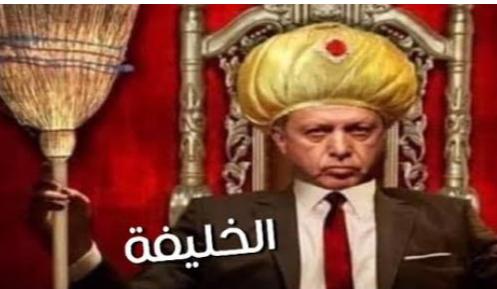
According to numerous observers, the “aggressive approach” the Turkish leader R. Erdogan implies in Turkey’s foreign policy every day evokes more and more hostility and opposition across the world.
It is through the fault of Ankara that many of the faded conflicts have flared up with renewed vigor lately. Thus, in the Eastern Mediterranean, Turkey is striving for shelf hydrocarbons, causing a wave of indignation not only from Greece, but also from the European Union. And although the clash of interests here has not yet reached outright bloodshed, nevertheless, Turkey is no longer shy about ramming opponents with their ships and vessels. This, in turn, causes an increase in the degree of tensions both within the EU and between NATO member states, the outcome of which so far few can predict. The drift towards divisions is on in spite of Washington’s calls to all NATO member states urging them to “keep Turkey in the West.”
After the terrorist attack on October 16 in the Paris suburbs of Conflans-Saint-Honorine, when an 18-year-old Islamist, motivated by religious enmity, killed a school history and geography teacher, a new diplomatic scandal erupted between Turkey and France, which significantly increased tensions between these countries in Libya, where they support opposing sides of the conflict.
Numerous media voices are increasingly citing factual evidence of Ankara’s intervention in the Libyan conflict, and not only in the form of supplying weapons there in violation of the imposed international embargo, but also sending numerous mercenaries from the war zone in Syria.
Recently, the growing criticism of Turkey on sending mercenaries not only to Syria and Libya, but also to the Karabakh conflict zone, has been confirmed by the intelligence services of the OSCE Minsk Group co-chairing countries. As a result, today no one, including Turkey itself, can claim that in the context of the Nagorno-Karabakh conflict, it acts as an impartial or neutral party, since it views this conflict as an opportunity to expand its influence in another neighboring region, the Southern Caucasus.
The summit of the EU states, which ended in late October, condemned the aggressive rhetoric and actions of Turkey aimed at the EU states, and the head of the European Council Charles Michel indicated that the EU leaders would discuss further actions with regard to Turkey at the planned summit in December. “We have expressed our determination to make Ankara respect us. Turkey has not yet chosen a positive path in relations with the EU. We condemn the recent unilateral actions of Turkey in the Eastern Mediterranean, provocations and aggressive rhetoric against the EU countries, which is absolutely unacceptable,” Charles Michel said on October 29 following the EU summit held in the video conference format.
NATO also declares its “bewilderment” by Turkey’s actions, openly hinting to Erdogan about “unpleasant moments” and readiness to take a tougher position with regard to Ankara.
Today Turkey has strained its relations with many countries. In addition to the deepening conflict with the United States (after the acquisition and testing of the Russian S-400 anti-aircraft missile system), France, Greece and the EU as a whole, the list of Turkey’s “opponents” includes Israel (due to the conflict over the Palestinian problem), Syria (where Erdogan introduced Turkish troops), Iran (with which Ankara has intensified contradictions because of Erdogan’s actions in Syria), Saudi Arabia (relations with which have especially worsened because of the “Khashoggi case”). Even with the United Arab Emirates Erdogan’s conflict has become so widespread that this struggle unfolds from Morocco to Syria, most fiercely manifesting itself in the field of “soft power”, with mutual accusations of seeking to destabilize the Arab world. The Arab monarchies are particularly concerned about Ankara’s policy in the Persian Gulf, where Turkish troops are now stationed in Qatar, another Turkish base is located in Somalia, and Erdogan himself actively supports and finances the Muslim Brotherhood religious and political movement (banned in Russia – ed.) , to which the monarchies of the Gulf are more than wary.
As a result, as noted not only by the Western, but other regional media, Erdogan risks isolating his country from both the West and Arabs with Persians. “Turkish President Recep Tayyip Erdogan has made it clear that he has no desire to be a bridge between Europe and the Arab world. Instead, he decided to reshape Turkey in line with its imperial past and make it a competitor to the two regions,” UAE Foreign Minister Anwar Gargash is being cited.
In response to the aggressiveness of Erdogan’s policy, France has already called off its ambassador from Turkey “for consultations”. The Canadian government, after the Bombardier Recreational Products company “unexpectedly” learned that its engines were being installed on the Turkish Bayraktar TB2 (“Flag Bearer”) operational tactical attack drones (these has been actively used in the conflict in Nagorno-Karabakh), took the decision to stop supplying them, as well as other weapons to Turkey. Canada stressed that “the use of attack drones by Turkey often goes beyond the framework of agreements within the NATO format.”
For its part, Turkey has no choice but to launch its own production of engines for Turkish drones, or to intensify military-technical cooperation with Ukraine in this regard, which was indirectly confirmed in the speeches of representatives of the industrial and business circles of Turkey, in particular, Turkish Aerospace Industries.
Against the backdrop of these events, the fall of the Turkish lira became uncontrollable, and Ankara no longer has the resources to keep the situation under control. Since the beginning of the year, the lira has fallen by 39% against the US dollar, which has become the worst indicator dynamics among all currencies in Eurasia, despite the fact that the dollar this year is clearly not up to par. The savings of the Turkish state itself continue to fall: according to the investment bank Goldman Sachs, Turkey has spent about $130 billion from its reserves over the past year and a half. At the same time, the reserves do not cease to decline, and if in the summer their volume reached $90 billion, now they have dropped below $80 billion. The situation is complicated by the need to fight the current economic crisis. In addition, unemployment in the country approached 14%, and among young people it reached 25%.
According to the forecasts of the former IMF Managing Director Desmond Lachman, in the event of a liquidity crisis in the world, Turkey will become one of the first countries to declare a default. Under these conditions, in order to mitigate the consequences of the recession, the state again has to borrow a lot from foreign creditors, but because of Erdogan’s aggressive policy, reliable friends (except, perhaps, Ukraine, whose situation is even worse), to whom you can turn for loans, today are getting more and more scarce…
Valery Kulikov, a political analyst, exclusively for the online magazine “New Eastern Outlook”.