Uprooted Palestinians are at the heart of the conflict in the M.E Palestinians uprooted by force of arms. Yet faced immense difficulties have survived, kept alive their history and culture, passed keys of family homes in occupied Palestine from one generation to the next.
Israeli security services announced the arrest of an employee in the house of Israeli Security Minister Benny Gantz on charges of communicating with an Iranian entity to spy on Gantz.
Israeli was charged with espionage after the Israeli security services discovered his relationship with an Iranian source
Today, Thursday, the Israeli security services arrested an Israeli employee who works in the house of Security Minister Benny Gantz on charges of contacting a source linked to Iran.
The Israeli Public Broadcasting Corporation reported that as part of a joint operation between the Shin Bet and the police, an Israeli named Omri Goren, who was serving in housework and cleaning at the house of Security Minister Benny Gantz, was arrested for questioning on charges of espionage.
The investigation revealed that “Goren contacted an organization with links to Iran and offered it assistance in espionage, such as planting spyware on the Security Minister’s computer, and to prove his seriousness, he photographed several places in Gantz’s home.”
The Shin Bet said that after the device was operated, the worker was unable to access sensitive materials, and therefore no such materials were transferred from him to the authorities he contacted.
An investigation was conducted with Goren with the knowledge of Security Minister Gantz, and eventually, an indictment was filed by the Central Prosecutor’s Office in the Lod Court on charges of espionage.
The images of fear, gloominess and awe have been haunting the Zionist soldiers and officers who witnessed the explosion which rocked the headquarters of the military command of the occupation forces in the Lebanese southern city of Tyre 38 years ago.
Shahid Ahmad Qassir Executes Operation: Enemy leadership in panic and alarm
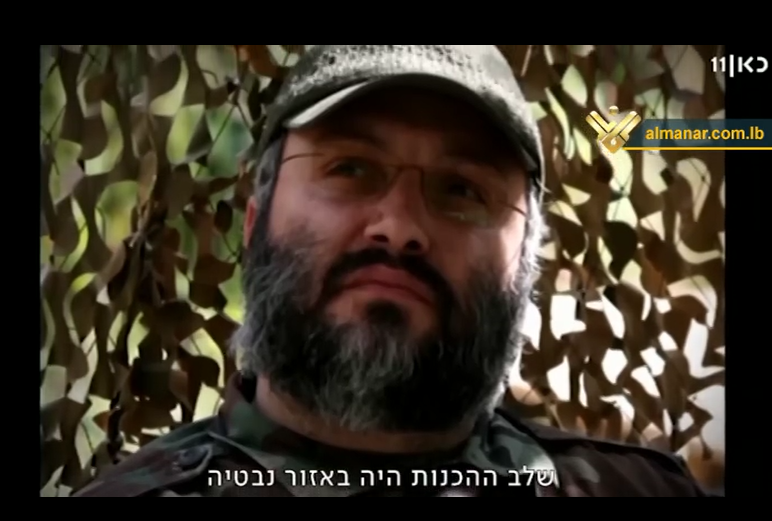
On October 11, 1982, the martyr Ahmad Kassir carried out the first martyrdom bombing operation, detonated his explosives-rigged car at the headquarters of the Israeli military command in Tyre, southern Lebanon, killing 76 soldiers as well as officers and injuring 118 of others.
A number of Shin Bet officers recalled the images of fear they witnessed on that day, narrating how the Israeli military police prevented them from circulating the booby-trapped car attack hypothesis.
It is worth noting that the Israeli military censorship have repeatedly refrained from acknowledging Hezbollah responsibility for the losses inflicted upon its troops for fear of the psychological consequences of such conformation.
The Shin Bet officers emphasized that, after the blast, they obtained enough reports which confirmed Hezbollah involvement in the attack.
David Hearst is the editor in chief of Middle East Eye. He left The Guardian as its chief foreign leader writer. In a career spanning 29 years, he covered the Brighton bomb, the miner’s strike, the loyalist backlash in the wake of the Anglo-Irish Agreement in Northern Ireland, the first conflicts in the breakup of the former Yugoslavia in Slovenia and Croatia, the end of the Soviet Union, Chechnya, and the bushfire wars that accompanied it. He charted Boris Yeltsin’s moral and physical decline and the conditions which created the rise of Putin. After Ireland, he was appointed Europe correspondent for Guardian Europe, then joined the Moscow bureau in 1992, before becoming bureau chief in 1994. He left Russia in 1997 to join the foreign desk, became European editor and then associate foreign editor. He joined The Guardian from The Scotsman, where he worked as education correspondent.
Keir Starmer’s silence on Palestine and his treatment of his predecessor have set the Labour leader on a collision course with many within his own party
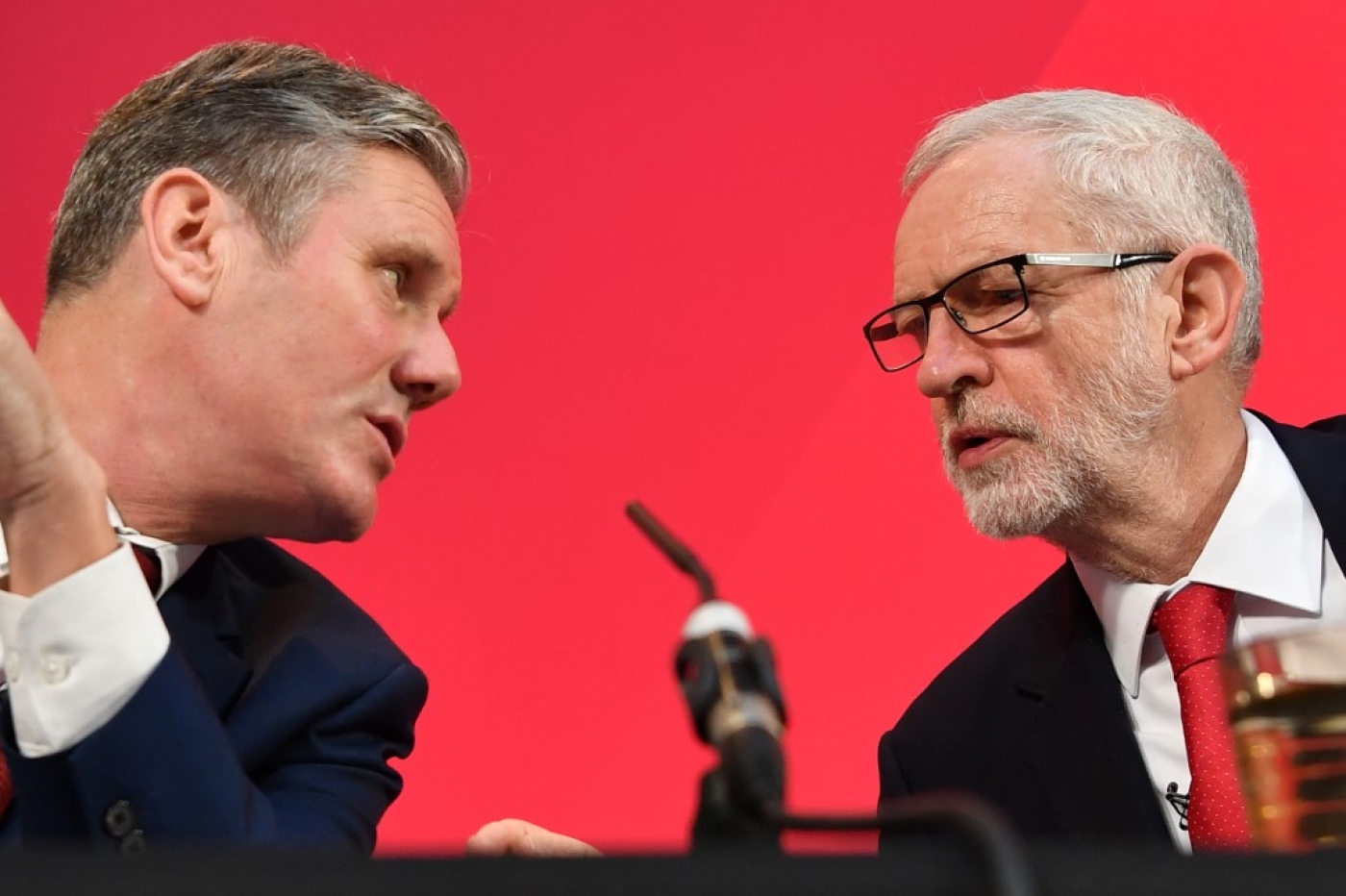
Keir Starmer (L) with Jeremy Corbyn at a press conference in London in December 2019 (AFP)
One of the lesser known aspects of Keir Starmer’s assault on the left of his party since becoming Labour leader is his growing silence on Palestine.
Silencing the Palestinian lobby in Britain has always been a goal of Israel’s Ministry of Strategic Affairs, which has gone to some lengths to condition debate inside the Labour Party on Israel.
In 2017, an Al Jazeera documentary exposed the efforts of the ministry’s man in London, Shai Masot, to start a youth wing in the Labour Party. Masot was also filmed by an undercover reporter saying he wanted to “take down” government ministers and MPs considered to be causing “problems” for Israel.
Silencing the Palestinian lobby in Britain has always been a goal of Israel’s Ministry of Strategic Affairs, which has gone to some lengths to condition debate inside the Labour Party on Israel
When Masot was rumbled and expelled, a continuous feed of Jeremy Corbyn’s meetings as a backbench MP with Palestinians, dating back in some cases over a decade, was created to stoke the furore over the then-Labour leader.
This feed was doctored.
When Corbyn met three Hamas politicians whose Jerusalem IDs had been revoked and had staged a sit-in a tent in the grounds of the Red Cross (this was a cause celebre at the time and many Israelis went to show solidarity with the case), the presence of a second Labour MP, Andy Slaughter, who is not a Corbyn ally but is pro-Palestinian, was excised from British reports.
However, a picture of Slaughter appeared in Israeli news channel i24’s exclusive of “Corbyn’s secret visit” in its report in 2018, which was eight years after the MPs’ visit took place in November 2010.
Role of Shin Bet
The precise details of Corbyn’s visit to Israel in 2010, including who was on it, who arranged it and who they met, were monitored and logged by Israel’s domestic security service, Shin Bet.
When these visits were over, Shin Bet invited Corbyn’s local fixer in for what turned out to be five hours of questioning in a police station in Haifa.
Shin Bet told her they were relaxed about her charity work for the Palestinian cause, but would not tolerate her campaigning inside the Houses of Parliament in the UK.EXCLUSIVE: Jeremy Corbyn questions impartiality of EHRC antisemitism inquiry
If she did not heed the warning, she would spend the rest of her days in prison as an enemy of the state. Her lawyer told her that such a charge could indeed be fabricated against her and that an Israeli court would send her to prison if this happened. She is an Israeli citizen.
At the very least, the warnings given to Corbyn’s fixer confirm that Israel’s security services had set their sights on the MP at least five years before he became Labour leader and long before antisemitism in Labour became a newsworthy issue.
Nobody in the Labour Party was bothered with Corbyn’s travels, which certainly were not secret. He was a backbencher on the fringes of the party. Only Shin Bet took note.
The smear campaign has been wonderfully effective. Of course, many groups joined in for different reasons, including people indifferent to the conflict in Palestine who had shown no past interest in it.
The compromising material of Corbyn’s past contacts would have had no purchase had there not been a determination within the Parliamentary Labour Party and at Labour headquarters to stop Corbyn at all costs. But taken together, it worked.
A poll conducted by Survation last year asked member of the British public who were aware of antisemitism in Labour what percentage of party members had complaints against them.
Their mean average reply was 34 percent. The real figure is a fraction of one percent. The perception of antisemitism was over 300 times the reality in Corbyn’s party.
Palestine lost
Since becoming leader, Keir Starmer has avoided contact with Palestinian leaders, either in Israel or in Britain.
Starmer has had two opportunities to engage.
On 26 June this year, 15 members of the Knesset who comprise the Joint List wrote to all party leaders in Britain to urge them to “actively oppose” attempts by Israel to annex territory unilaterally.Israel’s Joint List urges British political parties to oppose annexation
The Joint List, the main coalition representing Palestinian citizens of Israel, is the third largest group of MKs in the parliament. The letter was sent by Yousef Jabareen, the head of the Joint List’s international committee.
Prime Minister Boris Johnson instructed one of his ministers, James Cleverly, minister of state for the Middle East and North Africa, to reply.
“We continue to urge Israel not to take these steps. The prime minister has conveyed the UK’s opposition to unilateral annexation to Prime Minister Netanyahu on multiple occasions,” Cleverly wrote.
Starmer did not reply, and still has not replied. Jabareen received an automated reply from Starmer’s office, telling him that he receives hundreds of emails each day.
On 16 September, a group of leading British Palestinians, many of whom were members of Labour, but some not, wrote an open letter to the Labour Party insisting on “the right of Palestinians to accurately describe our experiences of dispossession and oppression” and rejecting Labour’s attempts to conflate anti-Zionism with antisemitism.
The letter was accompanied by emails to Starmer to set up a meeting. They were told that Starmer was too busy to meet them. They were referred to Lisa Nandy, the shadow foreign secretary, who also declined to meet them.
A ‘dressing down’
However when Stephen Kinnock, who comes from the right wing of the party and is a bitter critic of Corbyn, called in a parliamentary debate for the UK to “ban all products that originate from Israeli settlements in the occupied territories”, Nandy found the time to intervene.
Nandy told the Board of Deputies of British Jews and the Jewish Leadership Council – according to a source quoted by MailOnline – that Kinnock, a consistent and long-standing critic of Israel’s policy towards the Palestinians, had been given a “dressing down” for his remarks made during the Commons debate.
Starmer’s sole intervention in this debate occurred when he was asked by Jewish News about sanctions and he stressed the need instead to maintain a ‘strong working relationship with Israel’
“Lisa made no secret of the fact she and the leader were angry with Kinnock,” the source is quoted as saying.
“Especially after all the work that has been done to try and restore Labour’s relationship with the Jewish community.”
Nandy herself proposed a ban on the import of goods from illegal settlements in the West Bank, but only if Israel pressed ahead with annexation.
Starmer’s sole intervention in this debate occurred when he was asked by Jewish News about sanctions and he stressed the need instead to maintain a “strong working relationship with Israel”.
Starmer said: “I don’t agree with annexation and I don’t think it’s good for security in the region, and I think it’s very important that we say that.
“Whether sanctions follow is another matter but at the moment let’s resolve this in the proper way. But this is not good for security in the region. That should be a paramount consideration.
When pressed further, he added: “There needs to be a strong working relationship where we are able to exchange views frankly, as you would with an ally and on some of these issues, a frank exchange is what we most need, I think.”
Labour’s history
This Monday marks 103 years since the Balfour Declaration committed British governments to support for a Jewish homeland in Palestine.
The 1917 document predates Labour’s emergence as a political force in the years after World War One, but the party has a history of its own in the Middle East which no leader can ignore.Jeremy Corbyn suspended from Labour following antisemitism report
In 1944, when the territory of Palestine was still under British control, its national executive committee authored a motion, passed by conference, which read: “Palestine surely is a case, on human grounds and to promote a stable settlement, for transfer of population. Let the Arabs be encouraged to move out, as the Jews move in. Let them be compensated handsomely for their land and let their settlement elsewhere be carefully organised and generously financed.”
But it has history more recent than that.
The suspension of Corbyn after the Equality and Human Rights Commission (EHRC) report into antisemitism last week contrasts with Corbyn’s treatment of Tony Blair, who as a former Labour prime minister was excoriated by the 2016 Chilcot Report over his decision to invade Iraq in 2003.
John Chilcot, a former senior diplomat, eviscerated Blair, stopping short of accusing him of lying to parliament.
Chilcot said that at the time of the invasion, Saddam Hussein “posed no imminent threat” and revealed a private note that Blair sent to Bush in July 2002 which read: “I will be with you, whatever.”
In a two-hour press conference following the publication of the report, Blair was unrepentant. “I believe we made the right decision and the world is better and safer,” he declared.
He argued that he had acted in good faith, based on intelligence at the time which said that Iraq’s president had weapons of mass destruction. This “turned out to be wrong”.
Corbyn’s suspension
Corbyn offered a total apology on behalf of the party for the decision to invade Iraq.
He said: “So I now apologise sincerely on behalf of my party for the disastrous decision to go to war in Iraq in March 2003. That apology is owed first of all to the people of Iraq. Hundreds of thousands of lives have been lost and the country is still living with the devastating consequences of the war and the forces it unleashed. They have paid the greatest price for the most serious foreign policy calamity of the last 60 years.”
He went on: “The apology is also owed to the families of those soldiers who died in Iraq or who have returned home injured or incapacitated. They did their duty but it was in a conflict they should never have been sent to.”
Corbyn appeared as if he was defying the leadership, even though at the time he spoke, he had no idea what Starmer would say on a key point that defined their dispute
Blair at the time was just a member of the party, in the same situation as Corbyn was last week.
Corbyn, however, did not suspend Blair for not apologising and uttering words which went against the party line.
Instead, the opposite was happening. The “party of war” within the Parliamentary Labour Party went on the offensive against the leadership.
MPs who had backed the Iraq war, and consistently voted against inquiries into it, went after Corbyn.
Of the 71 MPs who voted no confidence in Corbyn in 2016 and who had been in parliament in 2003, 92 percent had voted in favour of the Iraq war and seven against.
In justifying his action to suspend Corbyn, Starmer said that the former leader had defied his response to the EHRC report, which condemned anyone trying to claim that antisemitism had been exaggerated for political reasons.
The night before the report was published, Starmer phoned Corbyn to say he would not be condemning him by name in his statement of reply to the EHRC report. Corbyn and his team repeatedly asked Starmer what he would say in his statement. Starmer said he would send them his lines.
Angela Rayner, the deputy leader, also promised Corbyn’s team that she would send them the lines of Starmer’s statement. Both failed to do so. The reactions of the two men were thus set on collision course.
Corbyn appeared as if he was defying the leadership, even though at the time he spoke, he had no idea what Starmer would say on a key point that defined their dispute.
Corbyn subsequently failed to back down, but one possibility is that Starmer’s team knew what Corbyn would say, while Corbyn himself was kept in the dark until it was too late.
The left bites back
Corbyn did not defend himself against allegations that he tolerated antisemitism or that he himself was an antisemite, claims that are still being made today. To the extent that he let this campaign run unchallenged in the High Court, he himself is responsible.
Quite apart from the fate of Corbyn, support for Palestine is much greater in the party than Starmer is comfortable with. Palestine, which he knows about much less than Corbyn, is his blindspot
On the day Corbyn was suspended, the Campaign Against Antisemitism, the original complainant in the EHRC investigation, wrote to Starmer and David Evans, the general secretary, demanding investigations into 32 members of the Labour Party, including Angela Rayner, Starmer’s current deputy, and 10 other MPs.
In response, seven trade unions affiliated to the Labour Party and one which backed Starmer as candidate, published a statement expressing “serious concern” about the manner and rationale for Corbyn’s suspension, suggesting it had undermined party unity and democratic processes.
Far from being his “Clause 4” moment – the issue that Tony Blair used to define New Labour by dropping the party’s historic commitment to state ownership of key industries – the suspension of Corbyn could define Starmer’s leadership in the same way that Blair’s decision to invade Iraq has cast a shadow over everything a man elected three times as prime minister did. The ghosts of Iraq follow Blair around to this day.
Quite apart from the fate of Corbyn, support for Palestine is much greater in the party than Starmer is comfortable with. Palestine, which he knows about much less than Corbyn, is his blindspot.
Unless Corbyn is reinstated quickly, the decision to suspend him from the party could prove to be a permanent and defining stain on Starmer’s leadership.
The views expressed in this article belong to the author and do not necessarily reflect the editorial policy of Middle East Eye.
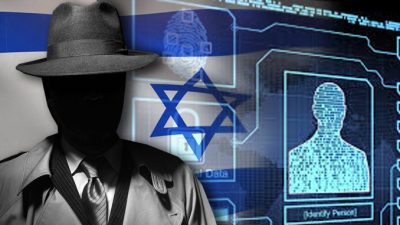
Israel’s external spy organization Mossad and its internal espionage equivalent Shin Bet have reputations that are much larger than their actual successes, but the one area where they have excelled is electronic intelligence gathering. Recent electronic spying around the White House and other federal buildings in Washington carried out by the Israeli Embassy demonstrates that Israel does not differentiate much between friends and enemies when it conducts espionage. In fact, spying targeting the U.S. is probably its number one priority due to the fact that the Jewish state is so heavily dependent on American support that it feels compelled to learn what discussions relating to it are taking place behind closed doors.
Israeli penetration of U.S. telecommunications began in the 1990s, when American companies like AT&T and Verizon, the chief conduits of the National Security Agency (NSA) for communications surveillance, began to use Israeli-produced hardware, particularly for law enforcement-related surveillance and clandestine recording. The devices had a so-called back door, which meant that everything they did was shared with Israel. Israeli cyber-specialists even broke into classified networks with the NSA and FBI aware of what was going on but unwilling to confront “America’s best ally.” President Bill Clinton once quipped to Monica Lewinski that they should avoid using the Oval Office phone because someone might be listening in. He was referring to Israel.
To be sure, the Jewish state’s high-tech sector has been much assisted in its effort by “own goals” provided by the United States, which allows Israel to bid on government contracts relating to national security, virtually guaranteeing that any technical innovations will be stolen and re-exported by Israeli high-tech companies. Major technology innovators like Intel, which works with the NSA, have set up shop in Israel and have publicly stated, “We think of ourselves as an Israeli company as much as a U.S. company.” Vulture capitalist Zionist billionaire Paul Singer has recently been accused of steering highly paid U.S. tech sector jobs to Israel, jobs that are lost to the American economy forever.
So, Israel is a leader in using electronic resources to carry out espionage and collect information on various targets of interest. Israel is also an innovator, and its close relationship with the U.S. intelligence community (IC), most particularly the NSA, means that technologies and procedures developed by the Jewish state will inevitably show up in America.
The U.S. is in any event working hard on its own tools for managing the public, spurred by Covid-19 hysteria. Special ID cards could help track the health status of individuals. This status would be recorded and updated on a chip readable by government scanners that, by some accounts, might be either carried or even permanently embedded in everyone’s body. Another plan being promoted in a joint venture by Apple and Google that appears to have White House support involves “add[ing] technology to their smartphone platforms that will alert users if they have come into contact with a person with Covid-19. People must opt into the system, but it has the potential to monitor about a third of the world’s population” with monitoring done by central computers. Once the legal principle is established that phones can be manipulated to do what is now an “illegal search,” there are no technical or practical limits to what other tasks could also be performed.
Developments in Israel
With those steps being taken to control the movements of possibly infected citizens in mind, some recent developments in Israel are, to put it mildly, ominous. The Jewish state is currently achieving multi-level 24/7 surveillance of everyone residing in the country conducted in real time. Investigative reporter and peace activist Richard Silverstein describes in some detail why it is happening now, what it means, and how it works.
Per Silverstein, Israel, like every other authoritarian state, is currently taking advantage of the distraction caused by the coronavirus pandemic. Prime Minister Benjamin Netanyahu, whose political fortunes seemed to be on the wane due to three hung elections, exploited the fear of the virus to assume emergency powers and obtain Knesset approval to use a highly classified national database “compiled by the Shin Bet and comprising private personal data on every Israeli citizen, both Jewish and Palestinian. In the aftermath of 9/11, Israel’s Knesset secretly assigned its domestic intelligence agency the task of creating the database, which was ostensibly meant as a counterterrorism measure.”
The database, nicknamed “The Tool,” includes names, addresses, phone numbers, employment, and educational information but it goes well beyond that in using phone tracking data to record every phone call made by the individual to include names and numbers of those called and the geo-location of where the call was made from. Phone tracking also enabled Shin Bet to create a log of where the caller traveled in Israel and the occupied territories. Internet use, if active on the phone, was also recorded. It is as complete and total surveillance of an individual as is possible to obtain and it does not involve any human participation at all, every bit of it being done by computer.
Netanyahu publicly proclaimed his intention to use the database, stating that it would be employed to combat the coronavirus, which he described as a threat to national survival. As a result of the claimed crisis, he and his principal opponent, Blue and White party leader Benny Gantz, were able to come to terms on April 20 to form a “national emergency unity government” with Netanyahu as prime minister yet again.
The exploitation of the fear of the virus plus that revelation about Israel’s powerful technical tool to thwart it produced a victory for Netanyahu, who effectively portrayed himself as a strong and indispensable leader, erasing the stigma resulting from his pending trial on charges of massive corruption while in office. One of the first steps Netanyahu will reportedly take is to replace the attorney general and state prosecutor who were seeking to send him to prison, effectively taking away the threat that he might go to prison.
The exposure of the existence of the database inevitably led to charges that Netanyahu had, for personal gain, revealed Israel’s most powerful counterterrorism weapon. There were also concerns about the significance of the huge body of personal information collected by Shin Bet, to include suggestions that it constituted a gross violation of civil liberties. But carefully stoked fear of the virus combined with some political deals and maneuvers meant that use of the data was eventually approved by the Knesset security committee at the end of March.
Israel, which has closed its borders, and which still has a relatively low level of coronavirus infections and deaths, has already started using the Shin Bet database while also turning the attempts to deal with the disease as something like an intelligence war. The information obtained from “The Tool” enables the police and military to determine if someone were standing near someone else for more than a few minutes. If the contact included someone already infected, all parties are placed under quarantine. Any attempt to evade controls leads to arrest and punishment of a six-month prison term plus a $1,500 fine. Armed soldiers patrolling the streets are empowered to question anyone who is out and about.
Mossad is also involved in fighting the virus, boasting of having “stolen” 100,000 face masks and also respirators from a neighboring country presumed to be the United Arab Emirates. Silverstein observes that “Israel’s far-right government has militarized the contagion. Just as a hammer never met a nail it didn’t want to pound, it is only natural for a national security state like Israel to see Covid-19 as a security threat just as much or more than a health threat.” And when it comes to bioweapons, Israel is no parvenu. Ironically, the hidden story behind the “war on the coronavirus” is that Israel is itself one of the most advanced states in developing and testing biological weapons at its lab at Nes Tziona.
Returning to the emergence of “The Tool,” hardline Defense Minister Naftali Bennett has also suggested monetizing the product by selling a “civilian version of it,” to include its operating system, analytic capabilities, and setup details to foreign countries, including the United States. Israel has already successfully marketed to security agencies and governments a similar product called Pegasus, which has been described as the most sophisticated malware on the market.
Like The Tool, Pegasus does data mining and real-time analysis of individuals based on a range of collection techniques. The Israeli cyber company NSO Group that markets Pegasus was recently involved in an attempt to hack Facebook-owned secure communications system Whats-App, targeting journalists and political activists, on behalf of an unknown client. Ironically, it is believed that Facebook had earlier used NSO Group’s somewhat shadowy services. Perhaps more notoriously, Pegasus was also used to monitor contacts and establish physical location in the case of journalist Jamal Khashoggi, who was murdered by Saudi intelligence agents in Istanbul.
So, Americans should beware when confronted by the new cyber-security software being promoted by Israel because the Jewish state is also exporting its own vision of a centrally controlled militarized state where all rights are potentially sacrificed for security. As whistleblower Edward Snowden has already revealed, the NSA has the capability to collect vast amounts of information on citizens. If the United States government falls for the bait and moves in the Israeli direction, using that data to enable the surveillance and manage all the people all the time, the temptation will be great to employ the new capability even if its use is not strictly speaking warranted.
And there will be no one there to say nay to the new powers, not in Congress, on the Supreme Court or in the White House. And the media will be on board, too, arguing that security against external and internal threats requires some infringements of individual rights. It is one of the ironies of history that the United States of America, with its vast resources, large population and legacy of individual freedom, has been becoming more like its tiny militarized client state Israel. It is a tendency that must be resisted at all costs by every American who cares about fundamental liberties.
Hamas Palestinian resistance group in the Gaza Strip said on Sunday that its security forces arrested a cell of Palestinian Authority intelligence officials, who collected information on Islamic Jihad leader Baha Abu al-Ata before he was assassinated by the Zionist entity in a targeted killing earlier last month.
Fatah, the party that dominates the PA, quickly pushed back on the accusation, claiming it was false.
Abu al-Ata and his wife were martyred on November 12, in an Israeli strike on his home in northern Gaza. Palestinian resistance groups in Gaza subsequently fired hundreds of rockets at Israel, which responded with retaliatory strikes.
After Abu al-Ata’s martyrdom, Prime Minister Benjamin Netanyahu described him as a “ticking time bomb” and “the main instigator of terrorism” from the coastal enclave, responsible for many rocket attacks on the occupied territories and planning more.
The Hamas Interior Ministry said in a statement Sunday that the cell of PA intelligence officers monitored the movements of Abu al-Ata for several months before he was killed.
It specifically said that the cell was ordered to follow the Islamic Jihad commander by Shaaban Abdullah al-Gharbawi, who it said is a PA General Intelligence Services officer responsible for Gaza.
A video released by the ministry said that there were six PA intelligence officers under Gharbawi’s command. It also stated that Gharbawi resides in Ramallah, suggesting that he was not in its custody.
The footage included a recording of what the ministry said was a phone call about Abu al-Ata between Gharbawi and a Shin Bet security service agent named “Berri.”
The video also purported to show footage of the airstrike that killed Abu al-Ata.
In its statement, the ministry announced that the security forces confiscated “technical materials” that confirm Gharbawi gave Shin Bet officers information about “the resistance’s abilities, plans and the movements of its members and leaders.”
Fatah rejected ministry’s allegations as “baseless lies aimed at covering up the secret understandings between Hamas and Israel.”
“This is a theater performance that has been woven together by Hamas’s delusions,” Fatah said in a statement.
أصدرت حركة الجهاد الإسلامي، تصريحا صحقيا، حول ما نشرته وزارة للداخلية بغزة، بخصوص اغتيال الشهيد بهاء أبو العطا.
وقال الجهاد الإسلامي: “تابعنا باهتمام بالغ نتائج التحقيقات المتعلقة بجريمة اغتيال الأخ المجاهد بهاء أبو العطا “أبو سليم” قائد المنطقة الشمالية في سرايا القدس، و إننا نؤكد أن العدو الصهيوني هو من نفذ جريمة اغتيال القائد أبو سليم”.
وأضافت الحركة: “من خلال قنوات التنسيق والتعاون مع الأجهزة الأمنية تواصل فحص كافة المعلومات ونتائج التحقيق بخصوص كل من تعاون مع العدو في ملاحقة المقاومة واغتيال القائد ابو سليم. وفي السياق نشيد بدور الاجهزة الأمنية في حماية ظهر المقاومة”.
وذكرت الجهاد أنها تجدد إدانتها الشديدة لكل أشكال التنسيق الأمني الذي طالما كان خنجرا في ظهر المقاومة الباسلة وتهديدا لشعبنا الثائر.
And You Remain Impossible to Erase
-
There you are, the inspiring Imam, forever present in the conscience of the
honorable and the hearts of the loyal.
Father Dave Smith, Pray For (Mufti) Dr. Hassoun
-
Abducted by the terrorist regime in Syria in 2025, Sheikh Hassoun has been
sentenced to life in prison I spoke with Father Dave Smith, an Australian
Anglic...
The eight heads were only the beginning
-
“Over 1,200 Human Heads And Multiple Human Fetuses Discovered In A
Warehouse In Detroit“ (Books Behind Borders):Despite everything authorities
had already ...
Jewish Supremacy Over The Goy
-
Jewish Supremacy Over The Goy August 26 2026
___________________________________ More Vids! +BN Vids Archive! HERE!
___________________________________ Sup...
Report on Beth Israel vigil 08-15-26
-
*Charlie Kirk and JFK*
John F. Kennedy was assassinated under questionable circumstances on
November 22, 1963, and Charlie Kirk fell on September 10 of la...
On The Road To International Anarchy
-
ON THE ROAD TO INTERNATIONAL ANARCHY— An Analysis (14 August 2026) by
Lawrence Davidson Part I — The Turn Toward […]
-
Hello all,
It is with great sadness that I share with you the passing of our beloved
sister, Mother, and Grandmother, the individual that you all knew ...
Best Horror Podcast
-
Best Horror Podcast Introduction: Horror podcasts […]
The post Best Horror Podcast appeared first on Copper Shock Horror Podcast.
Ikhras Endorses Muntadhar Al-Zaidi
-
“Oh parties of banditry and sectarianism and corruption, we have come and
our goal is to destroy you.” Ikhras formally endorses Muntadhar al-Zaidi,
Iraqi j...
Prince Charles: Foreign Jews behind bloodshed in ME
-
In May, 2017, British Crown Prince Charles declined an invitation from
Zionist entity’s president Reuven Rivlin‘s to attend the 100th anniversary
of the no...
Palestinian Women – One for All, All for One
-
Honouring All Palestinian Women by Honouring Three: Hanin Zoabi, Ahed
Tamimi, Samah Sabawi Vacy Vlazna “Palestinian women have always stood side
by side ...
US’s Saudi Oil Deal from Win-Win to Mega-Lose
-
By F. William Engdahl Who would’ve thought it would come to this? Certainly
not the Obama Administration, and their brilliant geo-political think-tank
neo-...
-
*Mordechai Vanunu wins human rights prize of Brazilian Press Association *
* http://www.alternativenews.org/english/index.php/features/updates/7038-mordechai...
Abdul Aziz Rantissi:
"My ultimate wish, my God, is to attain martyrdom,"...God granted him his wish on April 17, 2004, at the hands of Israeli assassins.