Uprooted Palestinians are at the heart of the conflict in the M.E Palestinians uprooted by force of arms. Yet faced immense difficulties have survived, kept alive their history and culture, passed keys of family homes in occupied Palestine from one generation to the next.
07/04/2010 The security agreement signed between the Lebanese government (at the time of the unconstitutional government of Fouad Saniora) and the US embassy remained at the top headlines on Monday as President Michel Sleiman was warning against seeking to harm Hezbollah through the agreement at the time the Information and Telecoms committee was concluding its discussions and referring the whole issue to Speaker Nabih Berri.
Indeed, and despite the seriousness of the dangers and violations present in the agreement, lawmakers couldn't reach a "unified" resolution amid a "political division" and decided to refer the whole issue to Speaker Nabih Berri who would take the "appropriate" step.
In the meantime, President Michel Sleiman broke his silence and announced his position of the agreement for the first time, rejecting any attempt to harm Hezbollah through the mentioned agreement.
In an interview with the Qatari newspaper Al-Watan, Sleiman said that Lebanon will not allow anyone to "harm" Hezbollah through the issue of US agreement with the Internal Security Forces.
"We will not allow, and no one in Lebanon would allow or would want, particularly at the level of institutions and officials, to bring harm to the resistance" through the so-called "security agreement" with Washington, President Sleiman said.
Sleiman said the agreement has been dealt with in accordance with the Constitution. "When the executive authority puts its hands on an issue, we wait for the report to be issued so we can judge," Sleiman explained.
ANY ATTACK ON LEBANON IS NOT A PICNIC BUT STUPIDITY
Meanwhile, Sleiman recalled that the Israeli enemy has to think twice before committing to a new aggressive adventure against Lebanon. According to him, "Israel is fully aware that any attack on Lebanon is not a picnic, but a stupid thing to do."
"The Lebanese are united behind the army and together, with the resistance, will ward off any aggression and defend their land and dignity," Sleiman stressed. "They, too, will not allow anyone to harm the resistance."
07/04/2010 Lebanon's Prime Minister Saad Hariri said on Wednesday that the conflict between the Israeli enemy and the Palestinians is "much more explosive" than the Iranian nuclear crisis.
The Middle East conflict "is much more explosive, brimming over with 'uranium and extremism', than any other regional issue," he told the Spanish newspaper El Mundo, without elaborating.
Hariri, who is expected for a two-day visit in Madrid on Thursday, said Lebanon was in favor of a "Middle East without nuclear weapons" which he said "includes Israel" and not only Iran.
As Hariri prepares to make his second visit to Syria since taking office in November, he also said closer ties with Damascus were key to counter an "Israeli threat".
"Stronger ties with Syria mean there is a firmer position toward Israel," Hariri said.
He also accused the media of under-reporting Israeli "atrocities" toward the Palestinians.
While pedophile priests in the Roman Catholic Church were given "extensive media coverage" amid "attacks against the Vatican", "atrocities committed by Israel against Palestinians" go practically unreported, said Hariri. For Israel "war is always an option," he added.
PARIS, (PIC)-- Israel is the main threat to peace in the Middle East, Turkish Prime Minister Recep Tayyip Erdogan said Wednesday at the onset of a visit to France.
Speaking to journalists in Paris before a working lunch with French president Nicolas Sarkozy, Erdogan said that it is impossible to praise a country that exerted such excessive force in Gaza, including the use of phosphorus weapons.
“If a country uses disproportionate force in Palestine, in Gaza — uses phosphorous shells — we’re not going to say ‘bravo’,” he declared, referring to Israel January 2009 offensive against Gaza, which killed and injured more than 5,000 Palestinians.
Erdogan said Israel’s justification for the offensive on Gaza was based on “lies” and cited a report by United Nations investigator Richard Goldstone.
“Goldstone is a Jew and his report is clear,” the Turkish leader told reporters invited to meet him at the Paris Ritz. “It’s not because we are Muslims that we take this position. Our position is humanitarian. It’s Israel that is the principal threat to regional peace.”
ISTANBUL, (PIC)-- Ankara strongly denounced Israeli foreign minister Avigdor Lieberman for his blatant remarks in which he likened Turkish premier Recep Erdogan to Libyan president Musammar Al-Gaddafi and Venezuelan president Hugo Chavez.
The Turkish minister of foreign affairs described in a statement on Tuesday Lieberman’s remarks as unfounded and outrageous.
“Lieberman's remarks are beyond the limits, inappropriate, and impertinent and bear no truth. Turkey calls on Israel to trade their meaningless and unacceptable attitude for common sense," Turkish foreign ministry spokesman Burak Ozugergin said on Tuesday.
“The remarks show that Lieberman continues to violate diplomatic rules that govern international relations,” the spokesman added.
Lieberman had told Israeli newspaper Yedioth Ahronoth that “Erdogan is slowly turning into Libyan leader Muammar Gaddafi or Venezuelan President Hugo Chavez.”
“It's his choice. The problem is not Turkey; the problem is Erdogan," Lieberman added.
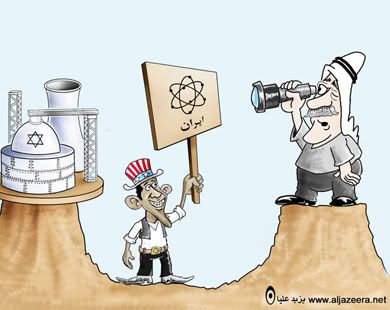
07/04/2010 Iranian President Mahmoud Ahmadinejad on Wednesday warned his US counterpart Barack Obama of a "tooth-breaking" response, as he condemned Washington's new nuclear policy.
"I hope these published comments are not true... he (Obama) has threatened with nuclear and chemical weapons those nations which do not submit to the greed of the United States," Ahmadinejad said in speech broadcast live on state television. "Be careful. If you set step in Mr. (George W.) Bush's path, the nations' response would be the same tooth-breaking one as they gave Bush," he said.
The United States unveiled new limits on the nation's nuclear arsenal on Tuesday, saying it would use atomic weapons with "outliers" such as Iran and North Korea, both accused by the West of flouting UN resolutions.
Ahmadinejad brushed off Obama's policy, saying it reflected "his inexperience." "What Mr. Obama has said even Mr. Bush whose hands were smeared with blood of nations did not," said the president. "We advise Mr. Obama to be careful in not signing anything they put in front. Wait and weigh things a bit. Beware that those who were bigger and stronger than you could not do a damn thing, let alone you," he said.
“Whenever American politicians and materialistic politicians are beaten by logic, laws and rationale they immediately put their hands on their triggers just like cowboys and actors in American westerns movies,” Ahmadinejad added. “We consider Obama’s actions are all conducted because of his inexperience. Anyway he is a newcomer to the high level political fields and he is still gaining experience and based on what we have heard from people close to him, he is under the pressure imposed by the capitalists and the Zionists.”
Ahmadinejad was not alone in condemning Washington's nuclear policy which also came under attack on Wednesday from two other top Iranian officials. "We regard the recent position and comments of the United States as propaganda," foreign minister Manouchehr Mottaki told reporters.
Defense Minister Ahmad Vahidi said the new US policy supported Israel. "They use new designs for new bombs, support Israel which has many nuclear warheads, but on the other hand pressure Iran. This is exactly a domineering order and oppressive dealing which Iran does not accept," he was quoted as saying by the ILNA news agency.
07/04/2010 Iran on Wednesday dismissed US President Barack Obama’s new nuclear policy as “propaganda” and called on Washington to make good its promises to rid the world of “atomic weapons”. “We regard the recent position and comments of the United States as propaganda,” Iranian Foreign Minister Manouchehr Mottaki said at a press conference when asked to react to Obama’s new nuclear policy unveiled on Tuesday.
“We urge the US to make good on nuclear disarmament in the entire world and we denounce the US for being the first user of nuclear weapons in Hiroshima.” Mottaki reiterated that Iran does not believe in nor does it need nuclear weapons.
The United States unveiled new limits on the nation’s nuclear arsenal Tuesday, saying it would only use atomic weapons in “extreme circumstances” and would not attack non-nuclear states. In a policy shift, the United States said for the first time that countries without atomic weapons that complied with non-proliferation treaty obligations need not fear a US nuclear attack. But Obama warned exceptions could be made for “outliers” such as Iran and North Korea, both accused by the West of flouting UN resolutions.
Mottaki said that Iran was still hopeful that a UN-drafted deal to supply nuclear fuel to a Tehran reactor could be finalized. “The fuel exchange proposal is still on the table and we can carry it out,” Mottaki told reporters. “We have had direct and indirect talks with all the sides of the Vienna group and discussed different aspects of a logical framework for an exchange (of fuel).”
Mottaki said the deal can still be done “in a little while if they show some political will.” The International Atomic Energy Agency brokered a deal in Vienna last October which envisages Iran sending its low-enriched uranium (LEU) to France and Russia for conversion into fuel for its Tehran research reactor.
But Iranian officials have refused to hand over Tehran’s stockpiles of LEU, insisting on a simultaneous exchange of the material for the fuel within the borders of the Islamic republic. World powers have opposed this condition.
Tomorrow—Tuesday, April 6, 2010—the Obama Administration will proclaim, as a matter of declaratory policy, that the United States claims the prerogative to use nuclear weapons against the Islamic Republic of Iran, even as Iran remains a non-nuclear-weapons state. The Administration will make this declaration as part of its much anticipated Nuclear Posture Review, which will be issued two days before President Obama and Russian President Medvedev sign a new Strategic Arms Reduction Treaty (START).
We welcome the conclusion of the new START agreement, a long-overdue step in reducing the role of nuclear weapons in America’s military posture. Such a shift is, of course, critical to any chance of progress toward President Obama’s goal, defined in the historic speech he delivered one year ago today in Prague, of a world without nuclear weapons.
In principle, the Nuclear Posture Review should constitute another initial, concrete step toward the ultimate realization of the President’s worthy vision. To its credit, the Obama Administration will issue the final text of the Review online, for all to see. Unfortunately, though, the Administration will flinch from taking the most important step that it could take in the context of the Nuclear Posture Review—namely, to declare that, as a matter of policy, the United States possesses nuclear weapons for the sole purpose of deterring the use of nuclear weapons against the United States and its allies.
Instead, the Obama Administration will advance a declaratory position that, while the primary purpose of America’s nuclear arsenal is to deter nuclear use against the United States and its allies, deterrence is not its only purpose. More specifically, the Administration will reserve the prerogative for the United States to use nuclear weapons first, at its discretion, against non-nuclear-weapons states that are not, in Washington’s view, in full compliance with their obligations under the Nuclear Non-Proliferation Treaty (NPT). In that context, recent statements by Secretary of State Hillary Clinton and other senior Administration officials that Iran is not in compliance with its NPT obligations seem quite ominous.
Of course, the George W. Bush Administration and the Obama Administration have both noted that the Islamic Republic has not complied with United Nations Security Council resolutions calling on it to suspend uranium enrichment. These administrations have also called on Tehran to improve its cooperation with the International Atomic Energy Agency. But the motive behind the recent shift in the Obama Administration’s rhetoric to highlight Tehran’s alleged noncompliance with the NPT was unclear, at least until now. The Administration has painted a nuclear target on Iran’s back (and, to be fair, on North Koreaand perhaps Syria as well).
We believe that this is a bad decision with regard to U.S. nuclear weapons policy, but will leave it to others to discuss those dimensions of the matter. We are absolutely certain that it is a horrible decision with regard to America’s Iran policy. We have said and written on many occasions that we believe Iran is establishing the foundations for what some analysts call a nuclear weapons “option”, but, in our assessment, has not taken a decision to move all the way to overt weaponization. (And, Iranian officials at the highest levels, including Supreme Ayatollah Ali Khamenei, have said repeatedly that the Islamic Republic does not seek and does not want nuclear weapons.) One of the several reasons we oppose U.S. military action against Iran over the nuclear issue is because we believe such action would increase the chances that Tehran would decide to weaponize its nuclear capabilities. In the same vein, making Iran a potential U.S. nuclear target will remove at least some of Tehran’s incentives for restraint in developing its own nuclear capabilities. If Iran, as a non-nuclear-weapons state, will face the threat of nuclear “first use” by the United States, why shouldn’t Tehran proceed to the actual acquisition of nuclear weapons?
April 7, 2010
In early February of 2006, I submitted a book proposal about the wartime relationship between Generals George Marshall and Dwight Eisenhower to a group of New York publishers. I had worked on the proposal for nine months and believed it would garner significant interest. Two weeks after the submission, I received my first response – from a senior editor at a major New York publishing firm. He was uncomfortable with the proposal: “Wasn’t Marshall an anti-Semite?” he asked. I’d heard this claim before, but I was still shocked by the question. For me, George Marshall was an icon: the one officer who, more than any other, was responsible for the American victory in World War Two. He was the most important soldier of his generation – and a man of great moral and physical courage.
That Marshall was an anti-Semite has been retailed regularly since 1948 – when it became known that he not only opposed the U.S. stance in favor of the partition of Palestine, but vehemently recommended that the U.S. not recognize the State of Israel that emerged. Harry Truman disagreed and Marshall and Truman clashed in a meeting in the Oval Office, on May 12, 1948. Truman relied on presidential adviser Clark Clifford to make the argument. Clifford faced Marshall: the U.S. had made a moral commitment to the world’s Jews that dated from Britain’s 1919 Balfour Declaration, he argued,and the U.S would be supported by Israel in the Middle East. The Holocaust had made Israel’s creation an imperative and, moreover, Israel would bea democracy. He then added: Jewish-Americans were an important voting bloc and would favor the decision.
Marshall exploded. “Mr. President,” he said, “I thought this meeting was called to consider an important, complicated problem in foreign policy. I don’t even know why Clifford is here.” Truman attempted to calm Marshall, whom he admired – but Marshall was not satisfied. “I do not think that politics should play any role in our decision,”he said. The meeting ended acrimoniously, though Truman attempted to placate Marshall by noting that he was “inclined” to side with him. That wasn’t true – the U.S. voted to recognize Israel and worked to support its emerging statehood. Marshall remained enraged.
When Marshall returned to the State Department from his meeting with Truman, he memorialized the meeting: “I remarked to the president that, speaking objectively, I could not help but think that suggestions made by Mr. Clifford were wrong. I thought that to adopt these suggestions would have precisely the opposite effect from that intended by him. The transparent dodge to win a few votes would not, in fact, achieve this purpose. The great dignity of the office of the president would be seriously damaged. The counsel offered by Mr. Clifford’s advice was based on domestic political considerations, while the problem confronting us was international. I stated bluntly that if the president were to follow Mr. Clifford’s advice, and if I were to vote in the next election, I would vote against the president.” Put more simply, Marshall believed that Truman was sacrificing American security for American votes.
The Truman-Marshall argument over Israel has entered American lore – and been a subject of widespread historical controversy. Was Marshall’s opposition to recognition of Israel a reflection of his, and the American establishment’s, latent anti-Semitism? Or was it a credible reflection of U.S. military worries that the creation of Israel would engage America in a defense of the small country that would drain American resources and lives? In the years since, a gaggle of historians and politicians have weighed in with their own opinions, the most recent being Ambassador Richard Holbrooke.Writing in The Washington Post on May 7, 2008, Holbrooke noted that “beneath the surface” of the Truman-Marshall controversy “lay unspoken but real anti-Semitism on the part of some (but not all) policymakers. The position of those opposing recognition was simple – oil, numbers and history.”
But that’s only a part of the story. In the period between the end of World War Two and Marshall’s meeting with Truman, the Joint Chiefs of Staff had issued no less than sixteen (by my count) papers on the Palestine issue. The most important of these was issued on March 31, 1948 and entitled “Force Requirements for Palestine.”In that paper, the JCS predicted that “the Zionist strategy will seek to involve [the United States] in a continuously widening and deepening series of operations intended to secure maximum Jewish objectives.” The JCS speculated that these objectives included: initial Jewish sovereignty over a portion of Palestine, acceptance by the great powers of the right to unlimited immigration, the extension of Jewish sovereignty over all of Palestine and the expansion of “Eretz Israel” into Transjordan and into portions of Lebanon and Syria.This was not the only time the JCS expressed this worry. In late 1947, the JCS had written that “A decision to partition Palestine, if the decision were supported by the United States, would prejudice United States strategic interests in the Near and Middle East” to the point that “United States influence in the area would be curtailed to that which could be maintained by military force.” That is to say, the concern of the Joint Chiefs of Staff was not with the security of Israel- but with the security of American lives.
In the wake of my March 13 article in these pages (‘The Petraeus briefing: Biden’s embarrassment is not the whole story‘) a storm of outrage greeted my claim that Israeli intransigence on the peace process could be costing American lives. One week after that article appeared, I called General Joe Hoar, a former CENTCOM commander and a friend. We talked about the article. “I don’t get it,” he said. “What’s the news here? Hasn’t this been said before?” If history is any guide, the answer is simple: it was said sixty years ago by one of America’s greatest soldiers. George Marshall wasn’t an anti-Semite. But he was prescient.
"... In my opinion, this oped (Ephraim Sneh's) likely represents another example of an unstoppable force (Israeli strategic doctrine) meeting an immovable object (the limits of Israeli military power).That a highly intelligent man like Ephraim Sneh should make quite fantastic claims about the ability of Israel, alone and unaided, to set back the Iranian nuclear programme is something which, I think, needs explaining. It may be that he has simply succumbed to hubris. But it is also possible that he is being less than candid.There is, it seems to me, no reason to question the sincerity of his claim that Israel is under 'existential threat', or to dismiss it as paranoia .Unlike Netanyahu, Sneh is not attempting to conjure up alarm by suggesting an Iranian nuclear capability would be under the control of irrational -- and by implication undeterrable -- fanatics. Rather, he is focusing on the crucial questions of the psychological impact of such a capability, and its impact on risk-taking, in the context of Israel's intractable demographic problems: considerations to which the ability to deter deliberate attack is of very limited relevance.Certainly might dispute Sneh's conclusions, but they hardly self-evidently silly: Israel cannot live in the shadow of a nuclear Iran. Immigration will cease, more young people will emigrate and foreign investments will diminish.
An Israel that is no longer a safe home for Diaspora Jews and is not characterized by entrepreneurship and excellence means an end to the Zionist dream........The regional balance of power will change to Israel's disadvantage. Although Nasrallah would obviously call things by different names, it is not clear to me that his reading of Israeli vulnerabilities is fundamentally different.
So what options are open to Israel to avert the hardly so very implausible scenario which Sneh is conjuring up?
One possibility to which he refers could be the kind of '"crippling sanctions" that might perhaps undermine the regime in Tehran. But a necessary condition for these would be the participation of China and of Russia -- which at the moment does not seem very likely.Failing the internal collapse of the regime in Tehran, one is indeed back to the massive discrepancy between the requirements of Israeli strategic doctrine and the capabilities of Israeli military power, which you pinpoint in your comment. The only way to square the circle is to enlist the massive military capabilities of the United Statesin support of Israeli objectives. One obvious possibility is for Israel to attack Iran, in the expectation that events would develop in such a manner as to draw the United States into the conflict. Both Phil Giraldi and Clifford Kiracofe have suggested that this is something which the Israelis might well try to do, and be able to do.And indeed, in his recent report on the subject, former USAF Colonel Sam Gardiner, who has been involved in a lot of work on hypothetical scenarios relating to crises involving Iran, suggests that it might be very difficult for Obama not to side with Israel in a conflict with Iran, even if the Israelis started it. (See http://www.foi.se/FOI/Templates/NewsPage____9027.aspx.)
However, seeking to inveigle the United States into a war in this way is a very high risk strategy, to put it mildly. The kind of effects which Sneh suggests might be expected from an Iranian acquisition of nuclear weapons, while they may indeed constitute an 'existential threat' to Israel, quite patently do not do so to the United States.Whether they constitute a serious enough threat to the United States to warrant the costs and risks of military action is, it appears to me, a matter on which informed opinion is divided. Even among those who think that when push comes to shove it may be better to accept such costs and risks, many are likely to think that these are decisions Americans should make for themselves, in their own time.Accordingly, an attempt to inveigle the United States into war with Iran could be a massive strategic catastrophe for the Israelis -- either if it failed, or if it succeeded, but the crushing of Iranian power generated seriously negative side effects.One might then expert a perfectly rational Israeli strategic planner to see himself (or herself) as caught between a rock and a hard place -- and to want to keep options open. If such a planner wanted to keep the option of attempting to inveigle Obama into a war open, it would seem advisable to do certain things.Crucially, it would be necessary that the actual objective of a possible attack was not made overt. It would be imperative to present it as an heroic attempt by a desperate Israel to escape by its unaided efforts from an intolerable situation. In making such a presentation credible, it would help enormously to suggest that those who had planned the operation genuinely believed that Israeli capabilities were adequate to the task.It would further be an absolute priority to avoid unnecessarily antagonising Obama and influential elements in the United States -- particularly in the military -- who might be in two minds about how to act, once a war between Israel and Iran was a fait accompli. From such a perspective, the decision by Netanyahu to confront Obama over the settlements at this time of all times could only be seen as simple lunacy.The appropriate strategy would be precisely that which Sneh recommends -- 'an open-ended freeze of settlement and outpost expansion, refrain from building new neighborhoods in East Jerusalem and stop construction for Jews in Arab neighborhoods.'What would further be required would be for Israel to attempt to give every appearance of going along in good faith with the strategy of trying to pressure Iran, or provoke 'regime change', by sanctions -- even in it was judged that this strategy was unlikely to work. And this, again, appears to be what Sneh is recommending.Last but not least, it would be necessary to have either 'evidence', or plausible-sounding speculation, suggesting that an Iranian nuclear capability was an imminent prospect, appearing at a time when electoral calculations might push the Obama administration to conclude in the event of an Israeli attack on Iran that their least worst option was military intervention against the latter country to finish the war quickly.The suggestion by Sneh that in the absence of 'crippling sanctions' it is 'reasonable to assume that by 2011 Iran will have a nuclear bomb or two' obviously has to be seen together with the suggestion that Israel 'would have to act around the congressional elections in November, thereby sealing Obama's fate as president.'Of course, one could read this as suggesting that among the anticipated possible benefits from an attack on Iran would be the replacement of Obama by a president more congenial to Israel. But although this may be a consideration, it would not seem to be the only or the decisive one. In a crucial paragraph, Sneh suggests that:The acquisition of nuclear weapons by Iran during Obama's term would do him a great deal of political damage. The damage that the resulting independent Israeli strike would cause Obama - soaring gasoline prices and American casualties in retaliatory operations - would be devastating.This suggests to me the hope of creating a situation where Obama and his advisers would calculate that they could best hope of preventing gasoline prices remaining high for a protracted period and minimising American casualties lay in a prompt and devastating deployment of military power against Iran.And in such a situation, Sneh may also be suggesting, Obama and his advisors might be influenced by the calculation that such a prompt and devastating deployment would gain them the kudos of having forestalled an imminent Iranian acquisition of nuclear weapons.In putting forward this possible reading of his remarks, I am not suggesting that Sneh is committed to a strategy of attempting to inveigle the United States into a war against Iran. What does seem to me likely is both that he wants to keep the option open, and is sending a covert message both to Netanyahu and many others that if they want to do this, a bull in the China shop approach to the Obama Administration is not exactly clever.
"...We have found the weapons of mass destruction..."
Meanwhile, I would expect to see a good deal of disinformation surfacing in various places -- probably including London -- designed to suggest that an Iranian nuclear capability is a significantly more immediate possibility than is likely to be the case. And it would not greatly surprise me if such an information warfare campaign would be designed to climax sometime in the autumn of this year.An alternative explanation, as I noted at the start, is that Sneh is suffering from hubris. A less than comforting thought is that if he is not, he probably thinks Netanyahu is. Habakkuk
To talk about ethics is no easy task. In contemporary liberal democracies we are witnessing a severe tendency towards dismissing ethics and morality in favor of legal maneuvers.
Contrariwise, referring to the ethical judgment as a vigilant act, attributable to the transcendental subject rather than to the empirical individual, hints at the uncanniness of human existence.
In compliance with this position I contend that viewing justice in legalist terms signifies the Westerners’ betrayal of its 'polis' heritage, where the political is bound to ethics. In Sophocles’ Antigone Heidegger presents us with a human swirl, as a reflection upon arguing rightly and thinking humanely[i]. In violating the overpowering limiting power of ‘Being’ poetically, creative thinkers have created ‘the place’ in the polis, where the rhetorician, politician, philosopher, or legislator aspired to convince the public about the 'truth value' of innovative bits of knowledge in order to be won. Physics which epitomizes the fluidity of concepts that once had been defined, their content being constantly altered, reminds us of the ‘empty space’ in the centre of the polis. In Judaism, where ‘truth’ is divine, this ‘empty space’ does not exist! Thus, it is deprived of the ethical whirling experience. The question is: How is it possible for the ethical episode to happen, if science and art are prohibited, and justice is replaced by obedience? Jewish law tolerates neither empty spaces to be filled up by rhetoric, nor disparity to be acted out by the means of theatre or epics.
But, the ‘empty space’ is the core of hermeneutics, as the art of inspiring new chains for understanding a text creatively. The Judaic approach to the playfulness of language is more elusive than it seems. The Jew who oscillates between immutable textual knowledge and the “turn it and turn it, for everything is in it”, without plumping for either, is jammed into false hermeneutics. Hence Judaism which conceives the human being as subordinated to the Text, the claim of bringing hermeneutics to its prime fails.
In his article ‘The Law Wishes to have a Formal Existence’ Stanley Fish speaks ironically about the threat of hermeneutics, as the exposure of a text to too many uncontrolled interpretations. The two threats to ‘The Law’ are morality, to which the law pretends to be related, and interpretation. If justice could be inferred directly by a chain of moral obligations there would be no need for a legal system. The fear of the ‘deleterious’ influence of morality maintains the formal existence of the law. Oddly enough, formal legalism coincides with Judaic conceit of elevating hermeneutics to its peak and at the same time preserves zealously the formal status of The Law. Thus, for the purpose of distancing the observant subject from imaginative reading leading to unruly moral thinking, an esoteric hermeneutics followed by rhetorical spins was elaborated. In devising self-executing formalities Jewish hermeneutics ascertains the meaning as possessed by the last word. Lyotard asks: if deconstruction is about something badly constructed, how can deconstruction deconstruct a text which cannot be amended? The problem with the Jews is that instead of being the ‘Guardians of Being’, they turned into the guardians of ‘not-forgetting-the-forgotten’, distorting justice in the name of ‘The Law’[ii]. Hence in fact the ‘people of the book’ are the ‘people of the one and the same book’, they are literate but not knowledgeable. Conceiving themselves as the ‘light of the nations’, they fail to show any eagerness to be enlightened. Judaic zeal for abstract signification, the refusal to supply presentation for the unpresentable interferes with a capacity to speculate with ideas.
This irreconcilable gap between Hellenism and Judaism can be exposed in the Decalogue where sin is not defined in ethical or moral terms, and ethical wrangling is replaced by dutiful obedience. For more than 2500 years the world was suffused with the myth of justice and social welfare which the Ten Commandments bestowed upon it. From a cautious reading of the Ten Commandments, an all-embracing intention to disconnect human beings from their natural instincts, impulses and natural drives can be revealed. Start with the commandment that tells us to respect and love our parents. We love our parents instinctively, but rebel against their authority through many life episodes. This ethical intricate burden that was relentlessly reconsidered by Greek mythology and tragedy, is delivered as an imperative, which excludes any ethical battling with the ‘given’. To be commanded to respect our parents in exchange for being rewarded with long life in the Promised Land does not sound like a revelation of truth and justice. Likewise with the ‘Sabbath’: in the ancient world the tillers of the soil had to plough, sow and reap. Once the tears and toils of farming and growing were ended by joy, they celebrated with feasts of wine and dancing. The harmony of man and nature was signified by the rhythm of nature’s passing seasons, hoping for balance in a soft way. After sweating in the fields, people took a rest to rejoice. To punctuate peoples’ lives by six days of ‘labour’ and ‘rest’ on the seventh is not such a great socially beneficial legislation. Notably on the Sabbath Jews are not allowed to ignite fire or to move from one place to another; in Judaism things cannot be left alone for a moment. Actually, with pagans as ordinary human beings the values of decency, civility, respect for parents and the elderly, obedience to magistrates, and submission to laws are venerated in most ancient pagan texts.
Jewish monotheism is distinct not only from the Pagan world but also from Christianity. As a tribal cult, regarding themselves as chosen, Jews differentiated themselves from the gentiles whom they held in contempt. Christianity as a universal religion enables ethical contemplation without the interference of supremacist postures. Judaic Law is thus an impoverished system of justice. Even the six tomes of the Talmud as a collection of behavioral guidance are scarcely engaged in moral intuitions. Here are some disturbing questions to raise: If Jewish scholarship, should as declared by Jews be accredited as a universal wisdom embracing ethics and morality, why is it that the more the Jews are engrossed in this learning, the more segregated they turn out to be? How can ethical thinking mesh with learning that results in segregation? Is it the Judaic suppression of 'the image' and the submission to the Word, which is recognized as the reign of intellectuality over sensuality that distances its bearers from being in tune with earth and heaven?
Despite Jewish attempts to persuade us to extract wisdom from the Talmud, it never evolved into an essential part of western intellectual thought. Its polemical image disguises a tradition of chewing ready-made disputes, in which the views and opinions of previous scholars are faithfully preserved verbatim citing the rabbi who first uttered them. Hence, whilst grieving the forgotten wisdom of the Talmud, Jewish scholars disguise its formal judicial nature. Jewish Law is not founded in a moral or an ethical conception of man; but rather as a set of regulations which grew out of social conditions and cultic motives obsolete and no longer understood.
The Jews, who praise themselves for rescuing the oriental world from the cruelties of paganism, actually impersonated their own mental picture of an invisible God as a simulacrum of an oriental pitiless tyrant who grounds His power in the Mosaic Law. In fact, this conception of God is the most ingenious device ever invented for cementing a tribal group. It is a mastermind’s indestructible strategy, that in combining repression with gratitude, it authorizes a perfect scheme for self-preservation.
Mosaic monotheism always aimed at achieving a complete grip on Jewish daily life. In the shma Israel prayer, Israel is told ‘…You must love your God with all your heart and soul and strength, when you lie down and when you rise’. This double-bind imperative: loving God coupled with dread, imposes indebtedness for being bestowed with stolen treasures ”Your God will bring you into the land which he swore to your forefathers Abraham, Isaac and Jacob that he would give you a land of great and fine cities which you did not build, houses full of good things which you did not provide, cisterns which you did not hew, and vineyards and olive-groves which you did not plant. When you eat your fill there, be careful not to forget the Lord who brought you out of Egypt. The spirit of the Jewish religion was not inspired by ideas, but rather by a covenantal pact of conditional activities which took over all aspects of the peoples’ life. Yet, many non-observant Jews follow the Jewish rites, and maintain the same vague admiration for Judaic wisdom. This brainwashing regarding the intellectual intensity of the Talmudic debate is sustained by a predetermined common ignorance. While Orthodox Jews reject external knowledge, most secular Jews are unfamiliar with the Talmudic text.
Since Rabbinic tradition does not supply an intelligible moral meaning for the Law, decision-making is authorized by tribal needs or personal greed, whilst moral issues are approached in terms of profit/loss calculations. Relations with God are conceived in contractual terms: good deeds are measured against bad, as in a business balance sheet. Bultmann points to the disturbing nature of blind obedient ethics where the realization of the ideal man is replaced by the glorification of God. Differing from Greek thought, Jewish morality is perceived in terms of action and not as one of the virtues of the ‘ideal man’[iii]. The people who are inspired by the god within differ from those who are led by the pillars of ‘cloud and fire’. Devotion based on fear, leaves the trembling Jew to propitiate ‘God authority’ by ostentatious obedience. But then, what is moral satisfaction when based on dread rather than love? What does God’s ‘Love’ means, if it is associated with intimidation and fright? Thus, whilst Hellenism inspired Western thought throughout 25 centuries, the Old Testament’s contribution can be entirely dismissed. Yet, any attempt to highlight this gulf between Athens and Jerusalem, is immediately denounced as anti-Semitism.
The Law flourishes on the ruins of ethics. Heidegger opined that the more people are immersed in legalism, the more they quit the embrace of ‘Being’. While legalism is anchored within rules, justice is the object of an idea. While an ethical judgment is a game without rules, the Law is a linguistic ‘fashioning’, elevated to a supreme sacred stage of secular fundamentalism. If ethics manifests itself in the inexpressible twilight zone where universalism surrenders particularism, how can Judaism which resists 'pluralism’ make an ethical act happen? Is it the subservient choice which prevents theological reflection.
In the book of Job which is the only biblical-theological text on God’s justice, we learn how Job’s children are killed, servants slaughtered, Job himself is brought to the brink of death, his wife and his friends deny him any support and understanding. Tragically, from the depths of his misery, Job meets with a stone wall, to discover that his complaints cannot obtain a hearing from the judge who is so much praised for his justice. The denial of fair trial is the worst of all. If this is a lesson God teaches us about fairness; why are people in court asked to swear upon a book which presents us with such heartless injustice? Jung justly asserts that God is far more preoccupied with a manifestation of His might than sustaining His right.
The view regarding human beings as endowed with the ability to make rational judgments divides mainstream Enlightenment approaches from Judaism and Islam in an insuperable clash. Conceiving the human subject as spoken rather than self-defining individuals, rejects the notion of democracy. Yet, whilst Jews are bestowed with a special status in the eyes of God, Islam is not a tribalistic religion. Judaic righteousness is motivated not by love but by the fear of a jealous power. The bible commands: In the cities of these nations whose land the Lord is giving you as patrimony, you shall not leave any creature alive. You shall annihilate them all. Among the incompatible groups who resist western thought, Judaism is the most uncompromising. A quest to decipher the triumph of Jewish monotheism over western civilization is yet to come.
In this paper I focused on Judaism, as dichotomous from Hellenism and from the other two monotheist religions. Judaism celebrates the primacy of the ear over visual representation. But despising the vividness of the referent leaves the Jewish subject sealed in a segregated bubble, impelled into an incurable detachment. The Jews are homeless; but frightened by uncanniness. Although regarding themselves as ‘citizens of the world’, they feel most secure within the walls of their mental ghetto. In the no man's land, between Law and Ethics, Is it not too dangerous for people who lack the care for Being, to manifest themselves as a political-national entity?
[i] Heidegger, M. (2000), Introduction to Metaphysics, trans. Gregory fried and Richard Polt, New Haven: Yale University Press, pp. 159-176 [ii] Lyotard, J. F. (1988 a), Heidegger and “the Jews”, Minneapolis: University of Minnesota Press
[iii] Bultmann, R. (1958), Jesus and the Word, Fontana Books, pp. 57-8 [iv] Bultmann, R. (1960) , Primitive Christianity, The Fontana Library
*Ariella Atzmon. Israeli born. Senior lecturer in the School of Education and the School of Law at the Hebrew University of Jerusalem. (retired in 2002). Author of "Multiple Amnesia: a poststructuralist gaze".
The Quilliam foundation, a government funded, self proclaimed 'anti-extremism think tank', released a report recently detailing the hatred and extremism of the Islam Channel. A lot of debate exists around the Quilliam foundation, about its aims, its members etc. It is seen, however, in many Muslim circles as just a lackey of the government, given the massive amounts of money it receives. It has also received praise from some of the most pro-Israeli politicians in the UK, such as Denis MacShane and Michael Gove. This aspect of Quilliam cannot be overlooked by the British Muslim community as this pro-Israeli slant will undoubtedly cause it to provide cover for Israeli crimes and proportion blame on the Palestinians.
A quick look at the report's footnotes reveals an impressive collection of clips from the Islam Channel, these are between 20 seconds to 2 minutes and a half - very similar to MEMRI, the institution headed by a former Israeli intelligence official. In fact, many of the clips used to prove the Islam Channel's extremism and anti-semitism were not at all extremist or racist - they simply reflected the facts on the ground and the reality of the Palestinians. Yet the Quilliam Foundation seemed to have a real problem with this as will be shown.
1)'Interpal appeal' (click on image to view video): QF (Quilliam Foundation):
Another example of the ways in which the Islam Channel has provided an outlet for extremist views...the Islam Channel broadcast an ‘Interpal Appeal’ for Gaza that included a prayer in Arabic that was translated into English, mixed in with images of the war in Gaza. The video of the prayer...glorified Palestinian fighters and called for God to ‘smash’ the ‘enemies of Islam’, against the backdrop of an image of the flag of Israel. The implication was that Israel was an ‘enemy’ of Islam that needed to be destroyed...
Why are they so worried about Israel being described as an 'enemy', is it our friend?! In QF's world, glorifying Palestinian fighters means you're an extremist and calling on God to smash the oppressors of the Palestinians is extreme (bearing in mind this was at a time when Israel was killing hundreds of Palestinian children). I cannot think of any sane Muslim that regards Israel as anything but an enemy and QF's concern for this should not be ignored.
2) 'Bethlehem: Hidden from View' (click on image to view video) QF:
This particular programme reports on the current situation in Bethlehem...it is claimed that the Israeli Defence Force (IDF) conducted daily raids on the houses of innocent Palestinians in order to scare and terrorise the population. Yet again, the Islam Channel represented these un-verifiable claims as facts, without a response from an Israeli government’s perspective, seemingly in order to whip up anger against Israel amongst its viewers and increase resentment towards western countries foreign policy. In the programme a former IDF soldier was able to make the unverifiable claim that the Israeli army purposely terrorised innocent Palestinians in order to “make [their] presence felt"
Human rights organisations have frequently documented this IDF practice of terrorising and punishing the civilian population. It cannot be disputed that raids happen on a daily basis in the Palestinian territories and yet QF complains that the Israeli government is not given a chance to defend itself! It is also very concerned about anger directed against Israel! Does this sound like a British Muslim organisation that represents you?
3) Daud Abdullah 1 (click on image to view video) QF:
On the other hand, Hamas are described on a variety of programmes as a legitimate ‘resistance’ organisation, with their methods of armed violence legitimised and described as acceptable reactions to occupation and comparable to French revolutionaries who had fought against the Nazis. The intentions of such accusations are clearly to lessen support for secular parties in the Palestinian territories and bolster support amongst British Muslims for Hamas.
Not once does Daud Abdullah indicate that he is talking about Hamas, he refers to Palestinians in Gaza which include those from Fatah, PFLP etc. He talks about resistance, whether Islamic or secular - any kind. He doesnt even mention armed violence, this casts doubt on the dubious claim that his aim was to 'lesson support for secular parties'. Once again I ask, why does QF have a problem with this? Do they not want the Palestinians to defend themselves?
4) Daud Abdullah 2 (click on image to view video) QF:
Such legitimisation of the use of political violence by Palestinians is not caveated to exclude terrorism nor accompanied by the recognition of the number of innocent people that have died at the hands of Hamas...Islam Channel...defend(s) their acts of terrorism through arguing, for example, that their attacks do not target civilians and are therefore incomparable to the ‘indiscriminate’ killing that the Israelis allegedly perpetrate.
As can be seen in the clip, Daud Abdullah was simply quoting the UN war crimes report headed by Richard Goldstone (who as well as being Jewish, is ardently Zionist, has a daughter who did aliyah to Israel and sits on the board of the Hebrew University of Jerusalem). His report found that Israel indiscriminately killed civilians and according to QF, this has to be denied because it constitutes extremism. Furthermore, how many Israeli civilians died in the war on Gaza? Three. How many Palestinian civilians died? >1000. And yet QF decries the murderous Hamas! It is important to note that QF refers to Hamas' fighting in Gaza during the war on Gaza as terrorism. I cannot stress just how Zionist this description is, even some Israelis (such as Shlomo Ben-Ami) accept that attacking occupying and invading troops is resistance and not terrorism.
5) Ismail Patel 1 (click on image to view video) QF:
Fatah are also accused of being western stooges and only serving the interests of Israel and other western powers, an accusation that is commonly thrown at the world’s Muslim leaders by extreme Islamist organisations.
QF would want you to believe that Ismail Patel's anger is directed solely at Fatah and other Muslim leaders because they want you to believe he is an evil Islamist. But he is also referring to the Wahabbi House of Saud, the biggest Western ally in the Middle East, so his motivation is not to demonise secular Fatah but to point towards the Muslim leader's complicity. He supports the Palestinians, therefore QF must discredit him.
6) Ismail Patel 2 (click on image to view video) QF:
...makes the anti-Semitic claim that Jewish people have control over the media and are deceiving people regarding the extent of Israeli ‘war crimes’. Constant references are thus made, on many occasions, to ‘Zionist propaganda’ that has apparently managed to ‘cover the truth’ about the conflict. The programme also states that a sense of ‘duplicity’ exists amongst the media when reporting on Palestinian issues due to the fact that the media was anti-Muslim and ‘Zionist’ controlled.
QF is once again, playing the role of Zionist apologist using the classic smear of anti semitism. Ismail Patel never mentions Jews and yet his description of the hugely disproportionate coverage of prisoners in the conflict as Zionist propaganda is deemed anti semitic. Not once does Patel characterise this as anti-Muslim and yet it as described by QF as such. Why is QF acting as the vanguard for Israeli propaganda?
7) Ismail Patel 3 (click on image to view video) QF:
...recent violence around the Al-Aqsa Mosque site in Jerusalem was all part of a Jewish conspiracy to demolish the mosque, which is the third holiest site in Islam, and replace it with a synagogue, a claim that would understandably provoke mass anger amongst British Muslims.
Ismail Patel was talking about Jewish extremists and settlers, those were his words. Besides, it is well known that Jewish extremists want to destroy Al-Aqsa and build their third temple so why does QF criticise Patel for drawing attention to it?
8) '22 Day War' - tunnels (click on image to view video) QF:
Other controversial issues tied into the conflict, such as the purposes of tunnels in Gaza and the recent conflict surrounding the Al-Aqsa Mosque, are also not treated objectively, with the Israeli government’s side of the story at one point being referred to as ‘a big lie’ by the presenter.
The Israeli government must be heard! Never mind that they are suffocating Gaza, they must speak and we must pay attention. Without these tunnels, Gazans would starve but for QF, the description of Israelis as liars is just too much to bear.
9) '22 Day War' - civilians (click on image to view video) QF:
...the Arab-Israeli conflict was treated as yet another attack on Islam by western powers, with Israel consistently depicted as malicious, dangerous and deceptive. The war in Gaza is thus referred to as “a war against civilians, not a war against militants” by the presenter, whilst it is also stated that the Israelis had a policy of targeting civilians which had been in place ever since “they had established their country of Israel on the ruin of Palestinians”.
The presenter is again quoting the UN report written by Richard Goldstone and unfortunately for QF does not describe the war on Gaza as a war on Islam, another wilful omission. They moan about the need for ‘impartiality’ and about the description of the war on Gaza as a war against civilians when this is how all the mainstream human rights organisations described it - as a 'wilful targeting of civilians'. But this does not fit in with QF's Zionist agenda so they will continue to condemn even the slightest word spoken out in defense of the oppressed.
10) '22 Day War'- university (click on image to view video) QF:
...Incidents that could not be verified were also described in such a way on the programme as to only deepen resentment amongst Muslims towards Israel. A typical example can be found during a description of an Israeli attack on the Islamic University of Gaza in 2008, in which the presenter makes the claim that the university was targeted on purpose by the Israeli military to prevent young Palestinians from gaining an education.
The attack on the University in Gaza was one of the most brazen and senseless attacks in the war on Gaza. The university is well known in Palestine and the Arab world and is renown for its quality education, it was a symbol of Gaza and its pride and its attack was denounced by human rights organisations all over the world as an attack on education. Clearly, QF believes otherwise.
Reading through the report, I was struck by how much it read like a piece from MEMRI (here I am referring to the clips that dealt with the Israel-Palestine). I cannot see how QF can seriously want us to belive they are a credible British Muslimorganisation when they are clearly working with or for the Zionists in the UK. It is clear that their aim - or one of their aims - is to soften Muslim's attitudes towards Israel and to discredit the Palestinians. Inshallah, this isn't going to work and people should not be fooled by this organisation which, I hope have shown, is working on a pro-Israeli agenda.
Baal never dies
-
“A New Epstein Island in Albania? Jared Kushner and Ivanka Trump’s
Zionist-Mafia-Linked Bunker Resort“ (Gallagher)From the comments: Colonel
Smithers:Thank...
The Protocols Fit Today!
-
The Protocols Fit Today! June 4 2026 ___________________________________
More Vids! +BN Vids Archive! HERE! ___________________________________
Support The...
Is Rolex Quietly Retiring the GMT-Master II Pepsi?
-
Few Rolex rumors spread faster than whispers about the GMT-Master II
“Pepsi.” It happens almost every year. Someone claims production is ending,
Reddit lig...
Report on Beth Israel vigil 02-21-26
-
*Vigils continue, non-stop*
Just because we don’t get Vigil Reports out at the same rate as years'
past, we remind readers that we show up every Saturday ...
-
Hello all,
It is with great sadness that I share with you the passing of our beloved
sister, Mother, and Grandmother, the individual that you all knew ...
Best Horror Podcast
-
Best Horror Podcast Introduction: Horror podcasts […]
The post Best Horror Podcast appeared first on Copper Shock Horror Podcast.
Ikhras Endorses Muntadhar Al-Zaidi
-
“Oh parties of banditry and sectarianism and corruption, we have come and
our goal is to destroy you.” Ikhras formally endorses Muntadhar al-Zaidi,
Iraqi j...
Prince Charles: Foreign Jews behind bloodshed in ME
-
In May, 2017, British Crown Prince Charles declined an invitation from
Zionist entity’s president Reuven Rivlin‘s to attend the 100th anniversary
of the no...
Palestinian Women – One for All, All for One
-
Honouring All Palestinian Women by Honouring Three: Hanin Zoabi, Ahed
Tamimi, Samah Sabawi Vacy Vlazna “Palestinian women have always stood side
by side ...
US’s Saudi Oil Deal from Win-Win to Mega-Lose
-
By F. William Engdahl Who would’ve thought it would come to this? Certainly
not the Obama Administration, and their brilliant geo-political think-tank
neo-...
-
*Mordechai Vanunu wins human rights prize of Brazilian Press Association *
* http://www.alternativenews.org/english/index.php/features/updates/7038-mordechai...
Abdul Aziz Rantissi:
"My ultimate wish, my God, is to attain martyrdom,"...God granted him his wish on April 17, 2004, at the hands of Israeli assassins.


 Uprooted Palestinian